
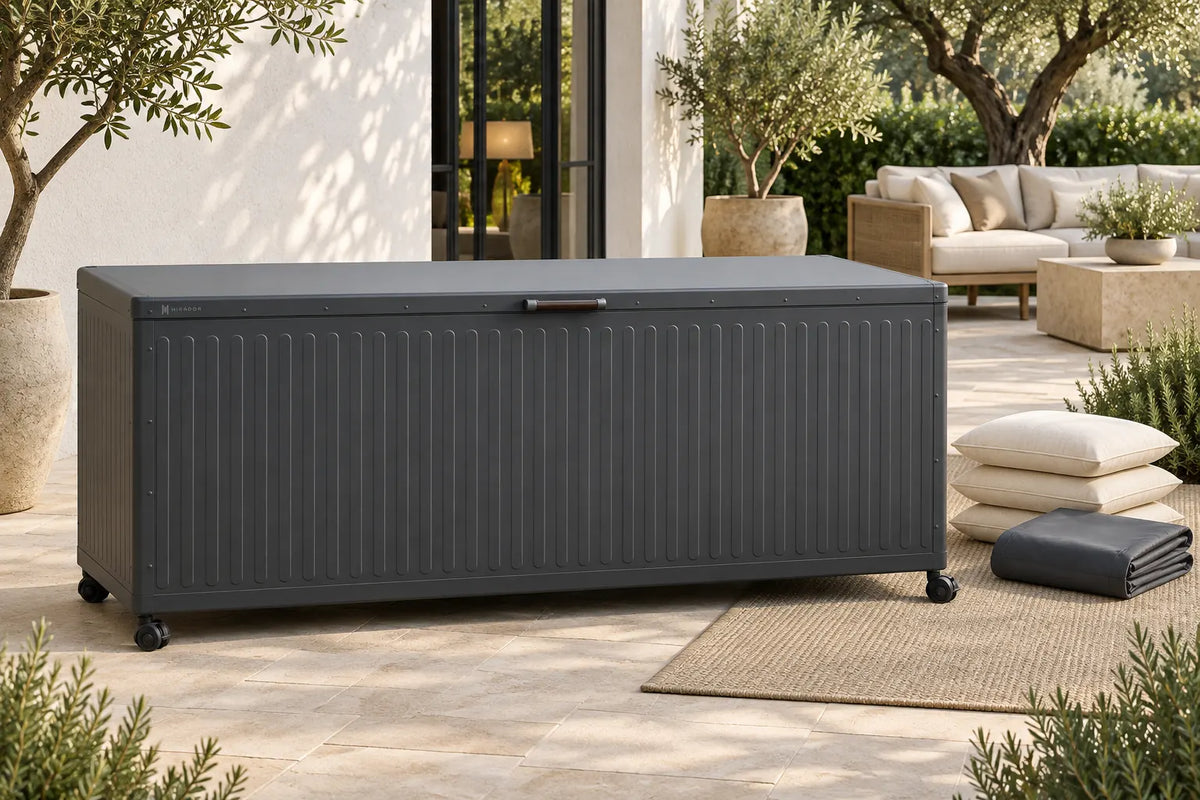
Choose a deck box by matching three things: the packed size of your belongings, the box's usable interior and opening, and the space available on your patio. Gallon capacity helps narrow your options, but the right box must also accommodate your longest item and open comfortably where you plan to put it.
For a few tools or small accessories, start with compact capacities. For bulky cushions, folded furniture covers, or several groups of outdoor gear, compare larger options after measuring the actual items.
This deck box size guide walks you through that decision, including a simple volume estimate and a comparison of our Mirador Horizon and Urban sizes. If you are still exploring the basics, our guide to what a deck box is covers uses, materials, and general features.
Start With a Capacity Range
Use these ranges to build a shortlist. They are practical shopping bands, rather than standardized definitions of small, medium, or large.
| Capacity in US gallons | Storage need to consider | Check before choosing |
|---|---|---|
| Under 50 | A small collection of hand tools, toys, or patio accessories | Whether your largest item fits; compact capacity may be all you need |
| 50–99 | A modest group of pillows, folded covers, or everyday accessories | The packed dimensions, including the thickness of soft items |
| 100–199 | A larger collection of cushions or mixed patio belongings | Usable interior length and depth, plus space for retrieval |
| 200–299 | Bulkier cushions, multiple item groups, or seasonal accessories | Both storage fit and the increased exterior footprint |
| 300+ | Substantial storage needs or several outdoor zones sharing one box | Access, reach to the bottom, and whether one large box is convenient |
A gallon range cannot guarantee a certain number of cushions. A thin dining-chair pad and a thick deep-seat back cushion occupy very different amounts of space.
Likewise, a small patio does not automatically need the smallest box. A longer box may fit along an unused wall, while a deeper one may interrupt the main walkway. Measure the belongings and the location before deciding.
Measure the Items Before Comparing Boxes
Gather What Will Actually Go Inside
Arrange the items as you intend to store them. Include seat cushions, back cushions, pillows, and any storage bags or organizers you plan to use.
For mixed storage, separate the inventory into groups:
- Bulky soft items, such as cushions and folded furniture covers.
- Rigid items, such as toys, watering cans, or small equipment.
- Frequently used accessories you want to retrieve without unloading everything.
Only include belongings suitable for the intended storage environment. A larger box does not change a cushion's care requirements or make moisture-sensitive items suitable for extended outdoor storage.
Before measuring textiles, clean and fully dry them. Our guide to cleaning outdoor furniture explains material-specific preparation.
Record the Packed Dimensions and the Longest Item

Measure the length, width, and height of the complete group without crushing it into an unrealistic shape.
Then measure the longest individual item separately. A long bench cushion can be the limiting factor even when the overall gallon capacity seems generous.
If you are shopping for new outdoor furniture, plan the storage at the same time. Use the actual cushion dimensions and quantities rather than the number of seats in the furniture set.
Estimate the Volume in US Gallons
For a roughly rectangular stack, use:
Packed length × width × height in inches ÷ 231 = approximate volume in US gallons
One US liquid gallon equals 231 cubic inches. This calculation converts the space occupied by your arranged stack into a useful comparison figure.
Example: An illustrative stack measuring 48 × 24 × 20 inches occupies:
48 × 24 × 20 ÷ 231 ≈ 100 US gallons
That does not mean you should automatically buy a 100-gallon box. You still need room for the box's shape and hardware, comfortable loading, and anything you want to add.
Use the example as a measuring method, not a claim about a particular cushion set or Mirador model. For irregular items, measure their arranged bounding space rather than treating every gap as usable storage.
Check Interior Fit and the Lid Opening

Before ordering, compare your measurements with the usable internal length, width, and height of the exact box.
Exterior dimensions tell you where the box fits. Interior dimensions tell you what fits inside. Do not substitute one for the other.
Check the opening separately. An item may fit within the interior but be difficult to pass through the top opening or around lid supports.
For a straightforward fit, confirm that:
- The largest item passes through the opening in a practical orientation.
- The packed group fits inside without blocking hinges or supports.
- The lid closes normally without pressing on the contents.
- You can lift out the items you use most without unpacking everything.
If the usable interior or opening measurements are unclear, ask us to confirm them for the exact model before ordering. Do not calculate them by subtracting an assumed wall thickness from the exterior measurements.
How Much Spare Space Should You Allow?
Leave practical room to place your hands around stored items and remove them easily. If you use bins or bags, include those in the measurements.
For future purchases, add a realistic item to the plan—a folded cover or another cushion group—rather than applying a fixed percentage to every storage need.
A little spare volume can be useful. It will not solve a box that is too short for your longest cushion.
Compare Mirador Deck Box Sizes and Footprints
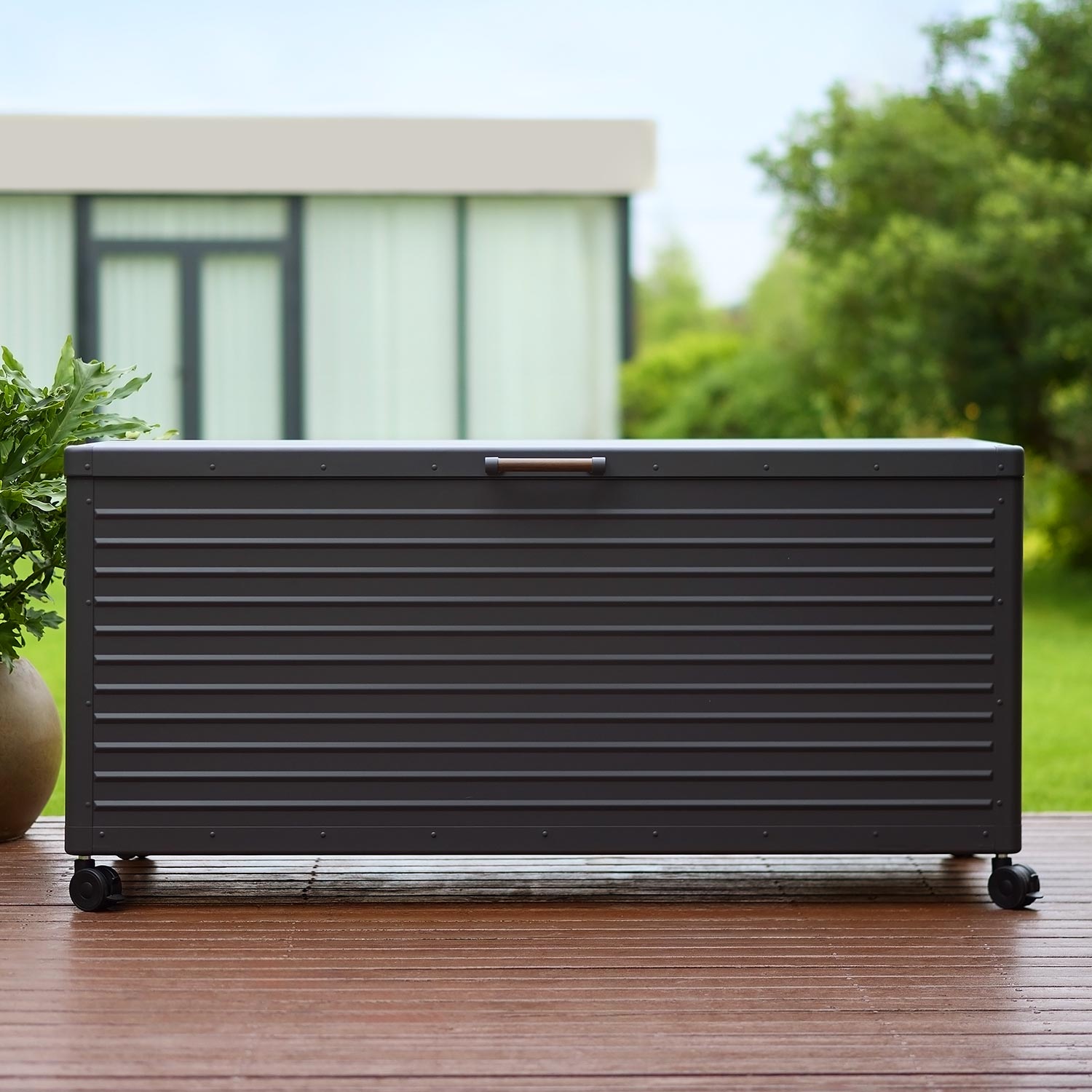
Our Mirador deck box collection includes four Horizon sizes and the larger Urban model.
The table separates each model's name from its specified interior volume. Overall dimensions include the wheels and are for patio planning; they are not usable interior measurements.
| Mirador deck box | Specified interior volume, US gallons | Overall dimensions with wheels, inches* |
|---|---|---|
| Horizon 134 | 133.9 | 51.2 × 23.8 × 31.1 |
| Horizon 175 | 174.8 | 55.7 × 28.3 × 31.1 |
| Horizon 205 | 204.8 | 64.9 × 28.3 × 31.1 |
| Horizon 281 | 281 | 71.7 × 35.1 × 31.1 |
| Urban 370 | 370 | 84 × 36 × 33.8 |
Dimensions are shown as overall length × width × height, including wheels. Confirm the usable interior and opening dimensions separately.
Which Size Should You Shortlist?
Use the measurements to compare the tradeoffs:
- Horizon 134: Start here within our range when preserving patio space matters. It has the shortest and narrowest footprint of these five options.
- Horizon 175 versus 205: Both have the same overall width and height. The 205 adds length, making this a useful comparison when your location can accommodate a longer box but no additional depth.
- Horizon 281: This increases both overall length and width compared with the 205. Test the wider footprint around nearby chairs and walking routes.
- Urban 370: This provides the greatest specified interior volume in this comparison, with the longest overall footprint. Check the placement and access route before choosing it for high-volume storage.
These comparisons help you identify candidates. They do not establish that a specific sofa's cushions, a daybed cushion, or an inflated pool float will fit.
Make Sure the Box Works on Your Patio

Mark the proposed footprint with painter's tape or another surface-safe method. Test it with the furniture in use, not just with chairs pushed under the table.
Allow room to stand in front, bend, open the lid fully, and lift out the bulkiest item. Check overhead and rear clearance against walls, railings, windows, and accessories. Use the model's installation requirements rather than a guessed universal clearance.
Also measure the route from the delivery or assembly area to the final location, including gates, corners, steps, and narrow passages.
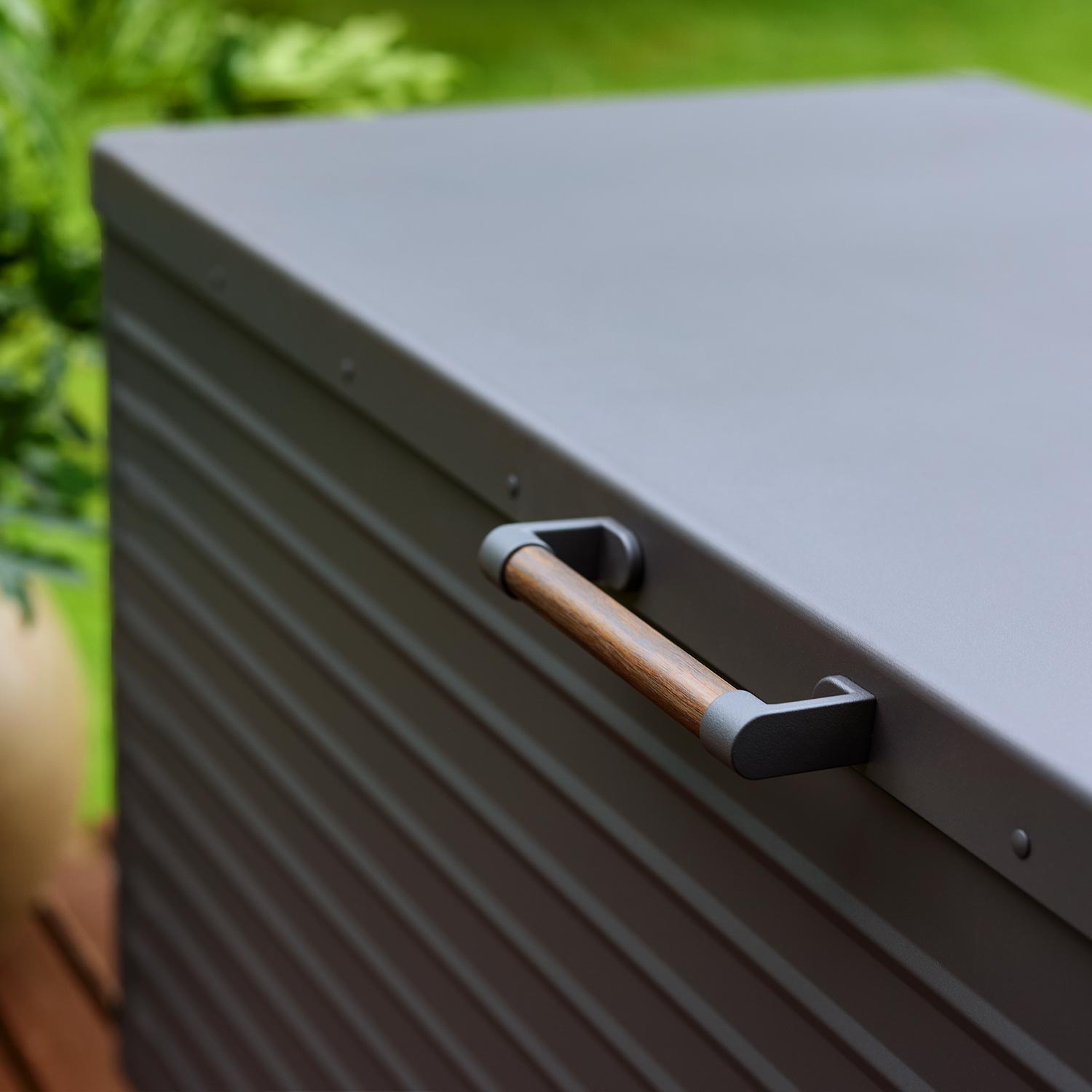
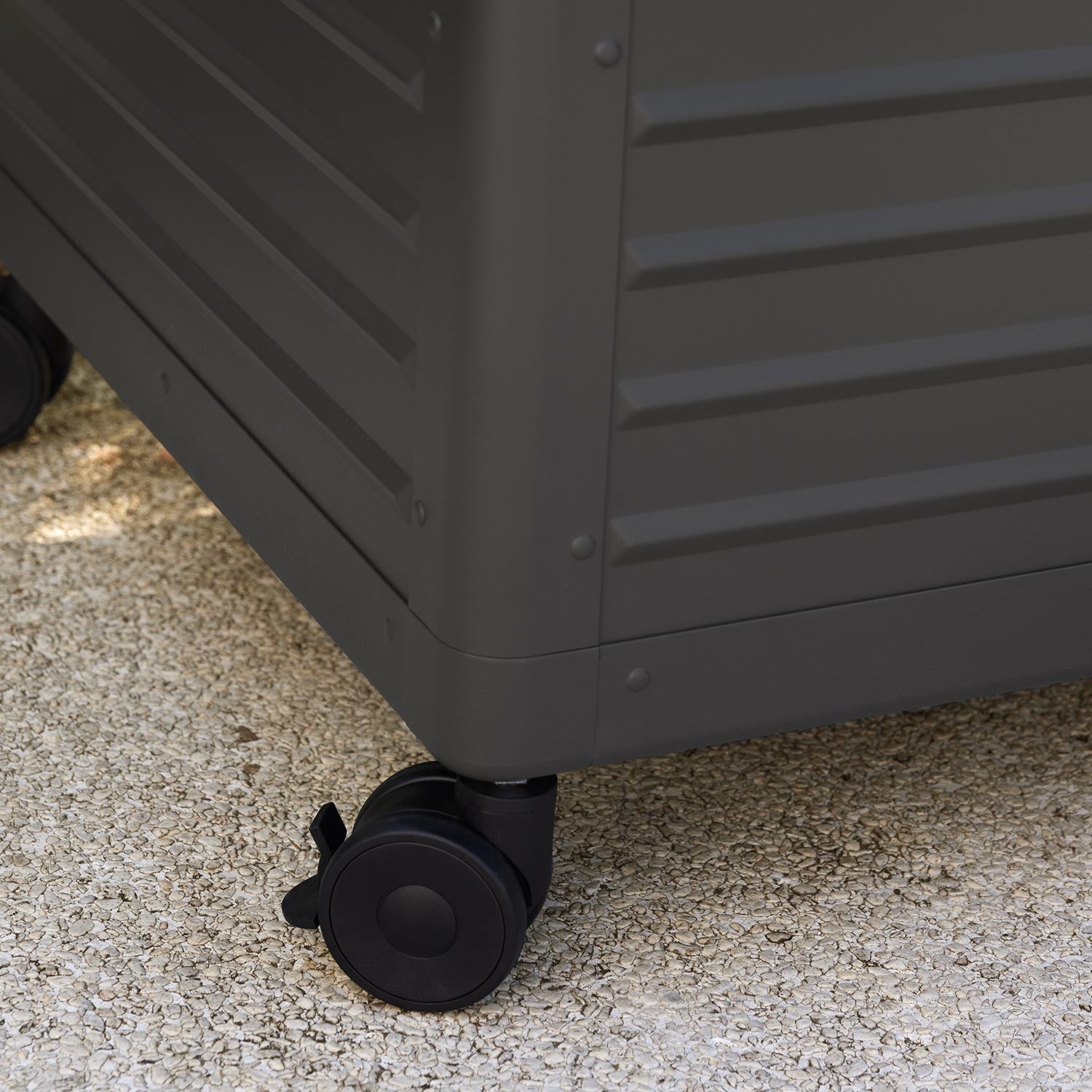
Our Horizon and Urban boxes include swivel wheels and soft-opening and soft-closing lids. These features support everyday access, but they do not remove the need for a suitable surface, an accessible route, or the correct moving procedure.
Beside Furniture or Under a Pergola
A box near a seating area can make everyday storage more convenient. Keep it outside chair pullout, reclining, and swivel movement, and leave the main route to the house or garden clear.
If you are planning the full layout, our guide to arranging outdoor furniture can help you account for furniture movement as well as its stationary dimensions.
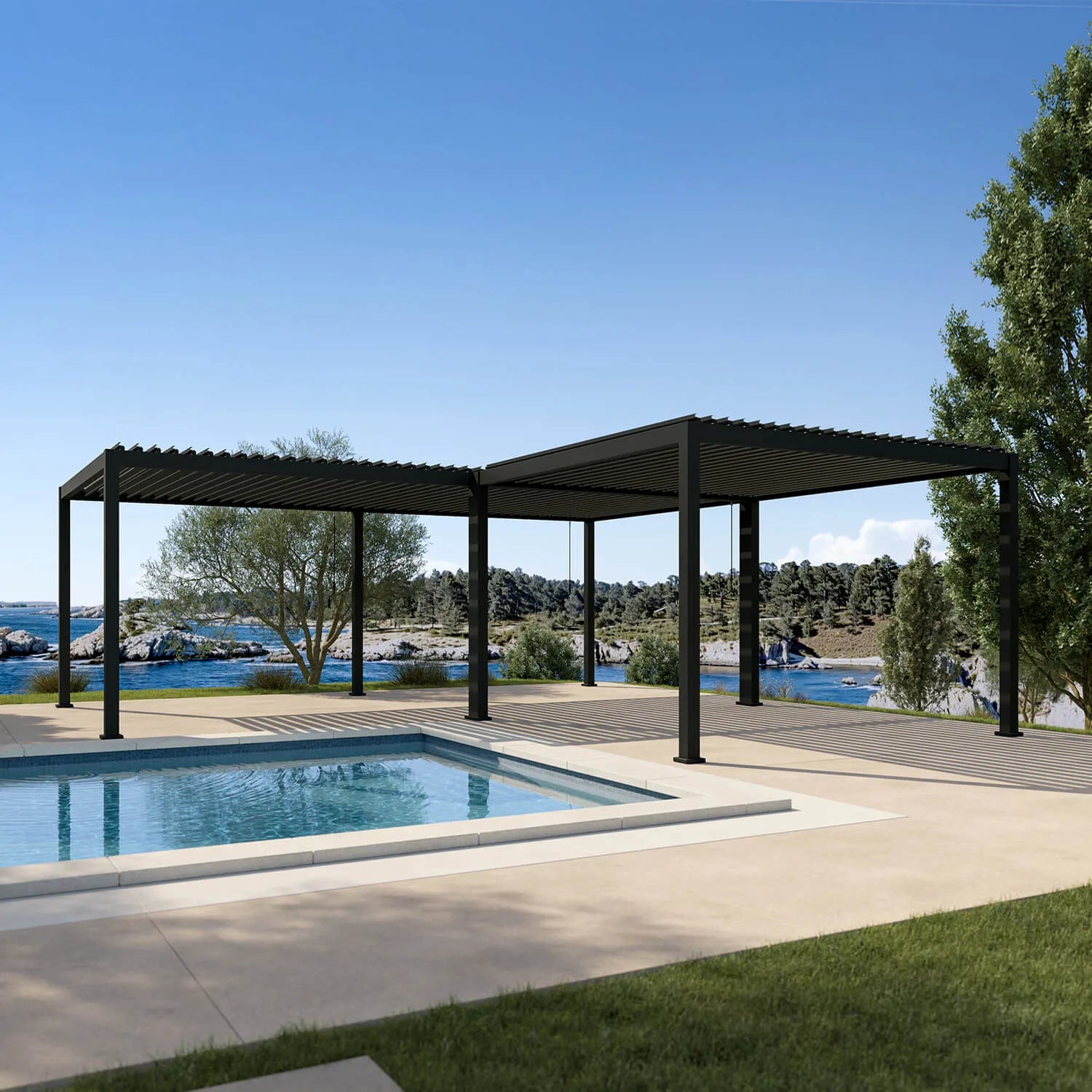
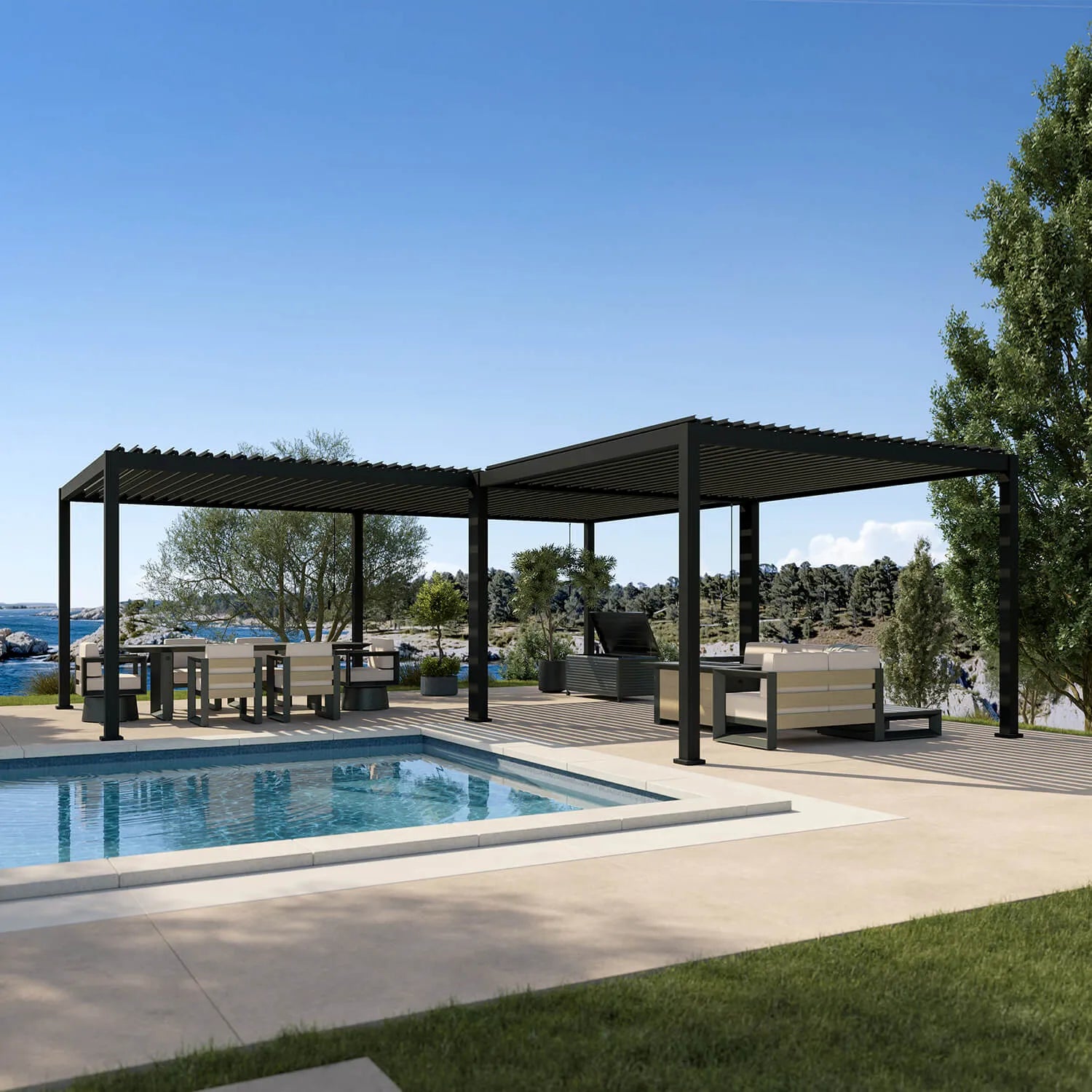
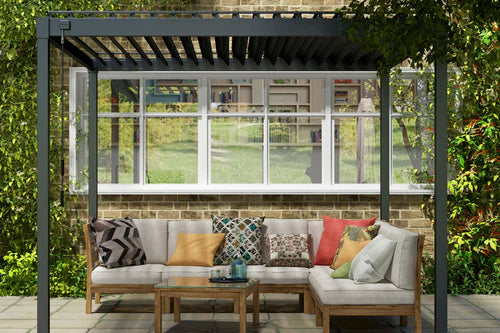
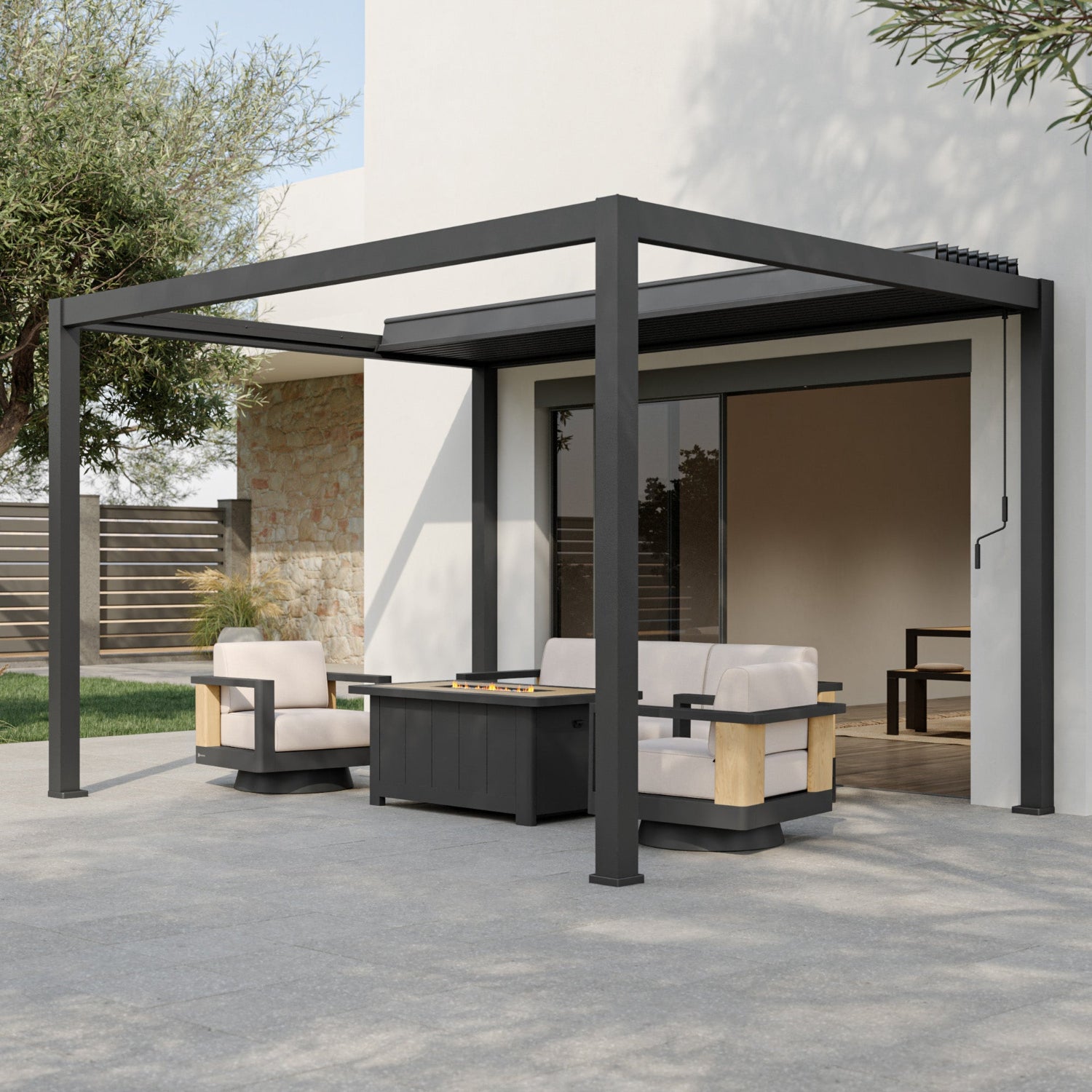
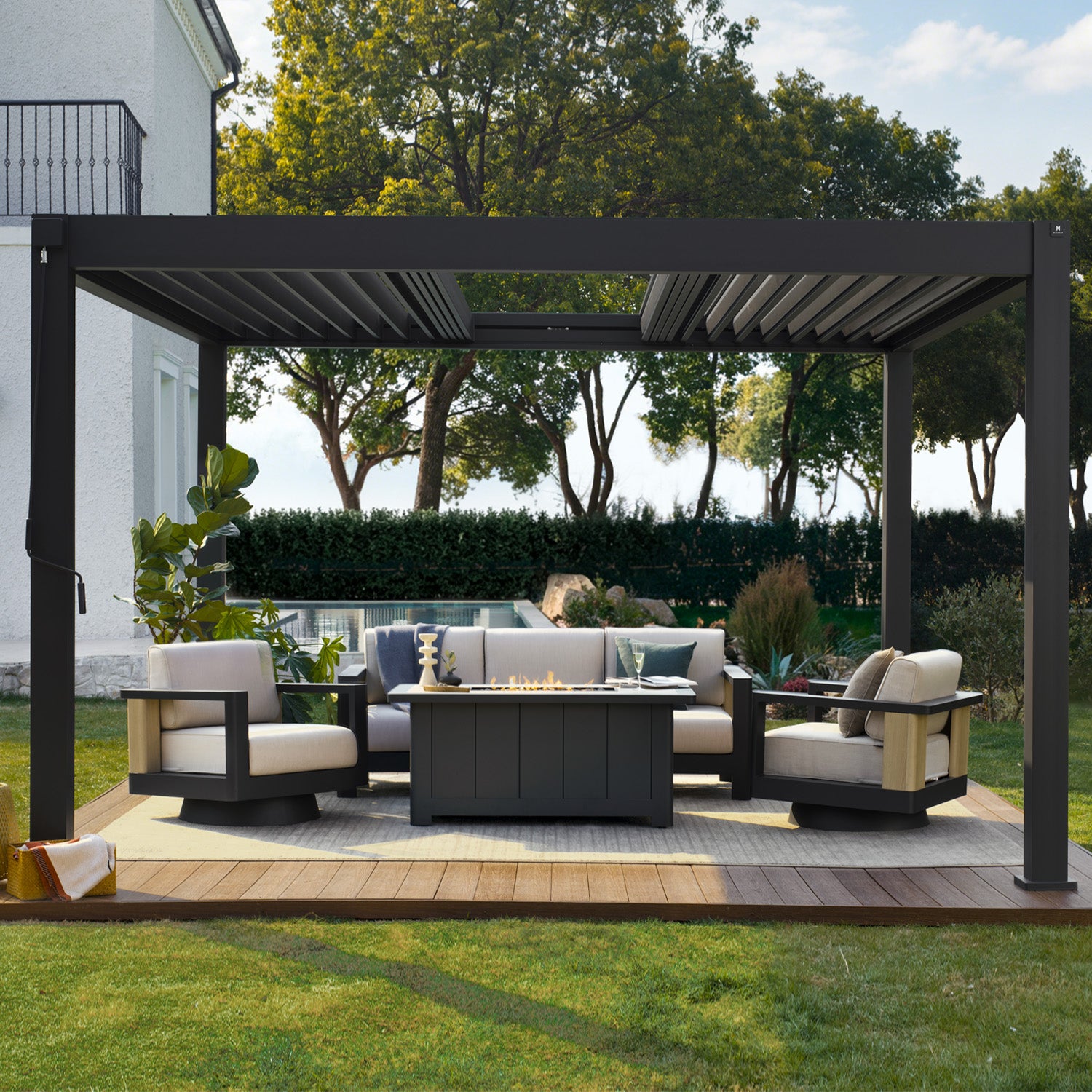
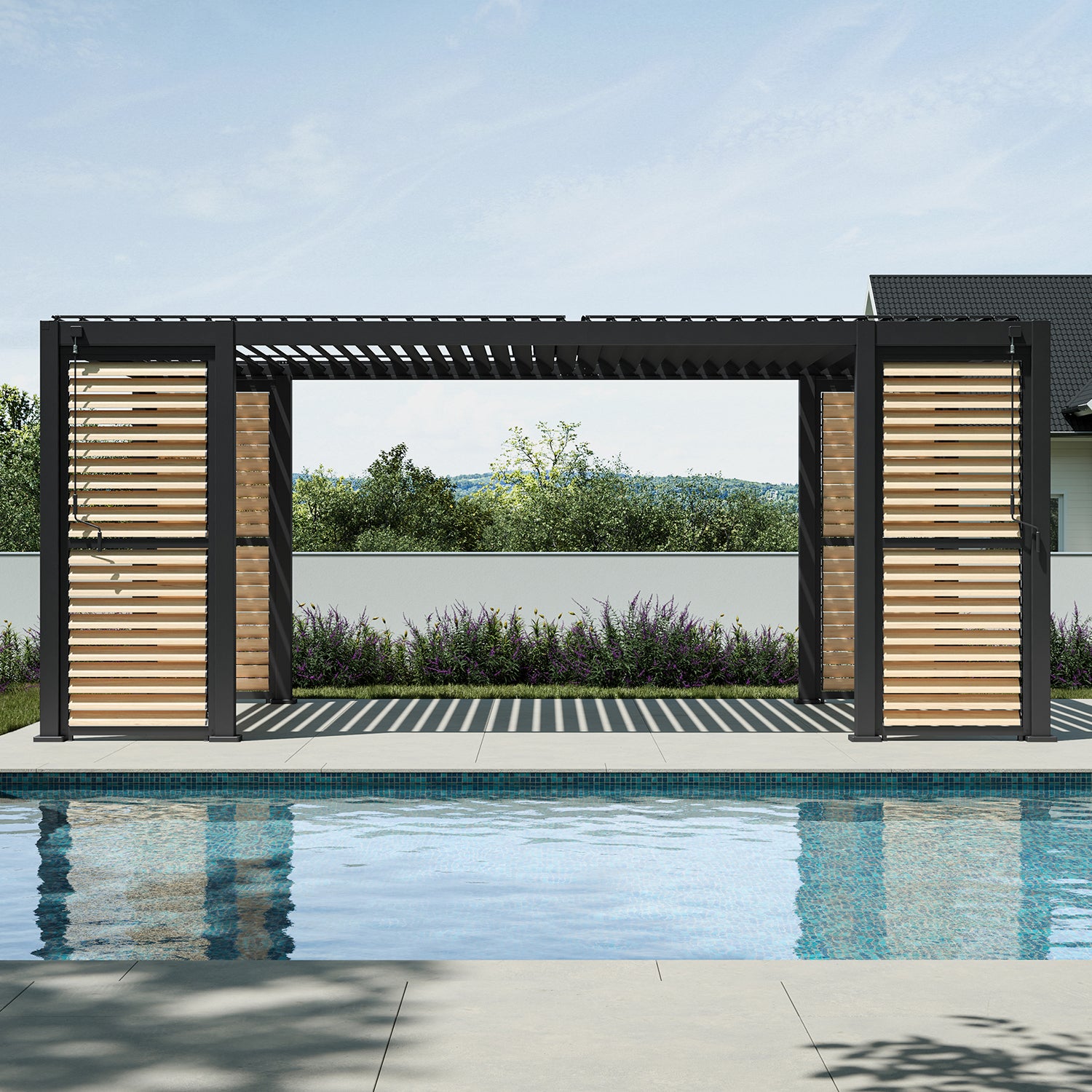
In a Mirador pergola layout, check the clear space between posts and the operation of screens or sliding doors. A location beneath the roof still needs to meet the deck box's own placement requirements; overhead shelter does not replace appropriate protection for its contents.
By the Pool
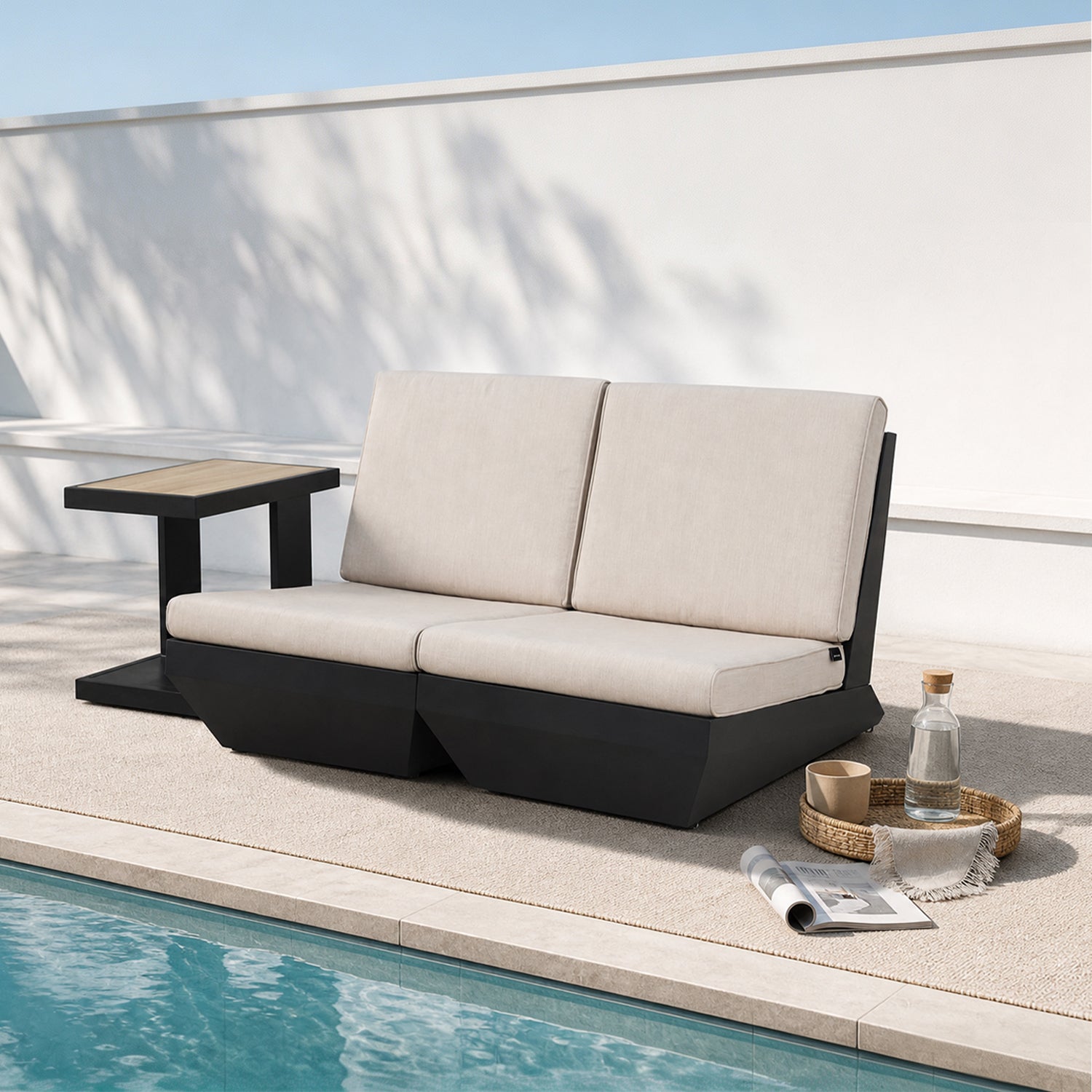
Measure floats in the condition in which you intend to store them—deflated and folded, or still inflated. Group smaller accessories in containers you can actually reach.
Allow wet gear to dry separately rather than packing it alongside dry cushions. For placement and organization beyond sizing, see our pool storage box guide.
One Large Deck Box or Two Smaller Ones?
Choose one larger box when most belongings are used in the same area and the box fits without crowding it.
Two smaller boxes may work better when dining and lounging areas are far apart, or when you want to separate clean textiles from other dry outdoor gear. Check each box's dimensions: two smaller capacities do not necessarily accept an item that needs one long interior.
Also consider reach. A deeper or wider box may offer more volume while making small objects harder to retrieve. Organizers help only when they fit through the opening and remain accessible.
If the box will double as seating, confirm that seating is explicitly approved for that model. A flat lid, a general weight-capacity figure, or additional gallons do not establish bench suitability.
Your Before-You-Buy Size Check
Record these details for each shortlisted model:
| What to record | Your measurement or confirmation |
|---|---|
| Packed group | Length × width × height |
| Longest rigid or bulky item | Item dimensions and intended orientation |
| Box interior and opening | Confirm usable measurements for the exact model |
| Patio footprint | Overall dimensions, including wheels or projections |
| Operating space | Full lid movement, standing space, and item removal |
| Access route | Gates, corners, thresholds, and final positioning |
| Everyday use | Frequently needed items remain easy to reach |
Choose the smallest option that passes all the fit checks and leaves the practical extra space you need. Move up a size when the larger model solves a real storage problem and still works in the layout.
Deck Box Size FAQs
Is a 150-Gallon Deck Box Big Enough for Patio Cushions?
It may be, but the cushion dimensions and packing arrangement decide. Measure seat and back cushions together, then check the usable interior and opening. A gallon figure alone cannot confirm that a complete set will fit.
Will a Bigger Deck Box Always Hold Longer Cushions?
No. Extra volume can come from greater height or width rather than length. Compare the usable internal dimensions and the opening before deciding that a larger gallon number solves the problem.
Can I Use the Box's Outside Dimensions to Calculate Storage Capacity?
No. Exterior measurements include the structure and may include wheels or other projections. Multiplying them estimates the outside bounding volume, not usable storage. Use the specified interior volume and confirm internal fit separately.
What If the Box Fits My Items but Crowds the Patio?
Try a different shape, another location, or separate storage zones. Preserving access to furniture and walkways is part of choosing the right size. A box that is awkward to open or reach will be less useful even if everything fits inside.
Find the Size That Fits Your Routine
Gather the items, measure the packed group, and check the longest piece. Then compare the usable interior, opening, and patio footprint together.
If you need help narrowing down a Mirador size, contact support@miradoroutdoor.com with the model you are considering, your item measurements, and the available space. Those details make it easier to confirm the fit before you order.