



Pool days are messy. Towels on chairs, goggles under loungers, floats everywhere. By evening, the whole area looks like a small storm passed through.
A storage box is the easiest fix. Just do not toss everything in and shut the lid. If you want wet gear to dry, small stuff not to get lost, and the box to still be useful next weekend, you need a system.
Here is how to set one up that actually works on a busy pool day.
What a Pool Storage Box Should Hold
Start with items that are used around the pool and are safe to keep in outdoor storage. Good candidates include dry towels, goggles, swim fins, deflated floats, small toys, life jackets that the manufacturer allows you to store there, and nonchemical cleaning tools. Keep similar items together so anyone can find them without emptying the whole box.
Do a quick inventory before choosing the box. Lay everything on the patio and group it by size. The longest item matters more than a gallon number. A box may have plenty of volume but still be too short for a wide sectional cushion or long foam float.

Never Store Pool Chemicals in a General Storage Box
Pool chemicals need a dedicated storage plan. Do not place chlorine, acid, shock products, or chemical containers in the same pool storage box as towels, toys, tools, food, or fuel. The CDC pool chemical safety guidance says chemicals should stay dry, cool, secure, well-ventilated, in their original labeled containers, and separated from incompatible substances. Follow the product label and local rules.
A deck box beside a pool is convenient for normal gear, but convenience is not a reason to use it for chemicals. Children and pets may reach the box. Splash water may enter when the lid is open. Heat can build in direct sun. Use a separate locked area designed for chemical storage and keep it away from everyday pool items.
What Else Should Stay Out of the Box
- Food, drinks, and pet food that can attract insects or animals
- Wet electronics, batteries, speakers, and charging accessories
- Gasoline, propane, paint, solvents, and other flammable materials
- Paper goods and valuables that can be damaged by humidity
- Anything the box or item manufacturer says must stay indoors
Weather resistant does not mean sealed against flooding or every storm. Water can enter around an open lid, through wind-driven rain, or from standing water below. Keep sensitive items indoors and follow the current care instructions for the box.
Choose the Right Pool Storage Box Size
|
Storage level |
Typical contents |
Planning note |
|
Compact |
Towels, goggles, and small toys |
Best beside two or three loungers |
|
Medium |
Family towels, toys, and deflated floats |
Leaves room for labeled bags or bins |
|
Large |
Bulky floats, cushions, and mixed gear |
Measure the footprint and lid path first |
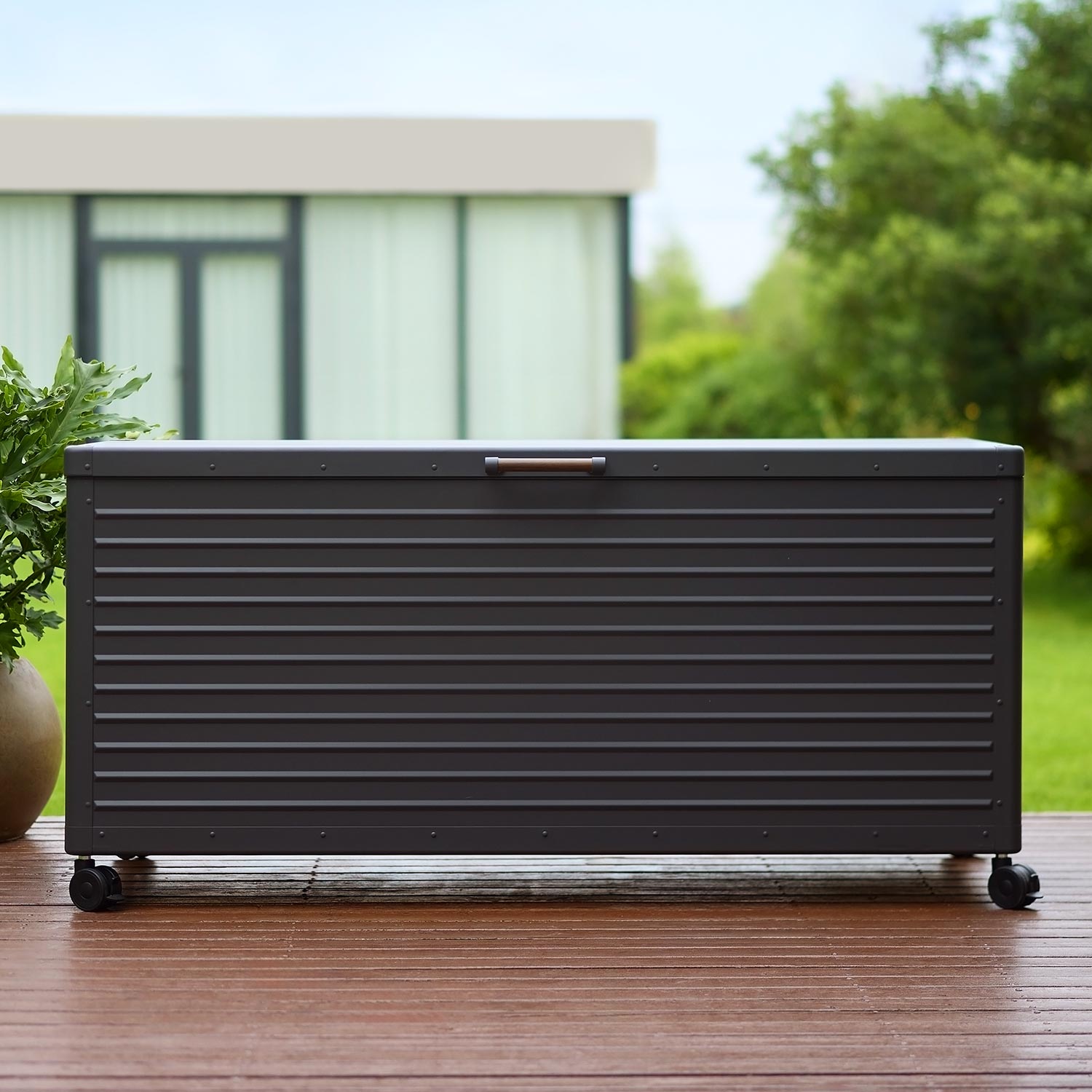
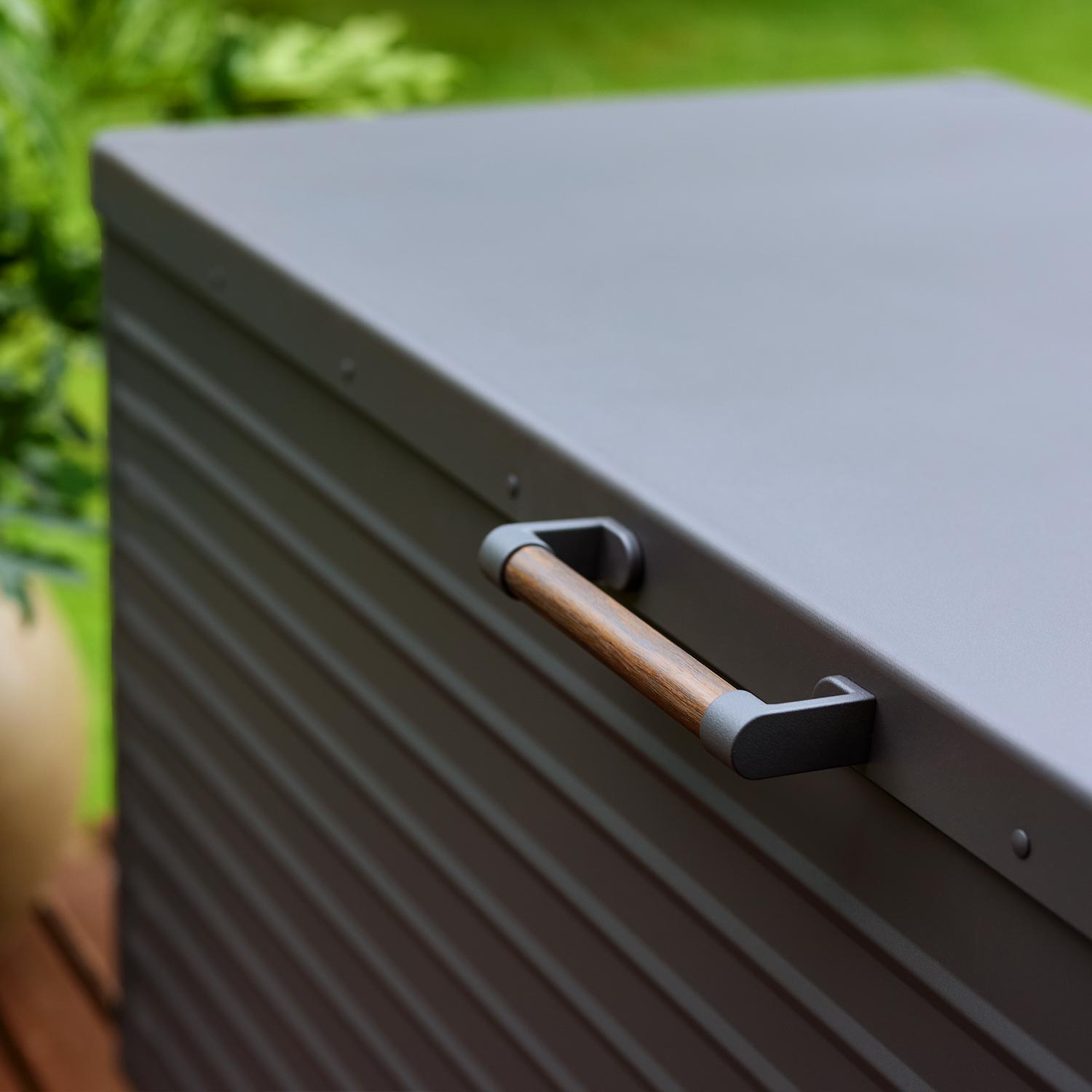
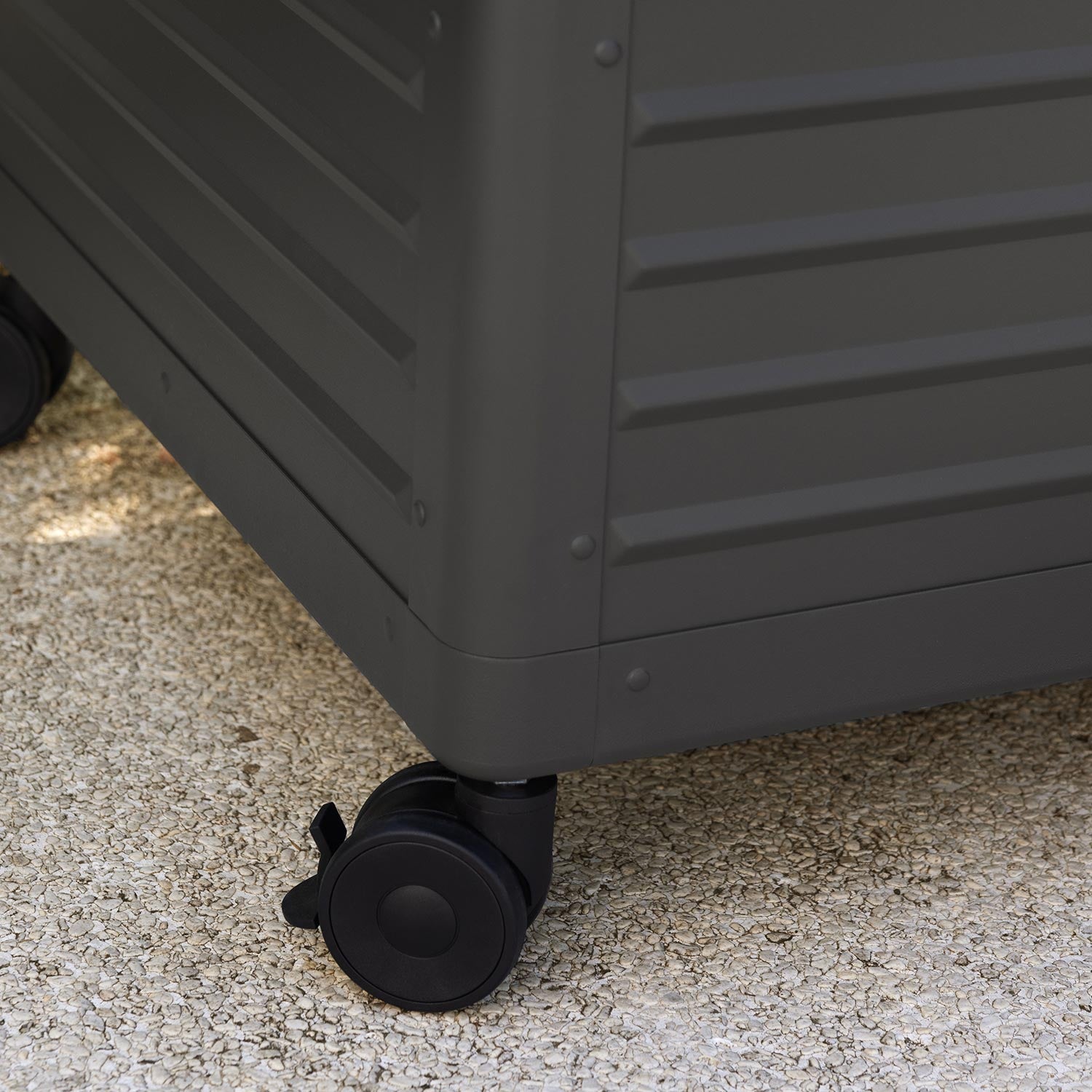
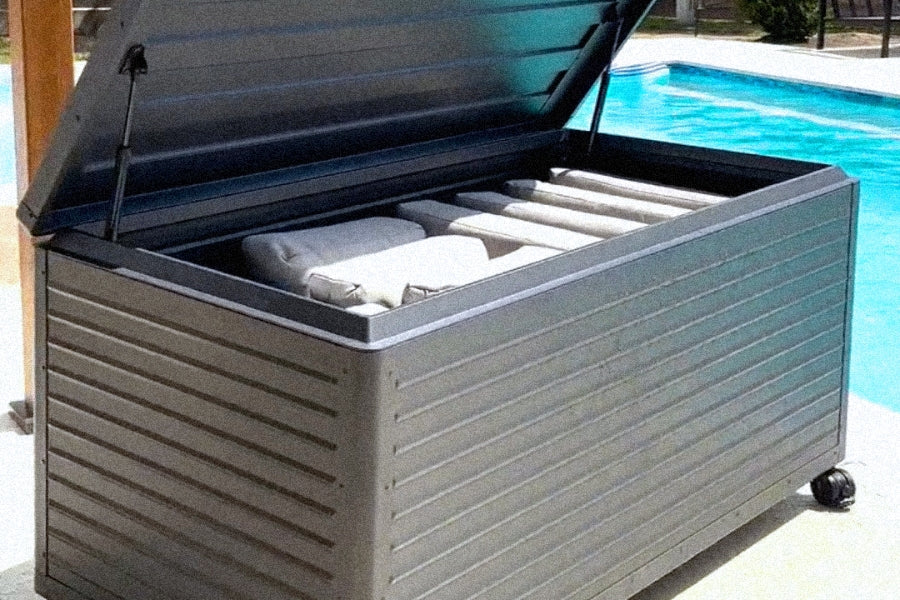
Mirador offers several capacities in its outdoor deck box collection. The compact Horizon 134 lists 133.9 gallons of interior volume, swivel wheels, and a soft-open and soft-close lid. Larger Horizon and Urban models give bulky floats and cushion sets more room.
Related article: The Best Weatherproof Deck Boxes for 2026

Place the Storage Box Where It Helps
The best spot is close enough to use but outside the main walking path. Put the box near the loungers or towel station, not between the house door and the pool. Leave enough room for the lid to open fully. Make sure a child cannot use the box as a step to climb a fence or reach a gate latch.
Choose a level surface with good drainage. Low spots collect splash water and rain. Uneven pavers can twist the frame and make the lid harder to close. If the box has wheels, lock them after you move it. A stable box is easier to use and less likely to drift into the pool deck traffic lane.
How to Organize Your Pool Storage Box
Once the box is in place, the next step is what goes inside and where.
Sort Pool Gear Before You Store It
Use four simple groups. Keep dry textiles together. Put small swim gear in one breathable bag. Give floats and toys their own side. Keep brushes, skimmer attachments, and other nonchemical maintenance tools in a separate washable bin. This is enough structure for most families.
- Dry towels and clean covers stay near the top for quick access
- Goggles, fins, and small toys go in mesh bags that are easy to lift
- Deflated floats stand upright or lie flat so they do not bury everything else
- Cleaning tools stay away from towels even when no chemicals are attached
Avoid tiny open containers that slide around. A few larger mesh bags are easier to manage. Color coding also helps. One color can mean toys, another can mean swim gear, and a third can hold spare towels. The system should be obvious even to a guest.
Create a Dry Zone and a Wet Zone
A storage box is best used as the dry zone. Wet towels, damp life jackets, and soaked toys need air before they go inside. Hang them on hooks or a freestanding rack until they are fully dry. Then return them to the box. This one habit does more to prevent musty smells than any scented liner.
If wet toys must be gathered quickly, place them in a mesh basket beside the box and move the basket into a covered drying area. Do not seal dripping items inside for hours. Moisture can stay trapped between fabric folds, under inflatable seams, and along the bottom of the box.
Keep Everyday Pool Items Easy to Reach
Think about the order of a normal pool day. Towels and goggles come out first. Toys and floats come next. Cleaning tools are used later. Store the first items near the top and front. Put bulky seasonal gear lower or toward the back. You should be able to grab a towel without moving a giant inflatable.
Do not pack the box to the lid. A little open space makes it easier to see what is inside and lets air move when the lid is open. It also prevents a float or towel from catching in the hinge. If the lid needs force to close, remove something.

Clean the Pool Storage Box
A quick monthly reset is usually enough during swim season. Empty the box. Shake debris from mesh bags. Wipe the inside with mild soap and water if the manufacturer allows it. Rinse carefully, then let every surface dry before repacking. Check hinges, wheels, handles, and the lid at the same time.
At the end of the season, be stricter. Throw away cracked toys. Patch or recycle damaged floats where local programs allow. Wash and dry fabric items. Move anything that should not freeze into indoor storage. The box will feel much easier to use when warm weather returns.
A Simple Pool Area Organization Routine
Give the family a five-minute closing routine. Hang wet towels. Put wet toys in the drying basket. Return dry gear to its labeled bag. Deflate large floats if they block the lid. Walk the deck once for goggles, caps, and small pieces. Then close and secure the box.
The routine matters more than a complicated organizer. When every item has a clear home, cleanup feels quick. The pool deck stays open, the next swim starts smoothly, and nobody has to search through a wet pile for one missing pair of goggles.
Make the Pool Storage Box Work for You
A pool storage box works best when it supports a simple routine. Put it in the right spot. Separate dry gear from wet gear. Use a few large mesh bags. Keep chemicals and sensitive items somewhere else. Then reset the box for five minutes at the end of the day.
That is enough to keep towels off the chairs, toys out of the walkway, and floats from taking over the deck. More importantly, everything is ready when the next sunny afternoon arrives.
FAQ
What size pool storage box do I need?
Choose by the longest and bulkiest item, not only the gallon number. A compact box can handle towels and small toys. A medium or large box is better for family gear, cushions, and several deflated floats. Tape the footprint on the patio before buying.
Can I store pool chemicals in a deck box?
A general deck box is not the right place for pool chemicals. Use a separate secure and ventilated chemical storage area. Keep products dry, cool, separated, and in their original labeled containers according to the label and local requirements.
How do I keep towels from smelling musty?
Let towels dry fully before placing them in the box. Store them loosely instead of compressing a damp stack. Empty and air out the box regularly, especially after rainy or humid weather.
Where should a pool storage box go?
Place it on a level surface with good drainage, close to the items you use but outside the main walking path. Leave room for the lid and do not position it where a child could use it to climb a fence or reach a gate latch.
Is a pool storage box waterproof?
Most outdoor storage boxes are better described as weather-resistant. They help protect gear during normal outdoor exposure but are not made for flooding or submersion. Keep the lid closed and the box above standing water.