
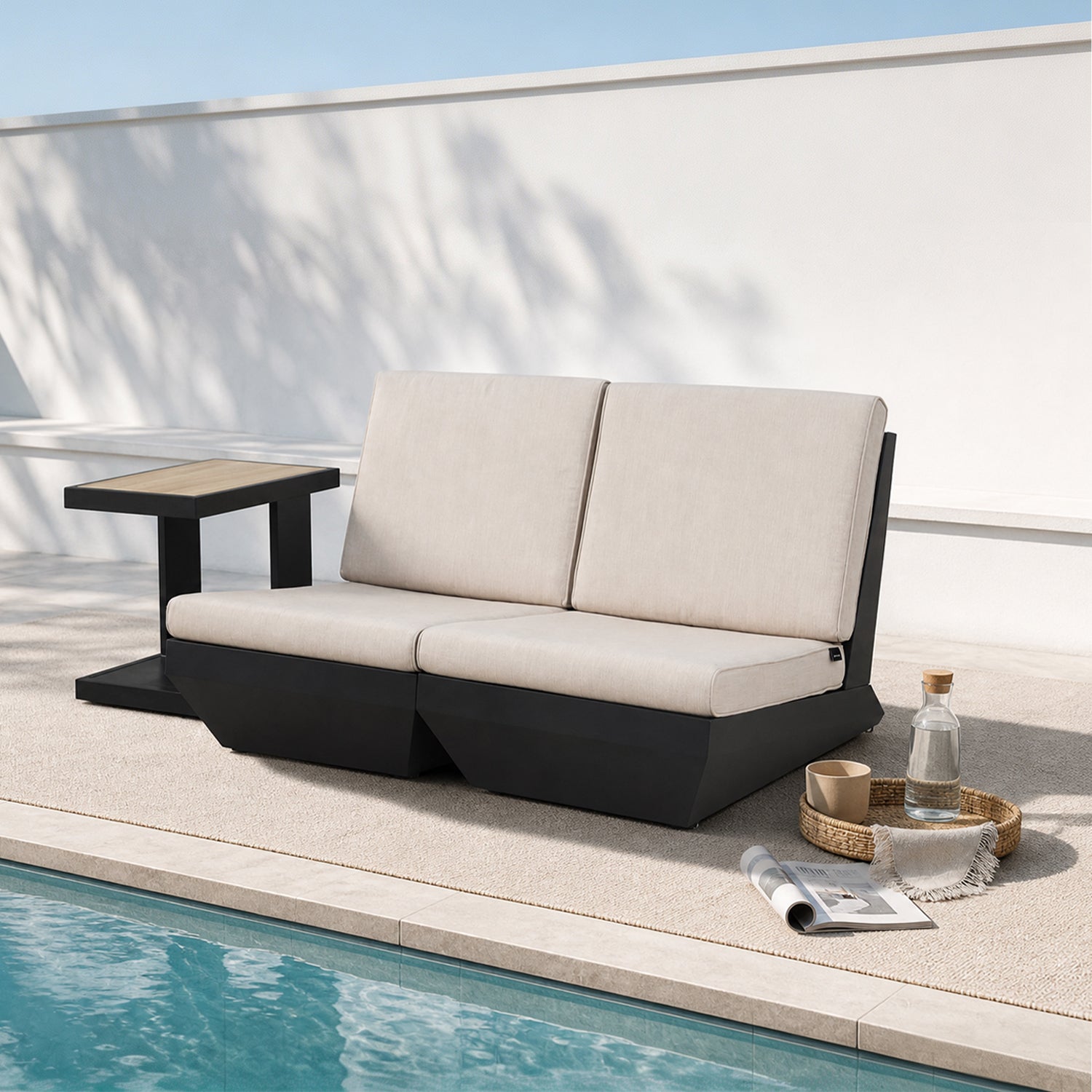






Some patio furniture can stay outside in winter, provided its care instructions allow it and you protect it for your local conditions. Outdoor-rated aluminum, some hardwoods, and quality HDPE furniture can be suitable candidates. Cushions, natural wicker, damaged finishes, and unverified cold-weather materials need a more sheltered plan.
The best patio furniture winter storage plan considers each component separately. A metal chair frame, its cushion, a woven seat, and a glass tabletop may need different treatment—even when they belong to the same set.
At Mirador, we recommend checking the materials and instructions for your exact furniture before deciding what stays on the patio. Start with the guide below, then choose a storage location and prepare each piece.
Which Patio Furniture Can Stay Outside in Winter?
Use this table as a starting point. The instructions for the assembled furniture take priority over a general material recommendation.
| Material or component | Can it stay outside? | Winter storage approach |
|---|---|---|
| Outdoor-rated aluminum | Often, with appropriate care | Clean and dry it, inspect the finish and connections, and use suitable protection. Plan for wind exposure. |
| Steel or wrought iron | Prefer dry, sheltered storage unless the product permits otherwise | Check for coating damage and corrosion; use only approved repair products. |
| Teak and other outdoor hardwoods | Depends on the species, construction, finish, and instructions | Sheltered storage reduces exposure. Do not apply a universal oiling or sealing routine. |
| Other wood or an unknown wood finish | Choose sheltered storage when winter suitability is unclear | Keep it dry and follow the finish-specific care instructions. |
| Natural wicker or rattan | Move to a dry indoor location | Protect the fibers from prolonged damp conditions. |
| Synthetic resin wicker | Possibly, if rated for the conditions | Check the resin, underlying frame, and cushions separately. |
| Quality outdoor HDPE or plastic lumber | Often, if the complete product is approved for year-round exposure | Follow its winter guidance and inspect hardware; do not extend this advice to every plastic chair. |
| Lightweight or unverified molded plastic | Sheltered storage is preferable in freezing conditions | Avoid rough handling, impacts, and unsupported stacking. |
| Glass, stone, concrete, or ceramic tabletops | Product-specific | Confirm winter and freeze-thaw suitability; protect against impacts and falling debris. |
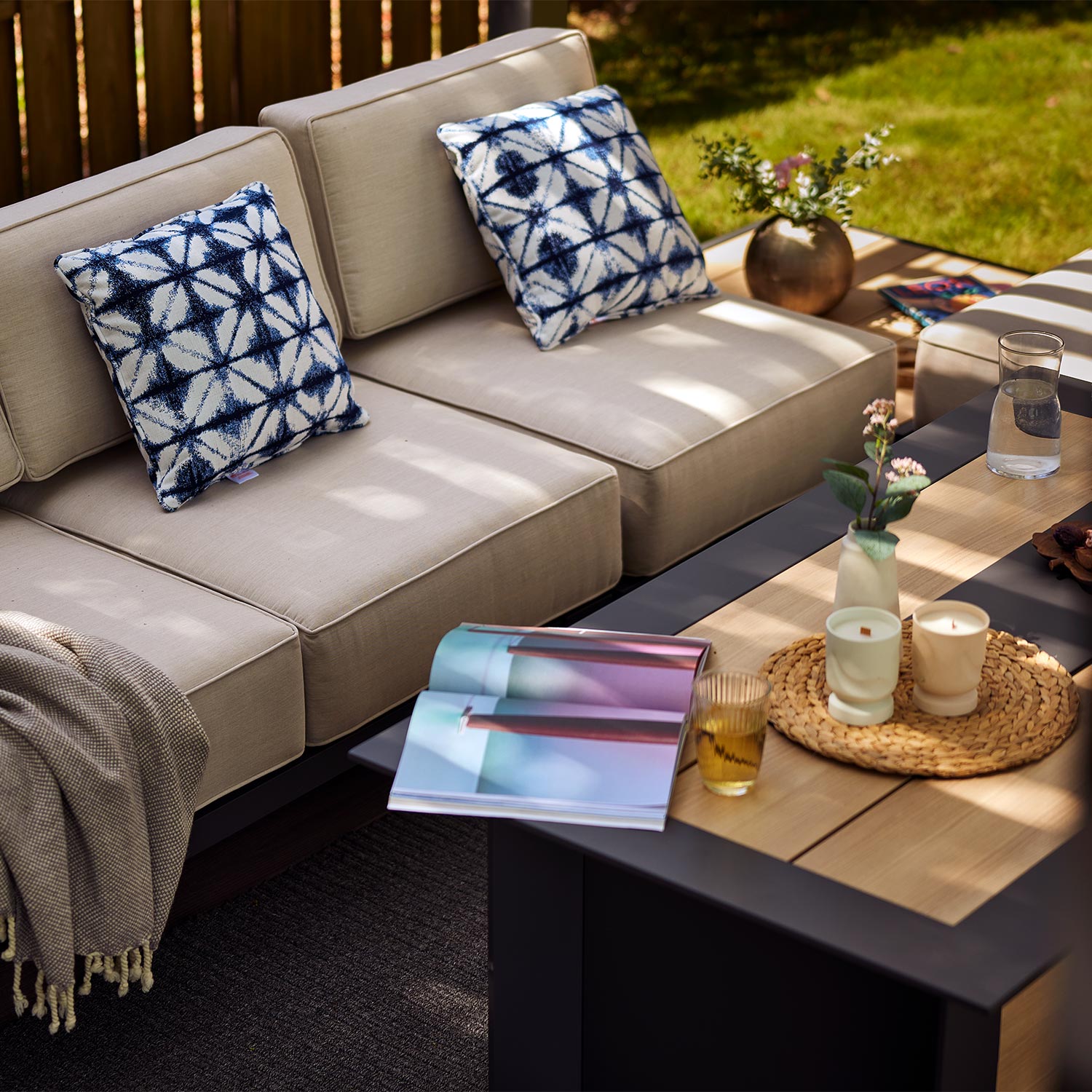
| Removable cushions and pillows | Dry storage is the preferred off-season plan | Clean and fully dry them before packing; follow any requirement for indoor storage. |
A Weather-Resistant Frame Does Not Make the Entire Set Waterproof
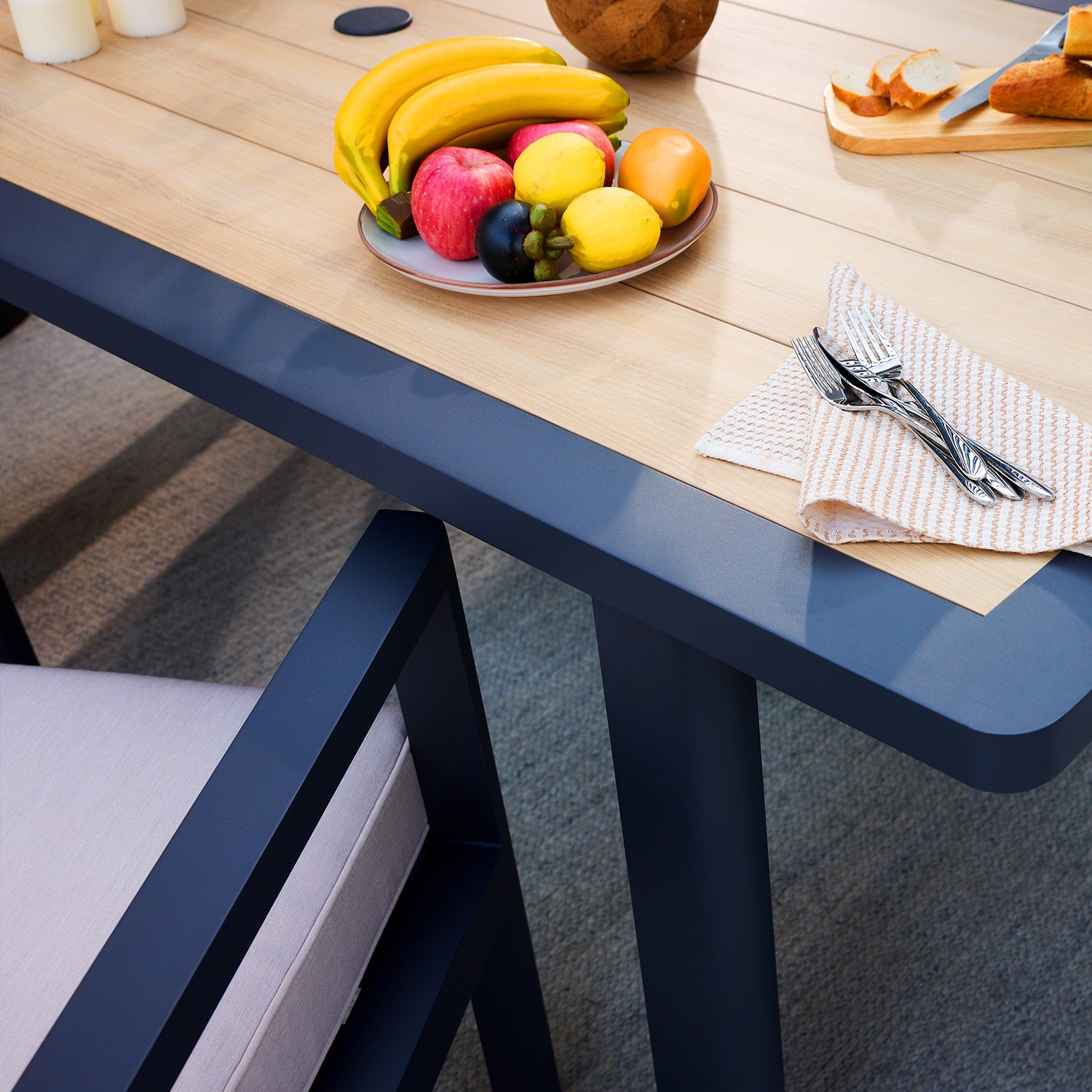
Outdoor furniture often combines several materials. Our Mesa 7-Piece Dining Set, for example, combines aluminum construction with outdoor fabric cushions. The frame and cushions need separate winter preparation.
For this set, store the cushions indoors during inclement weather and rainy seasons. Water-resistant fabric does not establish that the seams, filling, or complete cushion can remain wet through months of winter exposure.
The same distinction applies to woven furniture: “wicker” describes a construction style, not one material. Natural rattan and synthetic outdoor resin should not automatically receive identical storage advice.
Choose Between Indoor Storage, Sheltered Storage, and Outdoor Covers
Your climate and available space determine how much protection is practical.
Dry Indoor Storage: Prioritize the Most Vulnerable Pieces
Reserve dry indoor space for cushions, pillows, natural wicker, and items whose instructions require it. Small side tables and lightweight chairs may also be easier to move than to protect on an exposed patio.
A storage location does not have to be a living room. A dry garage or appropriate storage room can work for many furniture components, provided it meets their care requirements. Avoid leaks, damp floors, and areas where snowmelt enters.
Check the space itself before moving anything: a damp basement is a poor destination for dry upholstery.
A Shed or Covered Porch: Check the Exposure
A shed or porch can reduce direct precipitation, but it may still experience freezing temperatures, humidity, or wind-driven rain.
Keep furniture out of standing water and away from roof edges where water or snow can fall. Maintain access so you can inspect stored pieces rather than packing everything into an inaccessible corner.
For a small patio or apartment balcony, give indoor space to cushions and vulnerable components first, then assess whether the remaining frames can stay outside under suitable covers.
An Exposed Patio: Plan for More Than Cold
Rain, snow, wind, and accumulated moisture all matter. In a rainy climate, ventilation and drying deserve particular attention. In snowy regions, consider the product's cold-weather suitability and the possibility of falling branches or sliding roof snow. Coastal locations also need regular attention to salt residue.
If you cannot check covered furniture during the winter, consider whether a drier storage location would be more practical.
How to Prepare Patio Furniture for Winter Storage
Choose a dry day before persistent wet weather or freezing conditions arrive. Give the furniture enough time to dry completely before covering or packing it.

Clean Each Material, Then Let It Dry
Remove leaves, dirt, crumbs, and surface debris. Clean frames and upholstery separately with the methods permitted for each material.
For many coated metal frames, water or mild soap and a soft cloth are appropriate. Avoid choosing stronger chemicals, waxes, or protective sprays simply because they are recommended for a different material.
For detailed methods, use our guide to how to clean outdoor furniture. Pay attention to seams, undersides, joints, and places where water collects.
Do not cover furniture while it is still damp.
Separate Cushions From Sling Seating
Removable cushions should be cleaned according to their care instructions and dried through the filling, not just across the surface.
For the Mesa dining cushions, spot cleaning is the specified method; do not assume a zipper means the covers are machine-washable. Store the dry cushions indoors as instructed.
Sling seating needs a different approach. Our Siena 3-Piece Chaise Lounge uses aluminum and sling fabric stretched across the seating frame. Clean the fabric in place as directed and let it air-dry before covering or storage. Do not treat the sling like a removable cushion cover.
Check backrest supports and moving components before moving loungers. Stack furniture only when the design and instructions allow it.

Inspect Before You Pack
Look for loose fittings, worn fabric, chipped coatings, and signs of corrosion. Resolve damage with the correct replacement part or repair method before leaving it out of sight for the season.
Lift furniture rather than dragging it. Use help for heavy pieces, and protect surfaces from rubbing if components are stored close together. Do not dismantle furniture unless its instructions permit it.
Keep any removed assembly hardware labeled with the corresponding piece.
Fit Covers Without Trapping Moisture
Use covers designed for outdoor furniture and sized for the actual pieces. Fit them using their intended closures and ventilation features. Avoid tightly wrapping the entire set in household plastic.
Our Siena 3-Piece Conversation Set includes furniture covers. Before fitting them, make sure both the furniture and covers are clean and dry.
For this set, as well as the Mesa dining set, our care instructions call for taking covers off promptly after rain or humid weather so moisture does not remain trapped. Re-cover once the furniture and cover are dry. A cover needs attention during winter.
If your seating includes a propane fire table, let it cool fully before covering and follow its appliance-specific storage instructions. Propane cylinders must remain in an appropriate outdoor, ventilated location; do not put them inside a house, garage, or ordinary deck box.

Check the Setup During Winter
Inspect after storms and whenever you notice pooling water, a shifted cover, or persistent dampness. Clear accessible debris and address moisture when conditions are safe.
Do not strike frozen furniture or use sharp tools to chip ice from finishes, fabric, or tabletops. If ice prevents normal operation or safe handling, follow the product guidance before moving or using the piece.
Can You Store Patio Cushions in a Deck Box for Winter?
A deck box can organize dry patio items close to where you use them. Whether it is appropriate for a particular cushion through winter depends on the cushion instructions, the box, its installation location, and the conditions inside.
When a cushion's instructions require indoor storage, an outdoor deck box does not replace that requirement. For the Mirador Mesa dining and Siena conversation cushions discussed here, plan indoor storage during inclement weather and rainy seasons.
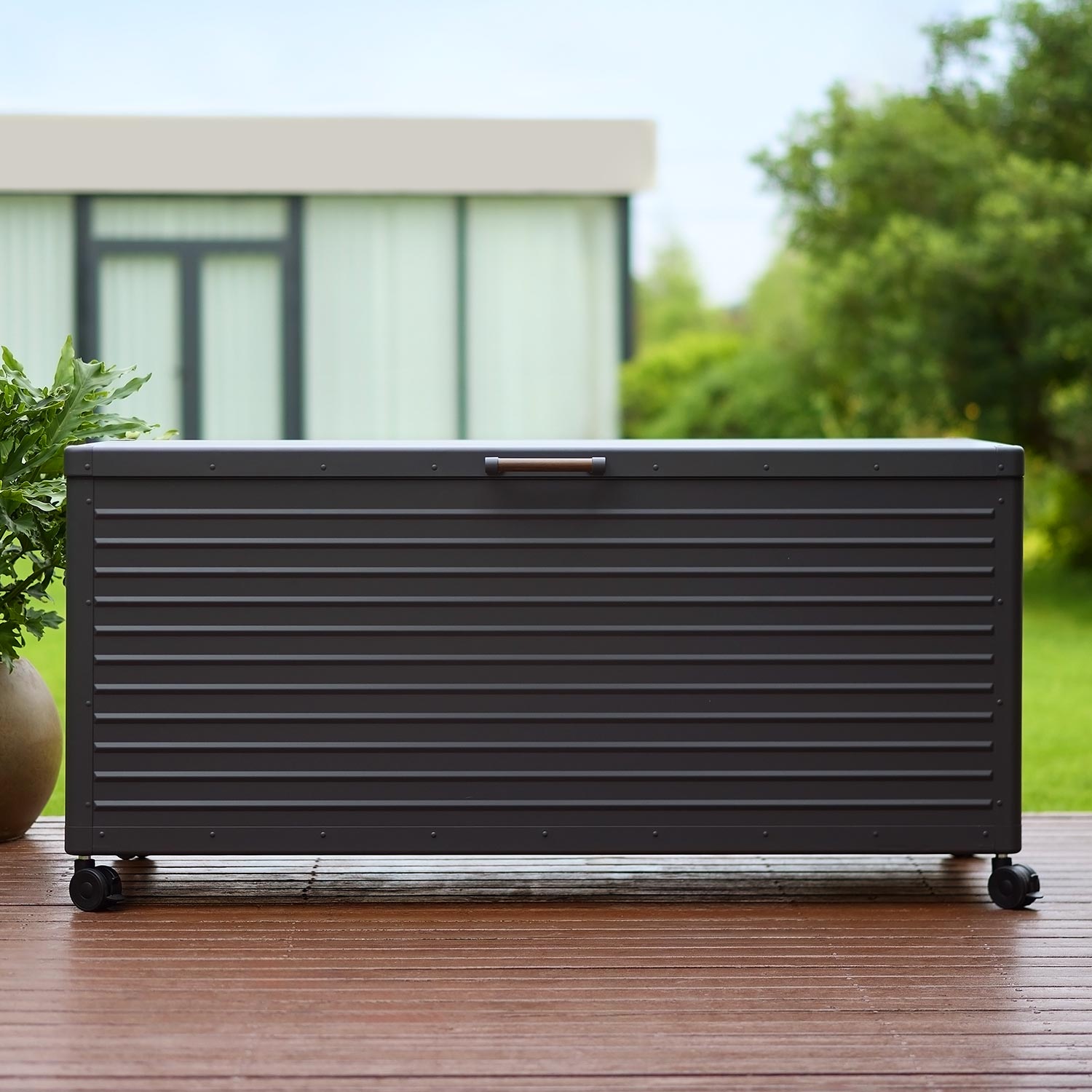
For other items whose instructions permit outdoor storage, consider our Mirador deck boxes. Measure the items and check usable interior dimensions and the lid opening before choosing a size.
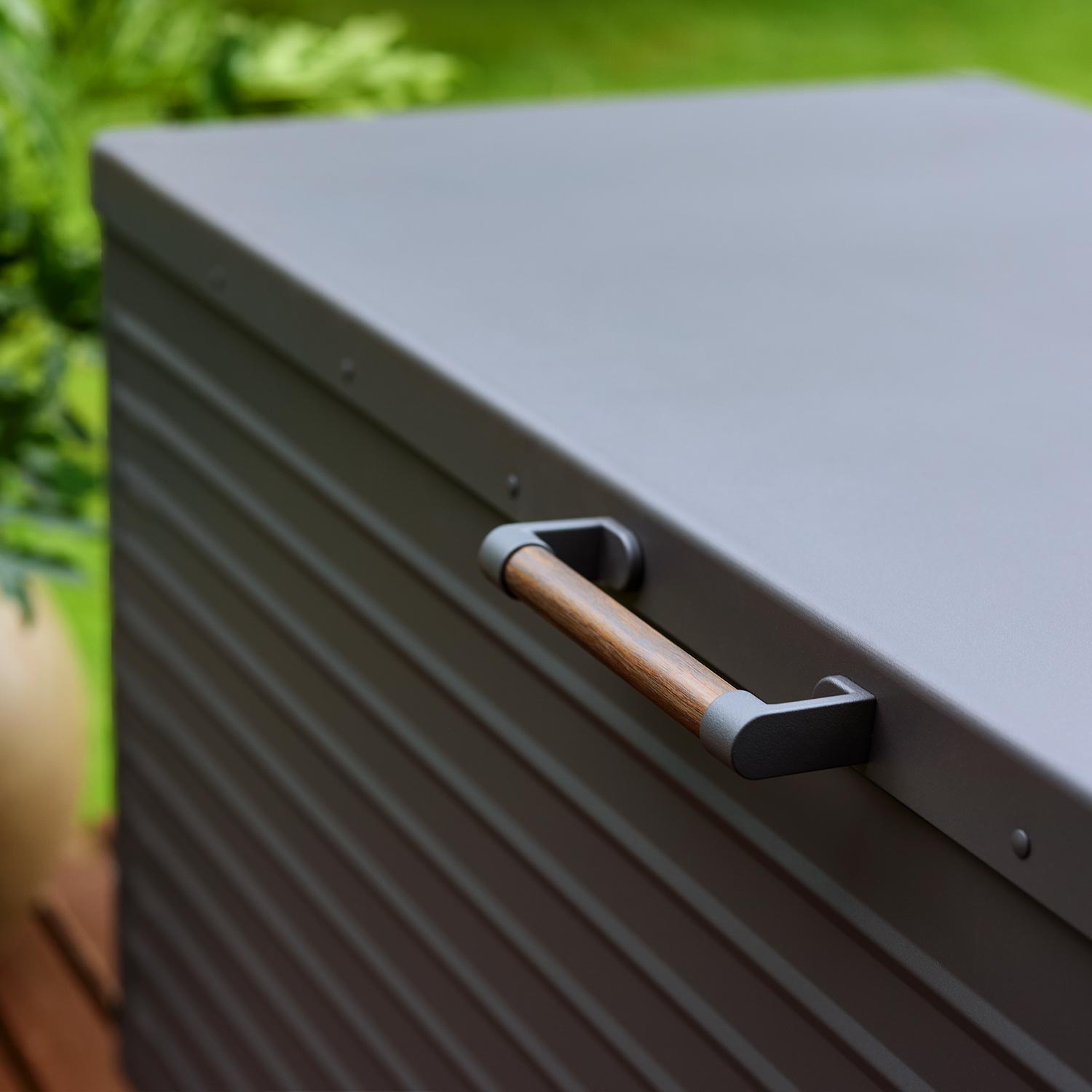
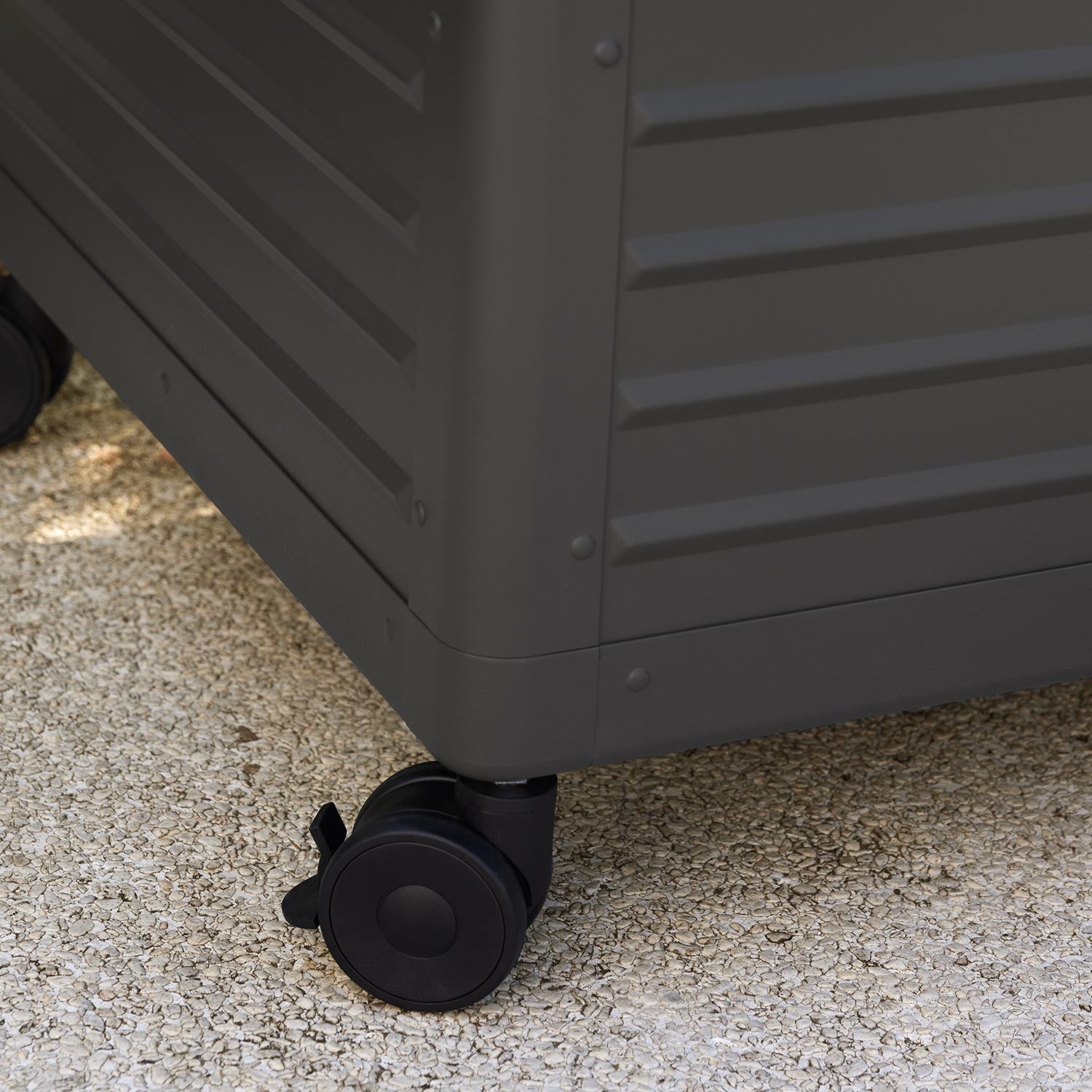
Our Deck Box Horizon 205 US Gallon has aluminum-and-steel construction, wheels, and a soft-opening and soft-closing lid. It offers a place to organize suitable dry outdoor essentials without assuming every cushion will fit.
Before using any outdoor box for seasonal storage:
- Start with a clean, dry interior and completely dry contents.
- Choose a suitable location away from standing water.
- Keep damp covers and tools separate from dry textiles.
- Check periodically for moisture, including after significant weather changes.
For more on sizing and intended uses, read what a deck box is and how to choose one.
Is Furniture Under a Pergola Protected Enough for Winter?
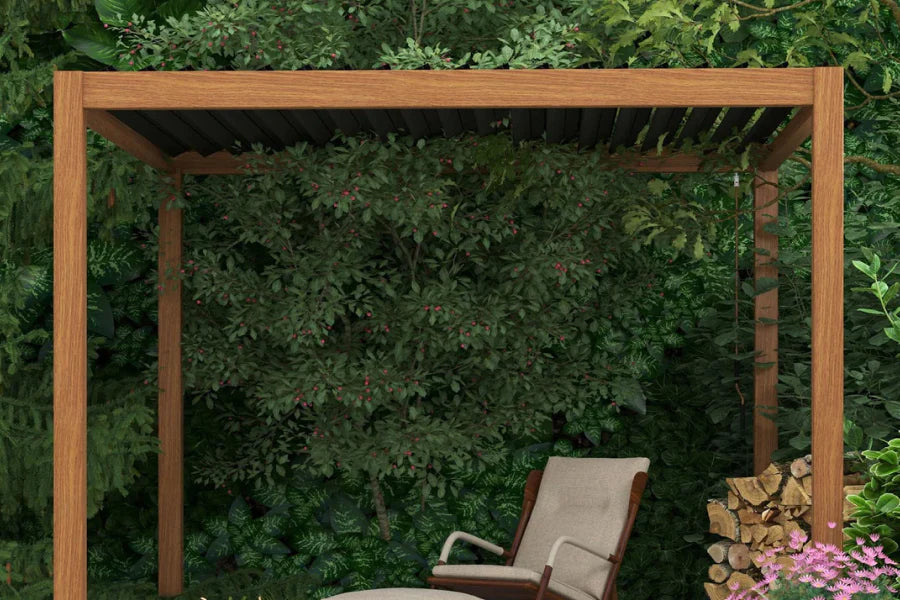
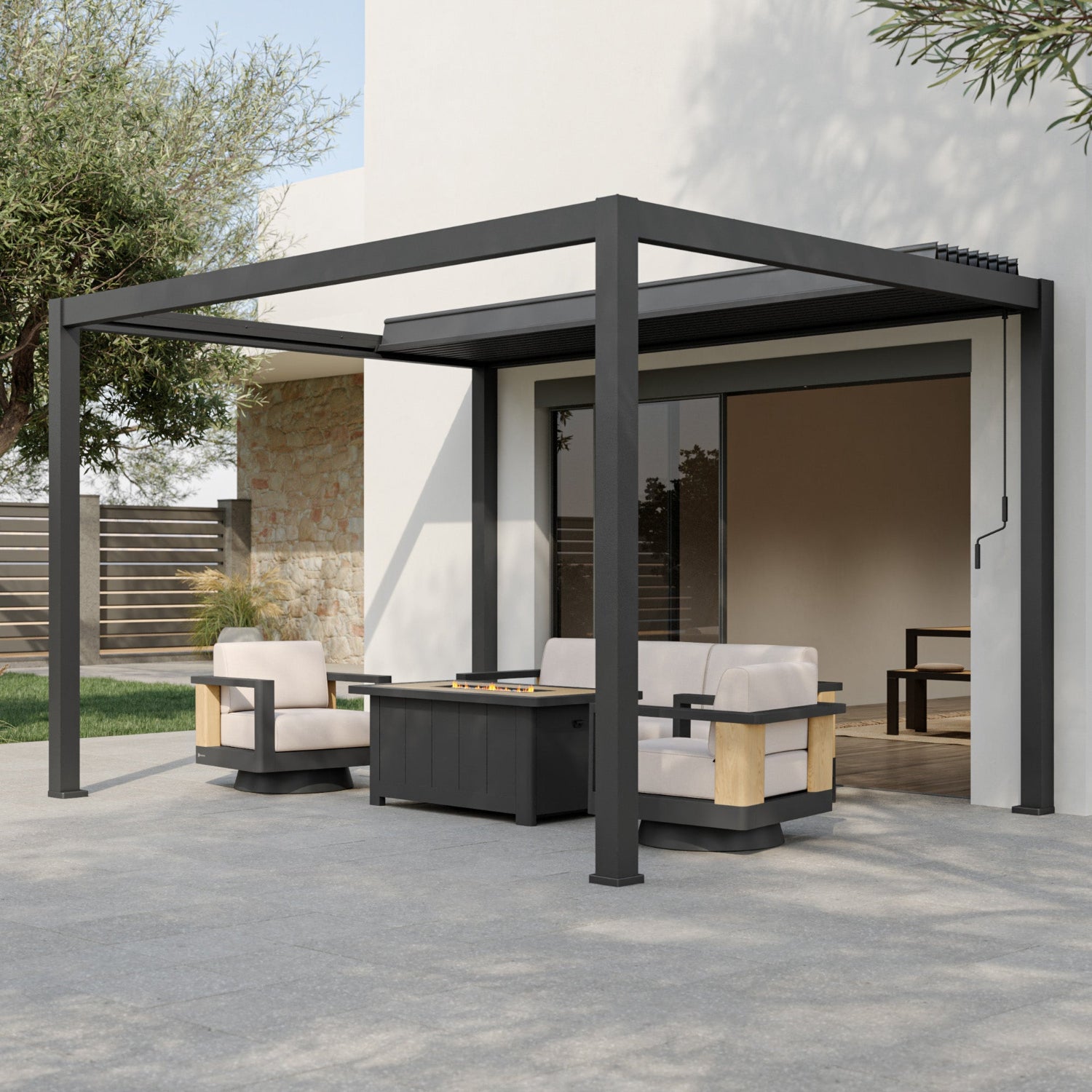
A pergola can be part of a sheltered patio layout, but it does not replace furniture covers or the dry storage required for cushions.
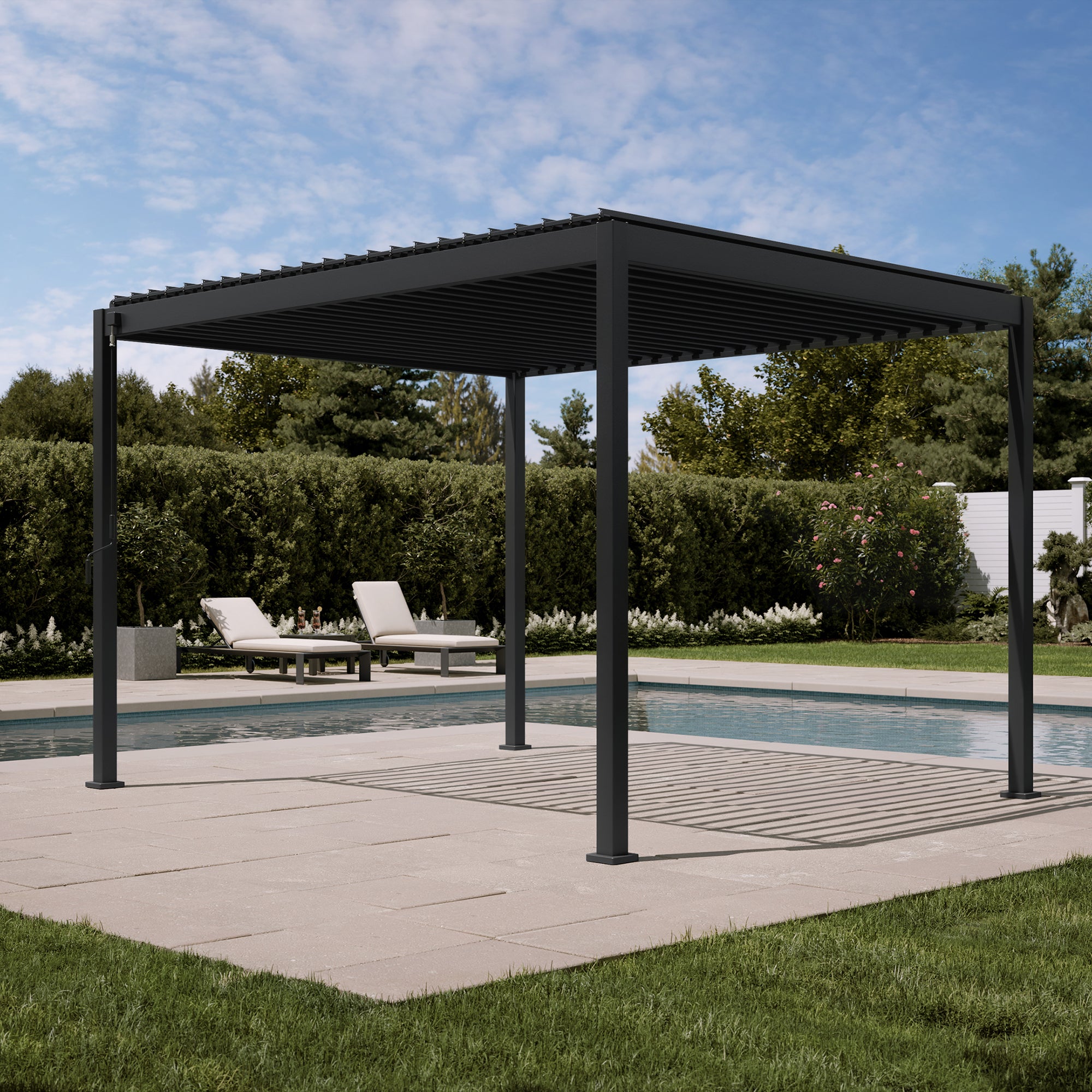
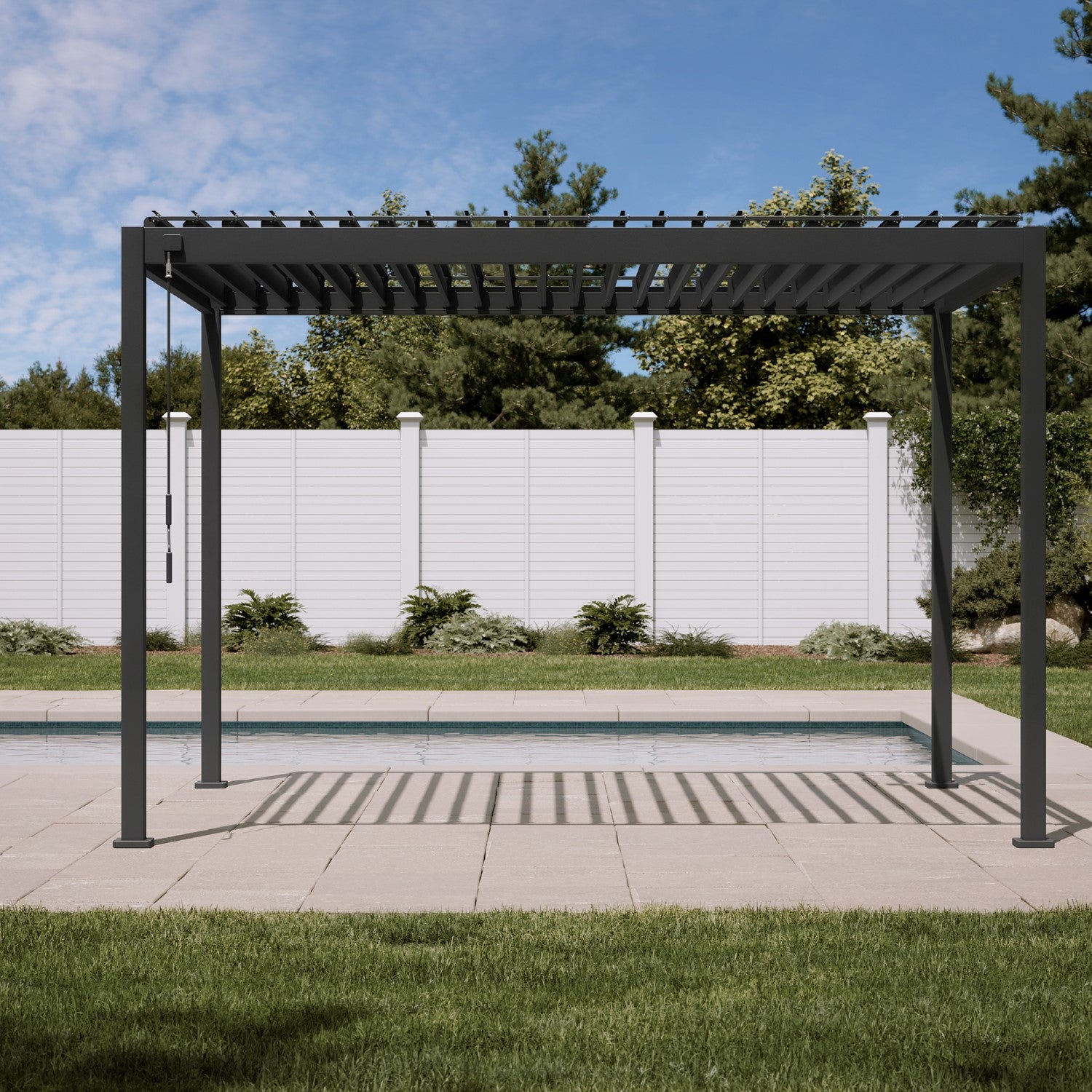
An open-beam pergola leaves the furniture exposed overhead. A suitable closing louvered roof with drainage can help manage overhead rain, while open sides still allow wind-driven precipitation to reach the seating area.
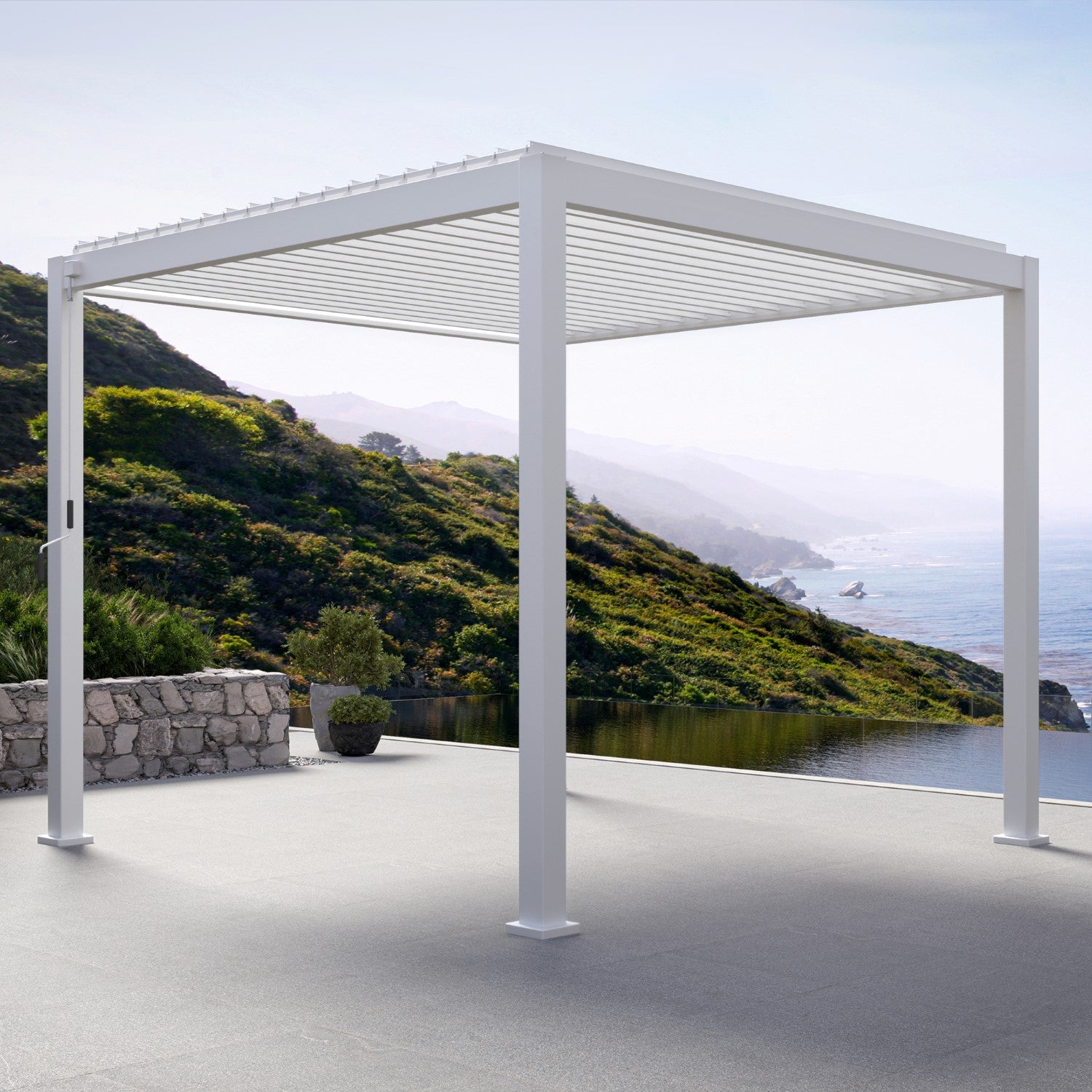
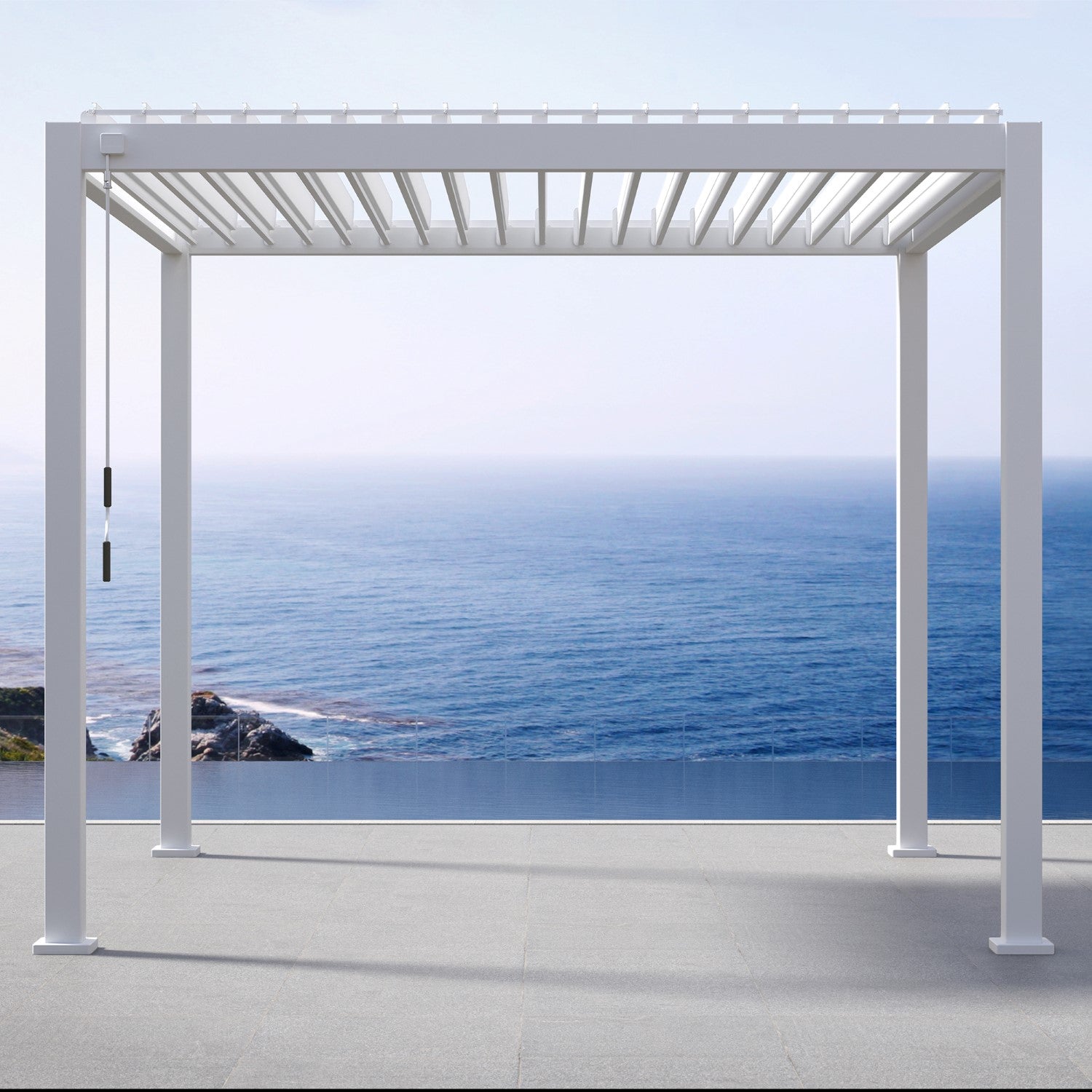
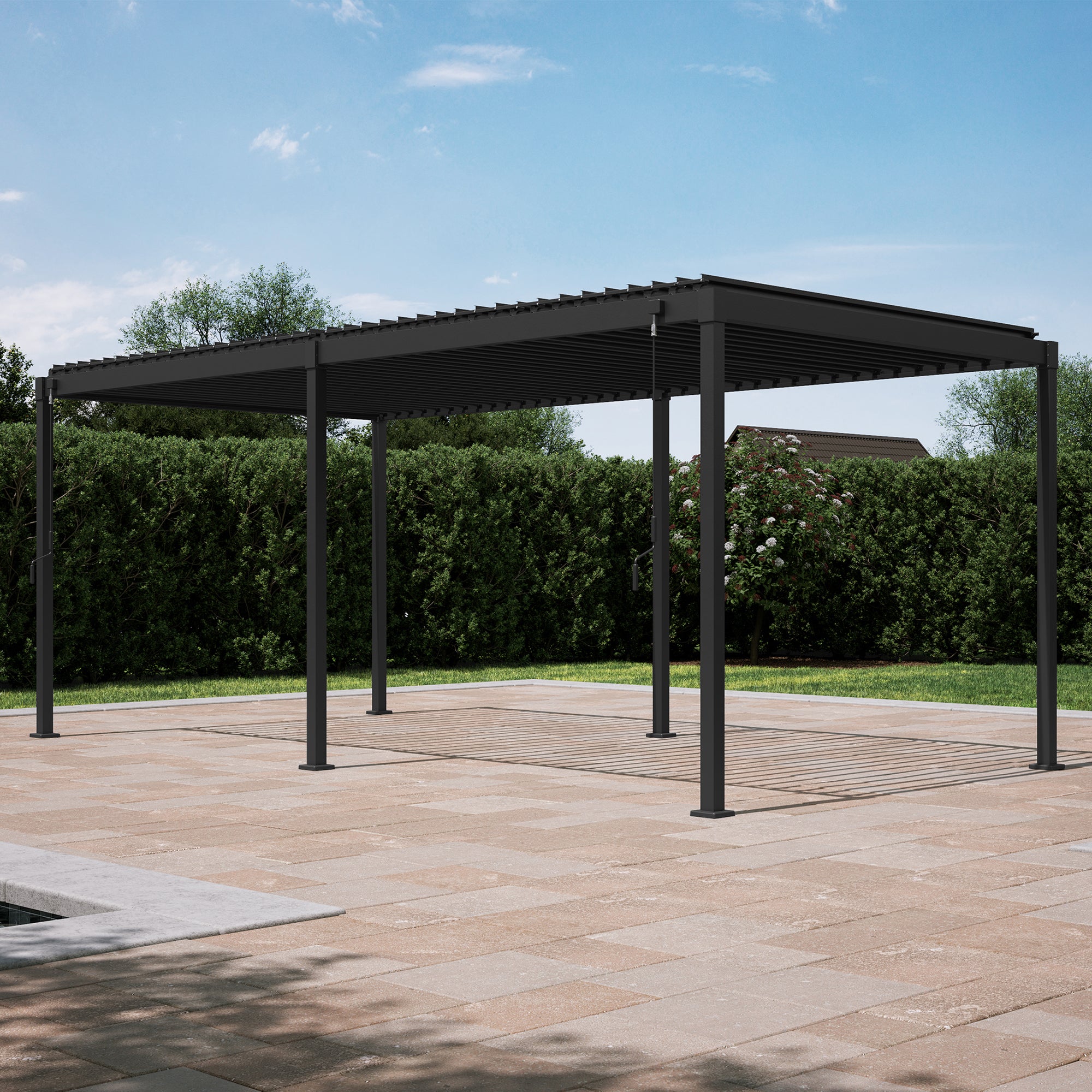
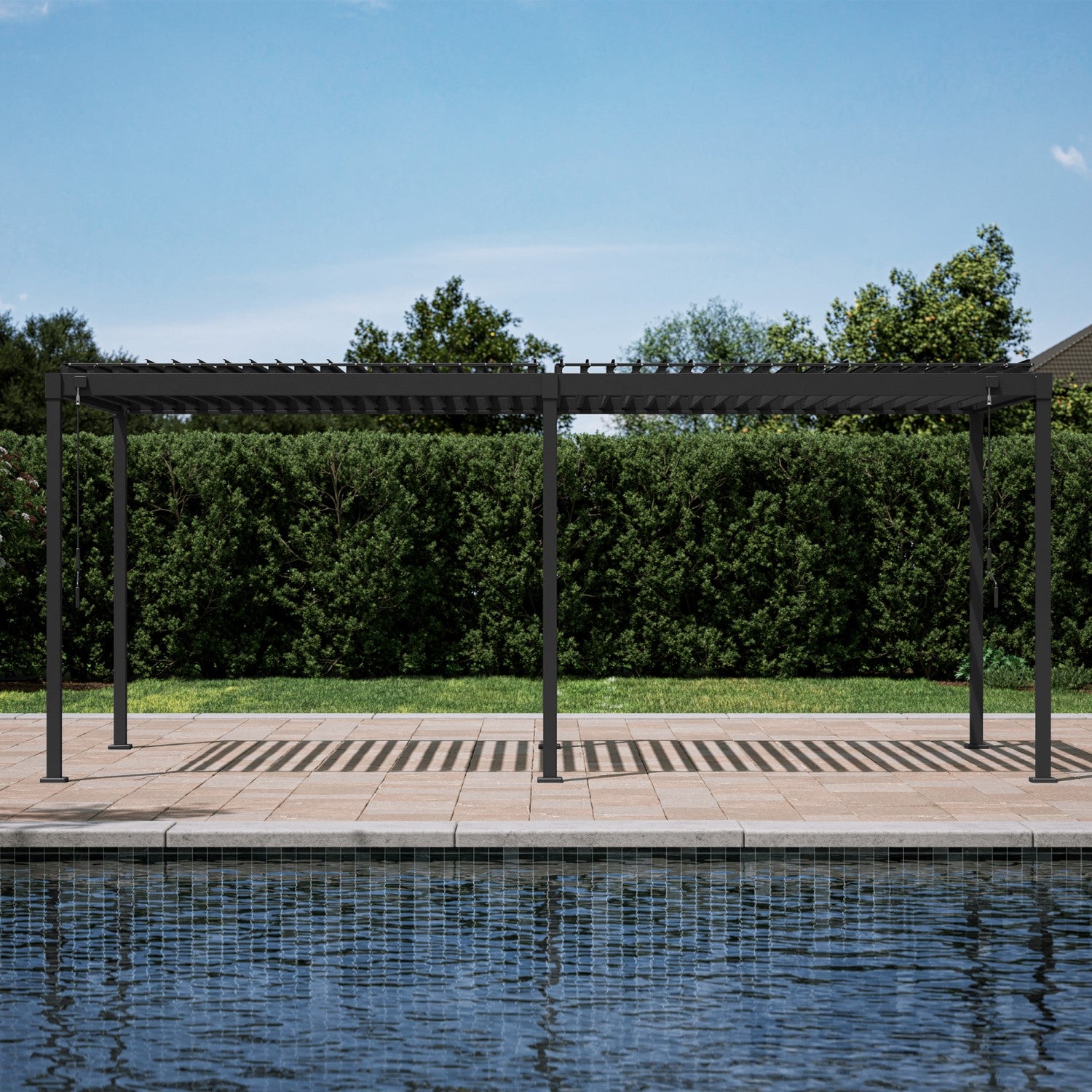
If you are planning a more sheltered outdoor space, explore our Mirador pergolas alongside a separate furniture storage plan. Our guide to whether louvered pergolas are waterproof explains the role of the roof, drainage, and open sides.
During snow, follow the pergola's roof instructions. For Mirador pergolas, prepare the louvers in a vertical position before accumulation while the mechanism is clear. Protect the furniture independently rather than keeping the roof closed solely to shelter stored cushions.
For model-specific winter considerations, see our pergola snow load and wind ratings guide.
Patio Furniture Winter Storage FAQs
Is It Better to Cover Patio Furniture or Bring It Inside?
Dry, suitable indoor storage reduces weather exposure and is the preferred option for cushions, natural wicker, and pieces with instructions requiring it. Furniture approved to remain outdoors can use appropriate covers and ongoing checks. Choose according to the complete piece, its condition, and your climate.
Can Patio Furniture Stay Outside Without a Cover?
Some products are designed for that use. Do not apply a general material claim to every assembled chair or table. Follow the furniture's instructions; for the Mirador sets discussed here, our manuals recommend covers for harsh weather and indoor storage for the removable cushions.
Can I Stack Chairs or Turn a Table Upside Down for Winter?
Only if the furniture is designed for that arrangement. Unsupported stacking can damage frames, seats, or finishes, and inverting a table may expose components or leave water trapped. Use the prescribed storage orientation rather than improvising to save space.
When Should I Put Patio Furniture Away?
Prepare it before extended wet weather or freezing conditions, with enough dry weather to finish cleaning and drying. There is no single nationwide storage date: a rainy Pacific Northwest patio, a snowy Midwest deck, and a sheltered Southern porch need different plans.
Make Spring Setup Easier
Before returning furniture to use, remove covers, inspect connections and finishes, and check that moving parts work correctly. Clean away any accumulated debris and bring cushions out once the seating area is ready.