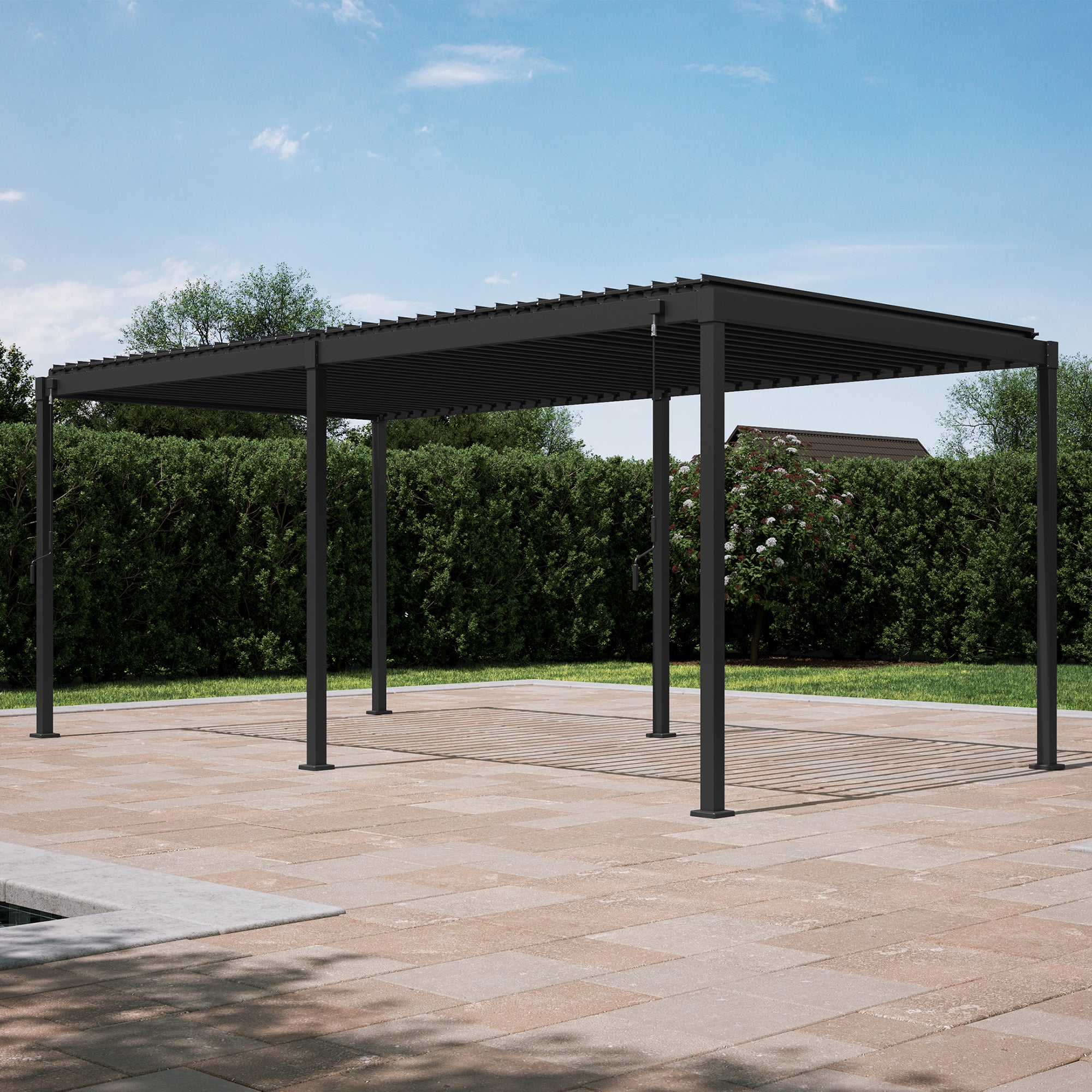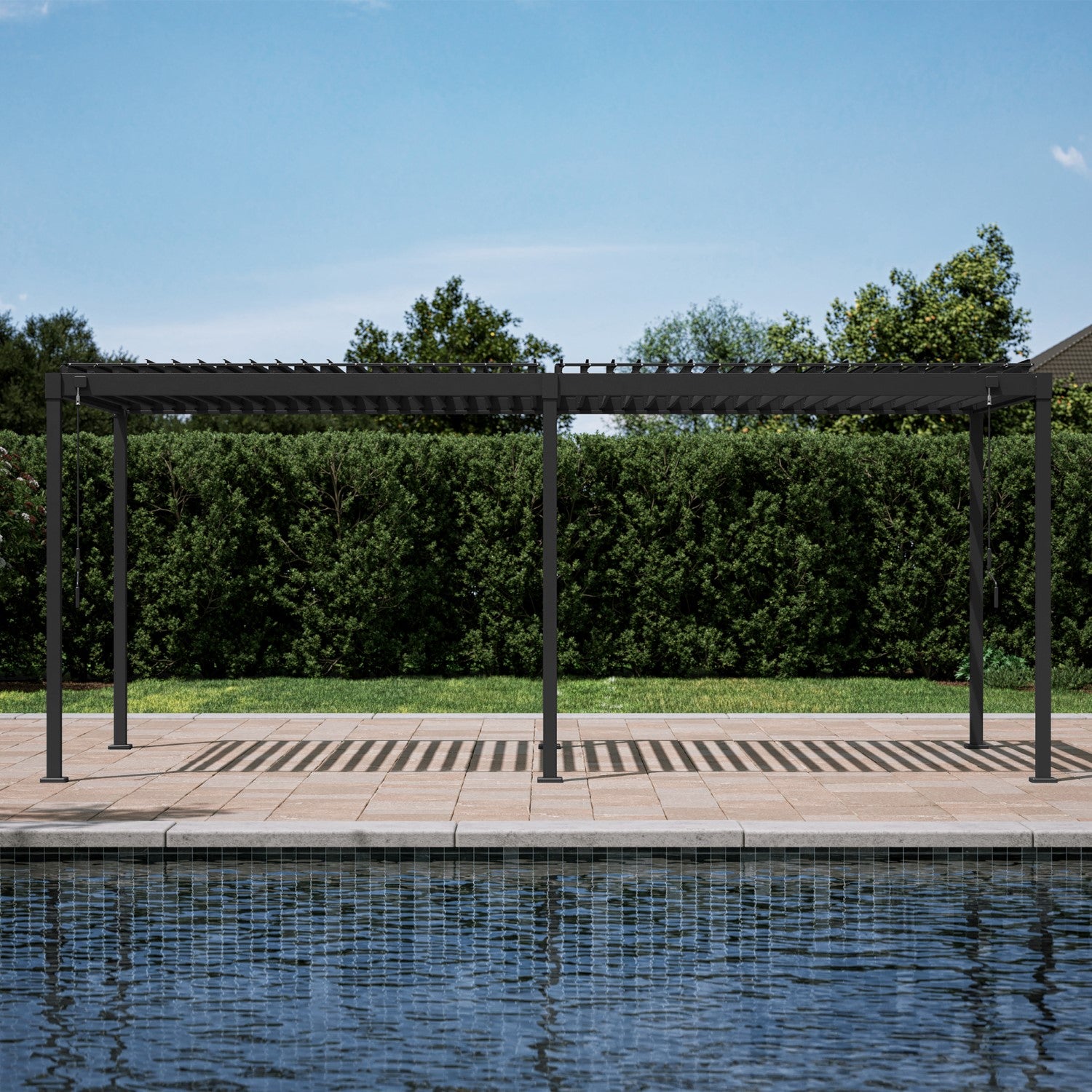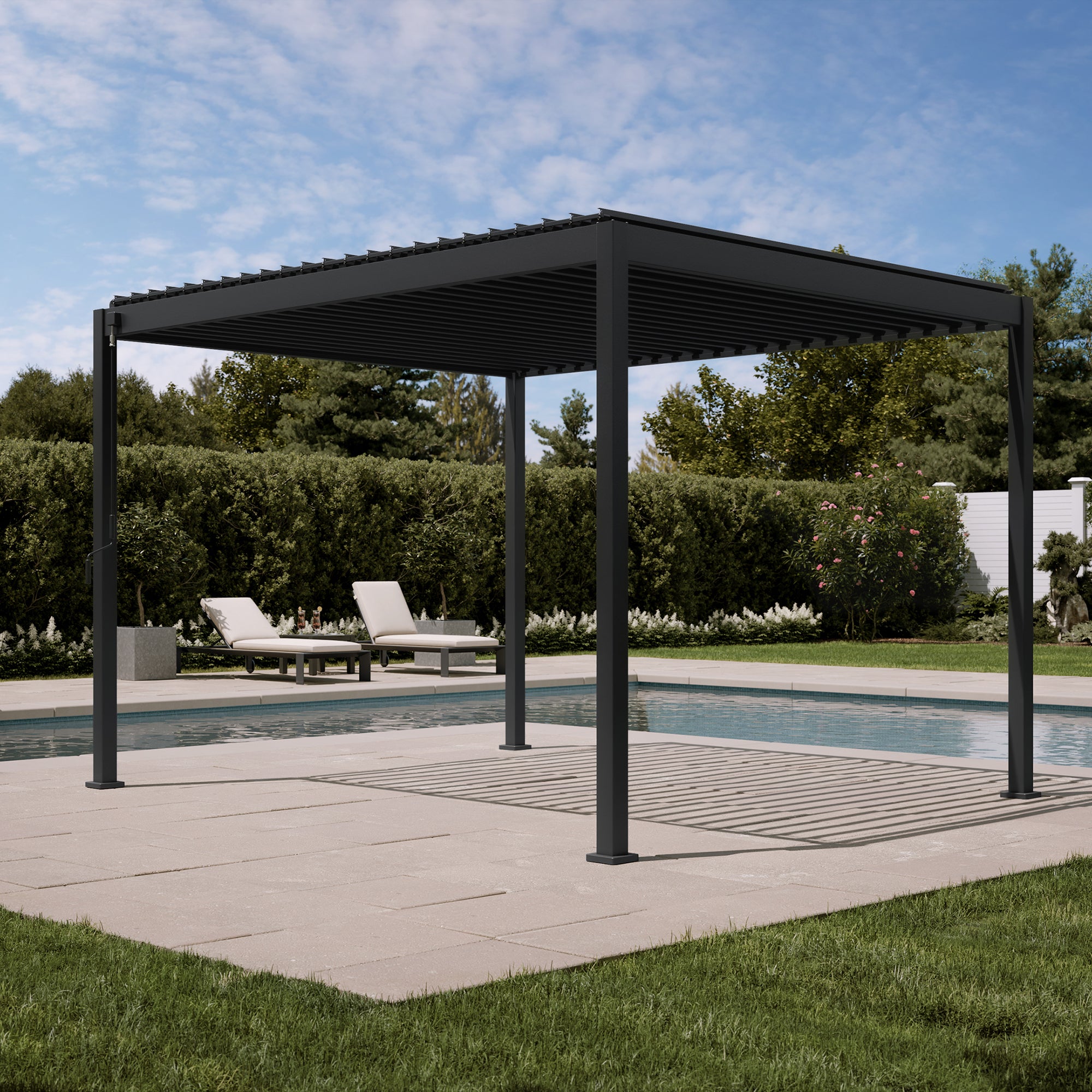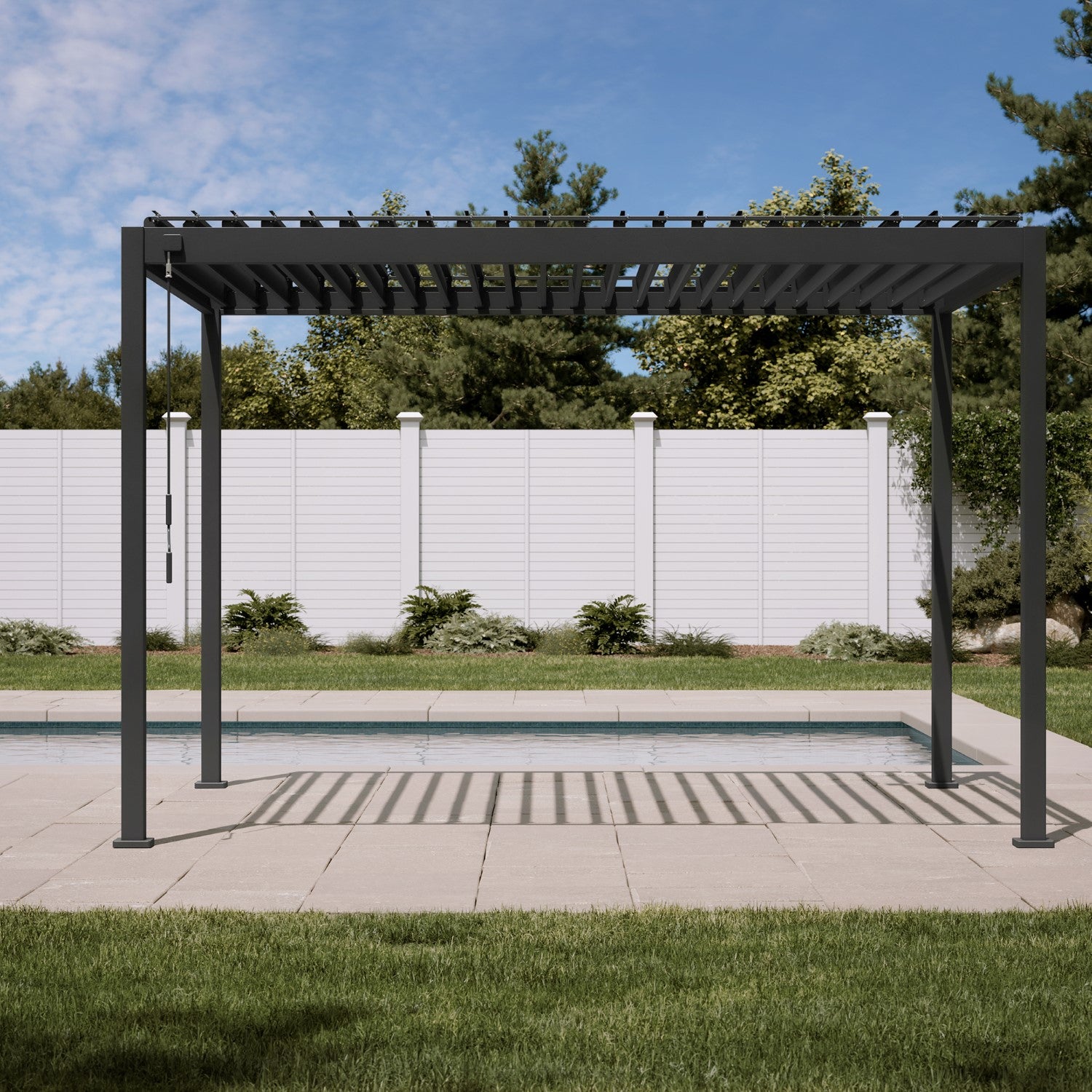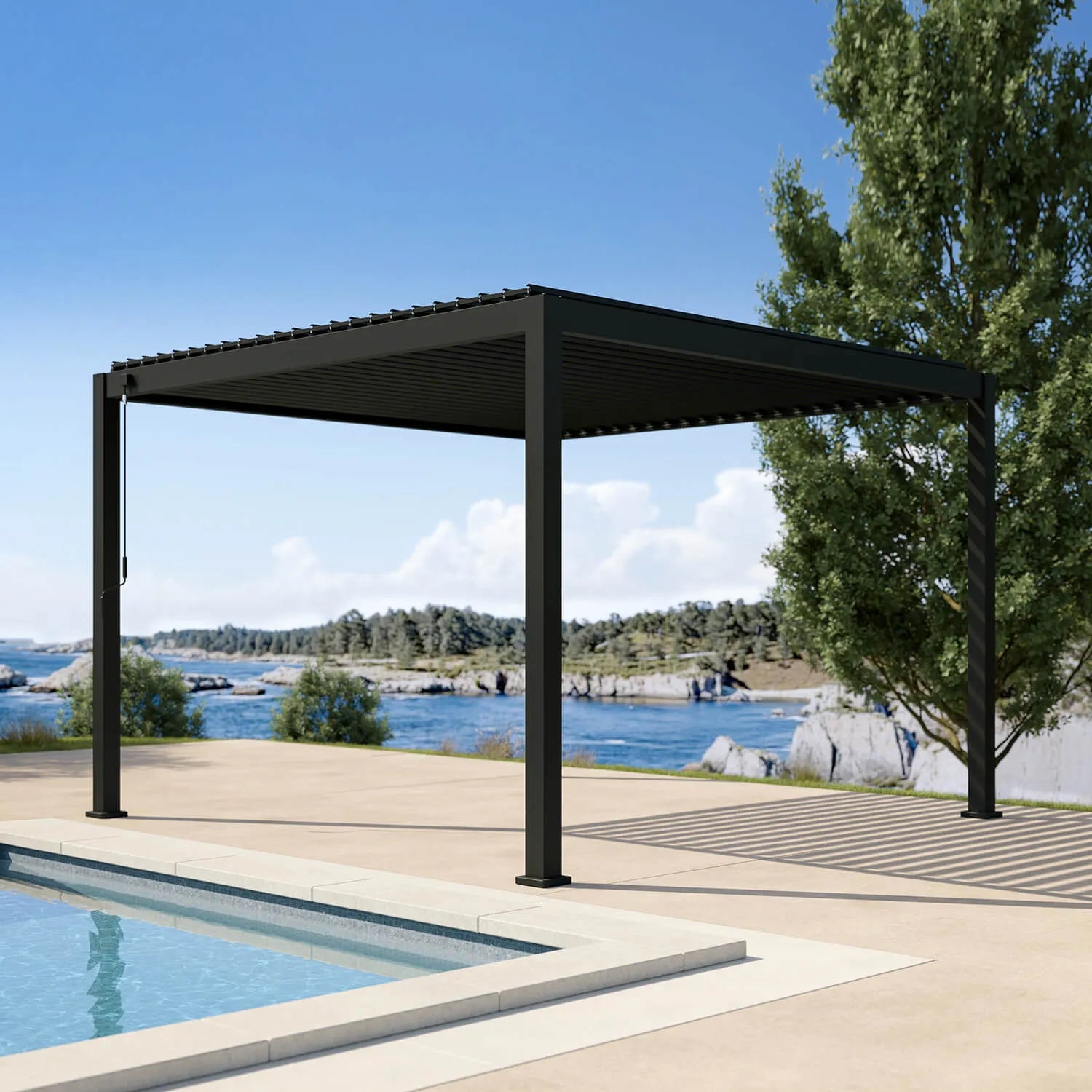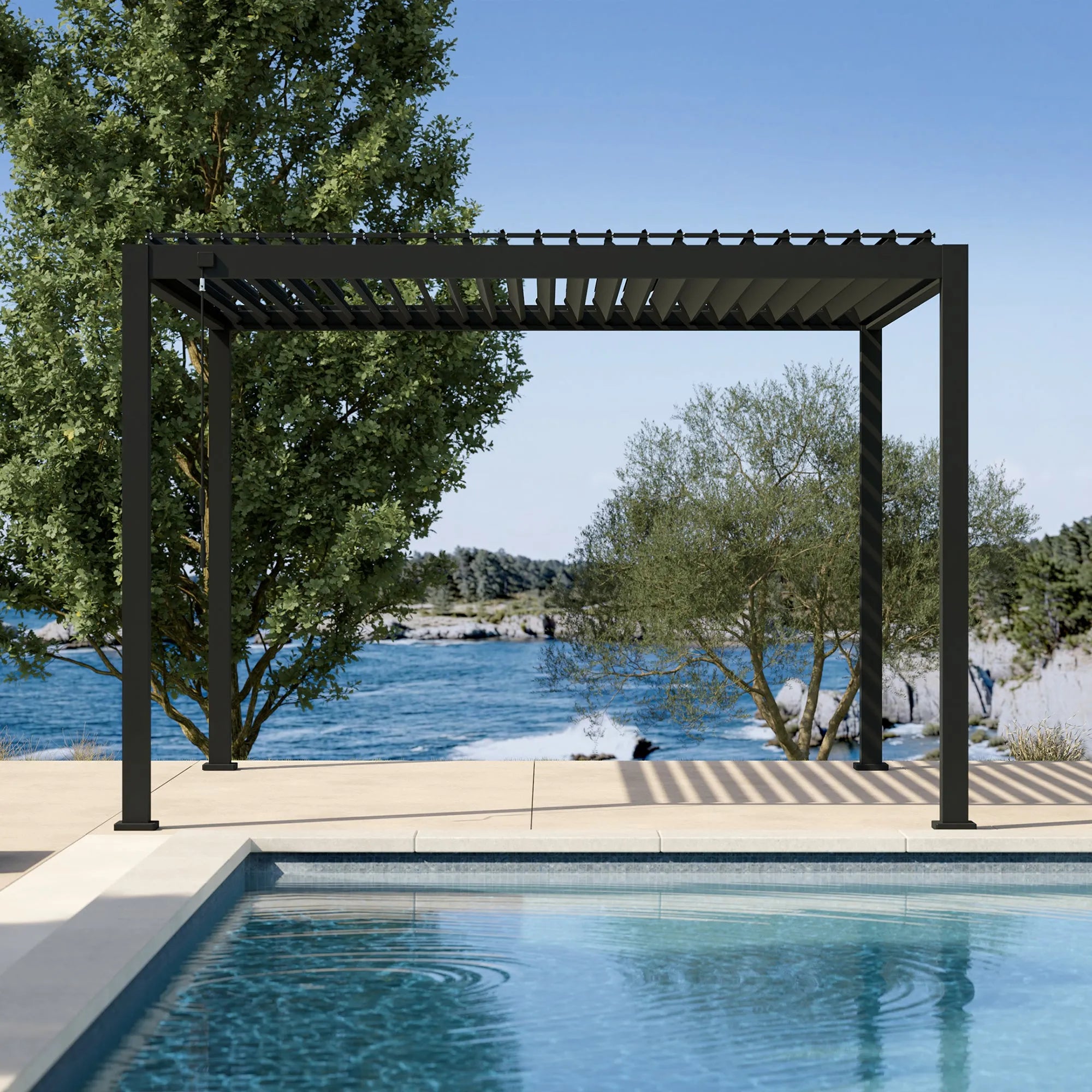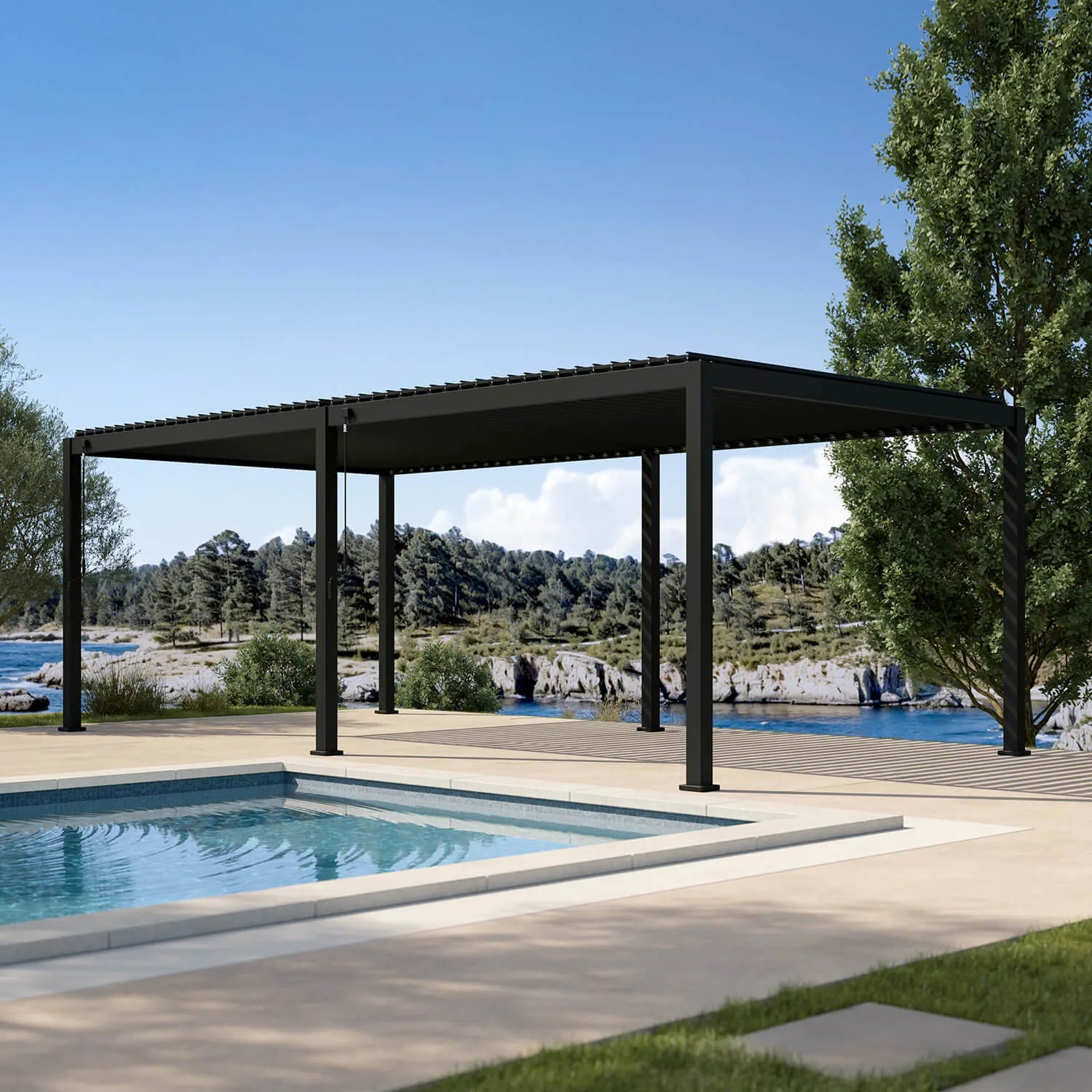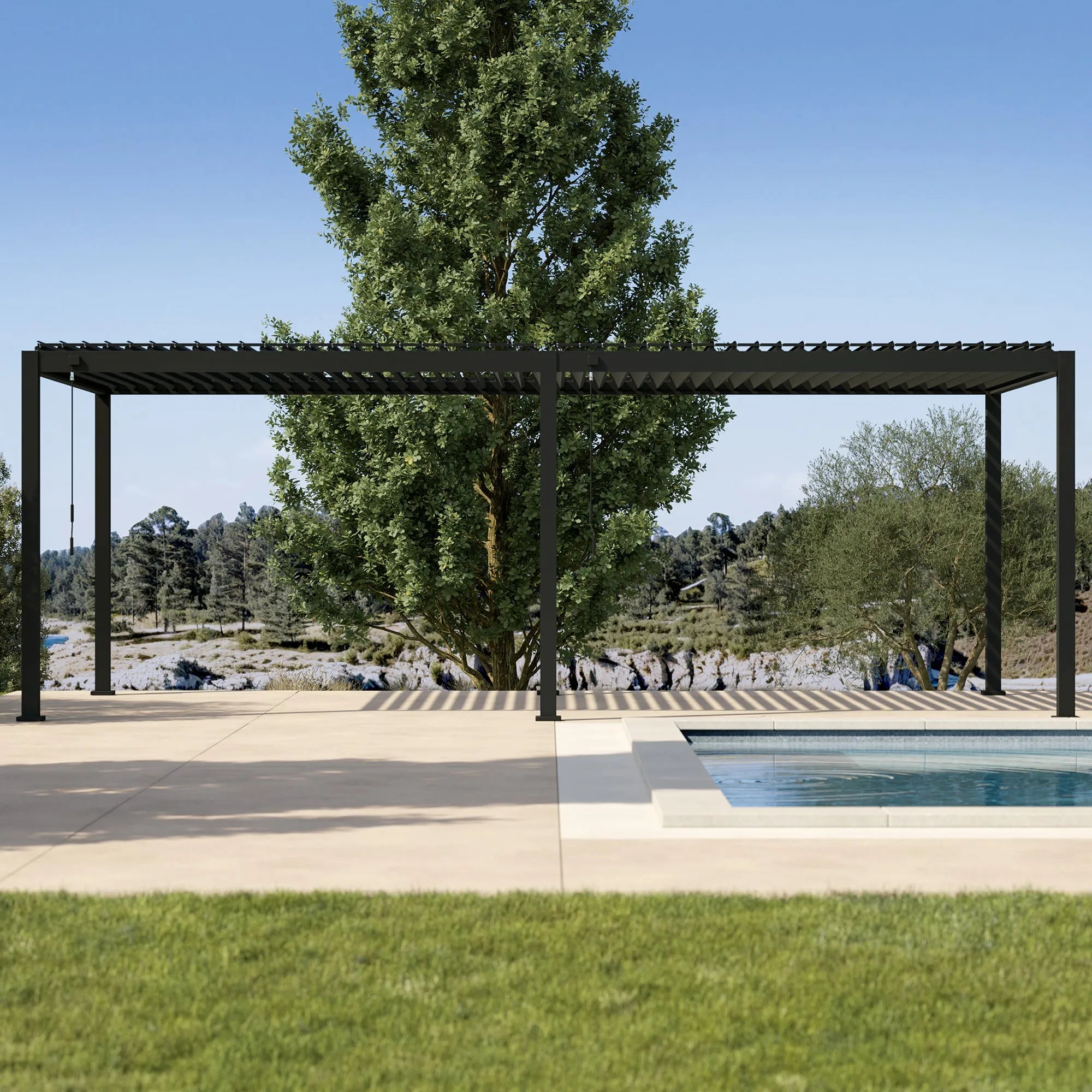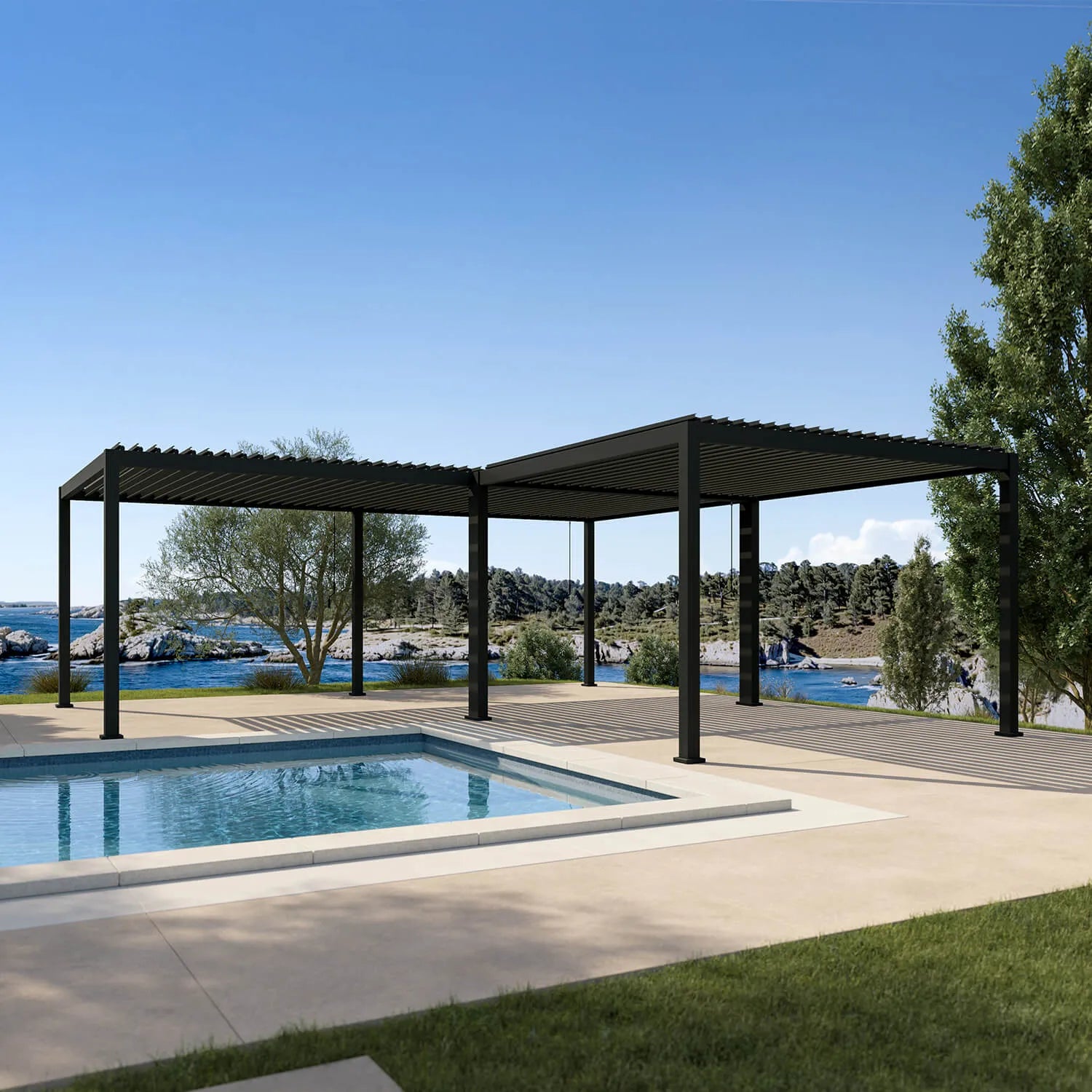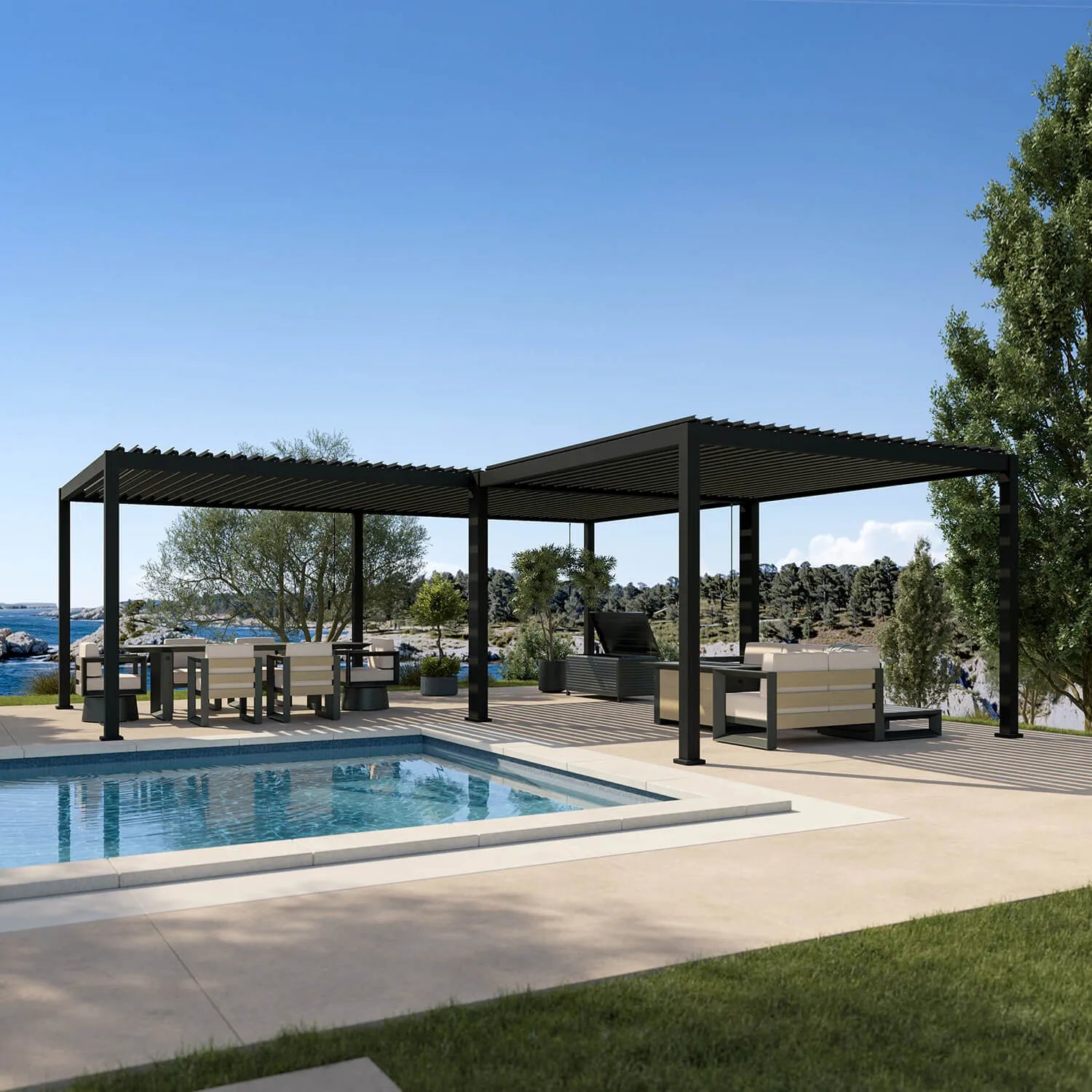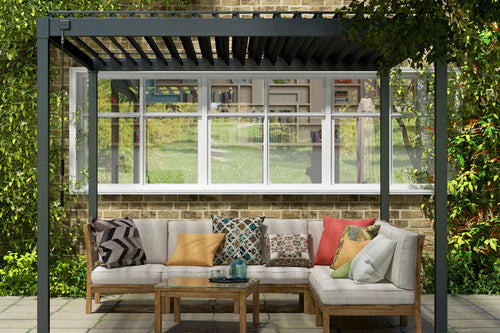

Louvered pergolas can provide overhead rain protection when their louvers are fully closed, the roof is designed to shed water, and the drainage system is working properly. The level of protection varies by model. Open sides also allow wind-driven rain to reach the space beneath, so a closed roof does not guarantee a completely dry patio in every storm.
For a dining table, outdoor sofa, or lounge area, the key is understanding how the roof handles rainfall—and where water can still enter. Here is what to expect, what to check before buying, and how to care for your pergola's drainage system.
What Does “Waterproof” Mean for a Louvered Pergola?
For a louvered pergola, waterproofing concerns the closed roof's ability to keep overhead rain out. It does not mean the entire outdoor space becomes an enclosed, weatherproof room.
Three features work together:
- Roof closure: the louvers reach their intended closed position.
- Water management: channels and gutters collect runoff and direct it to the outlets.
- Correct installation: alignment and connections preserve the intended drainage path.
Terms such as waterproof, water-resistant, and weather-resistant do not tell you everything about a pergola's performance. Check the specific model's rain-protection features and operating instructions, including guidance for heavy rain and strong wind.
A motorized roof is not automatically more waterproof than a manual one. The roof and drainage design determine rain management; the motor changes how you adjust the louvers.

How Does a Louvered Pergola Handle Rain?
Closed Louvers Form an Overhead Cover
When the roof is open, the gaps between louvers allow sunlight, airflow, and rain through. Closing the louvers brings the panels into their designed position for overhead shelter.
Louver profiles and joints differ between systems. Some roofs use overlapping or interlocking panels; other designs include seals. These features are specific to the product.
For ordinary rain, use the roof's intended closed position. A partly open roof leaves gaps, so it should not be relied on for rain protection unless the model's instructions expressly allow it.
Gutters and Channels Carry Water Away
Keeping water off the seating area is only part of the job. The roof must also direct runoff away.
In many louvered pergolas, water enters roof channels or perimeter gutters before flowing through designated drainage routes. The outlet location matters: runoff needs somewhere to go without pooling beside furniture, a doorway, or the base of a post.
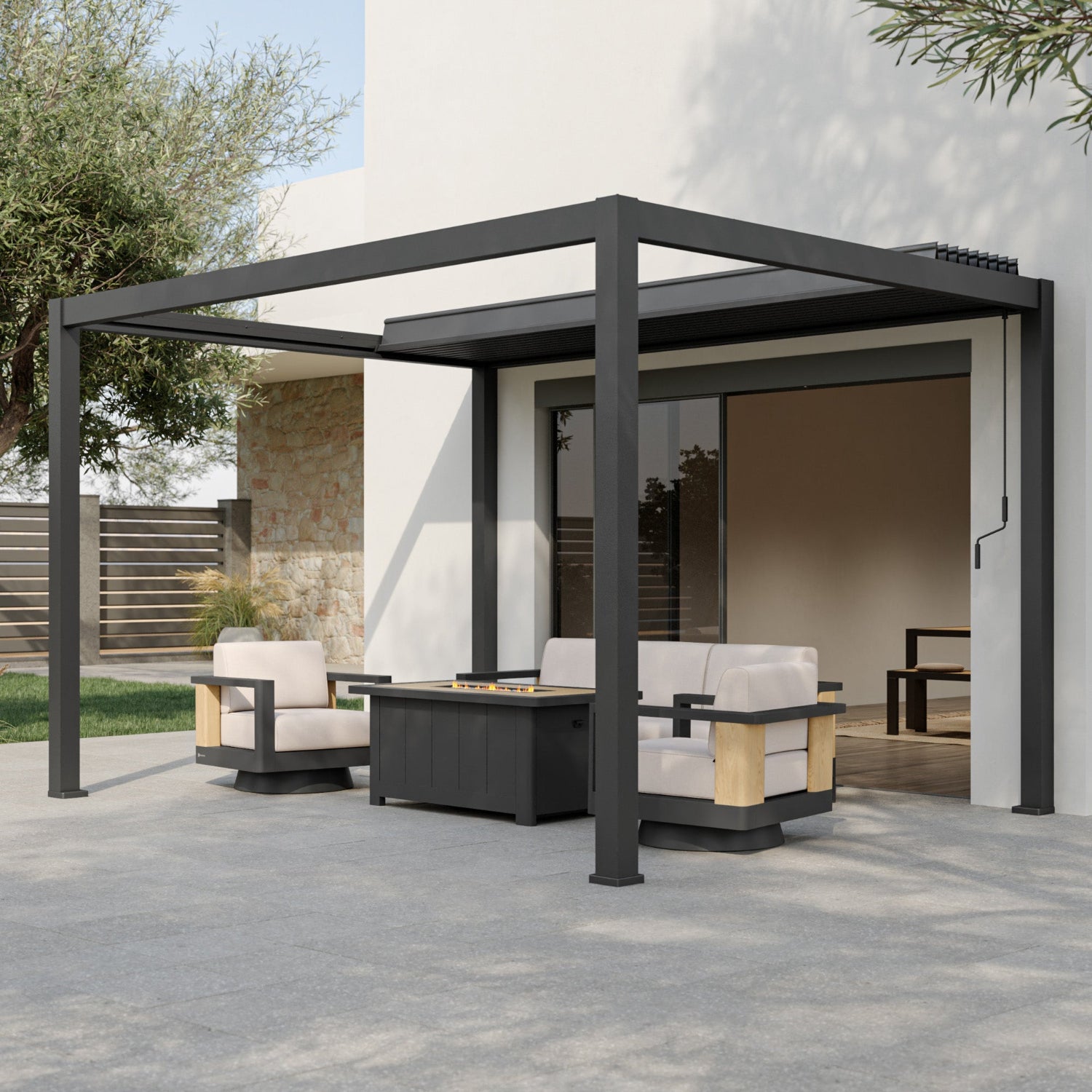
Our Mirador 111DA 10' × 20' Pergola includes an integrated water drainage system to manage roof runoff. When planning your installation, consider both the covered area and the surface where water will discharge.

Installation Keeps the Drainage System Working as Intended
Roof alignment, connections, and outlet clearance affect how water moves through the structure. Follow the instructions for the exact model, including any leveling or sealing requirements.
Avoid adding an improvised slope or closing a drainage opening. Changes to the intended water path can create new problems.
Can You Stay Dry Under a Louvered Pergola?
A suitable closed roof can shelter you from overhead rainfall. Your experience also depends on the rain's direction, the pergola's exposure, and where you place your furniture.
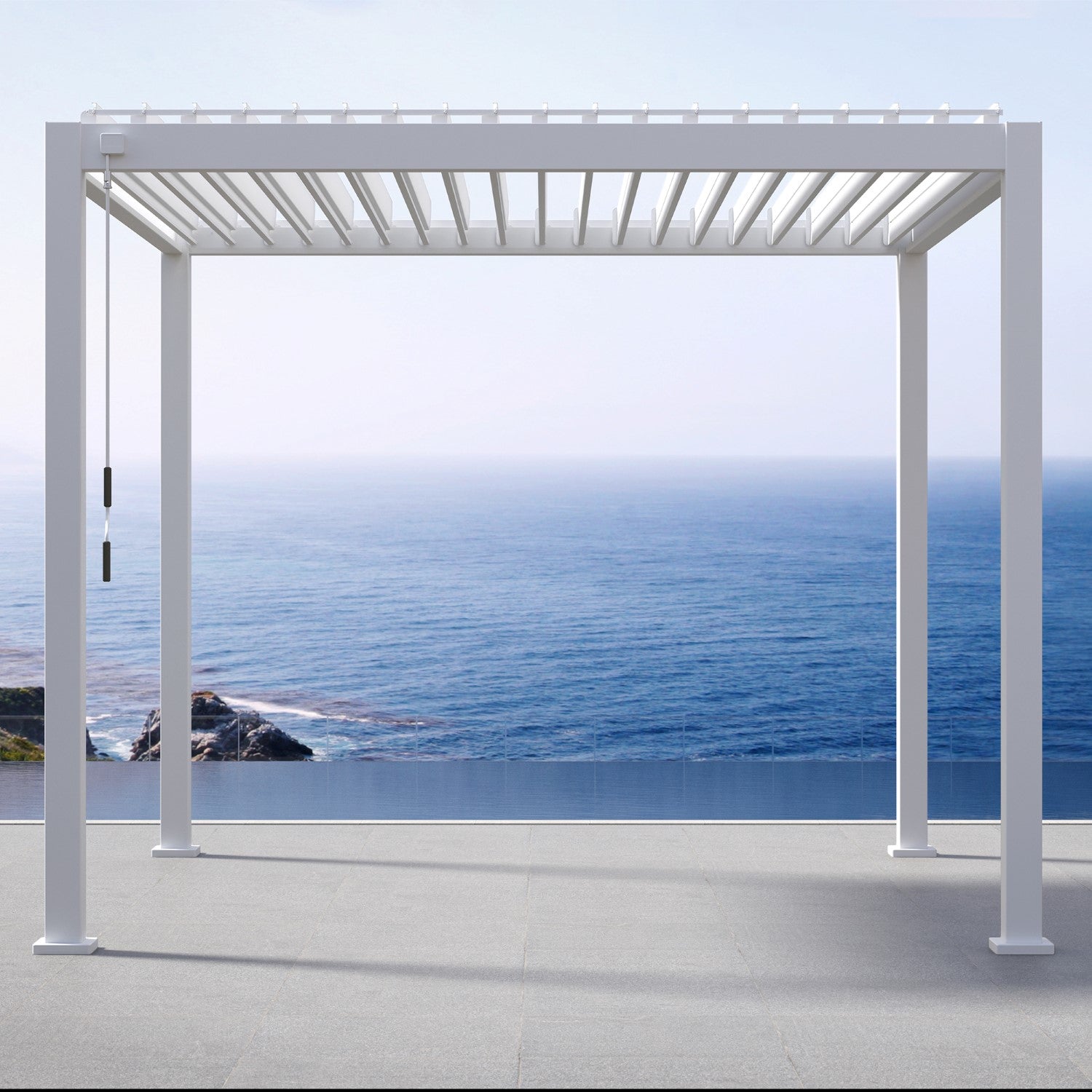
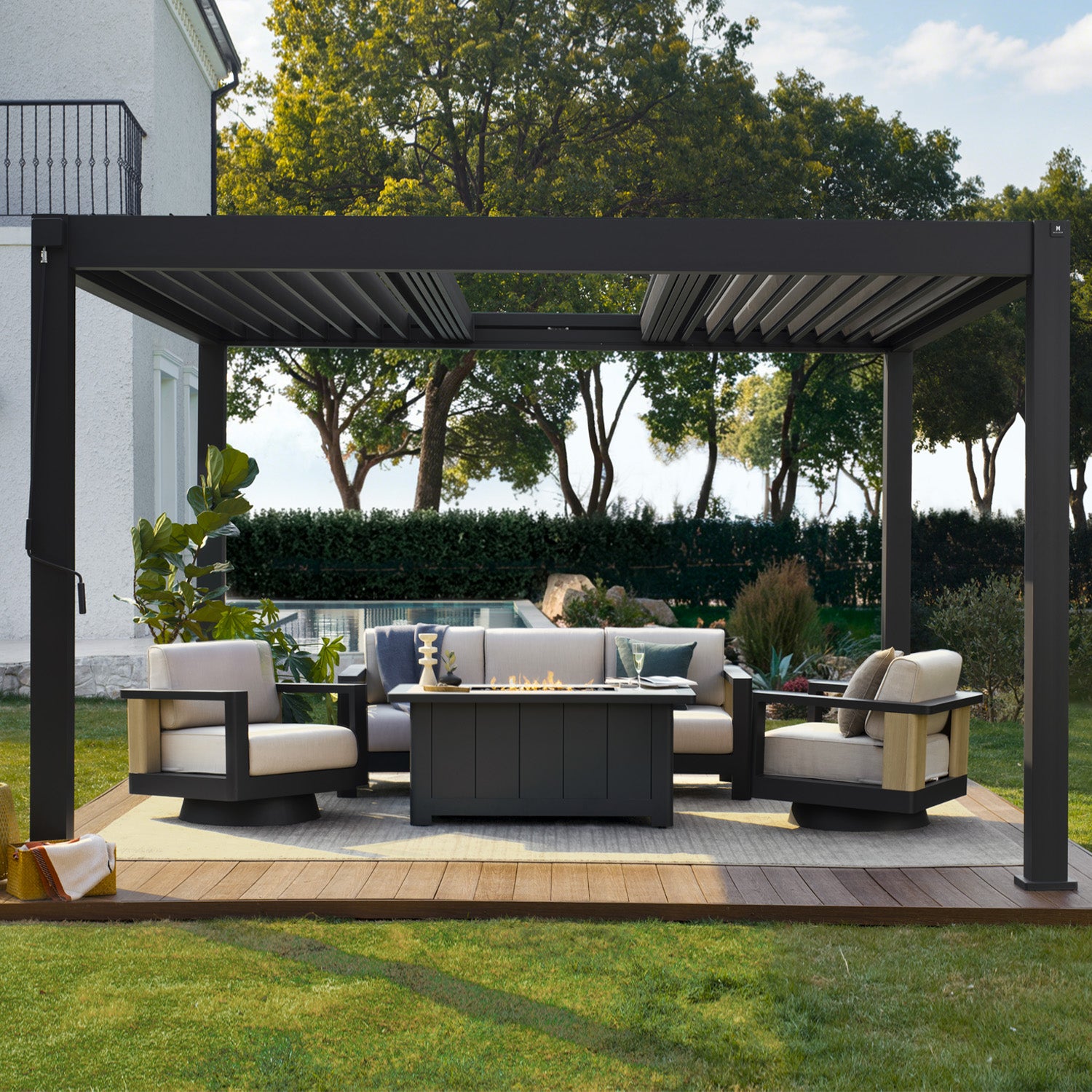
Our Mirador 111S E-Motion 10' × 13' Pergola in White combines a waterproof closing roof with integrated guttering that directs rainwater through the legs. Remote-controlled louvers make it convenient to adjust the roof as conditions change.

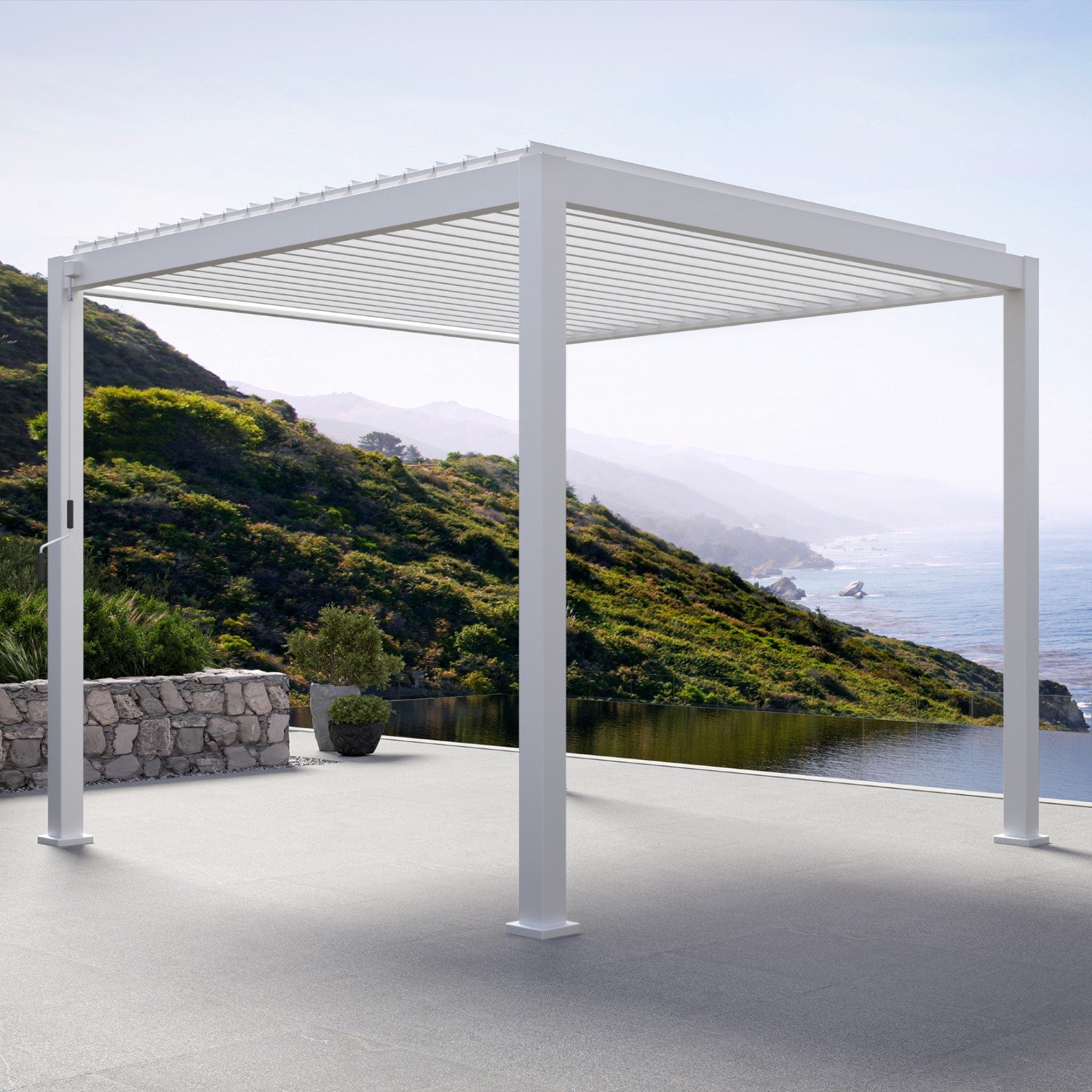
For light-rain shelter, our Mirador 80S 10' × 10' Pergola uses interlocking louvers to form an overhead cover and channel water away. Its intended rain protection is for light rain.

Choose the model's rain-protection features around how you plan to use your patio. Moving seating farther from exposed edges can also reduce contact with rain blowing in from the sides.
What Happens During Heavy Rain or Strong Wind?
Heavy rainfall brings more runoff for the drainage system to handle. Strong wind can drive rain through open sides and toward roof joints.
Even with the roof closed, an exposed patio may experience side rain, splashback, or water entering from surrounding surfaces. These conditions matter when deciding where to place cushions, rugs, and other moisture-sensitive items.
Before choosing a pergola, check:
- Guidance for heavy rain and adverse weather.
- The intended drainage route and how outlets stay clear.
- Any model-specific rain tests and the conditions they cover.
- Instructions for roof operation during storms.
Wind and snow ratings describe structural performance; they do not establish how much rainfall a roof can keep out.
Follow your model's severe-weather instructions. The roof position used for ordinary rain may differ from the position required during strong wind, snow, or other severe conditions.
Why Is Water Getting Under My Pergola?
First, identify where the water enters. A wet cushion near an open edge can have a different cause from repeated dripping through a roof joint.
| Where You Notice Water | Possible Cause | What to Check |
|---|---|---|
| Furniture near an open side | Wind-driven rain or splashback | Rain direction, furniture placement, and nearby surfaces |
| Along a gutter or roof corner | Debris, restricted flow, a connection issue, or rainfall exceeding drainage capability | Accessible channels, connections, and outlets |
| Through one spot in the closed roof | Incomplete closure, misalignment, damage, or a joint issue | Louver position and installation |
| Around a post base | Runoff discharge, poor surface drainage, or a restricted outlet | The intended outlet and surrounding ground |
| Drops falling when the roof reopens | Residual water moving with the louvers | Drainage and reopening instructions |
These checks help locate the issue. Persistent water entering through the closed roof deserves closer inspection.
Check Accessible Drainage Routes
Leaves, seeds, and other debris can restrict water flow. Inspect accessible gutters, channels, and outlets as directed in the care instructions, particularly after weather that brings debris onto the roof.
Keep drainage outlets clear of paving, decorative coverings, and accessories. For concealed or hard-to-reach areas, contact us for guidance on your Mirador model rather than dismantling components without instructions.
Check That the Louvers Close Correctly
Make sure the panels reach their intended closed position. If the mechanism catches or the panels appear uneven, avoid forcing them.
Take photographs or a short video showing where water appears, the roof position, and the weather conditions. This information helps our support team assess the problem.
Use Approved Repair Methods
Apply sealant only where the installation or repair instructions specify it. Sealing drainage openings, drilling new holes, or altering the mechanism can interfere with water management.
If water repeatedly enters through the closed roof during conditions your model is designed to handle, contact us for support.
Does Aluminum or Steel Make a Pergola Waterproof?
Frame material influences durability and care, but it does not determine rain protection on its own. A metal pergola still needs a suitable closing roof, sound connections, and effective drainage.
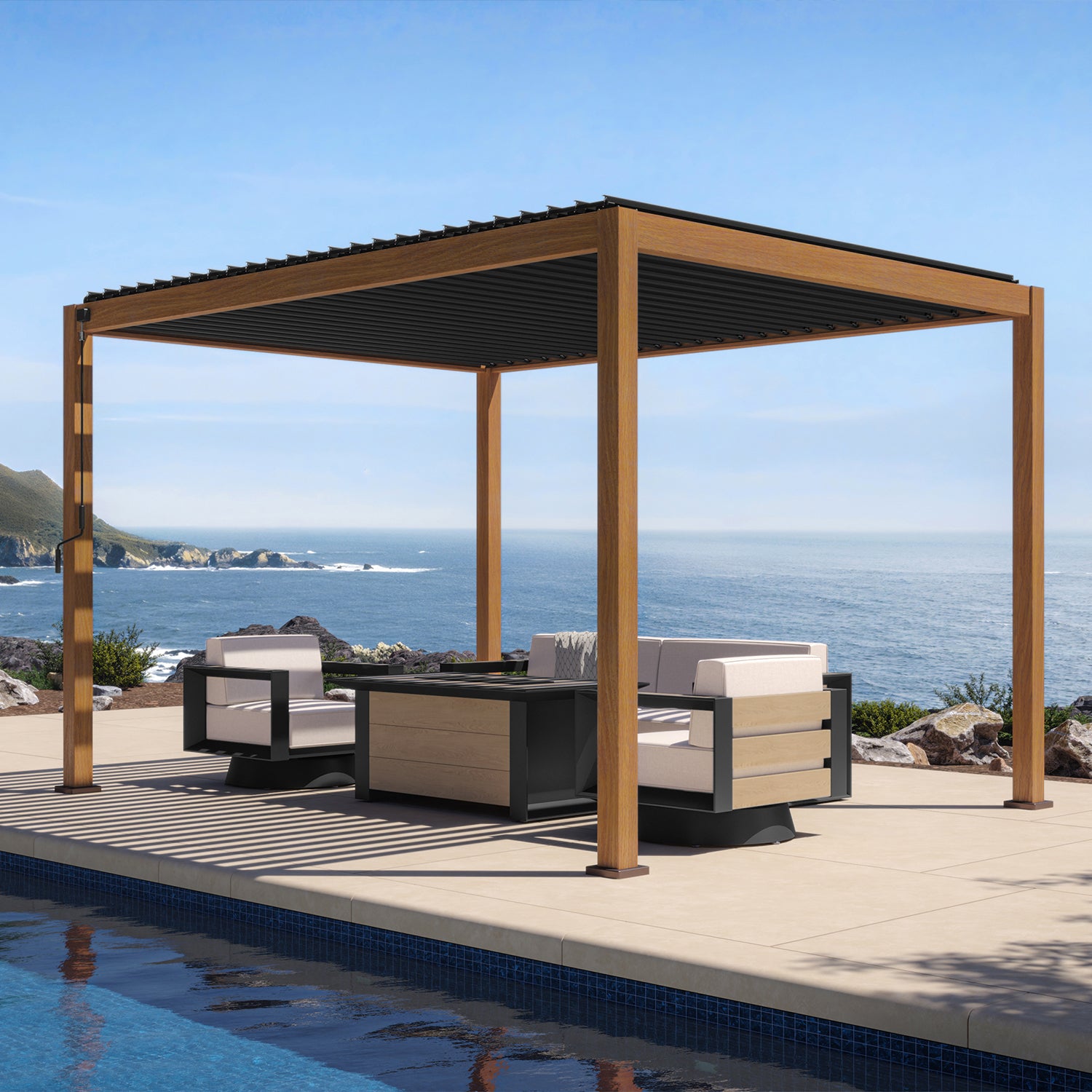
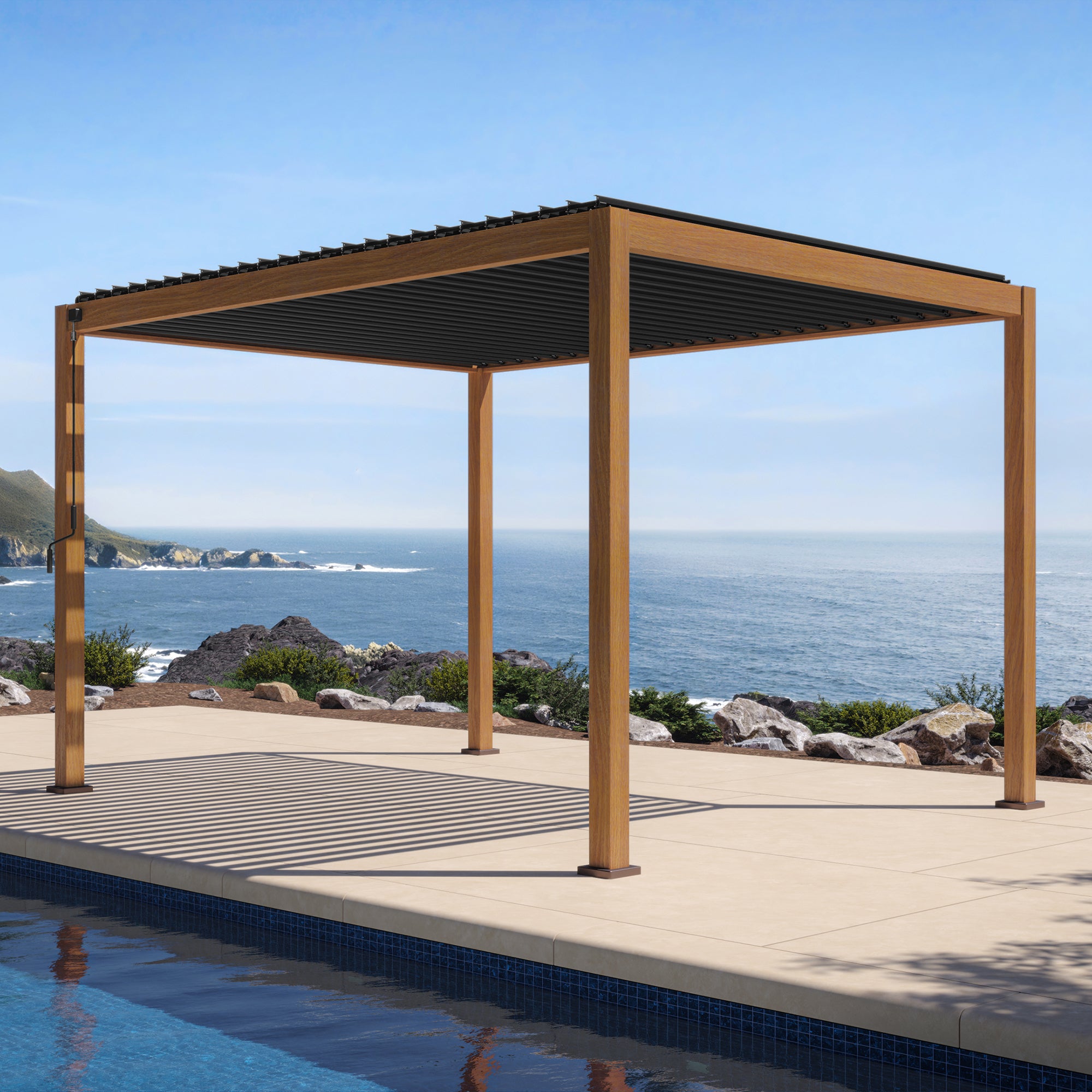
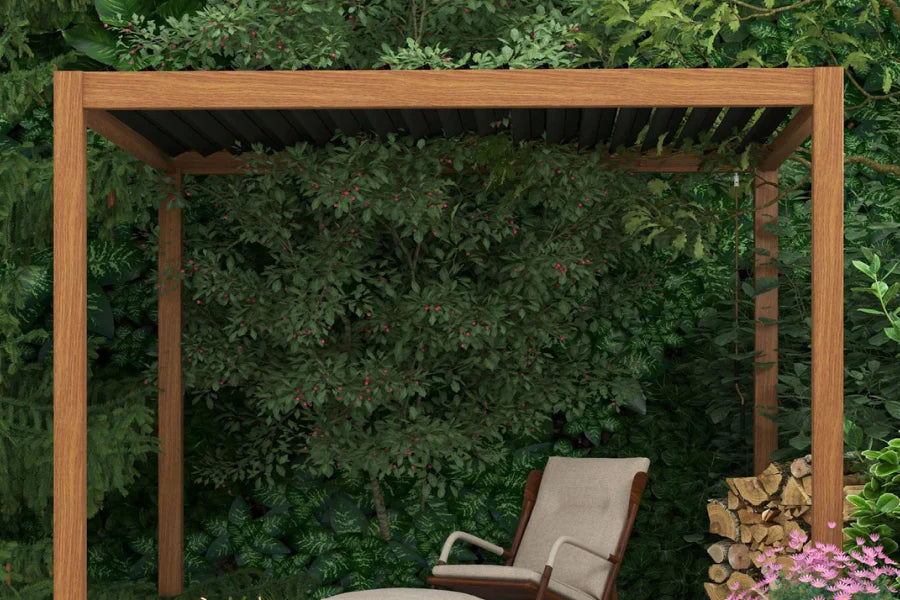
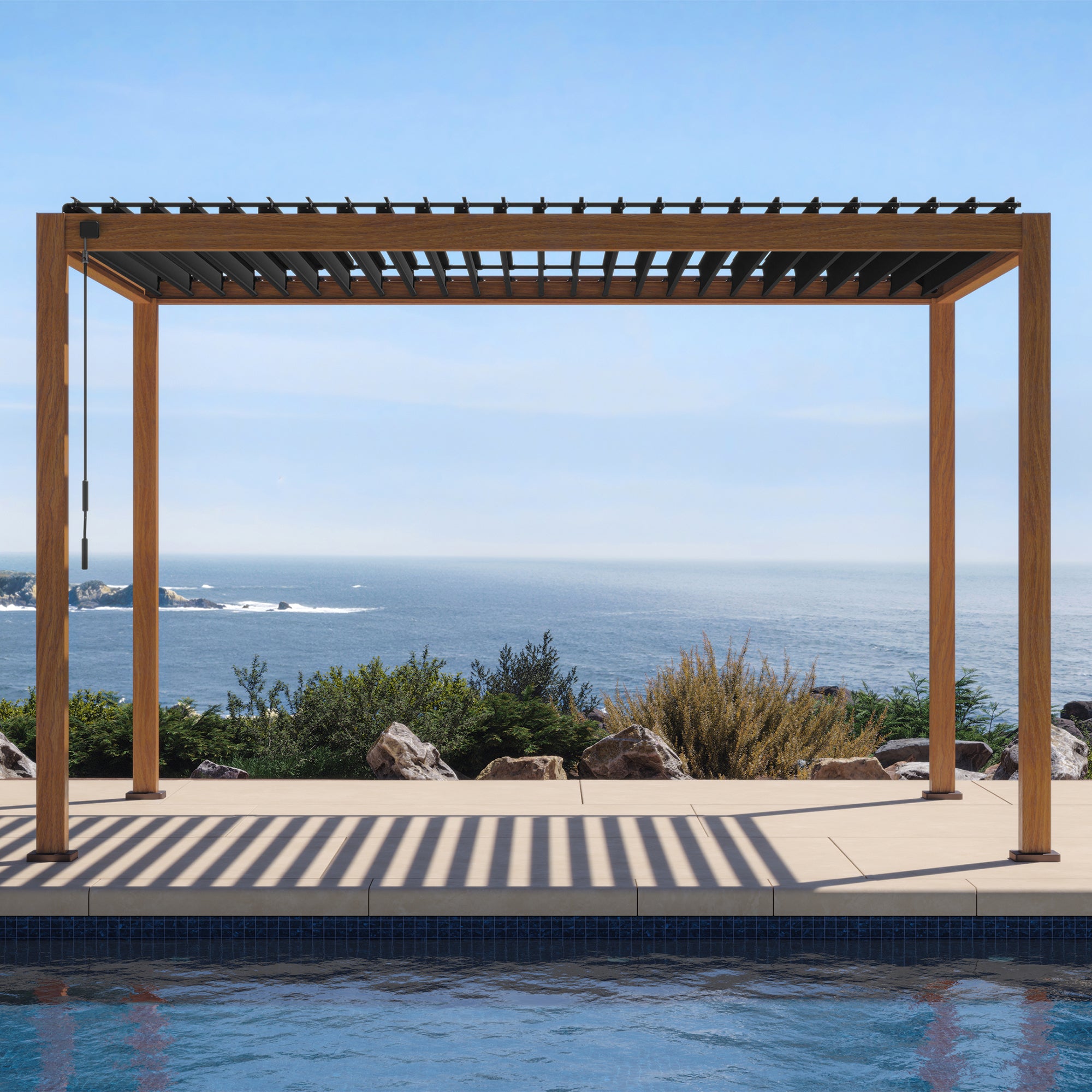
Our Mirador Takasho 10' × 13' Pergola combines aluminum and galvanized steel with a wood-grain finish and an integrated drainage system. The finish provides the wood-look appearance; the roof and drainage system manage rainfall.

When comparing pergolas, evaluate the complete design rather than treating a material name as a waterproof rating.
Can Side Screens Help Keep Rain Out?
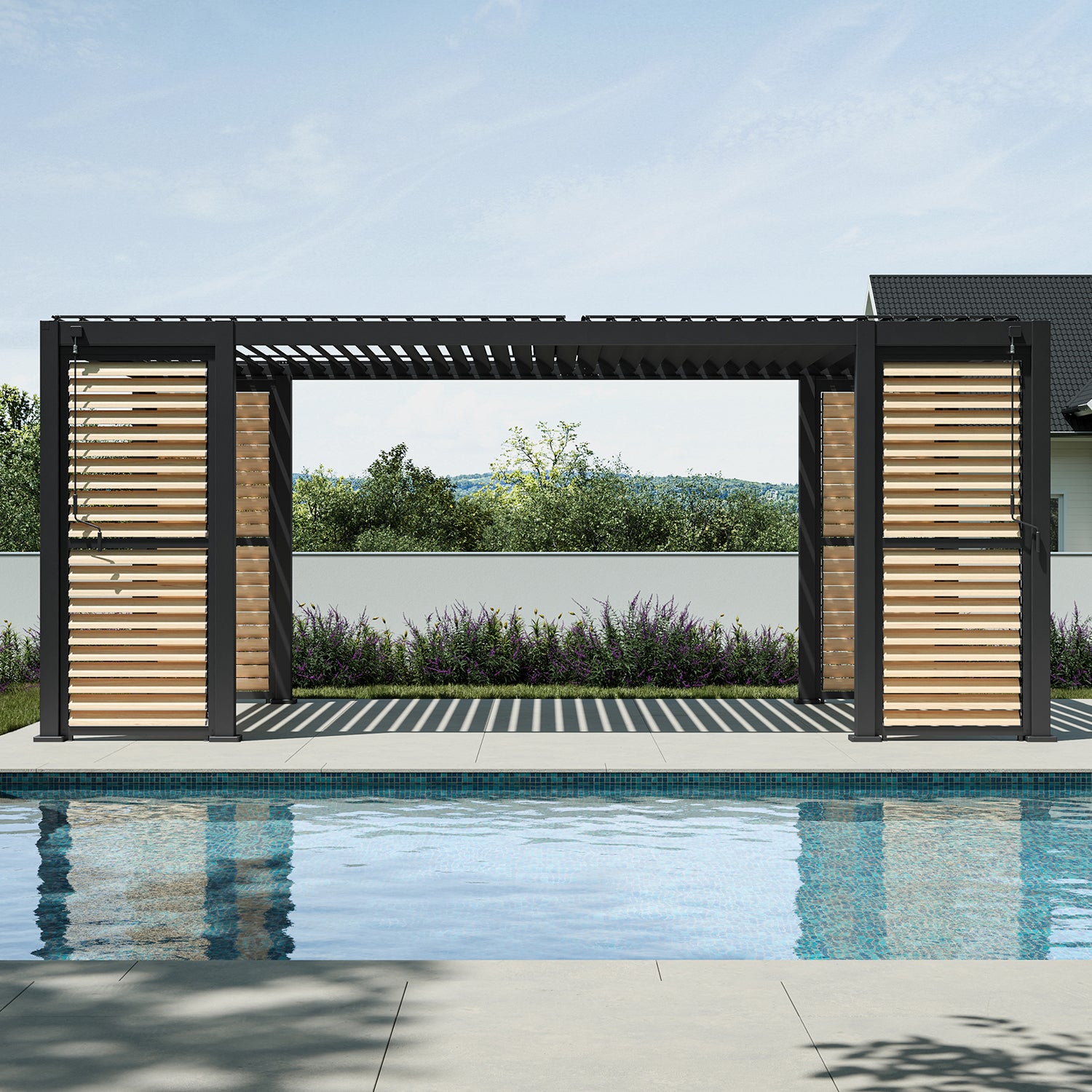
Compatible side protection may reduce exposure to rain blowing into the seating area. Its effectiveness depends on the material, coverage, installation, and weather conditions.
A mesh shade screen, privacy panel, and glazed enclosure serve different purposes. Check whether an accessory is intended for rain protection and whether it fits your model. A shade or privacy accessory should not automatically be treated as a watertight wall.
Start with the side most exposed to incoming rain. Keep furniture away from that edge where possible, and remember that side protection cannot fix a blocked drain or a roof that does not close correctly.
If you need a consistently dry, enclosed space for sensitive belongings, choose a structure specifically designed for that use.
Will a Louvered Pergola Protect Outdoor Furniture?
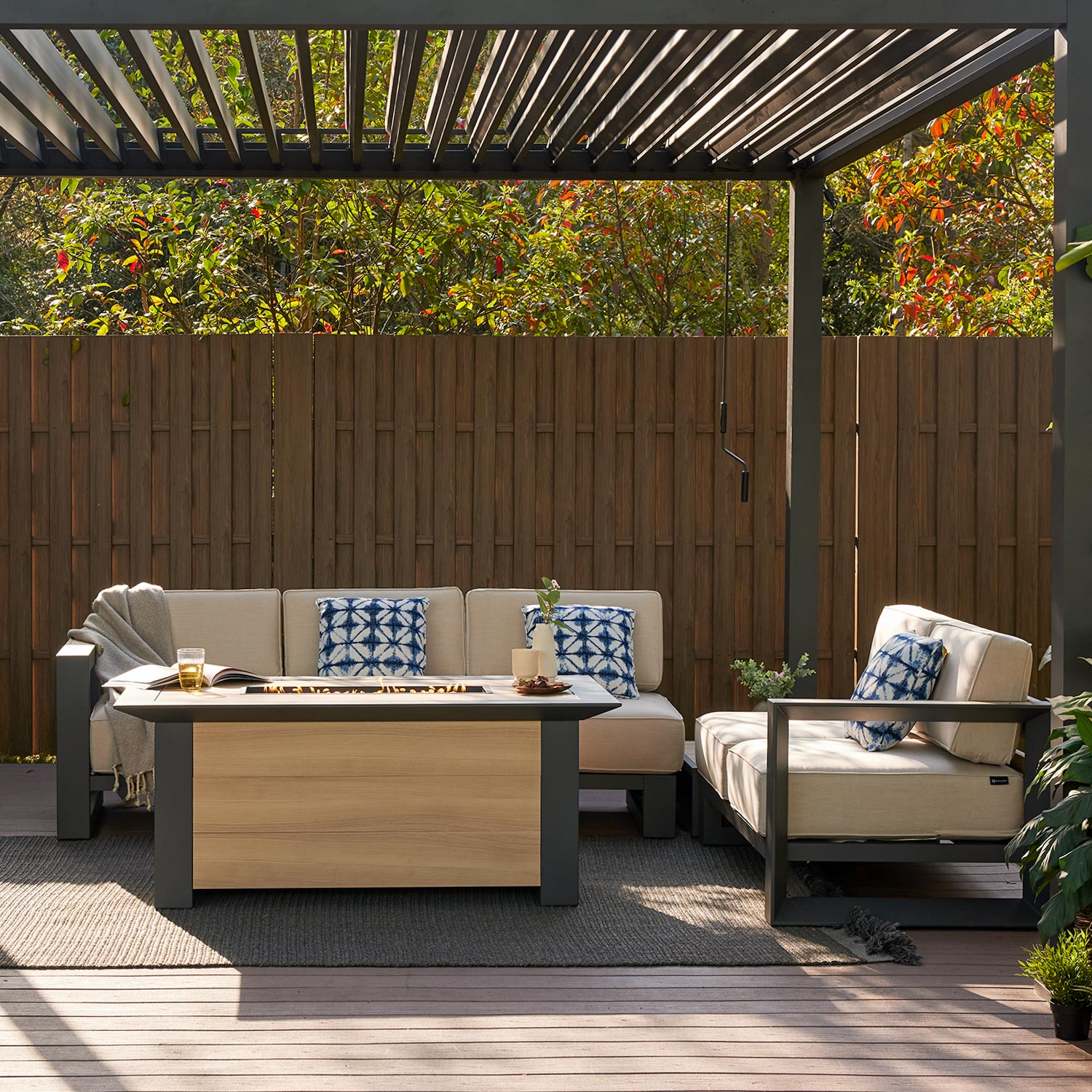
A closed roof can reduce direct overhead rain reaching furniture beneath it. Open sides, splashback, and surrounding runoff still affect exposure.
Follow your furniture's care instructions, including recommendations for covers and cushion storage. Allow wet fabrics to dry before covering or storing them.
For your layout, consider:
- Positioning seating away from exposed edges.
- Keeping furniture clear of drainage discharge points.
- Storing cushions in a suitable dry location during extended wet weather.
- Using furniture covers when recommended for the furniture and conditions.
A pergola adds useful shelter, while furniture care remains part of keeping the patio ready to use.
What Should You Check Before Buying?
Use these questions to compare rain protection:
- How does the roof close? Confirm the position required for ordinary rain.
- Where does water drain? Identify the channels, outlets, and discharge area.
- What weather is it designed for? Check model-specific rain guidance and severe-weather instructions.
- What does installation require? Review alignment, connections, and surface preparation.
- How will you maintain it? Confirm how to inspect accessible gutters and outlets.
- How exposed is your patio? Account for side rain, splashback, and furniture placement.
For a Mirador pergola, review the individual model's features and instructions. Contact us if you need help matching those details to your planned outdoor space.

Frequently Asked Questions
Are Louvered Pergolas Waterproof When Closed?
A louvered roof designed for rain protection can keep overhead rain out when fully closed, correctly installed, and maintained. Performance varies by model, and open sides can still admit wind-driven rain.
Are Motorized Pergolas More Waterproof Than Manual Pergolas?
Not necessarily. Rain protection depends on roof closure, joints, drainage, and installation. Motorization makes roof adjustment convenient but does not, by itself, improve waterproofing.
Can I Leave the Louvers Partly Open in the Rain?
Use the intended closed position for ordinary rain protection unless your model's instructions say otherwise. Open gaps can let rain through.
Do Louvered Pergolas Leak in Heavy Rain?
They can experience water entry or drainage overflow depending on the roof design, rainfall, wind, installation, and maintenance. Check the model's operating guidance rather than assuming every roof provides the same heavy-rain protection.
Do I Still Need Outdoor Furniture Covers?
You may. A closed roof provides overhead shelter, but side rain and splashback can still reach furniture. Follow the furniture manufacturer's care and storage guidance.
Should I Close My Pergola Roof During a Storm?
Follow the severe-weather instructions for your exact model. Ordinary-rain guidance does not replace instructions for high wind, snow, or other severe conditions.
Plan a Patio With Rain Protection in Mind
A louvered pergola gives you control over sunlight and overhead shelter. For a comfortable outdoor space, choose a roof suited to your intended use, plan where runoff will go, and keep drainage routes clear.
Explore our Mirador pergola collection to find the roof features and operating options that fit your patio. If you have questions about rain protection or installation, contact us for guidance on the model you are considering.