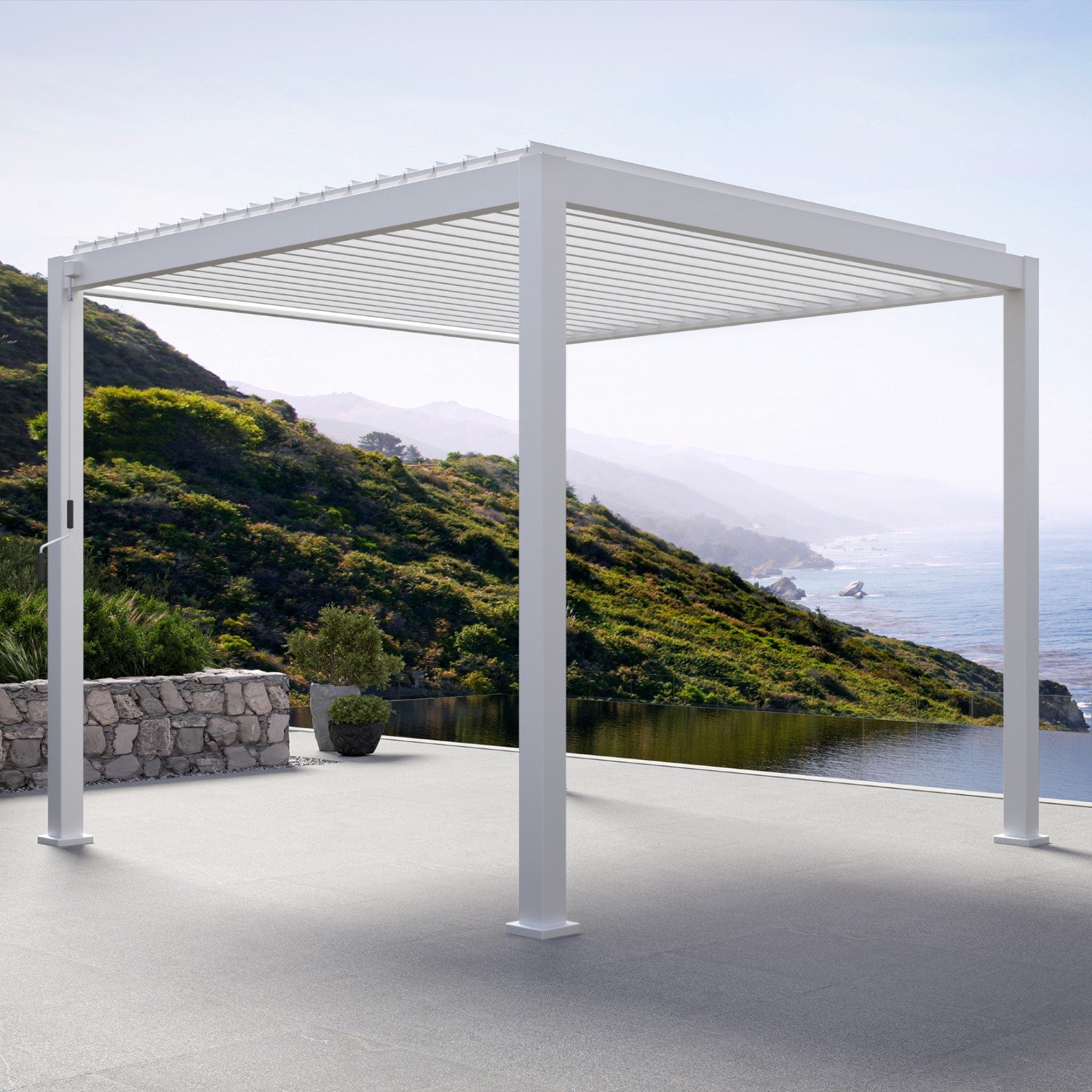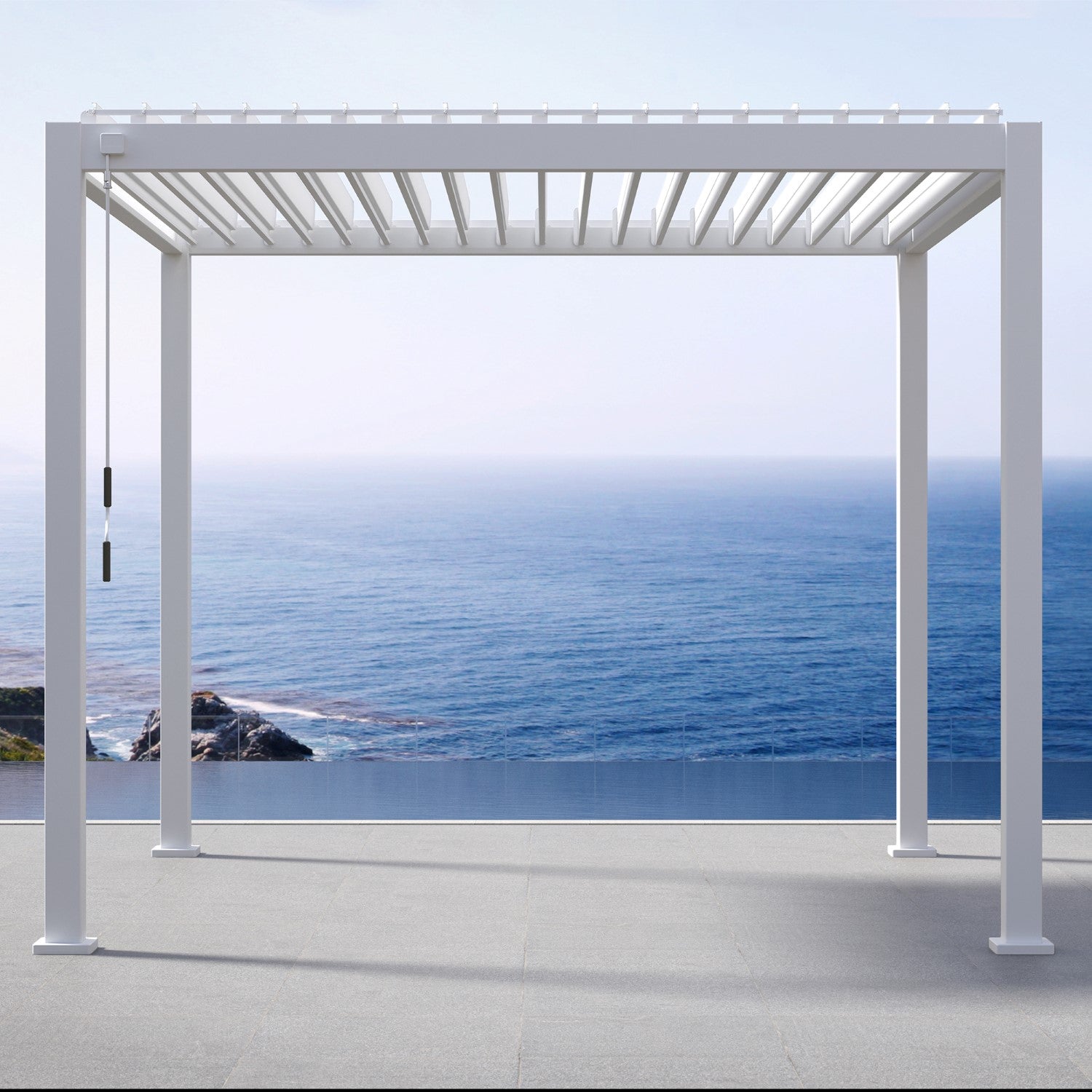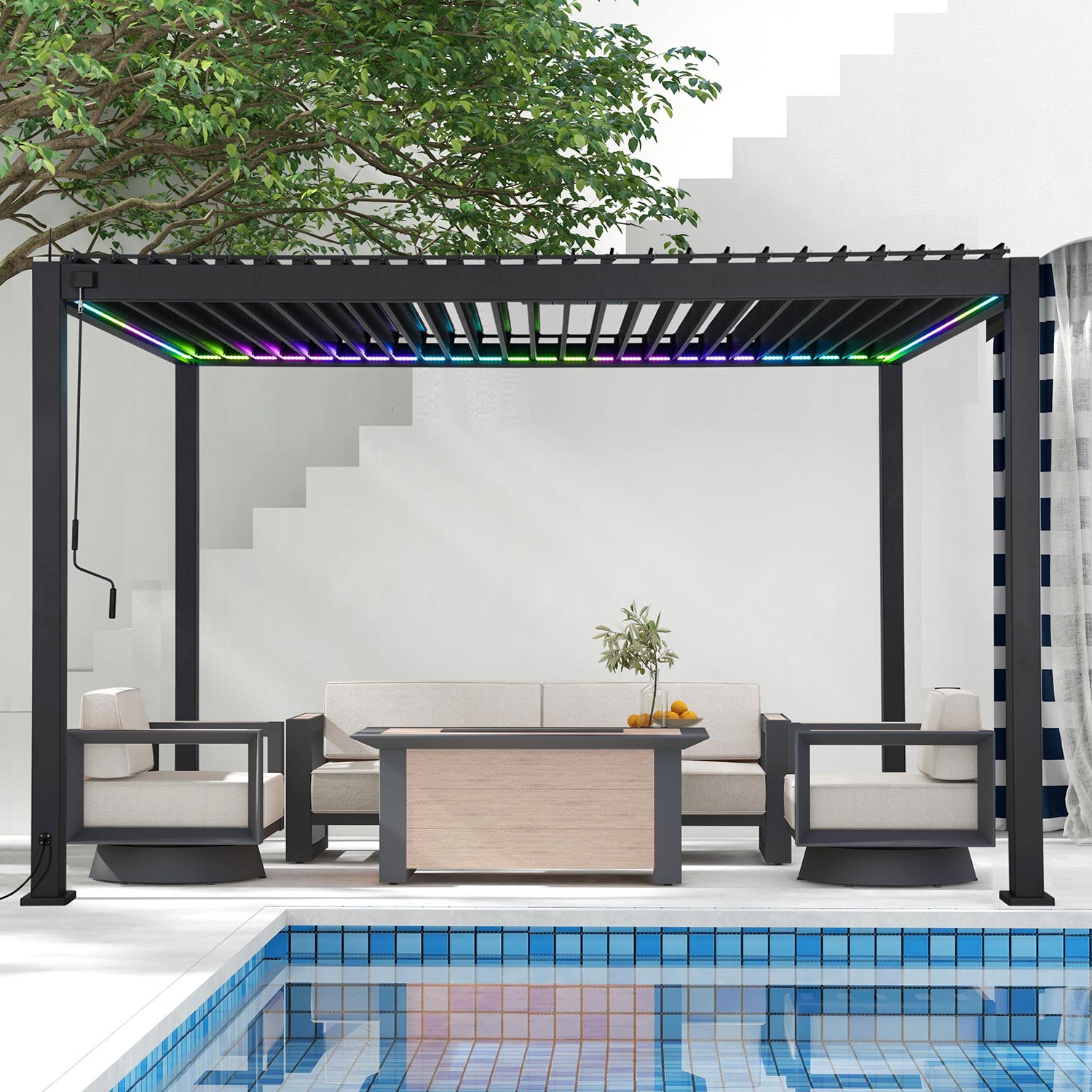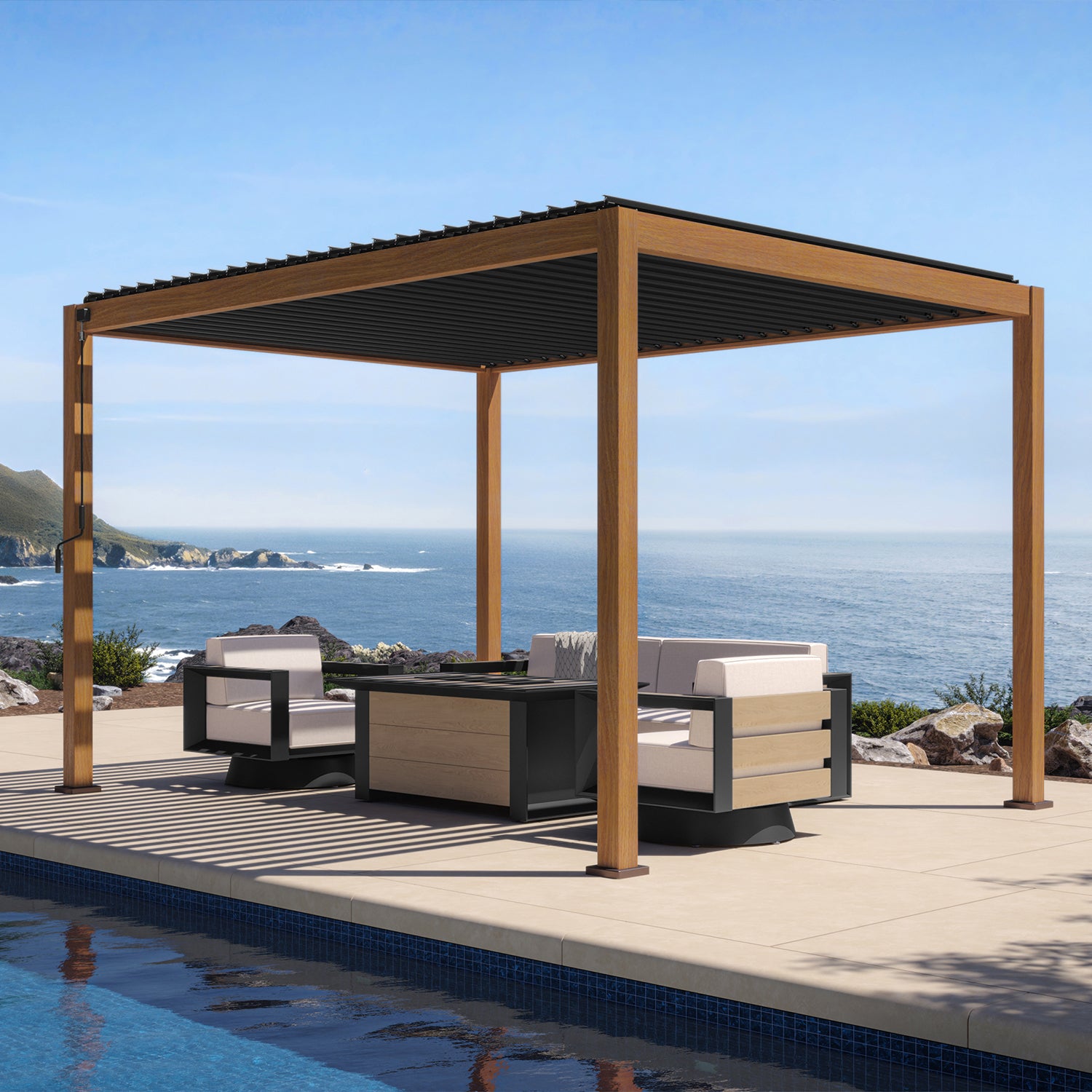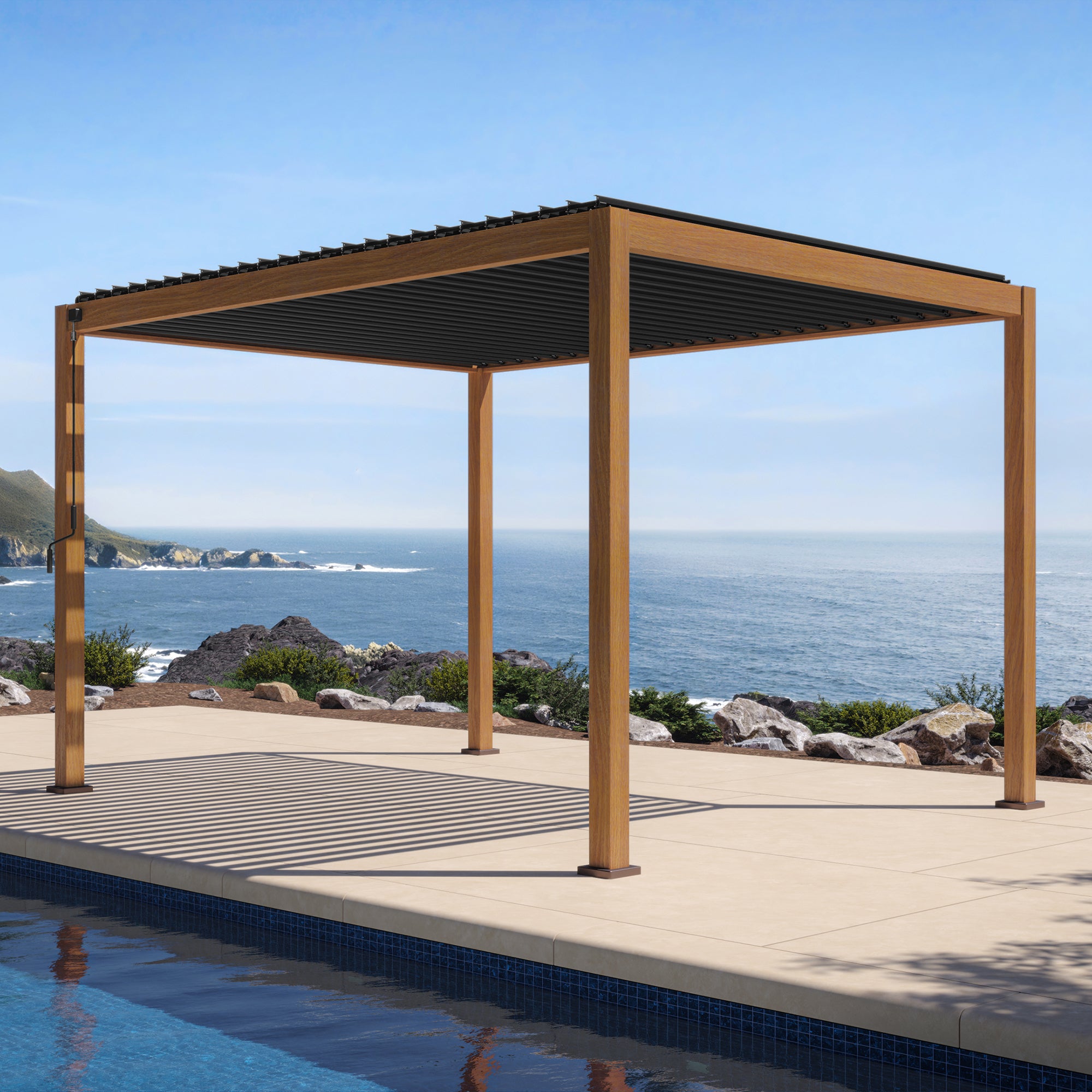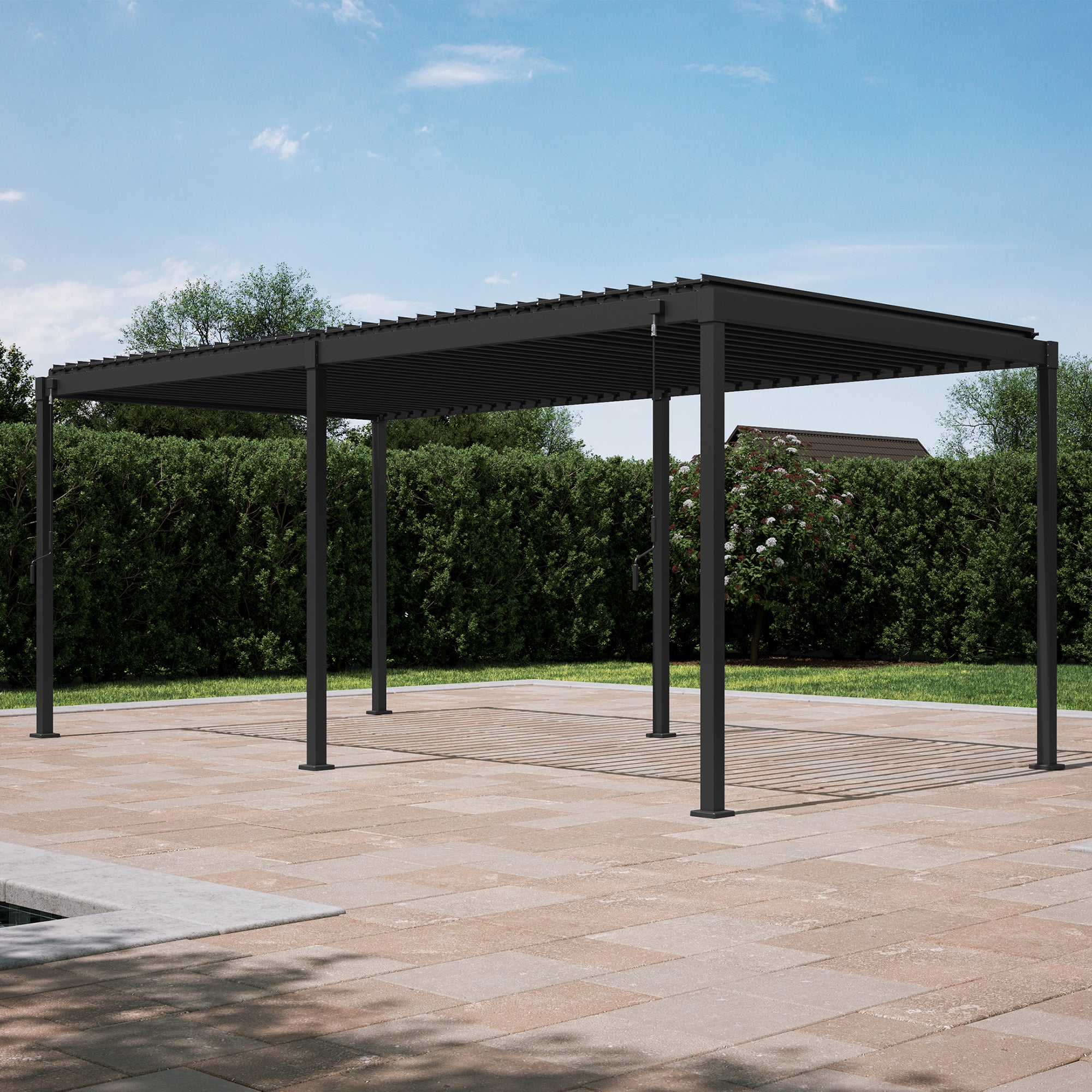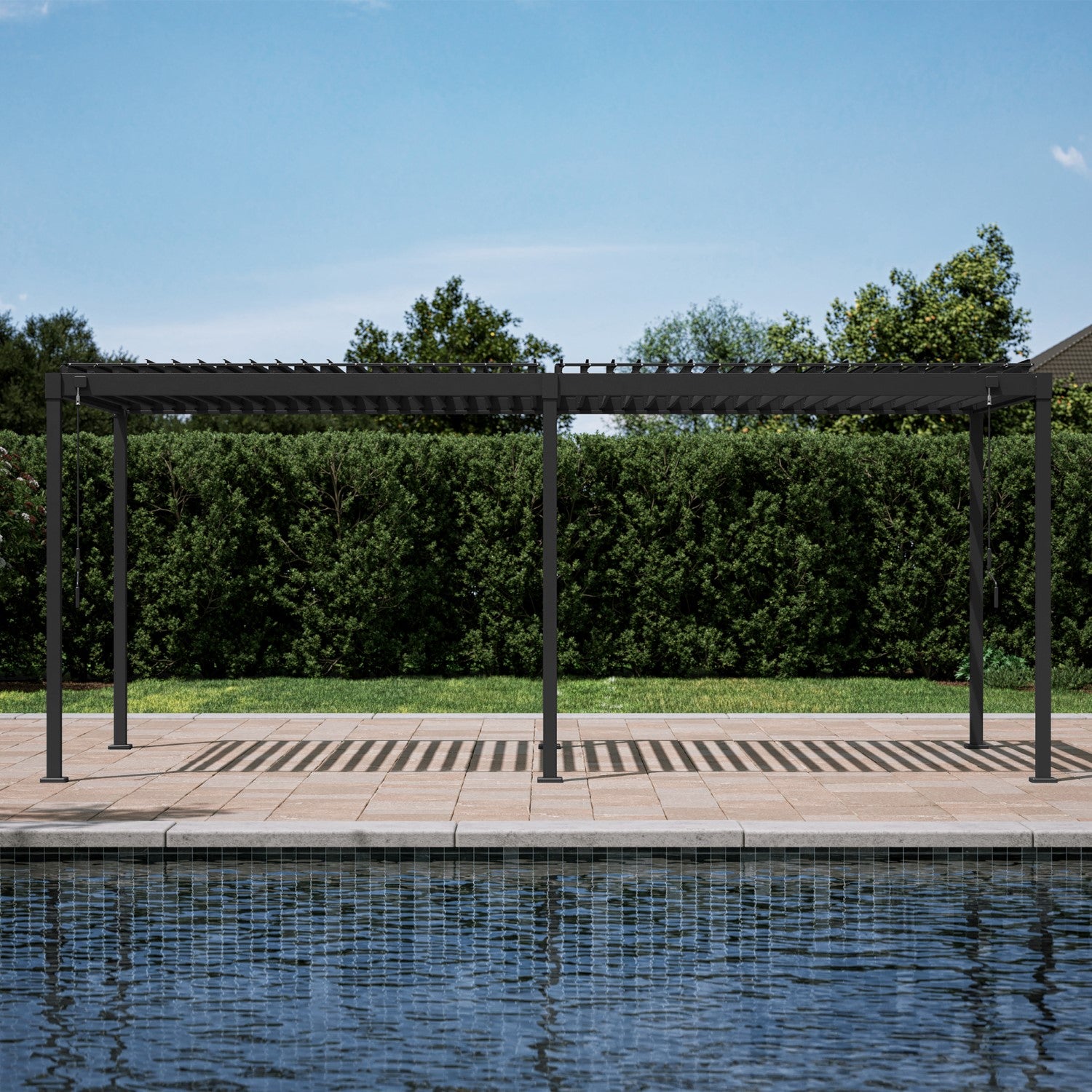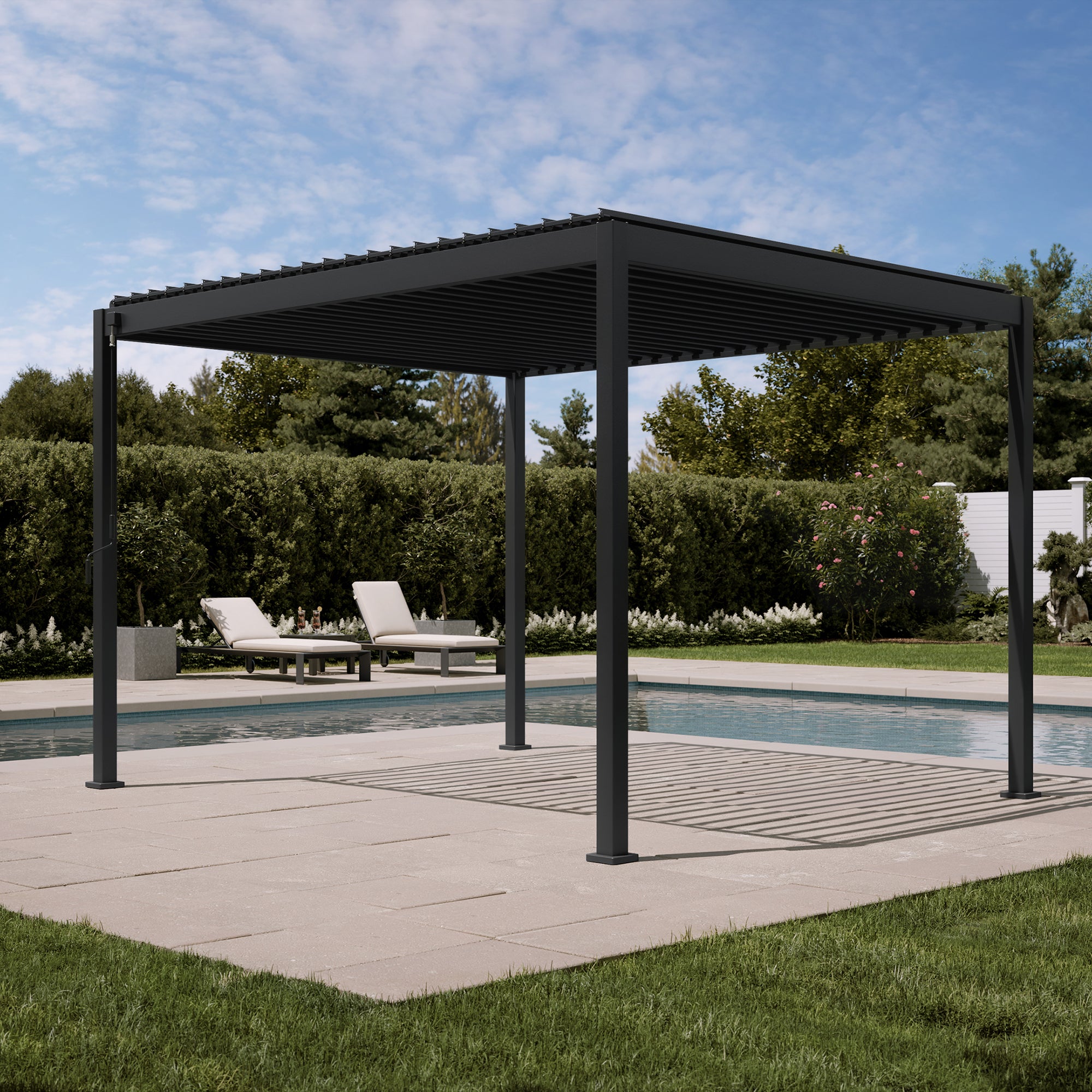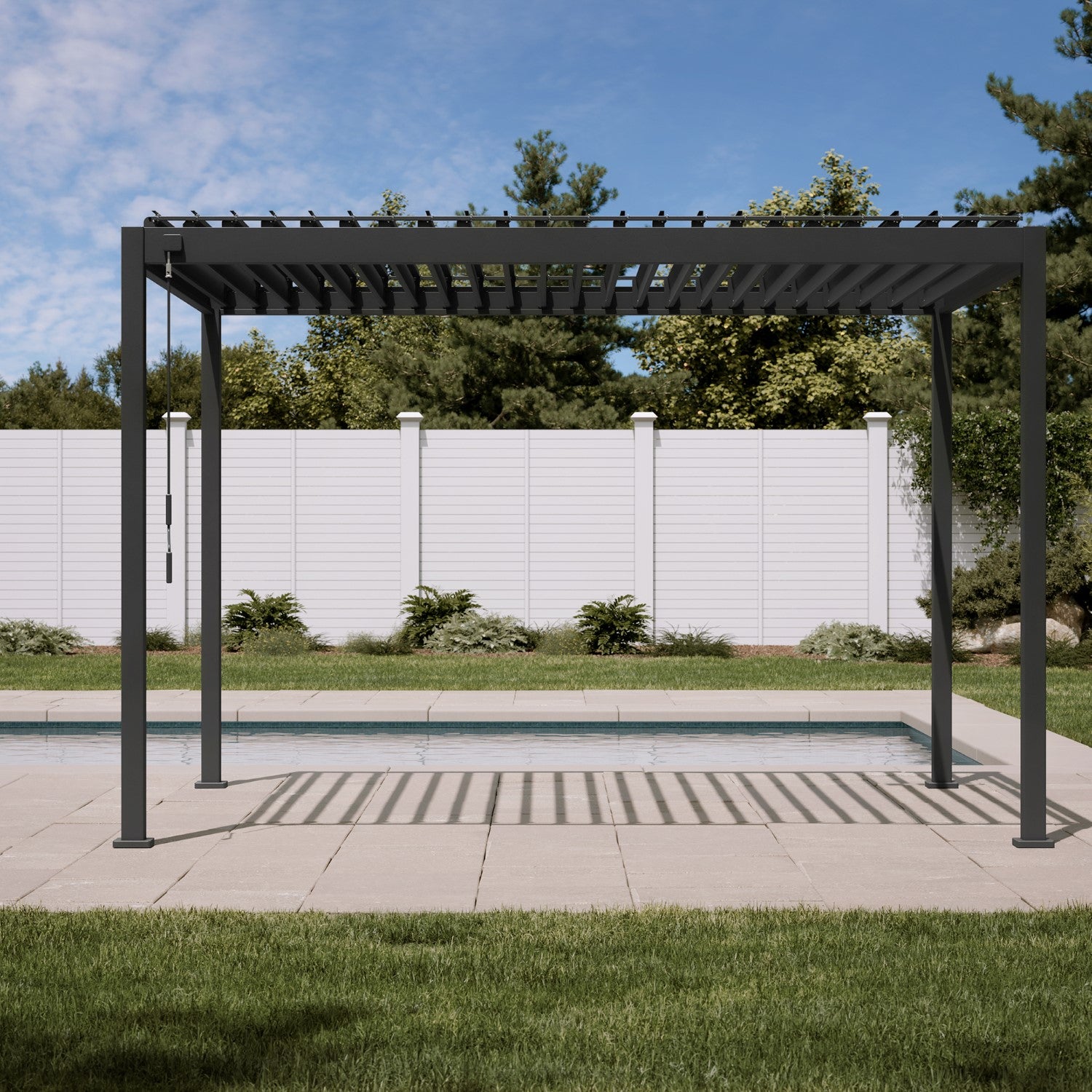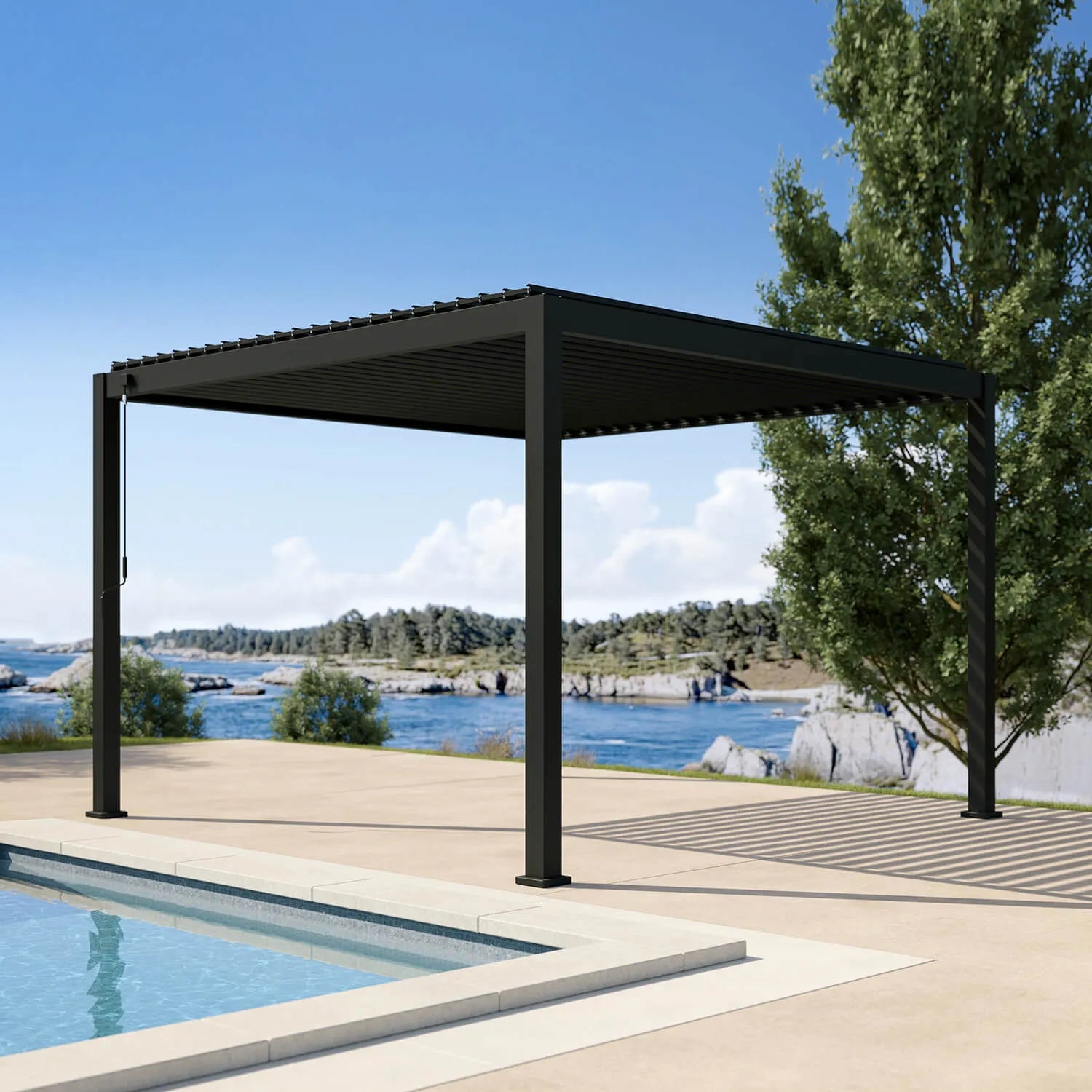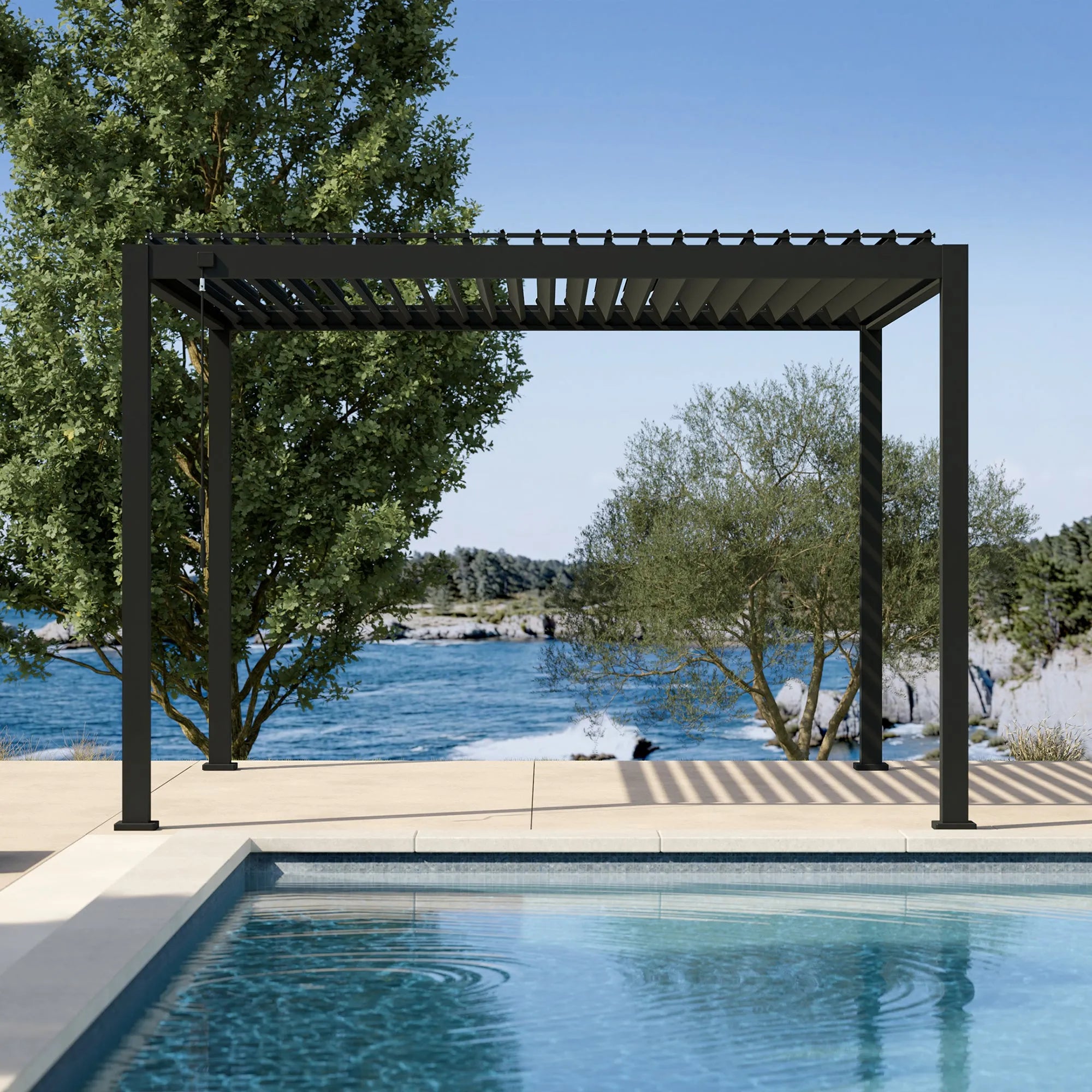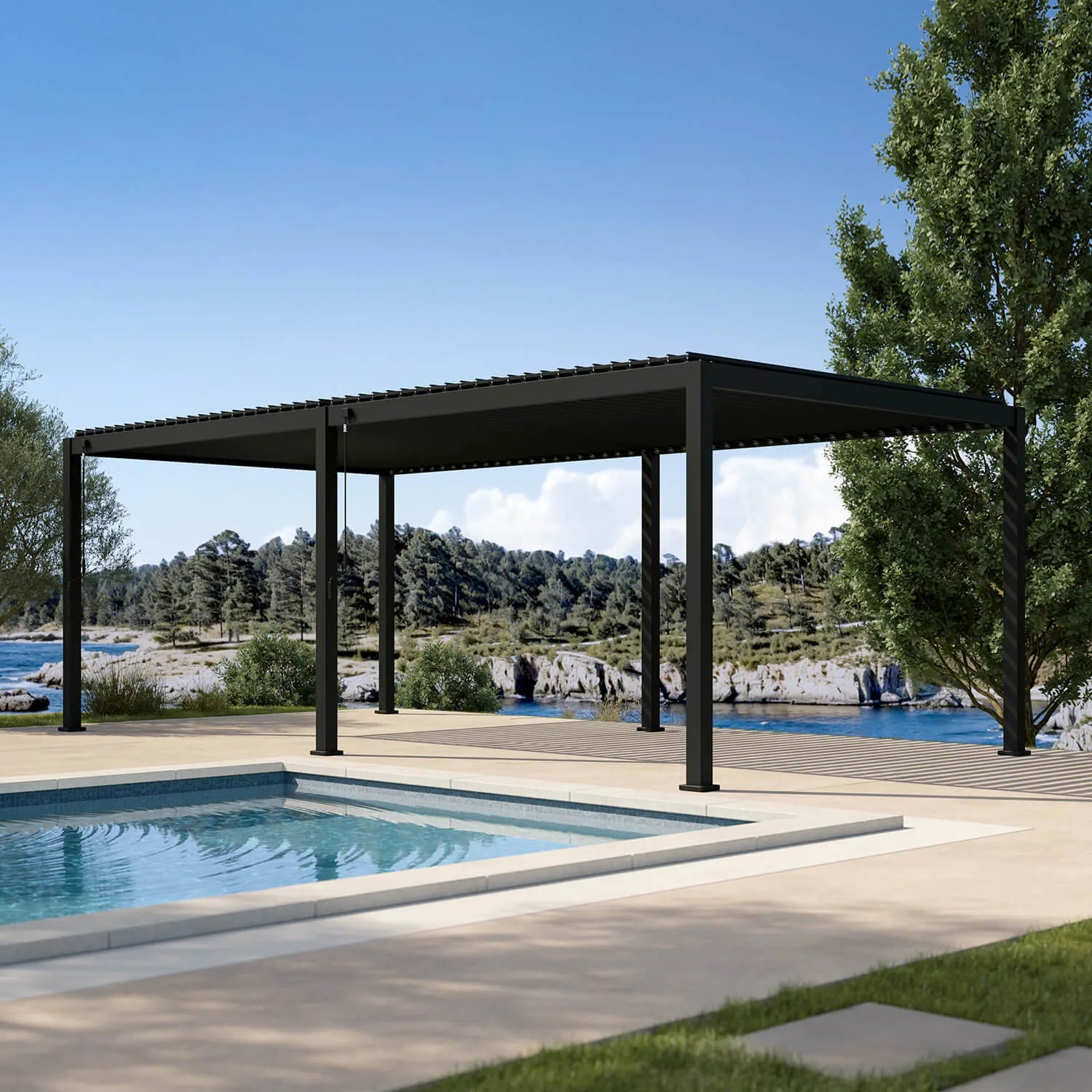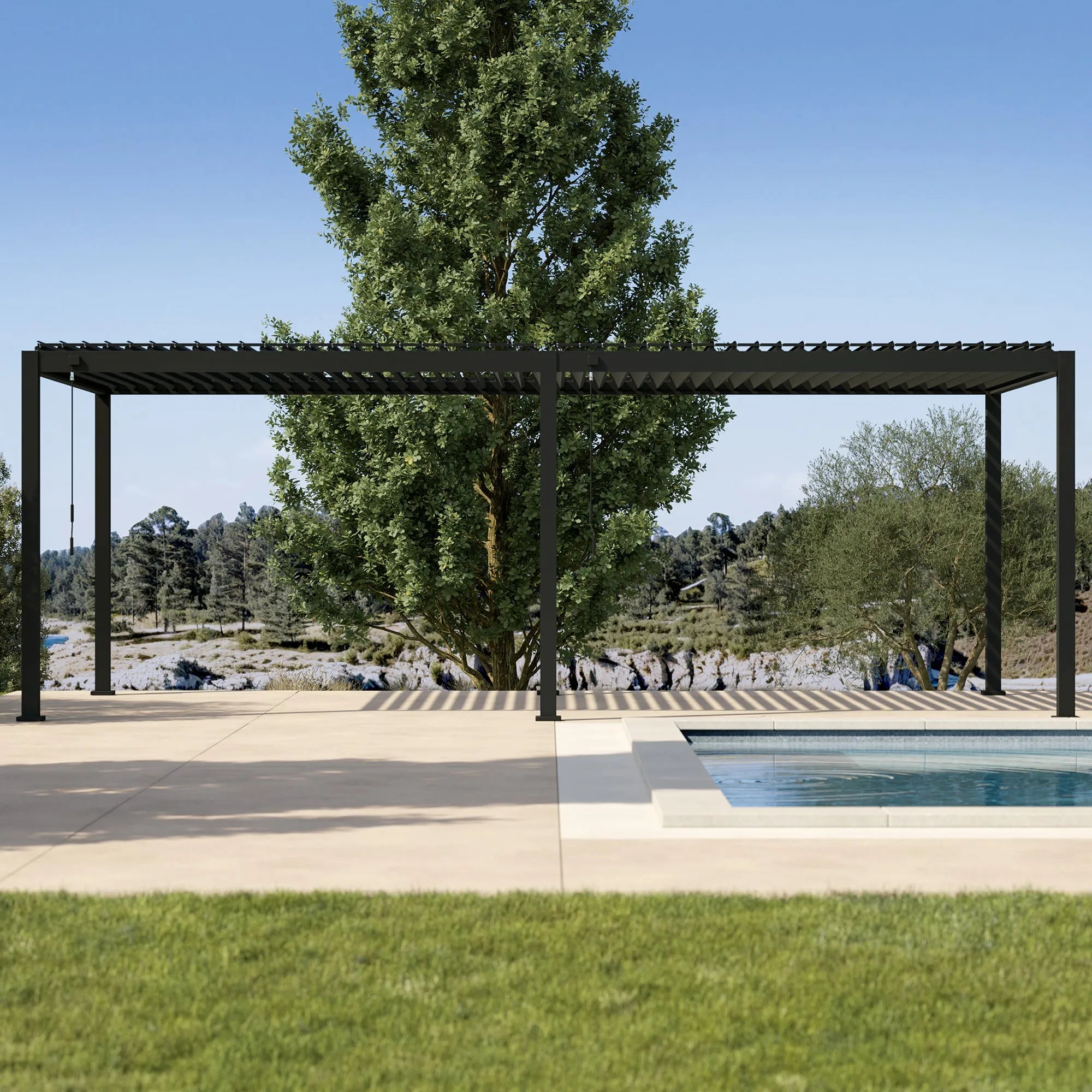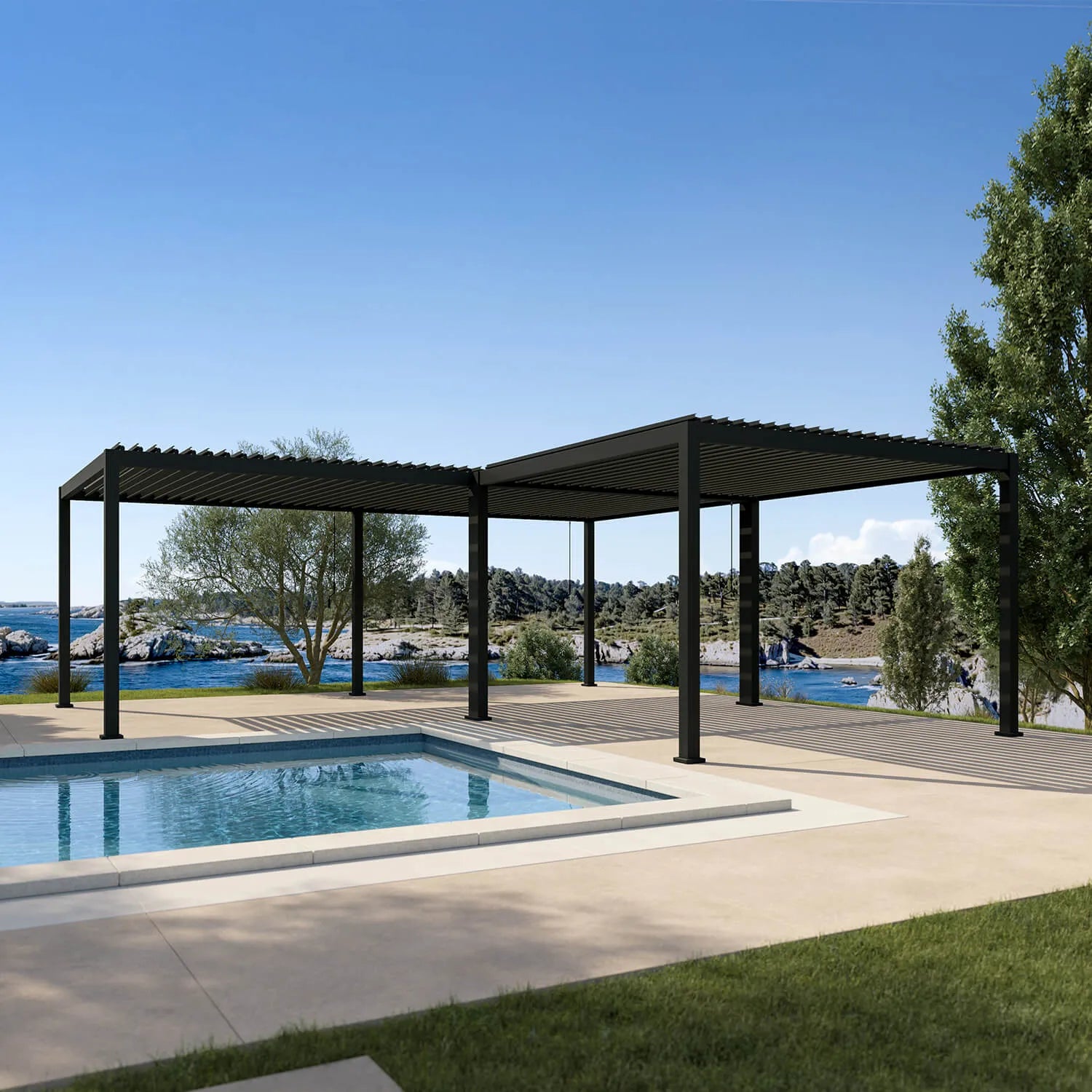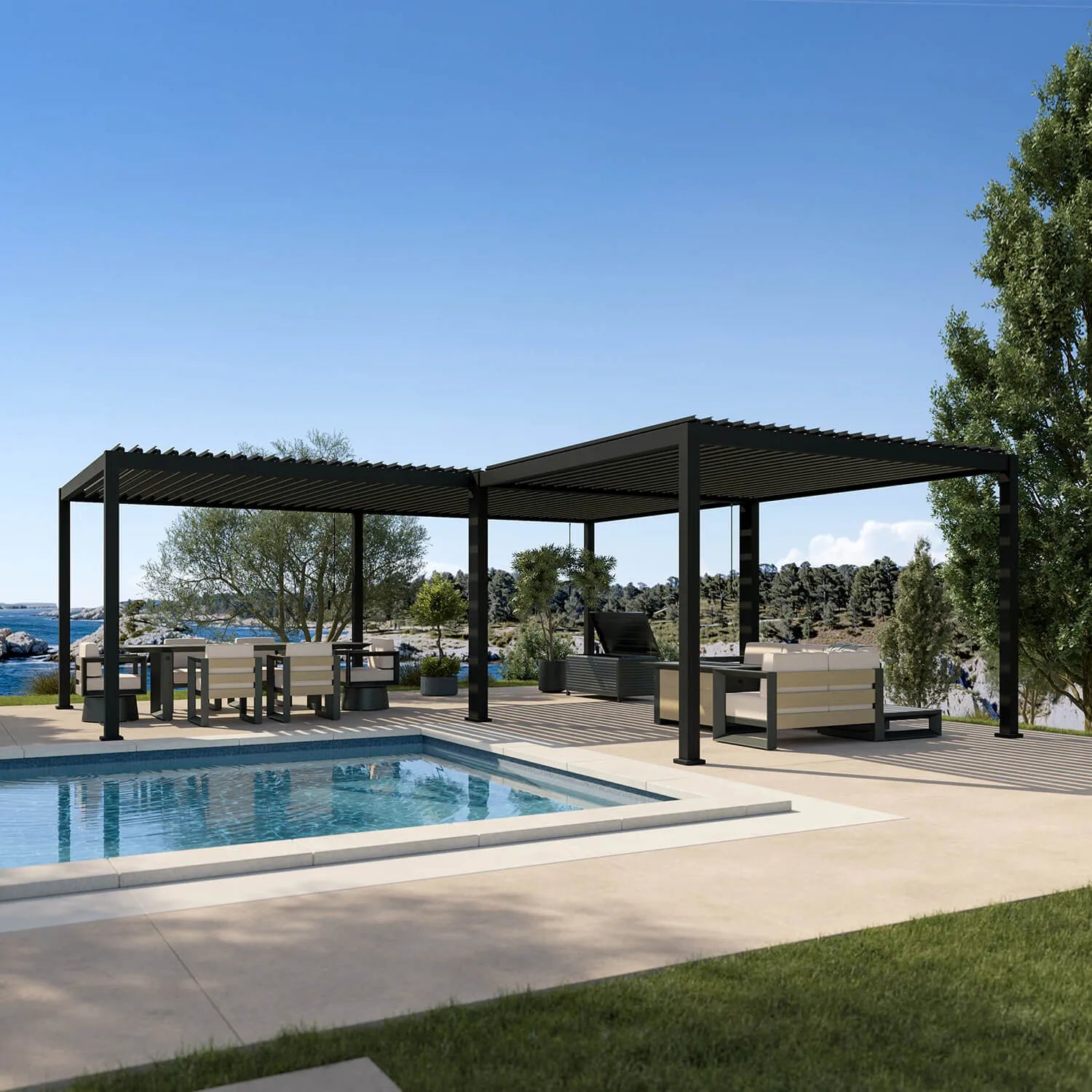

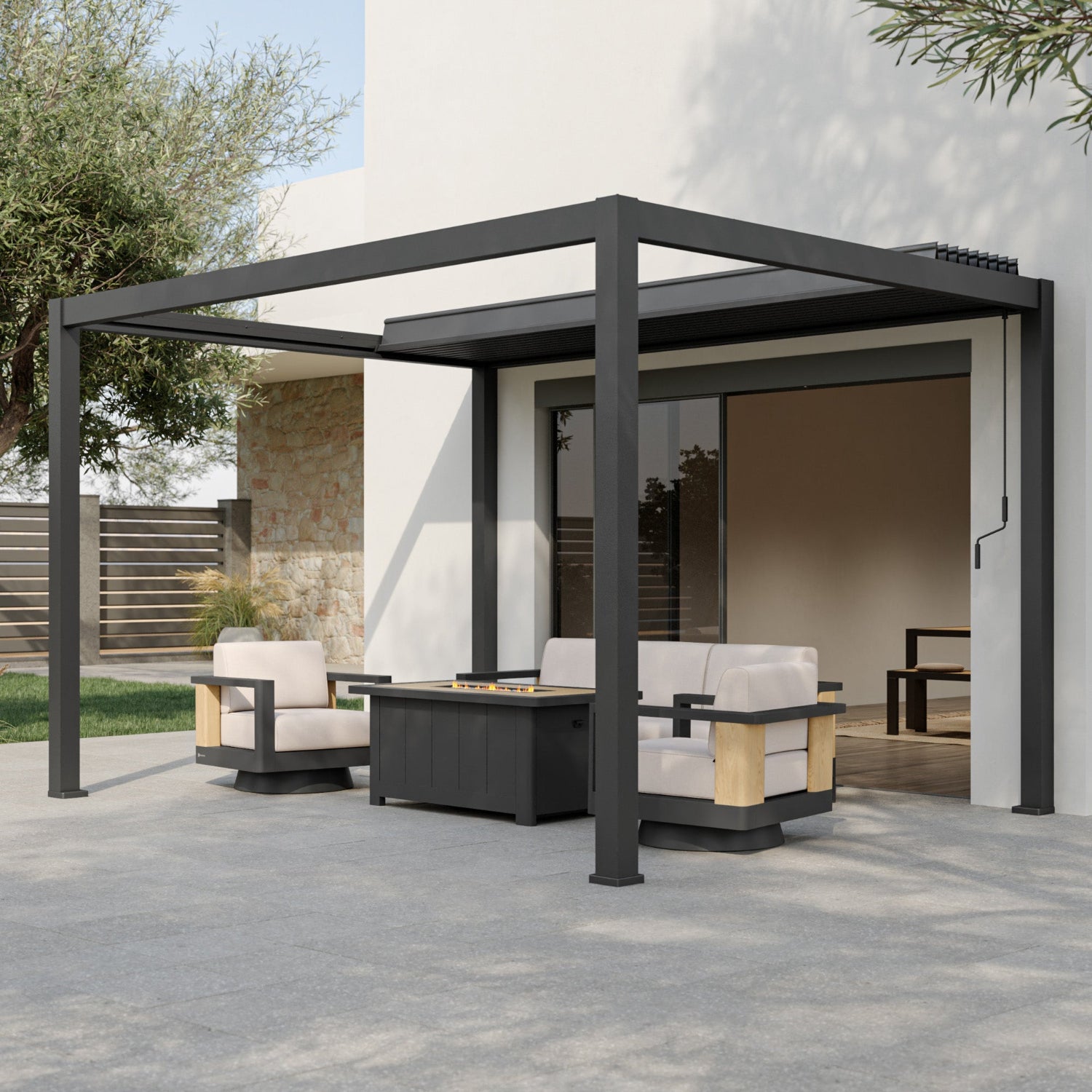
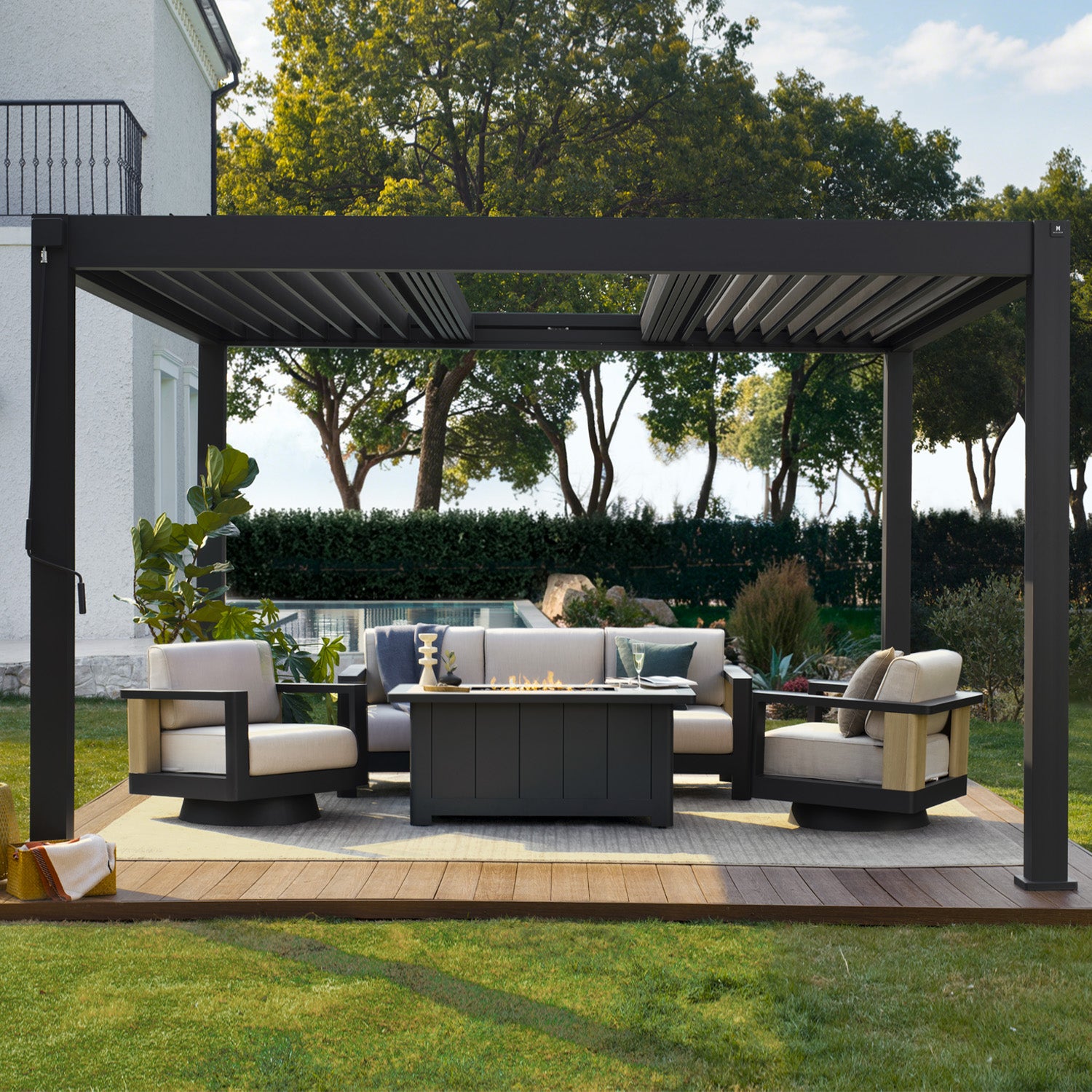
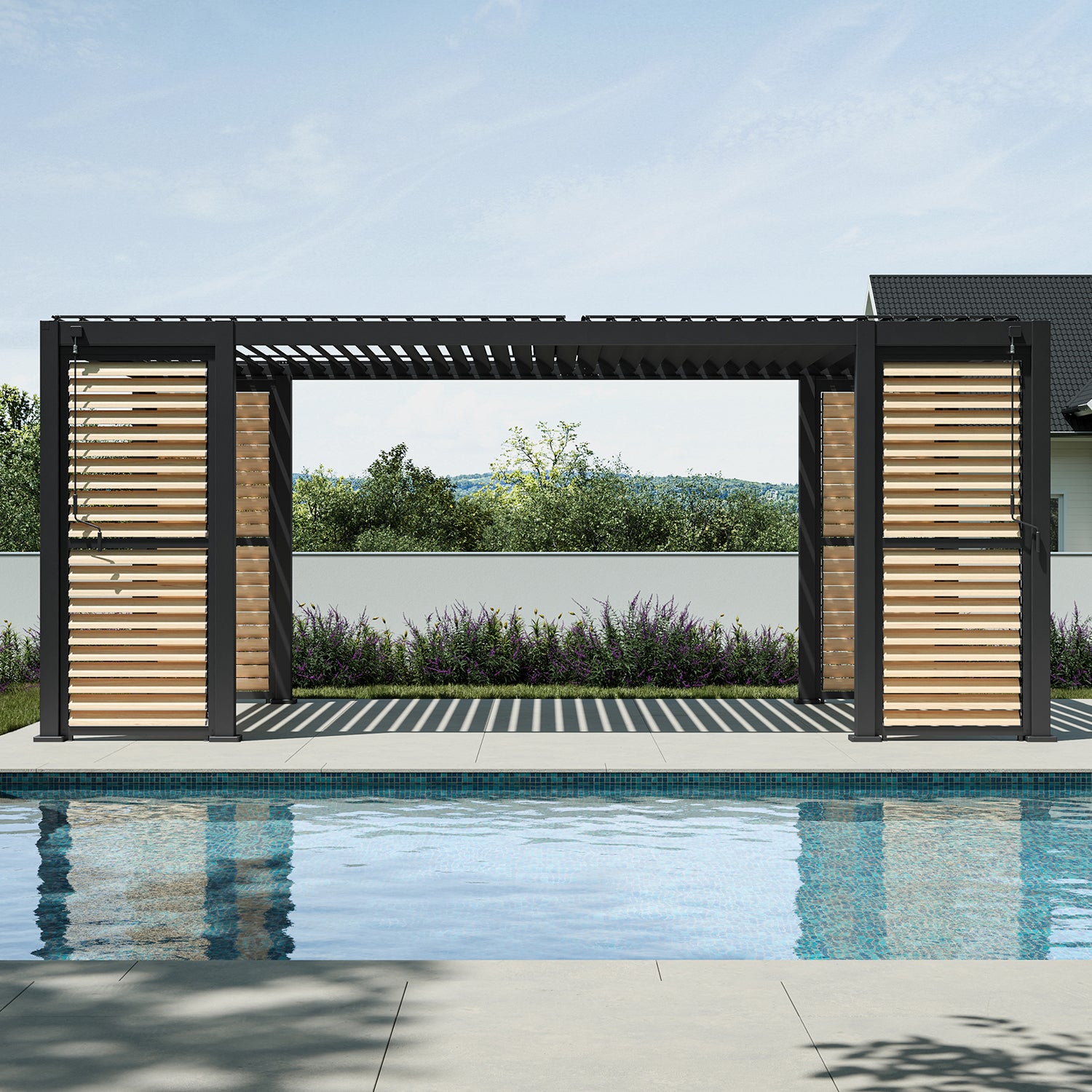
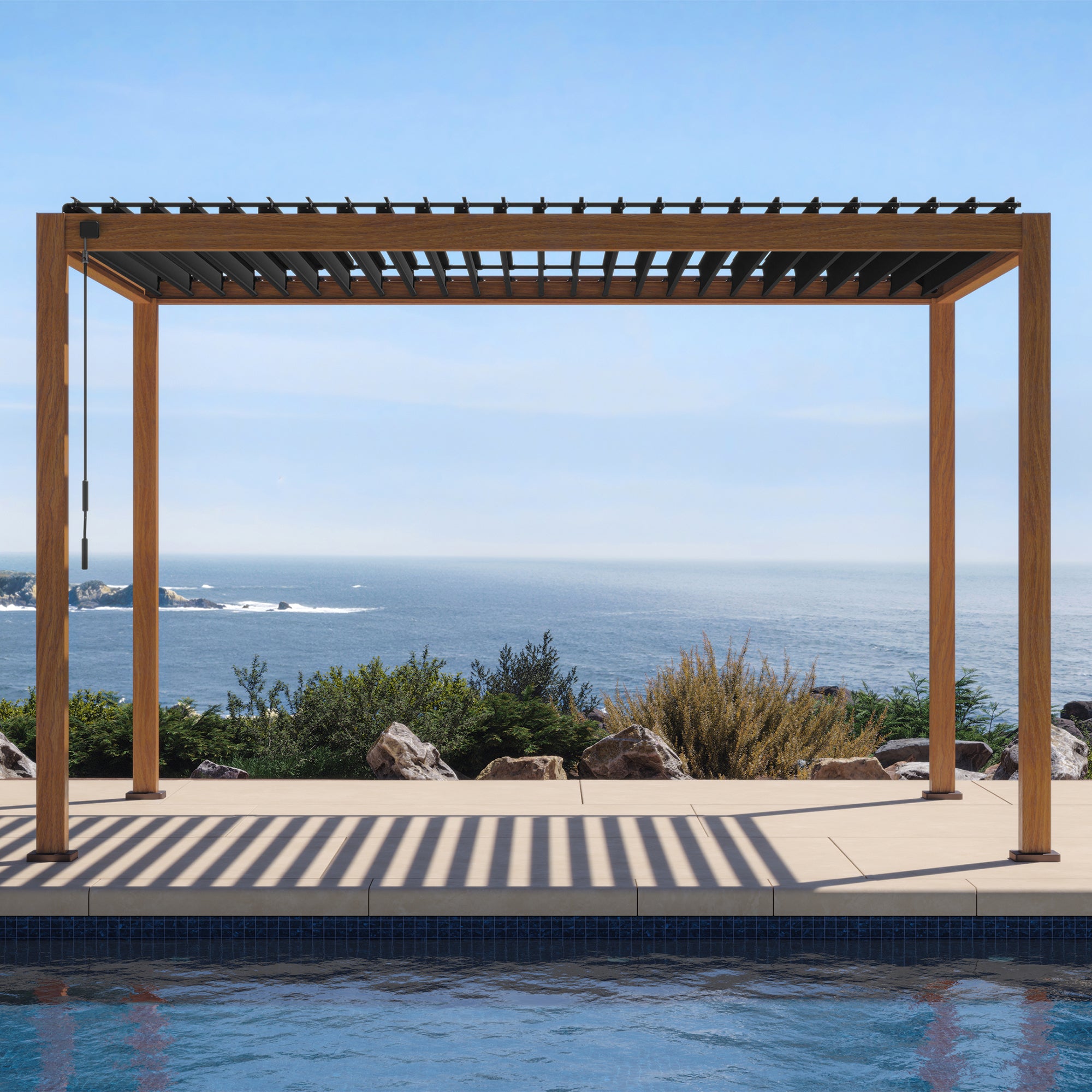
Wondering how much wind a Mirador pergola can handle? It depends on the model. As of July 2026, Mirador 80S, 88S, 111S, 111S Takasho, 111DA, and 111S E-Motion are rated up to 110 mph, while 140DA Sky is rated at 83 mph.
Snow load also changes by model, usually ranging from 13.8 to 19 lb/ft² across the main louvered lineup. Before using any number for permits or storm planning, check the exact model, size, installation surface, and your local code.

Mirador Pergola Wind Rating By Model
Mirador pergola wind rating is model-specific. For the current main lineup, Mirador lists up to 110 mph wind resistance, with snow load at 19 lb/ft² for 80S, 17.7 lb/ft² for 111DA, 13.8 lb/ft² for 111S, 111S Takasho, and 88S, and 13.9 lb/ft² for 111S E-motion.
|
Mirador model |
Published wind rating |
Snow load |
Louver material |
Opening angle |
Best fit |
|
80S |
Up to 110 mph |
19 lb/ft² |
Alloy steel |
90° |
Budget buyers who want the highest published snow number |
|
88S |
Up to 110 mph |
13.8 lb/ft² |
Alloy steel |
93° |
One-size 10×12 choice with aluminum frame |
|
111S |
Up to 110 mph |
13.8 lb/ft² |
Galvanized steel |
93° |
All-around aluminum-frame patio use |
|
111S Takasho |
Up to 110 mph |
13.8 lb/ft² |
Galvanized steel |
93° |
Wood-look finish without wood upkeep |
|
111DA |
Up to 110 mph |
17.7 lb/ft² |
Aluminum |
98° |
Premium weather rating and larger size choices |
|
111S E-motion |
Up to 110 mph in comparison data |
13.9 lb/ft² |
Galvanized steel |
93° |
Remote louver control and LED lighting |
|
140DA Sky |
83 mph |
17.8 lb/ft² |
Aluminum |
90°, retractable |
Center-split retractable roof experience |
For the main 80S, 88S, and 111 Series, the clean side-by-side source is Mirador Outdoor’s live pergola comparison, because it puts wind rating, snow load, louver material, opening angle, sizes, and price tier in one place. That matters. A 10×20 111S and a 10×20 111DA can look similar from across the patio, but the 111DA uses aluminum louvers, opens to 98°, and carries the higher premium-line snow load.
Use a simple tie-breaker. If snow is your stressor, 111DA is the better premium starting point than 111S because 17.7 lb/ft² gives you more published roof-load headroom than 13.8 lb/ft². If budget and the published snow number matter most, 80S lists 19 lb/ft², though it uses alloy steel and has a shorter warranty tier than the aluminum-frame models. For a motorized patio setup, 111S E-motion wins on convenience, but you should verify the exact product page before treating any line-level number as a permit figure.
One caution: some older or individual product pages may show lower model-specific wind values, including 63, 73, 82, or 83 mph. When two Mirador pages show different numbers for the same SKU, plan with the lower number until Mirador Outdoor support confirms the current test document. That’s the safest way to avoid a bad assumption.
Mirador Pergola Wind Rating And Snow Load Weight
Snow load means distributed weight per square foot. A 17.7 lb/ft² rating means each square foot of rated roof area is planned around 17.7 pounds under the stated test or design conditions. That sounds abstract until you multiply it by a patio footprint.
A nominal 10×20 pergola covers about 200 square feet. At 17.7 lb/ft², that works out to 3,540 pounds of evenly distributed load. The word “evenly” does a lot of work here. Snow doesn’t always fall evenly. Wind can drift it toward one bay. Wet snow weighs far more than dry powder. Ice adds another layer of trouble, especially when louvers are closed and freezing rain locks the blades in place overnight.
|
Snow load rating |
10×10 nominal area |
10×13 nominal area |
10×20 nominal area |
|
13.8 lb/ft² |
1,380 lb |
1,794 lb |
2,760 lb |
|
13.9 lb/ft² |
1,390 lb |
1,807 lb |
2,780 lb |
|
17.7 lb/ft² |
1,770 lb |
2,301 lb |
3,540 lb |
|
17.8 lb/ft² |
1,780 lb |
2,314 lb |
3,560 lb |
|
19 lb/ft² |
1,900 lb |
2,470 lb |
3,800 lb |
Those numbers are useful for comparison, not for replacing an engineer. Building-code snow design depends on your exact address, exposure, elevation, roof geometry, and whether snow can drift from a higher roof onto the pergola. The ASCE Hazard Tool is the right place to start for address-based wind and snow design parameters in the United States, then your local building department decides what applies.
For most homeowners, the practical read is this: 13.8 lb/ft² is a normal light-to-moderate snow spec for a louvered pergola kit, 17.7 to 17.8 lb/ft² gives more room for winter weather, and 19 lb/ft² is the highest Mirador number currently shown in the comparison table. If you live where wet lake-effect snow sits heavy for days, don’t shop by wind rating alone.

Mirador Pergola Wind Rating Test Conditions
A wind speed rating assumes the pergola is assembled correctly, squared, plumb, and anchored to a suitable surface. Mirador product pages reference anchor bolts for securing the pergola to a flat concrete surface. That installation detail is part of the rating conversation, because an unanchored or poorly anchored structure behaves very differently once wind gets under a closed roof.
Ask four questions before you treat any wind number as enough:
- Is your 90 mph figure a gust, a sustained wind, or a building-code design wind?
- Will the posts be anchored into concrete, engineered footings, or deck framing?
- Will louvers be fully open, partly open, or closed when the storm arrives?
- Will screens, shutters, curtains, heaters, or furniture add surface area?
There’s a reason homeowners ask about the 90 mph mark. A 10×20 Mirador owner on Reddit mentioned watching how the pergola would fare in “winter’s 90mph winds,” and another owner report described a 10×20 Mirador with louvers open through winter during heavy snow and 65+ mph winds. Owner reports are helpful color. They aren’t test reports.
Weather language can also confuse the decision. The National Weather Service uses 58 mph as the threshold for severe thunderstorm wind, while hurricane-force wind warnings over water start at 74 mph sustained winds or frequent gusts. So a 90 mph gust is serious weather, even if a product chart shows a rating above it. Terrain, exposure, nearby houses, trees, fences, slope, and a second-story deck can all change the load hitting the posts.
For planning, use the exact model rating, then check the site. A sheltered backyard in suburban Ohio is a different problem from an open coastal patio in the Carolinas. A pergola bolted to a thick, level concrete slab is a different problem from one attached to a deck that was never framed for uplift. If the installation surface is a deck, ask a contractor or structural engineer to confirm the framing, ledger, fasteners, and load path before installing.
Mirador Pergola Wind Rating Louvers In Storms
Closed louvers are for shade and normal rain. They let the roof act like a cover, and Mirador’s integrated drainage system routes water toward the posts. That’s why louvered pergolas work so well for everyday patio use: hot afternoon, sudden shower, dinner outside anyway.
Strong wind and snow need a different setting. Mirador product FAQs recommend keeping louvers open in extreme weather, and that advice makes sense mechanically. Open louvers reduce the solid roof surface exposed to uplift, and they reduce snow buildup on the roof. Do it before the storm, while the blades still move freely. Once freezing rain has locked the mechanism, forcing a crank or motor can create a new problem.
|
Weather condition |
Louver position |
Reason |
|
Normal sun and heat |
Open or angled |
More airflow and lighter shade |
|
Normal rain |
Closed |
Drainage system can move water through the posts |
|
Forecast snow or ice |
Fully open before it starts |
Less snow buildup on the roof |
|
High-wind warning |
Fully open and accessories secured |
Less uplift and fewer loose parts |
The opening angle matters. The 80S opens to 90°, 111S and 88S open to 93°, and 111DA opens to 98°. A few degrees won’t make a patio storm-proof, but a more vertical open position gives wind and snow less roof surface to push against.
Accessories change the equation too. Pull-down screens, sliding glass doors, fixed shutter walls, and curtains add wind area. That’s great for privacy on a calm Friday night. In a high-wind forecast, retract fabric screens, latch rigid panels, remove loose cushions, and keep lightweight furniture away from the structure. The 111 Series accessory ecosystem is broader than the 80S and 88S setup, so owners of enclosed 111 patios should be extra disciplined before storms.
Mirador Pergola Wind Rating Competitor Context
Mirador sits in the premium DIY-kit category, so compare it against the right products. A fair comparison is another louvered pergola kit with published size-based ratings, not a custom-engineered hurricane-zone roof that costs much more and usually needs dealer installation, permits, and stamped drawings.
|
Brand or system |
Public positioning to verify |
What the number tells you |
|
Mirador 111DA |
Up to 110 mph, 17.7 lb/ft² snow |
Strong DIY-kit rating with aluminum louvers |
|
Mirador 80S |
Up to 110 mph, 19 lb/ft² snow |
Highest Mirador snow number in the current comparison table |
|
PERGOLUX S2 |
Size-based kit ratings on current product pages |
Size changes the snow number |
|
PERGOLUX S2 Skydance |
Premium kit with higher published wind/snow positioning |
Foundation and installation details can change the practical reading |
|
Azenco R-Blade |
Custom, permit-oriented high-wind positioning |
Better fit when a project needs engineering documentation |
|
StruXure Pergola X |
Certified motorized louver system positioning |
Project-specific engineering and labels matter |
For competitor figures, use this section as a shopping context rather than a final engineering table. Product pages, local approvals, and installation assumptions change, so verify the current model page and request supporting documents before citing a competitor number in a permit conversation.
For a sheltered residential patio, Mirador’s up to 110 mph line rating is a strong number in the kit market. For coastal Florida, barrier islands, mountain wind corridors, or rooftop decks, the conversation changes. You’re no longer just buying a shade structure. You’re matching a structure to local design wind, exposure category, anchoring, jurisdiction requirements, and sometimes a stamped engineering package.
That tradeoff is real. A Miami-Dade NOA product can be the better fit for a high-velocity hurricane zone, but it comes with a different buying process and a different budget. A Mirador 111DA can be the smarter choice for a homeowner who wants a clean aluminum louvered pergola over a patio slab, wants a published 17.7 lb/ft² snow rating, and doesn’t need a custom engineered roof system.
Mirador Pergola Wind Rating Storm Checklist
The best time to prepare a pergola is the day before bad weather, not when sleet is already sticking to the louvers. Walk the structure while it’s calm. Look at the post bases, anchor bolts, louver movement, gutters, drains, side screens, and nearby furniture. If something already rattles in a 20 mph wind, it deserves attention before a 60 mph gust.
Before a major wind, snow, or ice event:
- Open the louvers fully.
- Retract fabric screens and curtains.
- Latch rigid shutters, doors, and wall panels.
- Move loose chairs, umbrellas, heaters, planters, and cushions indoors.
- Clear leaves from gutters and post drainage paths.
- Check visible anchors and post bases from ground level.
After the storm, inspect before you host under it. Look for shifted posts, loose fasteners, bent louvers, blocked drainage, torn screen fabric, scraped powder coating, or motor hesitation on E-motion and Sky models. If the frame moved, stop using the space until the installation is checked. A pergola that looks fine from the kitchen window can still have a loose base plate.
For snow removal, stay gentle. Use a soft broom from a safe position if loose snow is reachable. Don’t climb onto the roof. Don’t use a metal shovel on the louvers. Don’t force frozen blades. If ice has built up inside the channels, wait for thaw or contact Mirador Outdoor support for model-specific guidance.
Mirador Pergola Wind Rating FAQ
Can it withstand 90 mph winds?
A Mirador model published at up to 110 mph has a line rating above 90 mph when installed as directed, with louvers and accessories used properly. Treat 90 mph as serious weather: open louvers before the storm, secure screens and furniture, and confirm your exact SKU and local code.
Should louvers open in snow?
Yes. For snow, freezing rain, or extreme wind, open the louvers before the event so snow doesn’t build as a roof load. If ice has already formed, don’t force a crank or motor; clear loose snow safely and wait for thaw or contact Mirador Outdoor support.
What does snow load mean?
Snow load is the rated distributed weight a roof area can carry, usually written in lb/ft². A 17.7 lb/ft² rating means each square foot is rated for 17.7 pounds under the stated conditions, so wet snow and drifting still need caution.
Which model handles snow best?
Based on the current comparison page, 80S lists the highest snow load at 19 lb/ft², while 111DA lists 17.7 lb/ft² with aluminum louvers and a longer warranty tier. For premium aluminum construction in snowy climates, start with 111DA and verify the exact size.
Do Mirador pergolas need permits?
Permit requirements depend on city, county, state, HOA rules, attachment method, and foundation. Before ordering, check your local building department and use the exact model page or Mirador Outdoor support for wind, snow, and anchoring documents.
Before you choose a size, match your Mirador Outdoor model to your worst local condition: wind first for open or coastal yards, snow first for northern patios, and 111DA when you want aluminum louvers plus the higher premium snow number. Mirador Outdoor support can confirm the current spec sheet for your exact SKU, size, and install surface before you commit to a permit set.