
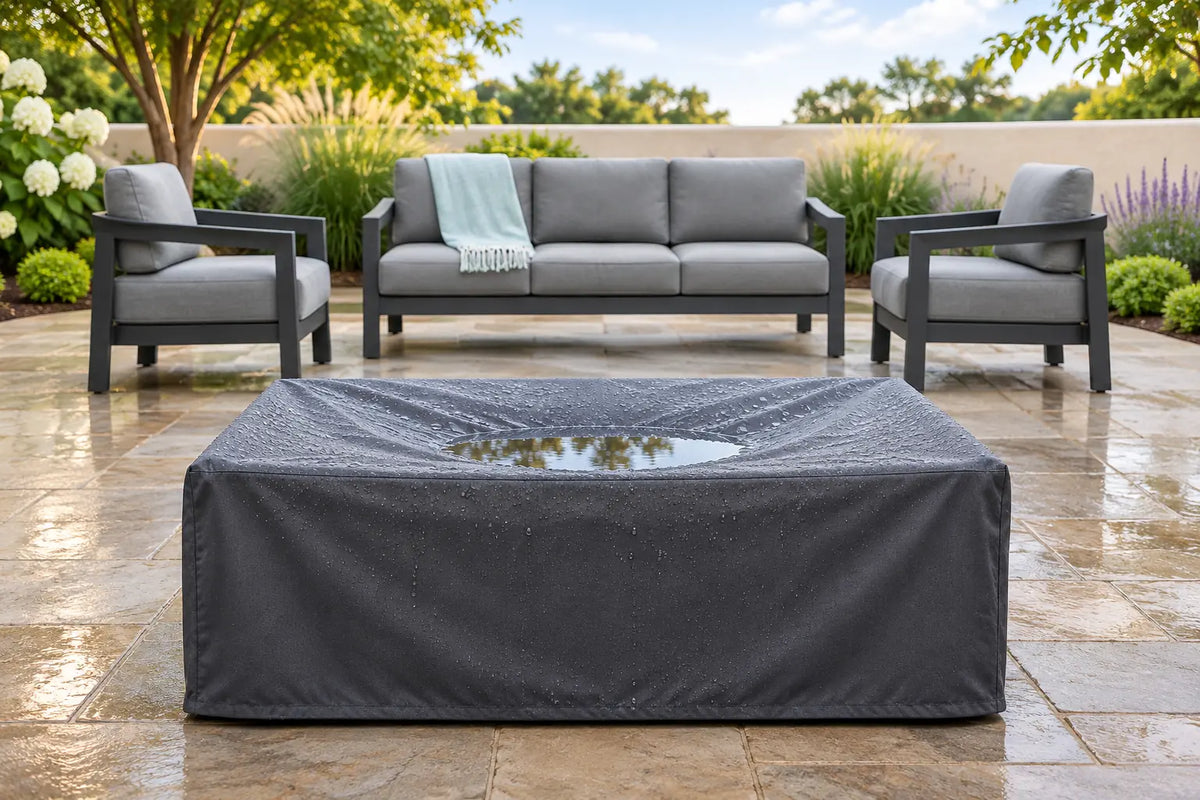
To stop water pooling on patio furniture covers, remove excess slack, support low areas so the fabric slopes toward the edges, and keep those runoff paths clear. Use the cover's intended fastening system without overstretching it or blocking ventilation. After rain, remove standing water, uncover as instructed, and let the furniture and cover dry before covering again.
A puddle usually points to a problem with the shape of the covered setup. Buying a heavier cover or tightening every fastener may leave the same hollow in place.
Start by locating where water collects. The position of the puddle often tells you which adjustment to make.
Why Does Water Pool on Furniture Covers?
Rain collects wherever the cover forms a basin instead of a continuous path to an edge. That can happen with an oversized cover, a gap between furniture pieces, or a tabletop sitting below surrounding chair backs.
| What you notice | What to check | Adjustment to consider |
|---|---|---|
| A puddle in the middle of a covered dining set | Fabric dipping between chair backs above a lower table | A compatible support that lifts the central dip |
| Water between a sofa and coffee table | One cover bridging separate pieces | Cover pieces individually where intended |
| Several small pockets near the edges | Excess fabric, folds, or an uneven fit | Refit the cover and smooth the runoff paths |
| Pooling returns after wind | A shifted cover or displaced support | Check fasteners and support stability |
| Furniture is damp underneath, with little water on top | Wet items packed beneath it, condensation, or possible leakage | Uncover, dry, and inspect before assuming one cause |
Standing water can pull the fabric farther into a hollow. Address the shape before the next storm rather than relying only on emptying the same puddle each time.
If Water Is Already Pooling, Remove It Before Adjusting the Cover
Do not pull a water-filled cover off in one movement. You could spill the water onto the furniture or put unnecessary strain on the fabric and seams.
When conditions are safe:
- Remove the water gradually. Use a soft sponge for a small puddle or an appropriate manual water-removal pump for a larger accumulation. Work without stretching the fabric or pressing the pool down onto the furniture.
- Lift the cover carefully once the weight is reduced. Direct remaining runoff away from the furniture and walking routes.
- Check underneath. Look for damp cushions, water on frames, and damage to the cover. Dry the affected areas before resetting the arrangement.
If water has frozen onto the cover, do not bend the frozen fabric or chip the ice off with a sharp tool. Wait until it can be handled without forcing it, then follow the care instructions.
Fix the Shape So Rain Can Run Off
Match the Cover to the Piece You Are Protecting

A cover needs enough room to go on and come off normally, but extra fabric can form water-catching pockets.
Measure the furniture in the configuration you will cover. Check the cover's shape as well as its length, width, and height. A cover sized for individual pieces should not be stretched across an entire seating group.
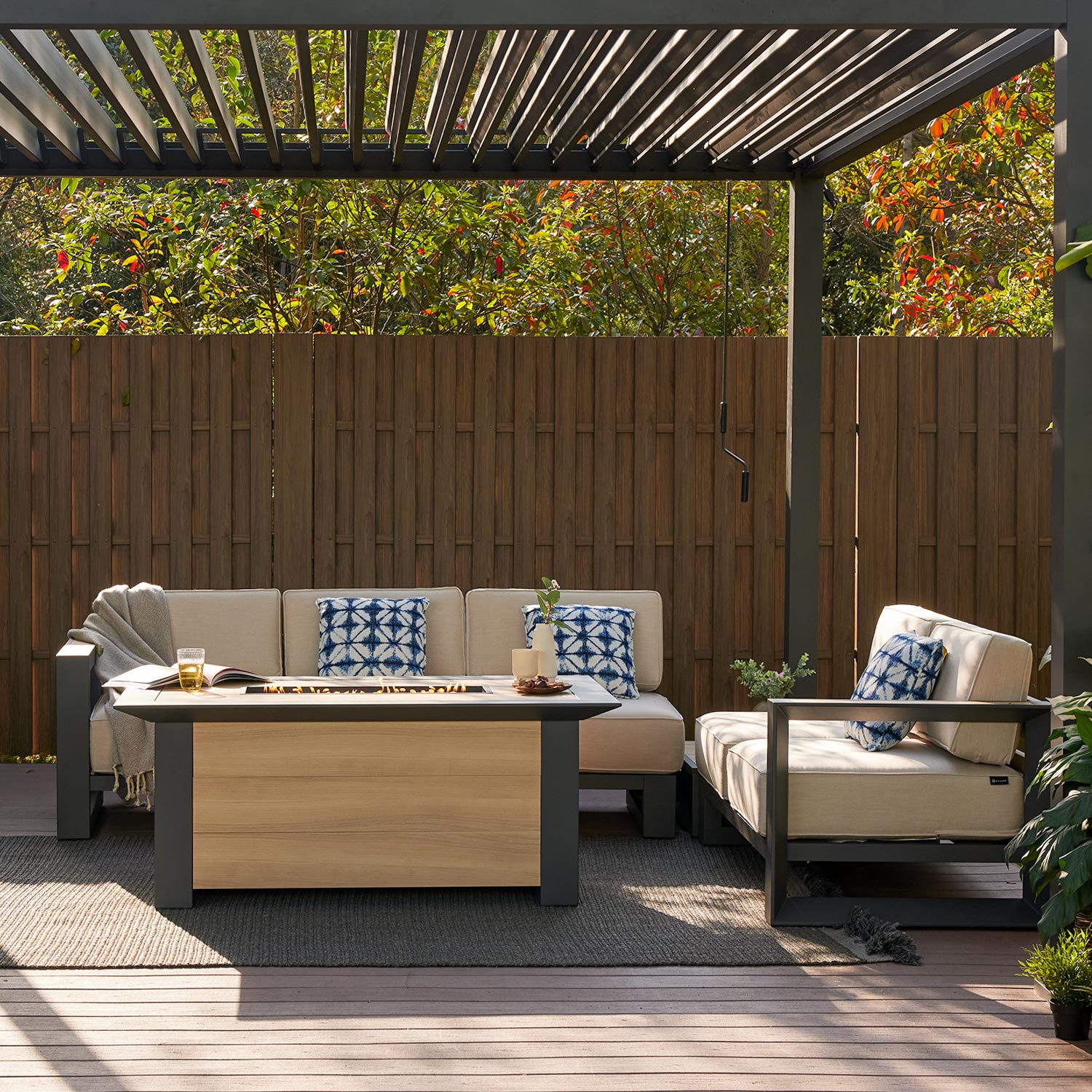
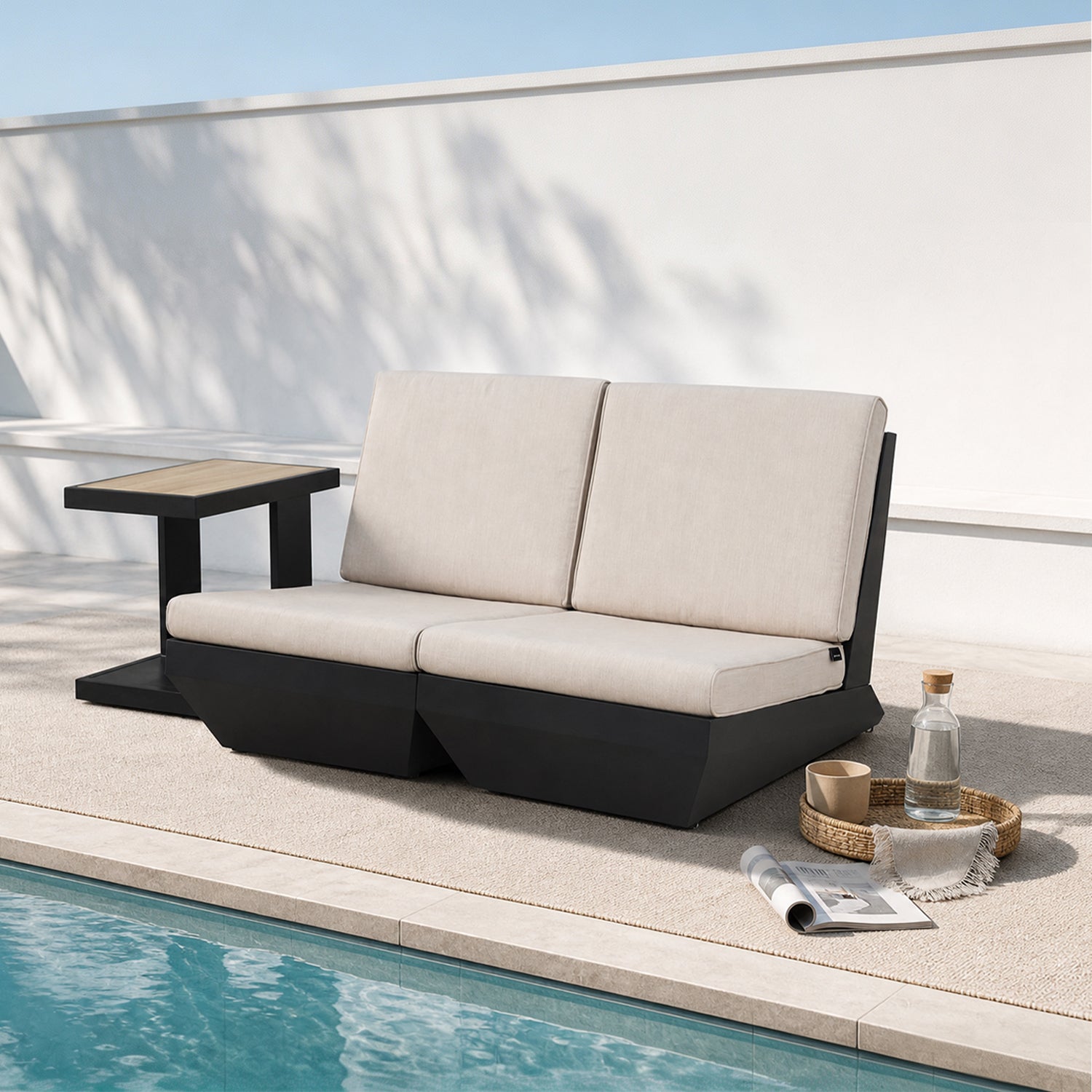
Our Mesa 4-Piece Seating Set includes separate covers for the seating pieces and coffee table. Use each cover on its corresponding piece as shown in the instructions. This avoids creating a new unsupported span by draping one large sheet across furniture at different heights.
A fitted cover can still have a low spot. Once it is on, look at the surface from the side and trace where rain would travel.
Support a Dip With a Stable, Rounded Shape

A purpose-made cover support pillow, air bag, or compatible support system can lift a hollow and create slopes toward the edges. Check compatibility with both the cover and furniture before using it.
Position the support where the fabric dips. The goal is a broad, stable shape with room for water to leave, rather than a sharp peak surrounded by smaller pockets.
Check that the support:
- Stays in place on a stable surface.
- Has smooth contact areas that will not abrade the cover or finish.
- Does not press against delicate fabric, mechanisms, or an unsupported surface.
- Allows the cover to fit and fasten normally.
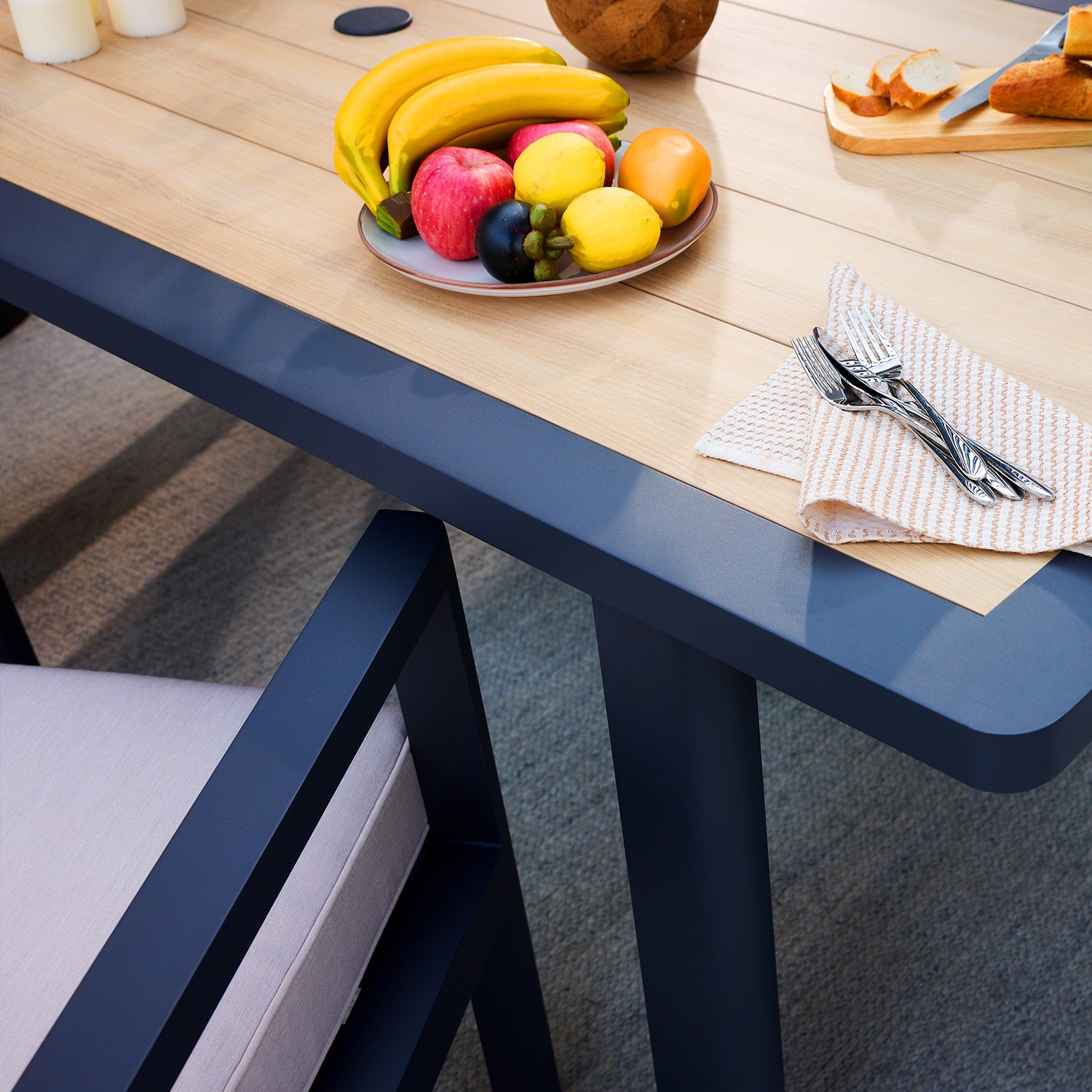
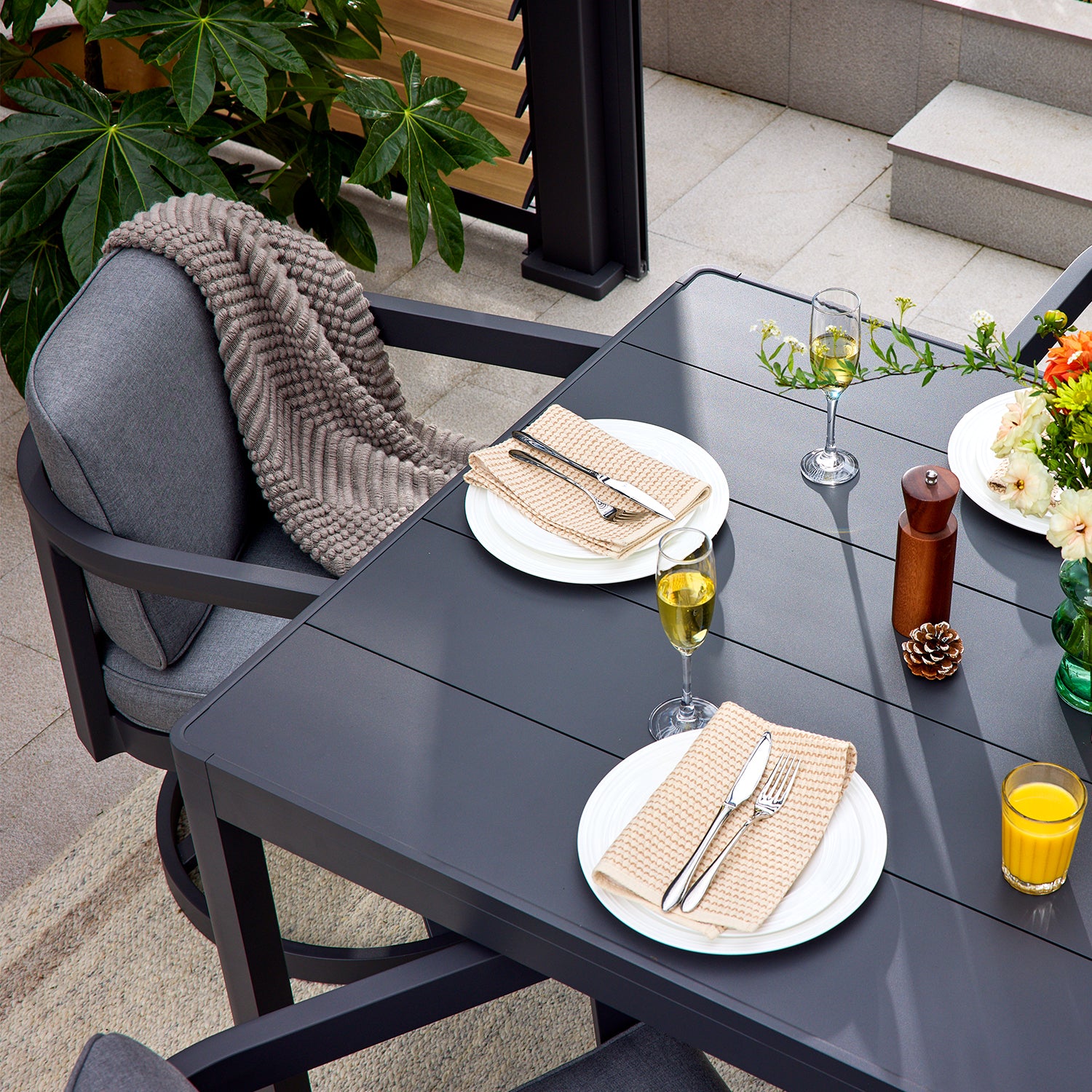
For a dining arrangement such as our Mesa 7-Piece Dining Set, check the relationship between the tabletop and chair backs if you use a combined set cover. When the surrounding chair backs hold the fabric higher than the table, the center may need support. Follow the instructions for the cover you actually use.
Do not use a table's umbrella opening as a mount for an improvised support pole unless the arrangement is expressly approved.
Adjust the Fasteners Without Creating New Pockets
Use the buckles, drawcords, or other closures supplied for the cover. Adjust them enough to maintain the intended fit; do not pull so hard that seams strain or the cover is dragged into gaps.
After fastening, check the entire perimeter. A fold near the edge can interrupt an otherwise useful slope. Keep vents and intended airflow openings unobstructed.
If the cover changes position whenever the wind picks up, resolve the fit or fastening problem. Tightening it more will not necessarily stabilize a loose support underneath.
Keep the Furniture Level
Create the slope in the cover, not by putting unstable blocks beneath furniture legs.
Keep furniture on the flat, level surface required by its instructions. Do not tilt a table, balance a chair against another piece, or stack furniture solely to make a rain-shedding shape.
Our Siena 3-Piece Chaise Lounge combines aluminum frames with sling seating and an adjustable backrest. Follow its instructions for the furniture and cover configuration. Do not press an improvised prop into the sling or assume a different backrest position will make every cover fit correctly.
Check Again After Rain

Runoff and drying are separate jobs. A cover may shed most rain yet still have moisture beneath it.
For the Mesa dining set, Mesa seating set, and Siena chaise lounge discussed here, our care instructions call for covering only when the furniture and cover are clean and dry. They also call for taking the cover off promptly after rain or humid weather to avoid trapped moisture.
Once conditions are safe, remove any remaining standing water, uncover, and allow drying. Before re-covering, clear leaves and debris and check that the support and closures have stayed in place.
For the Mesa cushioned sets, store cushions indoors during inclement weather and rainy seasons as instructed. Removing cushions for appropriate storage is different from rearranging them beneath a cover as rain supports.
If the furniture needs cleaning, use our guide to how to clean outdoor furniture. Clean the protective cover according to its own instructions; do not assume the cushion-cleaning method applies to it.
What If the Same Puddle Keeps Coming Back?
Identify what is changing between a dry setup and the next rainy day:
- The support moves or loses its shape: Recheck its suitability, placement, and condition.
- The fabric still sags despite a stable support: Reassess the cover's size and whether one cover is bridging too many pieces.
- Leaves collect at the same edge: Clear the runoff path and reconsider placement beneath nearby planting.
- The fabric, seams, or closures are damaged: Ask about an approved repair or replacement rather than compensating with more tension.
- Water gets beneath the cover without an obvious puddle: Check seams and exposure, while also considering trapped moisture and condensation.
Persistent problems may call for a different cover or a more sheltered storage location. A waterproofing treatment cannot correct an unsupported hollow, and a heavier fabric alone does not create a drainage slope.
Can a Pergola or Deck Box Help?
A Pergola Can Reduce Overhead Exposure
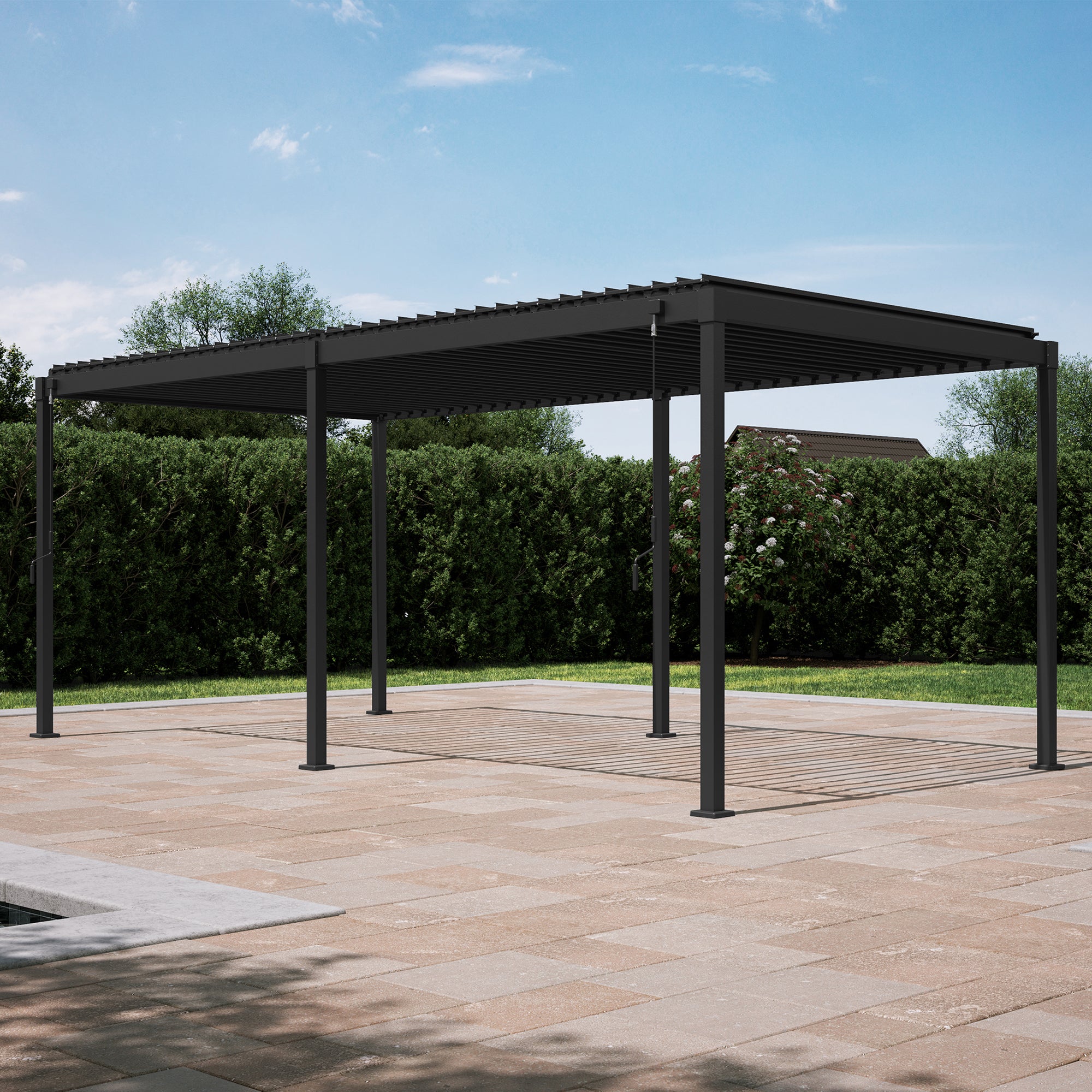
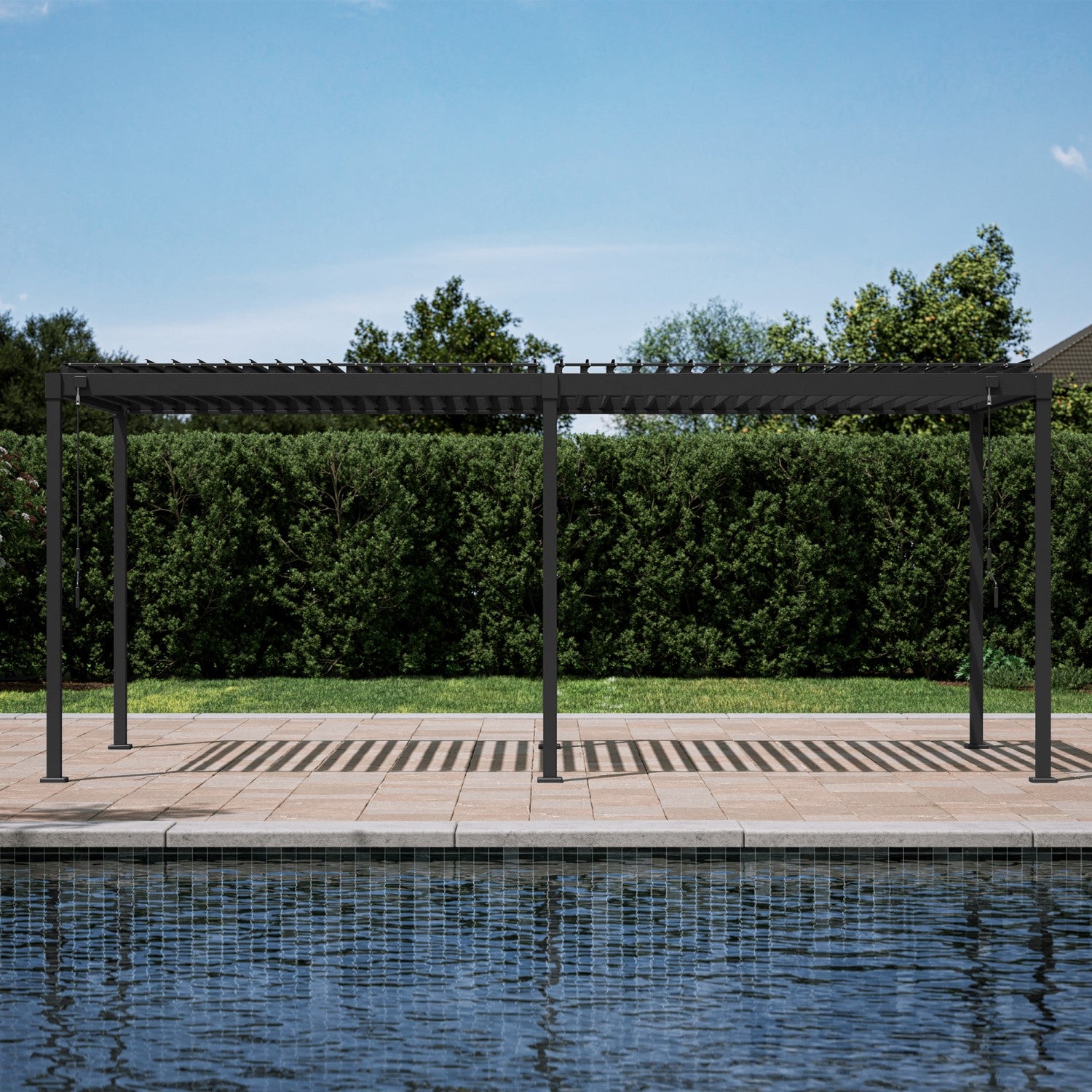
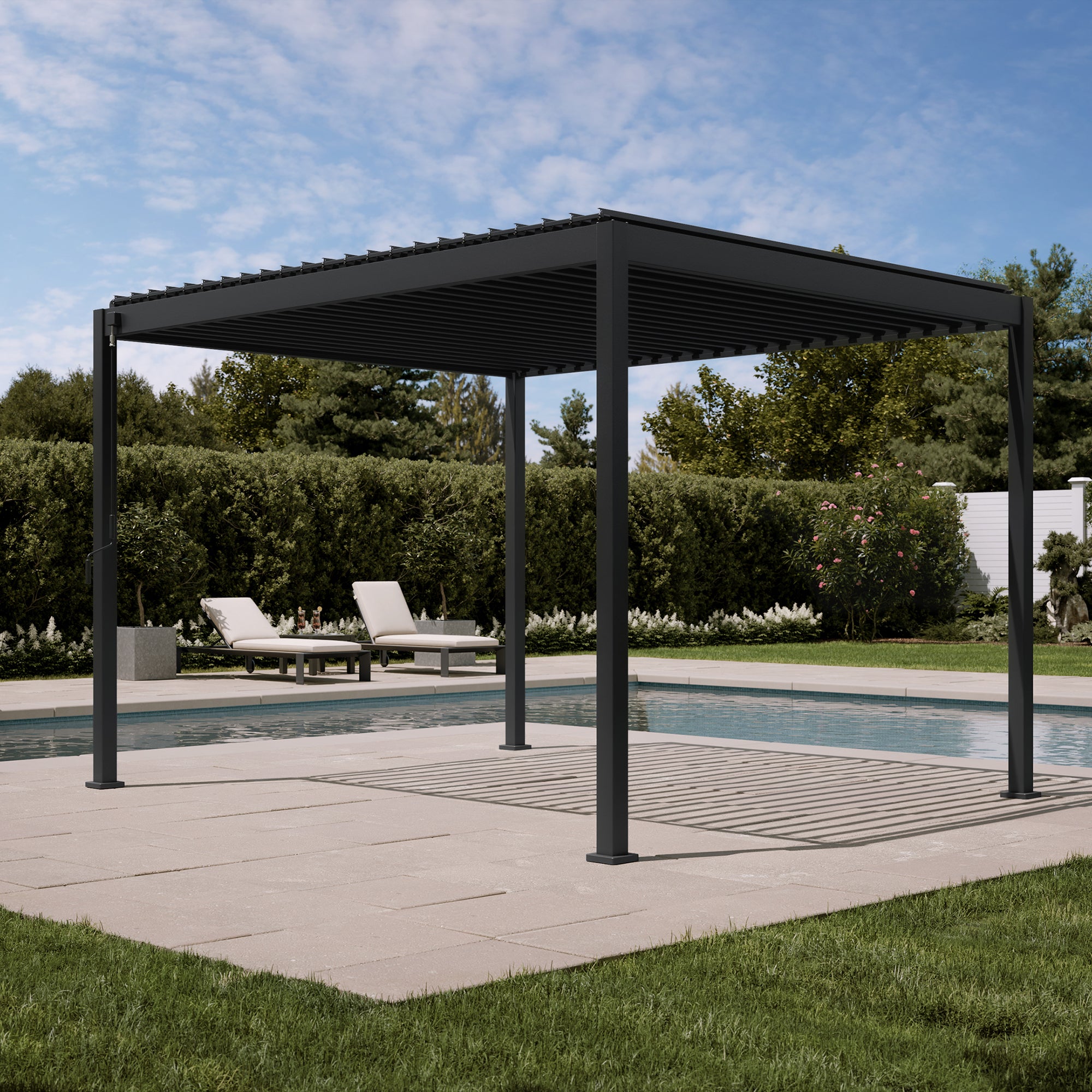
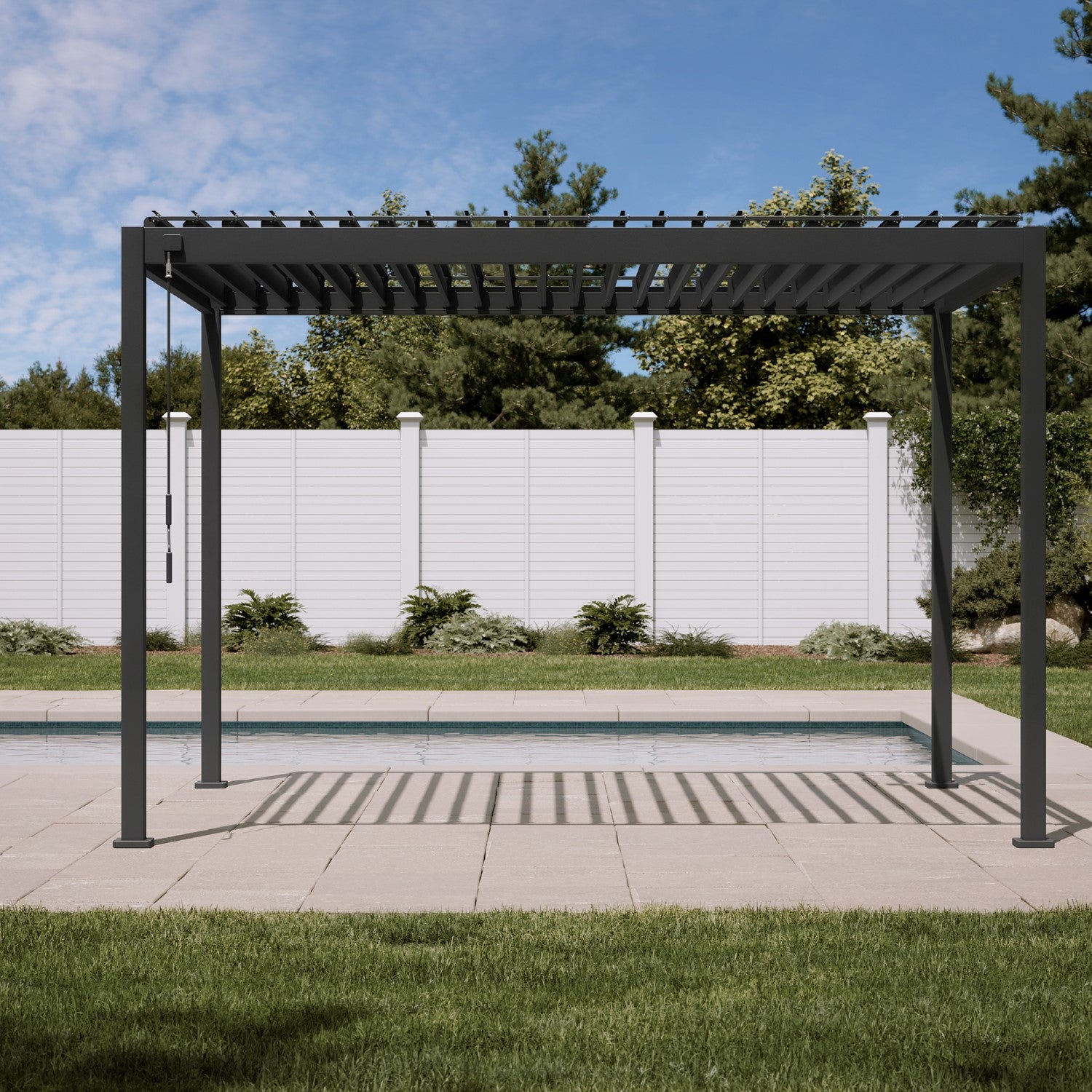
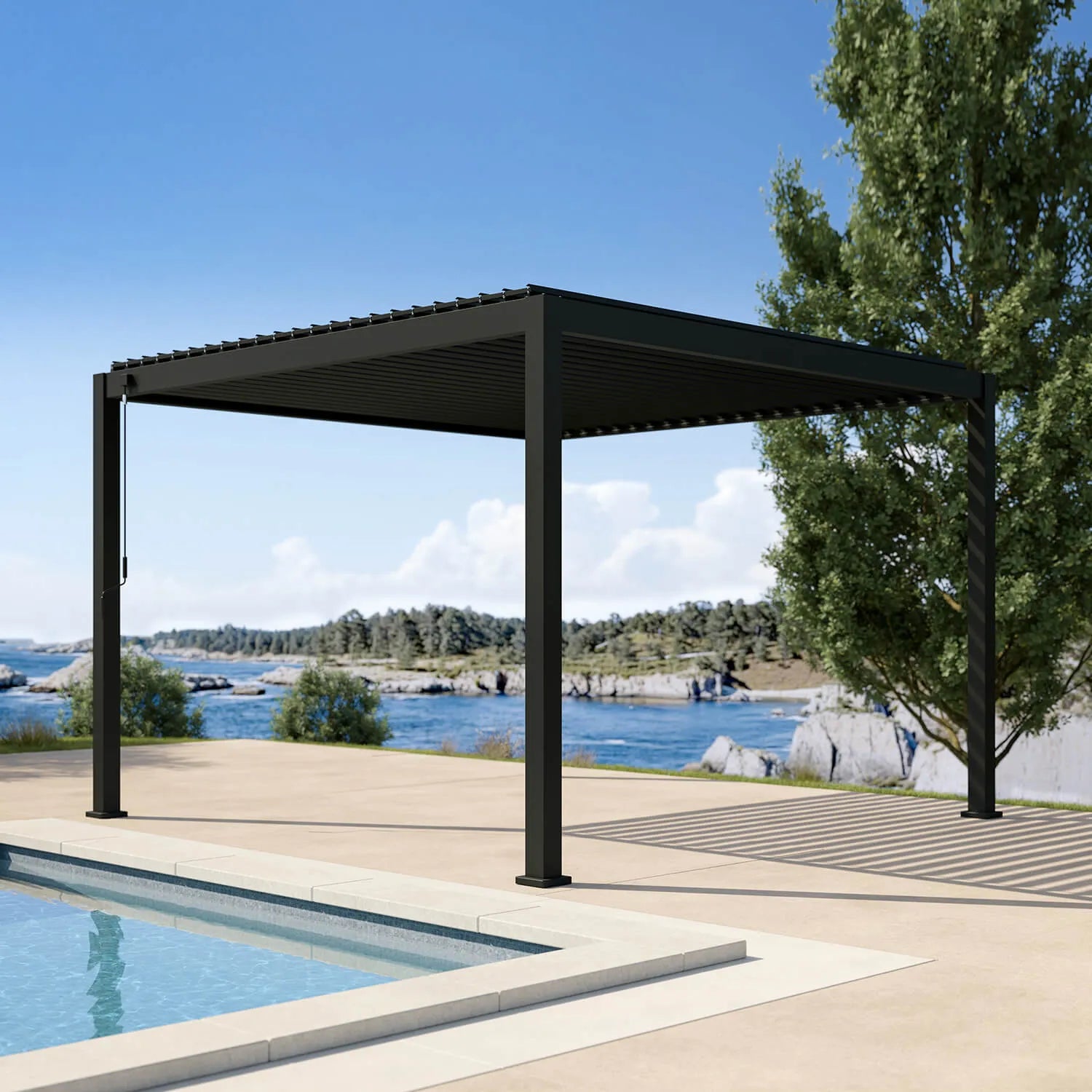
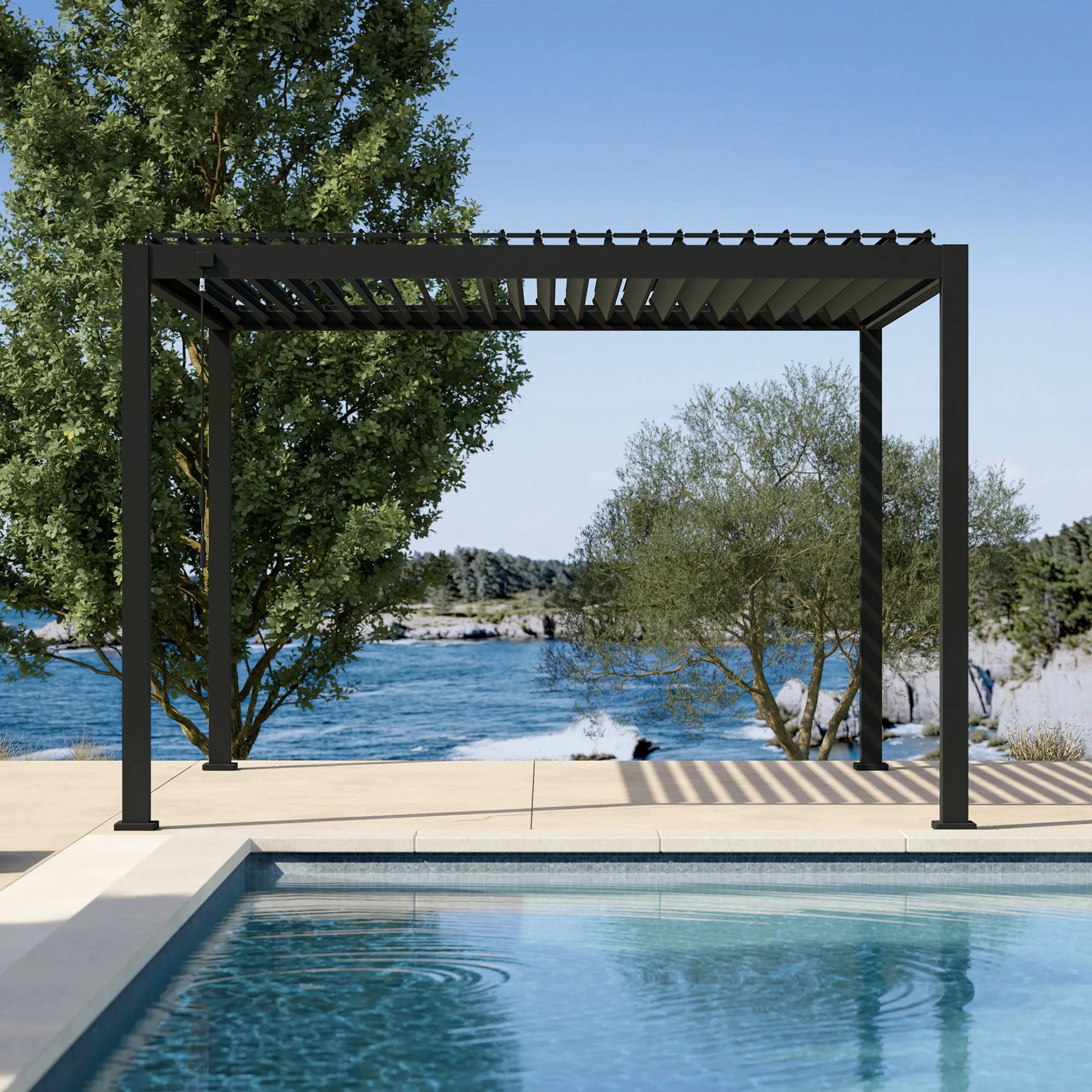
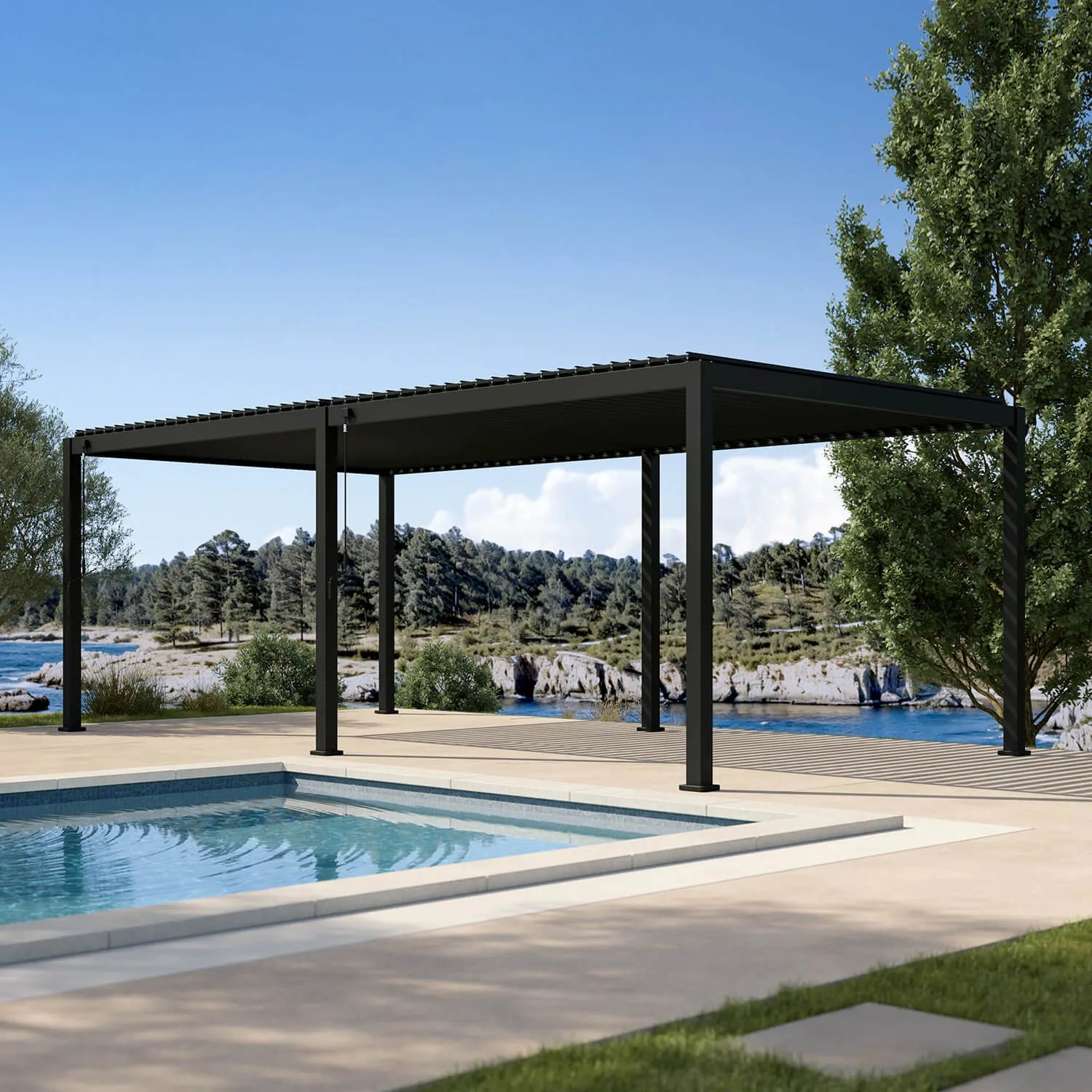
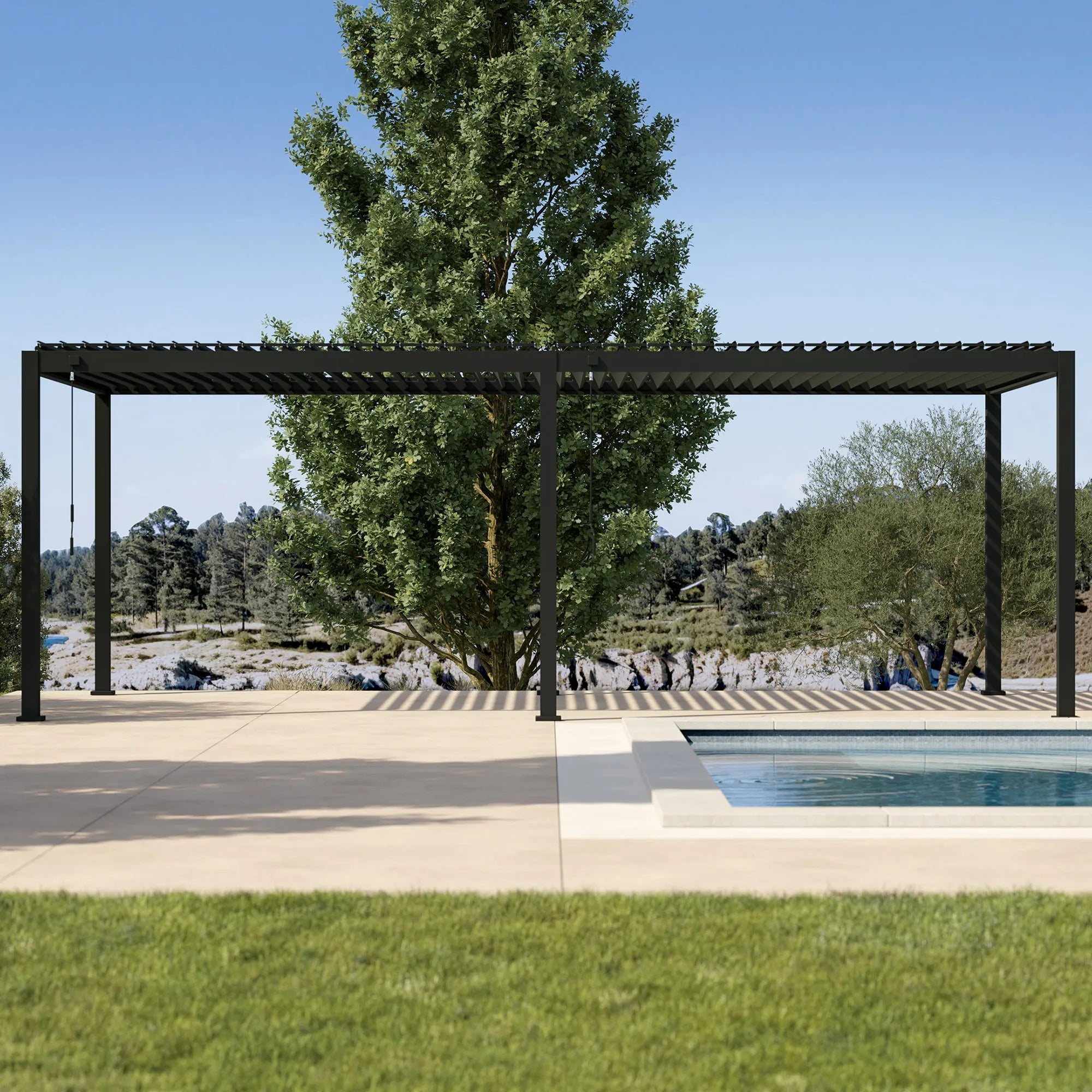
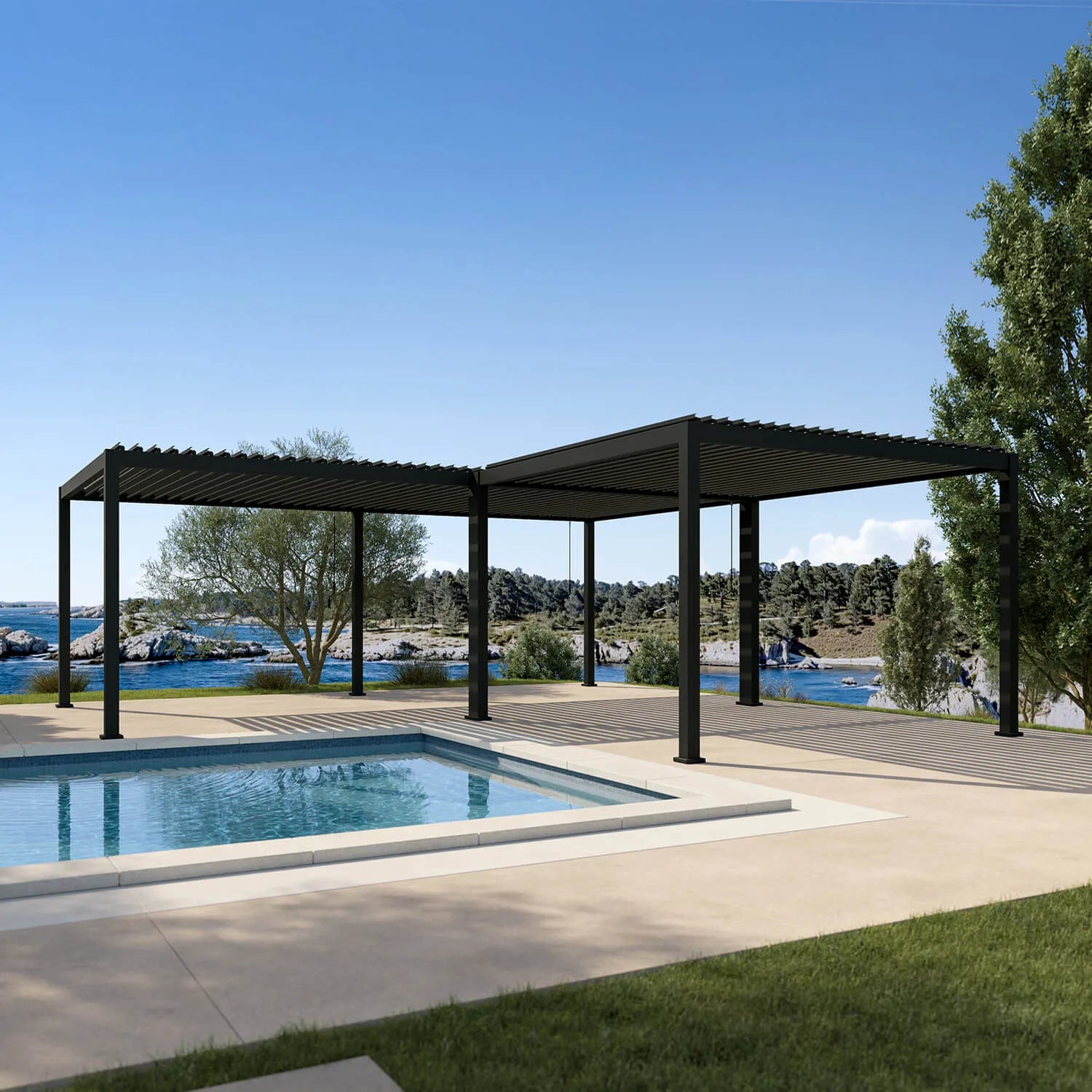
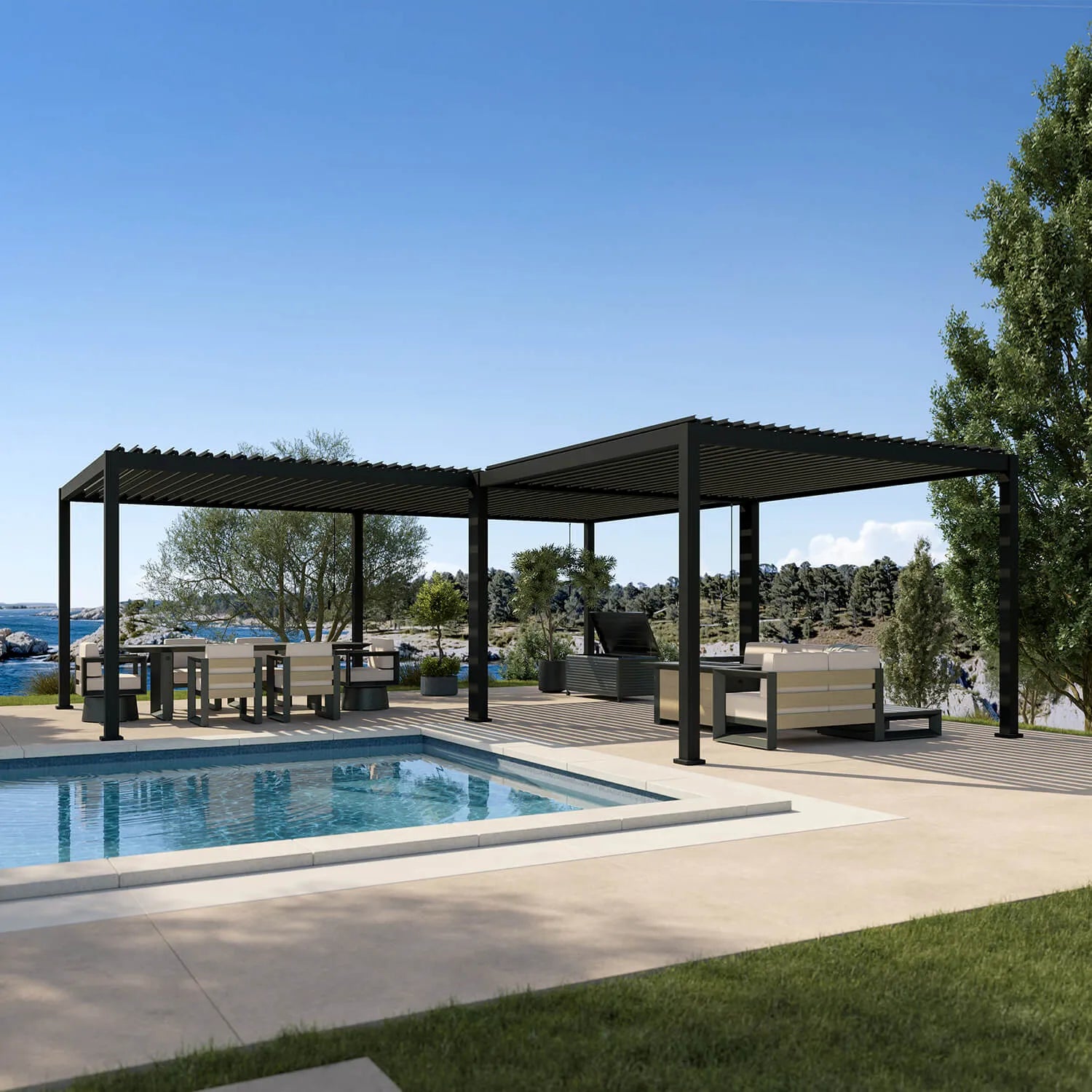
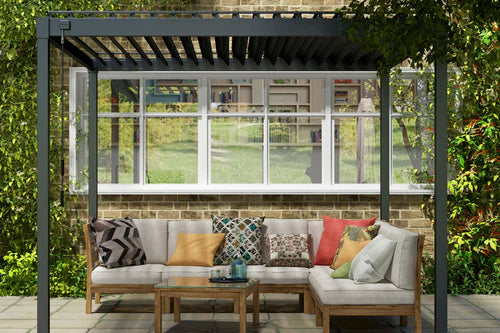
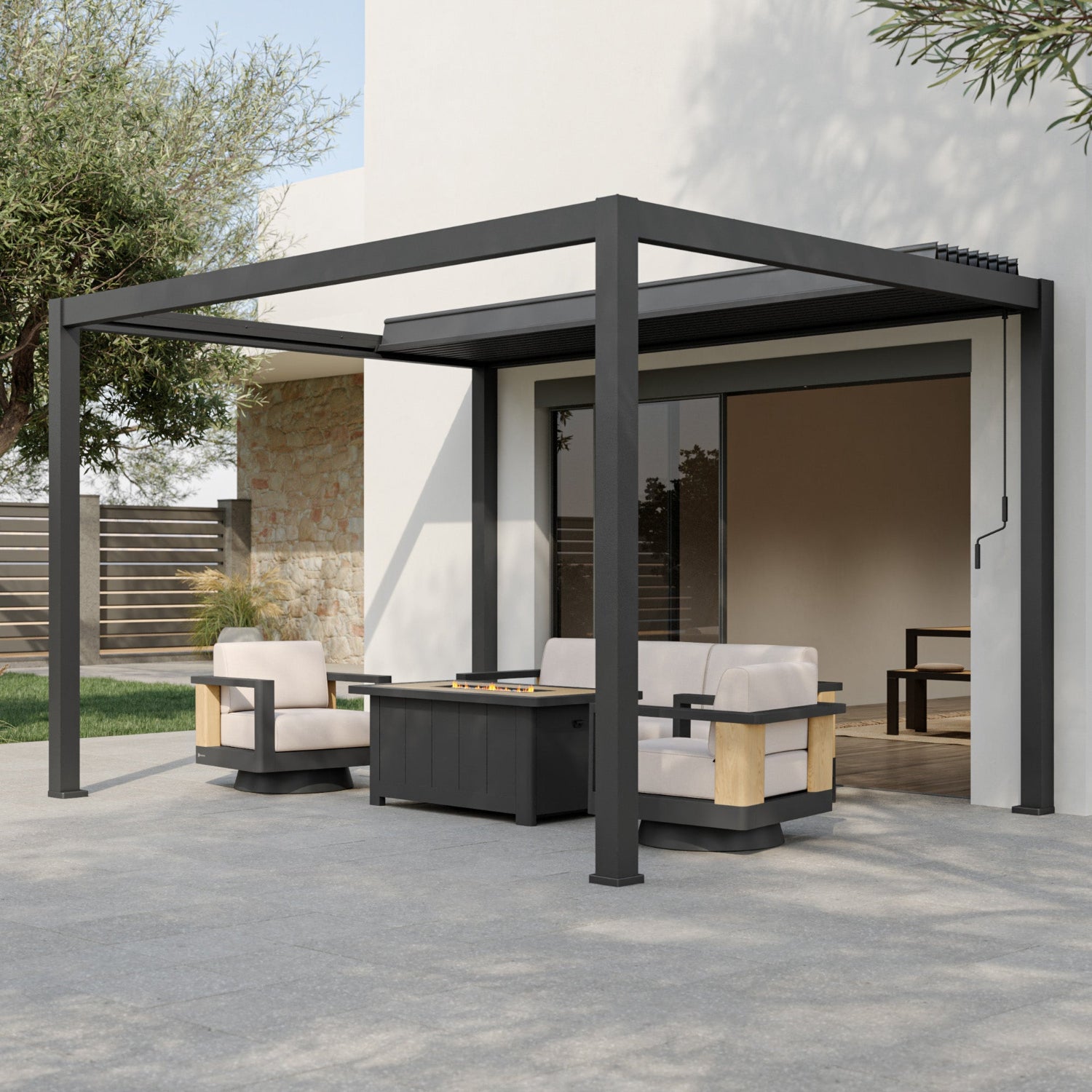
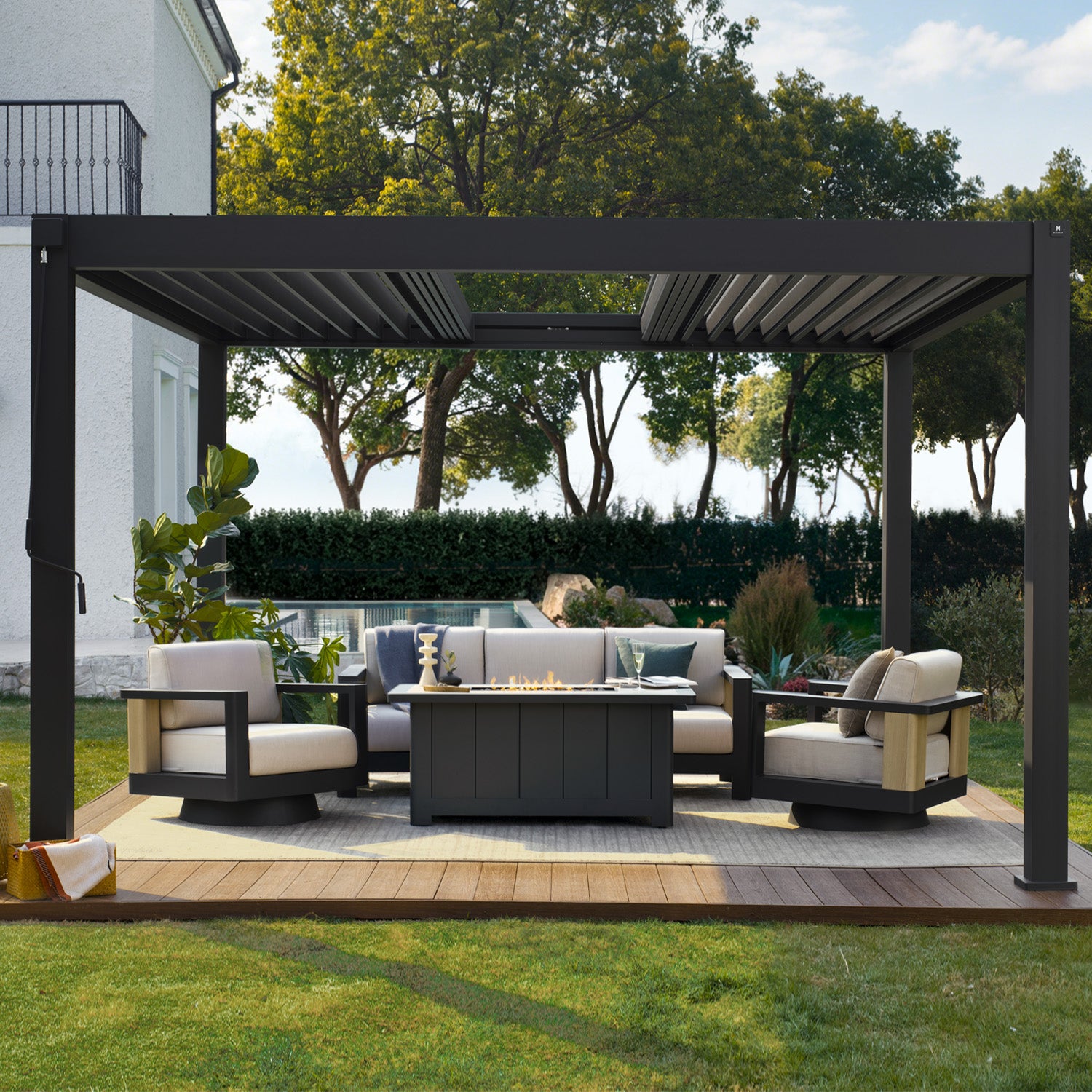
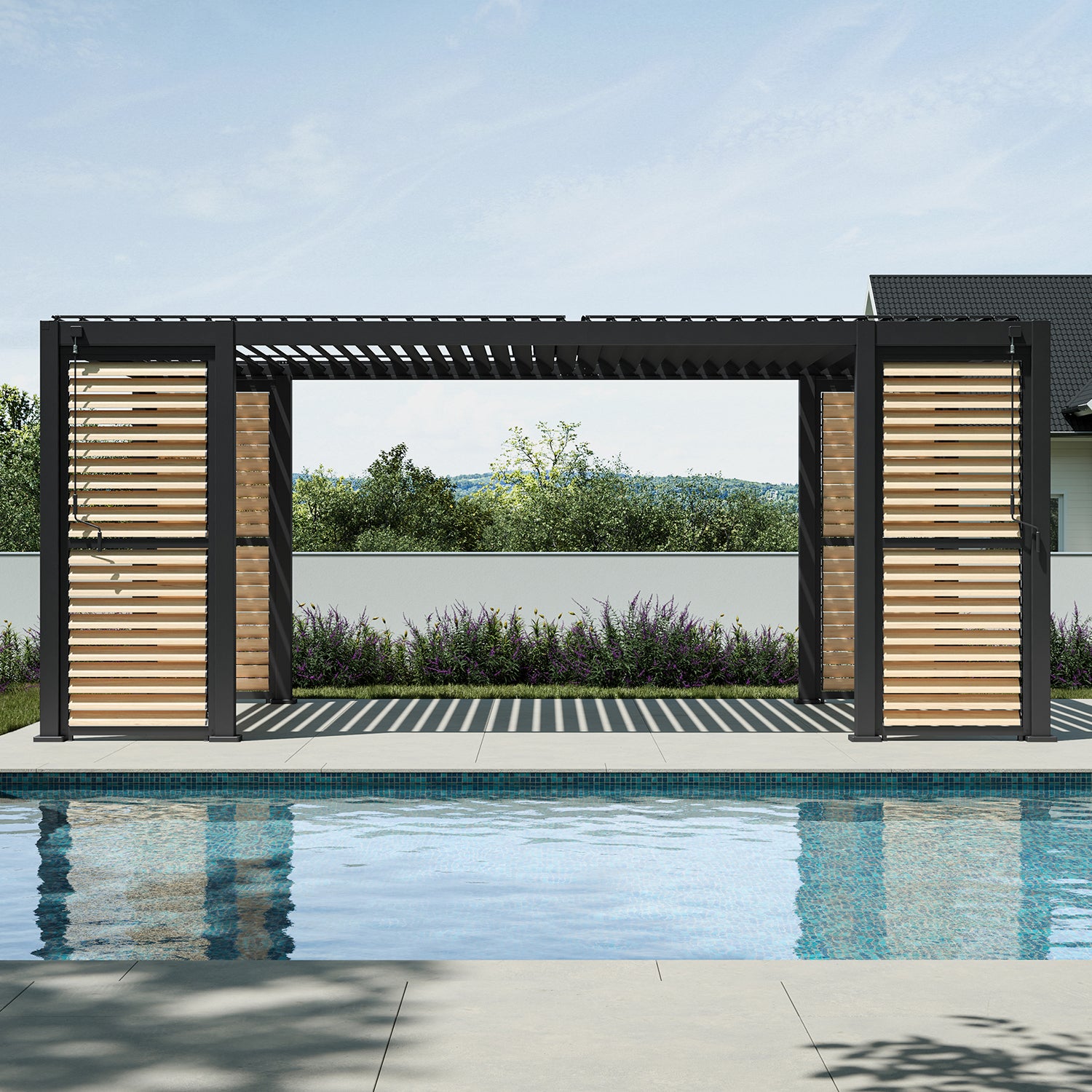
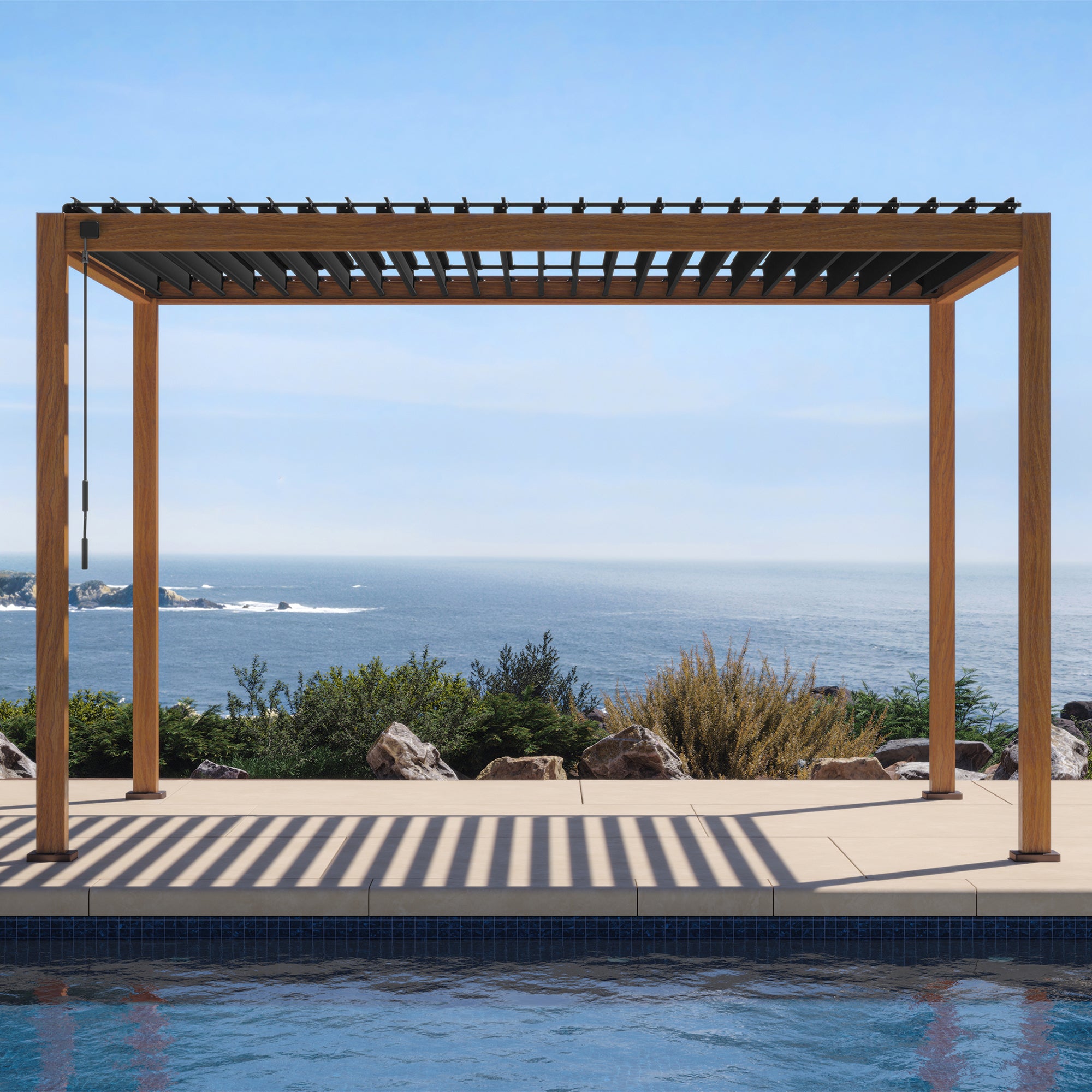
A suitable closing louvered roof with drainage can help shelter a furniture area from overhead rain. Wind-driven rain can still enter through open sides, so continue using the furniture's recommended care and storage methods.
If you are planning a more sheltered patio, explore our Mirador pergolas. Our guide to whether louvered pergolas are waterproof explains how roof position, drainage, and side exposure affect protection.
Check where runoff leaves the roof so it is not directed onto the covered furniture. Follow the pergola's own weather instructions, including its separate guidance for snow.
A Deck Box Can Organize Dry Covers Between Uses
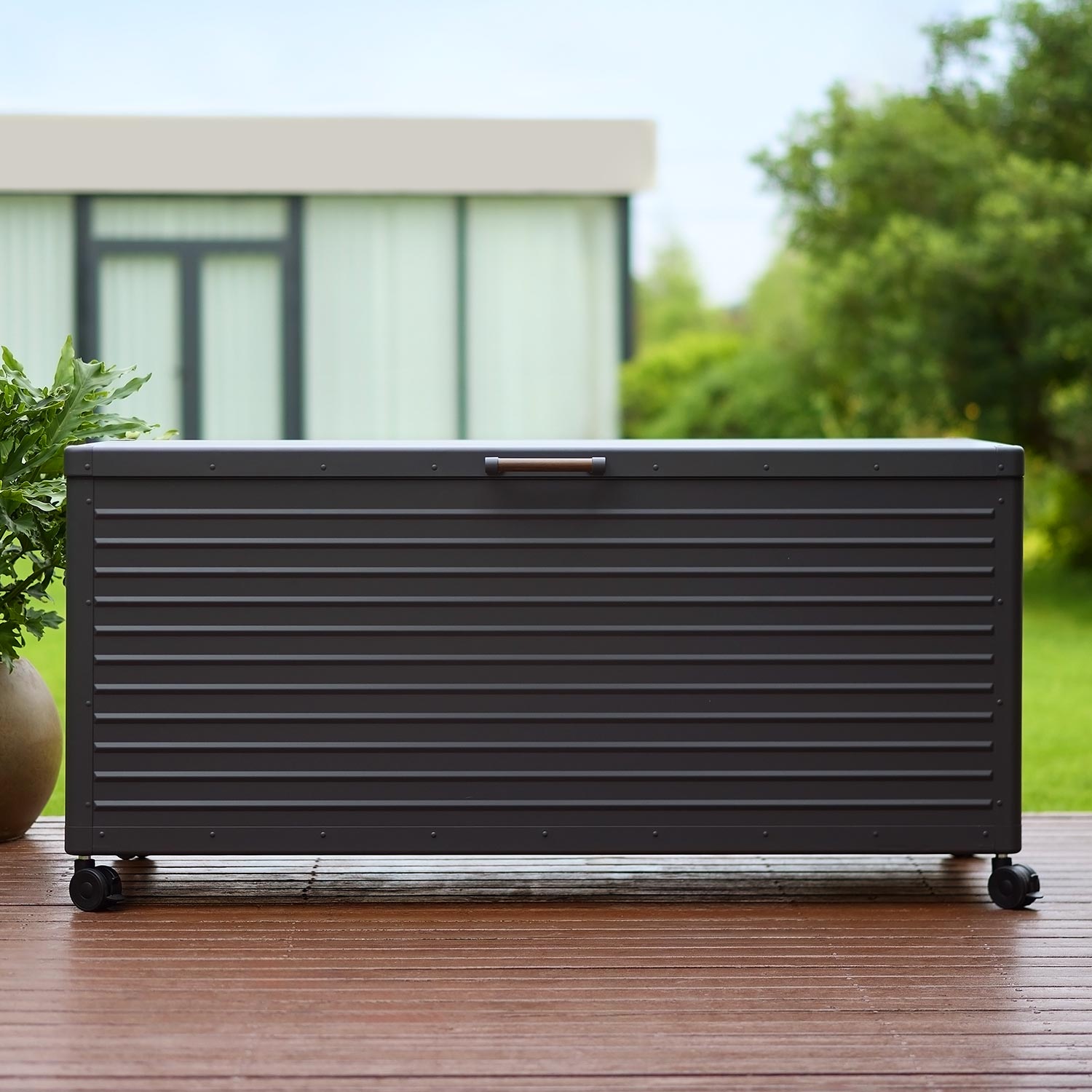
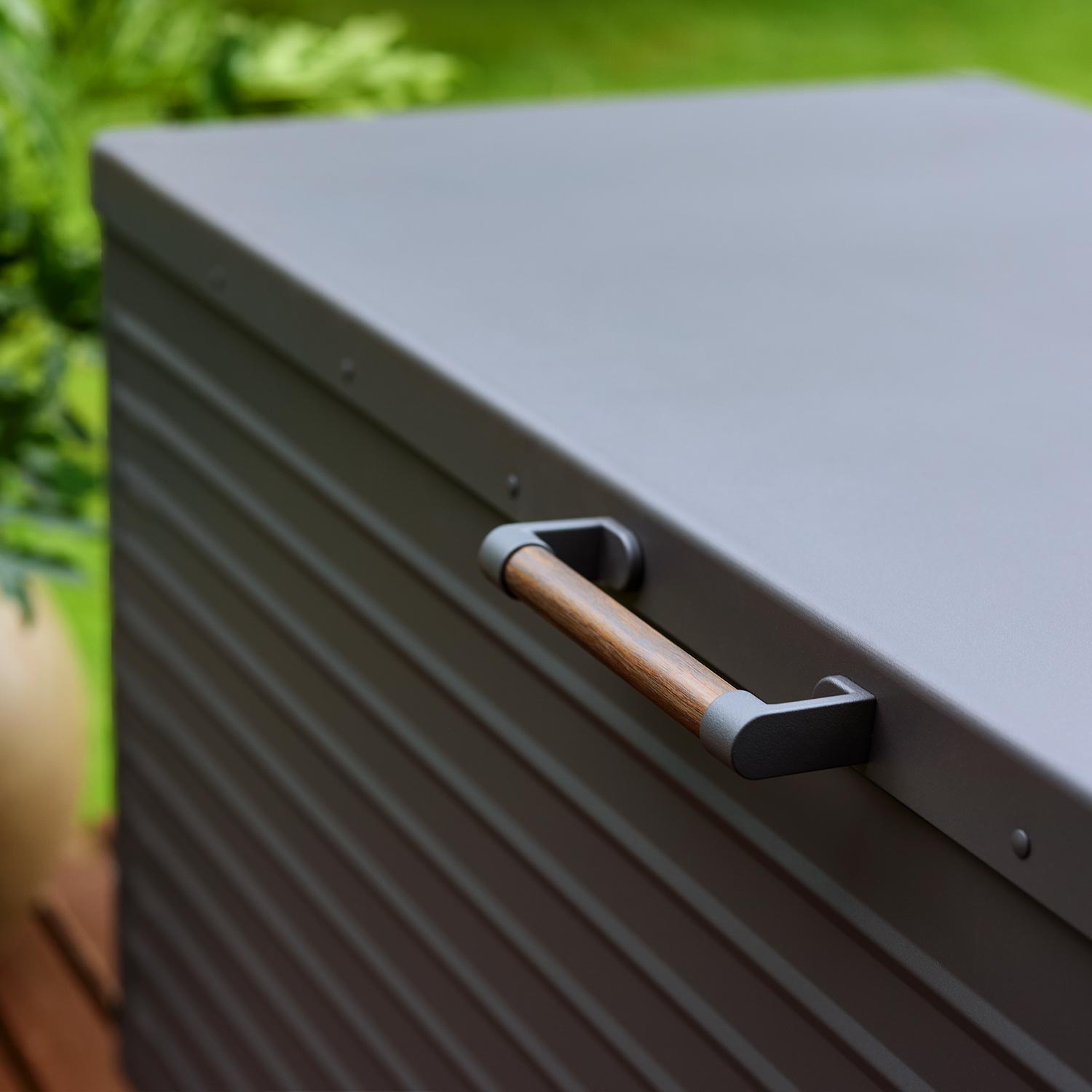
A storage box gives suitable dry patio items a designated place when they are not in use. Our Mirador deck boxes offer different sizes to compare with the items you want to store.
Let covers dry completely before folding and packing them. Do not put a wet cover in a closed box alongside dry cushions, and continue following any requirement to store particular cushions indoors.
For an introduction to capacity and intended uses, read what a deck box is.
Frequently Asked Questions
Will a Waterproof Cover Stop Water From Pooling?
No. Water protection and runoff are different properties. Even a cover designed to resist water entry can collect a puddle if it forms a low pocket. Correct the fit and support, then assess the cover's condition separately.
Can I Use a Ball or an Upside-Down Bucket Under the Cover?
These objects may lift the fabric, but they can also roll, tip, concentrate pressure, or leave another hollow around them. Do not assume a household object is compatible with your furniture. A purpose-made support with an appropriate shape and stable placement is a better starting point.
Should I Punch Drain Holes in a Furniture Cover?
Do not cut or puncture the cover to drain a puddle. That changes its protective design and provides a route for rain to reach the furniture. Correct the low spot or ask about repair and replacement options.
Why Is My Furniture Wet When the Cover Has No Holes?
Moisture can come from damp items beneath the cover, condensation, wind-driven rain, or a seam or coating issue that is not obvious. Dry everything, inspect the cover, and observe where moisture returns before deciding that the material has failed.
Build a Simple Routine Around the Forecast
Before rain, check the cover's fit, support, fasteners, and runoff paths. Afterward, remove standing water and uncover as instructed so moisture does not remain trapped.
For our Mirador outdoor furniture, use the manual for your exact set. Visit our Help Center or contact support@miradoroutdoor.com if you need help identifying a cover, checking its fit, or resolving recurring pooling.