
The pergola vs. verandah debate trips up a lot of homeowners. Both give you shade. Both look great. But they're built differently, cost differently, and suit very different backyards. If you've been going back and forth between the two, here's a straightforward breakdown to help you decide.
What Is a Verandah?
A verandah is a roofed, open-air platform attached directly to your house. Think of it like a covered porch that extends along one or more sides of the building. The roof is solid, whether flat, slanted, or curved, and it's permanent. Verandahs trace back to colonial architecture, where they kept homes cool long before air conditioning was a thing.
Verandahs are always part of the house. You can't plop one in the middle of your garden. They run along the front or side of the property and create a sheltered transition zone between indoors and outdoors. In rainy climates across the UK or the Pacific Northwest, that kind of full coverage is a real selling point.
But that permanence comes at a cost. Verandahs typically run £3,500–£6,000+ in the UK (or $8,000–$15,000+ in the U.S. for custom builds). And because they attach to your home's structure, most require planning permits and professional installation.
What Is a Pergola?
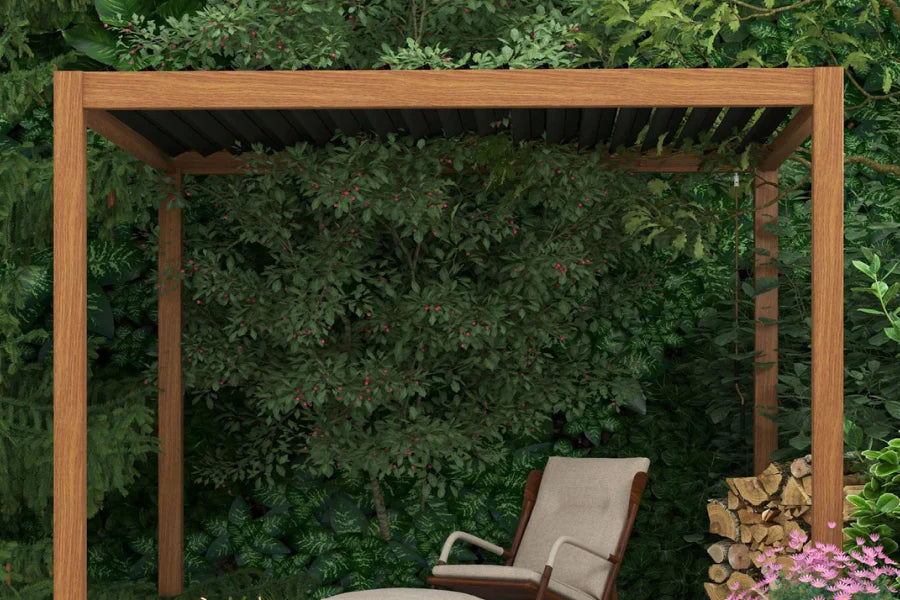
A pergola is an outdoor structure, either freestanding or wall-mounted, with vertical posts and an open or adjustable roof. Traditionally, pergolas had exposed crossbeams and were draped with climbing plants for dappled shade. They didn't block rain. They didn't fully block sun. They just looked beautiful.
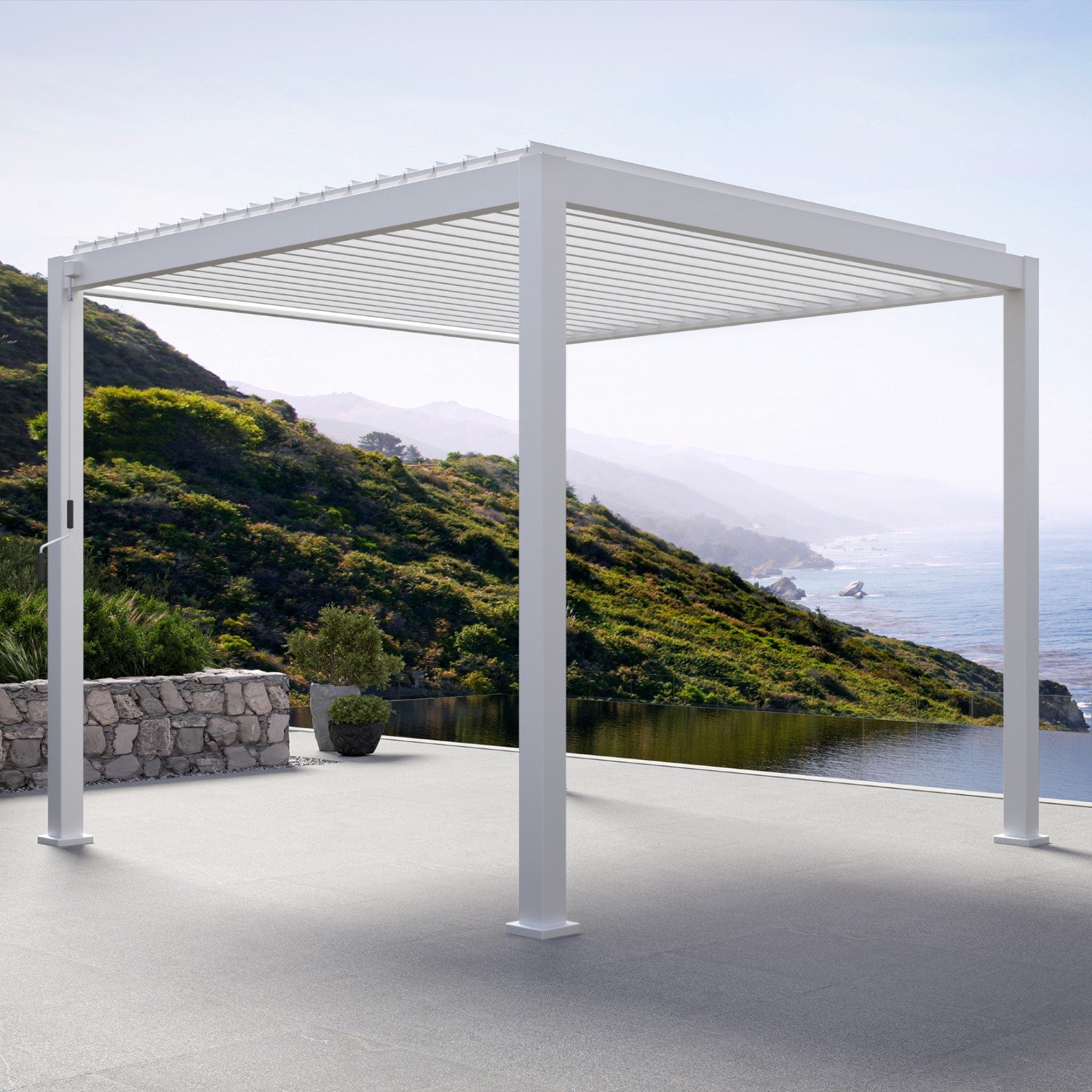
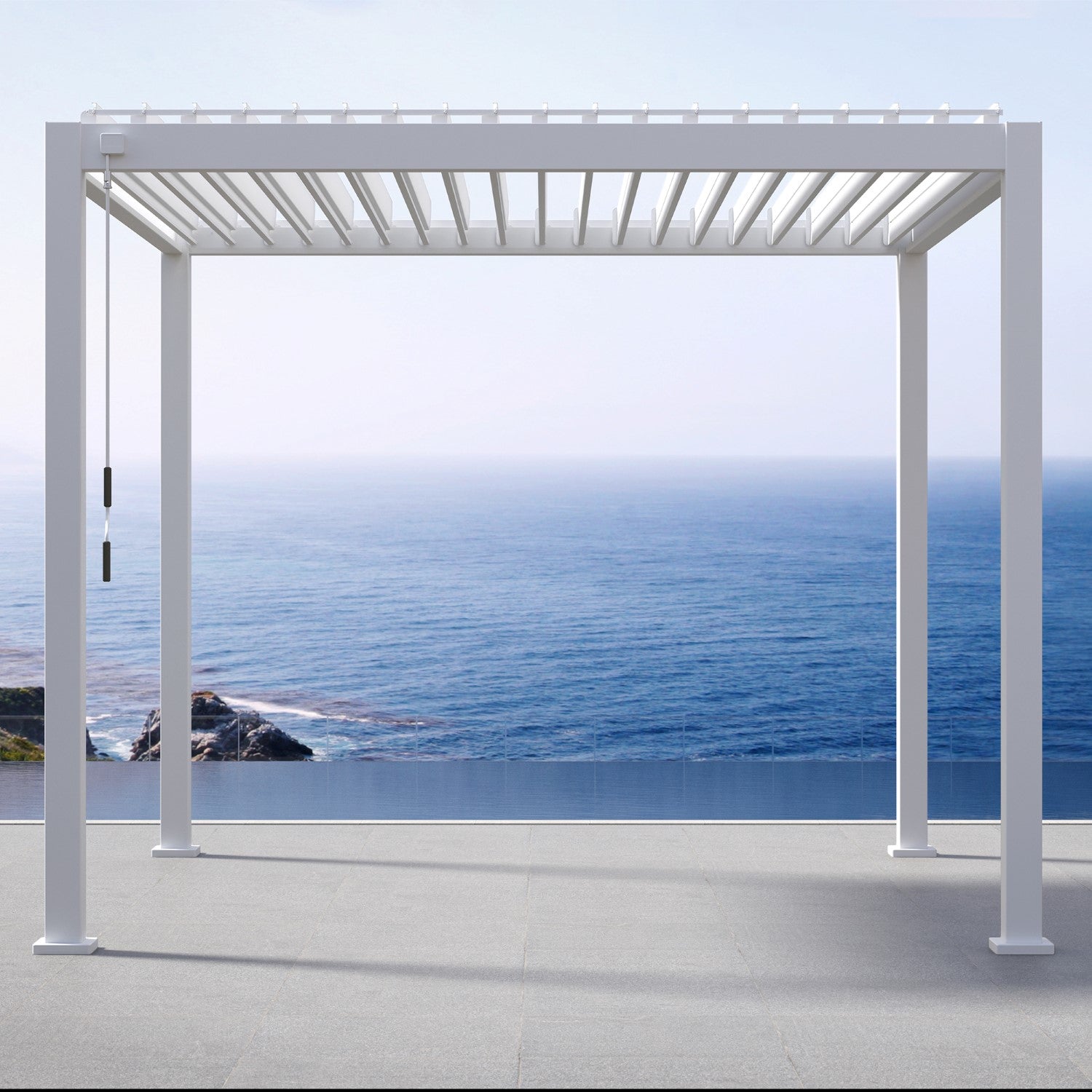
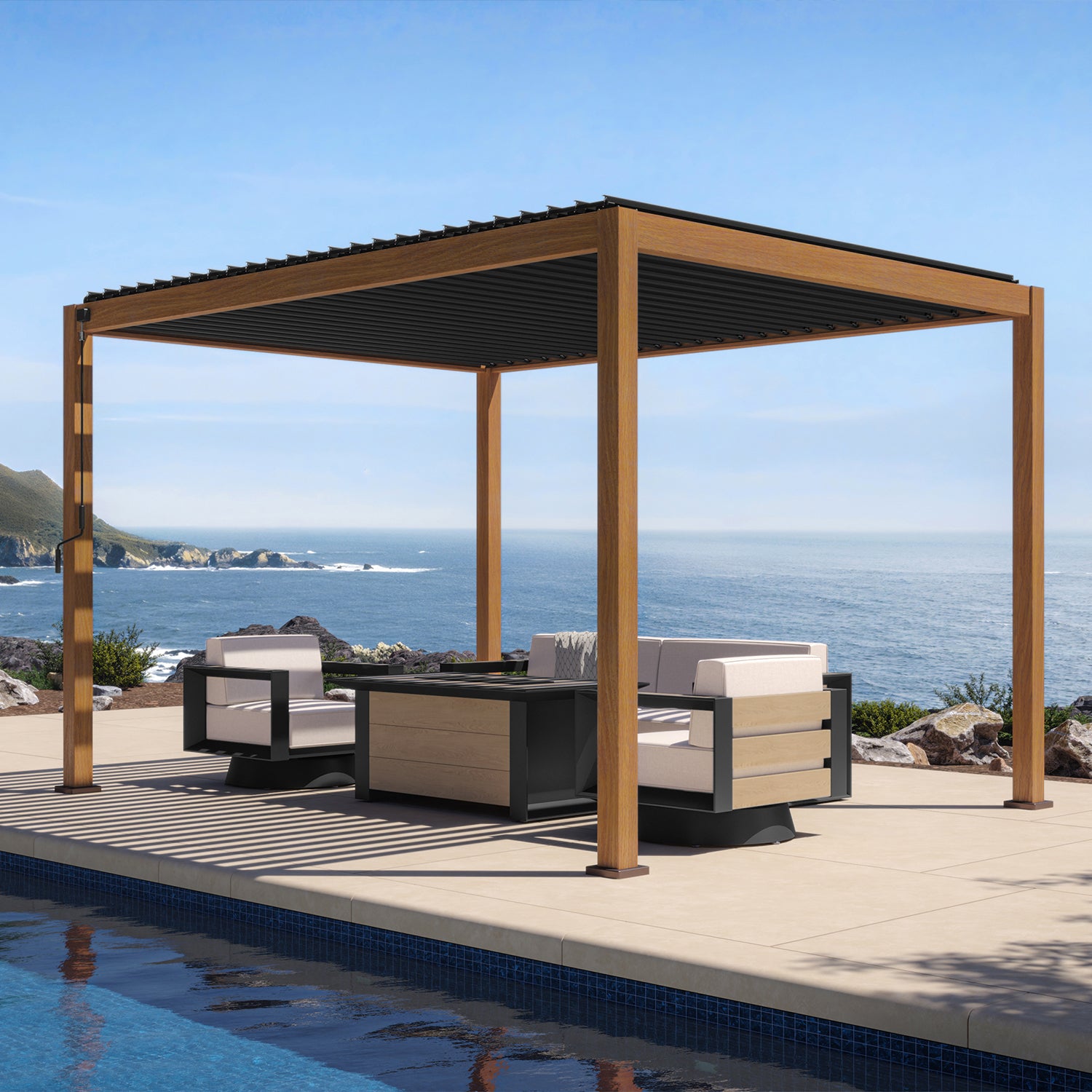
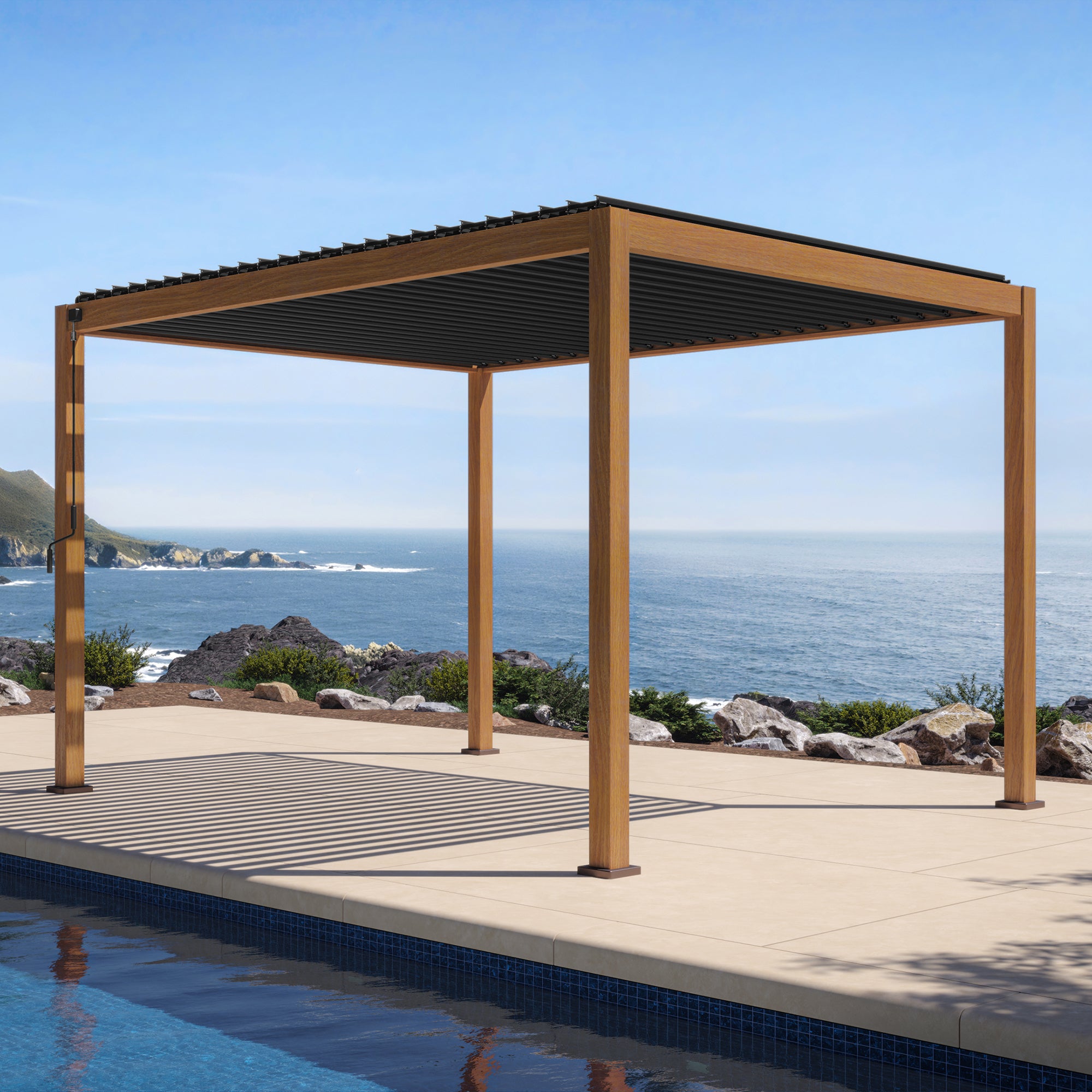
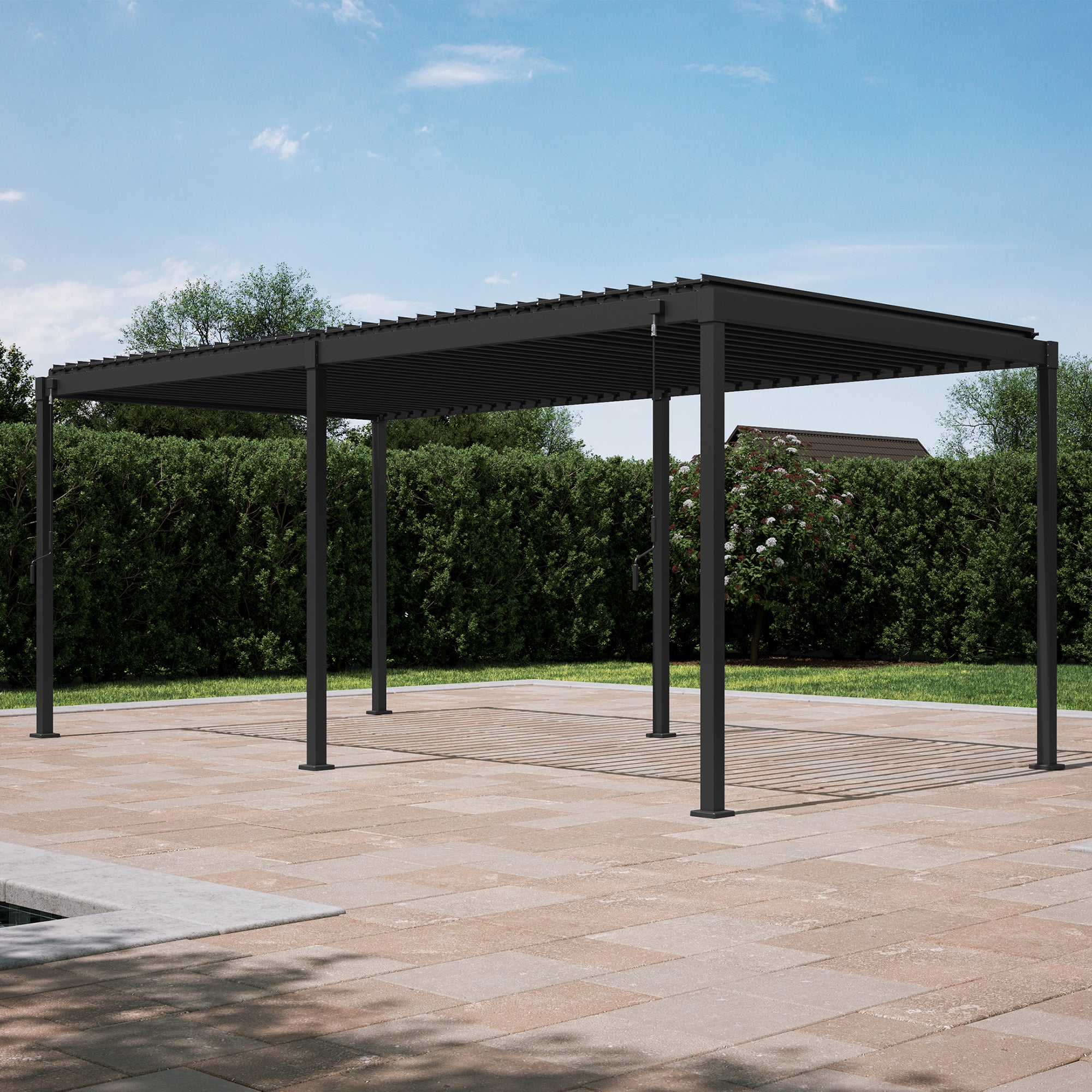
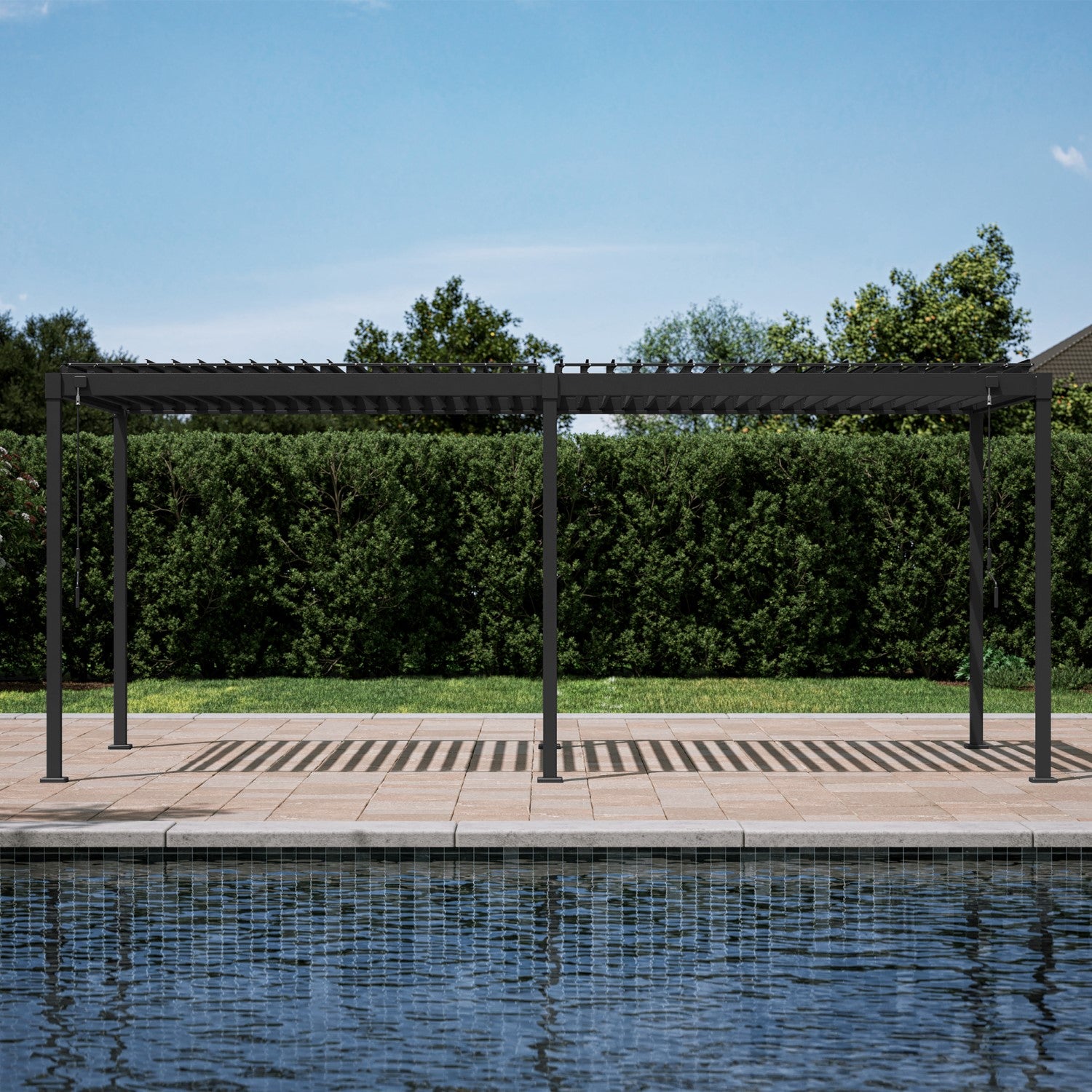
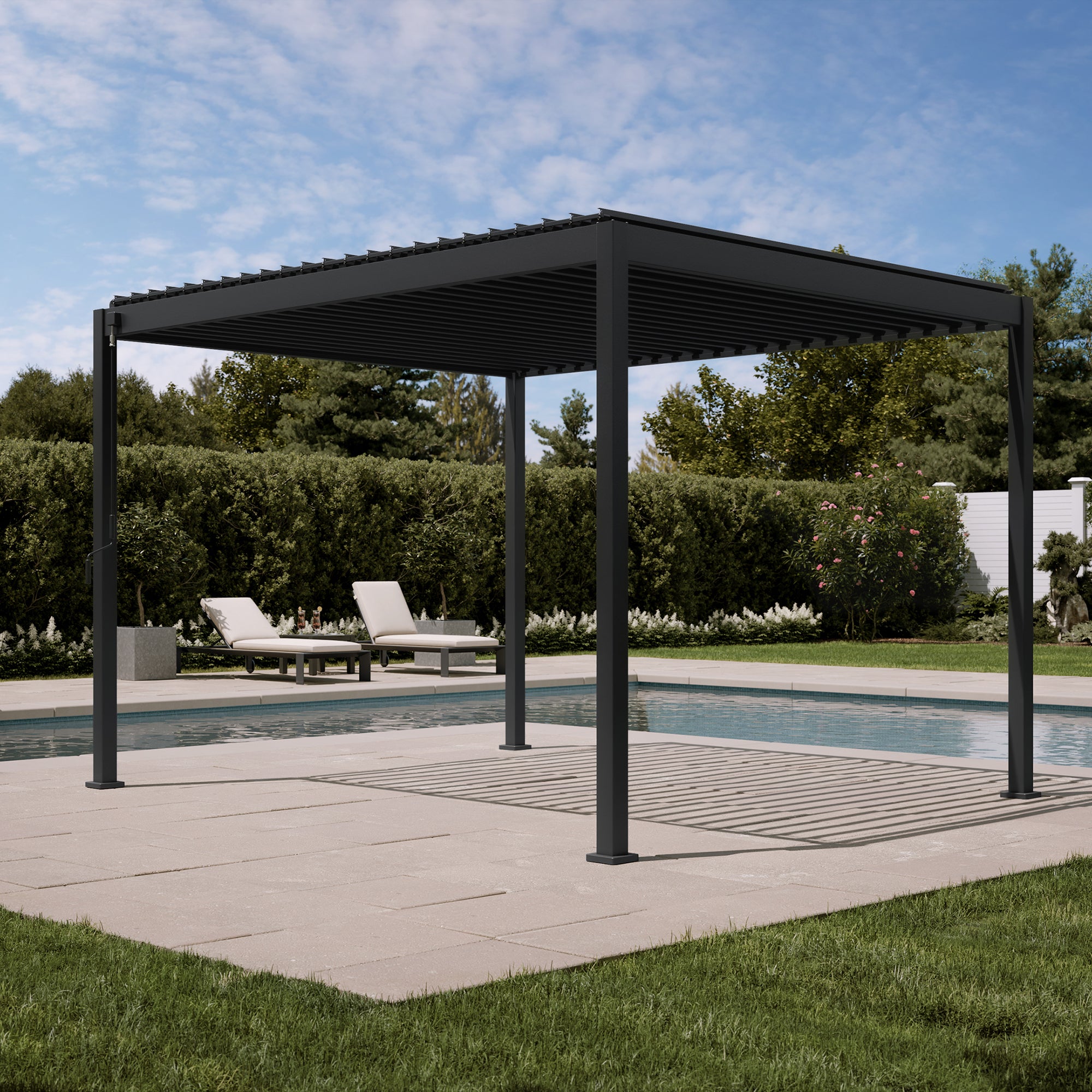
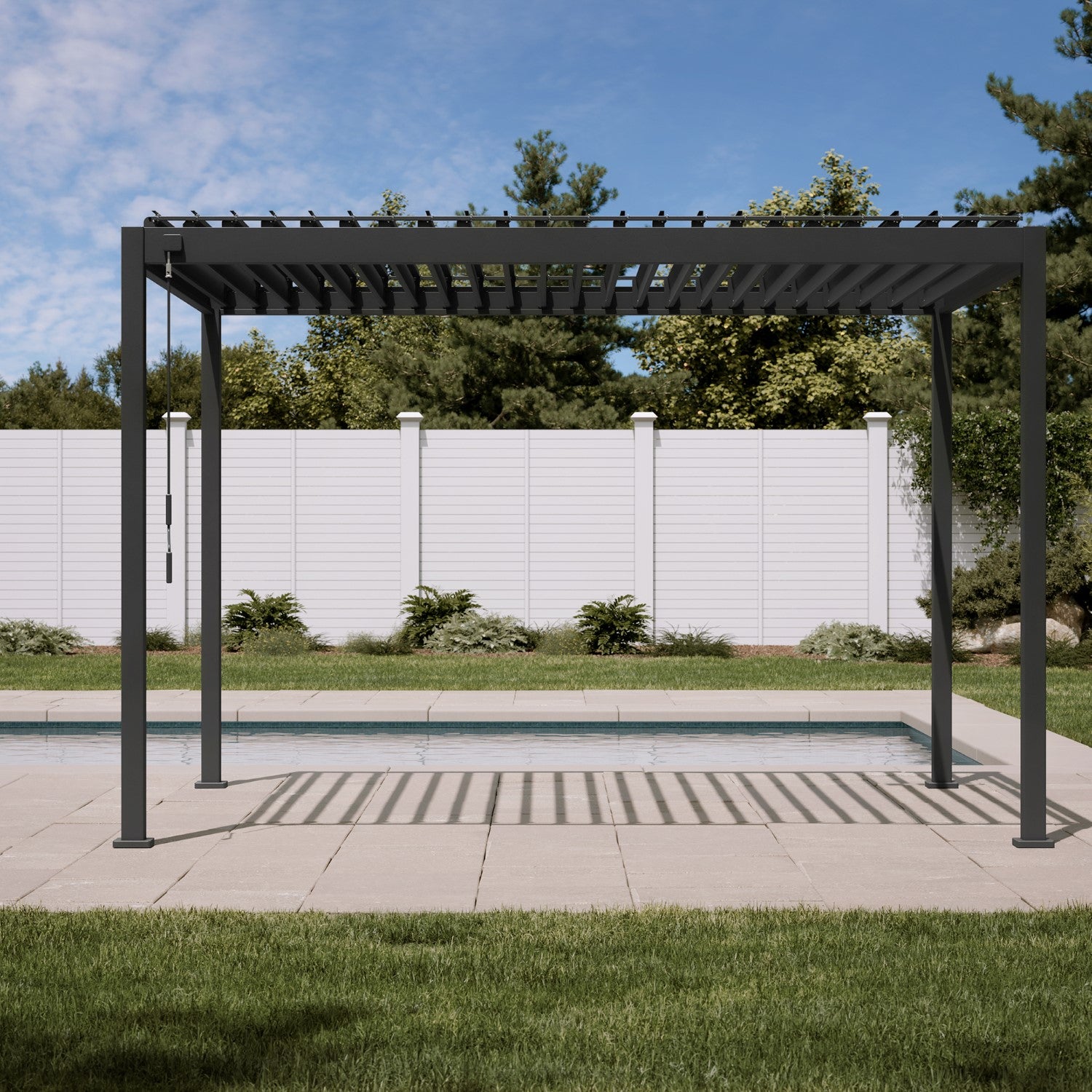
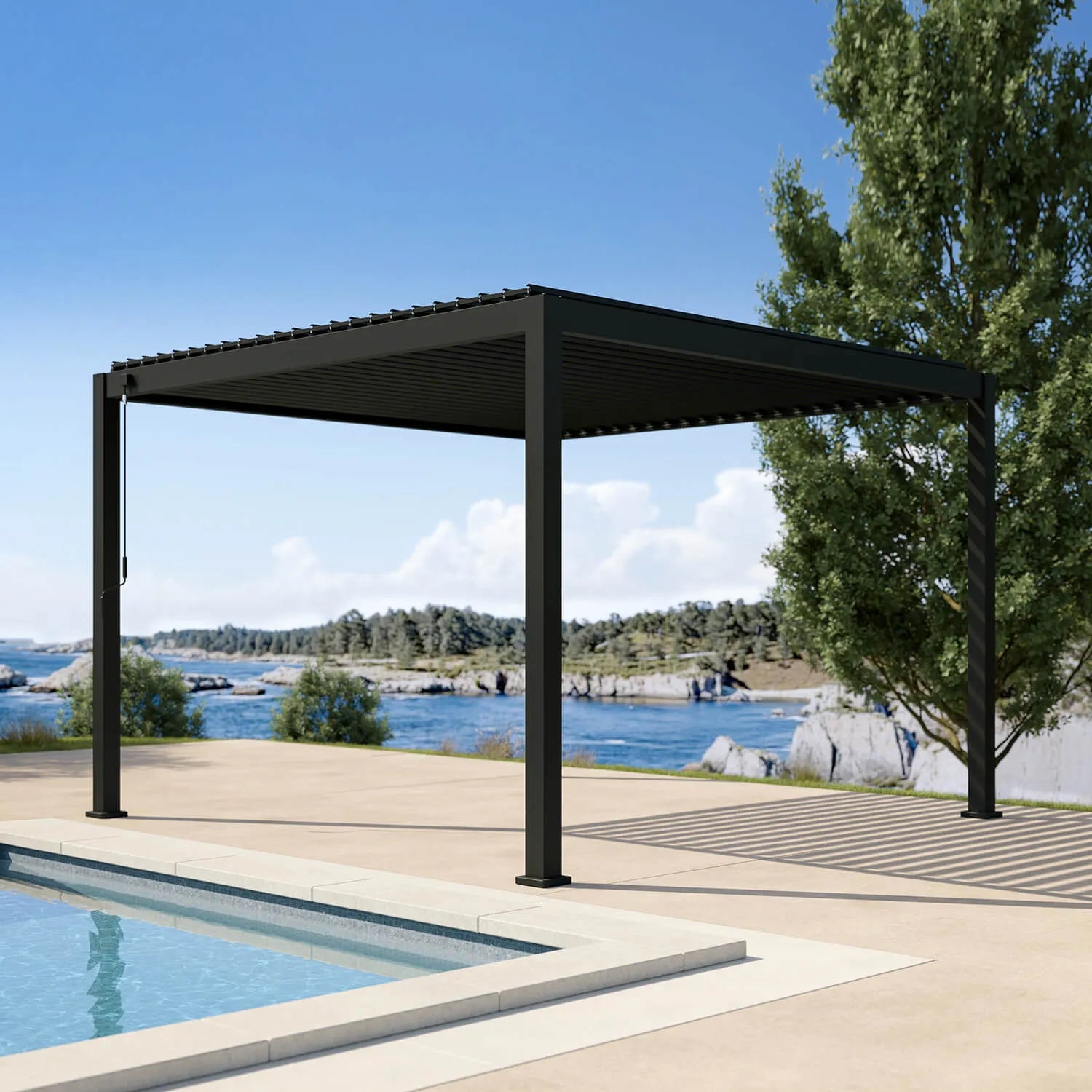
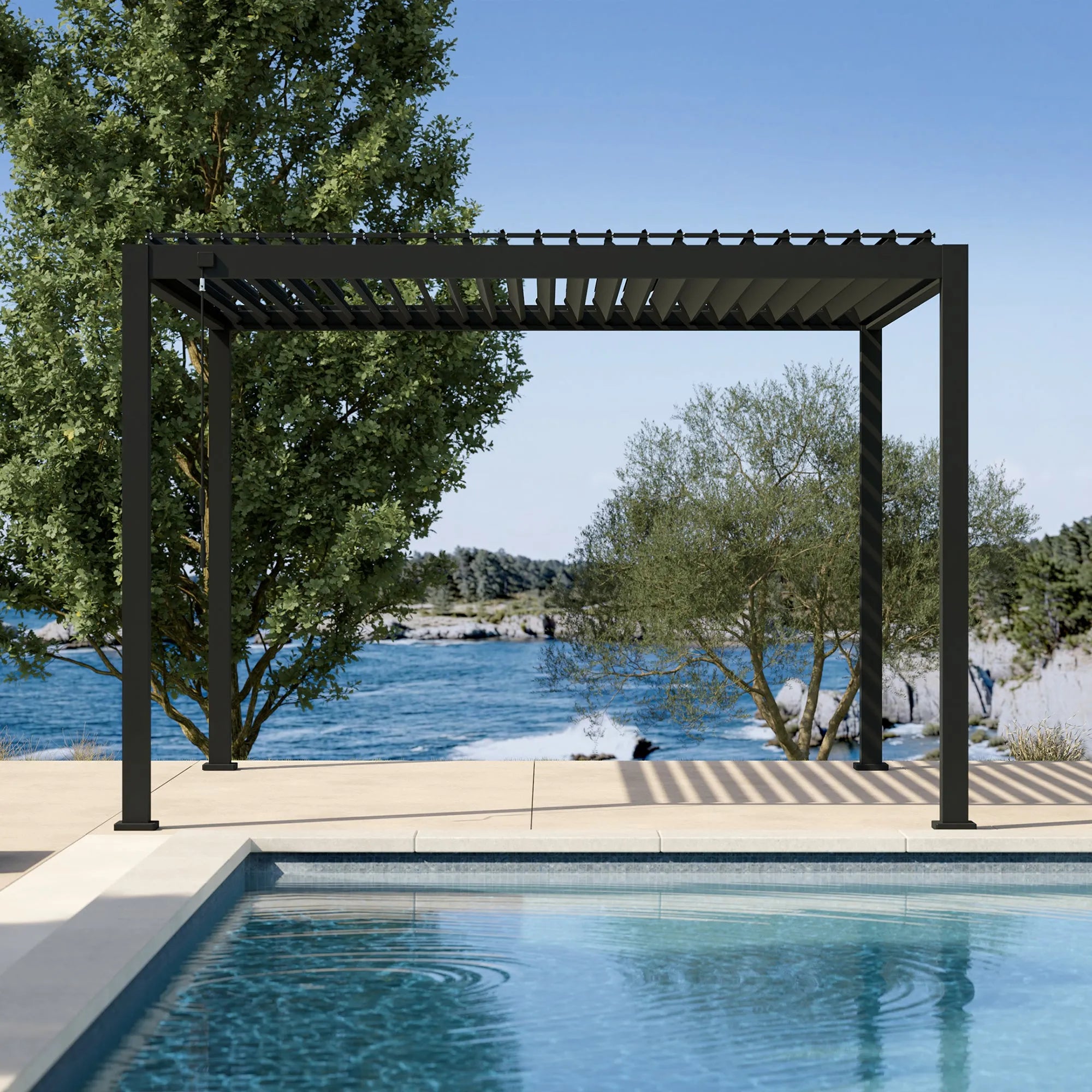
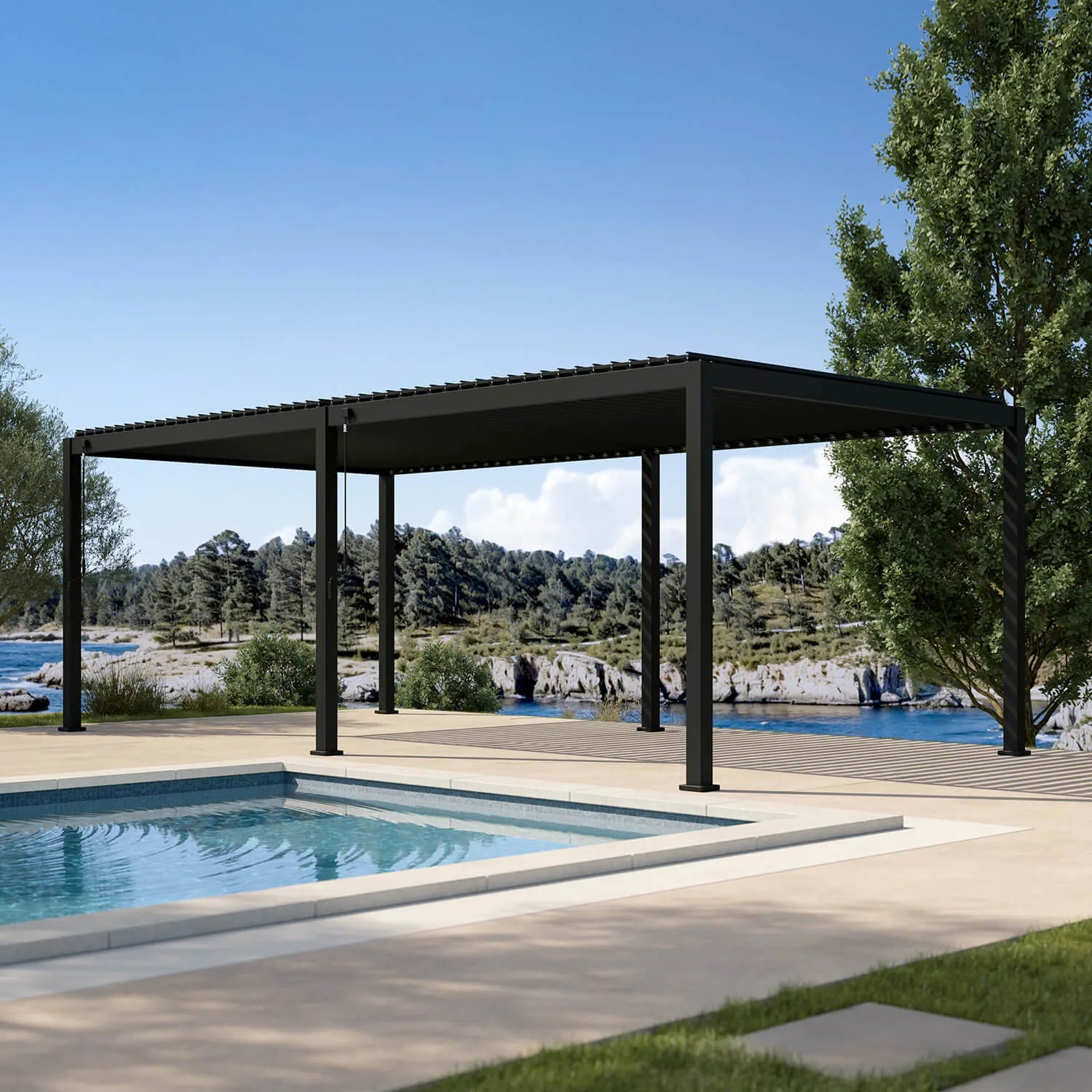
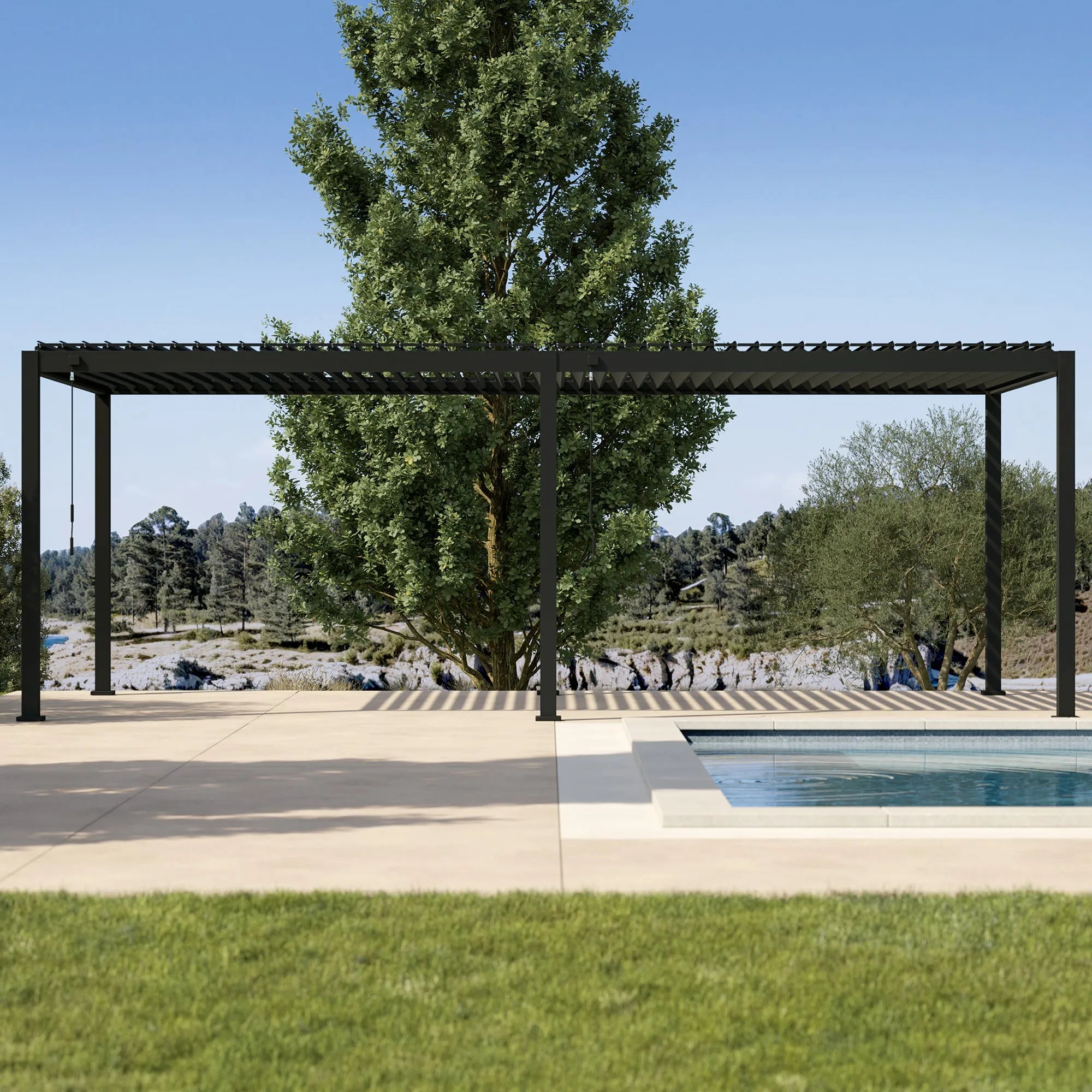
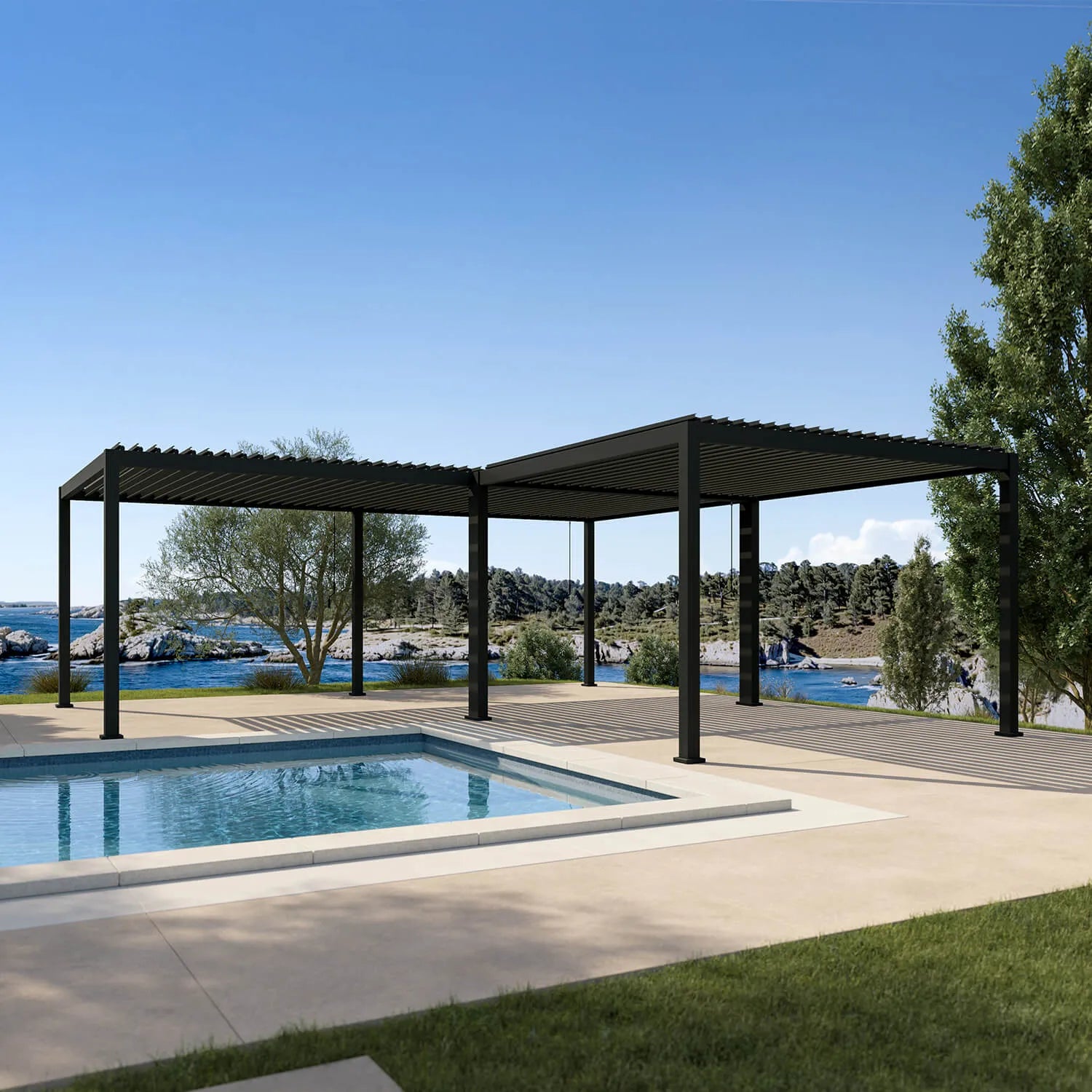
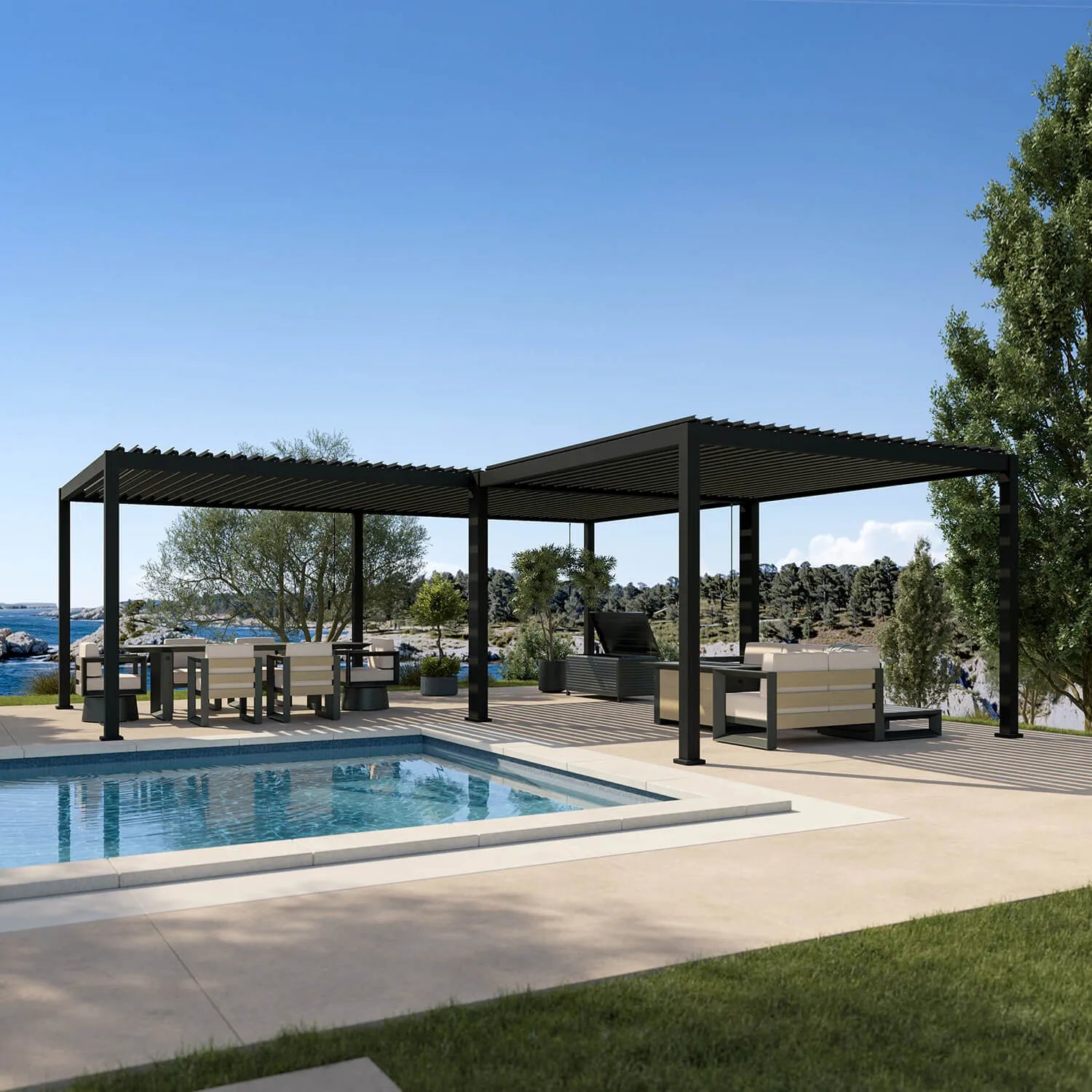
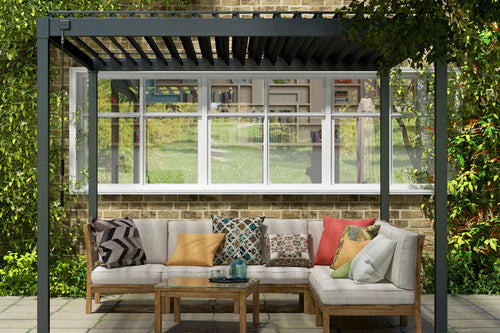
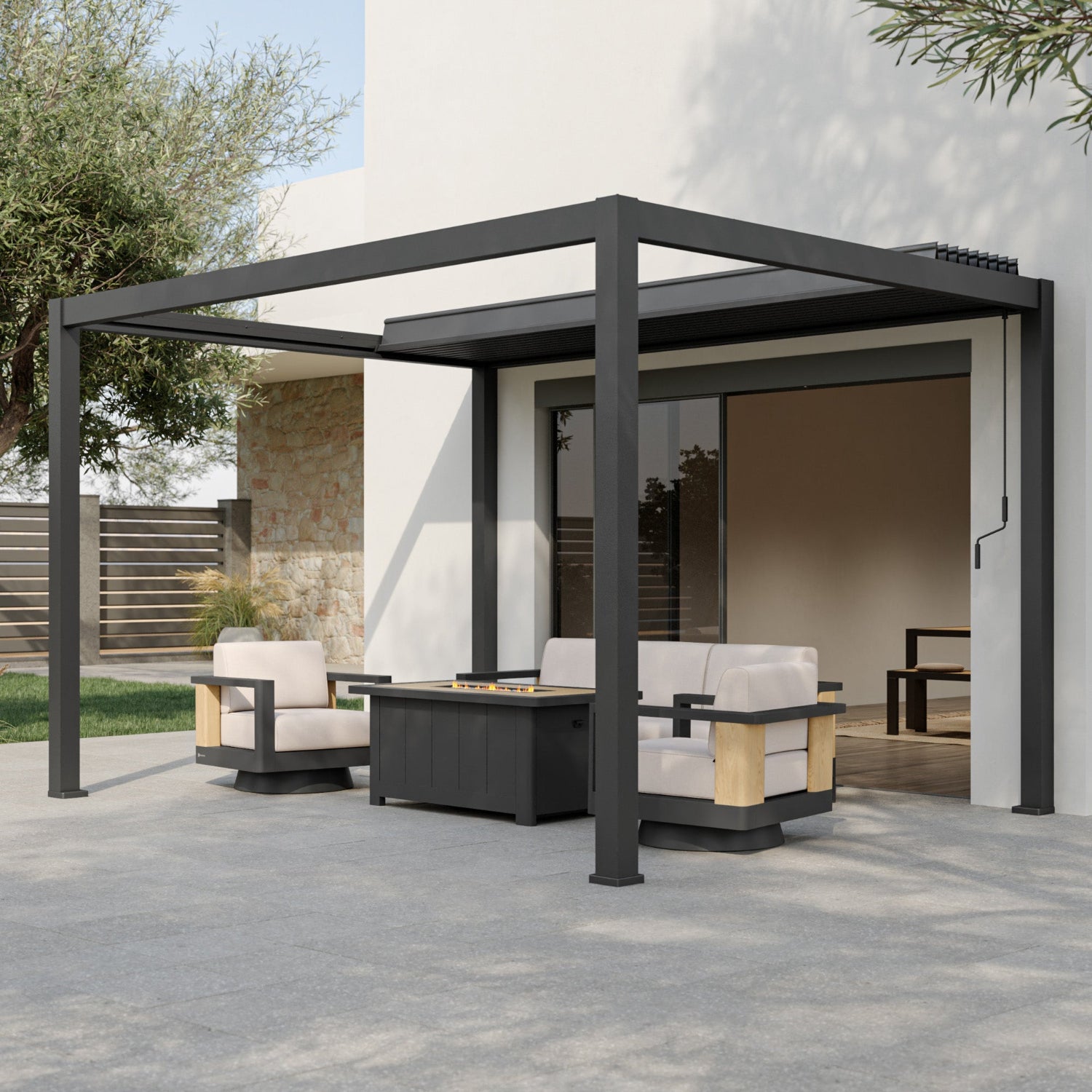
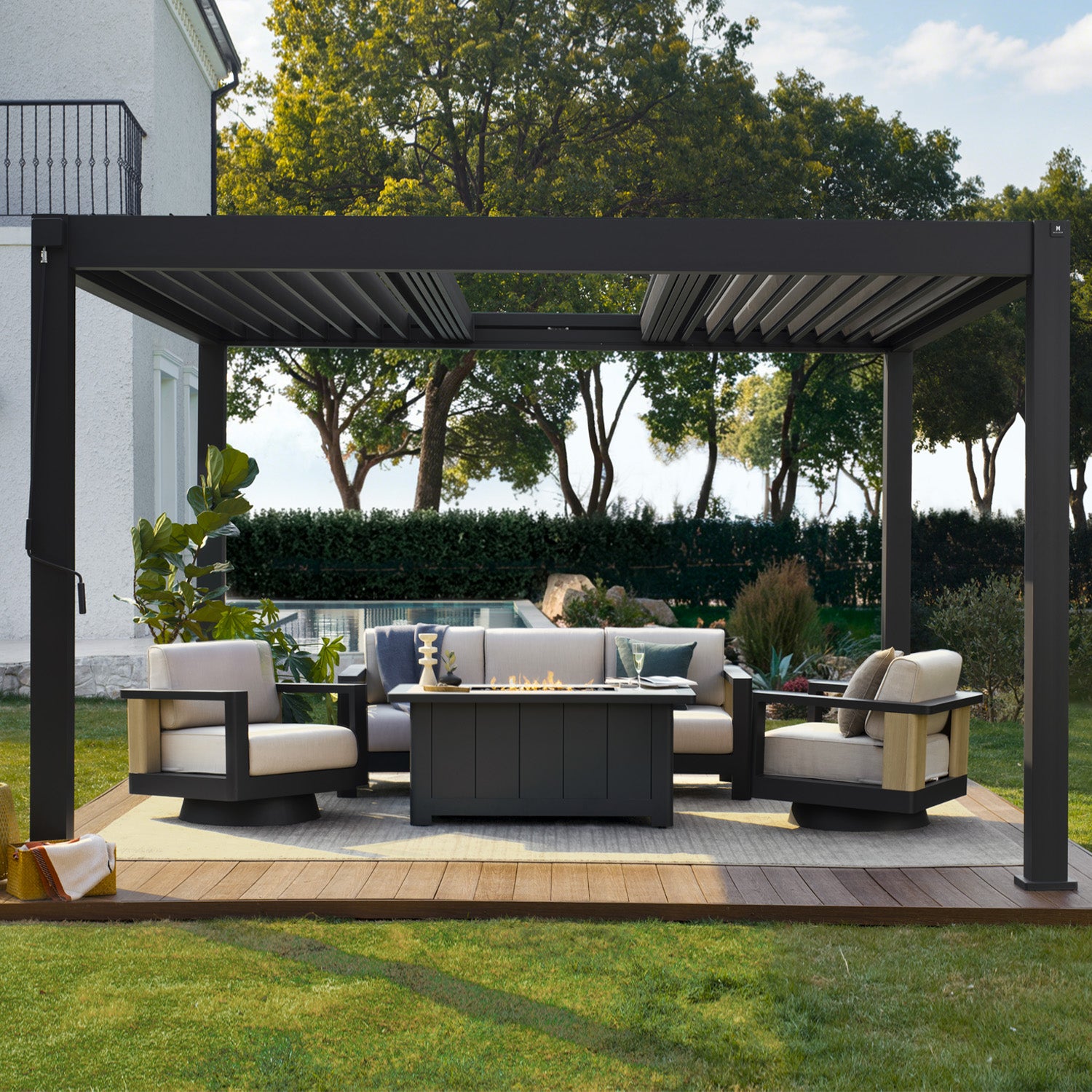
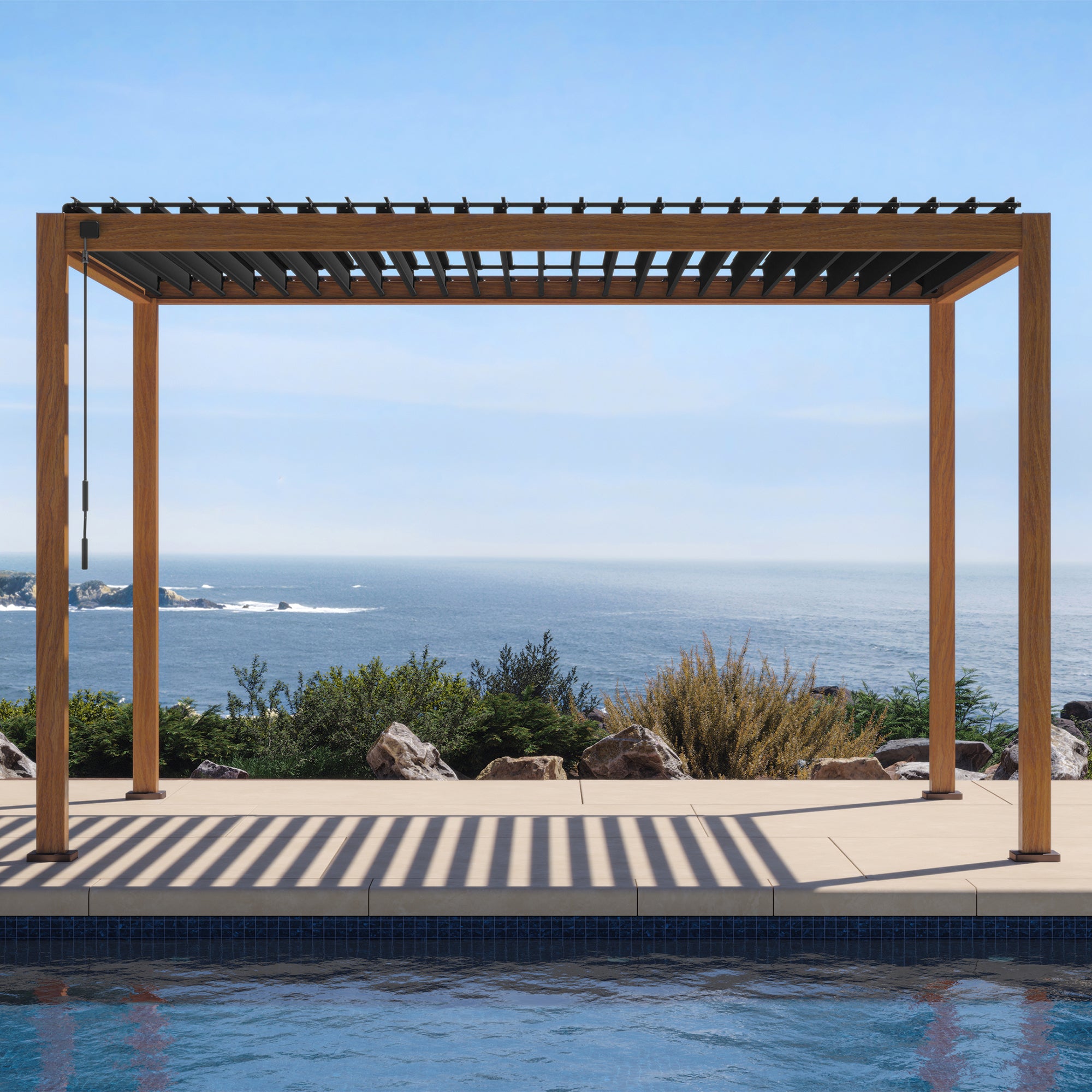
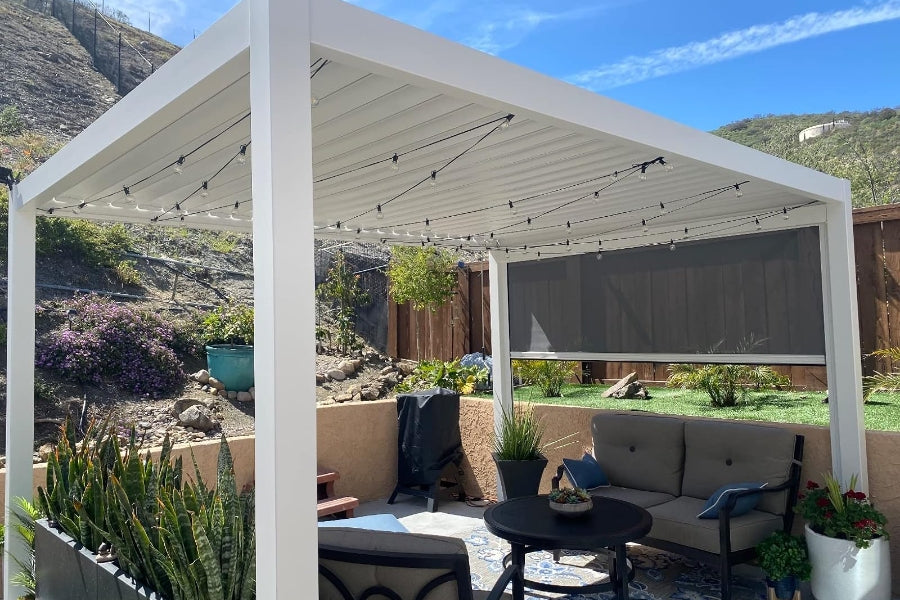
Modern pergolas have changed that entirely. Today's aluminum louvered pergolas give you adjustable roofs that rotate open for sunlight and close tight to shed rain. Some even come with motorized controls. So you're no longer choosing between "pretty garden frame" and "actual weather protection." You get both.
If you're curious about how different louvered pergola models compare, it's worth looking at specs like wind ratings, snow load capacity, and louver opening angles. They vary more than you'd expect.
Related article: What Is a Pergola? Meaning, Uses, and Comparison With Other Outdoor Structures

Pergola vs. Verandah: Side-by-Side Comparison
|
Feature |
Verandah |
Modern Louvered Pergola |
|
Attached to house? |
Always |
Freestanding or attached |
|
Roof type |
Solid, fixed |
Adjustable louvers (open/close) |
|
Rain protection |
Full |
Full (when louvers closed) |
|
Sunlight control |
None, always shaded |
Adjustable, from open sky to full shade |
|
Placement flexibility |
Front/side of house only |
Anywhere: patio, pool, garden |
|
Typical cost |
$8,000–$15,000+ |
$1,299–$5,999 (DIY kits) |
|
DIY-friendly? |
Rarely |
Yes, most ship as complete kits |
|
Permits usually needed? |
Yes |
Varies (often not for freestanding) |
When a Verandah Makes More Sense
Verandahs work best when you want a permanent extension of your indoor living space. If your front door opens onto a covered area where you can sit year-round, rain or shine, that's classic verandah territory.
They're also a strong pick if your home's architectural style calls for it. Victorian homes, colonial builds, and certain Mediterranean designs look incomplete without one. And if you're in a region where it rains more days than it doesn't (hello, London), the permanent solid roof means you'll actually use the space.
The tradeoffs? Higher cost, less flexibility in placement, and zero control over sunlight. Once the roof is up, it's up.
When a Pergola Is the Better Pick
A pergola wins on flexibility, and honestly, it's not close. You can place it poolside, over a patio dining area, in the center of your yard, or right against the house. That freedom alone makes it the go-to for most backyard projects.
Cost is the other big factor. A quality aluminum pergola starts around $1,299 for a steel-frame model and runs up to about $5,999 for a large all-aluminum build. Compare that to $8,000+ for a basic verandah, and the math does the talking.
And with a louvered roof? You're not sacrificing weather protection anymore. Modern adjustable louvers close to create a watertight seal with built-in drainage that routes water through the posts. Open them up on a clear day, and you get full sky. It's the kind of control a fixed verandah roof simply can't match.

The Louvered Pergola: Getting the Best of Both Worlds
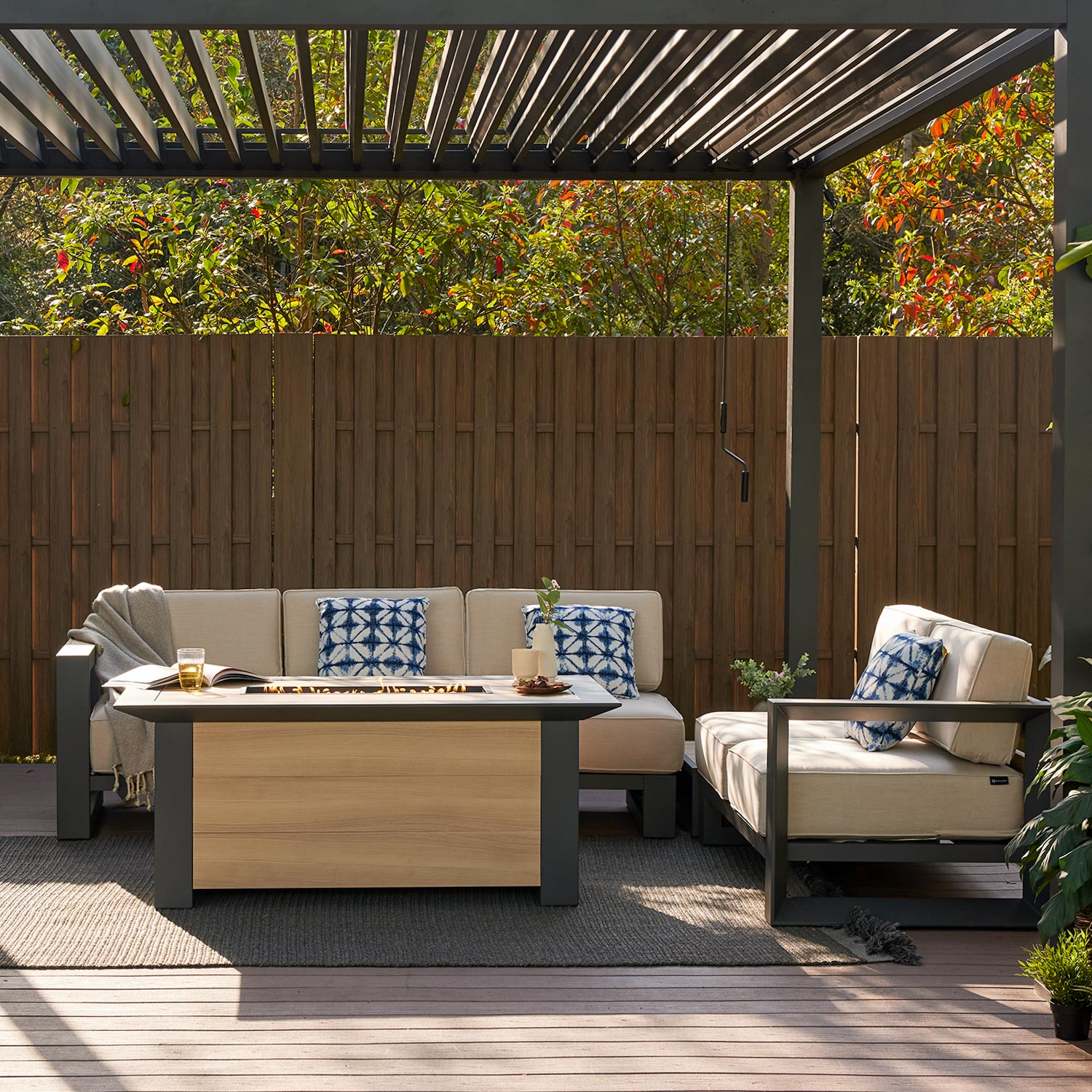
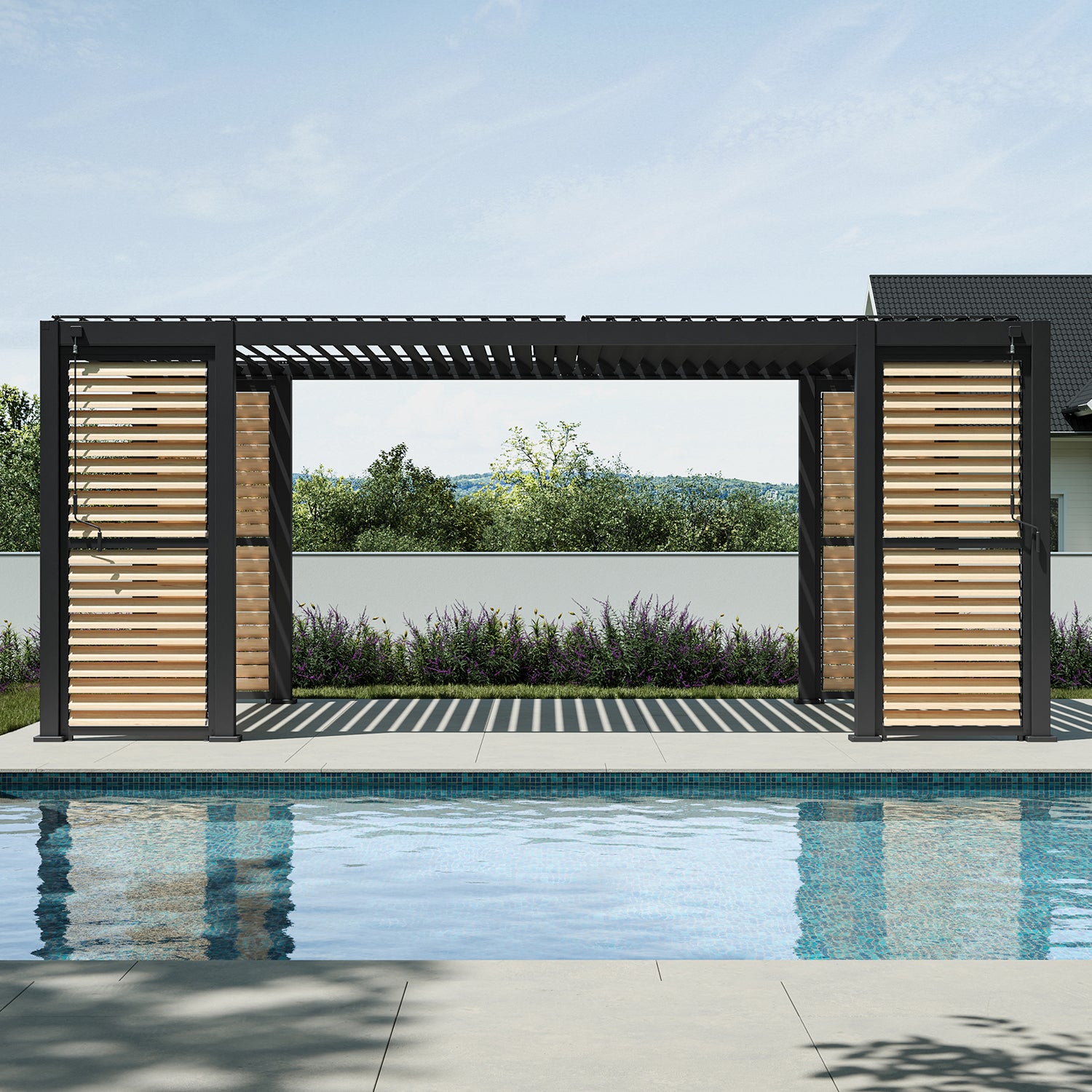
Here's where things get interesting. A louvered pergola with the right accessories, like pull-down screens, sliding glass doors, and shutter walls, basically becomes a verandah when you need it to. Close the louvers, drop the screens, and you've got a fully enclosed outdoor room. Open everything up, and you're back to an airy garden structure.
If you want to see how this works in practice, browse our pergola collection.
FAQs
Is a pergola cheaper than a verandah?
Yes, usually by a wide margin. Aluminum pergola kits range from about $1,299 to $5,999 depending on size and materials. Verandahs, because they attach to your home and require a solid roof structure, typically start around $8,000 and can exceed $15,000 for custom builds.
Can a pergola protect from rain like a verandah?
A modern louvered pergola can, yes. When the louvers are fully closed, they form a sealed surface that channels rainwater through an integrated drainage system built into the posts. It's not identical to a solid roof, but it handles normal rain conditions very well.
Do I need a permit for a pergola or a verandah?
It depends on where you live. Verandahs almost always require permits because they attach to the house. Freestanding pergolas are often exempt under a certain square footage, but rules vary by city and county. Check with your local building department before installation.
Can I turn a pergola into an enclosed space like a verandah?
With the right accessories, absolutely. Pull-down screens, sliding glass doors, and adjustable shutter walls can turn a louvered pergola into a fully enclosed outdoor room. This modular approach is one of the biggest advantages over a fixed verandah because you add what you need, when you need it.
Which adds more value to my home, a pergola or a verandah?
Verandahs can add measurable square footage to your property, which appraisers notice. But quality pergolas also boost curb appeal and outdoor livability. Real estate experts generally estimate outdoor living improvements return 50–80% of their cost at resale. Either option is a solid investment.