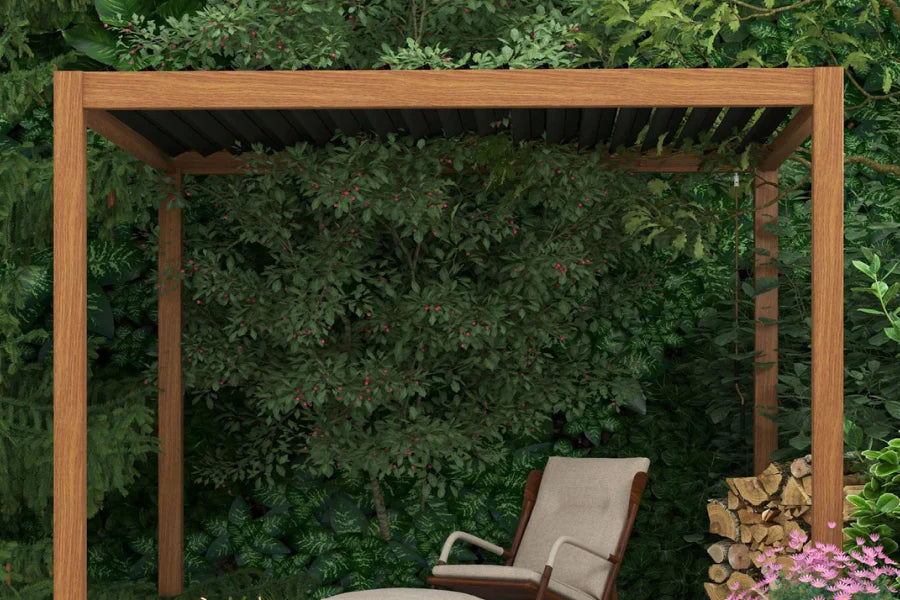

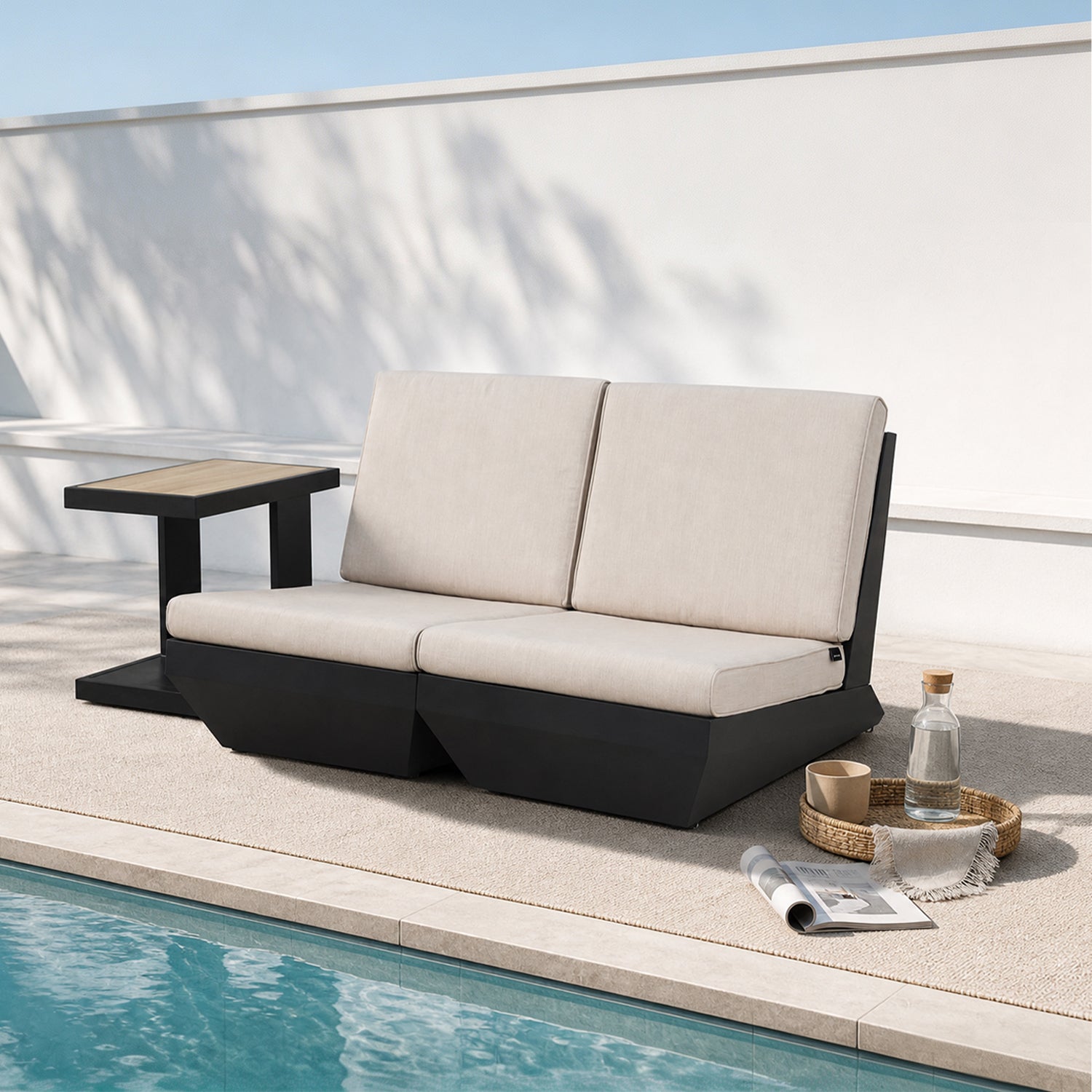
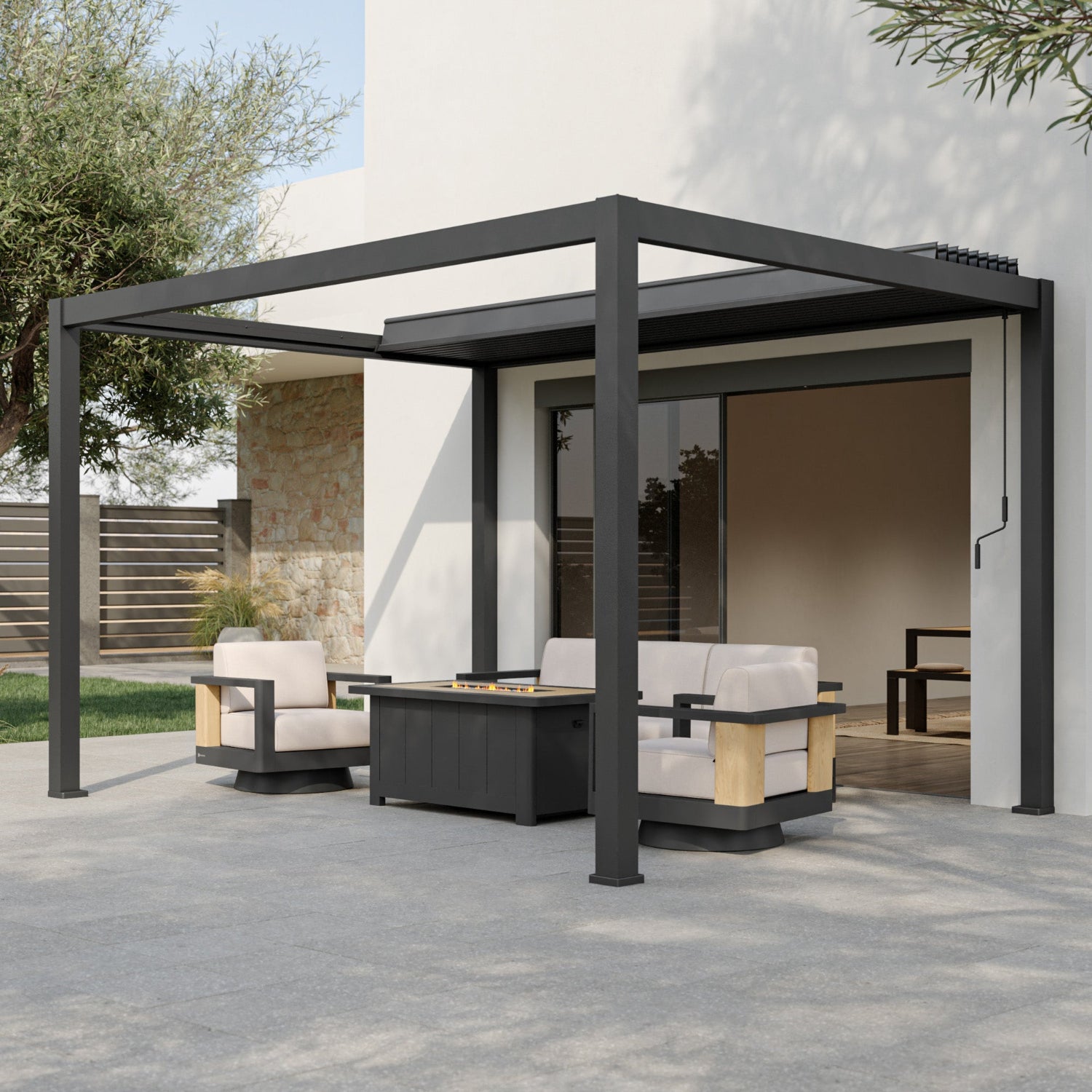

Choosing a pergola with a roof usually starts with a simple question: Do you want permanent cover, or do you want control?
A fixed metal roof pergola gives you steady shade and overhead shelter. A louvered roof pergola gives you a more flexible outdoor space, because the roof slats can open, close, or tilt depending on the sun, airflow, and weather.
That difference matters. The best roof for a backyard dining area may not be the same as the best roof for a poolside lounge, a grilling zone, or a patio that gets intense afternoon sun.
This guide compares louvered roof pergolas and fixed metal roof pergolas by shade, airflow, rain protection, heat comfort, maintenance, design, and everyday use, so you can choose the right covered pergola for your home.
First, a Quick Clarification: Metal Frame vs Metal Roof
Many pergolas are made with metal frames, including aluminum and steel. A louvered pergola can also be a metal pergola.
In this article, "metal roof pergola" means a pergola with a fixed solid metal roof. The key comparison is not metal versus non-metal. It is a fixed roof versus an adjustable louvered roof.
If you are shopping for a modern pergola with a roof, that distinction will make the buying process much easier.
What Is a Louvered Roof Pergola?
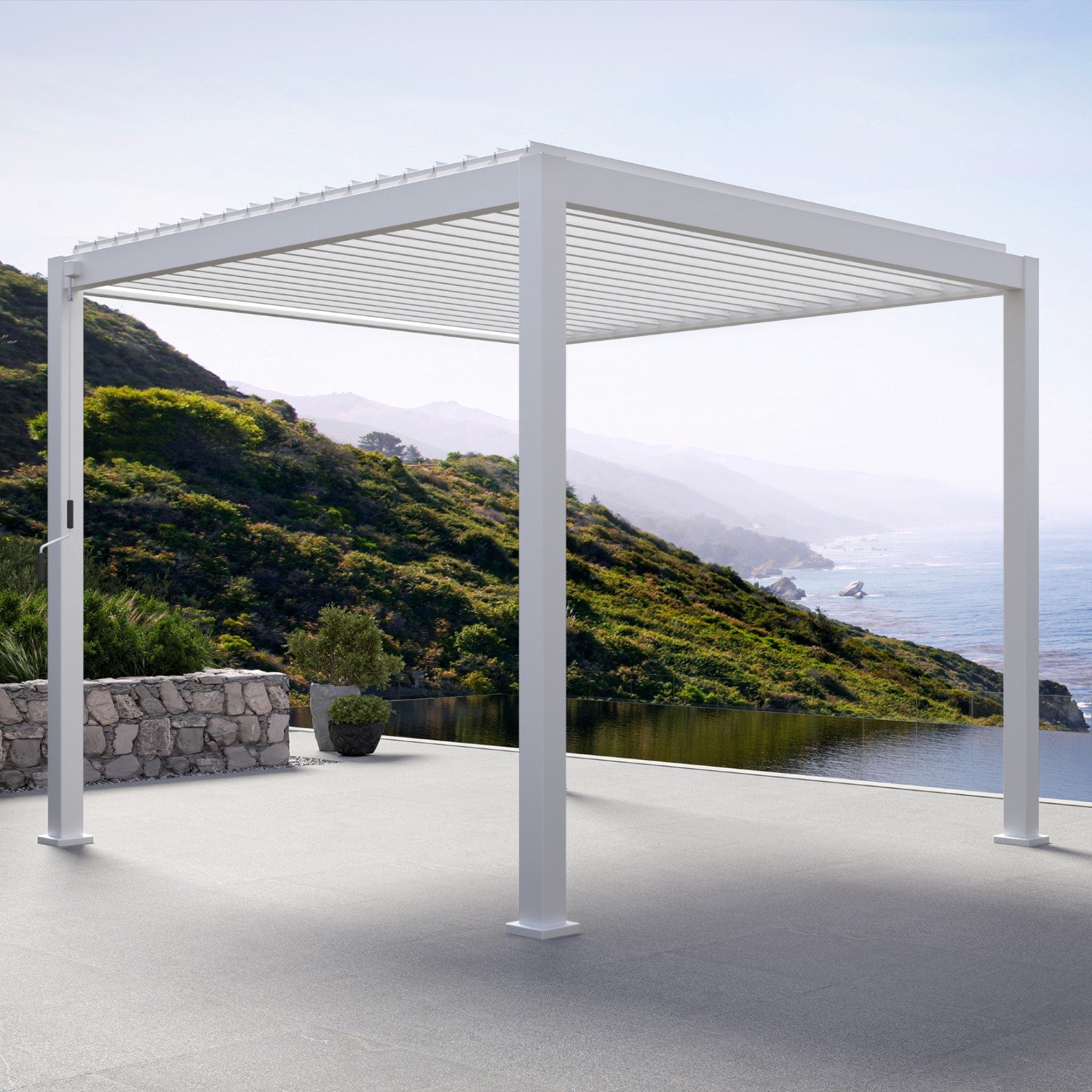
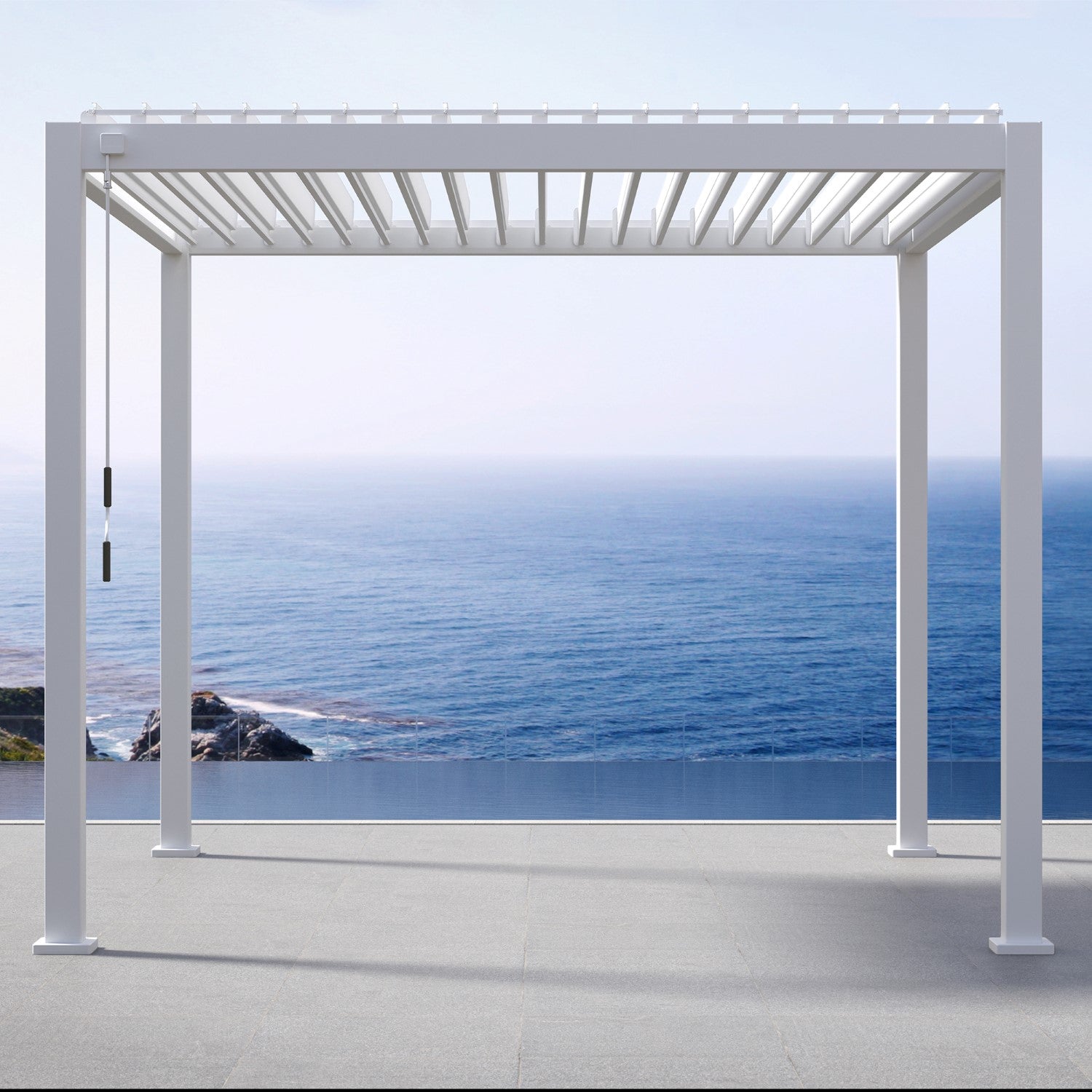
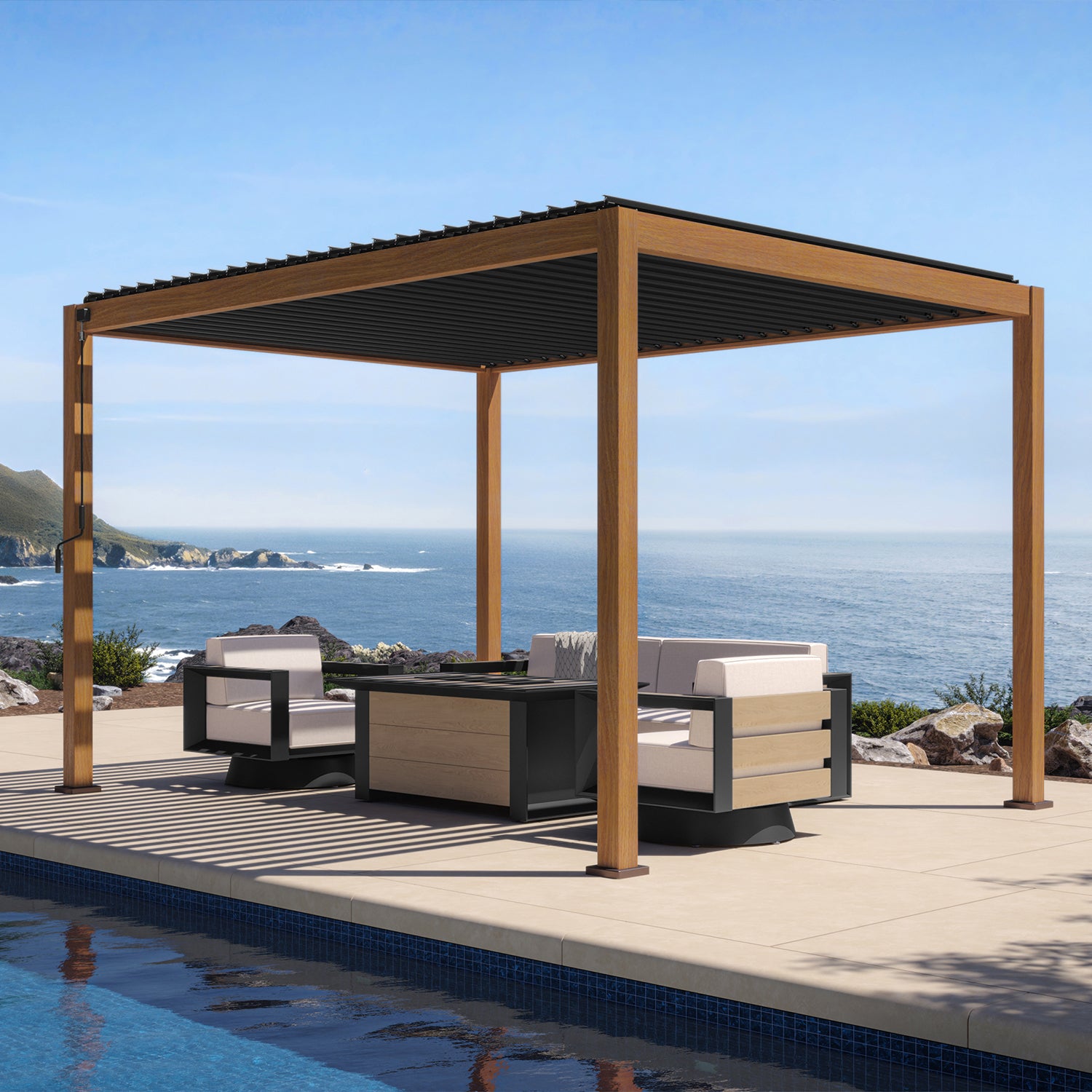
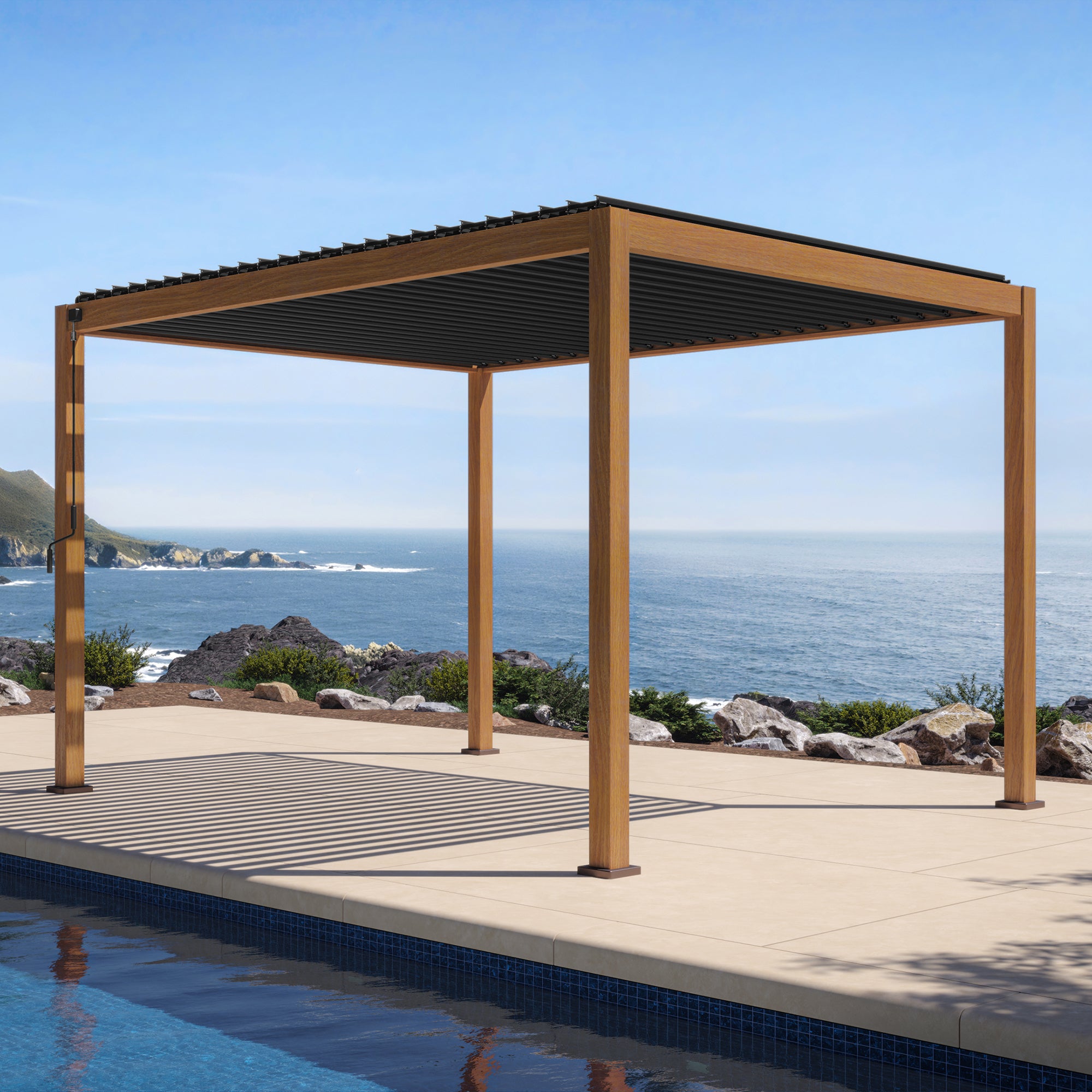
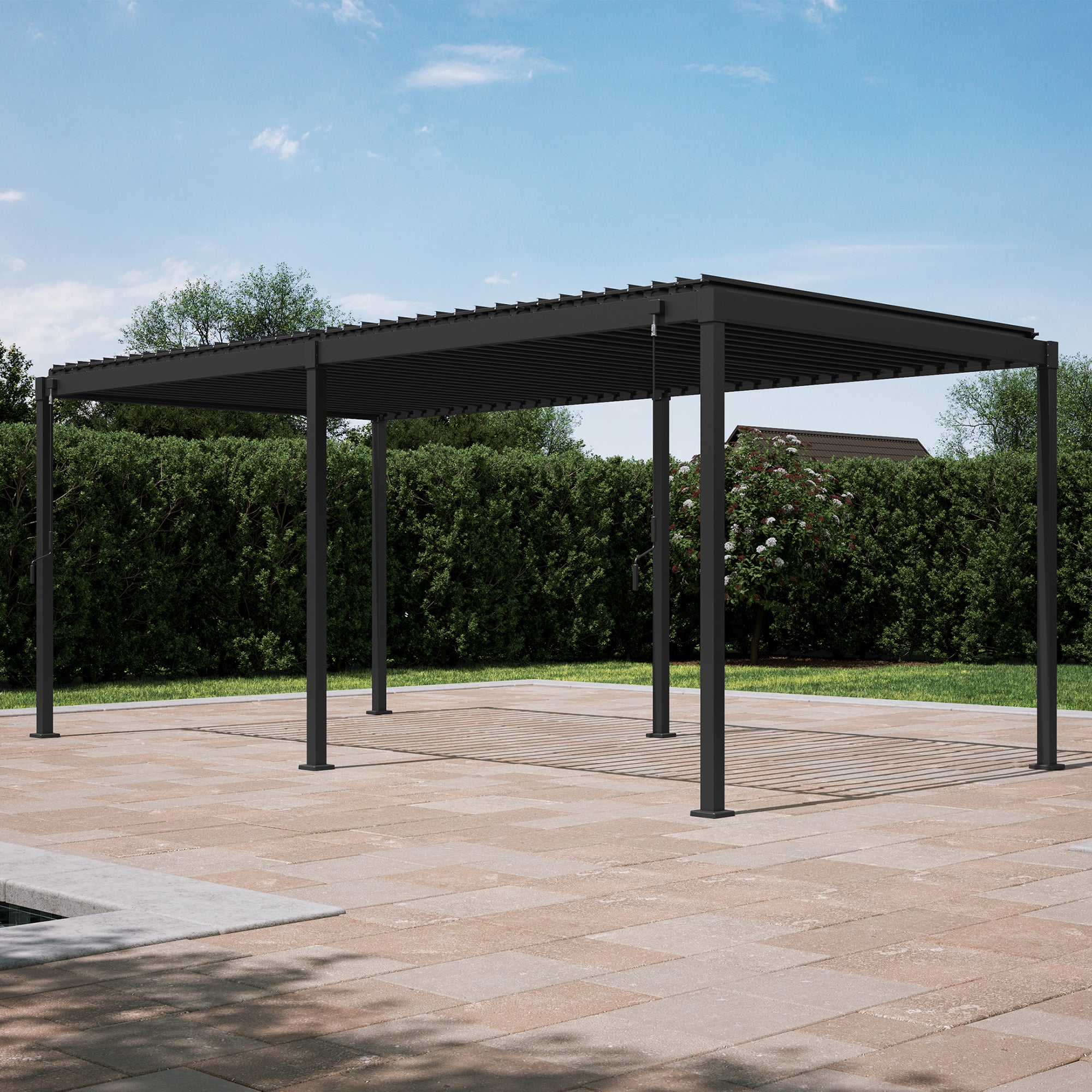
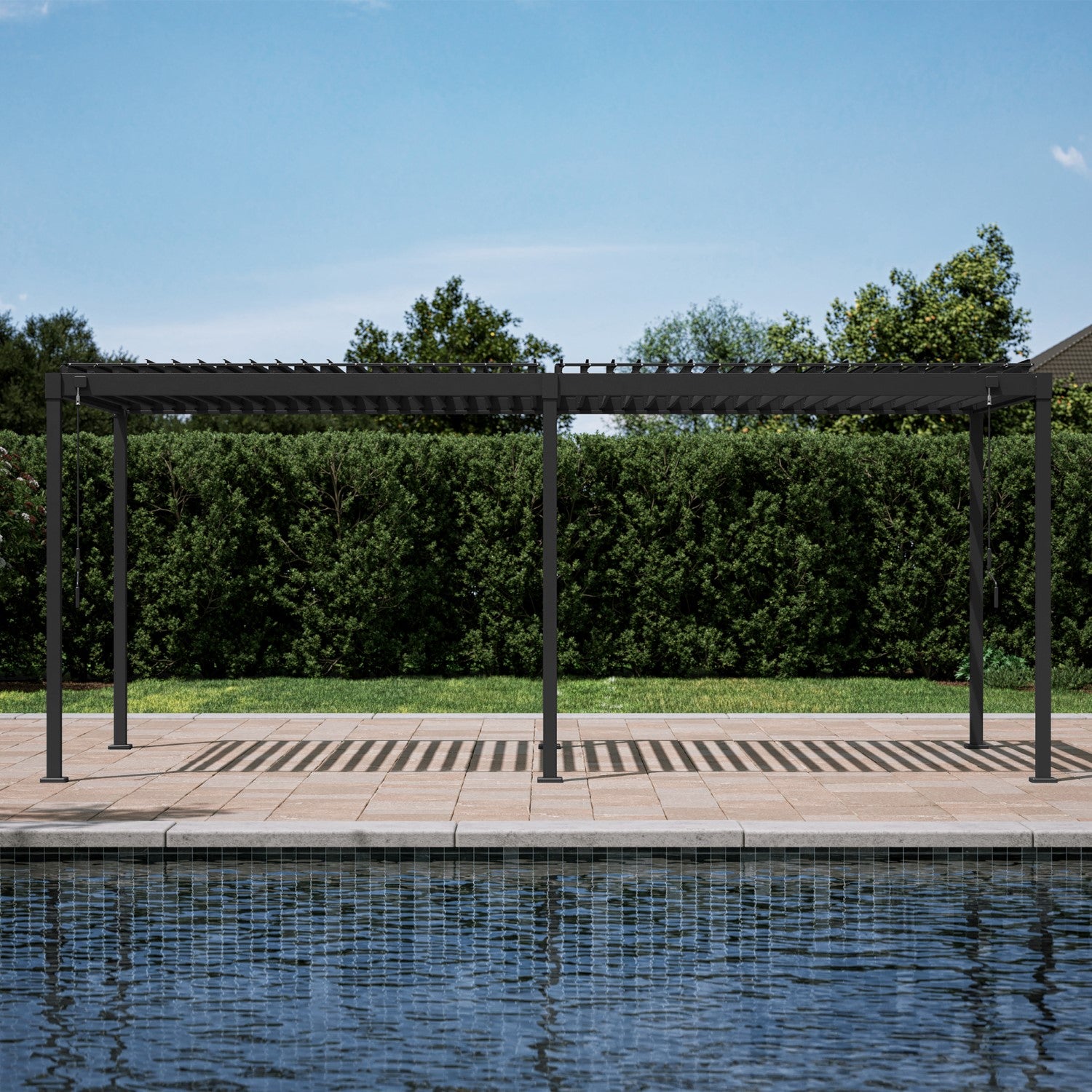
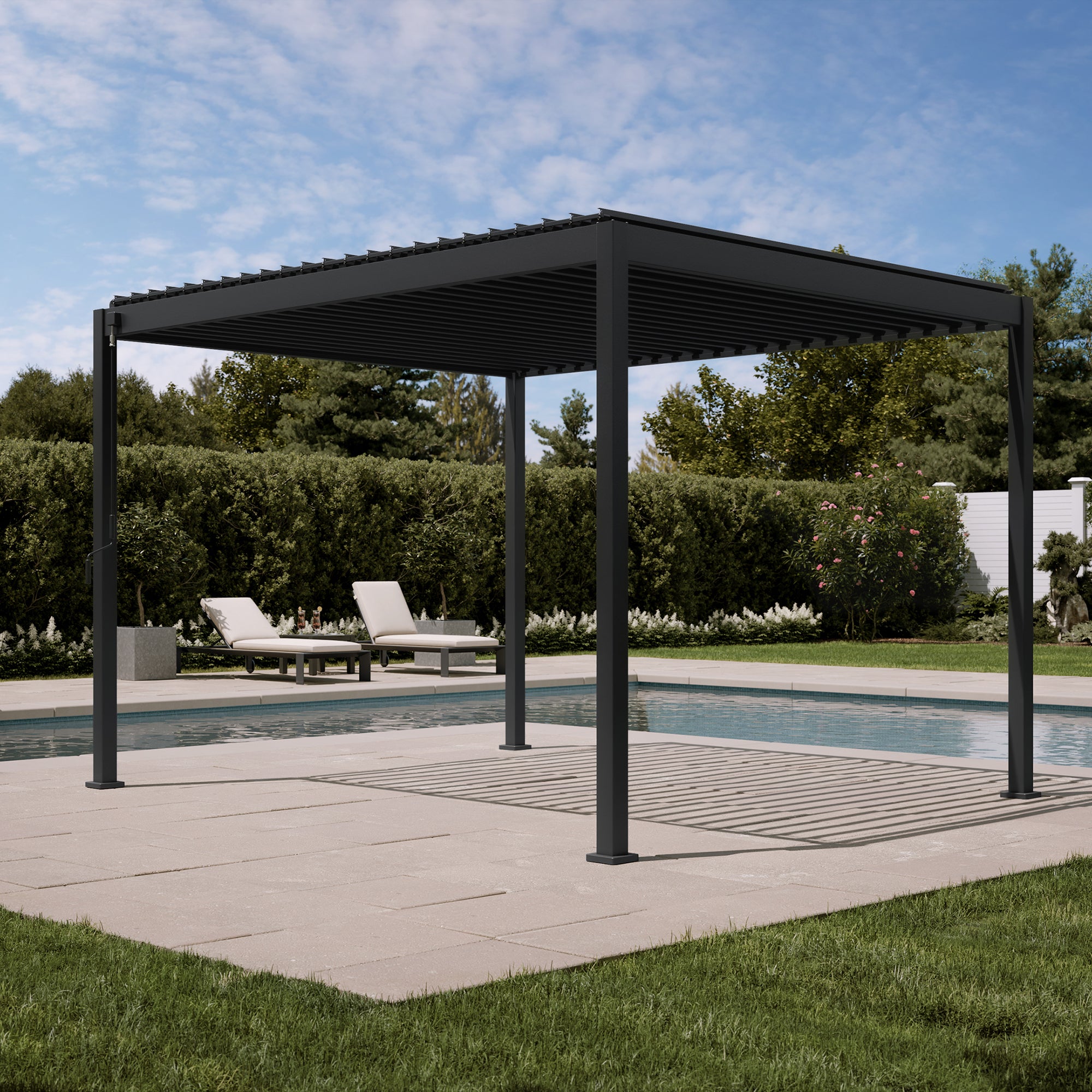
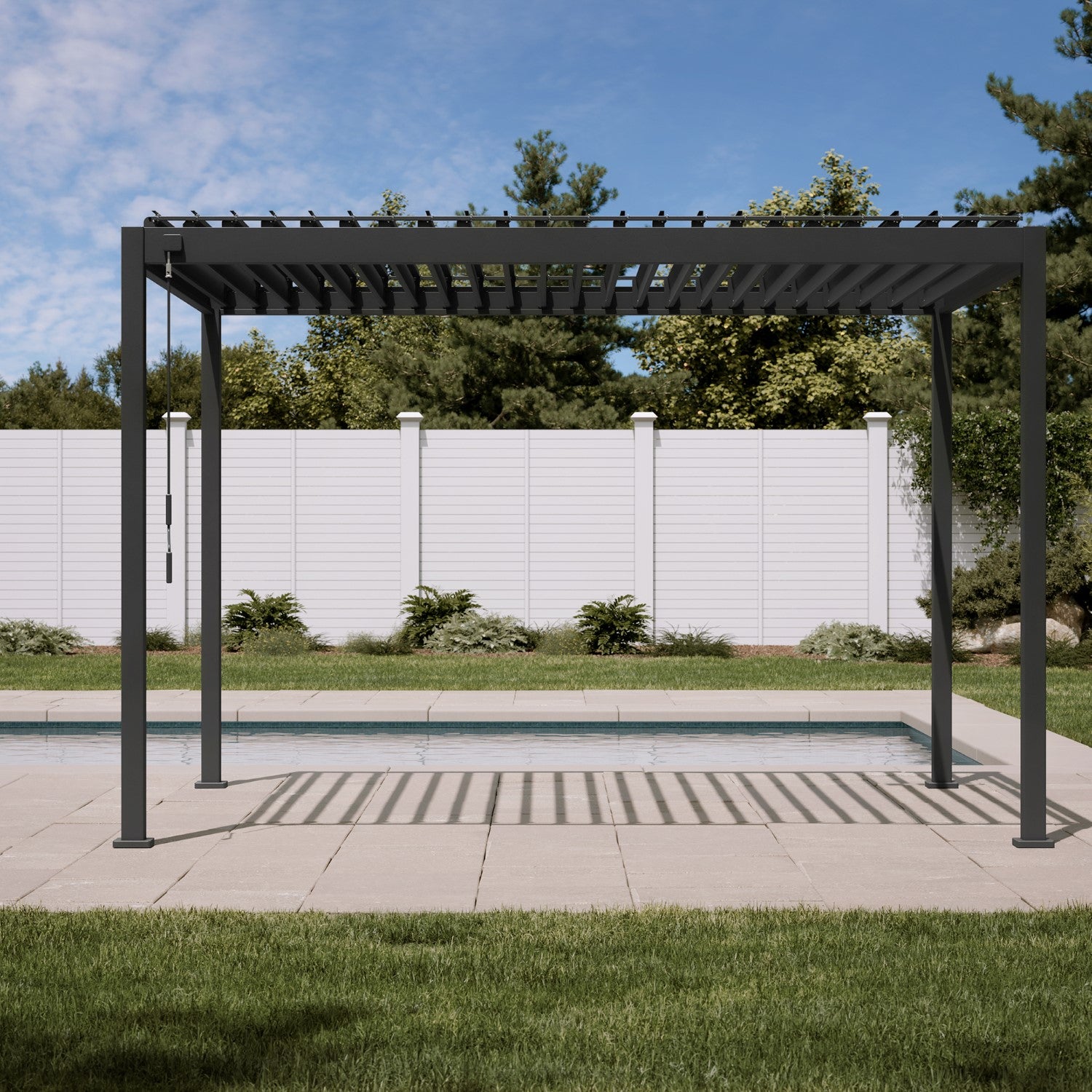
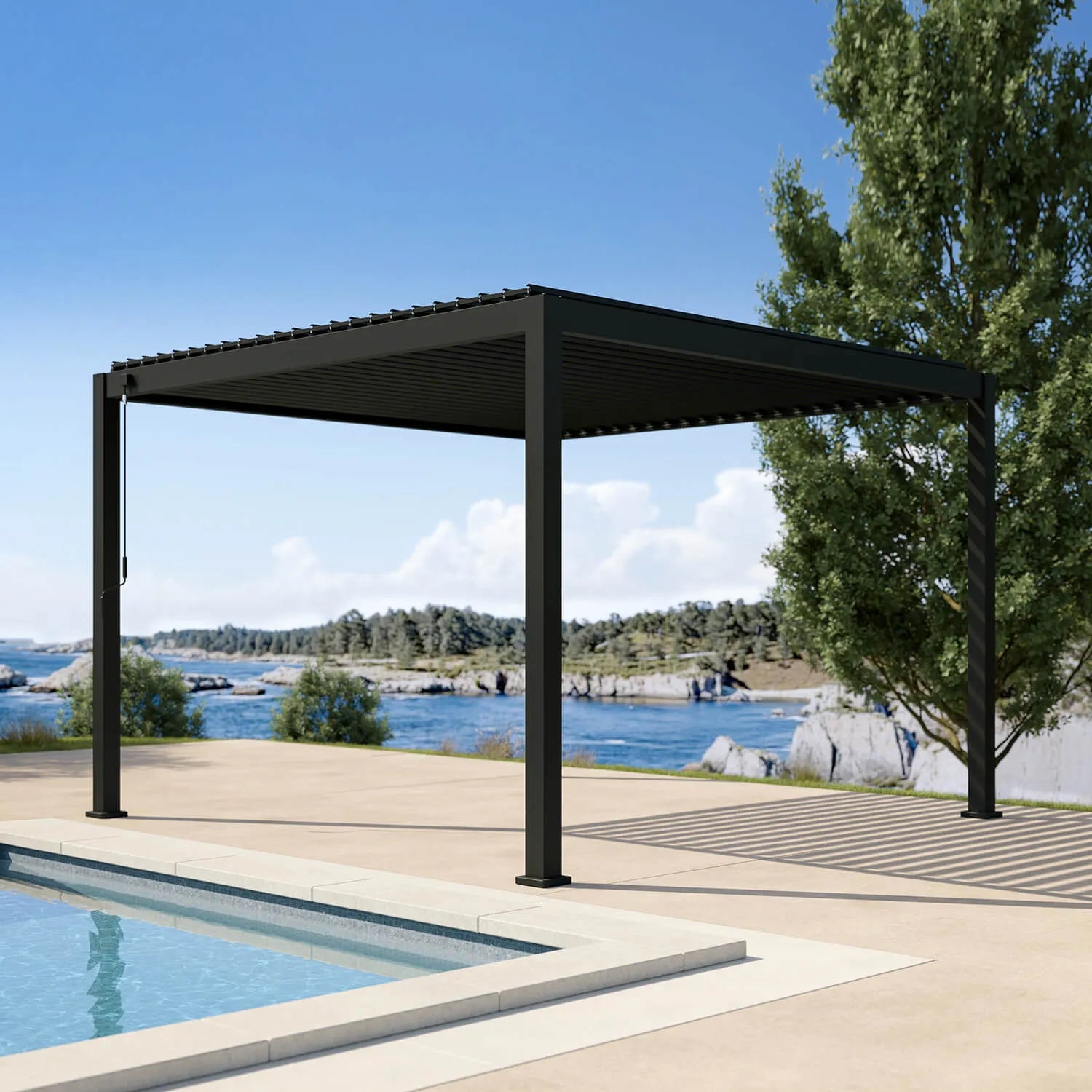
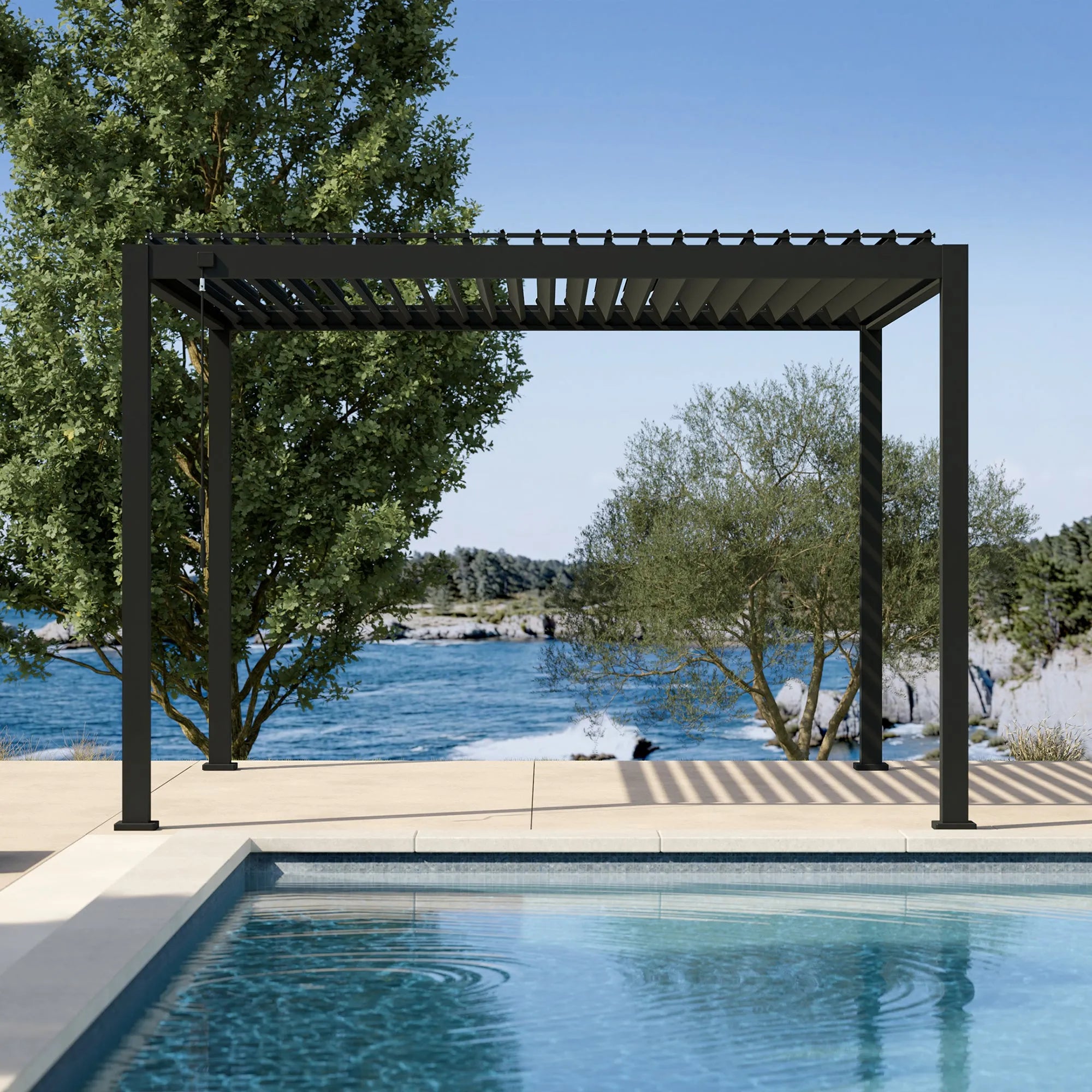
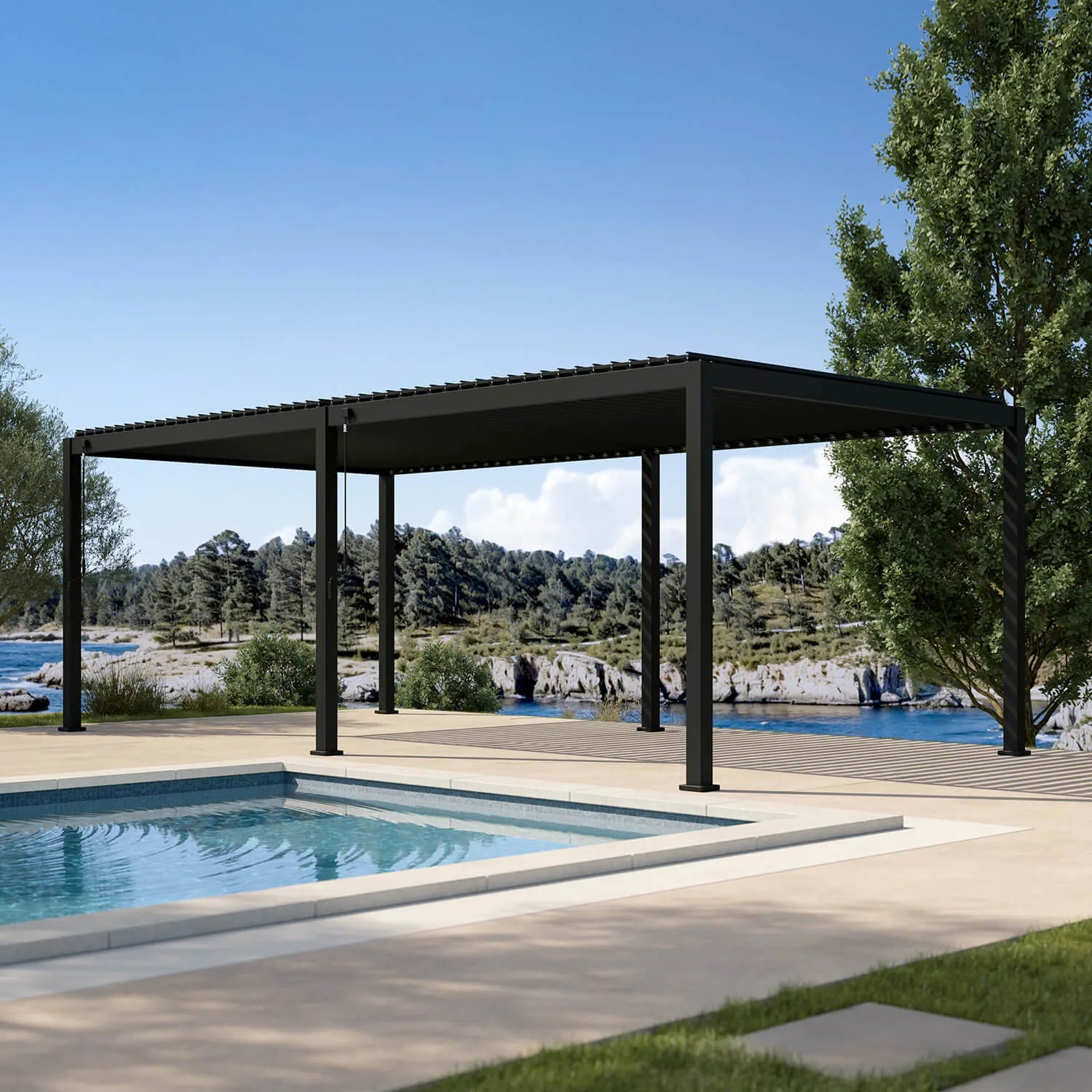
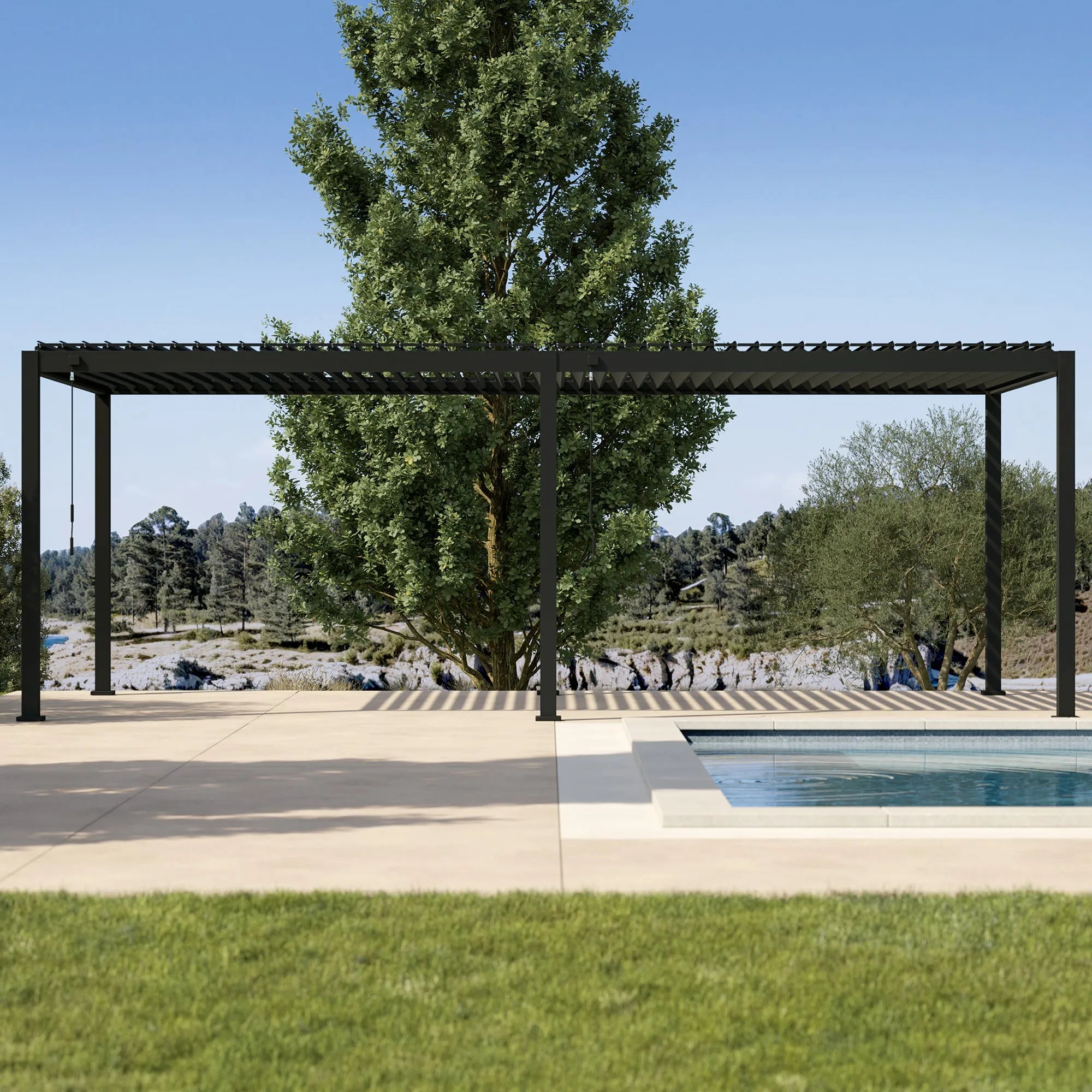
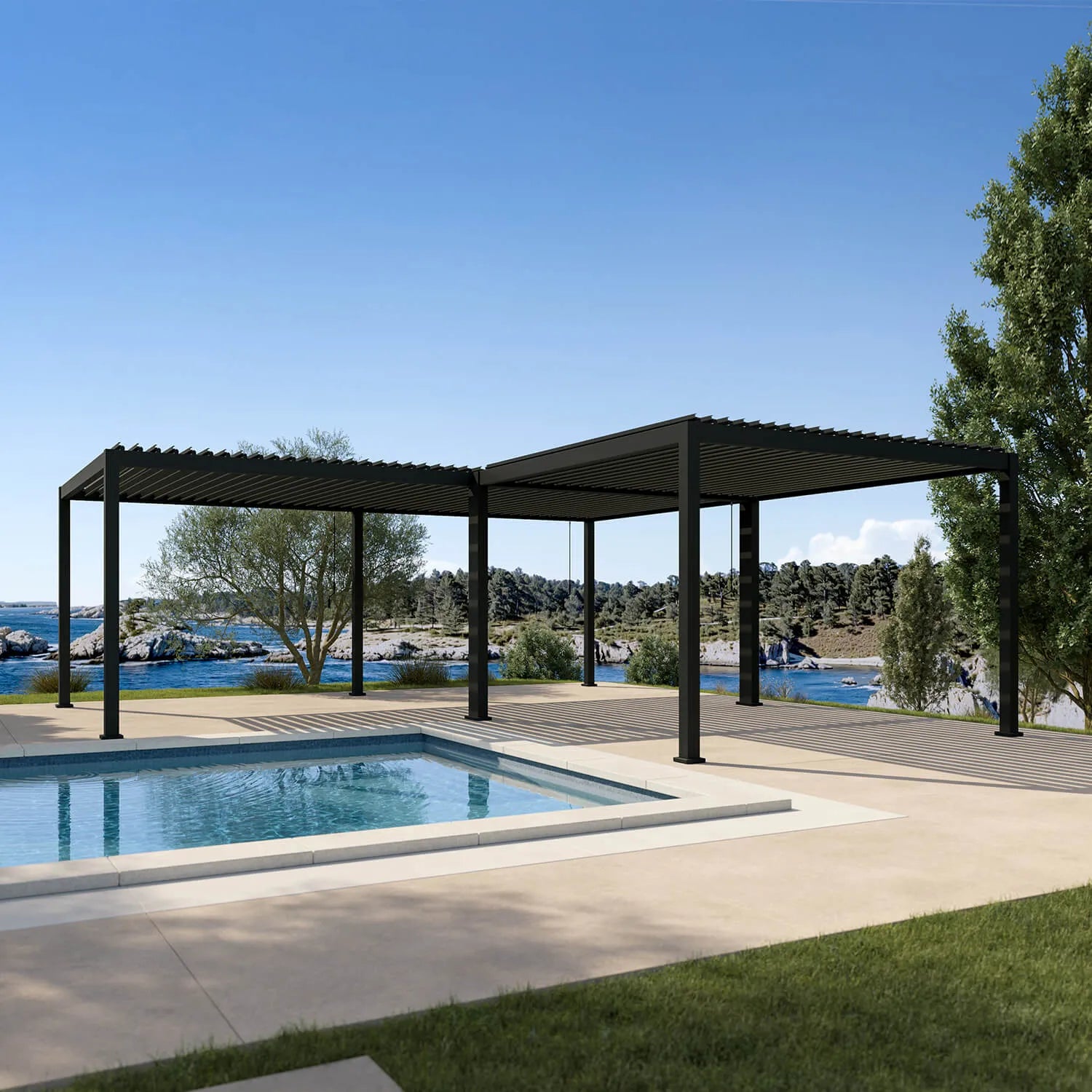
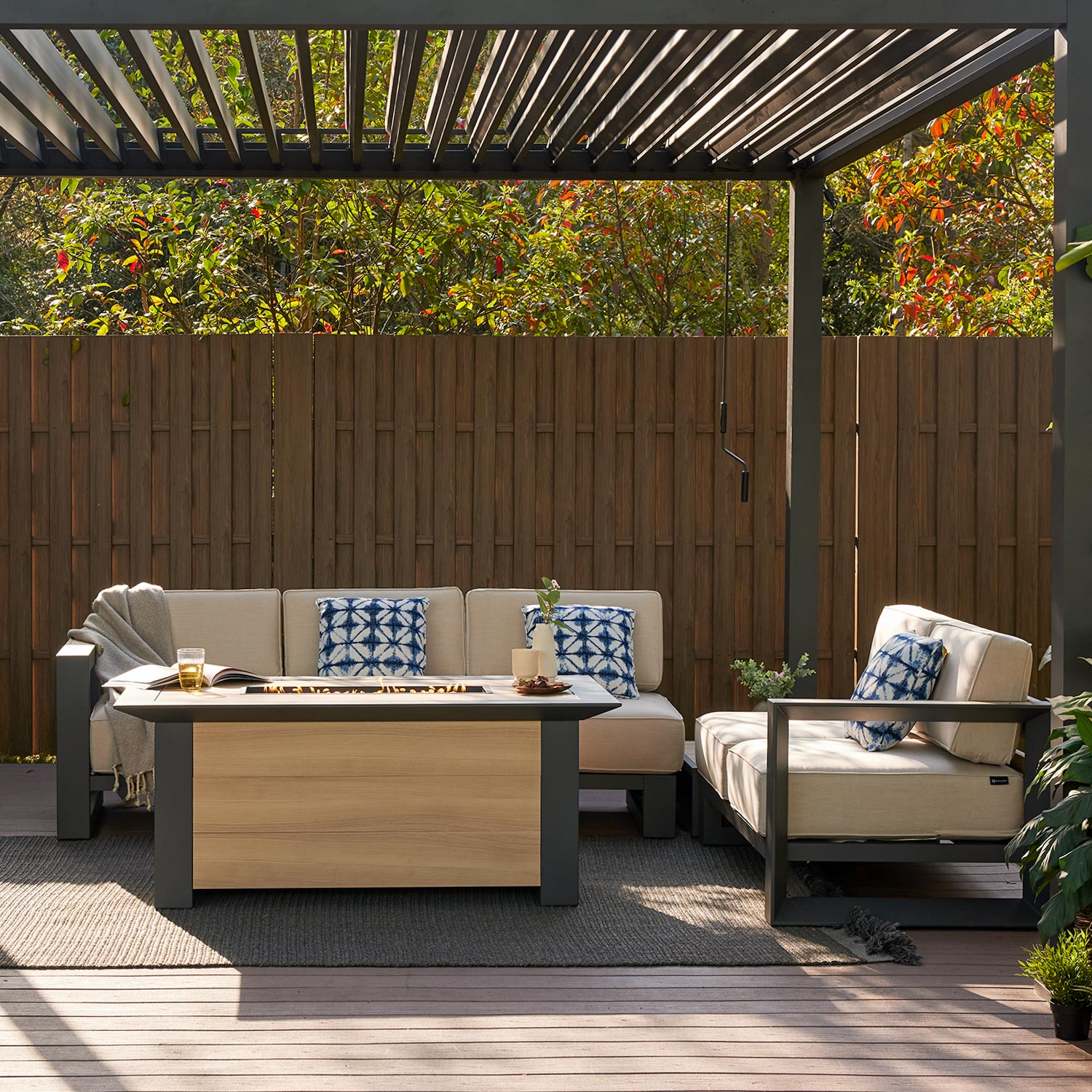
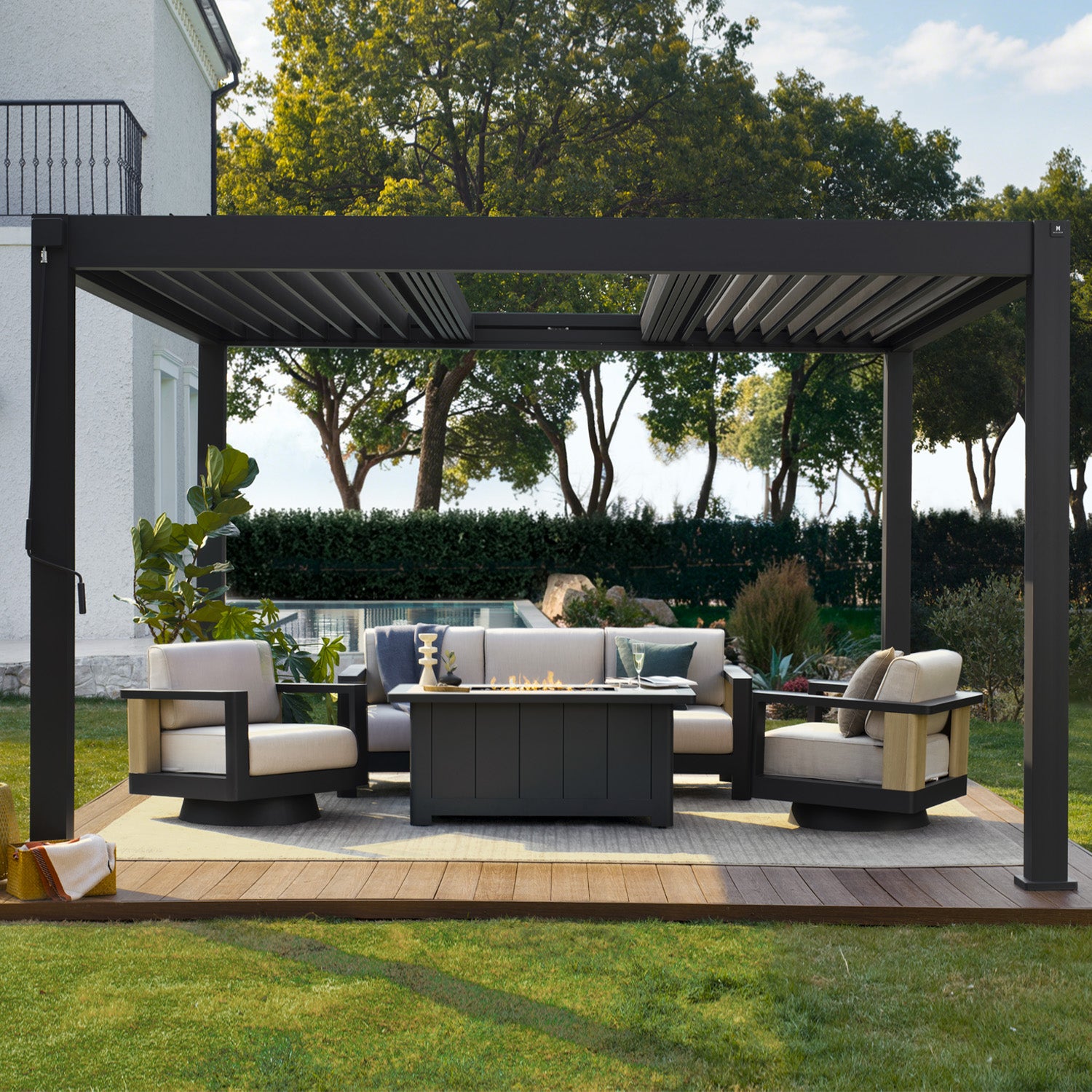
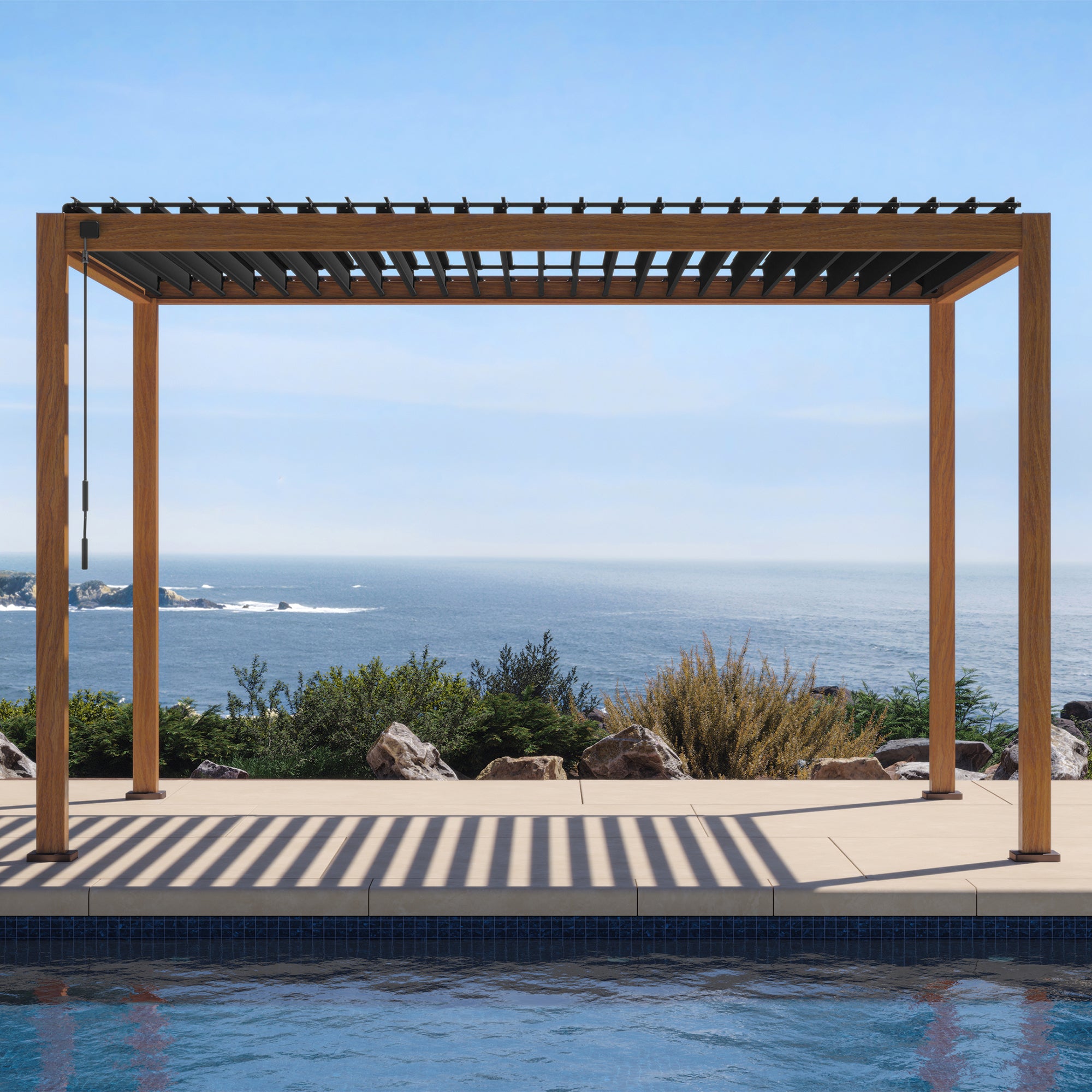
A louvered roof pergola has roof slats that can be opened, closed, or angled. Instead of choosing between full sun and full cover, you can adjust the roof based on the moment.
Open the louvers when you want more light, breeze, or a view of the sky. Angle them when the sun is too strong but you still want airflow. Close them when you want more shade or overhead rain management.
This is why louvered pergolas are popular for patios that serve more than one purpose. The same structure can work for morning coffee, afternoon shade, outdoor dining, and evening lounging.
Mirador offers modern louvered pergolas across aluminum, steel, and hybrid product lines, including 111DA, 111S, 80S/88S, and Grill Pergola options.

What Is a Fixed Metal Roof Pergola?
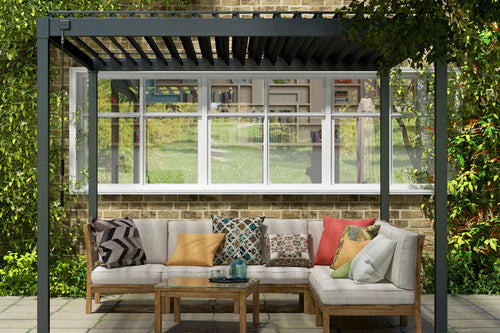
A fixed metal roof pergola has a solid metal cover that does not open or rotate. It functions more like a permanent patio cover: reliable shade, consistent overhead coverage, and a simpler roof system.
That can be a good fit if you always want shade in the same area. For example, a fixed metal roof may make sense over a walkway, a covered seating zone, or a patio where sun exposure is intense most of the day.
The tradeoff is flexibility. Because the roof is fixed, you cannot open it for direct sunlight, stargazing, or extra vertical ventilation. The space underneath can also feel warmer if air movement is limited.

Shade Control: Adjustable Louvers Give You More Range
Shade is not the same at 9 a.m., noon, and 5 p.m.
- With a fixed metal roof pergola, the shade pattern is determined by the roof and the sun's position. You get consistent cover, but not much control.
- With a louvered roof pergola, you can fine-tune the roof angle. On a hot afternoon, close or angle the louvers to block direct sun. On a cooler morning, open them to bring in more light. During dinner, adjust the roof again as the sun drops lower.
If your patio is used throughout the day, adjustable shade is one of the biggest advantages of a louvered pergola.
Airflow and Heat Comfort
Heat comfort is one of the most important differences between these two roof styles.
- A fixed metal roof blocks direct sun, which helps reduce glare and surface heat. But because the roof stays closed, warm air can collect under the cover if the structure does not have enough ventilation.
- A louvered roof gives you more ways to manage that feeling. By opening or angling the louvers, you can let warm air rise and allow more breeze through the space. This does not turn an outdoor patio into an air-conditioned room, but it can make the area feel more comfortable and less closed in.
For hot climates, poolside patios, and outdoor dining areas, airflow is often just as important as shade.
Rain Protection and Drainage
- A fixed metal roof provides continuous overhead coverage, which can be useful if rain protection is your top priority.
- A louvered roof pergola works differently. When the louvers are closed, the roof helps cover the space and direct water away through the pergola's drainage design. This makes it useful for light rain and everyday weather changes.
However, no open-sided pergola should be treated like a fully sealed indoor room. Wind-driven rain can still enter from the sides, and performance depends on the model, installation, roof angle, drainage path, and weather conditions.
If you want the most flexible outdoor space, choose a louvered roof. If you want a simple always-covered roof and do not care about opening it, a fixed metal roof may be enough.
Maintenance and Durability
Both roof types need basic outdoor maintenance.
- For a fixed metal roof pergola, maintenance usually means cleaning the roof surface, checking fasteners, clearing leaves, and watching for scratches, corrosion, or trapped debris.
- For a louvered pergola, you should also keep the louvers and drainage channels clear. If the model has manual or motorized operation, follow the product manual for care and seasonal checks.
Material matters too. Aluminum is popular for modern pergolas because it is lightweight, clean-looking, and resistant to rust. Steel can offer strength and value, but coating quality and care are important. The right choice depends on your climate, budget, and the specific product design.
Design: Outdoor Room vs Permanent Cover
- A fixed metal roof pergola can look clean and practical, but it often reads visually as a patio cover.
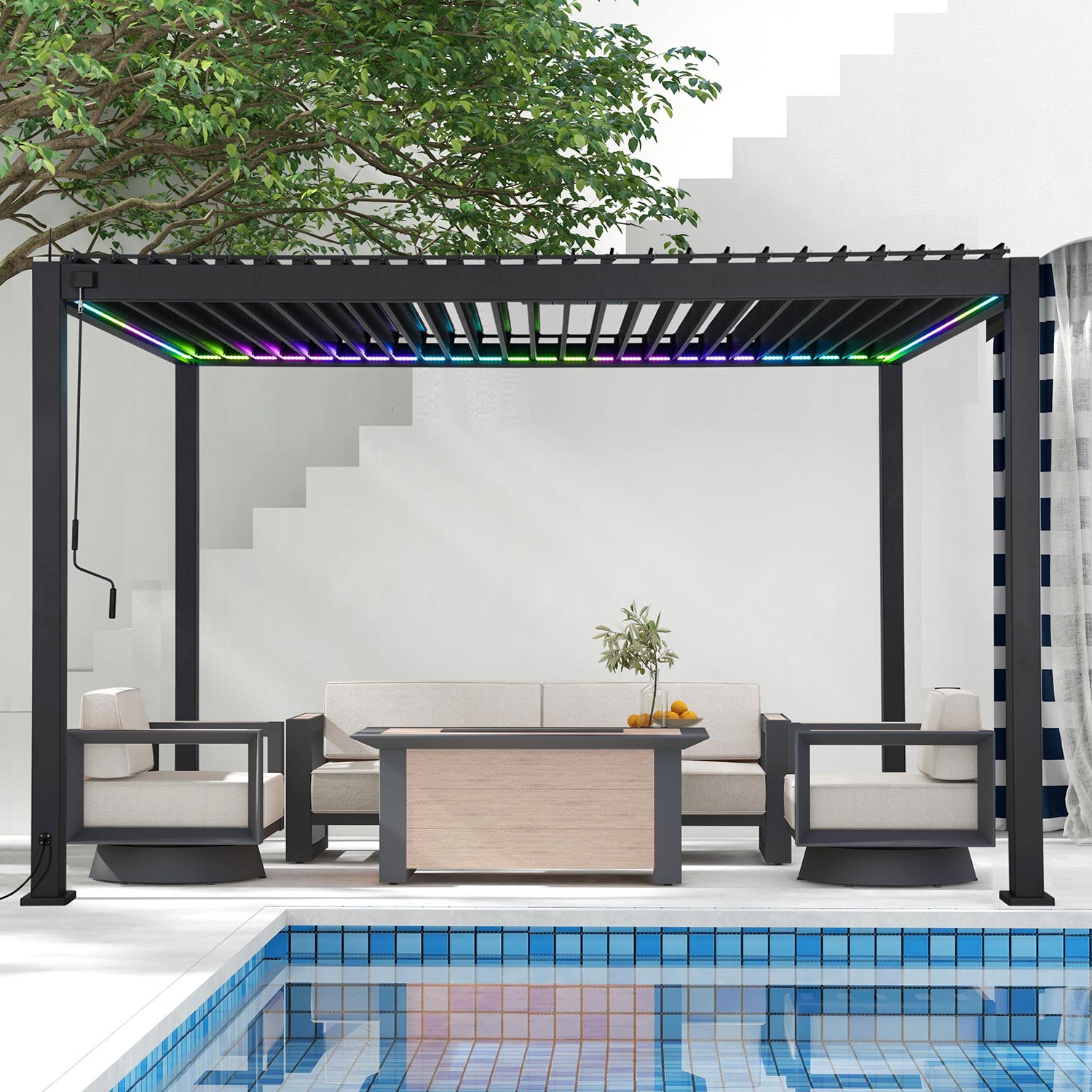
- A louvered pergola feels more like a modern outdoor room. The adjustable roof, straight architectural lines, and accessory compatibility make it easier to build a complete outdoor living setup.
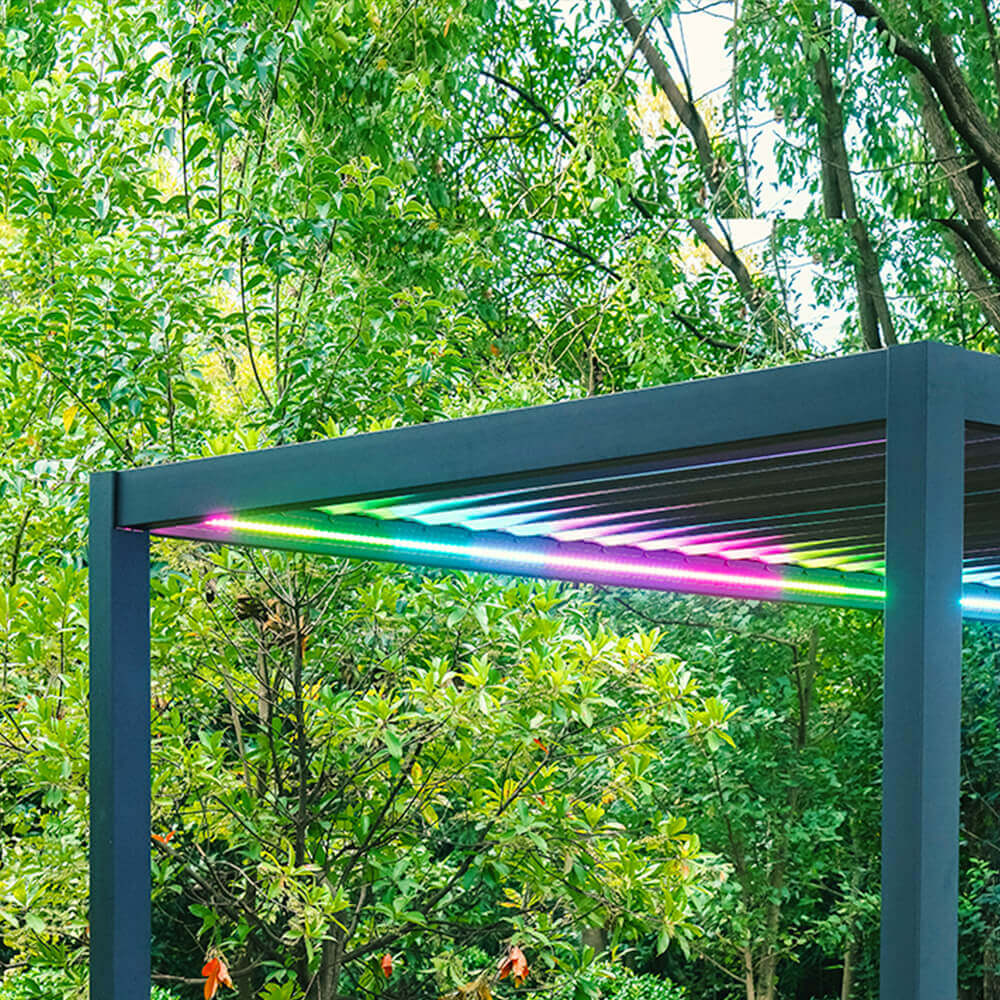
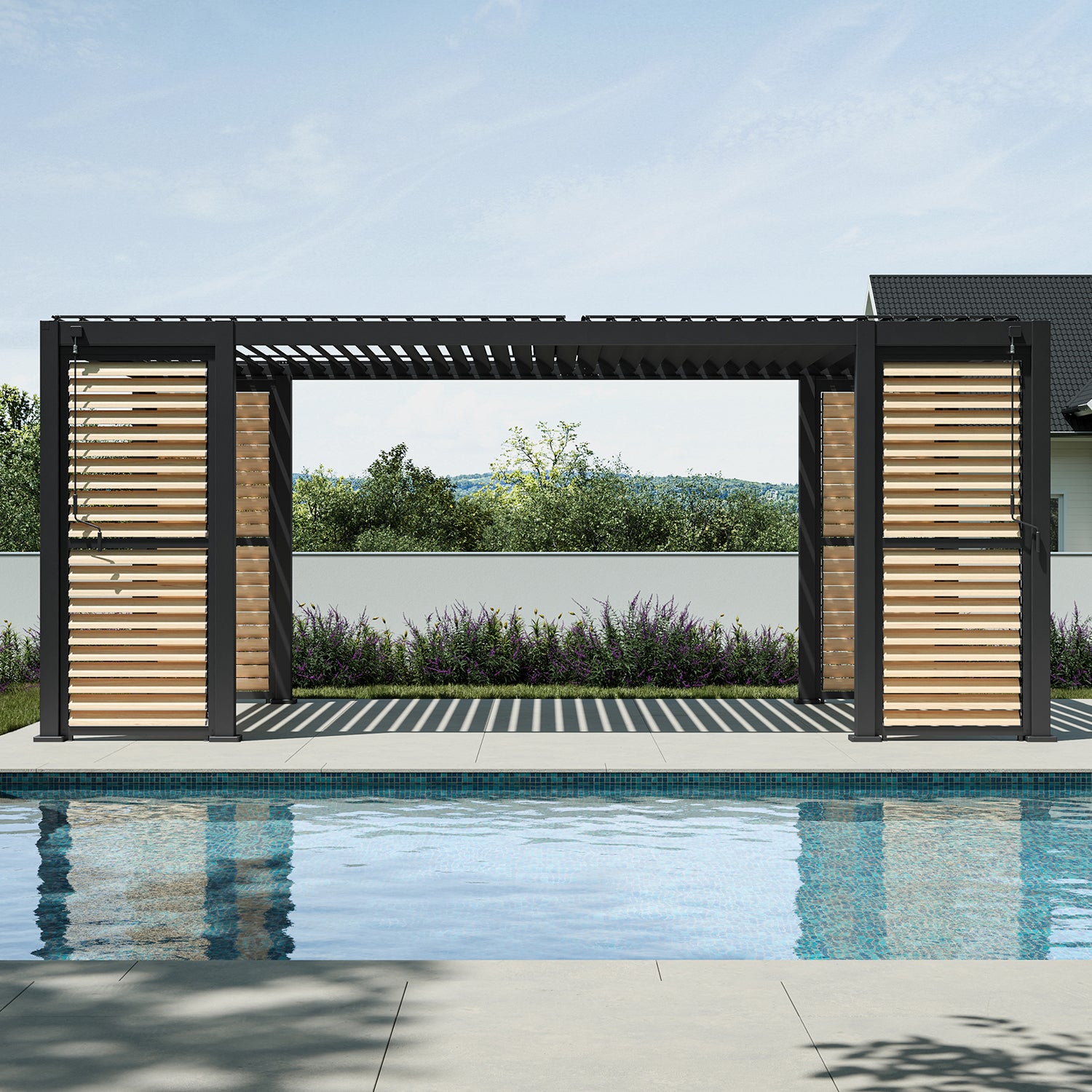
That matters if you plan to add privacy screens, pull-down shades, sliding doors, lighting, outdoor furniture, or a dining set. A louvered roof gives the space a more flexible foundation.
Which Pergola Roof Is Better for Different Backyard Uses?
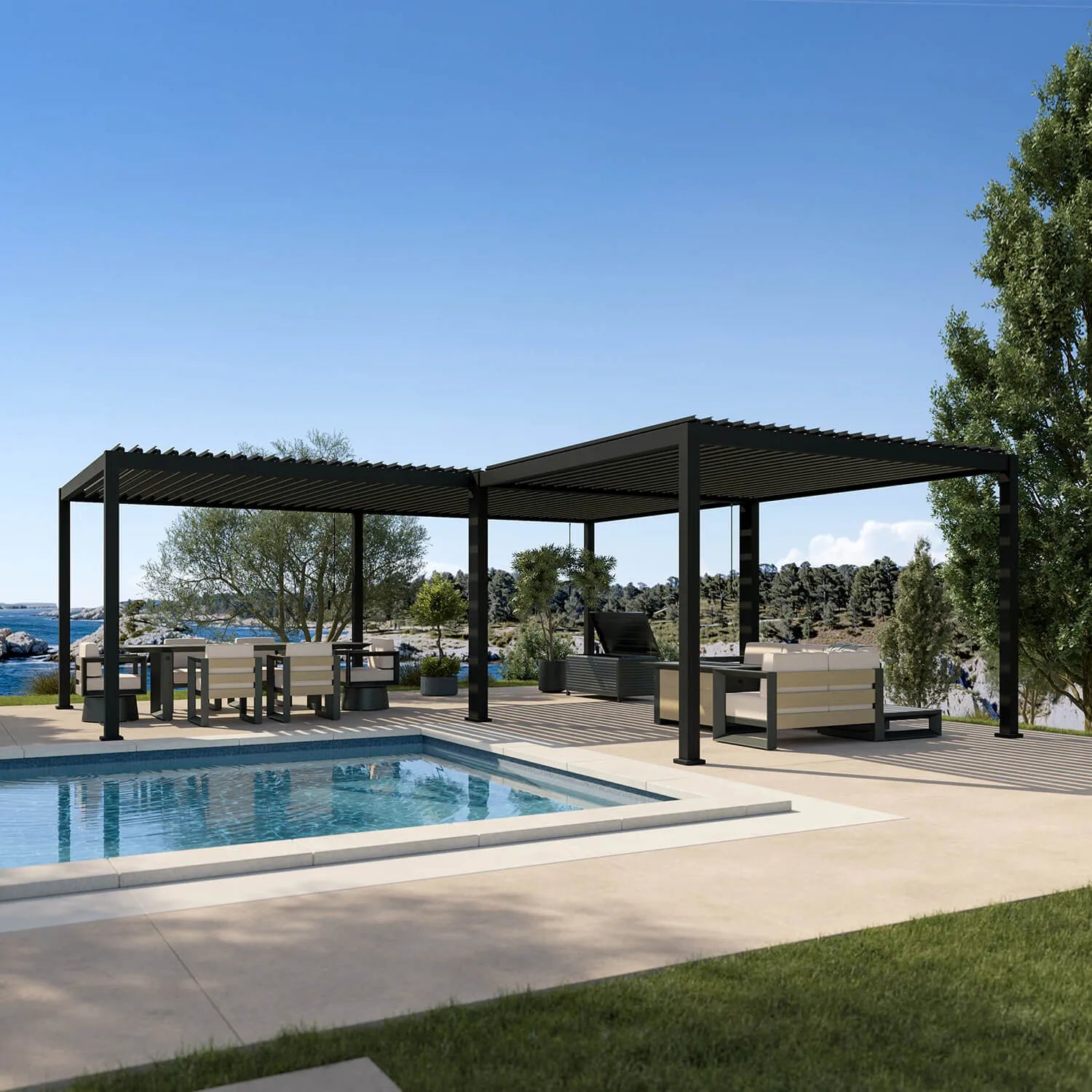
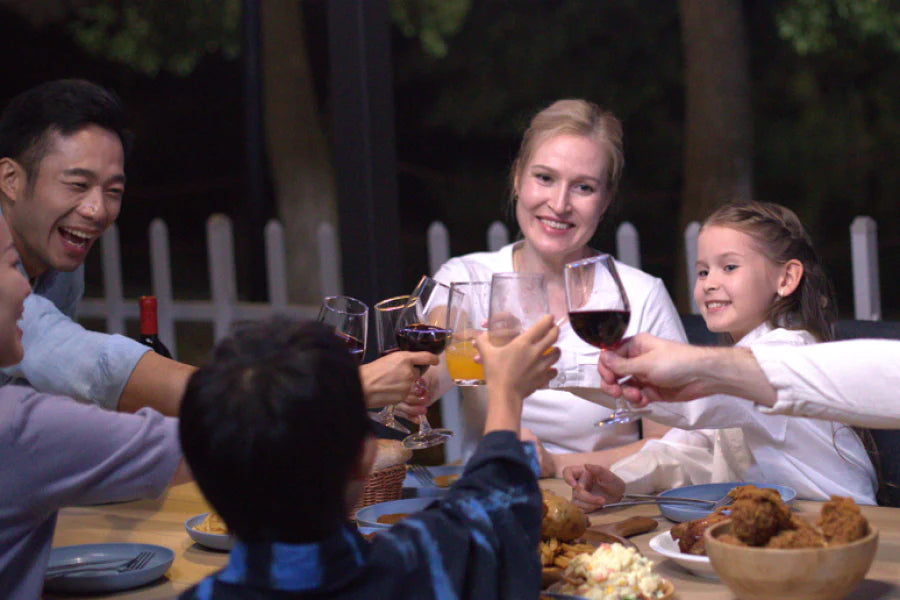
- Outdoor Dining: A louvered roof is usually the better fit. You can open the roof for a brighter brunch, angle it during afternoon sun, and close it for more overhead shade during dinner.
- Poolside Lounge: A louvered roof works well because poolside spaces often need changing shade. Guests may want sun at one point and cover at another.
- Grill Area: Ventilation is the priority. A fixed solid roof over a grill can create heat, smoke, and clearance concerns if not designed for that use. If you want a covered grilling zone, look for a pergola designed with grilling in mind and always follow the grill manufacturer's clearance and safety instructions.
- Covered Seating Area: Both can work. Choose a fixed metal roof if you want a simple permanent cover. Choose a louvered roof if you want the option to open the space on cooler days.
- Modern Backyard Upgrade: A louvered pergola usually offers the stronger design statement. It creates a more finished outdoor room and adapts better to changing activities.
When a Fixed Metal Roof Pergola Makes Sense
A fixed metal roof pergola may be the right choice if you:
- Want constant shade in one area
- Prefer a roof with fewer moving parts
- Do not need an open-sky option
- Use the space mainly as a basic covered patio
- Prioritize continuous overhead coverage over adjustability
In other words, choose a fixed metal roof when simplicity matters more than flexibility.
When a Louvered Roof Pergola Makes More Sense
A louvered roof pergola may be the better choice if you:
- Want to control sun and shade throughout the day
- Care about airflow in warm weather
- Want the option to see the sky
- Use your patio for dining, lounging, and entertaining
- Want a more modern outdoor room look
- Plan to add screens, shades, lighting, or outdoor furniture
For most homeowners comparing premium pergola roof ideas, the louvered roof wins because it adapts to more situations.
Is a Louvered Pergola Worth It?

A louvered pergola is worth considering if your patio is not a single-purpose space.
The value comes from control. You are not locked into one roof condition all day. You can adjust the roof for sun, shade, airflow, and changing weather, which helps the same patio feel useful more often.
That flexibility is especially helpful for backyards where the sun moves across the seating area, where summer heat is a concern, or where the pergola will be part of a larger outdoor living setup.
If you only need a basic roof that stays closed all the time, a fixed metal roof may be enough. But if you want a patio that feels more responsive, comfortable, and modern, a louvered roof pergola is usually the better long-term choice.
Mirador designs modern pergolas for outdoor living, dining, shade, and relaxation. Whether you are planning a compact patio, a poolside lounge, a large dining area, or a more complete outdoor room, a louvered pergola gives you more ways to control comfort.
FAQ
Is a louvered roof pergola better than a metal roof pergola?
A louvered roof pergola is better if you want adjustable shade, airflow, and a more flexible outdoor space. A fixed metal roof pergola may be better if you only want permanent overhead cover and do not need the roof to open.
Is a louvered pergola waterproof?
A louvered pergola can help manage rain when the louvers are closed, especially if it has a built-in drainage system. However, it should not be treated like a fully sealed indoor roof. Wind-driven rain can still enter from the sides.
Does a metal roof pergola get hot?
A fixed metal roof can block direct sunlight, but warm air may collect under the cover if airflow is limited. A louvered roof can help improve ventilation because the louvers can open or tilt.
Which pergola roof is best for summer?
For summer comfort, a louvered roof is often the better choice because it can provide shade while still allowing airflow. This is useful for patios, poolside lounges, and outdoor dining areas.
Is a louvered pergola good for rain?
Yes, a louvered pergola can be useful for light rain when the roof is closed and the drainage system is clear. For heavy rain, strong wind, or storms, always follow the product manual and weather guidance for your specific model.