

The right pergola roof depends on what you want from your outdoor space: adjustable shade, natural light, shelter from rain, or a warm garden setting.
Not every pergola roof idea provides the same coverage. Open wooden slats create filtered shade, while glass, polycarbonate, and purpose-designed louvered systems can provide overhead rain protection. A retractable canopy offers flexible shade, but its rain performance depends on the fabric and system.
Here are five pergola roof ideas, their main benefits, and the practical considerations that will help you choose.

Adjustable Louvered Roof
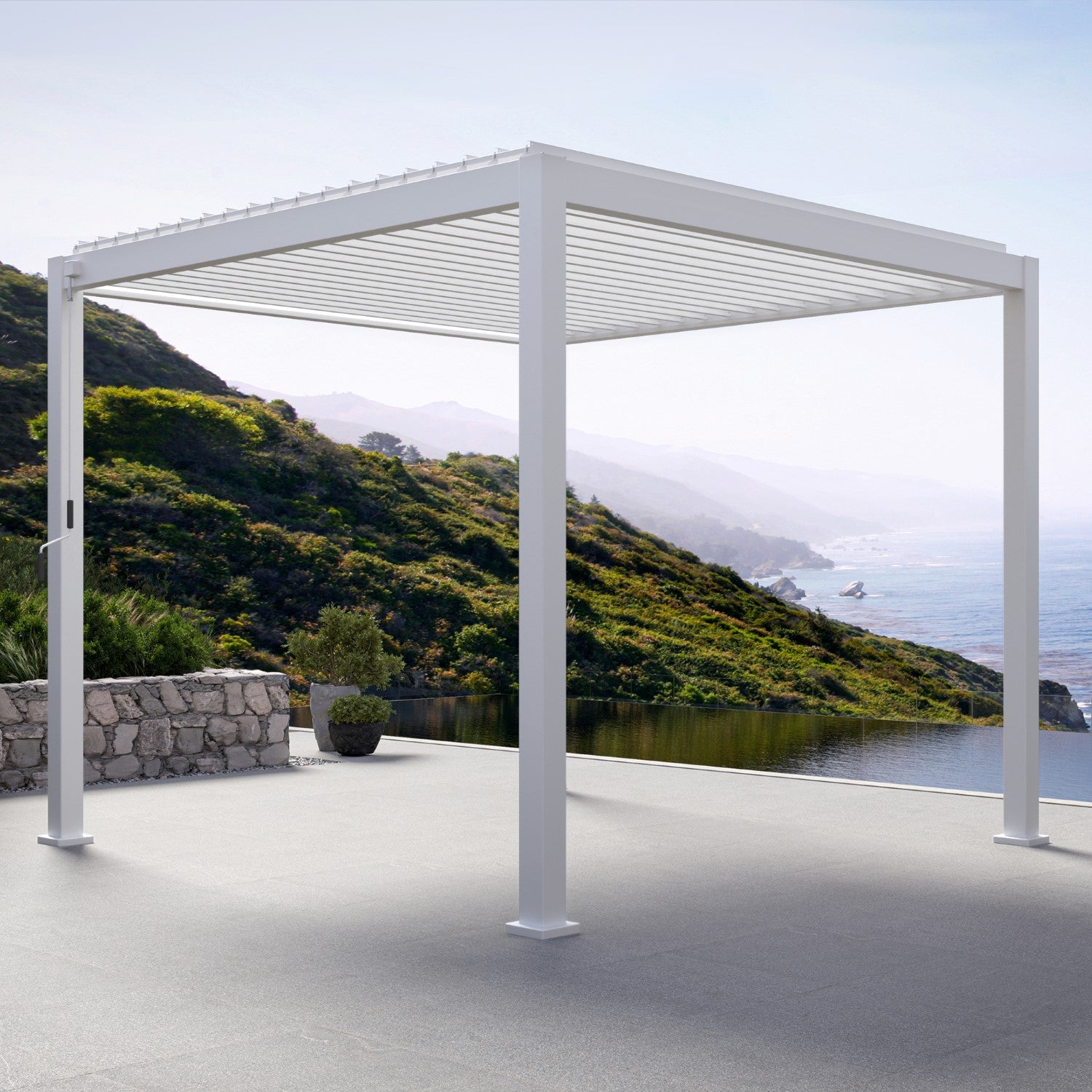
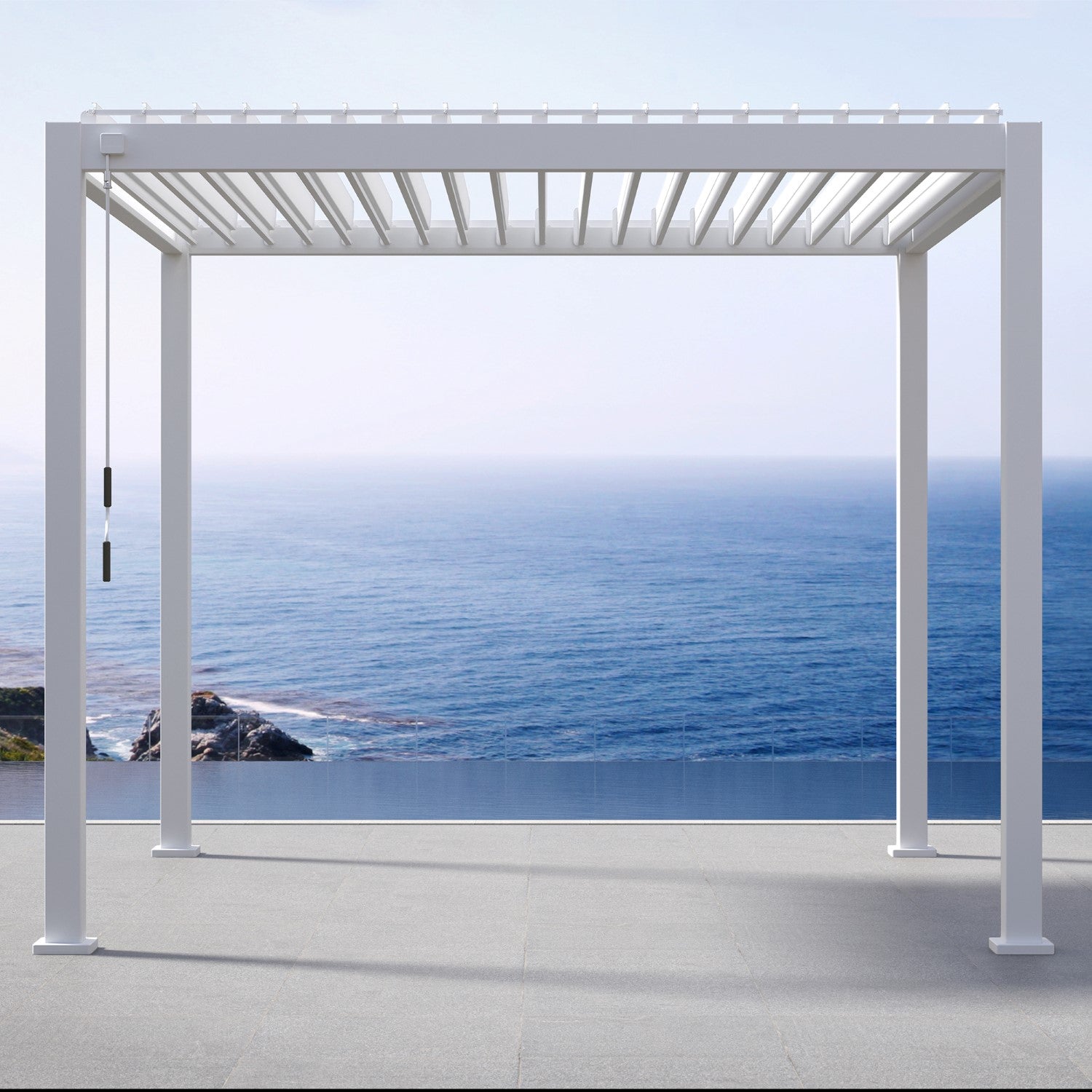
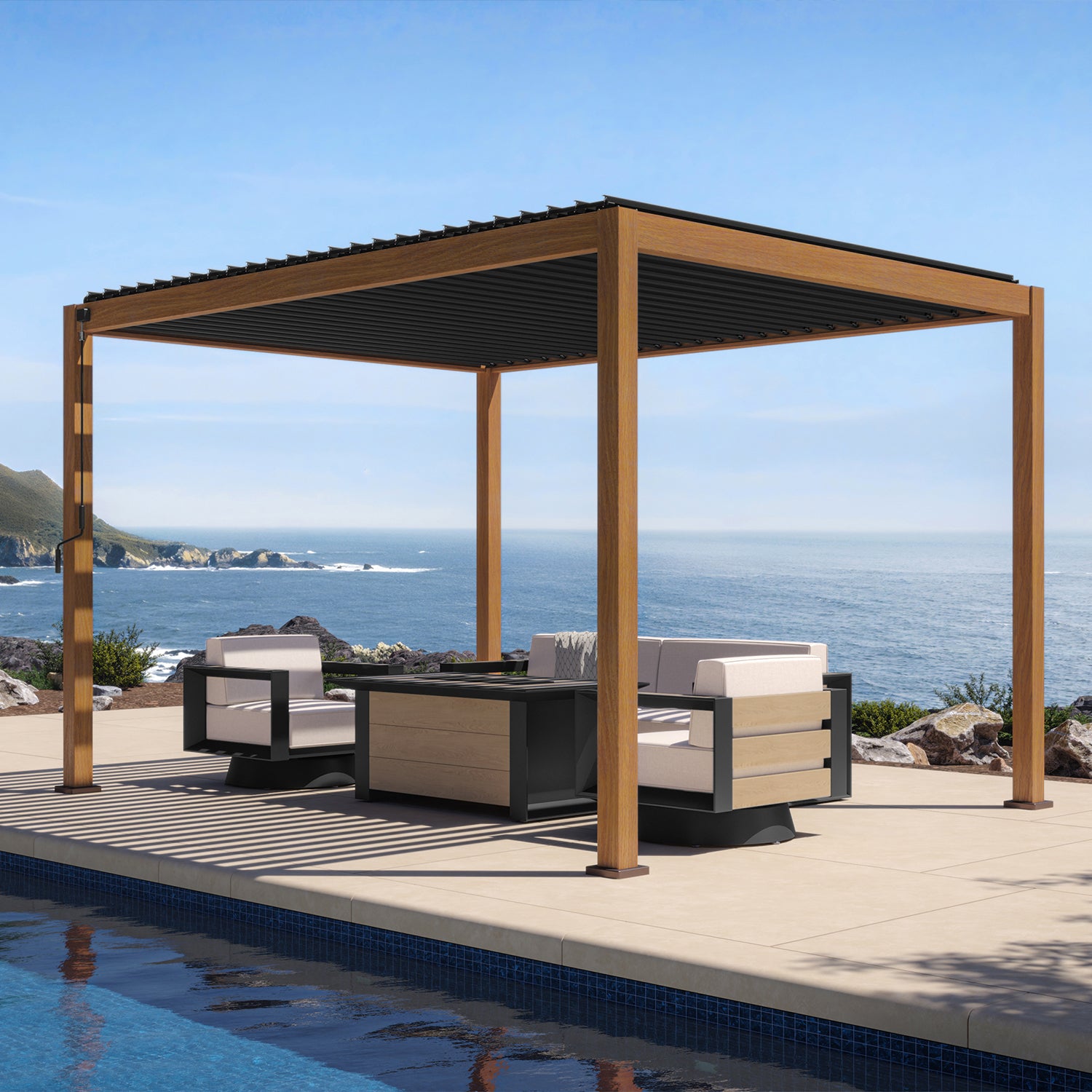
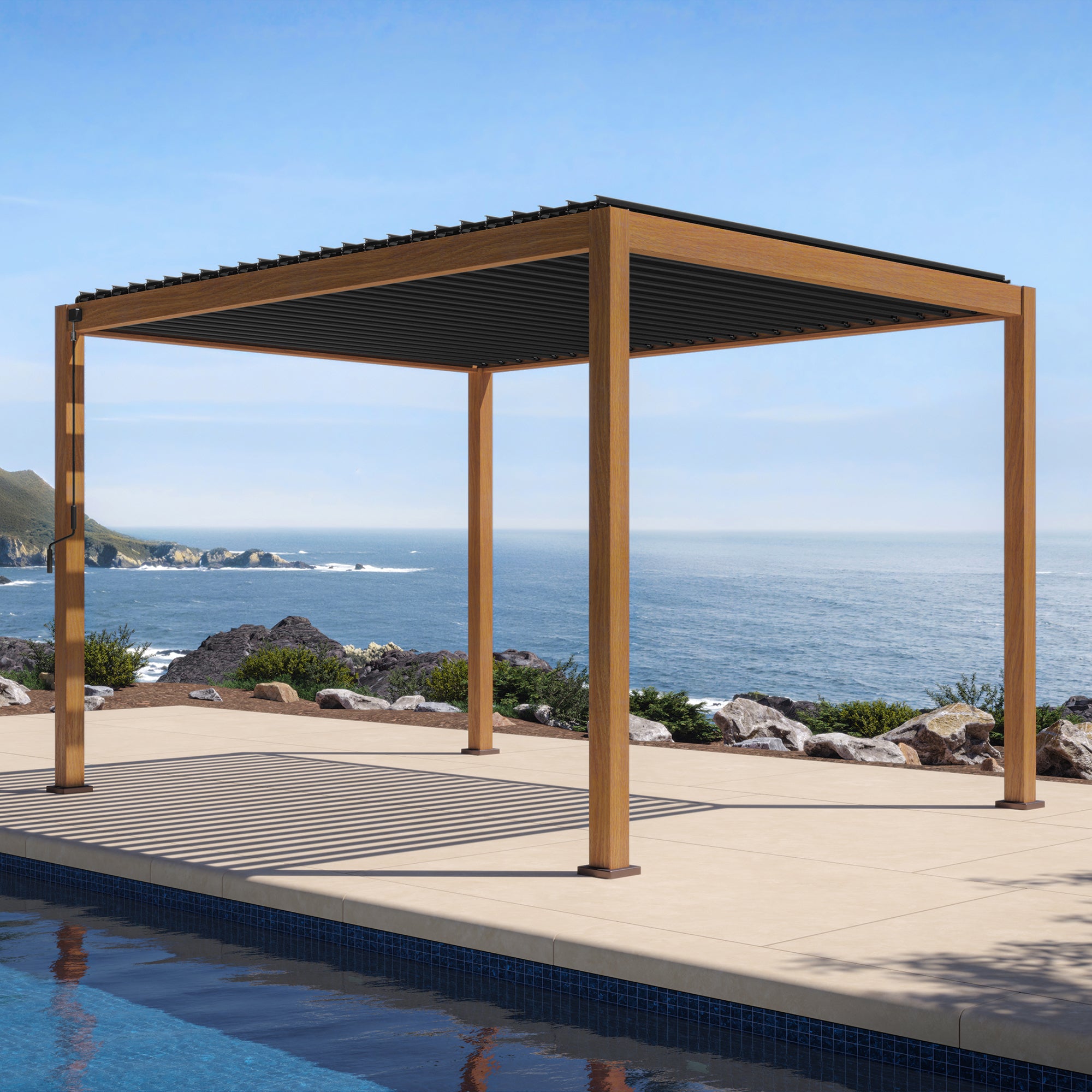
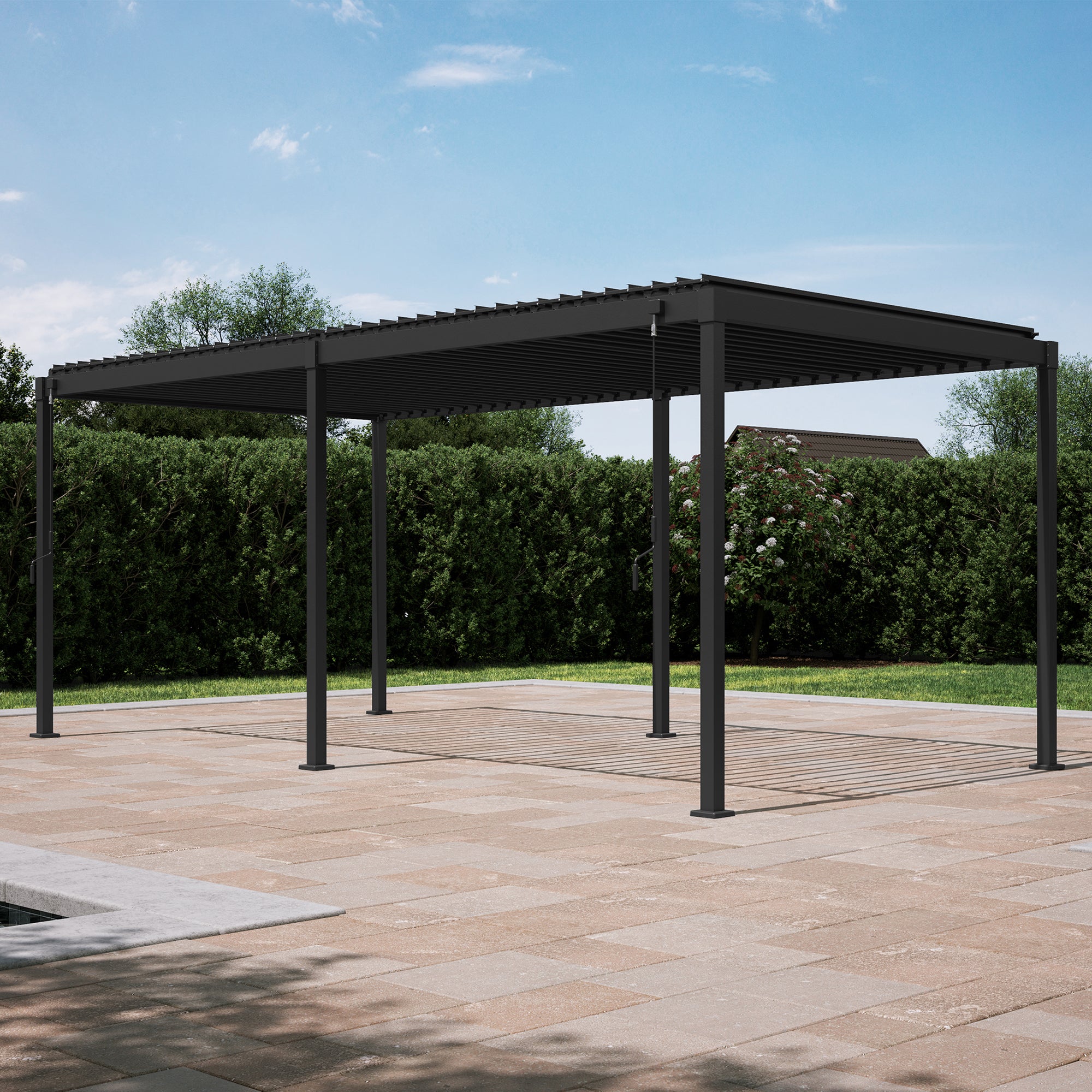
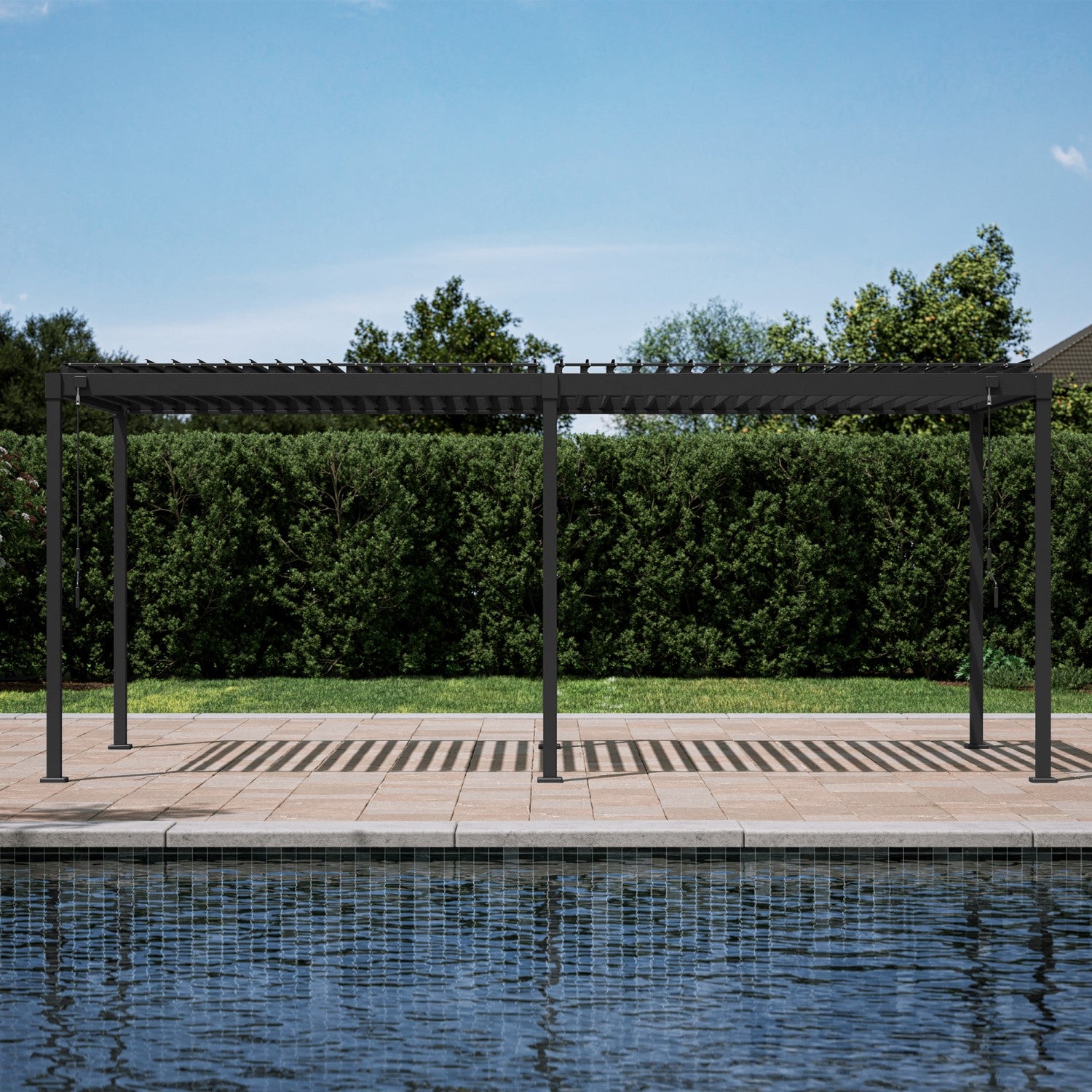
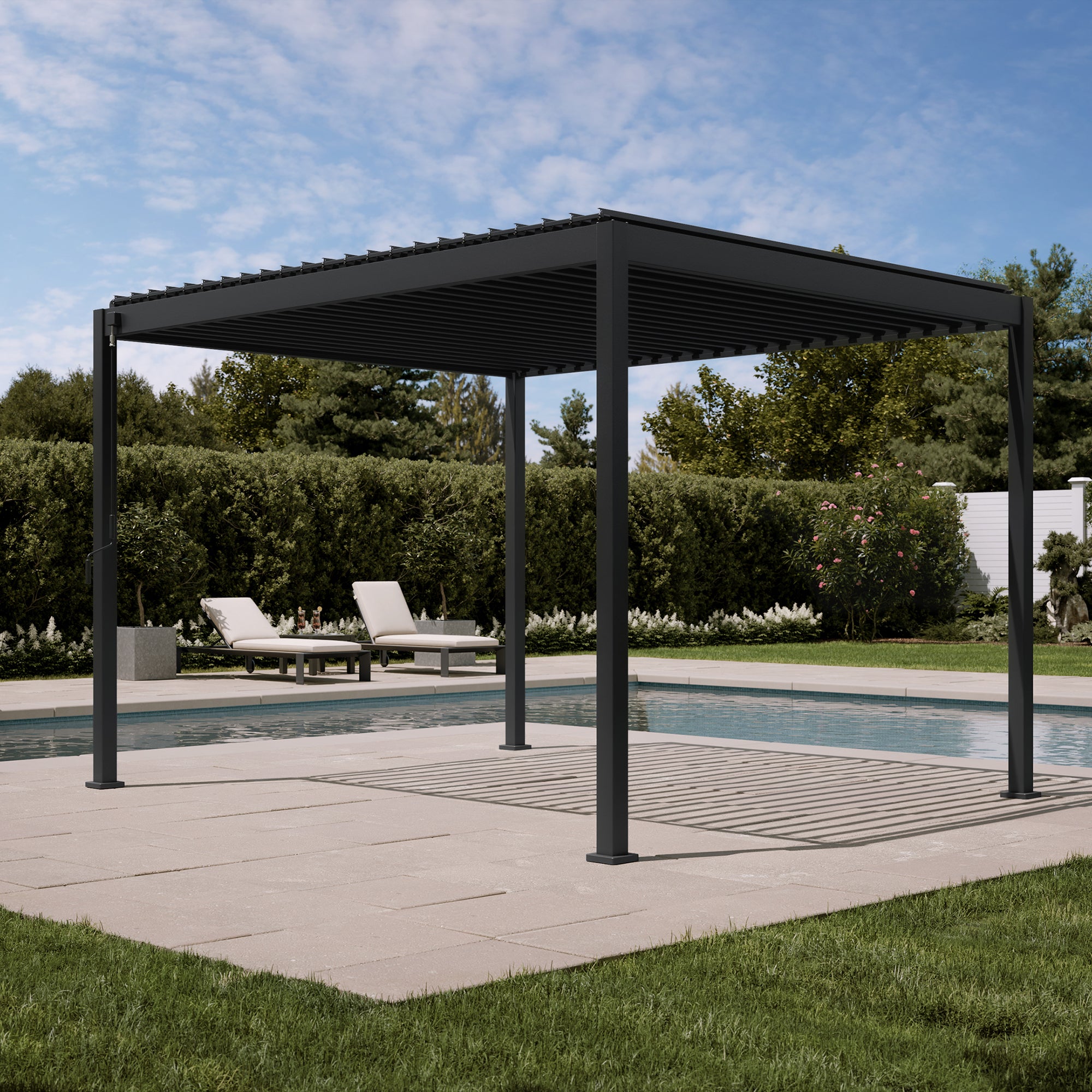
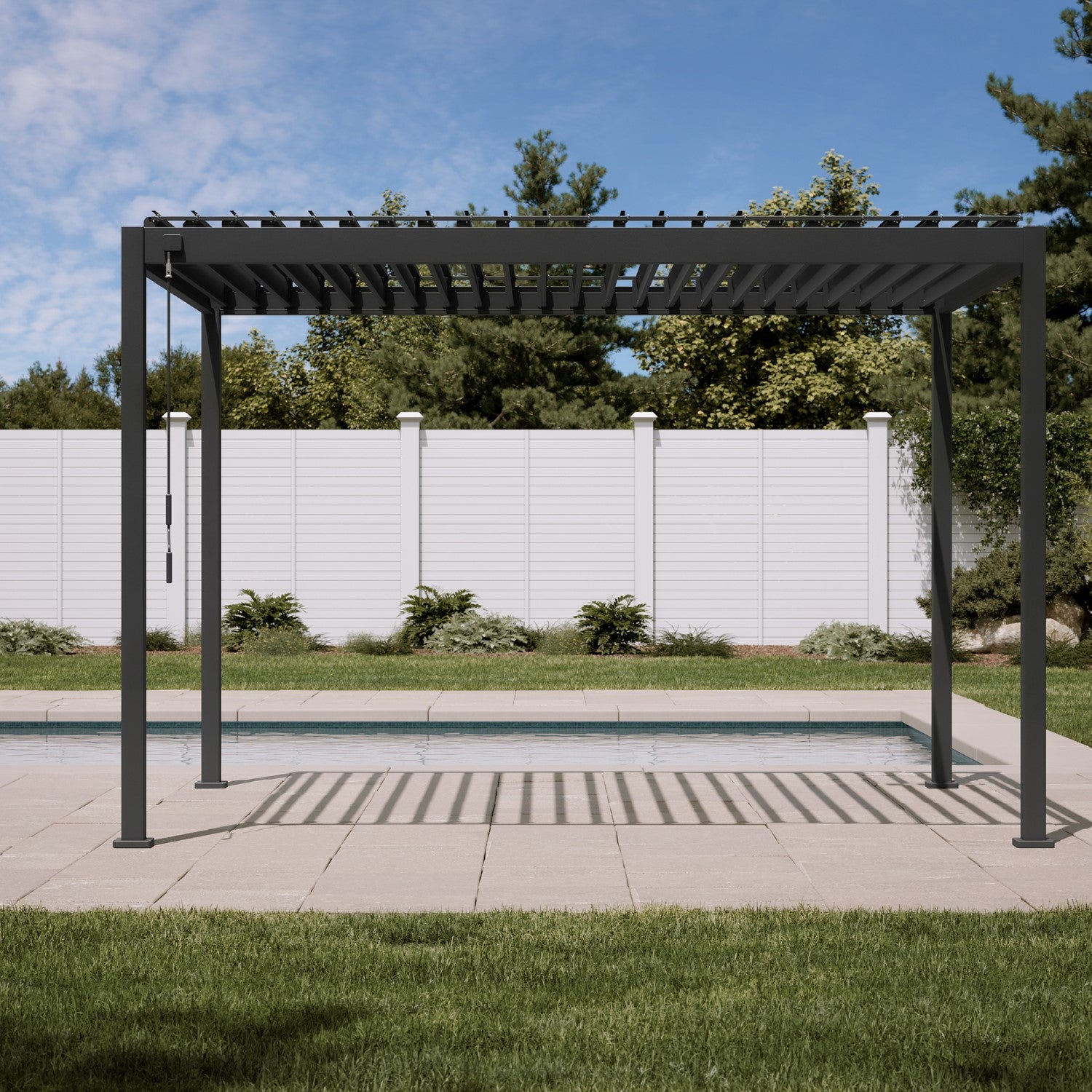
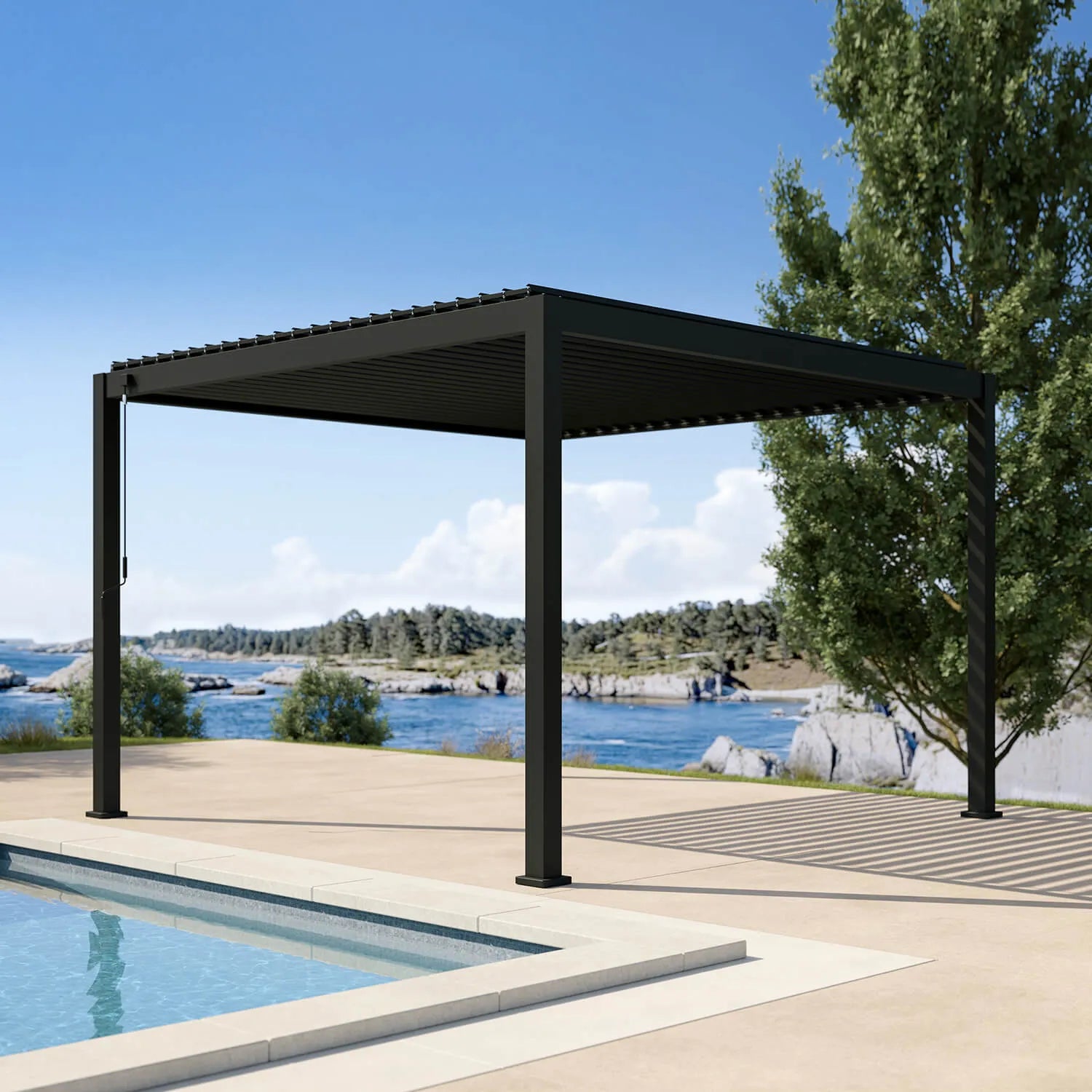
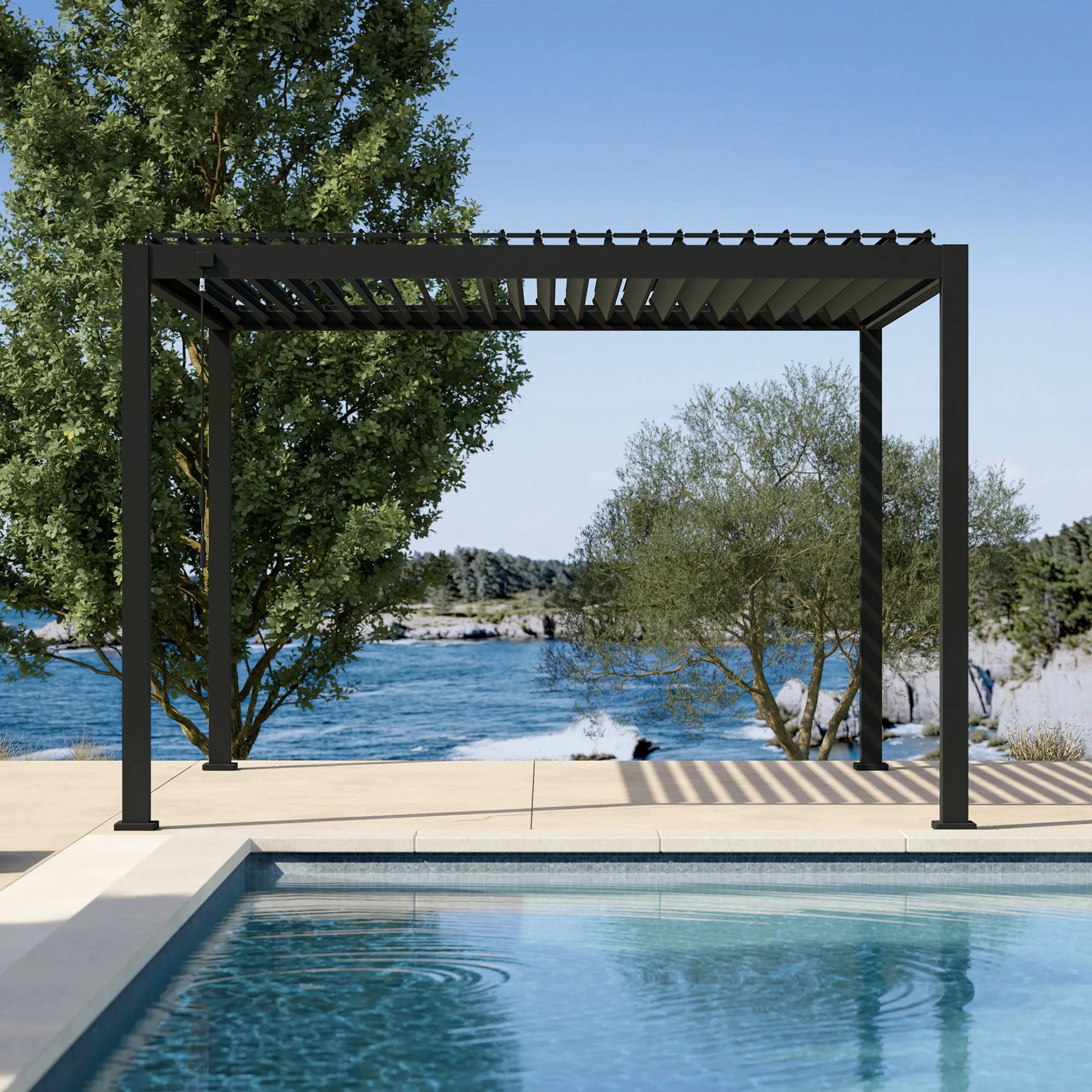
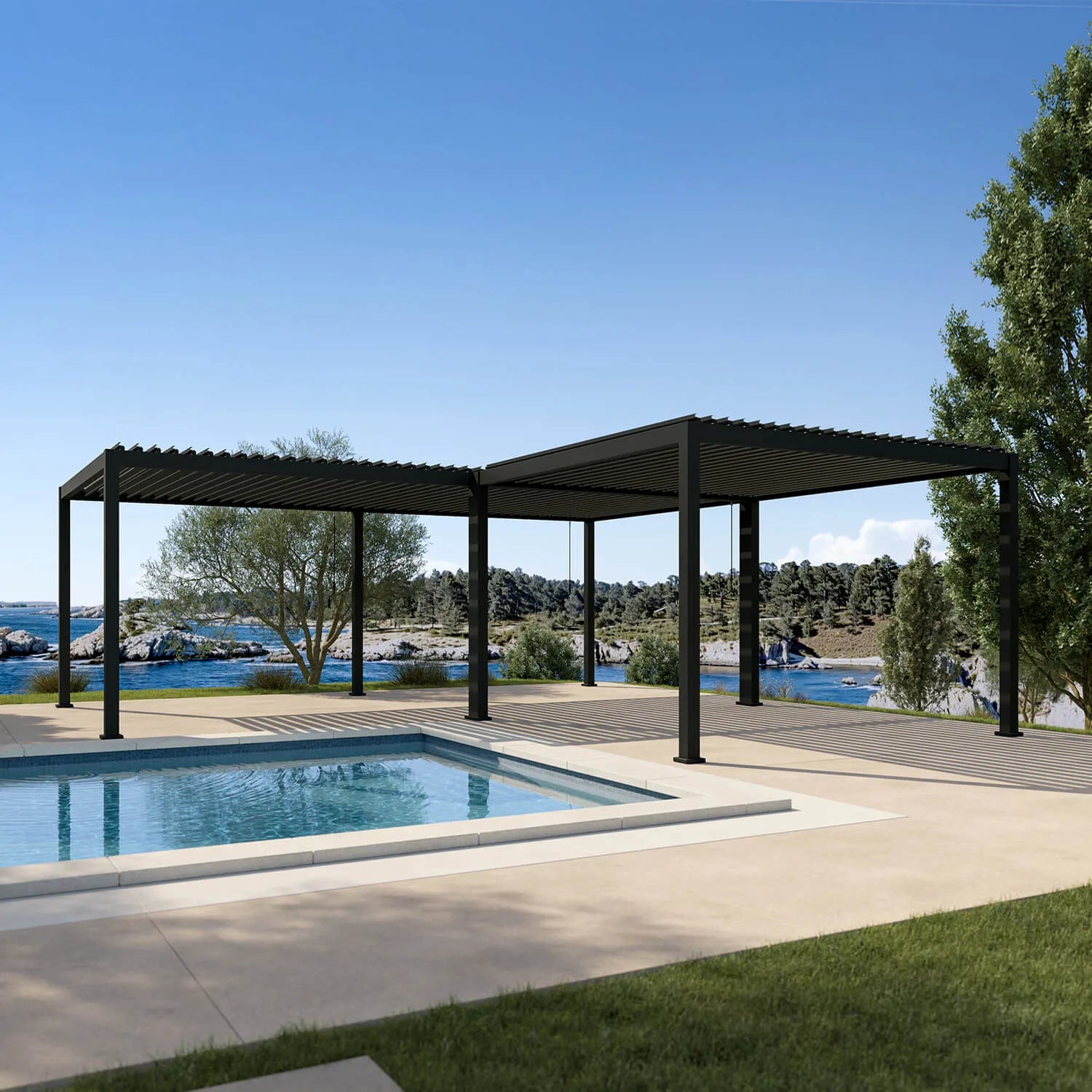
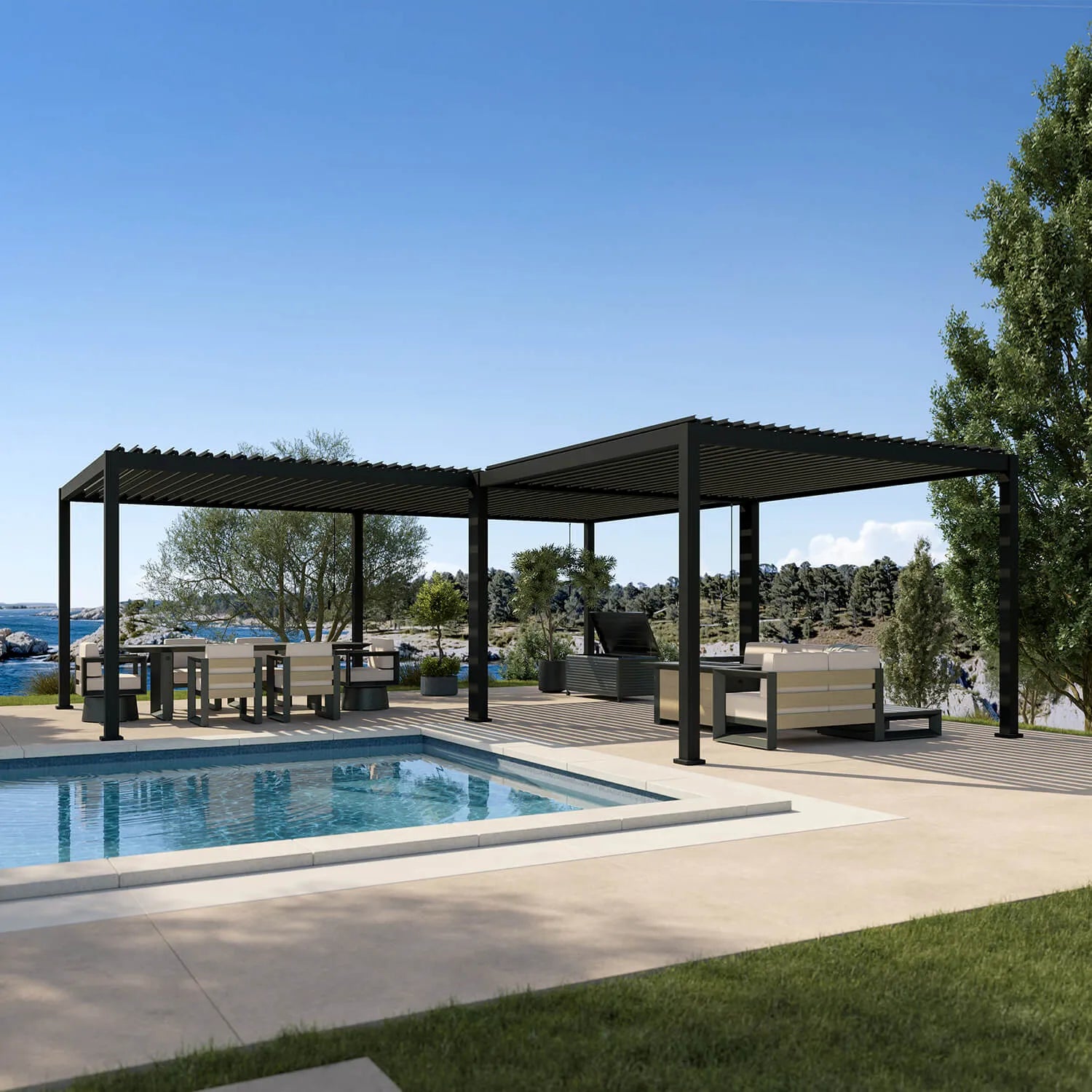
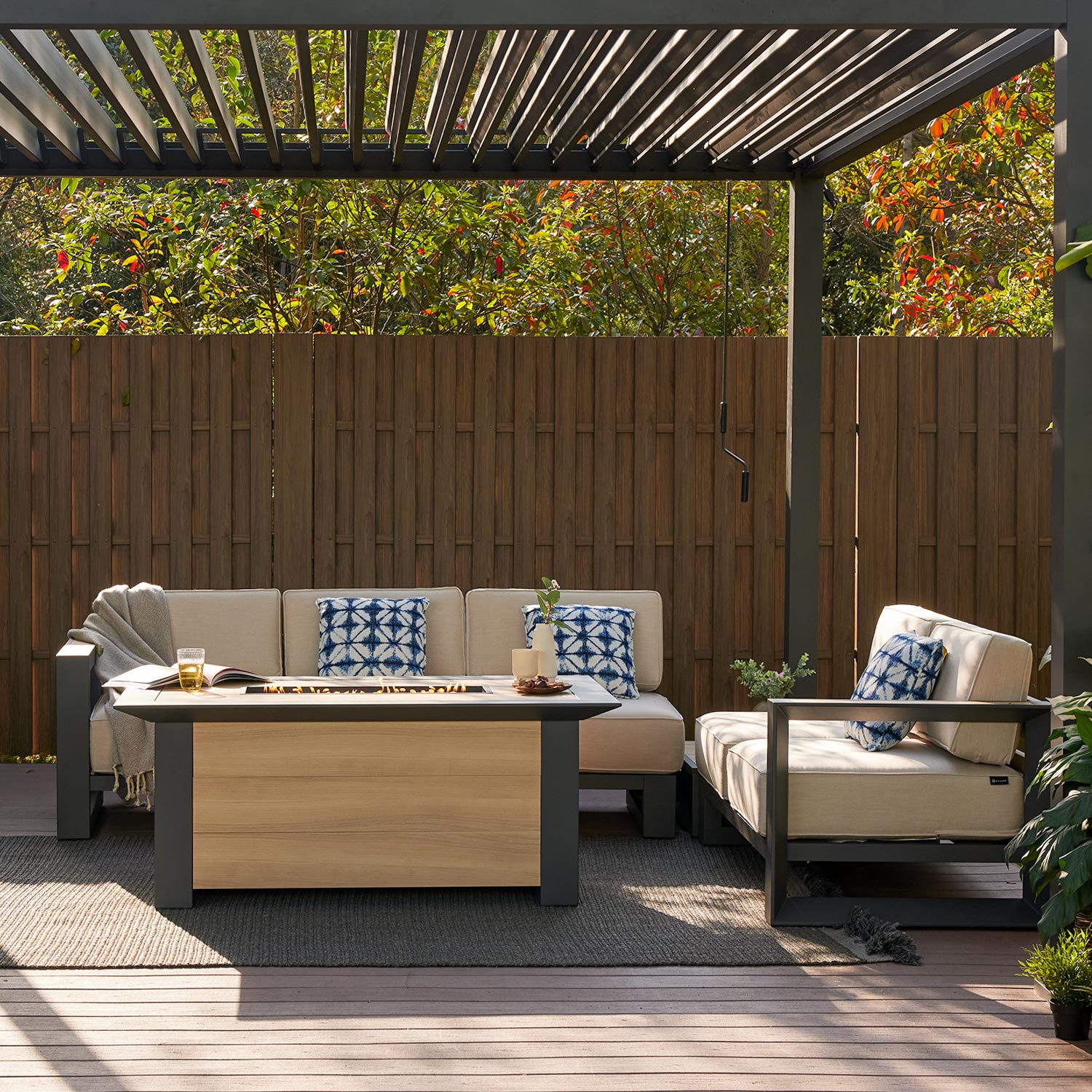
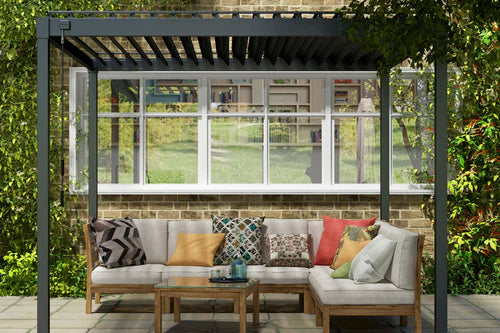
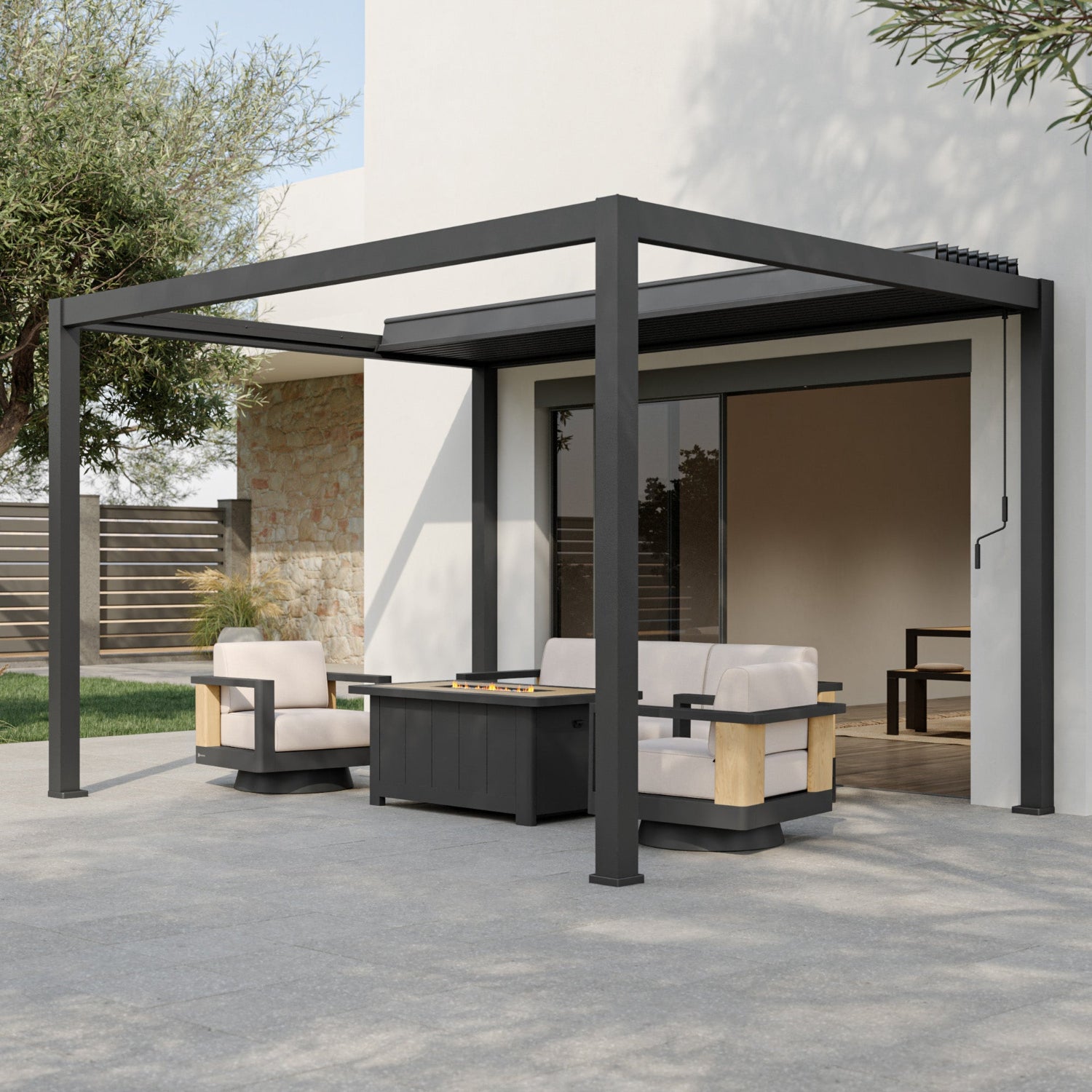
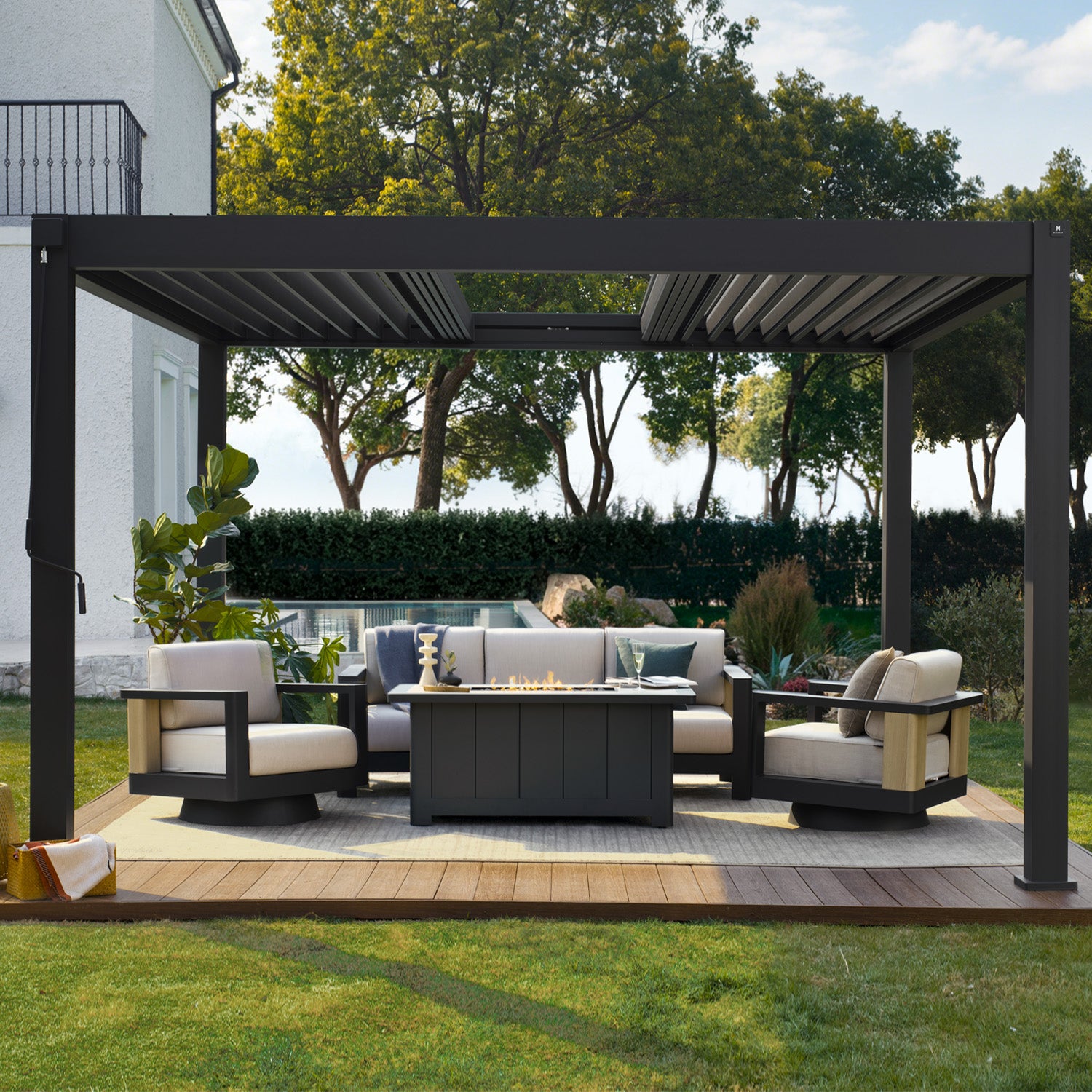
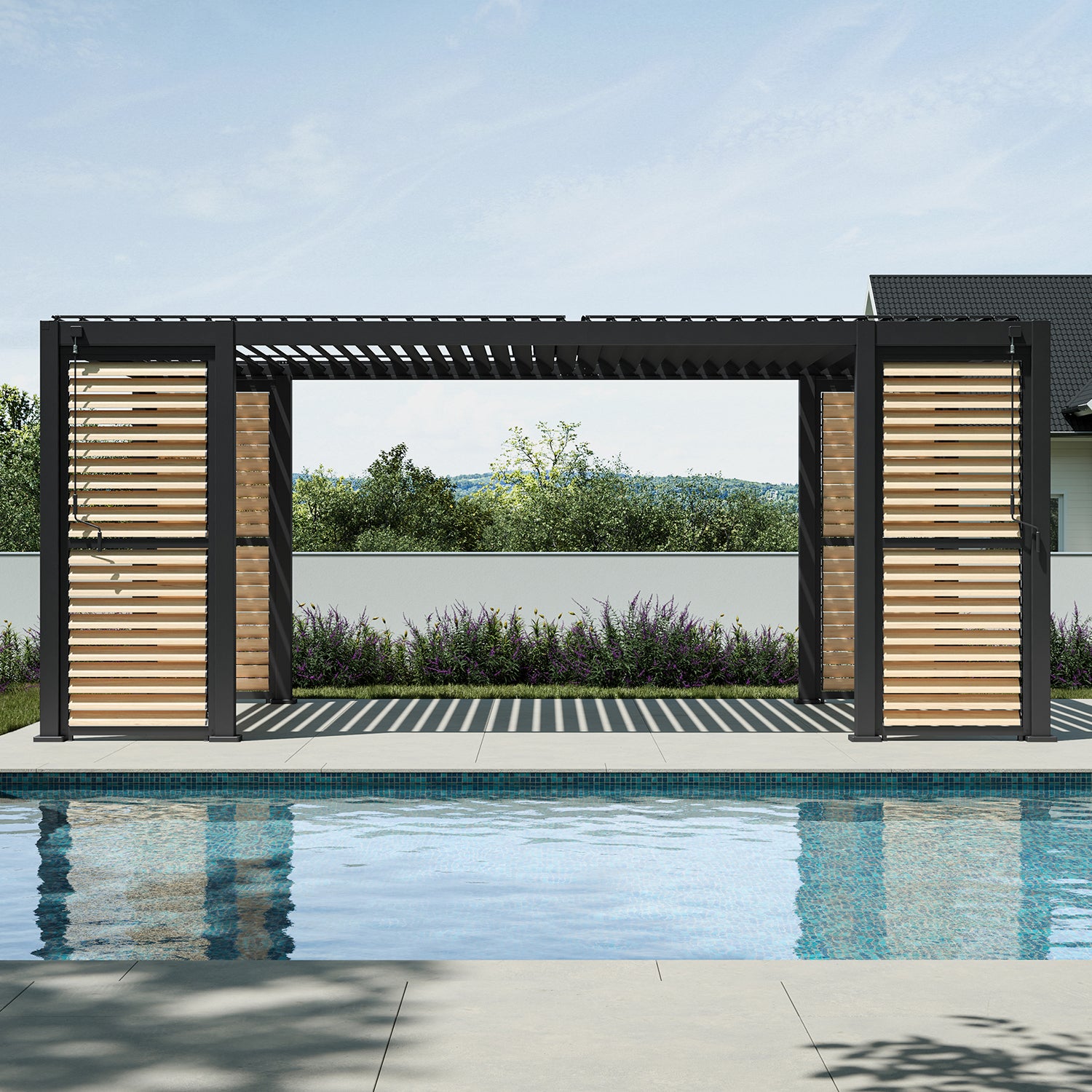
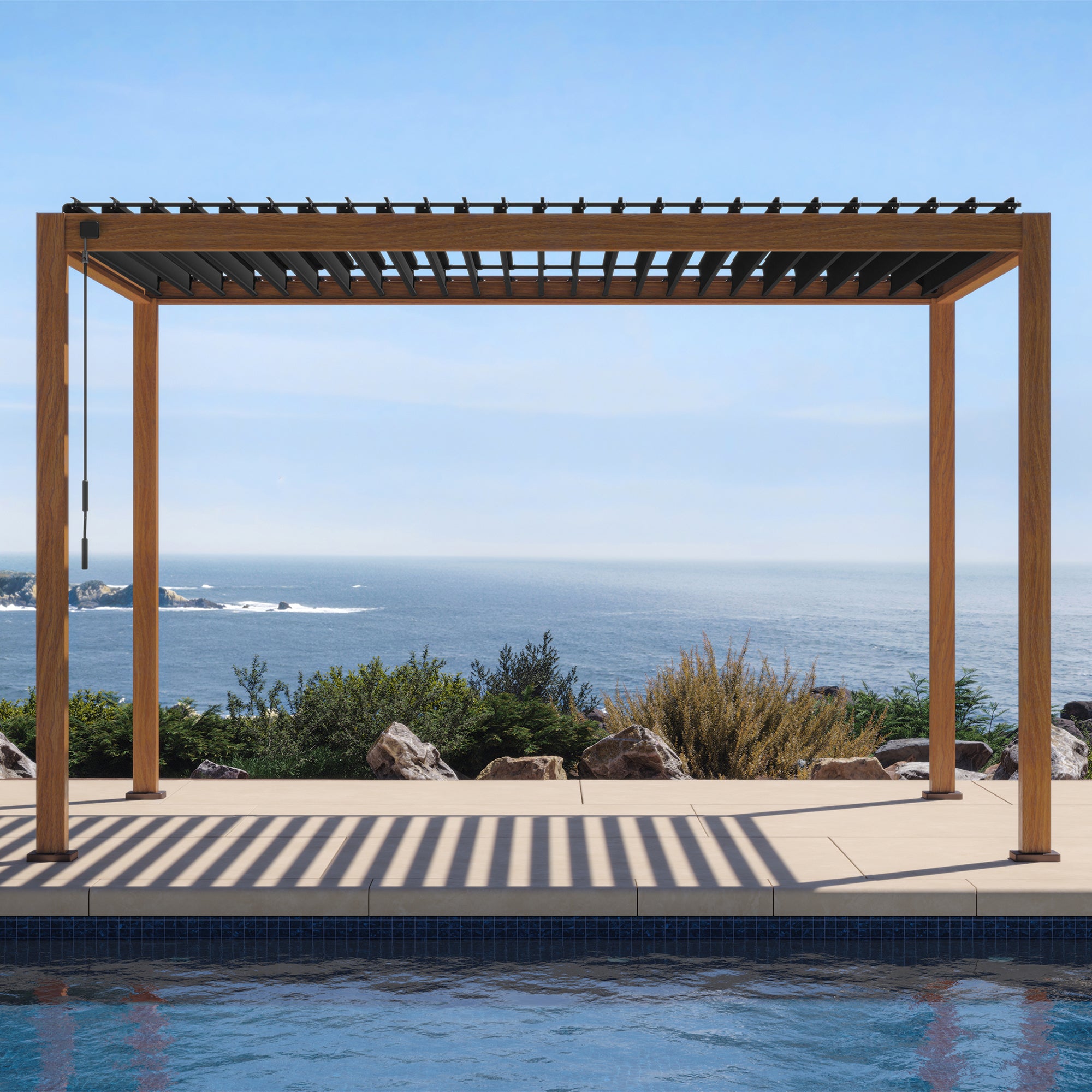
An adjustable louvered roof lets you change the amount of sunlight and ventilation reaching your patio. Tilt the louvers for shade, open them for more light and airflow, or close them for overhead rain protection.
This makes it a useful option for an outdoor dining or lounge area where conditions change throughout the day.
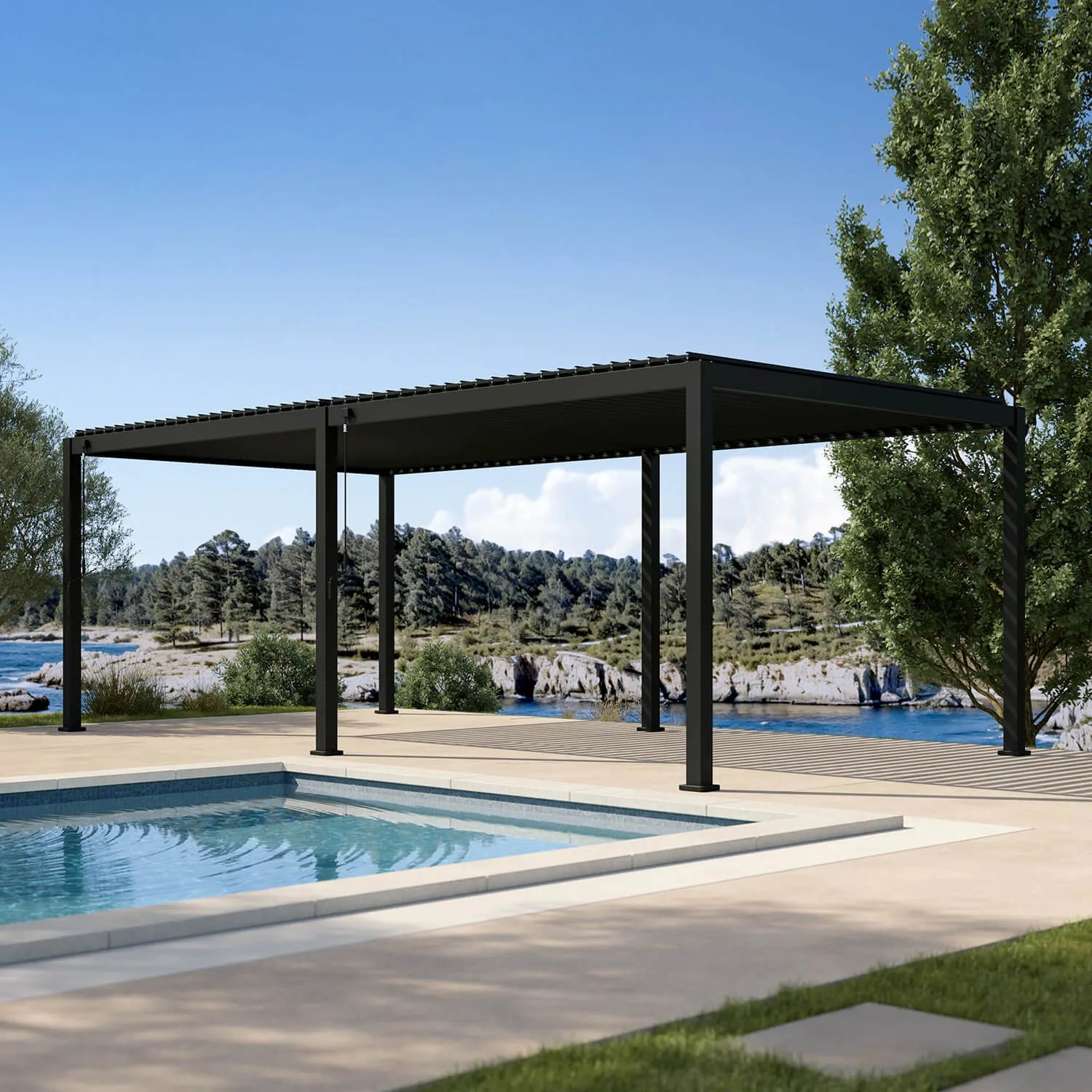
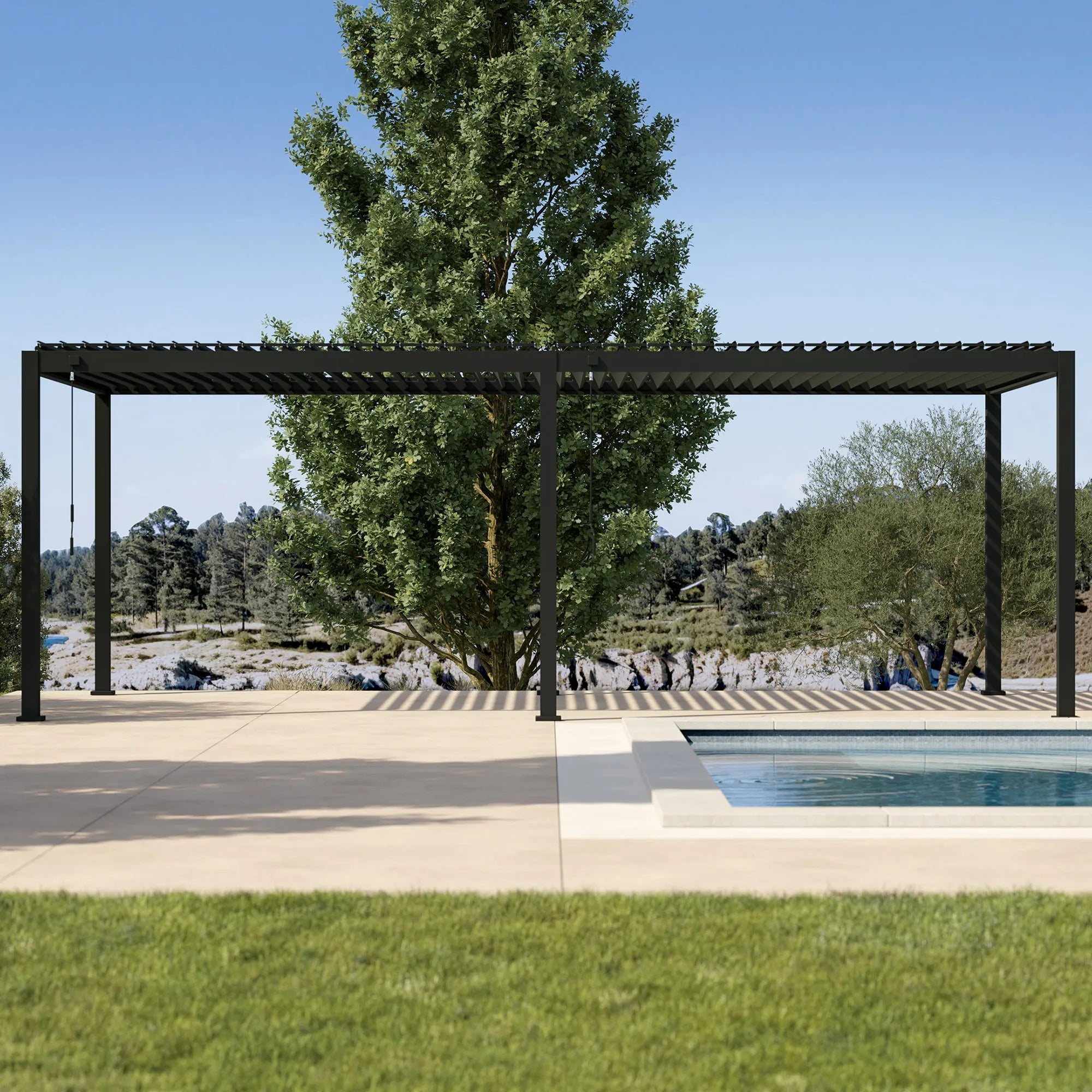
Mirador pergolas offer manual or remote-controlled louvered roofs, allowing you to choose how you operate the system. Their roof and drainage design provides shade on sunny days and directs rainwater away when the louvers are closed.
Best For
Patios where you want to switch between sunlight, shade, and overhead rain shelter without installing a permanently closed roof.
What to Consider
Rotating louvers adjust the roof openings; they do not necessarily retract the entire roof. If an unobstructed opening is your priority, compare the mechanism carefully.
Keep drainage channels clear and follow the care and operating instructions for the specific model. An open-sided pergola can still admit wind-driven rain from the sides.


Glass or Polycarbonate Roof
Glass and polycarbonate roofs suit homeowners who want overhead rain shelter while keeping the space bright.
Glass Roof
Glass creates a clear, visually open roof that can complement a modern patio or garden. It allows daylight through while providing fixed overhead coverage when installed as a complete roofing system.
A clear roof may also admit substantial sunlight and heat. If your patio receives strong afternoon sun, consider shading or glazing options rather than assuming a transparent roof will keep the area cool.
Glass needs a suitable supporting structure and regular cleaning to maintain its appearance.
Polycarbonate Roof
Polycarbonate provides a lighter alternative to glass. Panels are available with different levels of transparency, tint, and light diffusion.
Check the specifications of the selected panel for UV protection and solar performance. Blocking UV does not automatically eliminate glare or reduce all heat from sunlight.
As with glass, rain protection depends on the complete installation, including panel joints, roof slope, and drainage.
Best For
Patios where retaining daylight is more important than opening the roof.
What to Consider
Compare clear, tinted, and diffused finishes. Check how the roof will affect both outdoor comfort and daylight entering nearby rooms.
Classic Wooden Slat Roof
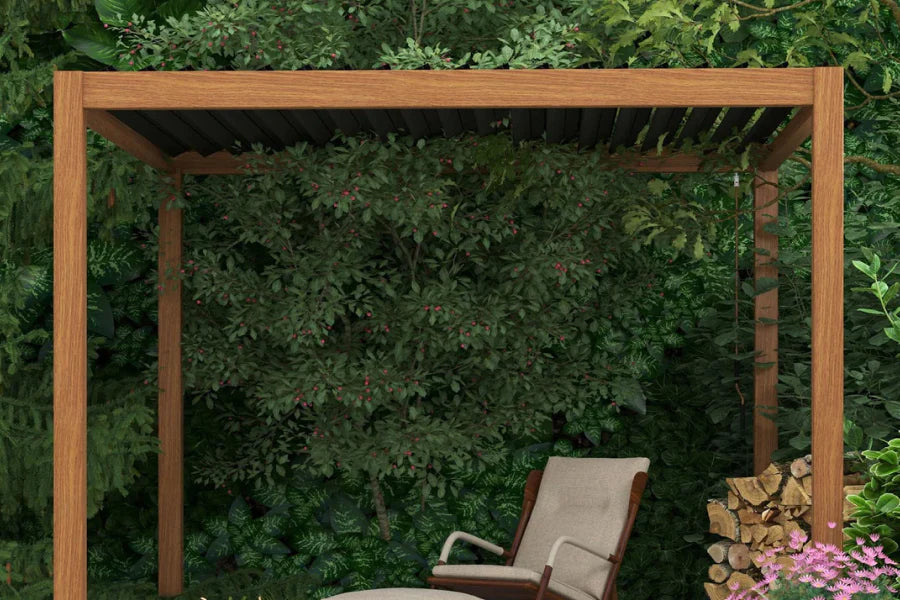
A wooden slat or crossbeam roof brings warmth and natural texture to a garden. Cedar or pine can complement planting, timber decking, and outdoor furniture.
The spacing between the slats changes the effect. Wider gaps admit more sunlight, while closer spacing creates more shade. The beams also provide a framework for suitable climbing plants.
This is an open roof design rather than a continuous waterproof covering. Rain passes through the gaps, so it is best suited to spaces where filtered shade and appearance are the priorities.
Best For
Traditional gardens, rustic patios, and outdoor seating areas where rain shelter is not essential.
What to Consider
Wood requires care appropriate to its species and finish. If you want a solid roof above the timber framework, treat that as a separate roofing project rather than assuming the slats will keep the area dry.
Retractable Canopy Roof
A retractable canopy uses outdoor fabric that extends or slides over the pergola and pulls back when you want more sunlight.
It can soften the appearance of a patio and provide shade without permanently covering the overhead framework. Different fabric colors also let you coordinate the canopy with furniture and surrounding finishes.
Rain protection varies. A shade fabric may let water through, while a water-resistant or waterproof canopy needs a suitable design to shed water rather than collect it.
Best For
Outdoor seating and dining areas where flexible shade and a fabric finish are the main priorities.
What to Consider
Check the fabric’s intended use, the system’s drainage design, and its operating limits. Follow the manufacturer’s instructions for retracting the canopy in unsuitable weather.
Fabric, tracks, and tensioning components need periodic care, and the fabric may eventually require replacement.

Solar Panel Roof
A solar pergola combines an outdoor structure with photovoltaic panels that generate electricity. It can be an appealing option where you have a suitable sunny location and want to use the roof area for more than shade.
Its energy output depends on the panel system, orientation, sunlight, and surrounding obstructions. Electricity savings should be assessed for the specific installation rather than assumed.
Solar panels also do not automatically form a watertight roof. If you need a dry seating area underneath, the design must address panel gaps, mounting details, and rainwater drainage.
Best For
Homeowners planning a purpose-designed solar structure with suitable sun exposure.
What to Consider
The supporting structure must be designed for the panels and mounting system. Electrical installation, local requirements, and the complete project cost also need to be assessed.
Do not assume solar panels can be added to an existing pergola without confirming structural and product compatibility.
Pergola Roof Comparison
|
Roof Idea |
Main Benefit |
Overhead Rain Protection |
Adjustable Opening |
Main Consideration |
|---|---|---|---|---|
|
Control sunlight, shade, and airflow |
Yes, with a suitable closing roof and drainage system |
Louvers rotate; full retraction depends on the design |
Moving components and drainage require care |
|
|
Glass or polycarbonate |
Retain daylight under fixed coverage |
Yes, with a correctly designed roofing installation |
Not in a standard fixed installation |
Sunlight, heat, panel specifications, and cleaning |
|
Wooden slats |
Natural appearance and filtered shade |
No, unless a separate weatherproof layer is added |
Usually fixed |
Wood maintenance and slat spacing |
|
Retractable canopy |
Flexible shade with a fabric finish |
Depends on the fabric and system |
Fabric extends and retracts |
Weather limits, drainage, and fabric replacement |
|
Solar panels |
Generate electricity while using roof space |
Only if the complete system is designed for it |
Usually fixed |
Sun exposure, structural support, and electrical installation |
How to Choose the Right Pergola Roof
For Adjustable Shade and Rain Shelter
Choose a purpose-designed louvered system if you want to change the amount of sunlight and close the roof for rain.
Mirador’s manual and remote-controlled options let you select the operating style that suits your patio. The E-Motion series combines remote-controlled louvers and LED lighting for convenient roof adjustment and evening use.
For Daylight Beneath a Fixed Roof
Consider glass or polycarbonate. Compare panel transparency and solar performance, especially if the pergola sits outside windows or patio doors.
For a Natural Garden Setting
Choose wooden slats if filtered shade, planting, and timber texture matter more than keeping rain out.
For a Roof You Can Pull Back
Consider a retractable canopy. Confirm whether the system is intended for shade alone or also for rain protection.
For Electricity Generation
Consider a solar pergola as a complete project, with structural, roofing, and electrical requirements assessed together.
Before Adding a Roof to an Existing Pergola
These ideas include both complete pergola systems and roof coverings. They are not interchangeable accessories for every existing structure.
Before adding or replacing a roof, confirm:
- Whether the existing frame can support the proposed covering.
- How water will drain away from the roof and seating area.
- Whether the modification is compatible with the pergola’s design and warranty.
- Whether local approvals or professional installation are required.
A decorative shade covering and a permanent weatherproof roof have different installation requirements.

Conclusion
The best pergola roof is the one that matches how you want to use your outdoor space.
Choose adjustable louvers for changing shade and overhead coverage, glass or polycarbonate for daylight beneath a fixed roof, wooden slats for a natural open-air setting, a retractable canopy for flexible fabric shade, or a purpose-designed solar system for electricity generation.
Explore Mirador pergolas to compare manual and remote-controlled louvered options for your backyard.