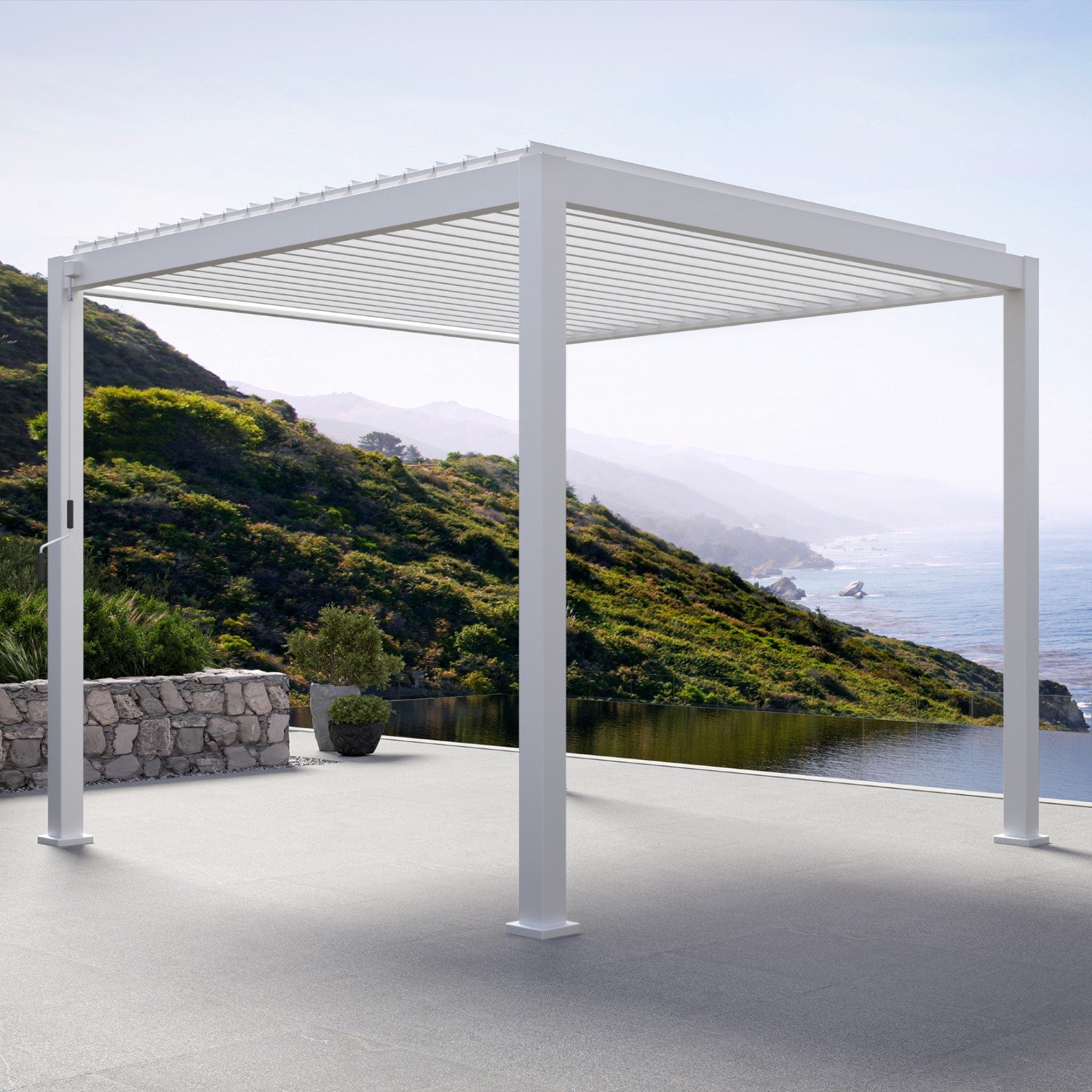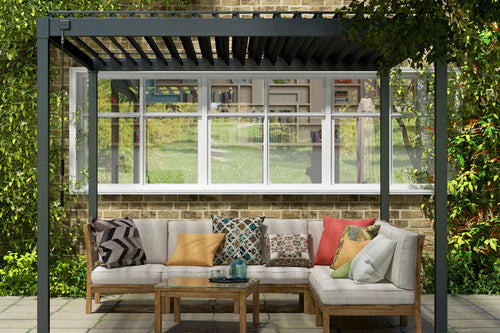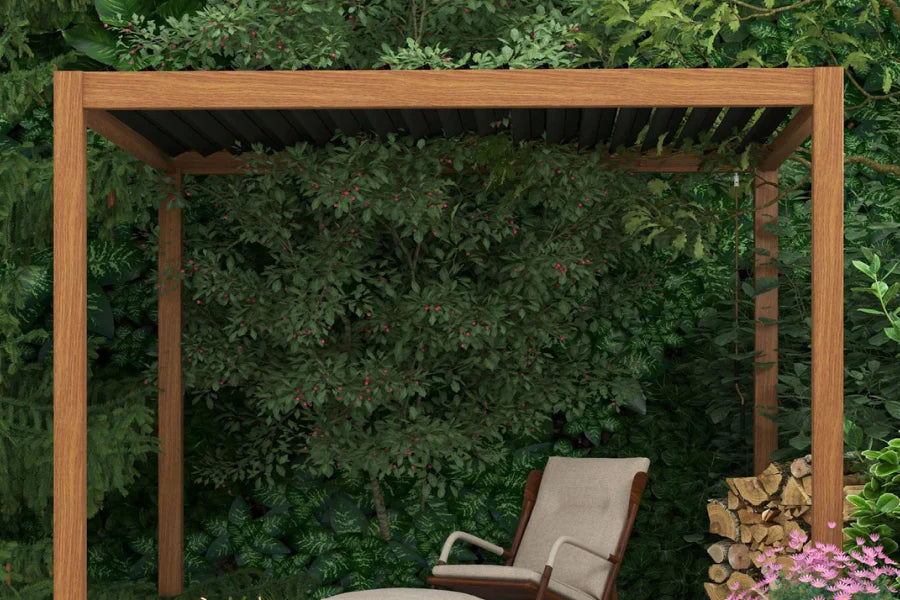

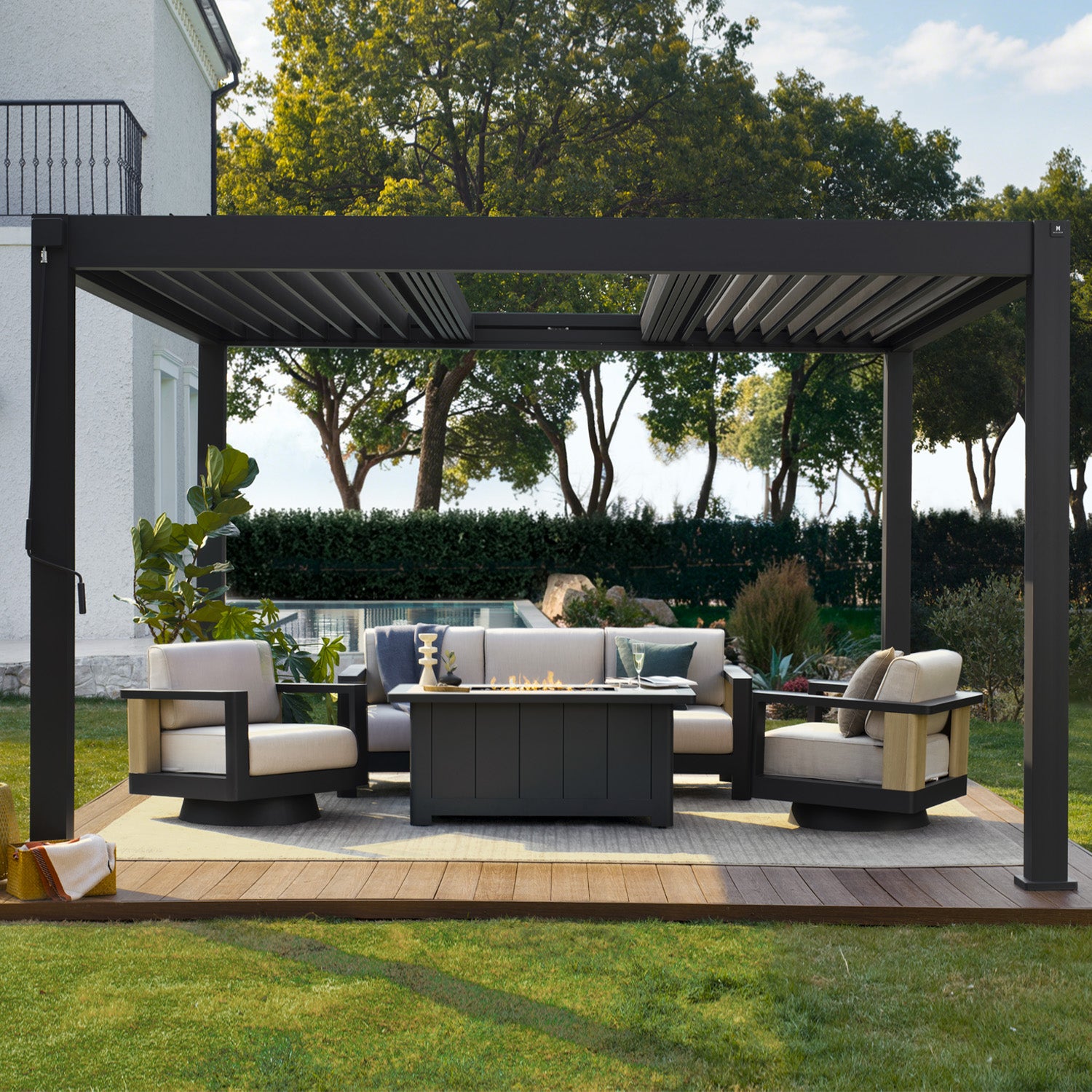
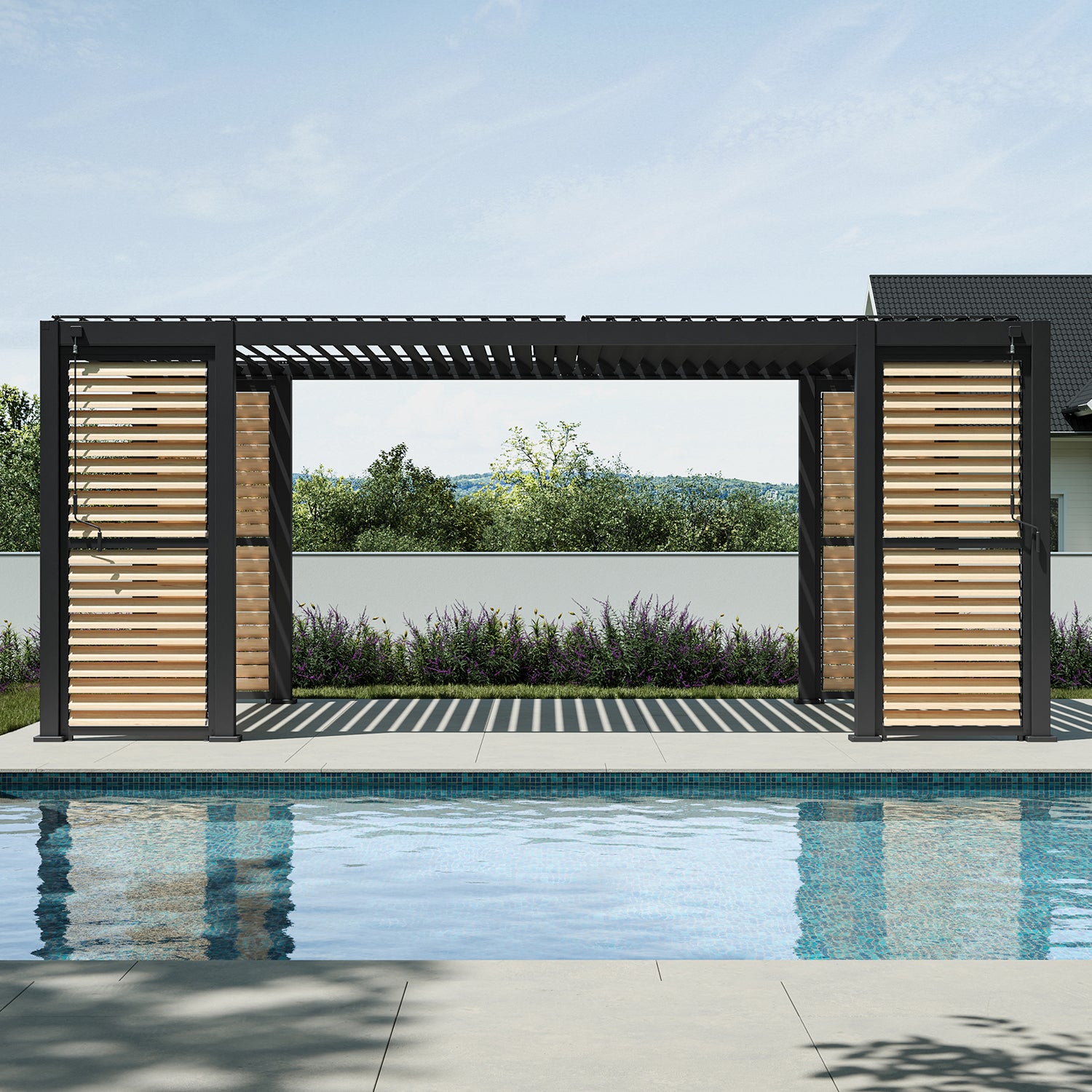
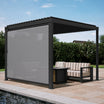

If you are planning a backyard upgrade, you have probably run into both words: pergola and trellis. They can look alike in photos, but they are not the same thing.
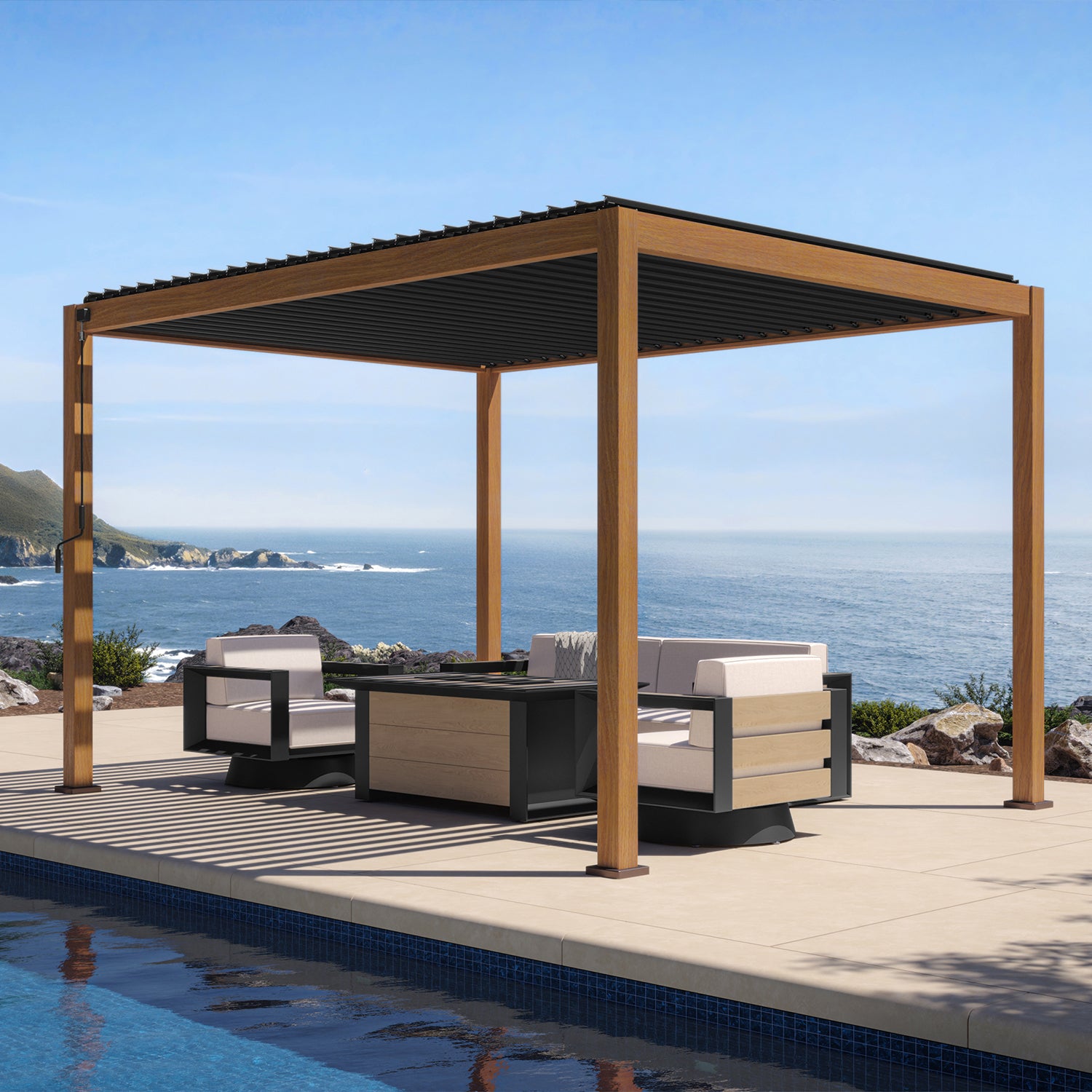
A pergola is what you walk into. Posts hold up beams and some kind of roof, and there is room underneath for a table, chairs, or a sofa. A trellis is the skinny frame you put against a wall for vines and roses. It dresses up a plain wall or marks a corner, but it does not make space for furniture.
Here is the simple rule. If you want to sit under it, get a pergola. If you want a plant to climb up it, get a trellis.
Pergola vs. Trellis: Quick Comparison
|
Feature |
Pergola |
Trellis |
|
Main purpose |
Create an outdoor living zone |
Support and display climbing plants |
|
Typical form |
Posts with an overhead framework |
Flat or narrow lattice frame |
|
Usable space |
Room for people and furniture |
Little or no space beneath it |
|
Shade |
Partial shade or adjustable coverage |
Limited until plants fill in |
|
Placement |
Patio deck, poolside, or yard |
Wall, fence bed, or garden edge |
|
Project scope |
Larger structure with anchoring needs |
Usually a smaller garden project |
|
Plant role |
Optional and design dependent |
Usually the main reason for the structure |
What Is a Pergola
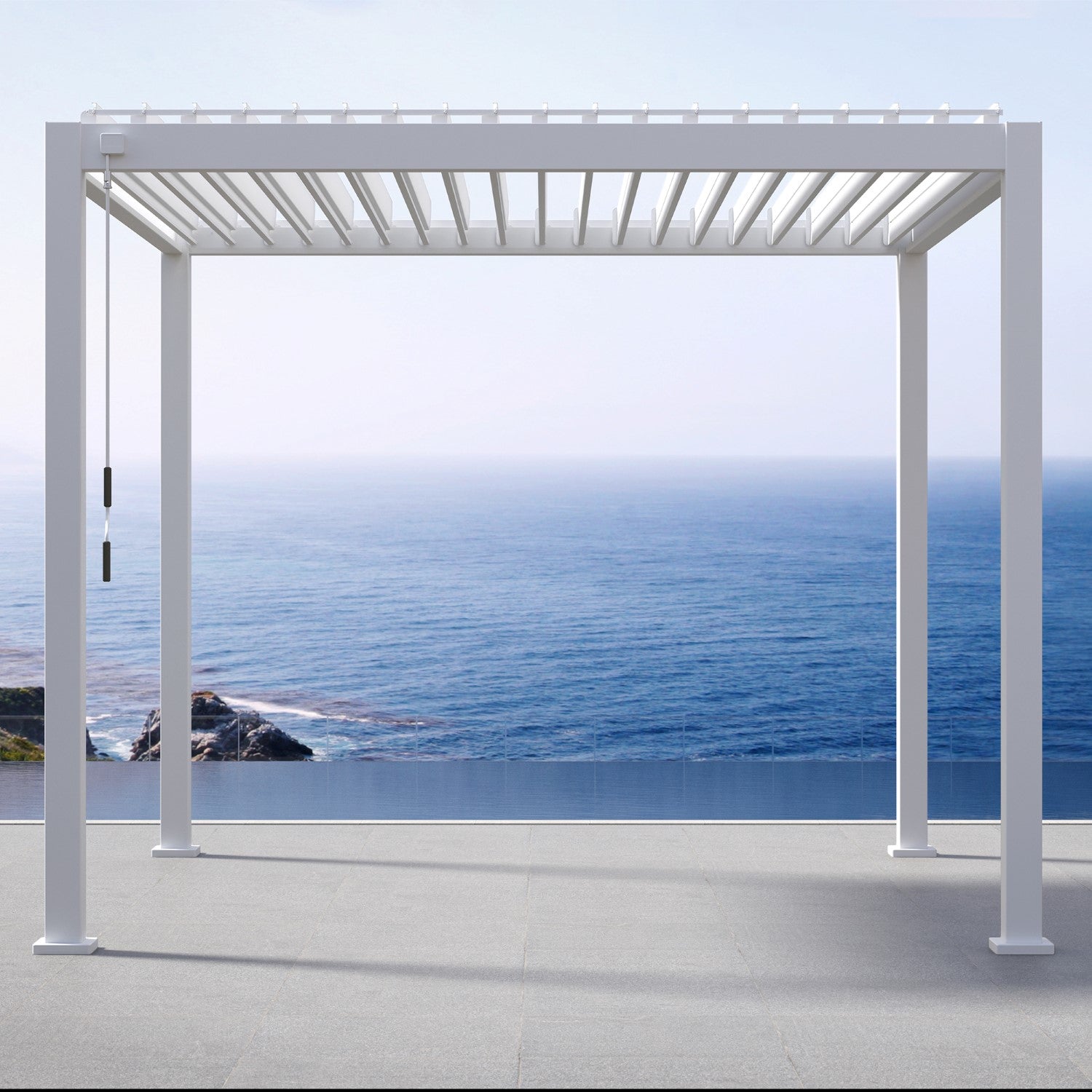
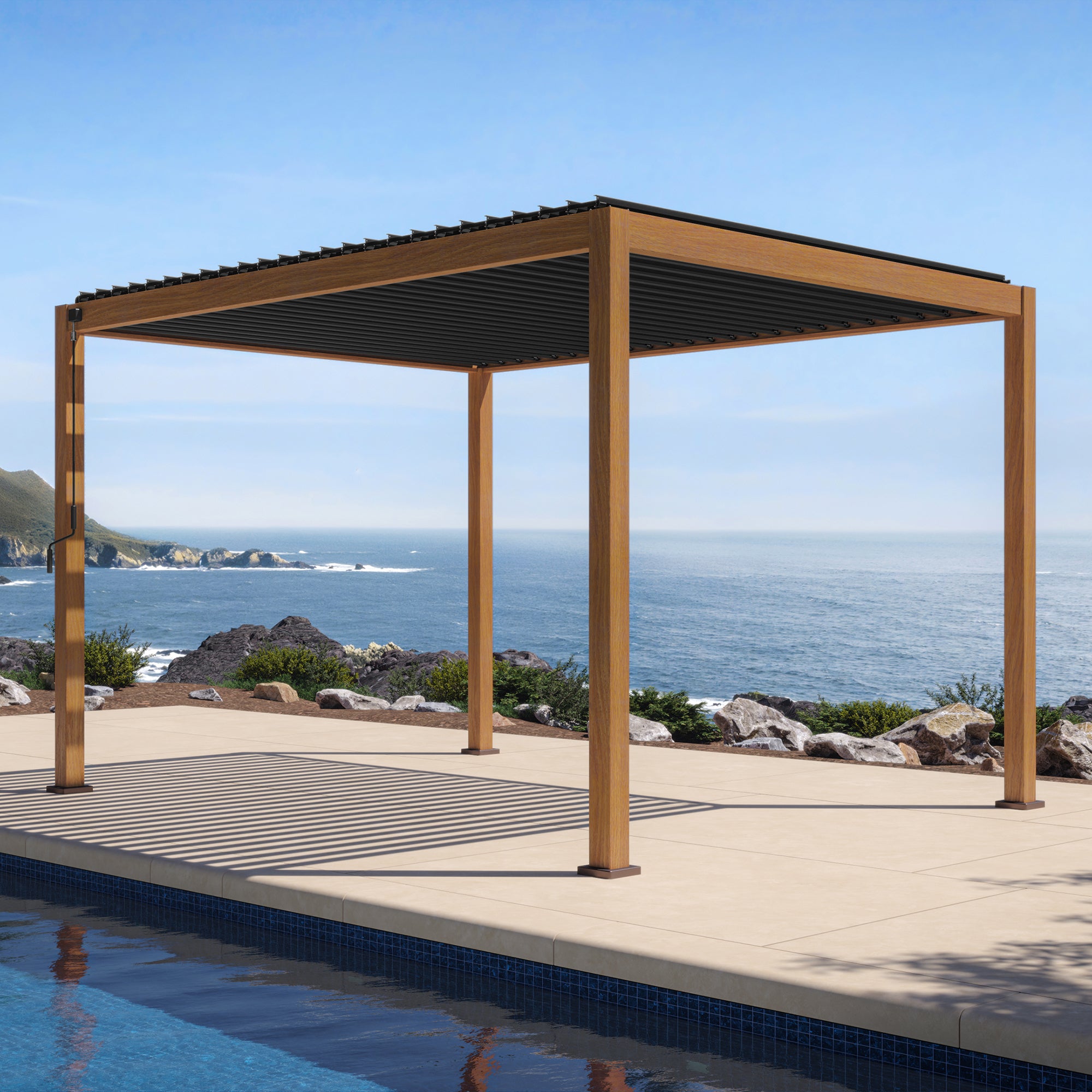
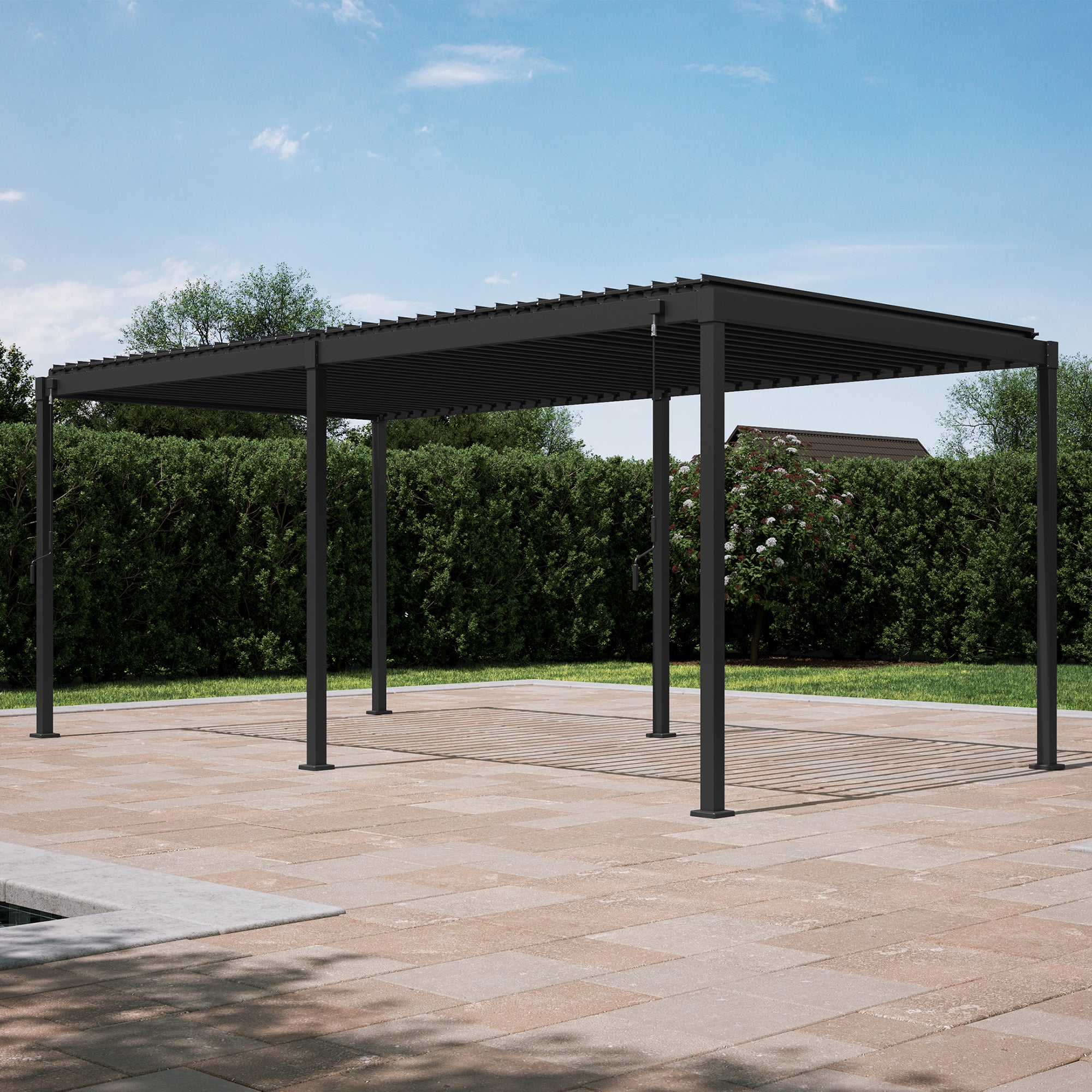
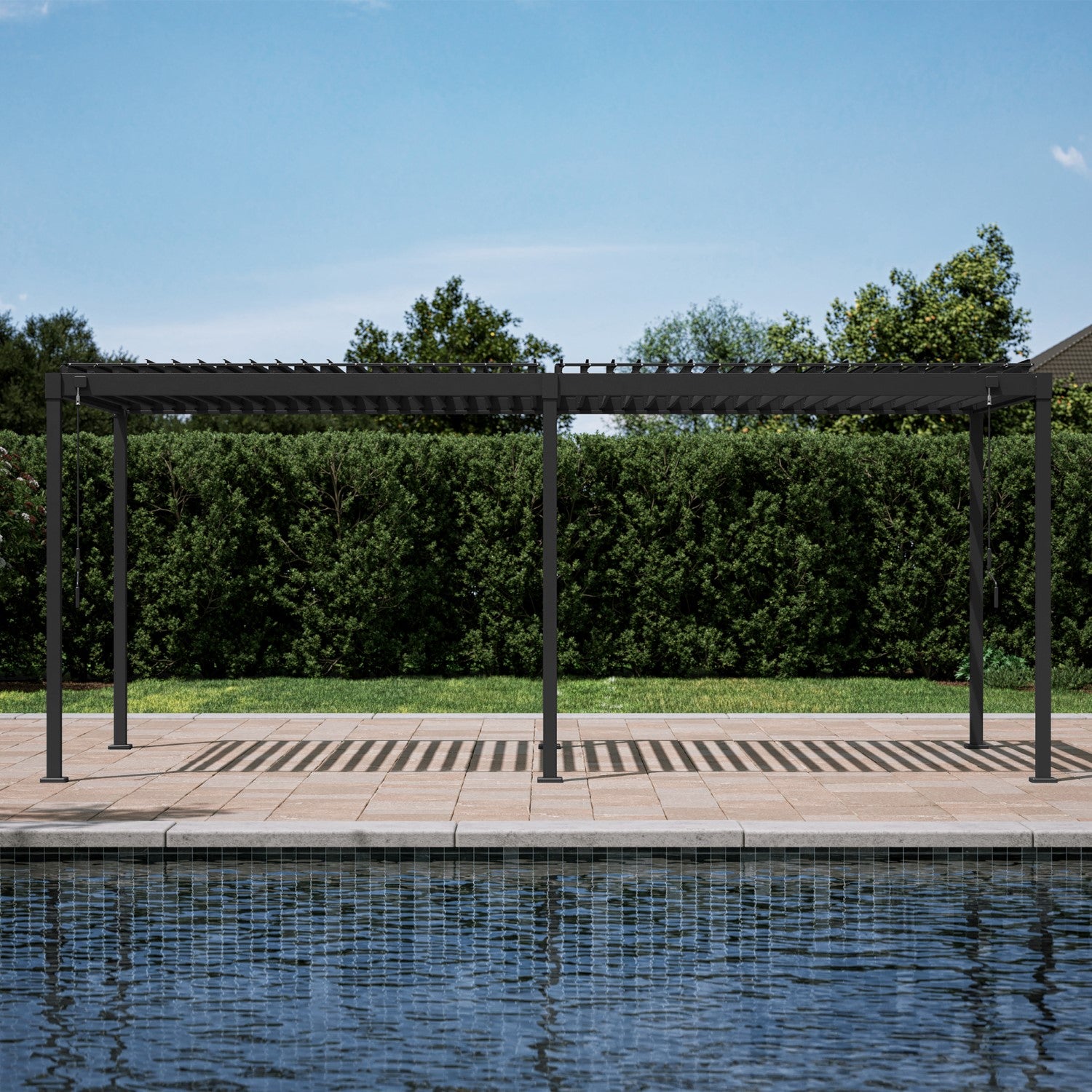
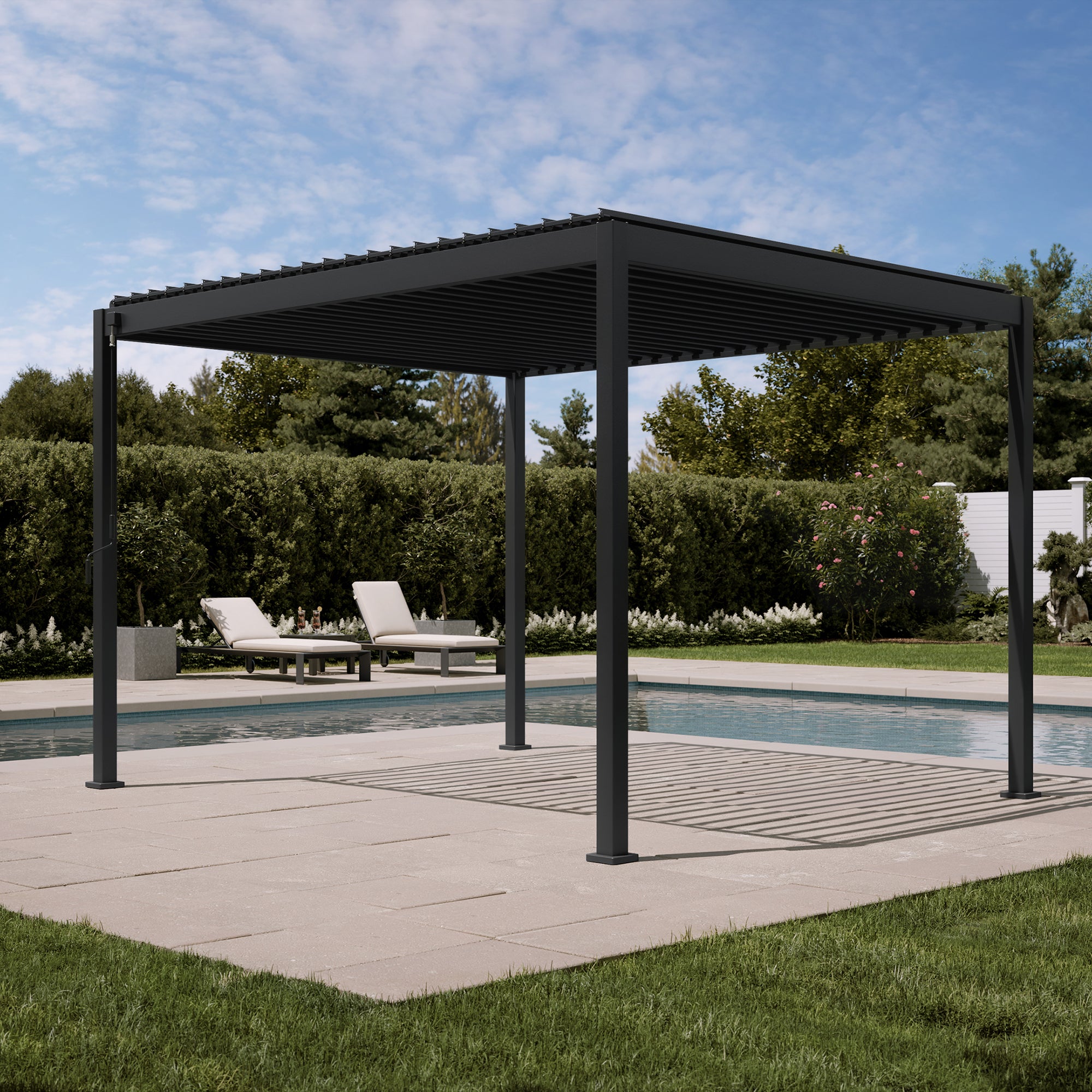
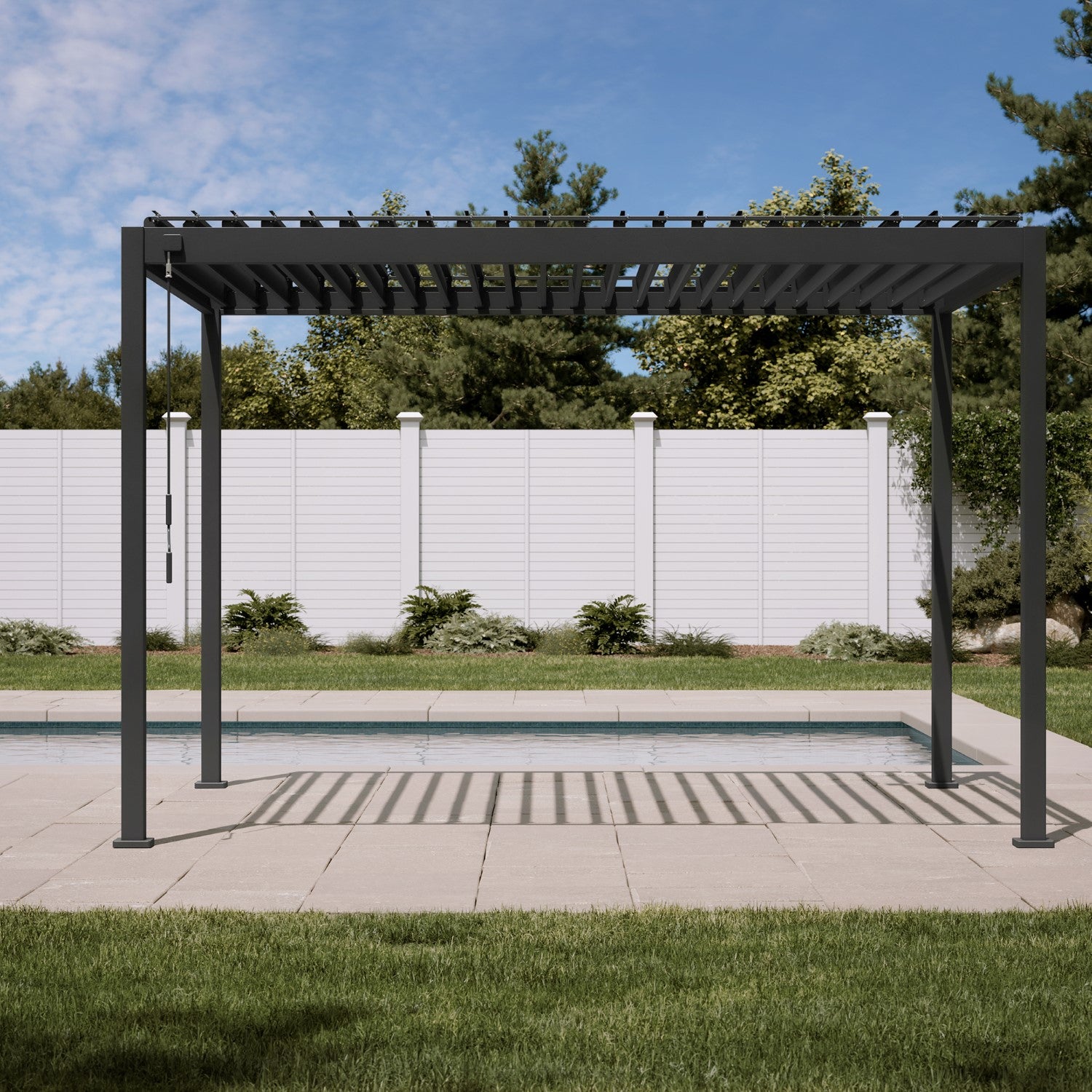
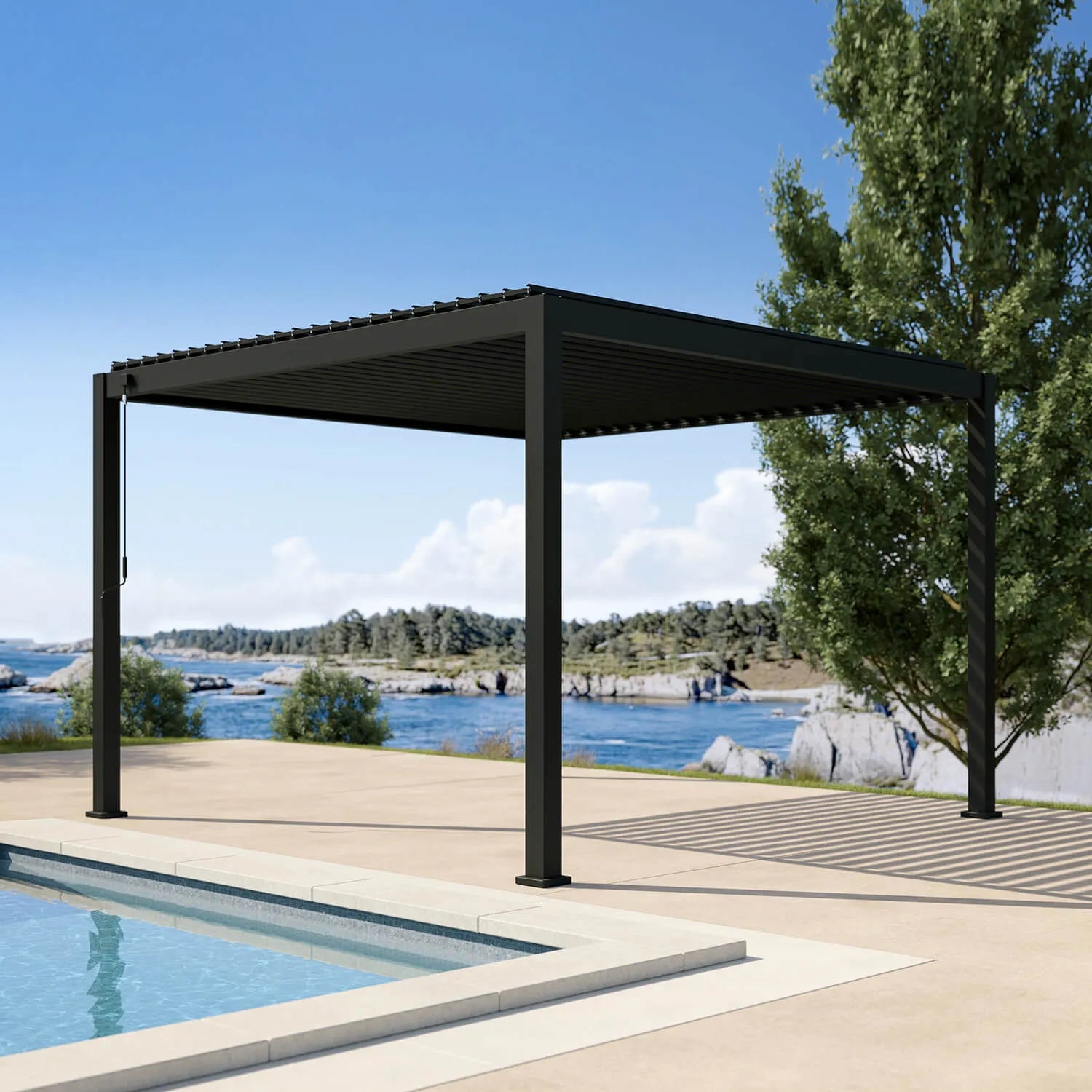
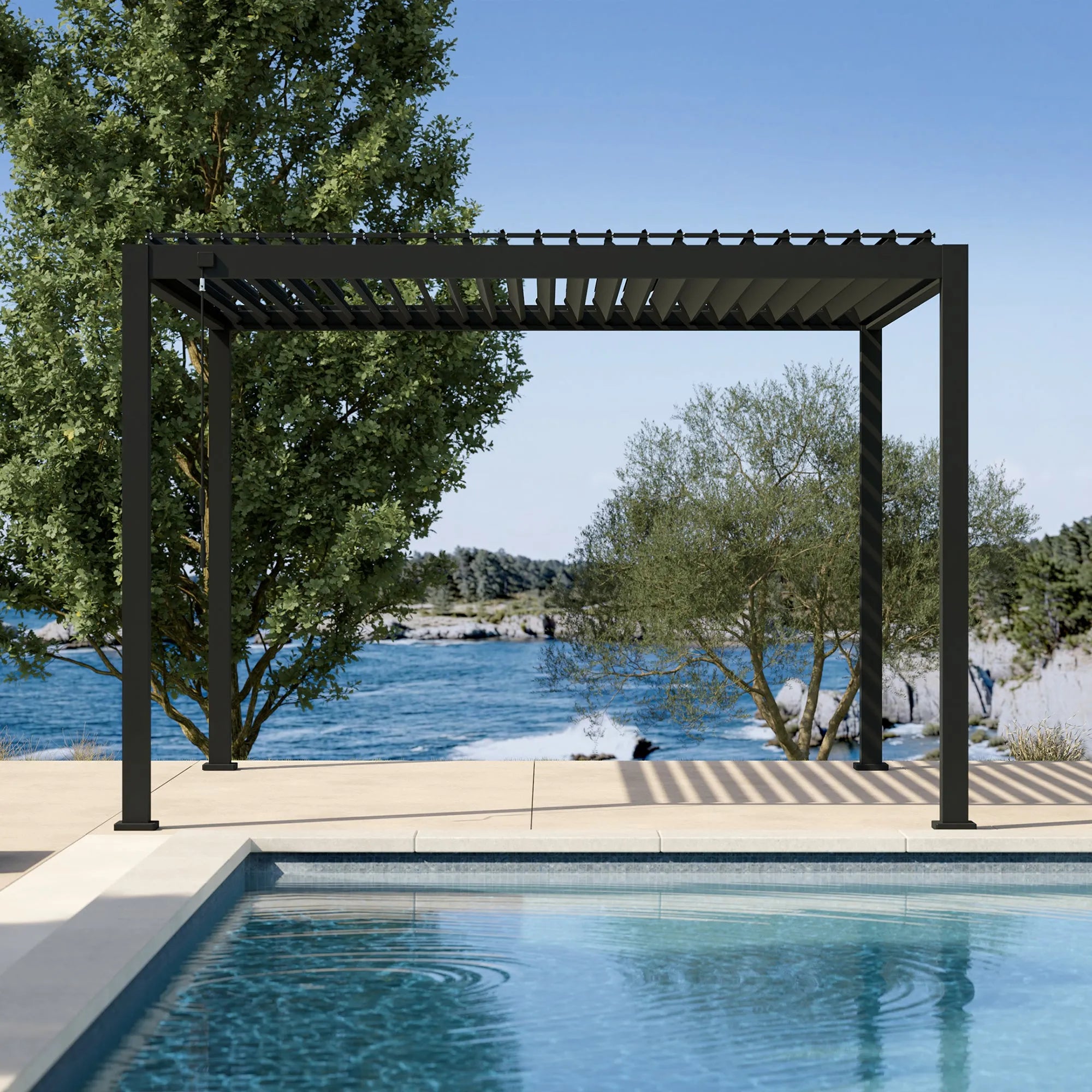
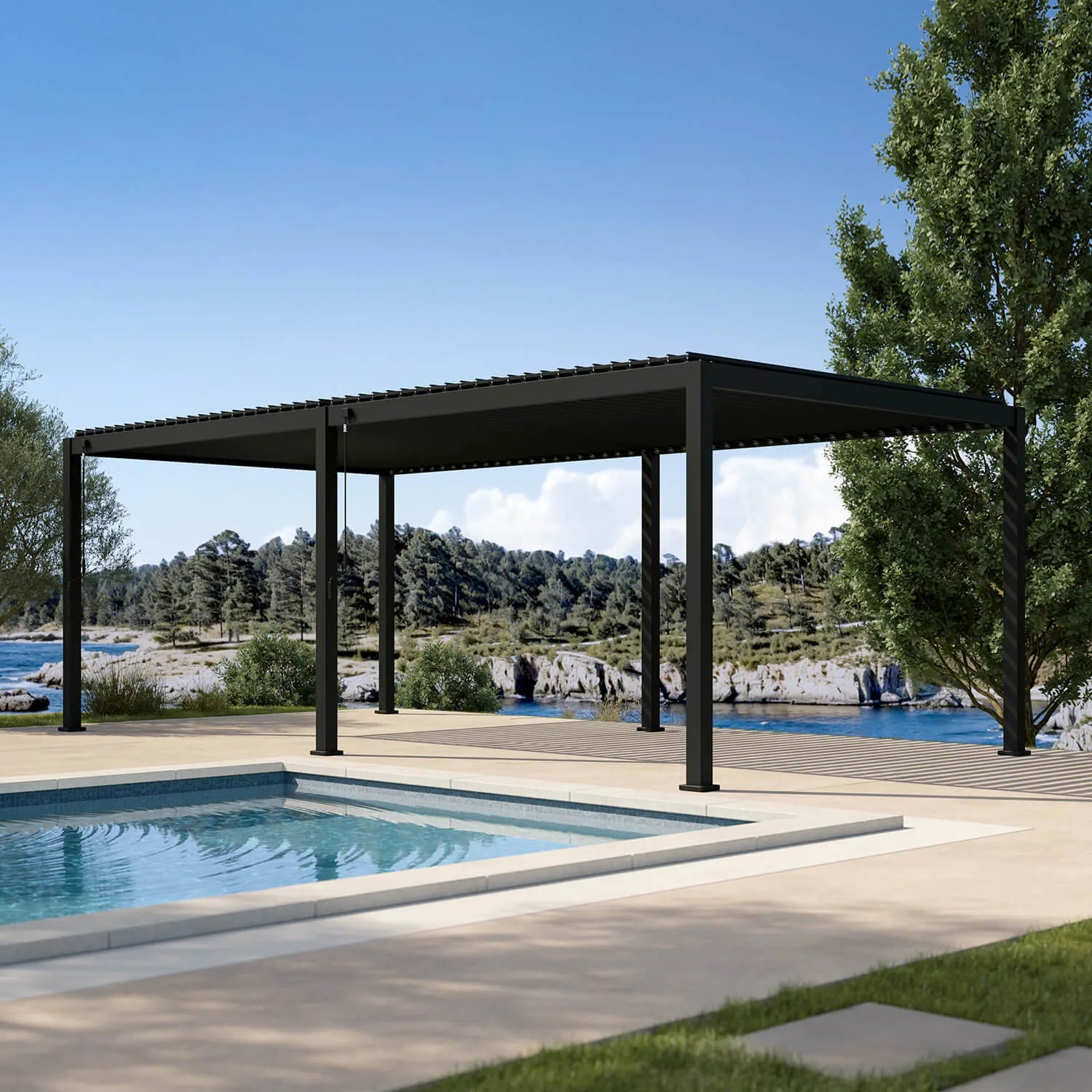
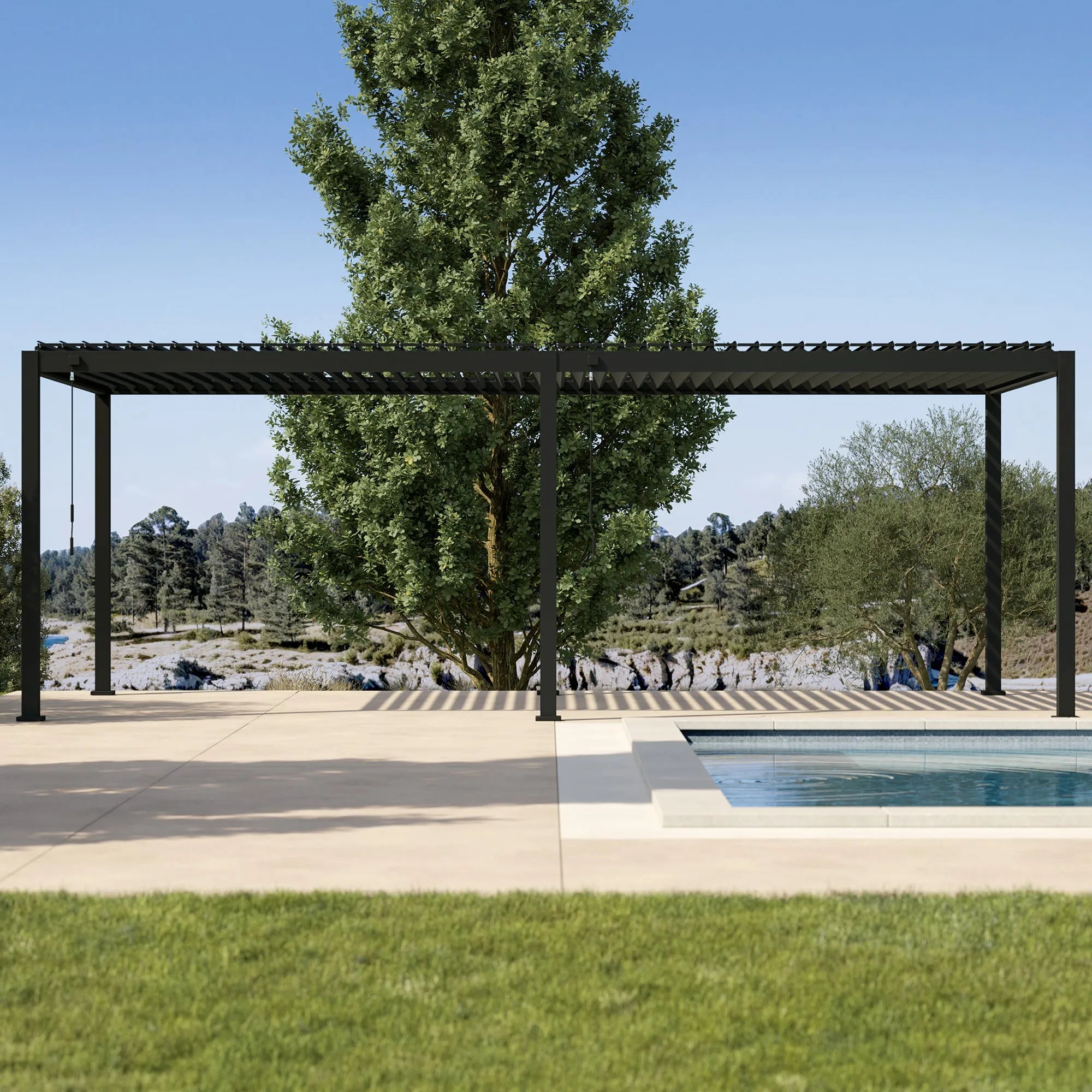
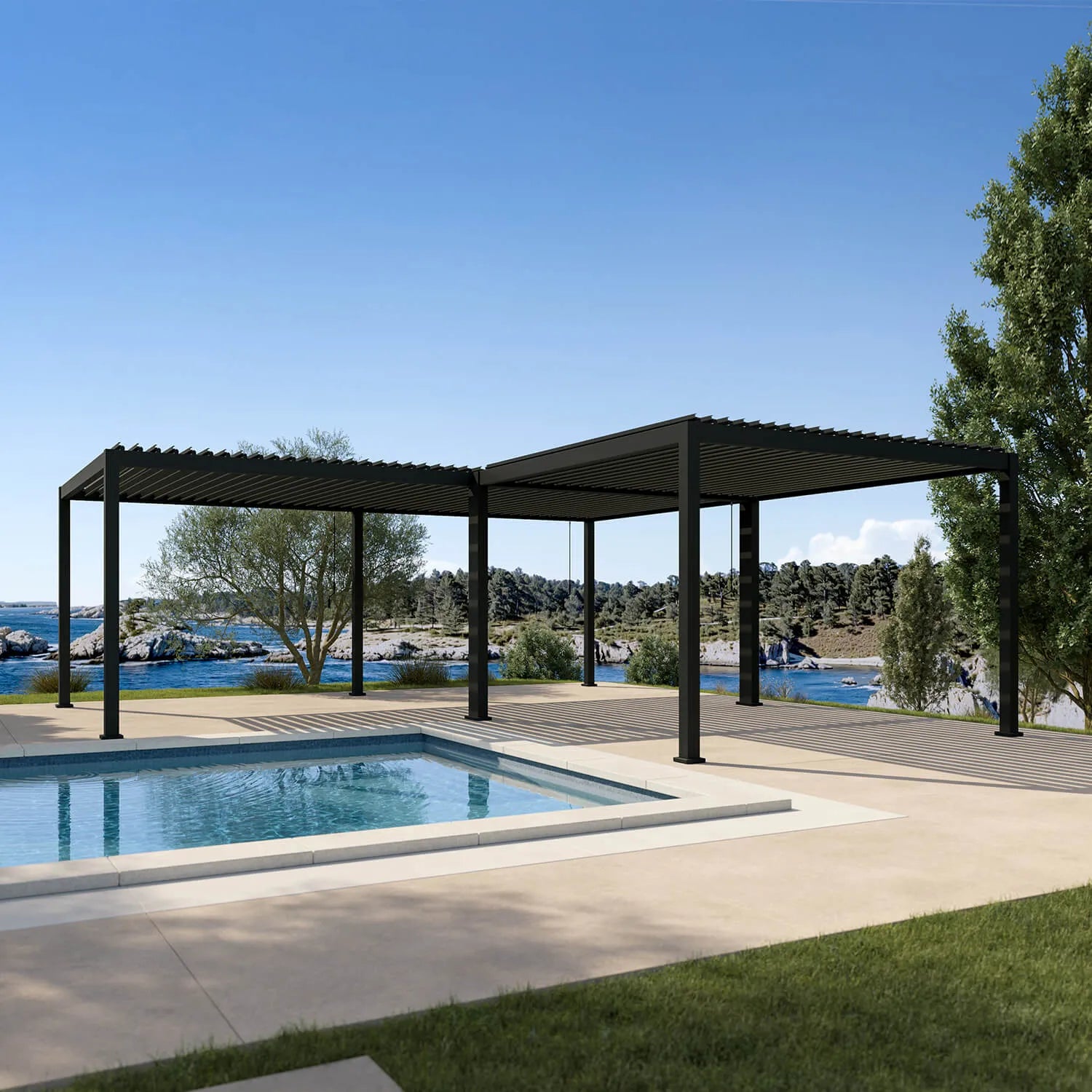
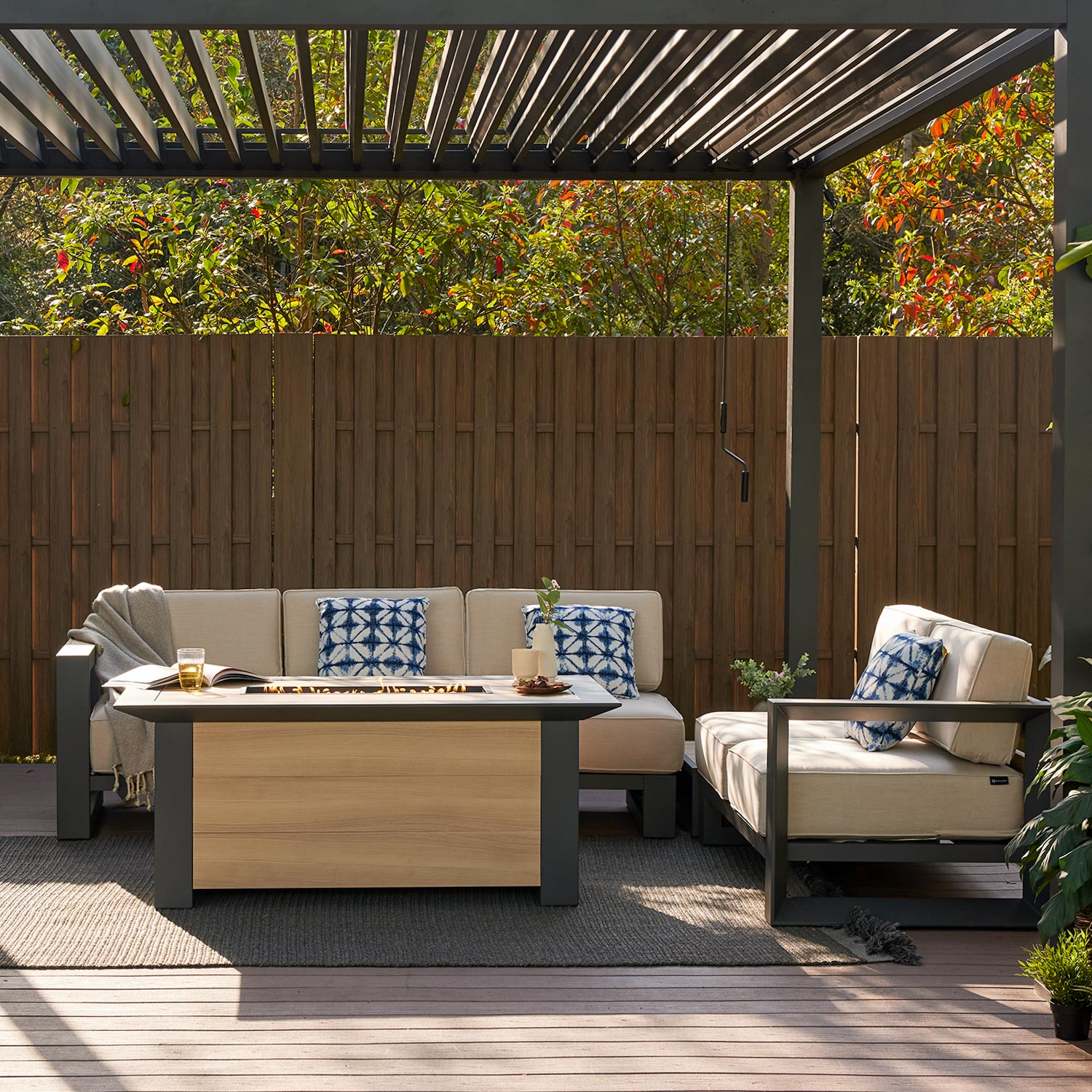
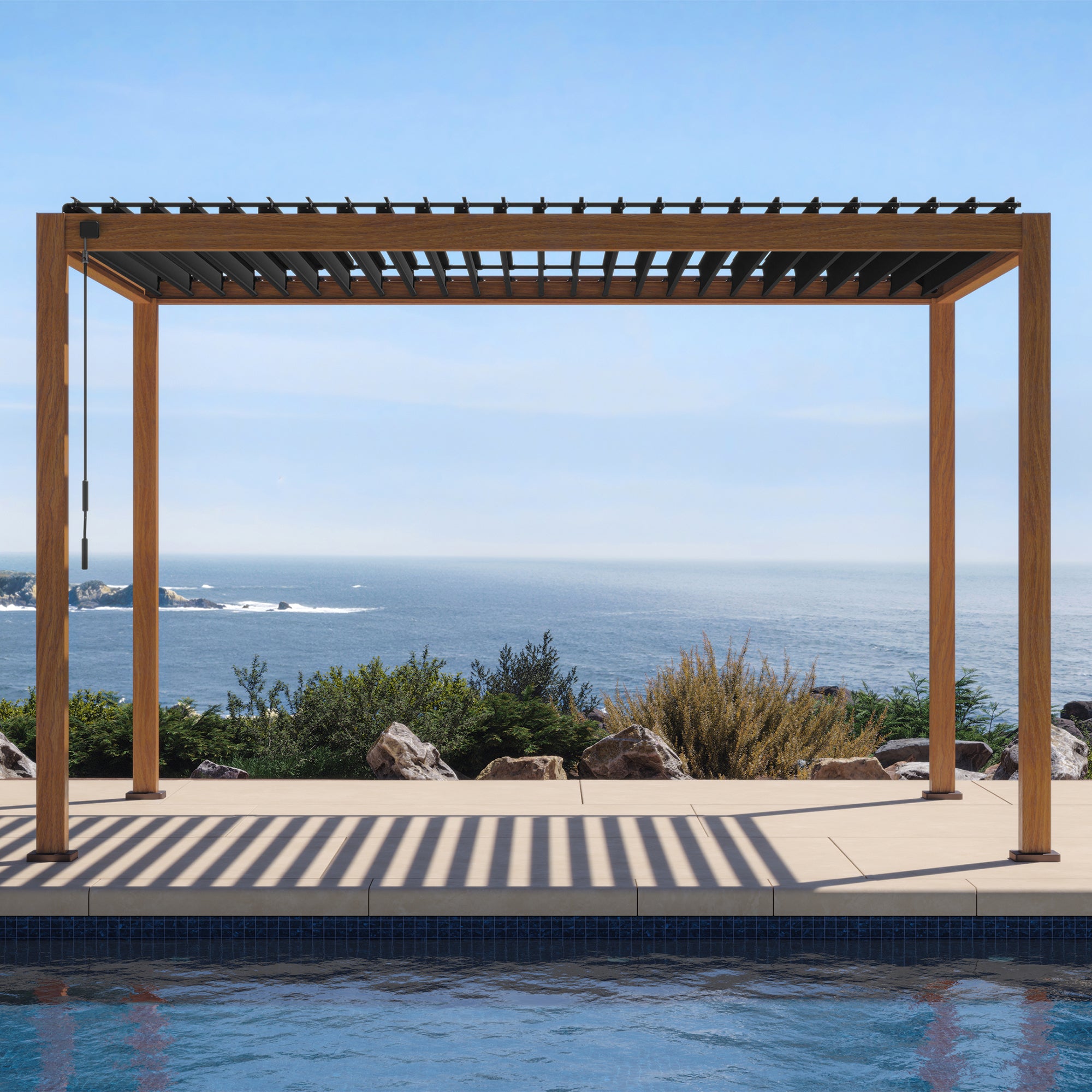
A pergola uses vertical posts or columns to support an overhead framework. Traditional pergolas have spaced beams or lattice that filter sunlight. Modern versions may use rotating louvers that open for light and airflow, angle for shade, and close for more overhead coverage when the model allows it. The sides usually stay open.
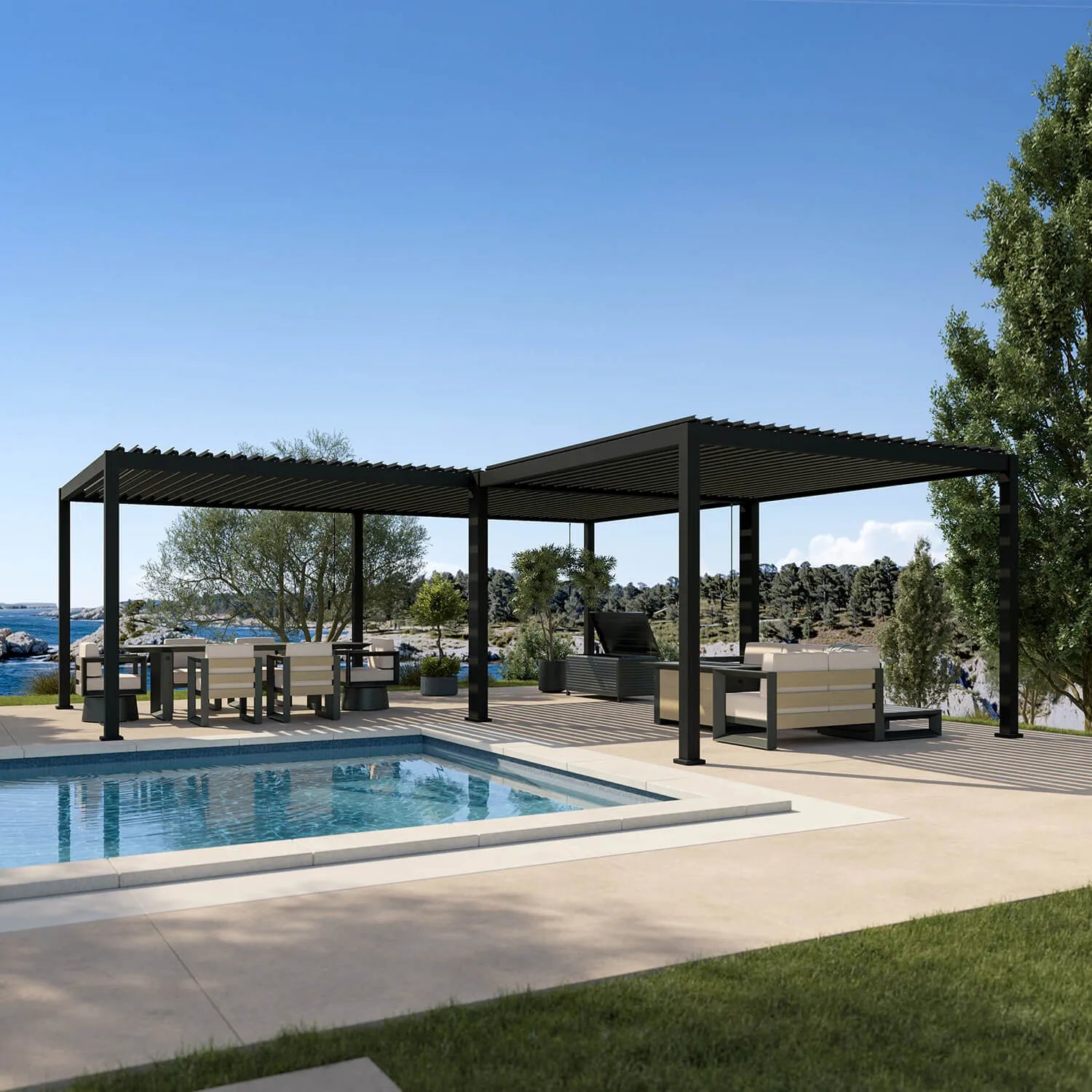
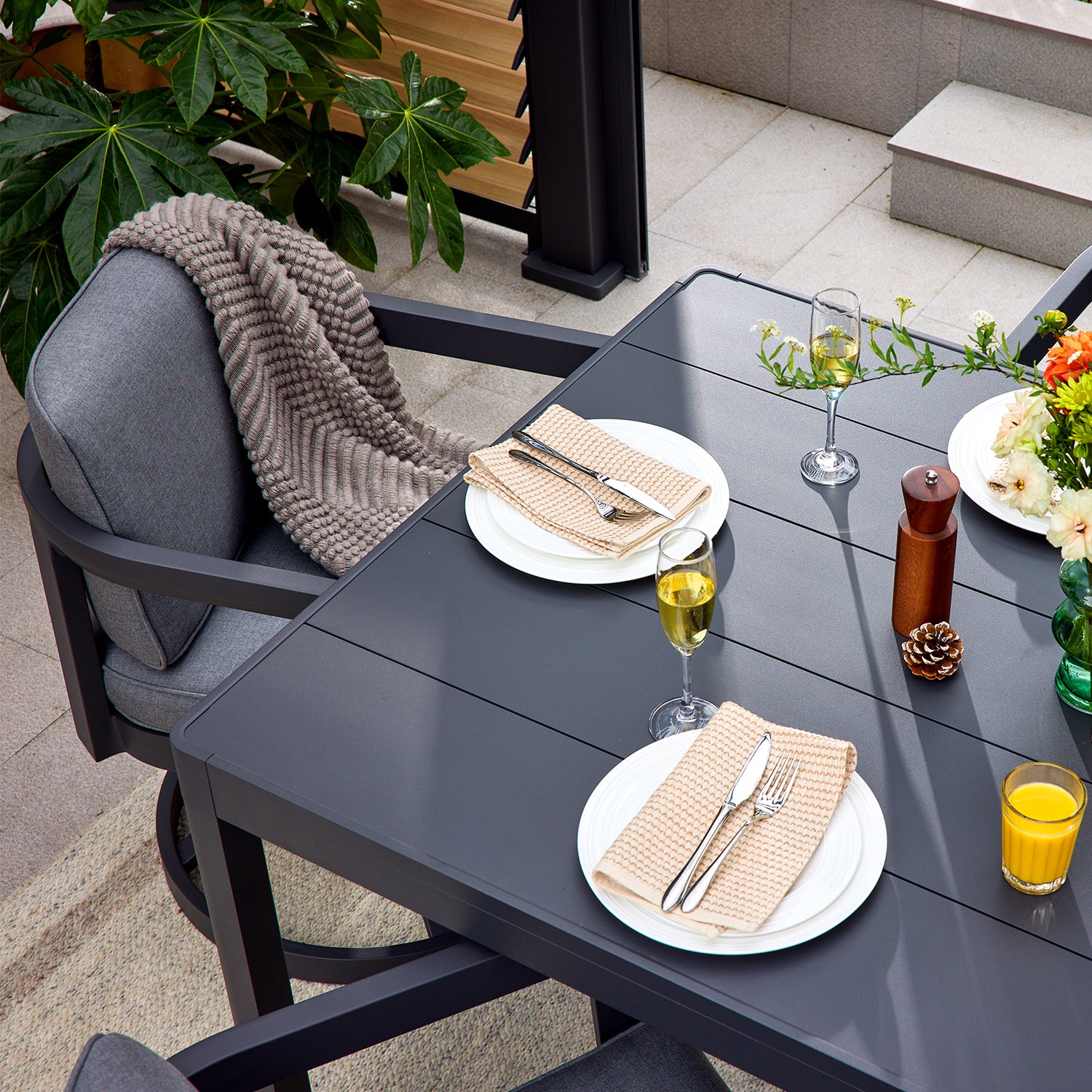
The key is scale. A pergola defines an area people can enter and use. It can organize a dining patio, frame a sofa group, mark a path, or create a transition between the house and garden. Because the structure carries an overhead load, the base, fasteners, anchoring, drainage, wind exposure, and local rules deserve careful attention.
If you want a broader definition, read what a pergola is and how homeowners use one.

What Is a Trellis
A trellis is a framework of wood, metal, wire, or another weather-suitable material that gives vines and climbing plants something to grip or wrap around. It is often flat and fixed to a wall or fence. A freestanding trellis may have posts, but it still reads as a vertical panel rather than an outdoor room.
Gardeners use trellises to lift plants off the ground, add height to a planting bed, soften a blank surface, or create a light privacy screen. The University of Florida IFAS Extension describes a trellis as a small freestanding or wall-mounted framework used to support, train, and display climbing plants. That definition is useful because it puts the plant first.
See the UF IFAS garden structure guide for the terminology behind trellises arbors and pergolas.
Seven Key Differences Between a Pergola and Trellis
Purpose and Daily Use
A pergola is usually chosen for people. It creates a destination for meals, reading, conversation, or time by the pool. A trellis is usually chosen for plants. It can also screen a view or divide a garden, but it does not normally hold a complete seating area.
Size and Footprint
Pergolas need a measured footprint, clear post locations, headroom, and space for movement below the roof. Trellises are much slimmer. A wall-mounted panel may use no floor space at all, while a freestanding one only needs enough room for posts, roots, and future plant growth.
Roof Shade and Rain
A traditional pergola provides filtered shade through overhead beams. A louvered model offers more control and may direct water through built-in drainage when closed. A trellis has no true roof. Its shade depends on the plant, the season, and how densely the foliage grows. Neither choice should be treated as a sealed indoor room.
Placement in the Yard
Pergolas make sense over patios, decks, outdoor kitchens, lounge zones, and broad walkways. Trellises fit garden beds, fence lines, narrow side yards, and walls. If the problem is a hot dining table, think pergola. If the problem is an empty fence behind roses, think trellis.
Installation and Structural Work
A pergola is the bigger project. The structure must be square, level, and anchored to a suitable base. Attached models may involve the house. Electrical features add another layer. A trellis is often simpler, but it still needs stable supports and enough strength for the mature weight of wet foliage and wind-loaded vines.
Plants and Ongoing Care
Plants are central to a trellis. Choose a frame that suits the vine's climbing habit, mature weight, and pruning needs. Plants are optional on a pergola. Before training one onto a modern metal or louvered system, consider sap, trapped moisture, thorns, access to gutters, and moving roof parts. A separate trellis beside the pergola is often easier to manage.
Budget and Long Term Commitment
A trellis usually uses fewer materials and can be installed in a small area, so it is commonly the lighter commitment. A pergola costs more because it is larger and has structural, foundation, delivery, and installation needs. Compare the whole project rather than the frame alone. Include site preparation, anchors, permits, furniture, lighting, and maintenance.

How to Choose Between a Pergola and Trellis
Start with one sentence about what you want to change. If you want a comfortable place for four people to eat outside, a pergola fits the job. If you want clematis to cover a plain fence, a trellis is enough. When privacy is the goal, mark the sight line first. A planted trellis can screen one narrow view, while a pergola with compatible side screens can shape a larger sitting area.
Next, test the scale in the yard. Mark a pergola's posts and roof outline with tape or stakes, then place the real furniture inside. For a trellis, allow space for roots, airflow, pruning, and mature stems. Check what sits behind the proposed location before digging or fastening anything to a wall.
If a pergola is the better fit, compare roof types and footprints in the Mirador pergola collection. If you are still sorting out garden structure names, the arbor vs pergola guide explains another common mix-up.
Can a Pergola and Trellis Work Together
Yes. In many yards, the best plan uses both. A pergola can define the main dining or lounge zone. A separate trellis can support vines along one edge, soften a fence, or screen a neighbor's window. Repeating one material or color helps the two structures feel related without forcing plants onto the pergola itself.
Keep enough space between them for cleaning, pruning, drainage, and airflow. Avoid placing aggressive vines where they can reach moving louvers, electrical parts, gutters, or the house. The garden will keep growing after the construction work is finished, so plan for its mature shape rather than the first season.
The Right Structure Starts With the Right Job
The pergola vs trellis choice becomes easy once you stop comparing their outlines and jobs. Pick a pergola when you want an outdoor area people can enter, furnish, and use. Pick a trellis when you want to guide plants upward, soften a surface, or create a narrow green screen.
You do not have to choose only one. A well-placed trellis can bring flowers and privacy to the edge of a pergola-covered patio. Give each structure enough room, choose materials that suit your climate, and plan for anchoring and mature plant growth before you buy.
Frequently Asked Questions
Is a pergola the same as a trellis?
No. A pergola is generally a larger structure with posts and an overhead framework that creates usable space beneath it. A trellis is usually a flat or narrow framework designed to support climbing plants.
Can a trellis provide shade?
A trellis can create some shade after vines fill in, especially when it is angled or used overhead. A typical vertical trellis does not provide dependable shade for a patio or dining area.
Can climbing plants grow on a pergola?
Often, but confirm the structure and finish can handle the plant's mature weight and maintenance. Keep vines away from moving louvers, drainage channels, wiring, and areas that need regular access.
Do pergolas and trellises need permits?
Rules vary by location. A large, attached, or permanently anchored pergola is more likely to need review than a small trellis, but setbacks, utilities, height, footings, and homeowner association rules can affect either project.