
People mix up pergola and pavilion all the time. And honestly, it doesn't help that contractors and big-box stores sometimes use the terms interchangeably. But they're not the same thing. Not even close. The difference comes down to one thing: the roof. And that one choice changes everything. Your budget, your permits, how often you use it, and whether your furniture survives the next storm.
Let's break it down so you can figure out which one belongs in your backyard.
What Is a Pergola?
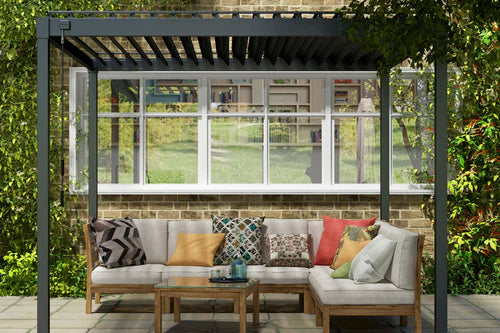
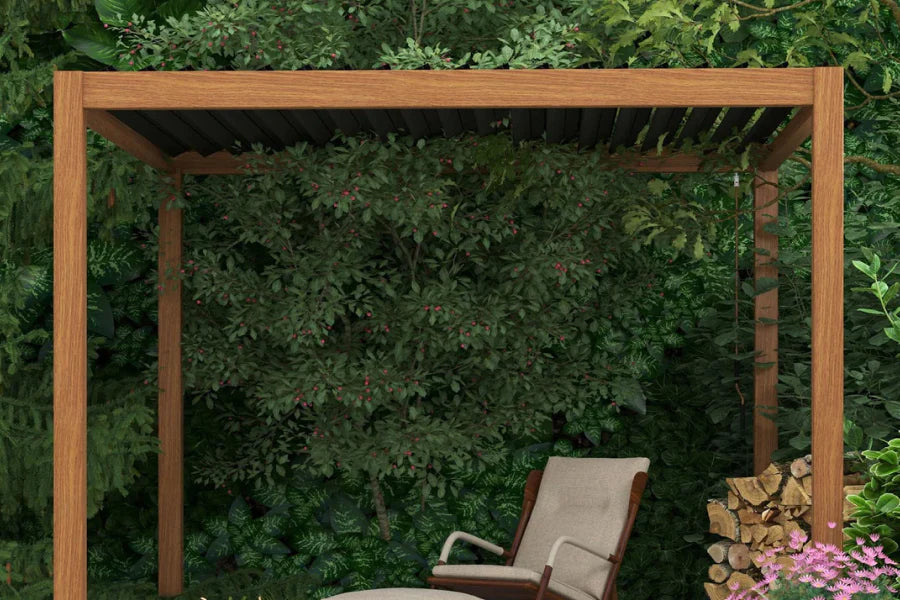
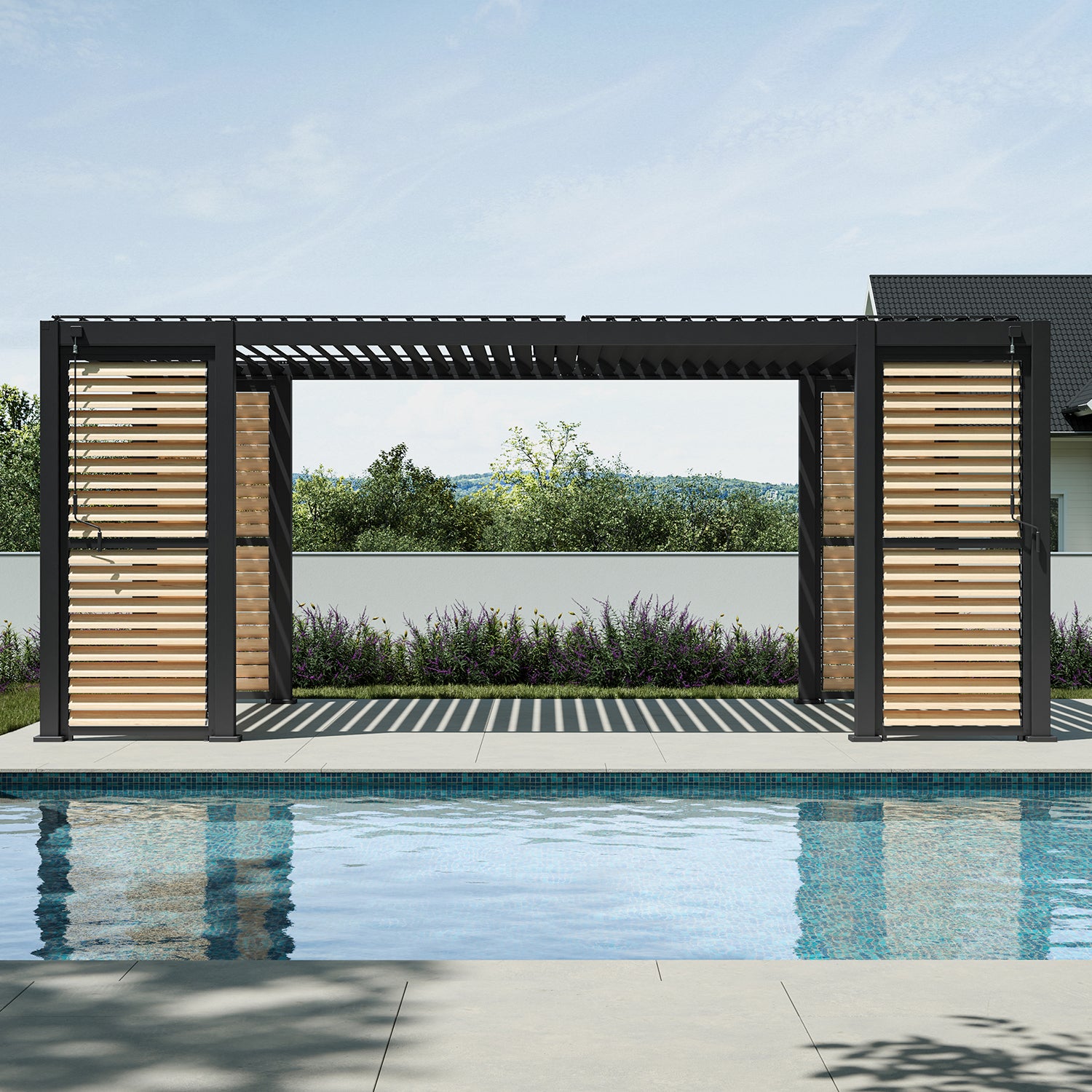
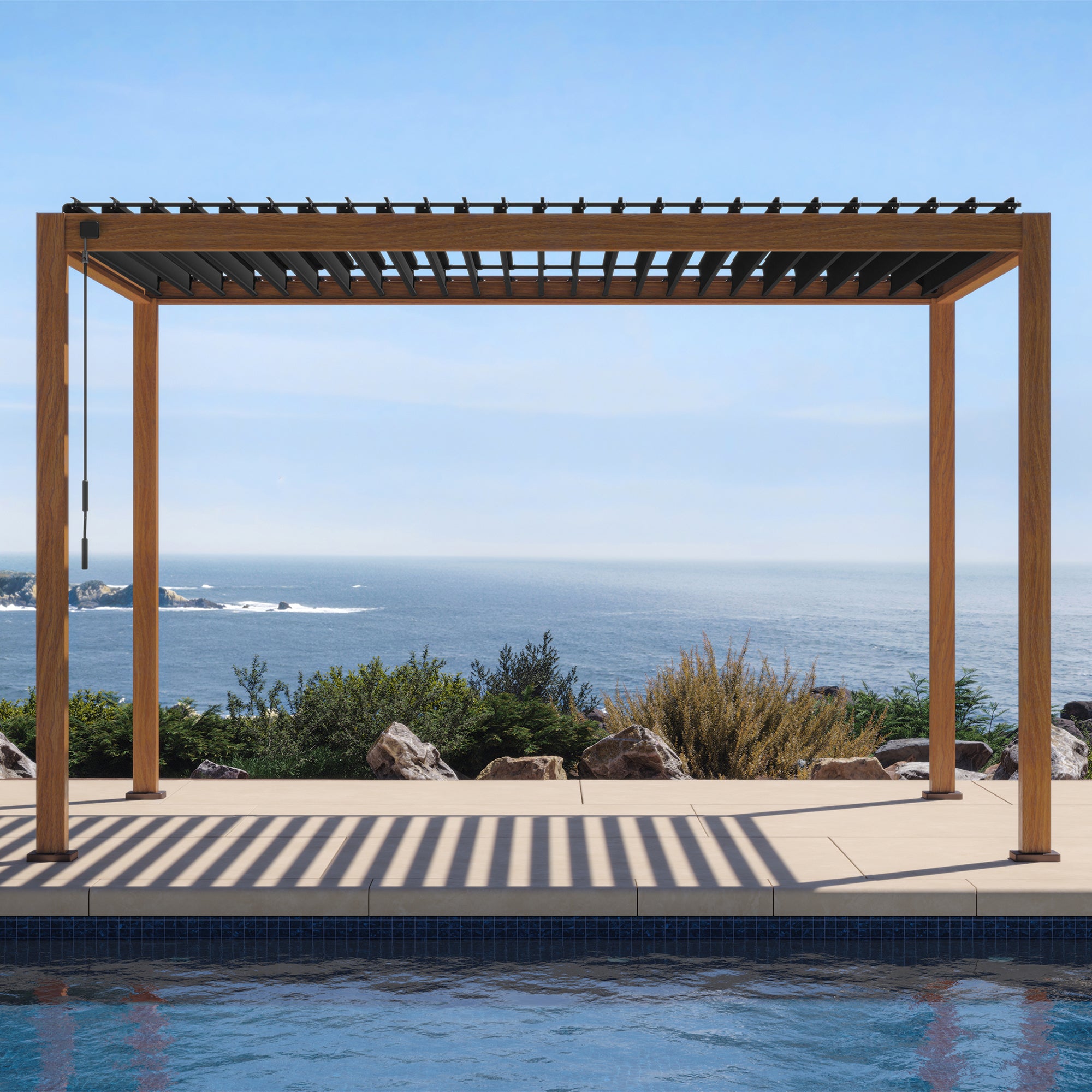
A pergola is an outdoor structure with vertical posts supporting an open framework of beams and rafters on top. There's no solid surface overhead. Sunlight filters through the slats, casting those striped shadows you've probably seen on Pinterest a thousand times.
Traditional pergolas provide about 20–50% shade coverage. Rain goes right through. Wind goes right through. That's the trade-off for the open, airy feel.
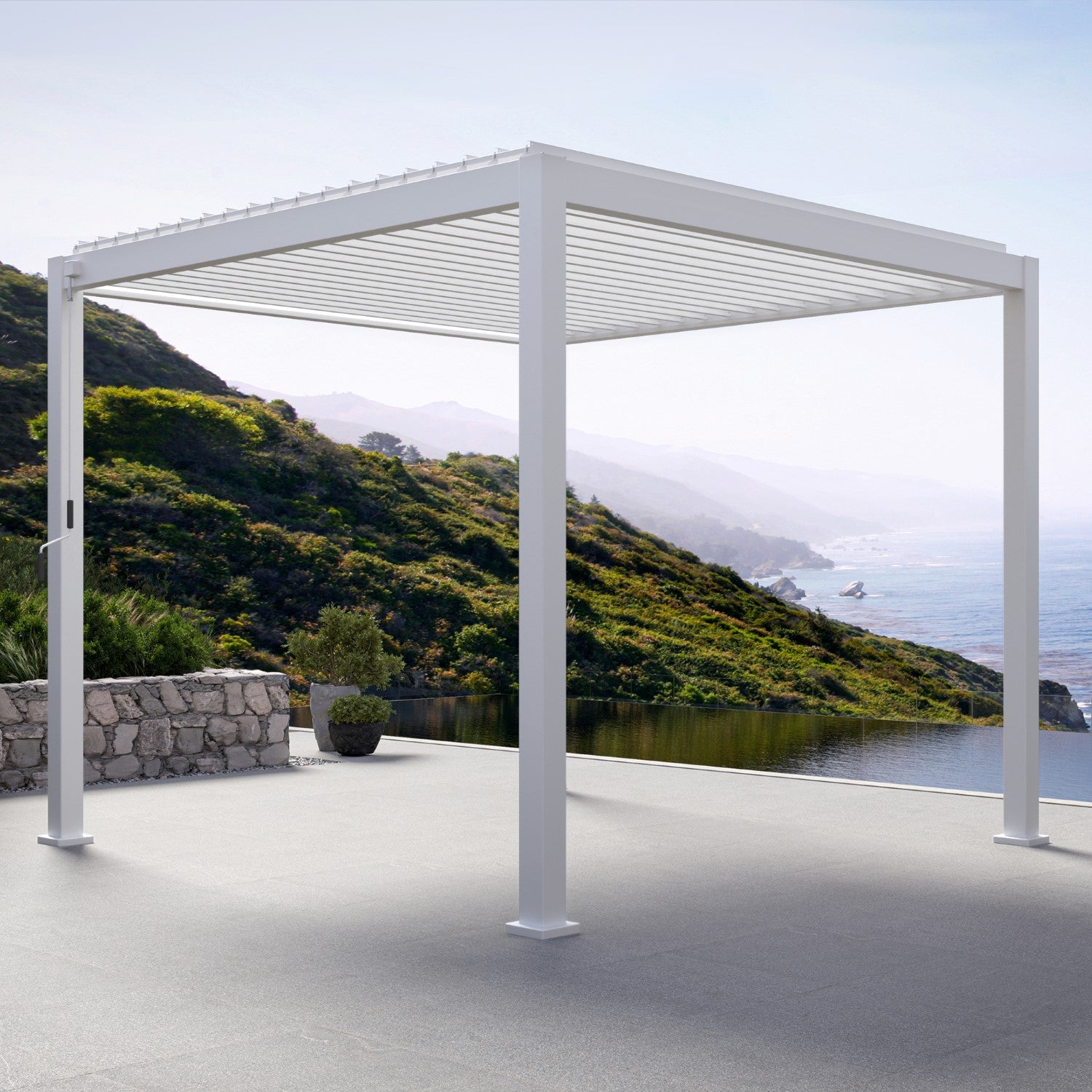
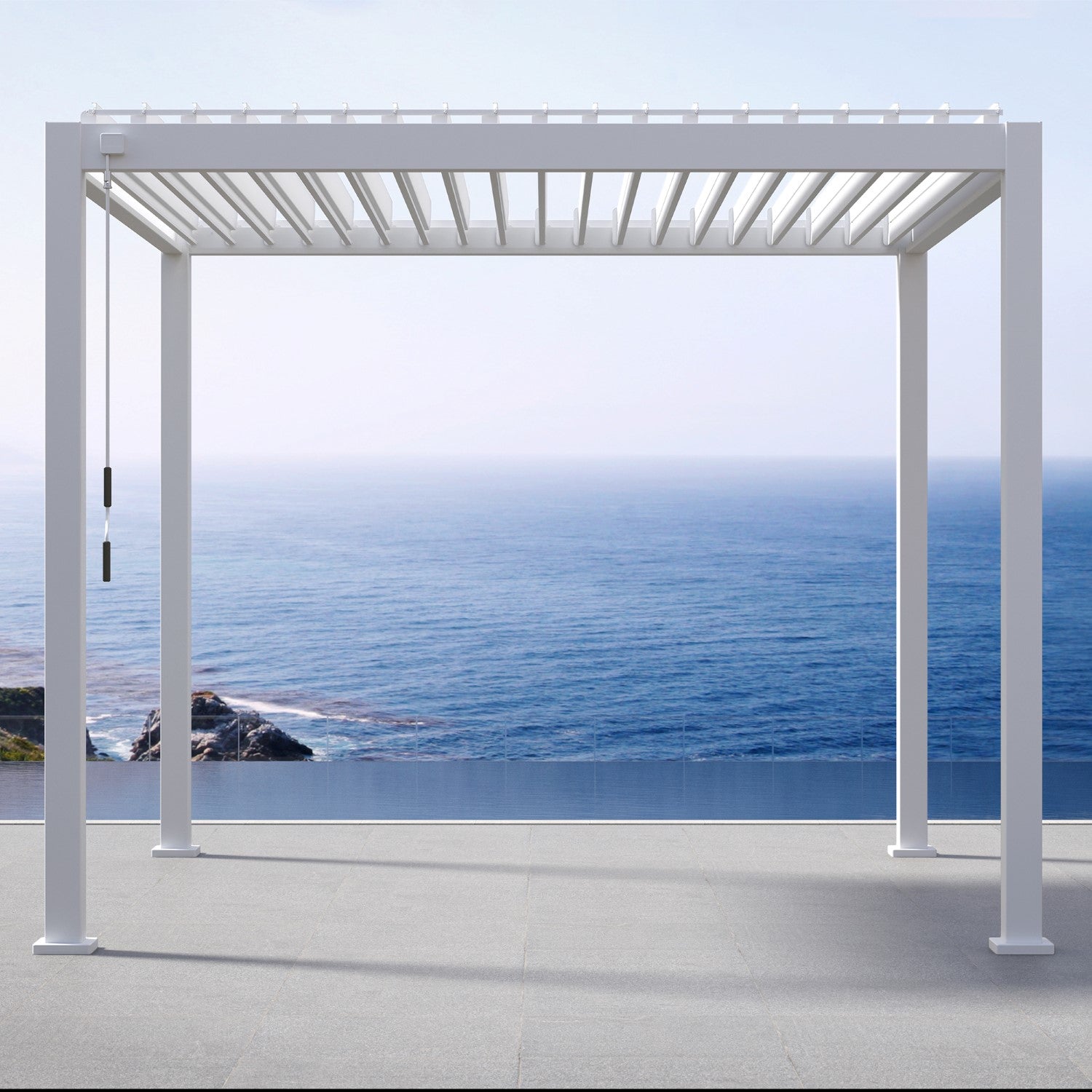
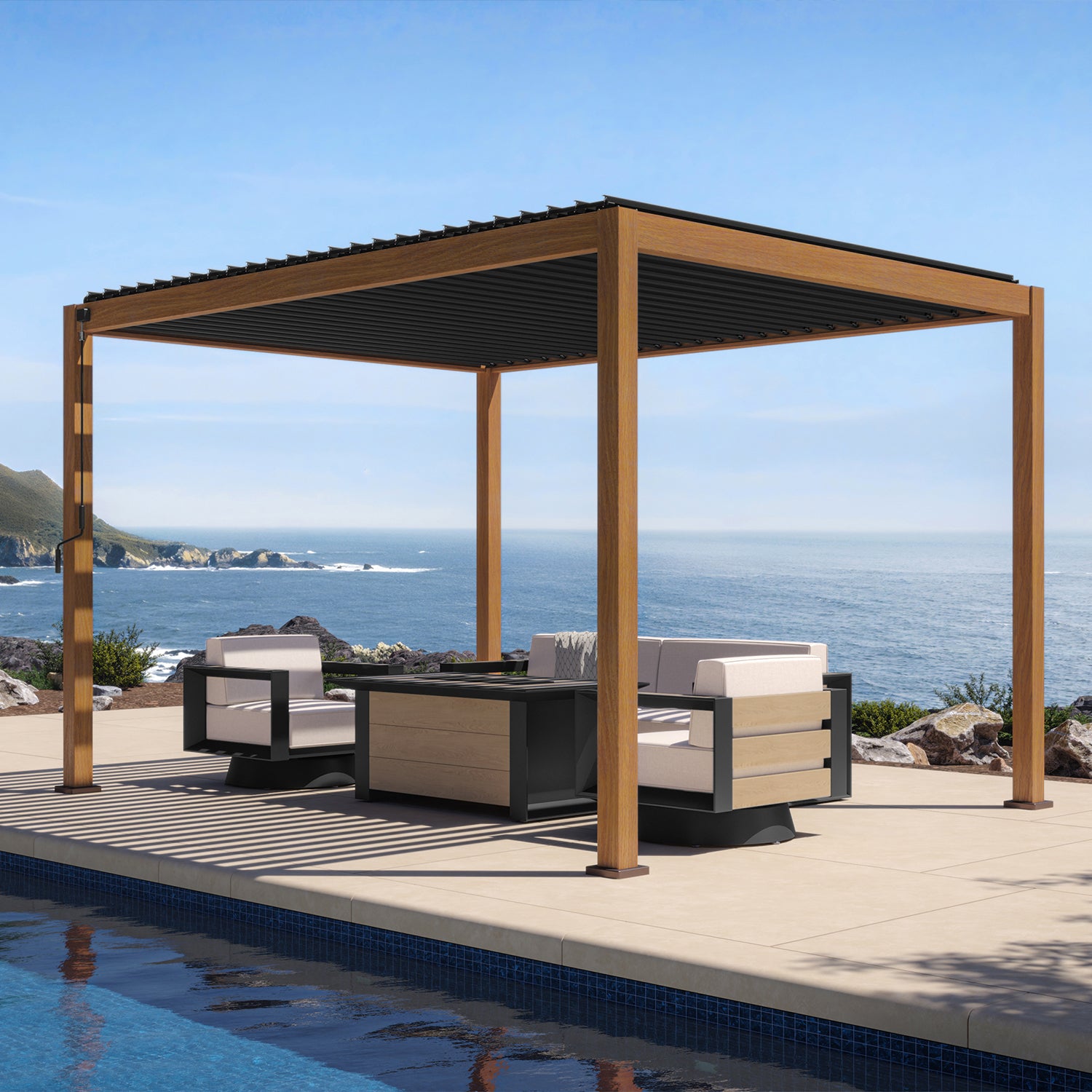
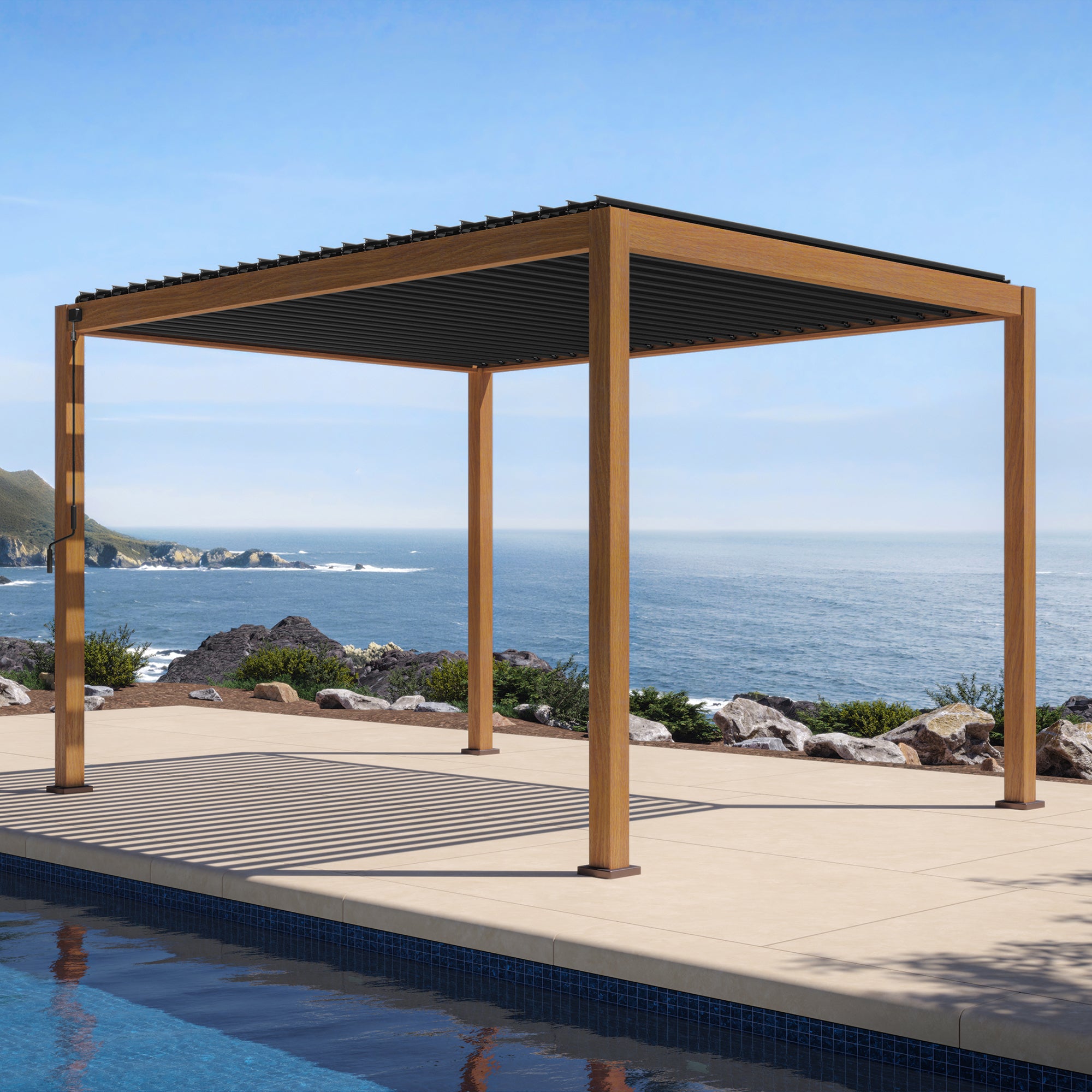
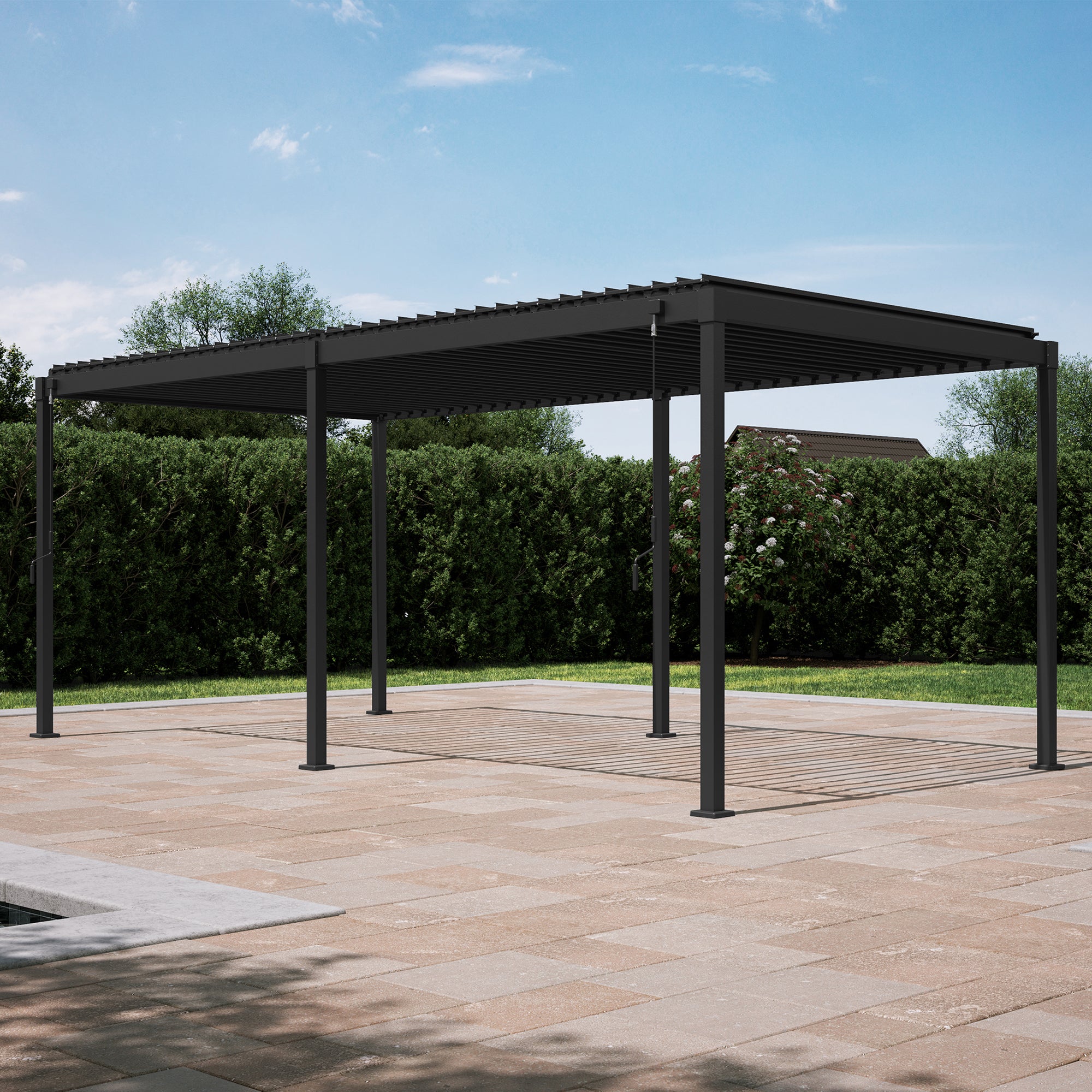
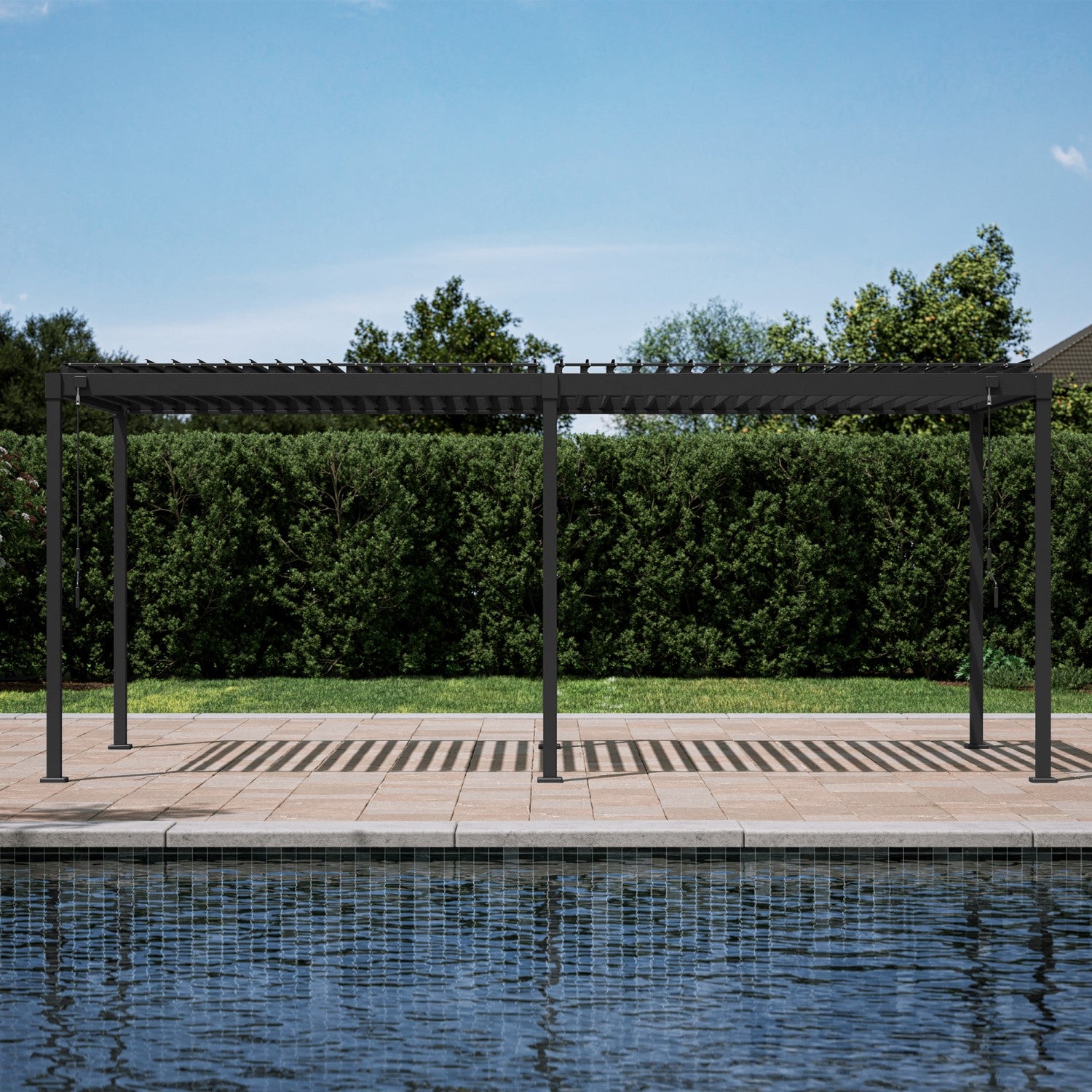
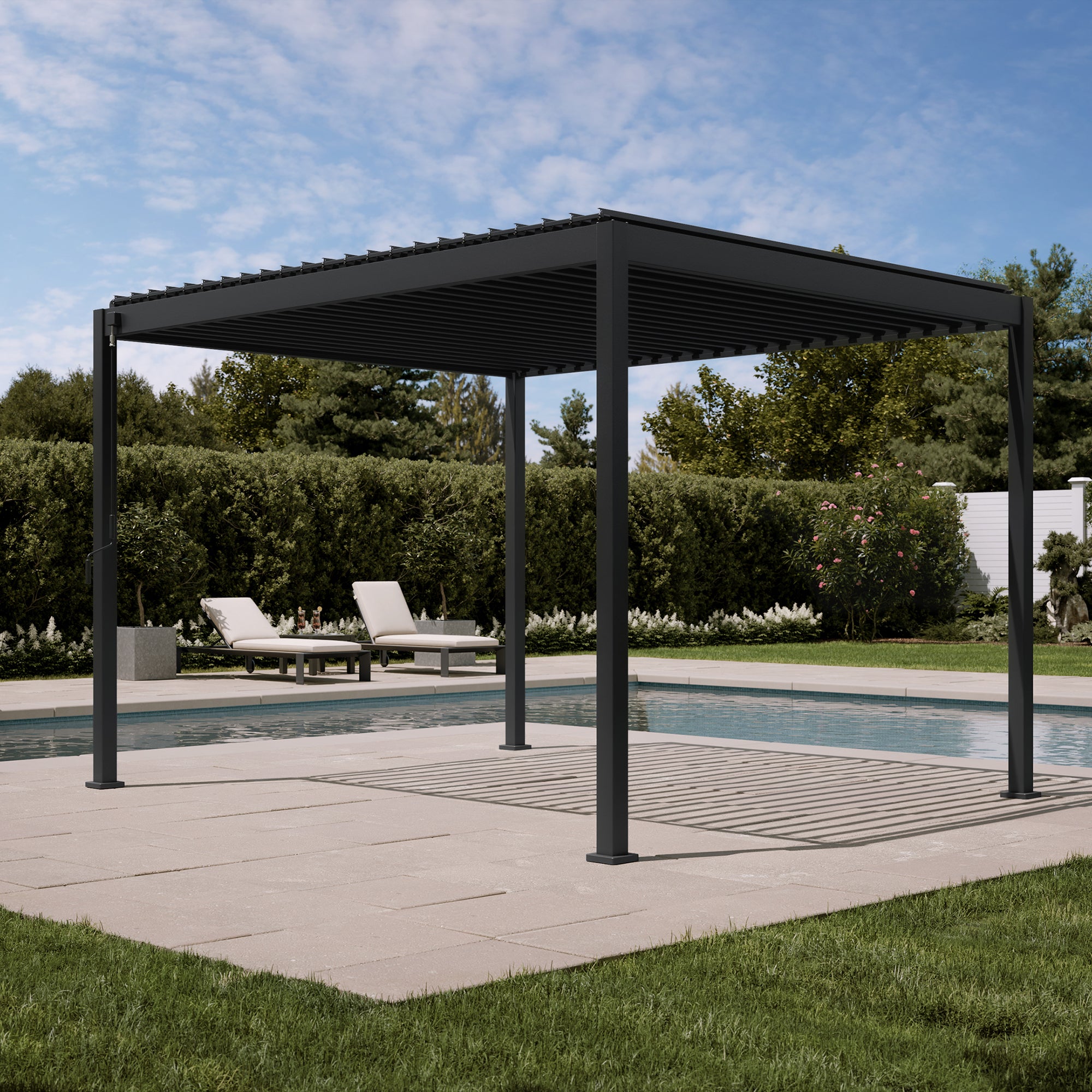
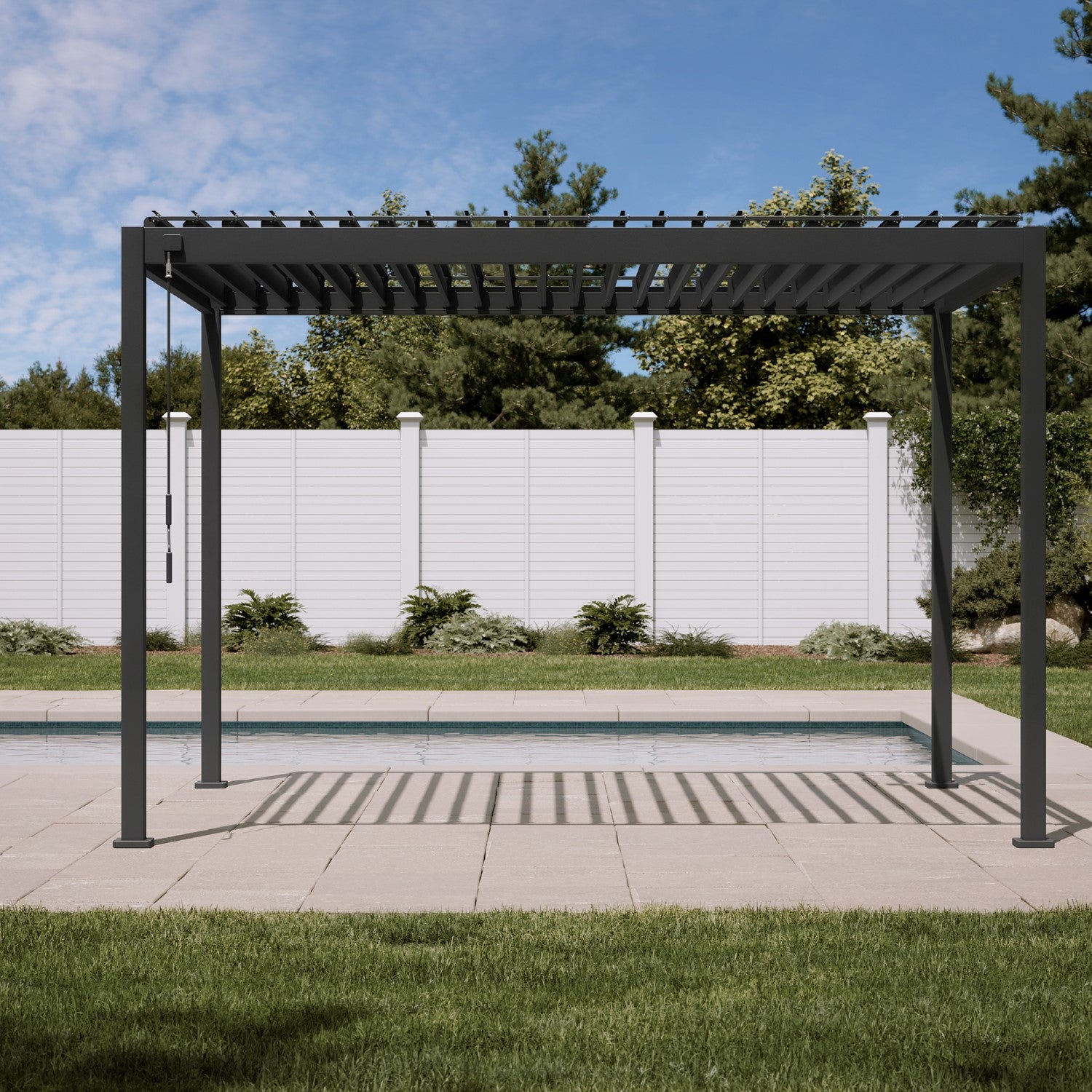
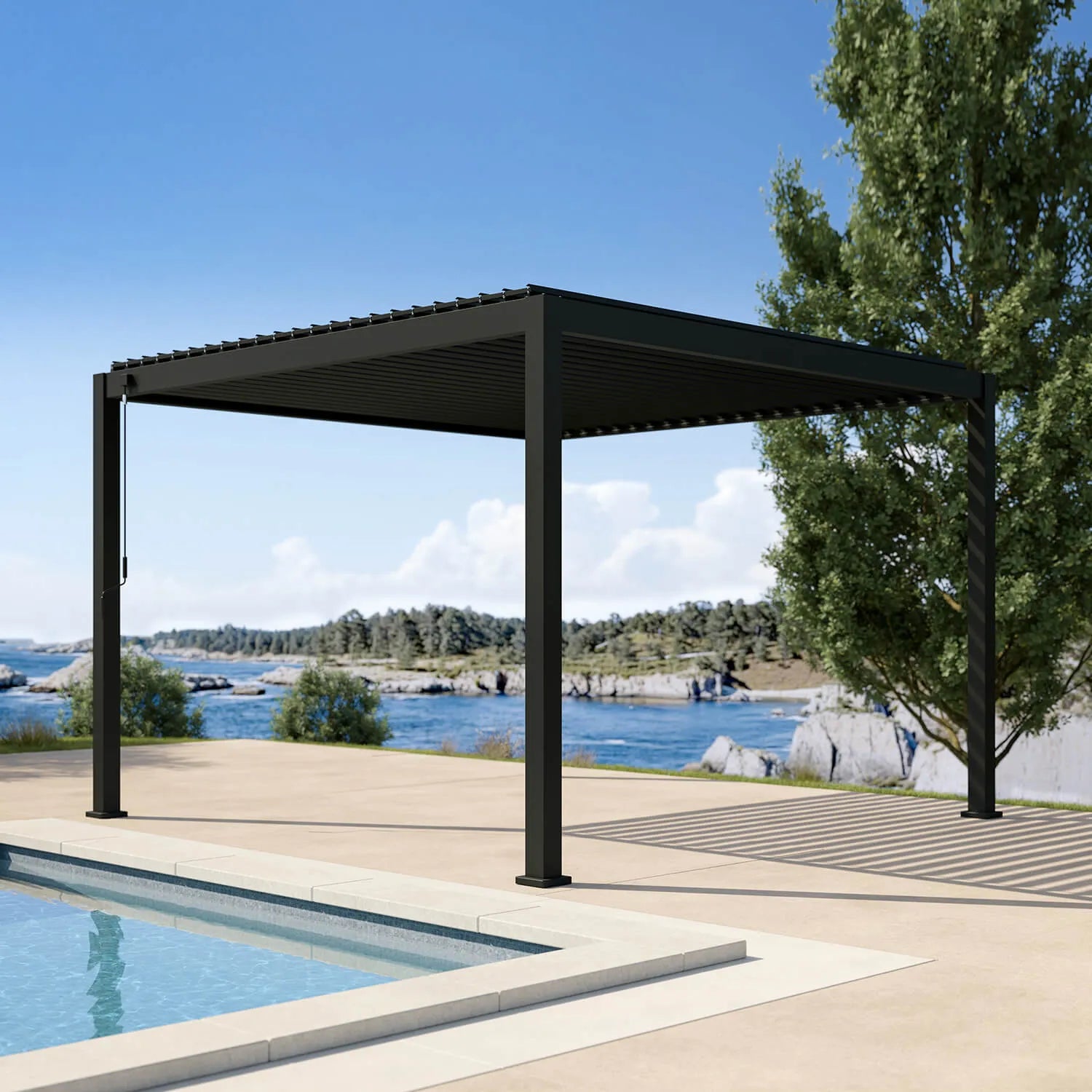
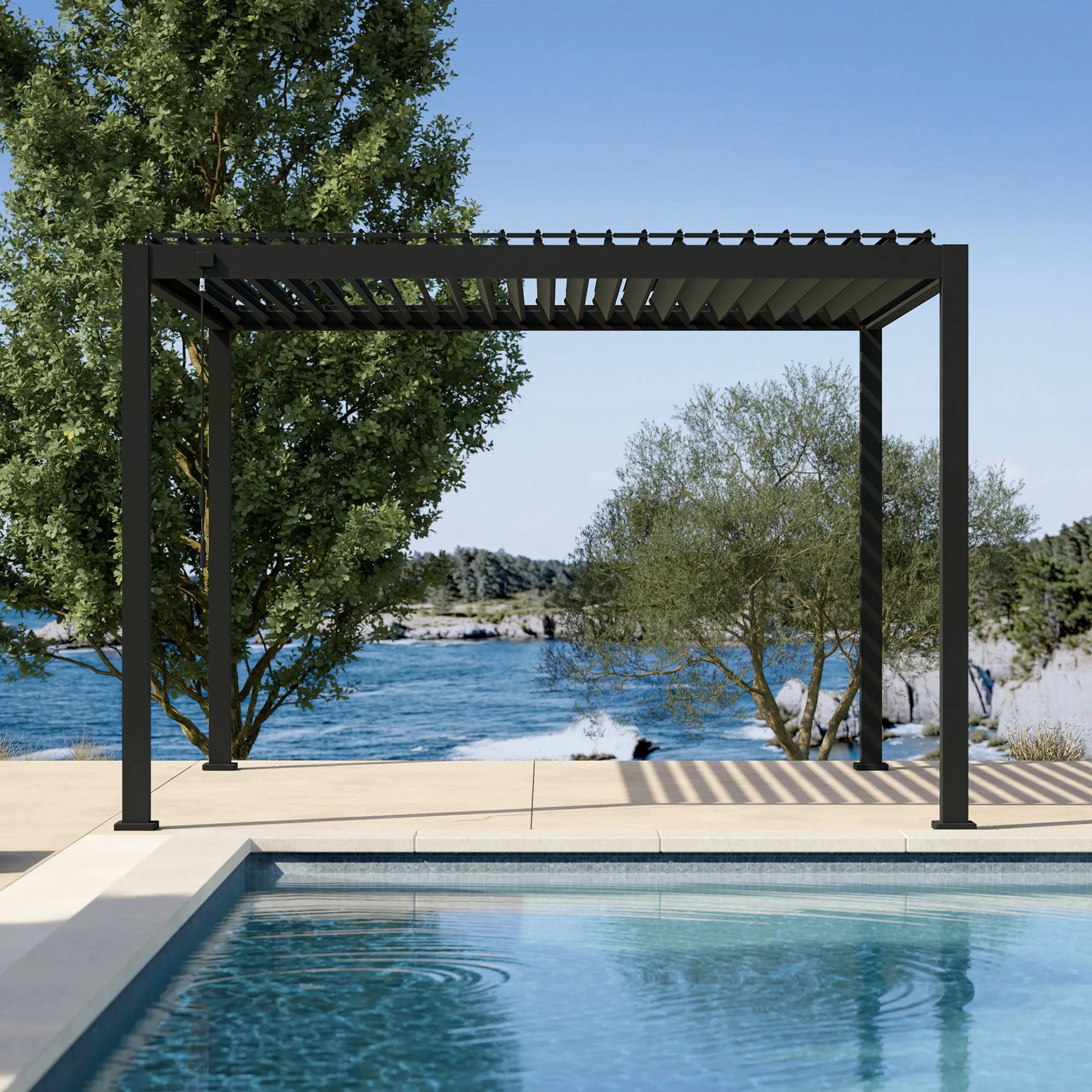
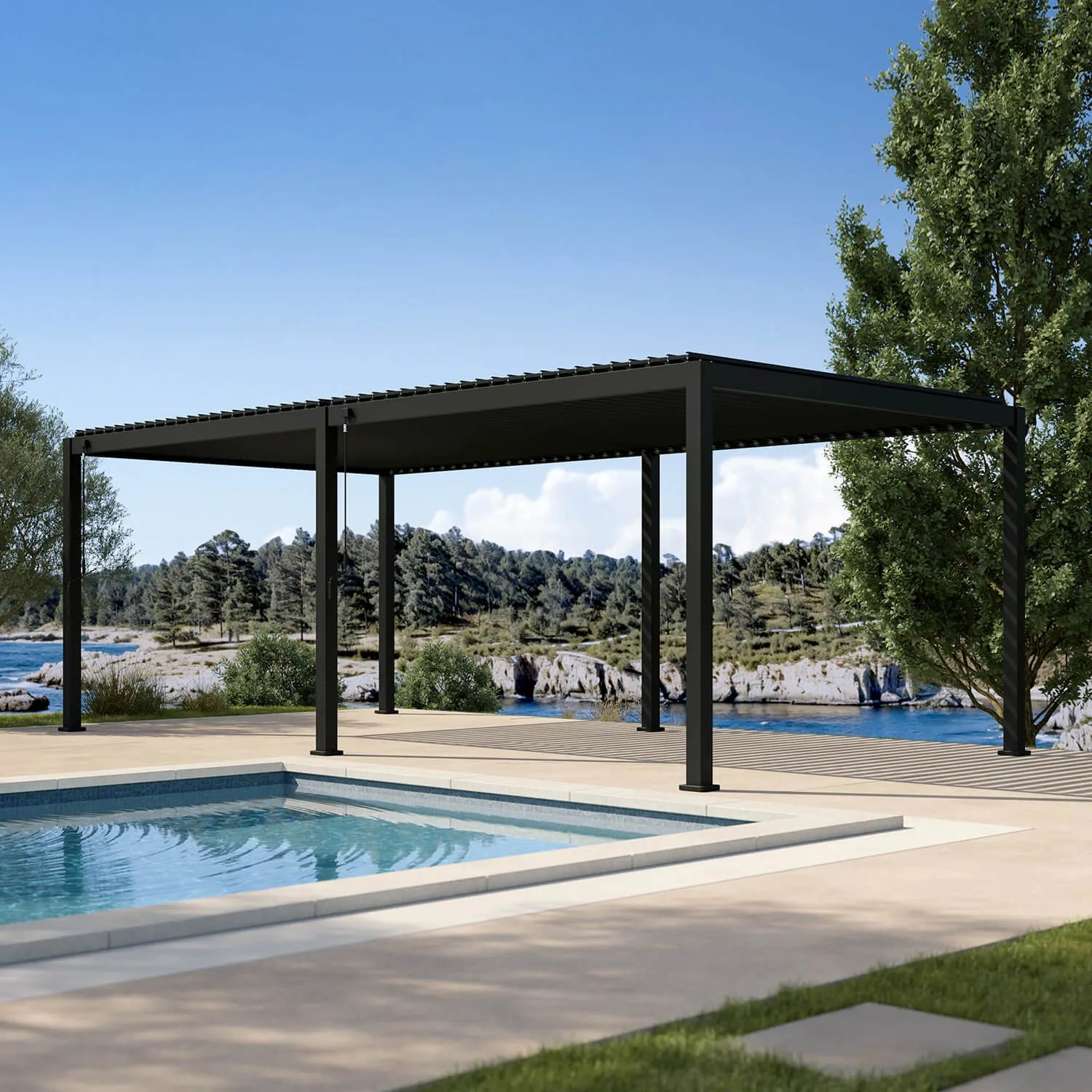
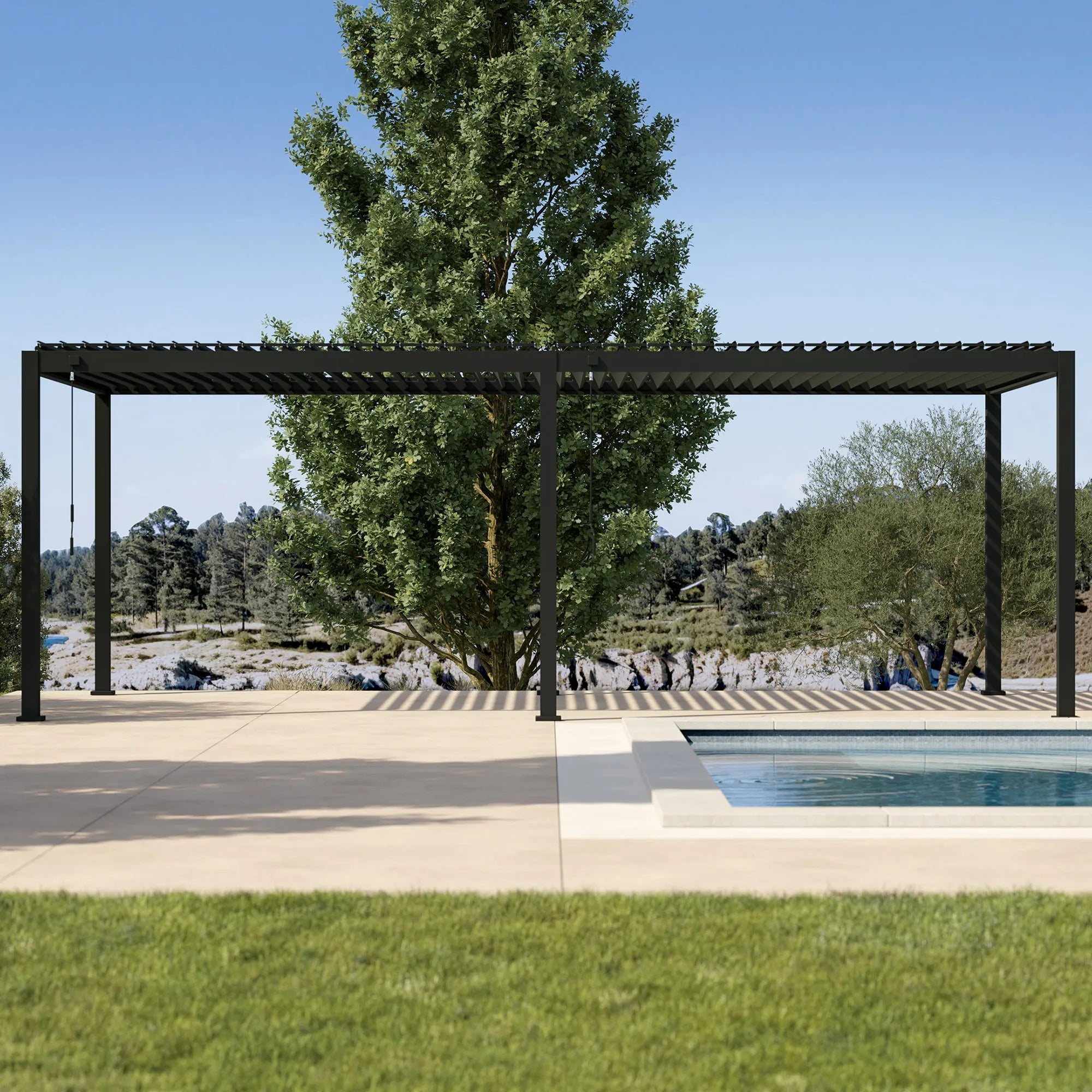
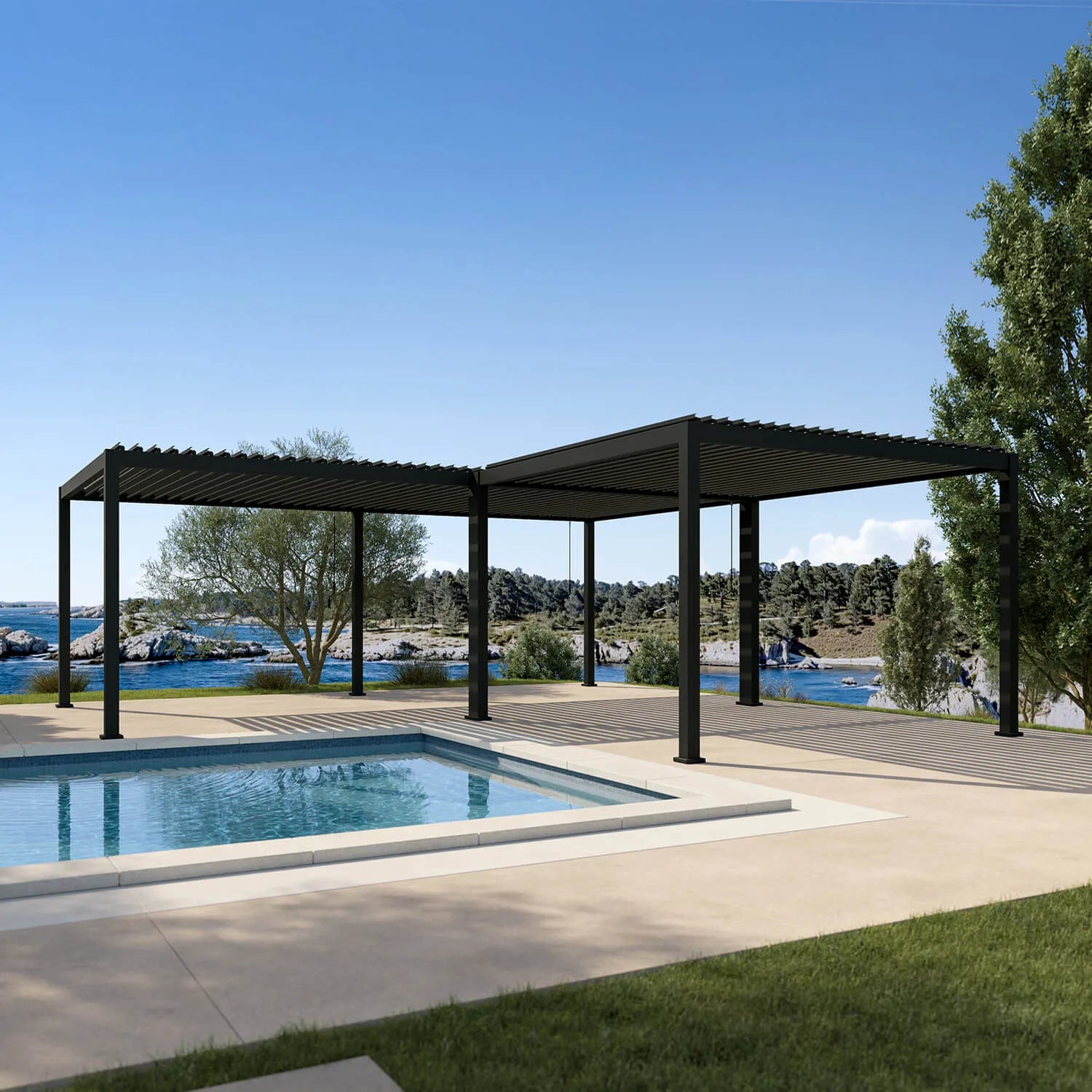
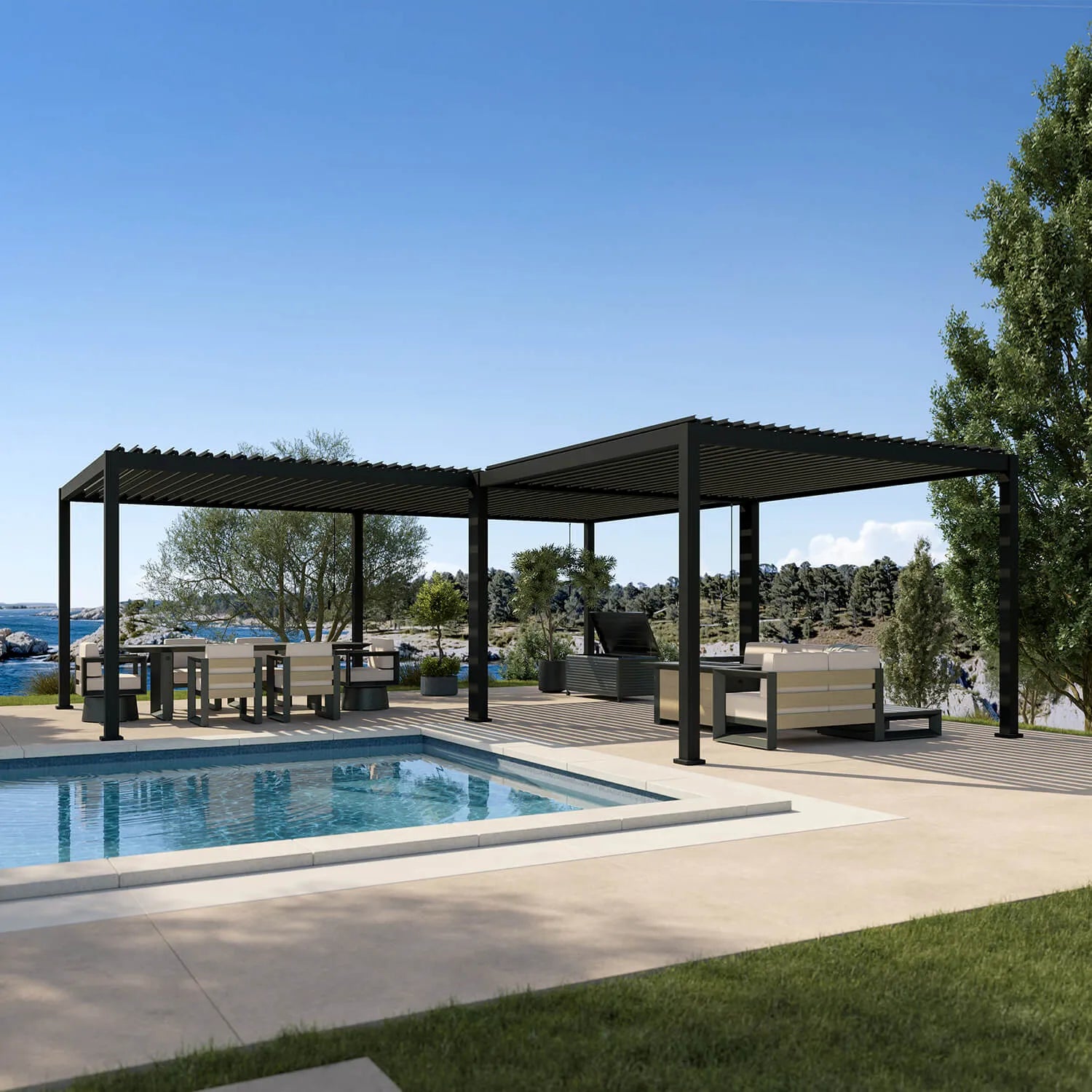
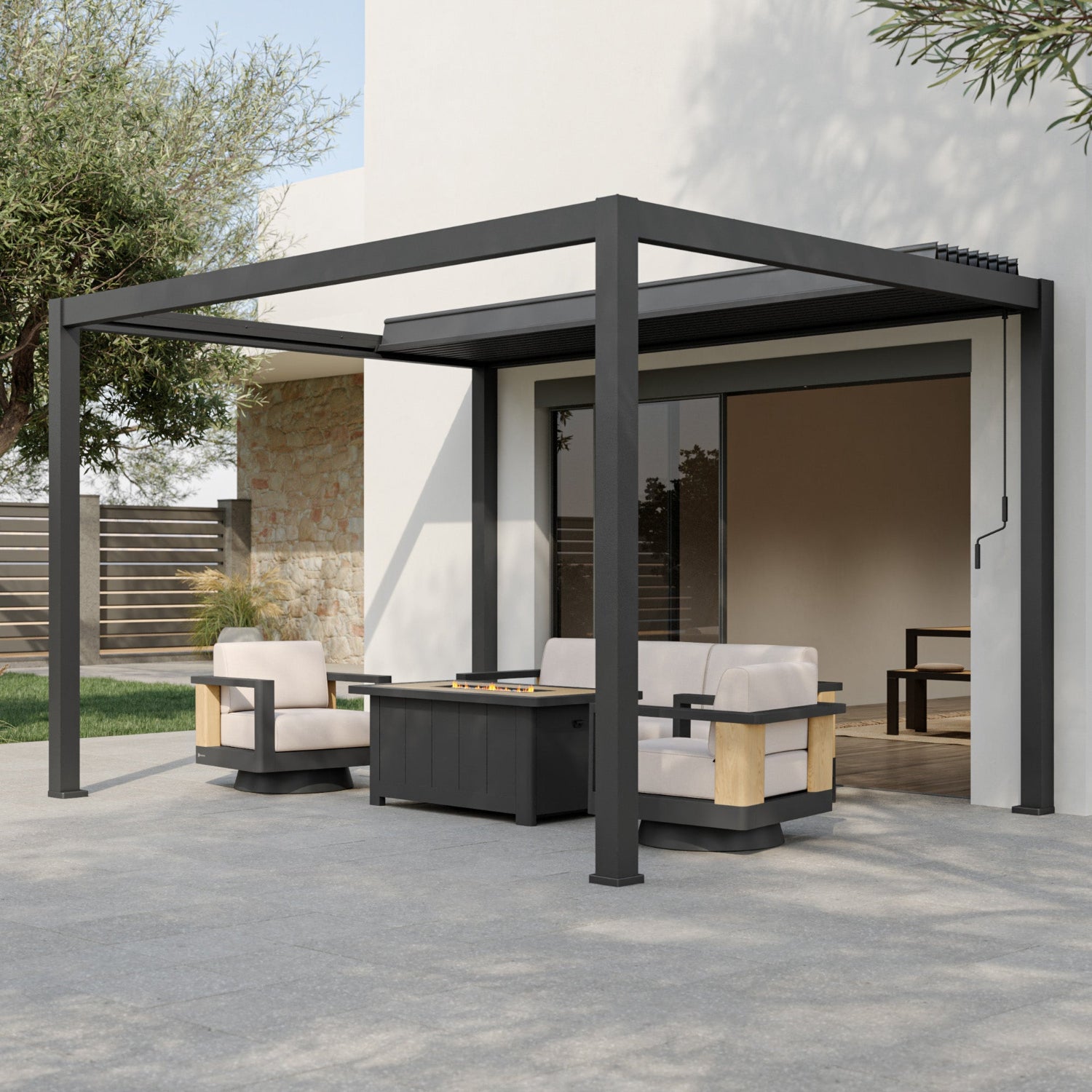
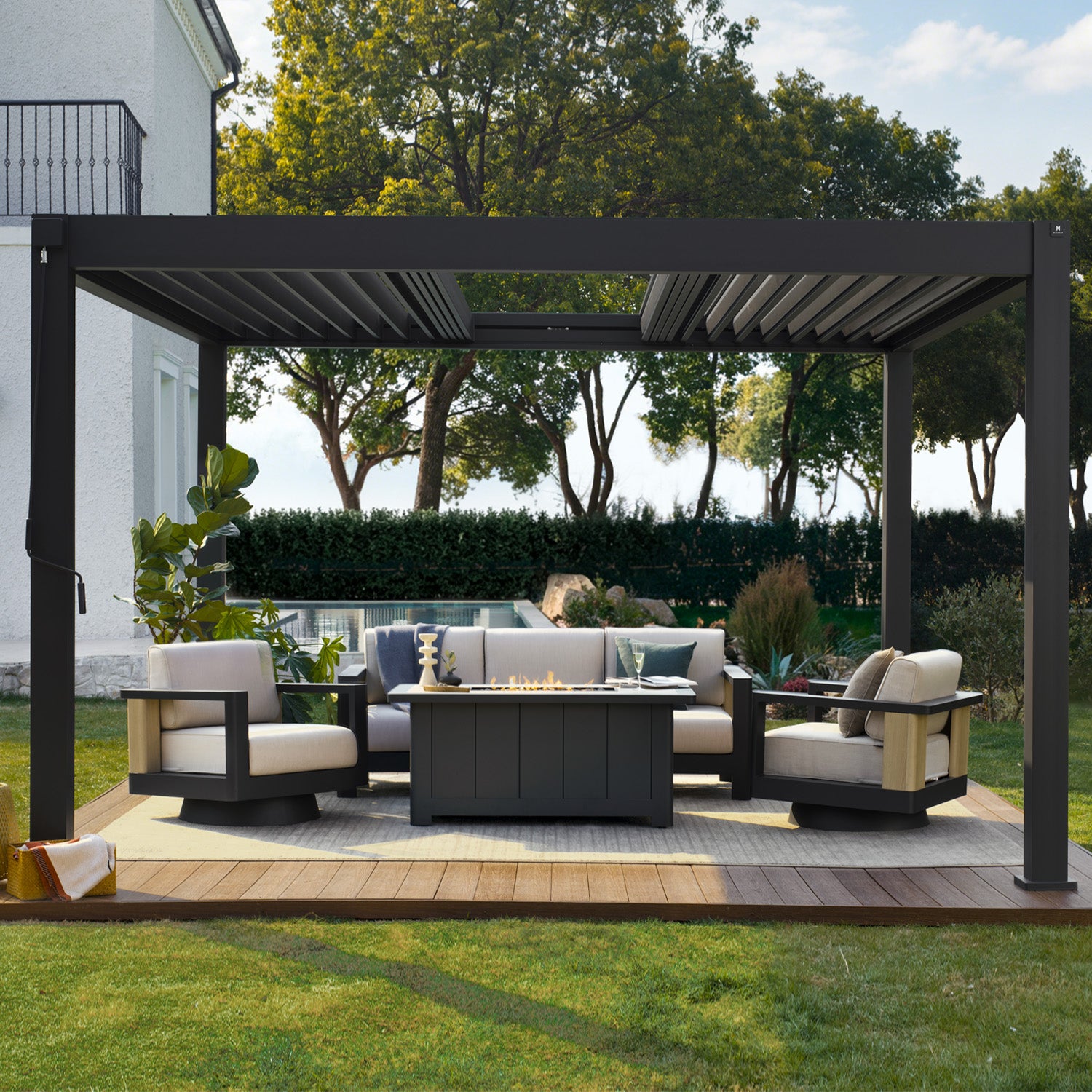
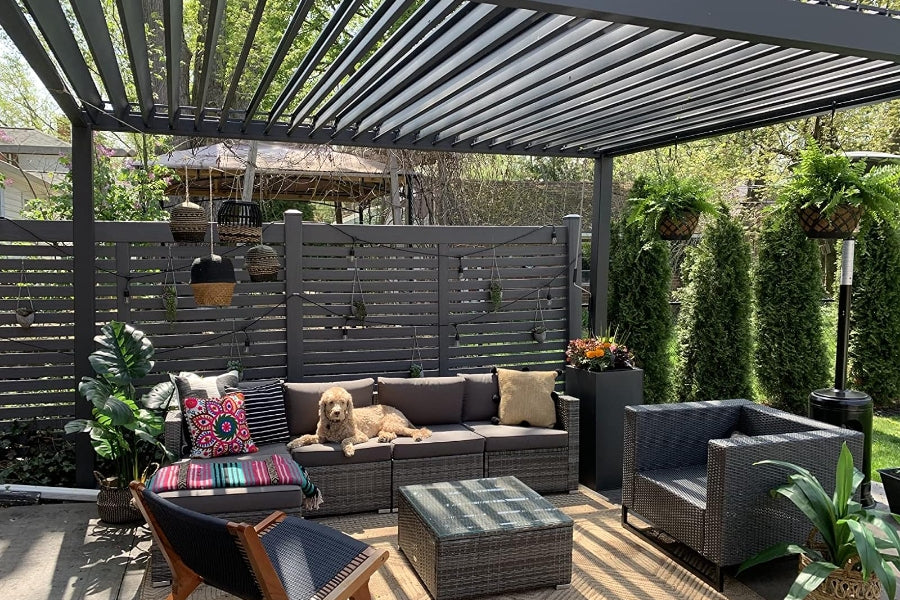
Now, pergolas have changed a lot. Modern louvered pergola designs flip the old limitations on their head. Instead of fixed slats, you get adjustable aluminum louvers that rotate from fully open (hello, sunshine) to fully closed (watertight seal, rain drains off). It's the same pergola footprint with way more control.
In short: A pergola is lighter, more affordable, and gives you a modern, open-air vibe. With a louvered roof, you also get weather protection when you need it.
Related article: What Is a Pergola? Meaning, Uses, and Comparison With Other Outdoor Structures

What Is a Pavilion?
A pavilion is a freestanding structure with a solid roof. Think shingles, metal panels, or tile. It is supported by heavy posts or columns. The sides stay open, but everything above your head is covered. All the time. No adjustments.
Pavilions are built like small buildings. They need engineered footings (usually poured concrete), and in most areas, you'll need a building permit. The roof has to handle its own weight, plus wind loads and potentially snow. That engineering drives the cost up fast.
A custom-built pavilion typically runs $35,000–$85,000 or more, depending on size and materials. Even prefab pavilion kits cost significantly more than comparable pergola kits because of the solid roof system and heavier construction.
In short: A pavilion gives you a permanent covered outdoor room. But you'll pay a premium for it, and once that roof is up, it's up. No opening it for sunshine.
Pergola vs. Pavilion: Key Difference
|
Feature |
Pergola |
Pavilion |
|
Roof Type |
Open lattice or adjustable louvers |
Solid (shingles, metal, tile) |
|
Shade Coverage |
20–50% (traditional) / up to 100% (louvered) |
100% permanent |
|
Rain Protection |
None (traditional) / Full when closed (louvered) |
Full |
|
Typical Shape |
Rectangular |
Rectangular or square |
|
DIY Friendly? |
Yes, most kits install in 4–6 hours |
Usually needs a contractor |
|
Permits Required? |
Varies, often simpler |
Almost always required |
|
Cost Range (kit) |
$1,099–$10,000 |
$5,000–$15,000+ |
|
Cost Range (custom-built) |
$2,000–$28,000 installed |
$35,000–$85,000+ installed |
|
Maintenance |
Low, rain cleans open slats naturally |
Moderate, inspect roof for leaks, clear debris |
|
Airflow |
Excellent |
Good (open sides, but solid roof traps some heat) |
The Roof Is Everything
We keep coming back to the roof because, well, it dictates every other decision.
A pavilion's solid roof means you're protected from rain and direct sun year-round. Sounds great, until a cool autumn morning when you want sunlight on your patio and can't get it. The roof that protects you in July blocks the warmth you'd appreciate in October.
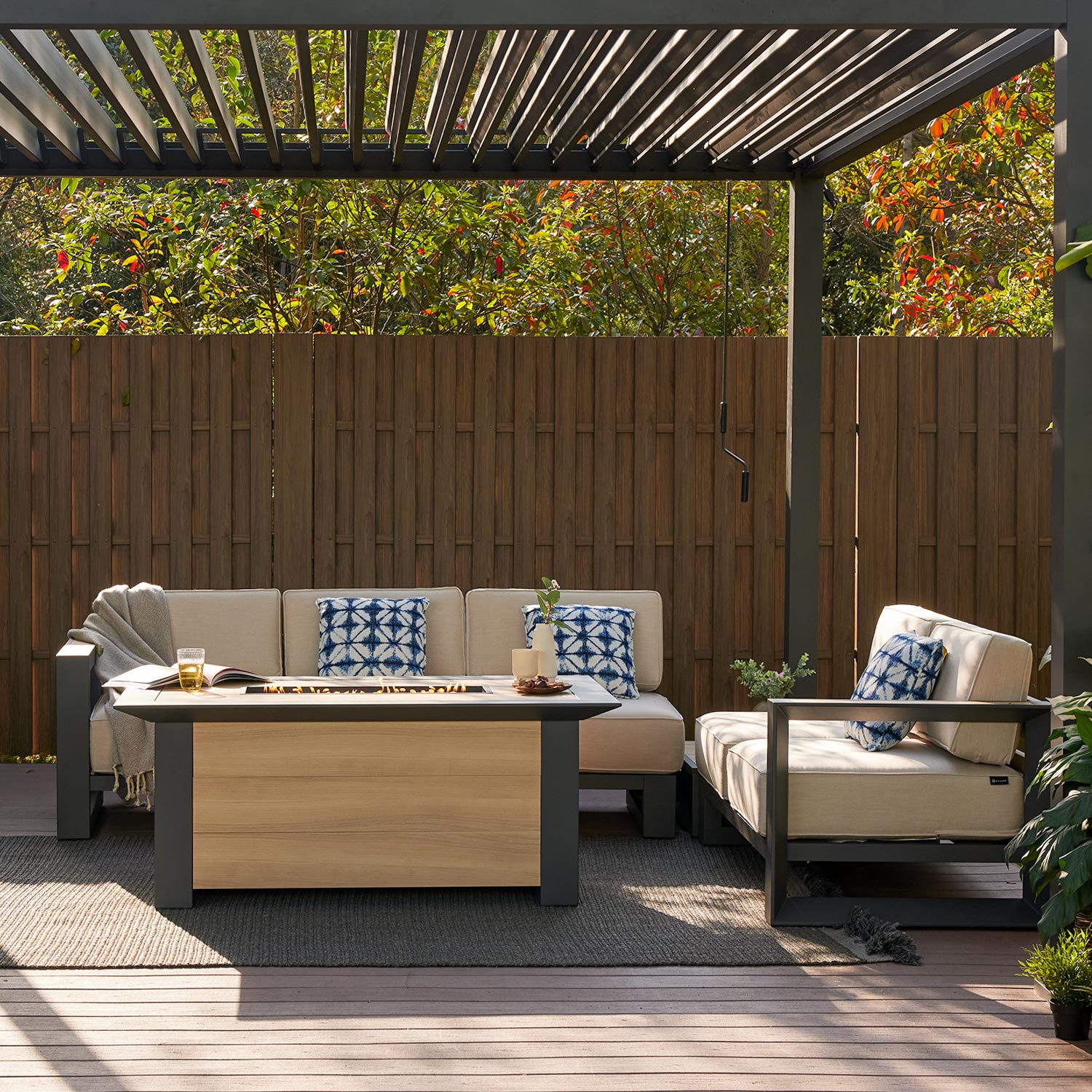
A louvered pergola solves that problem. Open the louvers for full sun, tilt them at 45° for filtered light, or close them tight when it rains. At Mirador, our aluminum louvered pergolas, like the 111DA and 111S series, give you that full range of control, either with a manual crank or our E-Motion motorized system. One remote, and you're adjusting your roof from the sofa.
That kind of flexibility is why louvered pergolas have been taking over the outdoor living market over the past few years. You're not locked into one condition anymore.
Which One Actually Gets Used More?
This is the part nobody talks about enough. A structure only adds value if you use it regularly.
Pavilions perform well on rainy days. But on sunny days, the solid roof creates full shade that can feel too dark, especially in cooler climates. Some homeowners report that their pavilion feels like an enclosed room, even with open sides.
Pergolas tend to get used more throughout the year, especially louvered ones, because you can match the roof to the weather. Sunny day? Open it up. Unexpected drizzle? Close the louvers and keep your dinner party going. In our experience, that adaptability is what turns an outdoor structure from "nice to have" into "used every weekend."

Pergola vs. Pavilion: Which Should You Pick?
Go with a pavilion if:
- You live in a region with heavy, frequent rainfall
- You want a permanent outdoor room and don't mind the fixed roof
- Your budget supports the $35,000+ price tag for a quality build
Go with a pergola if:
- You want control over sunlight and shade throughout the day
- You're looking for something you can install yourself in a weekend
- You want modern aesthetics without the heavy construction
- Your budget is anywhere from $1,099 to $10,000
And if you want the rain protection of a pavilion with the flexibility of a pergola, a louvered aluminum pergola is honestly the best middle ground. That's exactly what we build at Mirador. Adjustable louvers, powder-coated aluminum frames, patented drainage systems, and kits that two people can put together in about four to six hours. No contractor needed.
FAQs
Is a pergola cheaper than a pavilion?
Yes. Pergola kits typically range from $1,099 to around $10,000 depending on size and materials. A custom-built pavilion starts around $35,000 and can exceed $85,000 with engineering, footings, and permits. Even pre-fab pavilion kits cost more than most pergola options due to their heavier construction and solid roof systems.
Can a pergola protect you from rain?
A traditional open-slat pergola won't stop rain. But a louvered pergola can. When you close the adjustable aluminum louvers, they form a sealed surface that directs water into an integrated drainage system. Mirador's louvered pergolas, for example, include a patented drainage design that channels rainwater off the roof.
Do you need a permit for a pergola or pavilion?
It depends on your local building codes. Pavilions almost always require a permit because they're treated as permanent structures with solid roofs. Pergolas, especially freestanding ones without solid roofing, often face lighter permitting requirements. Always check with your local municipality before building.
What's the difference between a pavilion and a gazebo?
Both have solid roofs, but a gazebo is typically polygonal (hexagonal or octagonal) and semi-enclosed, while a pavilion is usually rectangular with fully open sides. Gazebos are more of a garden focal point; pavilions function more like outdoor rooms for entertaining.
Can a louvered pergola replace a pavilion?
For most homeowners, yes. A louvered pergola with its louvers closed offers similar rain and sun protection to a pavilion, but with the added ability to open up for sunlight and airflow. It costs a fraction of a custom pavilion and installs in a single weekend. It's not a perfect one-to-one replacement for extreme snow-load regions, but for the majority of climates, it covers what a pavilion does and then some.