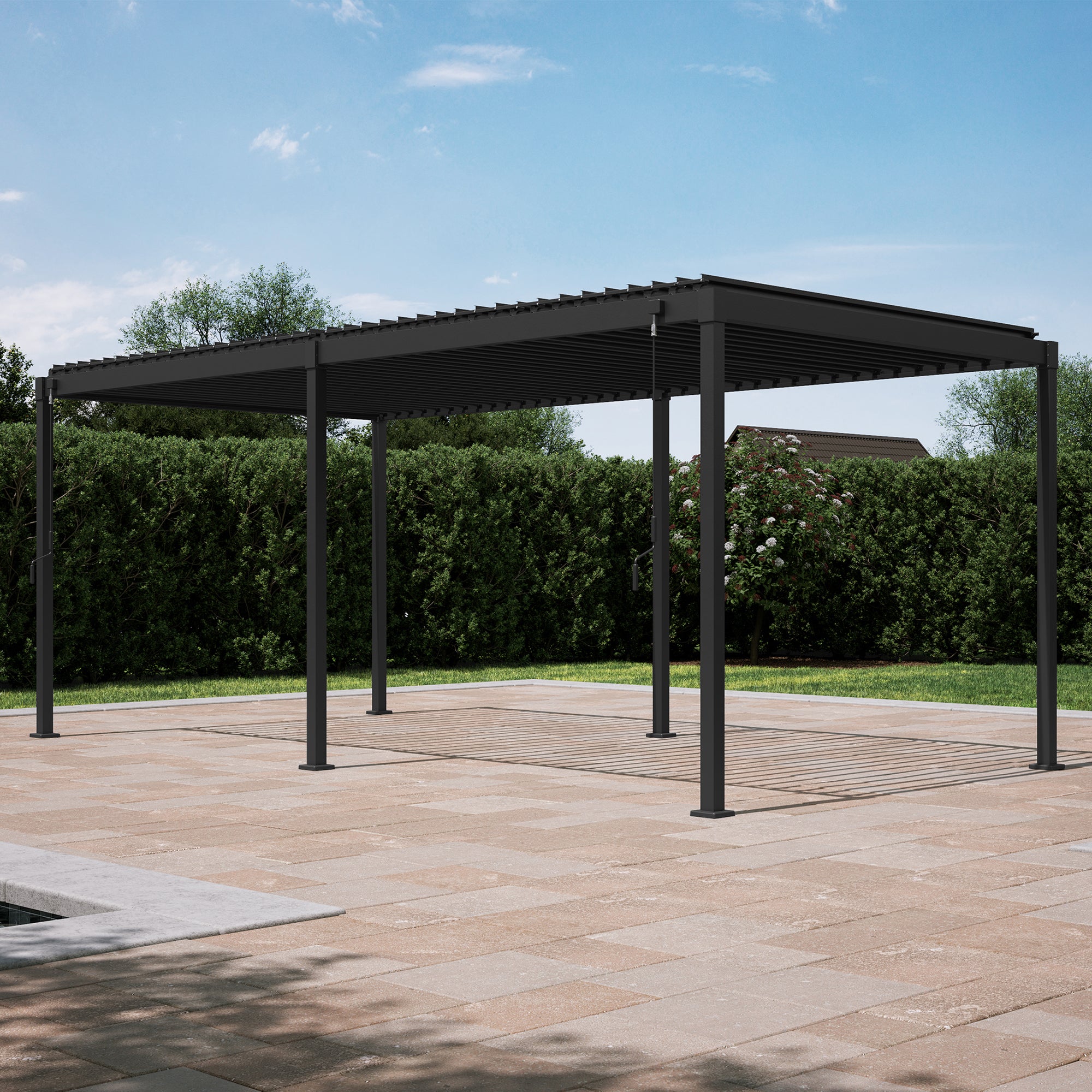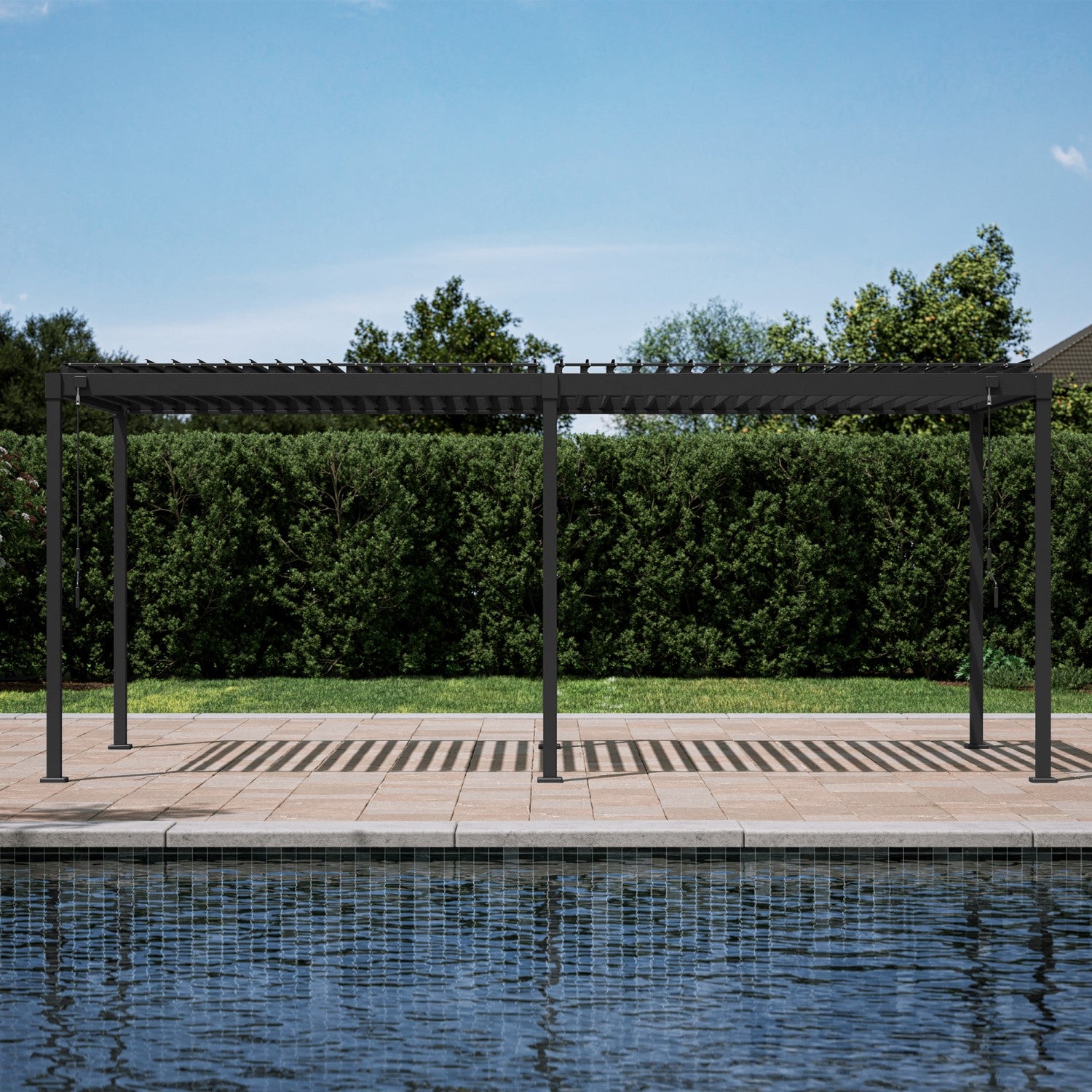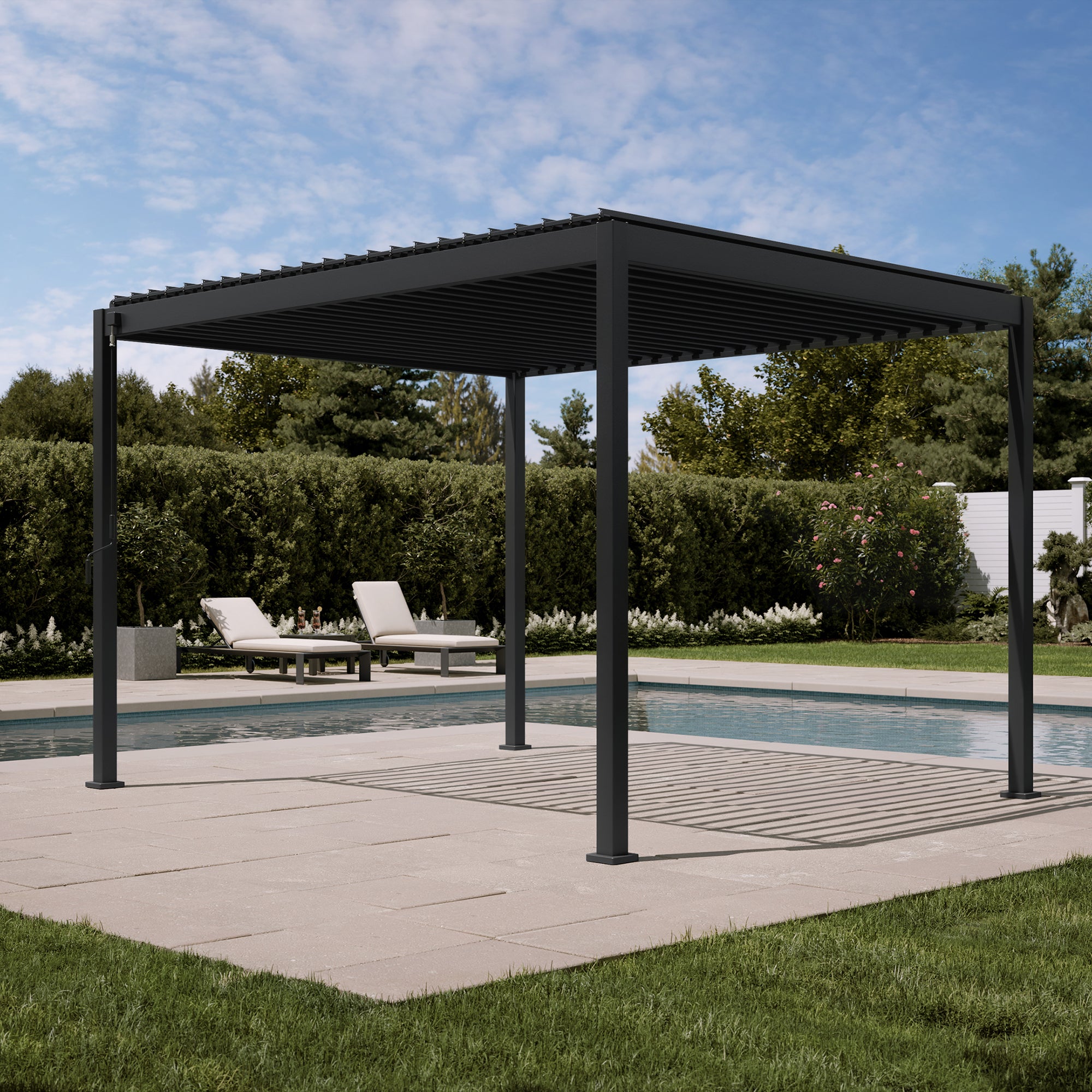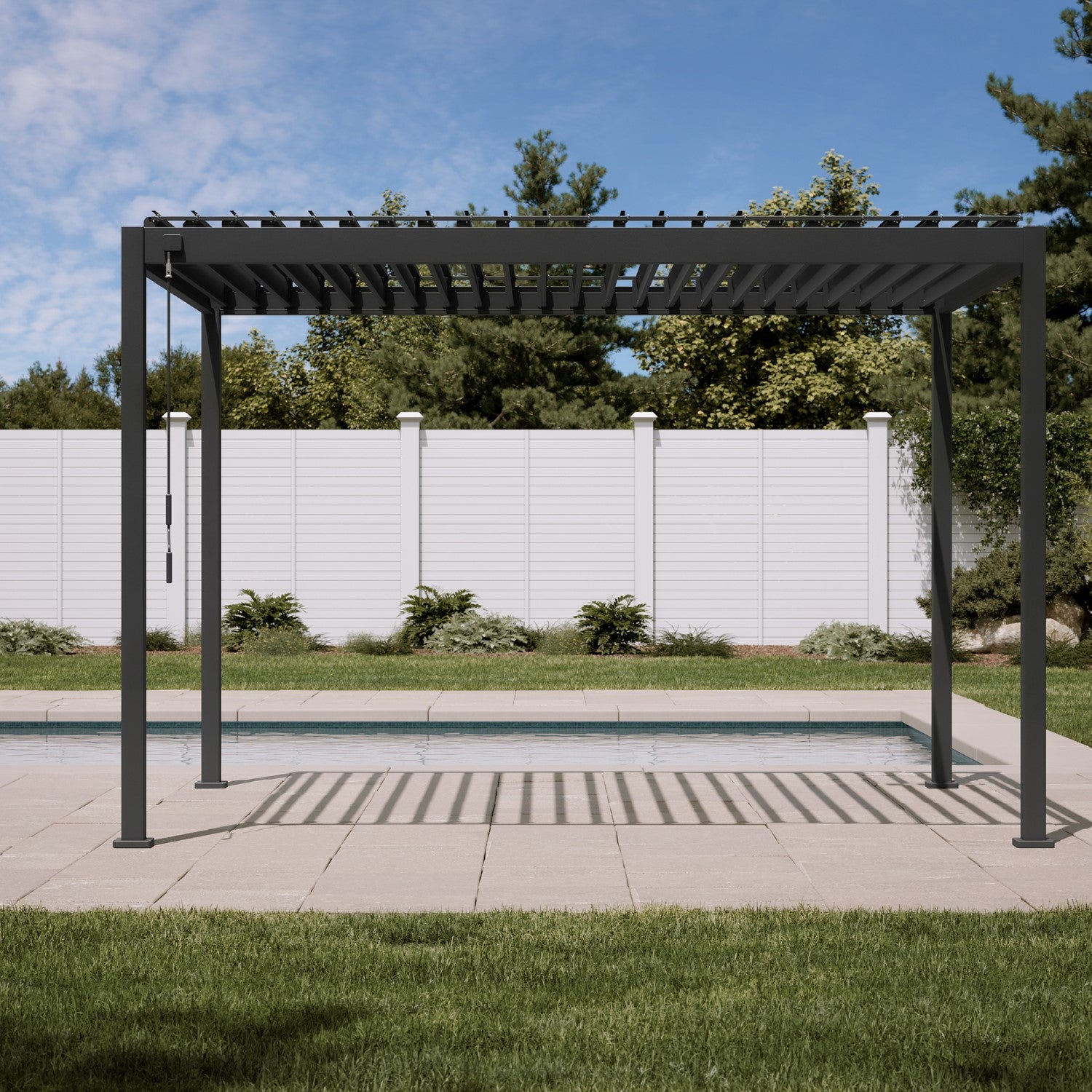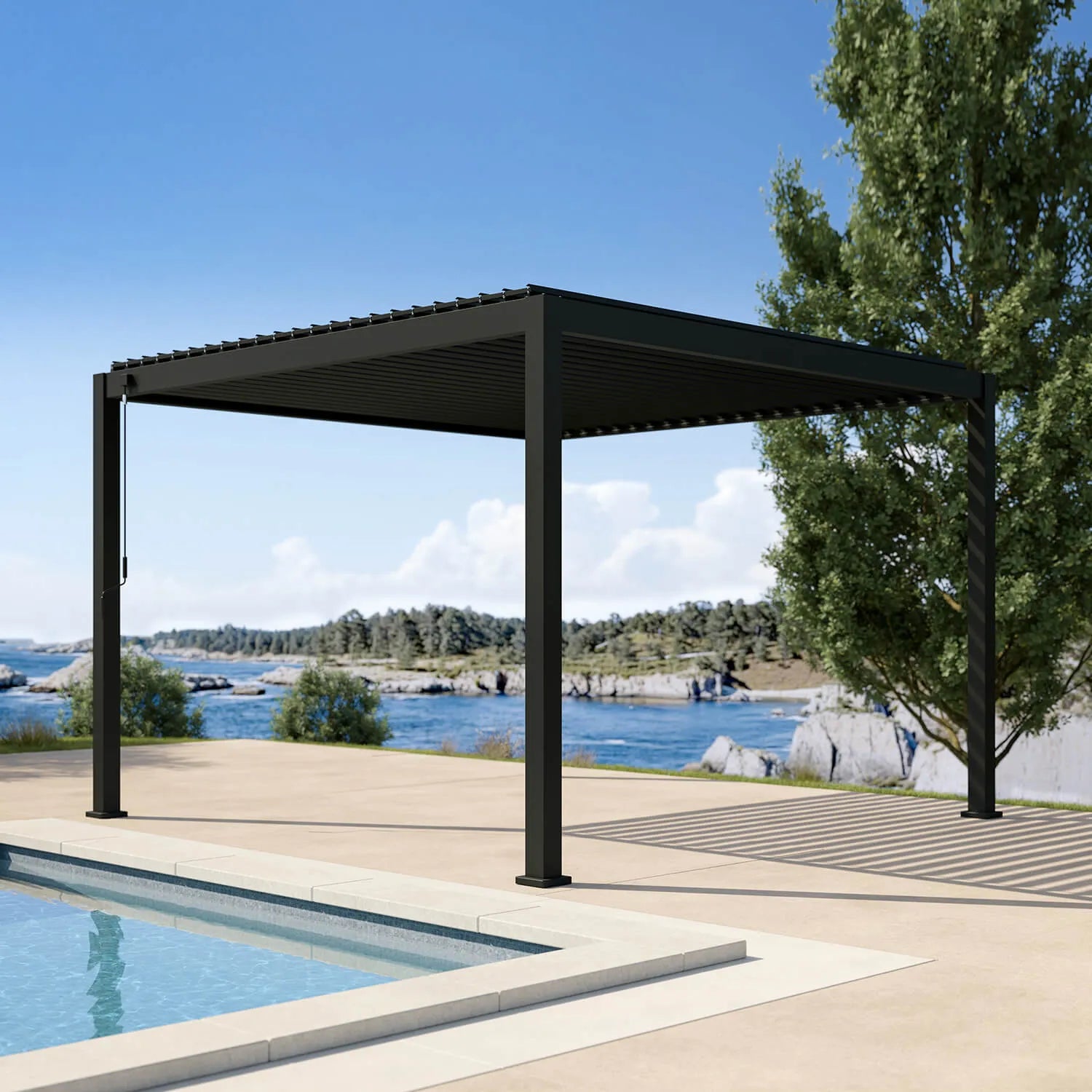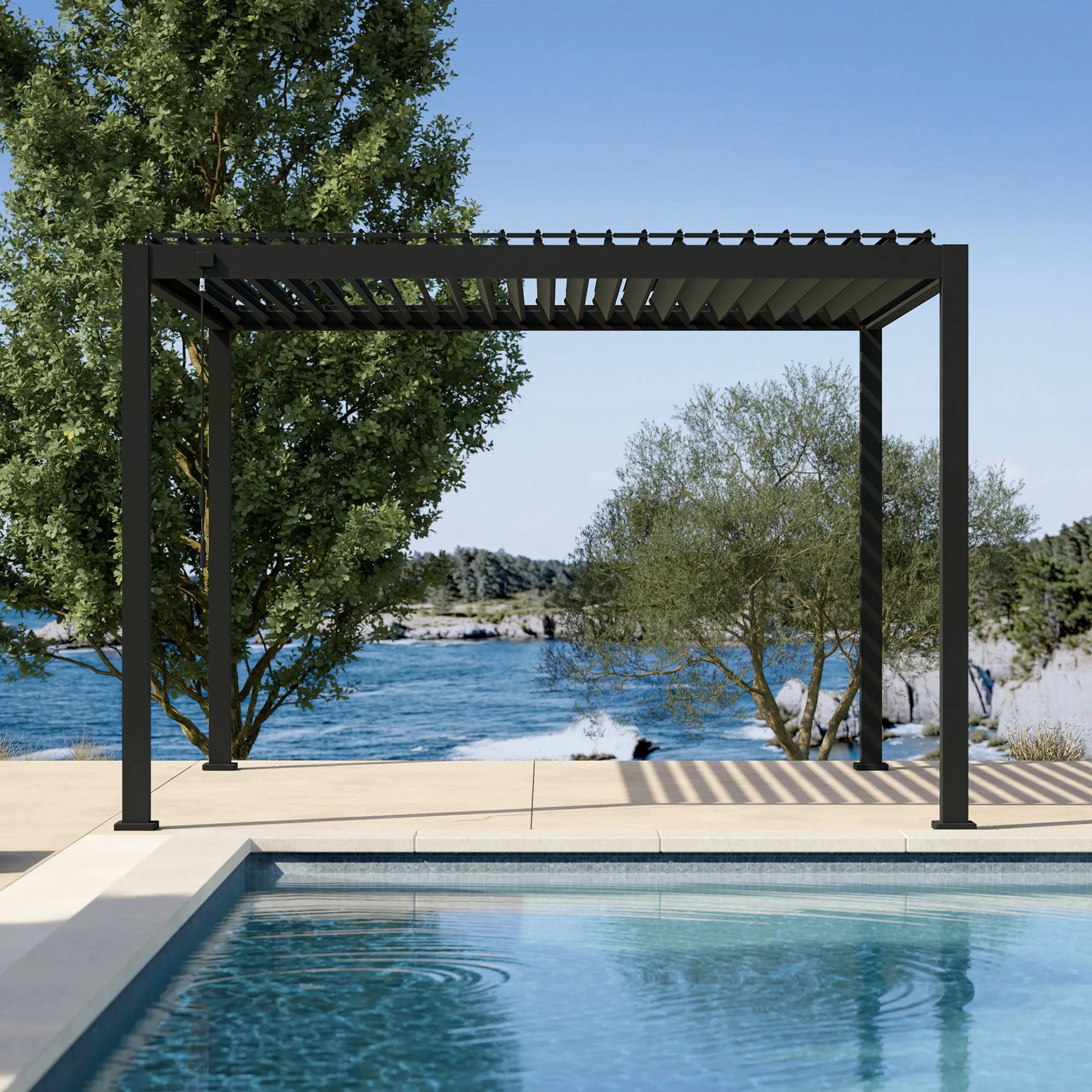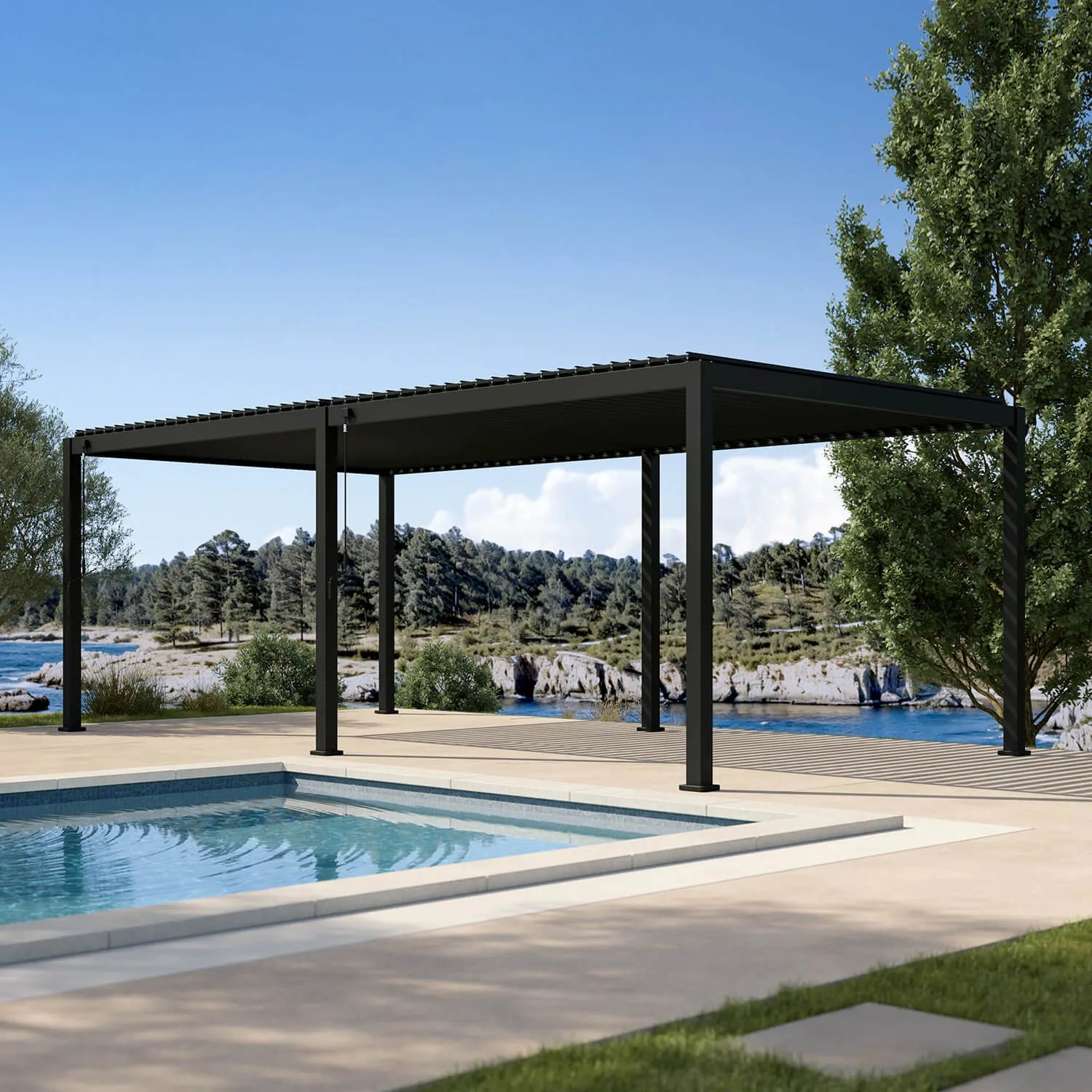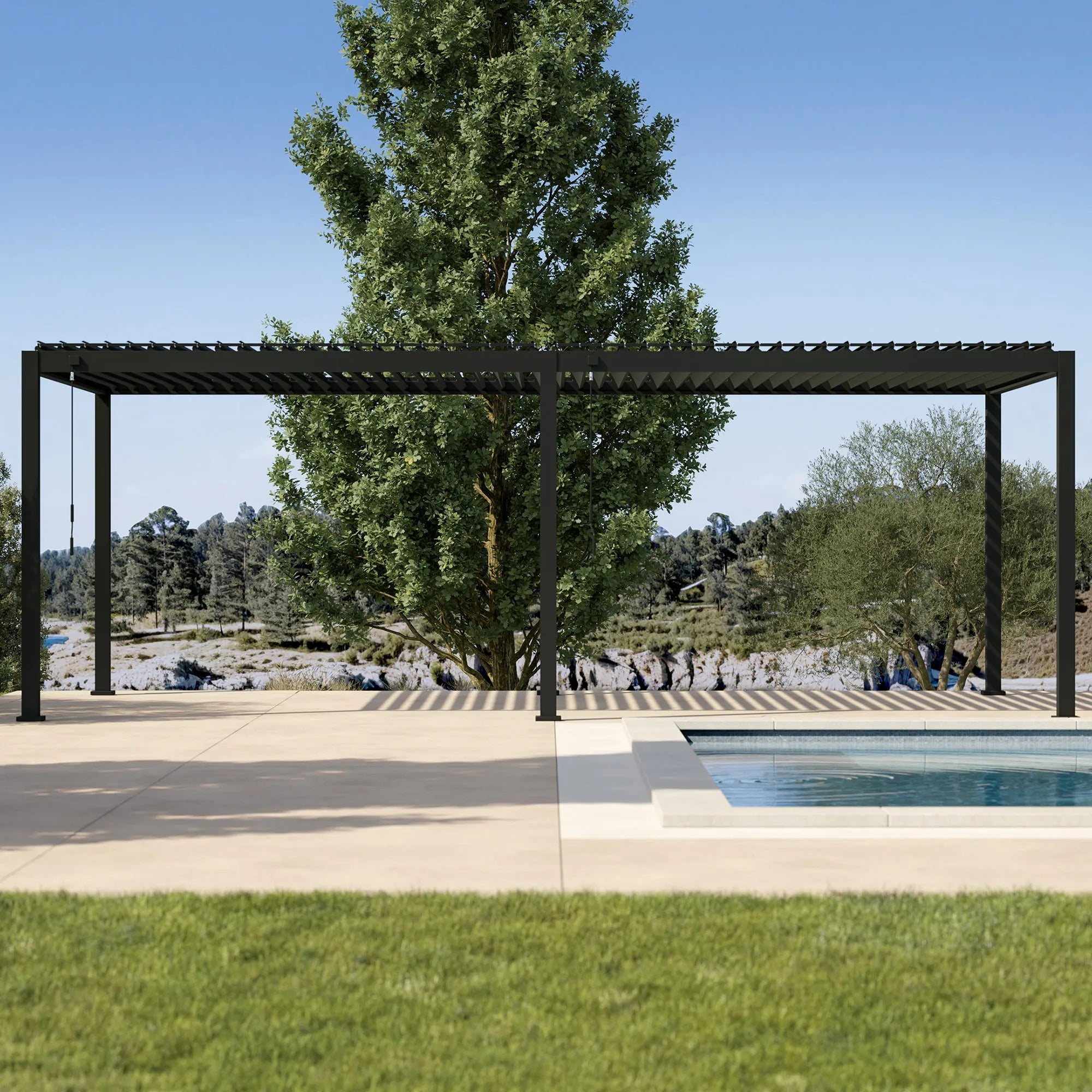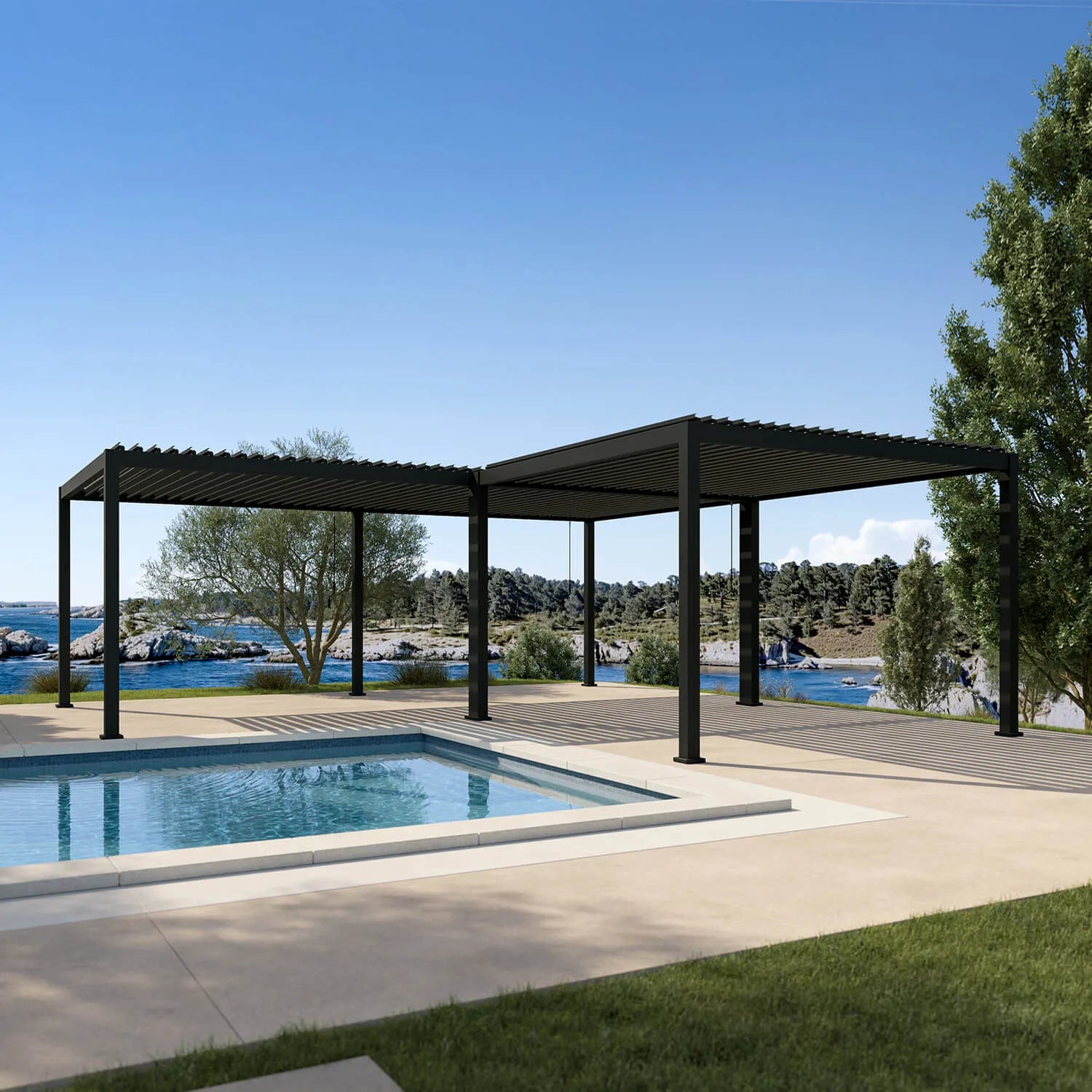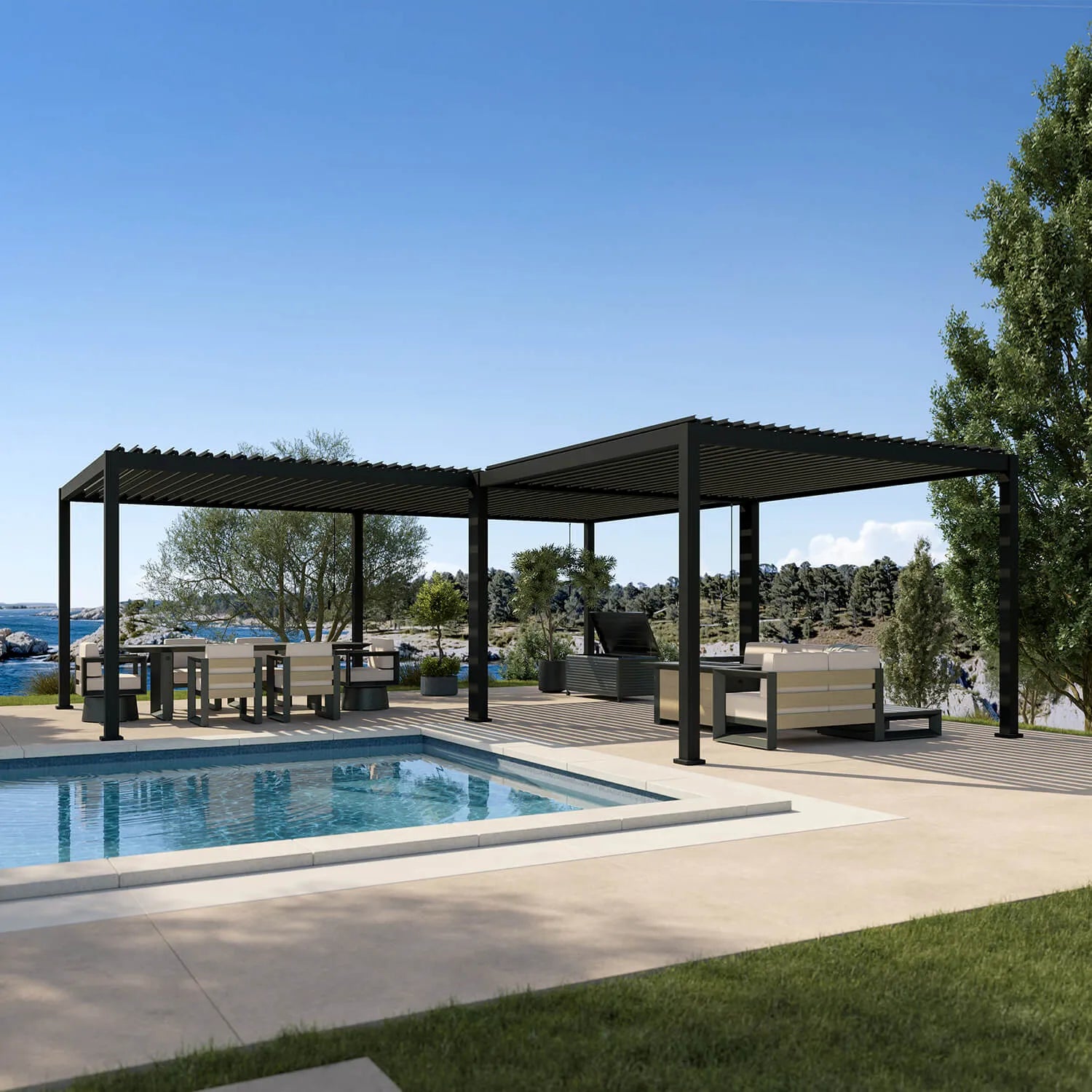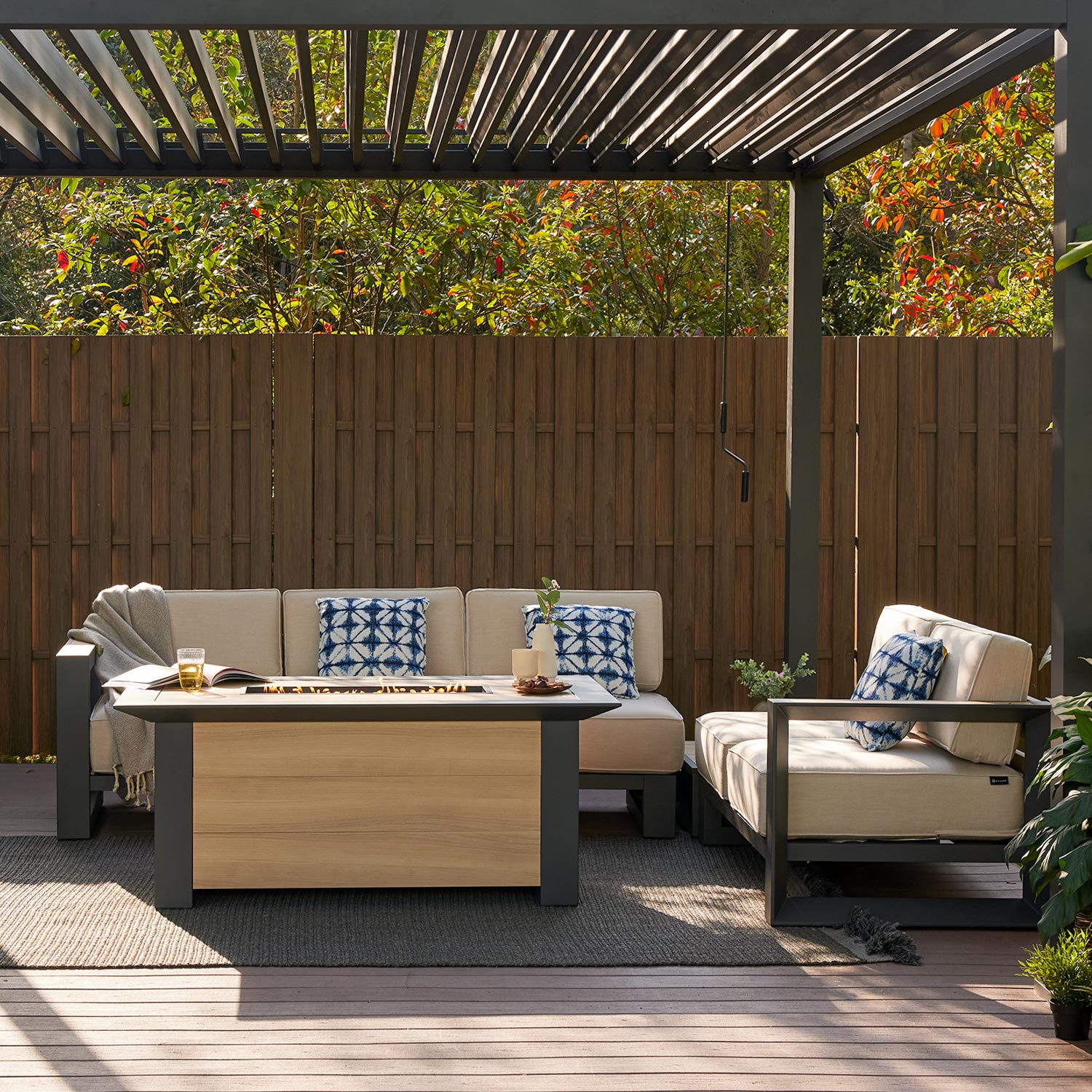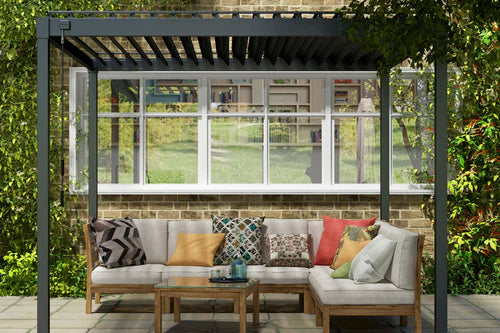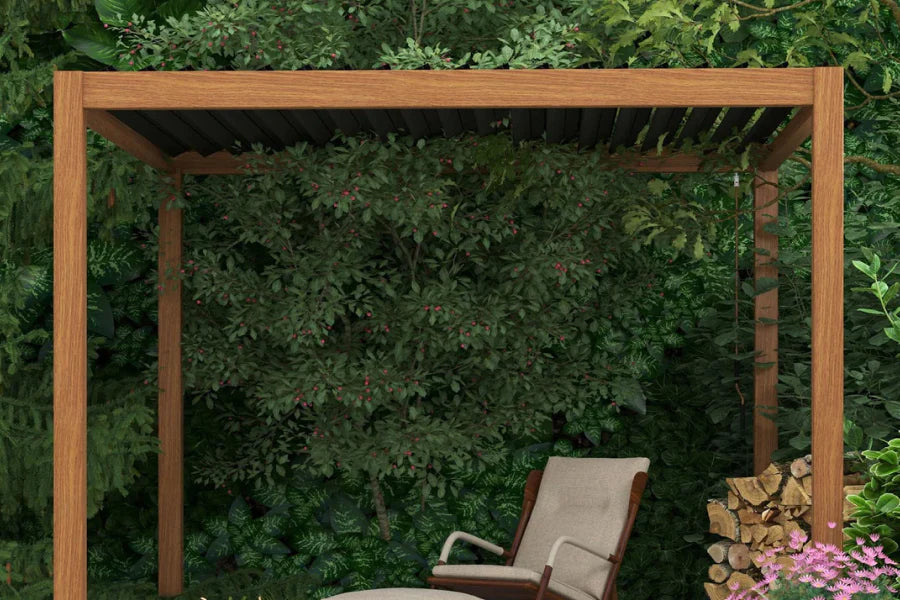

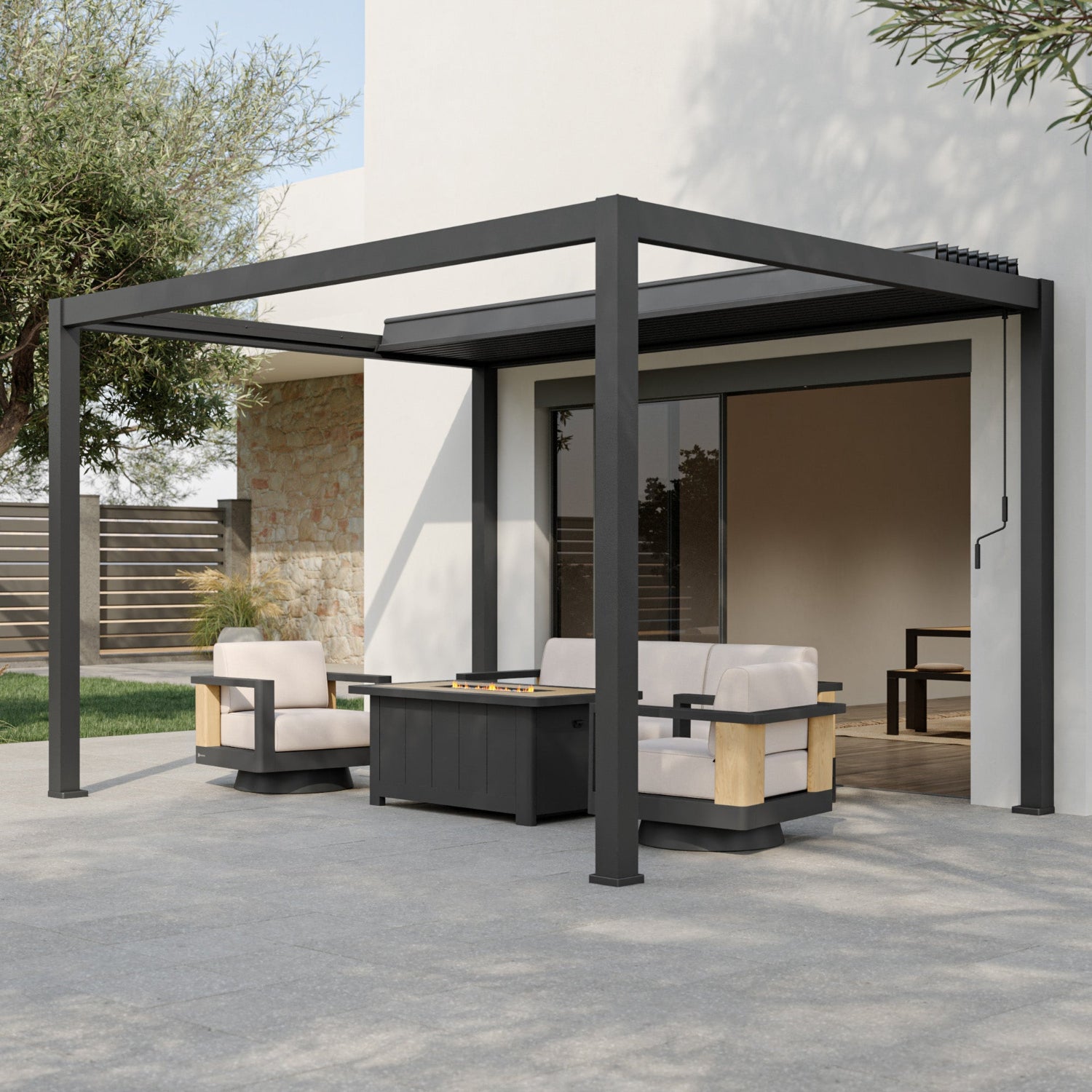
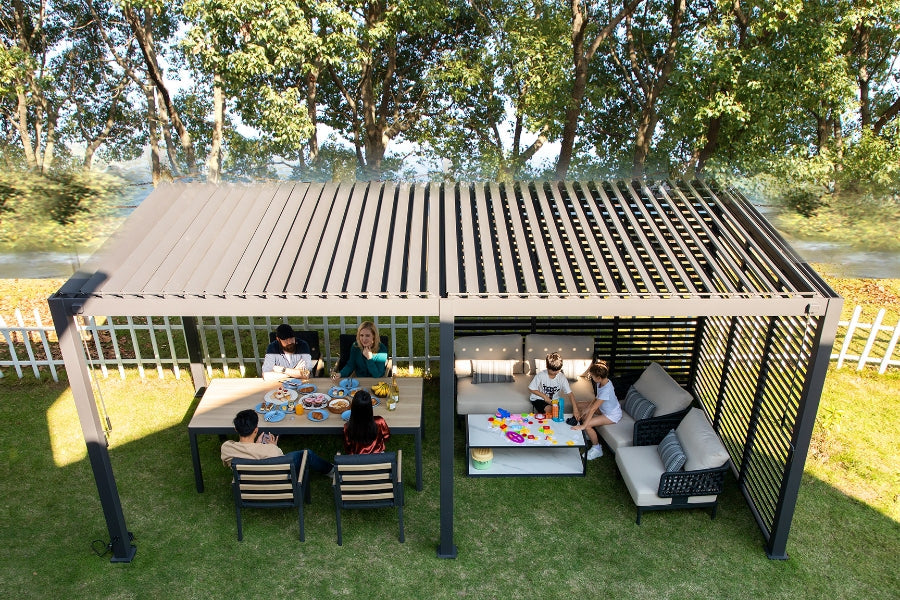
The main difference between a traditional pergola and a gazebo is the roof. A traditional pergola has an open framework that lets sunlight and air pass through, while a gazebo has a fixed, solid roof that provides continuous overhead shade and rain shelter.
A louvered pergola adds another option: adjustable roof panels that open for sunlight and ventilation and close for shade and rain protection.
Which is the better backyard investment? A traditional pergola suits homeowners who want an open garden feature. A gazebo suits those who prefer a standalone structure with permanent overhead coverage. A louvered pergola suits those who want to change the amount of sun, shade, and coverage throughout the day.
Here is how the options compare on cost, comfort, maintenance, installation, and everyday use.
Pergola vs. Gazebo: What Is the Difference?
Traditional Pergola
A traditional pergola consists of posts supporting overhead beams or rafters. It can be freestanding or attached to a house, depending on the design.
Its open roof creates filtered shade and provides a framework for climbing plants. However, the gaps between the beams allow rain to pass through. An open-sided pergola also does not block wind from entering the seating area.
Gazebo
A gazebo is typically a freestanding structure with a solid roof. Its sides may be open, fitted with railings or screens, or enclosed, depending on the design.
Traditional gazebos often have six or eight sides, although shape alone does not determine the structure’s function. Some include a raised floor, built-in seating, or other architectural details.
The fixed roof provides continuous overhead coverage. Side protection and privacy depend on whether the gazebo includes screens, curtains, or walls.
Louvered Pergola
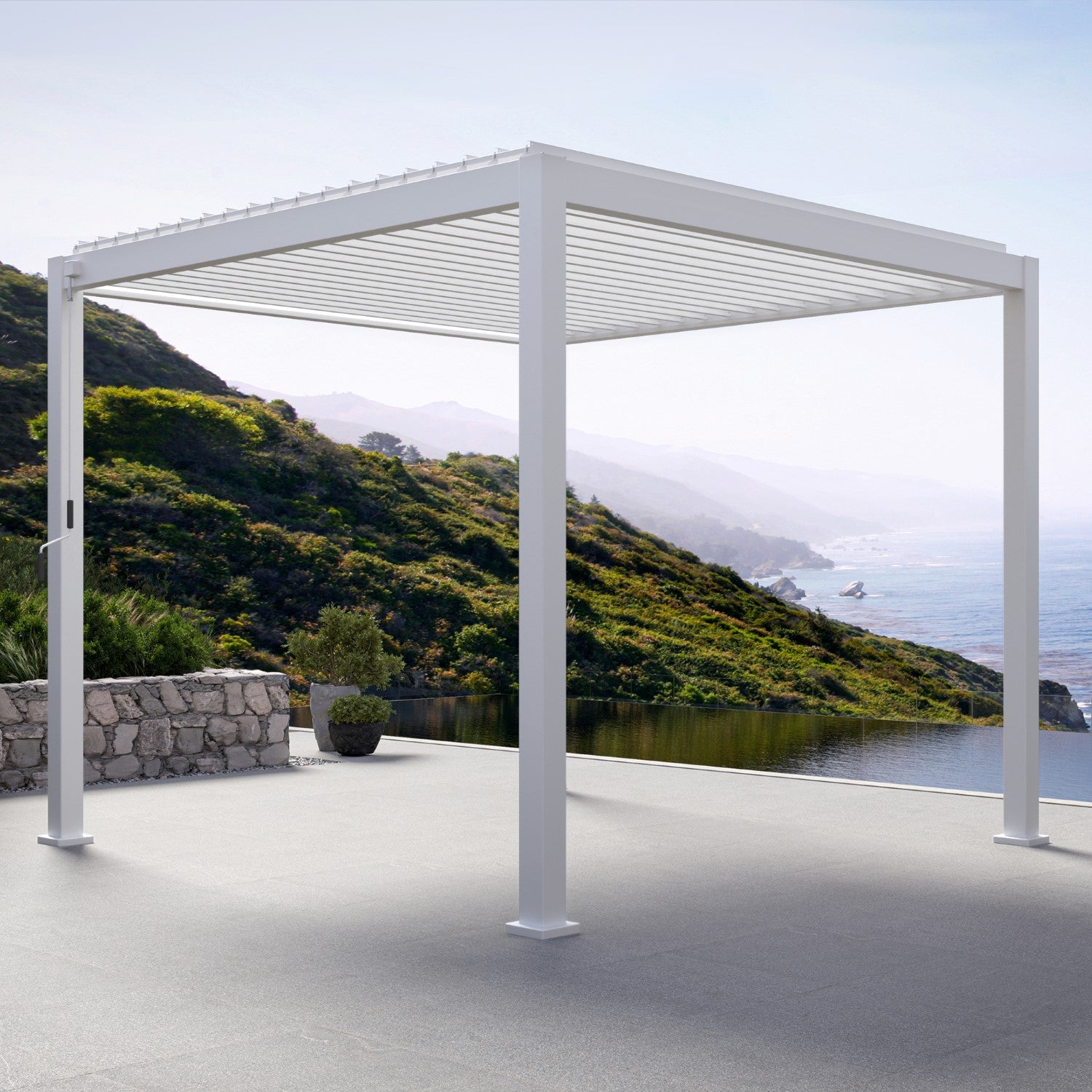
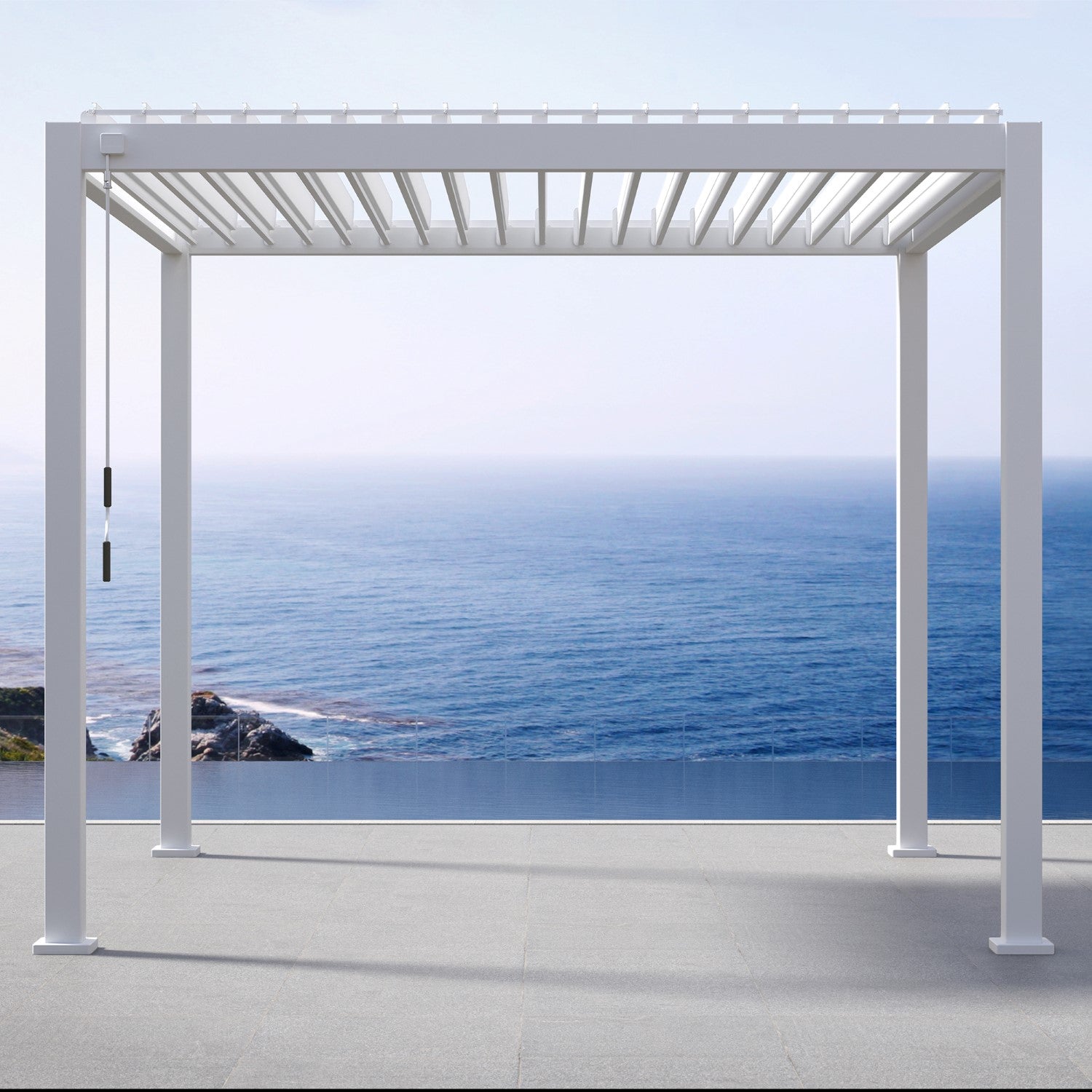
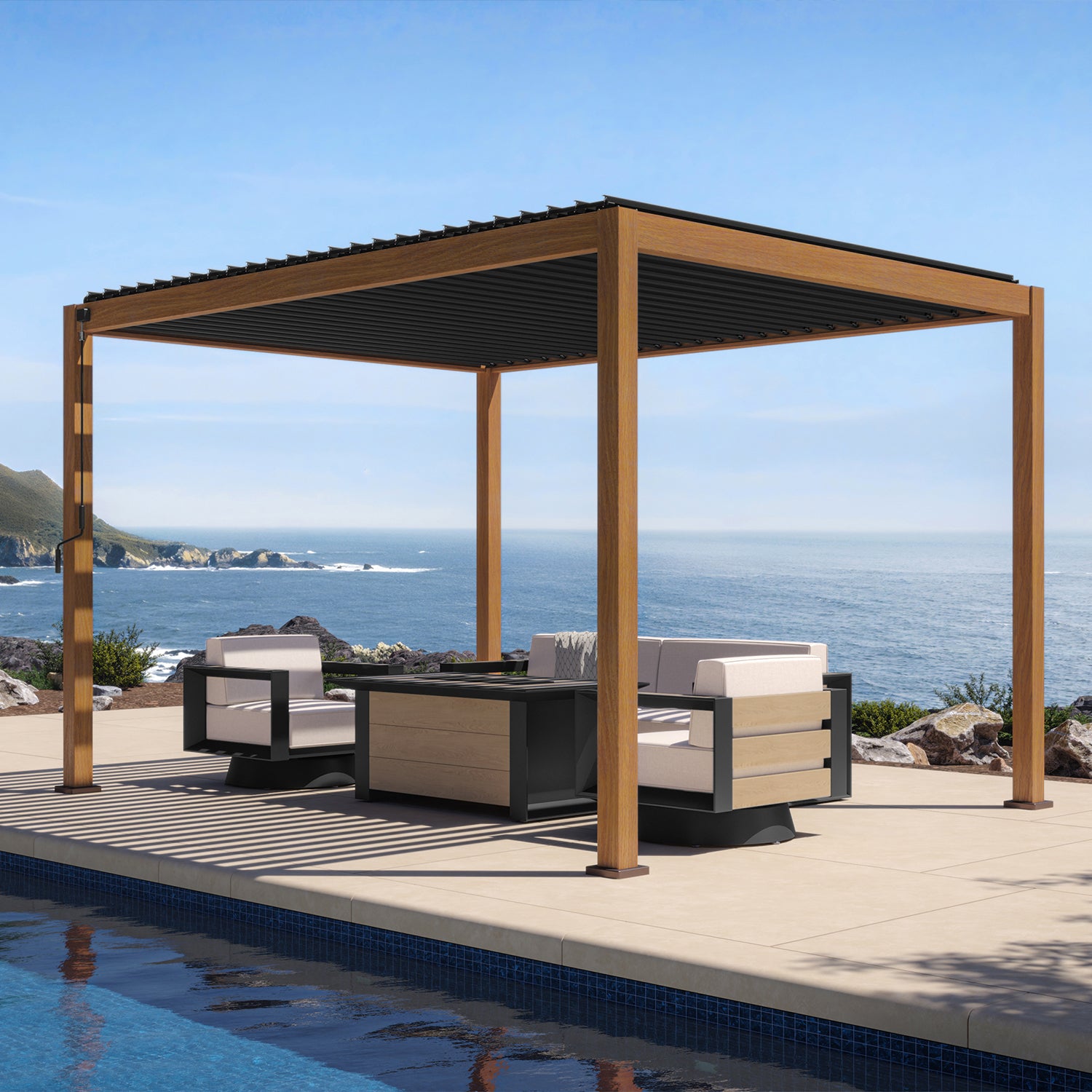
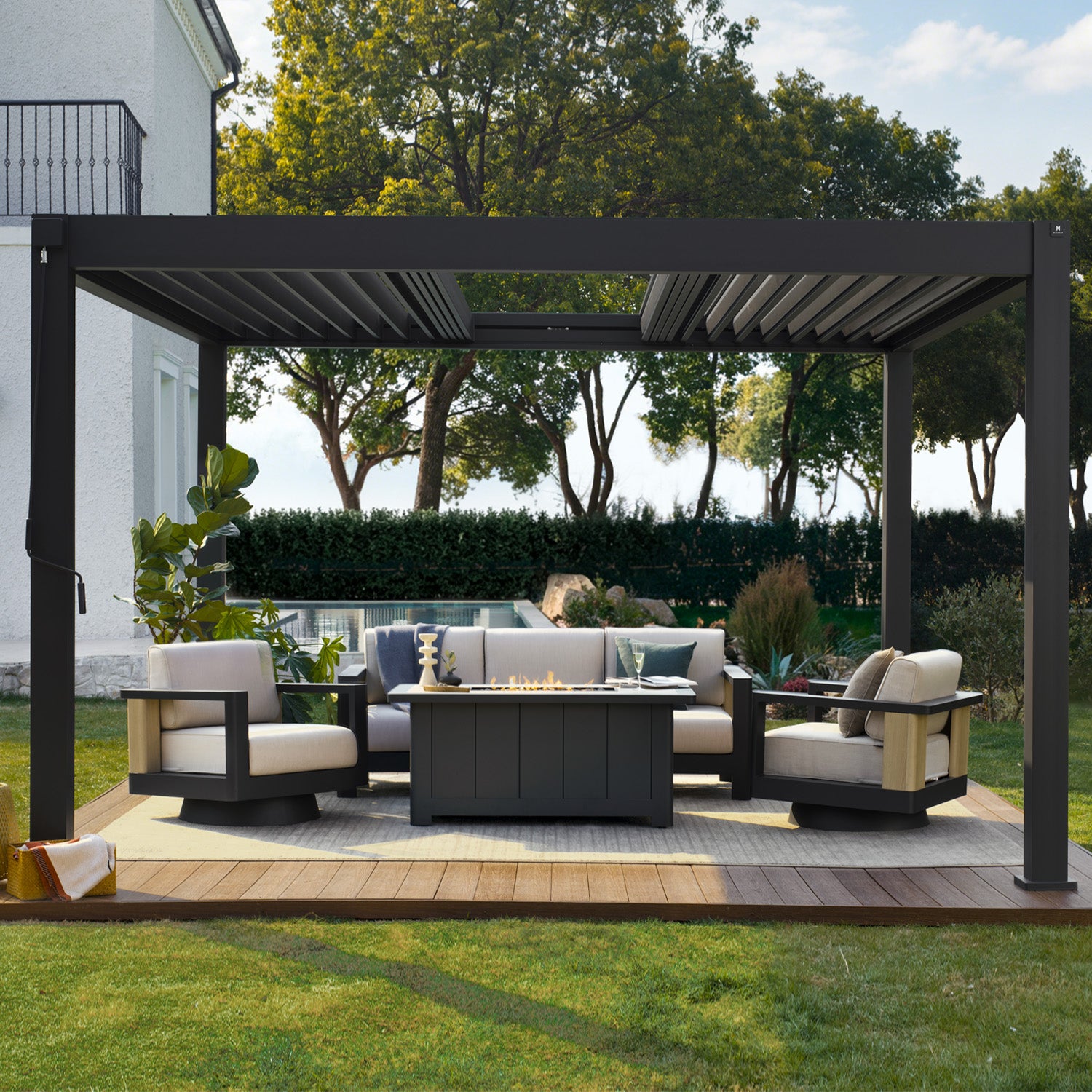
A louvered pergola uses adjustable roof panels instead of fixed, spaced beams. You can open the louvers to let in sunlight and fresh air or close them for shade and rain protection.
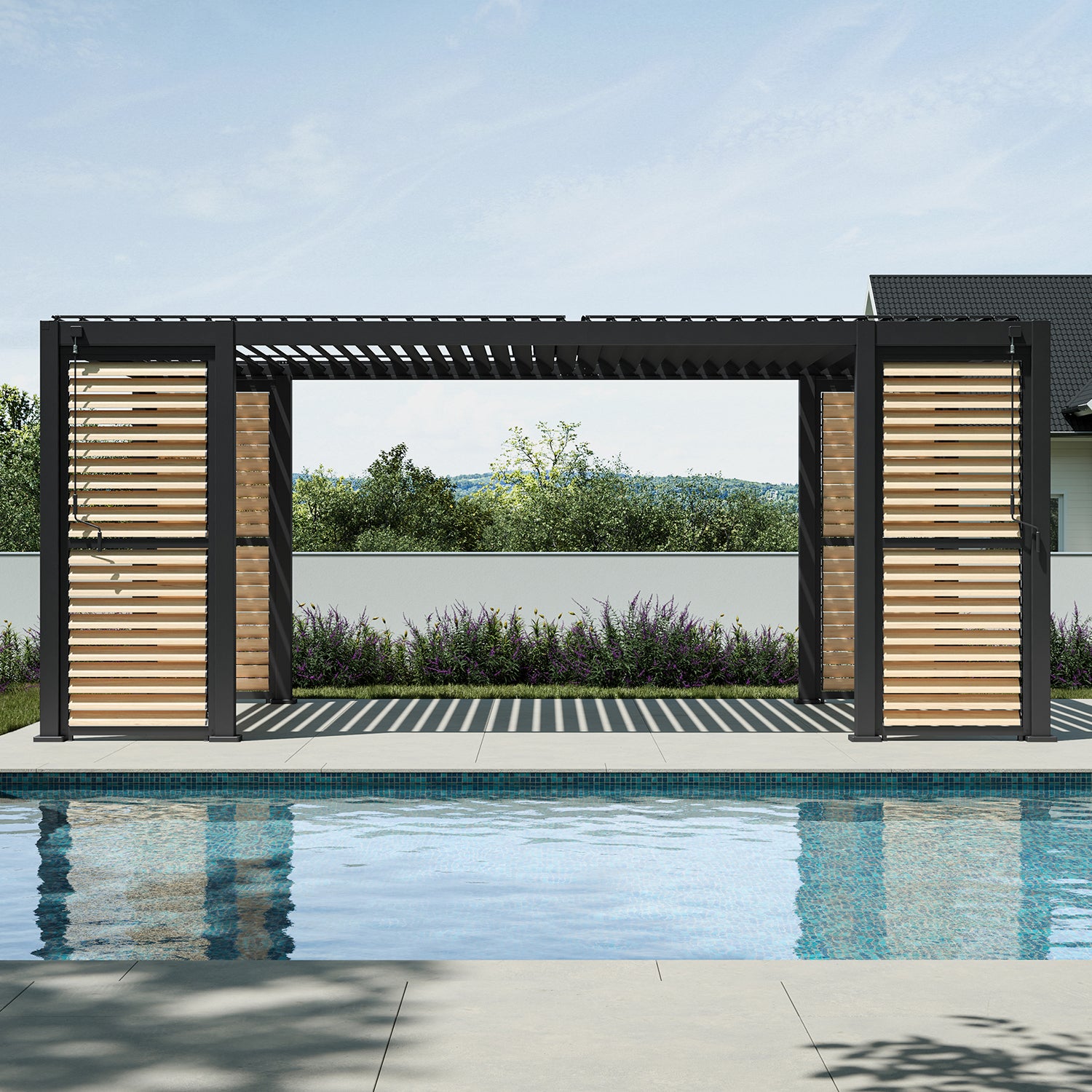
Mirador’s louvered pergolas also include an integrated drainage system. Compatible pull-down screens or shutter walls can add privacy and help manage exposure from the sides.
A louvered pergola is a type of pergola, rather than a completely separate category. Its adjustable roof is the key difference to consider when comparing it with a traditional pergola or gazebo.

Pergola vs. Gazebo: Quick Comparison
|
Feature |
Traditional Open-Beam Pergola |
Louvered Pergola |
Gazebo |
|---|---|---|---|
|
Roof |
Fixed, open beams or rafters |
Adjustable louvers |
Fixed, solid roof |
|
Sun and shade |
Filtered shade; sunlight passes through the roof |
Adjustable sunlight and shade |
Continuous overhead shade |
|
Rain protection |
Rain passes through the open roof |
A closing roof and drainage system provide overhead rain protection |
Solid roof provides overhead rain shelter |
|
Airflow |
Open overhead framework and sides |
Adjustable roof openings; airflow also depends on side accessories |
Primarily through open sides, windows, or vents |
|
Placement |
Freestanding or attached, depending on design |
Freestanding or attached, depending on model |
Typically freestanding |
|
Maintenance |
Depends on material and finish |
Depends on material, moving components, and drainage system |
Depends on material, roofing, and additional features |
|
Installation |
DIY kits or custom construction |
DIY kits or professionally installed systems |
DIY kits or custom construction |
|
Best suited to |
Open garden spaces and climbing plants |
Patios needing adjustable shade and coverage |
Standalone seating areas with permanent overhead shelter |
An open-sided structure can still admit wind and wind-driven rain, even when its roof provides overhead shelter.
Cost: Which Is More Affordable?
Traditional open-beam pergolas generally cost less to build than more elaborate gazebos because they use fewer roofing materials and may have a simpler structure.
The broad average ranges cited for pergolas and gazebos are:
- Pergolas: $2,200–$6,400
- Gazebos: $2,700–$10,000
These ranges overlap. They should be used as a starting point rather than proof that every pergola costs less than every gazebo.
Louvered pergolas also have different components from traditional open-beam designs, so they should be compared separately.
At Mirador, louvered pergolas start at $1,299 and range up to $9,999, depending on material, size, and configuration. These models feature adjustable louvers and a built-in drainage system.
Compare the Complete Project Cost
Before choosing, compare options with similar dimensions, materials, and features. Include:
- The structure or kit price.
- Delivery and assembly costs.
- Required site preparation, foundations, and anchoring.
- Screens, walls, lighting, or other accessories.
- Electrical work where required.
- Ongoing maintenance.
A basic gazebo kit may cost less than a large, fully equipped louvered pergola. A custom-built gazebo with flooring and additional features may cost more. The better investment depends on the complete project and how you will use it.
Shade, Rain Protection, and Outdoor Comfort
Choose a Traditional Pergola for an Open-Air Setting
A traditional pergola works well when you want filtered sunlight and an open garden atmosphere. Its framework can support climbing plants that add shade over time.
The tradeoff is that the roof does not provide continuous coverage. If keeping a dining or seating area dry is a priority, an open-beam design alone will not meet that need.
Choose a Gazebo for Permanent Overhead Shelter
A gazebo’s solid roof provides shade without adjustment and shelters the space beneath it from overhead rain.
That fixed coverage is useful if you prefer a consistently shaded seating area. However, you cannot open the roof to admit more sunlight in the same way you can with adjustable louvers.
Choose a Louvered Pergola for Adjustable Coverage
A louvered pergola allows you to change the roof position as conditions change. Open the louvers for sunlight and airflow, angle them for shade, or close them for rain protection.
Mirador models include a patented integrated drainage system that channels rainwater through the posts.
Roof coverage and side protection serve different purposes. If privacy or exposure from the sides matters, compare the available screens or walls as well as the roof.
Materials and Maintenance
Maintenance depends on what the structure is made from and how it is designed—not simply whether it is called a pergola or gazebo.
Wood structures offer a natural appearance but require regular attention to the finish and signs of weathering. Metal structures generally require less routine refinishing, although care requirements vary by material and coating.
For louvered pergolas, maintenance also includes keeping the drainage system clear and caring for moving components according to the product instructions. Gazebos may require attention to roofing, flooring, railings, or screens where those features are included.
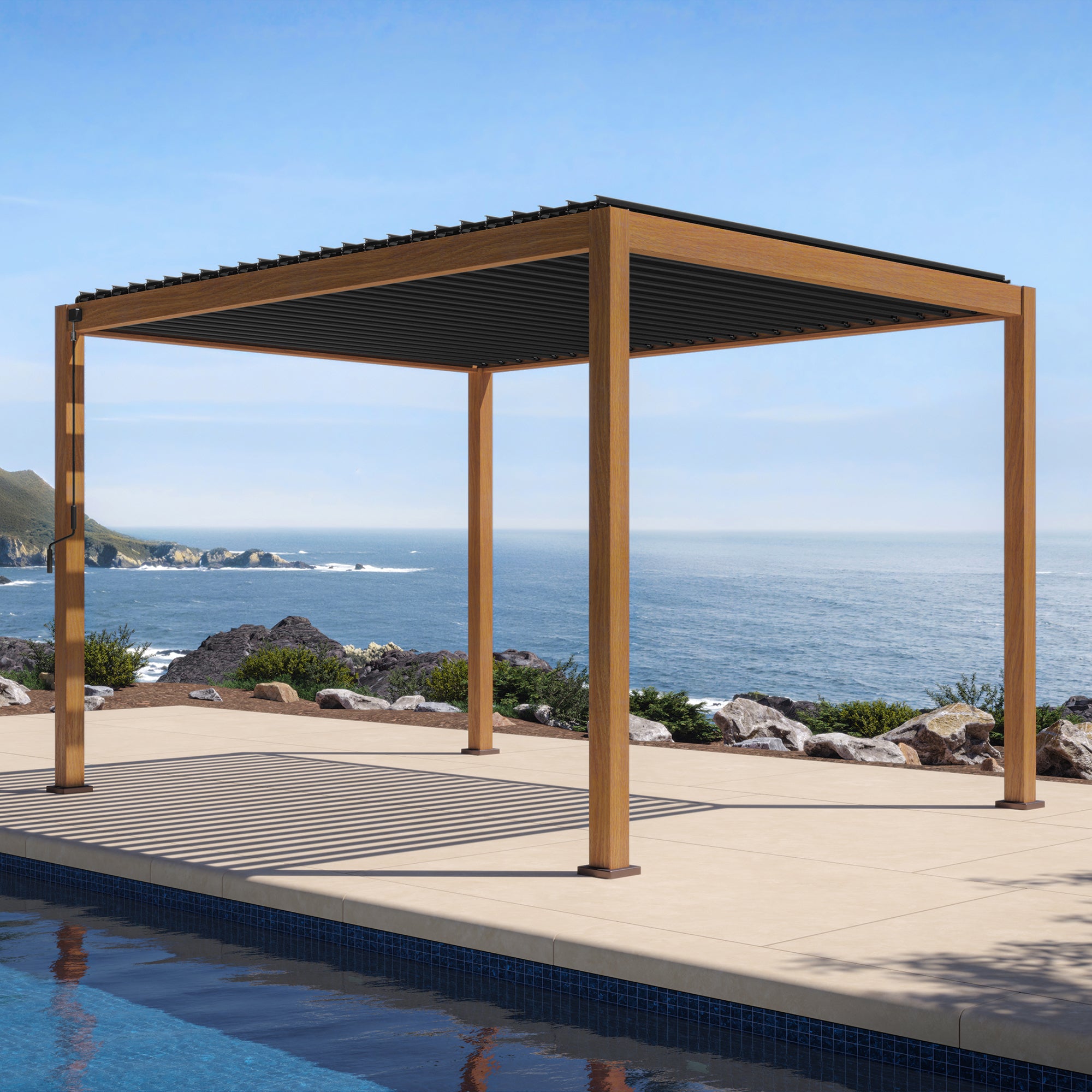
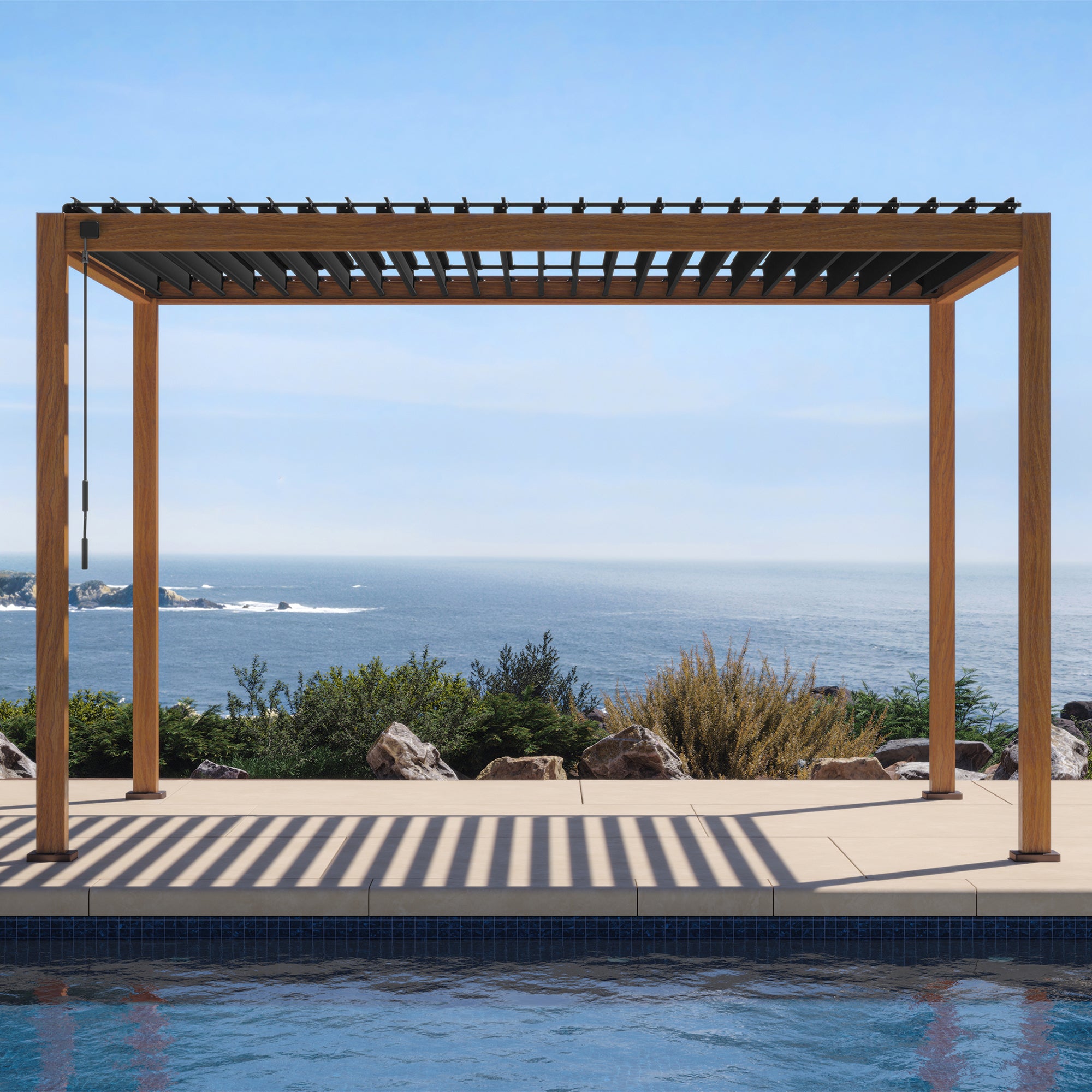
Mirador pergolas are built from premium aluminum or steel. Takasho wood-grain models provide a warm timber appearance without the rot, fading, or constant resealing associated with wood.
When comparing products, review their care instructions rather than assuming one type of structure is always lower maintenance.
Installation: DIY Kit or Custom Build?
Both pergolas and gazebos are available as ready-made kits or custom-built structures. Installation difficulty depends on the model, roof design, site, and additional features.
Mirador pergolas are designed for DIY assembly: two people, basic tools, and about four hours. No welds or rivets are required.
A gazebo kit may also be suitable for DIY assembly. A custom gazebo with a constructed roof, floor, or enclosure may require professional installation.
Assembly time is separate from preparing the installation site. Before choosing either structure, confirm the required supporting surface, anchoring method, and any applicable local or community requirements.

Pergola vs. Gazebo: Quick Comparison
|
Feature |
Louvered Pergola |
Gazebo |
|---|---|---|
|
Roof Type |
Adjustable louvers (open/close) |
Solid, fixed |
|
Typical Shape |
Rectangular or square |
Octagonal or hexagonal |
|
Avg. Cost Range |
$1,300–$10,000 |
$2,700–$10,000+ |
|
Weather Protection |
Full (when louvers closed) |
Full |
|
Airflow Control |
Yes — angle the slats |
Limited (open sides only) |
|
Maintenance |
Low (aluminum/steel) |
Moderate to high |
|
DIY Install? |
Yes — kit models |
Usually needs a pro |
|
Placement |
Freestanding or wall-attached |
Freestanding only |
|
Modern Appeal |
High |
Traditional/classic |
|
Best For |
Modern patio dining, outdoor BBQs, poolside lounging, and versatile outdoor spaces requiring adjustable sun/shade. |
Traditional garden centerpieces and standalone all-weather retreats. |
Why Choose a Mirador Louvered Pergola?
A Mirador louvered pergola is a practical choice if adjustable overhead coverage is a priority.
Its features include:
- Adjustable louvers: Open the roof for sunlight and ventilation or close it for shade and rain protection.
- Manual or remote-controlled operation: Choose the control system that suits your preferences.
- Premium aluminum or steel construction: Select a material and finish that complements your outdoor space.
- Takasho wood-grain options: Enjoy a timber appearance without the maintenance demands of wood.
- Patented integrated drainage: Rainwater is directed through the posts.
- Wind-resistant engineering: The structure is engineered to withstand strong winds.
- DIY assembly: Two people with basic tools can assemble the pergola in about four hours, without welds or rivets.
Compatible pull-down screens and shutter walls provide additional ways to customize the space.

What About Home Value and ROI?
A pergola or gazebo can make a backyard more attractive and useful. However, neither structure guarantees a particular resale return.
A lower purchase price does not automatically mean a higher ROI. The financial outcome depends on the complete installation cost and the value buyers place on the finished improvement.
For your own decision, consider both resale appeal and everyday use:
- Does the structure suit the home and surrounding space?
- Will you use it regularly for dining, relaxing, or entertaining?
- Does it solve your main problem, such as excessive sunlight or a lack of overhead shelter?
- Can you maintain it in good condition?
- Does the complete project fit your budget?
The better backyard investment is the option that meets your needs at a cost you are comfortable with.

Which Should You Choose?
Choose a Traditional Pergola If:
- You want filtered sunlight rather than continuous roof coverage.
- You prefer an open framework for climbing plants.
- Overhead rain shelter is not your main priority.
Choose a Gazebo If:
- You want permanent overhead shade and rain shelter.
- You prefer a standalone garden feature.
- You like a fixed roof and do not need to adjust sunlight from above.
Choose a Louvered Pergola If:
- You want to change the amount of sunlight and shade.
- You need overhead rain protection without keeping the roof permanently closed.
- You plan to use the area for dining, lounging, or entertaining throughout changing conditions.
- You want the option to add compatible screens or walls.
For homeowners who prioritize adjustable shade and an open-air setting, a Mirador louvered pergola is a strong choice.
Browse Mirador’s pergola collection for aluminum, steel, and Takasho wood-grain options starting at $1,299.
FAQs
Is a Pergola Cheaper Than a Gazebo?
A traditional open-beam pergola is generally less expensive than a more elaborate gazebo, but prices overlap. Size, material, roof design, accessories, and installation costs determine the final price.
Mirador’s louvered pergolas start at $1,299 and range up to $9,999, depending on the configuration.
Can a Louvered Pergola Protect From Rain Like a Gazebo?
Yes. Mirador’s closed louvers form a watertight roof, and the patented integrated drainage system channels rainwater through the posts.
A gazebo provides overhead shelter through a fixed solid roof. In either case, an open-sided layout can still allow wind-driven rain to enter from the sides.
Does a Pergola or Gazebo Add More Home Value?
There is no universal winner. Either can improve the appearance and usefulness of a backyard, but a specific resale return cannot be guaranteed.
Choose based on the complete project cost, how well the structure suits your home, and how much you will use it.
Can I Install a Louvered Pergola Myself?
Yes. Mirador pergolas are designed for DIY assembly. Two people with basic tools can finish in roughly four hours, without rivets, welds, or specialty equipment.
Check the installation instructions for the supporting surface, anchoring requirements, and preparation needed before assembly.
Which Is Better: a Gazebo or a Pergola?
Choose a gazebo if you want fixed overhead shelter. Choose a traditional pergola if you want an open framework with filtered shade. Choose a louvered pergola if you want adjustable sunlight, shade, and overhead rain protection.
The right choice depends on how you want the space to function.