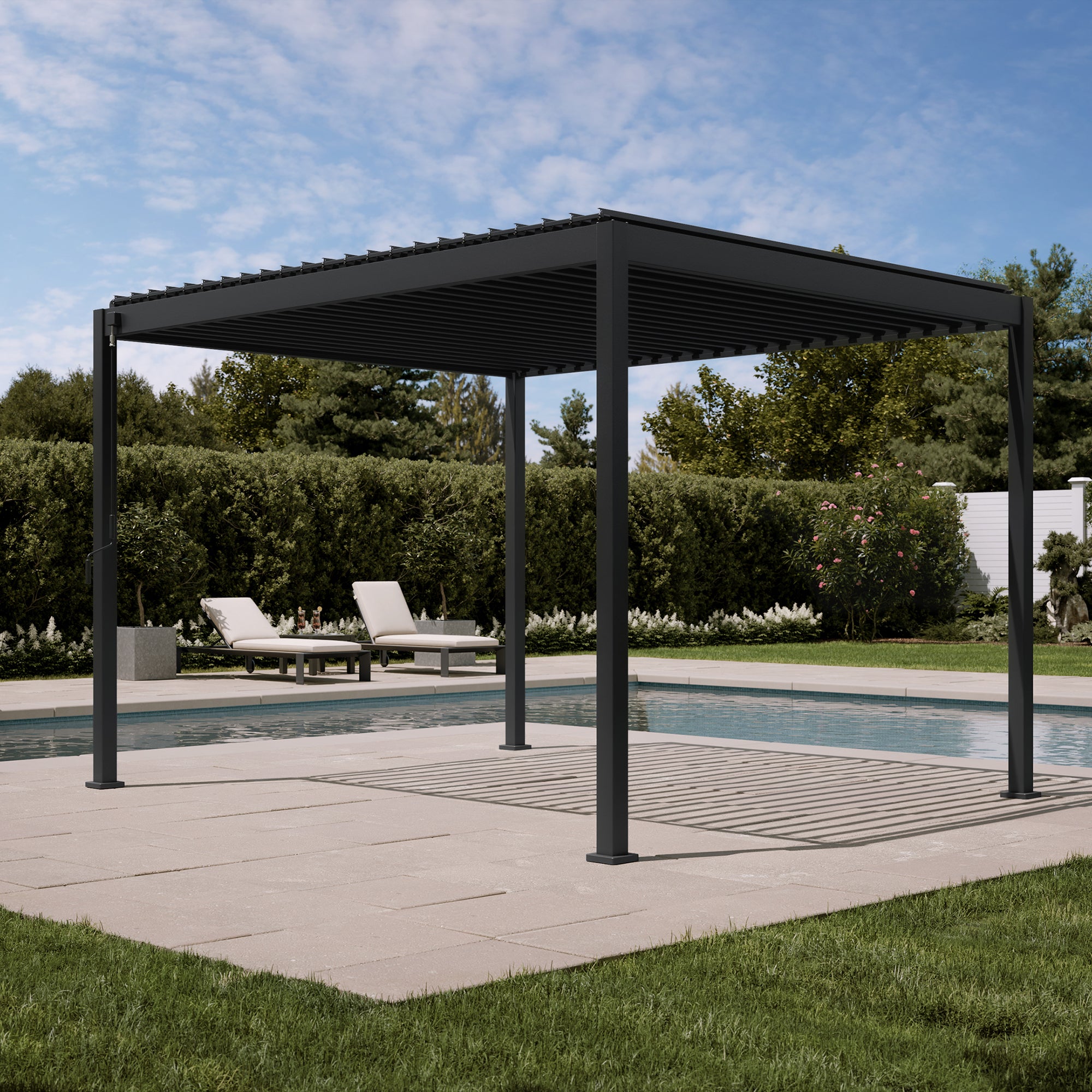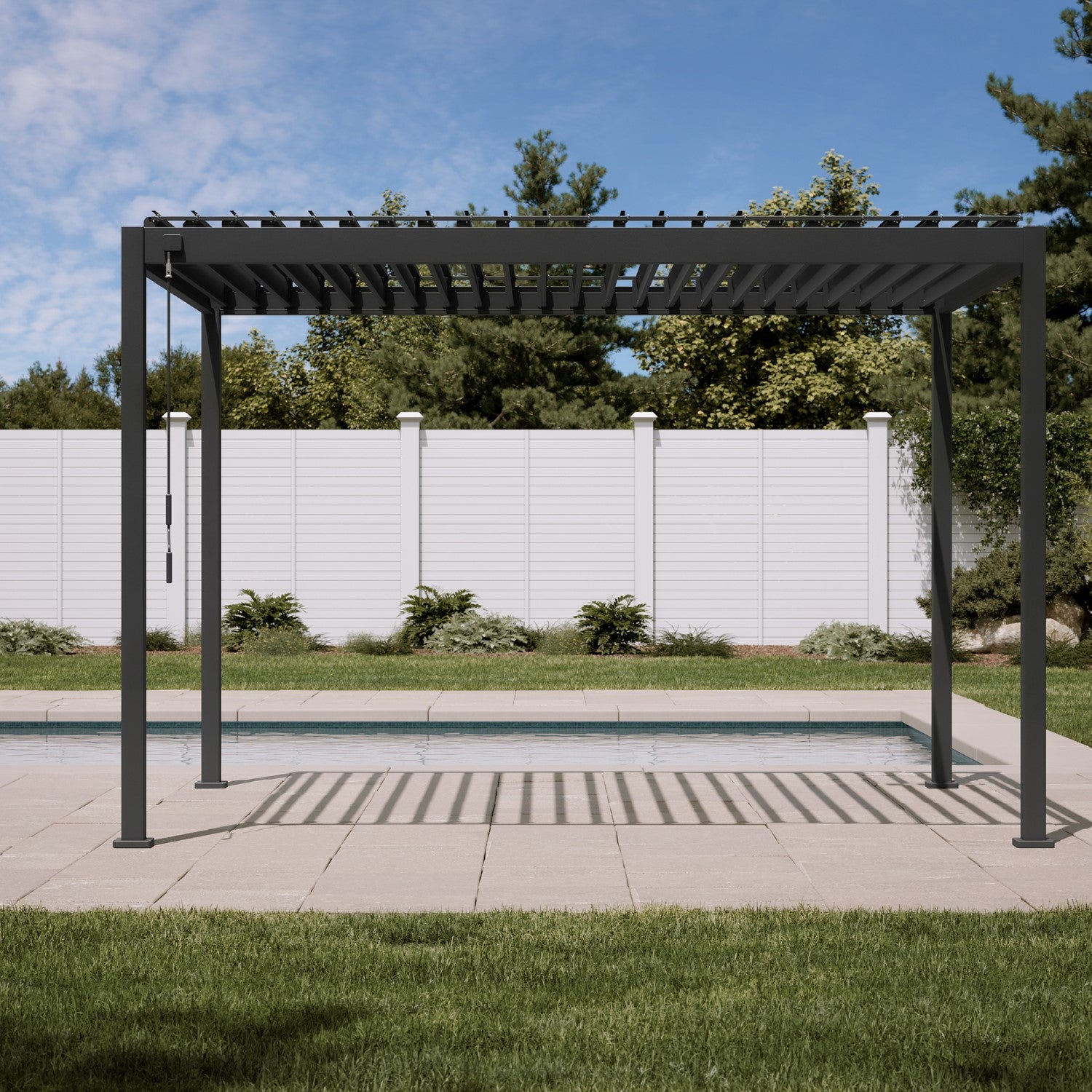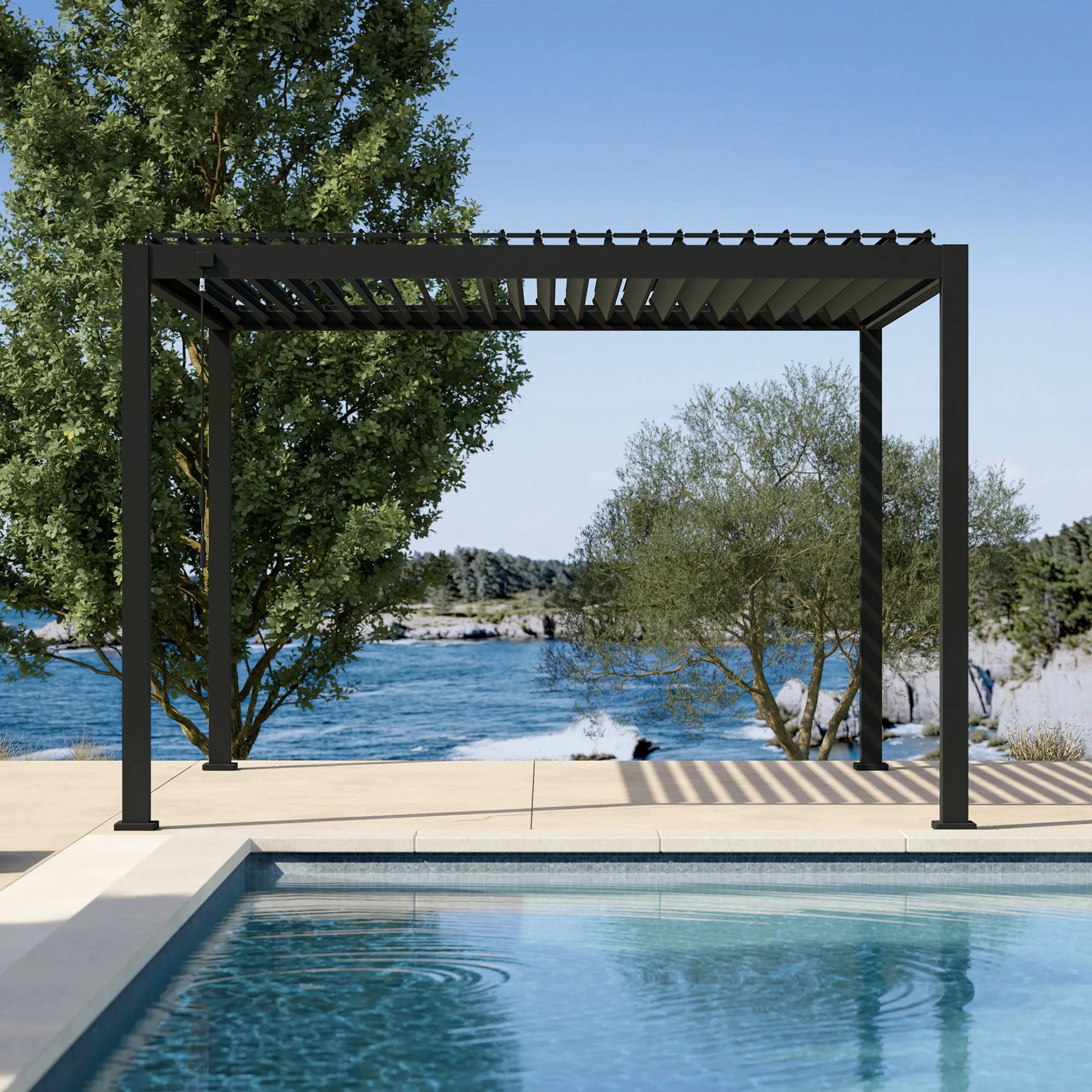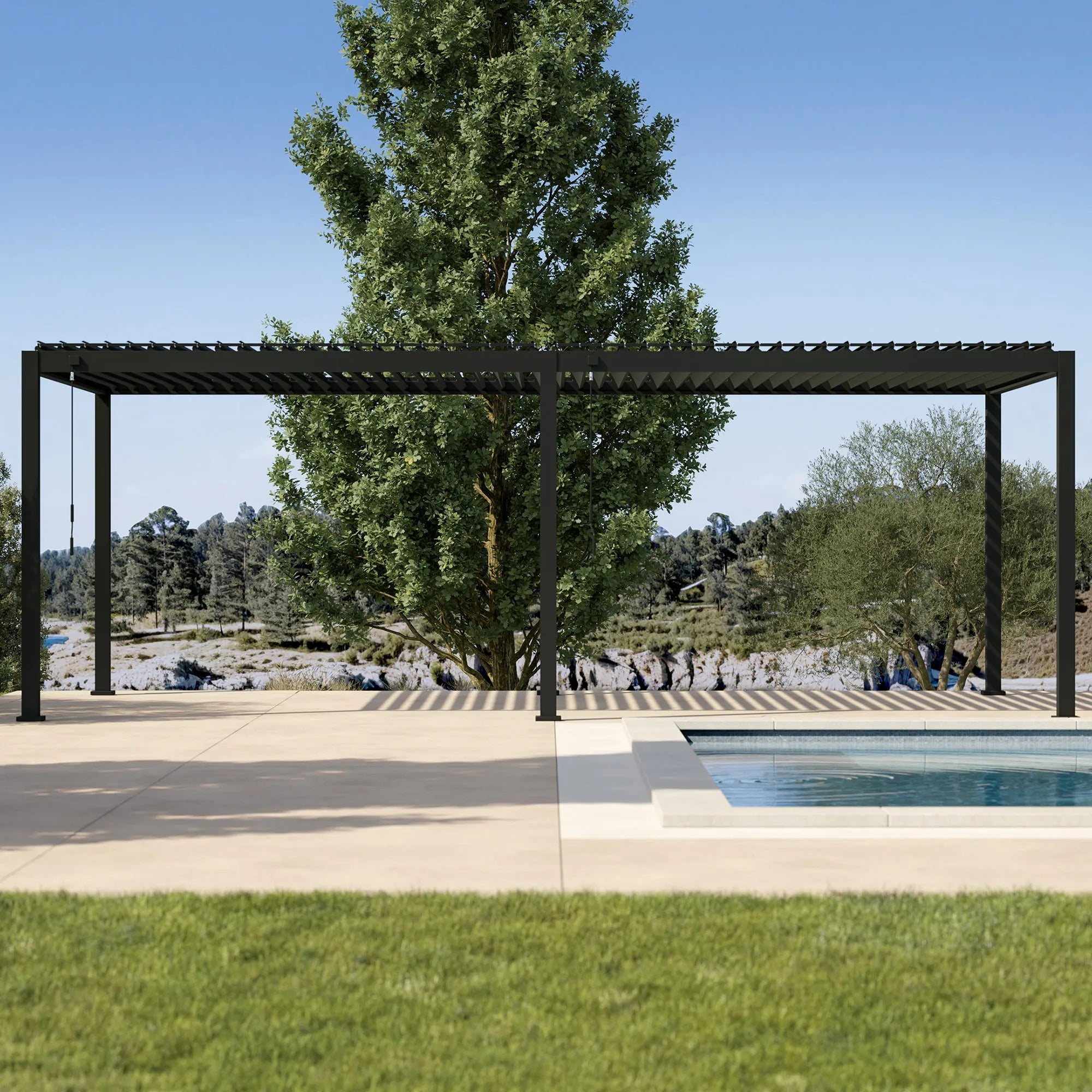







Clean a louvered pergola with mild detergent, clean water, and a soft cloth. Remove loose debris before washing, rinse from top to bottom, and check the roof channels and accessible drain openings. Maintenance also means watching how the louvers move and protecting the finish. For motorized models, disconnect the power before cleaning and keep water away from electrical components.
The cleaning method should match both the surface and the mechanism. Aluminum, coated steel, and a wood-grain finish may look similar from the patio, but they need different attention when you inspect them. At Mirador, we recommend starting with gentle cleaning and using the instructions for your exact model when a part needs adjustment or repair.
Check the Material and Finish Before You Wash
You clean the exposed finish first, rather than treating every pergola as bare metal or natural wood. A wood-look post, for example, does not necessarily need wood oil. Likewise, an aluminum frame does not mean every roof component is aluminum.
| Material or finish | Routine cleaning approach | What to watch for during maintenance |
|---|---|---|
| Coated aluminum | Mild soapy water, a soft cloth, and a clean-water rinse | Scratches, chips, peeling, and residue in corners. Avoid abrasive cleaning that damages the finish. |
| Coated or galvanized steel | Gentle washing that preserves the protective surface | Damage to the coating and rust-colored marks, especially around edges and connections. Investigate these separately from ordinary dirt. |
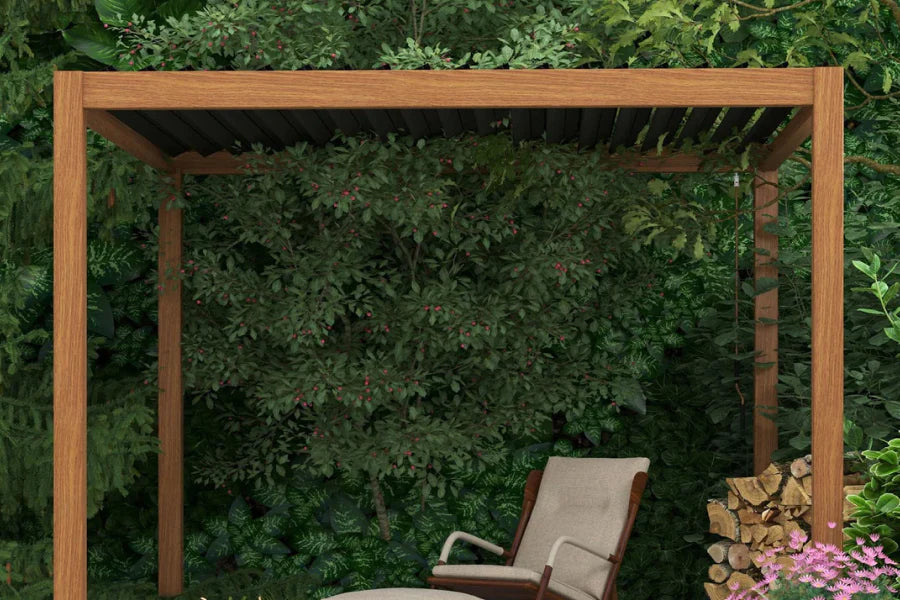
| Wood-grain finish on metal | A soft cloth and mild detergent suitable for the finish; test an inconspicuous spot first | Changes in appearance or surface damage. Do not automatically use wood cleaners, oils, stains, or sanding methods. |
| Natural wood, if your pergola includes it | Follow the wood species and finish instructions | Cleaning and any refinishing belong to a separate wood-care routine. Do not apply a metal-pergola method to every timber surface. |
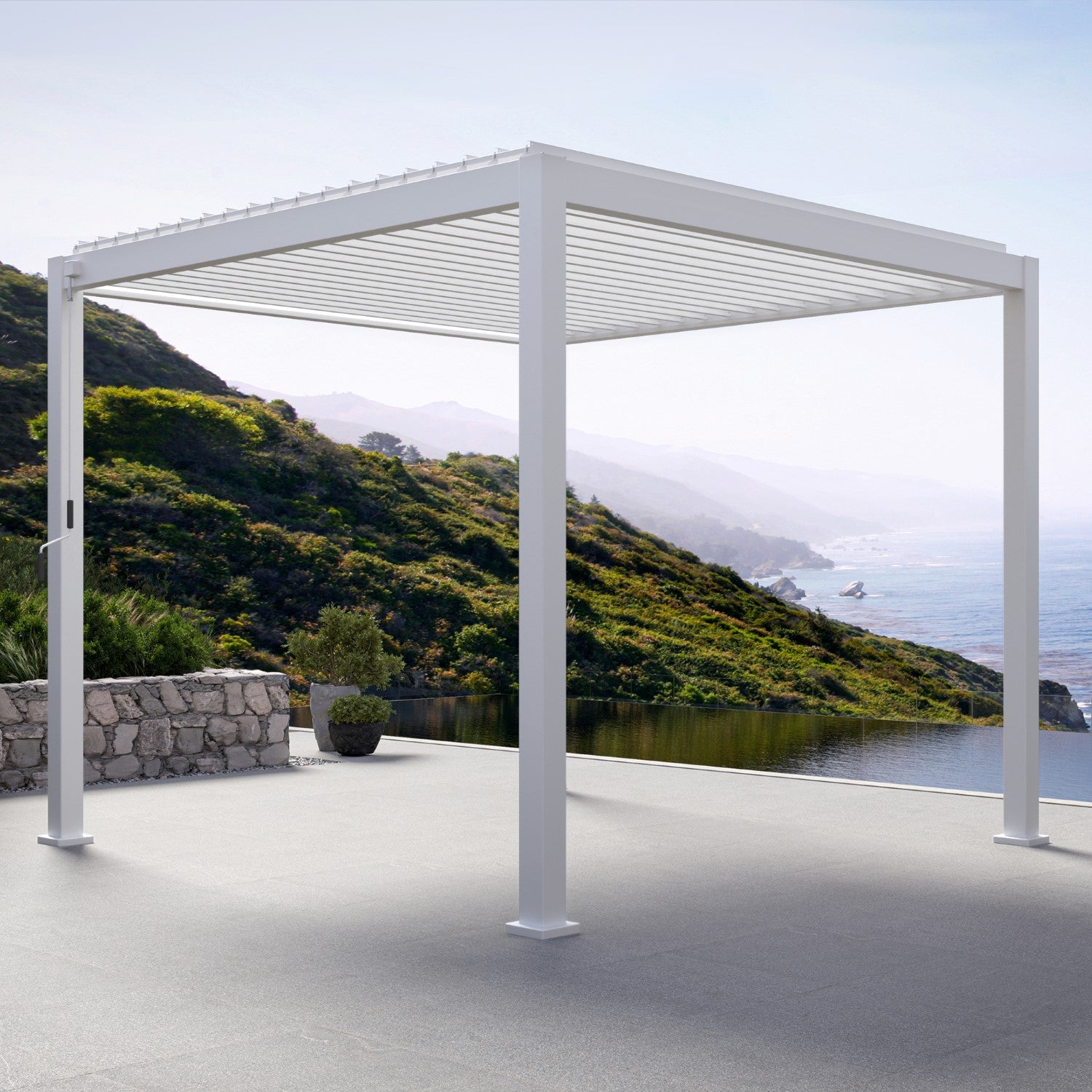
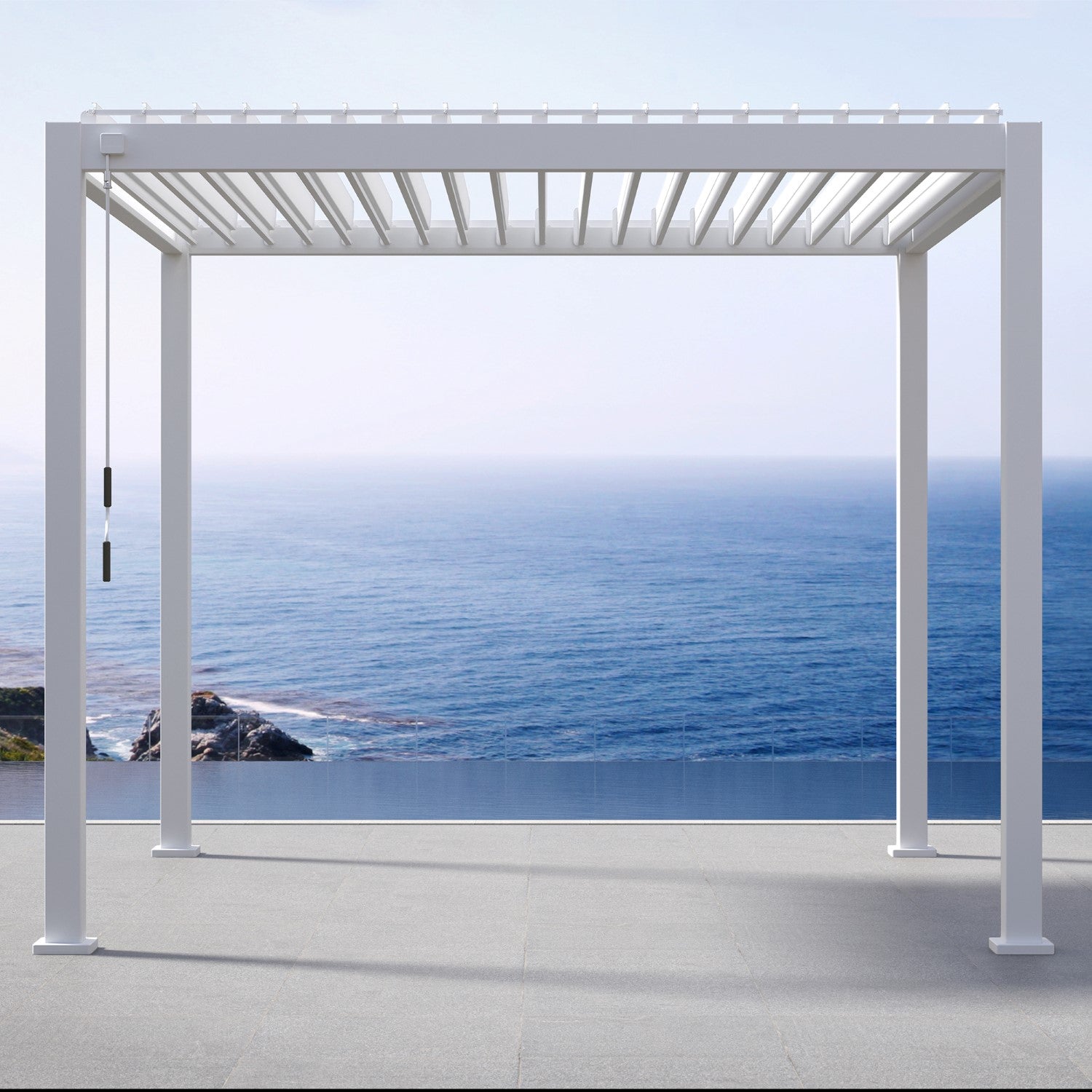
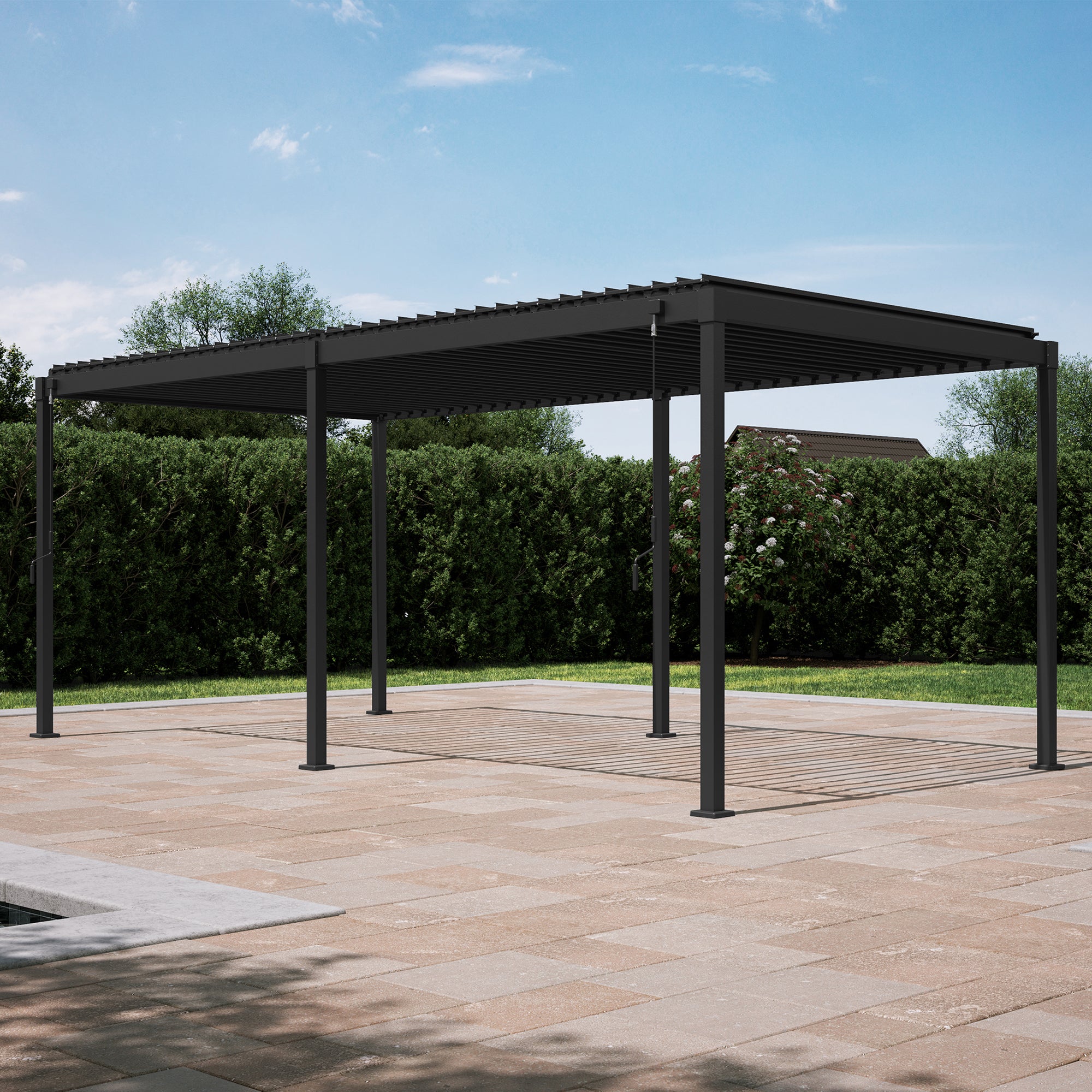
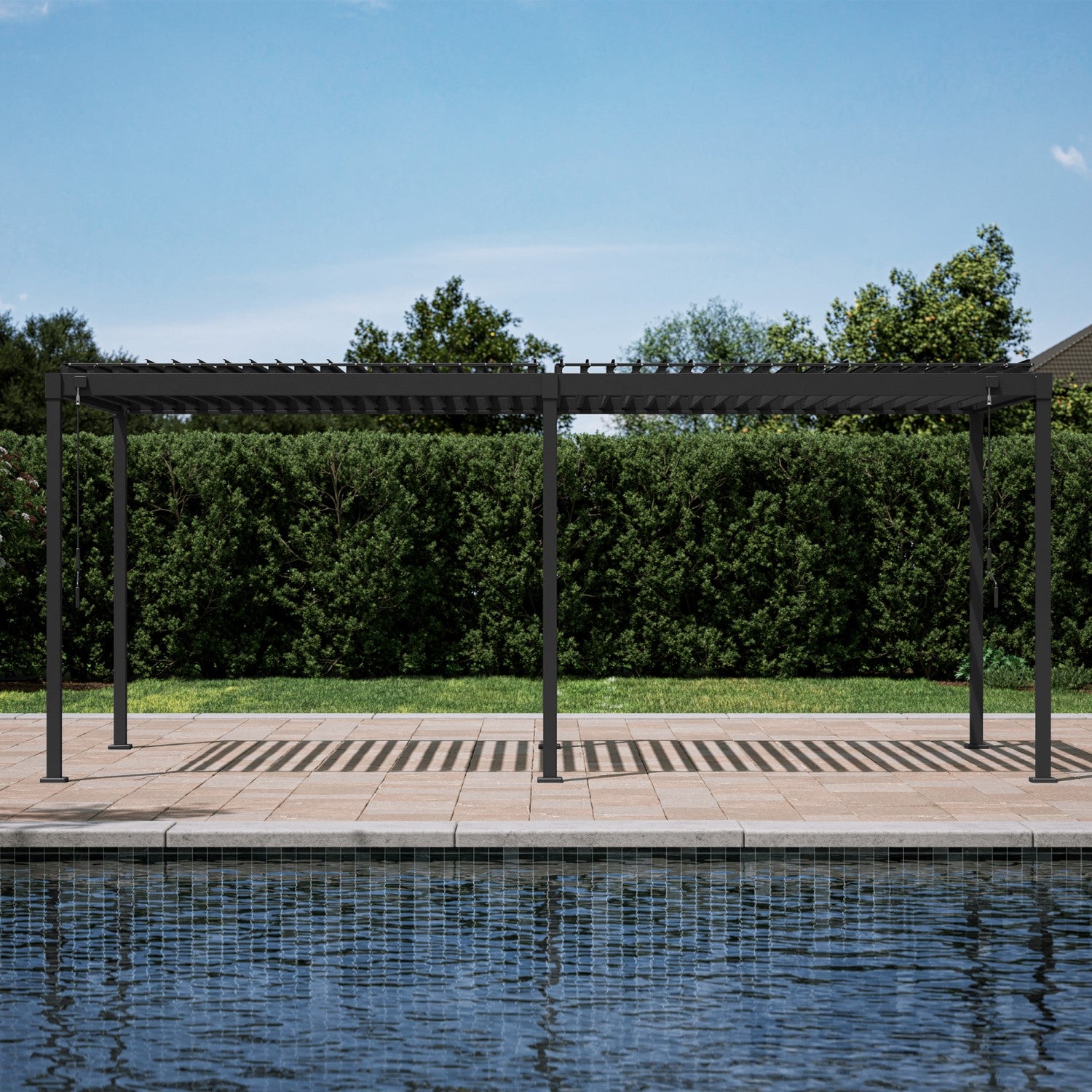
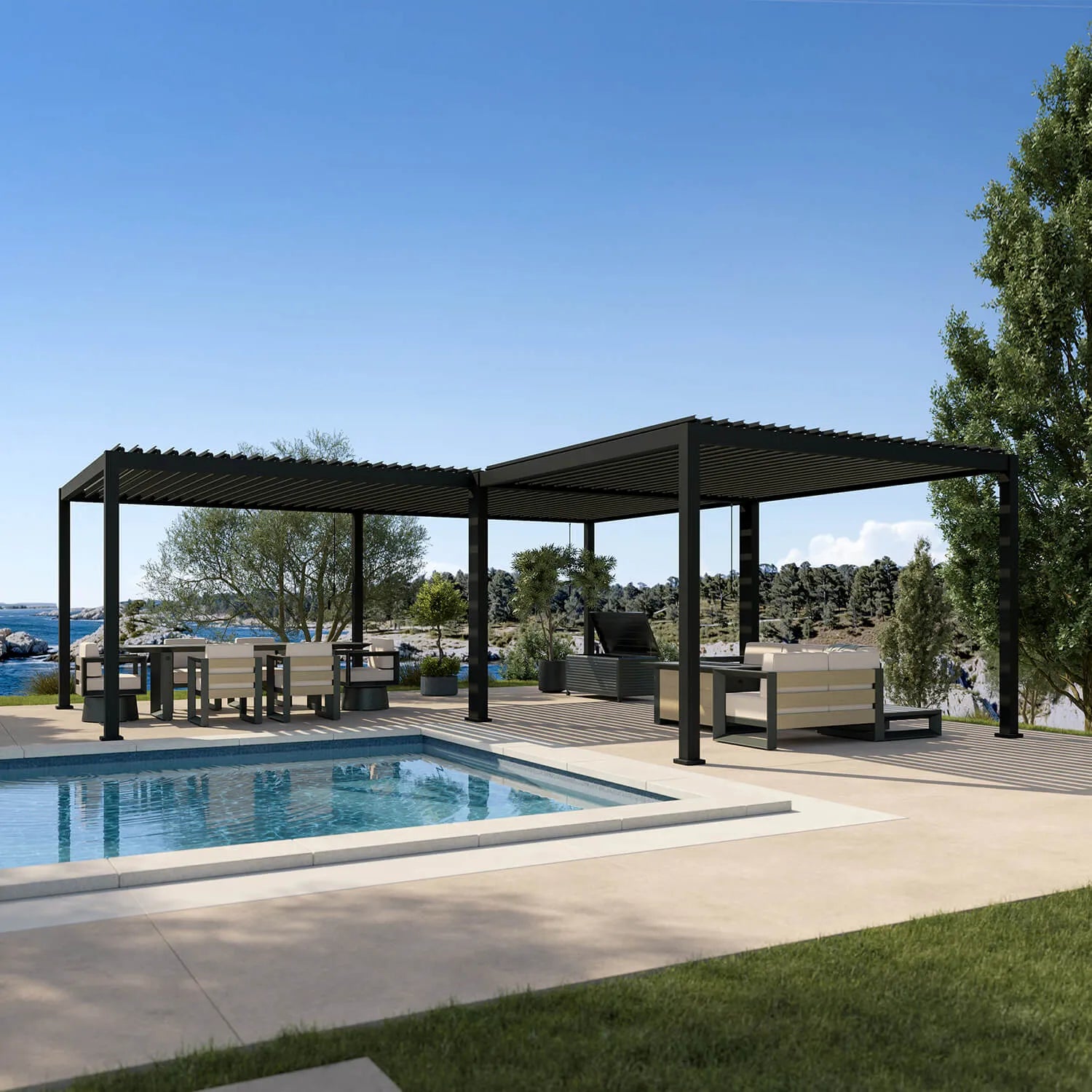
Our 111DA 10'x13' Pergola uses aluminum construction and double-layer aluminum louvers. Our 111S 10'x10' Takasho Pergola combines aluminum and steel with a textured wood-grain finish and galvanized steel louvers. The Takasho finish gives the appearance of wood; it should be cared for as a finished metal surface.

For more detail on washing the aluminum surfaces themselves, our aluminum pergola cleaning guide covers finish care. The steps below focus on the complete louvered system, including drainage and moving parts.

Gather a Simple Cleaning Kit
For a routine wash, have these items ready:
- Clean water and a bucket.
- Mild detergent compatible with your pergola's finish.
- Soft, clean cloths or non-abrasive sponges.
- A soft brush or microfiber tool for accessible debris.
- A garden hose with a gentle flow, where rinsing is appropriate.
- A clean towel for wiping dry.
Choose a time when surfaces are cool enough to work on comfortably. Move cushions, furniture, and small accessories out of the wash area. You can clean them separately using our outdoor furniture cleaning guide, rather than assuming the same solution suits every cushion and frame.
Reach as much as possible from the ground with suitable tools. Never stand or climb on the louvers. If a roof channel cannot be reached safely, arrange help from a qualified service provider instead of using the structure as a work platform.
Wash the Louvers and Frame in a Controlled Sequence
1. Prepare the roof and isolate powered components
Read the care instructions for your model before starting. Position the louvers as needed for safe access, following those instructions. Keep hands and cleaning tools clear while the roof is moving.
For a motorized pergola, disconnect the power supply before washing or working near moving parts. Do not operate the roof during cleaning. Keep the hose and wet cleaning tools away from controls, plugs, wiring, and motor housings.
Our 111S E-Motion 10'x13' Pergola has remote-controlled louvers and LED lighting. Its powered components need this extra attention during cleaning; roof rain protection does not make direct spraying of electrical parts an appropriate cleaning method.

2. Lift out loose debris
Remove leaves, twigs, seed pods, and other loose material from accessible louvers and channels before applying detergent. Use a soft tool and work gently around louver edges.
Do not sweep debris into a drain opening. Collect it and remove it from the structure. This keeps a surface-cleaning task from creating a drainage blockage.
3. Wash manageable sections
Prepare mild soapy water according to the detergent instructions and check compatibility on a small, inconspicuous area. Wipe the frame and accessible louver surfaces with a soft cloth or sponge.
Work on one section at a time so detergent does not dry on the surface. Give stuck-on dirt time to soften rather than increasing pressure. Refresh dirty water and rinse the cloth regularly so you are not rubbing grit back over the finish.
4. Remove the soap with clean water
Rinse suitable surfaces from top to bottom using a gentle water flow. Around components that should not be sprayed, remove residue with a clean damp cloth instead.
Pay attention to louver edges, frame corners, and accessible joints where dirty water or detergent can collect. Do not use a concentrated jet to force water into seams, bearings, or enclosed parts.
5. Dry, inspect, and check operation
Allow the structure to air-dry or wipe it with a soft, clean cloth. Look for surface damage, displaced parts, loose-looking connections, and water collecting where it did not before.
When the area and electrical components are dry, restore power as directed by the manual. Check roof operation from a clear position where you can see the moving parts. If a louver catches, sits out of line, or moves differently, stop and investigate before continuing to use it.
Give Gutters and Drain Openings Their Own Check
A roof can look clean while leaves remain in its drainage path. After washing the louvers, inspect accessible channels, guttering, and outlets using your model's drainage layout as a guide.
Remove visible debris without pushing rigid tools into concealed passages. A gentle water check, where permitted, can help you observe whether the accessible drainage route is clear. Watch for slow discharge, unusual overflow, or water collecting around an outlet.
Cleaning does not correct an installation or alignment problem. If water still behaves differently after accessible debris is removed, take photos and contact support. Do not drill extra drain holes or change the frame's alignment as a cleaning fix.
Our guide to louvered pergola rain protection explains how roof closure, drainage, installation, and weather conditions work together. Keeping channels clear supports the intended drainage function without turning it into an all-weather promise.
Include shutter walls in the wash
If your pergola has shutter walls, clean their accessible slats and edges separately from the roof. Use mild soapy water and a soft cloth, remove residue, and keep debris out of moving joints.
Our 111S ViewScape 10'x20' Pergola includes four full-height shutter walls. Those additional surfaces belong in the cleaning routine along with the roof, frame, and drainage channels. Position adjustable slats before cleaning, and keep fingers clear of moving sections.

Handle Stains Without Damaging the Surface
Bird droppings and dried dirt: Soften the residue with water or a damp cloth before wiping gently with the compatible detergent solution. Avoid scraping dry deposits with a hard edge.
Pollen and dust: Remove loose material first, then wash any remaining film. Repeated heavy scrubbing is usually less useful than changing a dirty cloth and rinsing properly.
Tree sap or greasy marks: If mild detergent does not lift the residue, ask for a cleaner approved for your finish. Do not assume a household solvent or adhesive remover is suitable for a painted, textured, or wood-grain surface.
Dark spots or suspected mildew: Start with gentle cleaning. If marks remain, photograph them and confirm the next treatment with support. Do not apply a bleach recipe from a different pergola or coating system to your own model without approval.
Rust-colored marks or damaged coating: Treat these as inspection issues, not simply stubborn stains. Cleaning cannot replace missing coating. Ask about the correct repair or touch-up method before sanding, wire-brushing, or painting the area.
Maintain Smooth Louver Movement
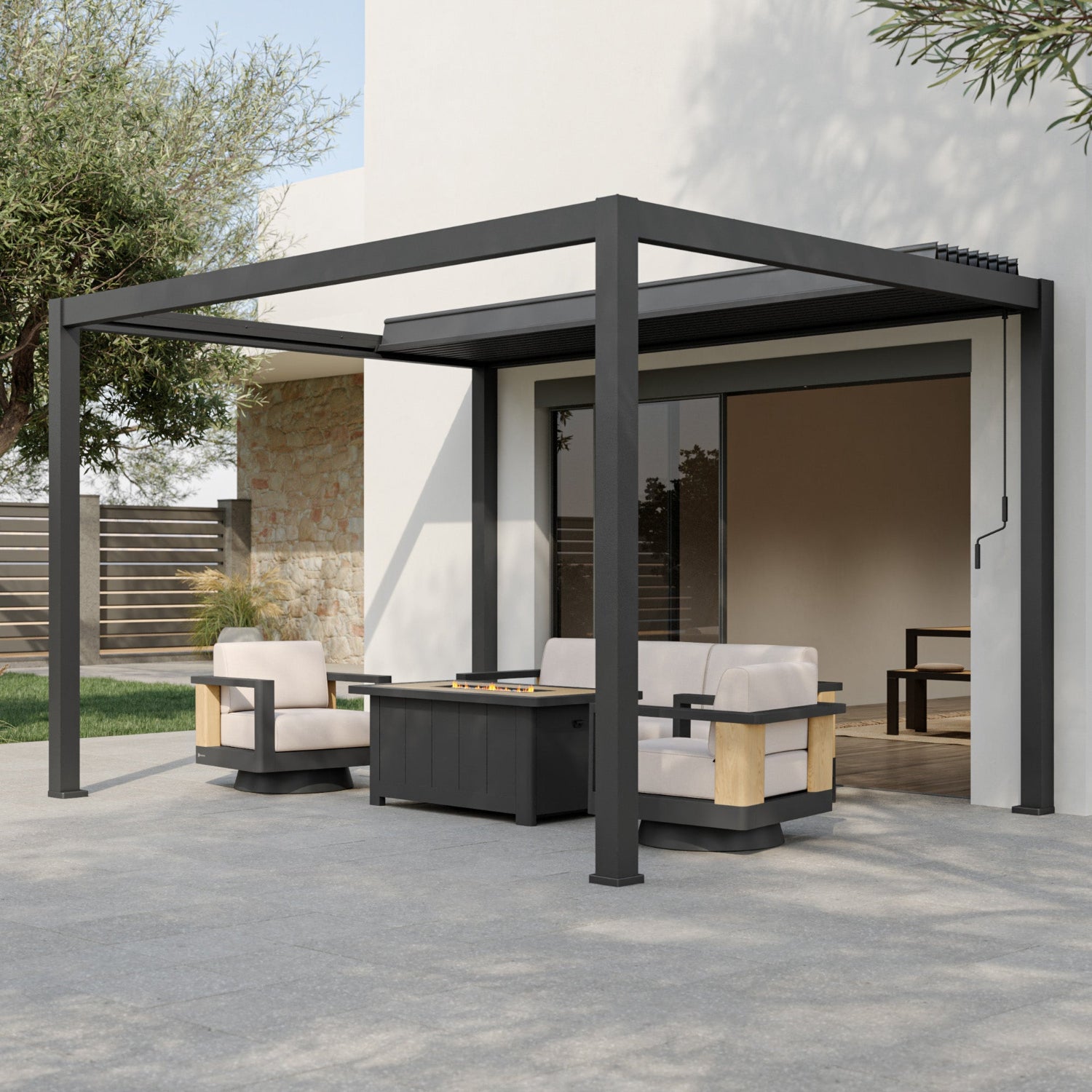
While cleaning, notice whether the crank turns normally and whether the louvers move together. Remove accessible debris first. Avoid forcing a stiff crank or repeatedly running a motor against an obstruction.
For Mirador pergolas, routine lubrication is usually unnecessary. If moving components begin to squeak, we recommend a silicone spray lubricant in line with the model's care instructions. Do not use petroleum-based spray lubricants. Keep any lubricant away from electrical components and use it only where the instructions permit.
Also inspect visible fasteners, joints, and ground fixings. Follow the manual for any permitted checks or tightening. A damaged connection, persistent misalignment, or electrical fault needs support rather than a general cleaning treatment.
You can find model-specific instructions in our Help Center. Have the model, photos, and a description of the problem ready if you contact our team at support@miradoroutdoor.com.
Build the Routine Around Your Yard and Weather
There is no single cleaning interval that suits every patio. Use the plan below as a practical starting point, then adjust to your model's instructions and the buildup you actually see.
| When to check | What deserves attention |
|---|---|
| During ordinary use | New stains, dirt buildup, unusual louver movement, and visible damage. Clean spots before they become difficult to remove. |
| After heavy pollen or leaf fall | Louver surfaces, gutter channels, and accessible drain openings. Plan a fuller wash when a light clean no longer removes the buildup. |
| After a storm, once conditions are safe | Branches, displaced components, damaged surfaces, loose-looking fixings, and changes in drainage. |
| Near the coast | Rinse with fresh water regularly to reduce salt and dirt accumulation. Increase attention when exposure increases. |
| Before freezing weather | Clear drainage routes and follow your model's louver-position instructions before snow or ice arrives. |
Do not operate a roof mechanism when frost or ice has bound the parts together. Do not try to break it free by adding force to the crank or repeatedly pressing the remote. Follow your exact model's winter instructions rather than treating a cleaning schedule as a snow-management plan.
Questions About Louvered Pergola Care
Can I pressure wash a louvered pergola?
For routine cleaning, choose a soft cloth and gentle hose rinse instead. Concentrated pressure can damage a finish or drive water into joints and mechanisms. Do not select a universal pressure setting from another product's guide; follow your own model's instructions.
Should the louvers be open or closed for cleaning?
The position depends on the surface you need to reach and your model's instructions. Position them before putting hands or tools near the roof. On a powered model, disconnect the supply before cleaning. Never adjust the roof while someone is cleaning its moving parts.
Does a wood-grain pergola need wood oil or stain?
A wood-grain finish on metal should not automatically receive natural-wood treatments. Our Takasho pergola has a wood-grain finish over a metal structure. Use compatible gentle cleaning, and confirm any treatment beyond that before applying it.
Does an aluminum frame mean the whole pergola is rustproof?
No. A pergola can combine an aluminum frame with steel louvers, hardware, or other components. Inspect the materials and protective finishes of the individual parts instead of applying one material's properties to the entire structure.
Is a low-maintenance pergola maintenance-free?
It still benefits from washing, debris removal, drainage checks, and attention to moving parts. You may spend less time on routine refinishing than with natural wood, but outdoor dirt and leaves still need to be removed.
Keep Your Outdoor Space Ready to Use
Gentle cleaning, clear drainage, and smooth operation work together. Make those checks part of your patio routine, and deal with a change in performance before it becomes a bigger repair.
Whether you already own a Mirador pergola or are comparing our louvered pergola collection, consider how you will reach the surfaces, inspect the drainage, and look after the finish. A practical care routine helps keep the space comfortable and easy to enjoy.