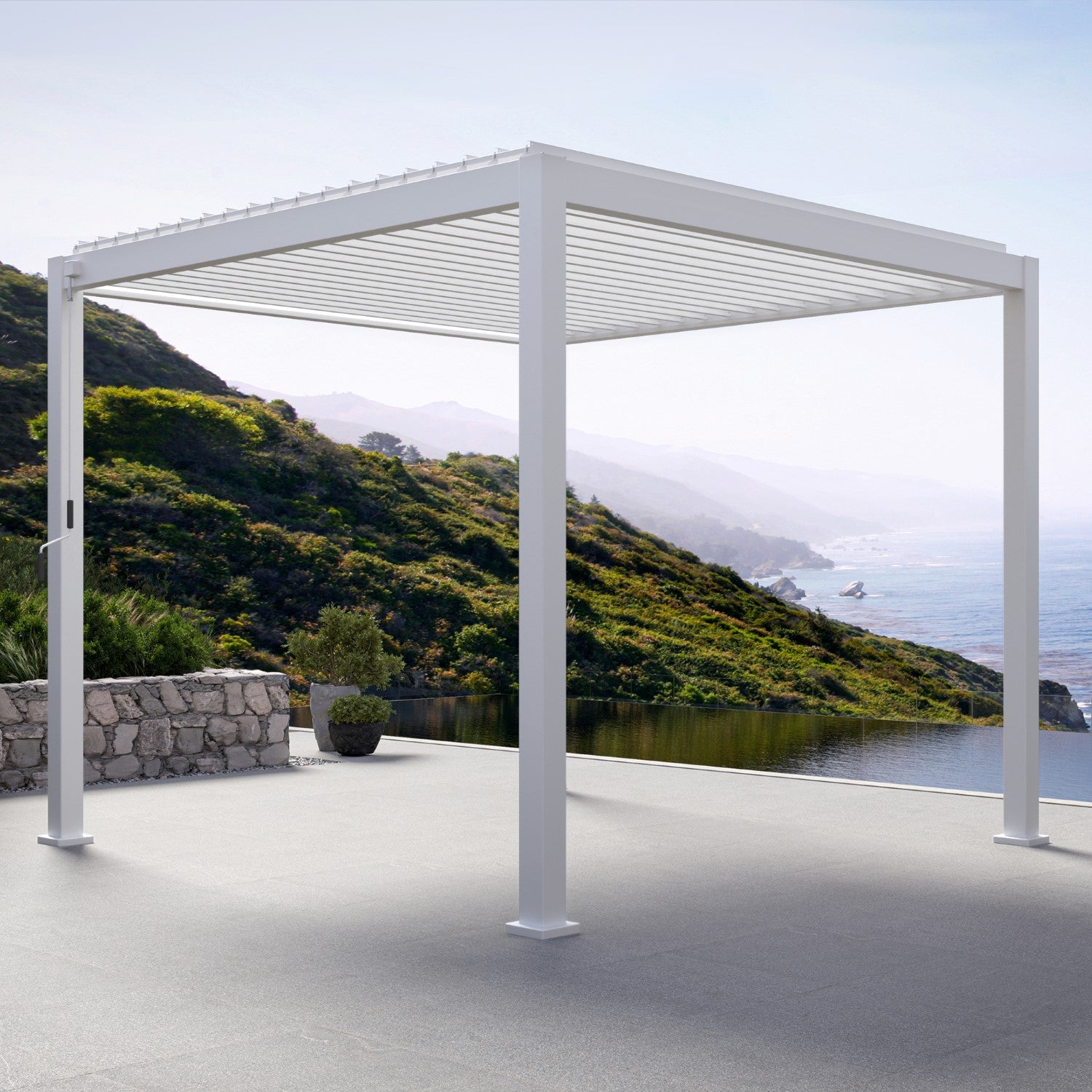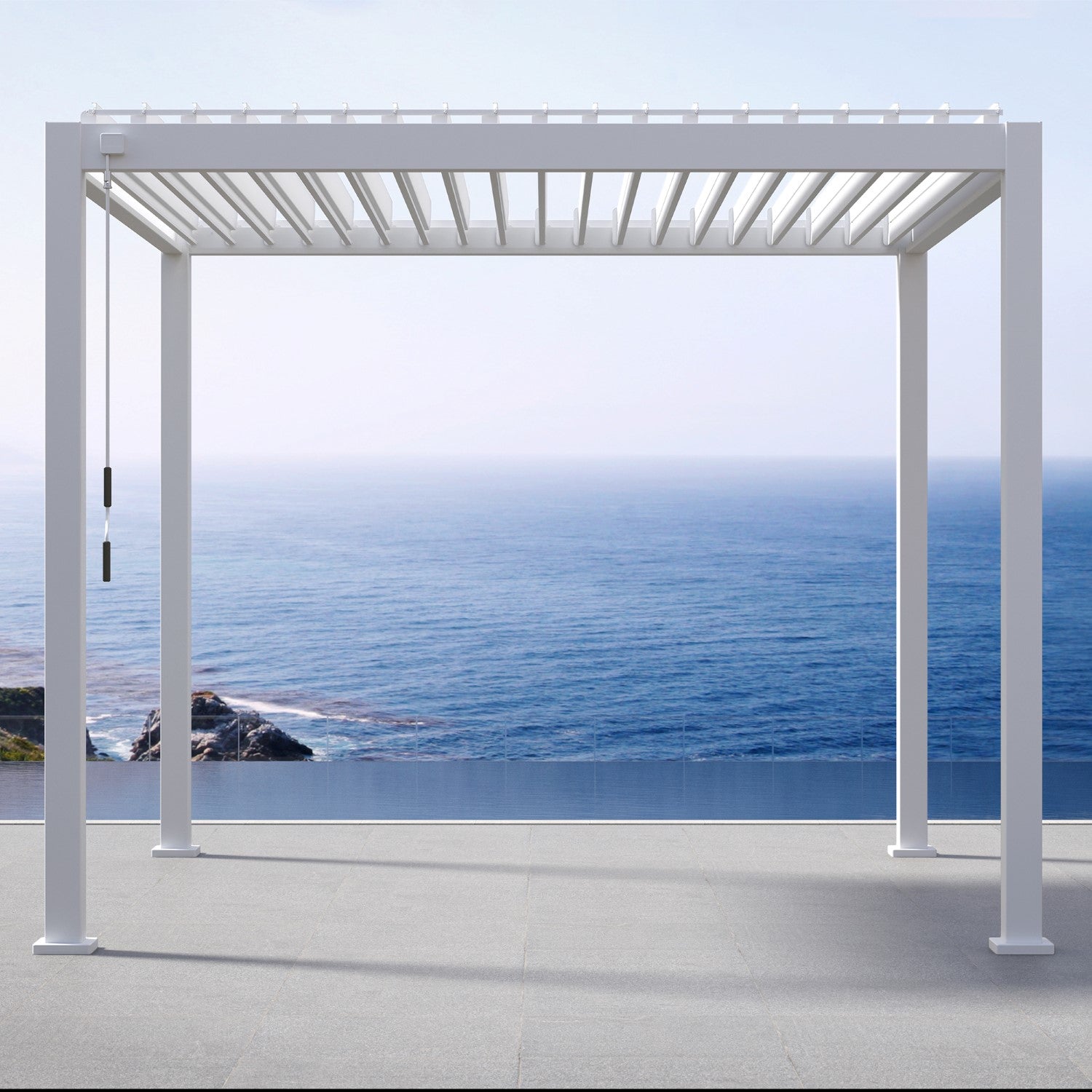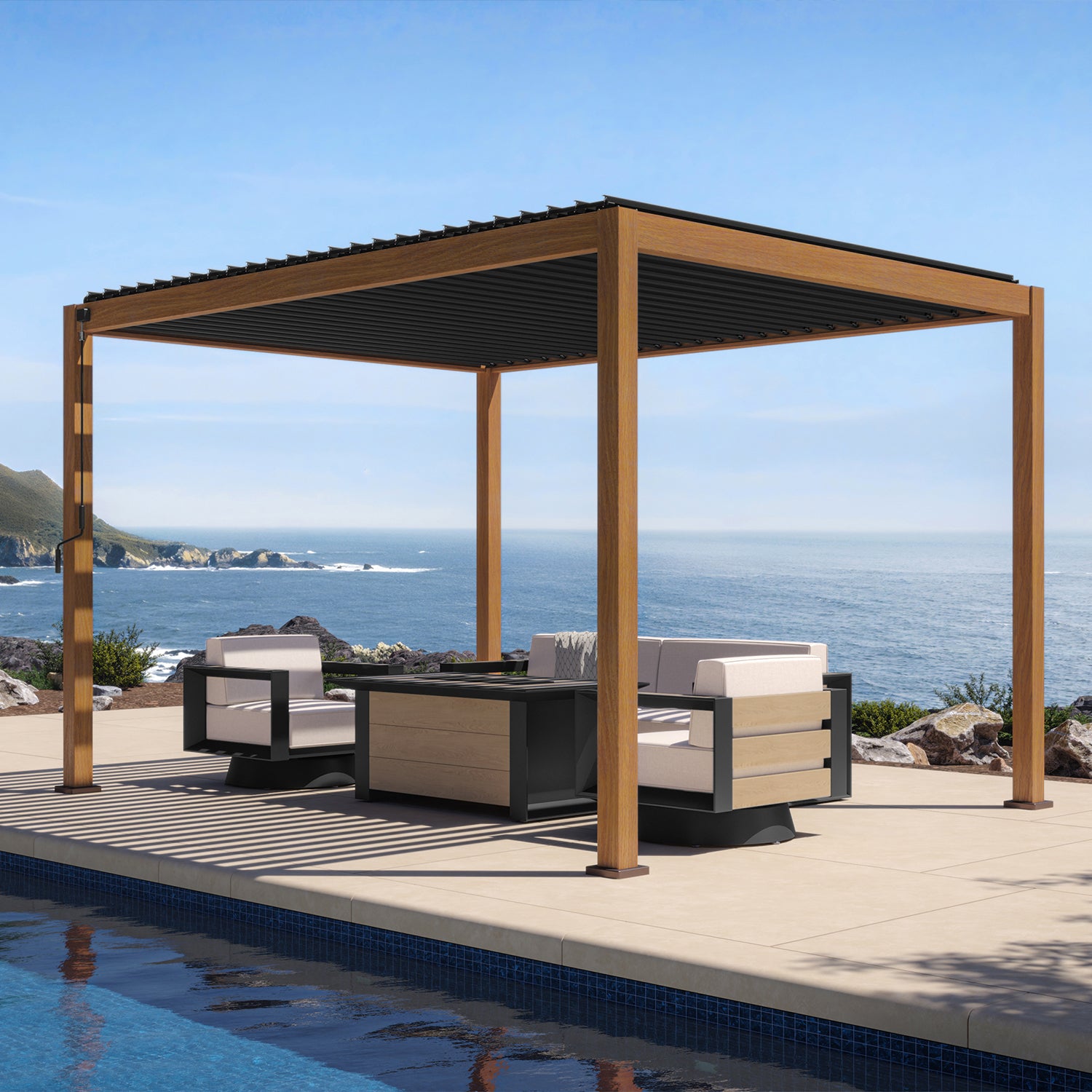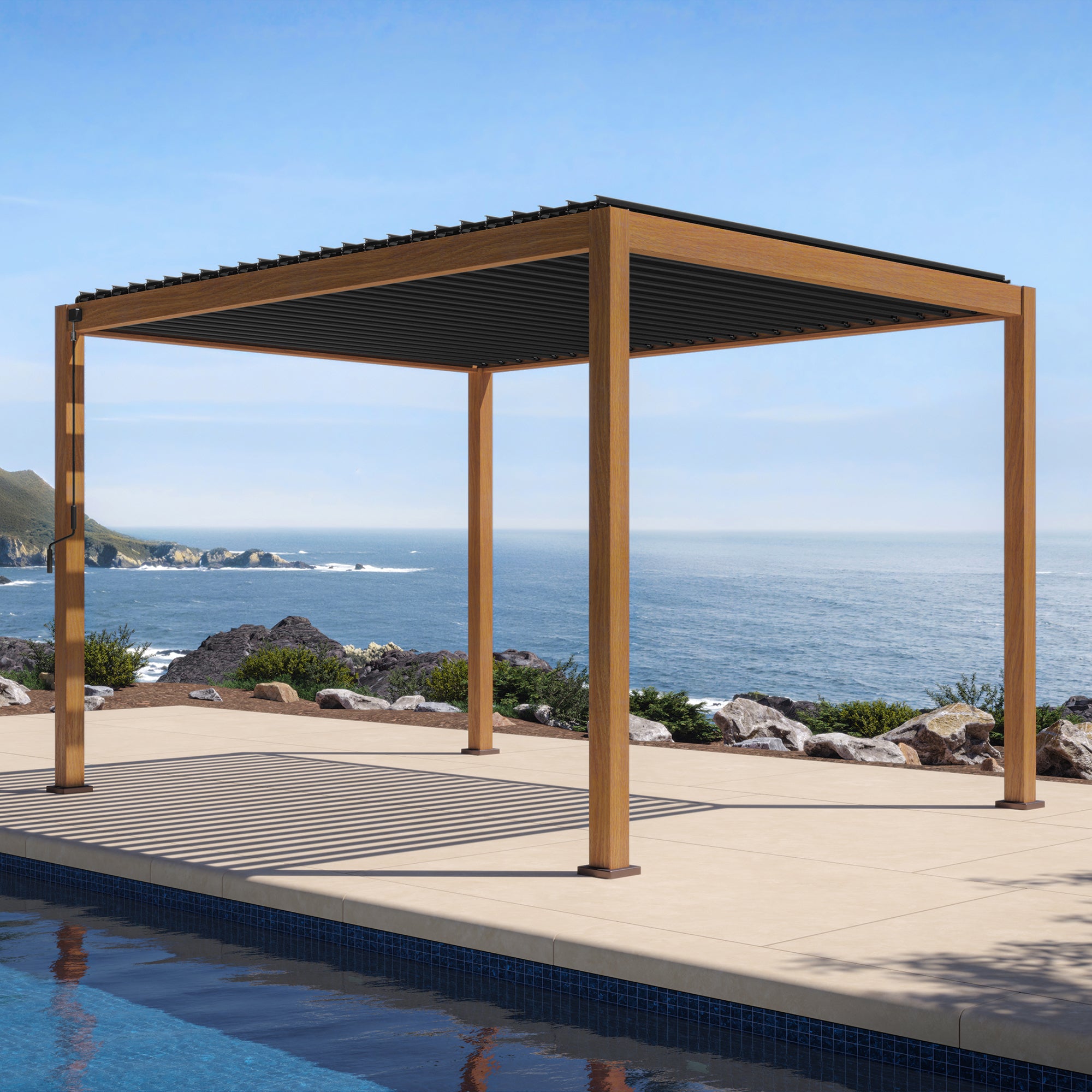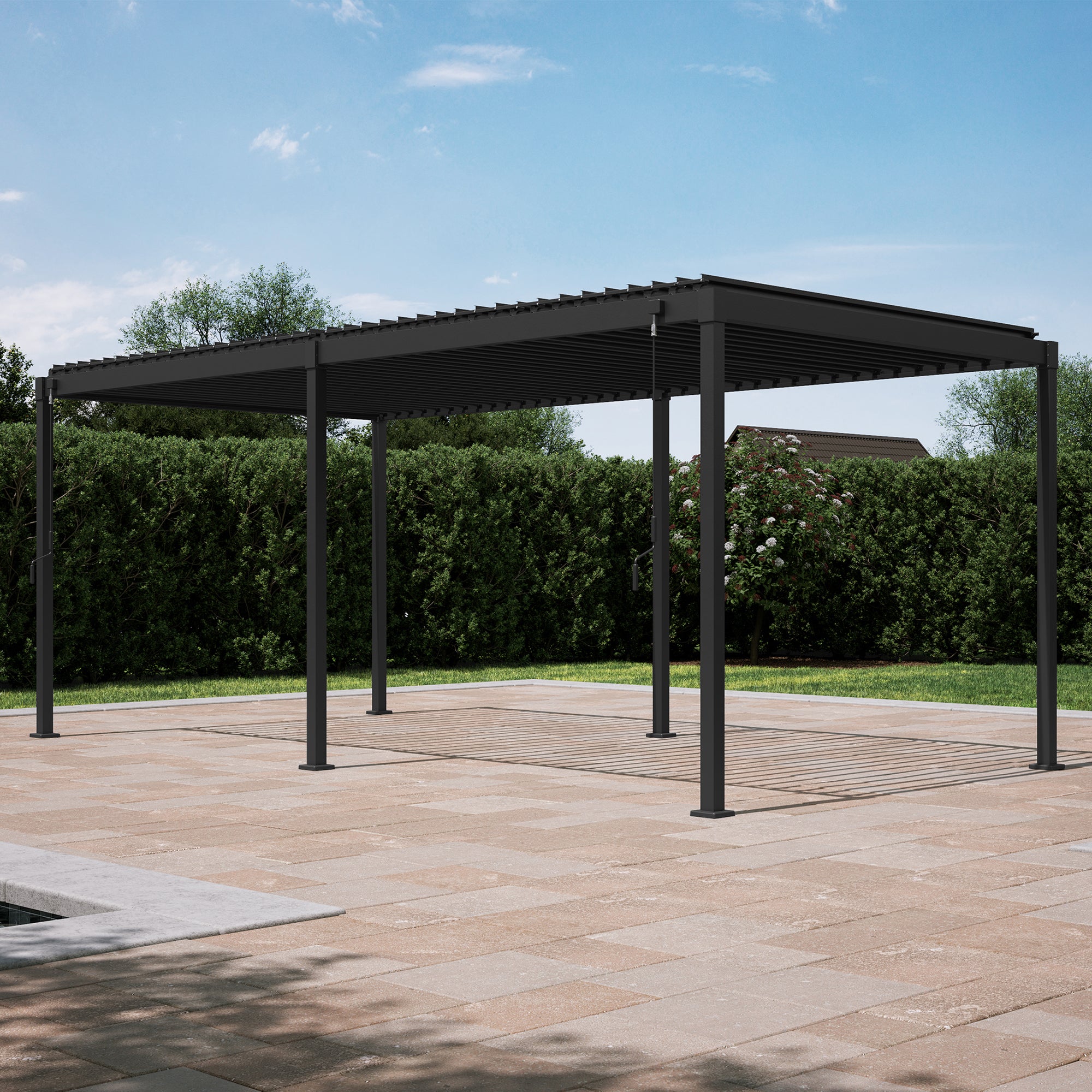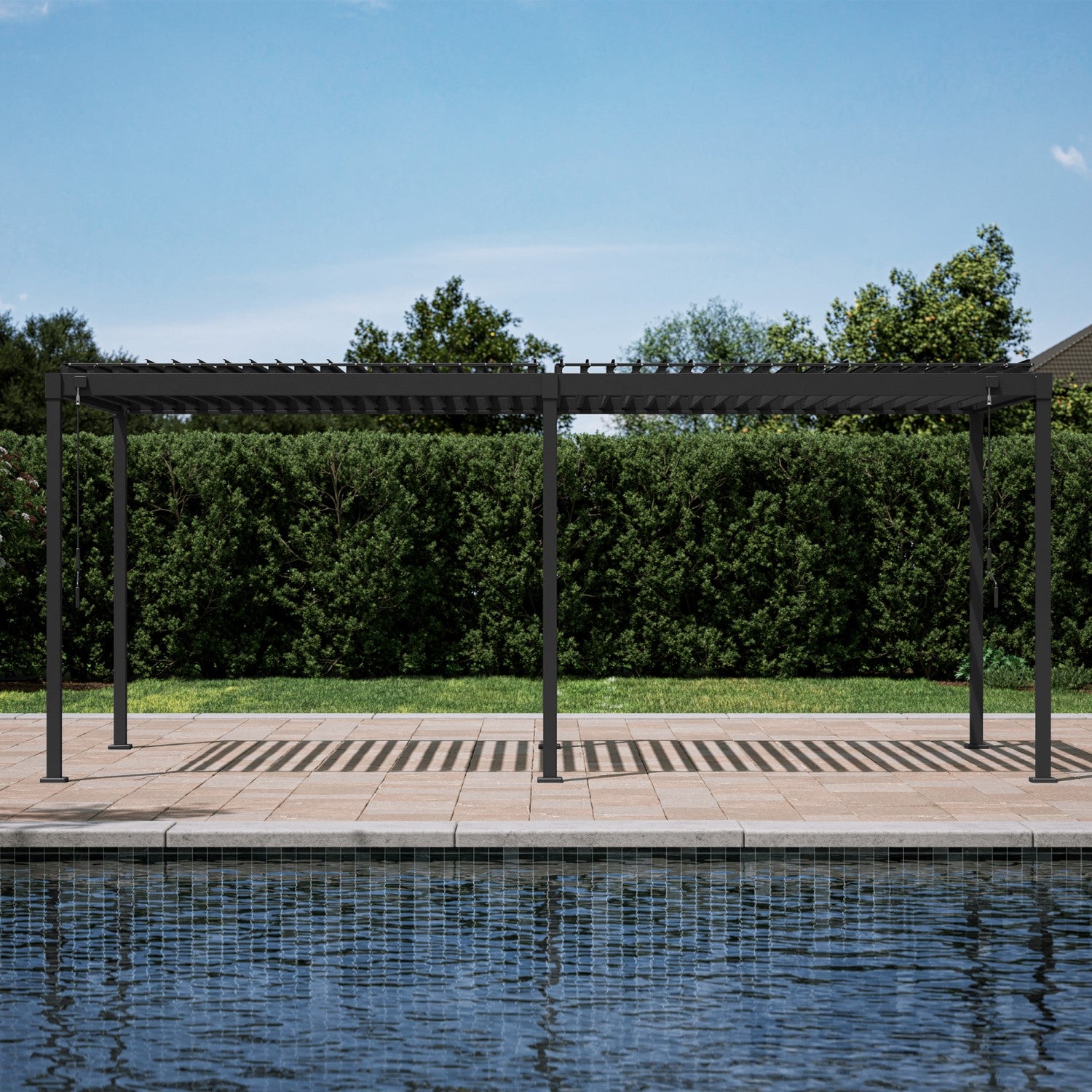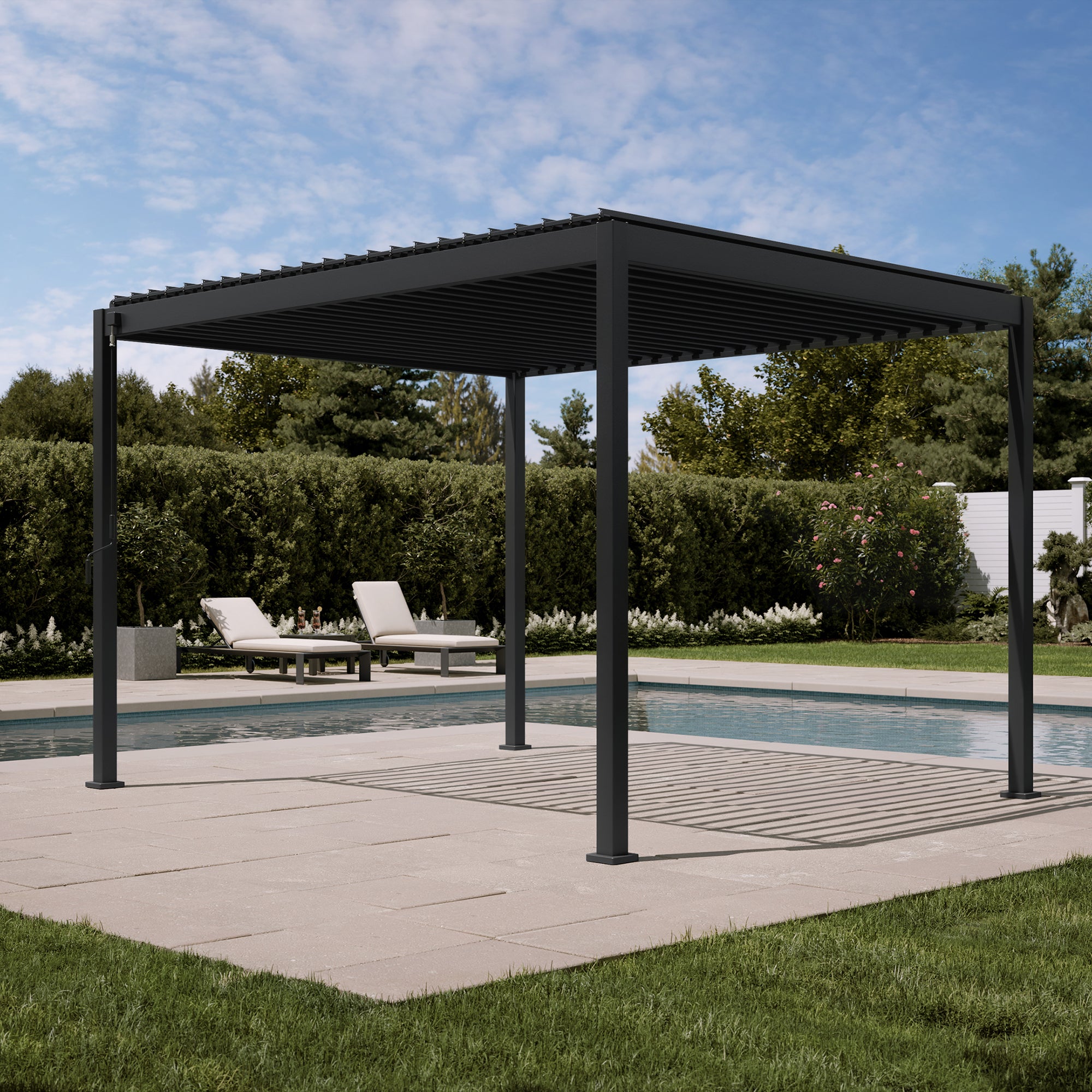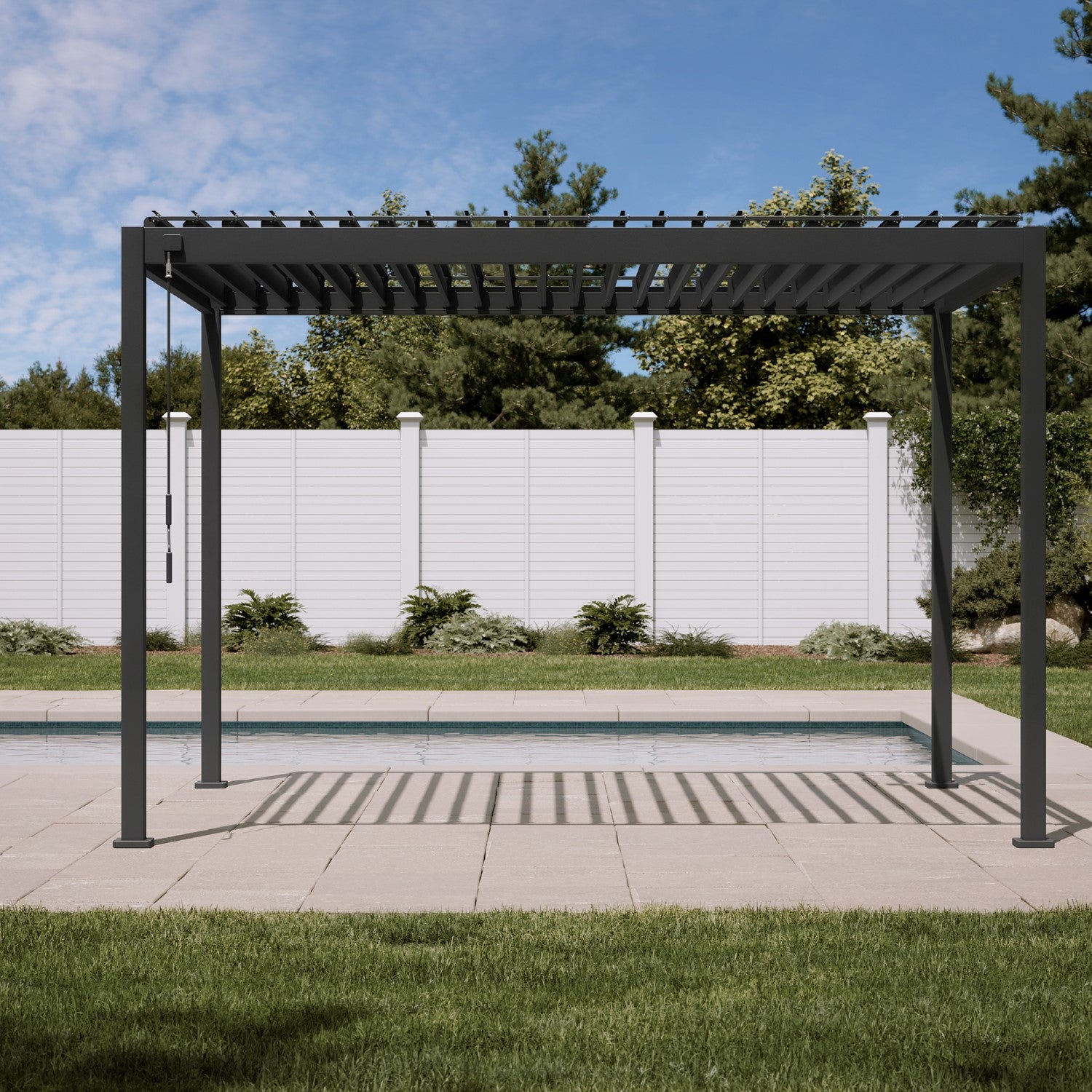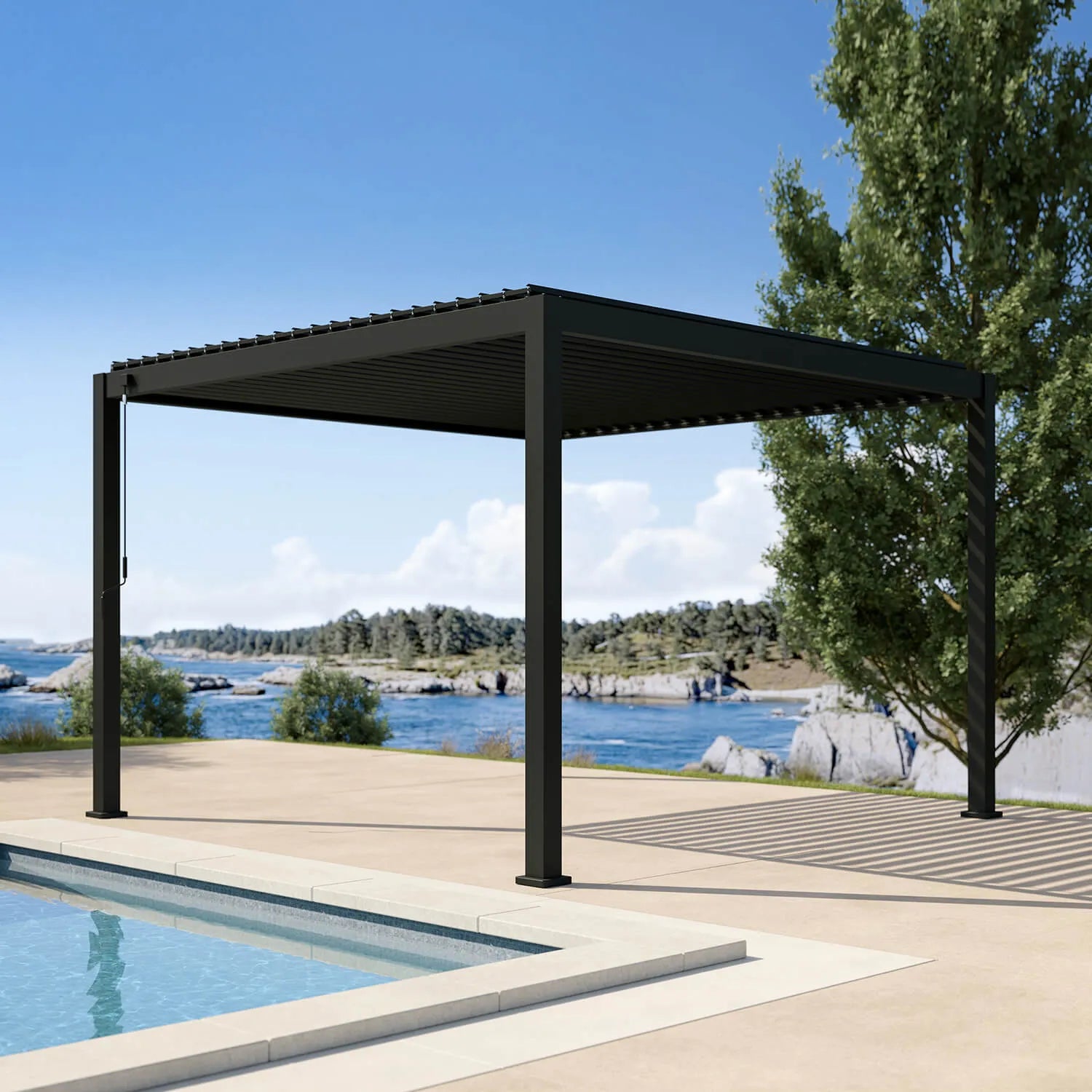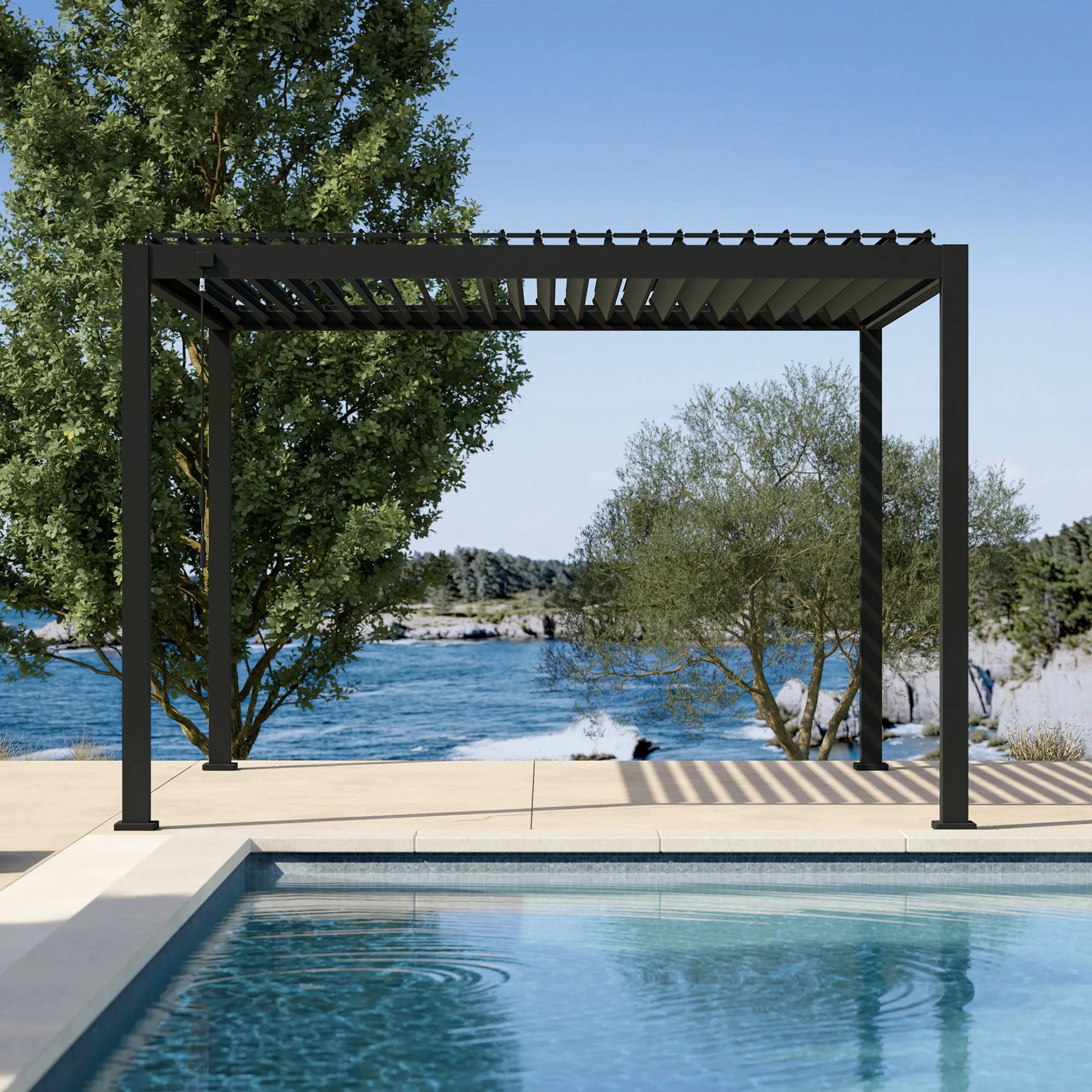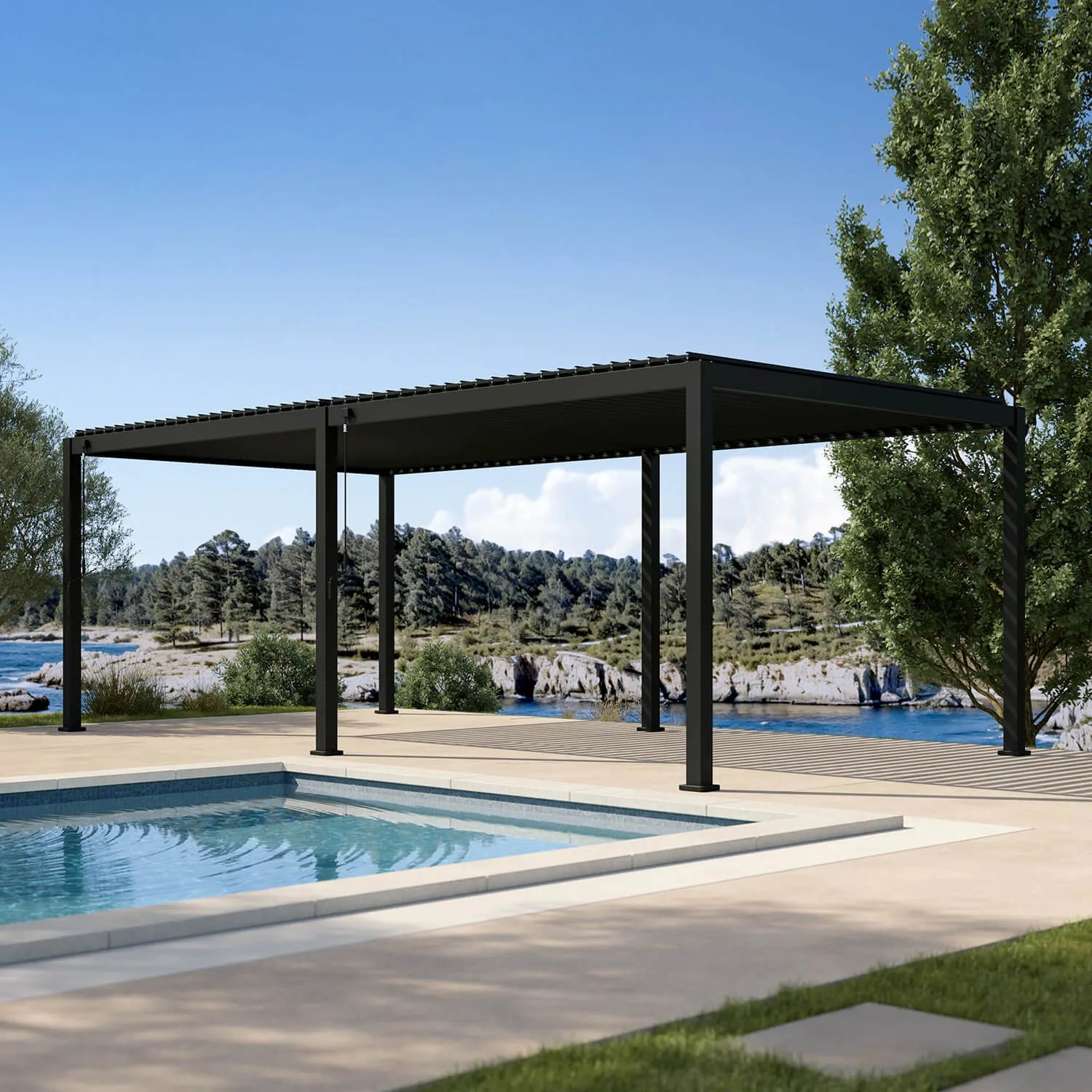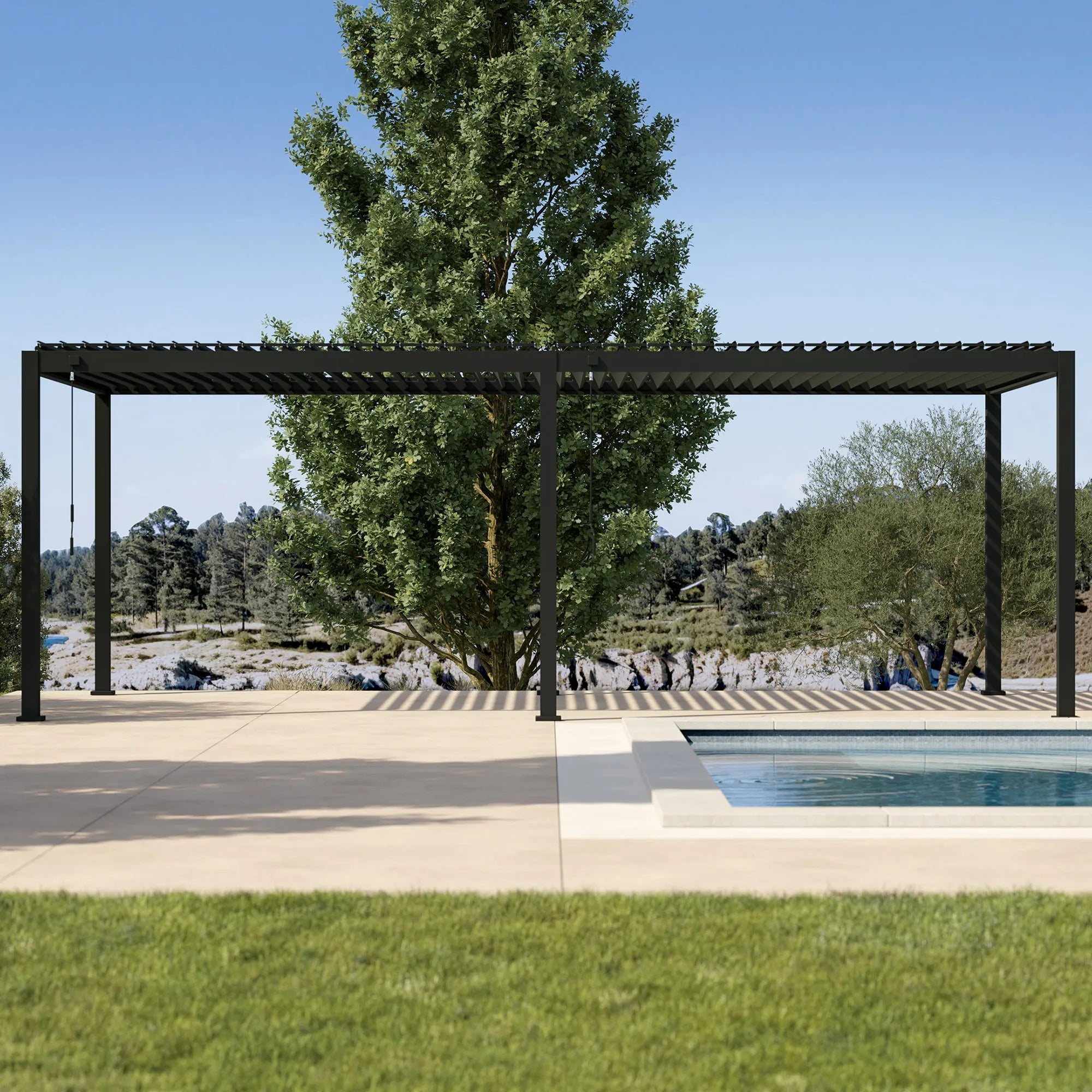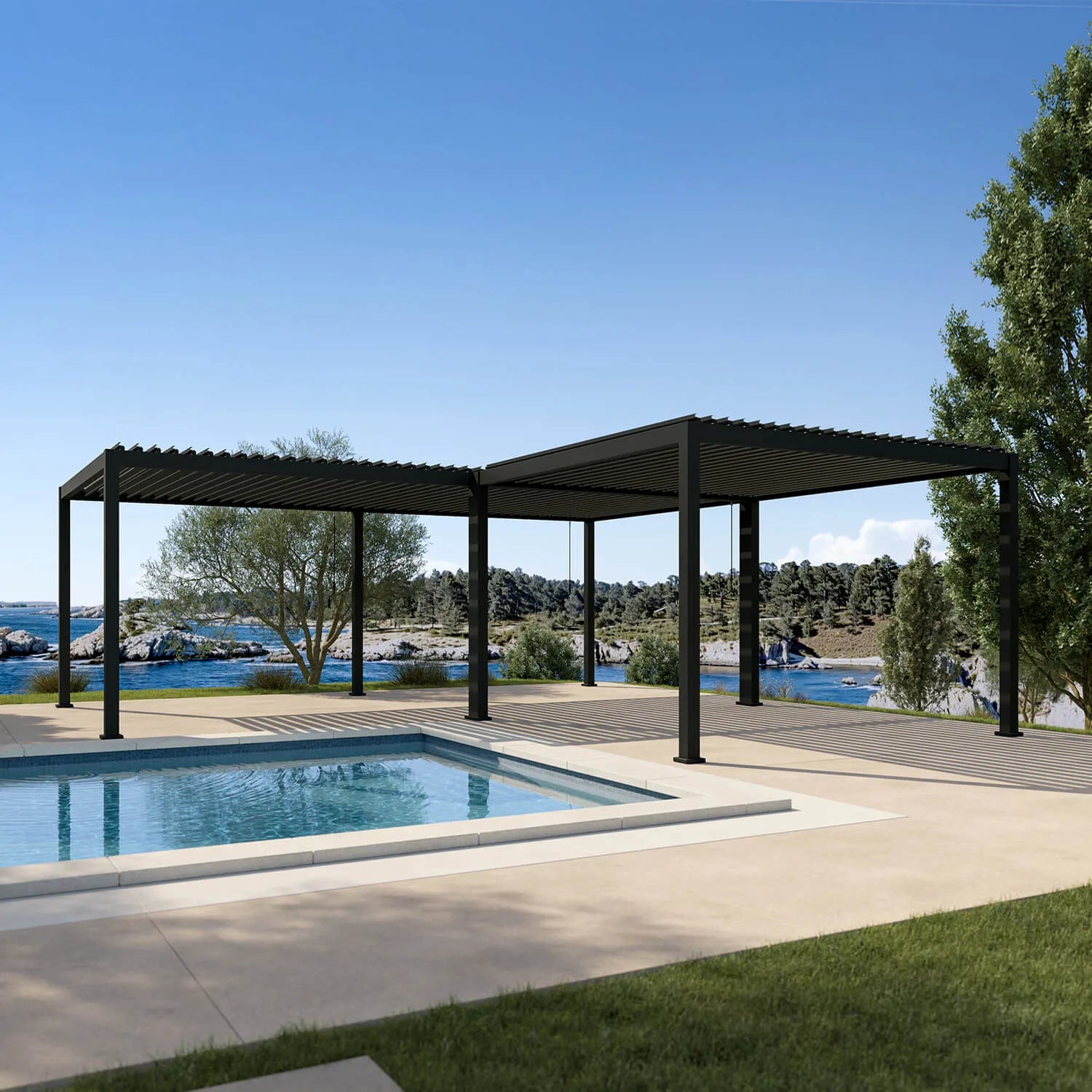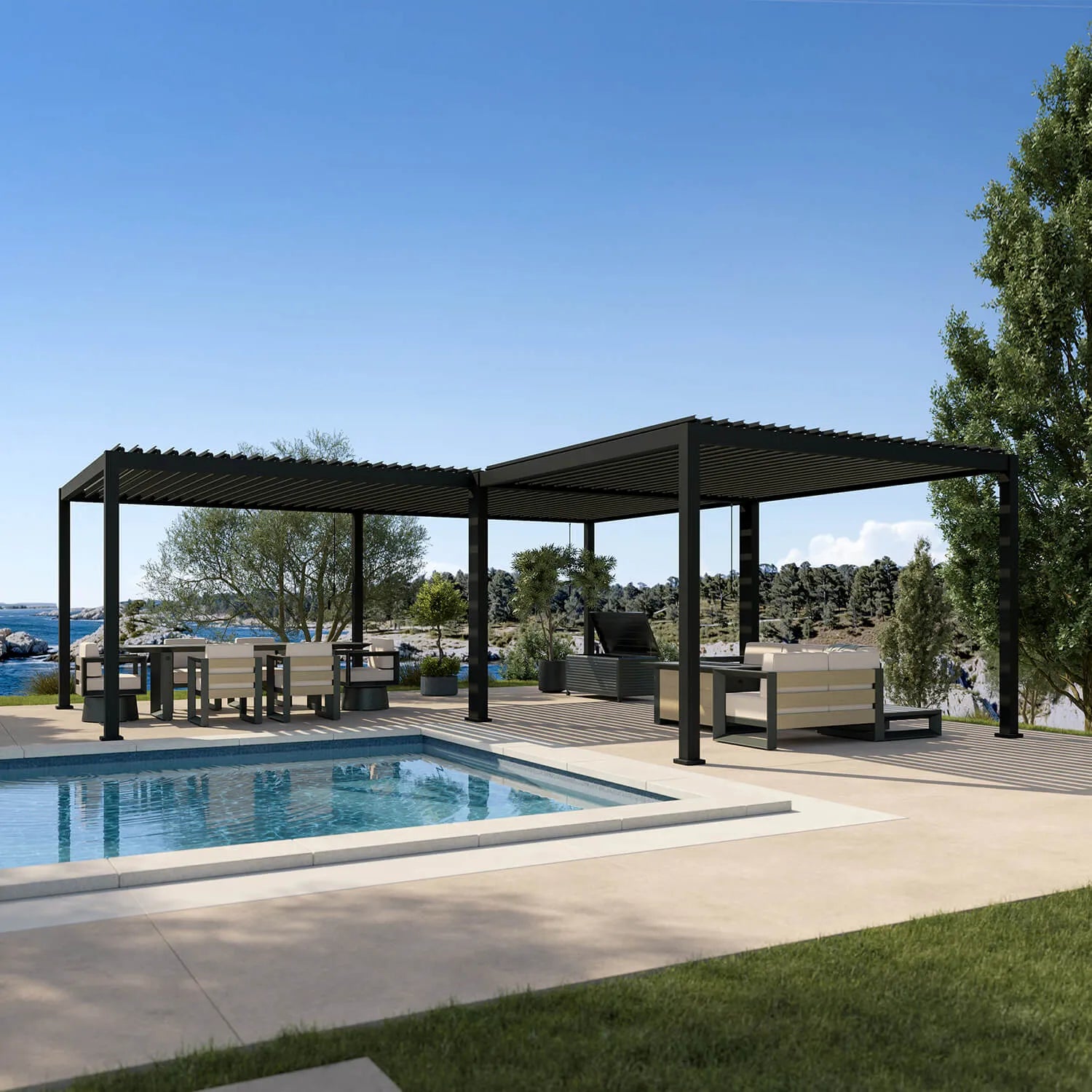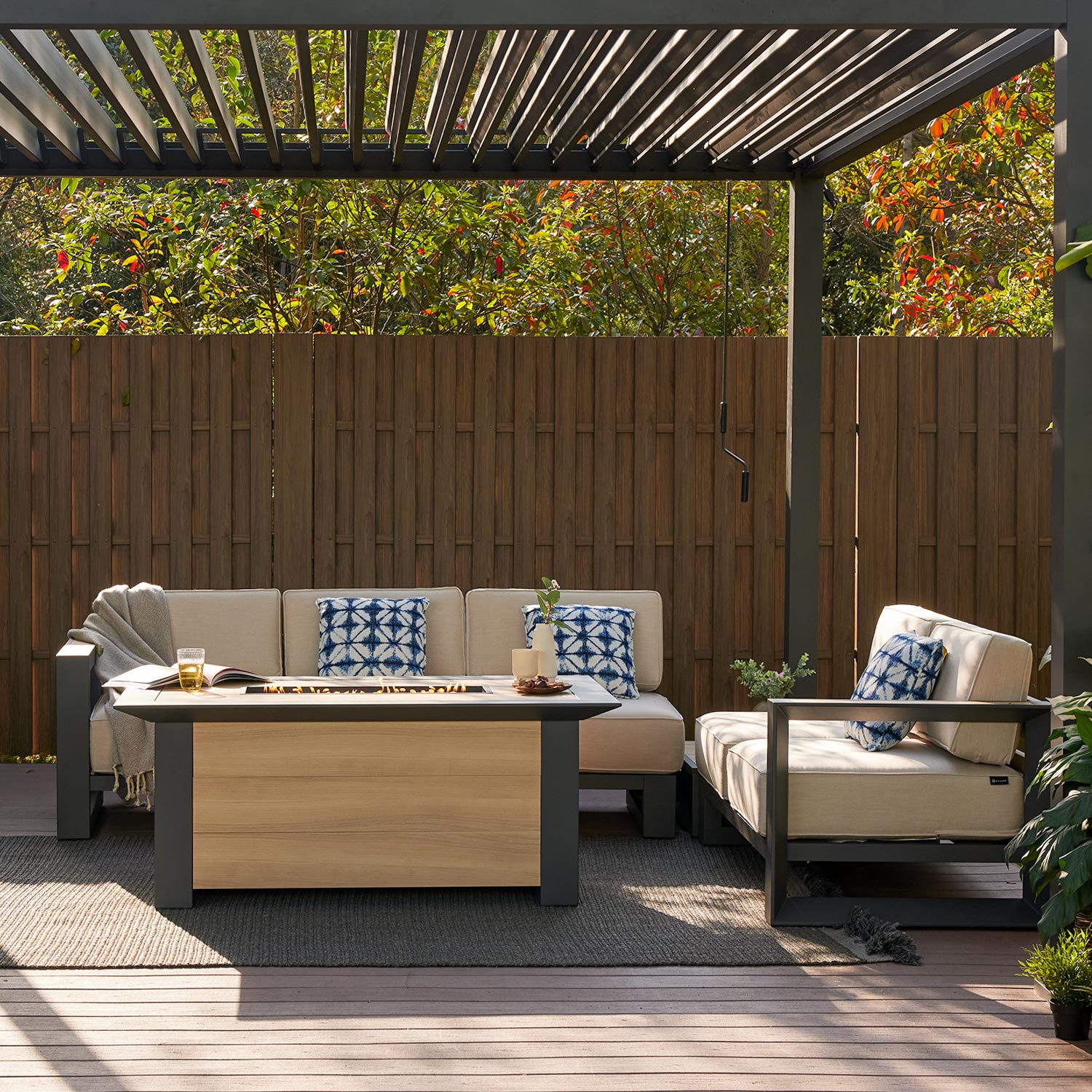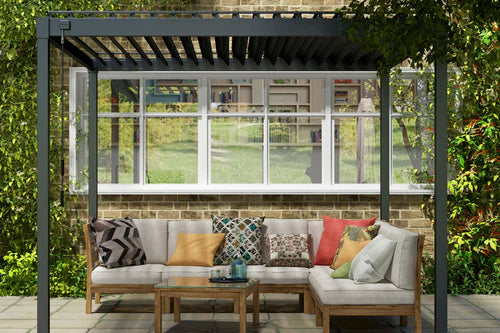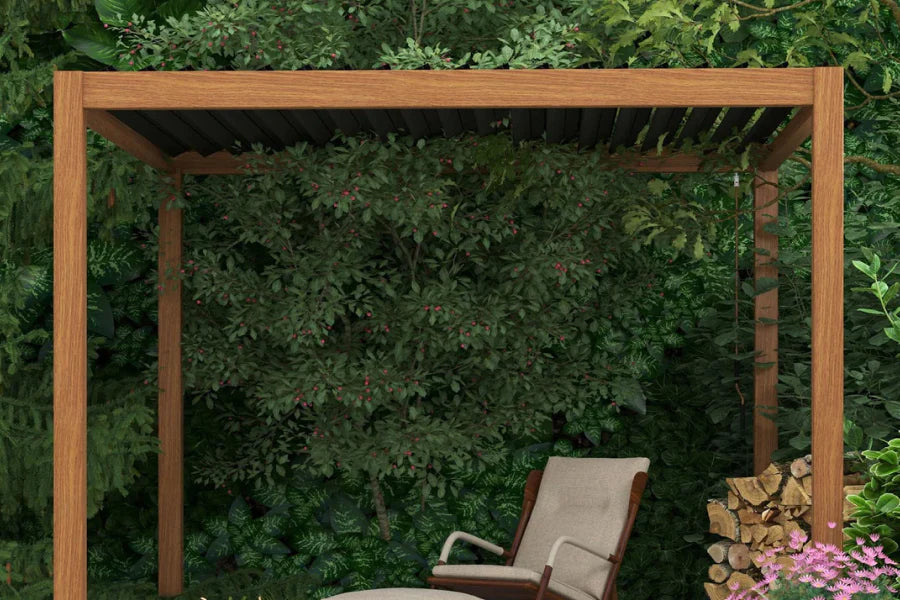

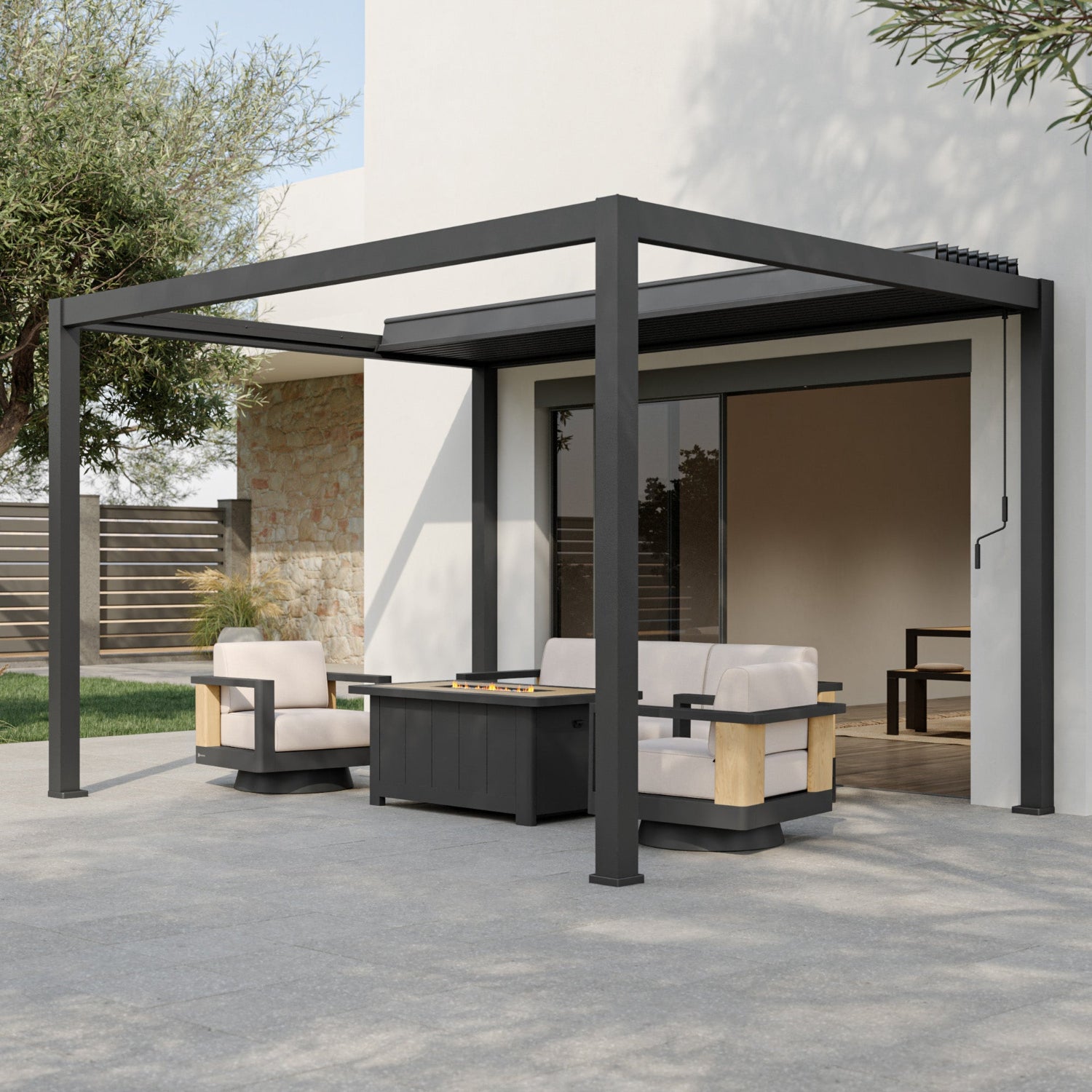
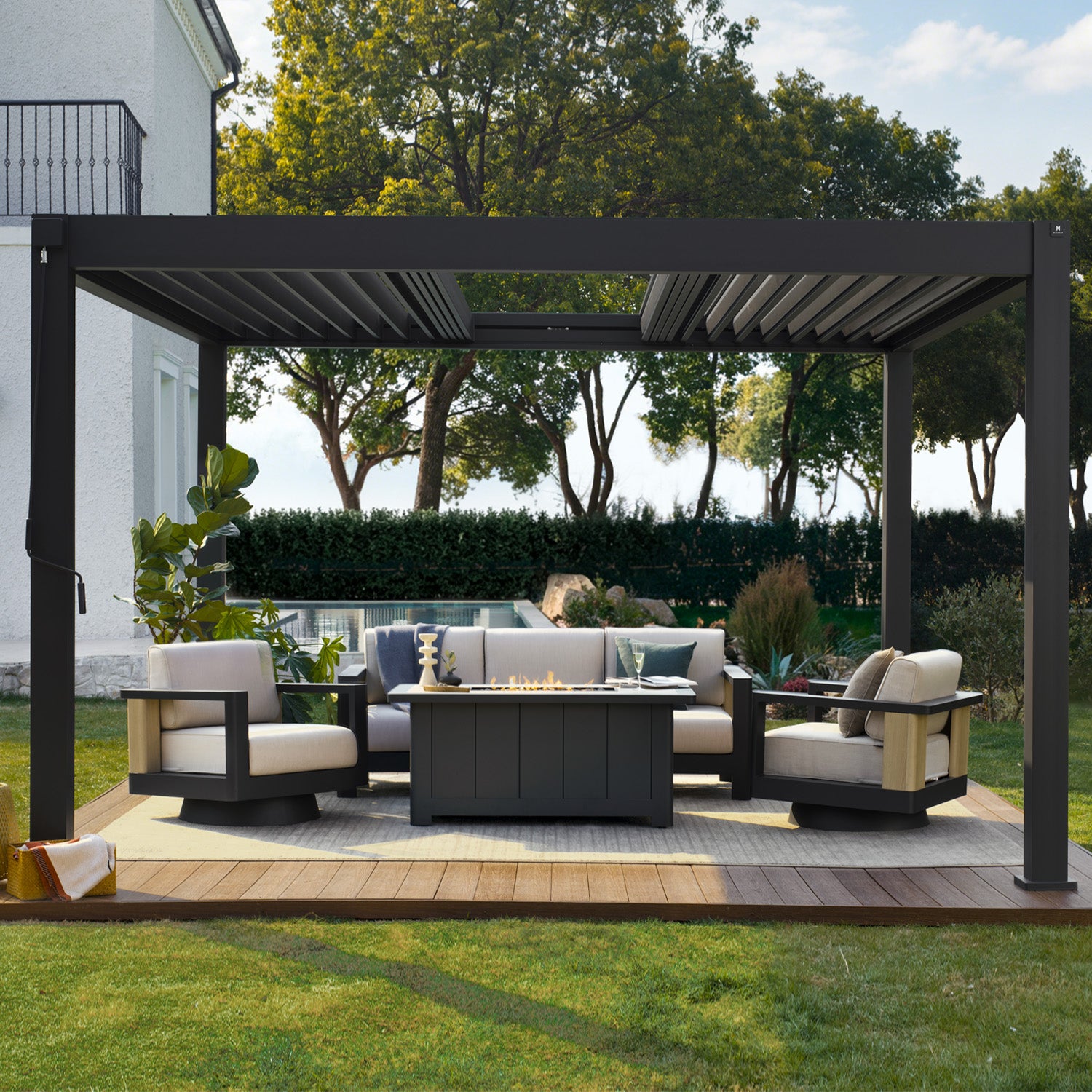
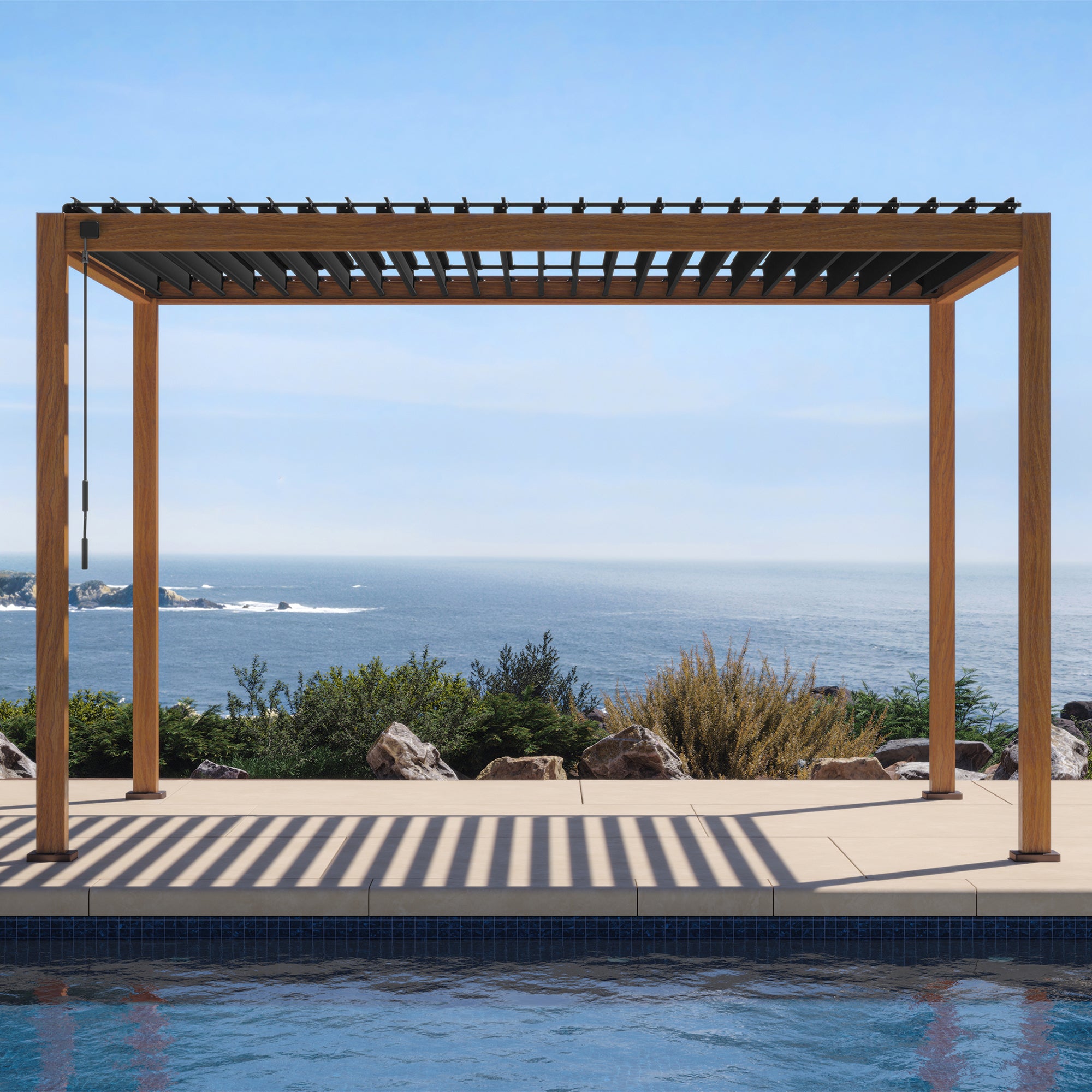

A bioclimatic pergola is, honestly, one of those things that sounds more complicated than it actually is. Strip away the fancy word and here's what you get: an outdoor structure with a roof made of adjustable louvers, usually aluminum, that rotate to control how much sun, shade, and rain hit your patio.
Open the louvers for full sky and airflow. Angle them for filtered shade. Close them tight, and you've got a waterproof roof that channels rain away through built-in drainage. That's it. That's the whole concept.
But does it actually make sense for your backyard? Let's get into it.

Where the Word "Bioclimatic" Comes From
The term is borrowed from sustainable architecture. It means designing a space that works with local climate conditions like sun, wind, and temperature instead of fighting them. A bioclimatic pergola doesn't try to turn your patio into an indoor room. It gives you a way to respond to what the weather is doing, right now, without getting up from your chair.
Cool morning? Open the louvers and let the light pour in. Brutal 2 p.m. sun in July? Close them down. Sudden rain shower during dinner? The roof seals up and water runs through hidden channels inside the posts. You stay dry. Your guests stay seated.
It's a simple idea with a big impact on how often you actually use your outdoor space.
How a Bioclimatic Pergola Works
The magic, if you can call it that, is in the louvers. Each blade sits on a rotating axis. Depending on the model, you control them with a hand crank or a motorized remote.
Here's what happens at each position:
- Fully open: You get the sky above and natural ventilation that pulls warm air up and out. It feels like sitting in the open, just with architectural framing around you.
- Partially angled: Louvers block direct sunlight while still letting a breeze through. This is where the "bioclimatic" effect really kicks in because the structure creates a natural cooling effect through convection.
- Fully closed: Louvers overlap to form a continuous roof surface. Rain gets channeled into an integrated drainage system that routes water down through the posts and away from your patio.
The orientation of the louvers also matters. If you're facing west and dealing with harsh late-afternoon sun, angled louvers can deflect that heat without blocking all light. It's not just open or closed. There's a whole range in between.
Related article: Motorized vs Manual Louvered Pergola: Is Remote Control Worth It?
5 Real Benefits of a Bioclimatic Pergola
1. You'll Use Your Patio 3 to 4 More Months Per Year
This is the big one. A bioclimatic pergola with a louvered roof turns a fair-weather patio into a three-season (sometimes four-season) space. Rain doesn't end the party. A hot afternoon doesn't drive everyone inside. In our experience, homeowners who add adjustable louvers report using their outdoor area from early spring well into late fall.
2. Rain Protection That Actually Works
Unlike a traditional open pergola, which is basically decorative during a downpour, a bioclimatic model with closed louvers sheds water like a solid roof. The integrated drainage system is built right into the structure. Water flows into channels, runs through the posts, and exits at ground level. No dripping. No pooling.
Related article: Are Louvered Pergolas Waterproof? Rain Protection Explained
3. Lower Energy Bills
Here's something most people don't think about. If your pergola sits next to your house, whether attached to the façade or positioned near large windows, those adjustable louvers act as a passive thermal barrier. In summer, closing the blades blocks solar radiation before it hits your glass doors, reducing indoor heat buildup. That means your AC works less. In winter, opening the louvers lets sunlight warm the façade naturally.
It's not going to replace your HVAC system. But it does chip away at energy costs, season after season.
4. Built to Handle Real Weather
An aluminum pergola doesn't rust, warp, rot, or need staining. Powder-coated finishes resist UV fading. And unlike a fabric canopy, you're not hauling the cover in every time it gets windy.
For reference, here's how Mirador's lineup stacks up on weather performance:
|
Model |
Wind Rating |
Snow Load |
Louver Opening |
Warranty |
|
80S (Steel) |
78.5 mph |
15.7 psf |
90° |
2 years |
|
111S (Aluminum/Steel hybrid) |
90.2 mph |
20.8 psf |
93° |
4 years |
|
111DA (All-Aluminum) |
102 mph |
26.6 psf |
98° |
5 years |
Want to compare models in more detail? Mirador's pergola comparison page lays out every spec side by side.
5. You Can Turn It Into a Full Outdoor Room
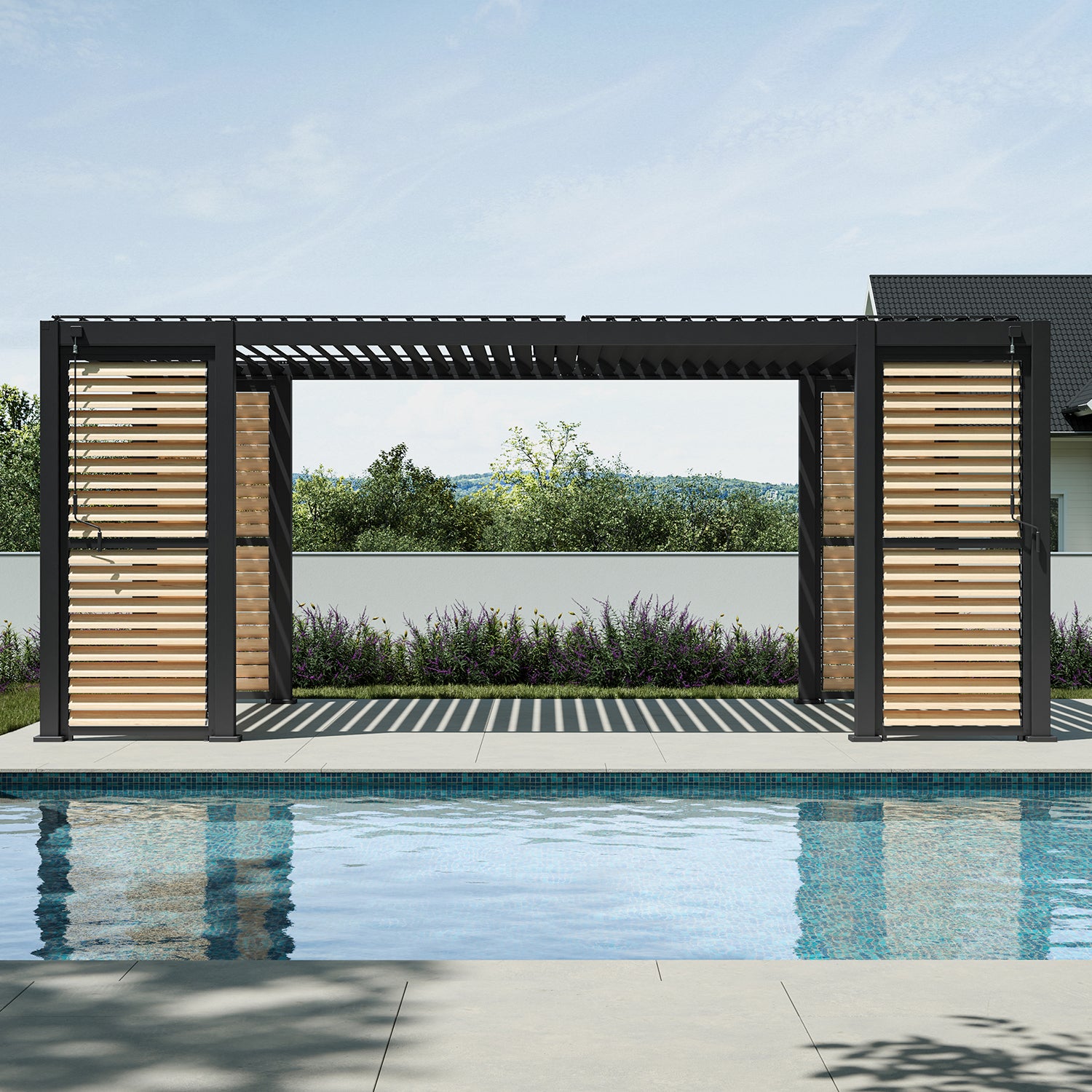
Most bioclimatic pergolas accept add-ons like pull-down screens for bugs and privacy, sliding glass doors for full enclosure, and shutter walls for wind protection. Mirador's 111 series alone offers seven different accessory types.
You don't need all of them. But the option to build up over time? Pretty solid.

Bioclimatic Pergola vs. Traditional Pergola: What's the Difference?
A traditional pergola gives you a frame. Maybe some climbing vines. Partial shade on a good day. But when it rains, you run inside. When the sun hits hard, you sweat it out.
A bioclimatic pergola gives you control. The roof responds to conditions. You decide how much sun, shade, airflow, and rain protection you want at any given moment. That flexibility is the whole point, and it's why the "bioclimatic" label exists.
Is it worth the higher price? If you currently avoid your patio on hot days, rainy afternoons, or buggy evenings and you wish you didn't, then yes. If your patio is naturally shaded, only used occasionally, and weather isn't a problem, a simpler structure might do the job fine.
Is a Bioclimatic Pergola Right for You?
Ask yourself three questions:
- How often does weather cut my outdoor time short? If the answer is "frequently," a louvered roof earns its cost in usable days alone.
- Do I want a patio or an outdoor room? If you want to dine, entertain, and relax outside regardless of conditions, bioclimatic is the way to go.
- Am I okay with DIY installation? Most modern kits, including Mirador's, ship pre-cut, pre-drilled, and with illustrated manuals. Two people, roughly 4 to 6 hours, basic tools. No contractor required.
Sound like you? Take a look at our pergola collection and see which size and roof option fits your space.
FAQs
Is a bioclimatic pergola waterproof?
When the louvers are fully closed, yes. Most quality models shed rain through integrated drainage channels inside the posts. Mirador's 111DA double-aluminum louvers offer the tightest seal. Keep in mind that wind-driven rain can still enter from open sides, so adding screens or glass doors improves coverage.
How much does a bioclimatic pergola cost?
Prices range widely. Entry-level models like Mirador's 80S start at $1,299 for a 10'×10'. Mid-range aluminum models (111S) begin around $2,099, and premium all-aluminum options (111DA) start at $2,399. Motorized E-Motion models run $3,299. Accessories are sold separately.
Can I install a bioclimatic pergola myself?
Yes. Most ship as complete DIY kits with numbered hardware, pre-drilled parts, and step-by-step manuals. Installation typically takes 4 to 6 hours with two people and standard tools. A hammer drill is needed for anchoring to concrete.
Do I need a permit for a bioclimatic pergola?
It depends on your local building codes. In many areas, freestanding pergolas under certain square footages are exempt. Always check with your local government before installation.
Does a bioclimatic pergola work in snowy climates?
Yes, but you should open the louvers to a vertical position during heavy snowfall to prevent accumulation. Mirador's 111DA handles up to 26.6 psf of snow load, which is well above most residential building codes.