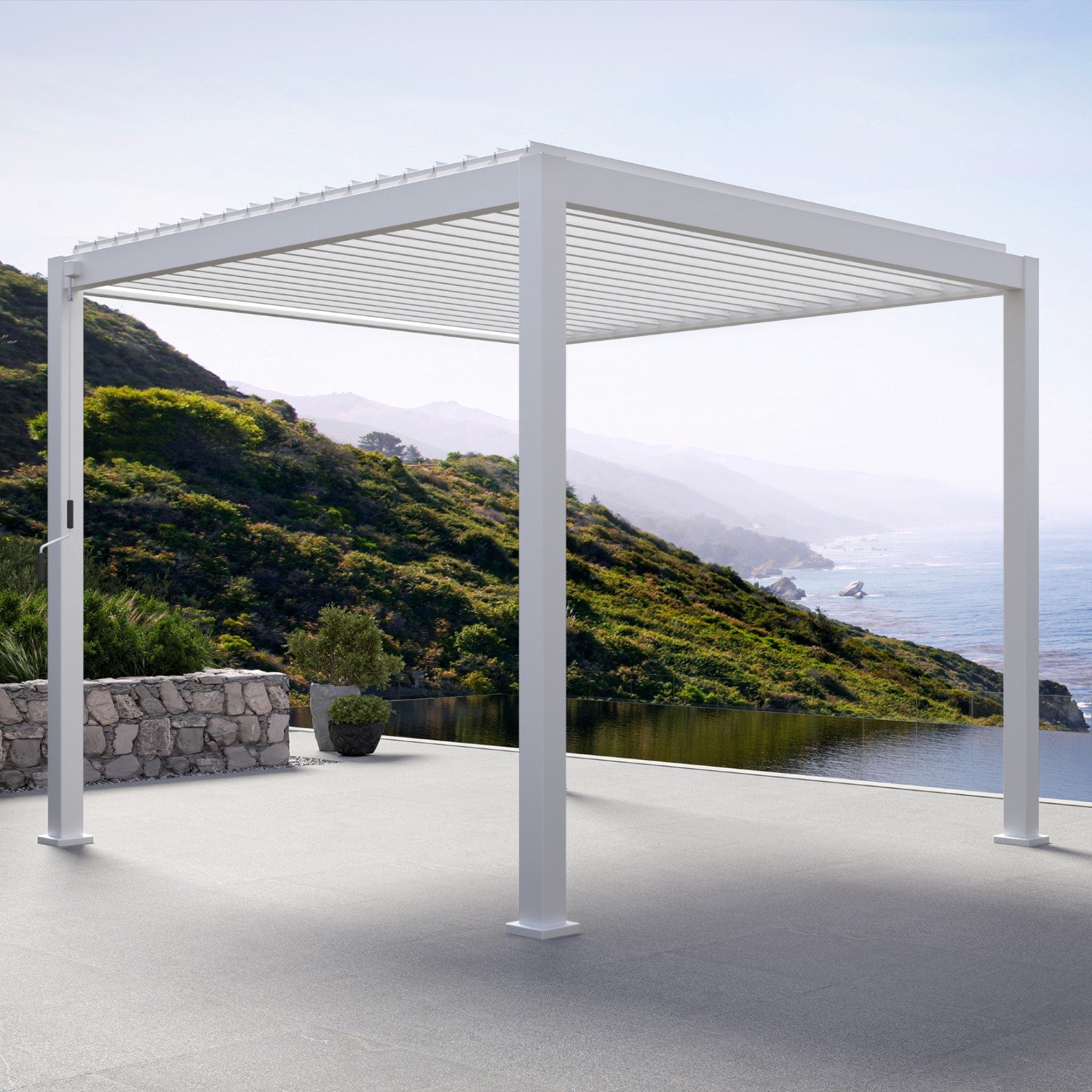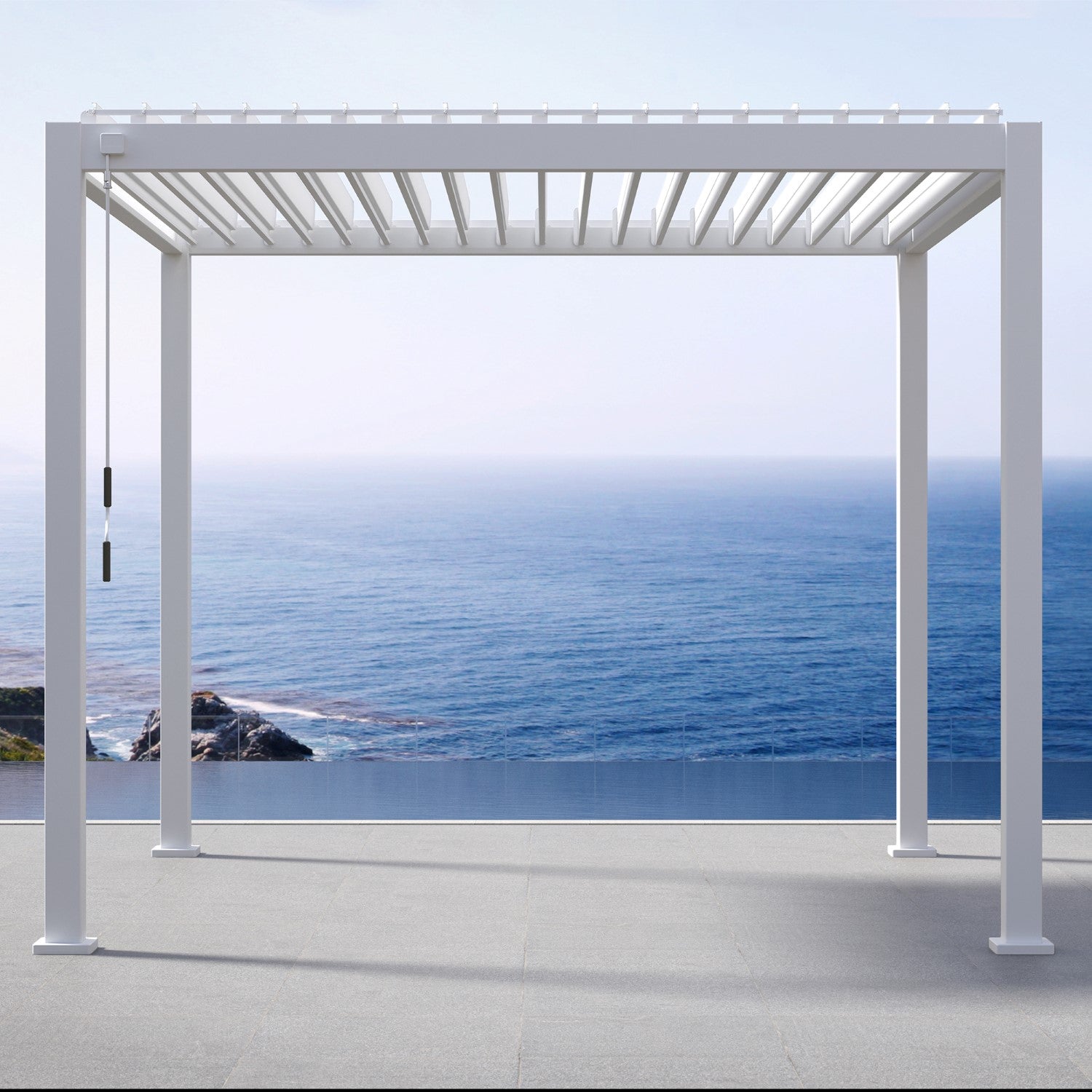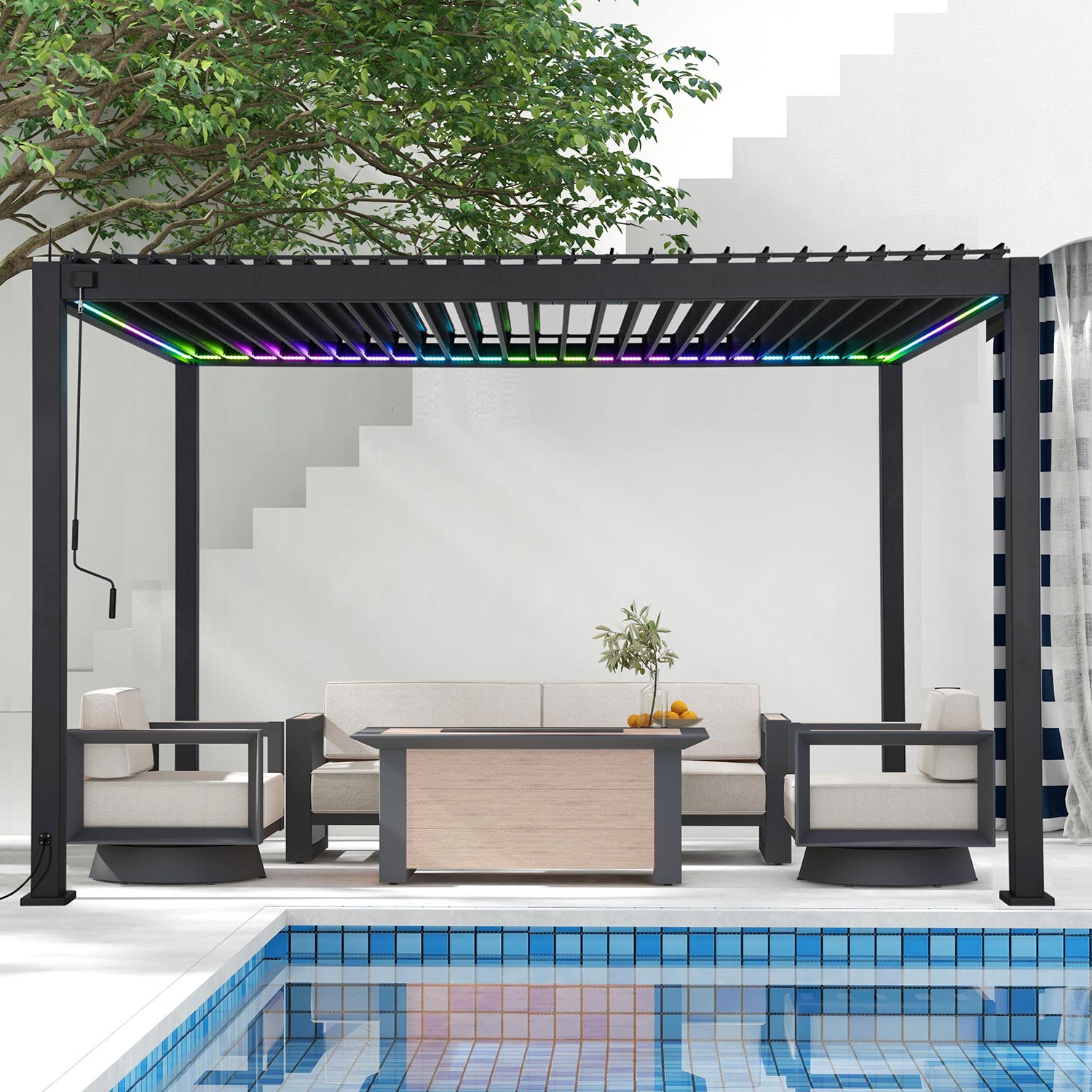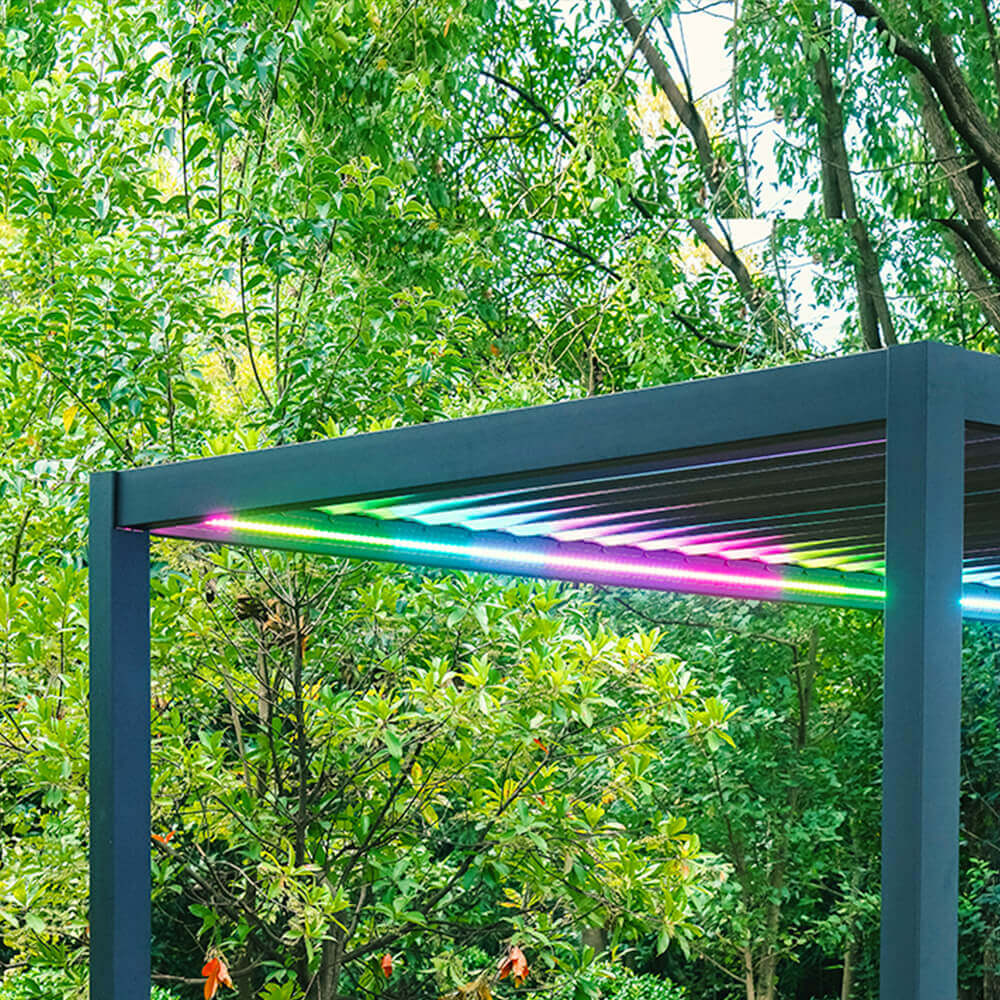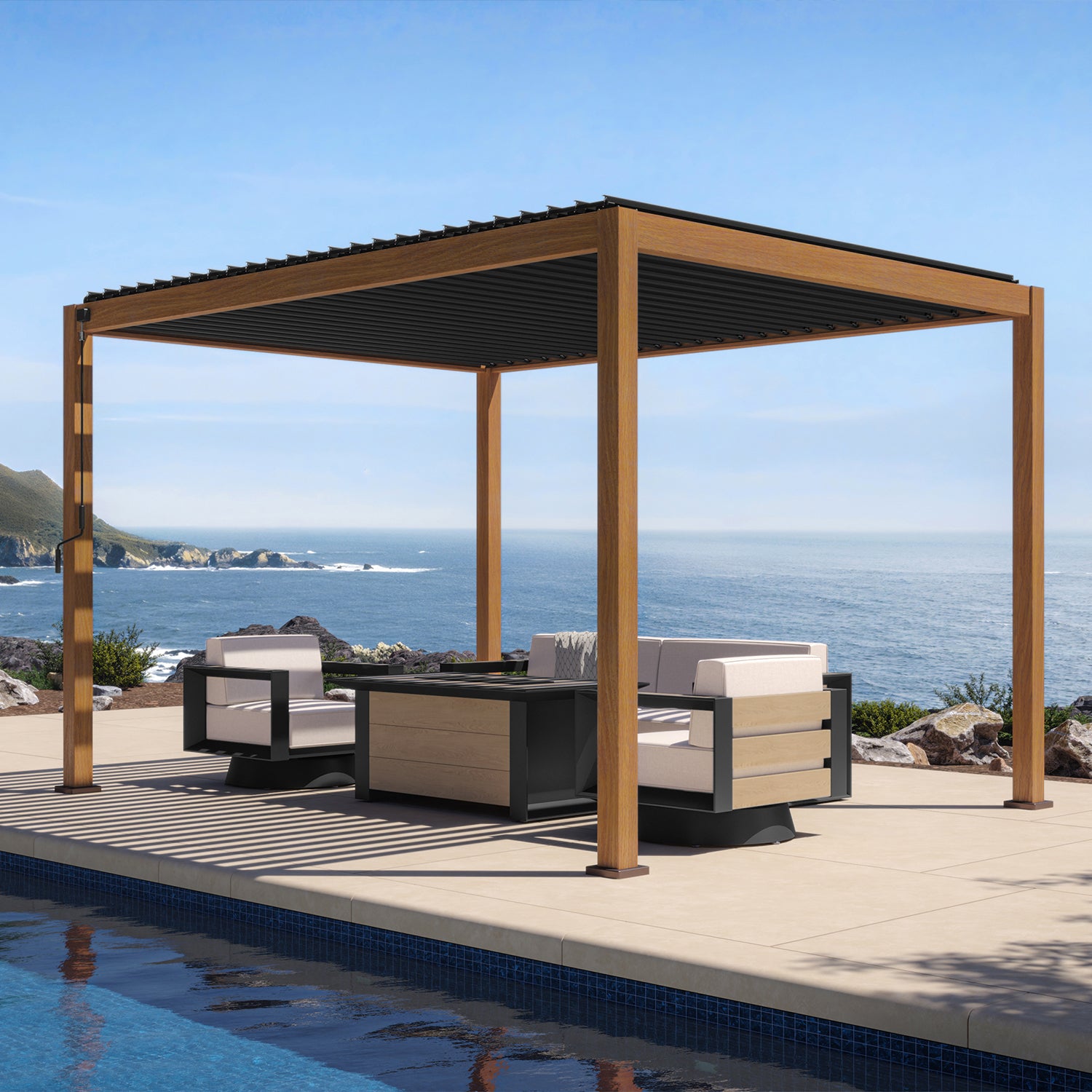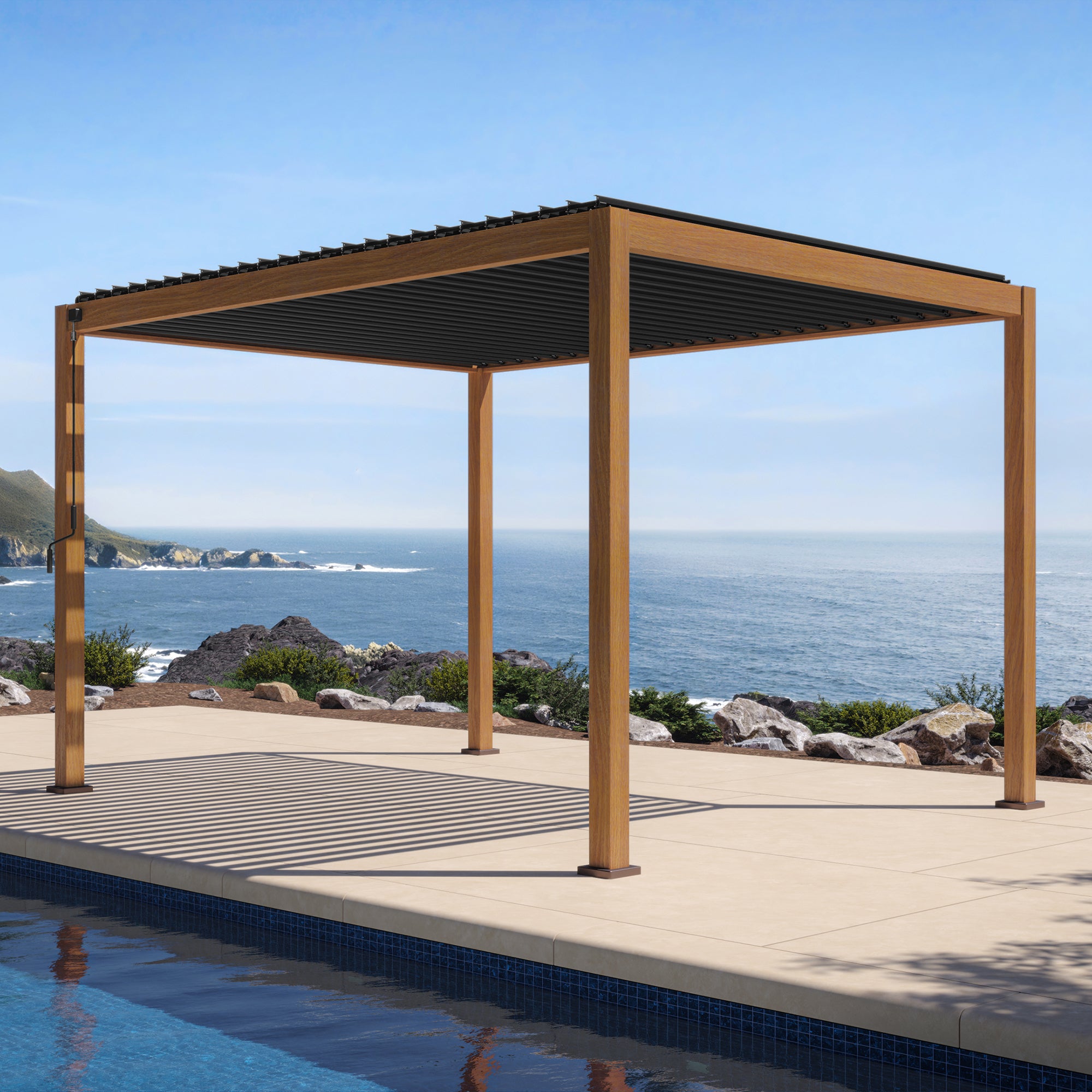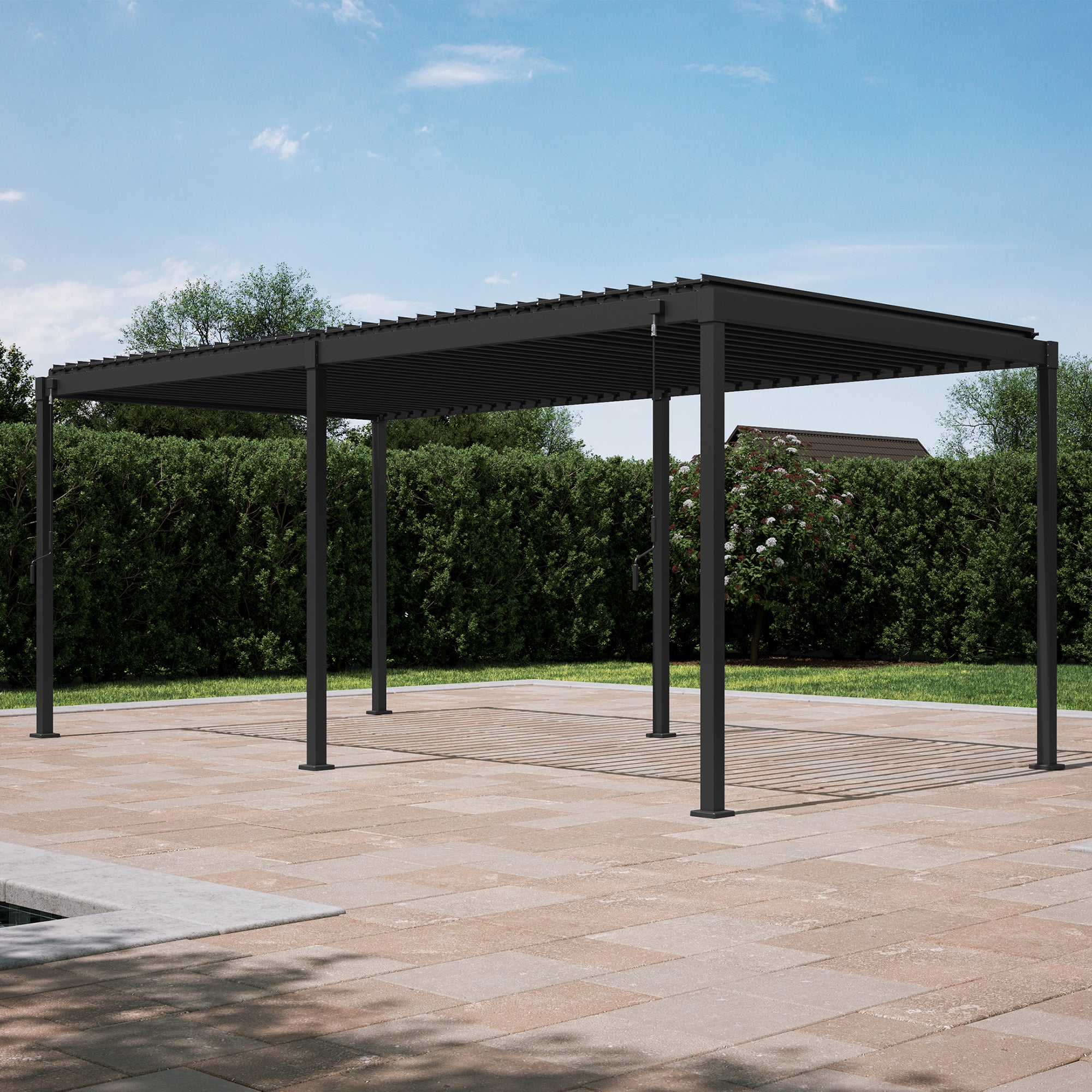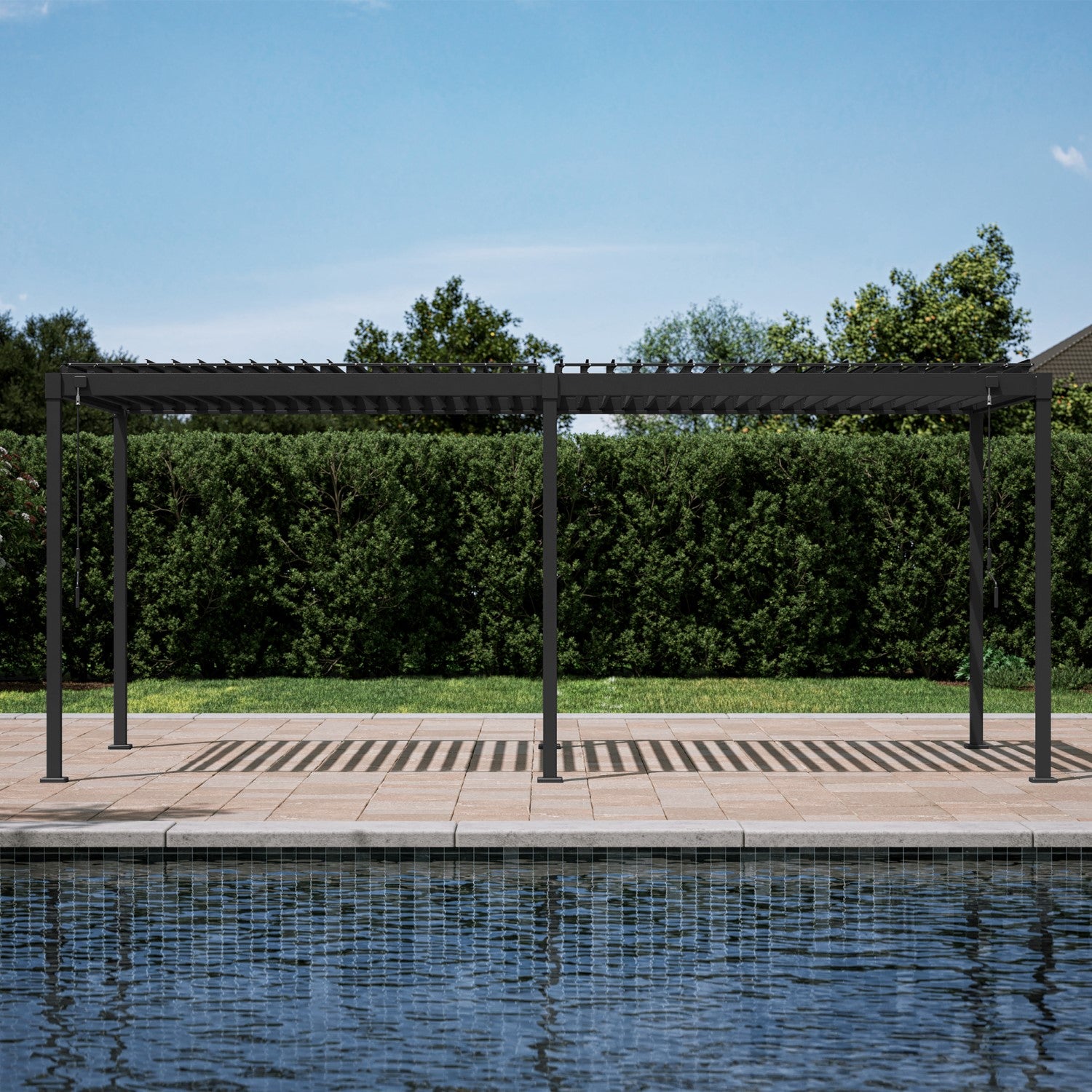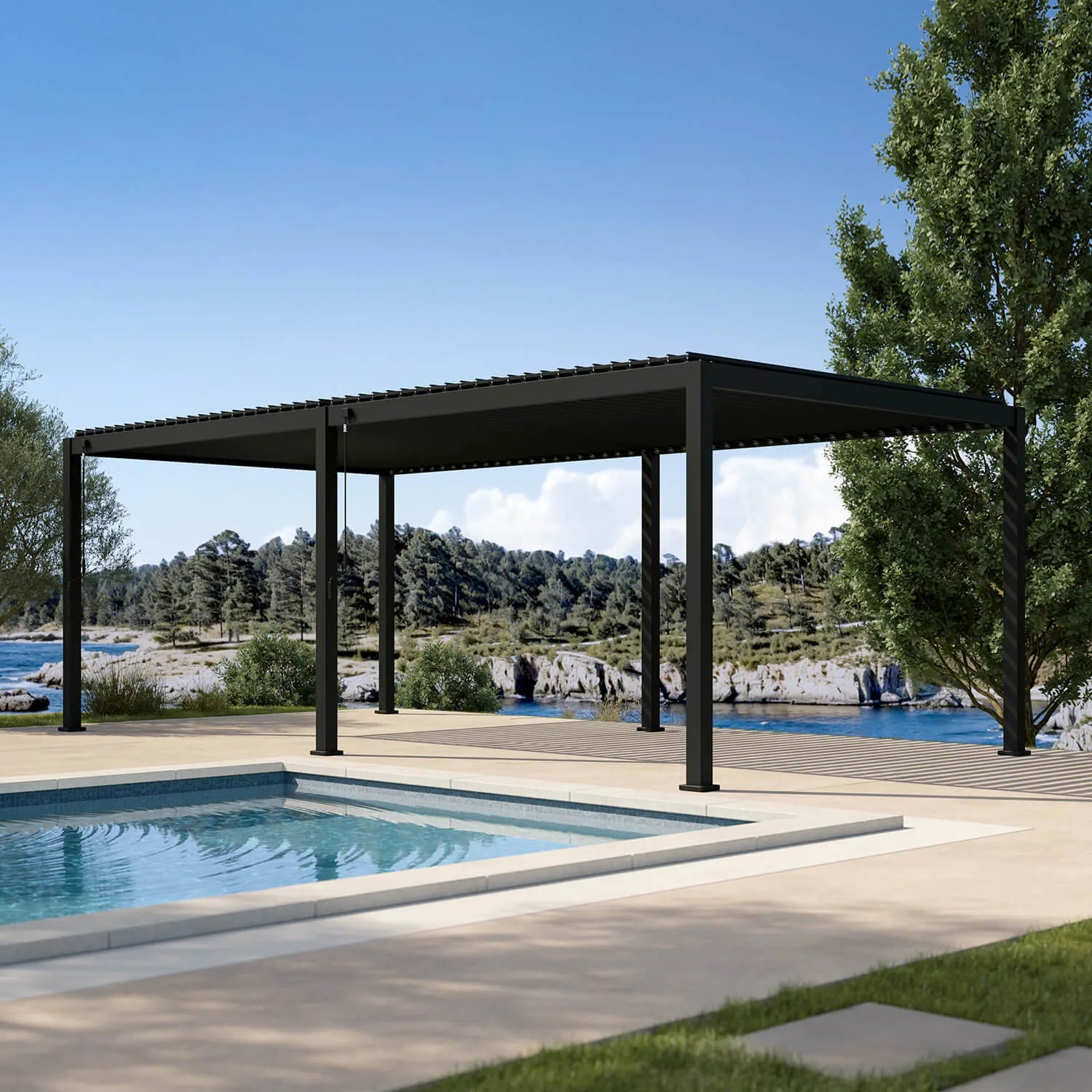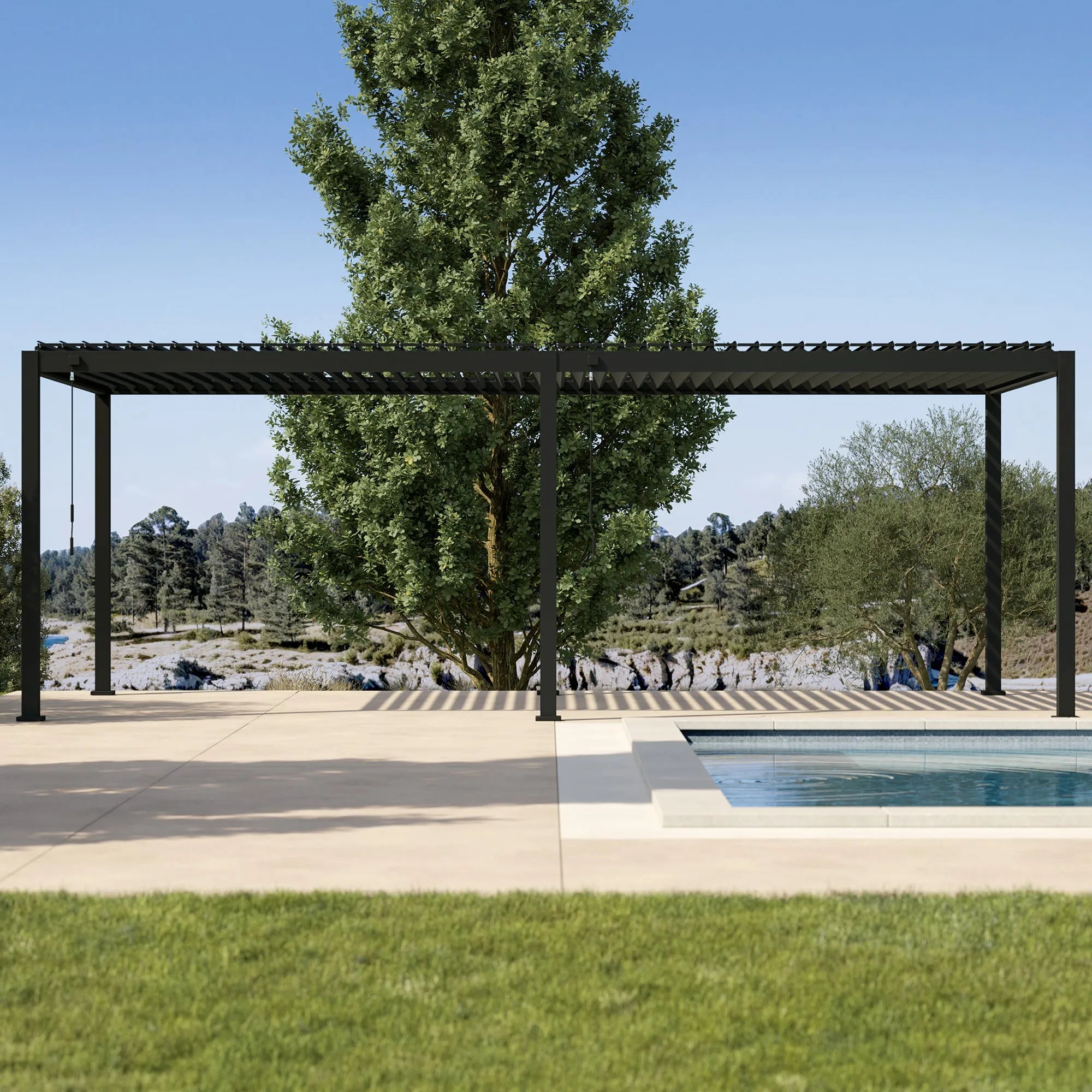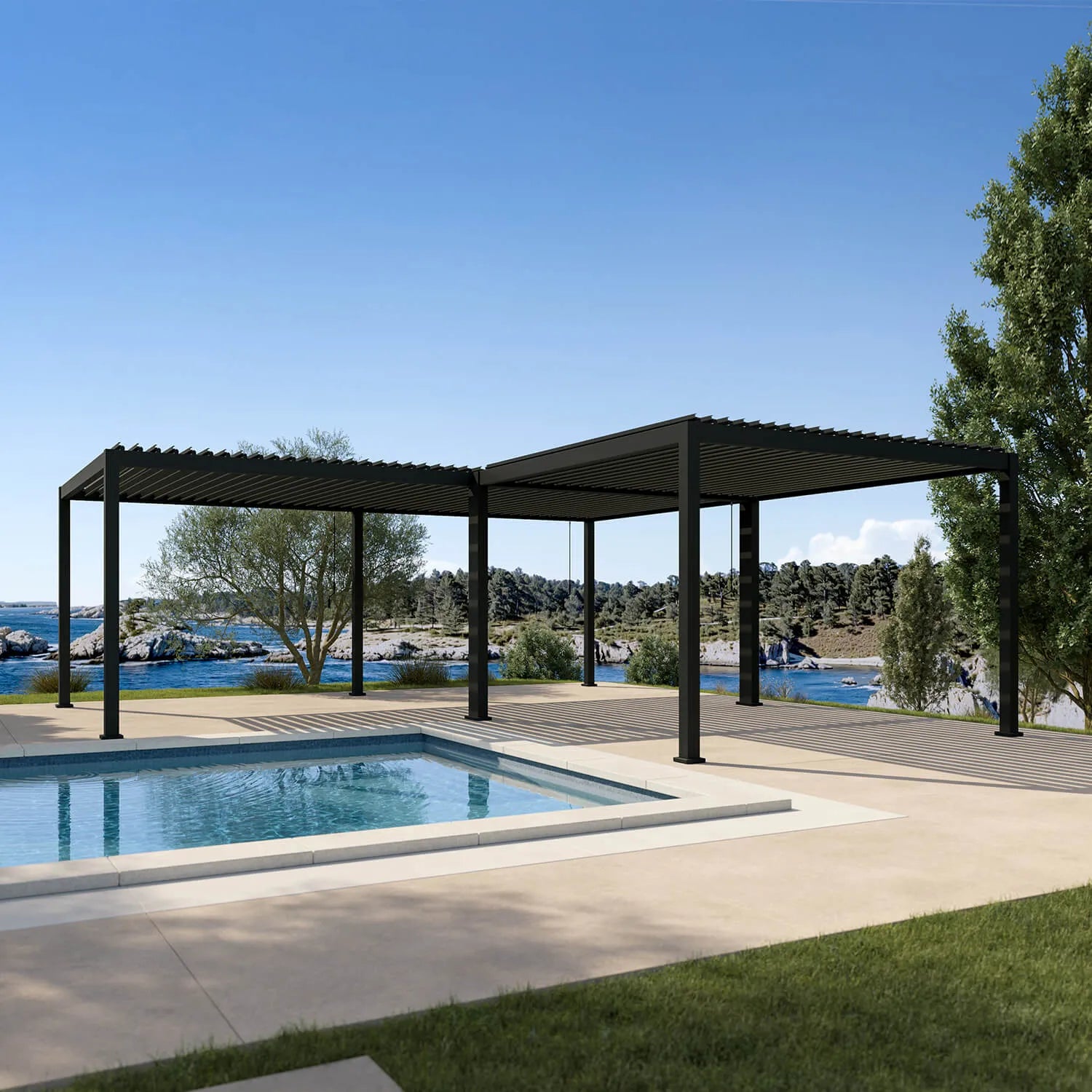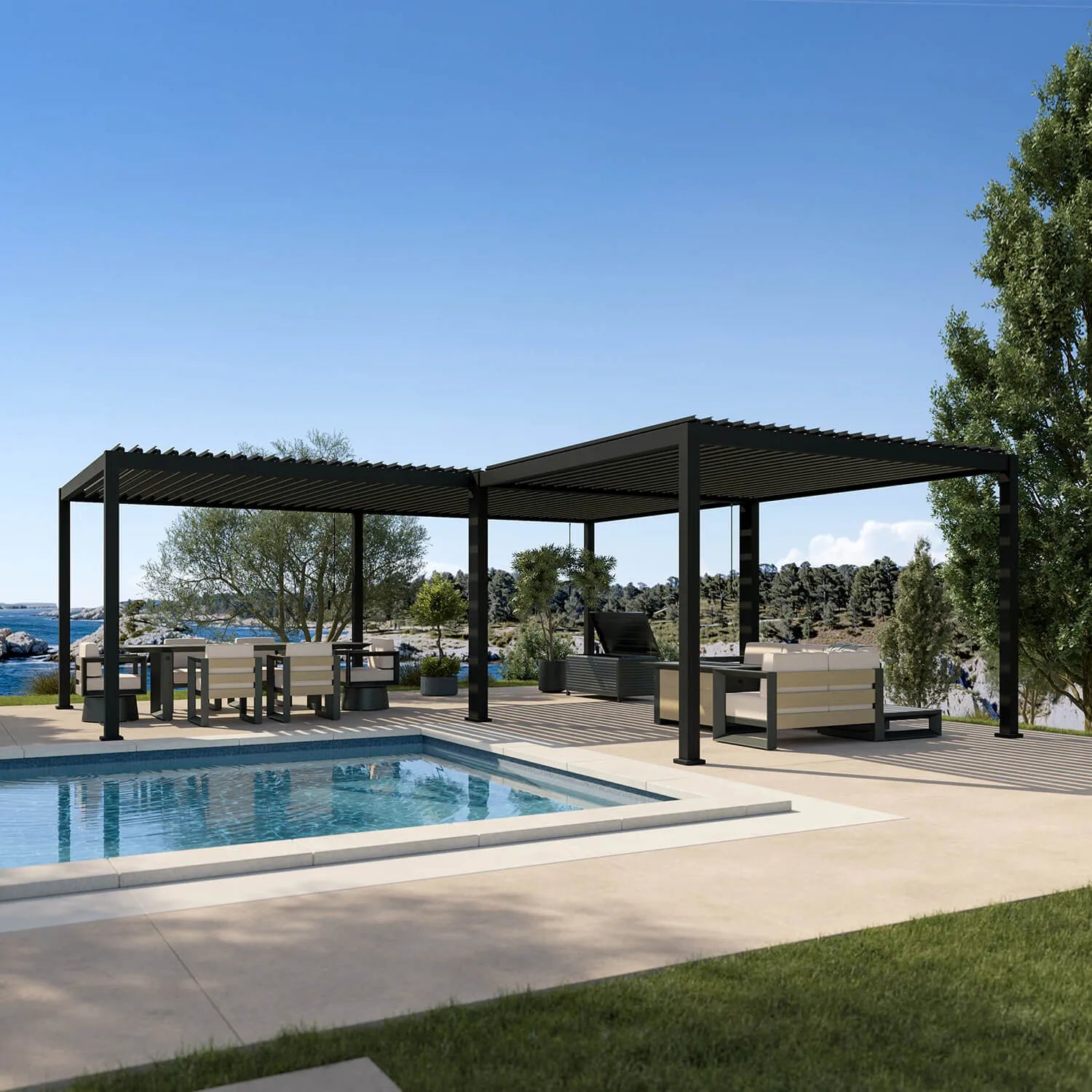

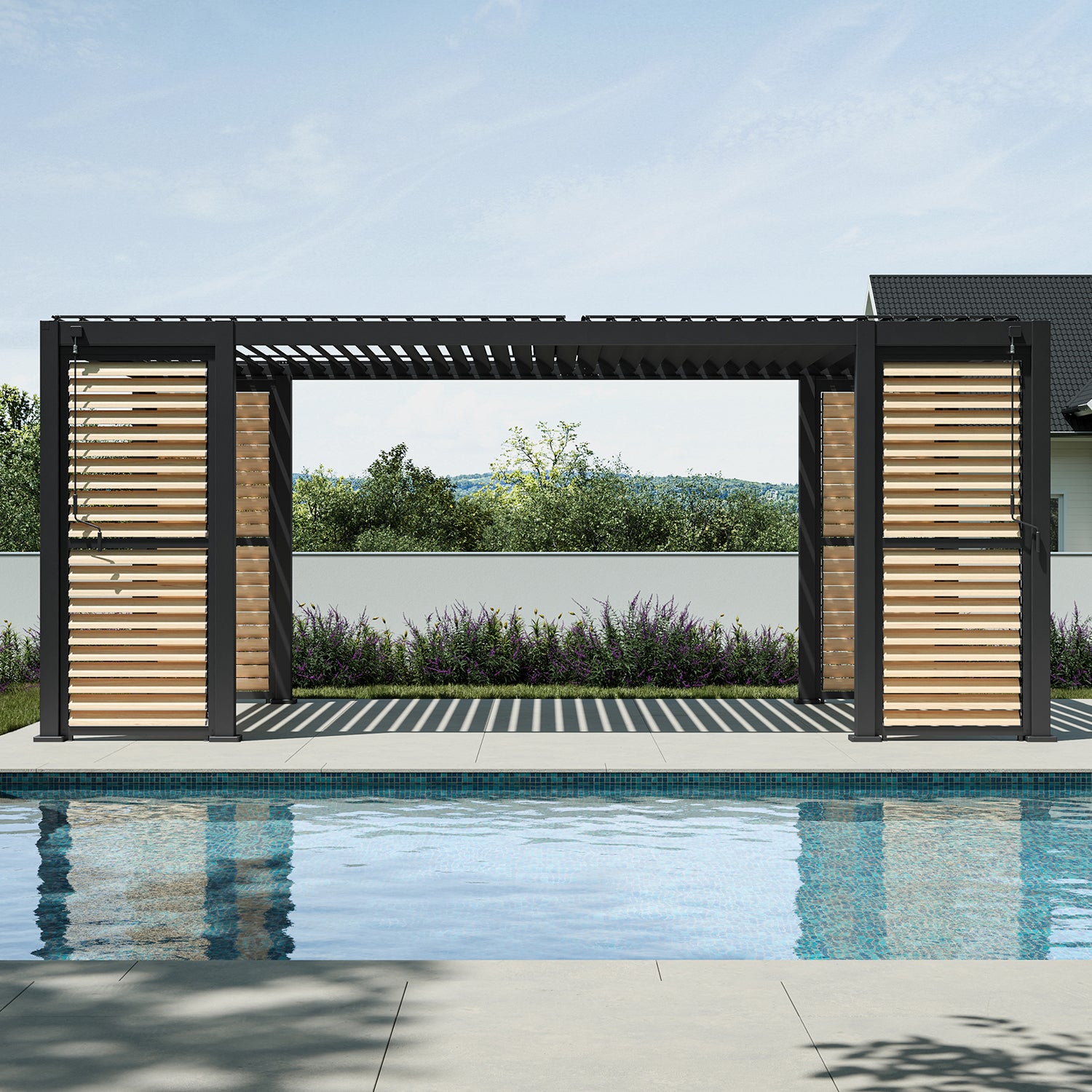
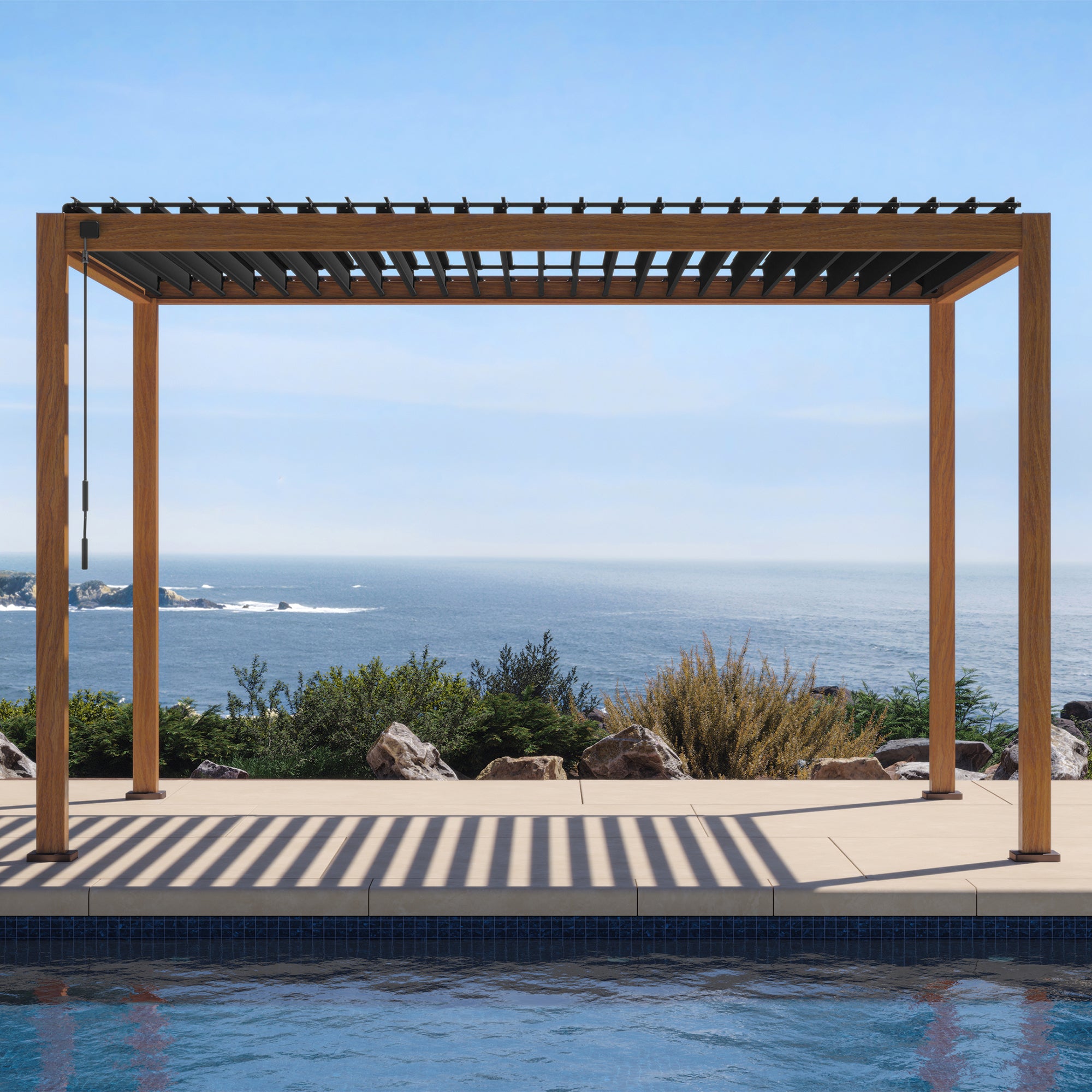
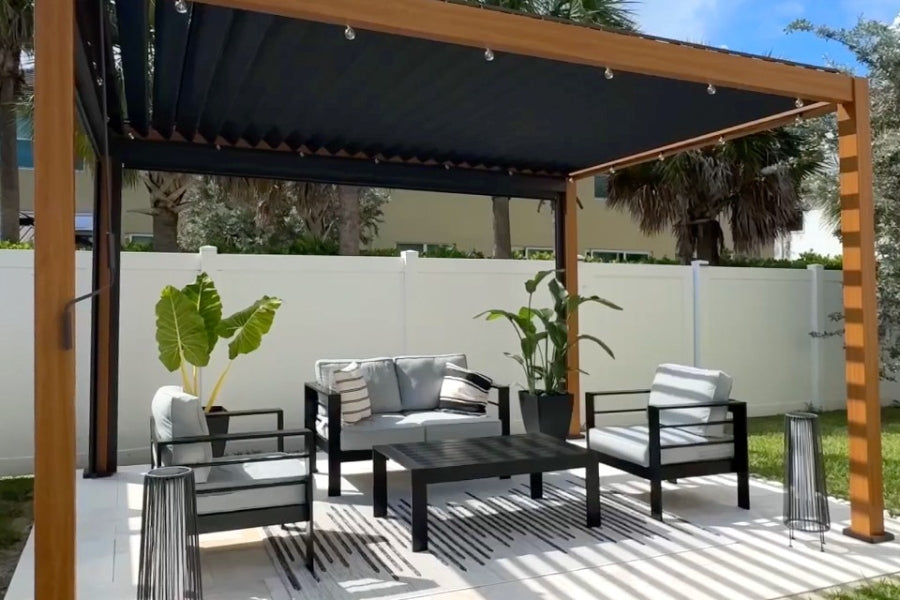
Trying to choose between aluminum and steel for a residential louvered pergola? For most homeowners, aluminum is the more premium choice. It is lighter, resists corrosion well, and works nicely for moving louvers that need to open and close smoothly. Steel can still make sense if you want a lower upfront cost, extra stiffness, or a more value-focused kit. Some pergolas also use a hybrid design, with an aluminum frame and protected steel louvers, to balance durability and cost.
If you are looking at a pergola with a retractable fabric roof, the frame material matters a little less. In that case, pay closer attention to the canopy, tracks, motor, wind limits, and drainage. Those details usually affect daily use more than whether the frame is steel or aluminum.
The smartest comparison is not simply metal versus metal. Compare the frame, roof components, protective finish, published weather ratings, warranty, accessories, and installation requirements as one system.

Aluminum vs Steel Pergola: Quick Comparison
|
Comparison Point |
Aluminum Pergola |
Steel Pergola |
|
Weight |
Lighter and easier to handle |
Heavier for a similar component size |
|
Structural behavior |
Strength depends on alloy, profile, and engineering |
High strength and stiffness support efficient structural designs |
|
Corrosion |
Naturally forms a protective oxide layer; finish still matters |
Requires a protective system such as galvanizing, powder coating, or both |
|
Moving louvers |
Excellent fit for lower-mass roof blades and extruded drainage profiles |
Can work well when protected, but adds moving mass |
|
Retractable canopy frame |
Good for lighter residential systems |
Good for sturdy value or larger fabricated frames |
|
Maintenance |
Usually lower |
Inspect coating damage and exposed steel carefully |
|
Typical price position |
Often mid-range to premium |
Often offers a lower entry price in ready-to-assemble kits |
|
Best fit |
Coastal exposure, modern patios, frequent roof operation |
Budget projects, protected inland patios, robust fixed or kit frames |
Steel vs Aluminum Pergola Strength and Weight
- Steel is known for high strength and stiffness, which can support slender structural members and longer spans when properly engineered. That does not automatically make every steel pergola stronger than every aluminum pergola. Member shape, wall thickness, connections, bracing, anchors, size, and test method all influence the final rating.
- Aluminum's advantage is lower mass. Architectural aluminum alloys can be extruded into complex hollow profiles that place material where it is useful. The Aluminum Association notes that 6xxx-series extrusions are widely used for architectural and structural applications because they combine formability, weldability, moderately high strength, and corrosion resistance.
For homeowners, compare the exact model's wind and snow documentation rather than deciding from the material name alone.
Aluminum vs Steel Pergola Rust and Maintenance
- Aluminum does not rust like steel, but it is not maintenance-free. Salt, trapped debris, dissimilar-metal contact, damaged finishes, and neglected drainage can still create staining or corrosion problems. A powder coated aluminum pergola should be cleaned periodically and inspected around fasteners, joints, and moving parts.
- Steel needs a reliable corrosion-protection system outdoors. Galvanizing uses a zinc coating to provide both barrier and sacrificial protection, while powder coating adds color and another surface barrier. A galvanized and powder-coated steel component can perform well, but scratches, cut edges, standing water, and coastal exposure deserve attention.
Choose aluminum when minimum maintenance is a leading priority. Choose steel only after confirming what protects the steel beneath the visible finish.
Is Aluminum Better for a Pergola With Louvered Roof?
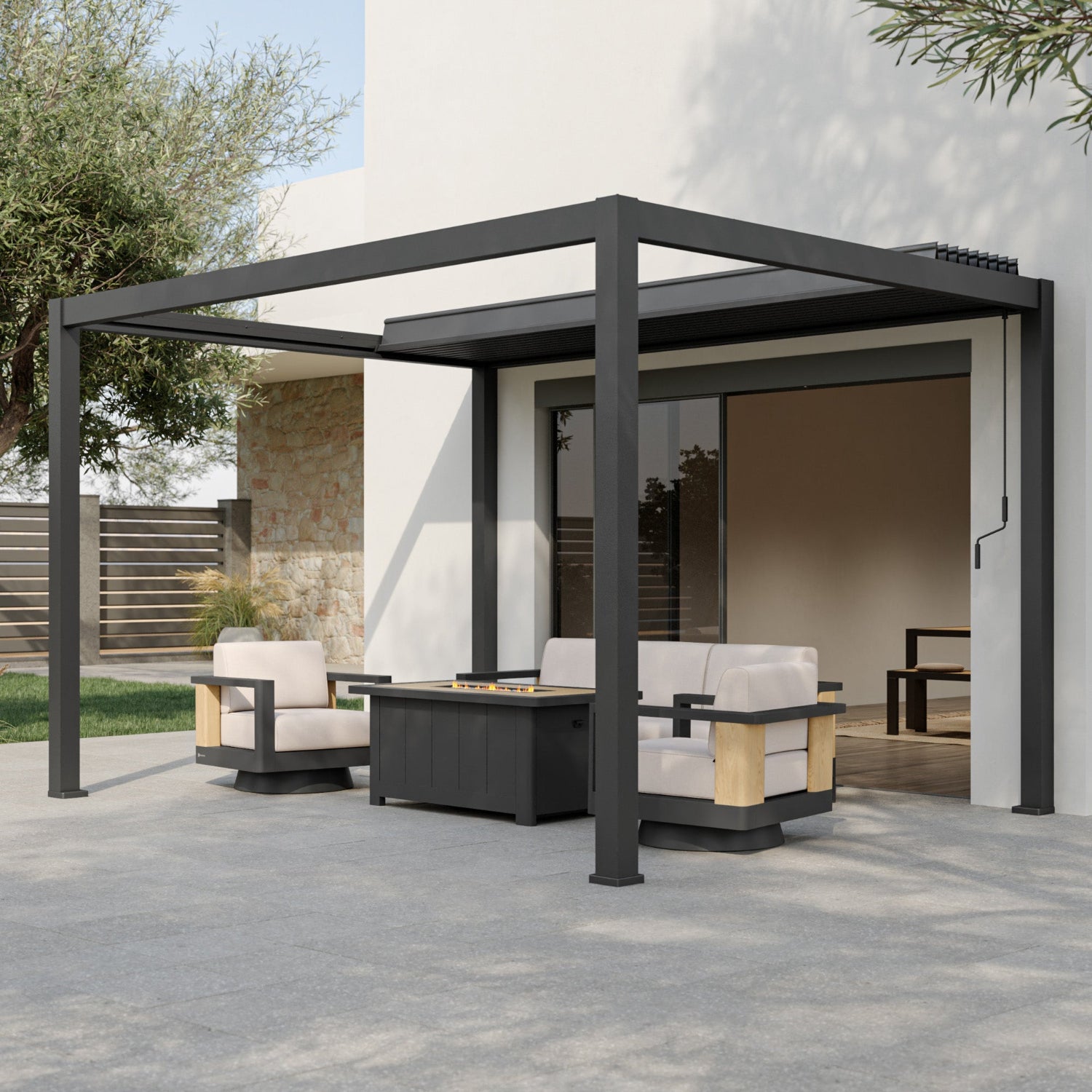
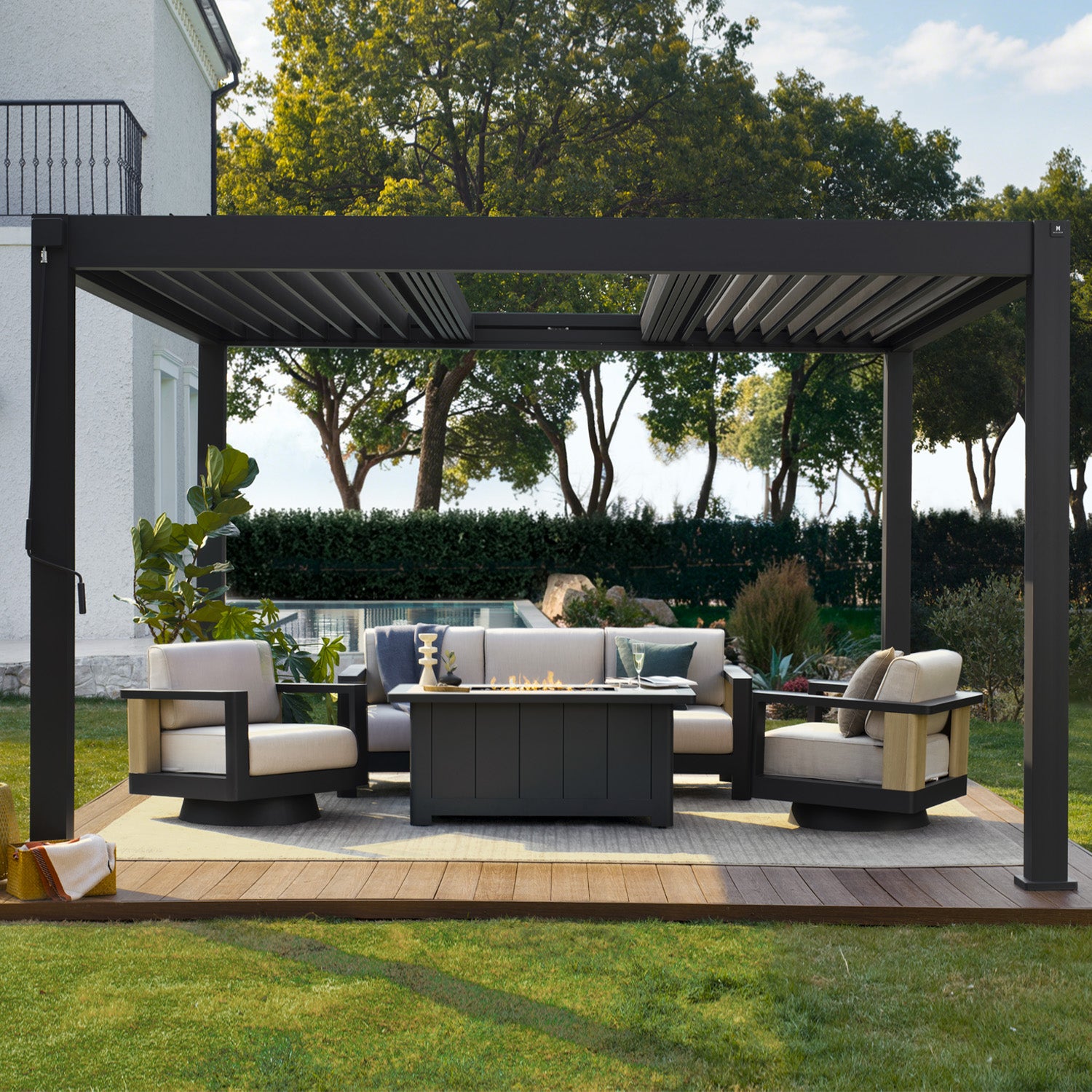
Aluminum is usually the strongest all-around choice for a pergola with louvered roof. Lightweight blades reduce the mass that cranks, linkages, motors, and pivots must move. Extruded profiles can also integrate water channels, stiffening ribs, and clean edges into the louver shape.
That said, steel louvers are not automatically inferior. Properly galvanized and coated steel can create a durable adjustable roof at a more accessible price. Hybrid construction is especially practical: use aluminum where lower frame weight and corrosion resistance matter, then use protected steel where cost and stiffness matter.
An aluminum louvered pergola is the better premium choice for frequent operation, humid or coastal climates, and buyers prioritizing lower maintenance. A steel or hybrid louvered pergola can be the better value when the coating system and published ratings fit the site.

Is Steel or Aluminum Better for a Pergola With Retractable Roof?
The phrase retractable pergola can describe several products. Some use fabric that slides along tracks, while others use retractable panels or sections. A motorized louvered roof rotates blades in place; it does not retract them out of the opening.
For a fabric pergola with retractable roof, both steel and aluminum frames can work. Focus on:
- Frame engineering and anchoring
- Track and roller quality
- Fabric weather rating and replacement path
- Motor access and controls
- Wind limits when the canopy is extended
- Where rainwater goes
Aluminum makes the structure easier to handle and reduces corrosion concerns. Steel can provide a rigid, economical frame, especially for simpler canopy systems. The roof mechanism and fabric will often determine comfort and service life before the frame material does.
Steel vs Aluminum Pergola Cost and Long-Term Value
Steel pergola kits often start at a lower price because steel components can deliver stiffness economically. Aluminum pergolas often cost more when they include precision extrusions, double-layer louvers, integrated drainage, motorization, or a broader accessory system.
Compare total ownership cost rather than material cost alone:
- Pergola kit and delivery
- Foundation and anchoring
- Assembly or professional installation
- Coating inspection and touch-up
- Motors, controls, and replacement parts
- Screens, doors, lights, and other accessories
- Warranty and expected years of use
A lower-cost steel pergola can be the right purchase for a protected patio. Aluminum may offer better long-term value where moisture, salt air, frequent roof movement, or low maintenance matters.
Mirador Steel, Hybrid, and Aluminum Pergola Materials
Mirador's lineup shows why an aluminum vs steel pergola comparison should separate the frame from the louvers. The current Mirador pergola comparison lists four relevant material paths:
|
Mirador Series |
Frame Material |
Louver Material |
Best-Fit Position |
|
Alloy steel |
Alloy steel |
Entry-level all-steel louvered pergola |
|
|
Aluminum |
Alloy steel |
Hybrid value option with a lighter frame |
|
|
Aluminum |
Galvanized steel |
Hybrid system with broader sizes and 111 Series accessories |
|
|
Aluminum |
Aluminum |
Premium all-aluminum system with double-layer louvers |
The 111S E-Motion adds remote-controlled louvers and lighting, but it remains a motorized louvered pergola rather than a roof that retracts away. That distinction helps shoppers compare the correct roof mechanisms.
What Is the Best Material for a Pergola?
- Choose steel when upfront value, stiffness, and a straightforward ready-to-assemble structure lead the decision. Verify galvanizing, coating coverage, drainage, anchoring, and warranty.
- Choose aluminum when lower weight, lower maintenance, corrosion resistance, and frequent louver operation matter most. It is usually the better fit for modern patios and wetter or coastal environments.
- Choose a hybrid pergola when you want an aluminum frame but are comfortable using protected steel louvers to control cost. For any material, the final decision should be based on the complete product rating and installation plan, not a generic assumption that one metal is always stronger.
FAQ
Is an aluminum pergola better than a steel pergola?
Aluminum is usually better for lower weight, corrosion resistance, lower maintenance, and moving louvered roofs. Steel can be better for upfront value and structural stiffness when it has an appropriate outdoor coating system.
Does a steel pergola rust?
Bare steel can rust outdoors. Galvanizing, powder coating, or a duplex coating system helps protect it. Inspect scratches, cut edges, joints, and areas where water can remain.
Is aluminum strong enough for a louvered pergola?
Yes, when the profiles, connections, anchors, and complete structure are properly engineered. Check the exact pergola's wind and snow ratings rather than judging strength from material alone.
What material is best for a pergola with retractable roof?
Either aluminum or steel can work for a fabric retractable roof. Aluminum reduces weight and corrosion concerns, while steel can provide a rigid, economical frame. Track, fabric, motor, wind limits, and drainage are equally important.
Are motorized louvers the same as a retractable pergola roof?
No. Motorized louvers rotate to control sun, airflow, and rain coverage. A retractable roof slides or folds away to expose a larger open area.
Is a hybrid pergola a good choice?
Yes. An aluminum frame with protected steel louvers can balance lower frame weight, corrosion resistance, stiffness, and price.
Which Mirador pergola is all aluminum?
The 111DA uses an aluminum frame and double-layer aluminum louvers. The 80S is all steel, while the 88S and 111S combine aluminum frames with steel louvers.