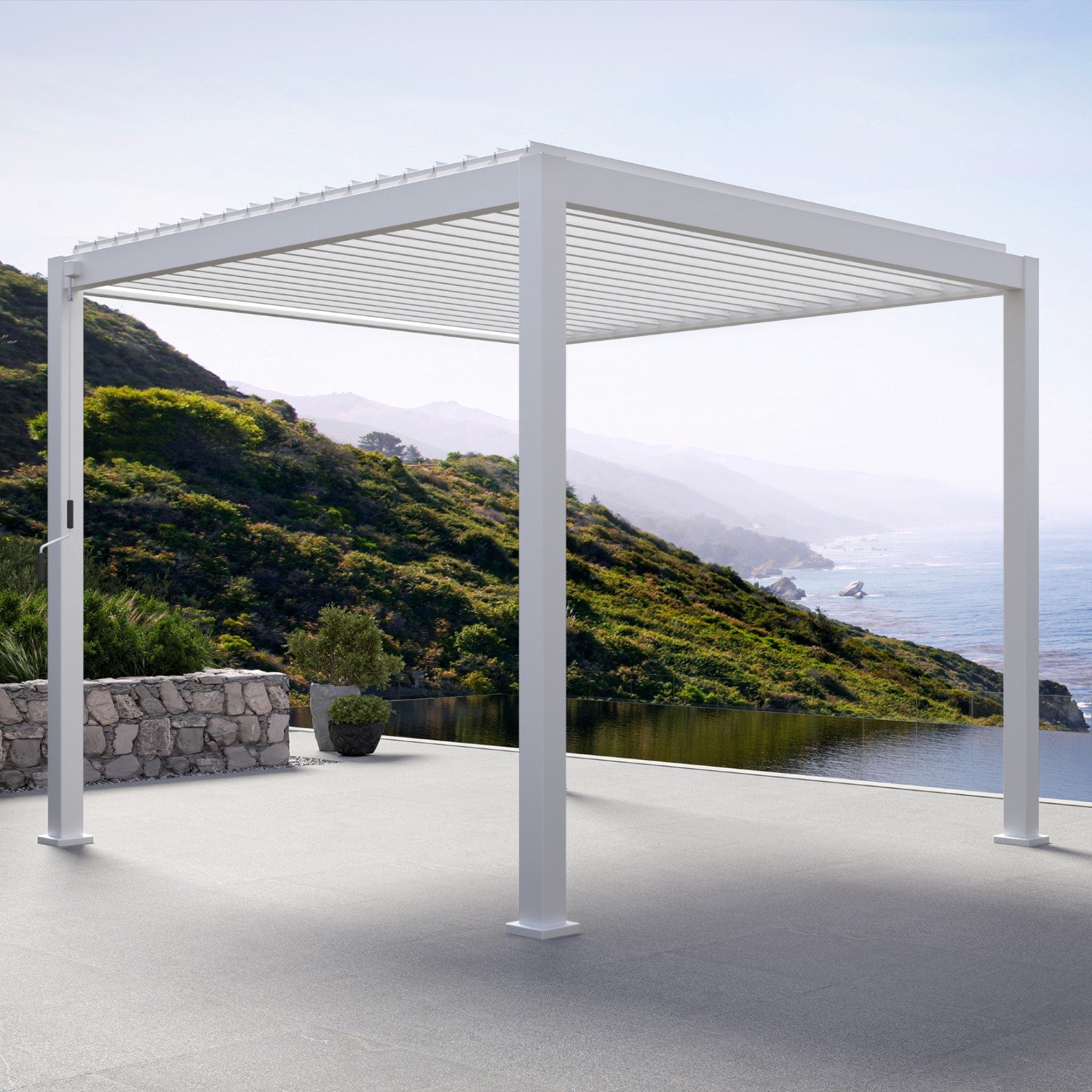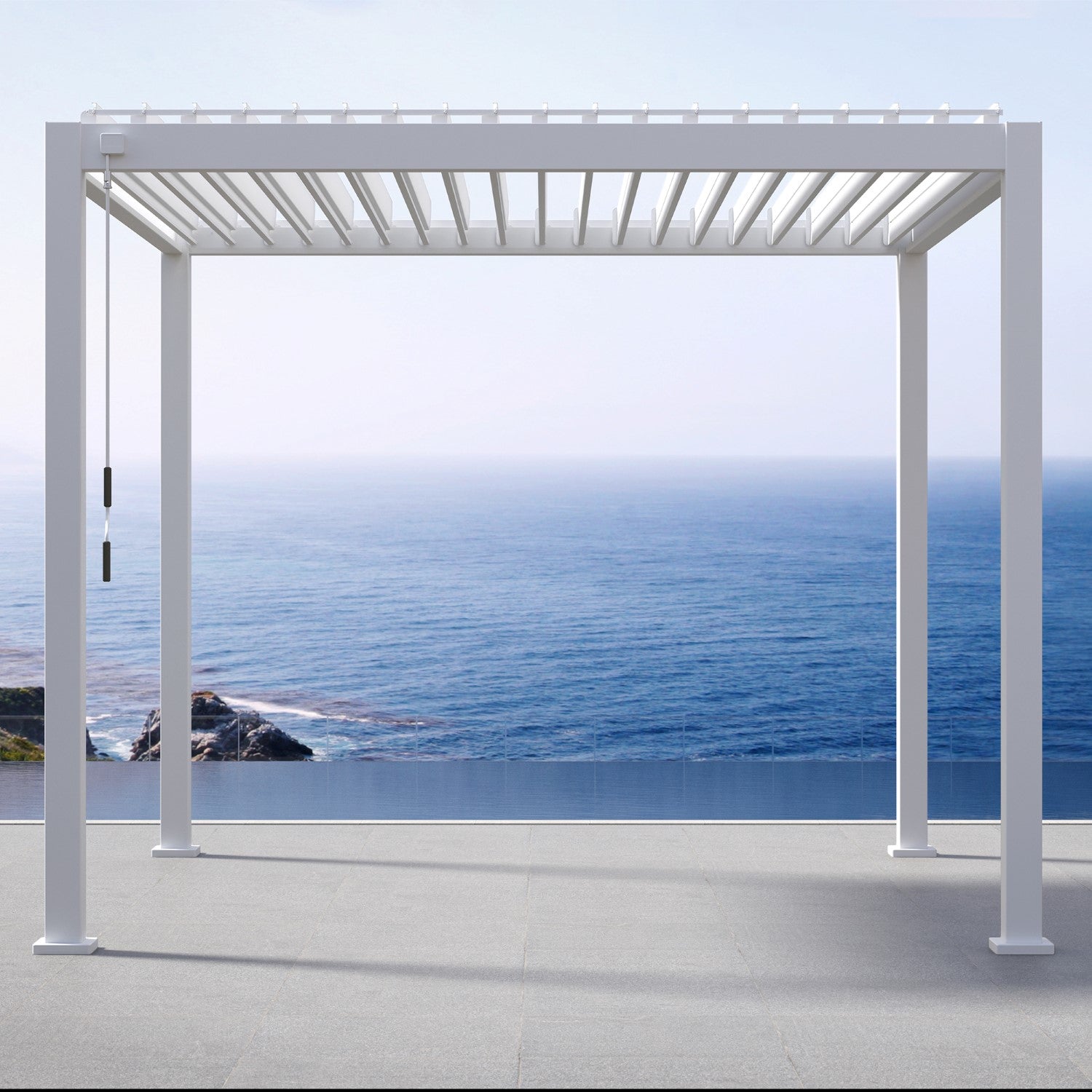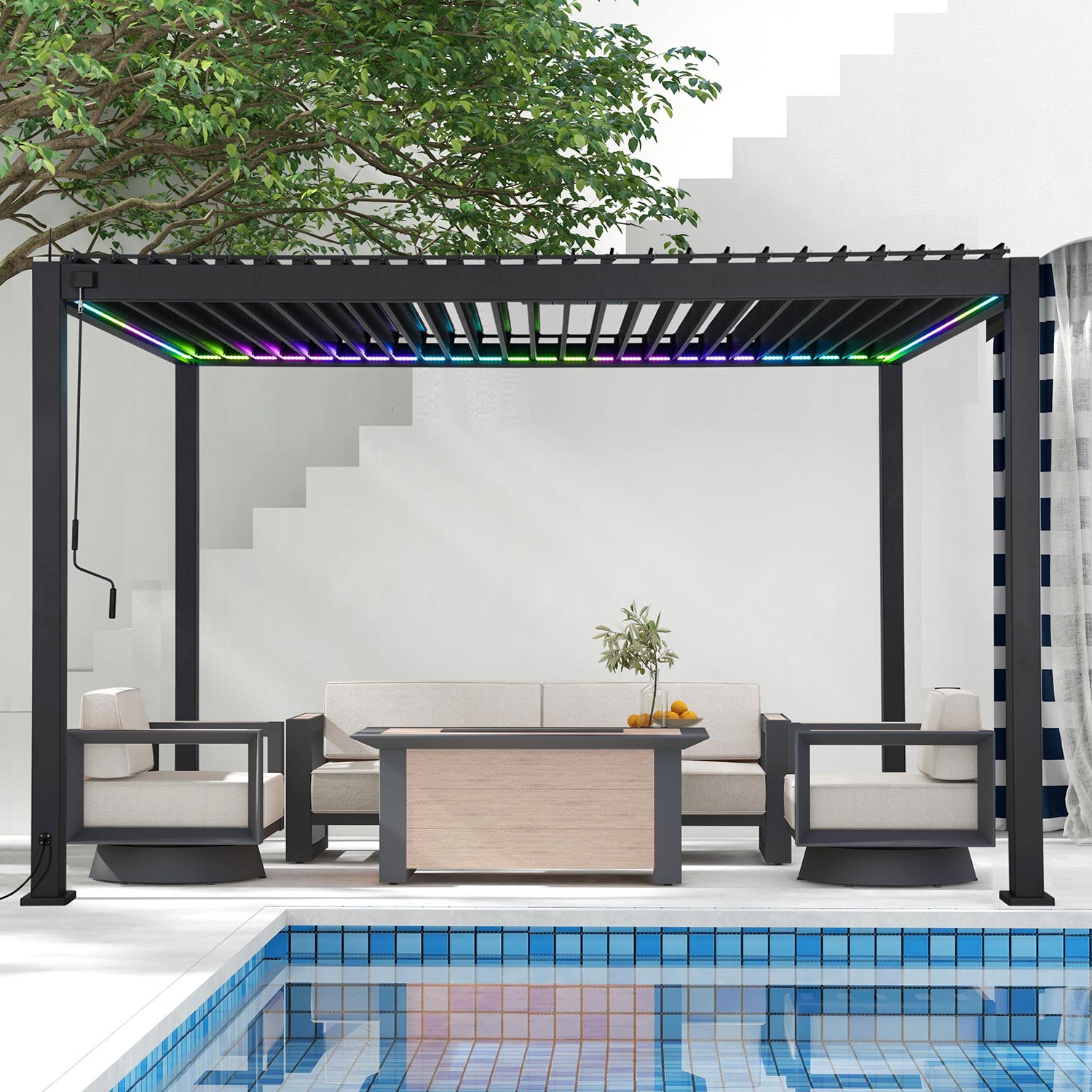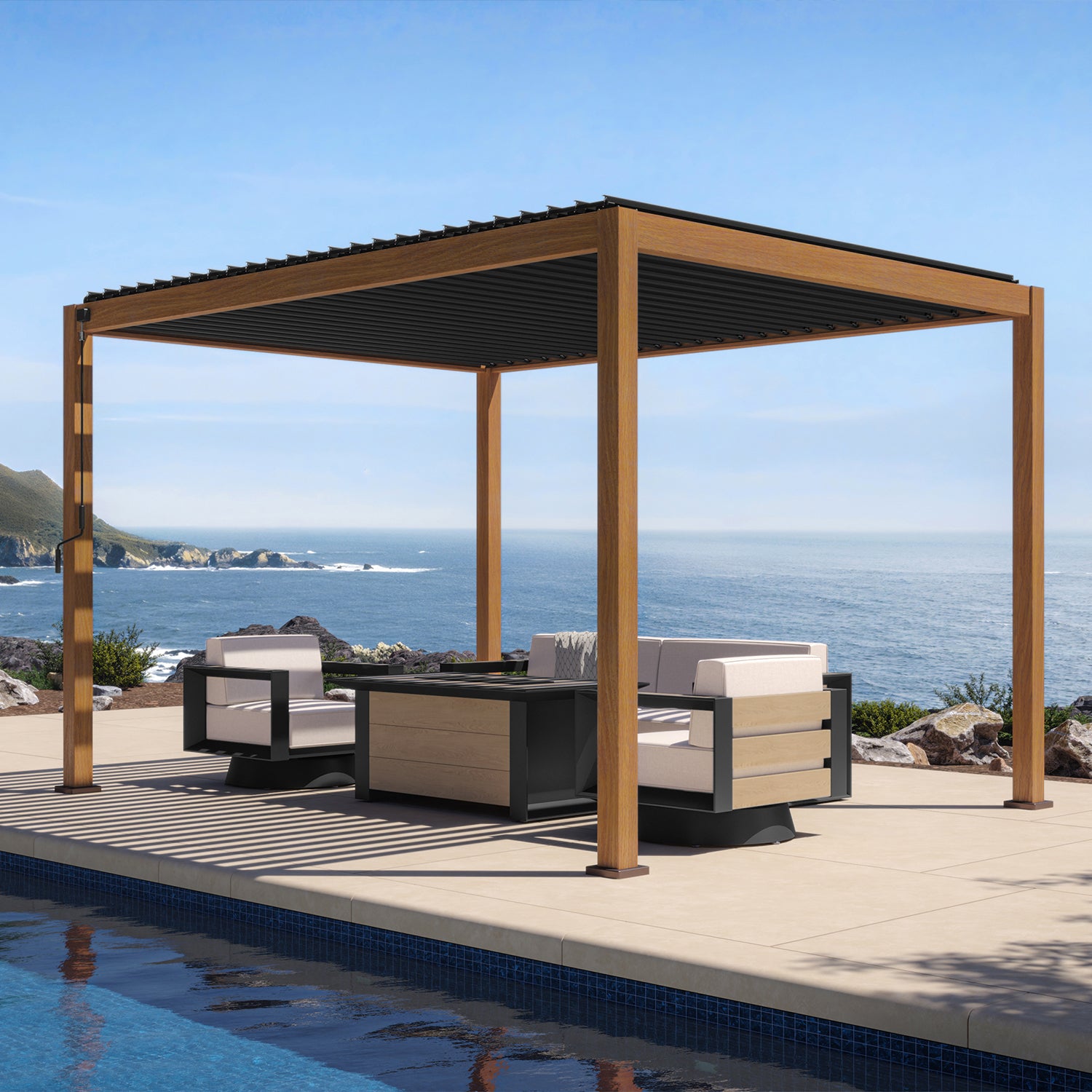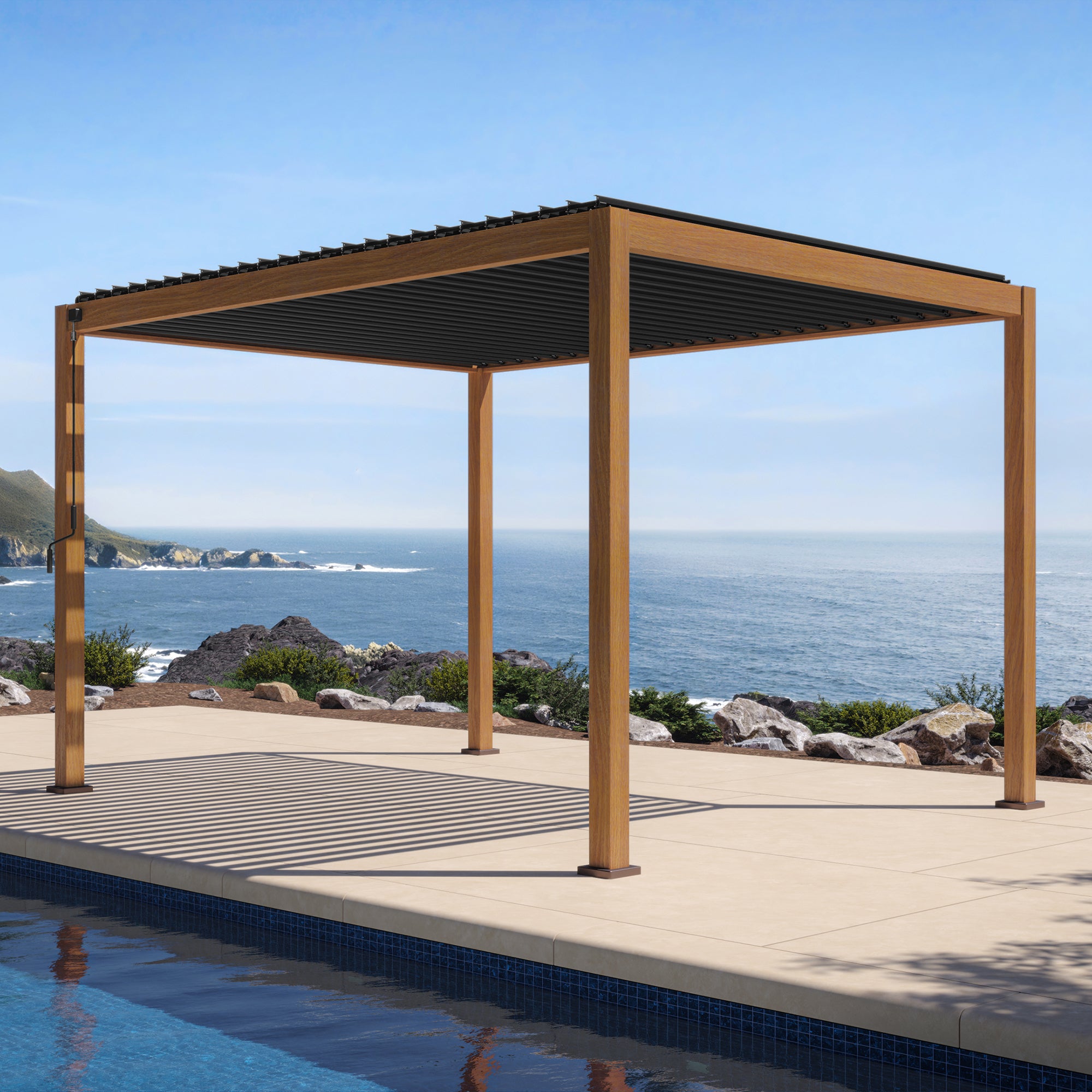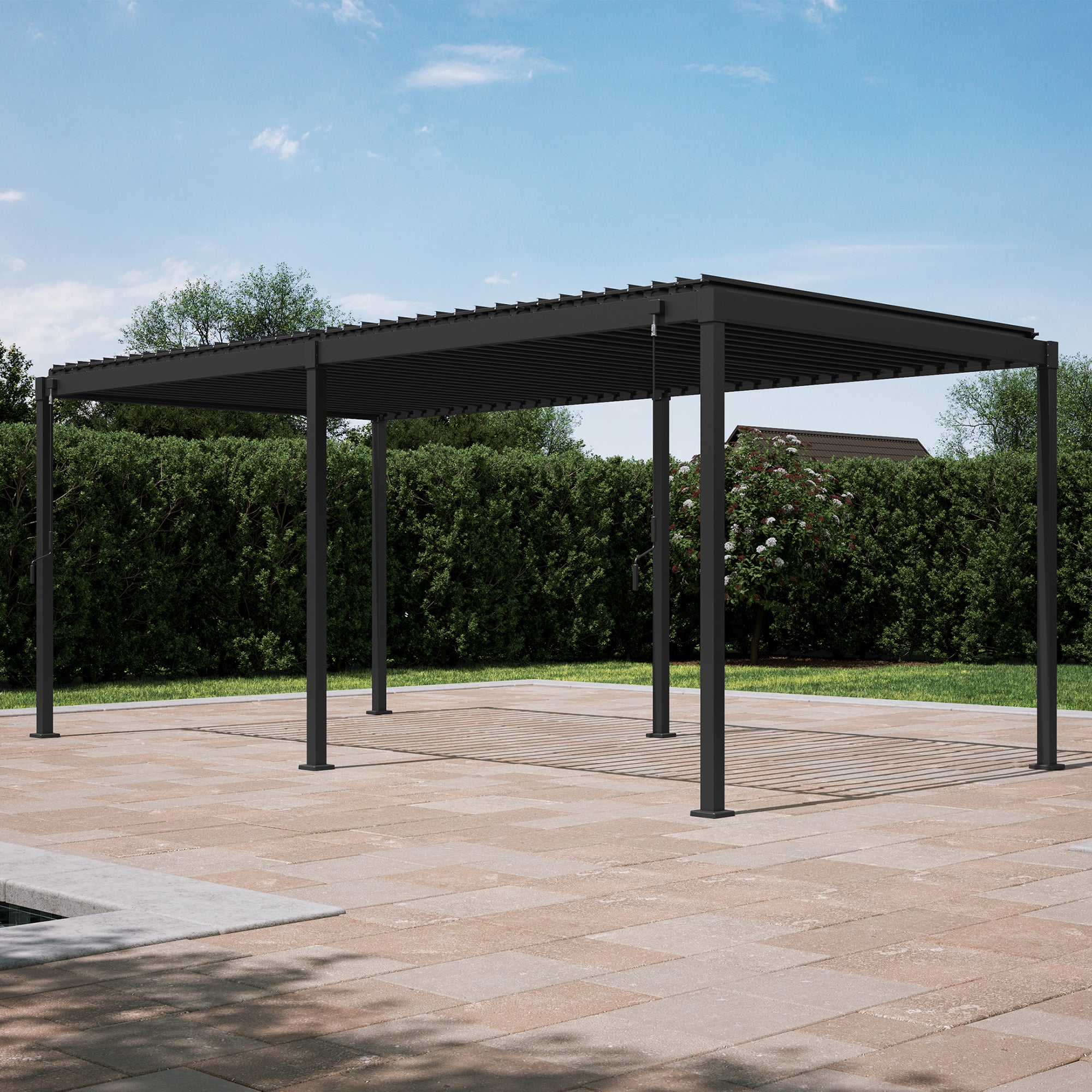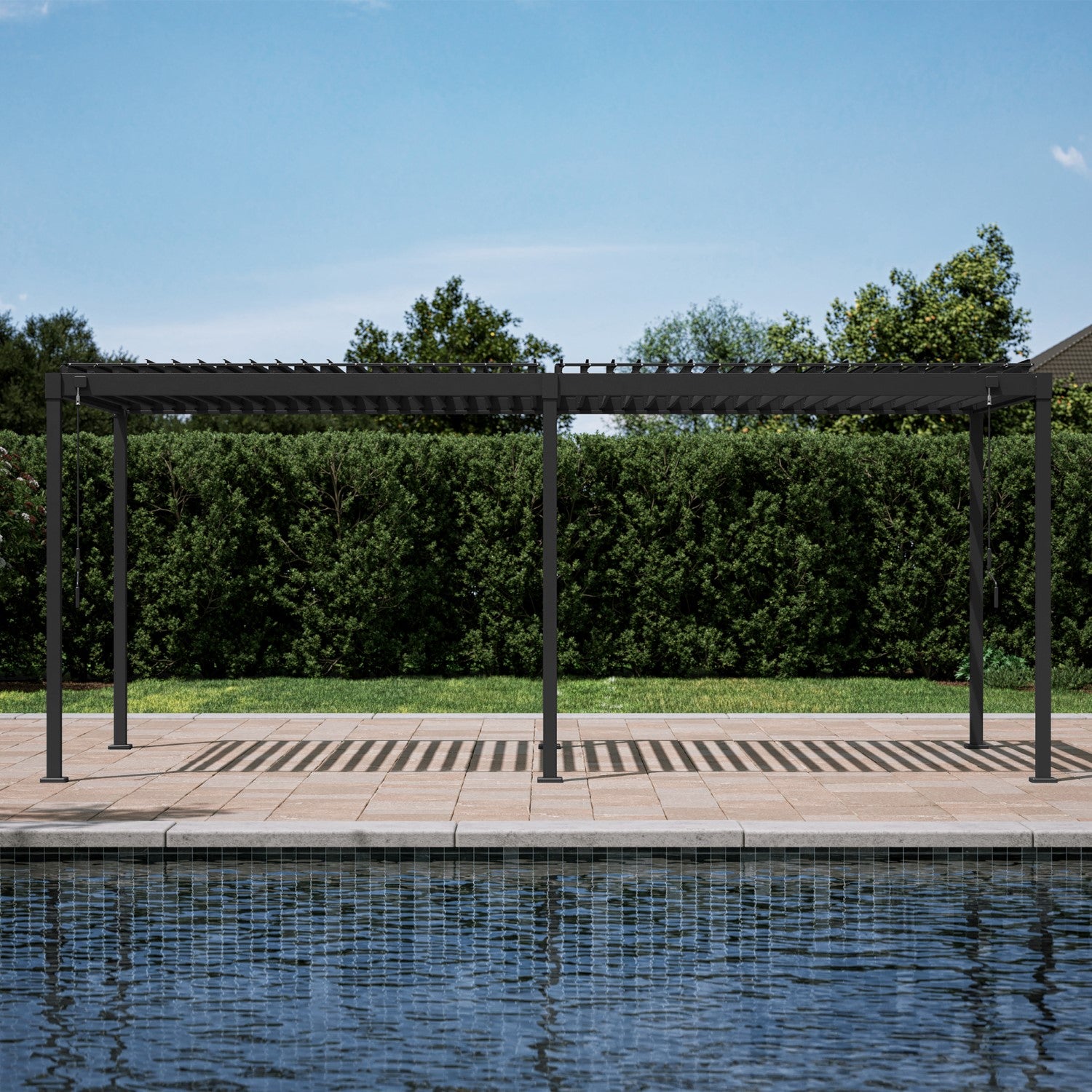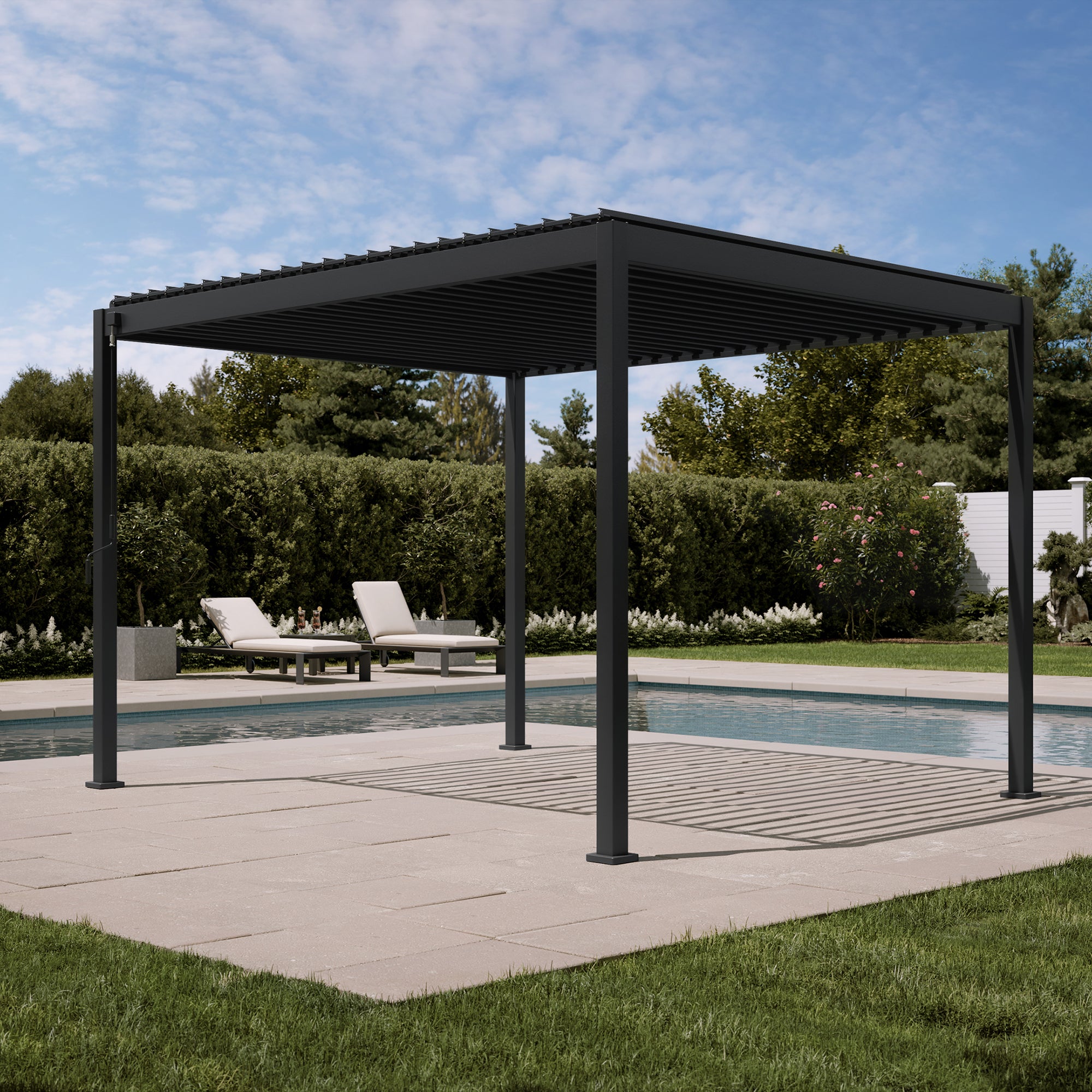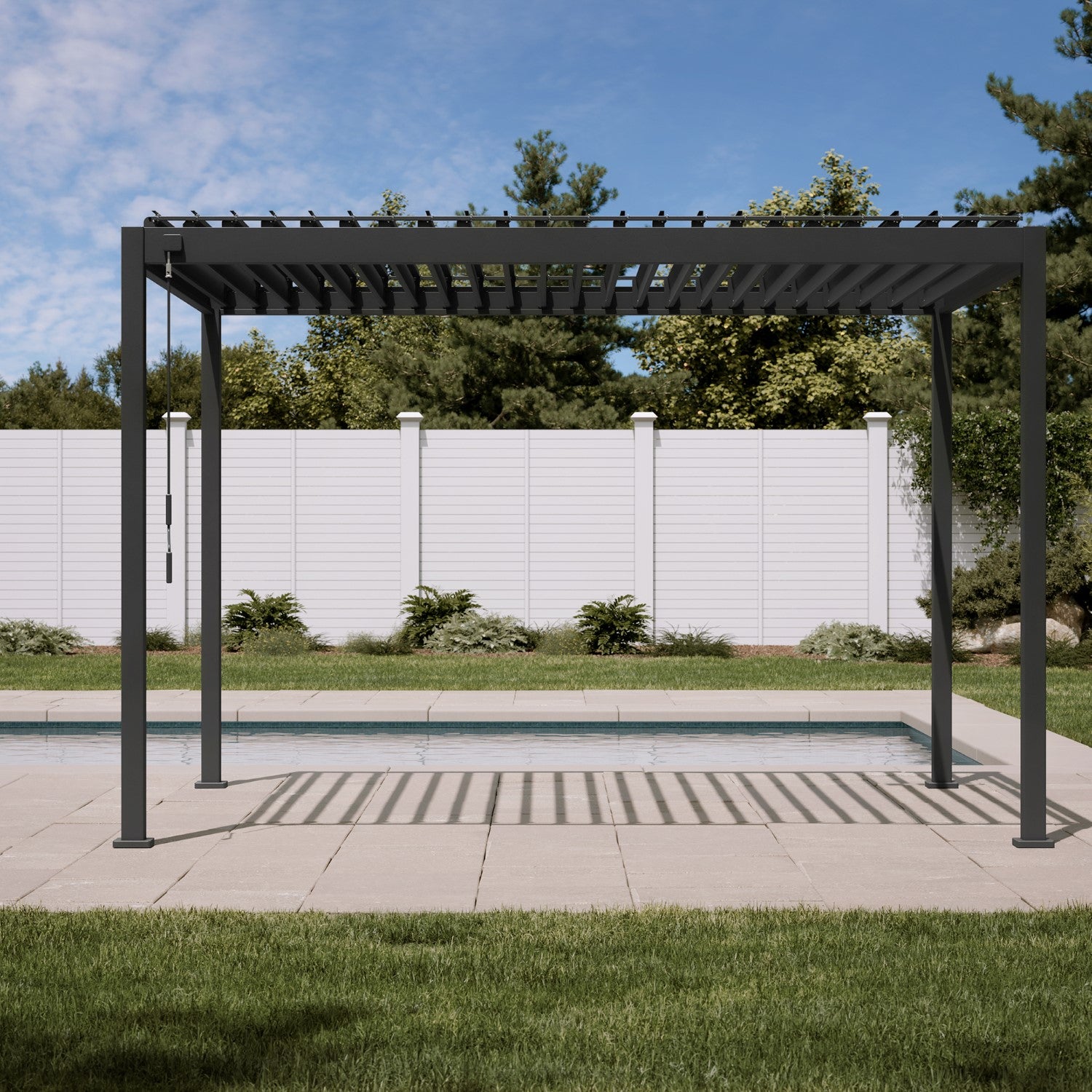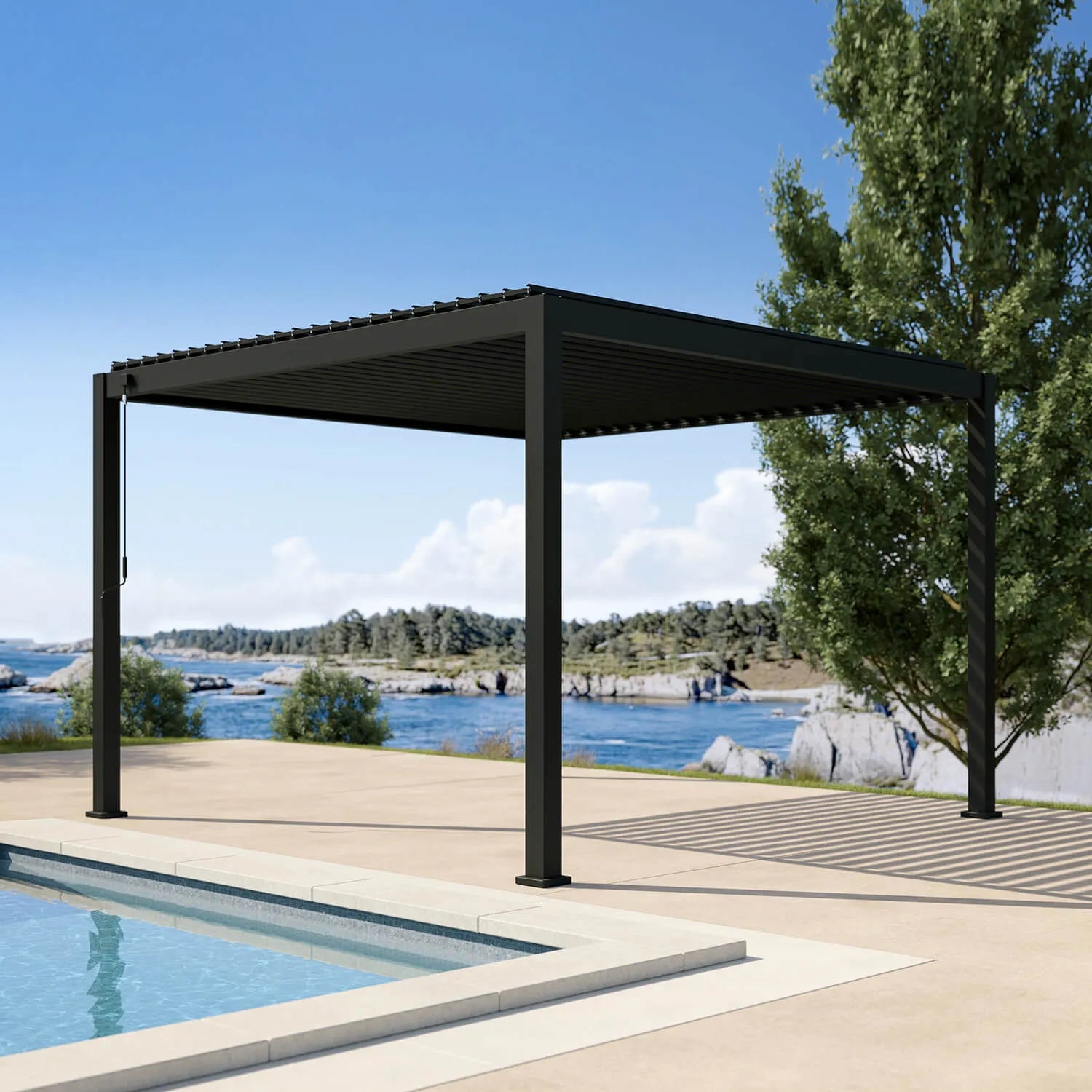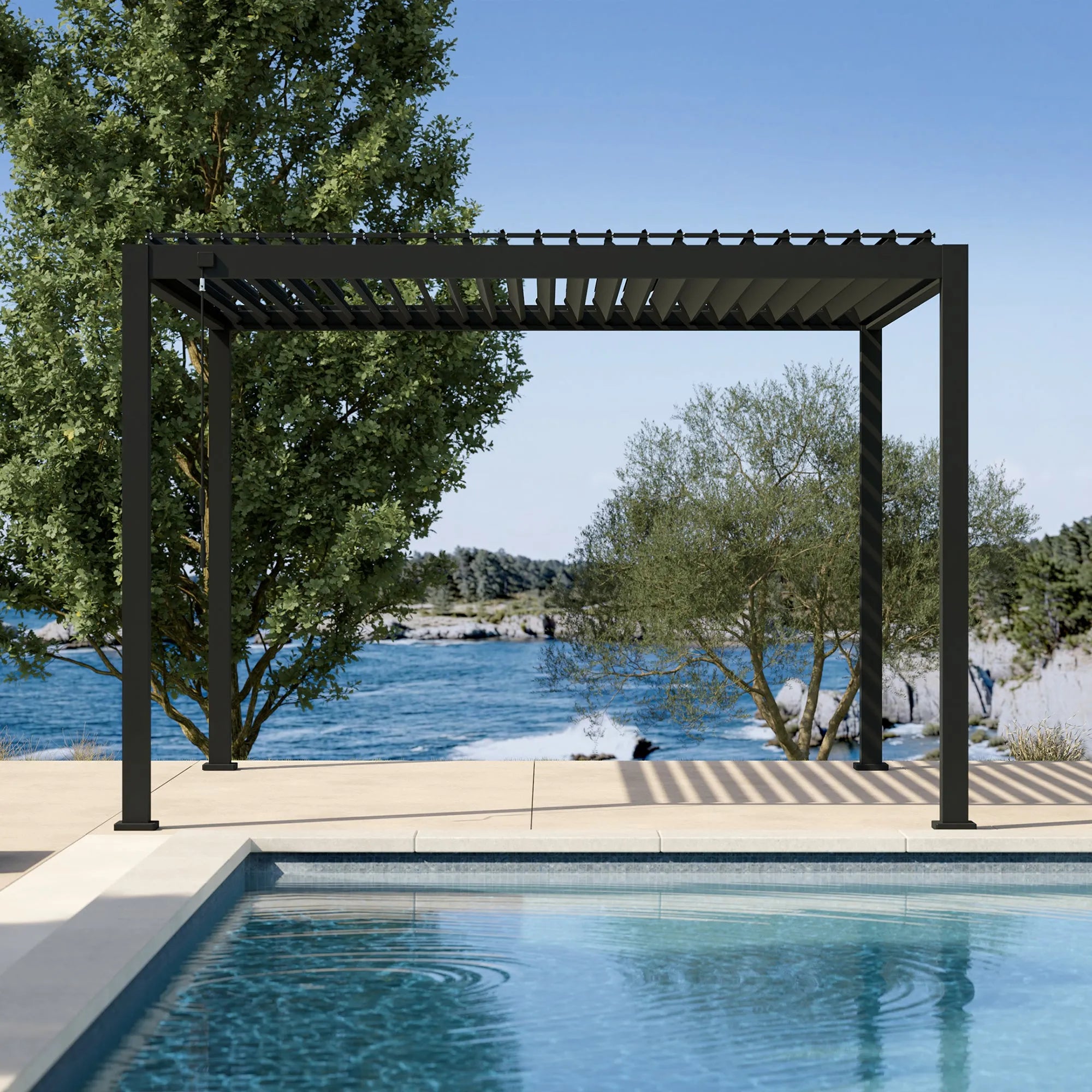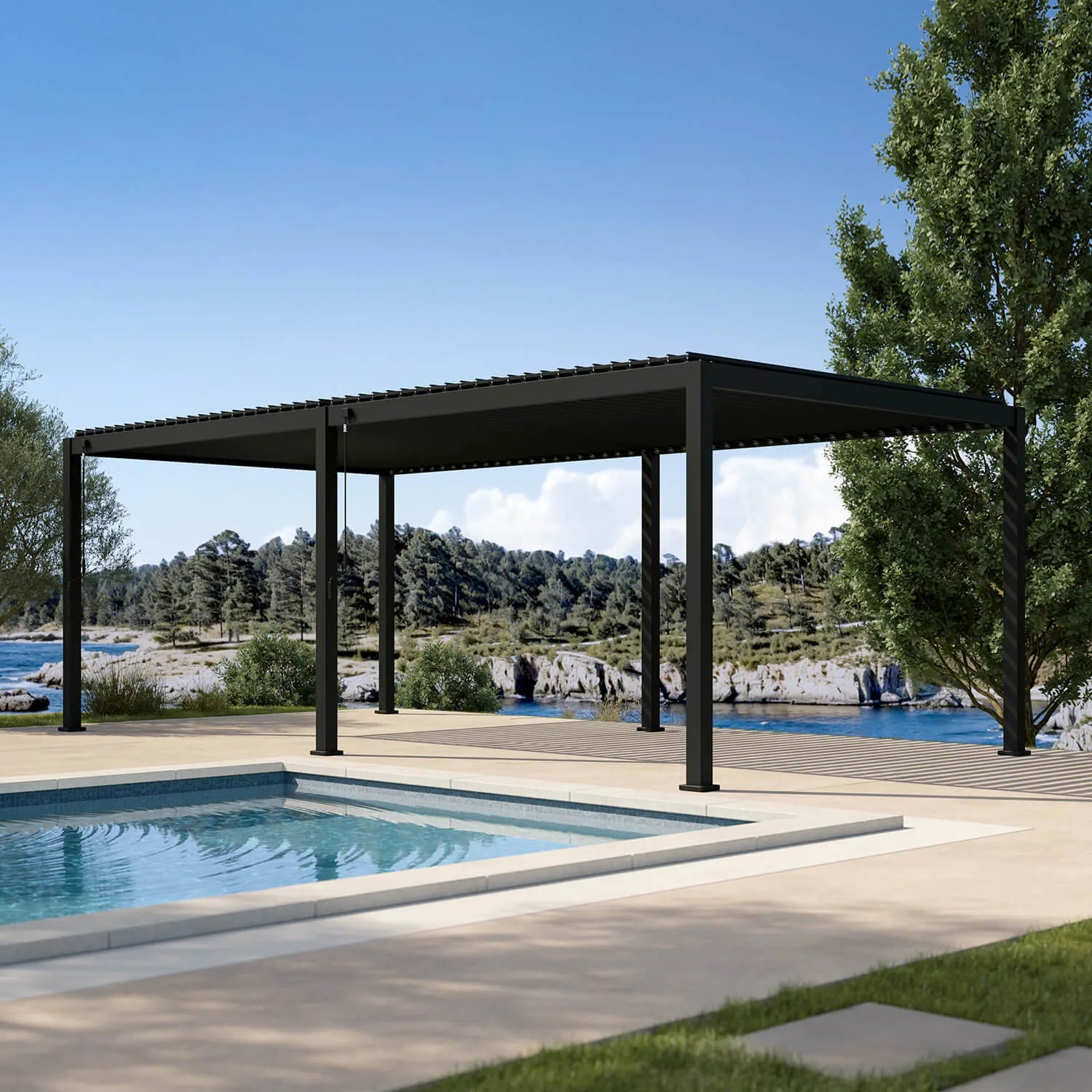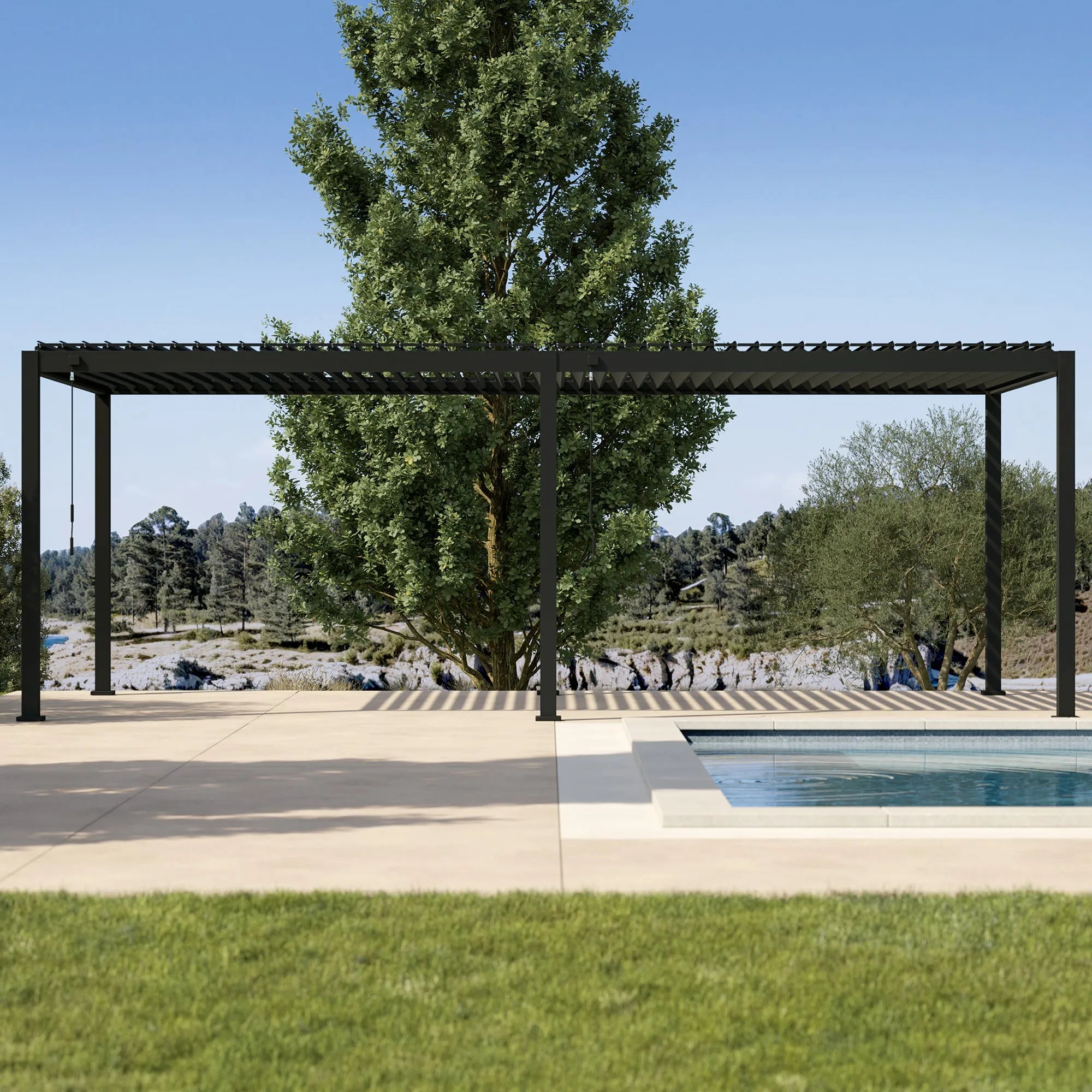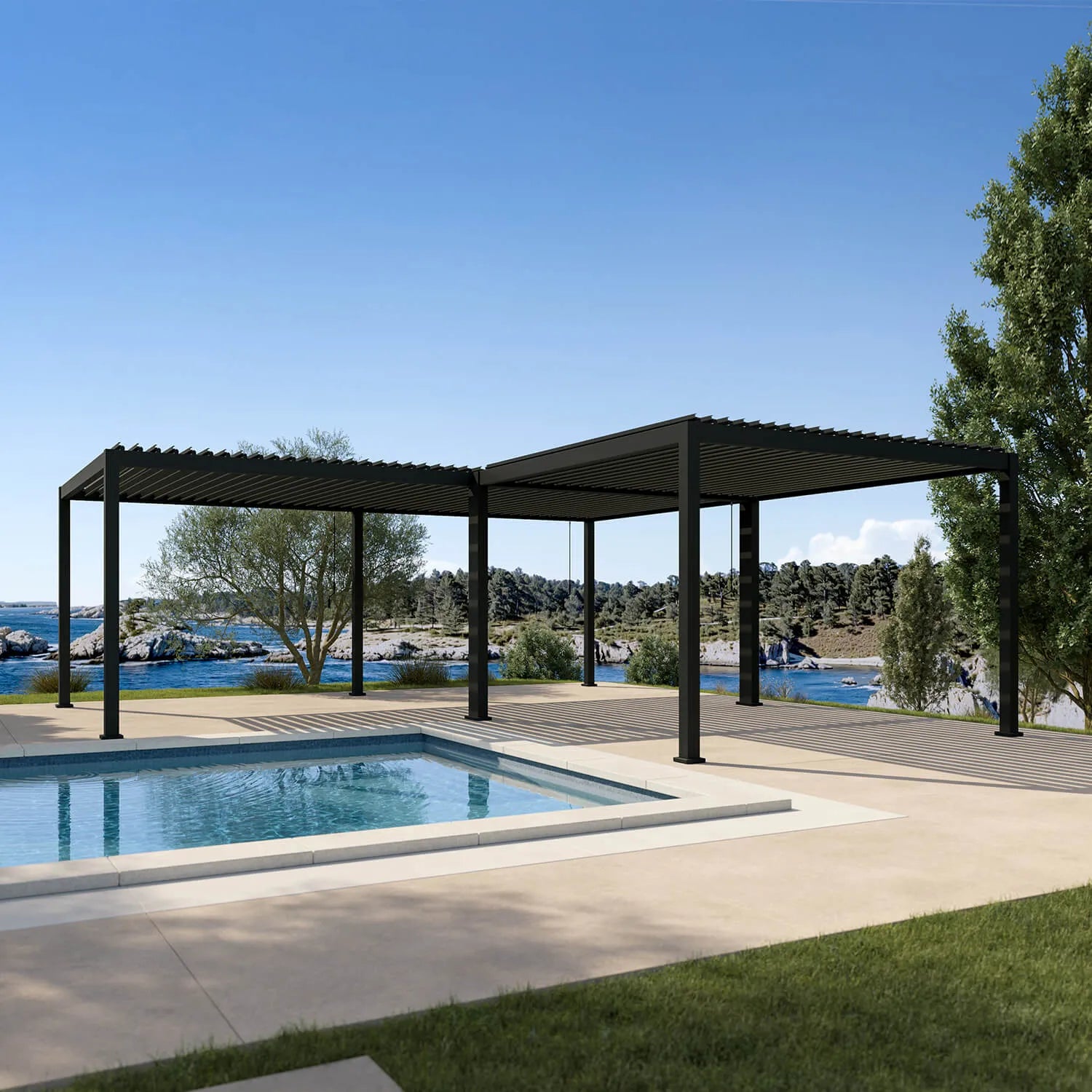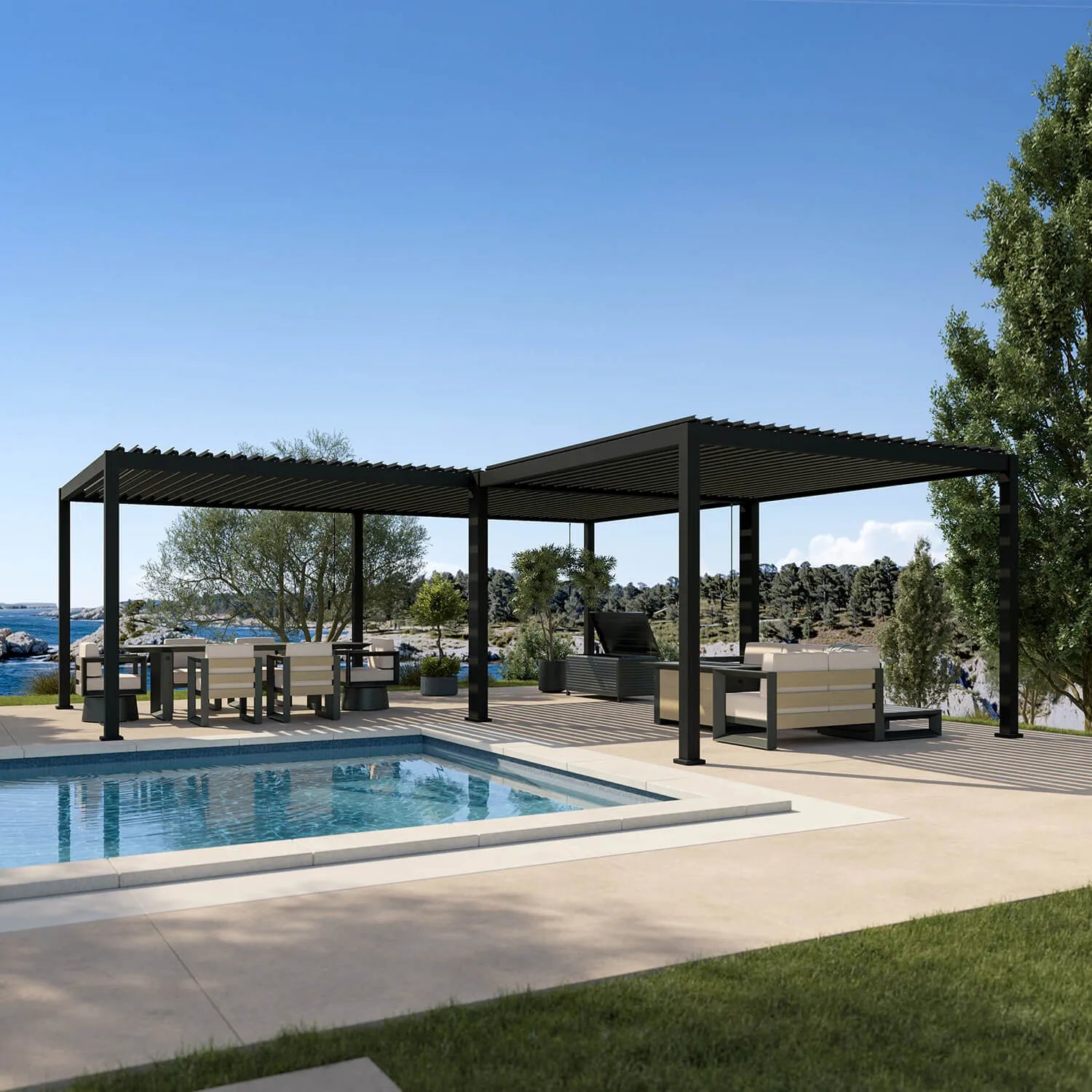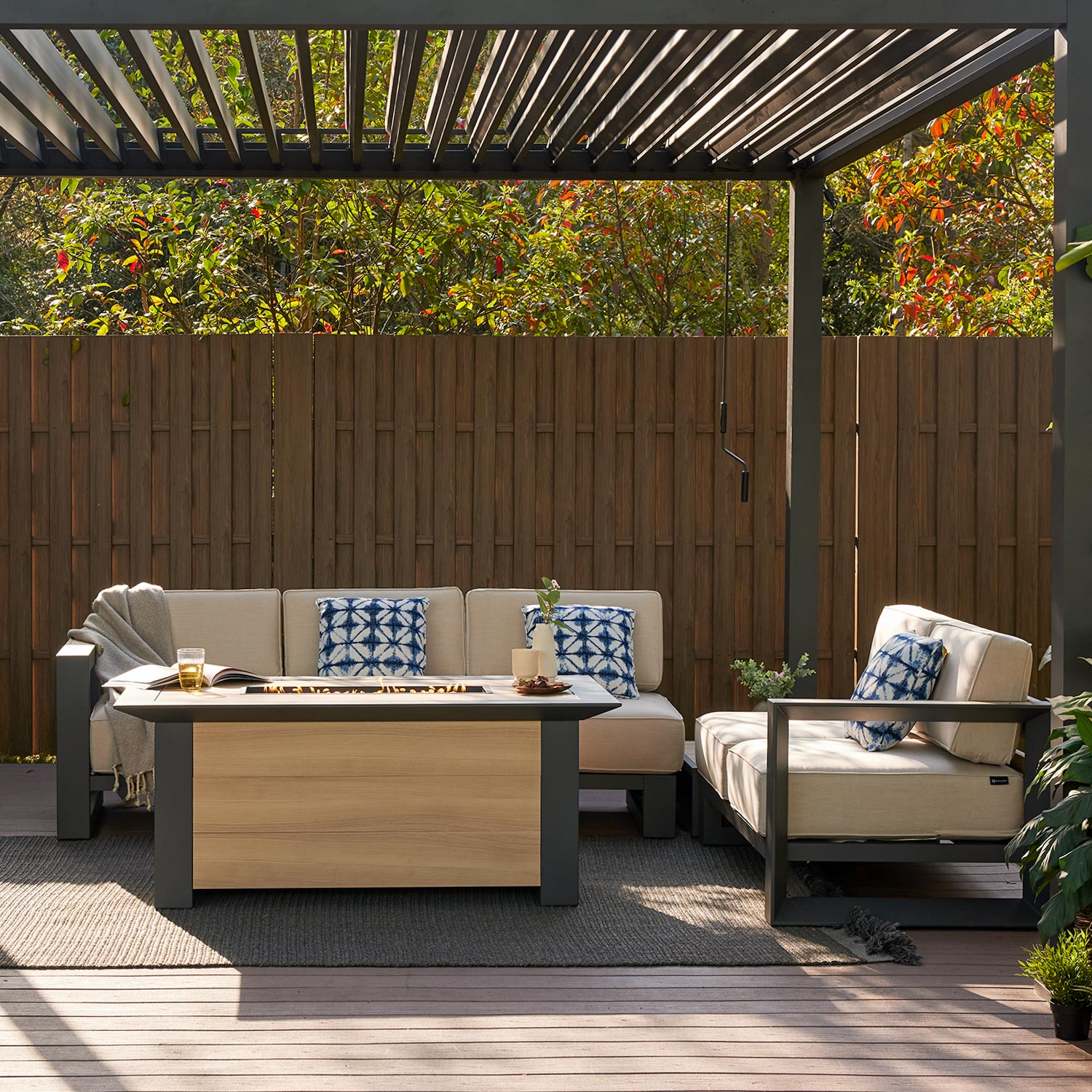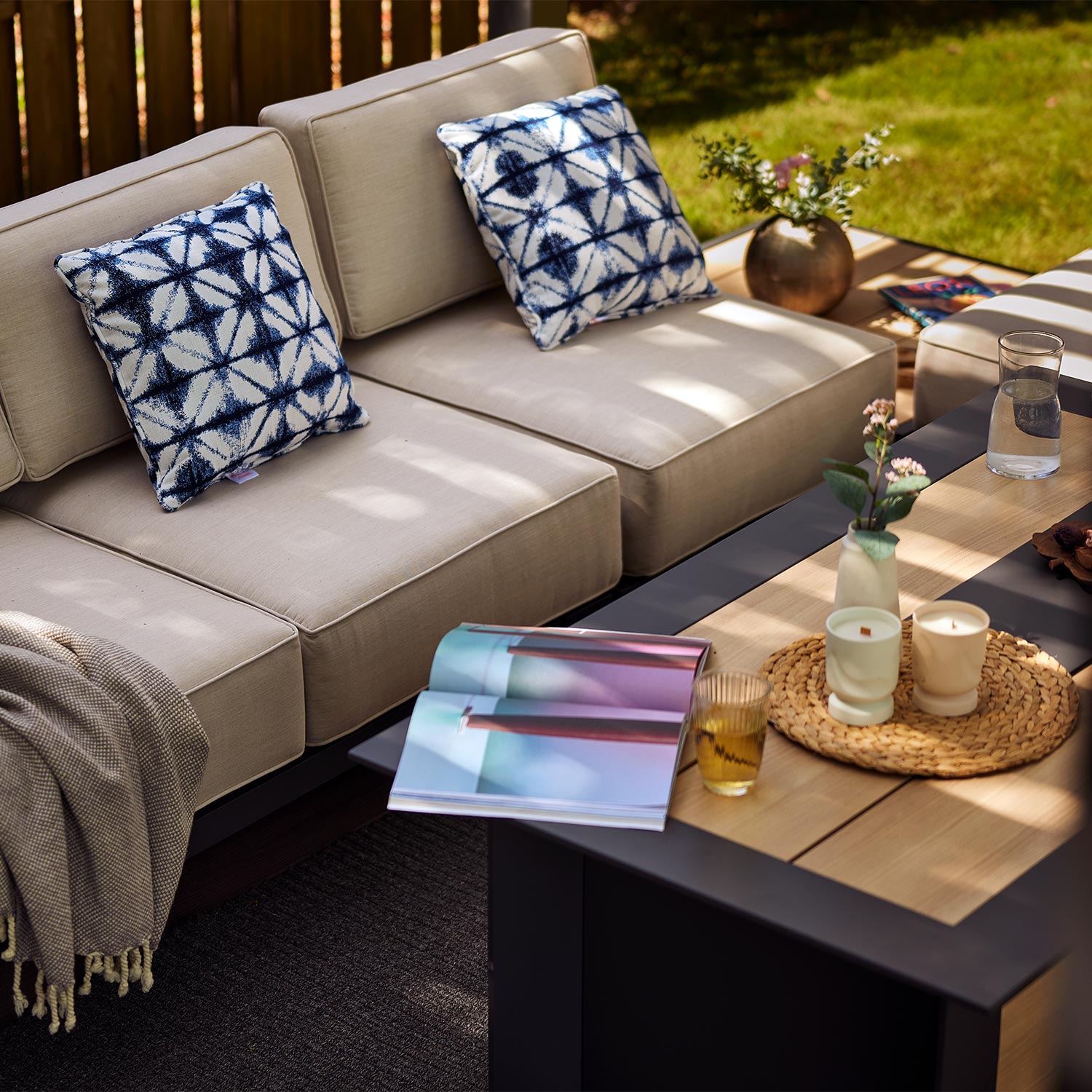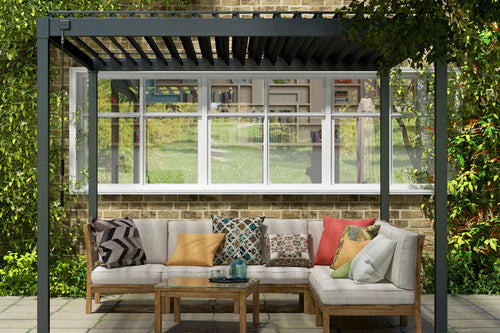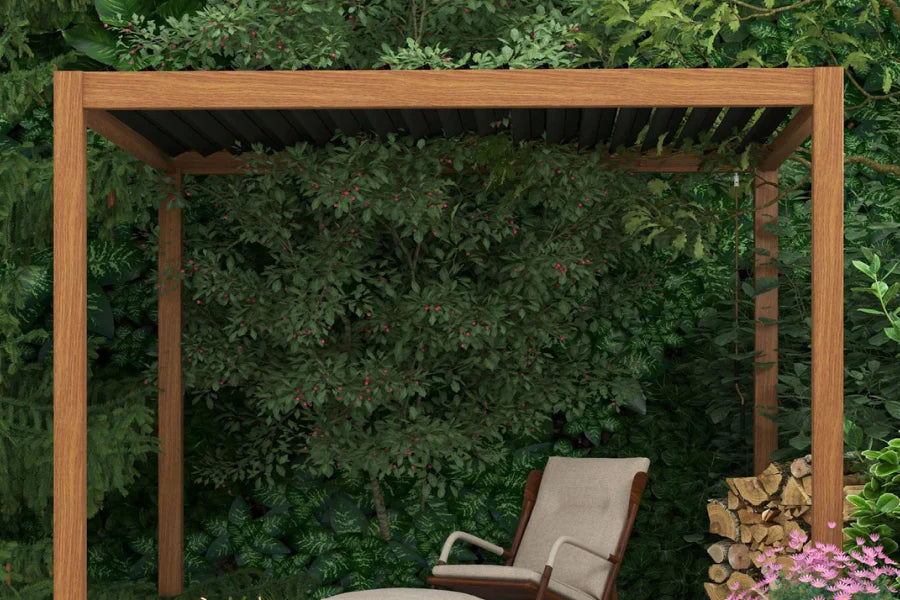

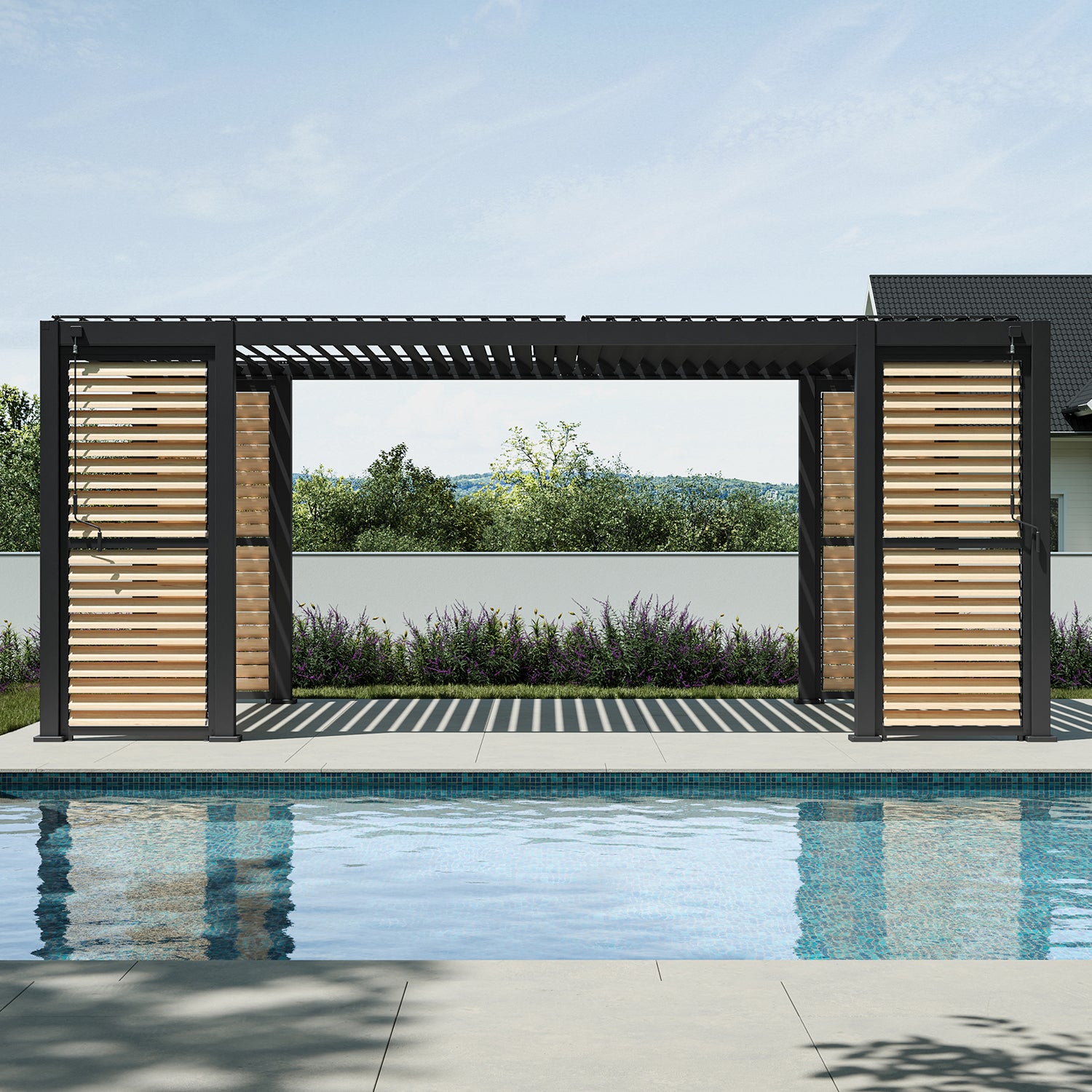
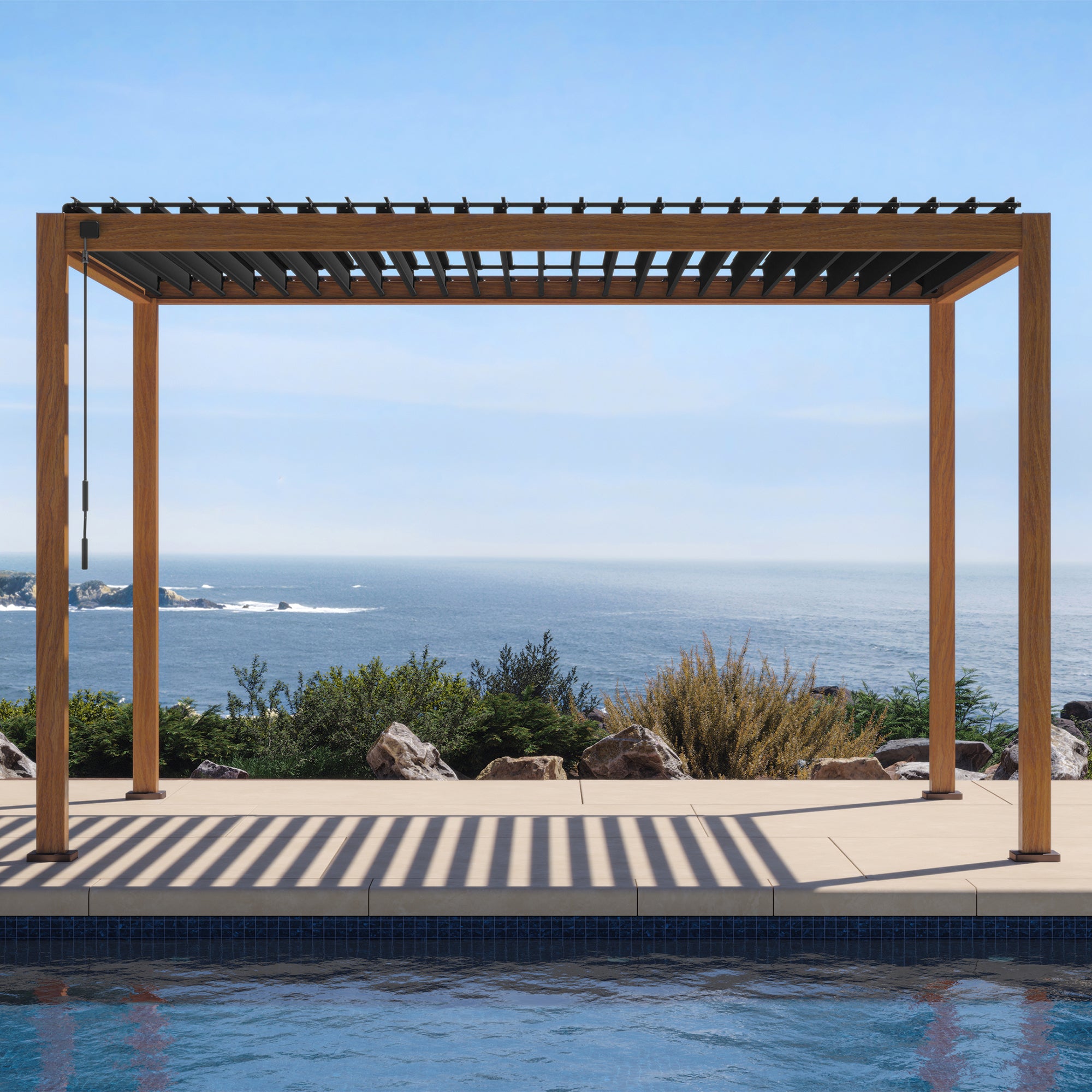
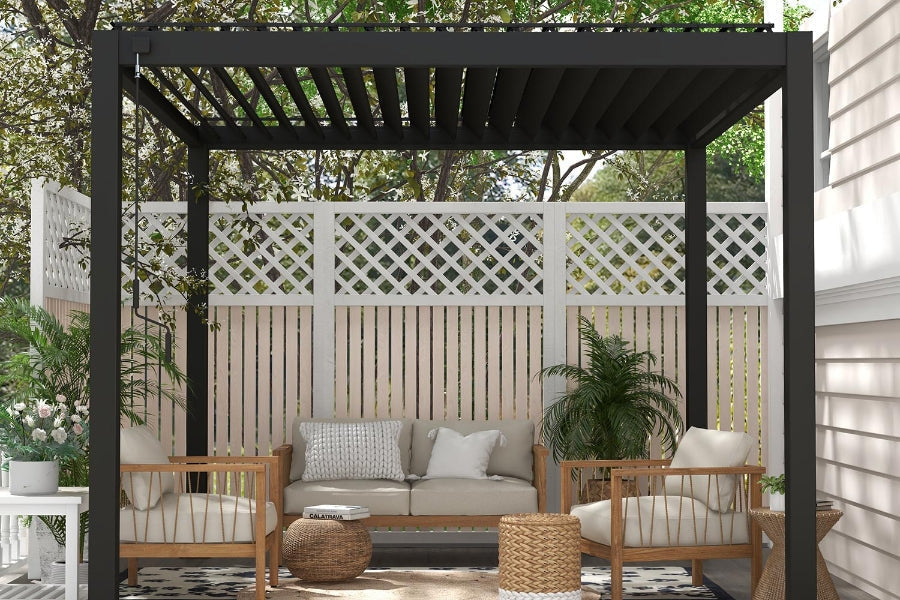
How long can you expect your pergola to last? For most quality builds, the lifespan falls between 10 and 30 years. Where yours lands on that scale depends on a few real-world factors. Materials, coatings, proper drainage, solid anchors, and weather all play a big role. If you want minimal upkeep, powder-coated aluminum, vinyl, or fiberglass are your best bets. Prefer wood or steel? They can last just as long, but you will need to inspect and maintain them more often.
Use the figures below as planning ranges, not guarantees. A lightly built kit on weak anchors can fail before a premium material reaches its expected lifespan, while a well-detailed structure can exceed the range. Product-specific engineering and warranty terms should take priority.
Pergola Lifespan by Material: Quick Answer
- Powder-coated aluminum: about 15 to 25+ years; the frame may outlast roof controls and seals.
- Coated or galvanized steel: about 15 to 25+ years, with finish quality and cut-edge protection doing much of the work.
- Cedar or redwood: about 15 to 25 years when water can drain and the finish is maintained.
- Pressure-treated wood: about 10 to 20+ years, depending on treatment rating, end cuts, fasteners, and ground clearance.
- Vinyl: about 20 to 25+ years; reinforcement and heat exposure matter.
- Fiberglass: 25+ years is a reasonable target for a quality system, although finish care still applies.
Aluminum Pergolas
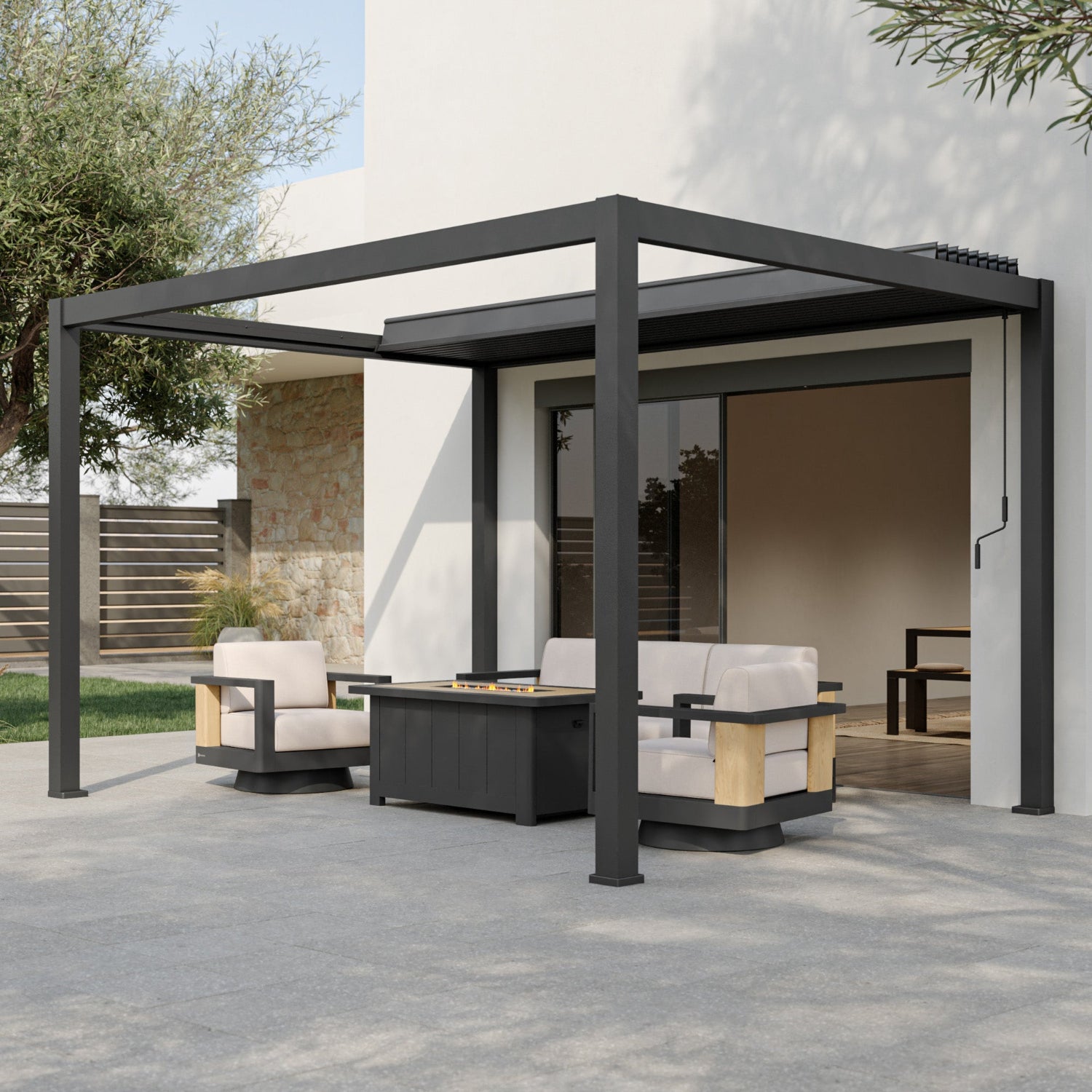
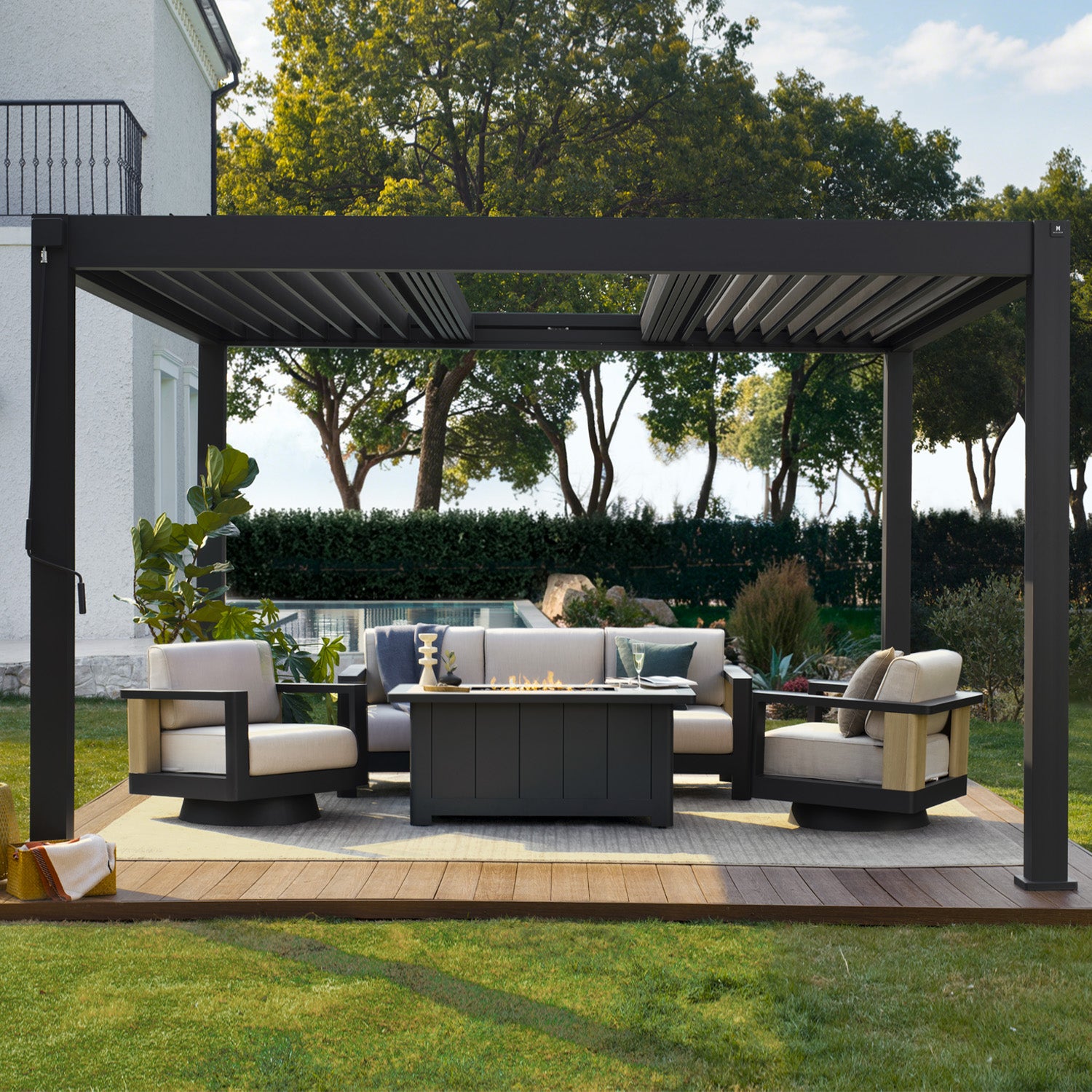
Plan on roughly 15 to 25+ years for a quality powder-coated aluminum pergola. Aluminum does not absorb water, rot, or attract termites, so routine work is usually washing, clearing gutters, tightening hardware, and treating coating damage. Coastal salt, pool chemicals, dissimilar-metal contact, clogged drainage, and poor anchors can still shorten service life. For a louvered model, judge the frame and operating system separately.

Steel Pergolas
A coated or galvanized steel pergola can reasonably be planned for 15 to 25+ years. Steel is strong, but exposed base metal can rust at scratches, drilled holes, welds, fasteners, or water-trapping joints. Hot-dip galvanizing and a duplex coating can extend protection far beyond a basic painted finish. The American Galvanizers Association measures time to first maintenance from coating thickness and environment; that is not the same as the life of a complete residential pergola.

Wood Pergolas
Wood pergolas commonly occupy a 10-to-25-year planning window. Species, heartwood content, preservative treatment, end-grain sealing, airflow, splashback, and finish care can move the result sharply. The USDA Forest Products Laboratory identifies moisture as a central factor in decay risk and advises pressure treatment for wood in ground contact.
Cedar and Redwood Pergola Lifespan
Cedar and redwood contain naturally decay-resistant heartwood and can often serve for 15 to 25 years when detailed to shed water. Sapwood is less durable, and natural weathering to gray is not the same as structural decay. Clean the surface, keep vegetation away, and renew a compatible finish when water no longer beads or the manufacturer directs.
Pressure-Treated Wood Pergola Lifespan
Use 10 to 20+ years as a practical band for pressure-treated wood. Confirm that the treatment category matches above-ground or ground-contact exposure, protect field cuts as specified, and use compatible corrosion-resistant fasteners. A treated post can still fail early if water collects at its base or a connector traps moisture.
Vinyl Pergolas
A quality vinyl pergola can often be planned for 20 to 25+ years. Vinyl does not rot or need staining, but long spans may rely on internal aluminum or steel reinforcement. Heat from grills or reflected sunlight, impact, movement at connections, and unsupported members can cause trouble before the surface material wears out.
Fiberglass Pergolas
Quality structural fiberglass can support a 25+ year planning target. It resists rot, insects, and moisture movement, and pultruded profiles can provide useful dimensional stability. Finish chalking, UV exposure, impact damage, connectors, and foundation movement still deserve inspection. Some manufacturers offer limited lifetime residential coverage and shorter commercial terms; read what the warranty excludes, especially paint, labor, installation, and weather events.
What Shortens a Pergola's Lifespan?
- Standing water. Blocked gutters, buried post bases, flat ledges, and poor flashing keep vulnerable joints wet.
- Weak foundations or anchors. Movement transfers stress into posts, beam connections, louvers, and wall attachments.
- Coating or finish neglect. Scratches, cut edges, checking wood, and failed sealant expose the material below.
- Loads beyond the design. Snow, wind, hanging accessories, vines, and added screens can exceed a model's tested configuration.
- Mixed-material corrosion. Salt, pool chemicals, and incompatible fasteners can accelerate attack at aluminum or steel connections.
How to Make a Pergola Last Longer
- Inspect twice a year and after severe weather. Look for loose anchors, cracks, rust, coating chips, soft wood, blocked drains, and unusual roof movement.
- Keep water moving. Clear leaves from louvers and gutters, maintain flashing, and keep soil, mulch, and planters away from post bases.
- Clean for the material and climate. Use mild products approved by the manufacturer; rinse salt more often near coasts and pools.
- Repair small defects early. Touch up compatible coatings, reseal approved joints, protect wood end grain, and replace worn seals or hardware.
- Follow weather guidance. Set louvers, remove snow, retract accessories, or secure screens exactly as the product manual requires.

Repair or Replace a Pergola: What to Check
Repair is usually sensible when damage is local, and the posts, beams, foundations, and main connections remain sound. Replace or obtain a structural assessment when posts lean, wood is soft across large areas, steel has section loss, anchors pull out, attachment points leak, or the roof repeatedly binds. Compare the repair cost with remaining parts support, not only the original purchase price.
Your Pergola’s Lifespan Starts with the Right Choice
The longest-lasting pergola is the one whose structure, finish, drainage, foundations, controls, and support network fit the site. Compare the Mirador pergola lineup, and ask for model-specific engineering, warranty, and replacement-part details before ordering.
FAQs
What pergola material lasts the longest?
Fiberglass and well-engineered powder-coated aluminum are strong low-maintenance choices, and quality vinyl can also provide decades of service. The better choice depends on structural design, climate, anchoring, finish, parts support, and maintenance rather than the material name alone.
How long does a louvered pergola last?
A quality louvered pergola commonly falls in a 15-to-25-year planning range with proper upkeep. The aluminum frame may outlast the motor, controls, seals, or moving hardware, so parts availability and separate component warranties matter.
Does a pergola warranty equal its expected lifespan?
No. A warranty covers defined defects for a stated period and may exclude finish wear, labor, weather events, incorrect installation, or normal aging. Service life is how long the whole installed system remains safe and useful, including components the warranty may not cover.
When should a pergola be replaced instead of repaired?
Replacement is usually safer when posts, beams, connections, or foundations have widespread structural damage; when corrosion or decay returns after repair; or when required parts are unavailable. Cosmetic fading, a localized coating chip, or one replaceable motor normally supports repair instead.
Do attached pergolas last longer than freestanding pergolas?
Neither type automatically lasts longer. Attached pergolas depend on correct ledger flashing and the condition of the building connection. Freestanding pergolas depend heavily on footings and anchors. Good water management, engineering, and installation determine longevity for both layouts.