
Trying to decide between a pergola vs awning for your backyard? Both block the sun, and both look decent, but they're built for very different lifestyles. Pick the wrong one, and you'll either overspend on something you barely use, or end up replacing it in a few years.
We've helped homeowners across Europe and the U.S. work through this exact decision. Here's what you actually need to know.
What Is a Pergola?
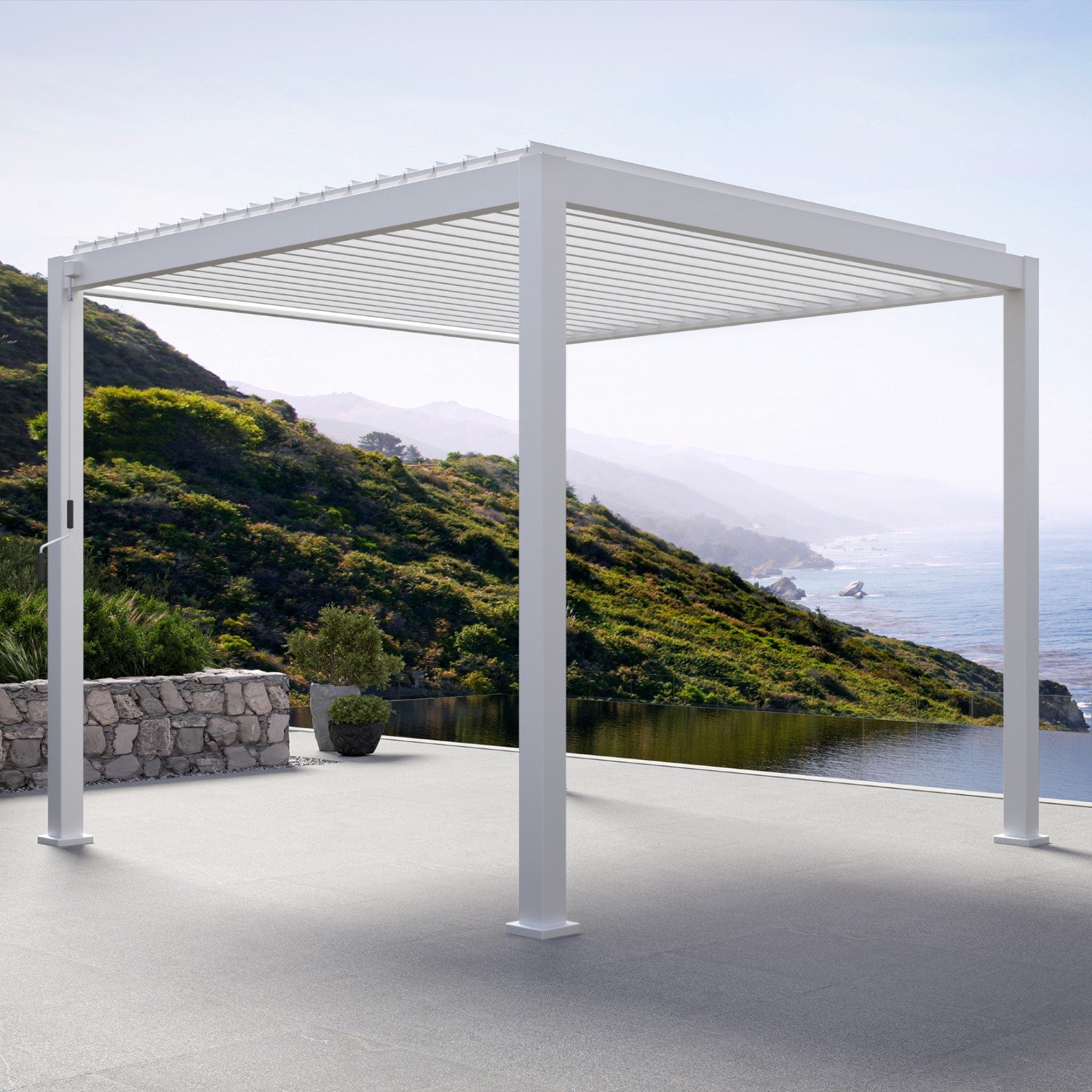
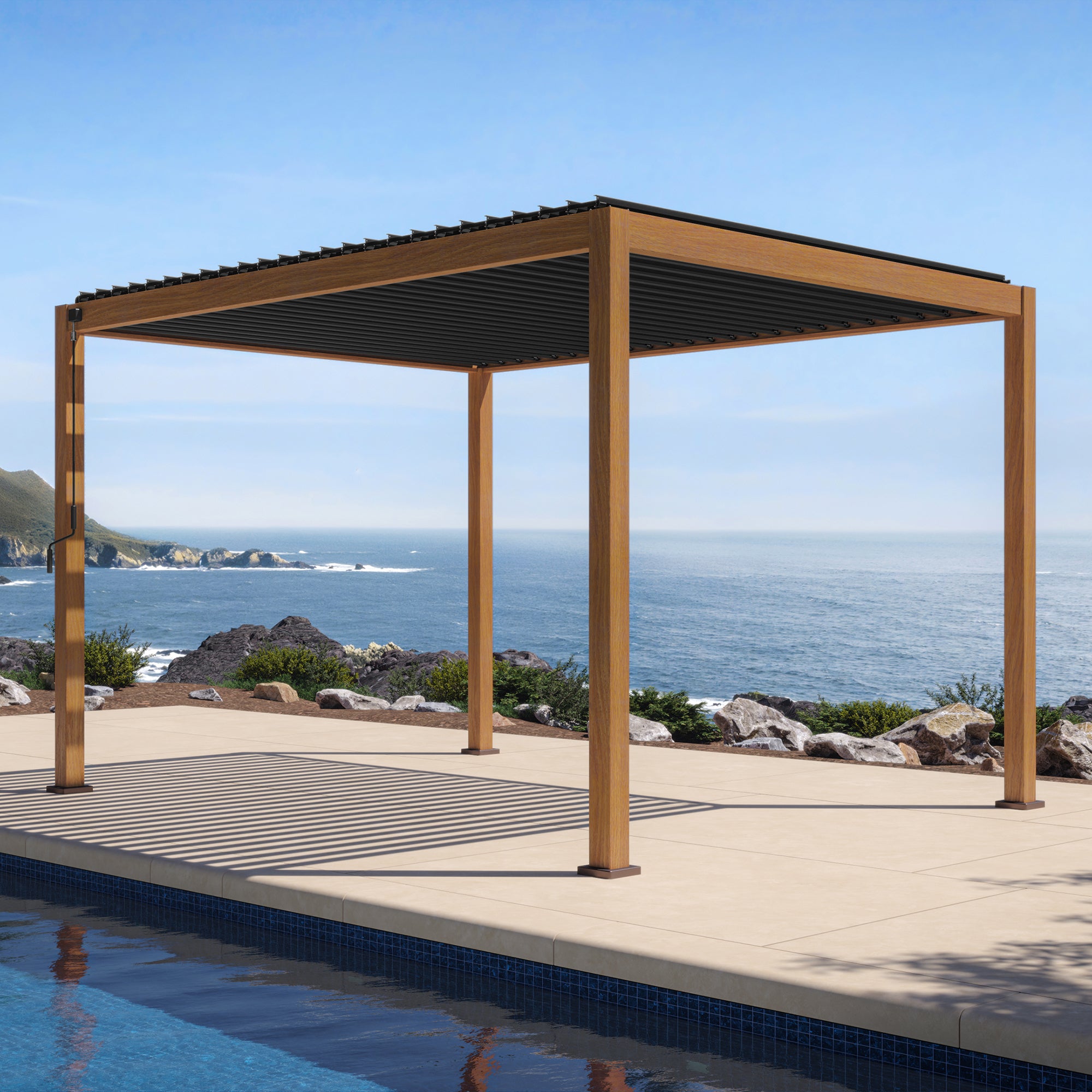
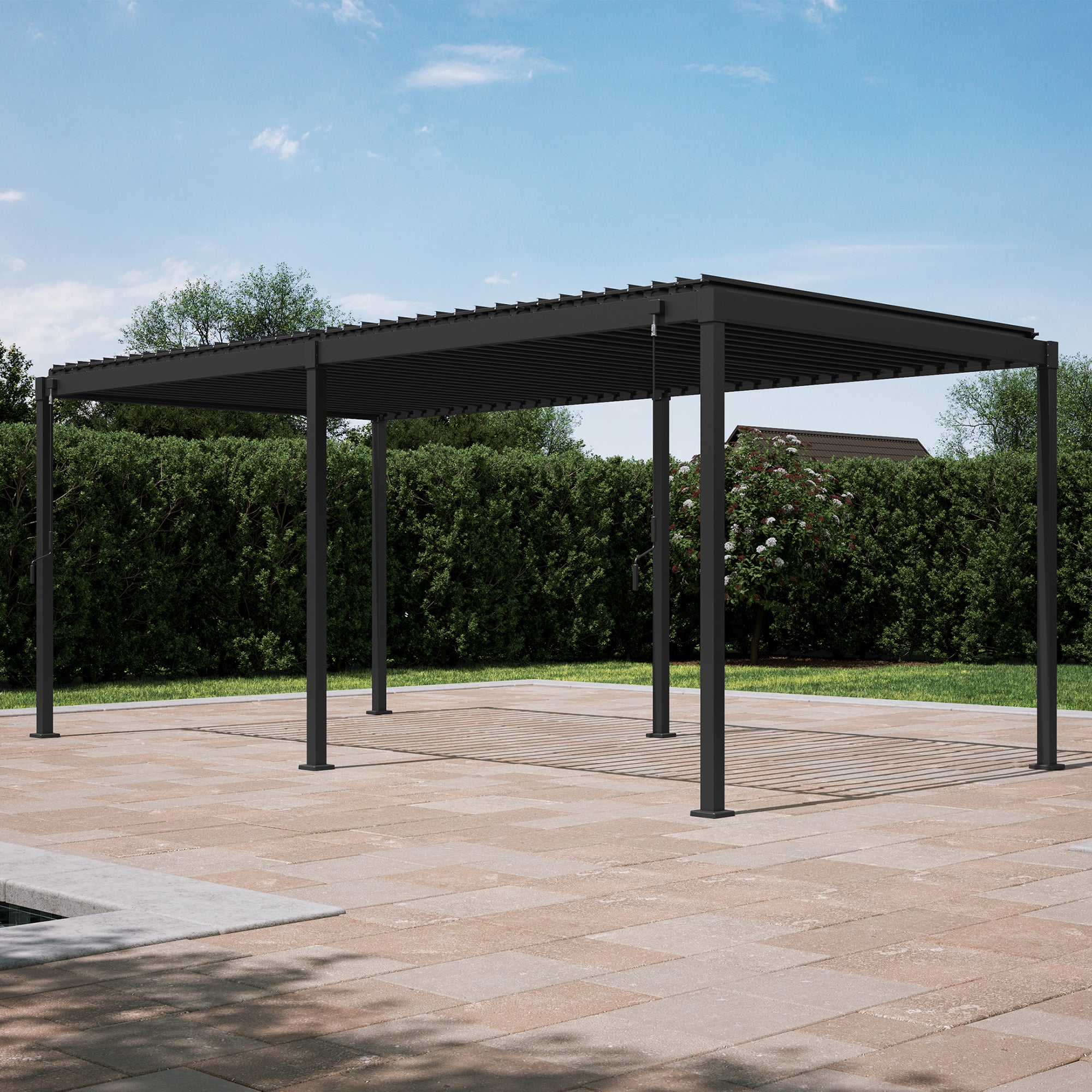
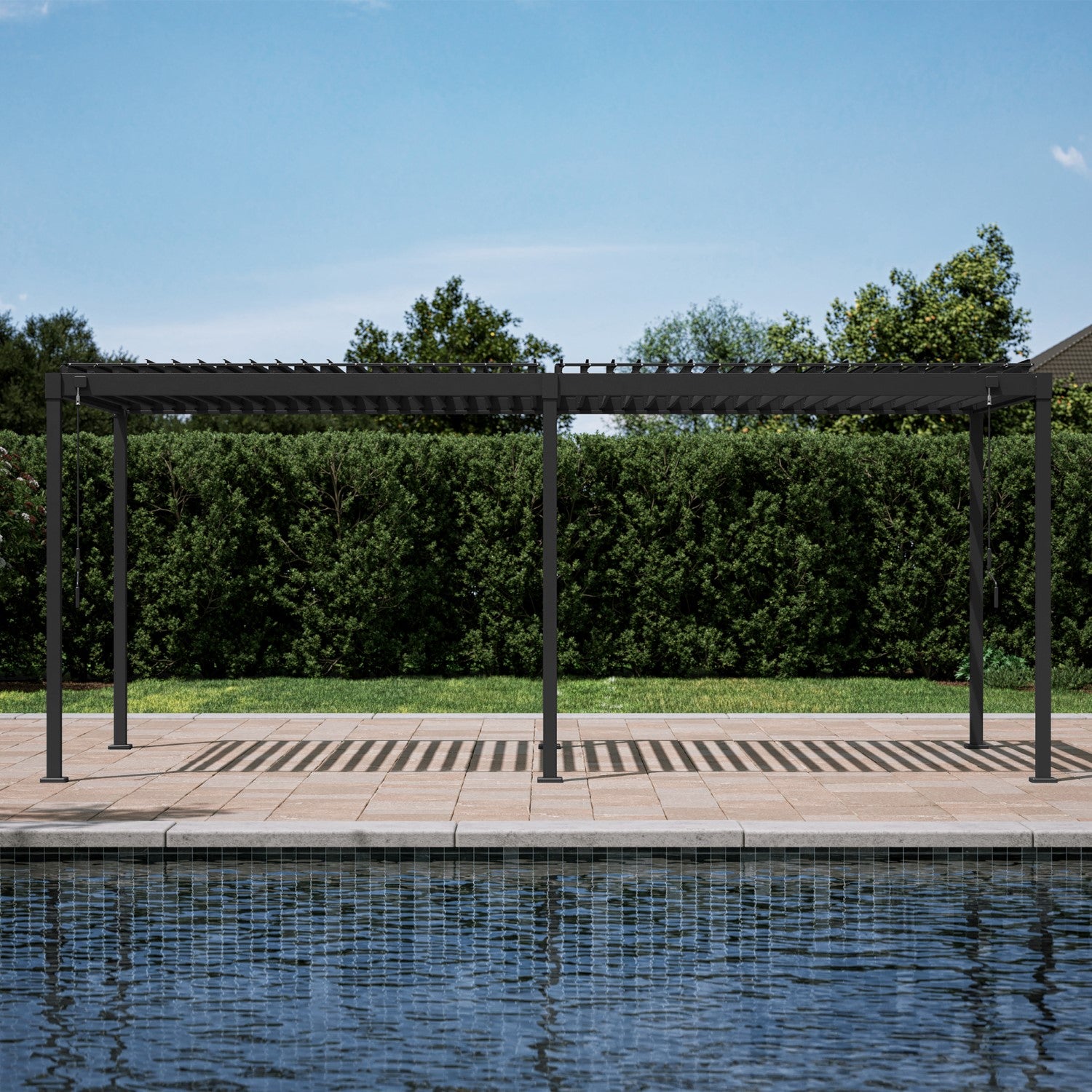
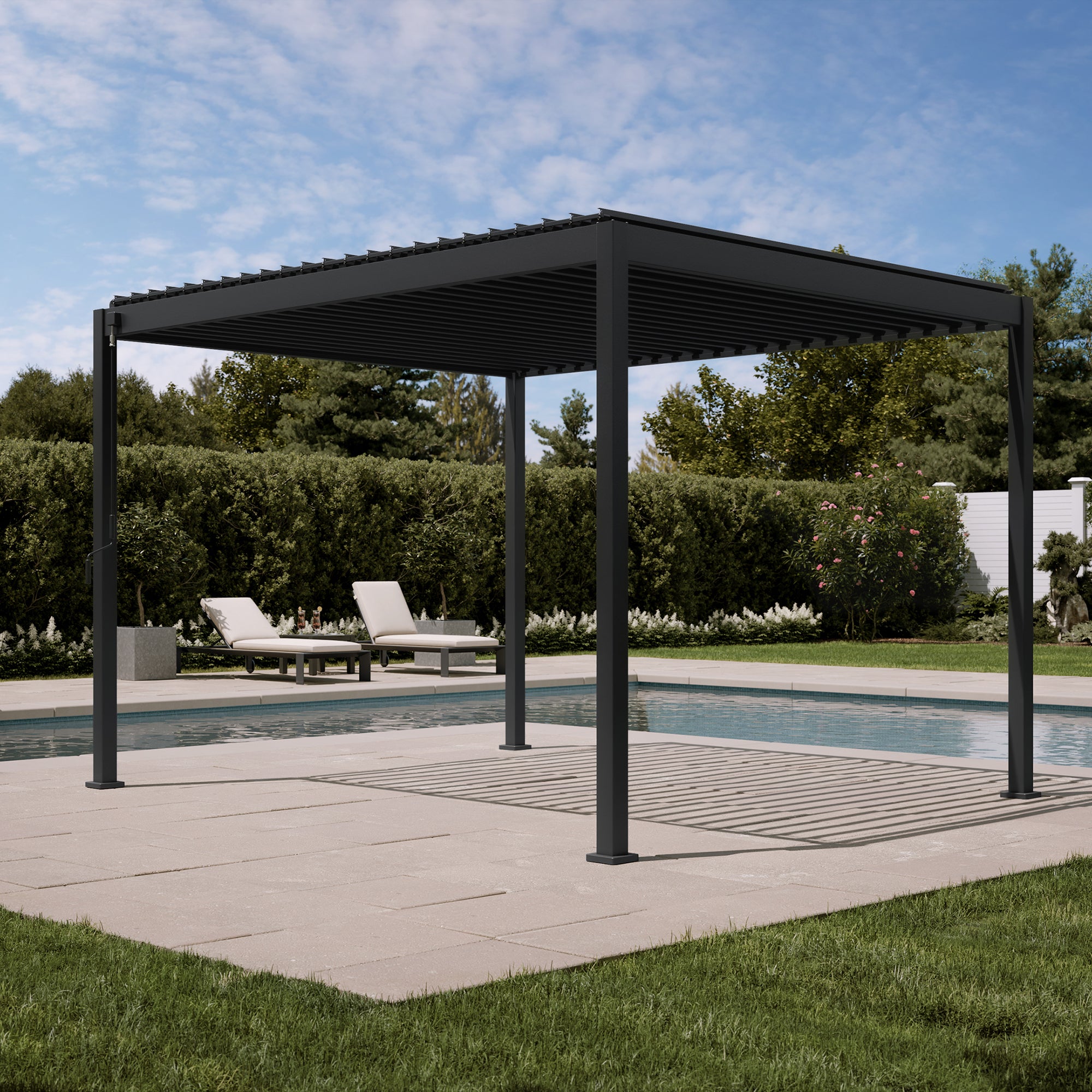
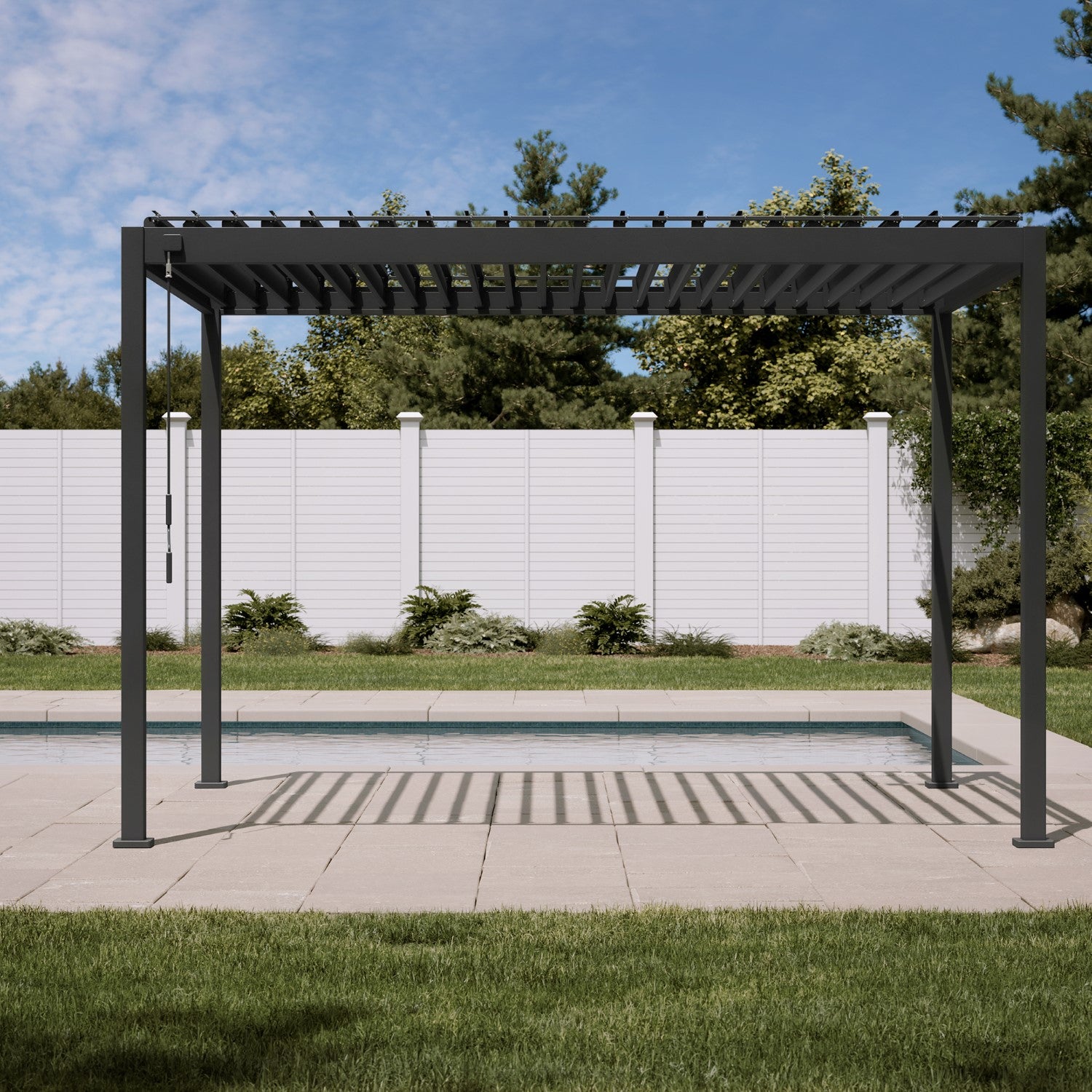
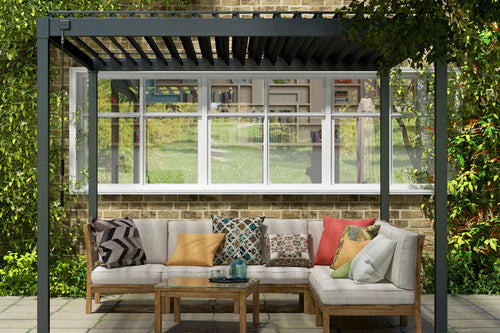
A pergola is a freestanding or wall-mounted outdoor structure with posts, beams, and a roof system.
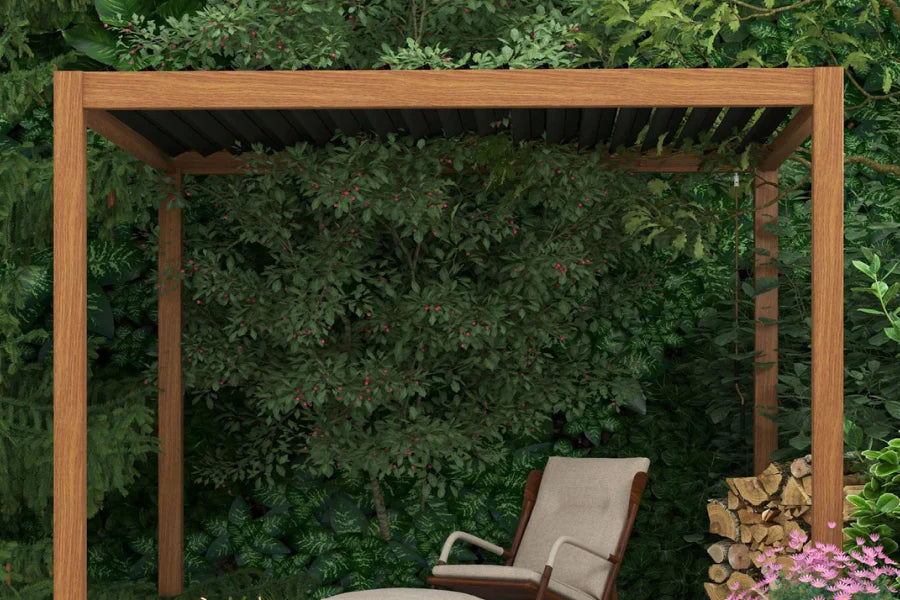
Traditional pergolas have open slats that let in partial sunlight. Nice to look at, but not great at keeping you dry.
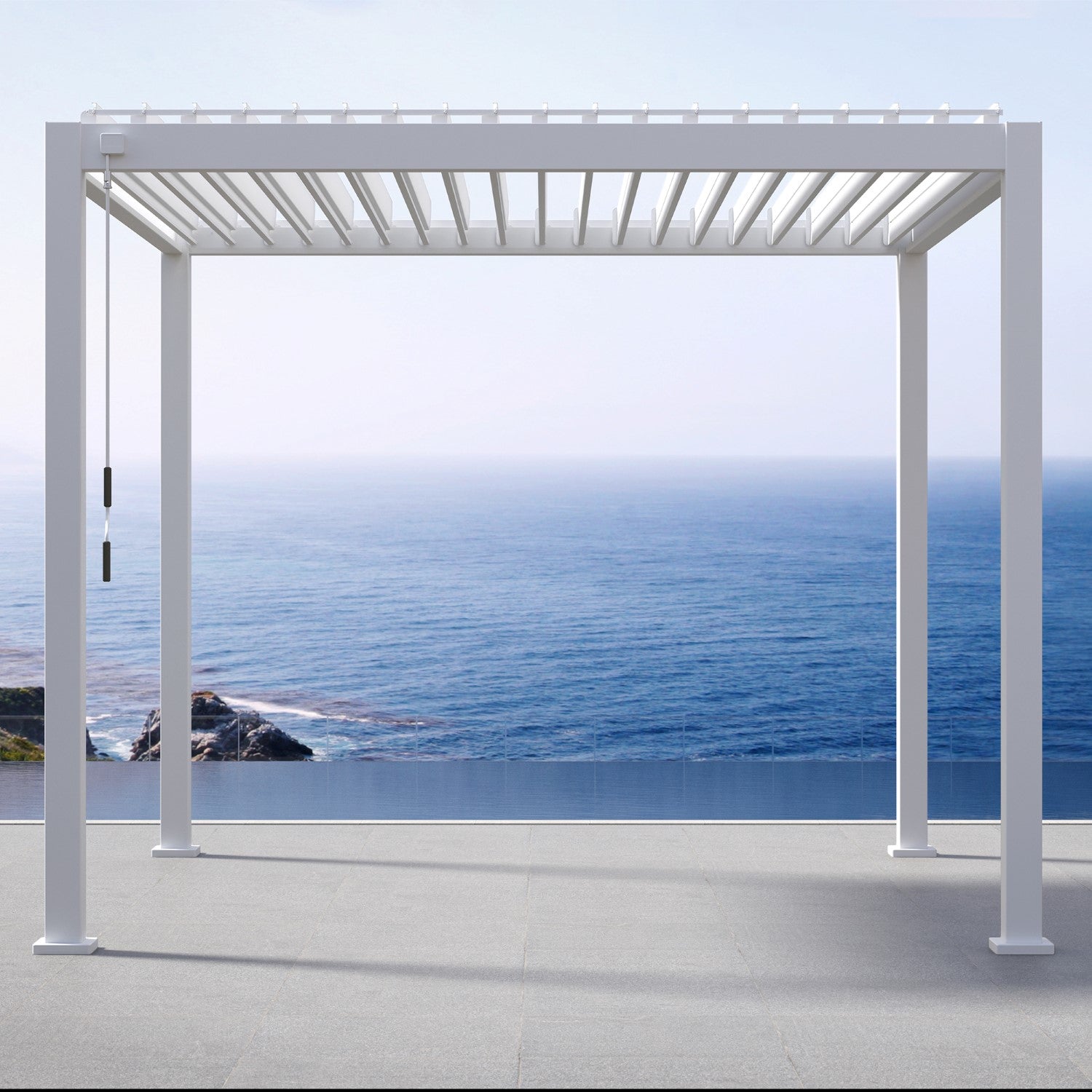
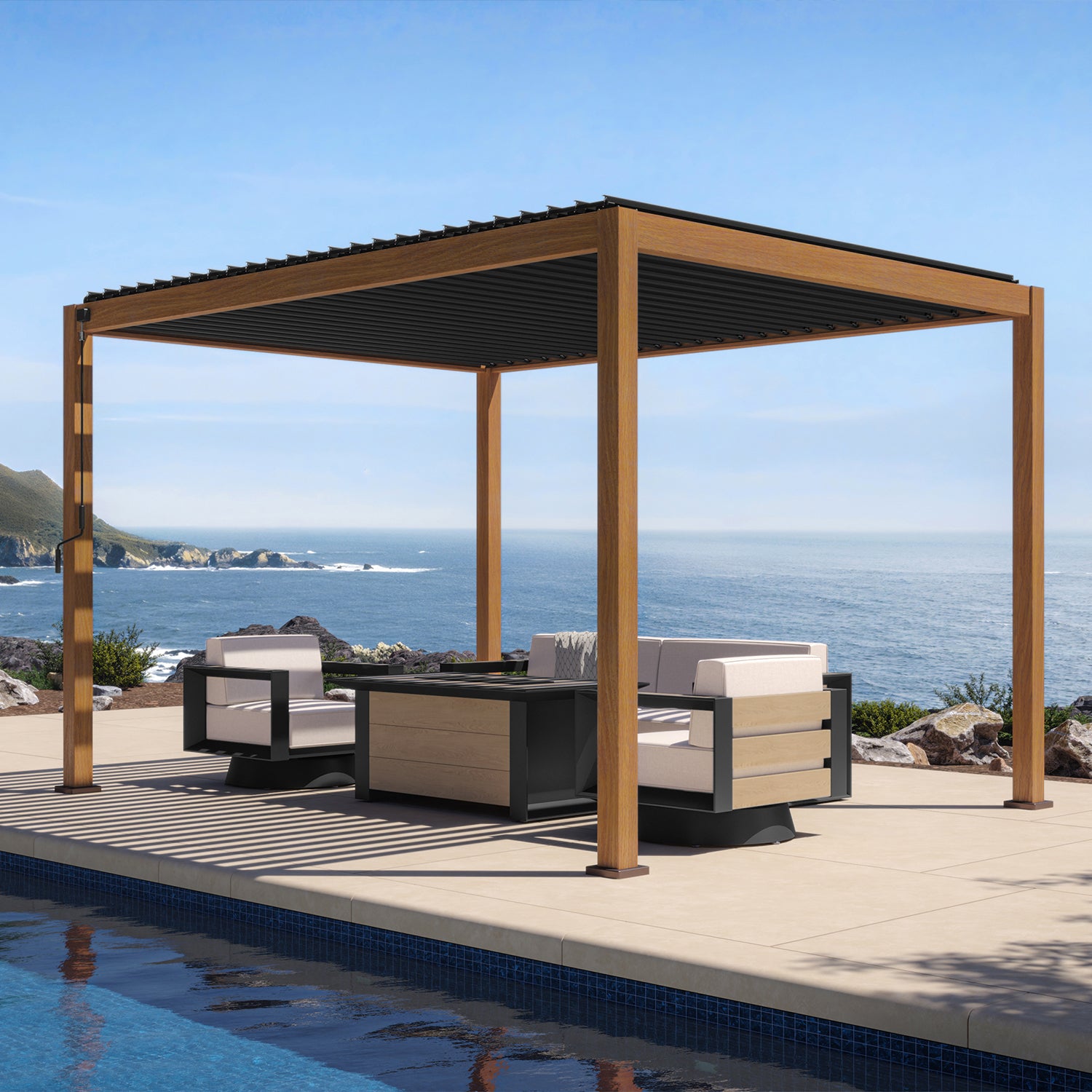
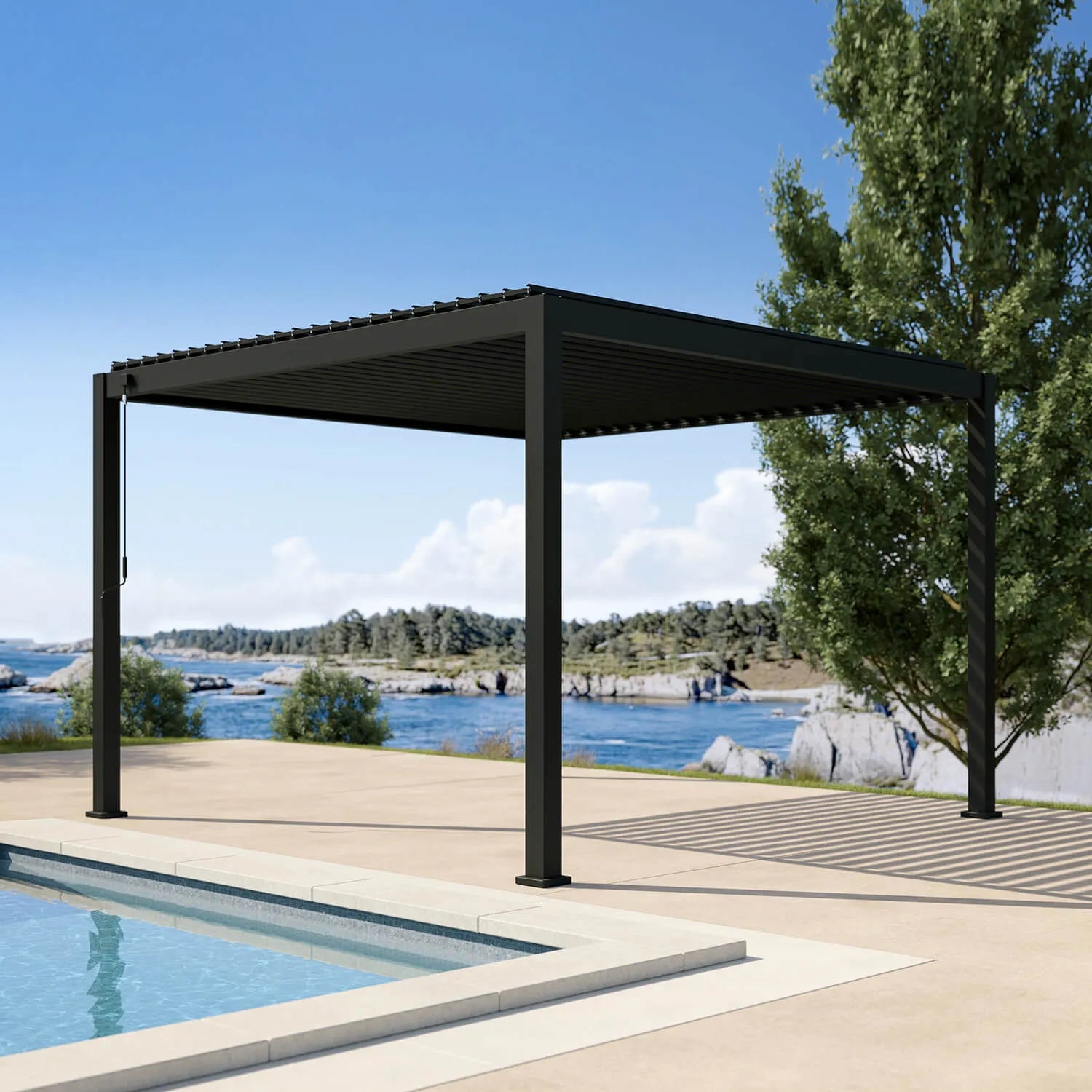
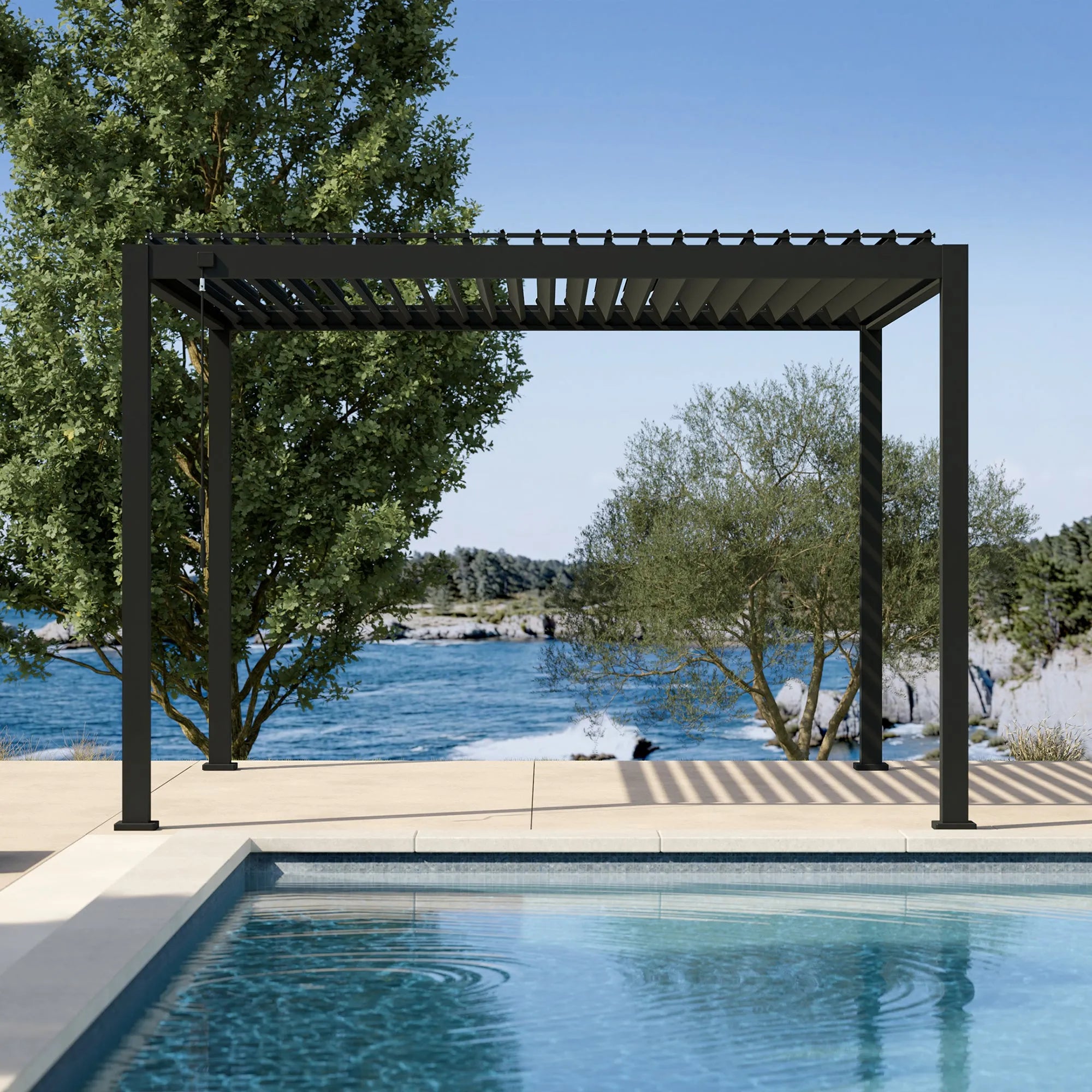
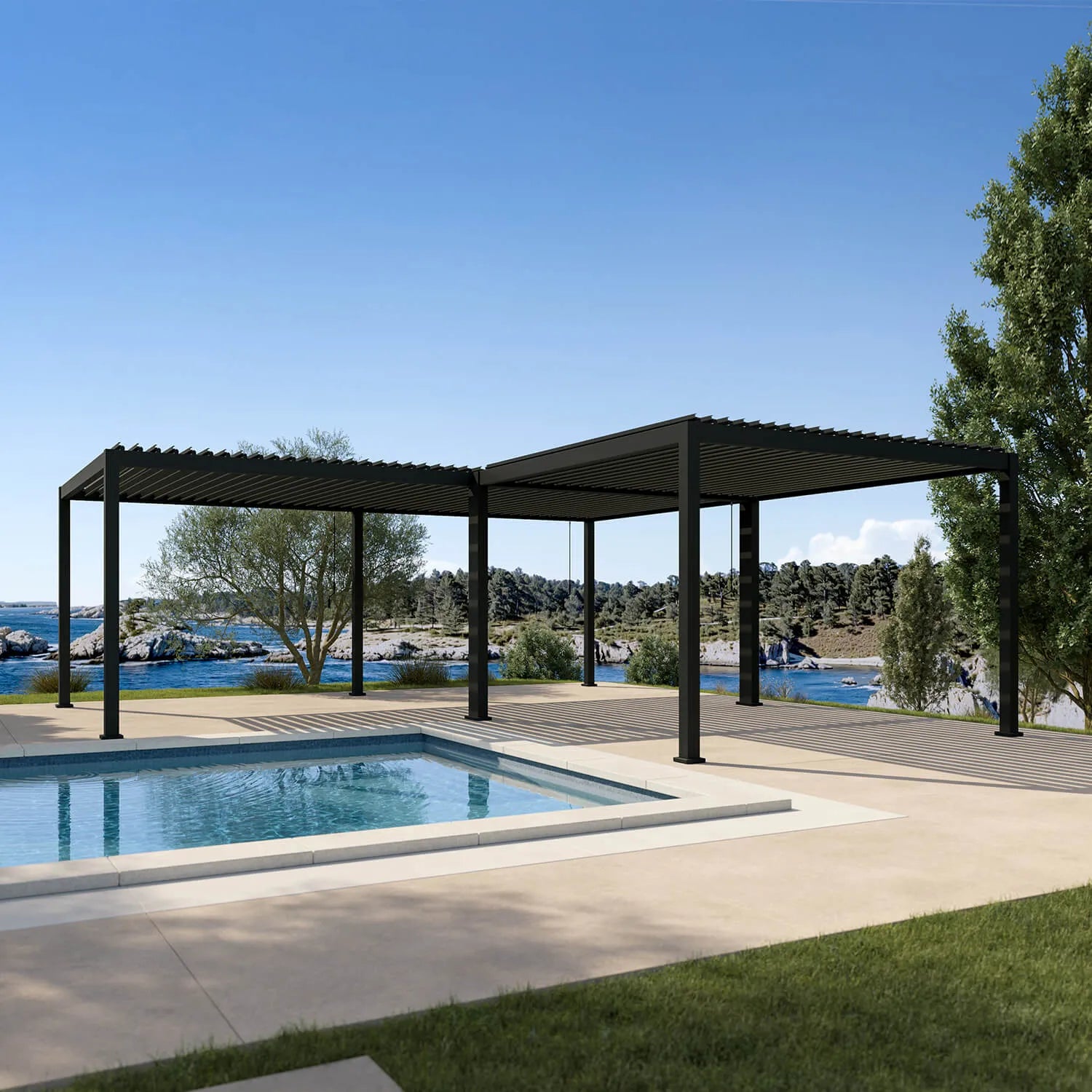
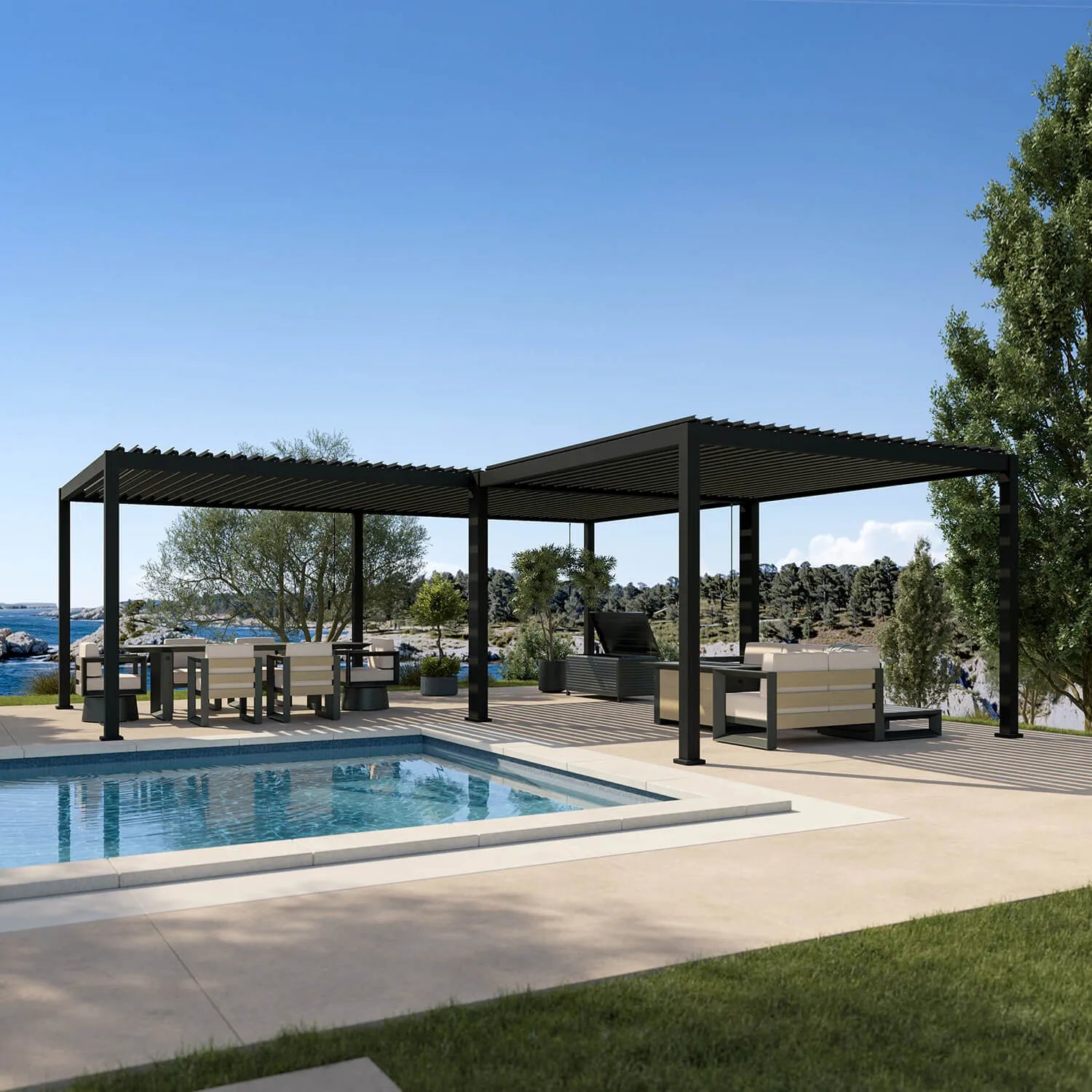
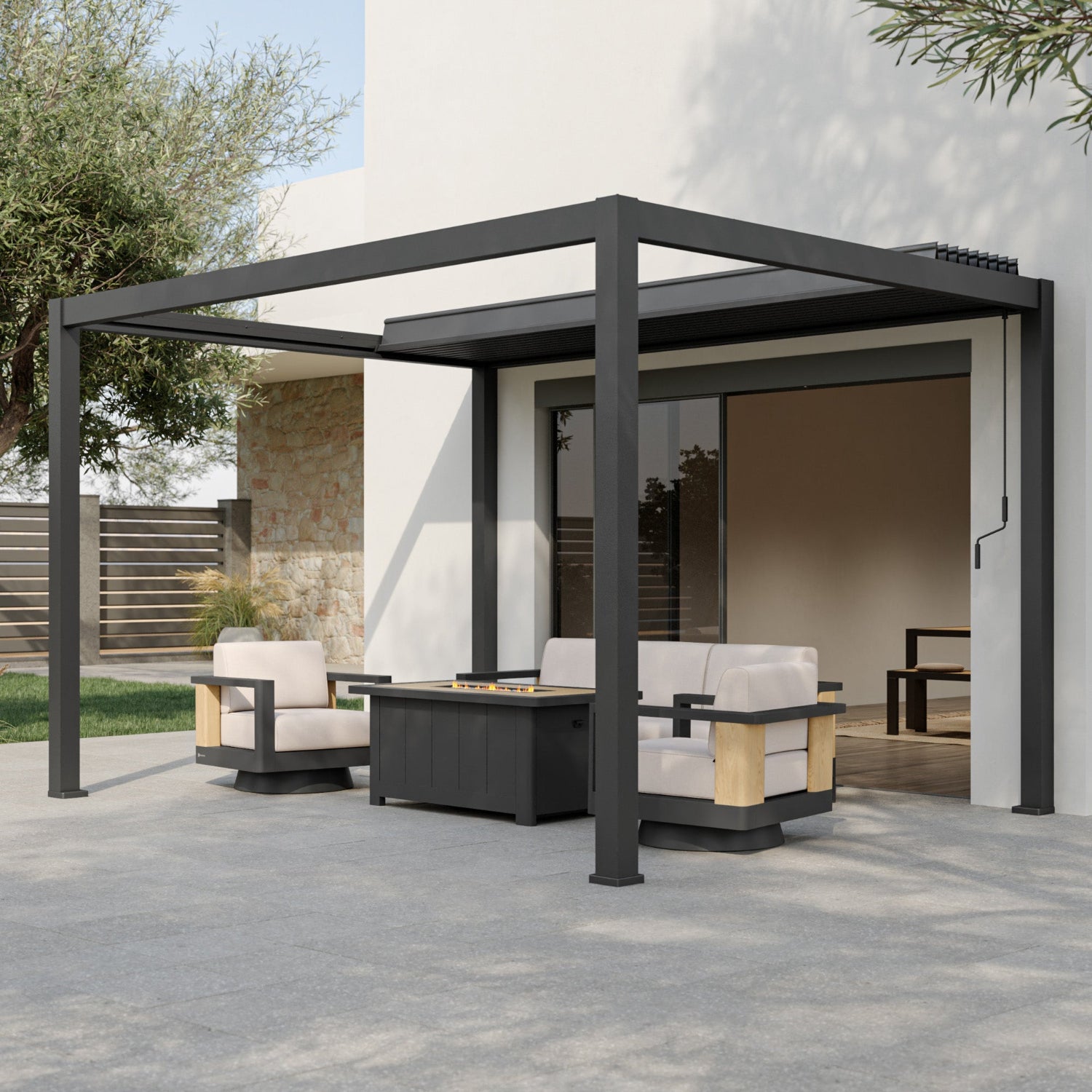
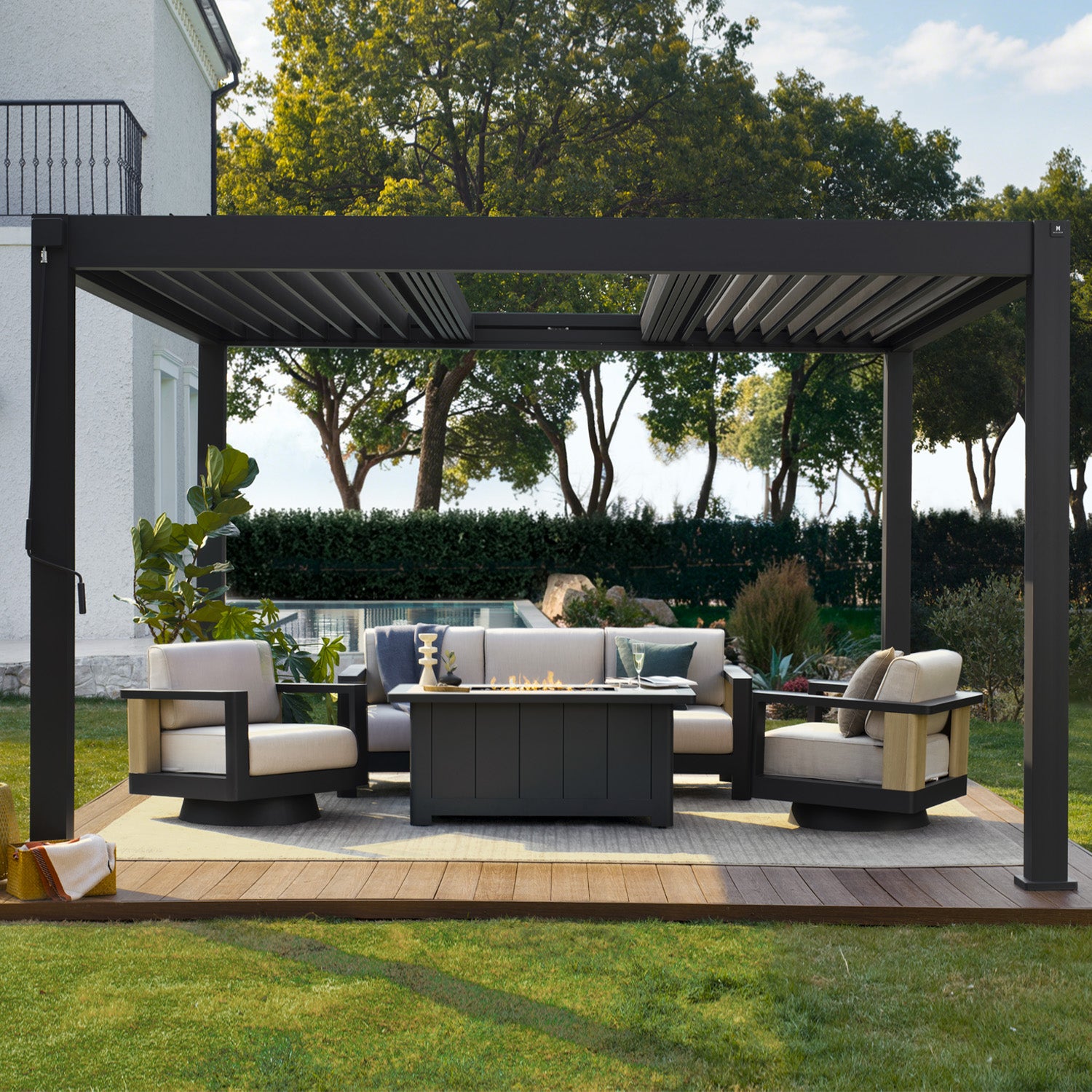
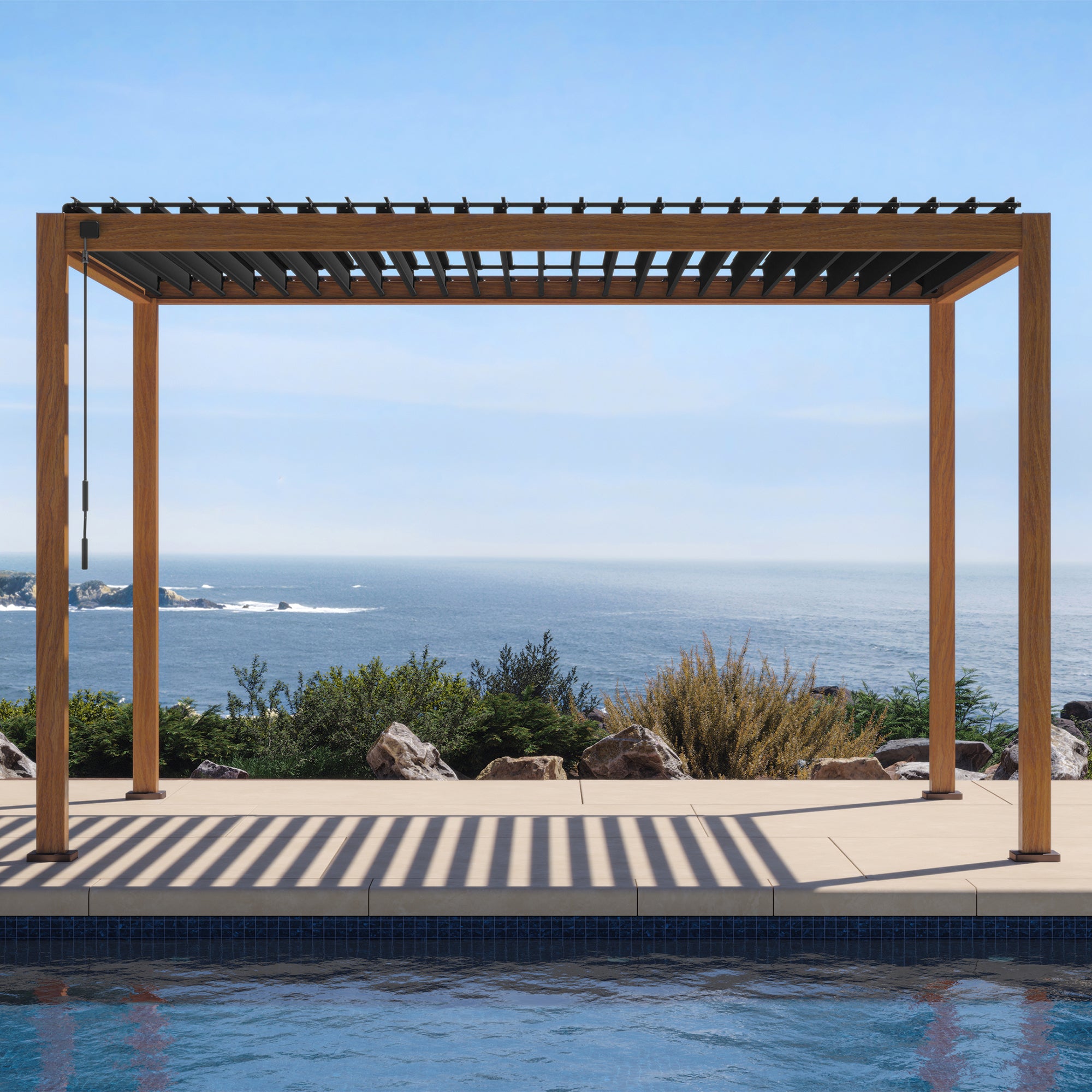
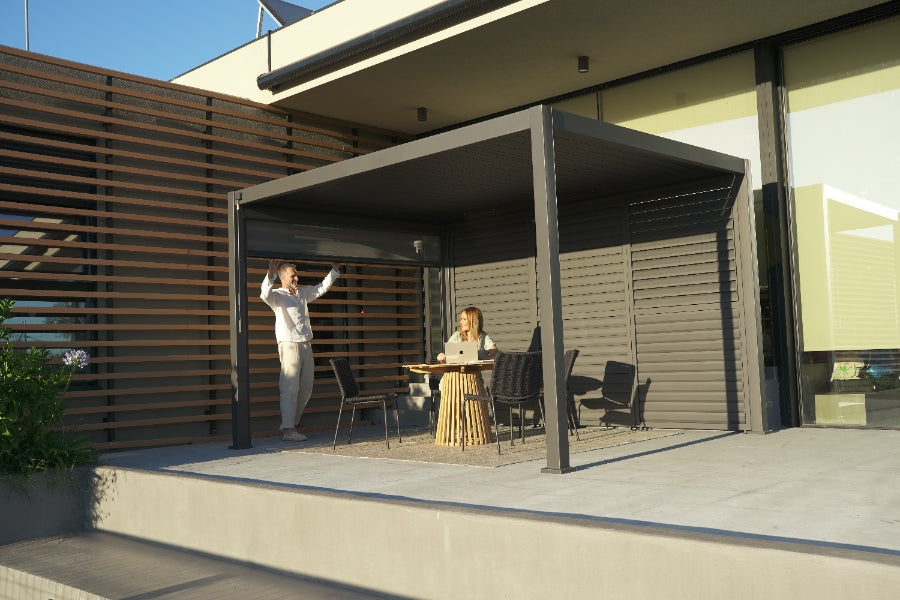
Modern louvered pergolas are a different story. They come with adjustable aluminum louvers that rotate from fully open to fully closed. That means you can control exactly how much sun, shade, or airflow you get at any moment. When it rains, the louvers close and water drains off through a built-in gutter system. No puddles, no fabric to worry about.
Most aluminum pergolas are powder-coated to resist rust and UV damage, so they hold up for 20+ years with almost no upkeep. No staining, no sealing, no repainting. You hose them off once in a while, and that's about it.
Related article: What Is a Pergola? Meaning, Uses, and Comparison With Other Outdoor Structures

What Is an Awning?
An awning is a fabric canopy. It is usually made of acrylic or vinyl, attaches to your house wall, and extends outward on folding arms. Most retractable models reach about 10 to 12 feet from the wall, which covers a strip of patio right next to the house.
You can retract it when you don't need shade, and some higher-end models come with motorized controls and wind sensors. It's basically a sun visor for your back door.
Here's the thing, though: awnings have limits. Most manufacturers recommend retracting them when winds hit 19–25 mph (Beaufort 5). Leave one out during a surprise storm and you're looking at bent arms and torn fabric. The fabric itself lasts roughly 5–15 years depending on quality before it needs replacing, and motors are typically rated for around 8,000–10,000 open-close cycles.
Awnings do their job well. They offer simple, affordable sun protection in calm weather. But they're not built to be outdoor rooms.
Pergola vs. Awning: Side-by-Side Comparison
Here's how the two stack up on the specs that matter most:
|
|
Retractable Awning |
Louvered Pergola |
|
Structure type |
Fabric on folding arms, wall-mounted |
Posts + beams + adjustable roof |
|
Typical lifespan |
5–15 years (fabric-dependent) |
20+ years |
|
Wind tolerance |
Retract at 19–25 mph |
Rated for much higher loads |
|
Rain protection |
Minimal, retract before rain |
Full, louvers close and drain |
|
Shade control |
Open or retracted (binary) |
Louvers adjust 0°–160° |
|
Maintenance |
Fabric cleaning, periodic replacement |
Occasional rinse |
|
Installed cost |
$1,500–$6,000 |
$1,300–$10,000+ |
|
Home value impact |
Moderate |
High, up to 20% increase |
The biggest takeaway? An awning gives you shade or no shade. A louvered pergola gives you everything in between, plus rain protection that an awning simply can't match.
When a Pergola Makes More Sense
A pergola isn't always the right call, but when the situation fits, nothing else really comes close. Here's when it wins:
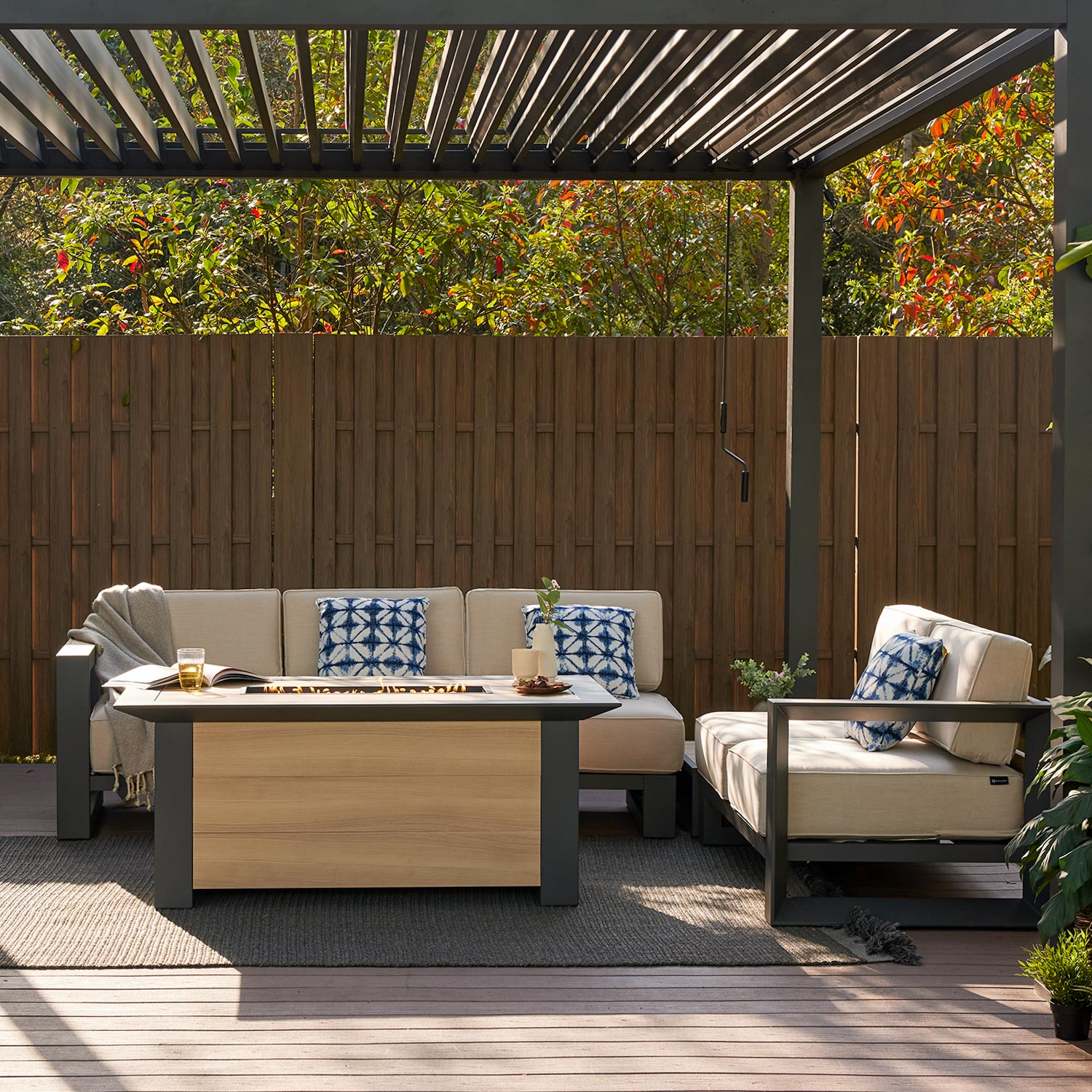
- You want a year-round outdoor room. A pergola defines the space even when nobody's sitting under it. It gives your patio a ceiling line, a furniture zone, and a sense of intention that a fabric panel hanging off the wall just can't create. You can eat dinner during a drizzle. You can hang string lights from the beams. You can add side screens for privacy. And it all works in October the same way it works in July.
- Your area gets unpredictable weather. Afternoon storms in 30 minutes? Wind gusts over 25 mph? An awning needs to come in for all of that. A louvered aluminum pergola sits there and takes it. Close the louvers, let the gutters do their job, done. You don't need to rush home to retract anything.
- You care about home value. According to Zillow data, homes with a pergola get 20% more saves and sell roughly 10.7 days faster than comparable listings. The American Society of Landscape Architects (ASLA) reports that well-designed hardscape features can add 15–20% to a property's value. Appraisers treat a pergola, especially an aluminum one with a proper foundation, as a permanent fixture. That matters at resale.
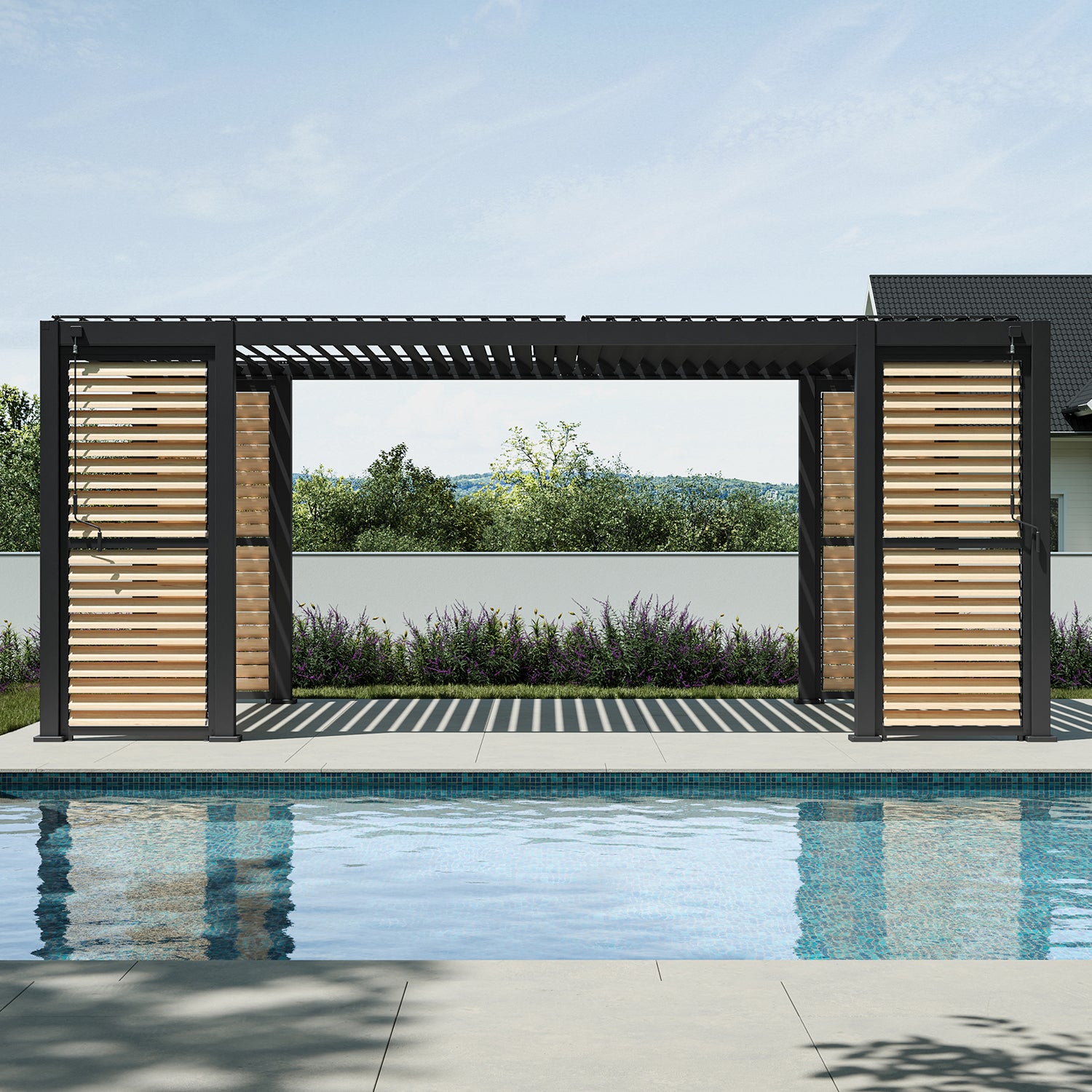
- You want to add features over time. LED lighting, ceiling fans, retractable side screens, outdoor speakers. A pergola frame supports all of it. It's a platform you can build on, not a single-purpose shade device.
In our experience: If someone plans to stay in their home for 5+ years and uses their backyard at least a few times a week, a pergola almost always delivers more value than an awning over its lifetime.

When an Awning Makes More Sense
We're not going to pretend awnings are a bad choice. There are real situations where they're the smarter pick. And honestly, sometimes the only realistic one.
- You're renting. A pergola typically requires landlord approval, foundation work, and sometimes a permit. And you can't take it with you when you move. An awning is a much smaller commitment.
- Your outdoor space is tight. Under 100 square feet? A narrow balcony or courtyard? Pergola posts need footings and clearance that small spaces may not have. An awning mounts flush to the wall and doesn't eat into your floor area at all.
- Your budget is under $2,000. At that price point, a retractable awning gets you functional shade today. A pergola at the same budget means a very basic model with fewer features, and possibly an unfinished look.
- You want open sky most of the time. If your main goal is blocking the 2–5 PM sun on a south- or west-facing wall and then opening the view back up, an awning does that more naturally than most pergola designs. Retract it, and it's like it was never there.
- You need it installed fast. An awning goes up in a few hours, usually with no permit. A pergola is a bigger project, with foundation prep, assembly, and sometimes inspections. If the goal is shade by this weekend, the awning wins.
Can You Use Both Together?
Yes, and it's actually a pretty common setup in higher-end outdoor designs.
The logic is straightforward: each structure does a different job, so pairing them covers more ground than either one alone.
A typical combo looks like this:
- A retractable awning over the kitchen slider or back door, shading the glass and the dining set right outside it. This cuts indoor heat gain and gives you a quick shade fix for meals.
- A louvered pergola further out in the yard, anchoring the lounge area, fire pit zone, or pool deck. This is your "outdoor room", the space where you spend whole afternoons, not just lunch.
The awning handles the wall problem: solar heat on glass, glare in the kitchen, and a hot table next to the house. The pergola handles the room problem: creating a defined space where people actually want to hang out, regardless of weather.
Neither one is asked to do the other's job. That's why the combo works.
One thing to keep in mind: if you already have a pergola and want more side shade or wind protection, a zip screen or retractable side panel is usually a better fit than adding a separate awning underneath. Pergola frames are designed to support those accessories. And it looks a lot cleaner than mixing two different systems in the same footprint.
Pergola vs. Awning: How to Choose
Still not sure? Run through these five questions. By the end, the answer should be obvious:
- How do you use your outdoor space? If you just want shade for a quick coffee or lunch near the house → awning. If you want a space that works like an outdoor room for hours at a time → pergola.
- What's your weather like? Calm and dry most of the year → awning handles it fine. Frequent wind, rain, or surprise storms → you need a pergola that stays put.
- How long are you staying in this home? Less than 3 years or renting → awning. 5+ years → a pergola pays for itself through daily use and resale value.
- What's your budget? Under $2,000 → awning. $3,000–$10,000+ → a louvered pergola is within reach and delivers more long-term value.
- How much space do you have? Small balcony or narrow patio → awning. Medium to large yard with room for posts → pergola.
And if you're still torn, remember the simplest way to think about it: an awning shades a patio; a pergola defines one. That single distinction usually tells you everything you need to know.
FAQs
Is a pergola or awning better for rain?
A louvered pergola. When the louvers close, water drains through an integrated gutter system. You stay dry without doing anything. Most retractable awnings should be retracted before rain hits to avoid fabric pooling and damage, so they don't really protect you from anything except sunshine.
How much does a pergola cost compared to an awning?
Retractable awnings run $1,500–$6,000 installed. Pergolas range from about $1,300 for a basic steel-frame model up to $10,000+ for larger aluminum setups with motorized louvers. Factor in awning fabric replacements every 5–15 years, and the lifetime cost difference shrinks fast.
Does a pergola add more value to a home than an awning?
Yes. Appraisers treat pergolas as permanent fixtures that can increase property value by 5–20%. Awnings are classified as temporary accessories with a much smaller resale impact.
Can I install a louvered pergola myself?
Many modern aluminum pergolas are designed for DIY assembly. Mirador pergola models, for example, can typically be set up by two people in about 4–6 hours with basic tools. No welding or specialty equipment needed.
Do I need a permit for a pergola or an awning?
It depends on your local codes. In most areas, a retractable awning doesn't need a permit. A pergola often does, especially a freestanding one with concrete footings. Check with your local building department before you buy.