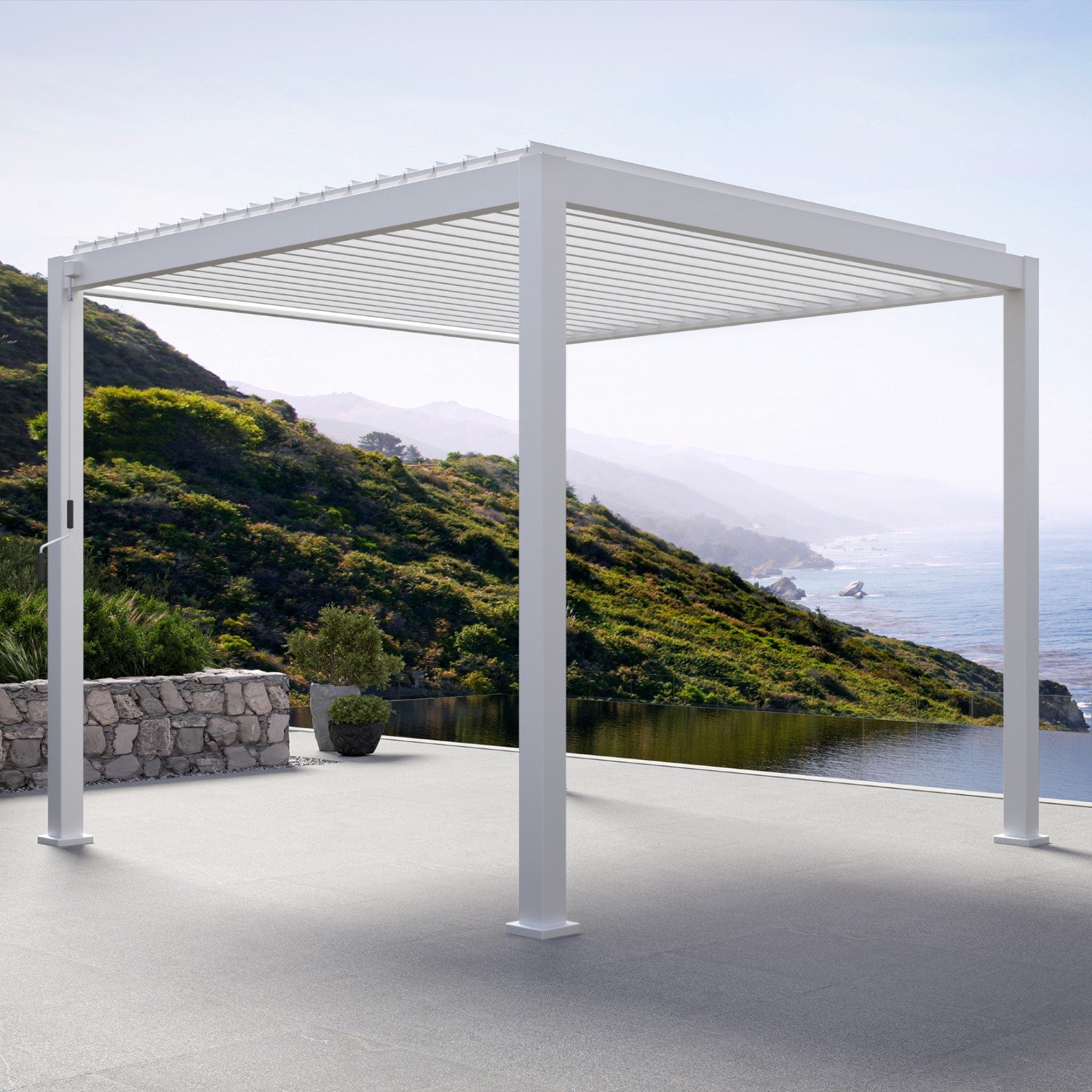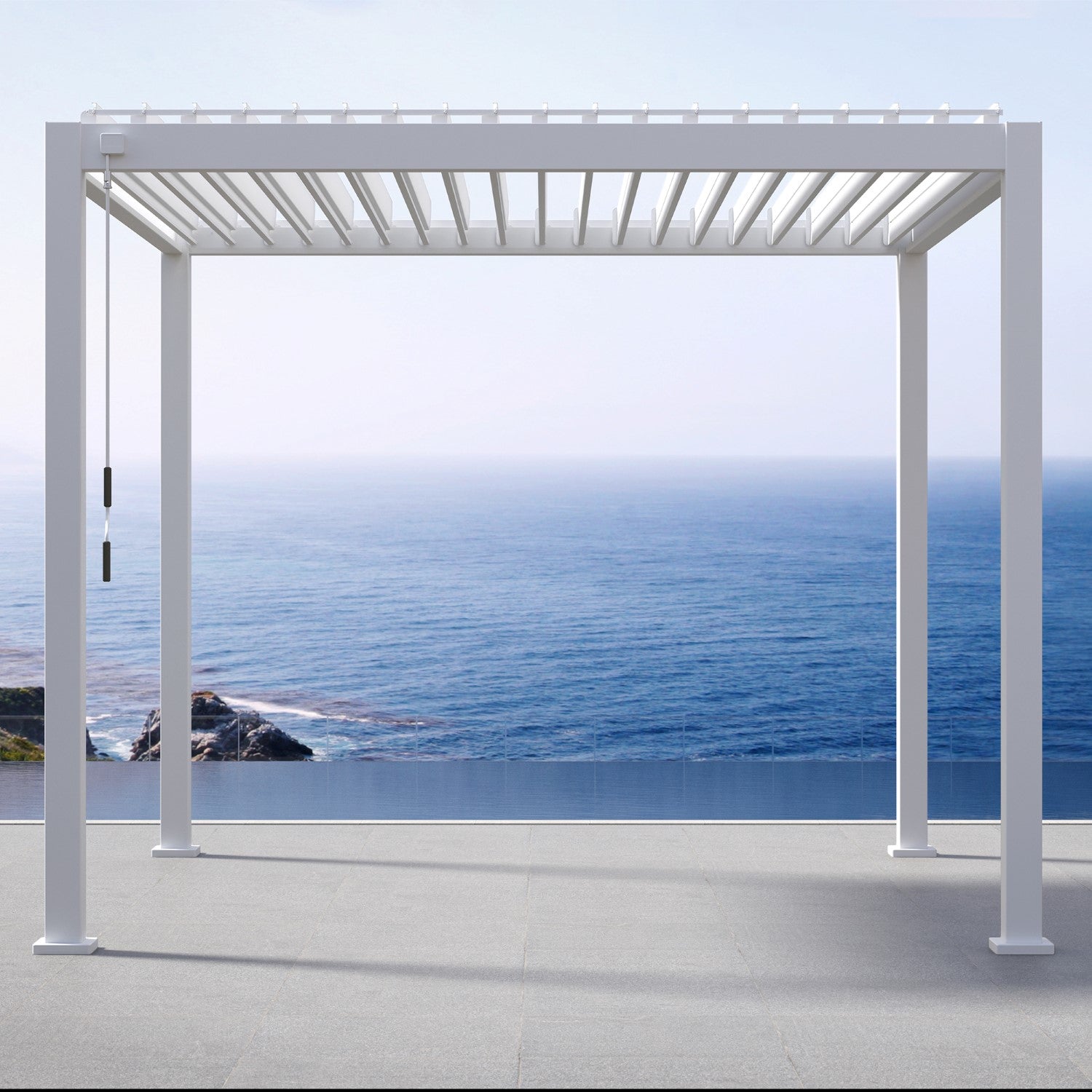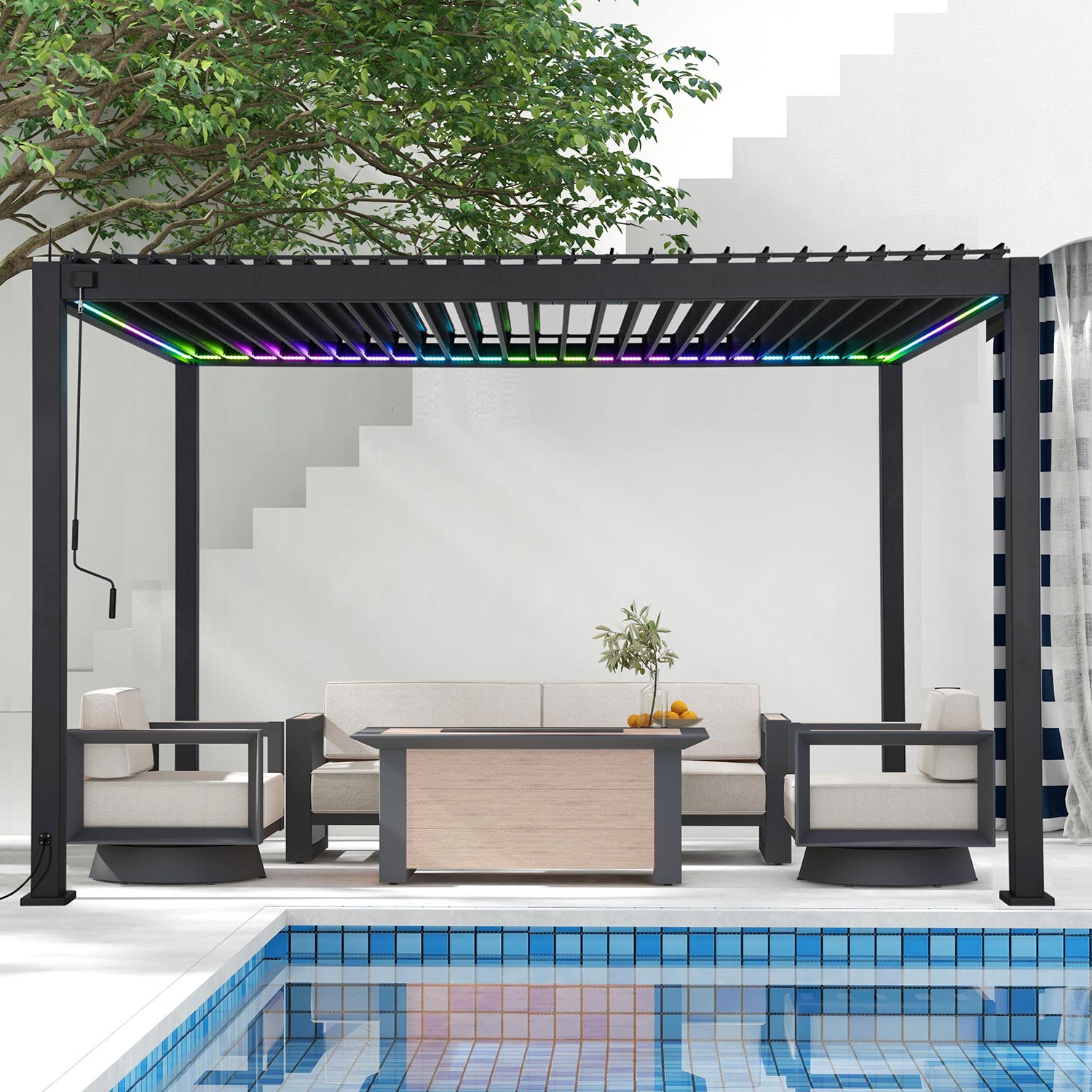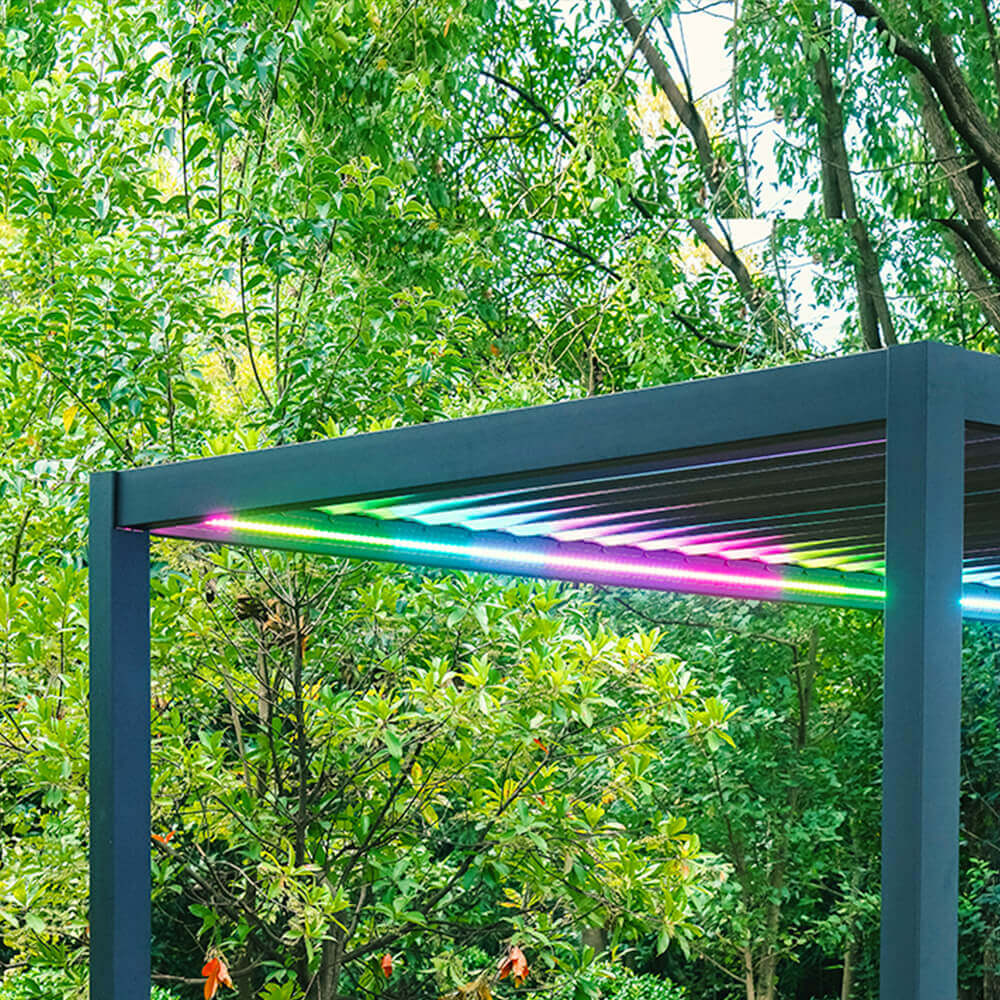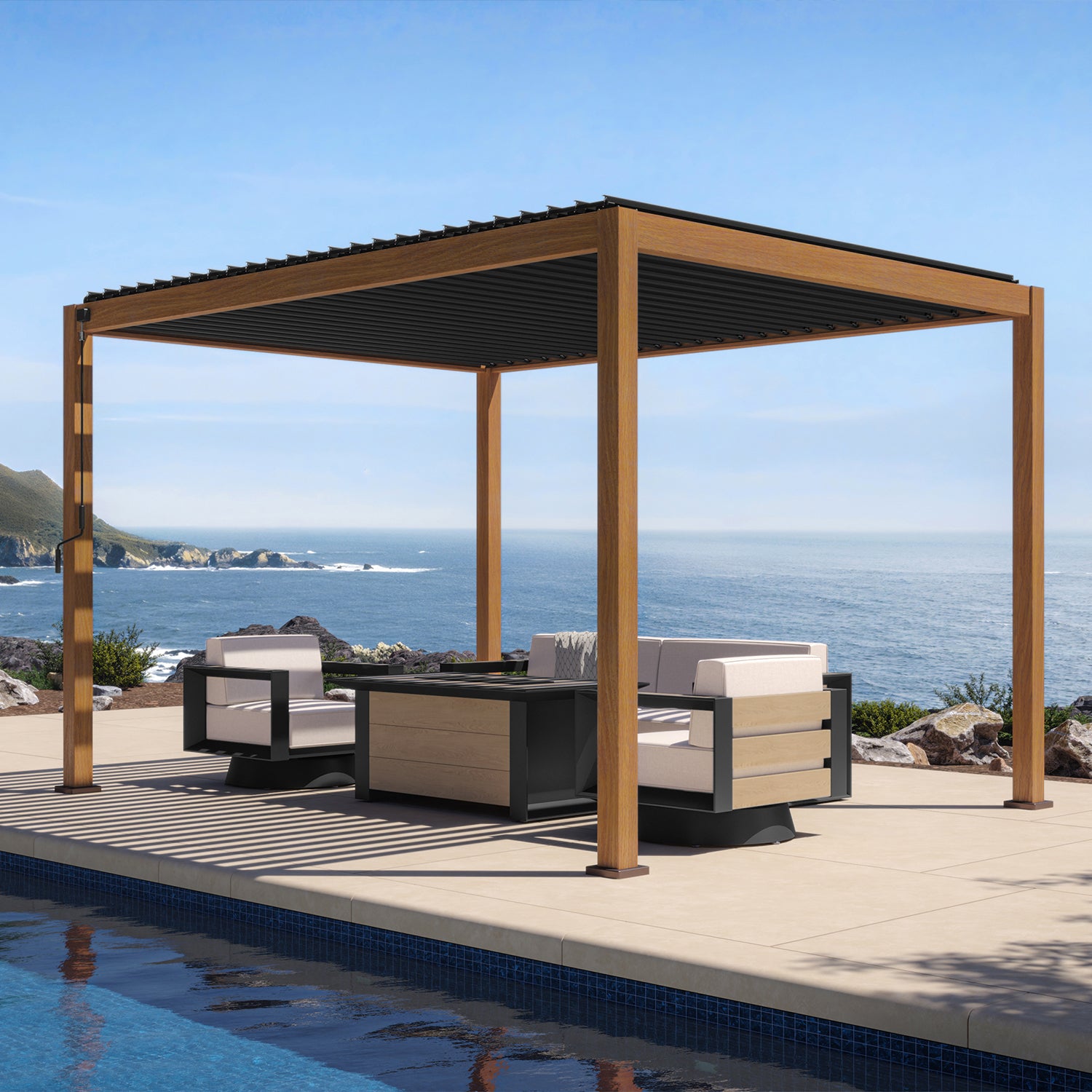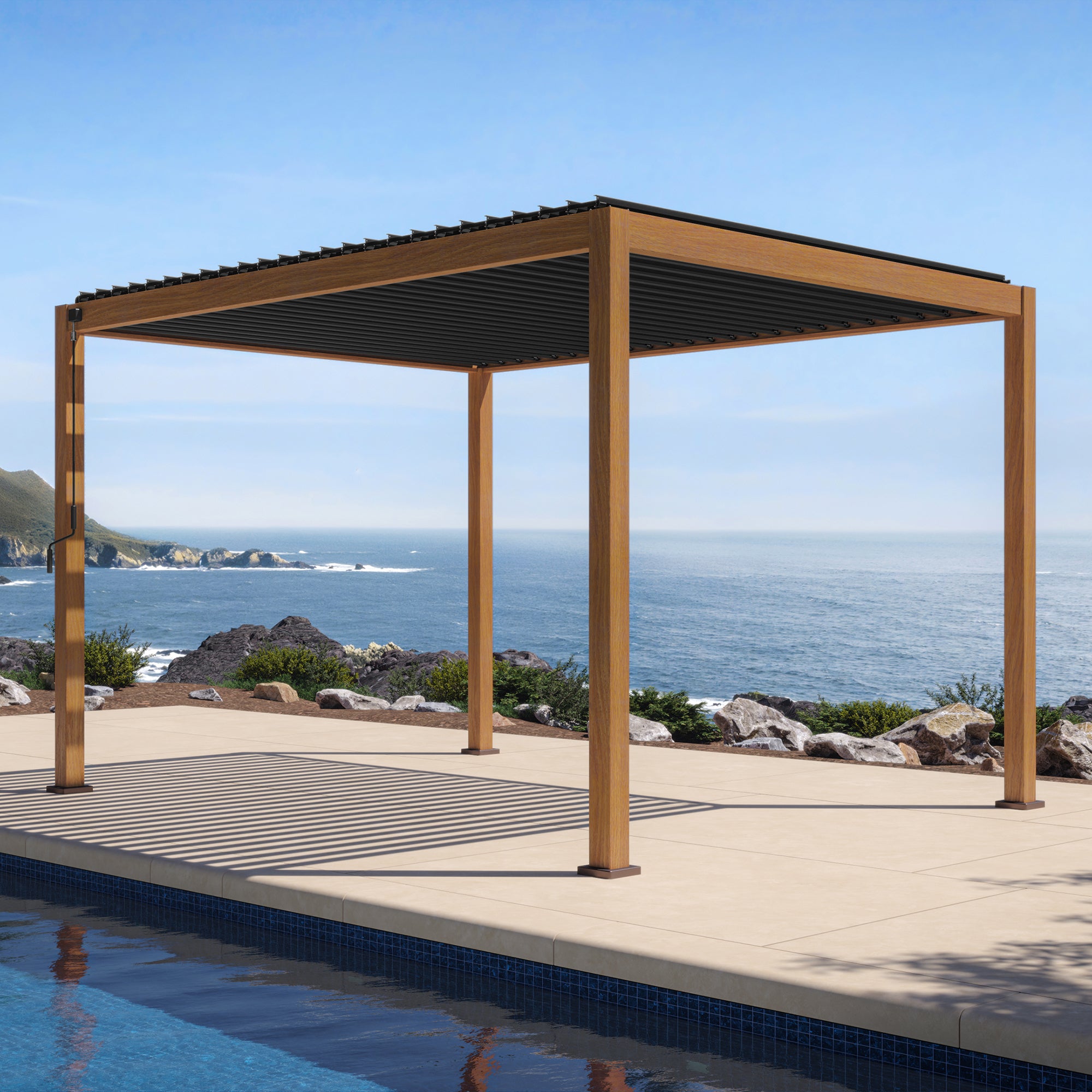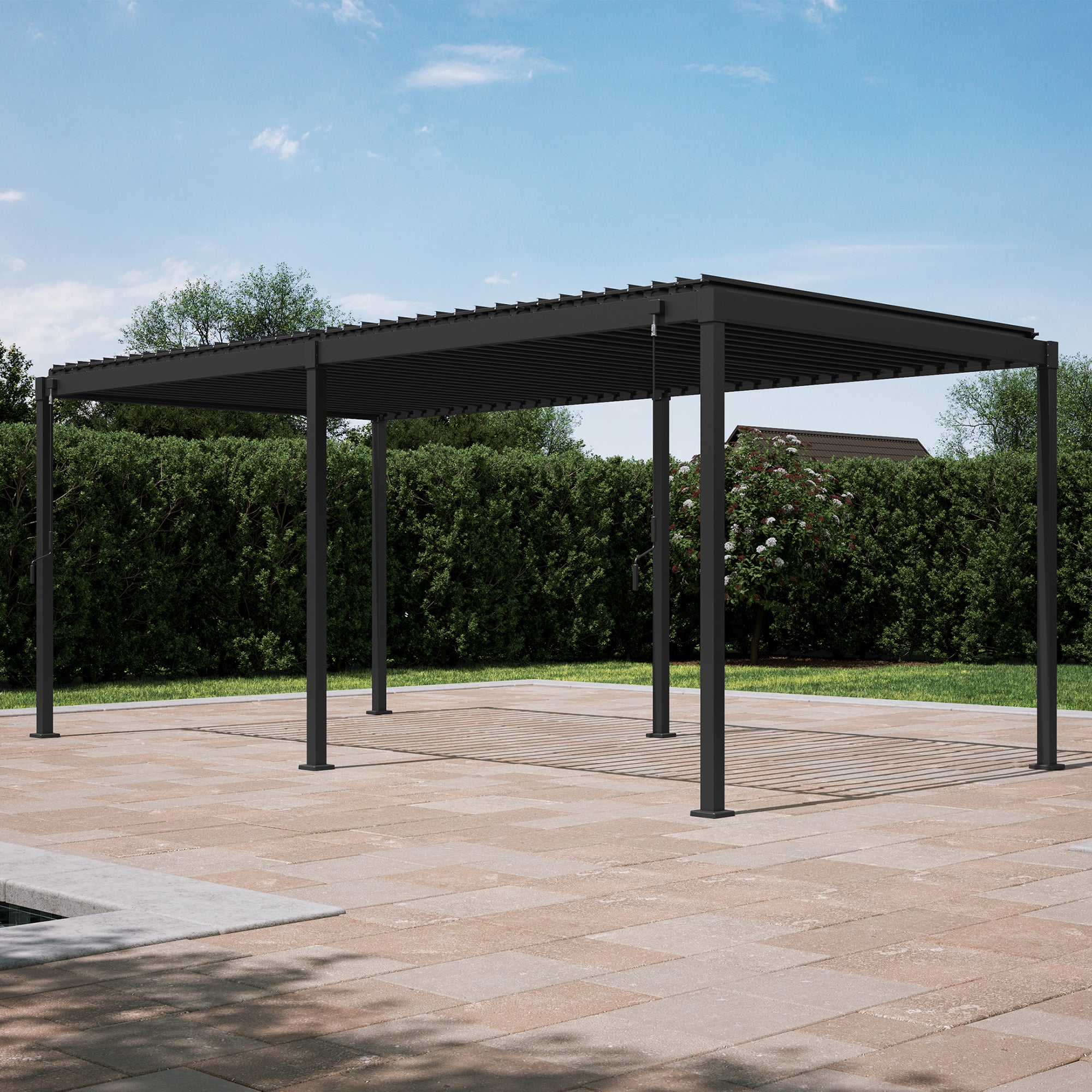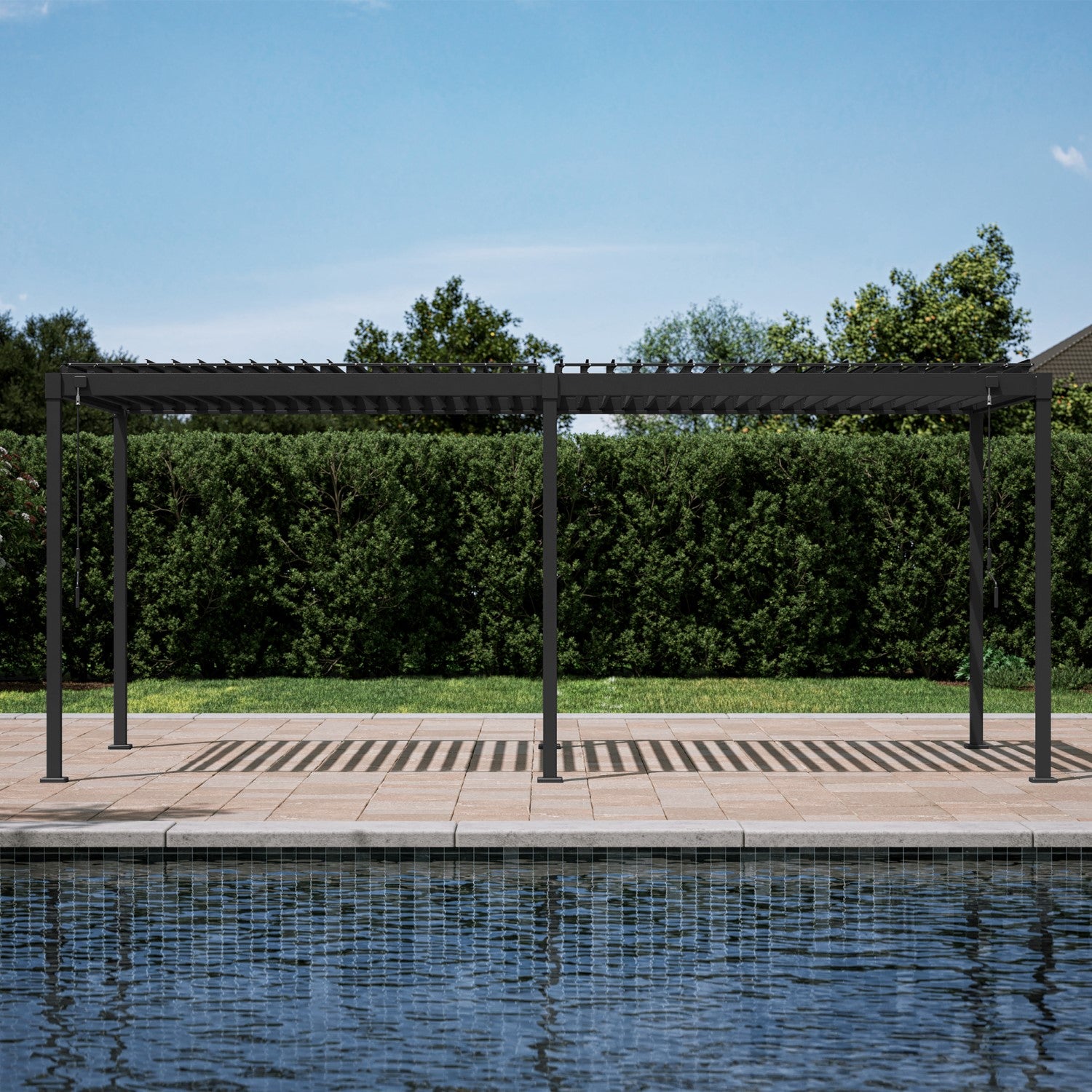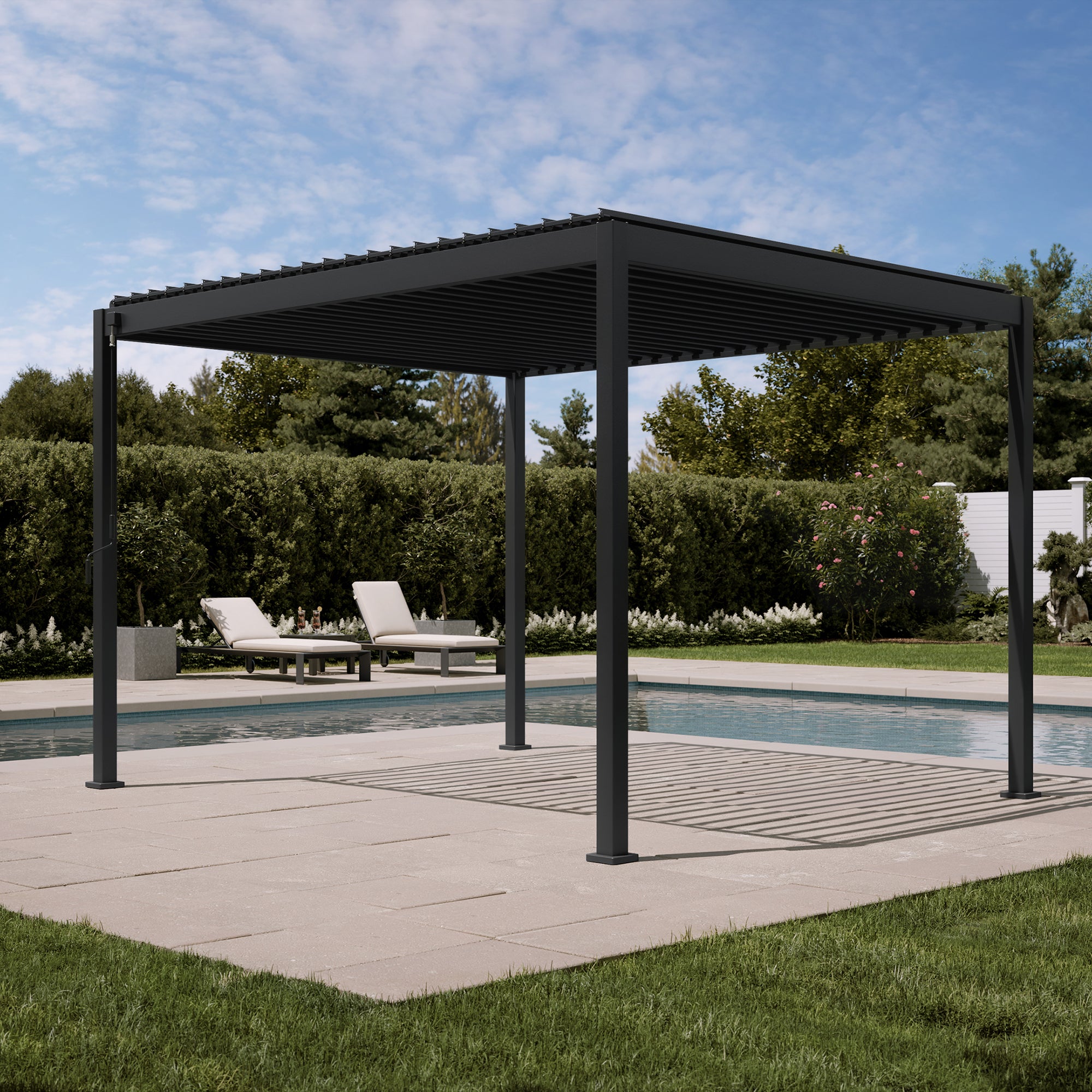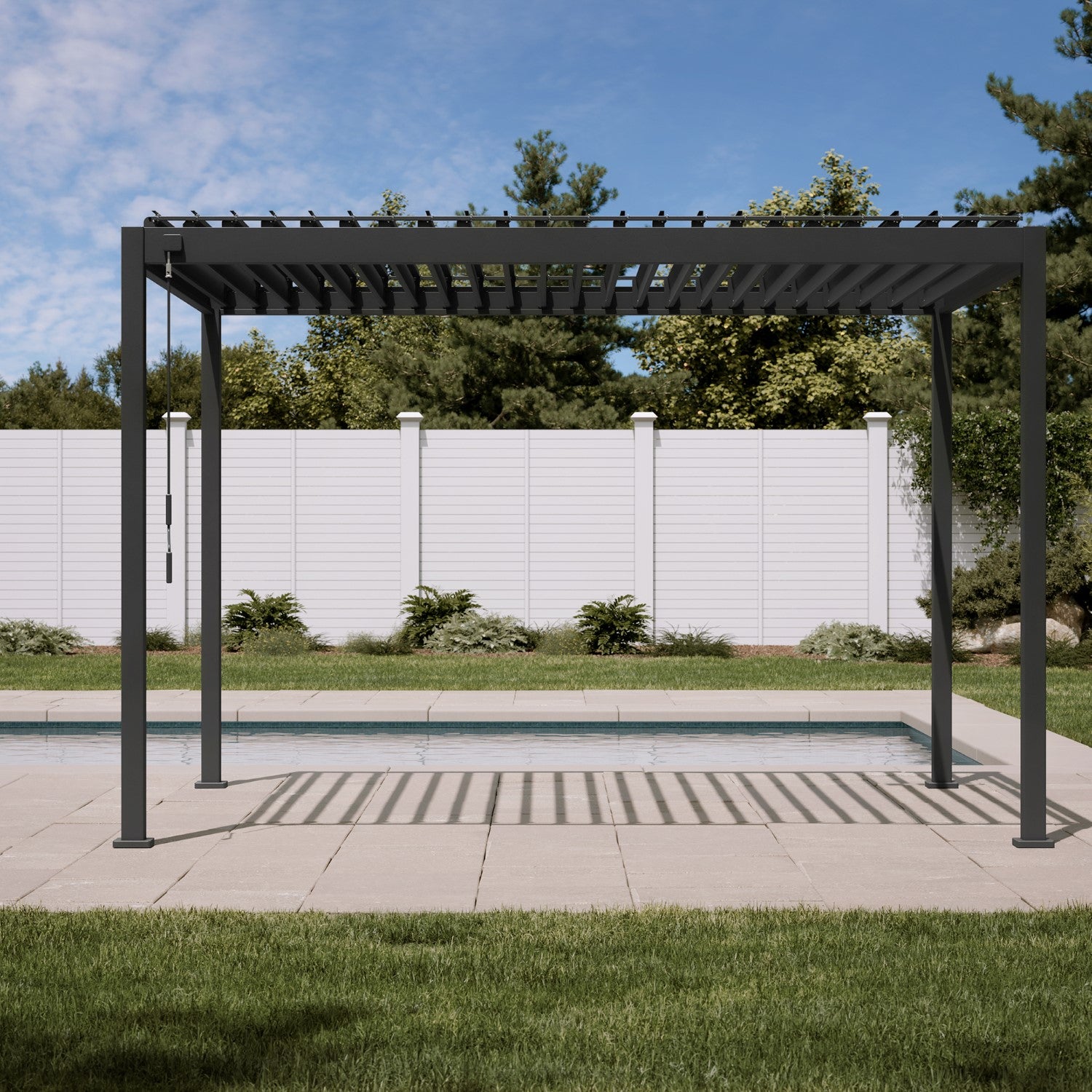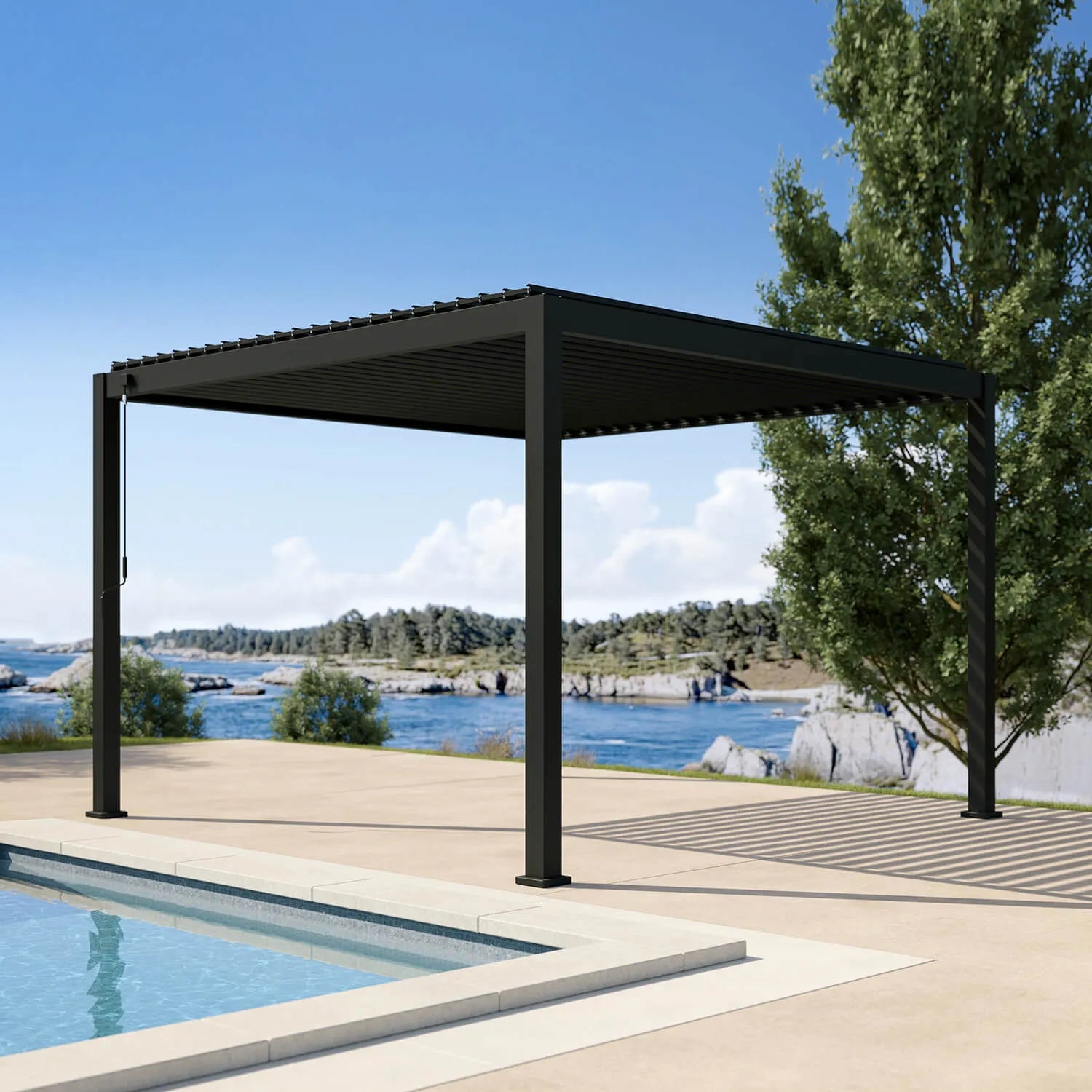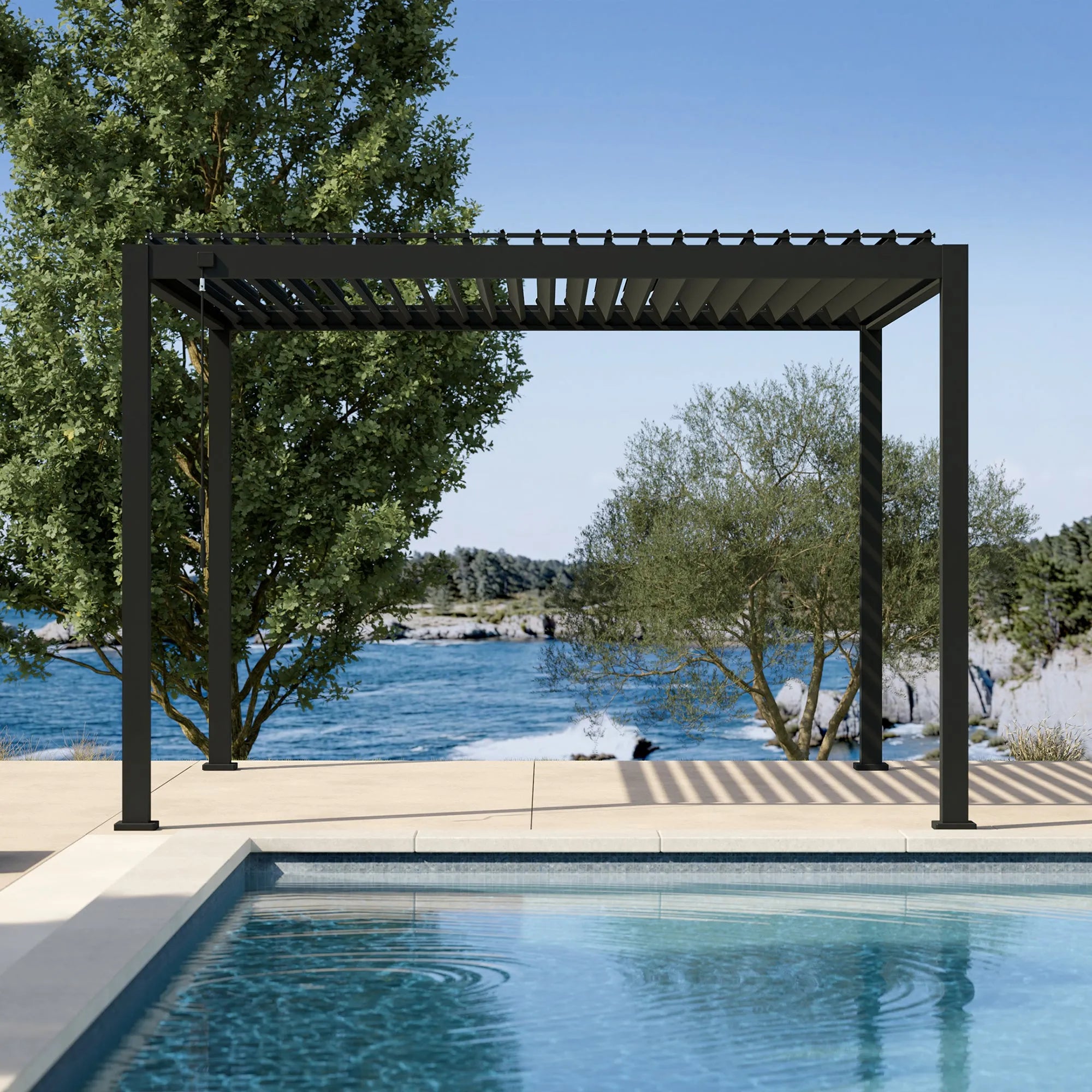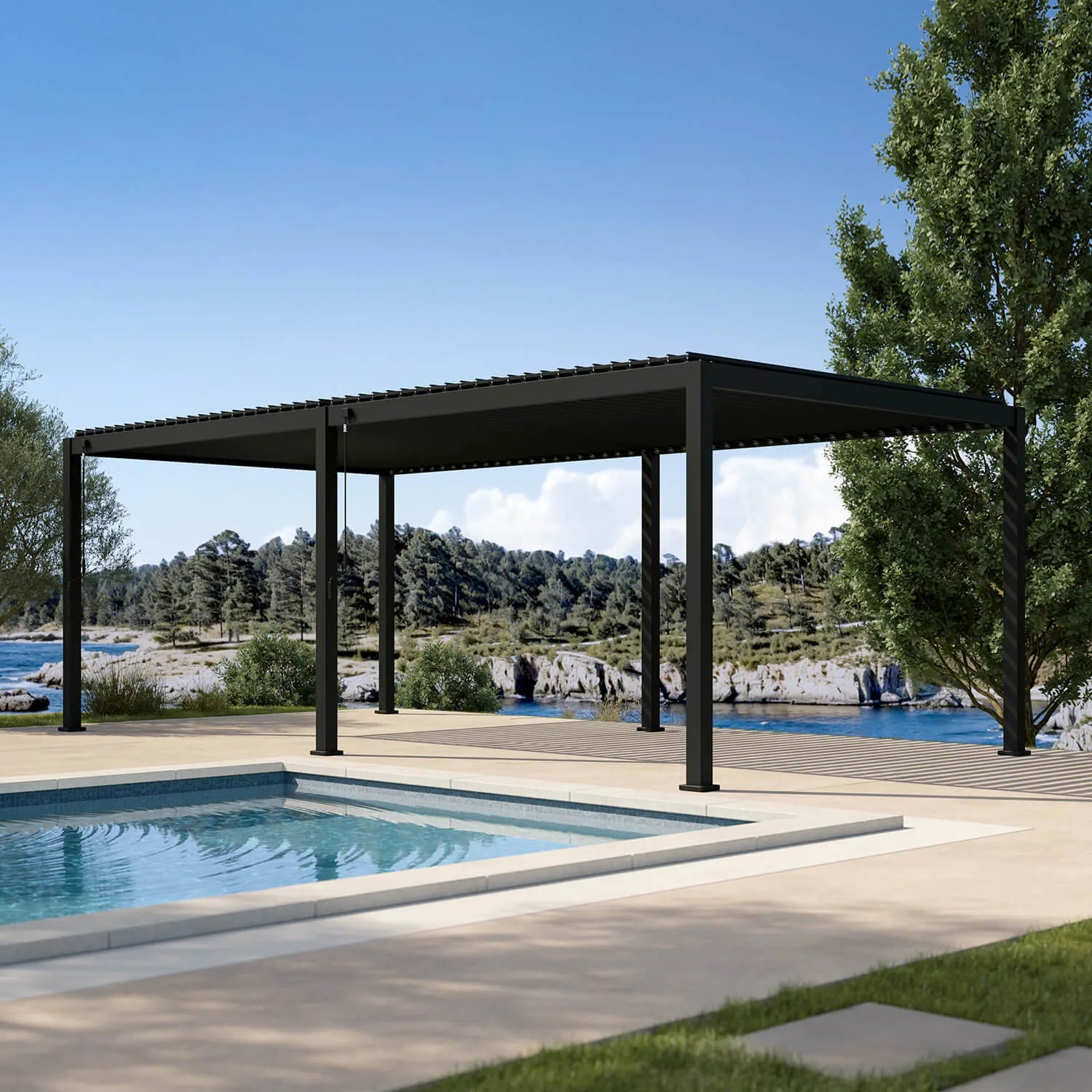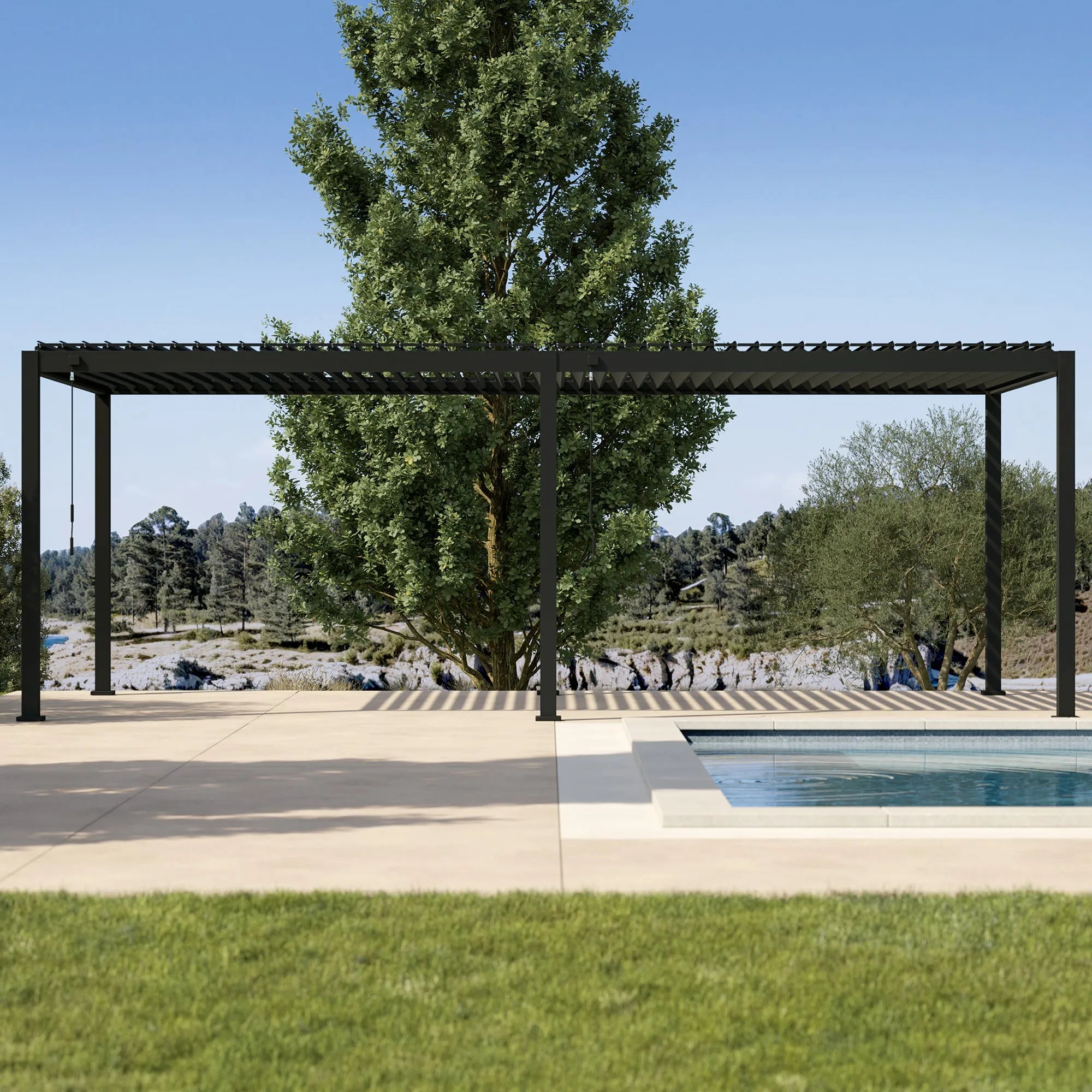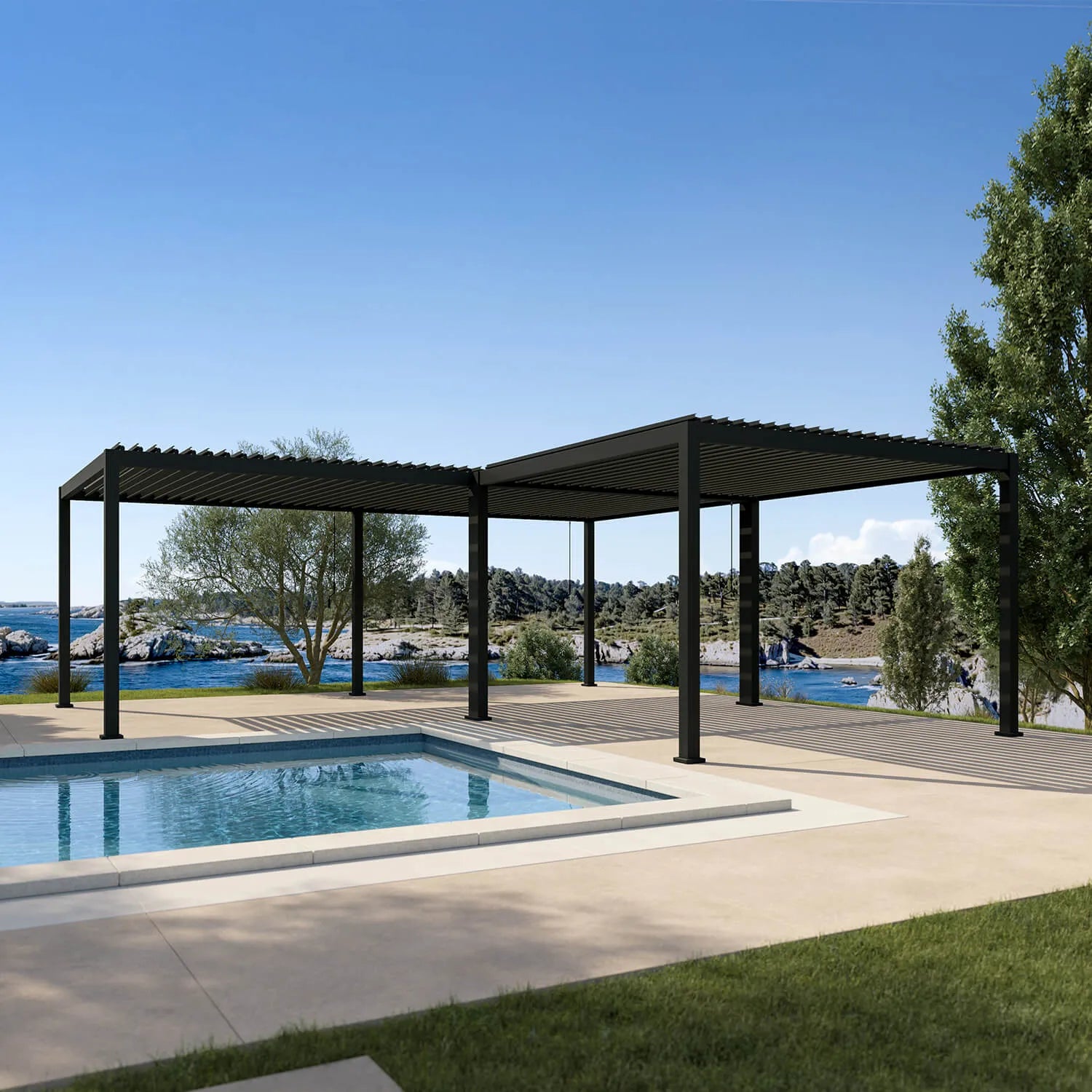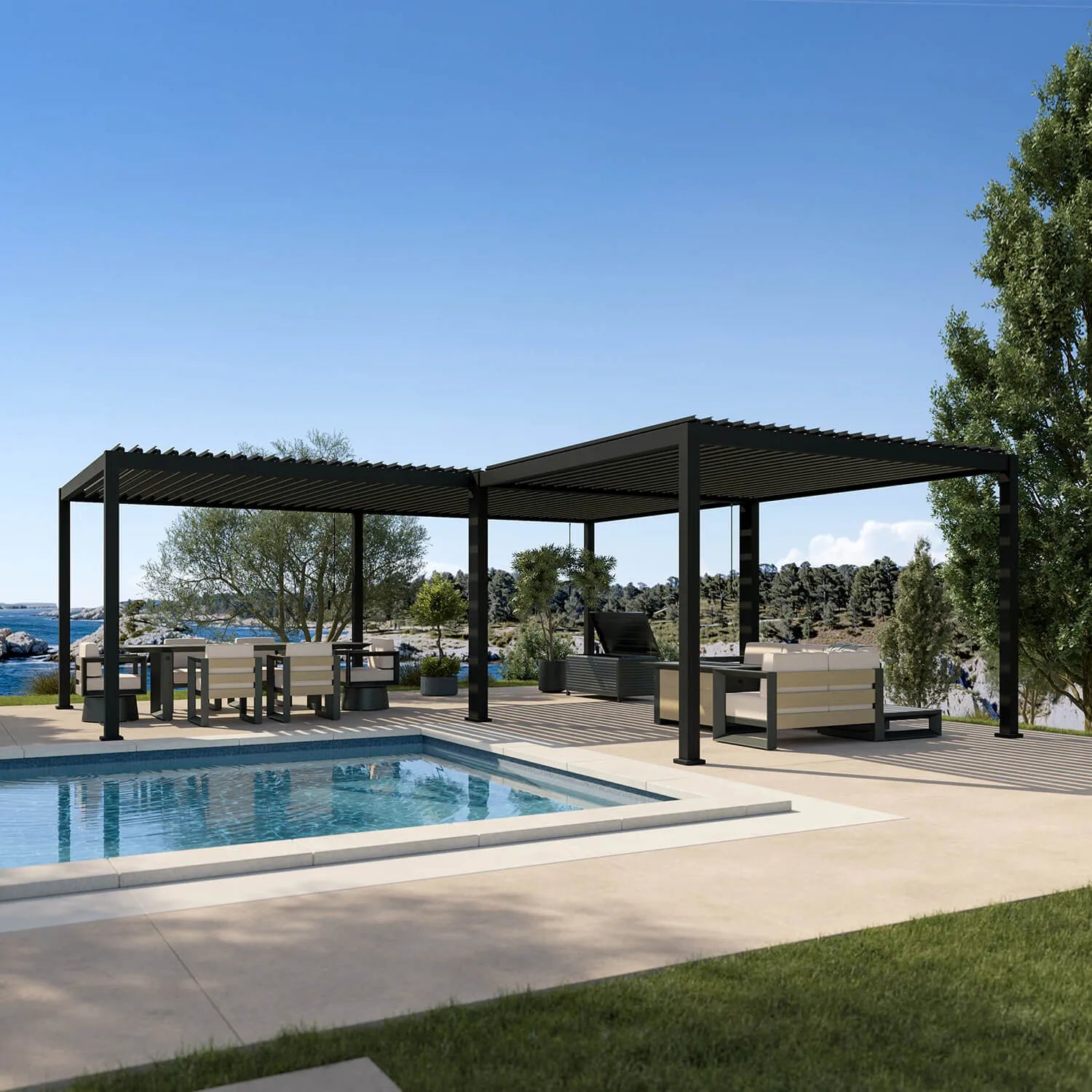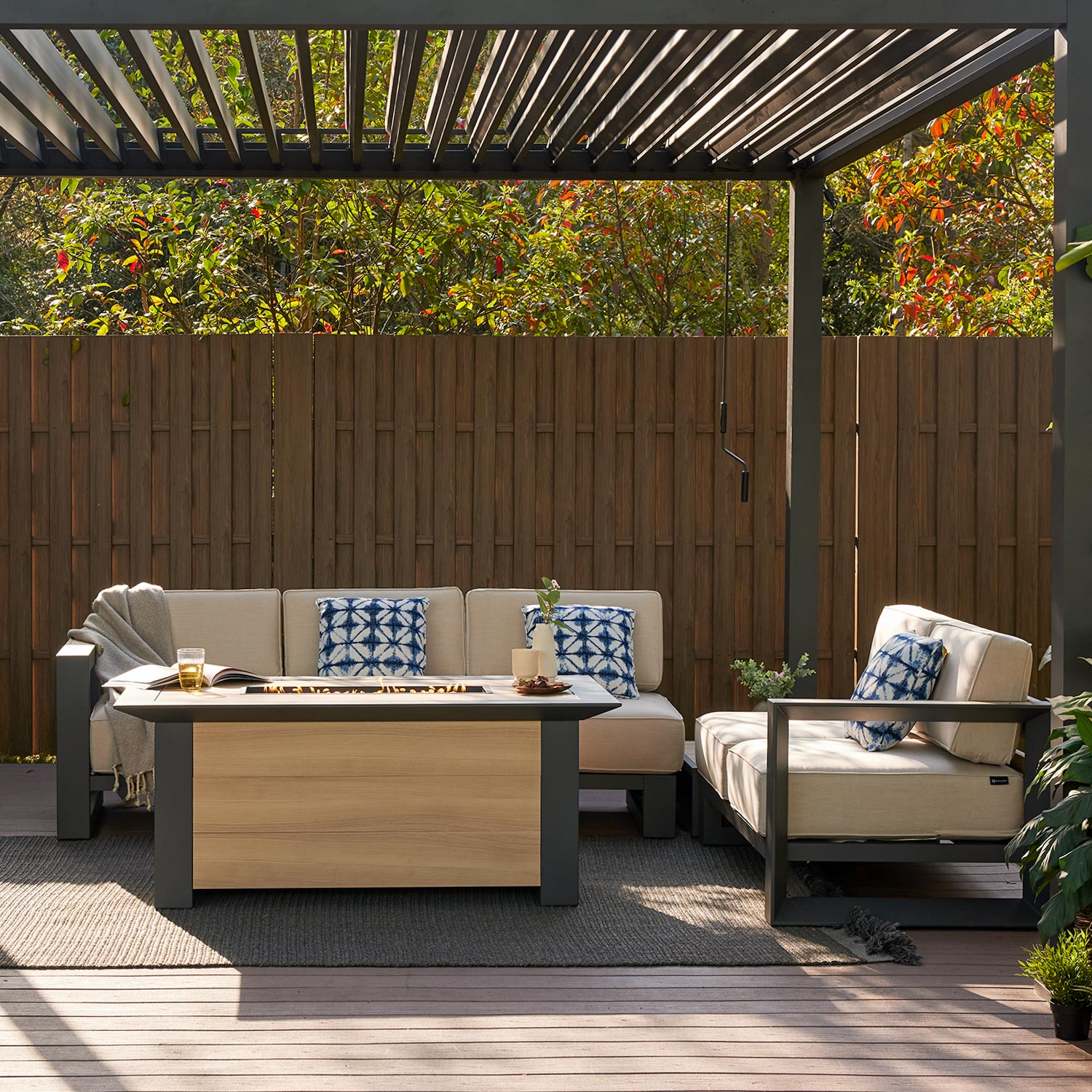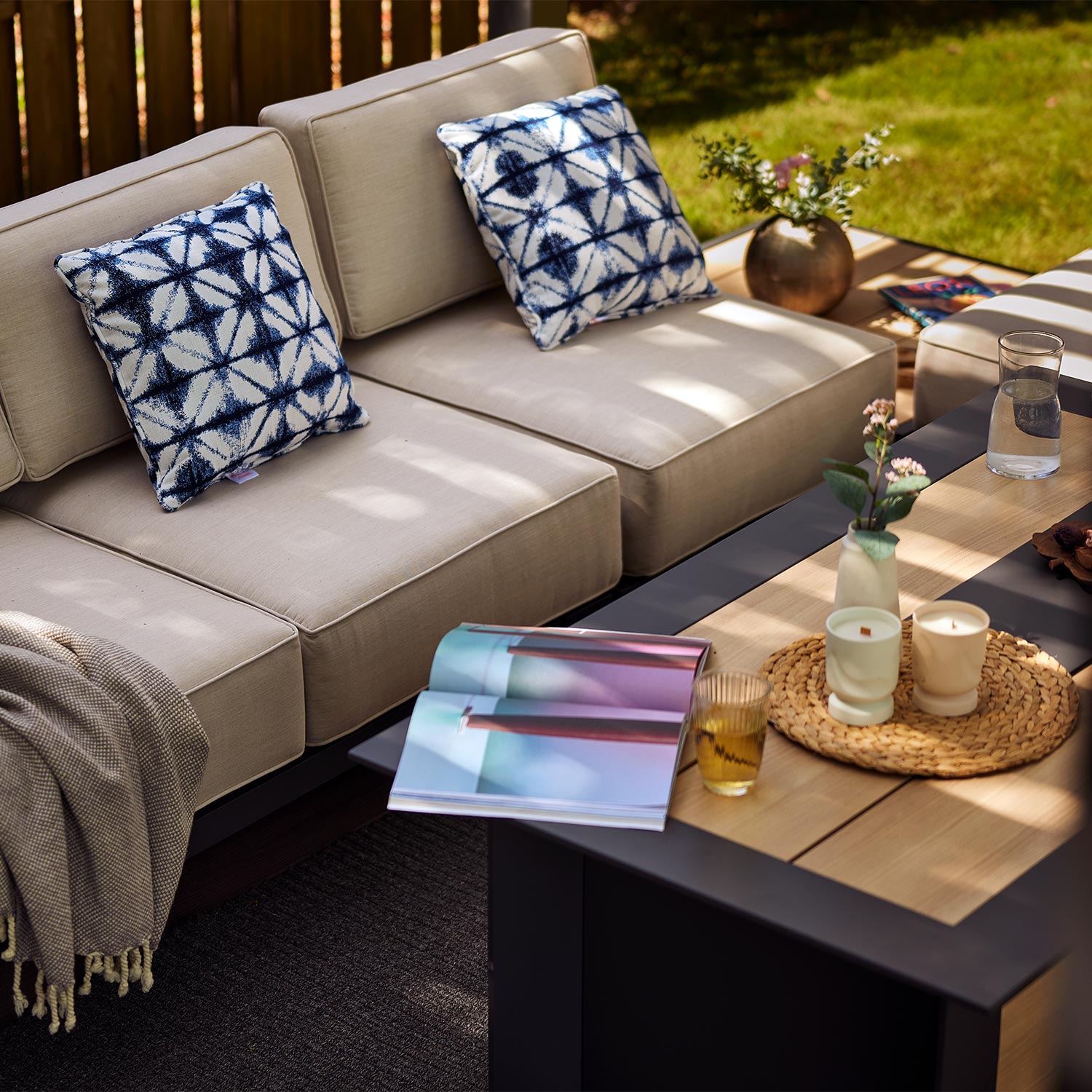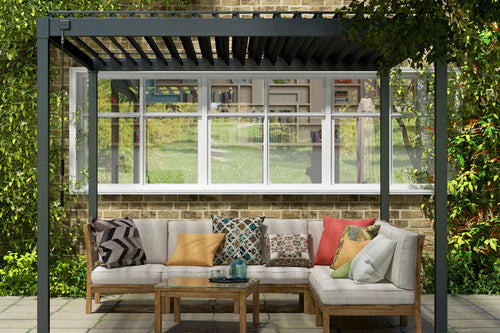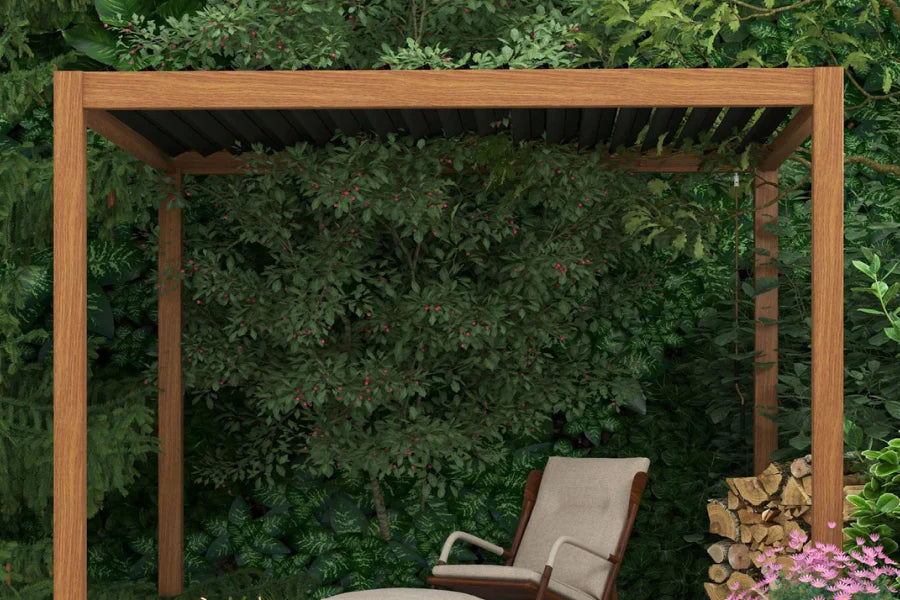

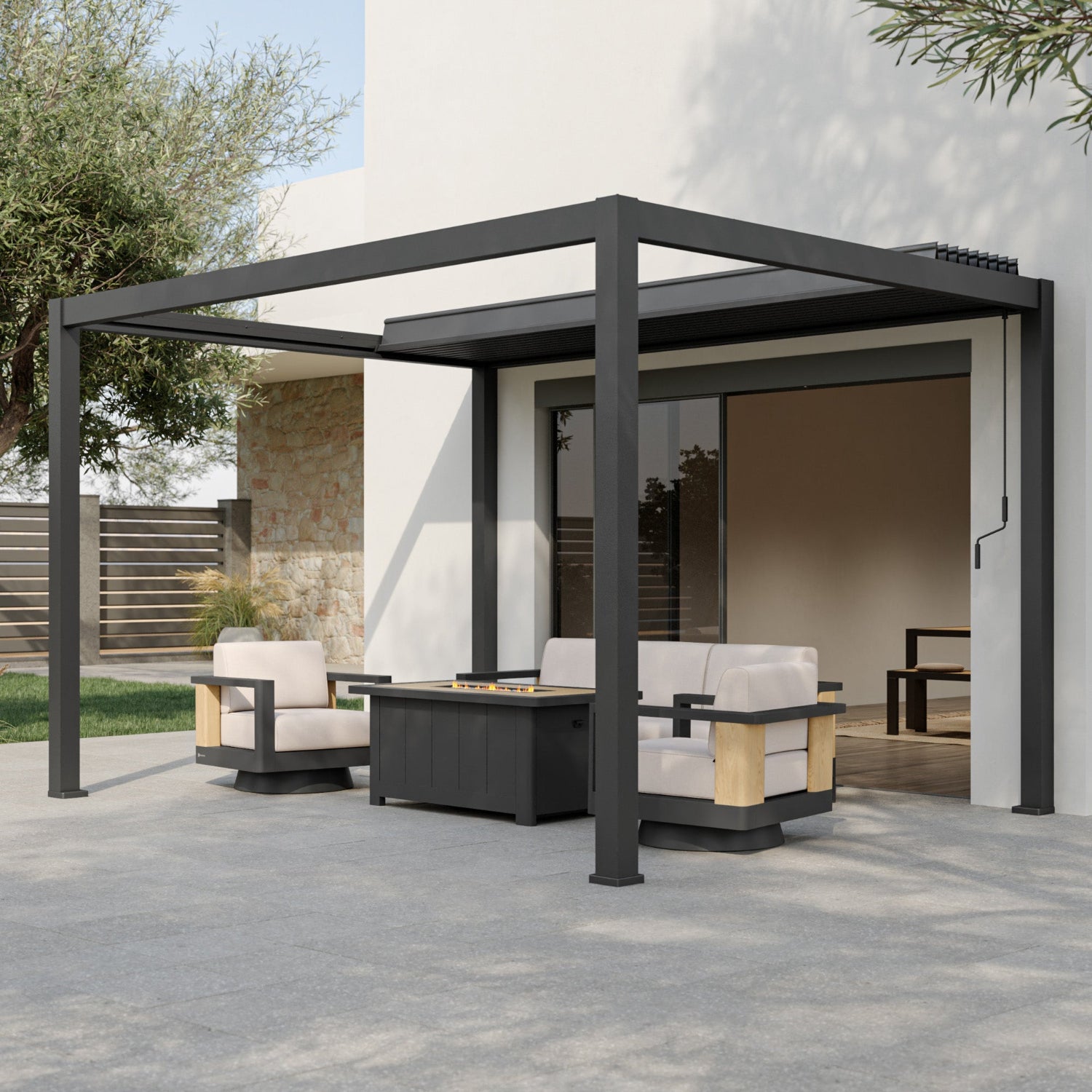
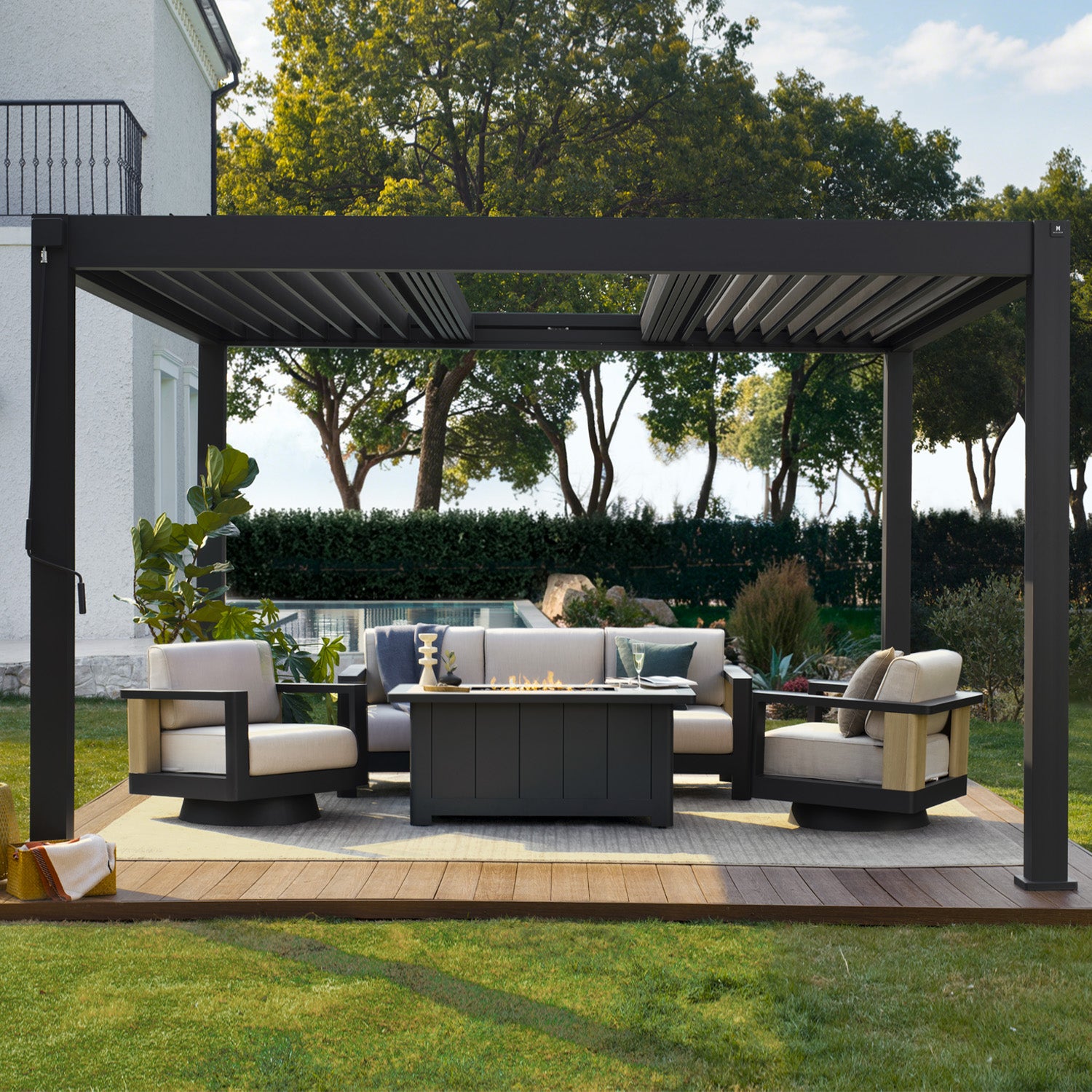
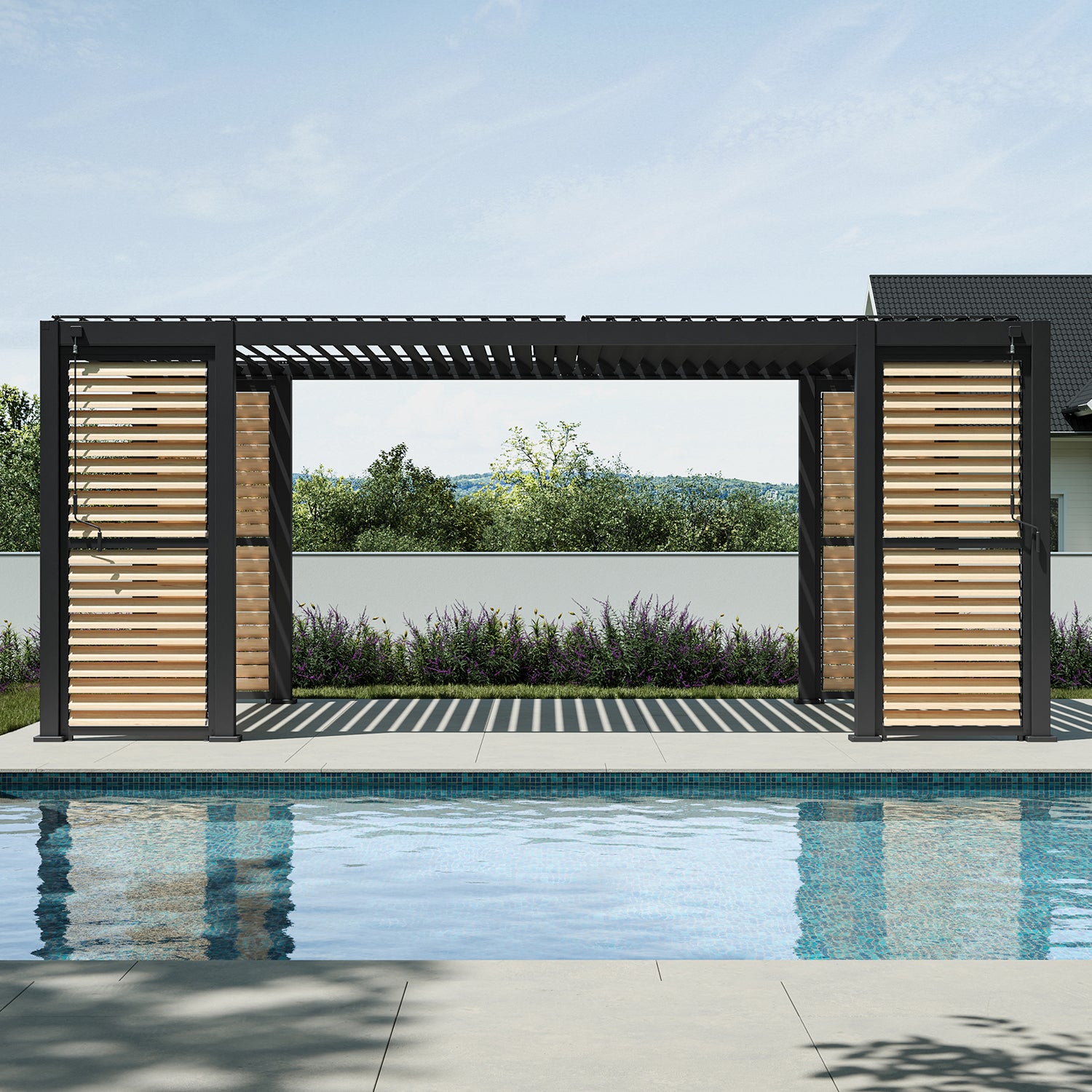
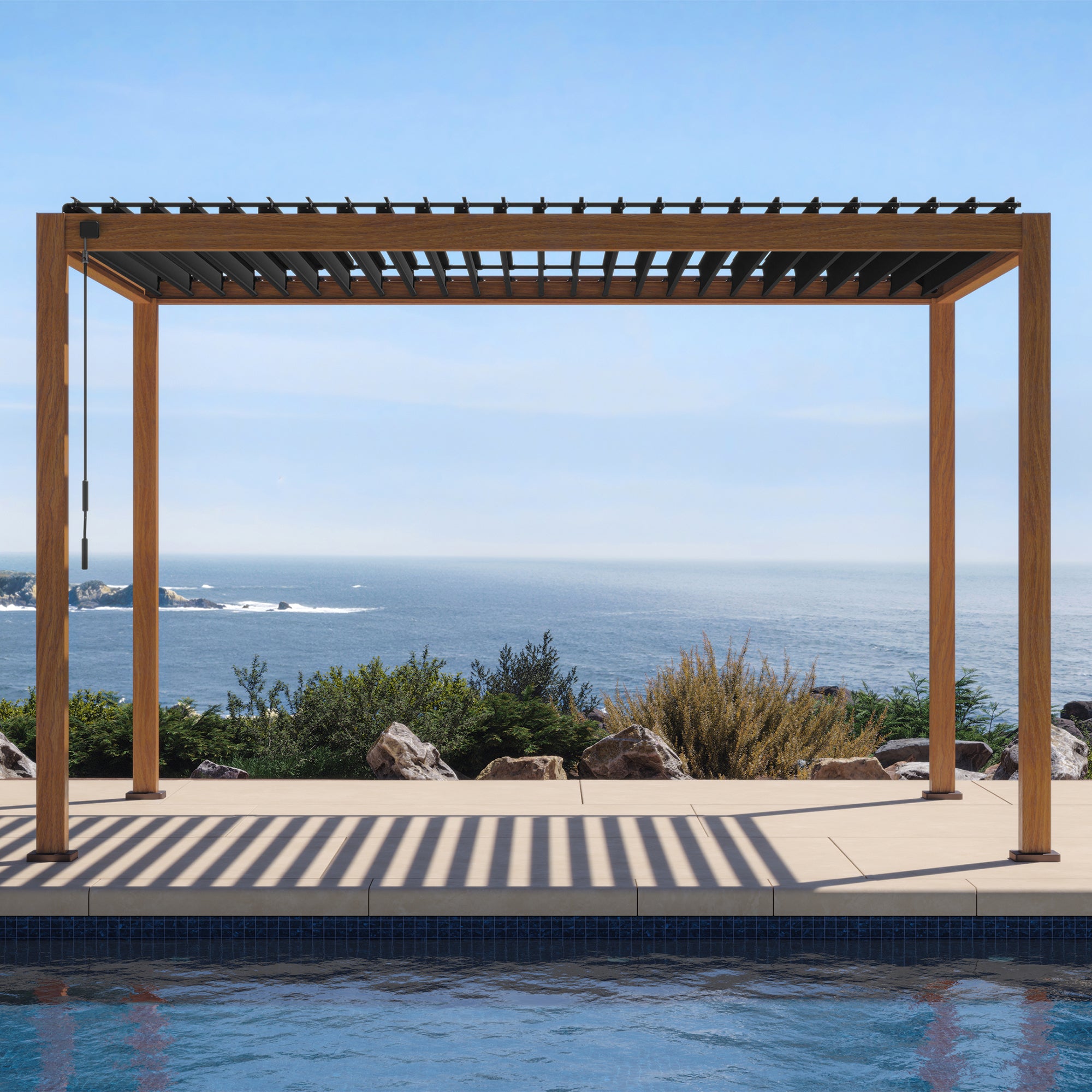
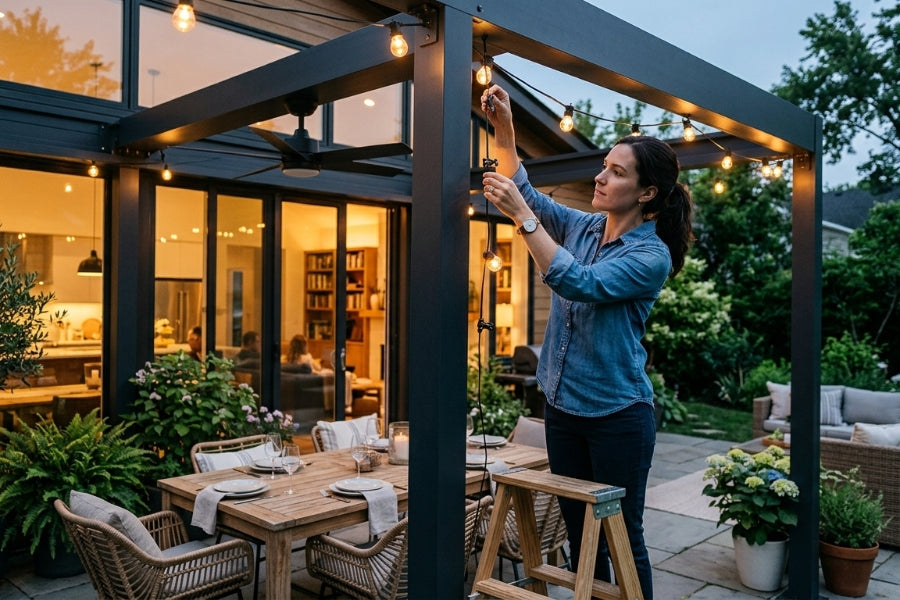
Want to hang string lights on a Mirador pergola? You usually can, as long as you keep them clear of the moving parts. Use removable outdoor-rated clips, rubber-backed magnetic hooks on steel surfaces, or a separate low-tension guide wire. Just make sure the lights do not touch the louvers, fan path, drains, or any moving accessories.
Also think of the pergola as a fixed outdoor structure, not just a frame for decor. Mirador Outdoor’s FAQ says its pergolas come with anchor bolts for flat concrete, but permits and load ratings still depend on the exact model and your local rules.
Mirador Pergola String Lights Setup
1. Anchor the pergola according to Mirador guidance and local site conditions.
2. Use outdoor-rated LED string lights, clips, cords, and timers.
3. Keep lights off louvers, gutters, screens, fan blades, and moving joints.
4. Route power to a GFCI-protected outdoor outlet with a drip loop.
5. Remove or secure loose decor before storms.

The cleanest setup is usually a soft rectangle of warm LEDs around the inside beam line, not a tight zigzag across the roof. A zigzag can look great in photos, but it adds more contact points, more sag, and more chances for a strand to rub against a louver when the roof moves.
Start with the structure. If the pergola is sitting loose on a patio, string lights should be the last thing on your mind. Wind loads act on the whole setup, and loose decor makes movement easier to notice. Mirador's FAQ says the supplied anchor bolts are for securing the pergola to a flat concrete surface, and it lists model-dependent wind ratings. Verify your exact model page or support answer before you treat any number as design data.
For the lighting itself, use LED cafe-style bulbs in the 2200K to 2700K range if you want a warm dinner-hour glow. Go brighter only where you need task lighting over a grill cart, bar, or dining table. For a finished look without plug-in strands, compare a pergola with lights before you buy accessories that might overlap with built-in lighting.
Clips, Magnets, and Fans
Clips work better than tape for most Mirador pergola lighting ideas. Use UV-rated outdoor light clips, silicone-coated S-hooks, or small removable clamps on fixed perimeter beams. Don't clamp to the louvers. Don't staple the cord. And don't drill into a post or beam unless Mirador support or a qualified installer approves the exact location.

Magnets are tempting because they're clean. One catch: magnets stick to steel, not aluminum. Mirador pergolas use aluminum and steel components, so test the exact spot with a small magnet before planning the full run. If it grabs, use rubber-backed magnetic hooks so the hook doesn't skate across the finish. If it doesn't grab, move on. Forcing a clamp where a magnet won't work is how small scratches become a bigger annoyance later.
Fans change the layout. If you're adding a Mirador AeroFlow fan or another approved fan, keep the light run on the perimeter and leave the whole blade path clear. Don't hang lights from the fan bracket, don't cross the fan bay with a guide wire, and don't assume "it clears when off" means it clears when air, vibration, and cord sag show up at the same time.
When the plan grows beyond lights, use Mirador's pergola accessories to keep screens, sliding doors, side walls, and the AeroFlow fan in the same plan as the lighting. A pull-down screen and a drooping light strand can fight for the same corner faster than you'd expect.
Concrete, Pavers, and Decks
A concrete slab is the most straightforward base for anchoring. Pavers and decks need more caution. A paver is often just a finish layer over sand, gravel, or a compacted base, so fastening to the paver itself may only fasten the pergola to something that can shift.

|
Surface |
Best lighting approach |
Anchoring caution |
|
Concrete slab |
Perimeter string lights with fixed clips |
Check slab condition, edge distance, drainage, and local code |
|
Pavers |
Removable clips, short runs, easy storm removal |
Don't treat loose pavers as structural anchors |
|
Wood or composite deck |
Perimeter lights, no cord through board gaps |
Don't anchor only to deck boards; check joists and load path |
|
Weighted planters |
Decor support only |
Don't use them as the main wind restraint |
Decks are where homeowners get tripped up. A deck board feels solid under your feet, but a pergola anchor needs a load path into framing that can handle uplift and lateral force. That may mean blocking, joist evaluation, waterproofing details, and a local permit review. At first it looks like a simple bolt question. It's really a structure question.
Weighted planters are fine for hiding a cord, softening a corner, or holding a small shepherd hook away from the pergola. They're not a substitute for anchoring a freestanding metal structure. A tall planter with wet soil can weigh a lot, then still slide, tip, or crack a paver when wind pulls the frame sideways.
Wind, Insurance, and Neighbors
A strand of lights doesn't weigh much. In wind, it behaves differently. The cord pulls, the bulbs swing, clips loosen, and one corner starts tapping the frame at 1 a.m. That sound is your early warning.

Use this rule: if you wouldn't leave the setup outside during a summer thunderstorm while you're away for the weekend, make it easier to remove. Clip-on lights with quick-release points beat permanent-looking DIY hardware for seasonal decor. For coastal homes, ridge-line lots, and open yards with no fence break, keep the layout lighter and simpler.
There's also the boring part nobody wants to discuss: property damage. If a loose pergola, planter, or strand hits a neighbor's car, fence, window, or roof edge, the question may turn into "was it installed according to the manual and local rules?" Ask your insurance agent how detached outdoor structures are treated on your policy. That's not fun patio talk, but it's better than learning after a claim.
Mirador's FAQ recommends keeping louvers open in extreme weather. For lights, we take the same practical stance: unplug them, remove loose spans where possible, and don't leave clips or cords acting like tie-down points.
Wiring Safety Checklist
Outdoor power deserves the same attention as the mounting. The Electrical Safety Foundation International says extension cords are temporary and should be rated for the products plugged into them, marked for indoor or outdoor use, and kept out of water or snow.

Before you plug in:
- Use outdoor-rated LED string lights, outdoor-rated extension cords, and a GFCI-protected outdoor receptacle.
- Match the cord rating to the light load; don't guess from cord thickness.
- Keep every connection off the ground with a weather-resistant cover.
- Add a drip loop so water falls below the plug instead of running into it.
- Replace strands with cracked sockets, frayed insulation, warm plugs, or flickering sections.
- Read the light manufacturer's limit for connected strands.
- Use clips instead of nails, staples, or wire that can pierce insulation.
- Put lights on an outdoor-rated timer so they turn off when the patio is empty.
The U.S. Fire Administration's holiday fire safety guidance notes that almost one-third of home Christmas tree fires are caused by electrical problems and advises people to inspect light strands and follow manufacturer limits. Different setting, same habit: inspect before you decorate.
Codes, Permits, and Pros
Mirador's FAQ says a permit isn't required in most cases, but it also recommends checking with your local government. Keep that wording. Don't turn it into "no permit needed." Cities, HOAs, coastal zones, historic districts, setbacks, and utility easements can all change the answer.

Call a pro when the pergola is on a deck, close to a property line, near a pool, tied into permanent electrical work, or mounted on pavers where the base condition is unclear. Also call when you want a fan, hardwired lighting, or an outlet added inside the pergola footprint. A licensed electrician can tell you what belongs on a GFCI circuit, what needs an in-use cover, and what shouldn't be powered by an extension cord at all.
For UGC photos, the best setups are easy to understand in one glance: warm perimeter lights, clear fan space, no sagging cords, and a tidy power route. Take one daytime photo of the mounting points and one nighttime photo from the seating area. If you share it with Mirador Outdoor, those practical shots help other homeowners copy the good parts without copying a hidden mistake.
FAQ
Do I need to anchor it?
Usually, yes. Mirador's FAQ says its pergolas come with anchor bolts for flat concrete, and anchoring is the safer baseline before adding lights, fans, screens, or decor. Verify the exact model manual and local site conditions.
Can I anchor on pavers?
Don't assume pavers are enough. Many pavers sit over sand or gravel, so they can shift under lateral force. Ask a local installer whether anchors need to pass through the pavers into concrete, footings, or another approved base.
Can I use weighted planters?
Use weighted planters for cord hiding or small decor, not as the main pergola anchor. They can slide, tip, crack paving, or fail in wind. If the pergola needs restraint, use a proper anchoring method.
Do I need a permit?
Mirador says permits aren't required in most cases, but local government has the final say. Check your city, county, HOA, and setback rules before installation, especially for decks, coastal areas, electrical work, or large attached layouts.
Can I hang lights without drilling?
Yes. Use outdoor-rated clips, rubber-backed magnetic hooks where steel is present, or removable ties on fixed beams. Avoid drilling into posts, louvers, gutters, or fan hardware unless Mirador support or a qualified installer approves that exact spot.
For a safe, polished patio, start with the structure, then layer in light. Mirador Outdoor can help you plan pergola lighting, accessories, and customer photo ideas that look good at dinner time and still make sense when the weather changes.