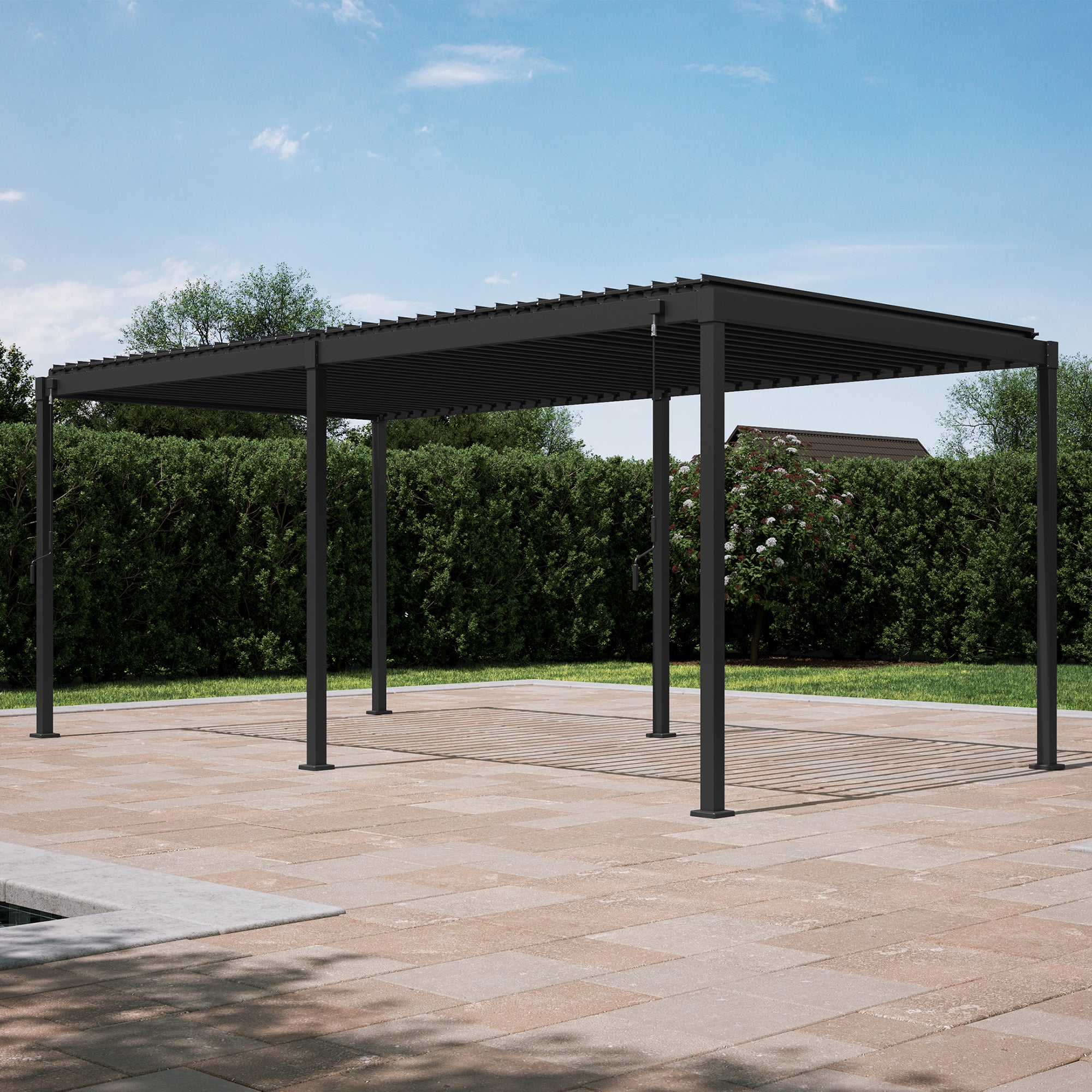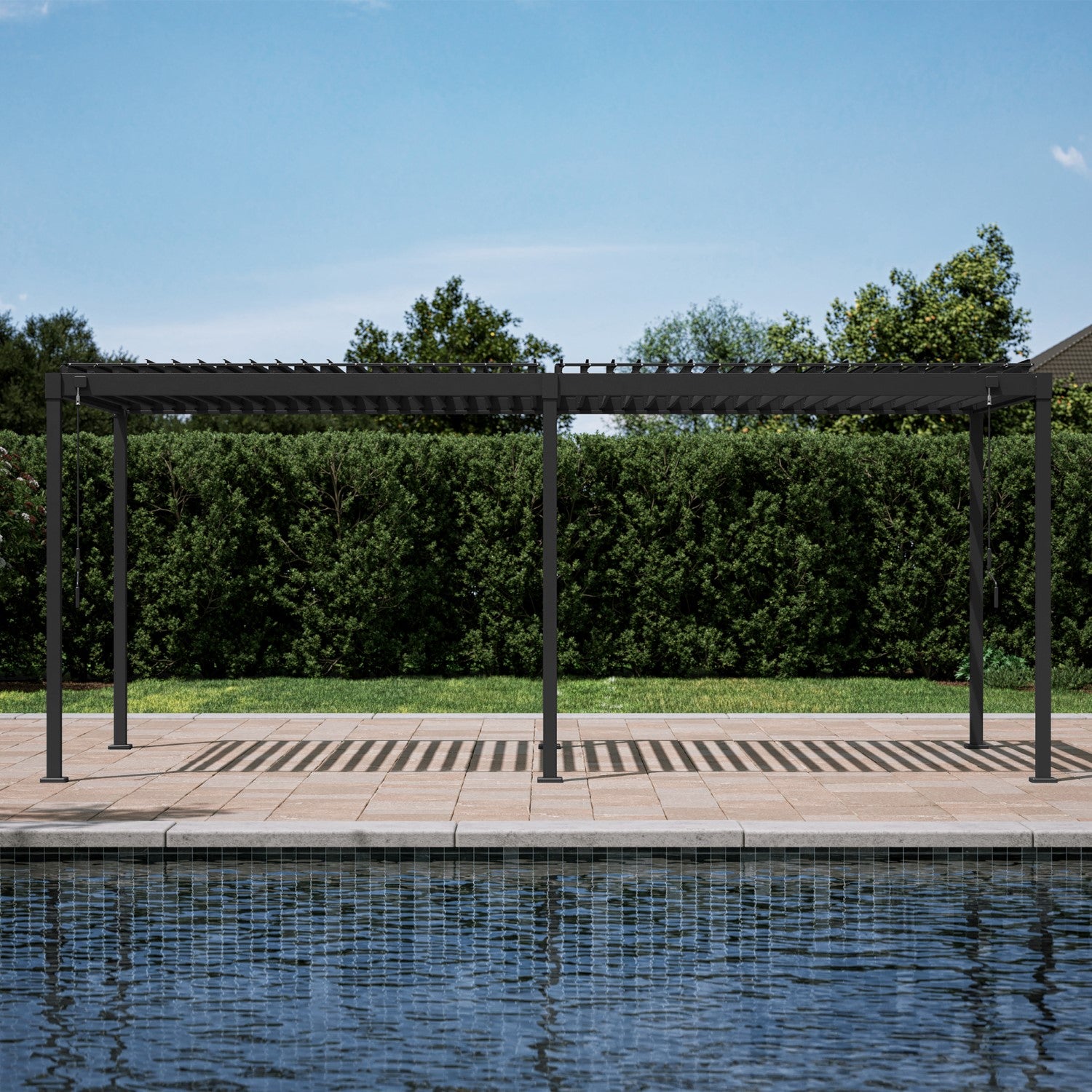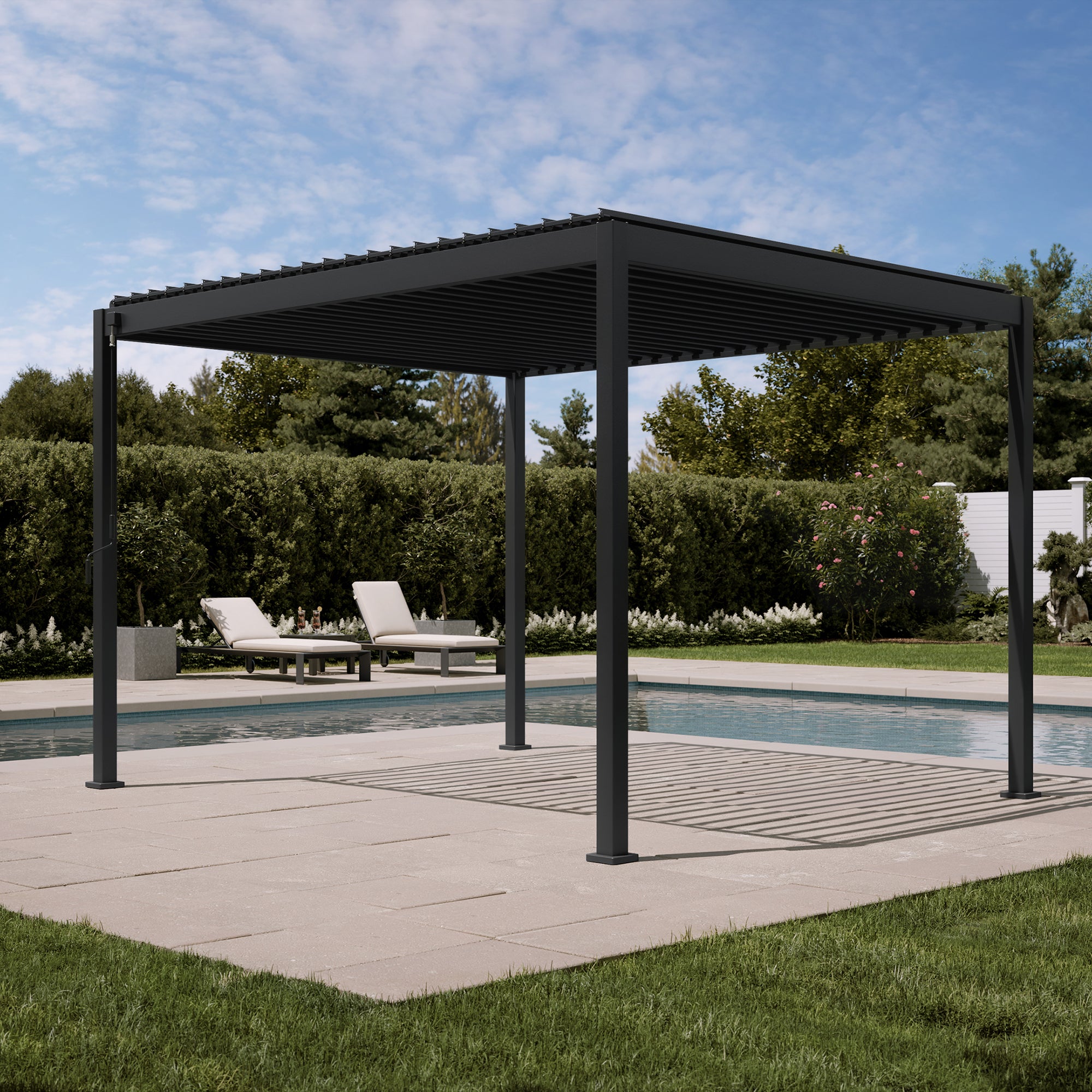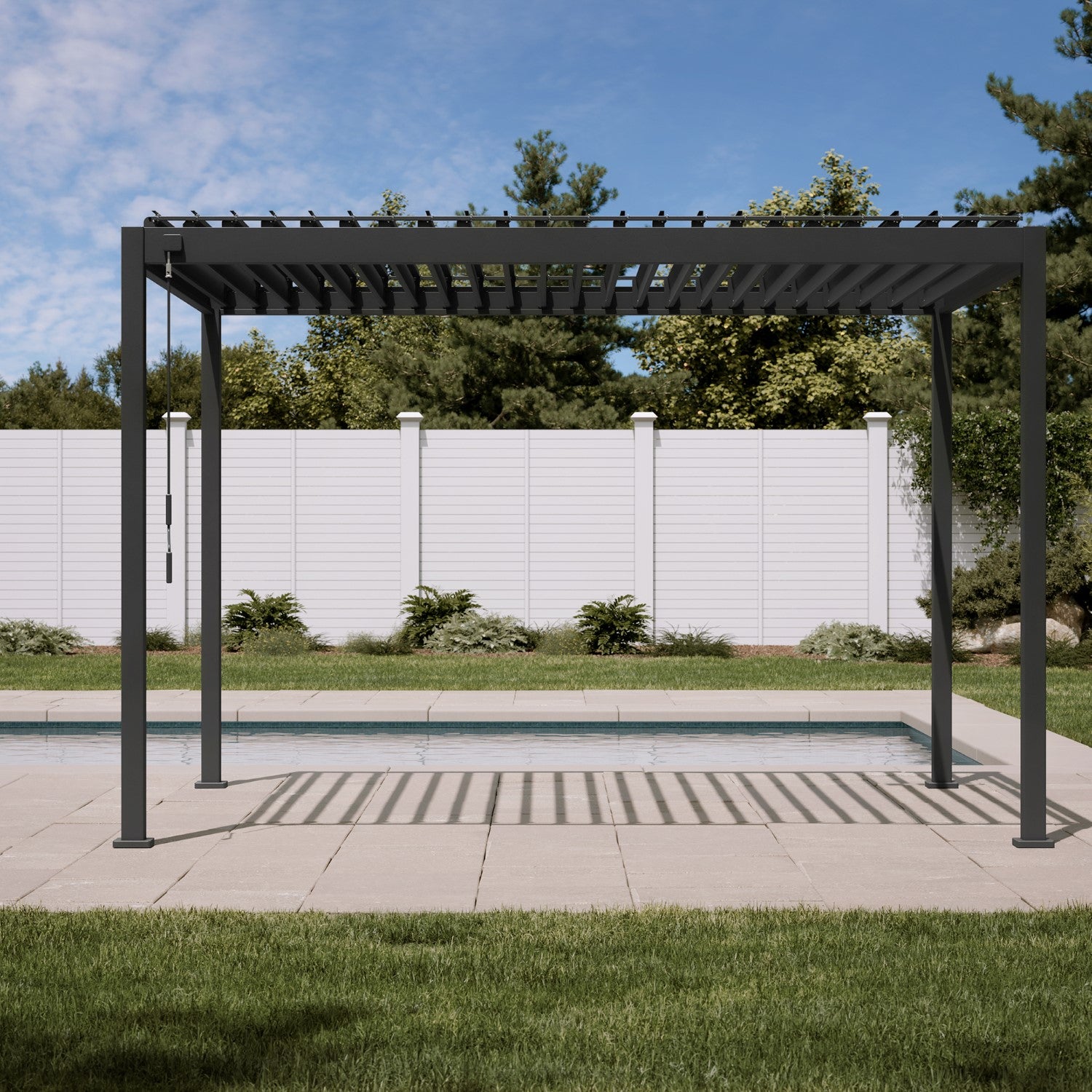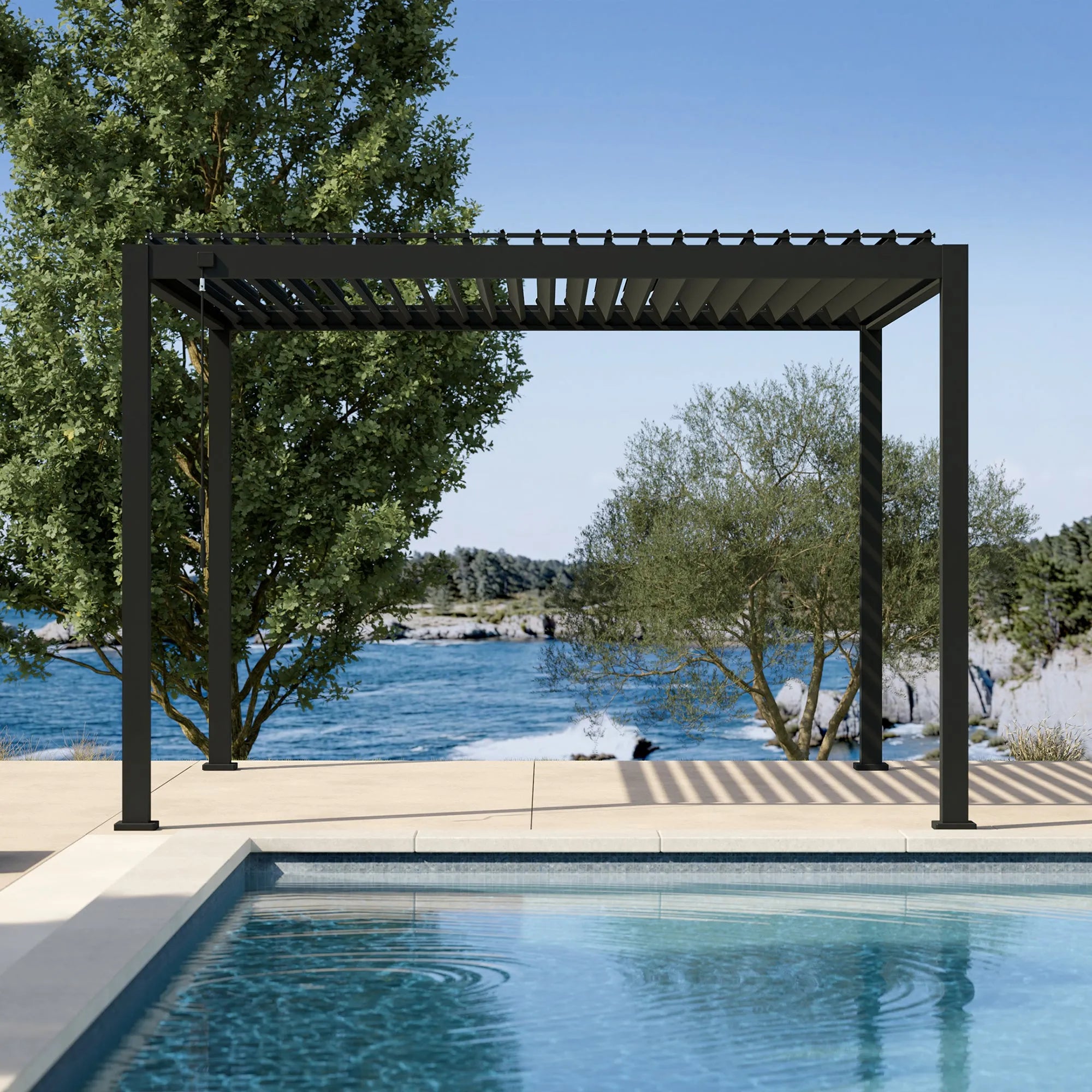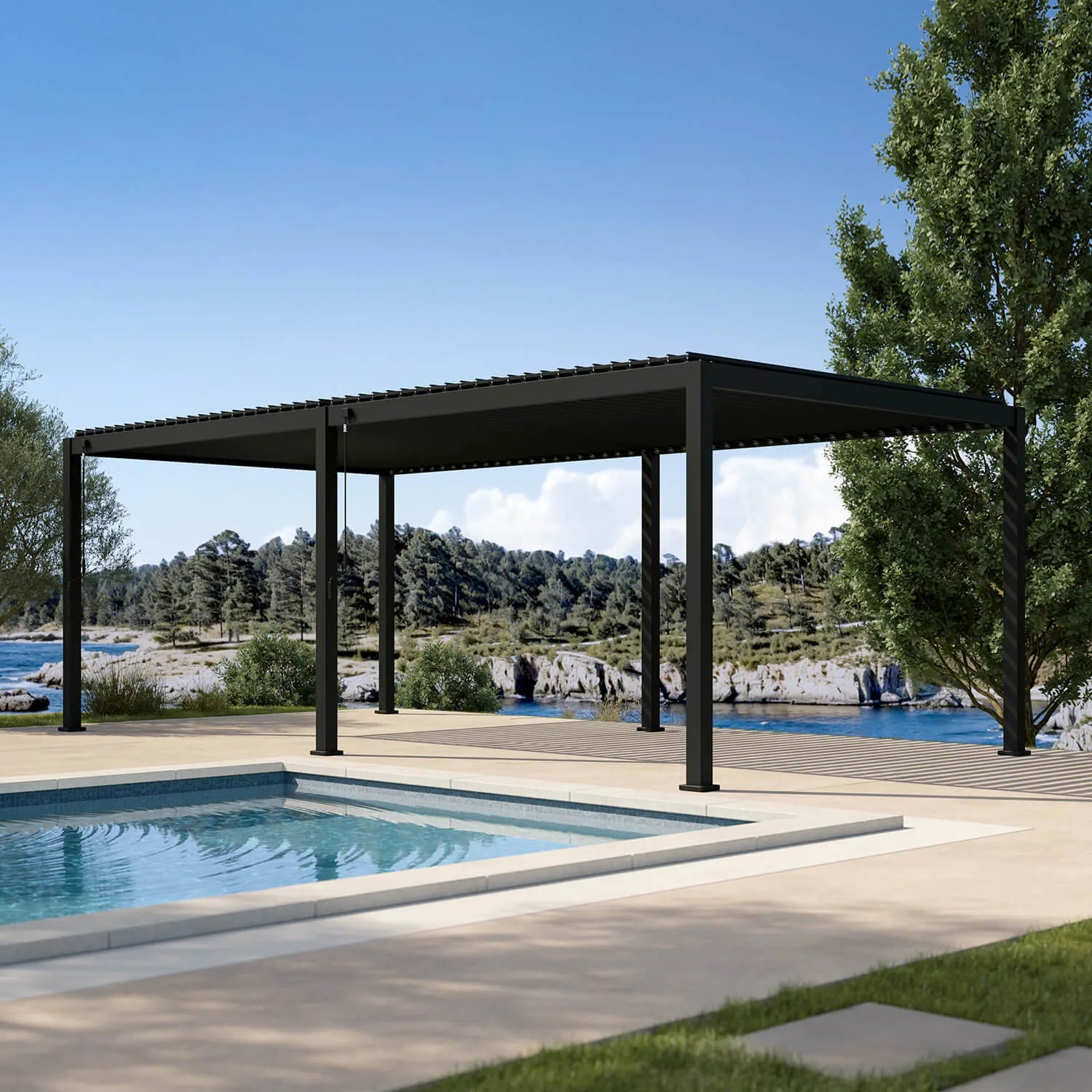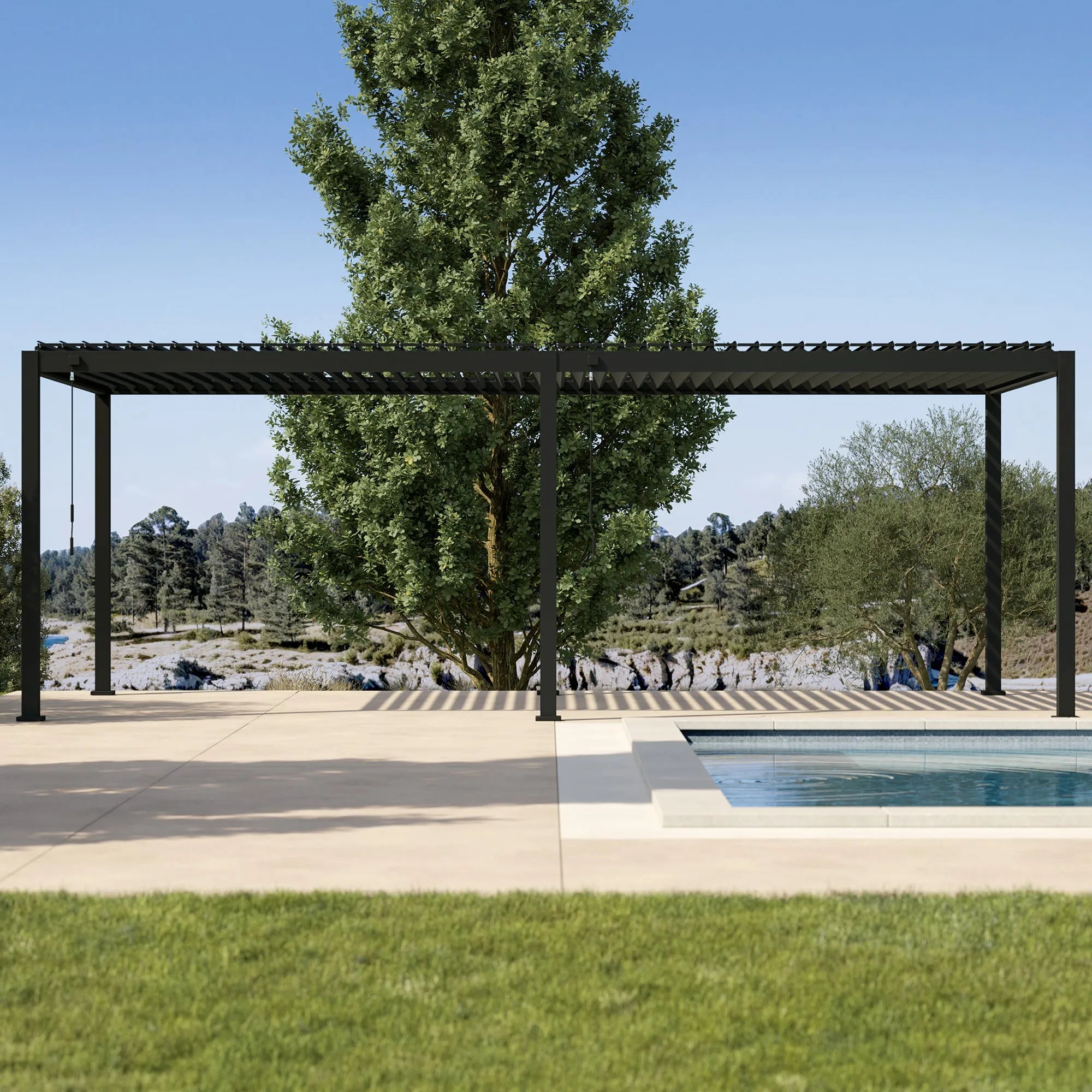

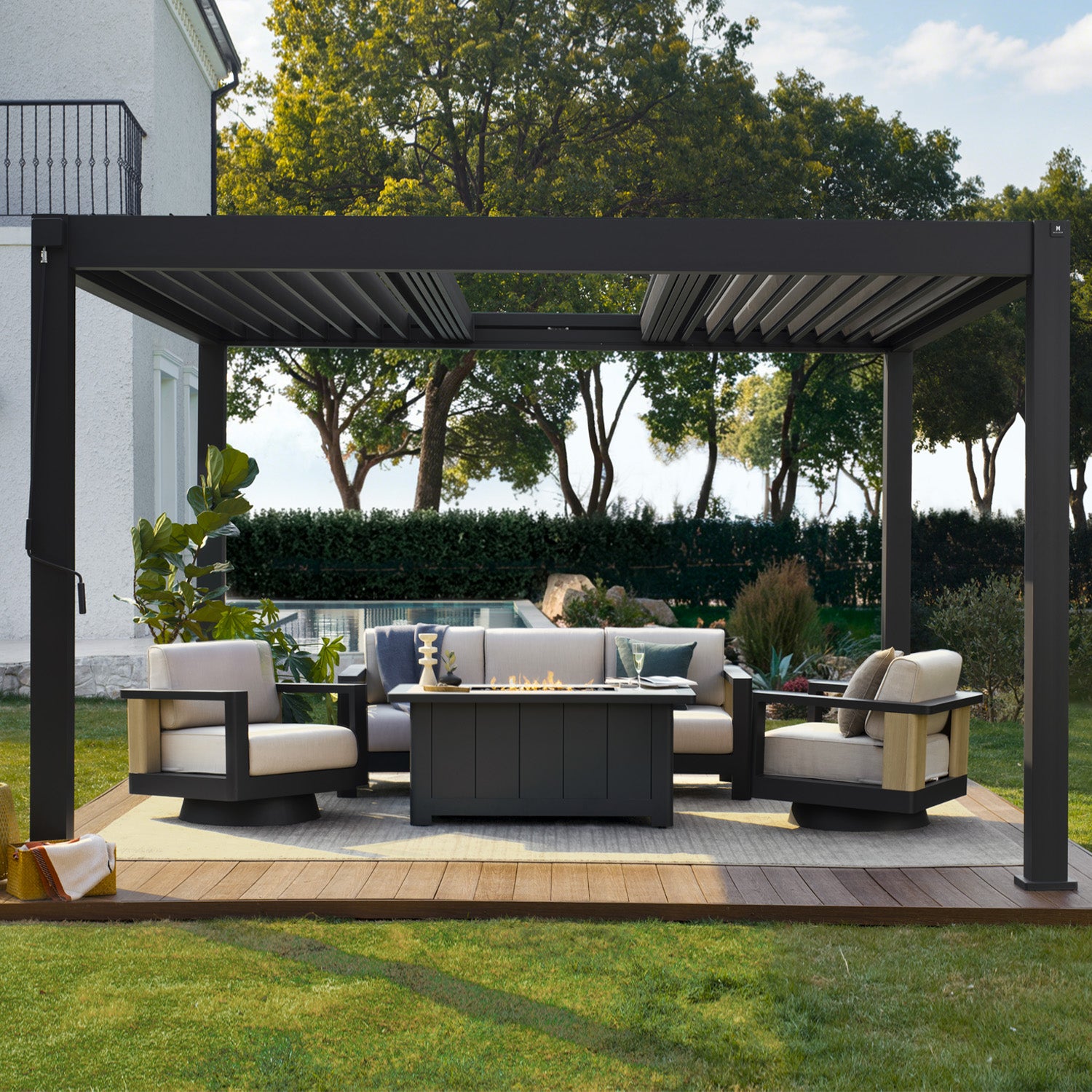




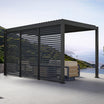
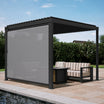

A pergola ceiling fan can make an outdoor dining area, lounge, or semi-enclosed patio feel more comfortable in hot weather. But installing a fan outdoors is not the same as hanging a decorative light or plugging in a small device. A ceiling fan adds weight, movement, vibration, electrical load, blade clearance, and weather exposure to the pergola.
The safest answer is simple: you may be able to install a ceiling fan on a pergola, but only after confirming structure, mounting, clearance, outdoor rating, wiring, GFCI protection, and local code. For hardwired fans, use a licensed electrician.
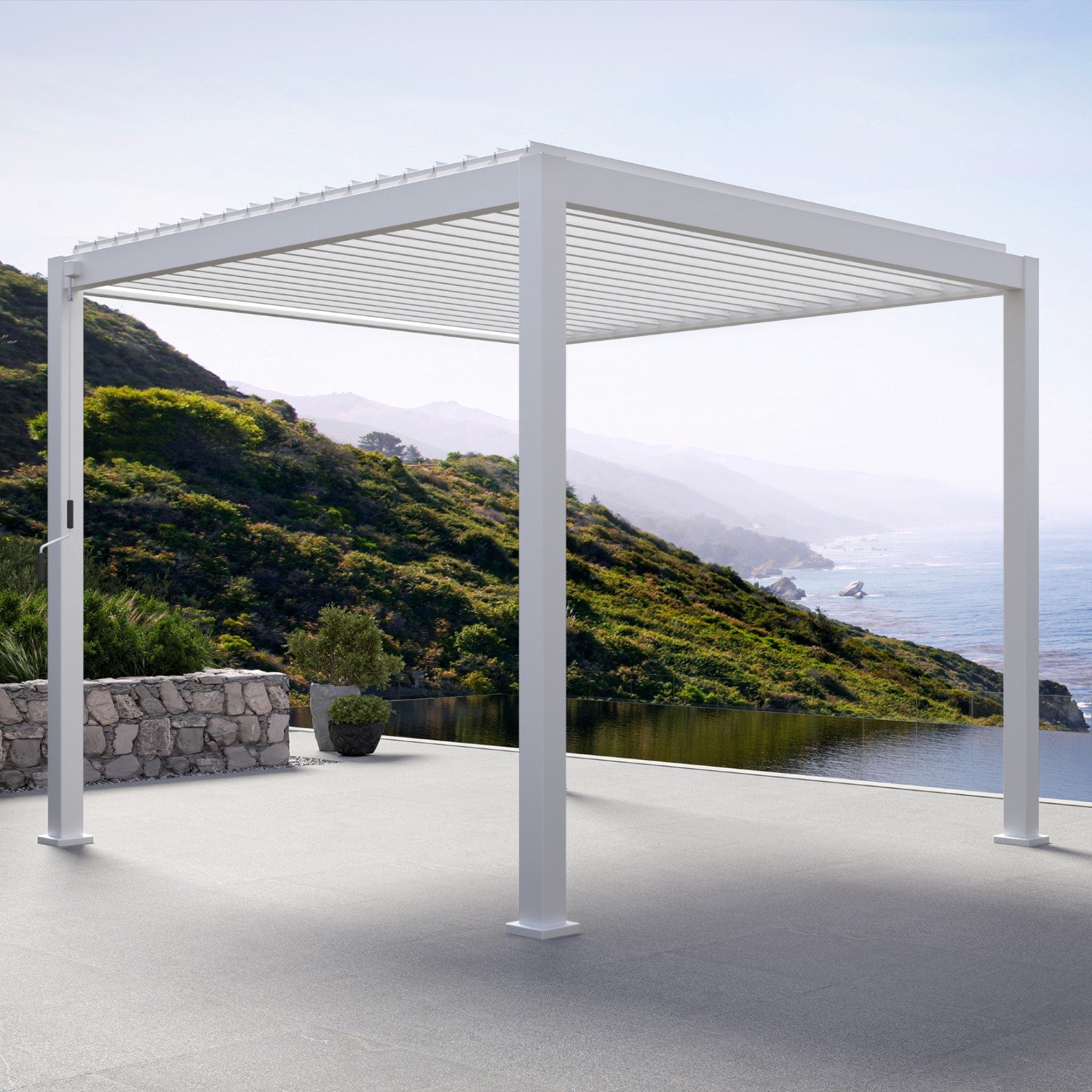
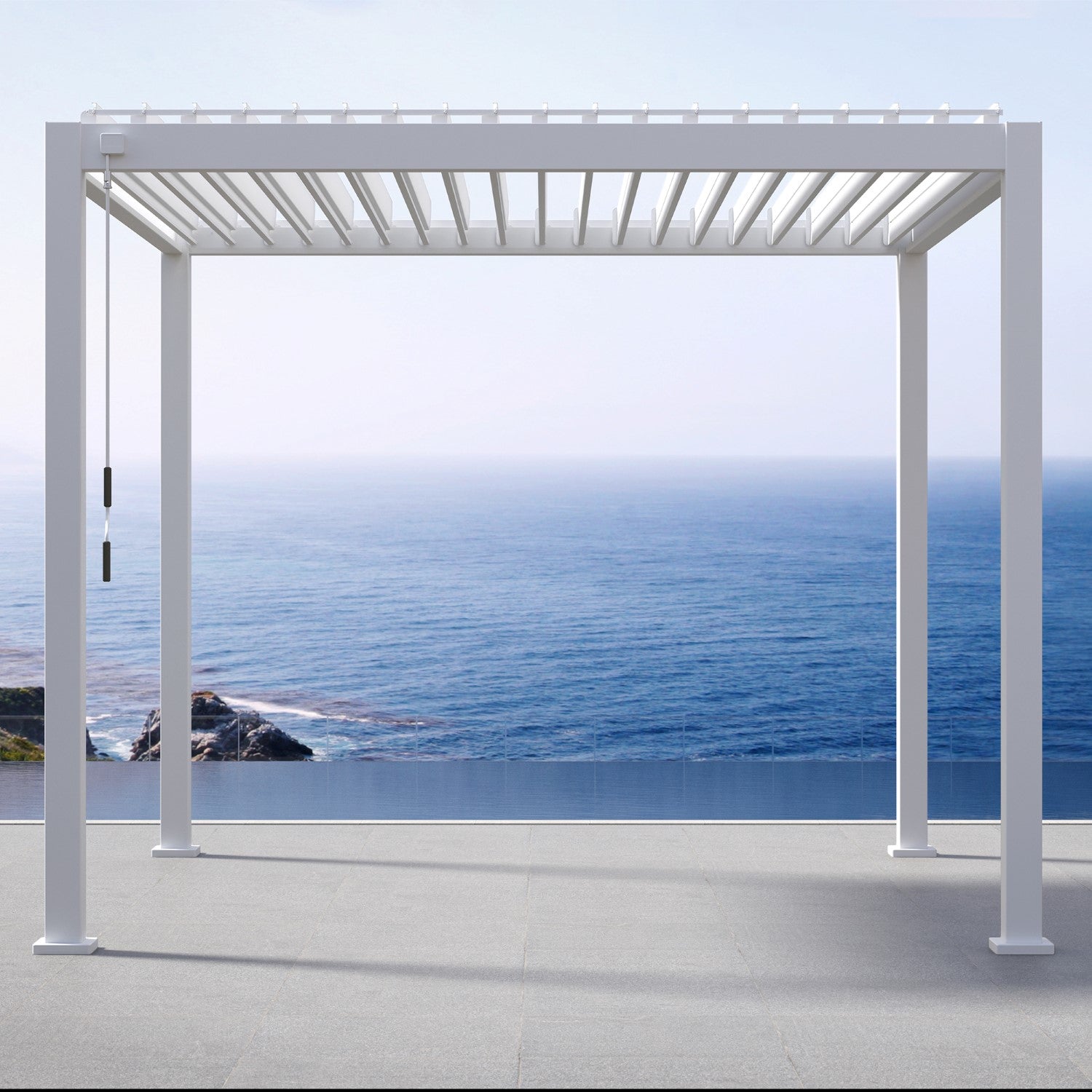
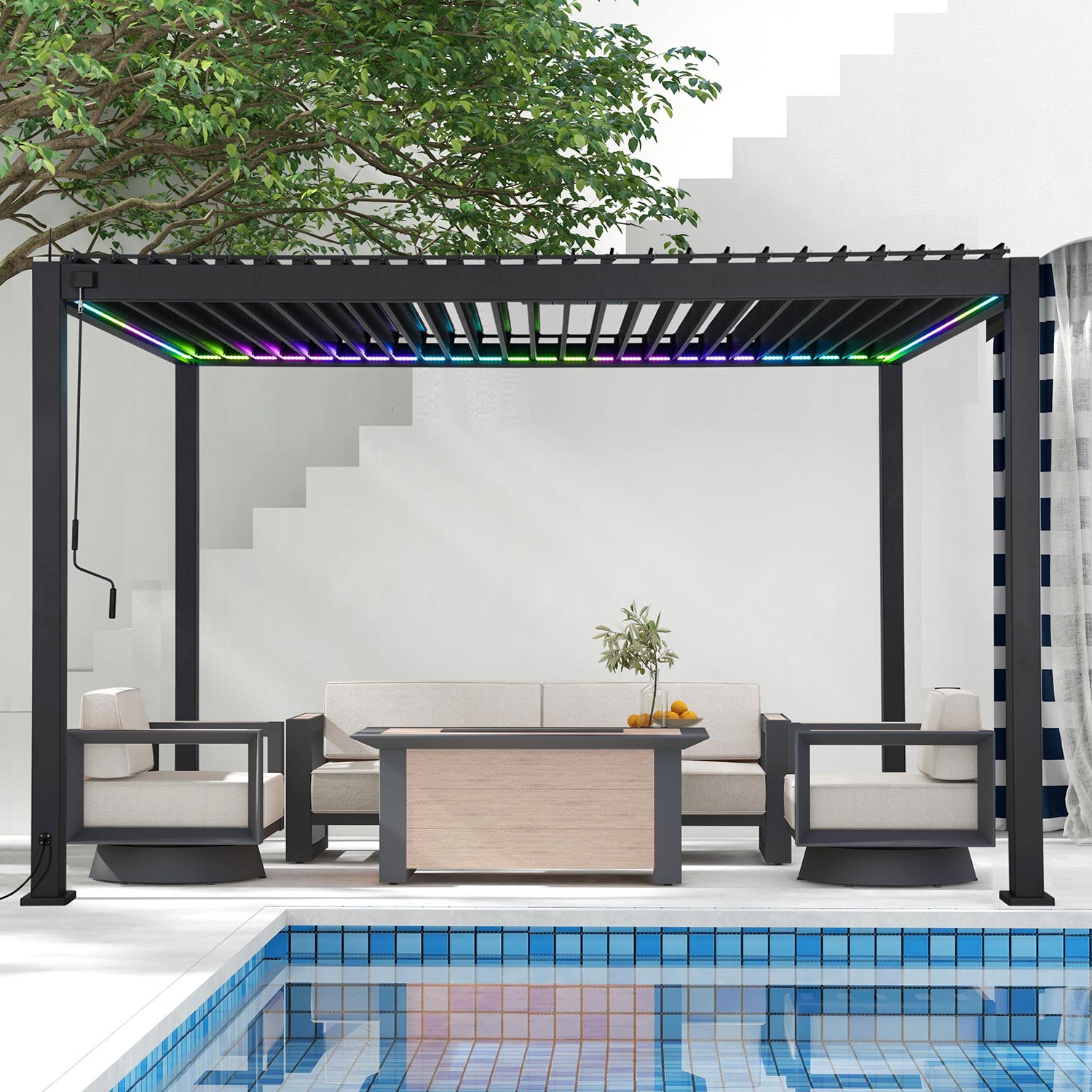
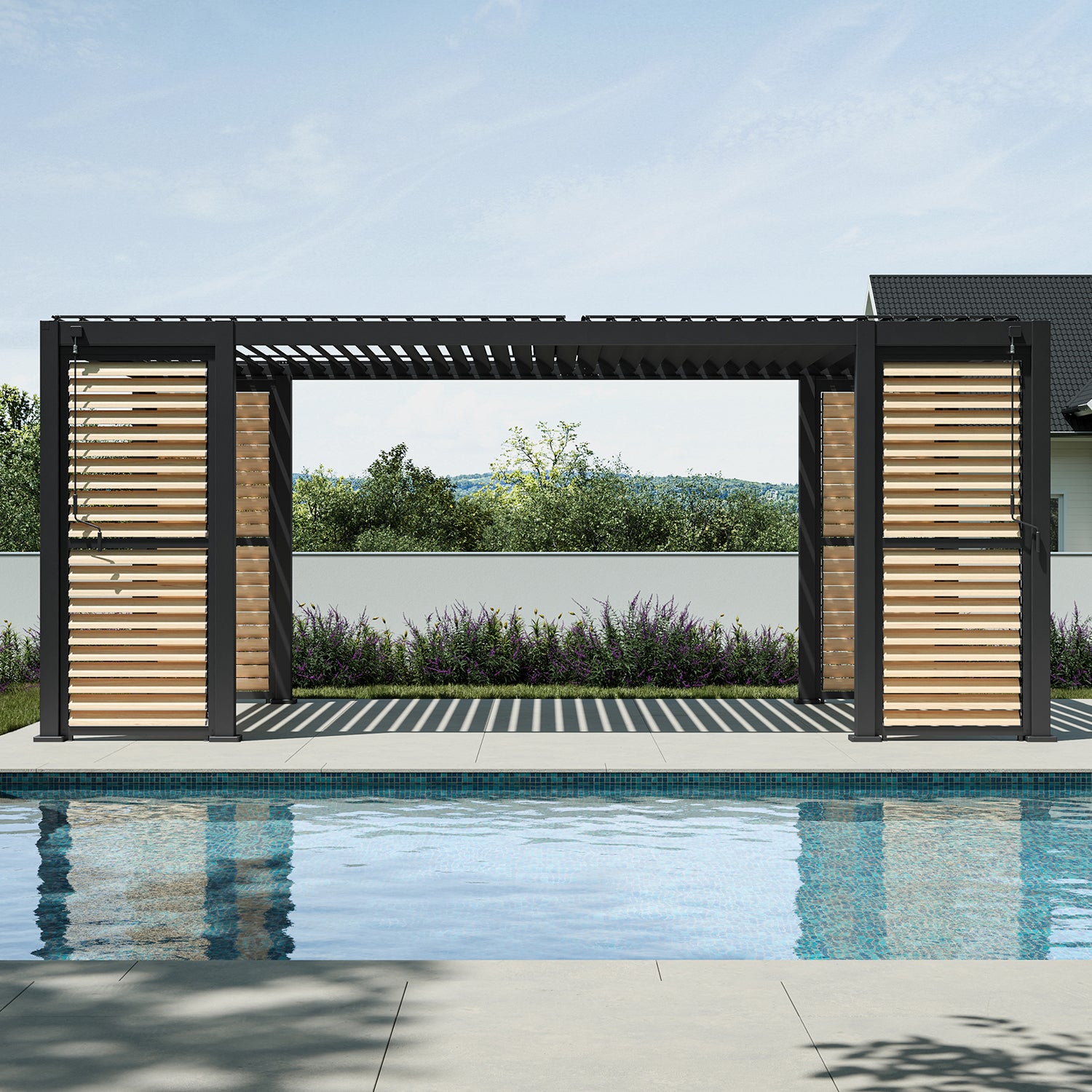
For Mirador owners, it is also important to separate three different ideas: a louvered pergola can help with shade and airflow, a powered model such as the 111S E-Motion can include lighting and remote-controlled louvers, and the 111 power strip can support compatible plug-in use within its rating. None of those automatically means a ceiling fan can be mounted anywhere on the structure.

Quick Answer
Before installing a ceiling fan outdoors, confirm:
- The fan is rated for the outdoor exposure
- The pergola can support the fan's weight and vibration
- The mounting point is approved for a moving fan load
- Blades have safe clearance from people, posts, walls, louvers, screens, and doors
- The fan will not interfere with the louvered roof
- Wiring is protected, weather-appropriate, and code-compliant
- Outdoor power is GFCI-protected
- A licensed electrician reviews hardwired work
If any of these are uncertain, do not install the fan yet. Plan the electrical and structural work first.
Ceiling Fan vs Portable Outdoor Fan
Not every patio needs a ceiling fan. Sometimes the safer, simpler choice is a portable outdoor-rated fan used with proper outdoor power.
|
Option |
Best For |
Pros |
Watchouts |
|
Ceiling fan |
Long-term dining or lounge zone |
Clean overhead airflow, no floor space used |
Requires structure, mounting, clearance, and wiring |
|
Wall-mounted outdoor fan |
Side airflow in a semi-enclosed space |
Keeps floor clear, easier to aim |
Needs rated mounting surface and wiring |
|
Portable outdoor fan |
Occasional use or testing airflow |
Flexible and lower commitment |
Cords, trip hazards, GFCI, storage, weather exposure |
|
Louvered roof airflow only |
Mild climates or breezy patios |
No separate fan installation |
May not be enough on still, humid days |
If you are unsure whether a ceiling fan is worth the effort, test the patio first with a portable outdoor-rated fan. If airflow makes a clear difference and the patio is used often, then a permanent fan may be worth planning.
Start With the Pergola: Is It Fan-Ready?
A pergola beam may look strong, but a ceiling fan is a dynamic load. It rotates, vibrates, starts, stops, and can move in outdoor wind. That is different from a static decorative accessory.
Before choosing a fan, confirm:
- Whether the pergola manufacturer allows fan mounting
- Which beam or mounting point can be used, if any
- Whether extra reinforcement is required
- Whether drilling or attaching hardware affects warranty
- Whether the fan location leaves room for louvers to move
- Whether the pergola is anchored strongly enough for added vibration
For Mirador pergolas, start with the product manual, help center, and current accessory information. Mirador offers powered pergolas, lighting, power accessories, screens, doors, and other outdoor-room accessories, but a ceiling fan should still be treated as a separate structural and electrical project unless the exact model documentation says otherwise.
Wet-Rated vs Damp-Rated: Which Outdoor Fan Do You Need?
Outdoor fans are commonly described as damp-rated or wet-rated.
A damp-rated fan is intended for covered locations where moisture and humidity may be present, but direct rain or water exposure is not expected. A wet-rated fan is designed for outdoor locations where water can reach the fan. Hunter Fan's outdoor fan guidance uses a simple rule: if rain can reach the fan, choose wet-rated; if the fan is fully covered, damp-rated may be sufficient.
For a pergola, this decision can be tricky because exposure changes:
- Louvers may be open during clear weather
- Wind-driven rain can come through side openings
- Screens or glass doors may reduce exposure but do not make the pergola indoors
- Condensation, humidity, and cleaning water can still reach electrical parts
- The fan may sit under a roof that opens and closes
When in doubt, choose the more protective outdoor rating and ask the electrician to verify the installation environment. Never install an indoor-only fan on an outdoor pergola.
Why a Louvered Roof Changes the Fan Plan
A louvered pergola is not a flat ceiling. The roof opens, closes, angles, drains water, and may include moving components. That makes fan placement more complicated.
Check:
- Blade clearance below the louvers
- Downrod length and fan body height
- Whether louvers can open fully without touching the fan
- Whether rain drainage could drip near the fan or wiring
- Whether the fan blocks roof operation, lighting, or sensors
- Whether the fan creates unwanted vibration in the roof system
A fan should complement the pergola's airflow. It should not become an obstacle to the roof.
Clearance: Blades, People, Posts, and Accessories
Clearance is one of the most important fan checks. Hunter's installation guidance notes that fan blades should be at least 7 feet from the floor and at least 30 inches from walls or other objects. For a pergola, treat posts, beams, screens, sliding doors, glass panels, heaters, curtains, and open louvers as possible obstructions.
Before choosing fan size or downrod length, measure:
- Finished floor to underside of roof
- Lowest point of open louvers
- Fan body height
- Downrod length
- Blade span
- Distance to posts and beams
- Distance to sliding doors, glass doors, pull-down screens, or shutter walls
- Distance to seating, dining tables, and walkways
If the pergola is low, a flush-mount or low-profile fan might seem tempting, but it still needs to be outdoor-rated and safely supported. Do not solve a height problem by using a fan that is too close to moving louvers or too low for people below.
Wiring: Why Ceiling Fans Usually Need a Licensed Electrician
A ceiling fan is usually a hardwired fixture. That means electrical work, not just accessory placement.
Use a licensed electrician for:
- New outdoor circuits
- Fan-rated junction boxes or mounting boxes
- Switches, remotes, or smart controls
- Hardwired lighting/fan combinations
- Wiring routed along or through the pergola
- Any installation near pools, spas, kitchens, or wet areas
- GFCI and grounding checks
Avoid step-by-step DIY wiring advice for pergolas. Outdoor wiring needs to match local code, manufacturer instructions, environmental exposure, and the actual structure.
GFCI and Outdoor Electrical Safety
Outdoor electrical use should be treated as water-adjacent. The Electrical Safety Foundation International explains that GFCIs help protect against shock where water and electricity may come into contact, including outdoor areas. ESFI also recommends that outdoor extension cords and electrical products be rated for outdoor use and that extension cords not be used as permanent wiring.
For a pergola fan plan, that means:
- Use GFCI-protected outdoor power
- Use outdoor-rated products only
- Do not run cords through moving louvers
- Do not hide extension cords inside beams, floors, walls, or ceilings
- Do not pinch cords under doors, screens, panels, or furniture
- Do not connect extension cords together
- Do not overload outlets or power strips
- Replace damaged cords or plugs immediately
- Use a qualified electrician for permanent wiring
If the patio has frequent water exposure, a pool, a spa, or an outdoor kitchen, electrical planning becomes even more important.
Can a Pergola Power Strip Run a Fan?
It depends on the fan type and the electrical load, but this question should be separated into two parts: power and installation.
For compatible 111 Series setups, Mirador’s 111 power strip adds convenient outdoor power access. It includes a 5 ft cable, USB-A ports, and one USB-C port, with ratings of 1875W maximum power, 125V voltage, and 15A maximum current.
That can be helpful for device charging or approved plug-in outdoor equipment within the listed rating. But a power strip does not solve ceiling fan mounting, hardwiring, blade clearance, vibration, or code requirements. A plug-in fan is different from a ceiling fan. A permanent overhead fan should be reviewed as a professional installation.

Fan With Light or Separate Lighting?
Outdoor ceiling fans often come with light kits, but that does not always make them the best choice for a pergola.
Choose a fan with a light if:
- The fan location is centered over a dining or lounge area
- The light kit is outdoor-rated for the same exposure
- The wiring is professionally planned
- The light output matches the patio use
- The fan and light controls are easy to access
Choose separate lighting if:
- The fan will not sit in the ideal lighting location
- You want softer perimeter lighting
- The pergola already has integrated lighting
- You want to avoid putting all comfort features into one fixture
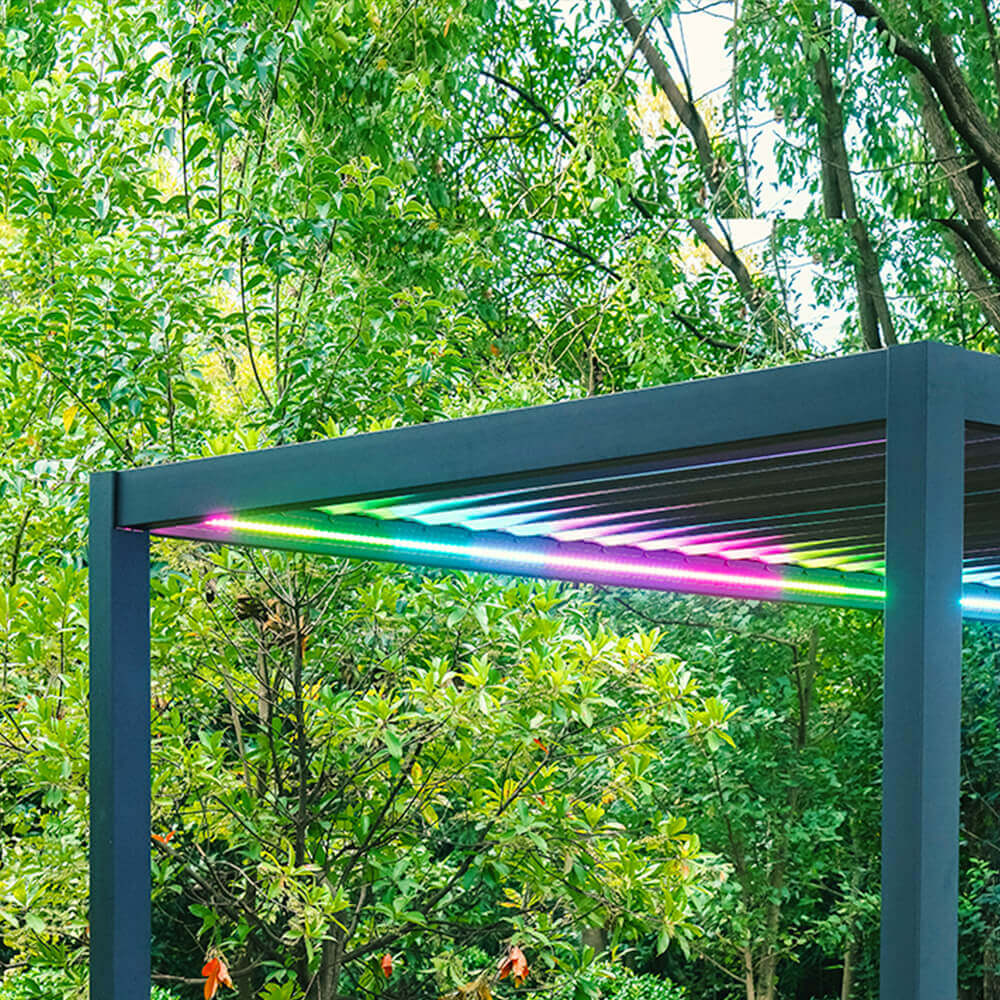
For example, a powered pergola such as the Mirador 111S E-Motion includes integrated LED lighting and remote-controlled louvers. In that case, the fan decision can focus on airflow rather than trying to solve lighting and airflow in one fixture.

Screens, Glass Doors, and Shutter Walls Change Airflow
Side accessories can make a fan more useful or less effective.
Pull-down screens can reduce insects and low-angle sun, but they also change airflow. Glass doors can block wind and create a more room-like patio, but too many closed sides can trap heat. Shutter walls can improve privacy while still allowing some airflow, depending on the design.
Plan the fan together with:
- Pull-down screens
- Sliding glass doors
- Sliding shutter doors
- Fixed or adjustable privacy walls
- Outdoor curtains
- Furniture placement
- Grill and heater clearances
If you close several sides, the fan may become more important for comfort. But the electrical rating and ventilation plan also become more important.

Do Not Install a Fan Above a Grill or Heater Without Review
Fans, grills, and heaters all affect heat, airflow, and safety. A ceiling fan above a cooking area can spread smoke, grease, heat, or flame disturbance. A fan near a heater can interfere with manufacturer clearances and airflow requirements.
If the pergola includes an outdoor kitchen, grill, fire feature, or heater, ask the appliance manufacturer and electrician before choosing fan placement. Keep the fan over seating or dining whenever possible, not directly over cooking or heating equipment.
What Not to Do
- Do not install an indoor fan outdoors.
- Do not assume a pergola beam is fan-rated.
- Do not hang a fan where louvers, screens, doors, or curtains can touch it.
- Do not use extension cords as permanent wiring.
- Do not run cords through posts, beams, floors, doors, windows, or moving roof parts.
- Do not ignore GFCI protection.
- Do not exceed the rating of a power strip or circuit.
- Do not install a fan near a pool, spa, grill, or heater without professional review.
Pergola Ceiling Fan Checklist
Use this checklist before buying a fan:
- Pergola model and series confirmed
- Manufacturer guidance checked
- Fan is damp-rated or wet-rated for the exposure
- Fan weight and vibration reviewed
- Approved mounting point confirmed
- Fan-rated box or support planned
- Blade clearance from floor confirmed
- Clearance from walls, posts, louvers, screens, and doors confirmed
- Louver movement tested in open and closed positions
- Drainage path checked
- GFCI protection planned
- Hardwired electrical work assigned to a licensed electrician
- Local code and HOA requirements reviewed
- Screens, doors, lighting, heaters, and furniture layout considered
Bottom Line
A pergola ceiling fan can improve outdoor comfort, but it is one of the upgrades that deserves careful planning. The fan must be rated for the outdoor environment, mounted to an approved support, clear of people and moving parts, and wired safely with outdoor electrical protection.
For Mirador patios, start with the pergola's own comfort features: adjustable louvers, integrated lighting on powered models, and compatible power or side accessories. Then decide whether a fan is truly needed. If the answer is yes, treat it as a professional installation, not a simple decor project.
Explore Mirador louvered pergolas, compare powered options such as 111S E-Motion, and review pergola accessories before planning a fan, lighting, or power layout.
FAQ
Can you install a ceiling fan on a pergola?
Sometimes, but only if the pergola structure, mounting point, blade clearance, outdoor rating, wiring, GFCI protection, and local code requirements are all addressed. Hardwired fans should be installed by a licensed electrician.
What kind of ceiling fan do I need for a pergola?
Use an outdoor-rated ceiling fan. Choose wet-rated if rain or direct water can reach the fan. Damp-rated may be suitable only for covered locations protected from direct water, depending on the exact exposure.
Can I use an indoor ceiling fan under a pergola?
No. Indoor fans are not designed for outdoor humidity, water exposure, temperature changes, or corrosion. Use a fan rated for the outdoor environment.
Does a louvered pergola need a ceiling fan?
Not always. Adjustable louvers already help manage sun and airflow. A fan may be helpful in hot, still, humid, or semi-enclosed patios, but it should be planned around roof movement and clearance.
Can I power a ceiling fan from a pergola power strip?
A plug-in outdoor fan may be possible within the power strip's rating, but a permanent ceiling fan usually requires a hardwired, professionally planned installation. A power strip does not solve mounting, clearance, or code requirements.