

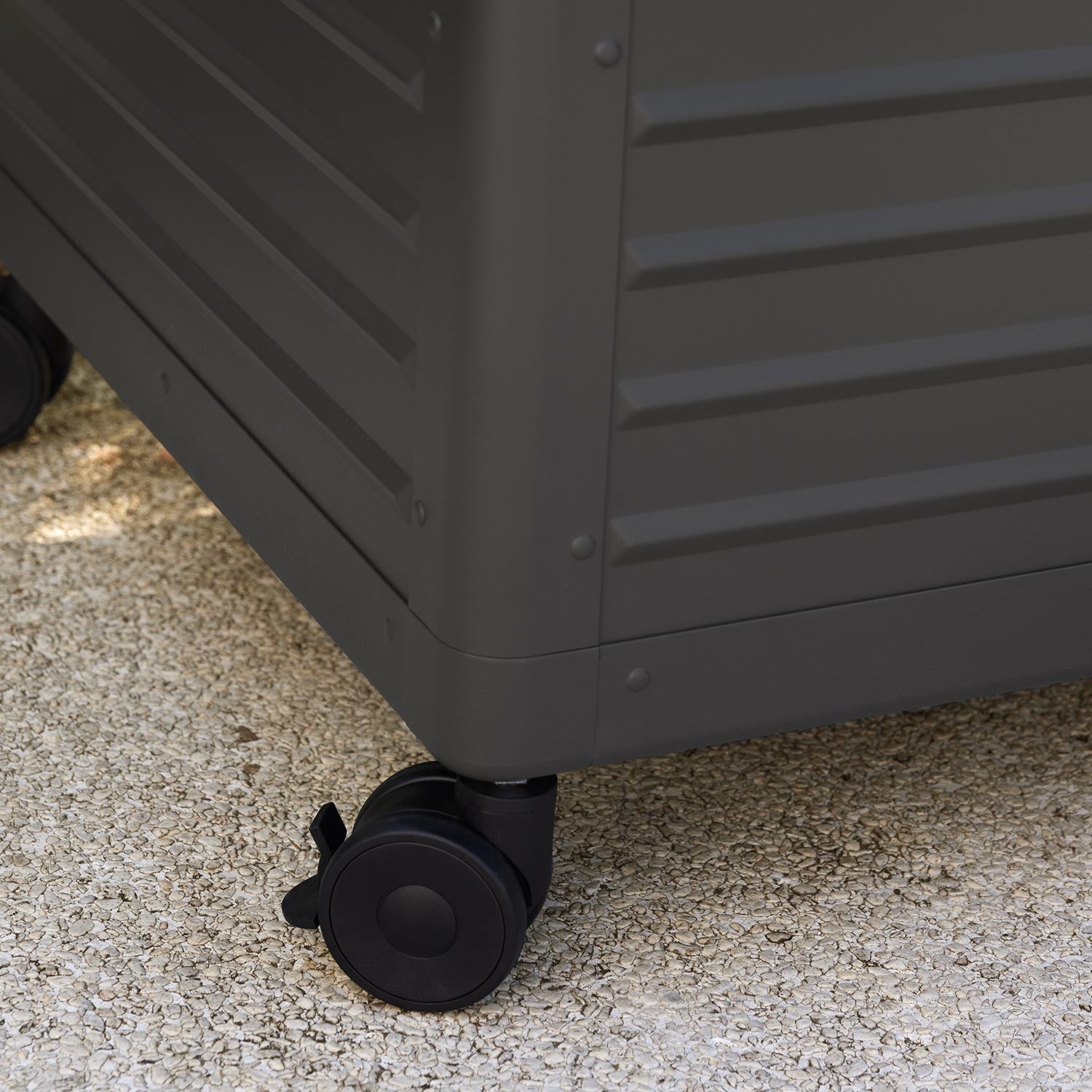
To secure outdoor furniture from wind, put away loose cushions and accessories, move portable pieces into enclosed storage before strong winds arrive, and use a suitable restraint system for furniture that must remain outside. Match any anchors to the supporting surface and attach restraints only where the furniture can safely carry the load. Covers and extra weight can help with everyday care, but neither guarantees that furniture will stay in place during a storm.
At Mirador, we recommend preparing your patio around the individual pieces you own. A dining chair, a sofa, and a propane fire pit need different handling—even when they belong to the same outdoor collection.
Start with What Can Move
A useful wind-preparation plan starts with a walk around your outdoor space. Look beyond the largest table or sofa: loose cushions, serving trays, small side tables, umbrellas, and lightweight decorations all need attention.
Then give every item one of three destinations:
- Indoor storage: portable furniture, cushions, and small accessories that can be put away safely.
- An appropriate outdoor restraint: larger pieces that cannot reasonably be moved, where the manufacturer allows restraint and a suitable anchor location is available.
- A separate equipment plan: umbrellas, fire pits, and other items with their own operating and storage instructions.
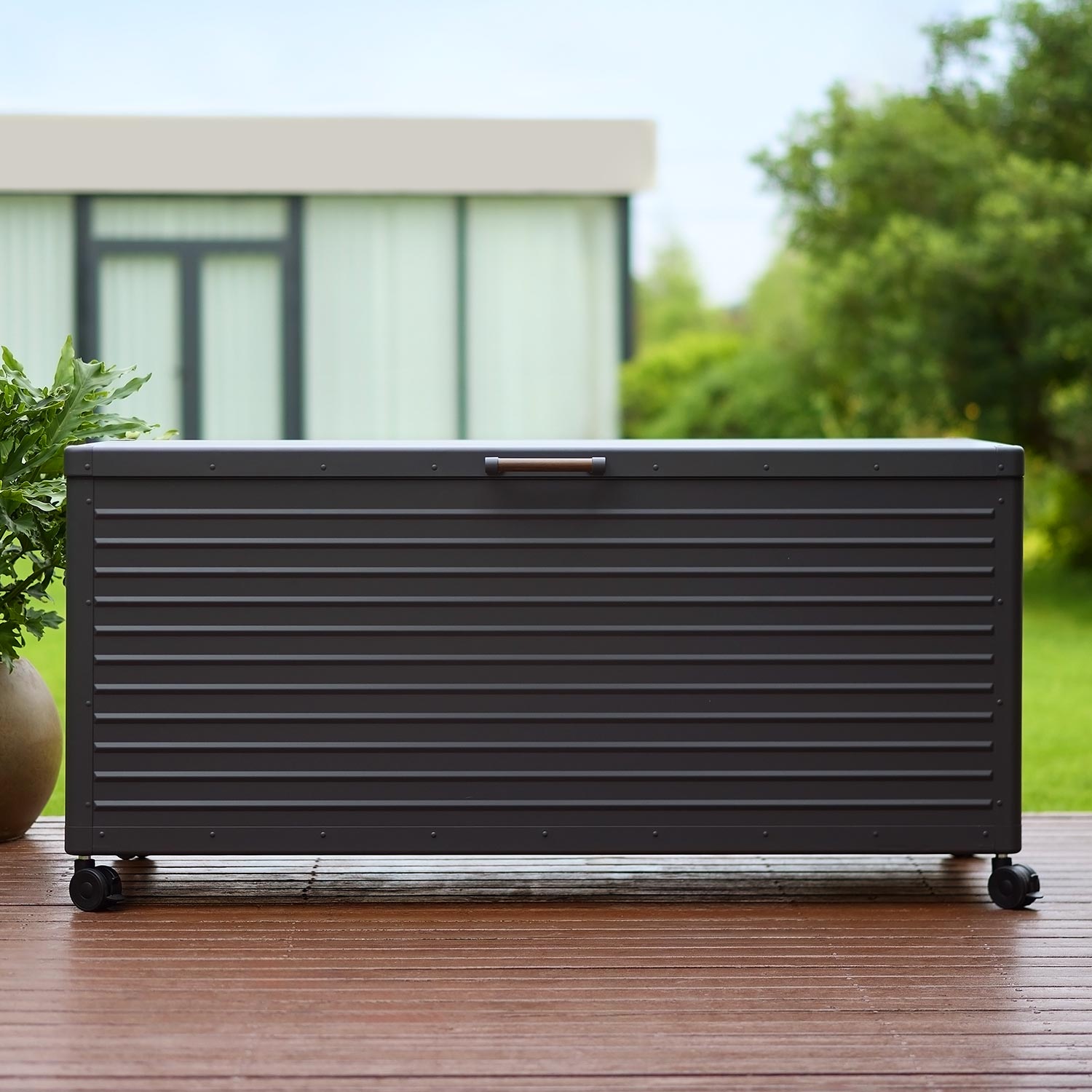
Choose a storage location and check the route before you need it. A chair that fits on the patio may not pass through a narrow side gate, and a heavy table may require help to move.
Bring ordinary furniture into a garage, suitable shed, or your home before severe weather when practical. Propane cylinders are an exception: they must remain in an appropriate outdoor location, never in a garage, shed, or other enclosed space.
The National Weather Service recommends identifying outdoor items to put away or tie down ahead of time and securing them when a high-wind or severe-thunderstorm watch is issued. Once dangerous winds arrive, prioritize shelter over retrieving furniture.
Choose a Method That Matches the Problem
Furniture can slide, rock, tip, or lift. A method that addresses one type of movement may not address the others.
| What you are trying to prevent | A practical starting point | Important limit |
|---|---|---|
| Cushions and pillows blowing away | Store them when not in use; use existing cushion ties for everyday positioning | Cushion ties do not secure the chair itself |
| Small furniture moving around an exposed patio | Relocate it to a more sheltered position or indoor storage | Shelter can change when wind direction changes |
| Feet sliding on a smooth surface | Use compatible outdoor grip pads and check that all feet sit evenly | Grip pads do not prevent uplift or guarantee protection from tipping |
| A large piece shifting when it must stay outside | Consider a compatible frame restraint connected to a suitable anchor | The furniture, restraint, anchor, and supporting surface all matter |
| Furniture being exposed to a severe storm | Put movable pieces away early; arrange an appropriate plan for items remaining outside | Everyday weights, covers, or grouping are not a storm-protection guarantee |
Use weights where they can actually help
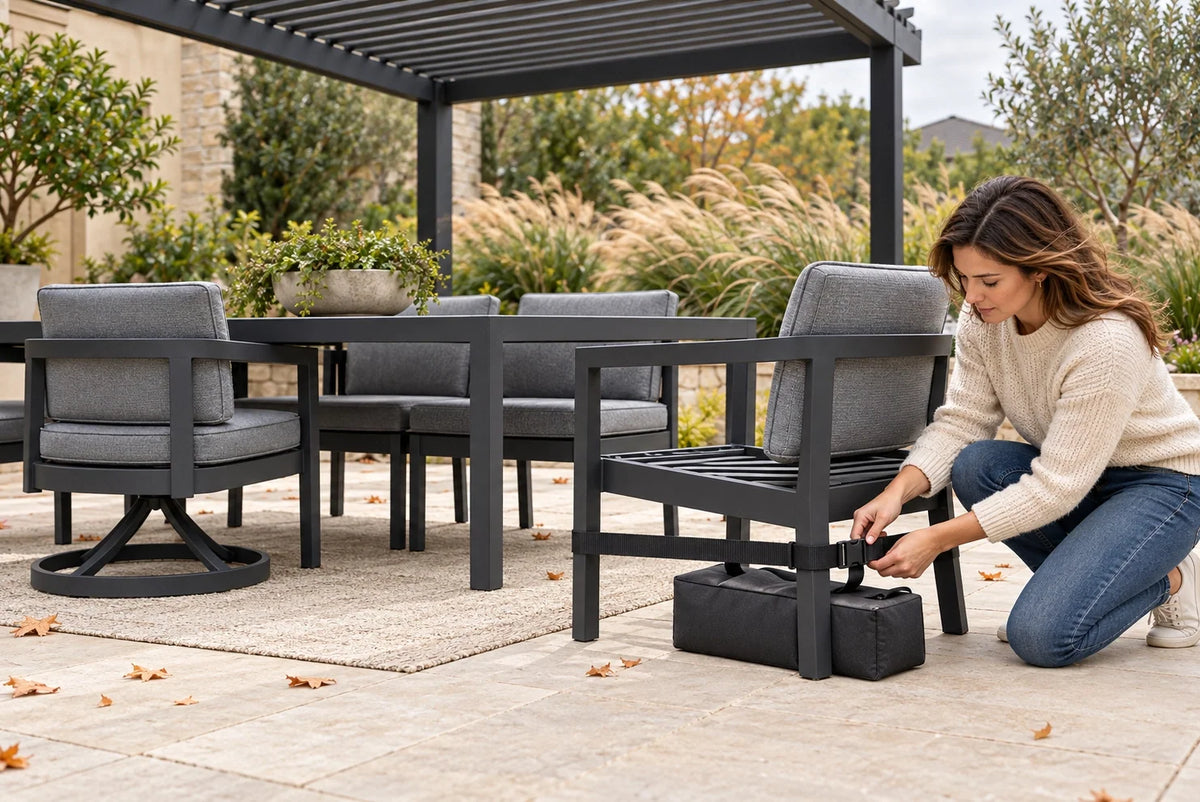
Purpose-made furniture weights or ballast bags may reduce everyday movement when the furniture manufacturer permits them. Keep any added weight low, stable, and clear of walking routes. A bag sitting beside a chair does little to hold it down unless a compatible system connects the two.
Avoid putting bricks on cushions, hanging improvised weights from chair arms, or loading a glass tabletop. These arrangements can damage the furniture or introduce another loose object.
There is no universal number of pounds of ballast that makes every patio chair secure. The right approach depends on the piece, the site, and the complete restraint system. For a frequently exposed location, ask the furniture and restraint suppliers what they approve rather than guessing at a weight.
Connect restraints to suitable frame points
For pieces that can be restrained, choose outdoor-rated equipment intended for that application. Confirm the attachment method before buying: a strong strap is only useful when both ends connect to something suitable.
Use manufacturer-approved frame attachment points. Keep restraints clear of upholstery, decorative panels, hinges, swivel mechanisms, and fuel components. Protect finishes as directed, and avoid tightening a strap until it bends or crushes a frame.
Treat bungee cords and cover clips as accessories for light-duty positioning unless their manufacturer specifically approves the intended restraint use. Tying several chairs together also leaves the group unanchored unless it connects to a suitable restraint system.
How to Secure Furniture on a Deck, Patio, or Lawn
The visible surface is only part of the decision. A permanent anchor must connect to a supporting material that can carry the intended load.
| Surface | What to establish before choosing a restraint |
|---|---|
| Concrete patio | Confirm that the slab and the proposed location are suitable for the selected anchoring system. Follow its installation requirements; avoid choosing hardware by appearance alone. |
| Wood or composite deck | Check how the attachment transfers load into suitable structural support. Do not assume a screw in a deck board, or the board itself, provides adequate anchorage. |
| Pavers | Determine what is underneath. An individual loose paver should not be treated as a structural anchor merely because it is heavy. |
| Grass or soil | Use an appropriate ground-anchor system only where the site and soil allow it. Check for buried services before installation, and follow the anchor supplier’s requirements. |
For permanent fixings, have a qualified installer assess the location if the supporting structure is unclear. This is especially important on elevated decks or areas with waterproofing that drilling could damage.
What if you cannot drill?
For renters and patios where permanent changes are unsuitable, prioritize furniture that can be brought inside easily. A compatible freestanding ballast system may help with routine movement, but it still needs to suit the item and location.
Do not assume a balcony railing, fence, drainpipe, or decorative post is an acceptable tie-down point. Obtain permission for alterations and confirm the proposed attachment is suitable. On a balcony, keeping movable furniture away from the edge is useful planning, but it does not replace putting it away before strong winds.
Prepare Each Type of Outdoor Furniture Separately
Dining tables and chairs
Store lightweight chairs first and remove items from the tabletop. Stack chairs only if they are designed for stacking; a tall improvised stack can create a new tipping problem.
Treat each chair as a separate movable item rather than assuming the dining table will hold the set in place. Tucking chairs under a table keeps a dining area tidy, but it is not anchoring.
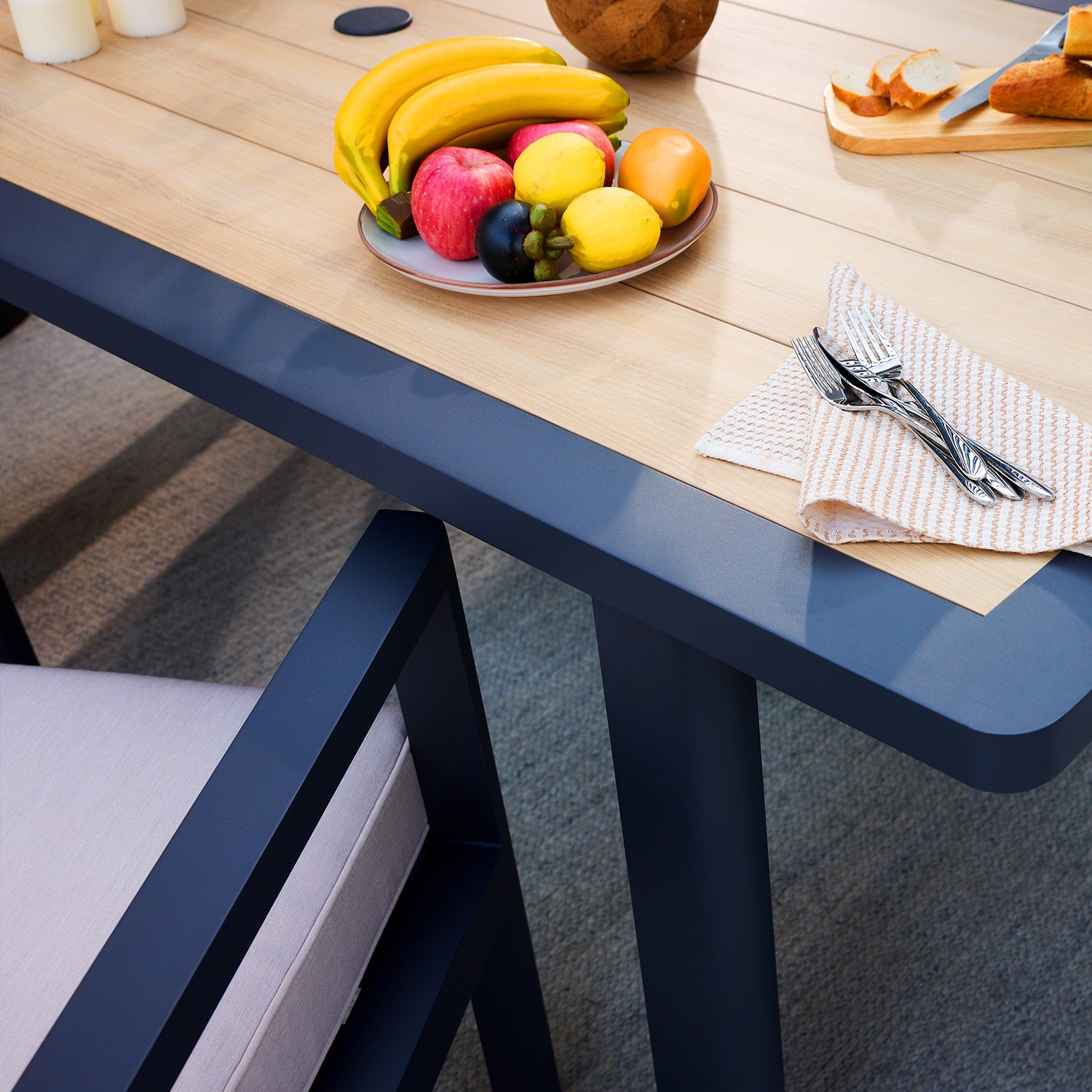
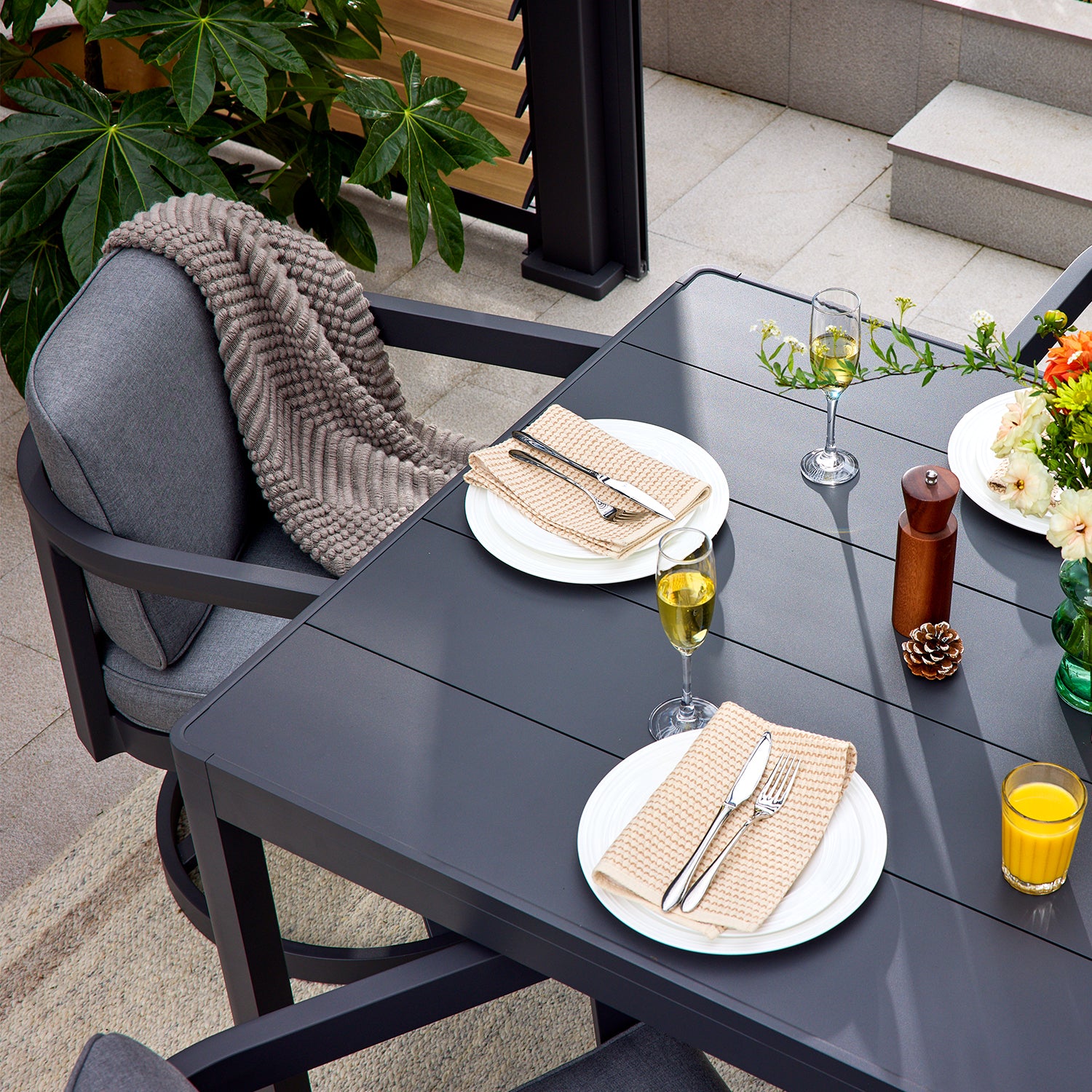
Our Mesa 7-Piece Dining Set includes swivel captain’s chairs, and its table has an umbrella hole. When planning wind preparation, account for the chairs individually and handle any added umbrella separately. An umbrella hole does not replace a suitable umbrella base or the umbrella manufacturer’s wind-use instructions.

Sofas, lounge chairs, and conversation sets
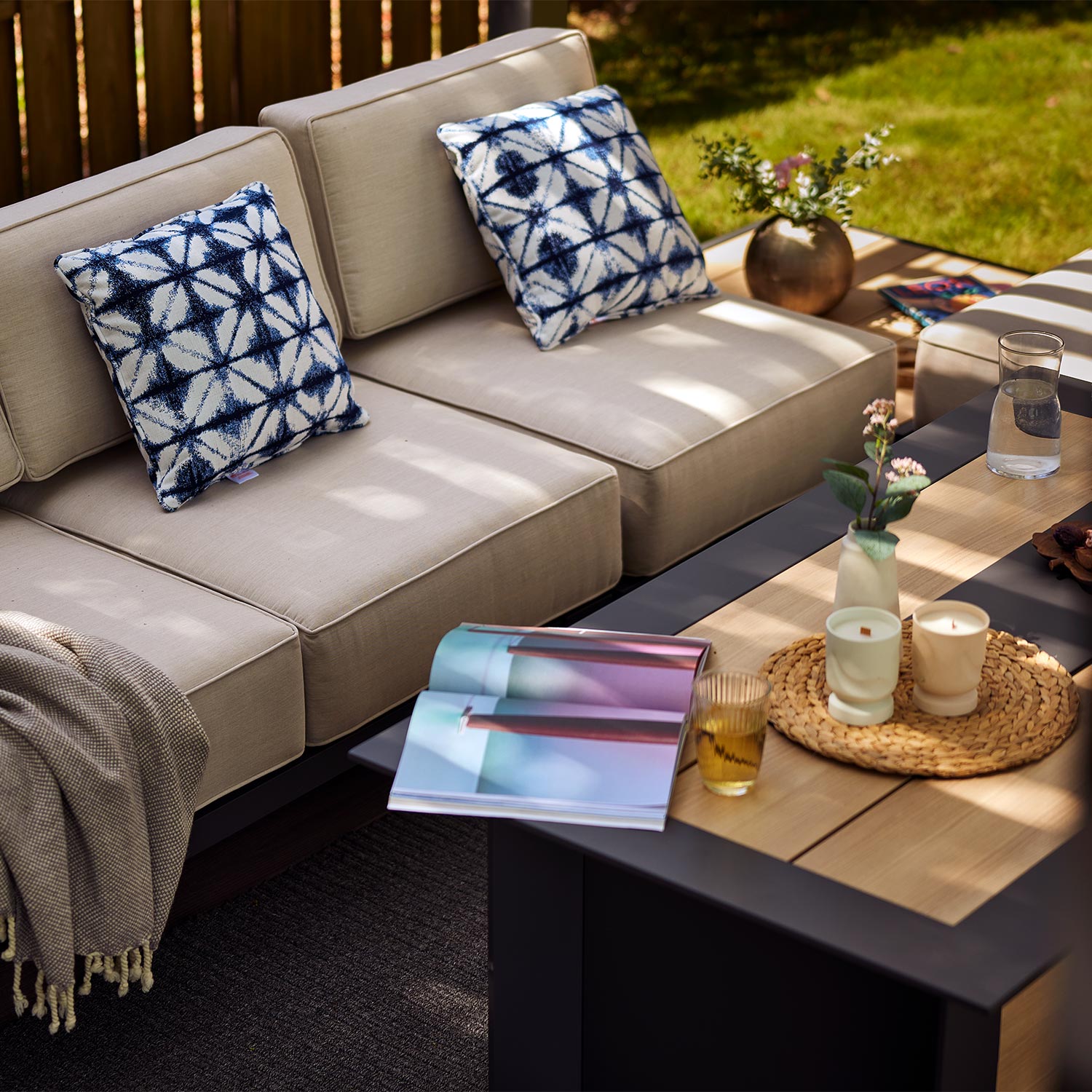
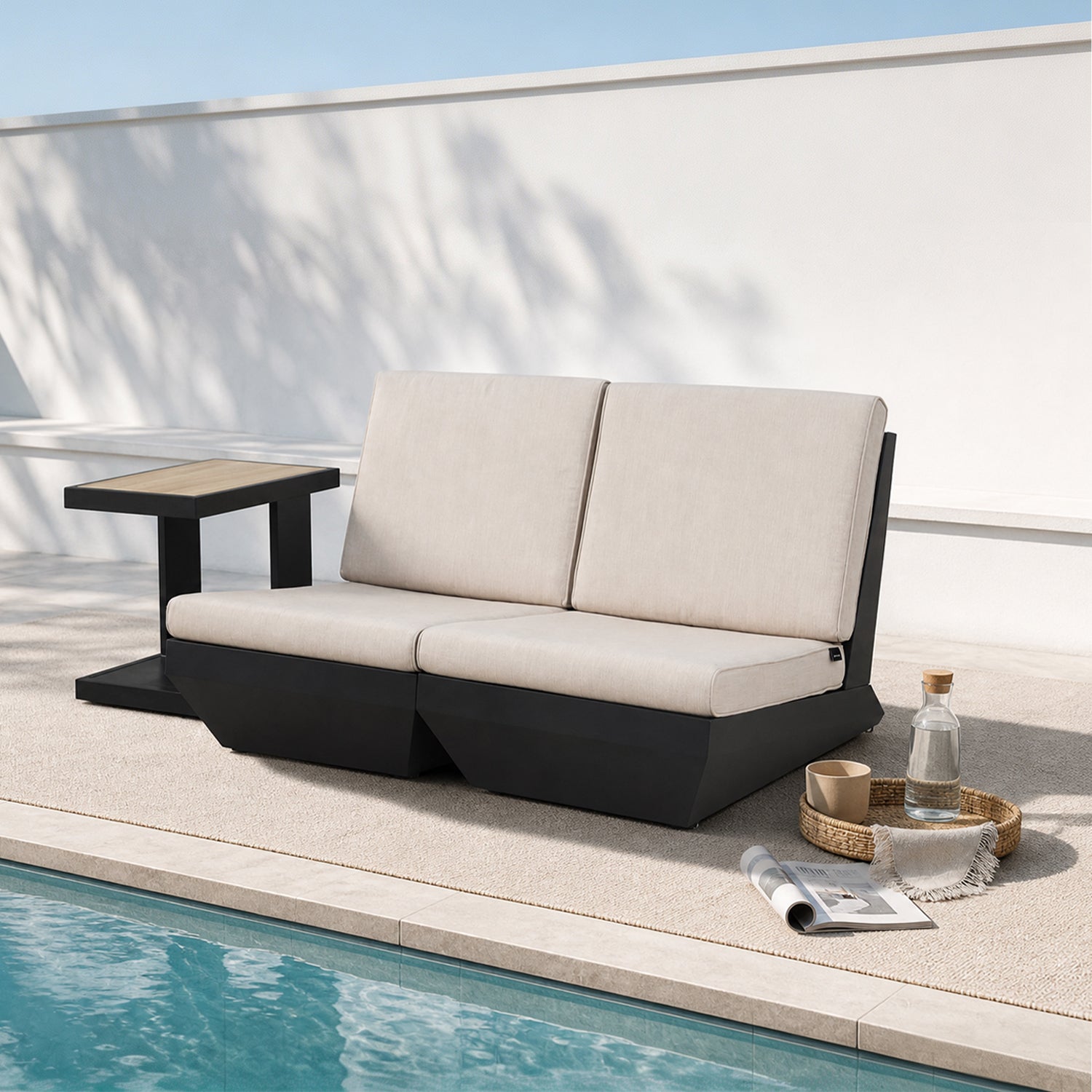
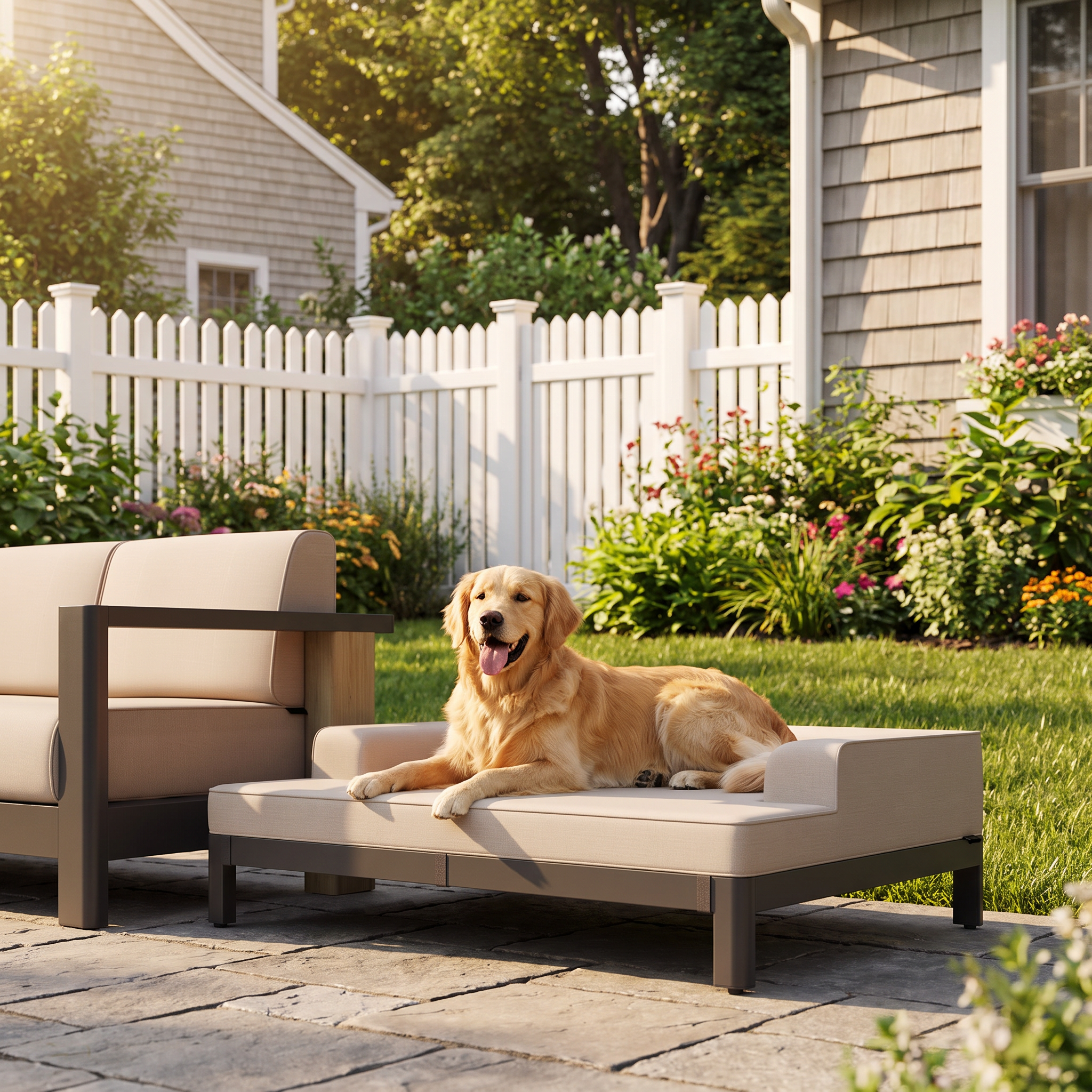
Remove loose cushions and pillows before dealing with the frames. If a sectional has manufacturer-supplied connectors, use them as instructed for their intended purpose; do not assume they anchor the whole arrangement to the ground.
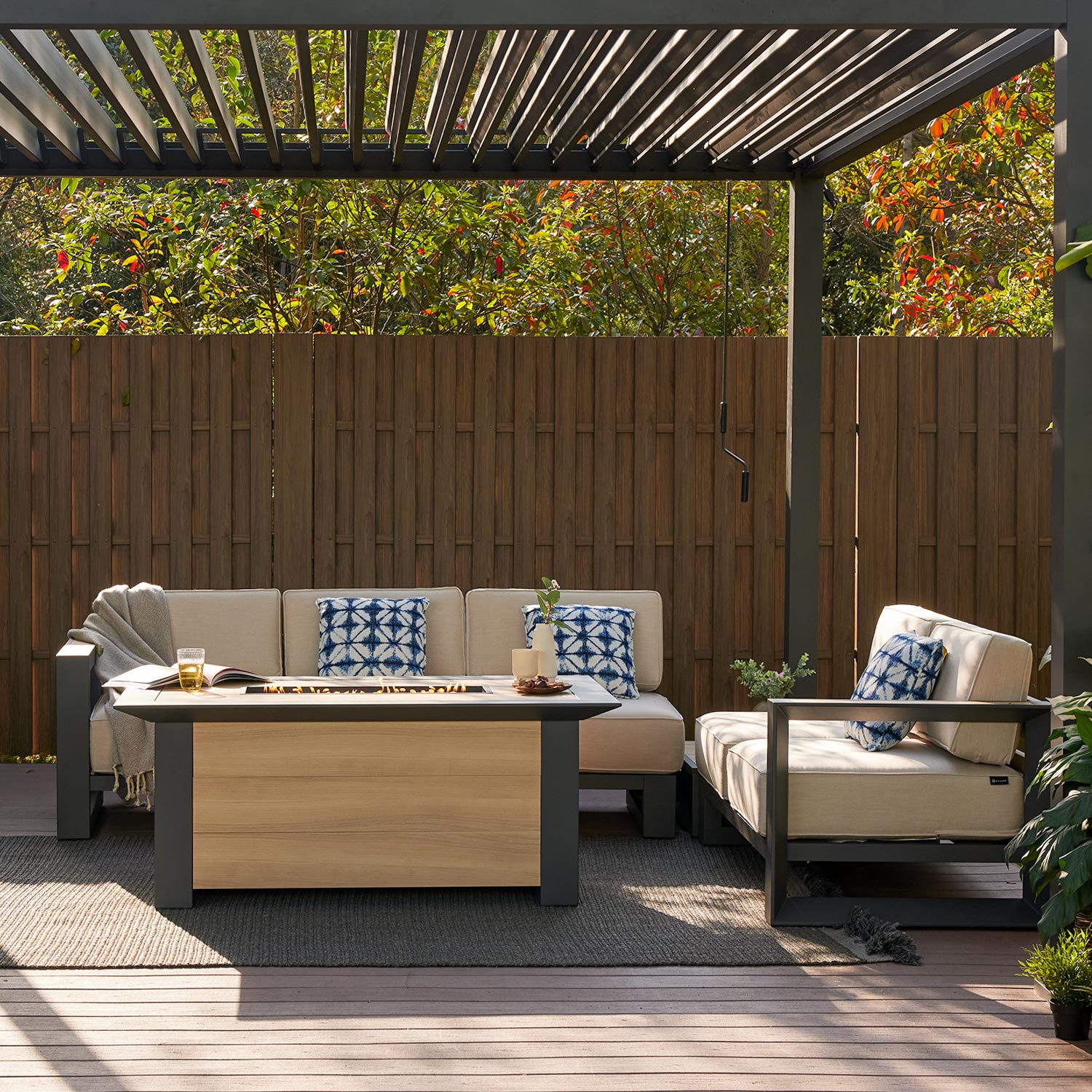
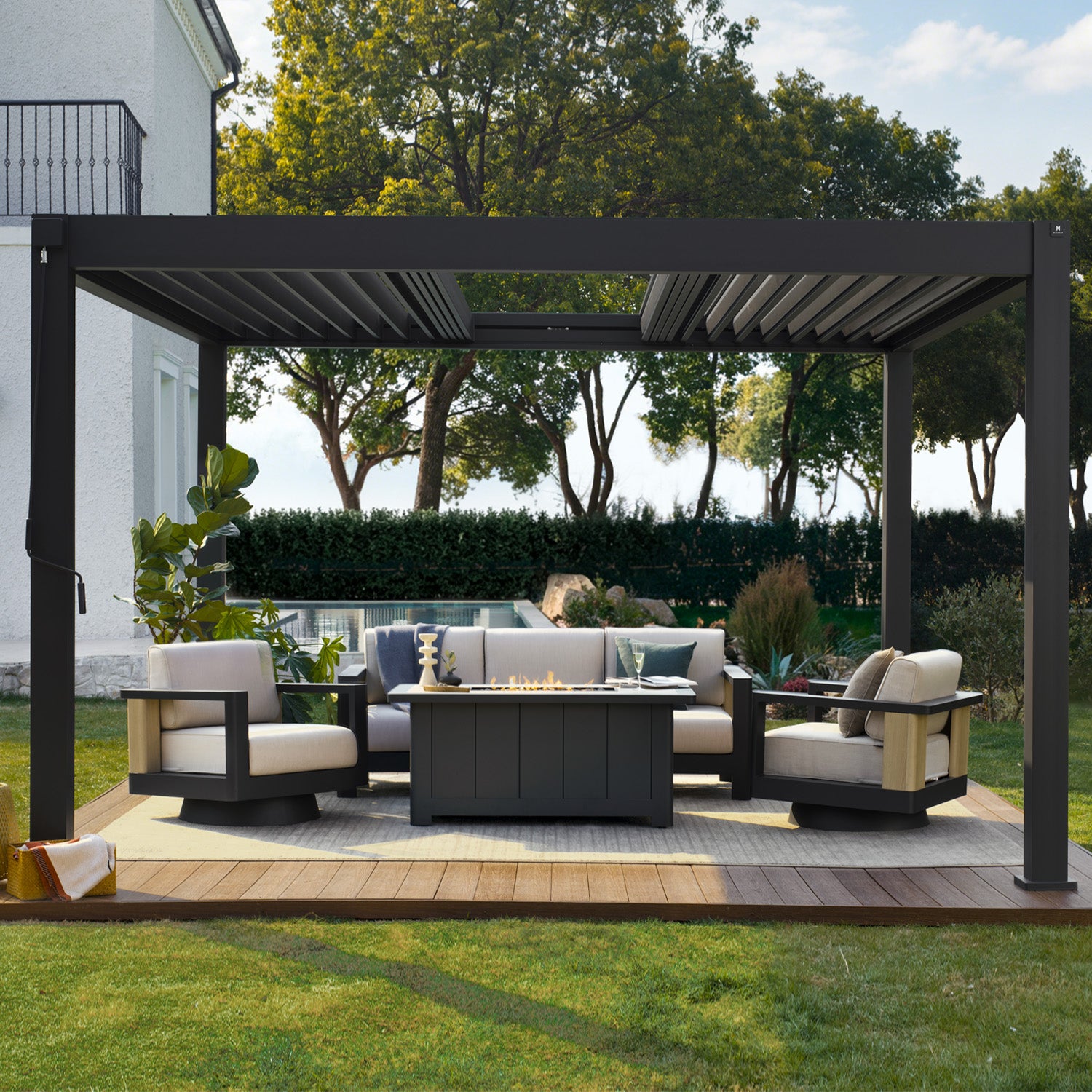
For our Siena 4-Piece Fire Pit Seating Set, plan separately for the sofa, swivel-and-rocking armchairs, and fire pit table. Keep proposed restraints away from moving chair mechanisms, and do not use the fire pit as an improvised anchor for the seating.

We recommend protective covers or indoor storage during severe weather to help care for our furniture. When wind is the main concern, moving portable pieces inside provides a different kind of protection from putting a cover over them outdoors.
Fire pits and fire pit tables
A fire pit needs its own preparation plan because it combines a furniture-sized object with fuel equipment. Our Siena Fire Pit uses propane, so ordinary advice to move patio items into a garage must not be applied to its propane cylinder.

Turn the appliance off according to its instructions and allow it to cool completely before covering or handling it. Follow the manual for fuel shutoff, disconnection, movement, and storage. Keep any restraints away from the burner, controls, hose, regulator, and other gas components.
Store portable propane cylinders upright in an appropriate outdoor location, following the cylinder instructions and local requirements. Never put a cylinder in enclosed storage, even temporarily as part of storm preparation.
Do Furniture Covers Keep Furniture from Blowing Away?
A furniture cover protects the surface underneath; it does not automatically secure the furniture to the ground. Straps that fasten a cover around chair legs usually keep the cover attached to the chair, rather than anchoring either item to the patio.
Use a correctly sized cover and fasten it as its manufacturer directs. An oversized cover can catch wind, and a loose tarp stretched across several pieces can create a large exposed surface. Do not assume adding a cover makes an unsecured arrangement ready for strong winds.
For routine care, cover clean, dry furniture and check it periodically. Our outdoor furniture cleaning guide explains how to prepare different surfaces and cushions before longer-term storage.
Does a Pergola Protect Outdoor Furniture from Wind?
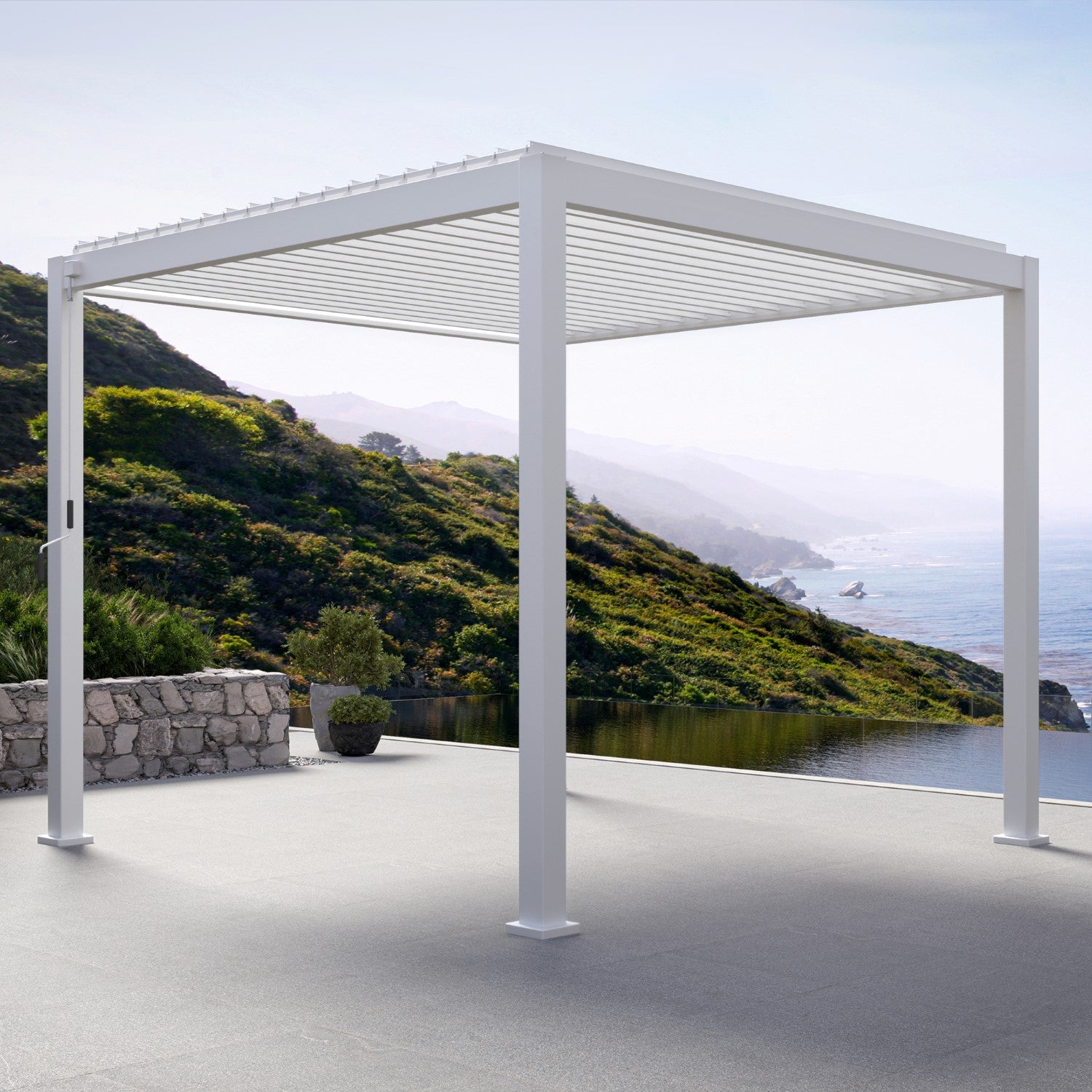
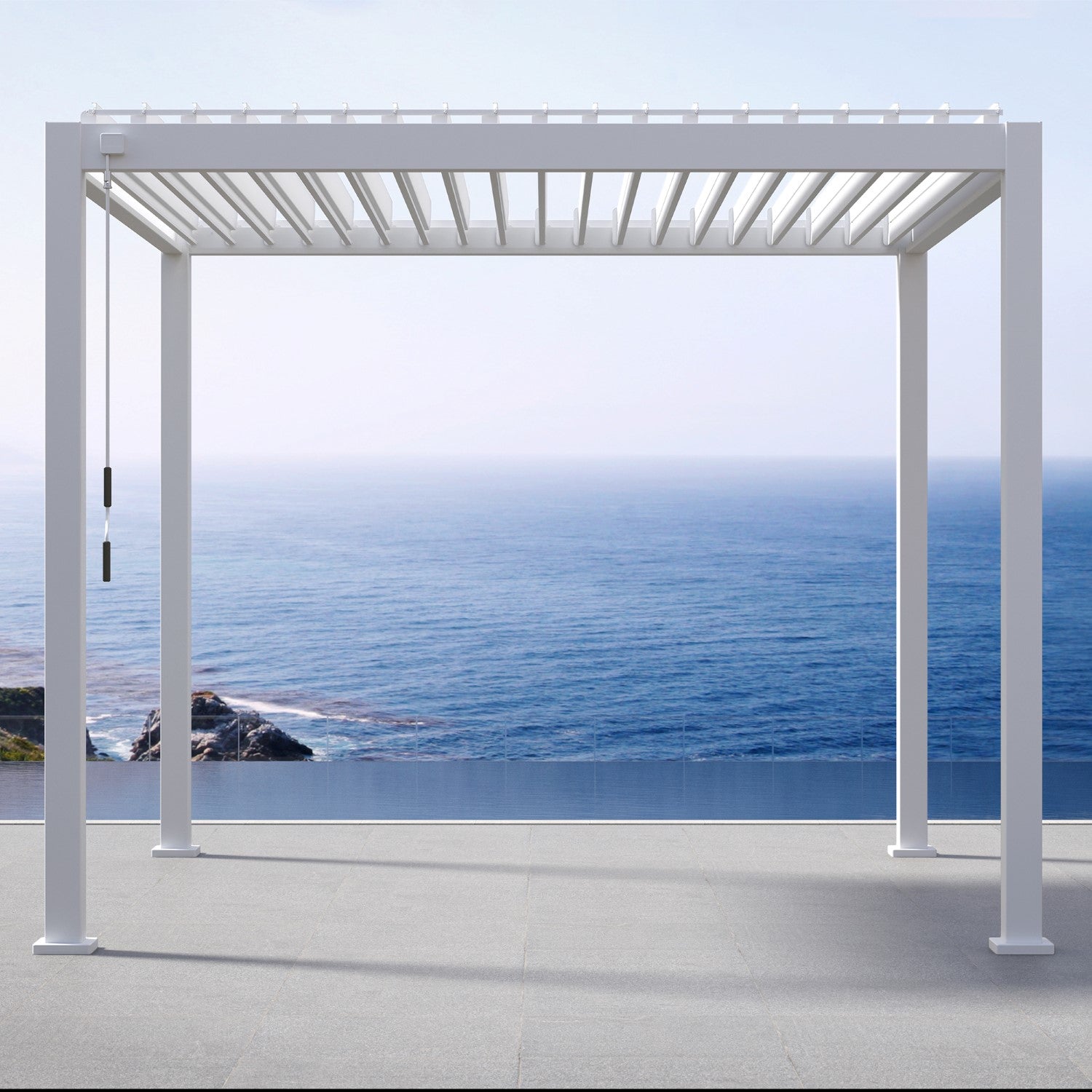
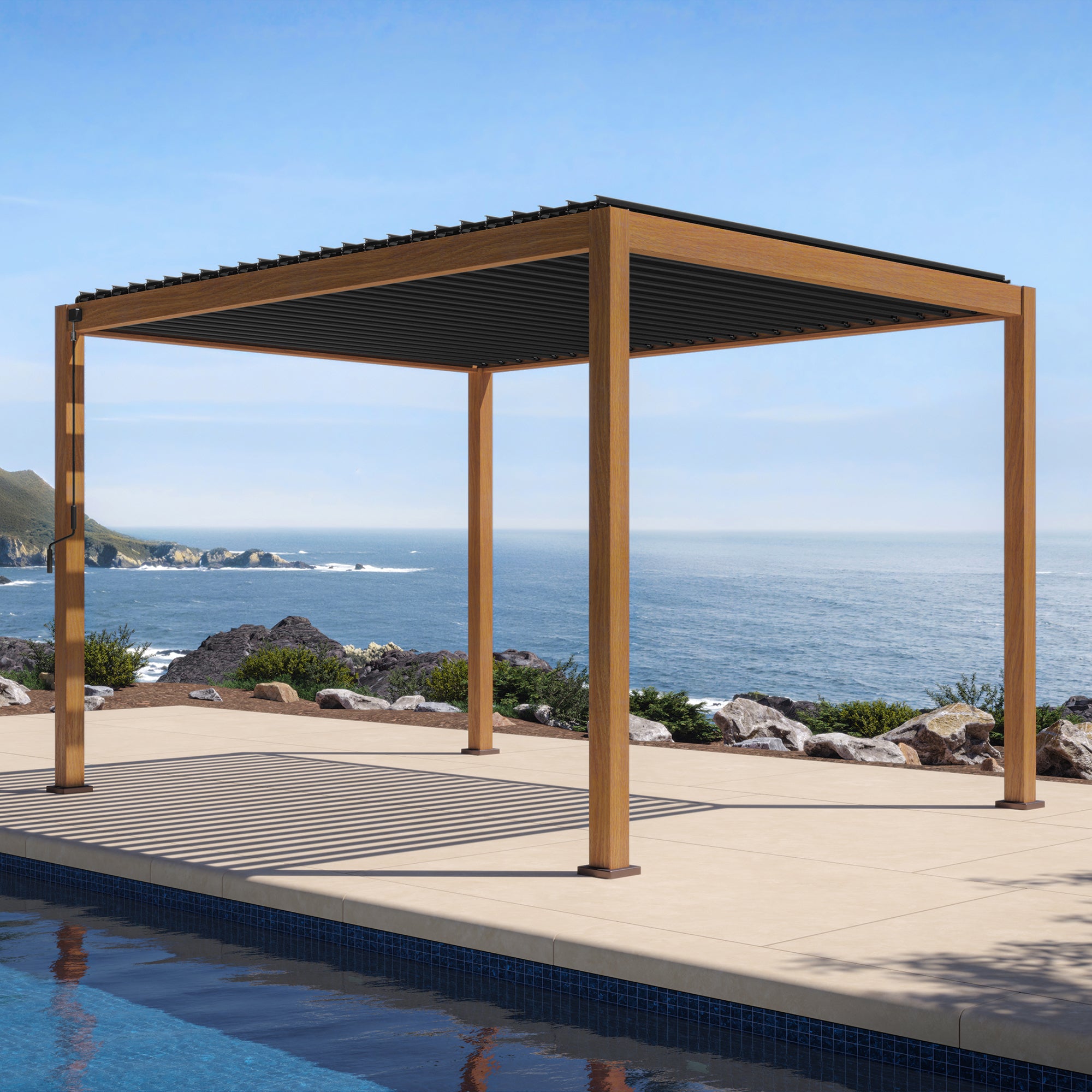
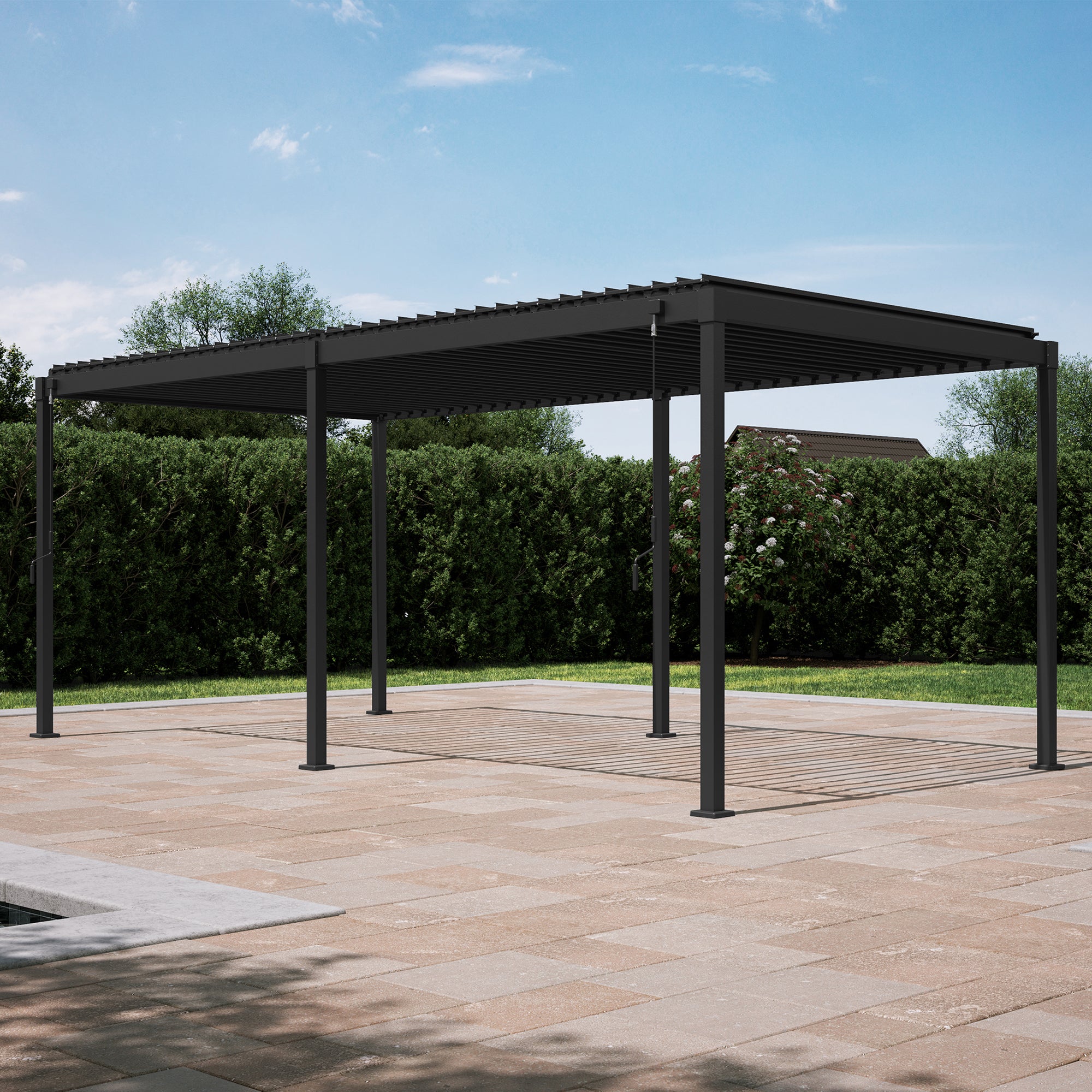
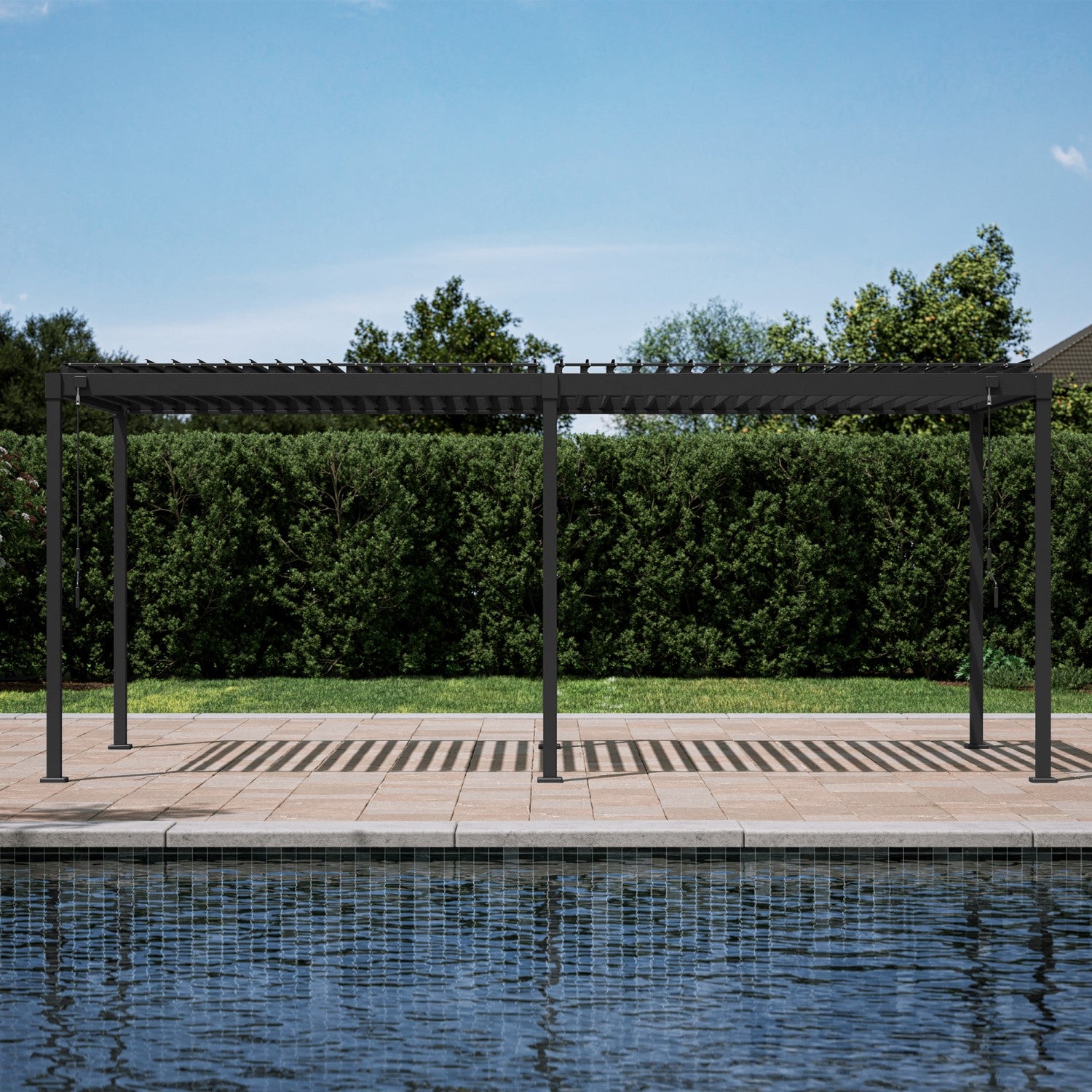
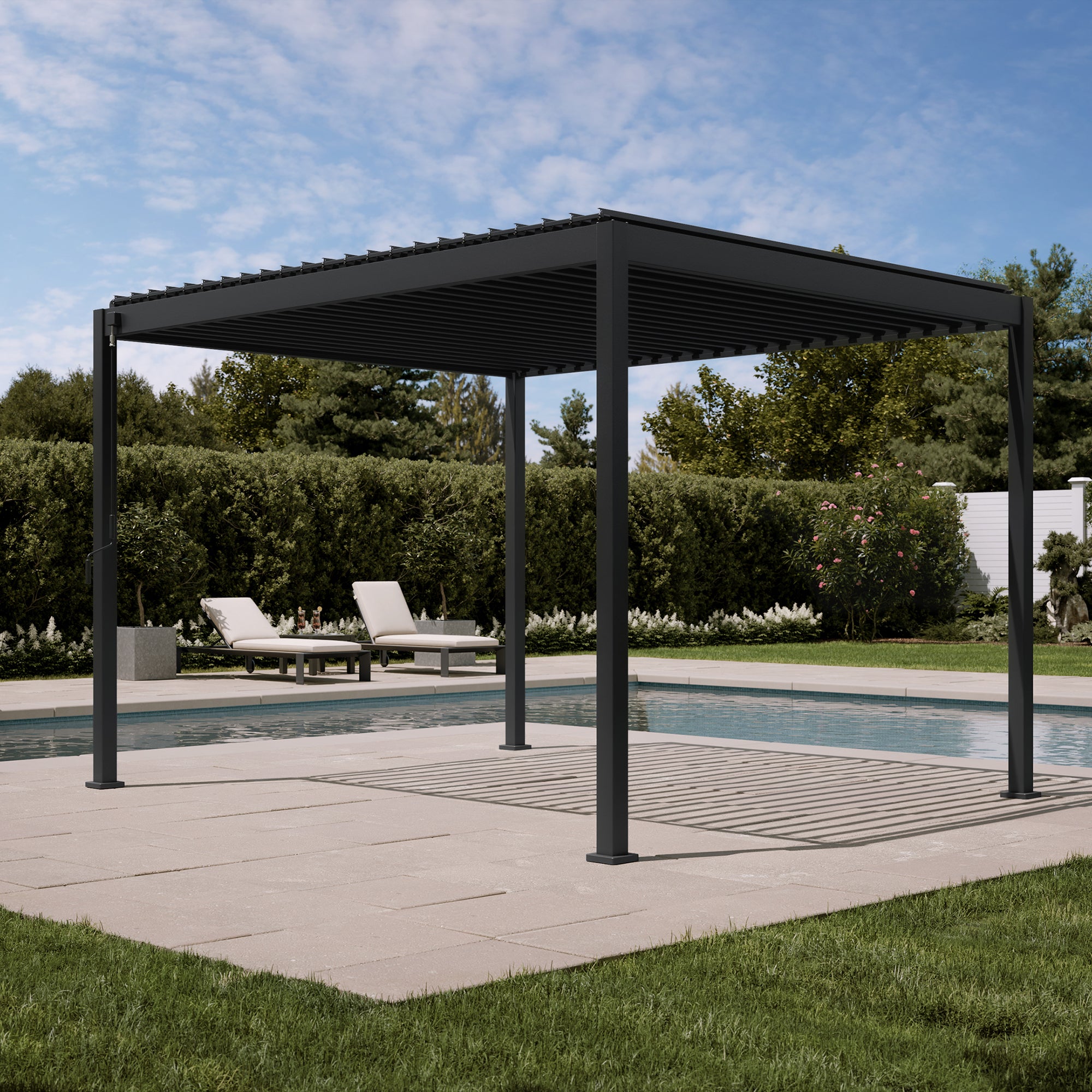
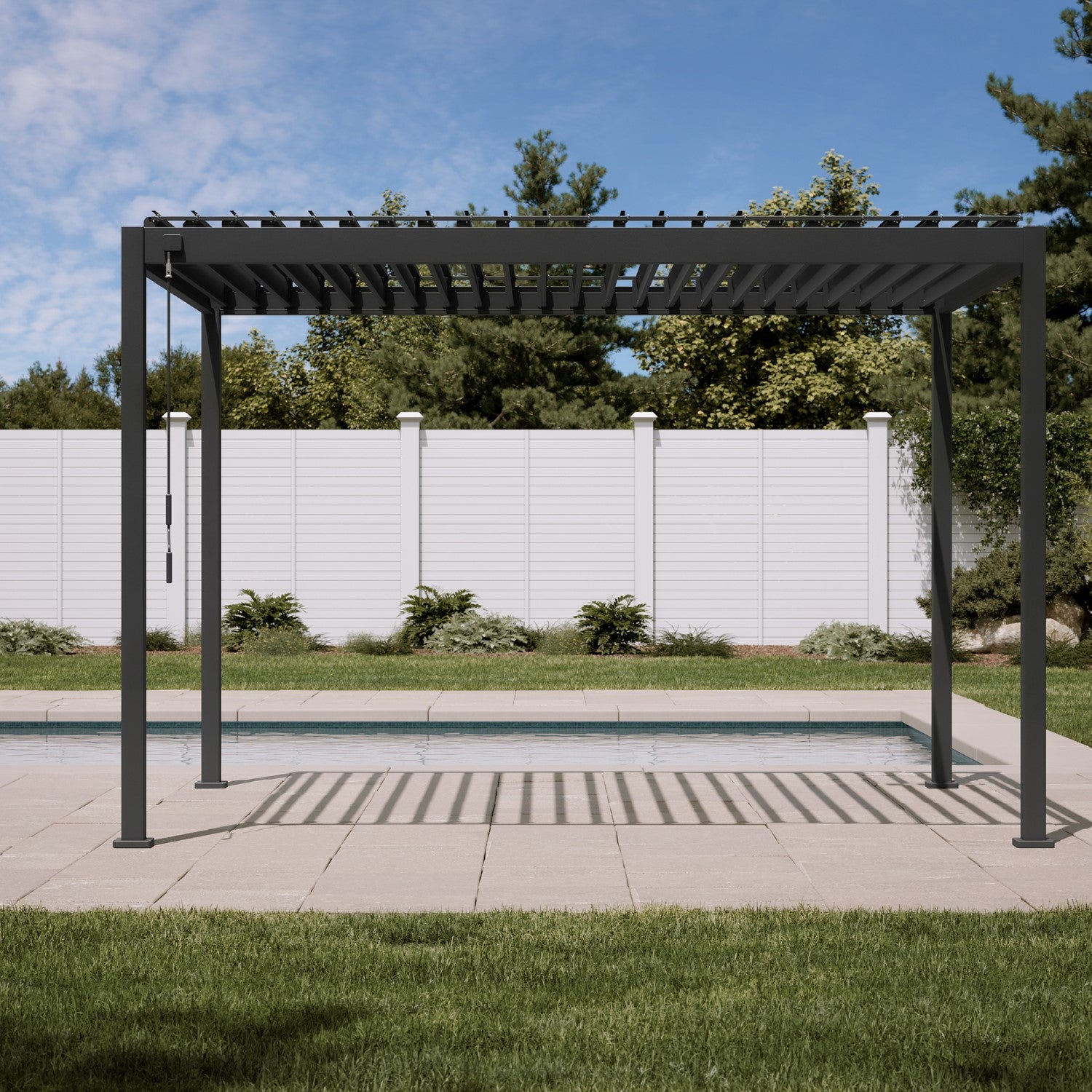
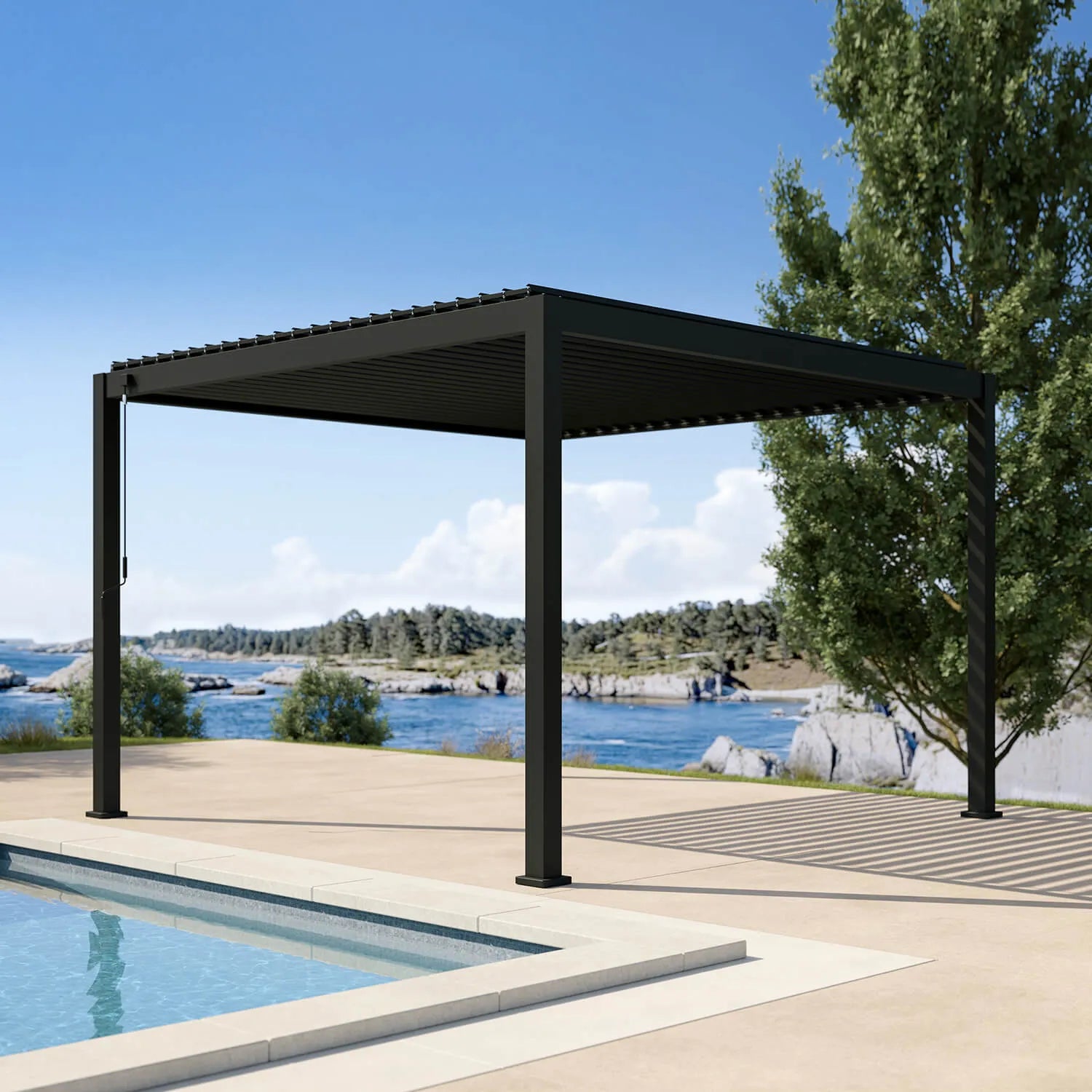
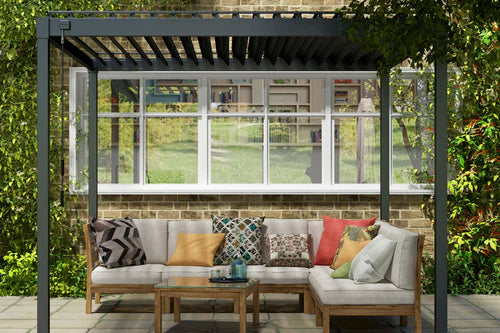
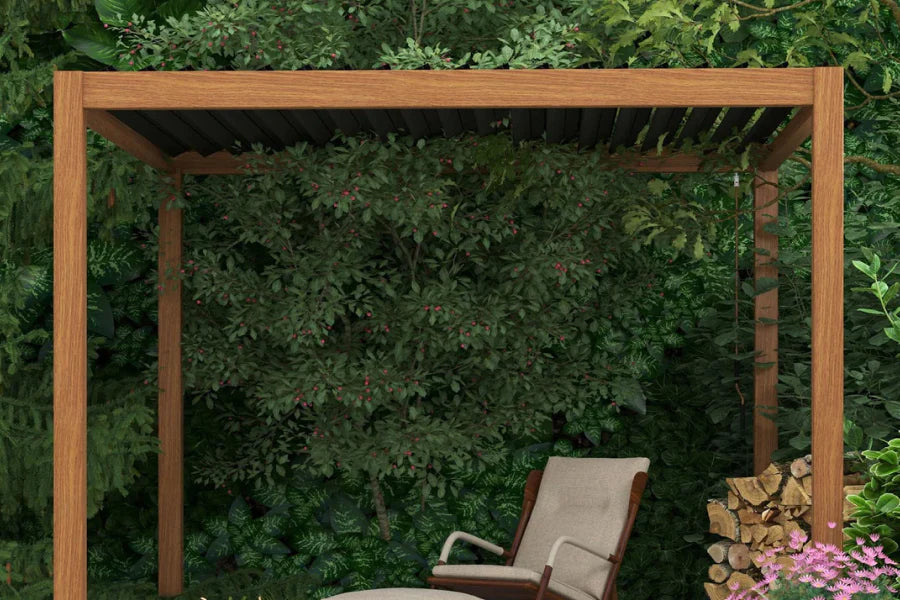
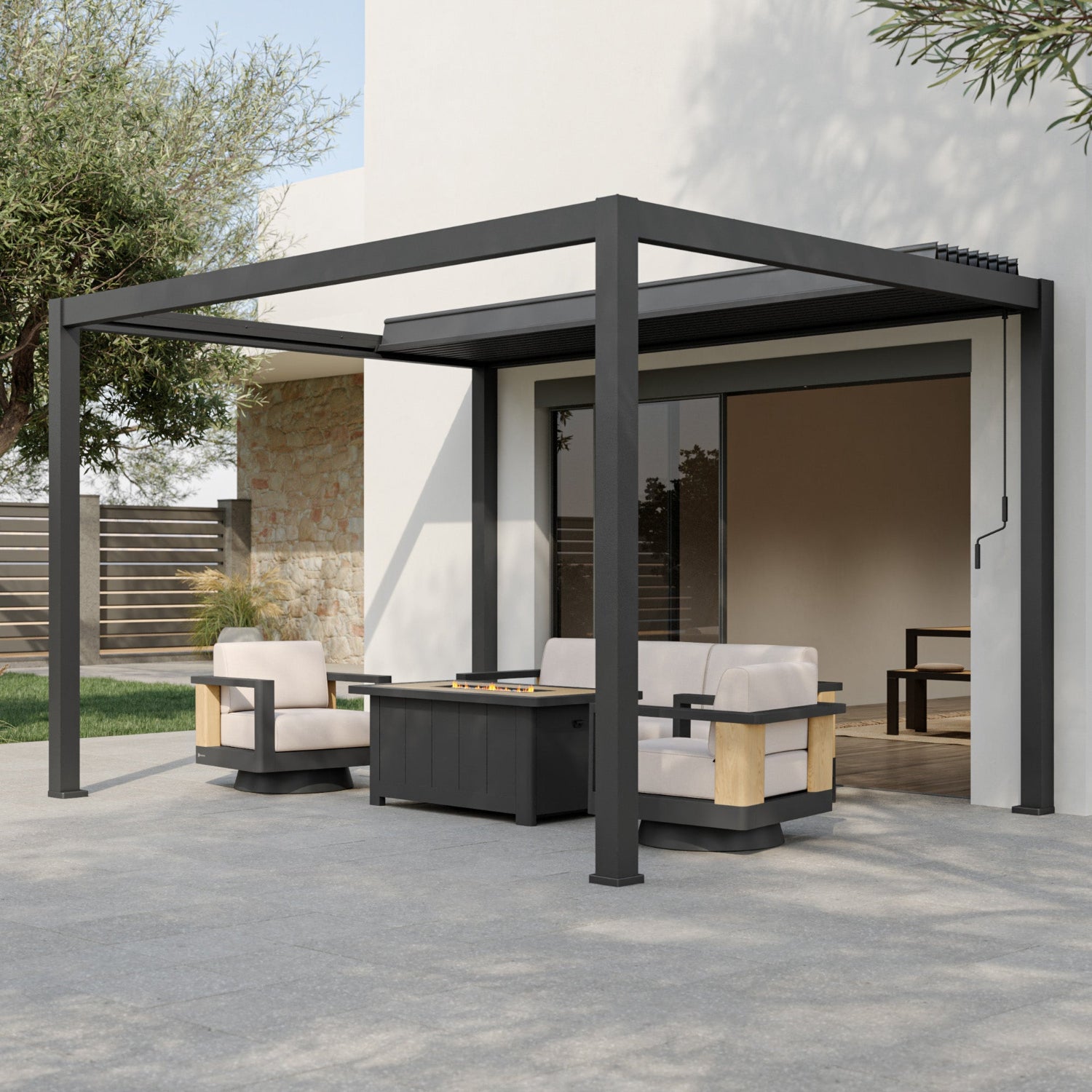
A pergola can organize a comfortable outdoor dining or seating area, but an overhead roof does not secure the furniture underneath. Open sides still allow wind to reach chairs, tables, and accessories.
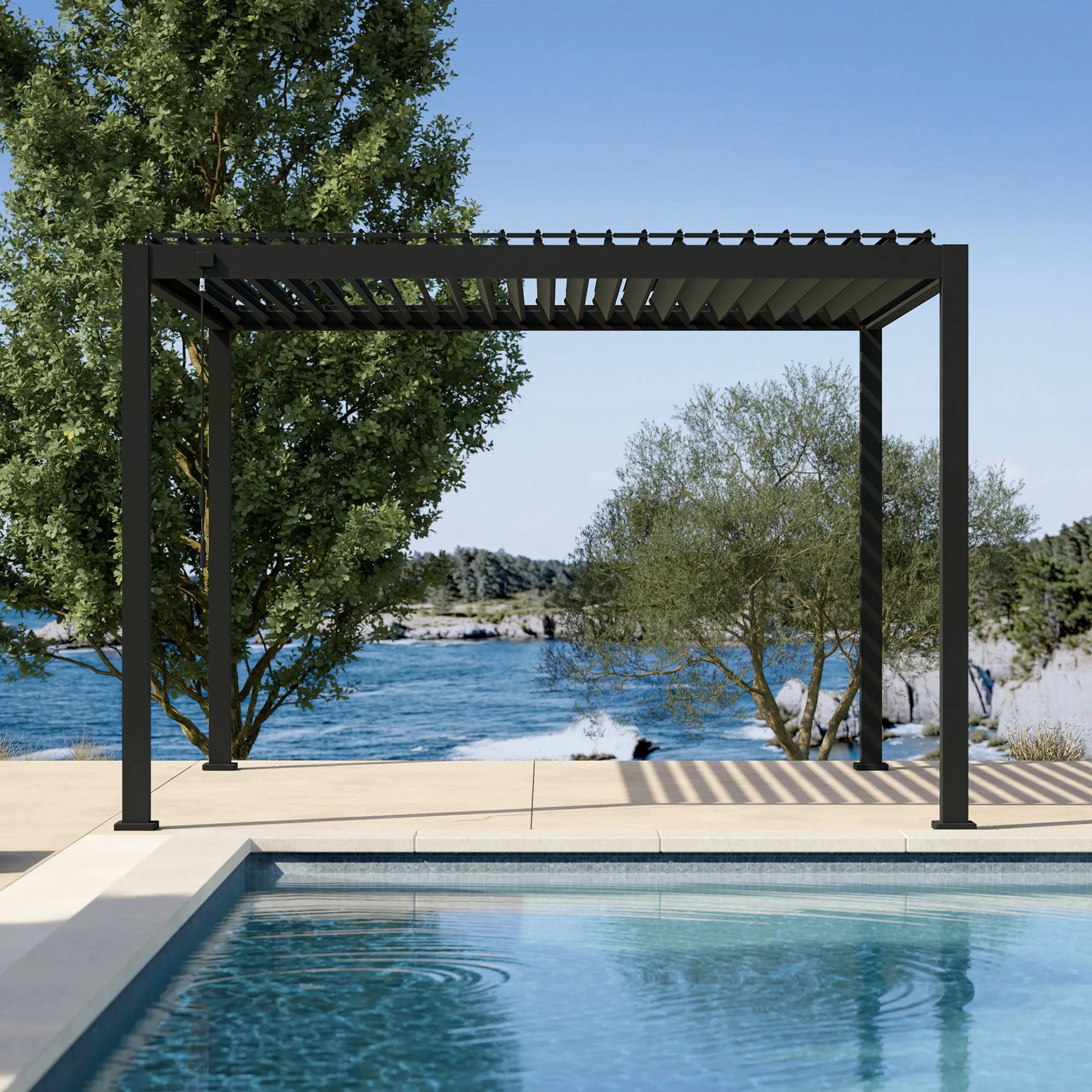
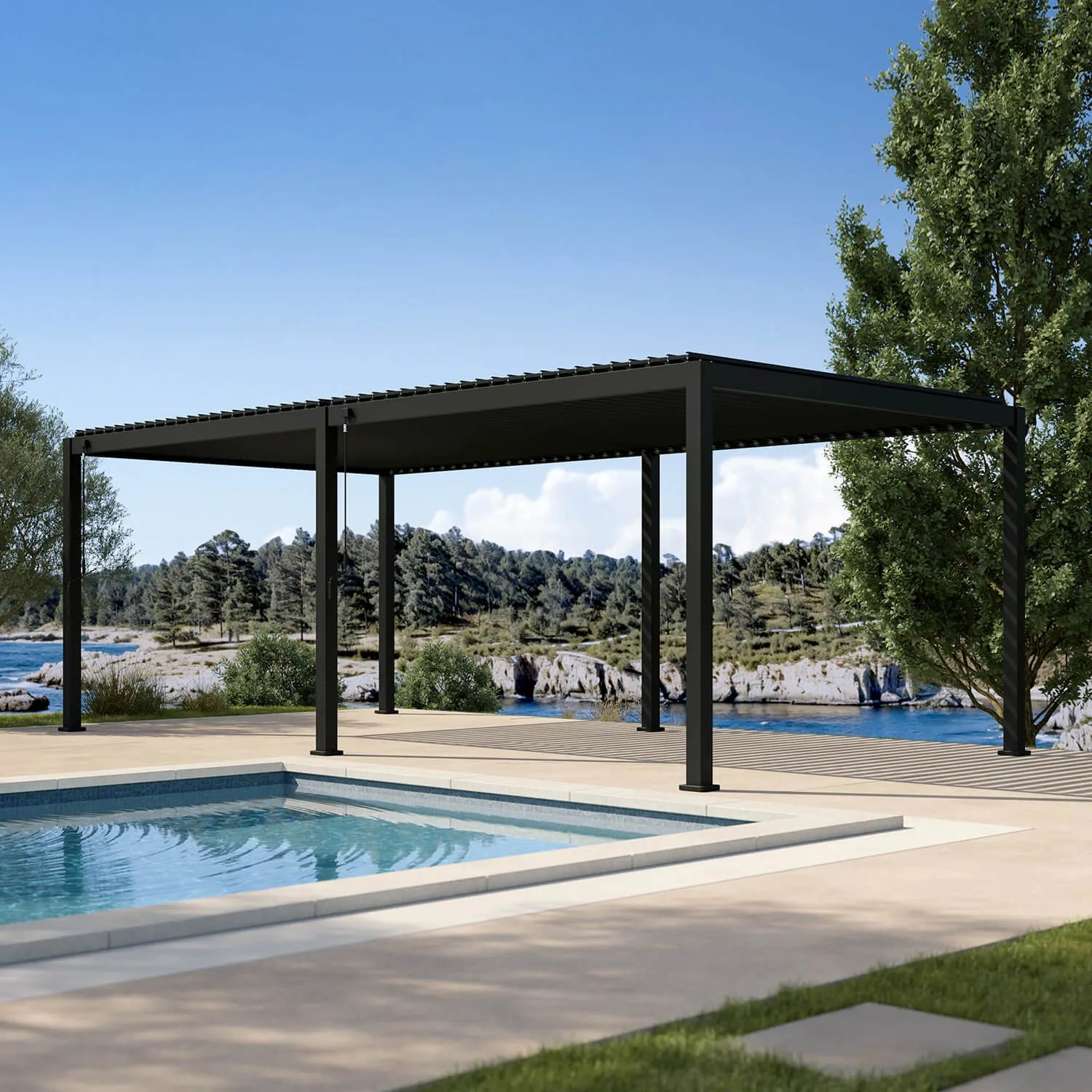
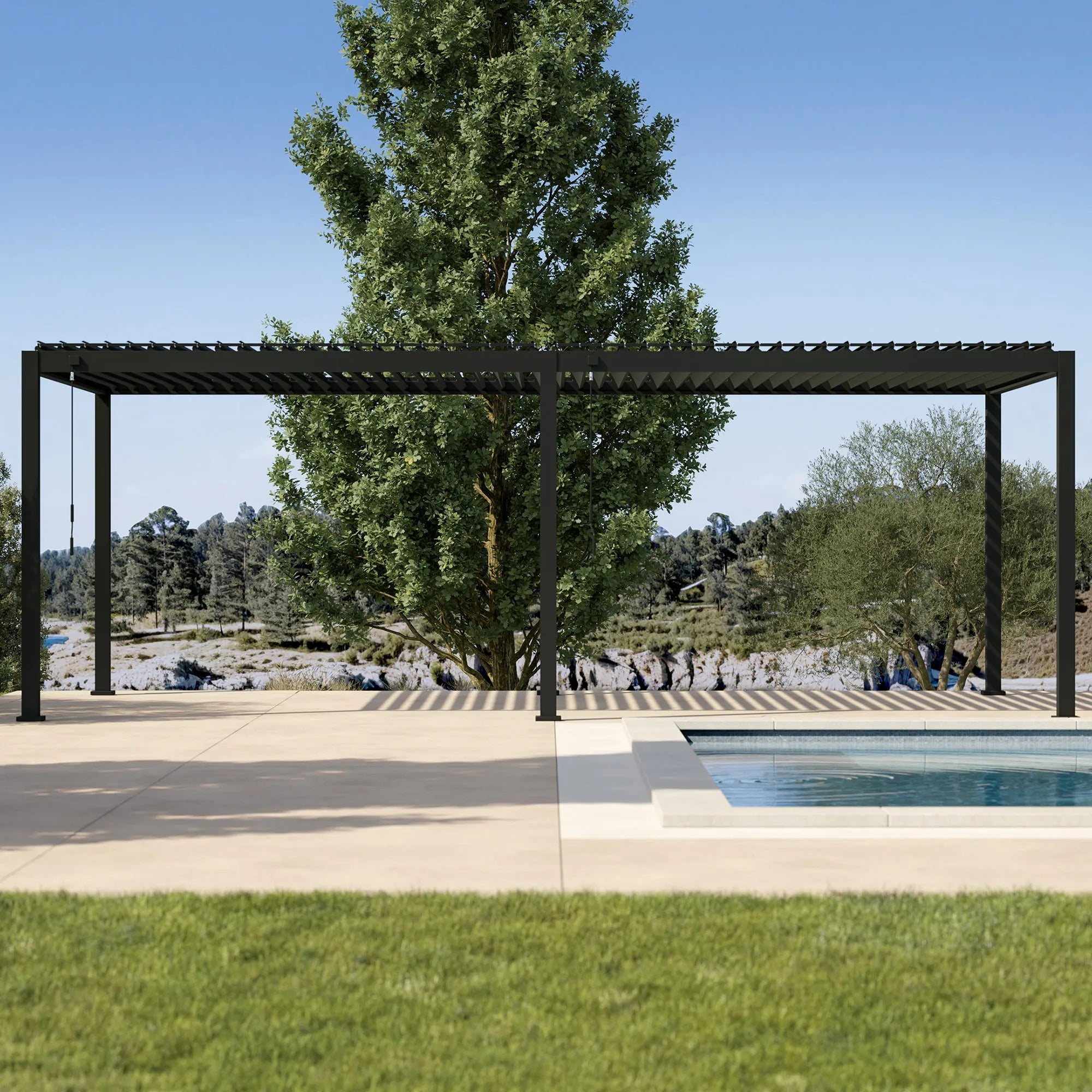
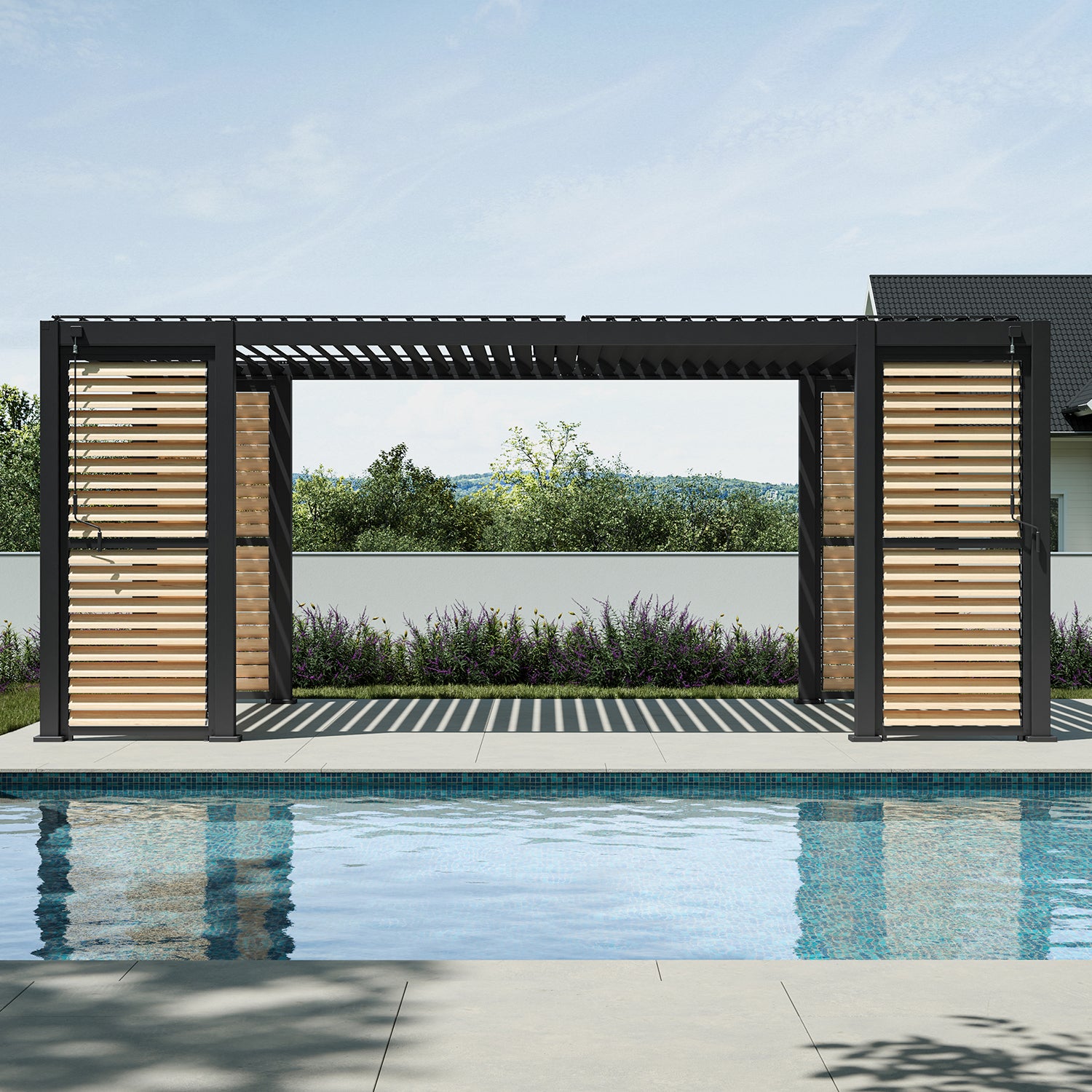
When planning a patio with one of our louvered pergolas, leave an accessible route for moving furniture into storage. Treat the pergola installation, its accessories, and the furniture as separate parts of your weather-preparation plan.
A pergola’s wind rating applies to that structure under its specified conditions. It should not be used as a wind rating for the furniture below it. Likewise, do not tie furniture to pergola posts or lower side screens as an improvised storm barrier without explicit approval for that use. Follow the instructions for your exact pergola and accessories.
A Before-the-Wind Checklist
Keep this list with your furniture care information so the work can happen before conditions become hazardous.
- Check local forecasts and alerts. Give yourself time to move items safely and arrange help for heavier pieces.
- Clear loose accessories. Put away cushions, decorations, serving pieces, and other small objects.
- Deal with umbrellas. Close, secure, remove, or store them according to their instructions.
- Put portable furniture away. Keep doors, gates, and emergency routes clear.
- Prepare larger pieces. Check any approved restraints and anchors for damage, looseness, and unsuitable attachment points.
- Handle fire pits separately. Allow cooling and follow the appliance and propane-cylinder requirements.
- Finish preparation early. During a high-wind or severe-thunderstorm warning, shelter in a sturdy building rather than going outside to adjust furniture.
After conditions are safe, inspect furniture joints, moving parts, covers, restraints, and anchor locations before returning the patio to use. Repair or replace damaged components before relying on them again.
Frequently Asked Questions
How much wind can outdoor furniture withstand?
There is no single wind-speed limit for all outdoor furniture. Shape, weight, exposed area, surface conditions, and restraint design vary. Use a model-specific rating only where the manufacturer provides one, and prepare ahead of local weather alerts rather than waiting for furniture to start moving.
Is heavier outdoor furniture better for windy areas?
Weight can help resist movement, but heavier furniture is not automatically windproof. Consider stability, the furniture’s shape, approved restraint options, and whether you can move it into storage. Material durability and resistance to being blown over are different properties.
What is the best way to keep cushions from blowing away?
Store loose cushions when they are not being used. Existing ties or compatible fasteners can help with everyday positioning, but bring cushions inside before strong winds. Let damp cushions dry before enclosing them for longer-term storage.
Can I secure patio furniture without drilling?
Yes, indoor storage, relocation, and compatible ballast systems provide options without permanent holes. Their usefulness depends on the piece and the conditions. If a large item must remain outside in an exposed location, have the complete restraint arrangement assessed rather than relying on improvised weights.
Make Wind Preparation Part of Your Patio Plan
The best outdoor setup is one you can enjoy and look after easily. When choosing from our Siena and Mesa collections, consider everyday comfort alongside access for moving furniture, space for cushion storage, and the instructions for each individual piece.
Explore our outdoor furniture collection with those practical details in mind, and give every item a clear place in your wind-preparation plan.