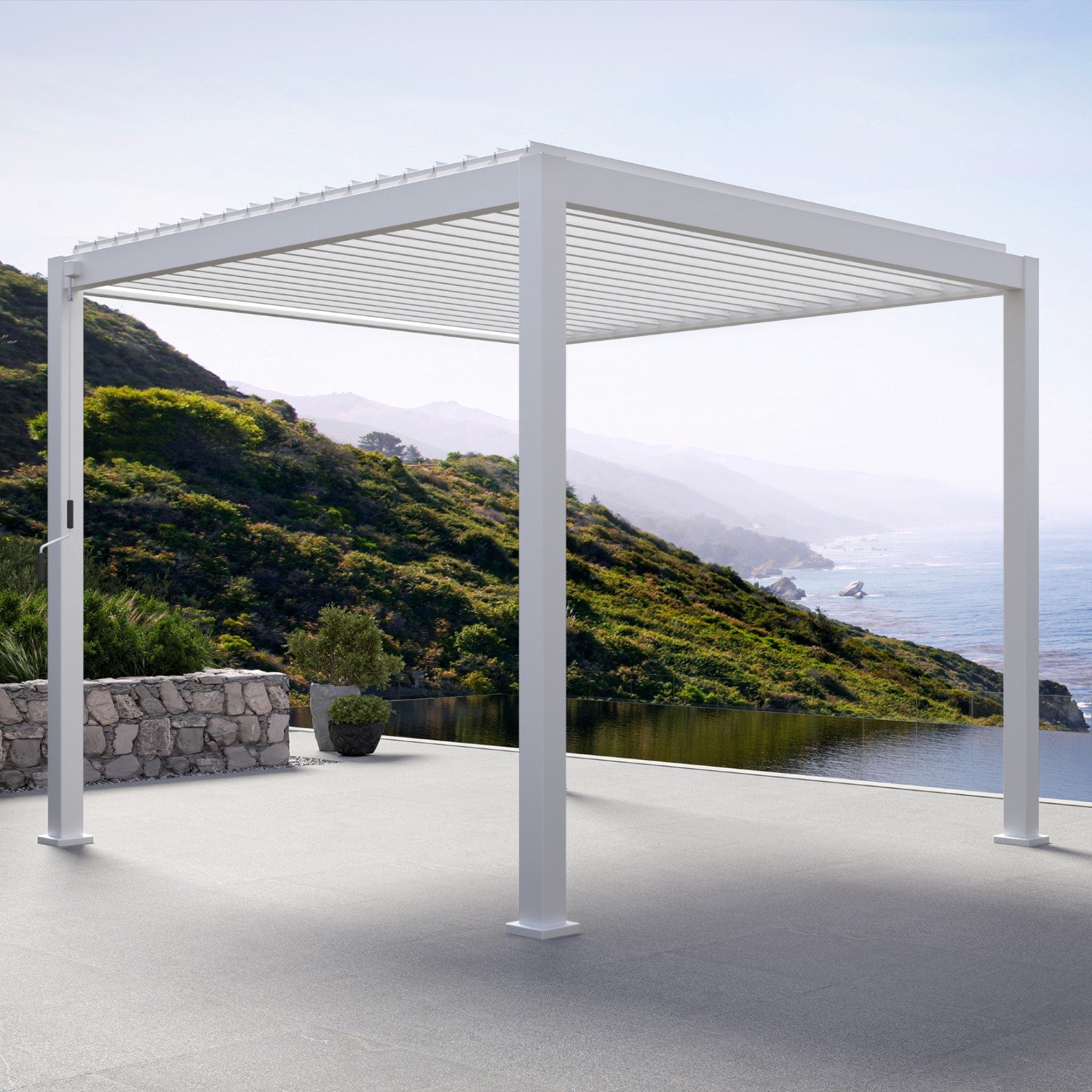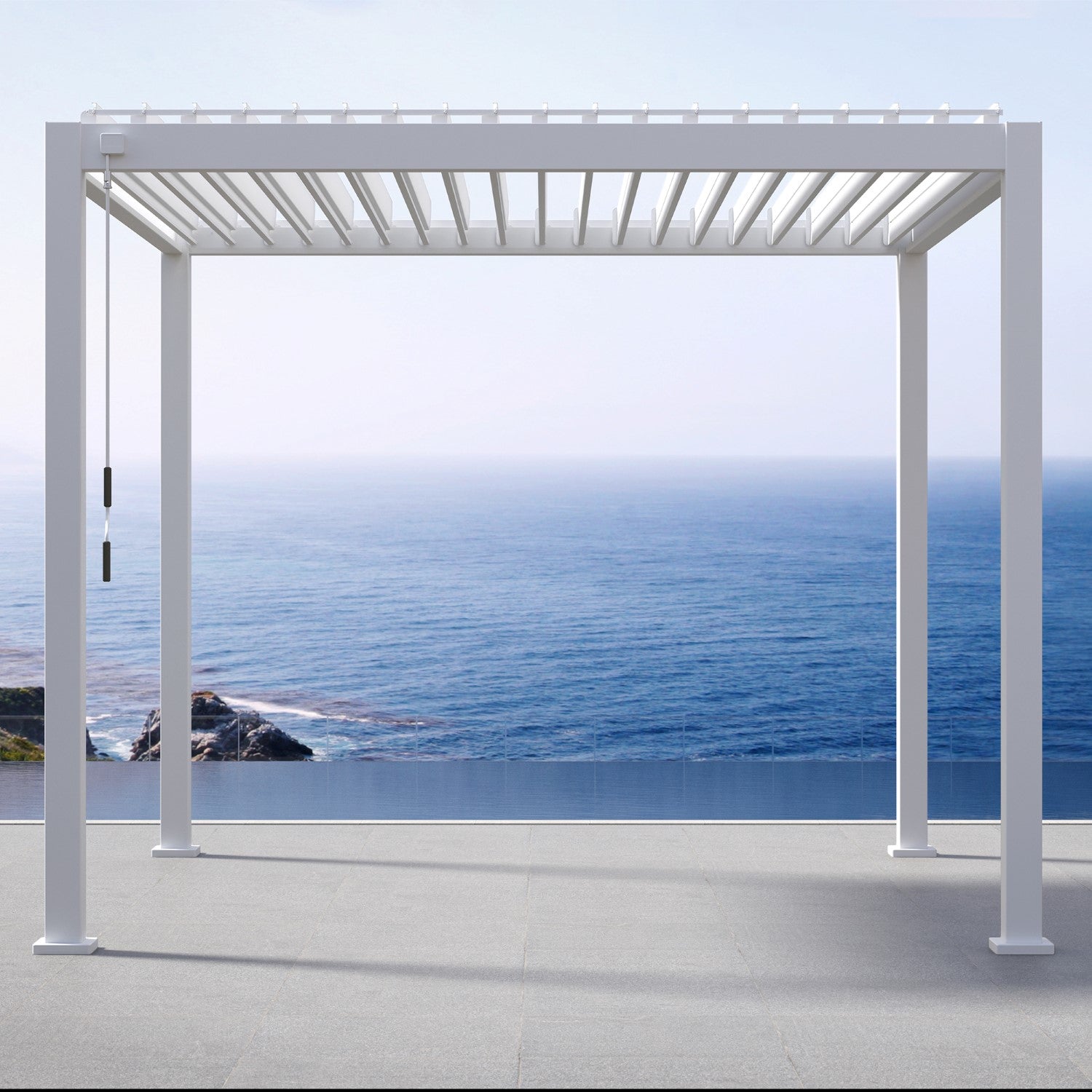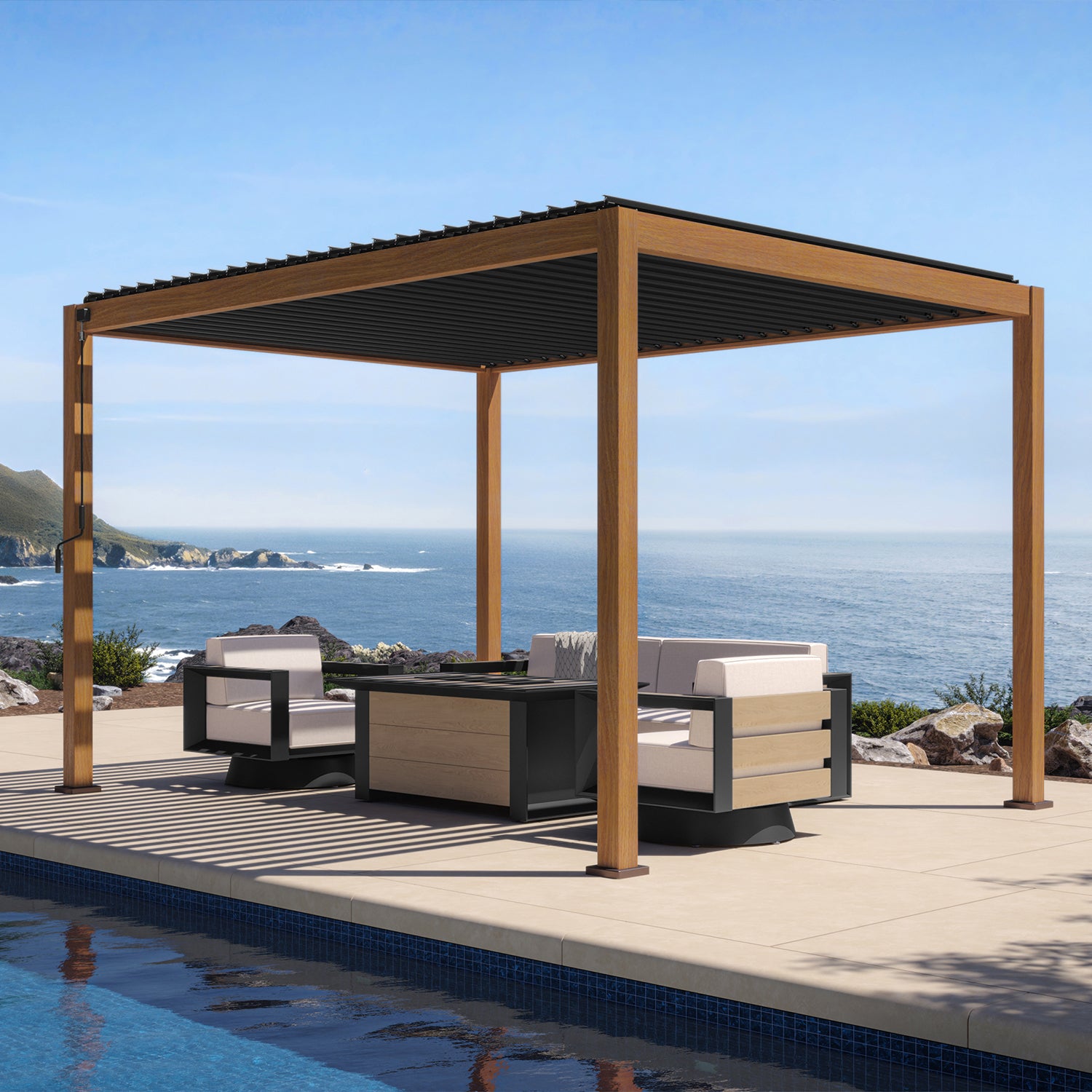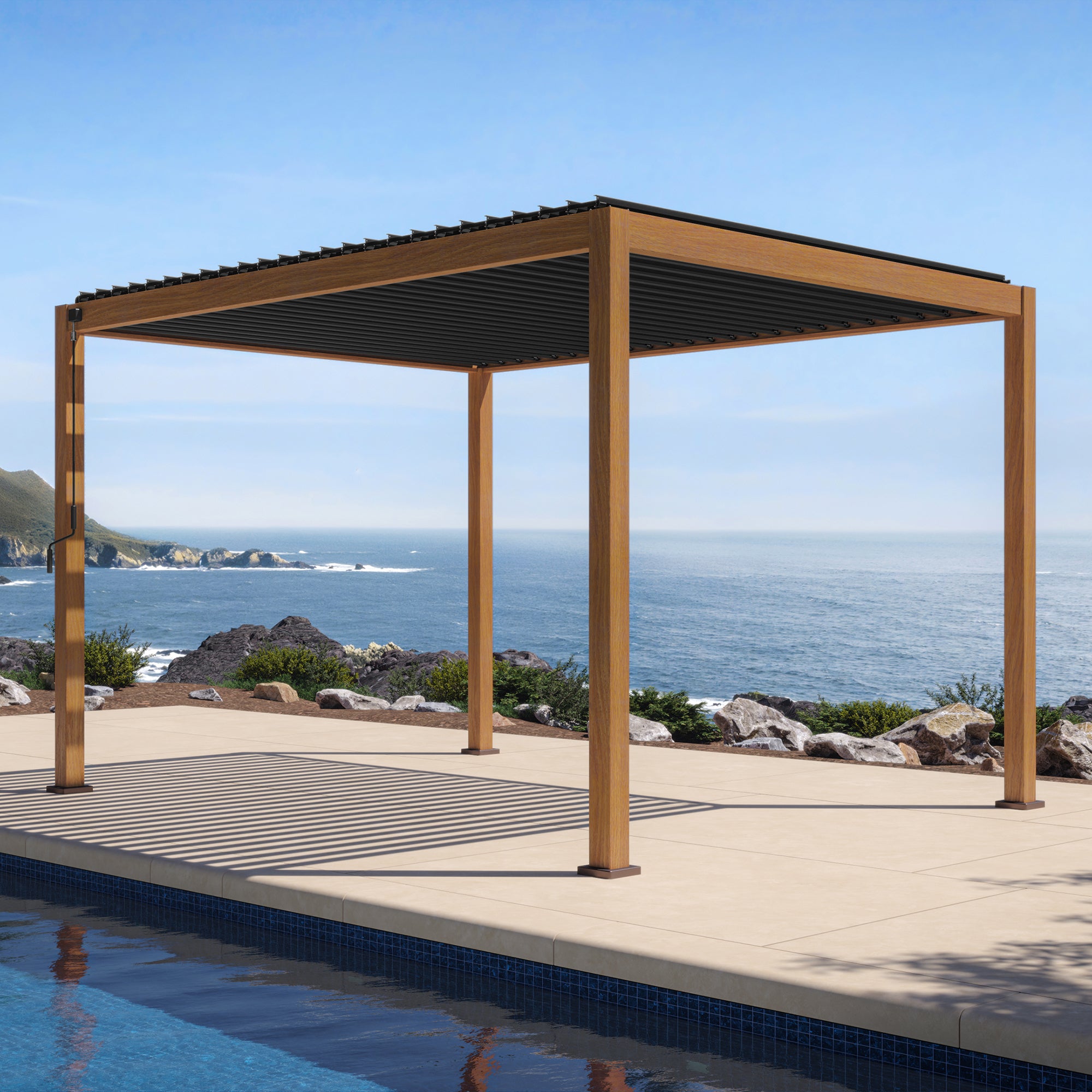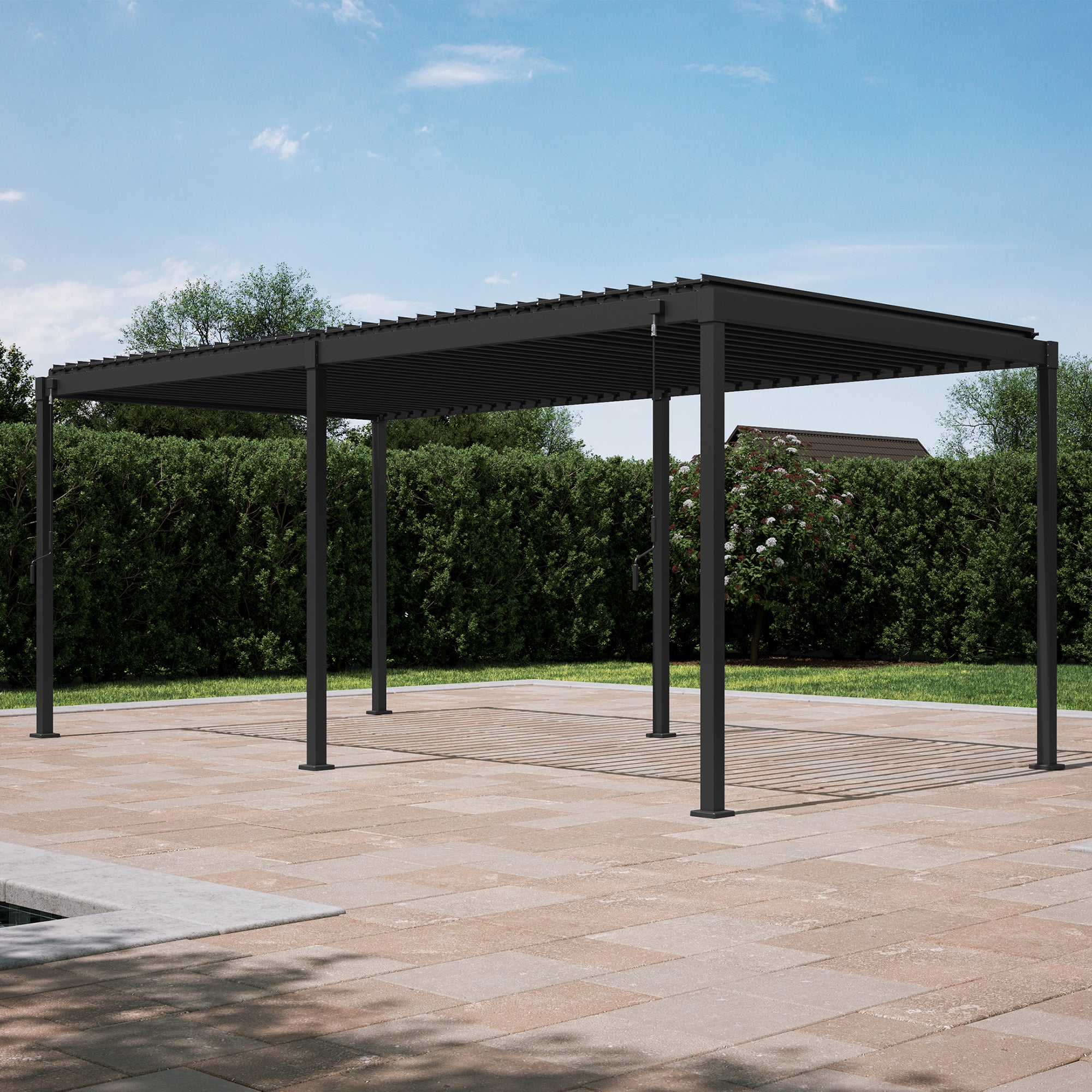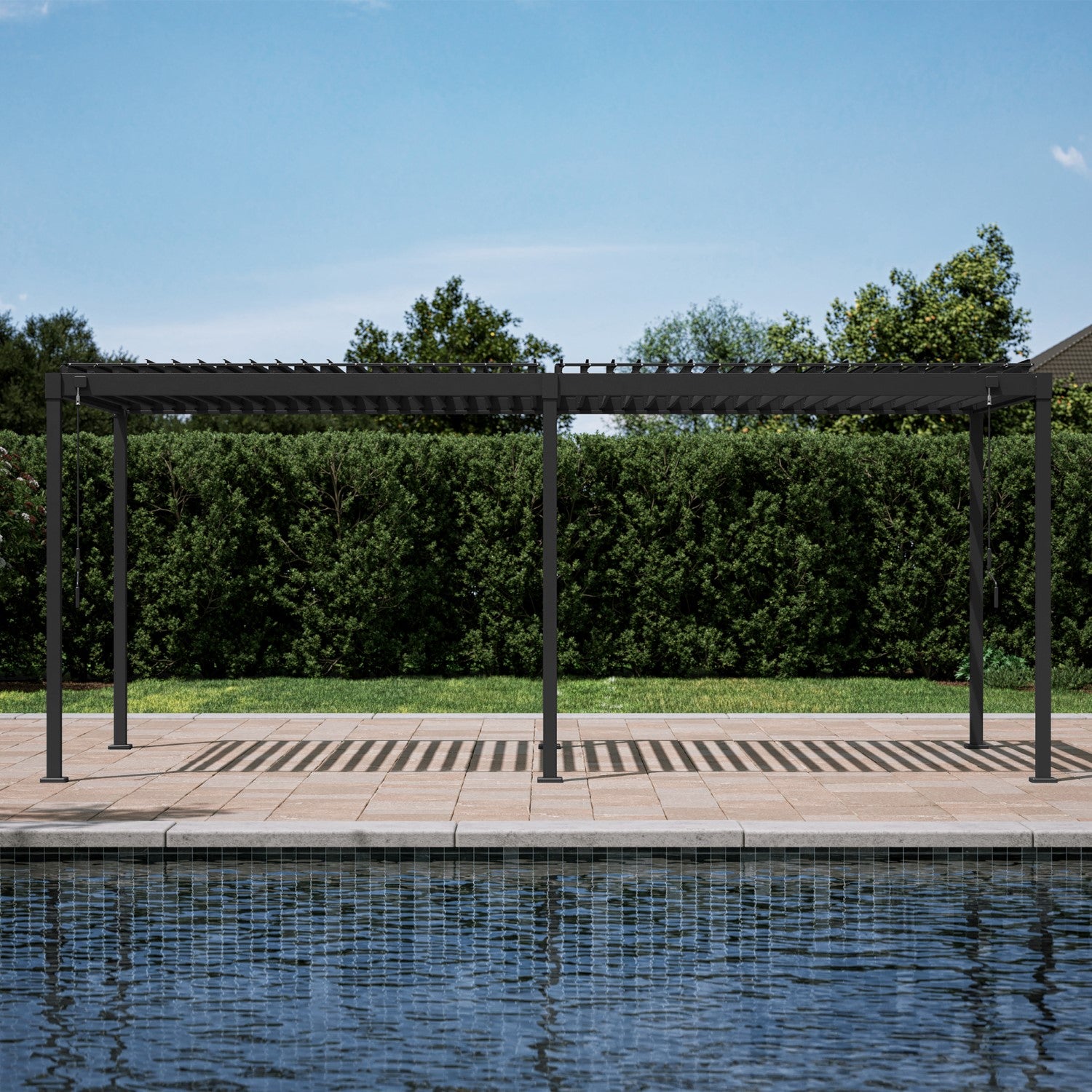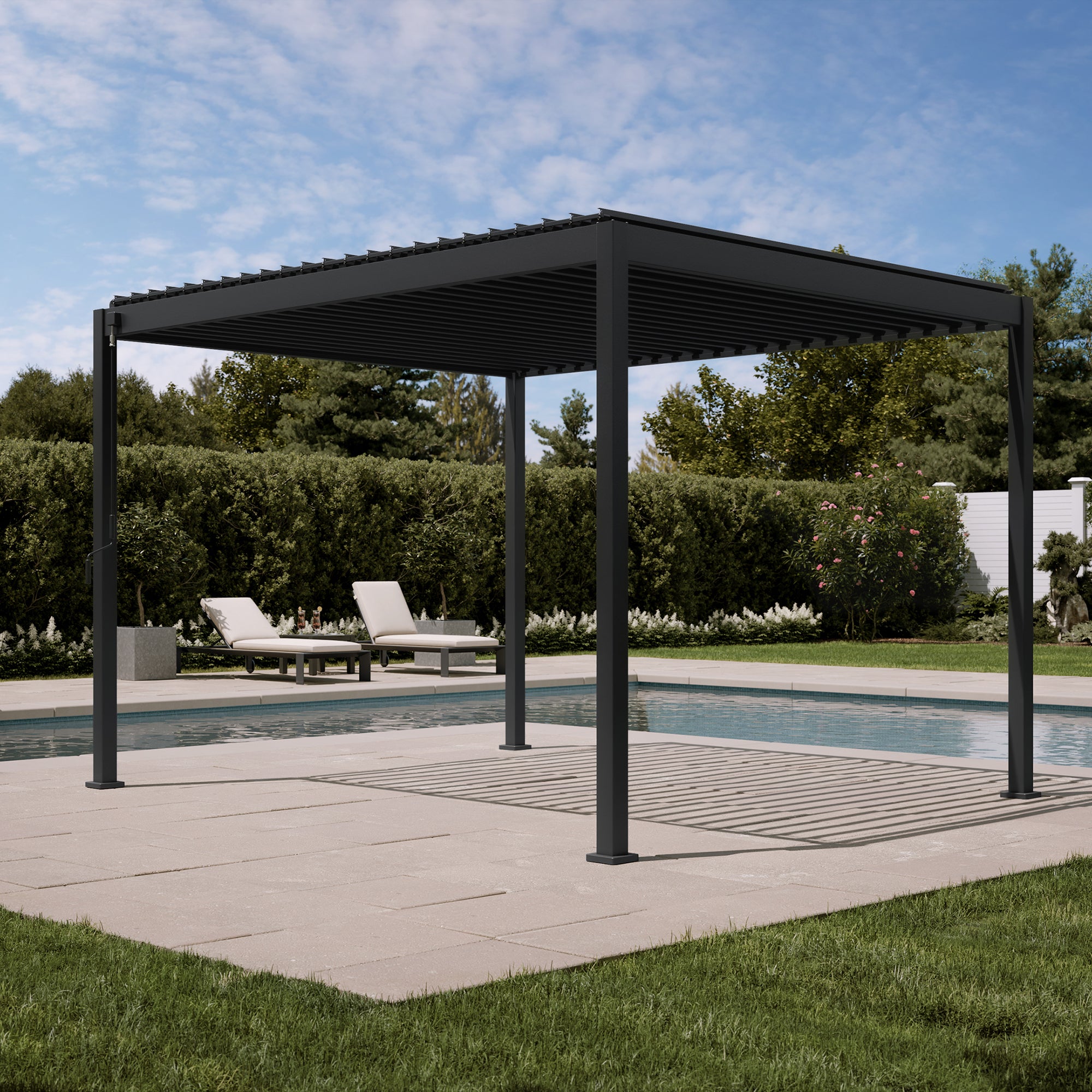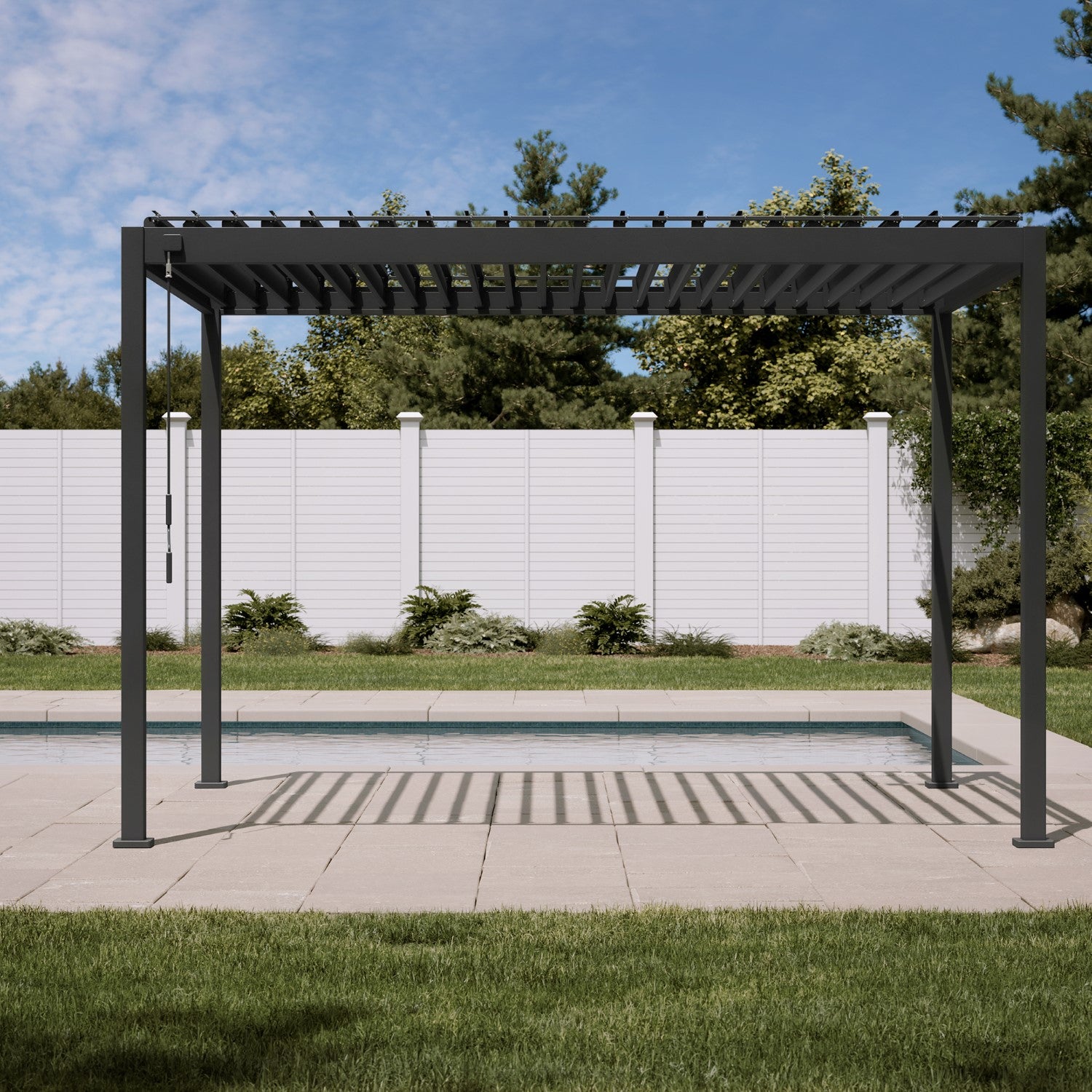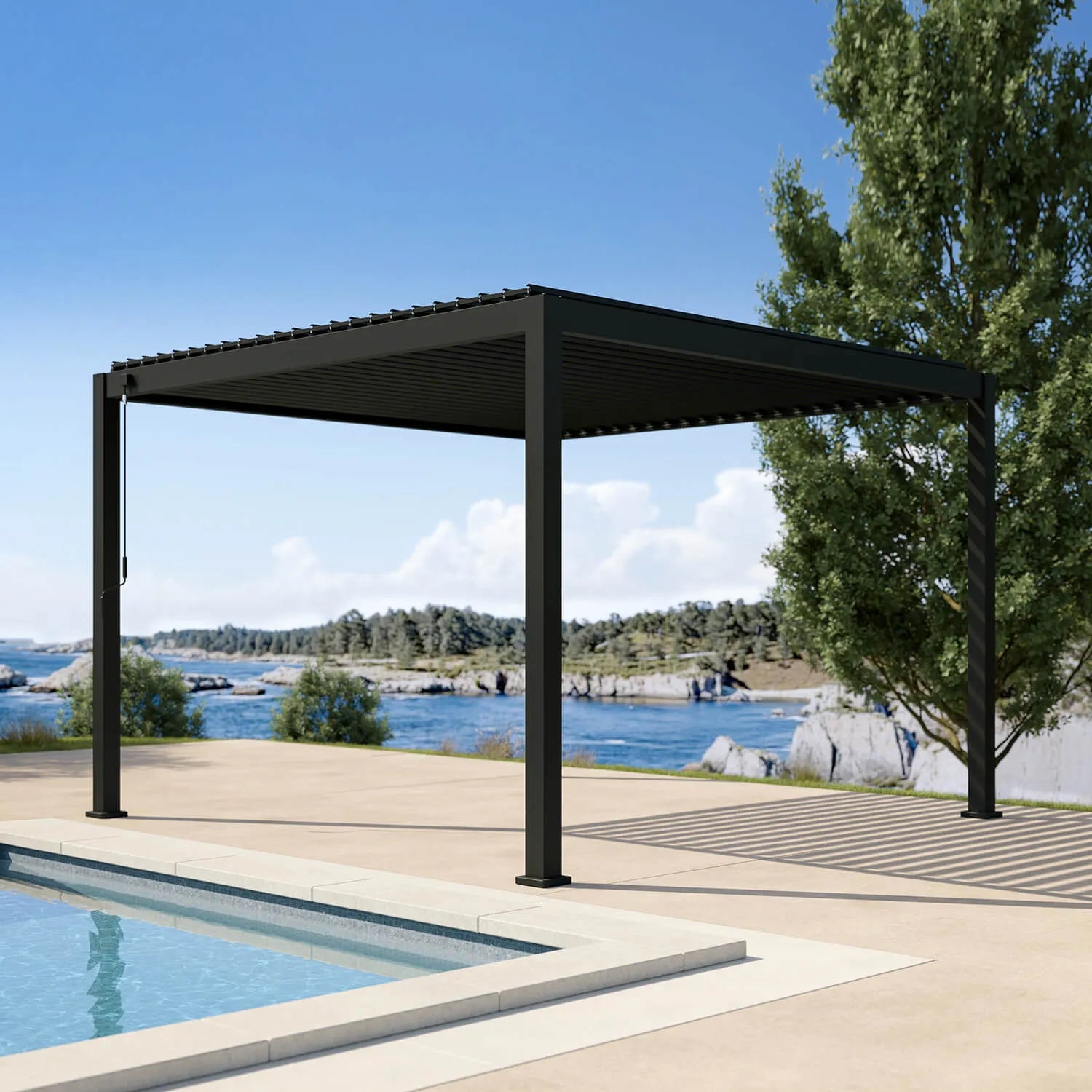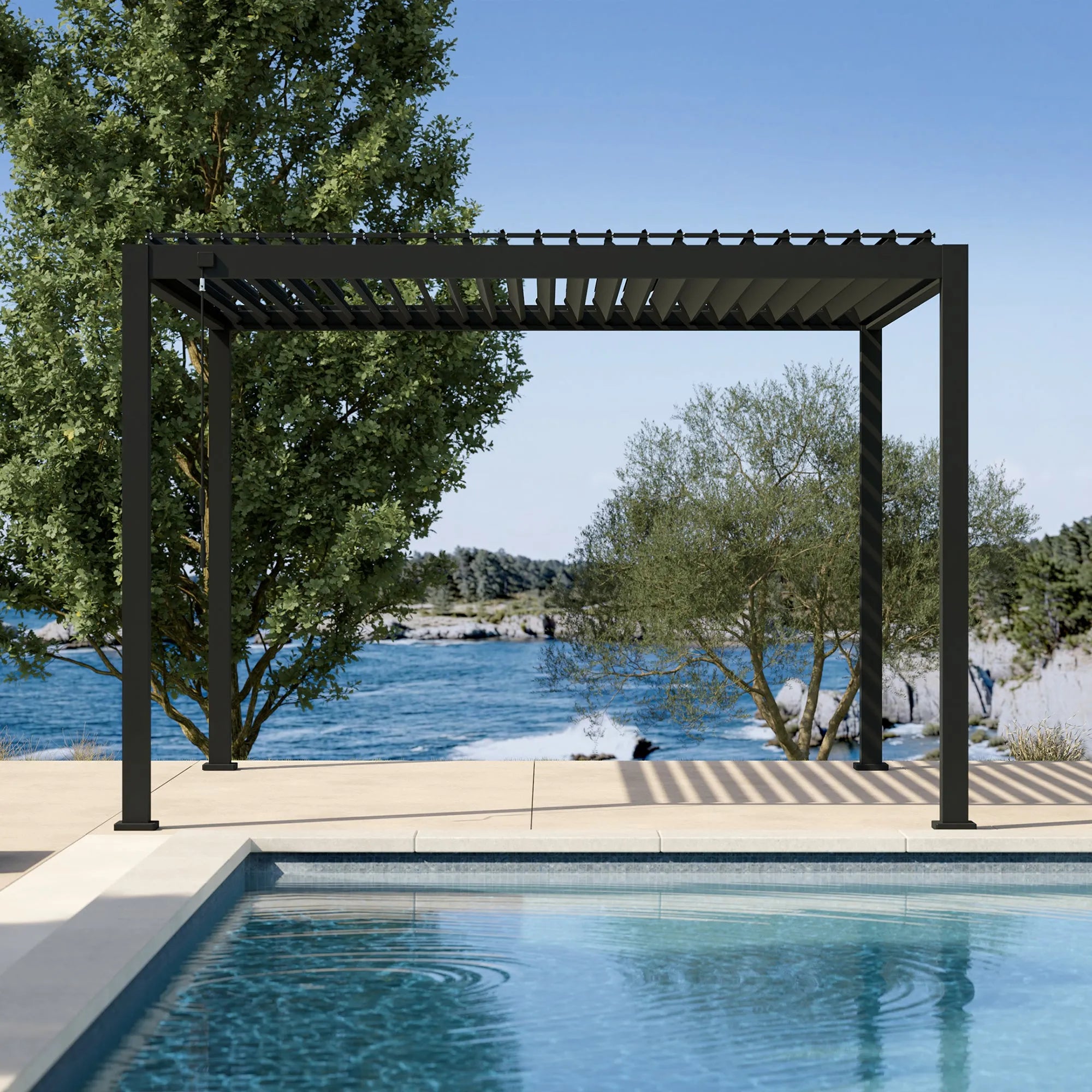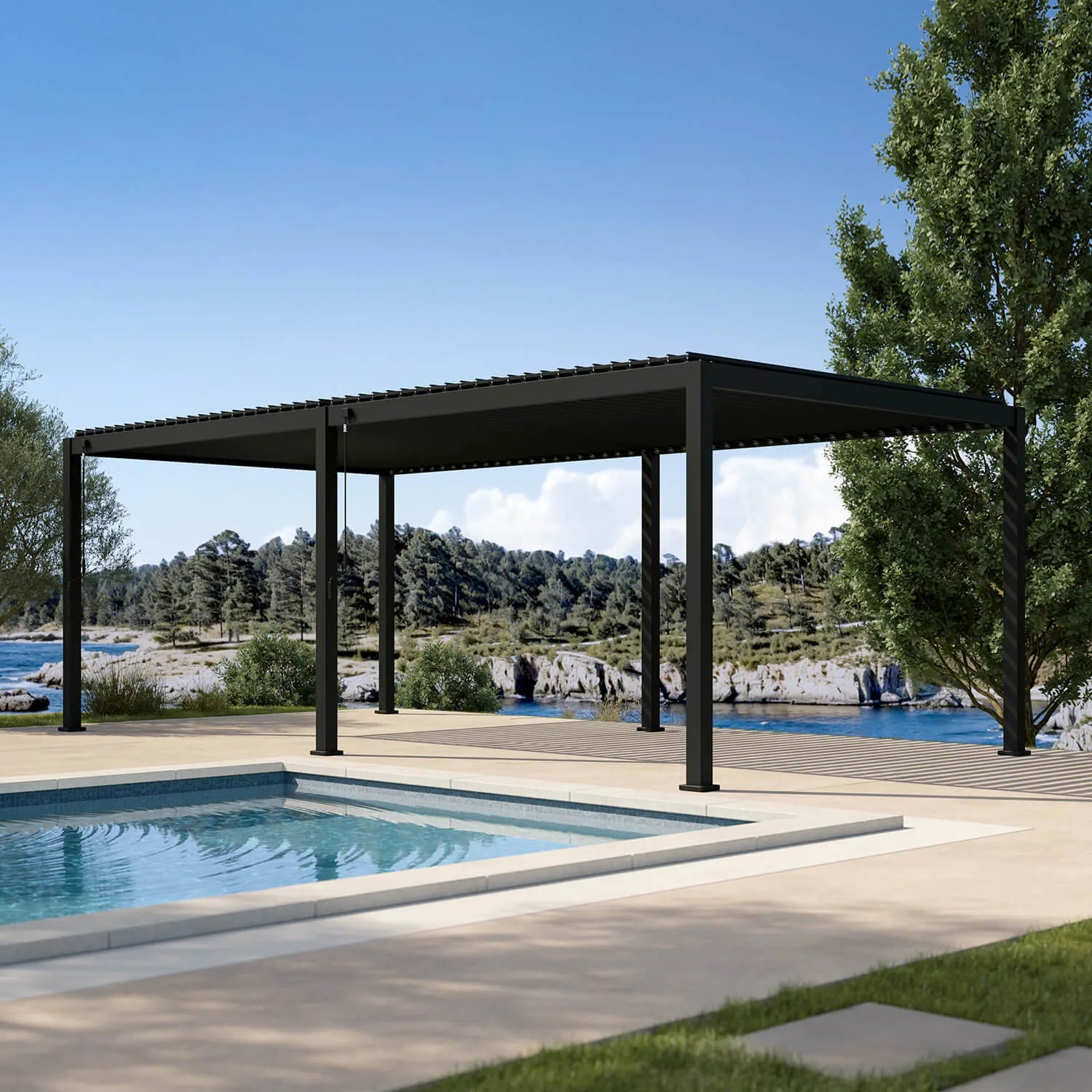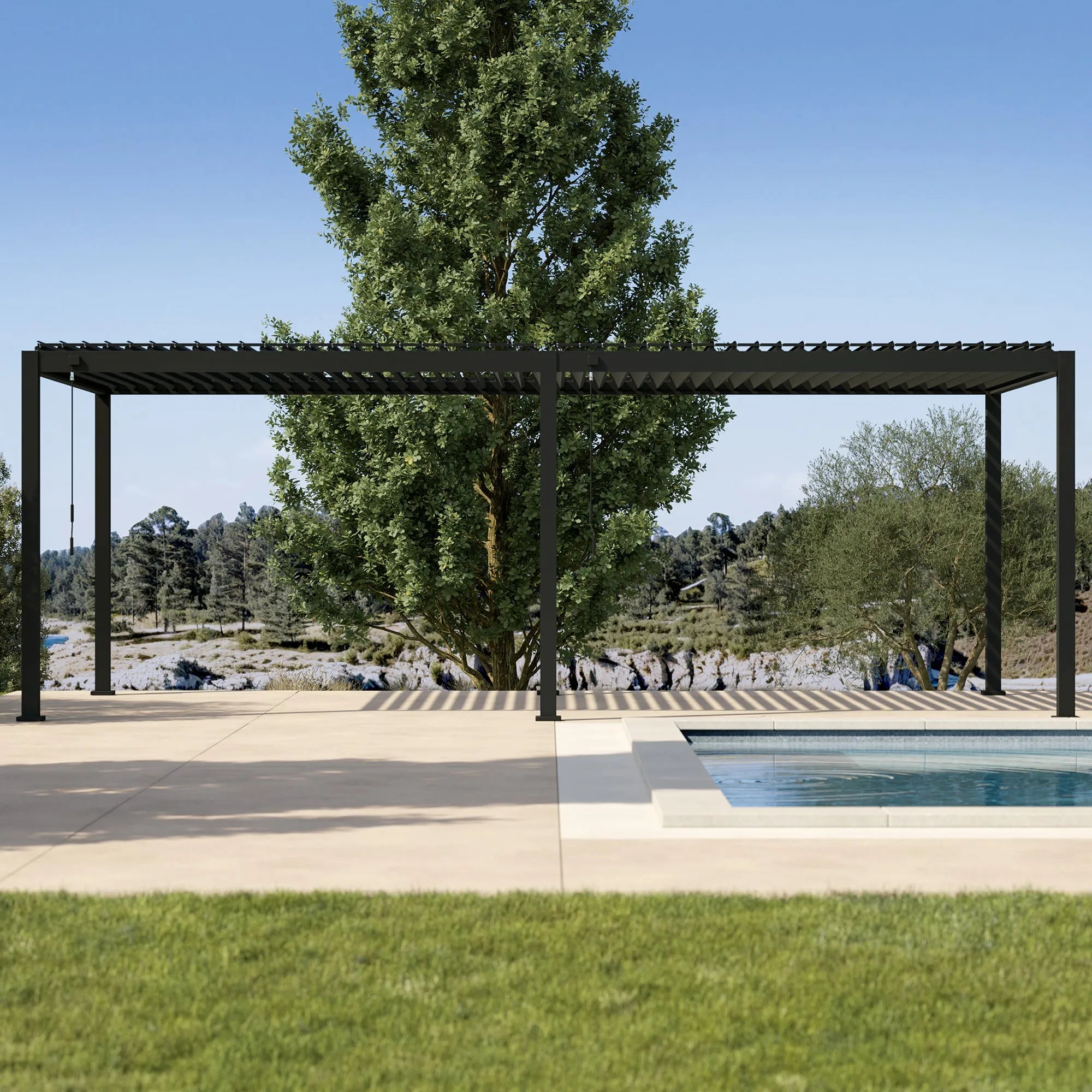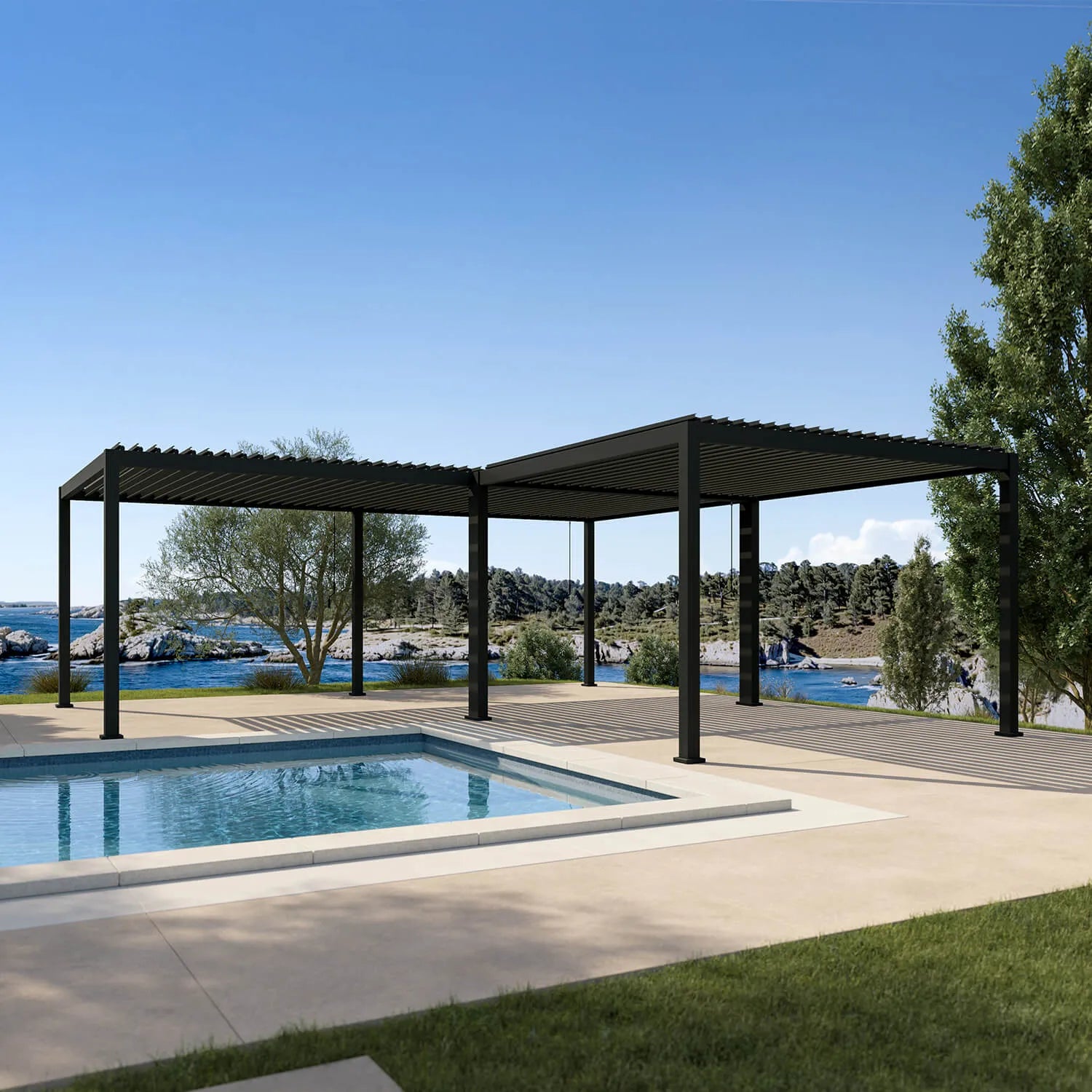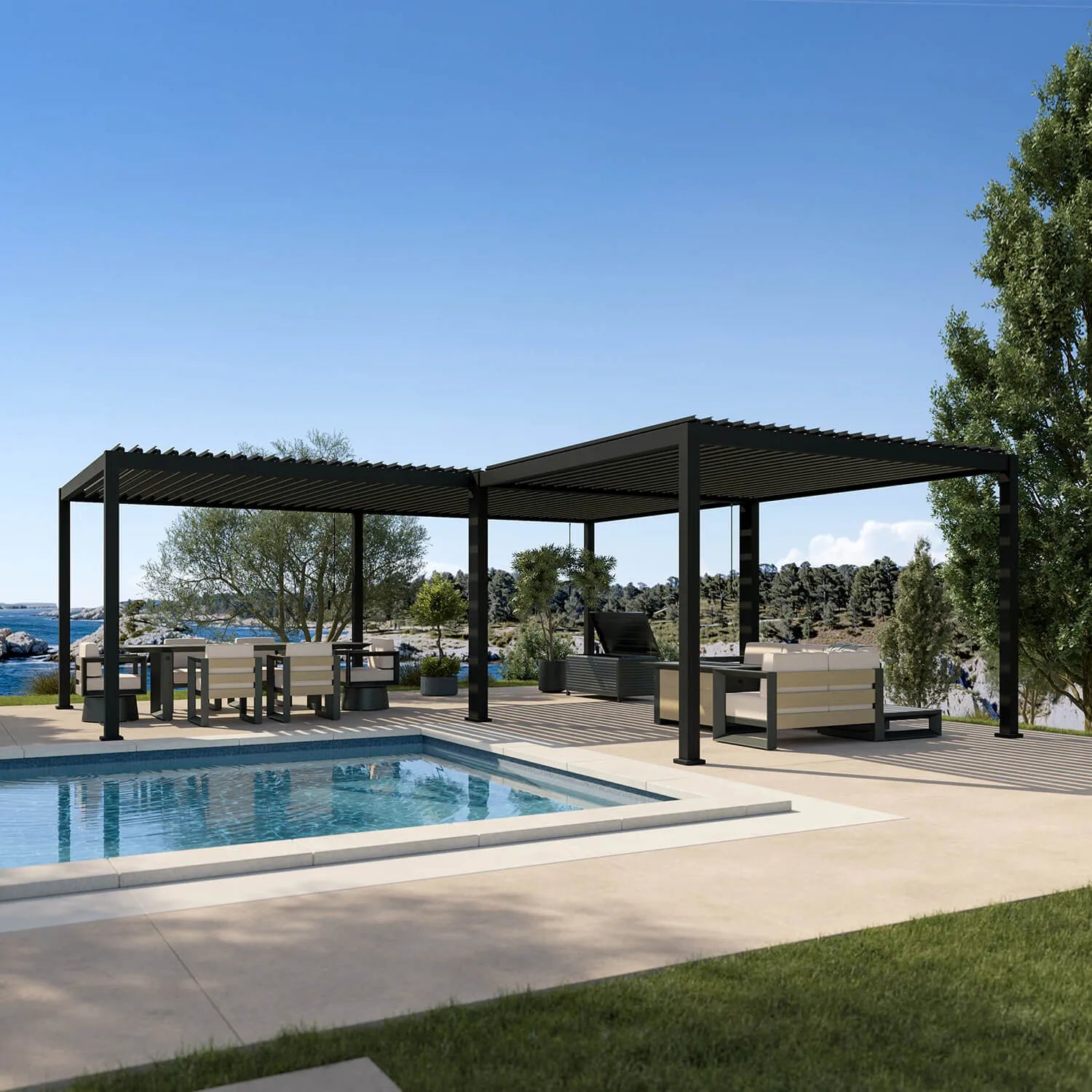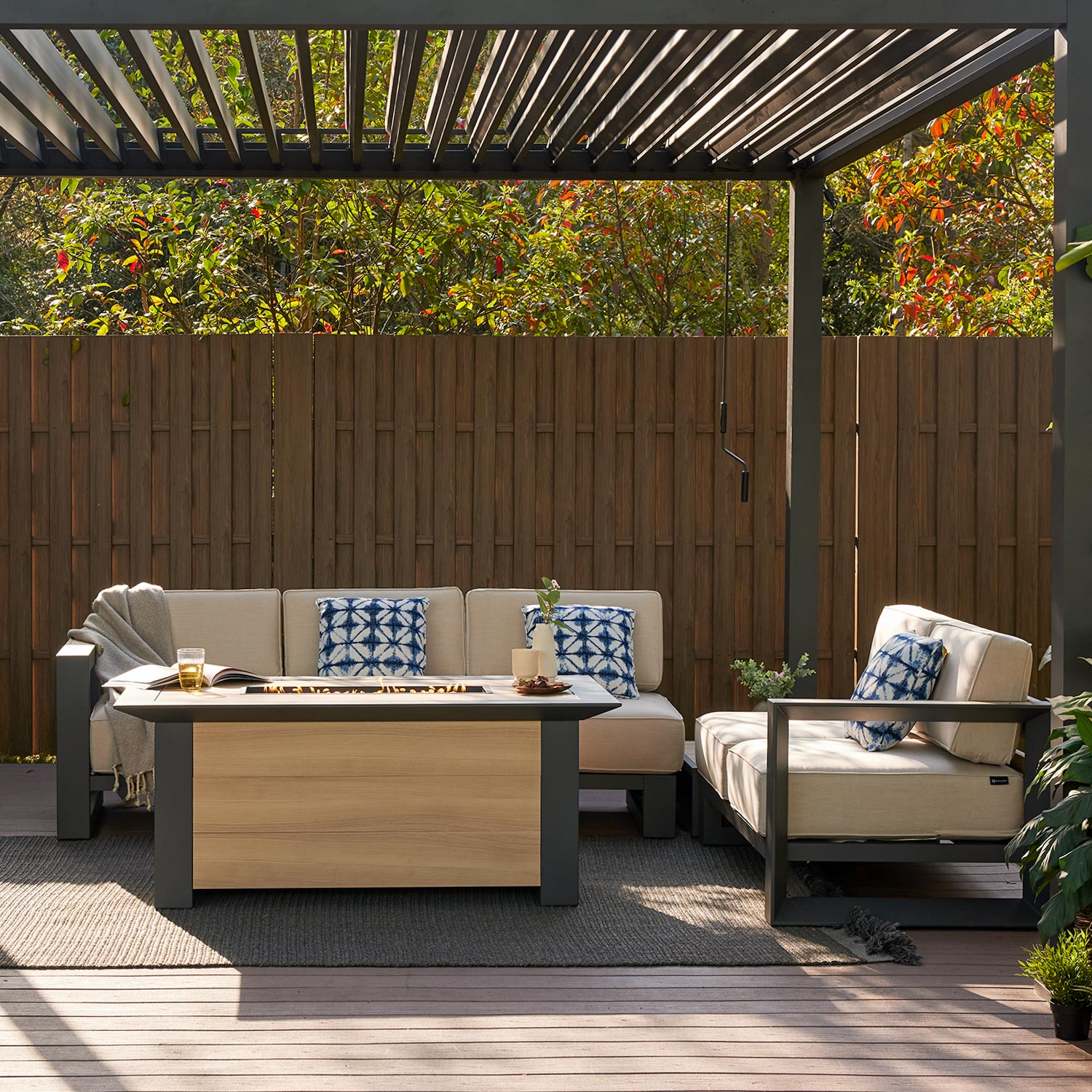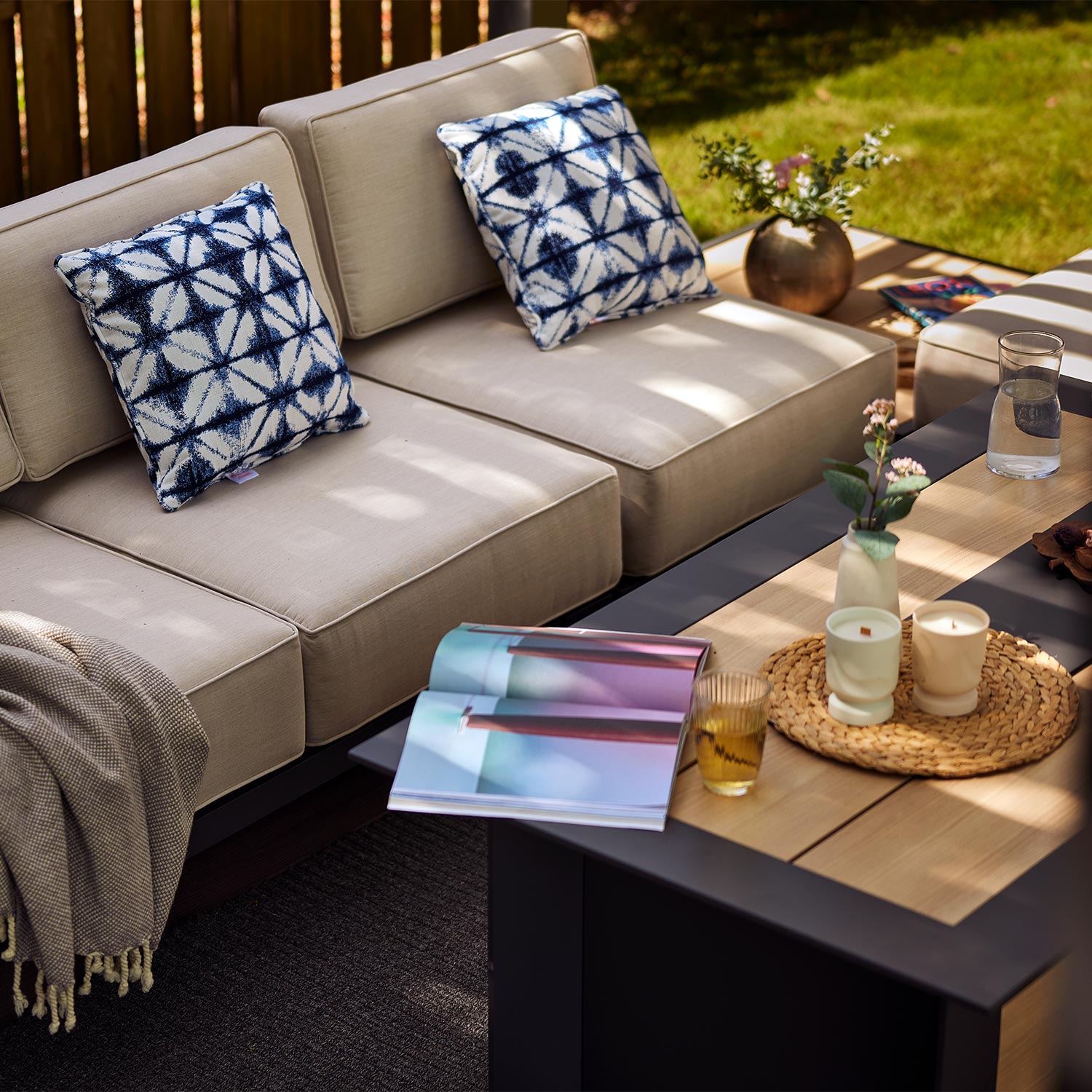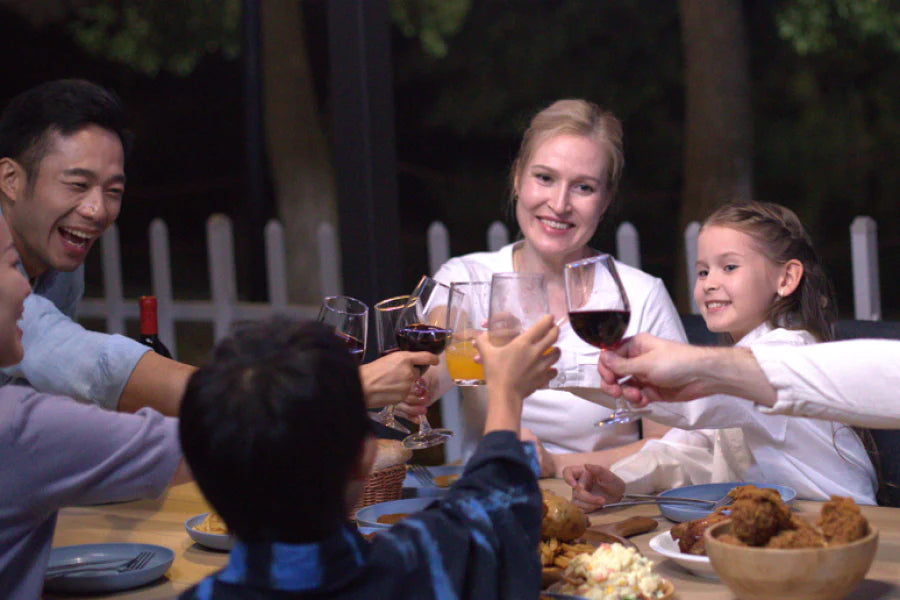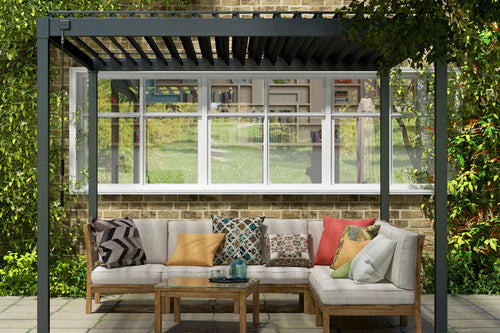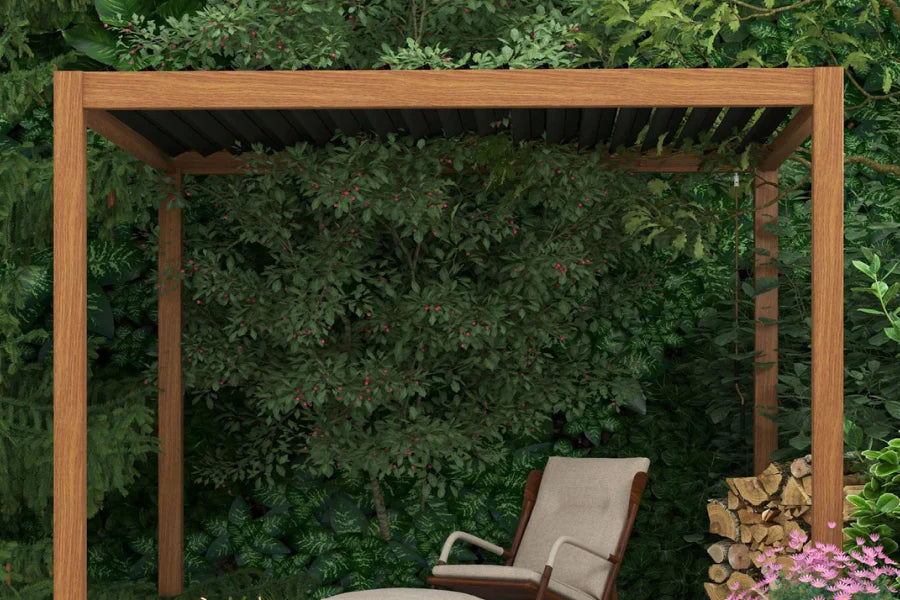

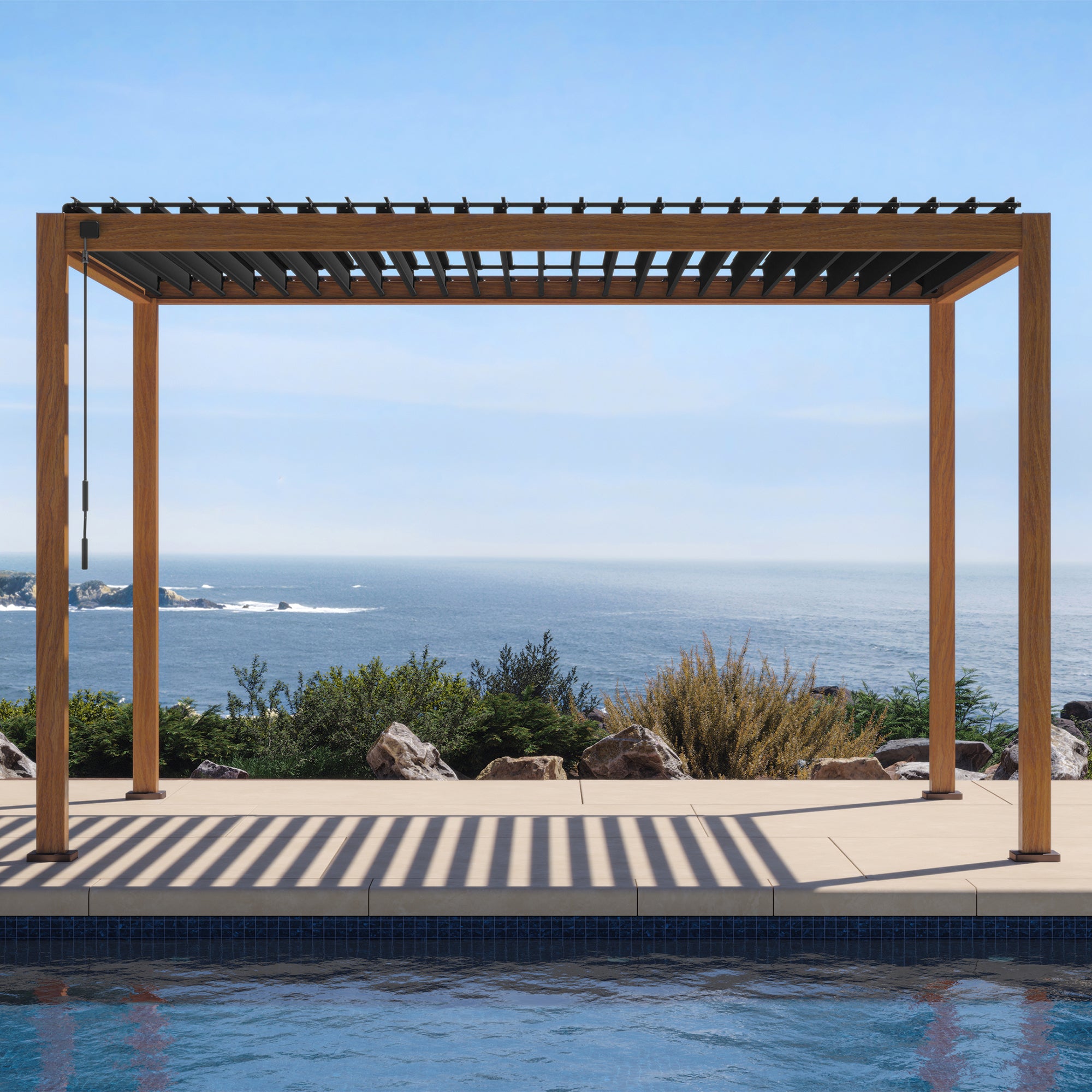
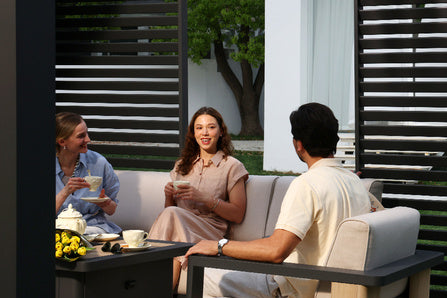
Yes, pergolas provide shade, but the amount depends on the roof design, sun angle, placement, and any side screening. Open beams create filtered sunlight, while a suitable closing louvered roof provides more continuous overhead shade. Low morning or afternoon sun can still enter through open sides.
The practical question is whether your table, sofa, or lounge chair will be shaded when you want to use it. A pergola's advertised size does not guarantee the same shaded area throughout the day.
This guide explains what affects coverage and how to improve it, whether you are choosing a new pergola or adapting an existing outdoor space.
How Much Shade Does a Pergola Provide?
There is no single shade percentage that applies to every pergola.
For an open-beam roof, coverage depends on beam width, spacing, orientation, and the sun's position. For adjustable louvers, the setting changes the roof openings. A retractable roof changes coverage again as sections move aside.
If a manufacturer gives a shade percentage, ask what it describes and under which conditions. Do not assume it means the same percentage of the patio stays shaded all day, or that it represents an equivalent UV-protection rating.
Roof Coverage and Ground-Level Shade Are Different
An overhead roof casts a shadow that moves as the sun moves. With lower sunlight, that shadow shifts away from the area directly beneath the roof.
This explains why a pergola can shade a patio floor while sunlight still reaches the people sitting near an open edge. Look at the seating position and height, not just the footprint marked on the paving.
A larger roof may help, but more size alone does not solve every side-sun problem.

Which Pergola Roof Provides the Shade You Need?
| Roof or Cover | How It Creates Shade | What to Consider |
|---|---|---|
| Open beams or lattice | Breaks up sunlight into a pattern of light and shadow | Fixed gaps allow direct sun through |
| Adjustable louvers | Changes the roof openings by tilting the panels | Open settings admit sunlight; side exposure remains |
| Retractable or folding roof | Moves coverage aside or restores it | Compare the covered and open configurations |
| Fabric canopy or shade cloth | Filters or blocks light according to the fabric | Check fabric specifications, support, and operating limits |
| Fixed opaque roof | Blocks direct sunlight through the covered roof area | Coverage cannot be opened; sun can still enter from the sides |
| Planted canopy | Creates shade as foliage develops | Coverage changes with growth and seasons; support must be suitable |
Clear glass or transparent panels should not automatically be treated as shade covers. They can retain daylight beneath overhead rain shelter; tint, light transmission, and additional shading determine how they affect sunlight.
Adjustable Louvers: Change Light Without Moving the Roof Aside
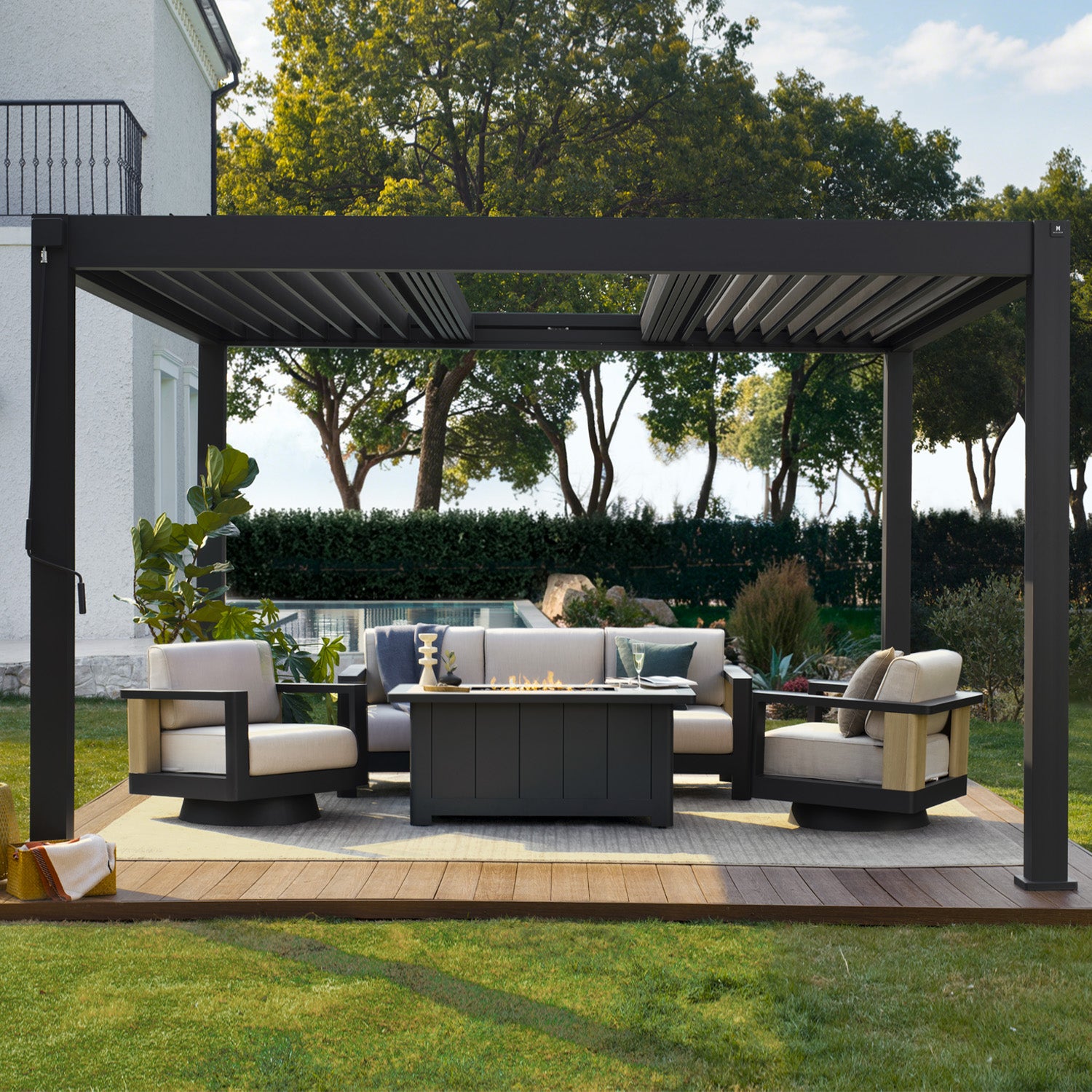
Tilting louvers let you choose between more light and airflow or a more closed overhead covering.
For example, our Mirador 111DA 13' × 13' Pergola has hand-cranked louvers that open up to 93°, allowing you to adjust overhead sunlight and airflow. Shade coverage also depends on sun angle and placement.

Powered controls offer a different operating experience. Our Mirador 111S E-Motion 10' × 13' Pergola offers remote-controlled louvers with a 0–93° adjustment range, making it convenient to change the roof setting as your lighting preferences change.

Retractable and Folding Roofs: Choose Coverage or Open Sky
A roof that retracts or folds aside serves a different need from one whose louvers only rotate.
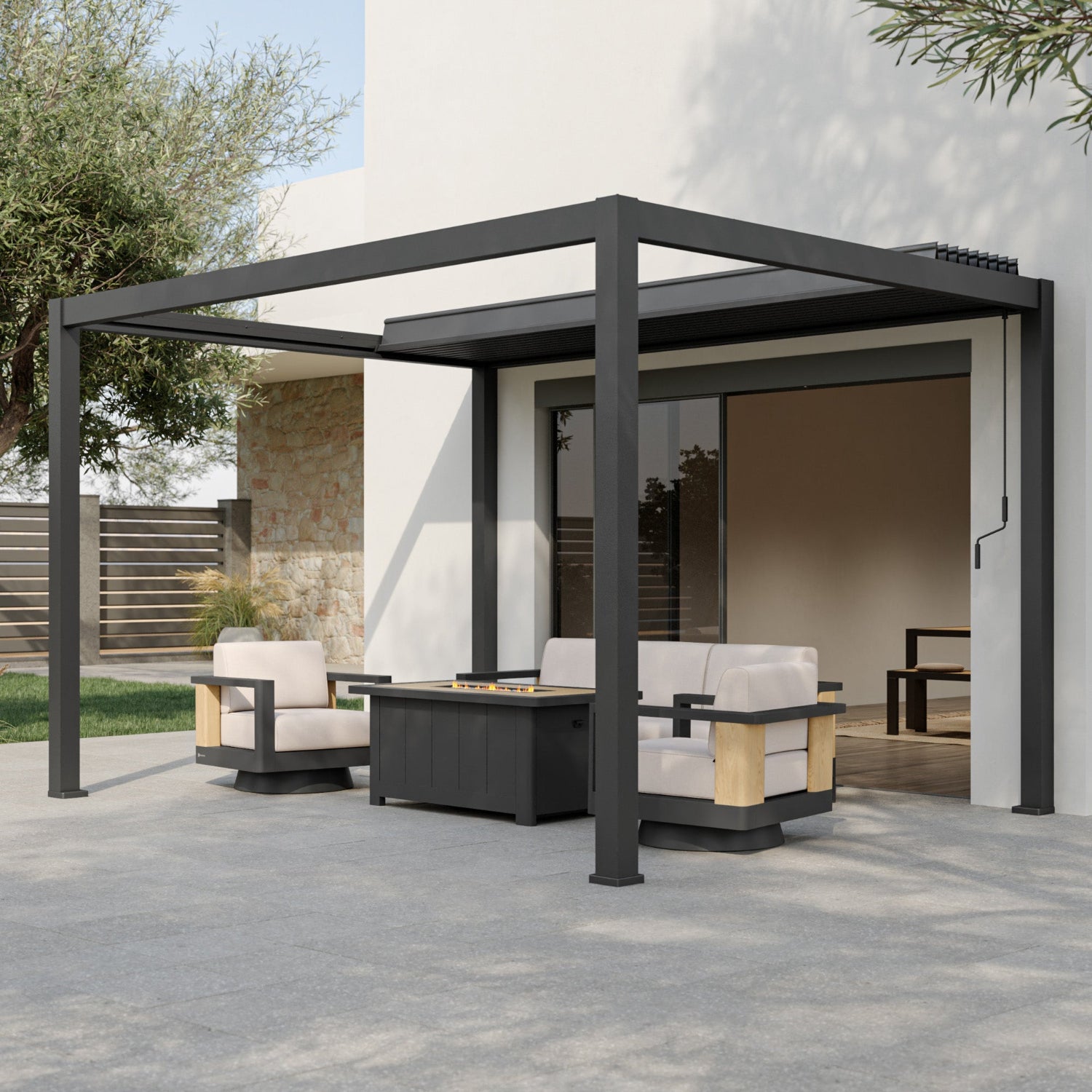
The Mirador 111A 13' × 10' Origami Pergola uses a hand-cranked accordion-style roof that folds to one side. It is an example of switching between an overhead covering and a more open sky view.

When comparing these systems, look at the space with the roof both open and closed. An open roof prioritizes sunlight and the outdoor view, so do not expect the same overhead shade in that configuration.
For a broader comparison of materials and mechanisms, explore our pergola roof ideas.
Why Does Sun Still Reach Beneath a Pergola?
The Sun Is Coming From the Side
A closed roof addresses overhead light, but an open side can admit lower-angle sunlight. This is often the problem when a dining area is comfortable around midday but exposed later.
Identify the side the light enters through during your intended hours of use. A screen placed there may be more useful than adding another layer above the roof.
Roof Openings Are Letting Light Through
Widely spaced beams create visible sunlight bands. Open louvers also admit direct sunlight depending on their angle and orientation.
Try different louver settings before assuming an accessory is needed. For a fixed open-beam structure, a suitable canopy or shade cloth can change the overhead coverage.
The Furniture Is Near an Exposed Edge
A chair can sit inside the pergola's footprint but outside its useful shade at a particular time.
If space permits, test moving the furniture farther into the shaded area. Include the position of a person sitting upright or reclining rather than checking only the chair legs.
The Season Has Changed
A layout that worked during one part of the year may receive sunlight differently later. Nearby trees and buildings also influence exposure.
Plan around the seasons and hours that matter to you. There is no universally best roof direction for every site.
How to Add More Shade to an Existing Pergola
Start by finding where the unwanted light comes from. An overhead cover and a side screen solve different problems.
1. Adjust the Roof and Seating Layout
If you have adjustable louvers, test their settings while seated in your usual position. Move the seating within the available shade where practical.
For an open-beam roof, check whether sunlight through the gaps or sunlight from an open side is the bigger issue. That distinction should guide the next step.
2. Add a Suitable Canopy or Shade Cloth
Fabric coverage can improve overhead shade on a compatible structure. Choose the fabric according to the light filtering you want, and check its actual specifications.
Do not confuse a fabric's resistance to UV-related deterioration with a tested UV-protection rating for people underneath.
Confirm attachment points, tensioning, drainage, and weather-use instructions. A shade sail can also be an option with a suitable support plan; do not assume a pergola frame can accept every added cover.
Keep fabric clear of moving louvers and roof tracks. These are design choices, not interchangeable add-ons for all pergolas.
3. Use a Side Screen for Low-Angle Sun
A retractable screen can filter sunlight entering through an exposed side. Select the location around the sun at your intended sitting time.
Our Mirador 111-Series Pull-Down Screen uses breathable fabric to filter side sunlight, with options for 10-foot and 13-foot sides. Confirm the pergola model and side length before ordering.

A screen improves side coverage rather than enlarging the physical roof. Shade performance depends on the fabric, screen position, and direction of incoming sunlight.
4. Consider Shutter Walls or Curtains
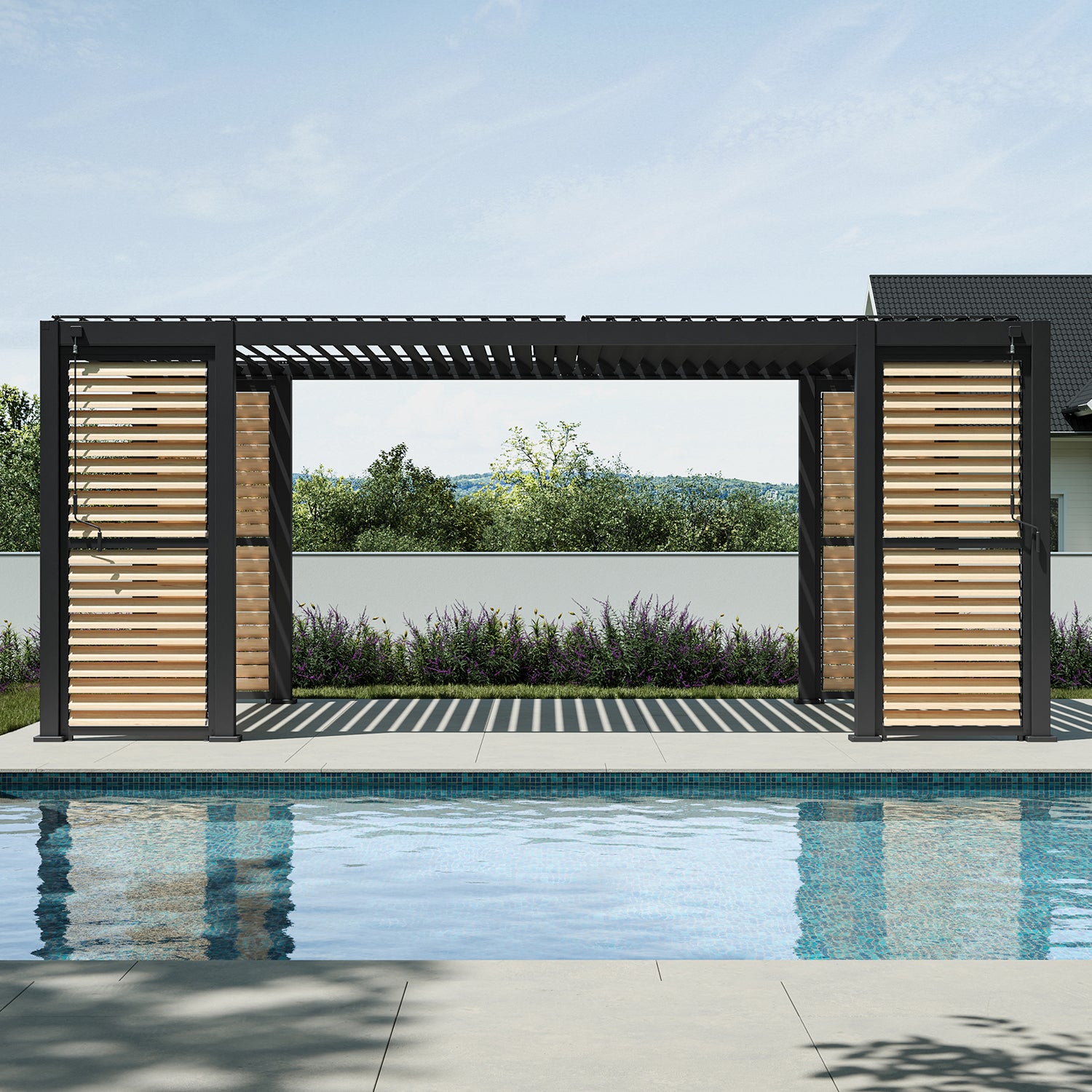
Adjustable shutters let you change the balance of side light, visibility, and airflow. Curtains offer a softer alternative where the mounting and fabric are suitable.
Our Mirador 111S ViewScape 10' × 20' Pergola features four full-height shutter walls with wall louvers adjustable from 0–170°, allowing you to change side light, privacy, and airflow.

Each purchase of our 111-Series 1/3 Shutter Wall includes one adjustable-louver panel. Multi-panel arrangements shown in the images require additional panels.

Check the Mirador accessories collection for the appropriate series, size, and configuration. A glass wall is not automatically a shade screen: assess its glazing information before relying on it to reduce sunlight.
5. Add Planting Where It Suits the Structure
Planting beside the seating area can soften sunlight and create a garden setting. A suitable traditional framework may also support a planted canopy.
Choose plants for the location and allow for seasonal growth. Keep vines clear of moving roof parts and drainage. Use an independent trellis where attachment to the pergola is not approved.
A Practical Shade Plan Before You Buy or Upgrade
Use the space itself to narrow down the solution:
- Choose your use time. Morning coffee, afternoon lounging, and dinner may need different coverage.
- Mark the furniture layout. Include the people sitting there and the clearance around them.
- Observe the light. Photograph the area at your intended use time, noting whether sunlight comes from above or the side.
- Choose the relevant change. Roof coverage for overhead sun; side screening for low-angle sun; layout changes where the shadow already provides useful coverage.
- Check fit and operation. Review the exact structure, accessory dimensions, installation needs, and operating instructions.
If you are planning for a different season, consider its sun path as well. A photograph taken today does not show every condition the space will experience.
| What You Notice | What to Evaluate |
|---|---|
| Sunlight bands through fixed roof gaps | A compatible canopy, shade cloth, or different roof design |
| Light through open louvers | Louver settings and orientation |
| Strong sunlight from one side | Screening or shutters on that exposed side |
| The shaded patch misses the seating | Furniture placement, pergola position, and roof extent |
| You want both shade and open sky | An adjustable, retractable, or folding roof |
| You want shade and rain shelter | A system designed for both roof coverage and drainage |
Does Pergola Shade Keep the Area Cooler?
Shade can make a seating area feel more comfortable by reducing direct sunlight. It does not promise a particular drop in air temperature.
Comfort also depends on airflow, humidity, surrounding paving, and heat from nearby surfaces. Closing every side for shade may change airflow, so assess both together.
Likewise, visible shade is not a complete measure of UV protection. Look for specific, relevant test information rather than interpreting louver angle, fabric marketing, or roof size as a UV rating.
Shade and Rain Protection Are Separate Questions
An open-beam roof can provide shade while allowing rain through. A fabric canopy's rain performance depends on its material and complete design.
A louvered system intended to close and drain water can provide overhead rain shelter, but open sides may still admit wind-driven rain.
Choose around both requirements if needed. Do not add a cover solely for shade and assume it also provides the rain protection you want.
Frequently Asked Questions
Do Pergolas Provide Enough Shade for a Patio?
They can, when the roof and layout suit the seating area and use time. Judge the shade where you will sit rather than assuming the whole footprint stays shaded.
What Pergola Roof Gives the Most Shade?
An opaque continuous covering blocks more direct overhead sunlight than a widely spaced open roof. Adjustable systems let you change coverage, but side exposure still matters.
Do Closed Louvers Provide Shade All Day?
Closed louvers provide overhead coverage, but they cannot automatically stop low-angle sun entering through open sides. Placement and side screening may also be needed.
Should Pergola Slats Run North–South or East–West?
There is no universal answer. Local sun angles, slat geometry, and use time determine the result. Compare the actual site rather than relying on a fixed directional rule.
Will a Side Screen Increase the Shade Area?
It can improve the shaded coverage of a seating area at certain times by intercepting side sunlight. It does not increase the pergola's physical roof area.
Can I Attach Any Shade Sail or Fabric Cover to a Pergola?
No. Confirm that the frame, attachment points, and moving components suit the proposed covering. Follow the structure and cover manufacturers' instructions.
Choose Shade Around the Way You Use Your Patio
A pergola can provide useful shade when its roof, position, and side coverage work together. Start with the sunlight reaching your seating area, then choose the change that addresses it.
Mirador Outdoor offers manual louvered, remote-controlled, folding-roof, and shutter-wall options, with separate shade accessories for suitable models. Explore the Mirador pergola collection to compare the functions that fit your space.