


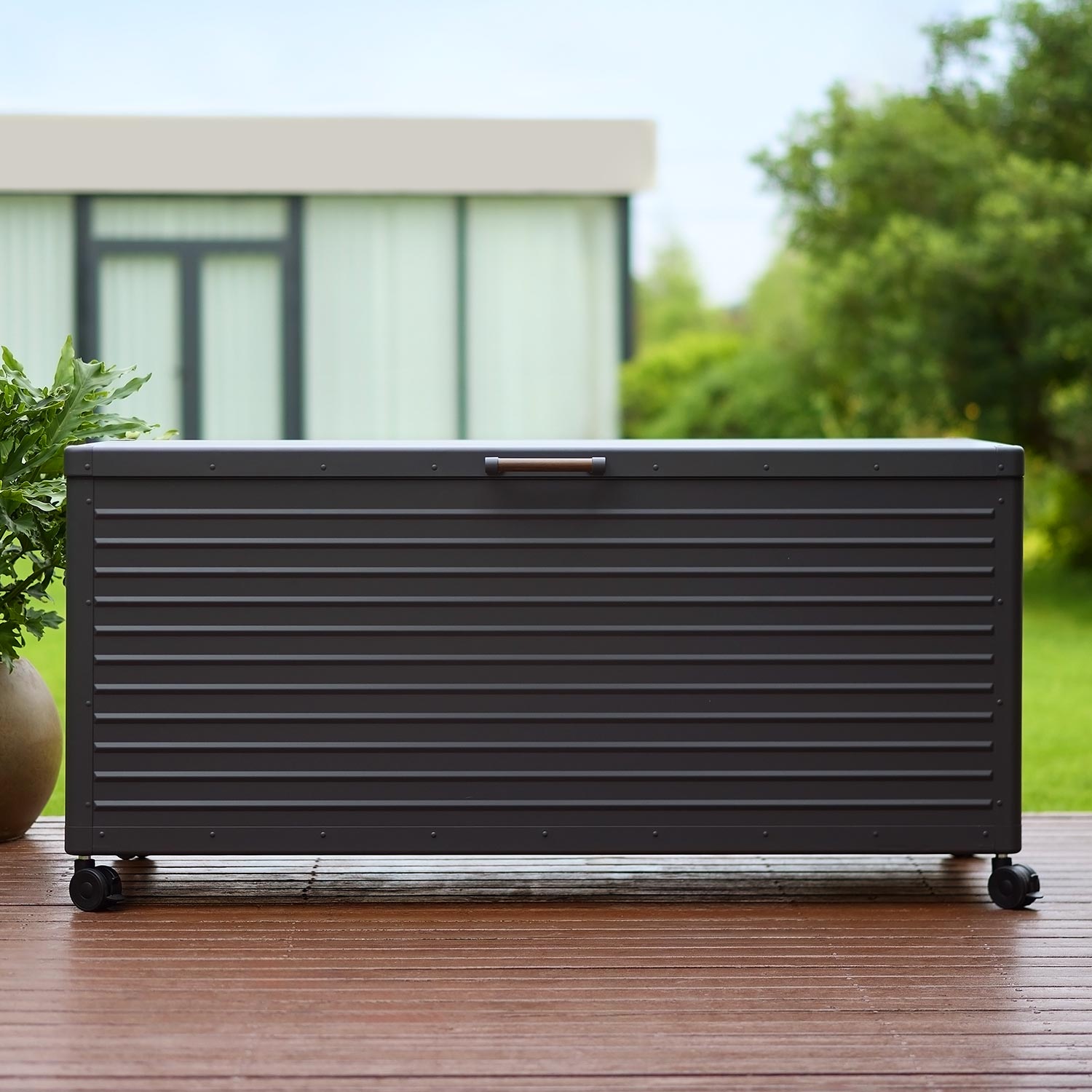
A storage box with wheels sounds simple enough. That is, until you try dragging a 200-pound loaded deck box across flagstone and the cheap plastic casters crack on the first trip. Wheels are the one feature people rarely think about when buying outdoor storage, and it's the feature that'll frustrate you the most if you get it wrong.
Here's what actually matters when choosing an outdoor storage box with wheels, broken down by wheel type, surface compatibility, and the stuff nobody tells you in a standard product listing.

Why Wheels on a Storage Box Matter
A deck box full of patio cushions, pool noodles, and garden tools gets heavy fast. We're talking 80 to 150+ pounds once it's loaded. Without wheels, you're stuck asking a friend to help you shove it across the patio every time you want to rearrange your outdoor space or sweep underneath.
Wheels change that equation completely. A wheeled storage box lets one person reposition it in seconds. No lifting, no back strain, no scuffing your deck finish. And if you live somewhere with seasons, you'll be moving your deck box between sunny spots and sheltered areas multiple times a year.
But not every wheel performs the same on every surface. That's the part most buyers skip, and regret later.
Fixed Wheels vs. Swivel Wheels: Key Differences
There are really just two main wheel types you'll find on outdoor storage boxes. Here's how they compare:
|
Feature |
Fixed Wheels |
Swivel Wheels |
|
|
Direction |
Roll forward and backward along a fixed alignment |
Swivel 360° to change rolling direction |
|
|
Maneuverability |
Well suited to straight-line movement |
Make it easier to steer around furniture and corners |
|
|
Staying in place |
Depends on stationary feet, wheel locks, and the overall design |
Locking options, where fitted, help control unwanted movement |
|
|
Common setup |
2 fixed wheels + 2 feet/pads |
4 swivel casters, or 2 swivel + 2 fixed |
|
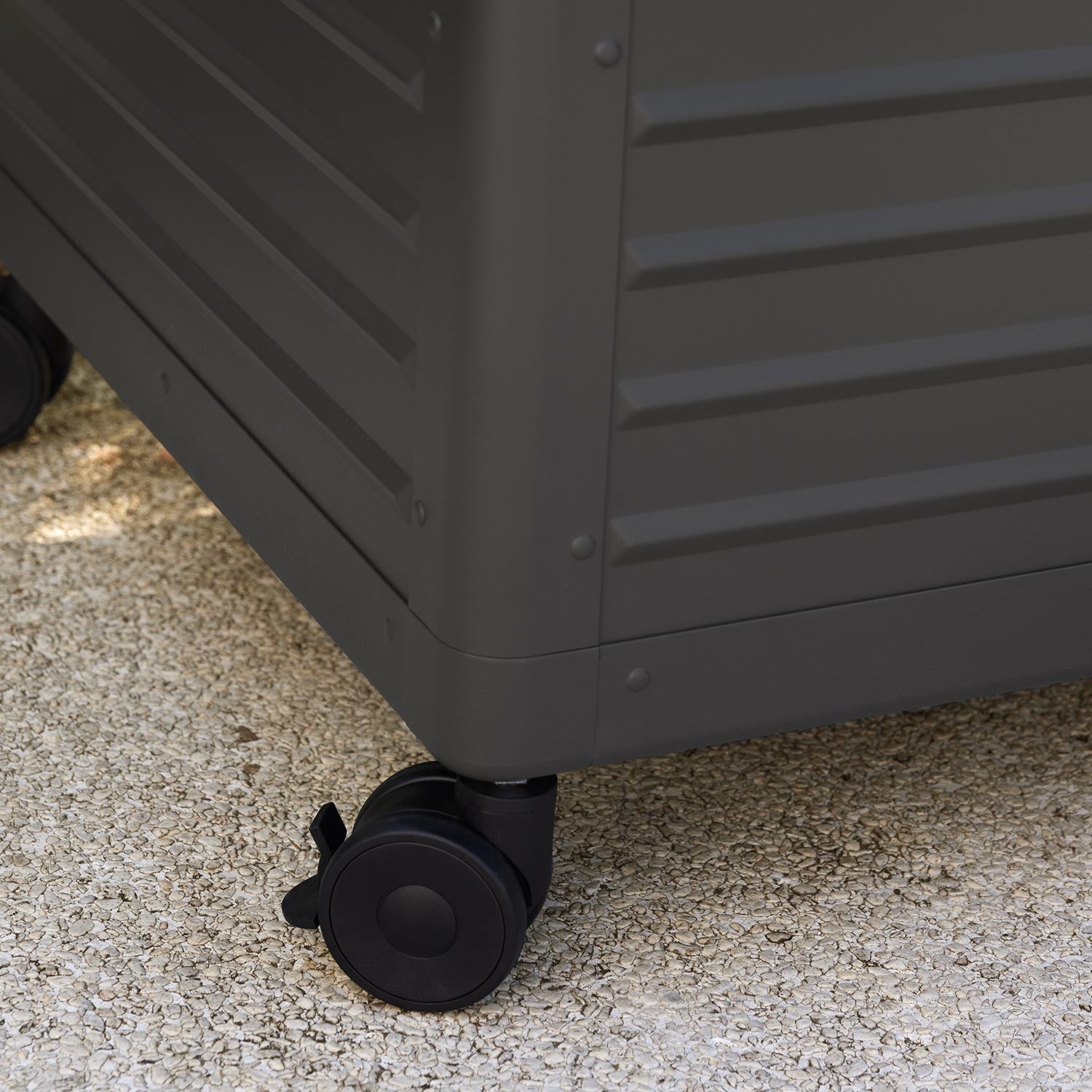
At Mirador, we use lockable swivel wheels on our deck boxes, making them easy to reposition for cleaning or a new patio layout. Once the box is where you want it, engage the wheel locks to help prevent unwanted rolling.
For either wheel type, surface conditions matter. Smooth, level paving generally allows easier movement, while loose gravel, wide joints, and uneven edges can make rolling more difficult. Follow the product’s load and moving instructions, keep the wheels clear of debris, and engage any fitted wheel locks once the box is in position.

Match Your Wheels to Your Patio Surface
This is where most people go wrong. The wheel that works perfectly on a smooth garage floor might be terrible on your backyard patio. Here's a quick guide:
- Smooth concrete or composite decking: Almost any wheel type works. Rubber or polyurethane wheels roll quietly and won't scratch the surface.
- Textured concrete or stamped pavers: Go with larger diameter wheels, 3 inches or more. Small casters get caught in grout lines and textured gaps.
- Natural stone or flagstone: Rolling performance depends on how level the stones are and the width of the joints. Swivel casters make steering easier, but uneven edges and wide gaps can interrupt movement with either wheel type. Choose a level spot for the box and engage the wheel locks once it’s in position.
- Grass or gravel: You'll want big, sturdy wheels. Honestly, this is where a lot of cheap resin deck boxes fail because their thin plastic wheels sink right in.
A metal storage box with wheels, like one built from aluminum and galvanized steel, tends to come with heavier-duty wheels by default. The manufacturer knows the box itself has real weight to it, so the wheels were chosen to handle a serious load, not just look good on a product photo. That's actually a good sign.
How Many Wheels Do You Really Need?
Wheel count affects how an outdoor storage box moves, but the wheel layout, load capacity, and locking features matter just as much.
- Two wheels plus stationary feet typically use a tilt-to-roll design. You lift one end to move the box, then lower it onto its feet when parked. This can work well for occasional repositioning, although the lifting effort depends on the box’s weight and contents.
- Four wheels support the box during movement without requiring a tilt-to-roll motion. When fitted with swivel casters, they also make it easier to change direction around patio furniture and corners. Wheel locks help prevent unwanted rolling once the box is in position.
- Six wheels or more should be assessed as part of the complete design. Check the manufacturer’s load rating, wheel arrangement, and recommended surfaces rather than assuming that more wheels mean better performance.
Our deck boxes use four swivel casters with a locking function, combining convenient maneuverability with the ability to secure the wheels when parked. Position the box on a firm, level surface and engage the wheel locks after moving it.
For assembly and caster installation details, visit our help center and follow the instructions for your model.

What to Look for in a Storage Box with Wheels
Beyond wheel type, a few other features separate a good outdoor storage box with wheels from a disappointing one:
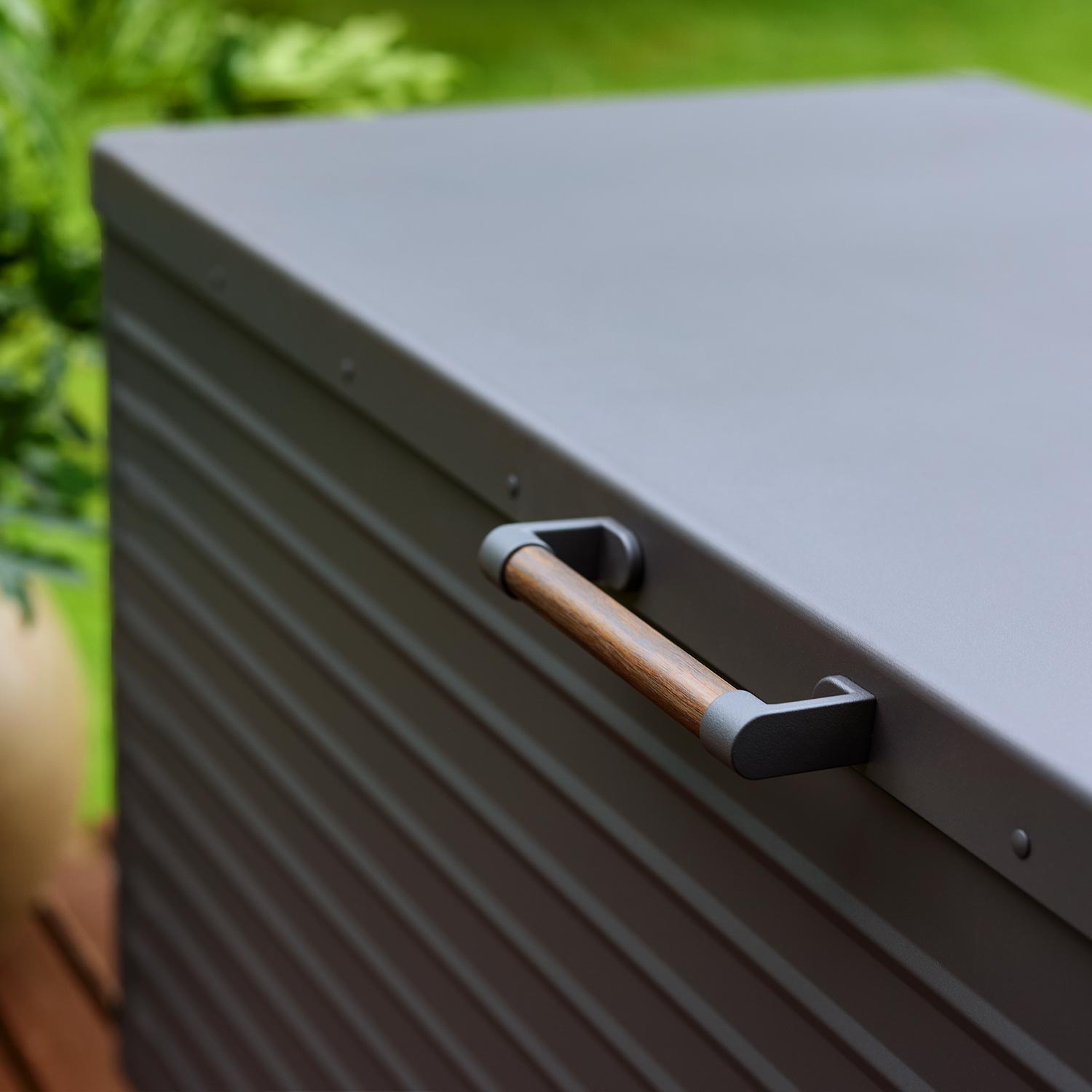
- Material matters. Resin is lightweight and affordable, but it can crack or warp in extreme heat. Aluminum and steel construction, like what Mirador uses across our 134-gallon to 370-gallon Deck Box range, won't rust, won't warp, and can handle temperature swings from Arizona summers to Norwegian winters.
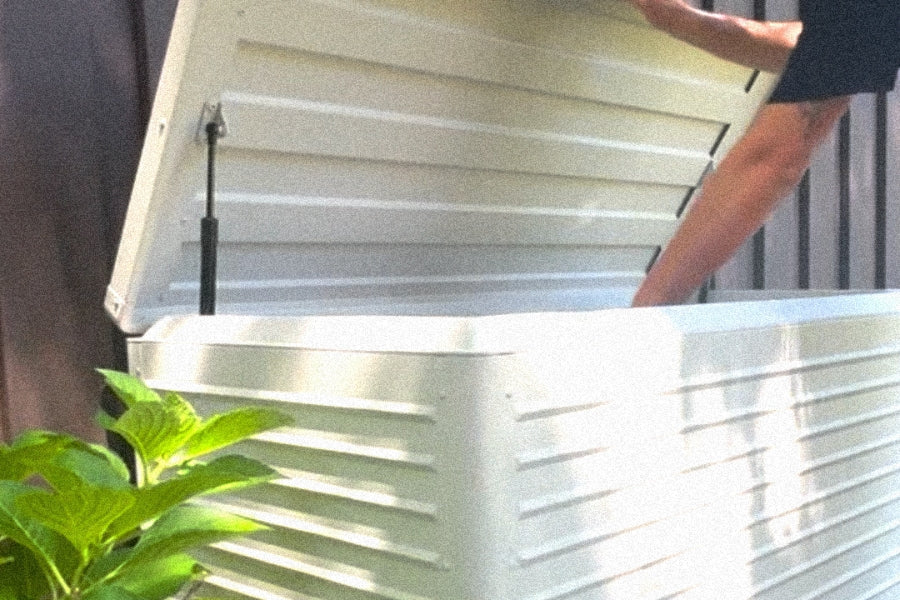
- Soft-close lid. You don't want a heavy metal lid slamming on your fingers. An air-spring mechanism, the same tech used in car trunks, gives you a smooth, controlled close every time.
- Waterproof design. Wheels are useless if your stuff gets soaked inside. Check for sealed construction, not just "water-resistant" labels.
- Warranty length. A 15-year warranty, which is what we back our Mirador Deck Boxes with, tells you the manufacturer trusts its own build quality. A 1-year warranty? That tells you something too.
Choosing a storage box with wheels isn't complicated once you know what to look for.
A well-built wheeled deck box should last you a decade or more. Spend 10 minutes picking the right one now, and you won't think about it again.
FAQs
Do wheels damage my deck or patio surface?
It depends on the wheel material. Hard plastic wheels can scratch composite decking and leave marks on sealed concrete. Rubber or polyurethane wheels are much safer on finished surfaces. If you're worried, test the wheel on a small hidden area first, or place a thin rubber pad under each wheel when the box is stationary.
Are metal deck boxes with wheels better than resin ones?
For long-term outdoor use, generally yes. Metal boxes made from aluminum and steel handle UV exposure, temperature extremes, and heavy loads better than resin. They're heavier, which means more stable in wind, and they usually come with sturdier wheels rated for the added weight. The trade-off is a higher upfront cost, but the lifespan difference, often 15+ years vs. 3 to 5 years, makes it worth it.
How much weight can deck box wheels typically support?
Most standard resin deck box wheels hold 50 to 100 pounds per wheel. Heavy-duty wheels on metal boxes can support 150 to 250+ pounds per wheel. Always check the manufacturer's rated load capacity and remember that the number includes the weight of the box itself, not just what's inside.
Is a soft-close lid worth paying extra for?
Absolutely. A metal or heavy resin lid can weigh 15 to 20 pounds. Without an air-spring or hydraulic piston, that lid slams shut hard enough to bruise fingers or crack the hinge over time. Soft-close mechanisms pay for themselves in safety alone, especially if you have kids around.