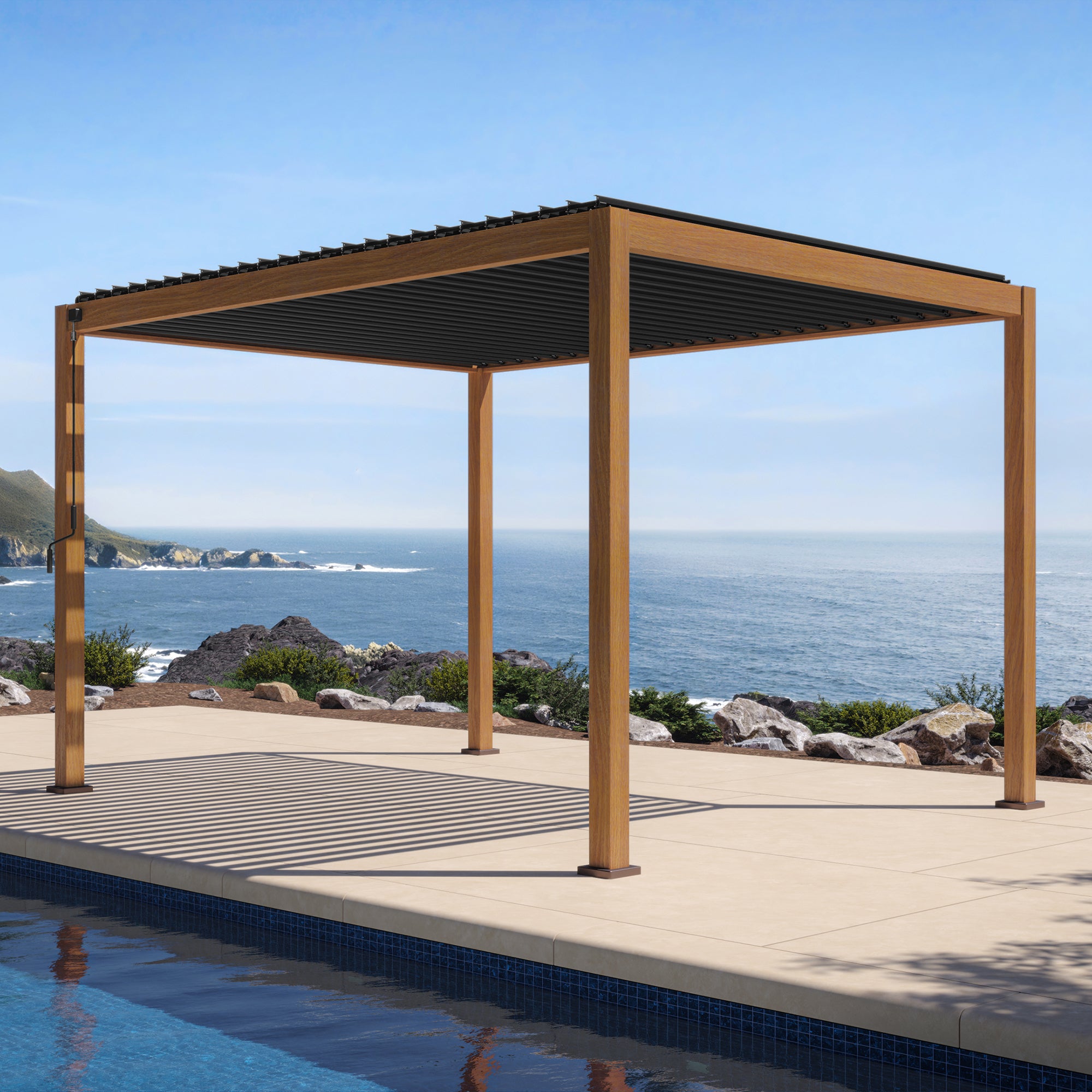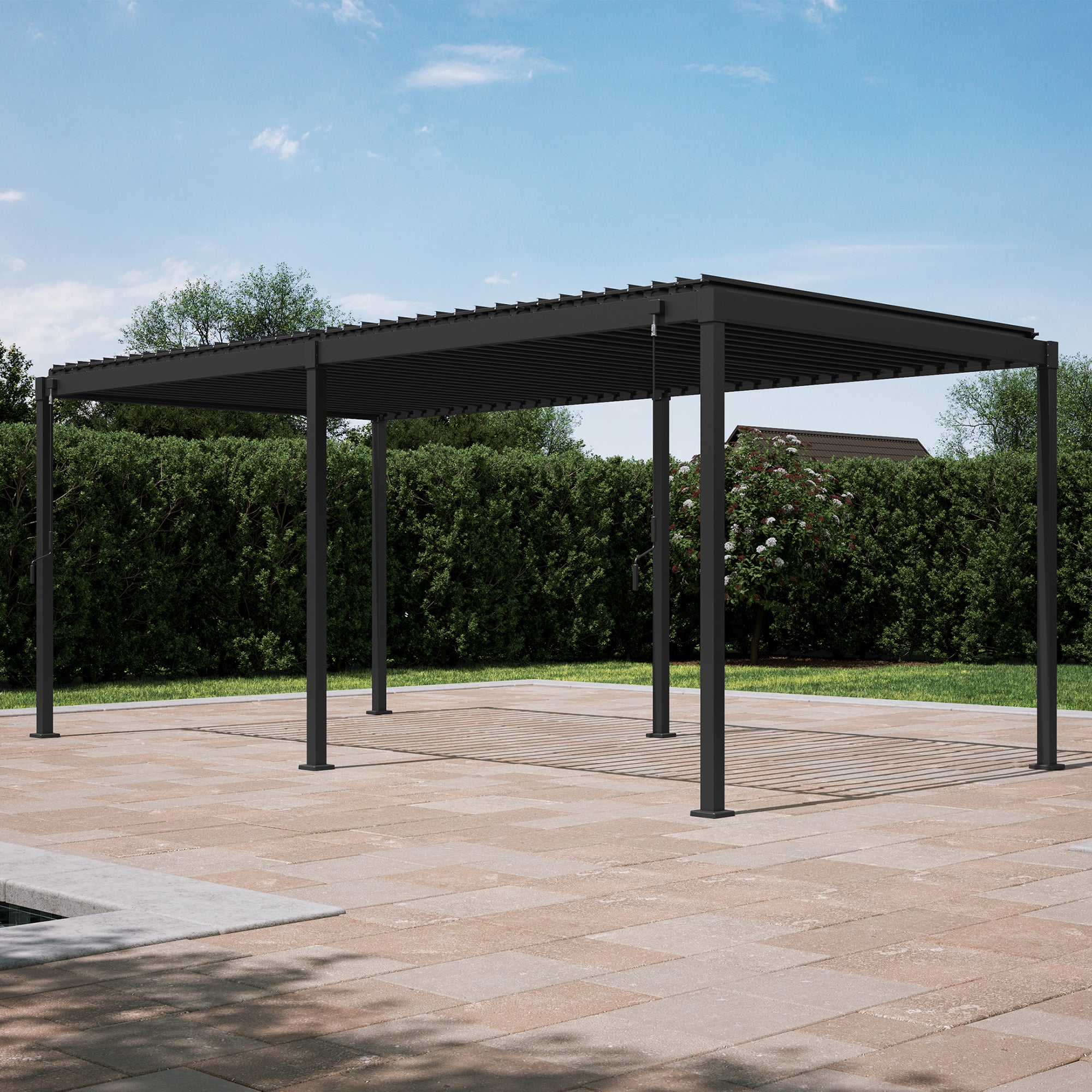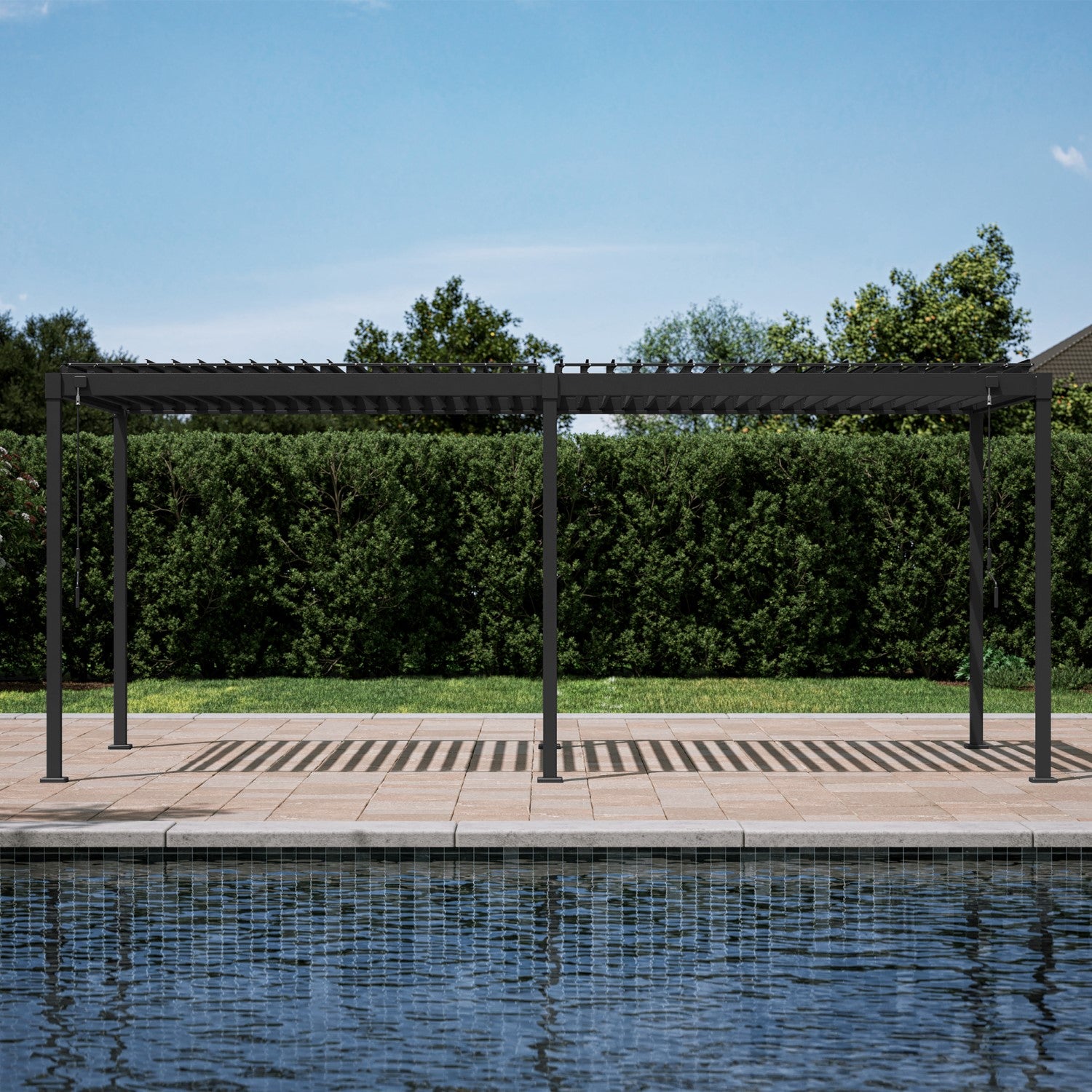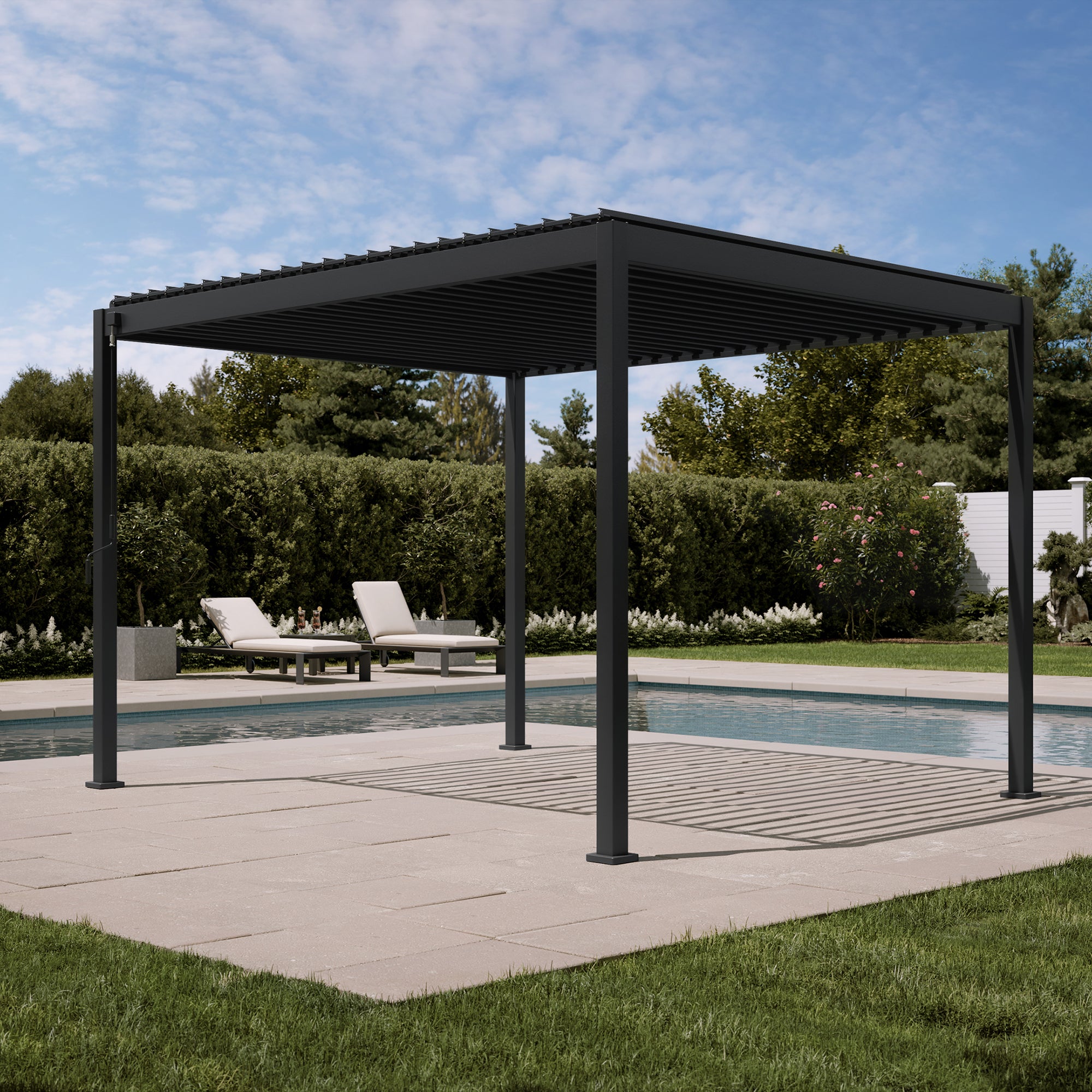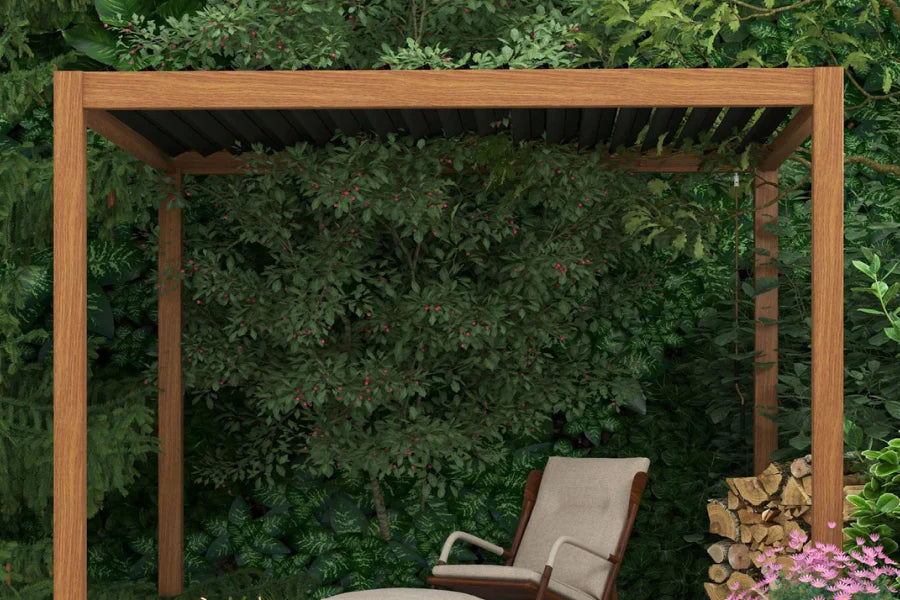


Wondering which pergola roof handles rain better? Start with how the water moves. A sloped fixed roof is usually simpler. Rain runs down the roof surface by gravity, then drains off through an edge, gutter, or drip line.
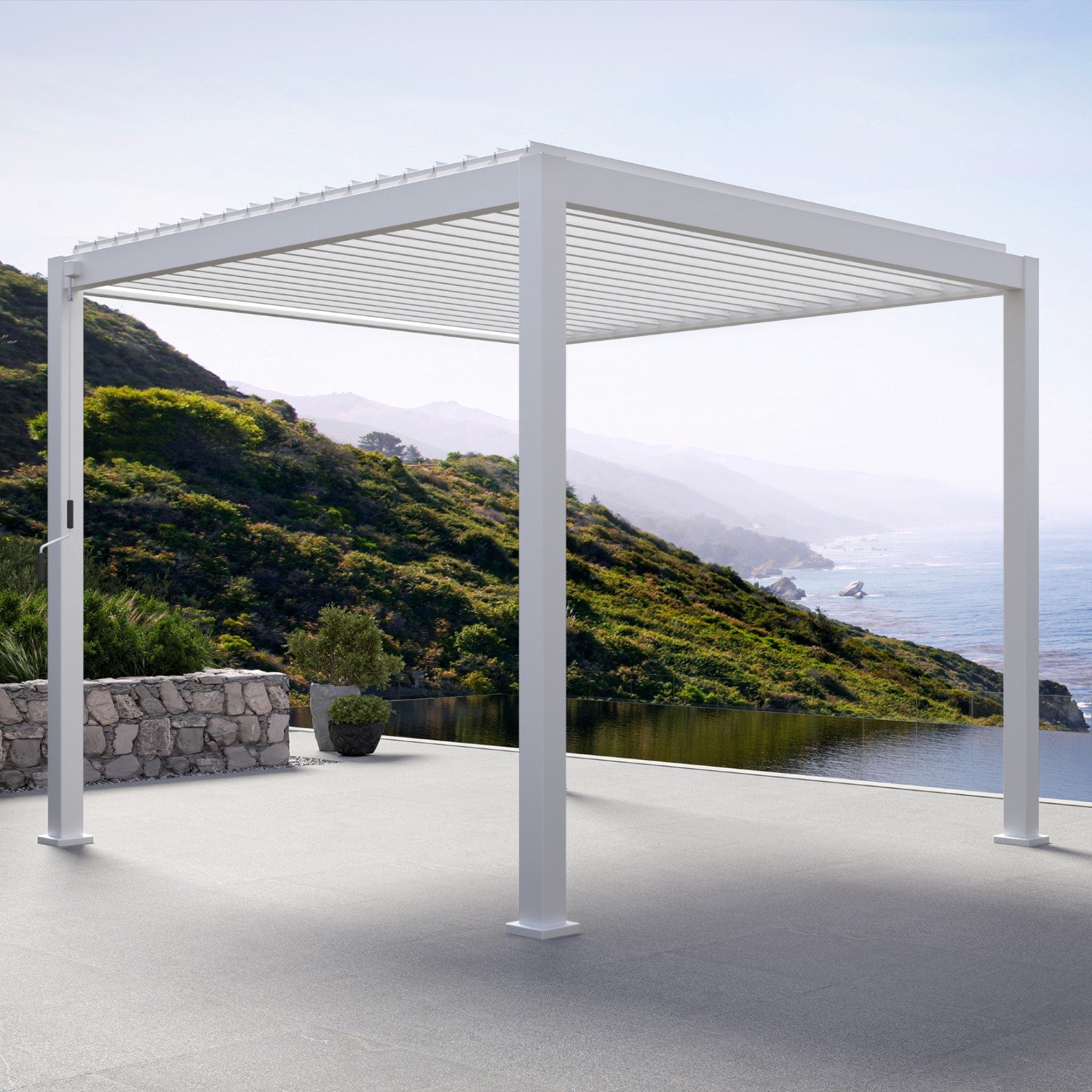
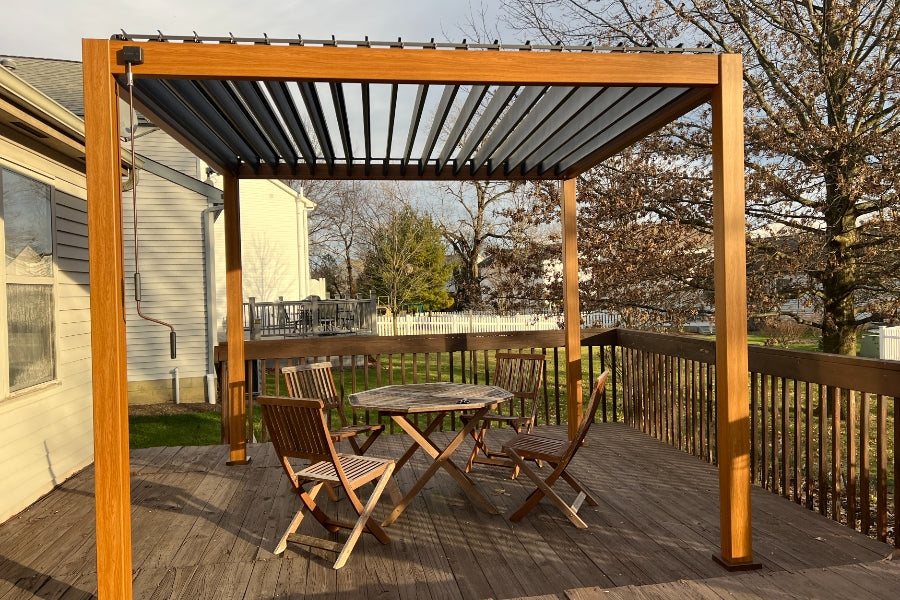
A flat louvered pergola works in a different way. When the louvers are closed, the blades overlap and guide water into built-in channels. From there, the water moves toward the frame and drains through the pergola’s drainage system.
That does not make one roof universally better. A sloped roof pergola is often better for constant, predictable overhead cover. A louvered pergola is usually better when the patio needs rain management plus open-sky flexibility, adjustable shade, and airflow. The real test is not only the roof shape. It is where water travels, how the unit is installed, and what happens when rain arrives with wind.
Sloped Roof Pergola vs. Flat Louvered Pergola: Quick Rain Comparison
|
Rain Factor |
Sloped Fixed Roof Pergola |
Flat Louvered Pergola |
|
Main drainage method |
Gravity carries water down a pitched roof plane |
Closed louvers feed water into integrated channels and gutters |
|
Everyday rain coverage |
Constant cover when the roof is properly built |
Coverage when louvers are fully closed and drainage is clear |
|
Open-sky option |
No; the roof stays in place |
Yes; louvers can open or angle for sun and ventilation |
|
Wind-driven rain |
Can still enter from open sides |
Can still enter from open sides, especially in gusty conditions |
|
Key maintenance |
Clean roof surface, gutters, and downspouts |
Clean louvers, gutters, downspouts, and operating components |
|
Best fit |
Always-covered utility or patio zone |
Dining, lounging, and flexible outdoor living |
How a Sloped Roof Pergola Handles Rain
Why Roof Pitch Creates a Straightforward Runoff Path
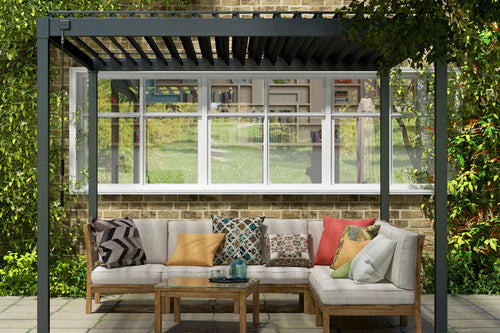
A sloped roof pergola uses visible pitch to move water away from the high side of the roof. Fixed metal panels, polycarbonate sheets, shingles, or insulated roof panels can all use this basic approach. When the roof, flashing, gutters, and downspouts are correctly designed, rain has one clear direction to follow.
This is a practical option when you want permanent cover over a grill station, doorway, workspace, or patio that stays shaded every day. There are fewer moving parts than in an adjustable roof, and the roof does not need to be closed before a shower.
Sloped Roof Drainage Risks: Gutters, Flashing, and Runoff
Pitch alone does not solve every rain problem. A roof can shed water quickly but still create trouble if the runoff lands beside a door, foundation, walkway, or neighboring property. Attached structures also need a reliable wall connection and flashing detail. A clogged gutter or undersized downspout can cause overflow even on a well-pitched roof.
For a freestanding sloped roof, plan where the low edge drains before the posts or concrete are placed. For an attached roof, resolve the wall, eaves, existing gutters, and door clearance before construction begins.
How a Flat Louvered Pergola Drains Rain
How Closed Louvers Route Water to the Gutter
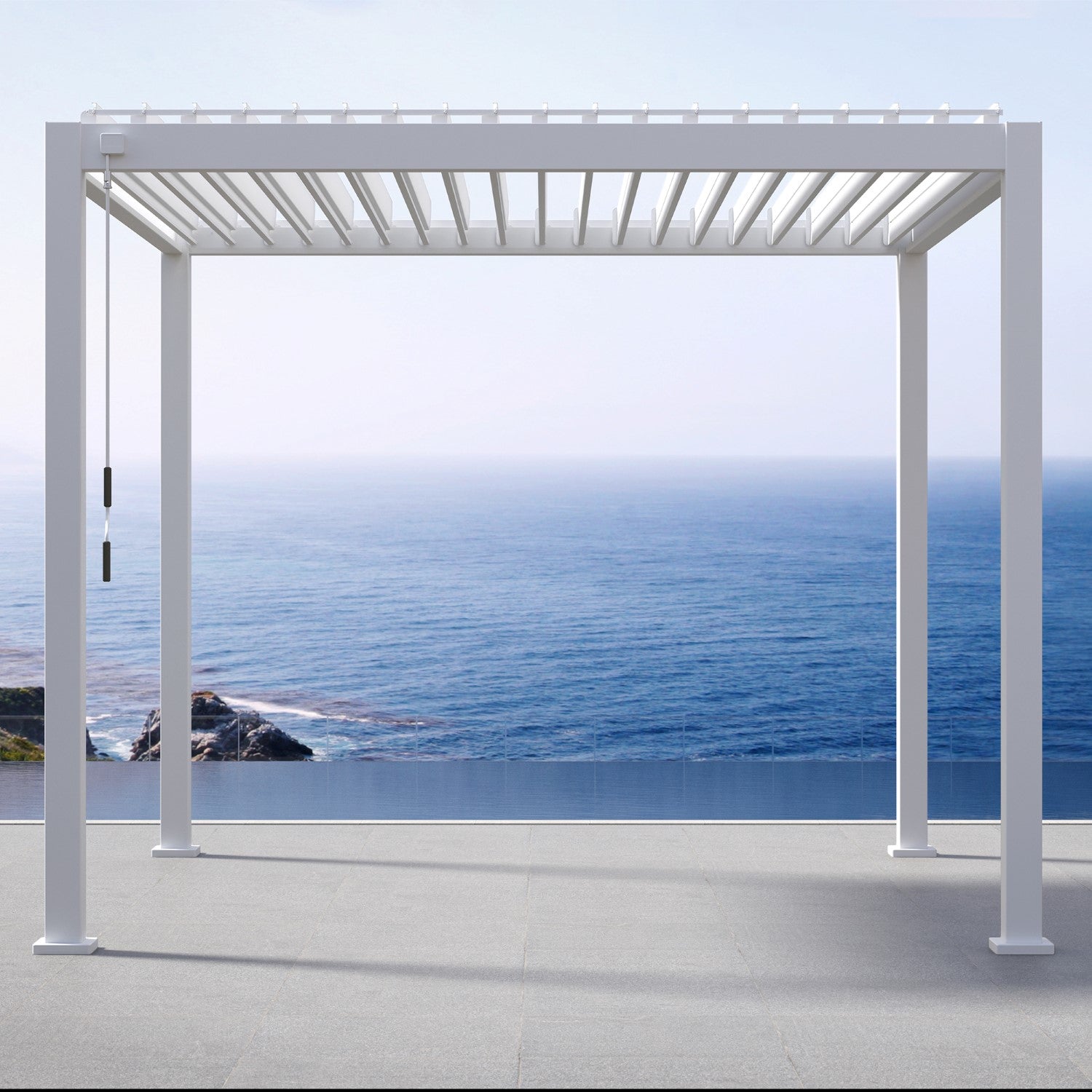
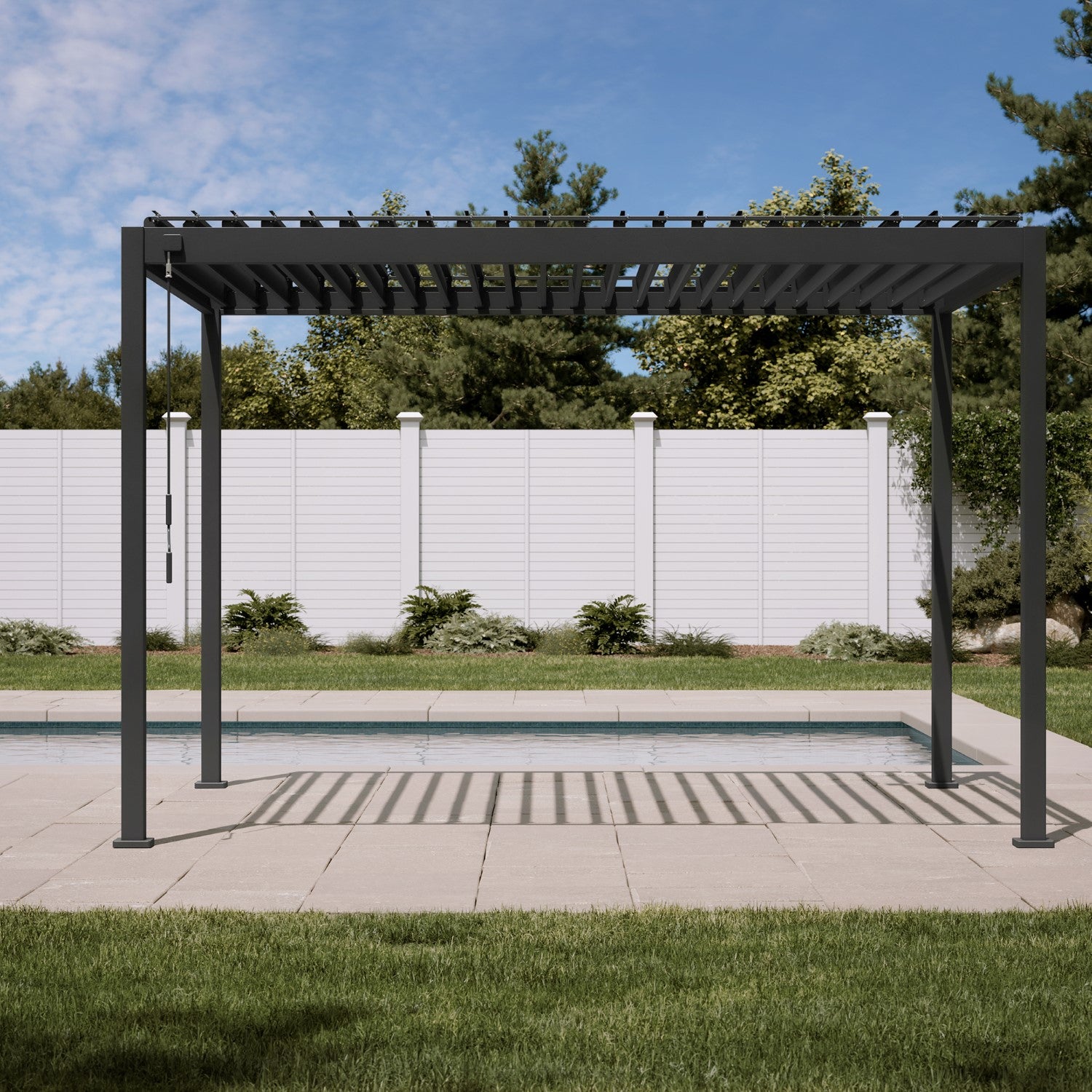
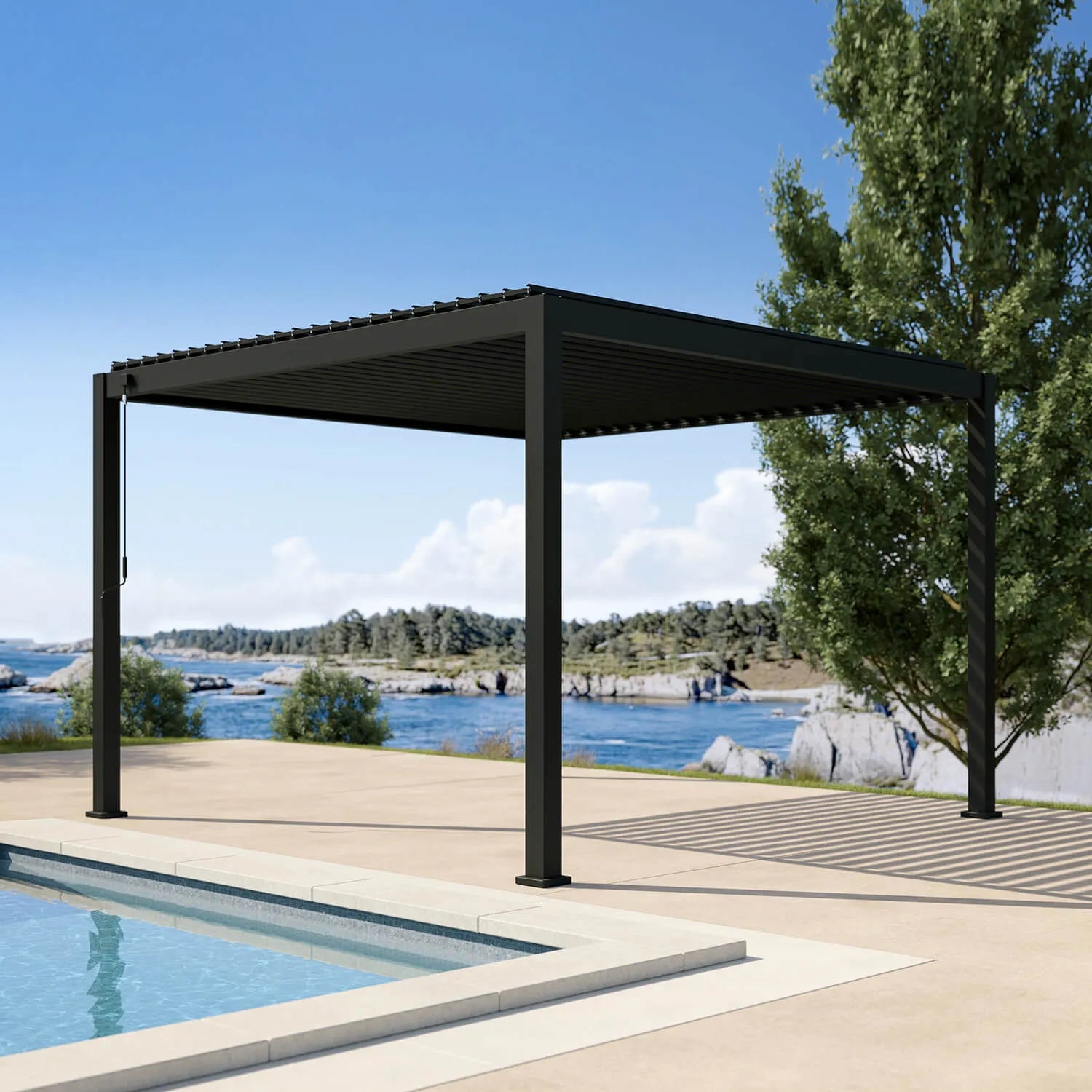
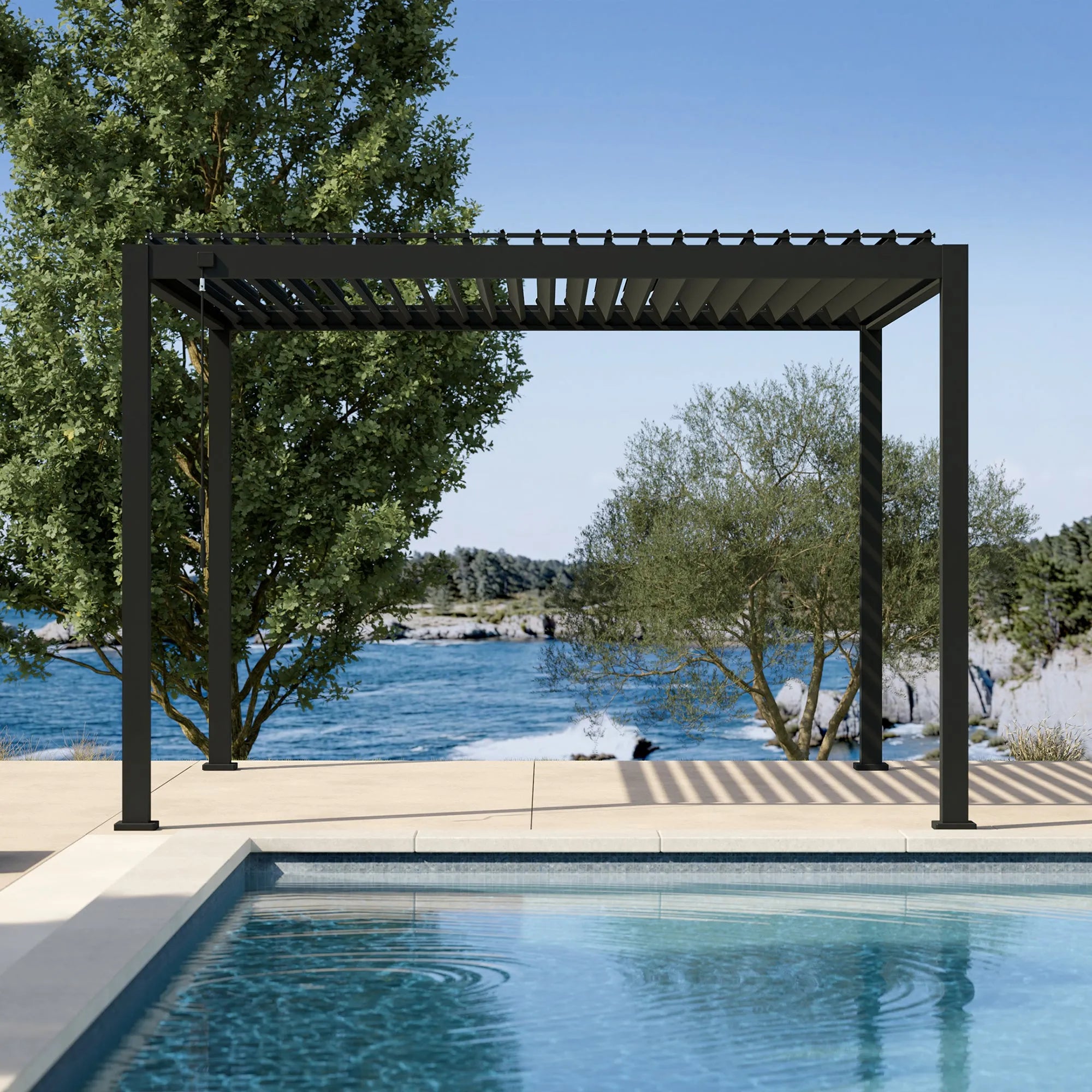
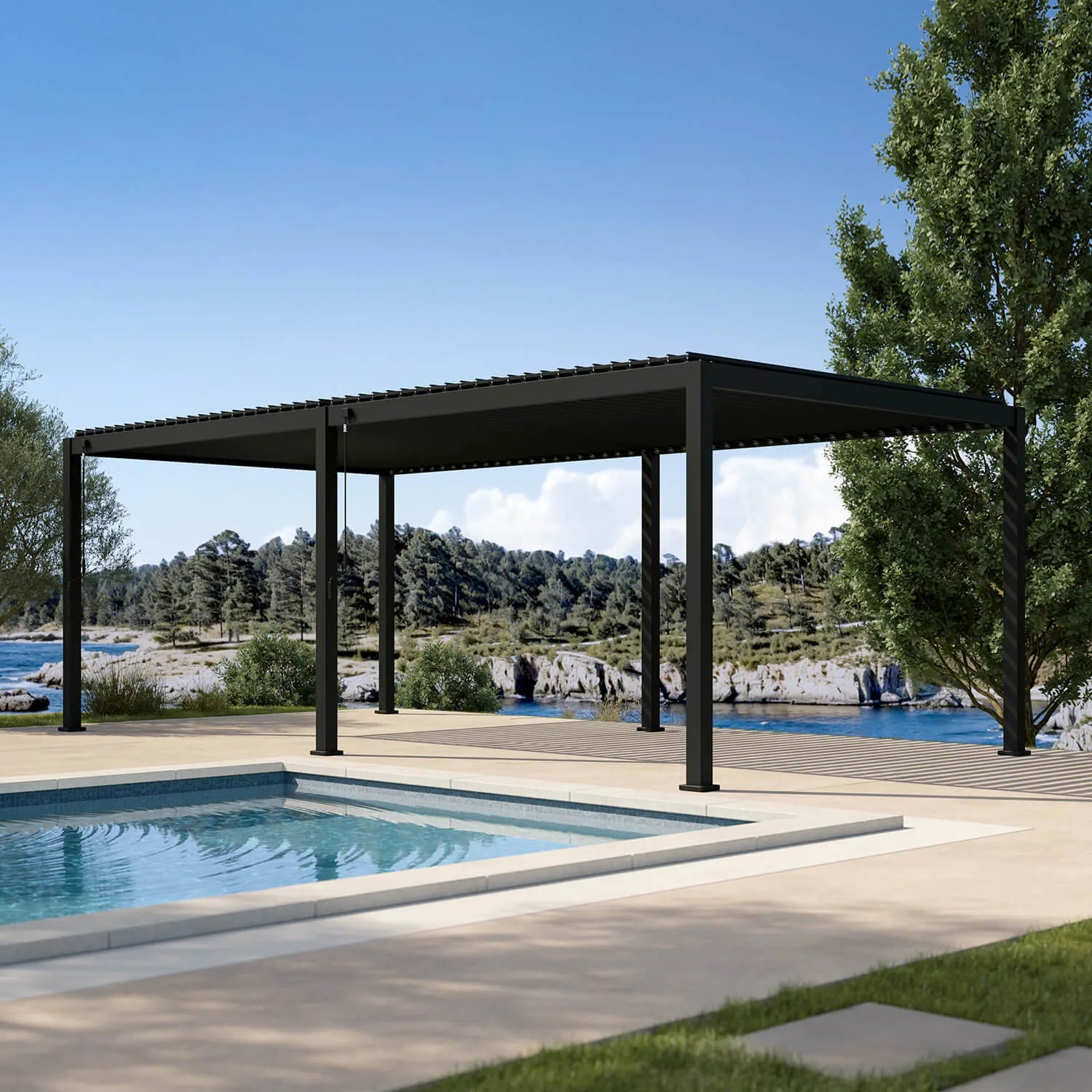
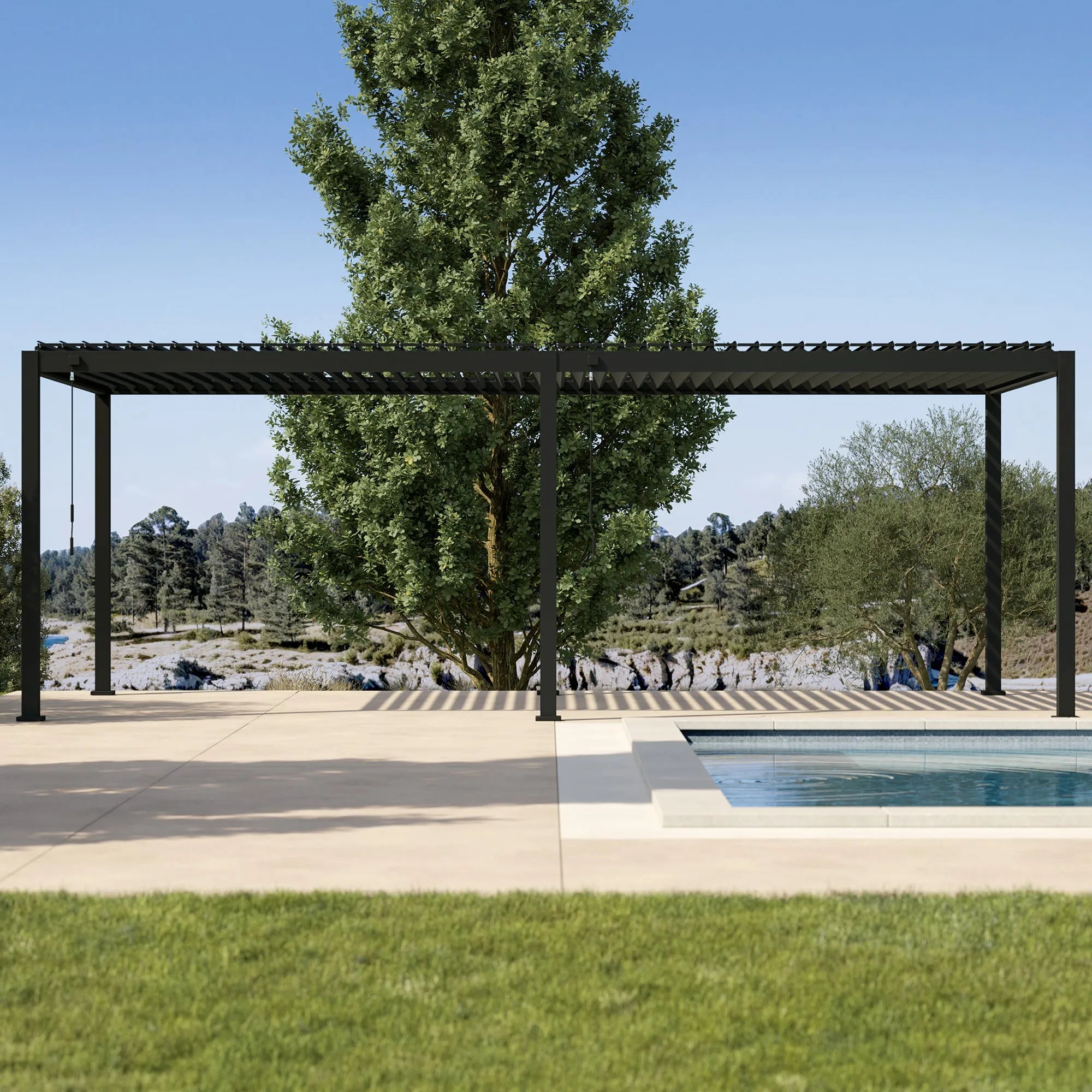
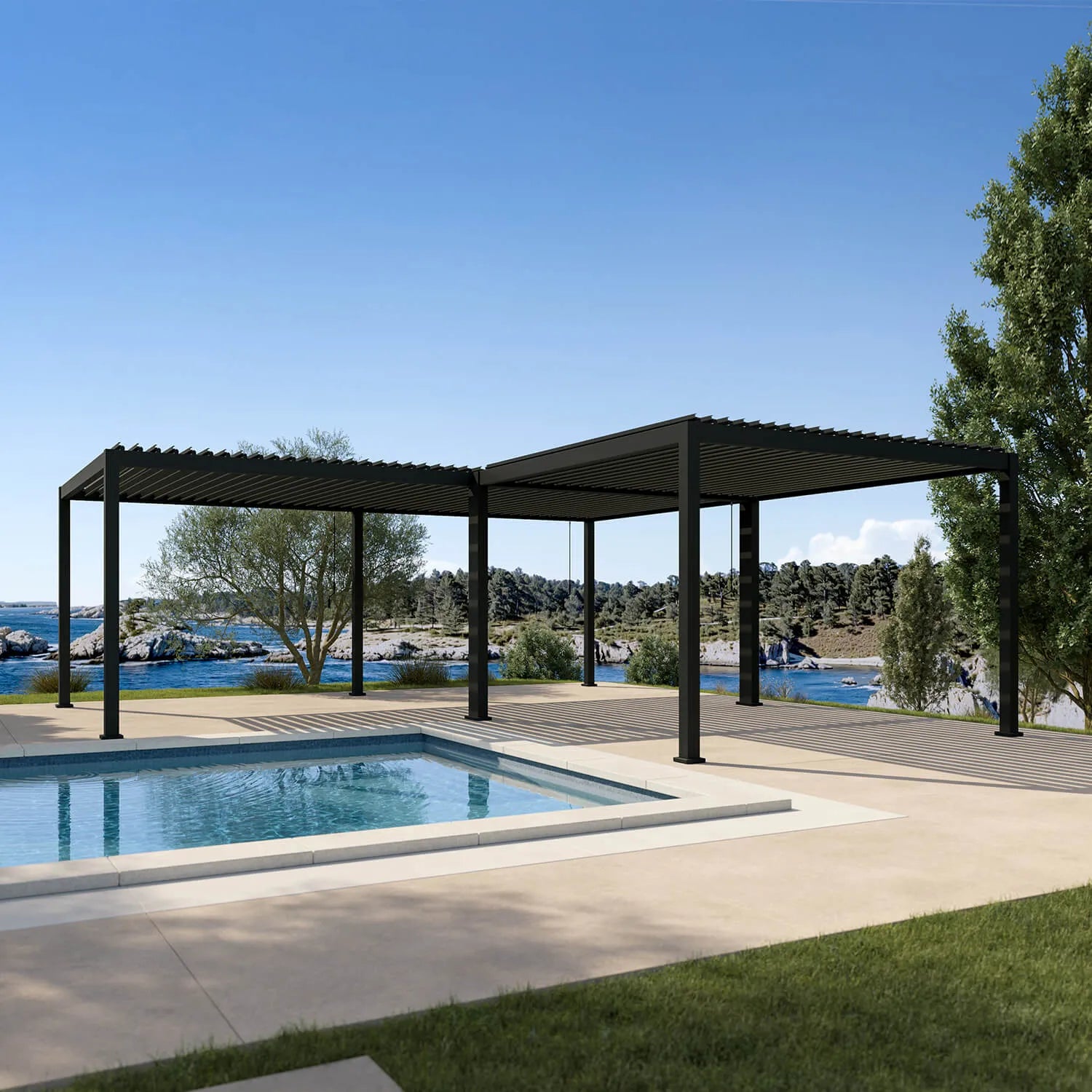
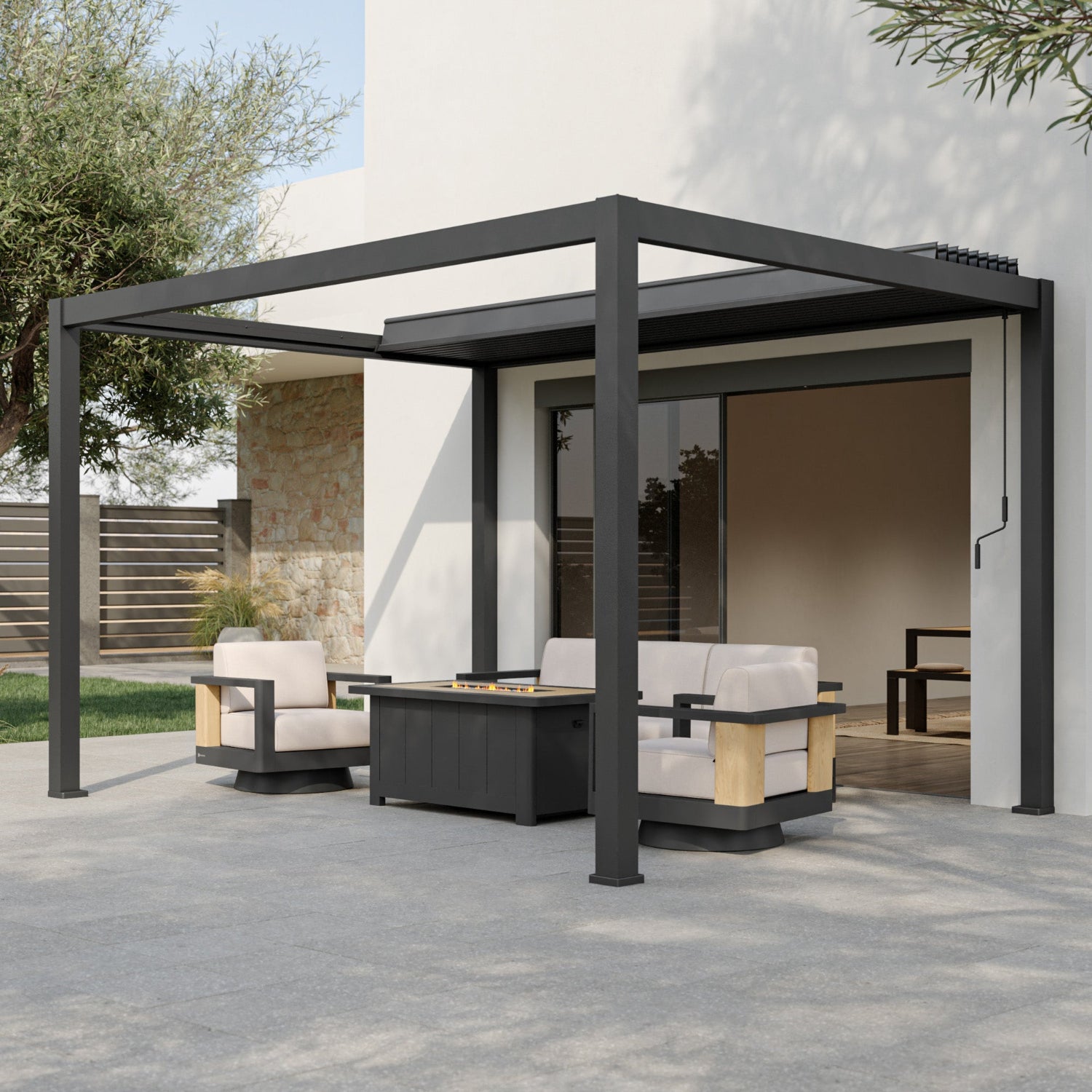
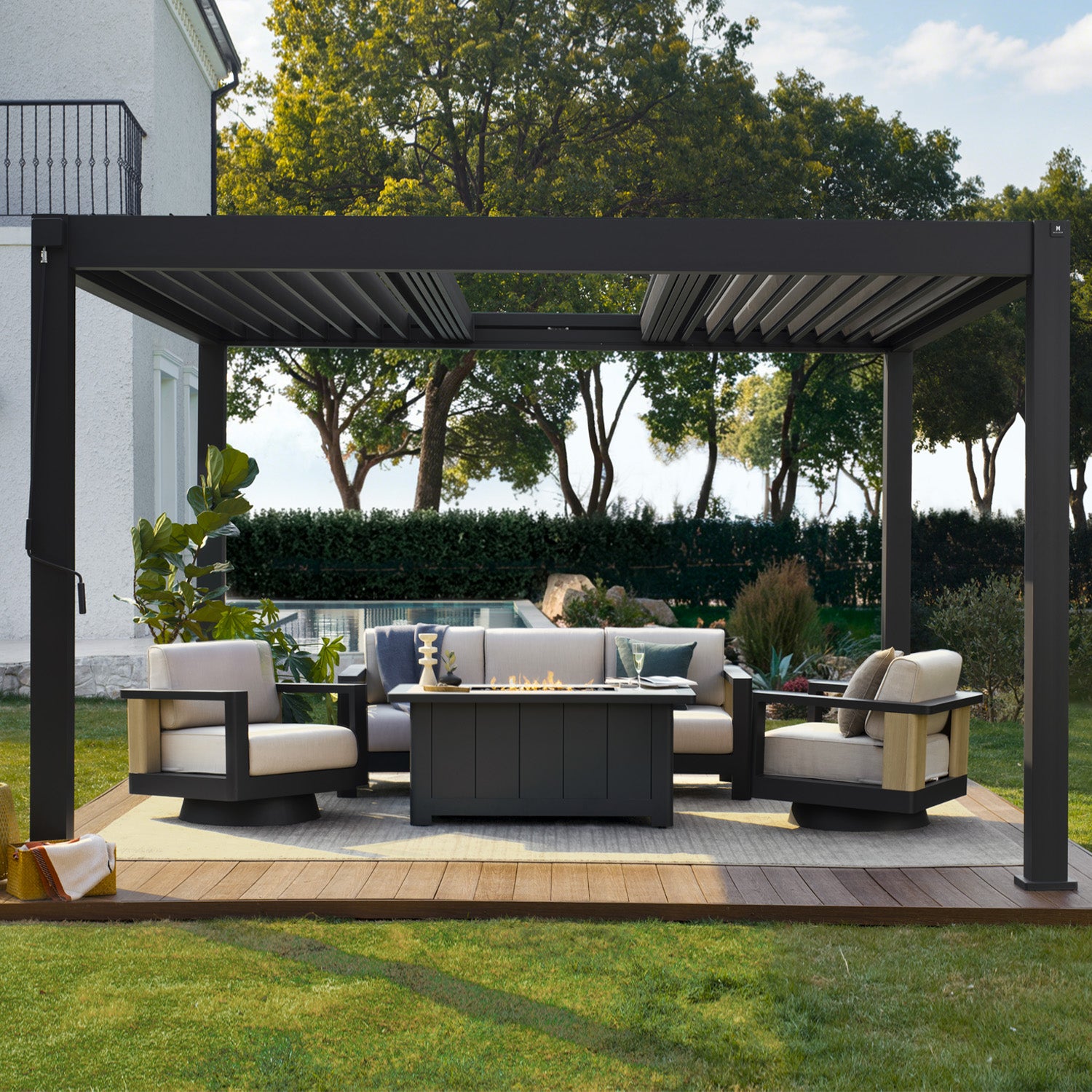
A louvered pergola may look nearly flat from below, but a quality closed-louver system is not intended to act like a featureless flat roof. The blades overlap and guide water into perimeter channels. From there, the drainage design routes water through gutters, posts, or designated outlets.
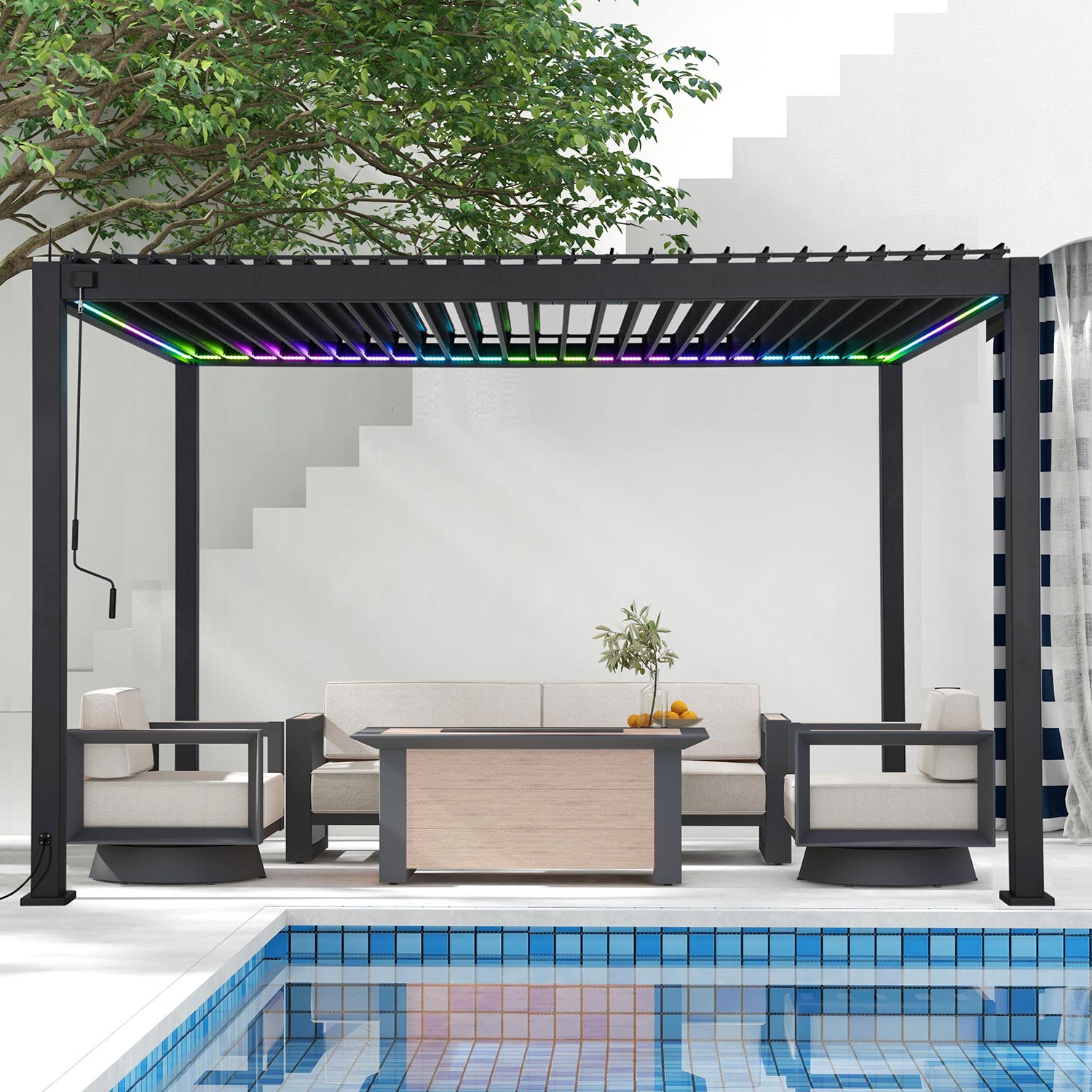
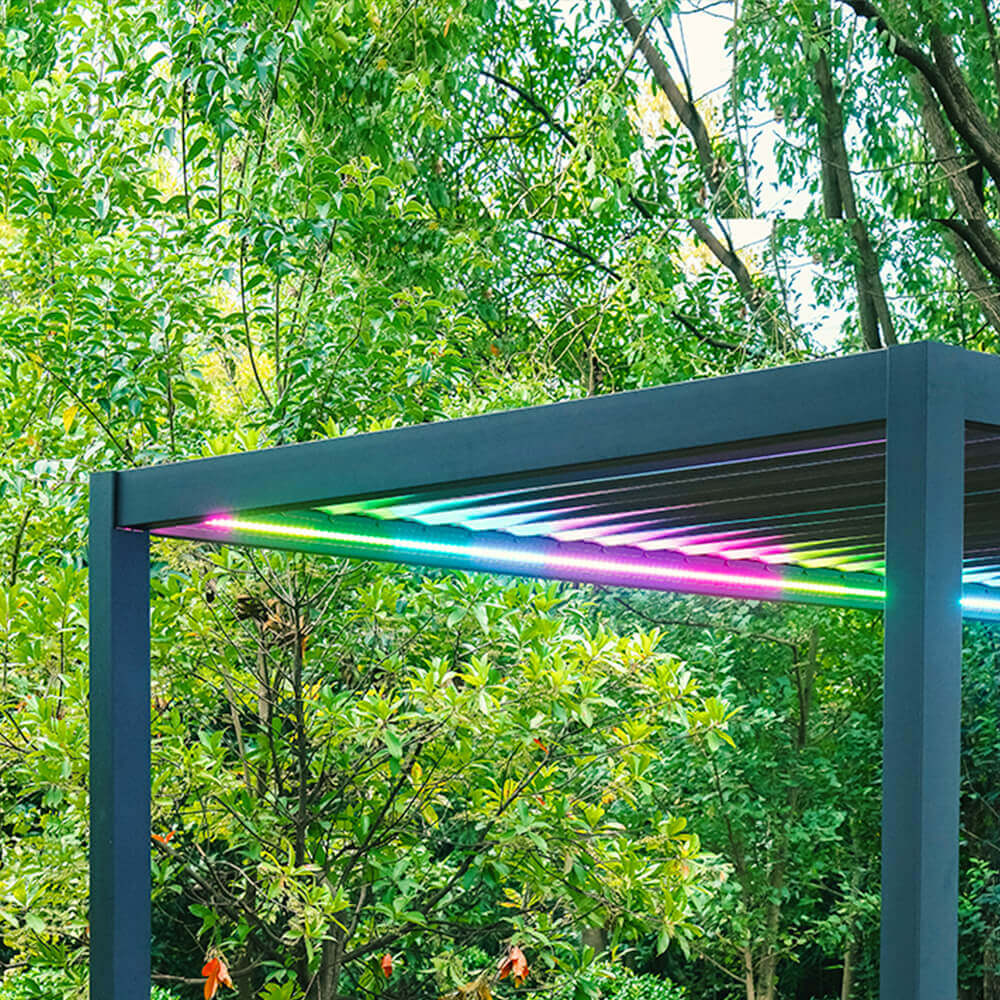
Mirador pergolas come with adjustable louvered roofs and integrated rain drainage. That makes them useful for light rain and routine weather changes, as long as the louvers are fully closed and the drainage channels stay clear.

Why a "Flat" Louvered Roof Should Not Be Judged by Pitch Alone
The visible roof line does not tell you whether a louvered pergola drains well. Check the specific model's gutter path, downspout location, louver seal design, manual, and anchoring instructions. A pergola with roof should be level and square as required by its manual so the roof and drainage components operate as designed.
Unlike a fixed sloped roof, a louvered roof also lets you open or angle the blades after the rain passes. That releases heat, restores daylight, and keeps the patio from feeling permanently enclosed.
Which Pergola Roof Handles Heavy Rain Better?
For steady rain with little wind, both a properly installed sloped roof and a closed louvered roof can manage overhead water effectively. A fixed sloped roof has the more direct runoff path and remains covered without user action. A louvered pergola asks more of the system: louvers must close fully, drainage channels must be clear, and the frame must be installed correctly.
For wind-driven rain, neither open-sided structure should be treated like an enclosed room. Rain can enter from the sides, and screens or walls can change wind exposure. During severe weather, follow the specific product manual and local guidance. Do not rely on a generic "waterproof" claim when choosing for a high-wind, coastal, or storm-prone site.
Rain Performance Depends on Installation, Not Roof Shape Alone
Drainage starts below the roof. The pergola needs a stable, approved base; correct post locations; a square frame; and a clear discharge path away from the patio and home. A level-looking paver surface may not be a suitable structural base, and a poorly placed post can put a gutter outlet in the wrong place.
Before ordering an aluminum pergola with roof or a fixed metal patio cover, mark doors, drains, downspouts, roof overhangs, furniture, and walking paths. Then review the exact outside dimensions and installation manual.
Which Pergola Roof Is Better for Your Patio?
Choose a sloped fixed roof if your priority is constant overhead cover and you do not need to open the roof for sun or airflow. It is a strong fit for a utility patio, permanent covered walkway, or roof extension planned with the home.
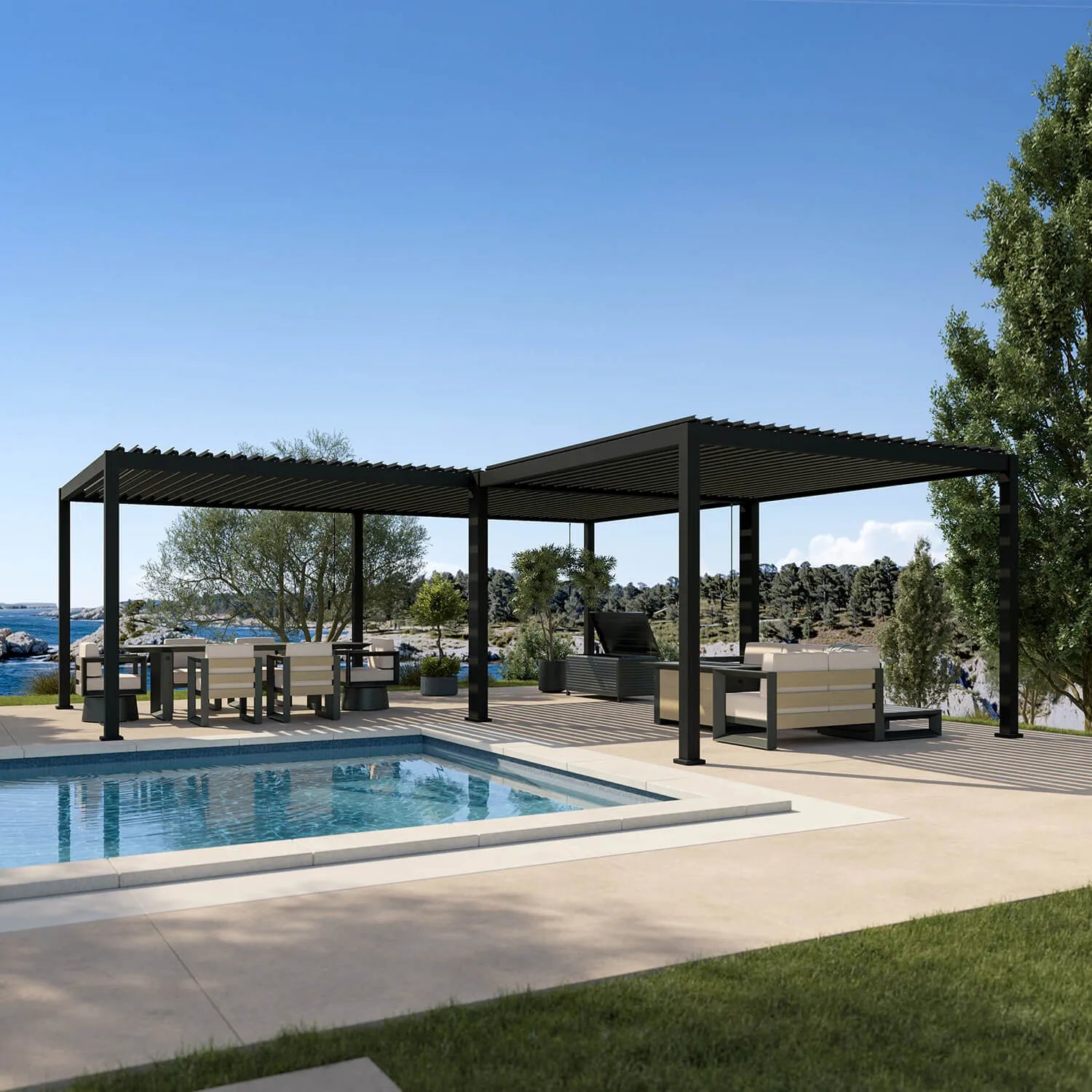
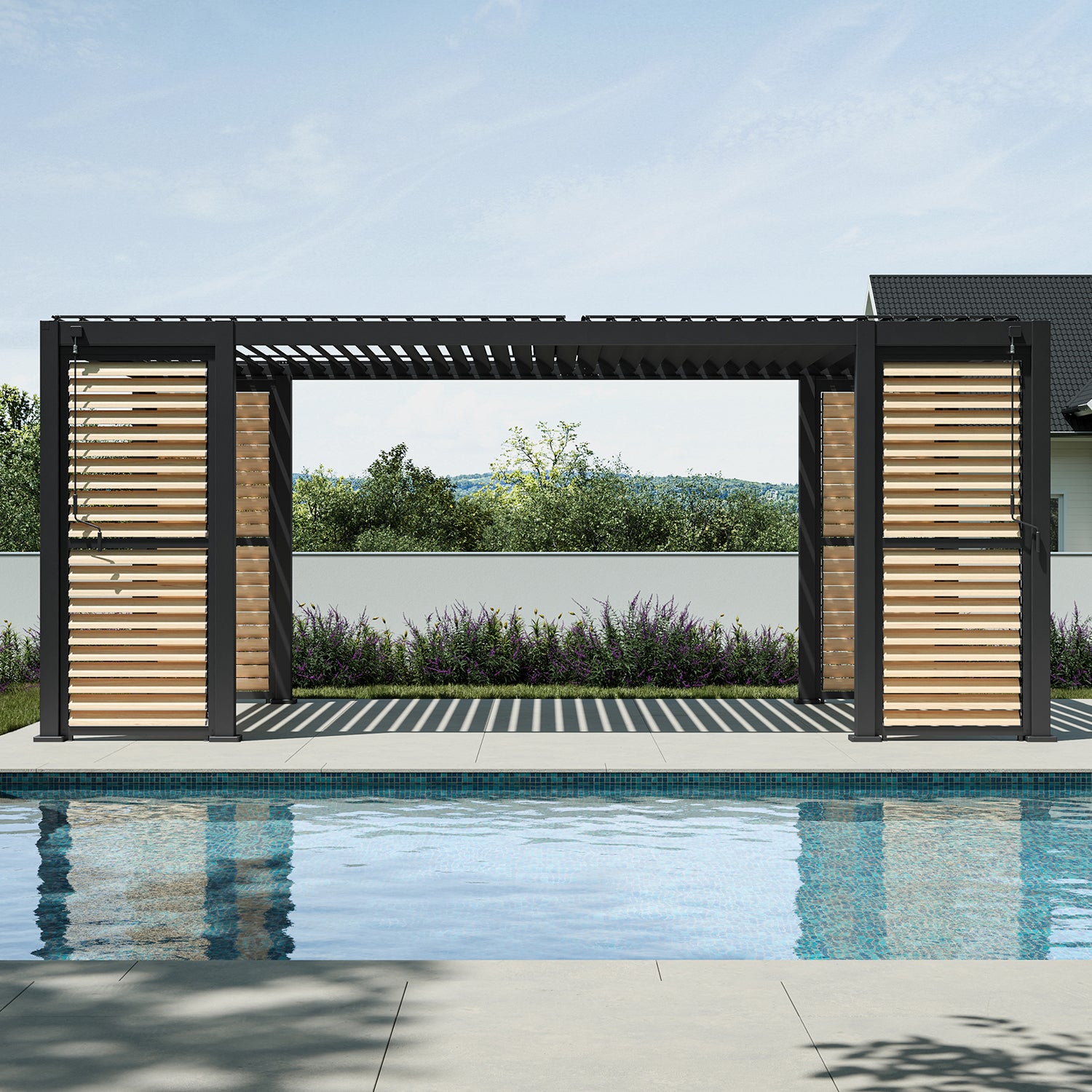
Choose an aluminum louvered pergola if your patio is used for dining, lounging, poolside shade, or entertaining and you want control between sun, shade, ventilation, and light-rain coverage. Mirador's louvered pergola collection and pergola comparison page let shoppers compare roof control, materials, sizes, and drainage-related product details.

FAQ
Is a sloped roof pergola better for rain than a flat louvered pergola?
A sloped fixed roof has a simpler gravity-driven runoff path and stays covered at all times. A flat louvered pergola can manage rain when the louvers are fully closed and its drainage system is clear. Choose based on whether constant cover or adjustable outdoor comfort matters more.
Do flat louvered pergolas drain water?
Well-designed louvered pergolas route rain through closed-louver channels, gutters, and posts or outlets. Check the specific model's drainage design and manual because performance depends on installation, maintenance, and weather conditions.
Can wind-driven rain get under a louvered pergola?
Yes. Rain can enter from open sides during wind. A louvered pergola provides overhead coverage, not the same enclosure as an indoor room or a fully integrated roof system.
Should a pergola roof slope toward the house or away from it?
Roof drainage should be planned to move water away from doors, foundations, and other sensitive areas. The correct direction depends on the exact roof system, site layout, gutters, and manufacturer instructions.
Is an aluminum louvered pergola good for a rainy climate?
It can be a good option for everyday rain management when the model has integrated drainage, the louvers close properly, and the installation matches the manual. In high-wind, heavy-snow, or severe-storm regions, compare model-specific ratings and local requirements.