


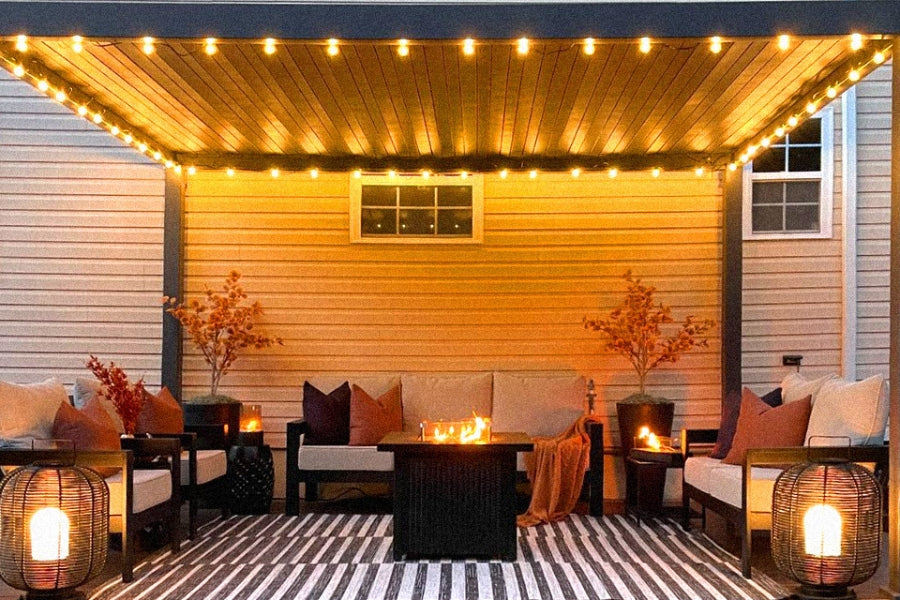
Patio heater or fire pit? It's the question that pops up every year when the first cool evening hits. You're out on the patio, the sun's gone down, and you realize: it'd be really nice to stay out here another hour. Both options keep you outside longer. But they work in completely different ways, and the wrong pick means wasted money or a backyard setup nobody uses past September.
Here's an honest comparison to help you decide.
What Is a Patio Heater?
A patio heater is a tall, freestanding (or wall-mounted) appliance that pushes warmth upward and outward in a focused column. Think of that mushroom-shaped tower you see on restaurant patios. They come in three main fuel types:
- Propane is the most popular option. It's portable, requires no wiring, and typical output sits around 40,000–48,000 BTUs. A standard 20 lb tank lasts roughly 10–12 hours on high.
-
Natural gas is the cheapest to run at around $0.74/hour, but it requires a permanent gas line and professional installation.
- Electric infrared models produce no flame and no fumes, making them safe under solid roofs. They're much weaker, though. Most max out around 5,100 BTUs, which is enough for a small balcony or a table for two.
Patio heaters are workhorses. They're practical, space-efficient, and do one job well: warm the people sitting directly in their path. Step a few feet outside the beam, though, and you'll feel the temperature drop immediately.
What Is a Fire Pit?
A fire pit is a low, open-flame heat source. It can be a traditional wood-burning bowl or a modern gas fire pit table. Fire pits radiate warmth in a full 360-degree circle, which is why people naturally pull chairs around them.
Gas fire pit tables (propane or natural gas) sit in the 35,000–50,000 BTU range. Wood-burning models can push well past 100,000 BTUs, but they come with smoke, sparks, ash cleanup, and the hassle of hauling firewood.
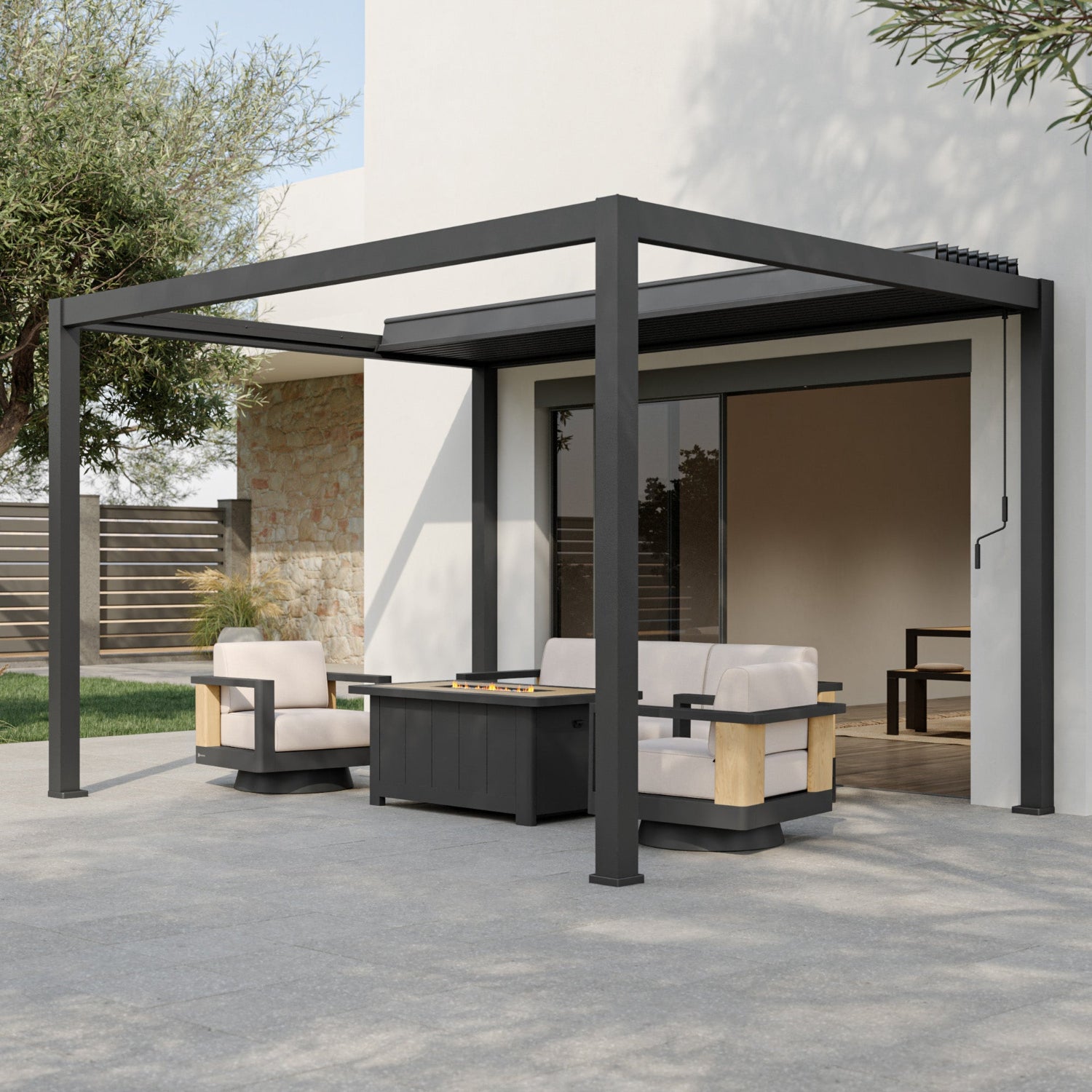
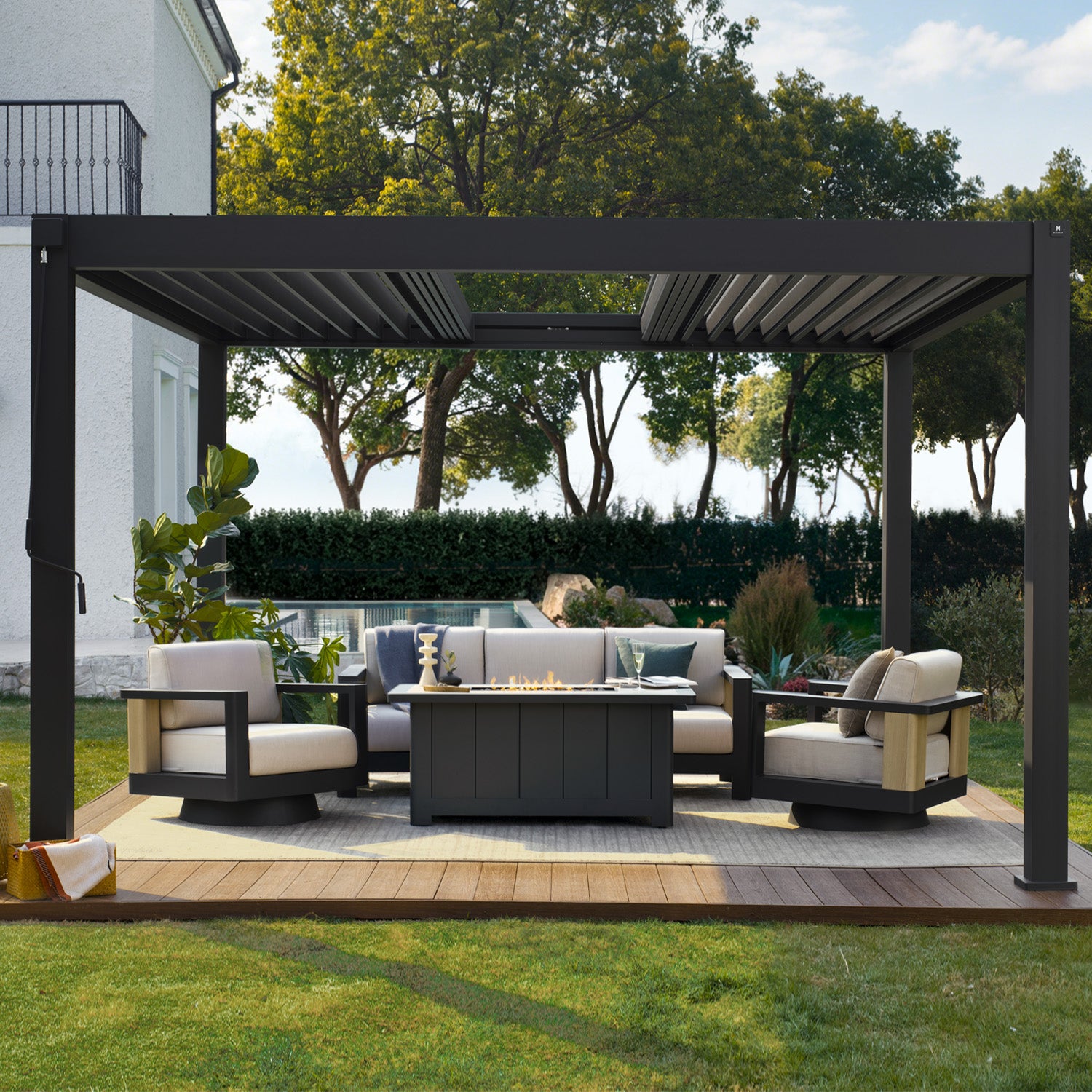
Here's the thing about fire pits: they're not just heaters. They're furniture. A well-designed propane fire pit table like our Siena fire pit doubles as a coffee table during the day and the centerpiece of your backyard at night. Push-button ignition, no smoke, no ash. And it fits a standard 20 lb propane tank inside the base.
Nobody's ever gathered around a tall propane tower to tell stories. But a fire pit? That's where people want to sit.

Patio Heater vs. Fire Pit: Key Differences
Here's a side-by-side to make this easier:
|
|
Patio Heater (Propane) |
Fire Pit (Gas Table) |
|
Heat pattern |
Directed column that warms one zone |
360° radial that warms the whole circle |
|
BTU range |
40,000–48,000 |
35,000–50,000 |
|
Fuel cost/hour |
~$1.30–$1.50 |
~$0.75–$1.50 |
|
Ambiance |
Functional, fades into the background |
Strong with real flames and social pull |
|
Footprint |
Slim vertical profile, great for tight spaces |
Wider footprint, needs 3–4 ft clearance per side |
|
Safety features |
Enclosed flame with tip-over shutoff |
CSA-certified models have controlled flame and no sparks |
|
Double duty |
Heat only |
Table + heat + gathering spot |
|
Lifespan |
3–8 years |
5–15+ years (aluminum lasts longer) |
Patio heaters warm a spot while fire pits warm a crowd. Patio heaters disappear into the background, but fire pits become the room.
Can You Use a Heater or Fire Pit Under a Pergola?
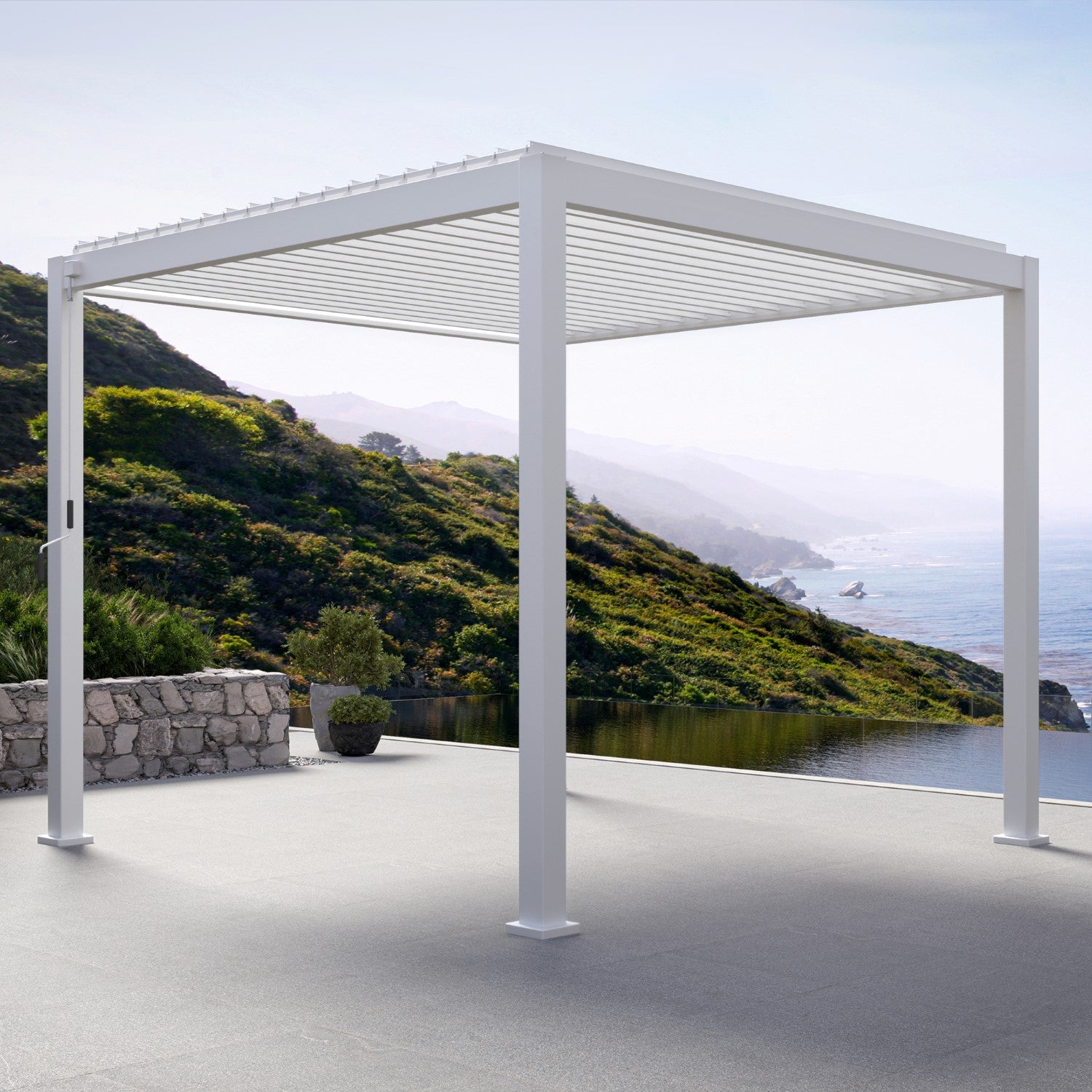
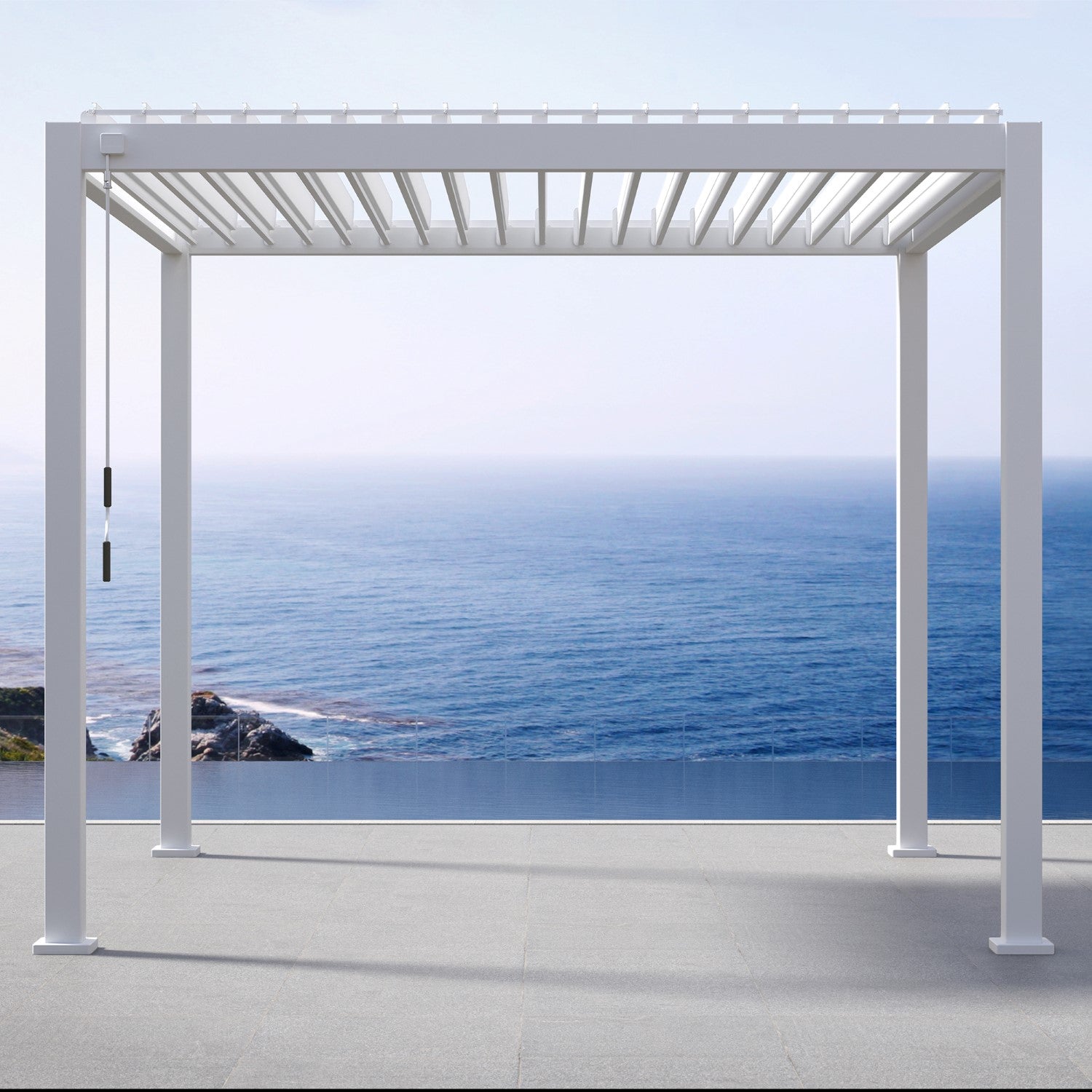
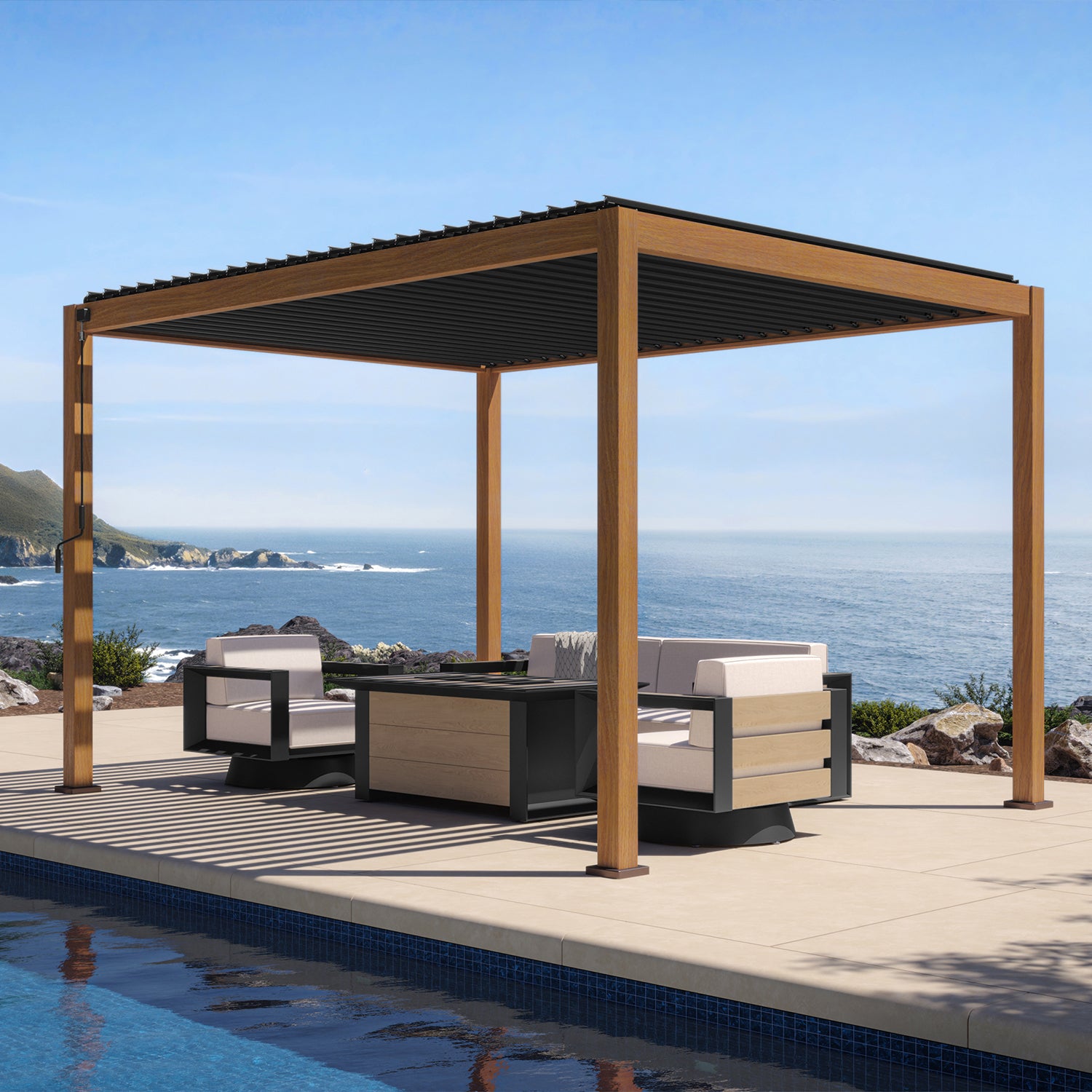
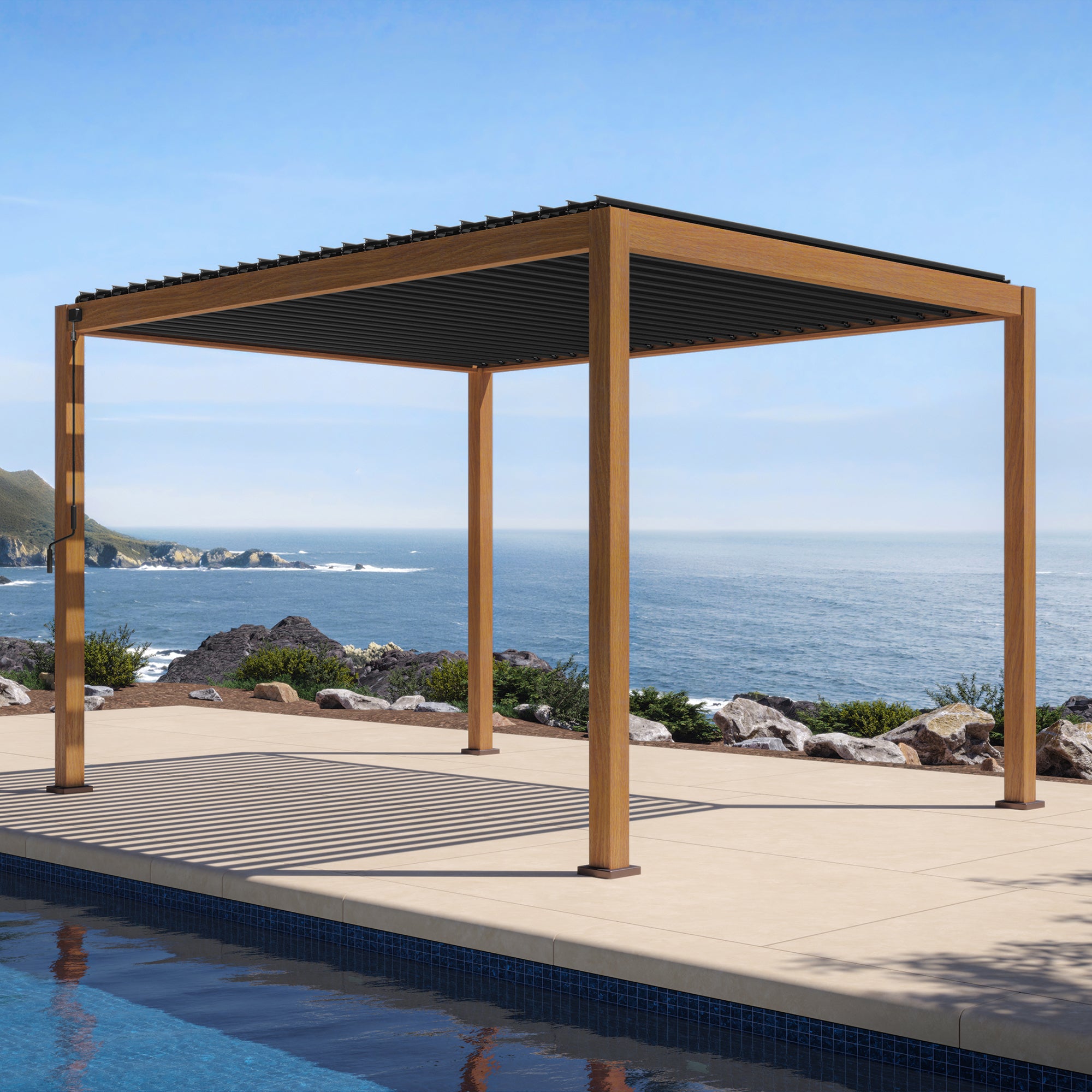
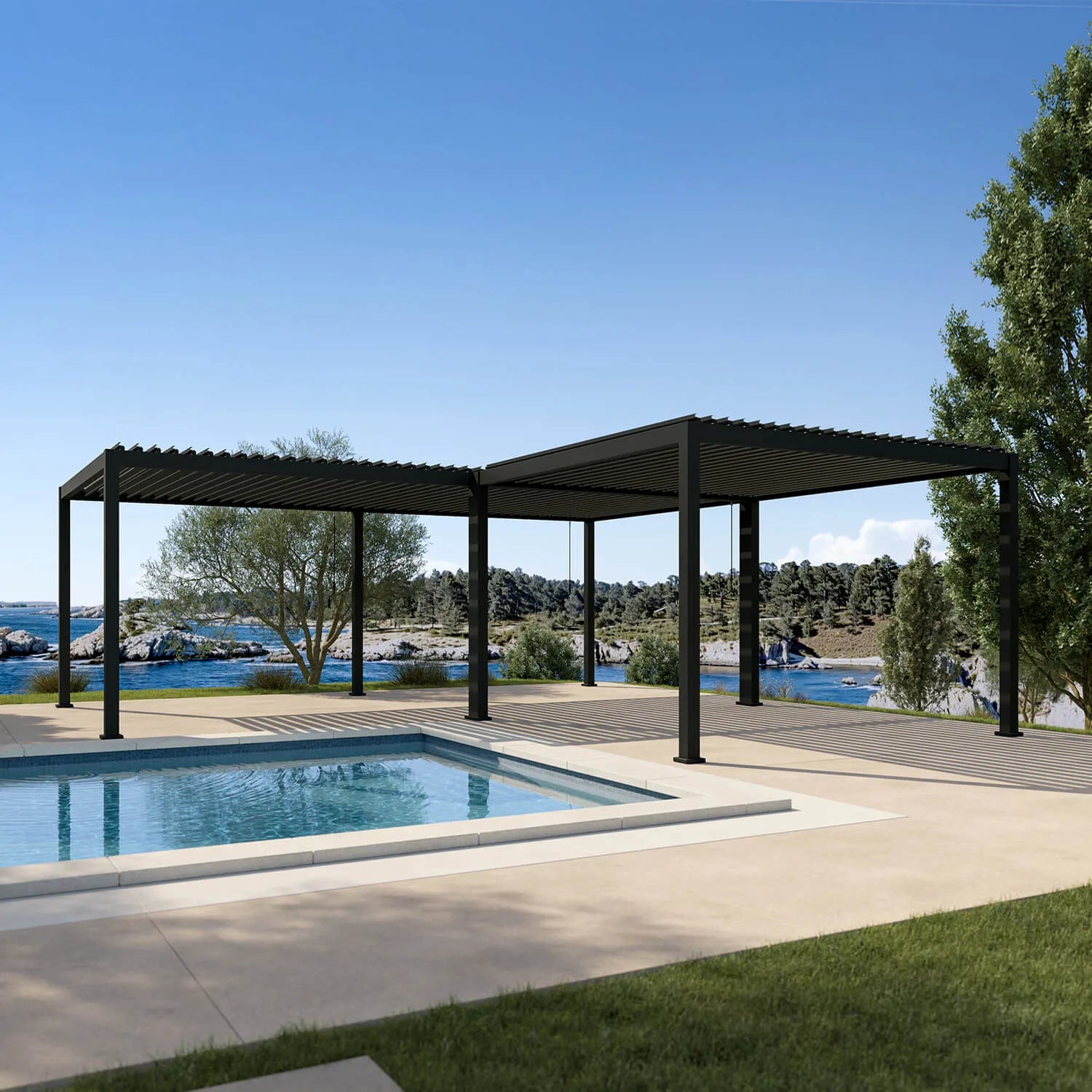
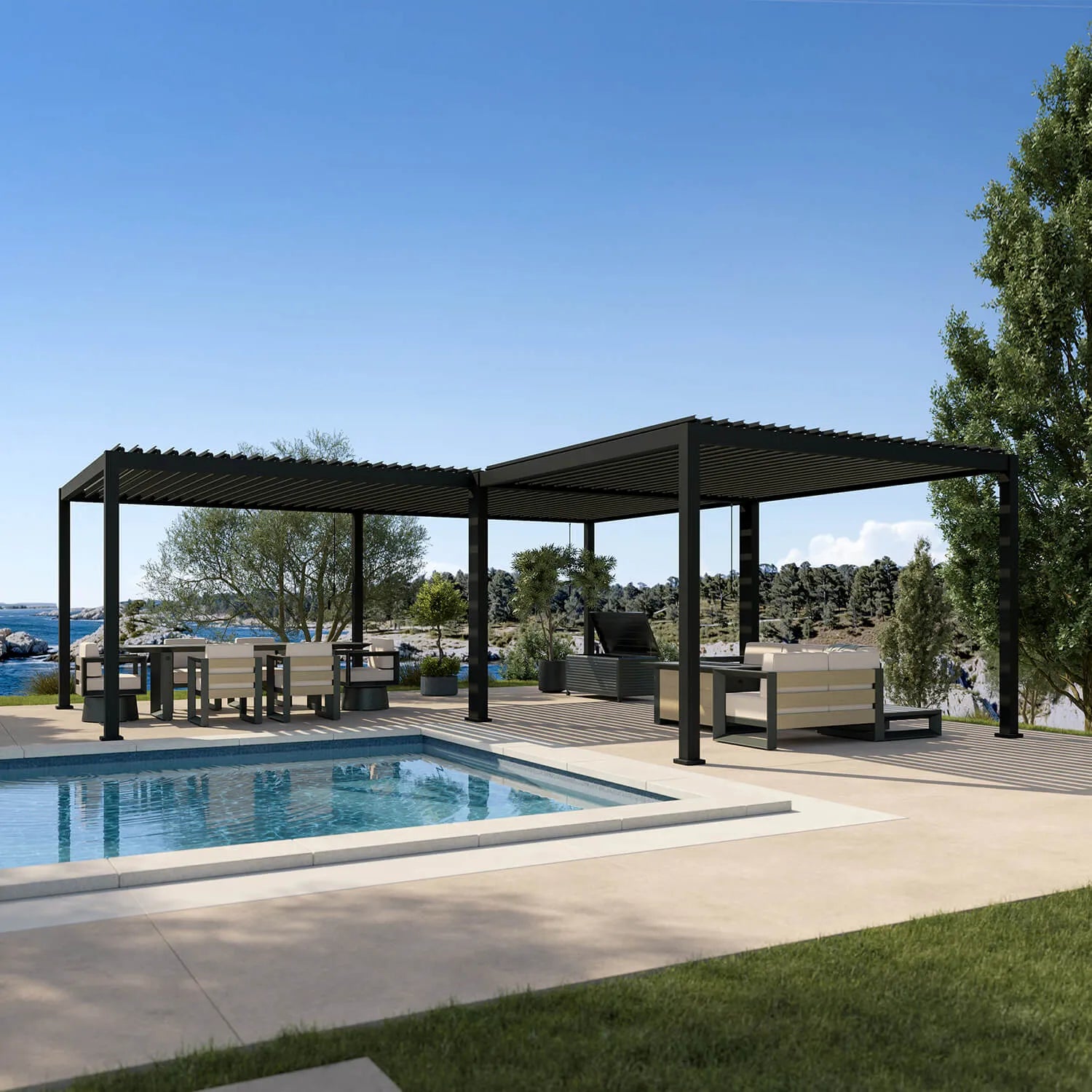
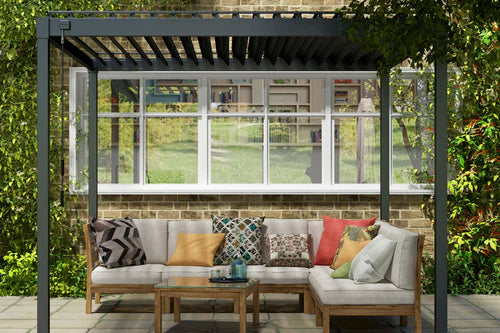
This comes up a lot, especially from folks who already have a pergola and want to add outdoor heating underneath. The answer is yes, but the rules are different for each.
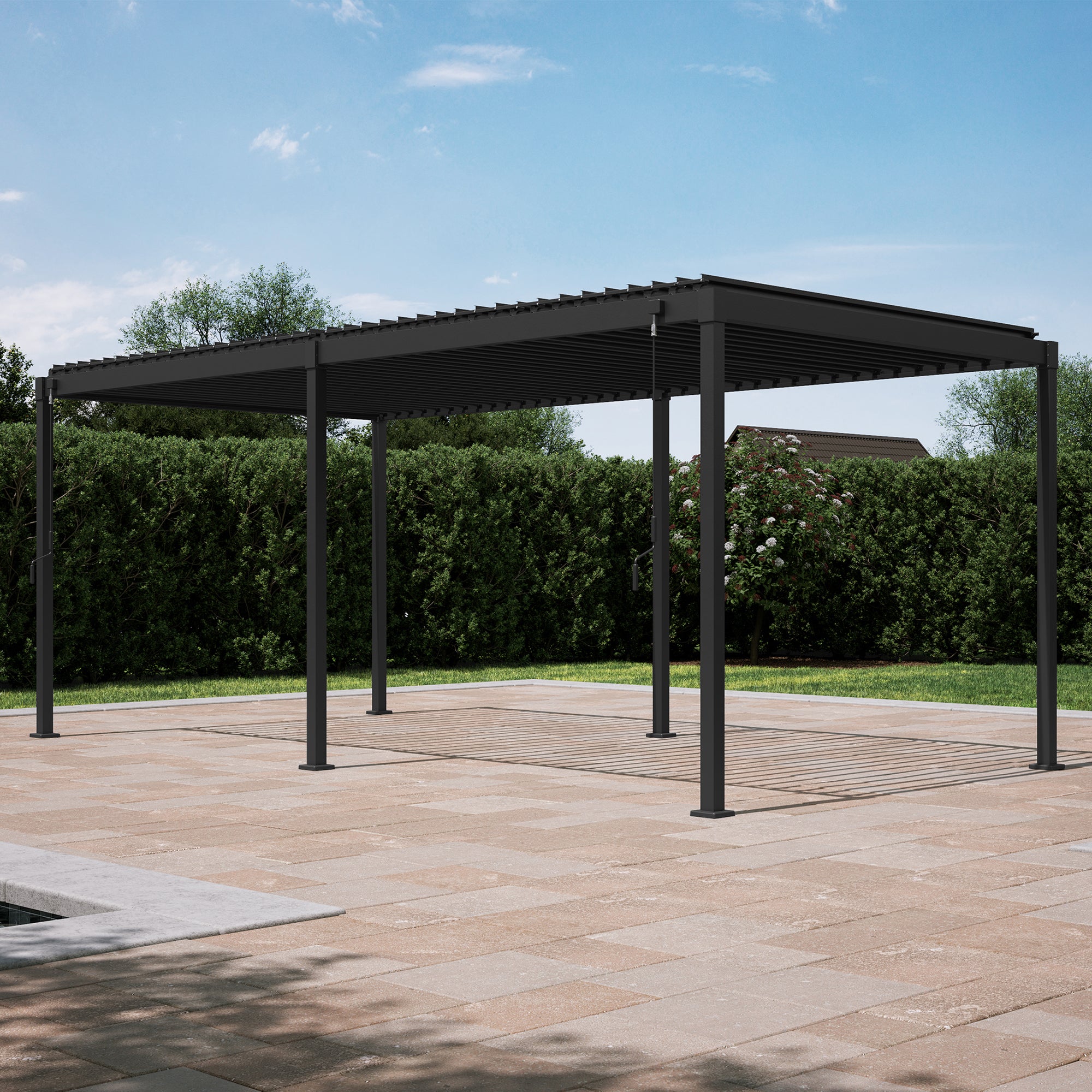
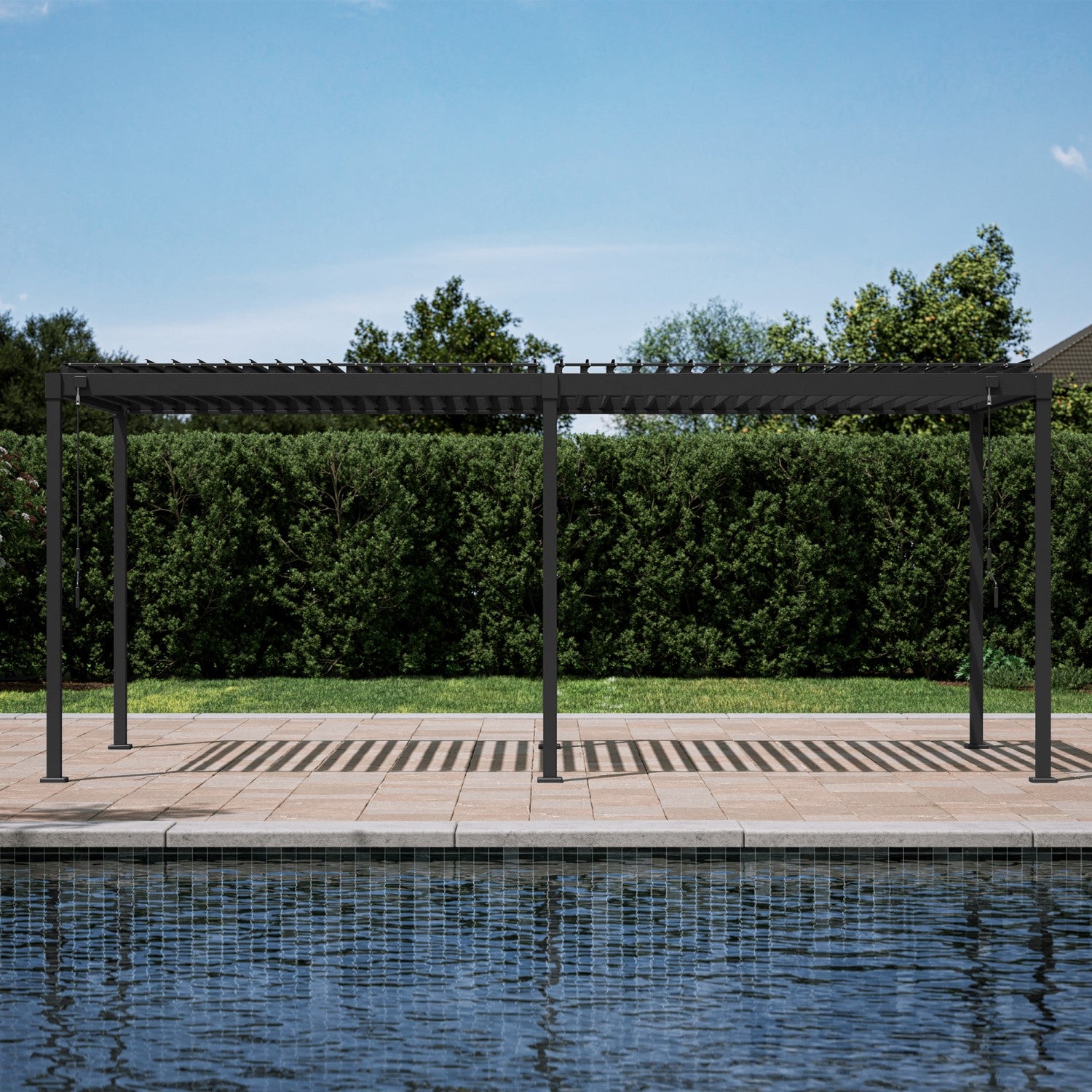
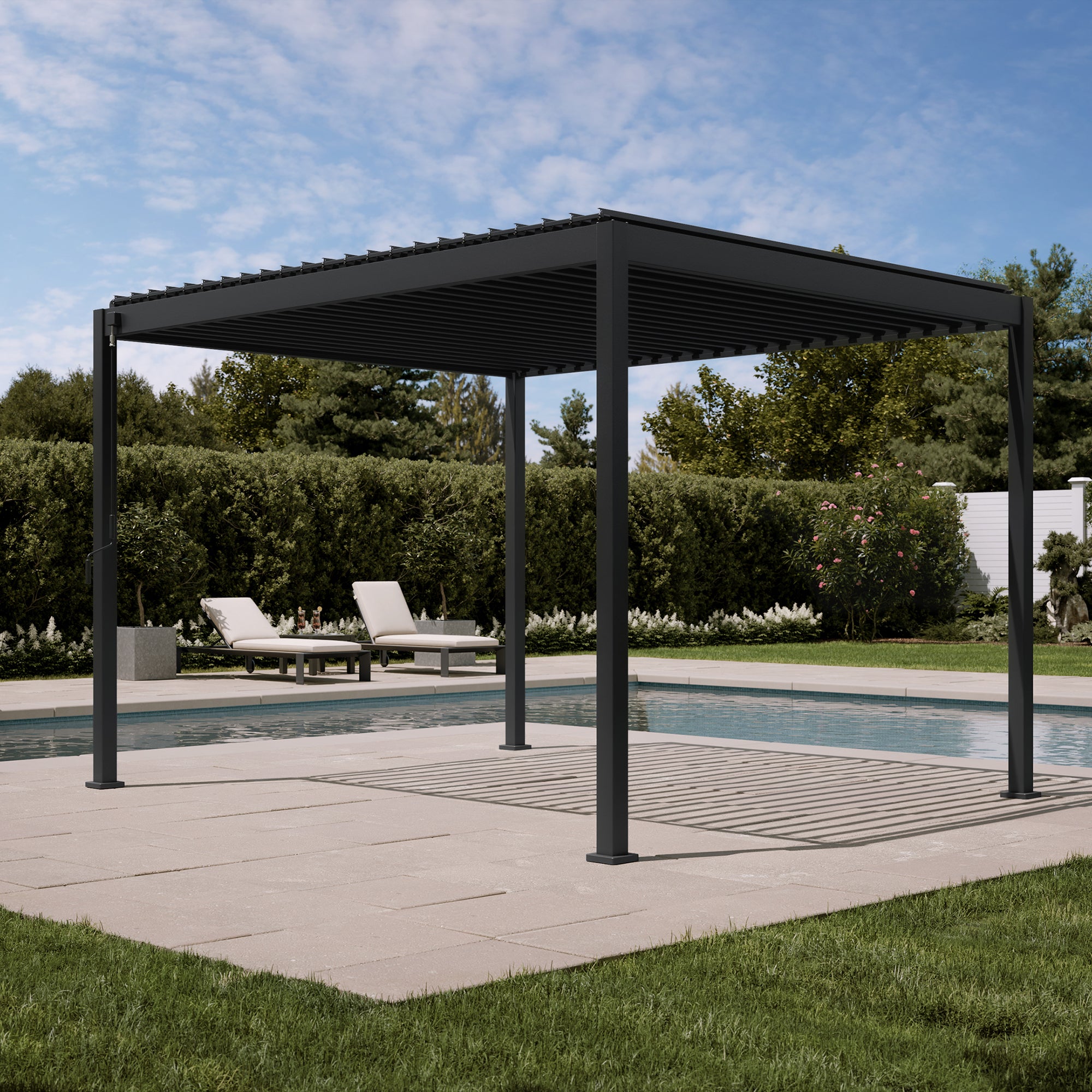
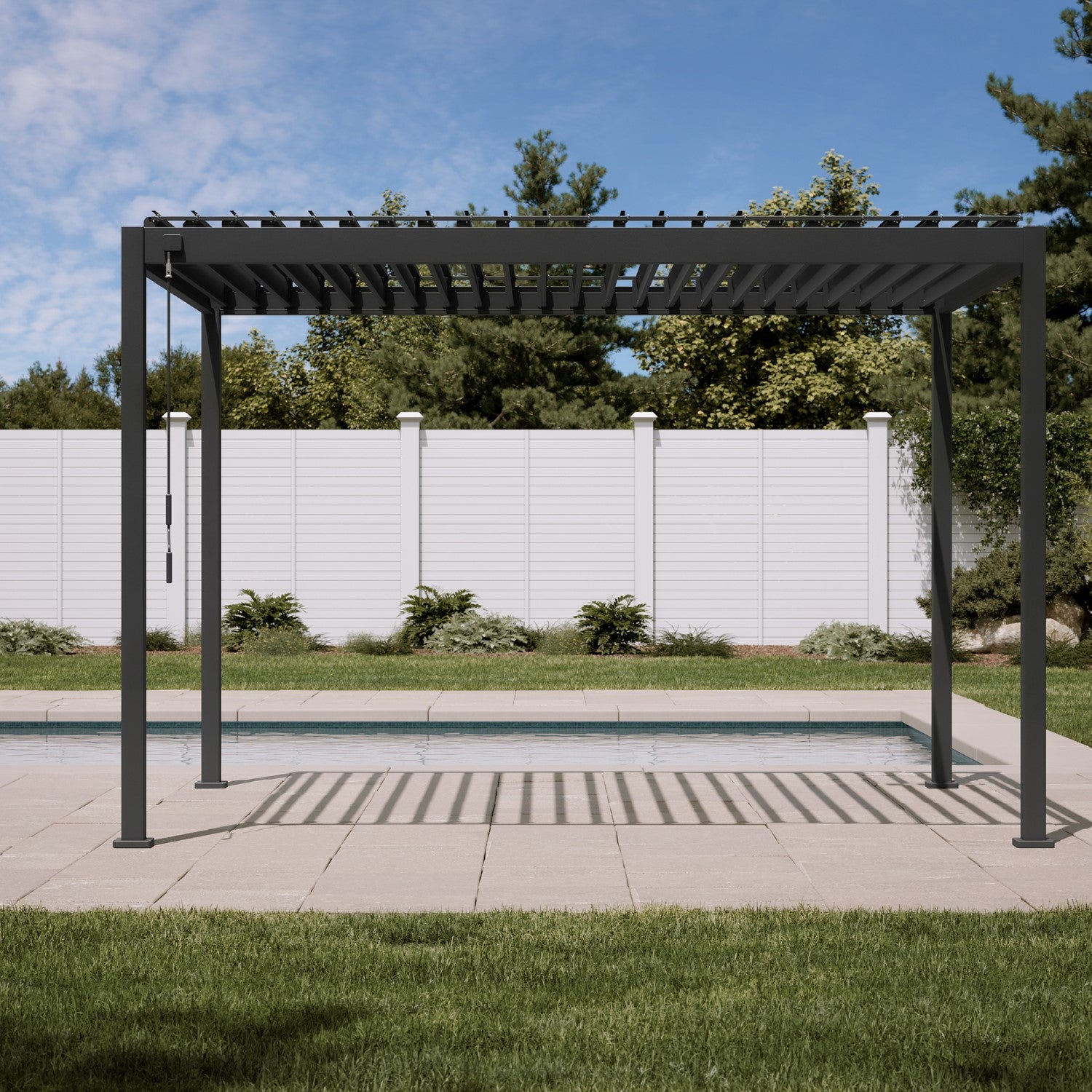
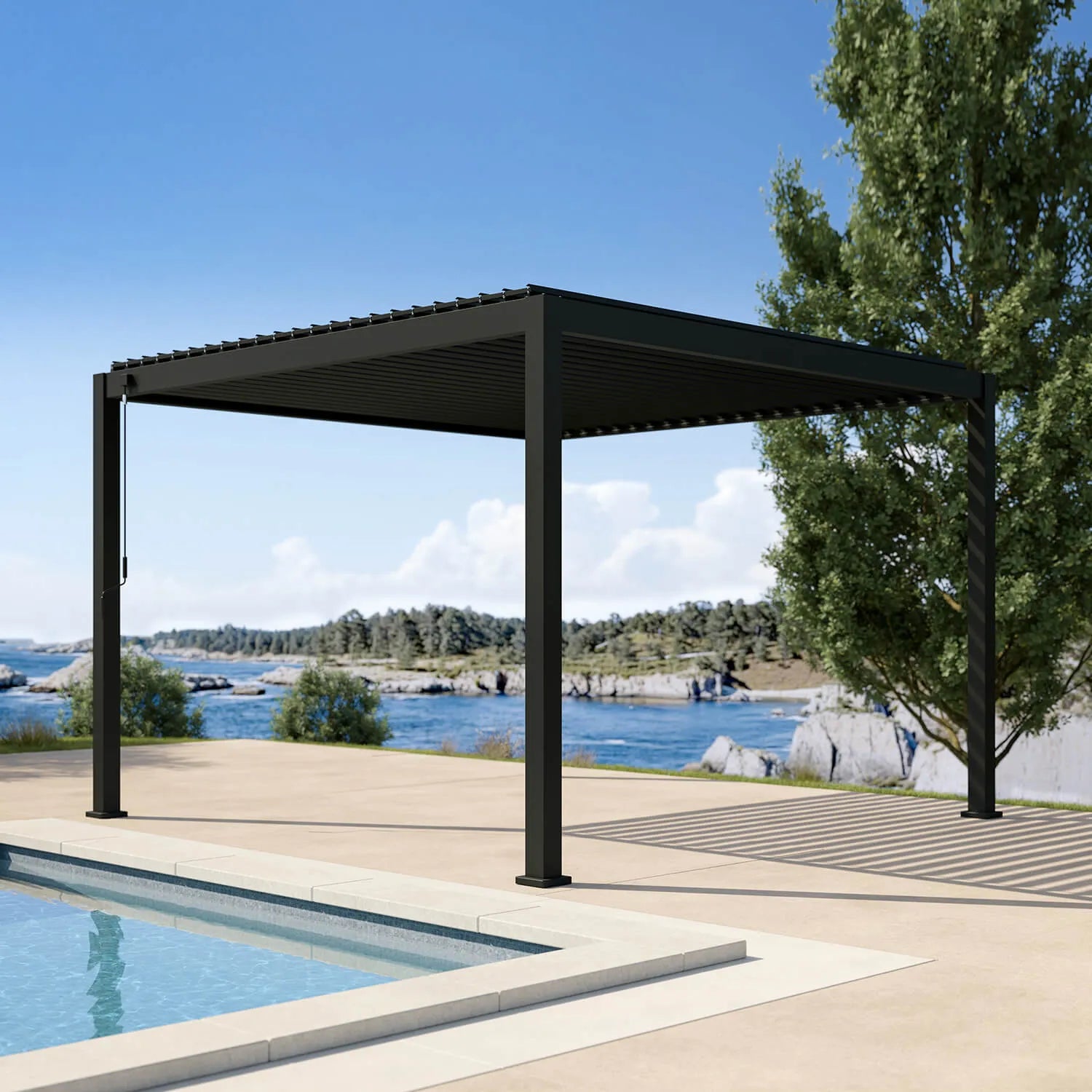
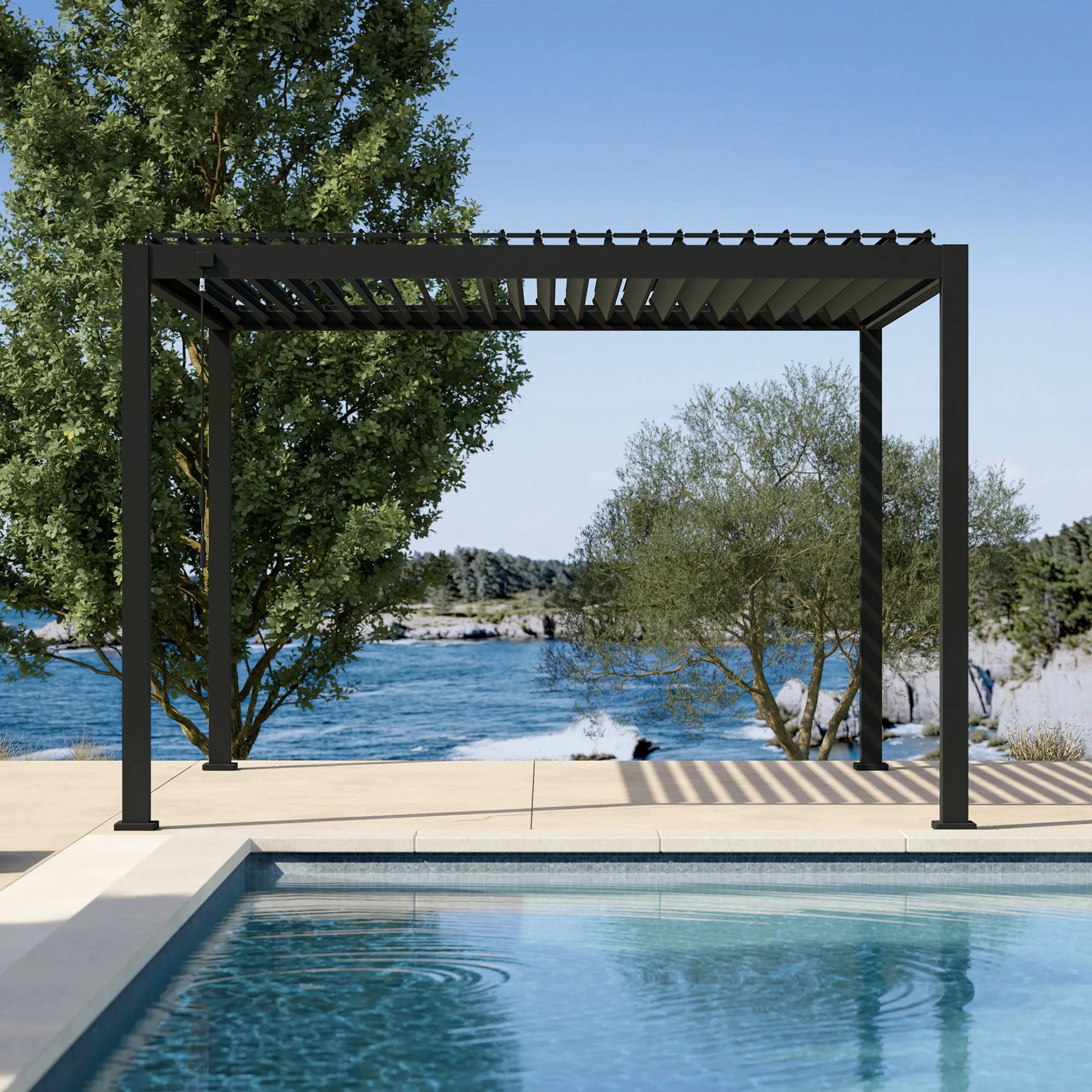
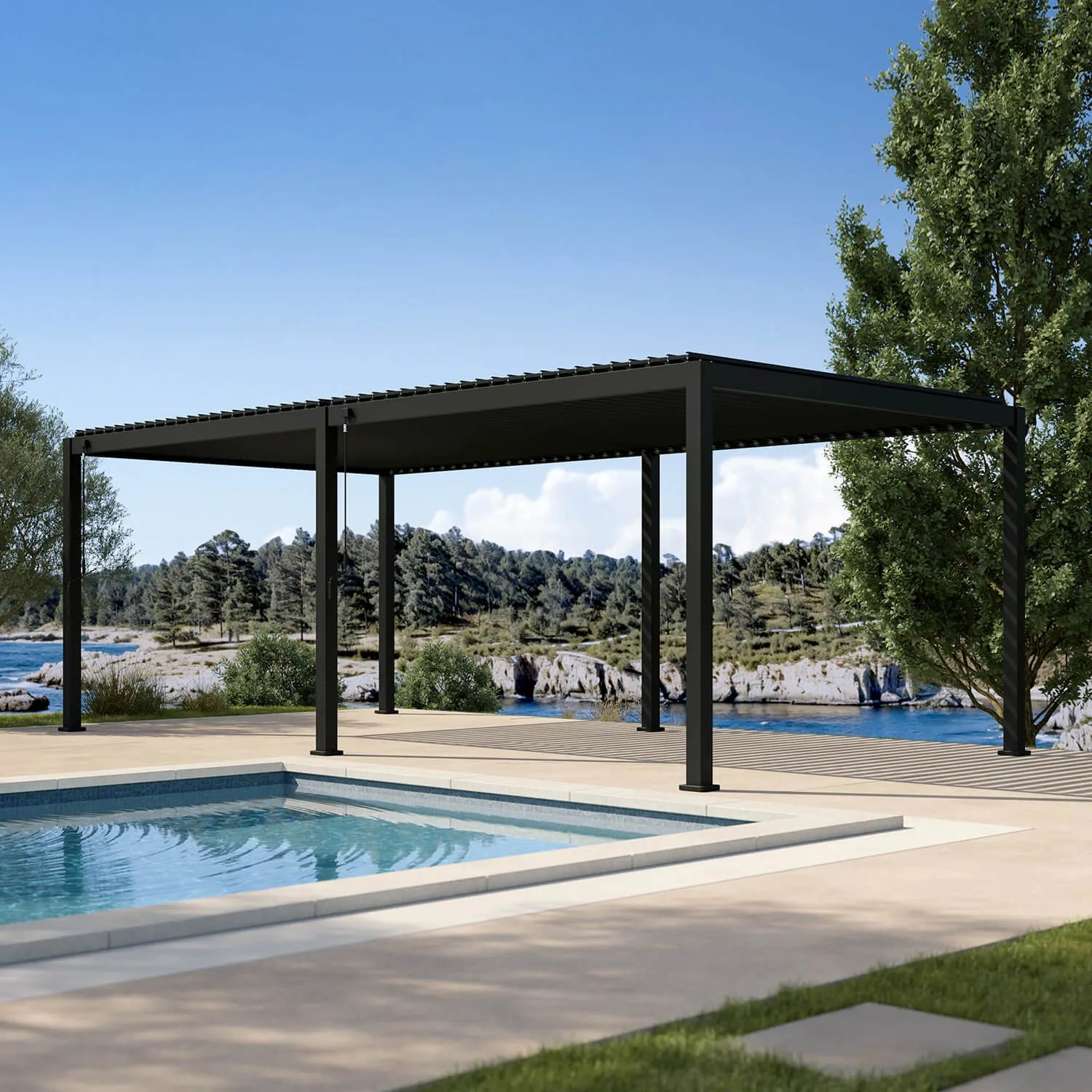
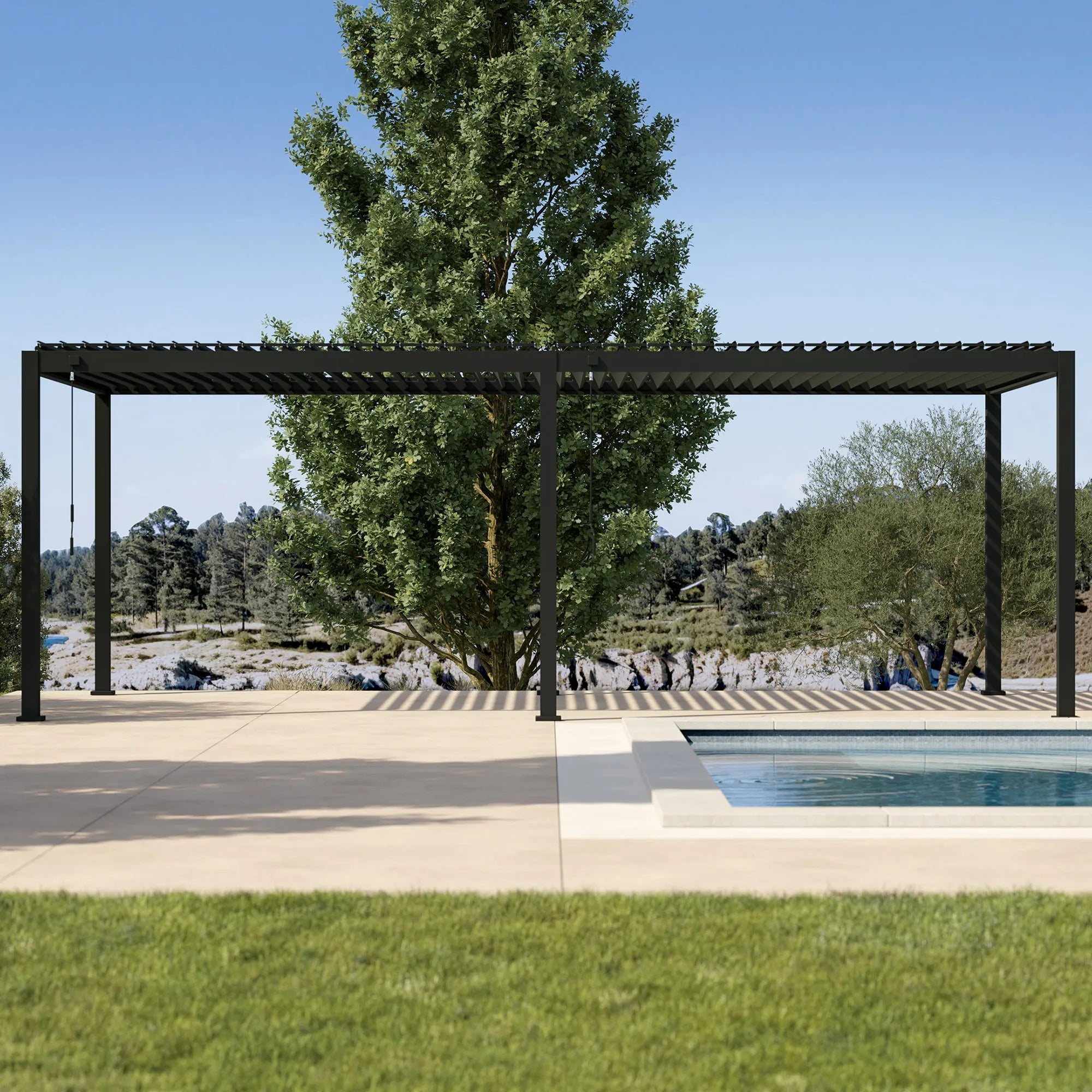
- Patio heaters under a pergola: Generally safe, especially electric infrared models that have no open flame. For propane or gas heaters, you'll need at least 3 feet of clearance above the unit's top and good airflow on at least two or three sides. Most manufacturer manuals require 30% of the horizontal perimeter to remain open. Pergolas with louvered roofs work well here because you can open the louvers for ventilation.
- Fire pits under a pergola: Also doable, but you need more planning. Safety experts recommend a minimum of 10 feet of vertical clearance between the fire pit and any overhead structure, and 12 to 15 feet is even better. The pergola material matters too. Aluminum pergolas (melting point around 1,221°F) handle heat far better than untreated wood, which has an ignition point as low as 450°F. Gas fire pit tables are strongly preferred over wood-burning pits in covered spaces because they produce no sparks, no embers, and no uncontrolled smoke.
A gas fire pit paired with an aluminum pergola, at least 10 ft of clearance, and open sides is generally safe. A wood-burning fire pit under any covered structure is risky. Always check your local fire codes first.

Patio Heater vs. Fire Pit: How to Choose
There's no single right answer. But there's probably a right answer for you.
Go with a patio heater if:
- You have a small balcony, covered porch, or compact patio
- You need targeted warmth for a dining area
- Local fire codes restrict open flames
- You want the lowest-maintenance option
Go with a fire pit if:
- You want an actual gathering spot, not just something that produces heat
- Ambiance matters as much as warmth
- You entertain groups of 4 or more regularly
- You have a pergola, open patio, or backyard with enough clearance for seating around the table
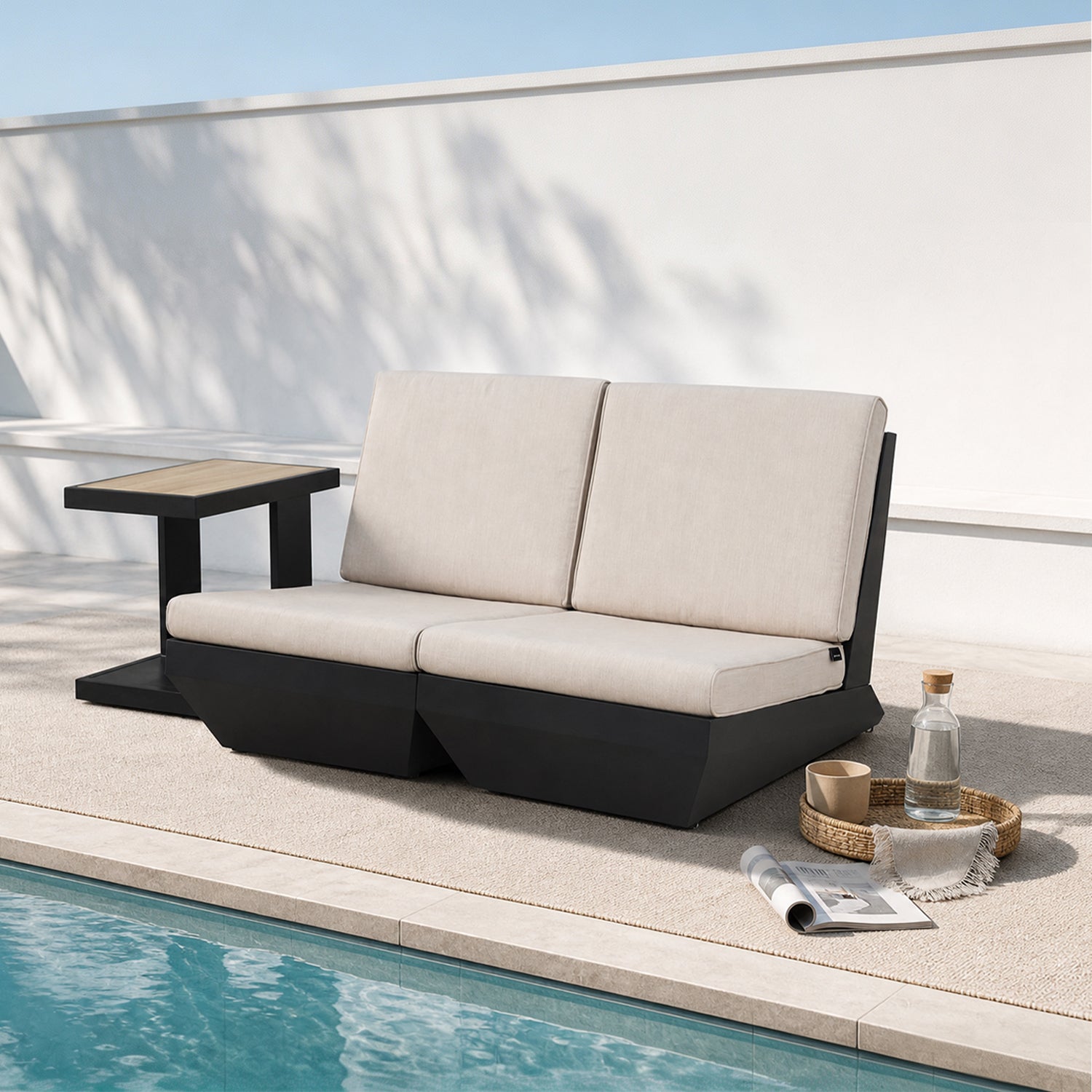
And honestly? Plenty of people end up getting both. A fire pit as the social anchor and a patio heater near the dining table for targeted warmth. That combo covers pretty much every scenario. Shopping for a fire pit or matching furniture? Take a look at our furniture collection.
FAQ
Is a fire pit or patio heater warmer?
It depends on where you sit. Fire pits produce 360-degree radiant heat ranging from 35,000 to over 150,000 BTUs, so everyone around the circle feels warm. Patio heaters focus heat in one direction at 40,000–48,000 BTUs. That's great for one seating zone but drops off quickly beyond a few feet.
Can I use a propane fire pit on a covered patio?
Yes, with conditions. You need proper ventilation (at least two open sides), a minimum of 10 feet of overhead clearance, and non-combustible materials like aluminum or steel above. Gas fire pit tables are much safer than wood-burning pits in covered spaces. Always check your local building codes before installing.
How long does a 20 lb propane tank last in a fire pit?
At moderate flame, a 20 lb tank lasts around 8–12 hours for most gas fire pit tables. Higher BTU settings burn through fuel faster. The Mirador Siena Fire Pit fits a standard 5-gallon (20 lb) cylinder inside its base.
Are patio heaters safer than fire pits?
In general, yes. Patio heaters have enclosed flames, automatic tip-over shutoffs, and work in tighter spaces. But gas fire pit tables with CSA certification, like the Siena, close the gap significantly. The biggest safety risk comes from open wood-burning fire pits, not gas models.
Do fire pits add value to a home?
Well-designed outdoor living spaces with fire features can add 5–8% to perceived home value, according to real estate industry estimates. A fire pit table that doubles as functional patio furniture makes your backyard look more polished during showings and appraisals.