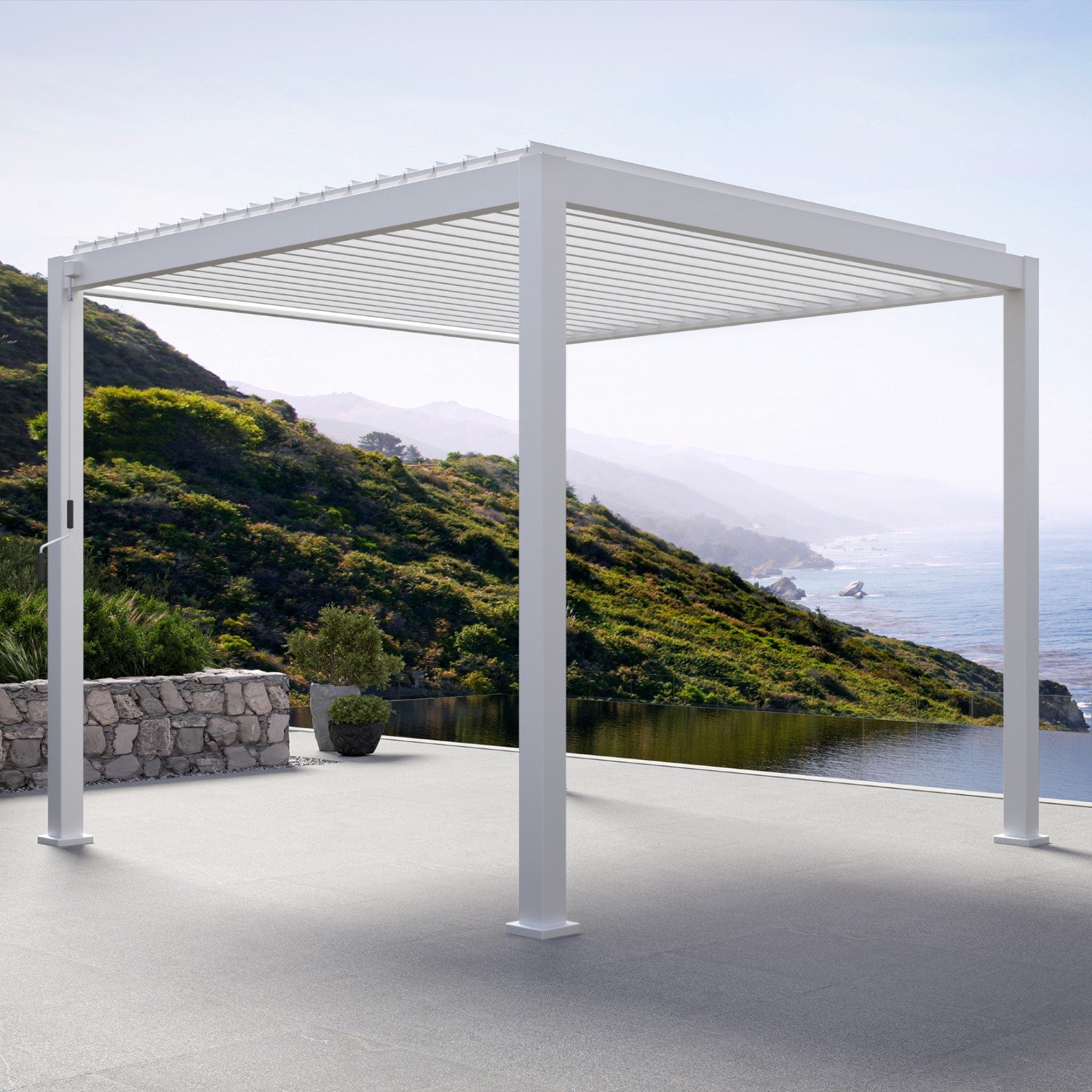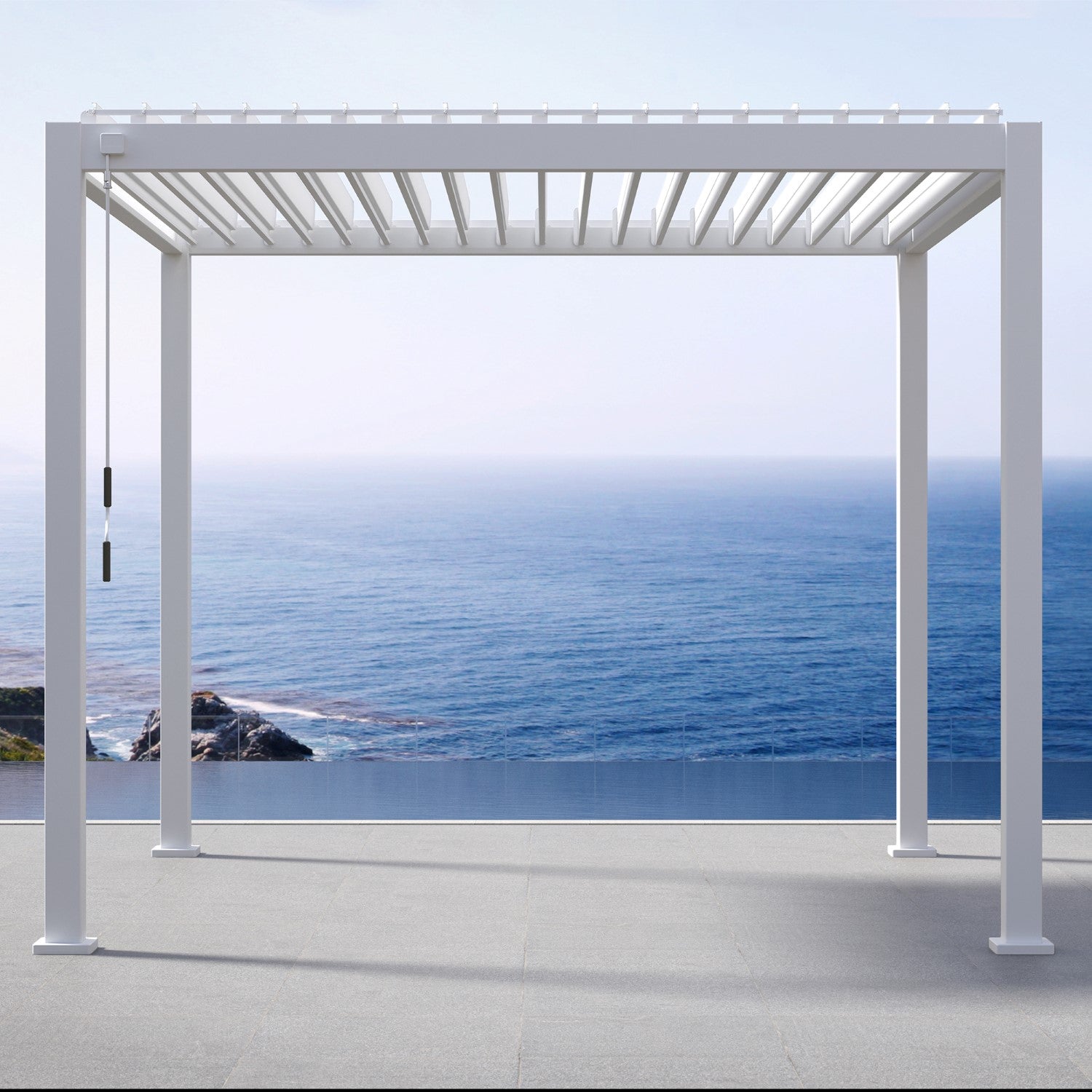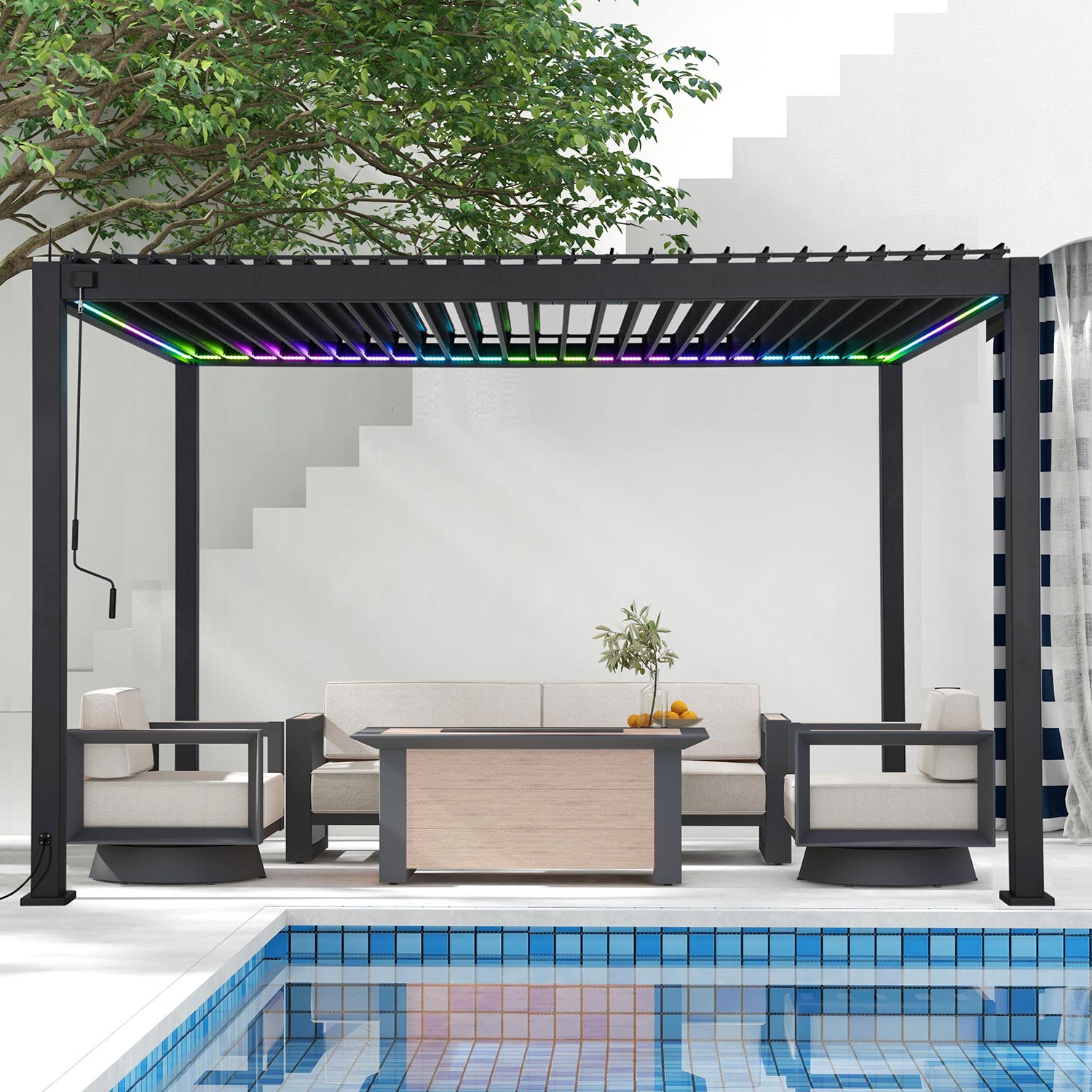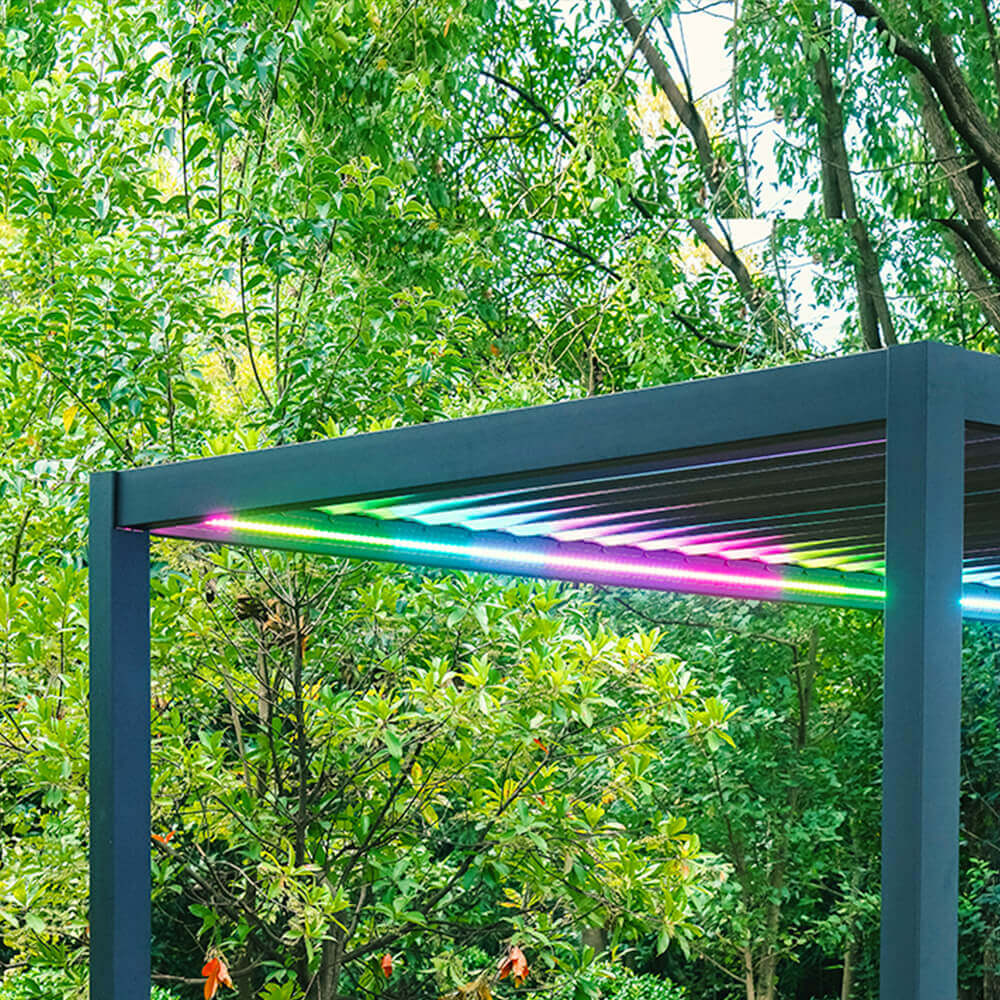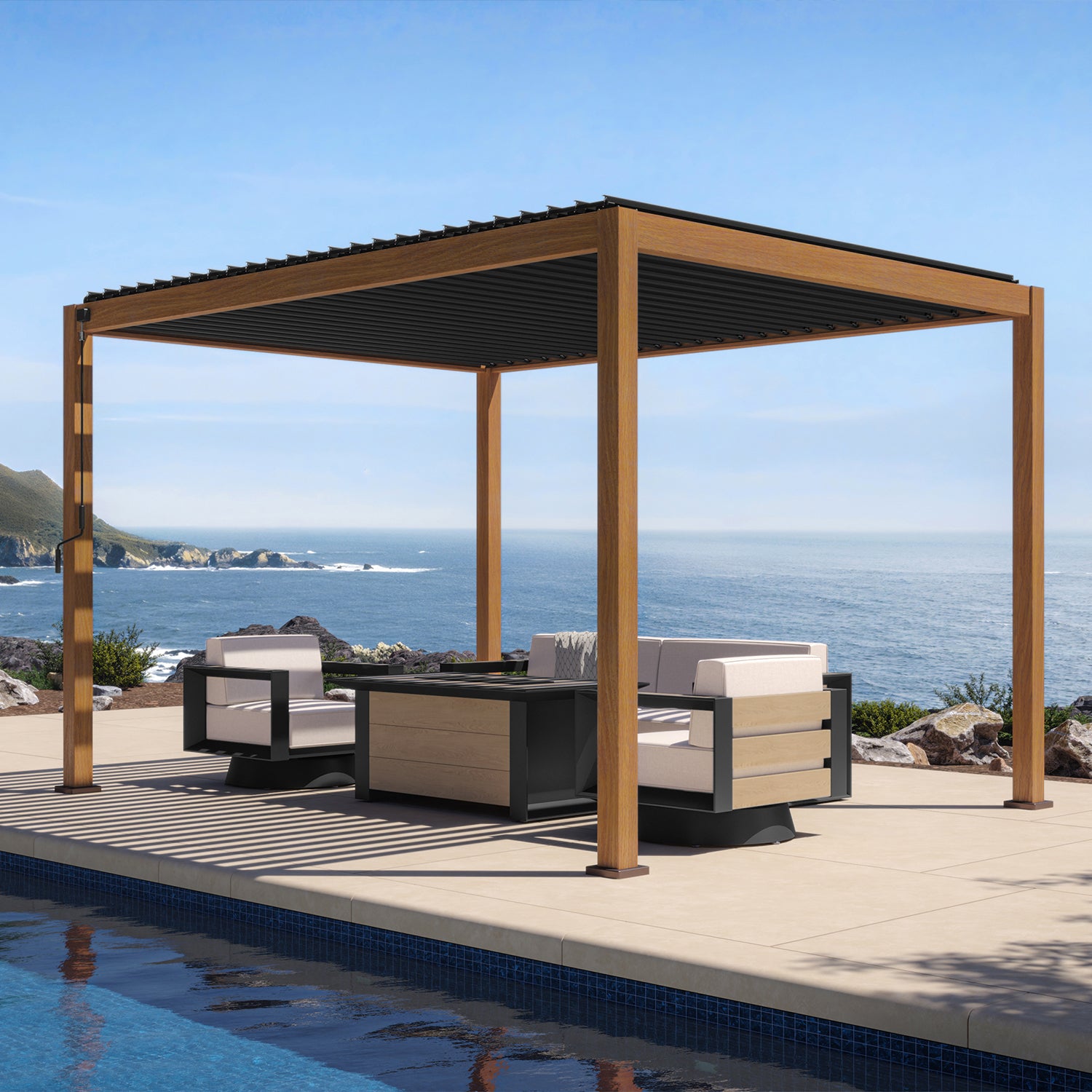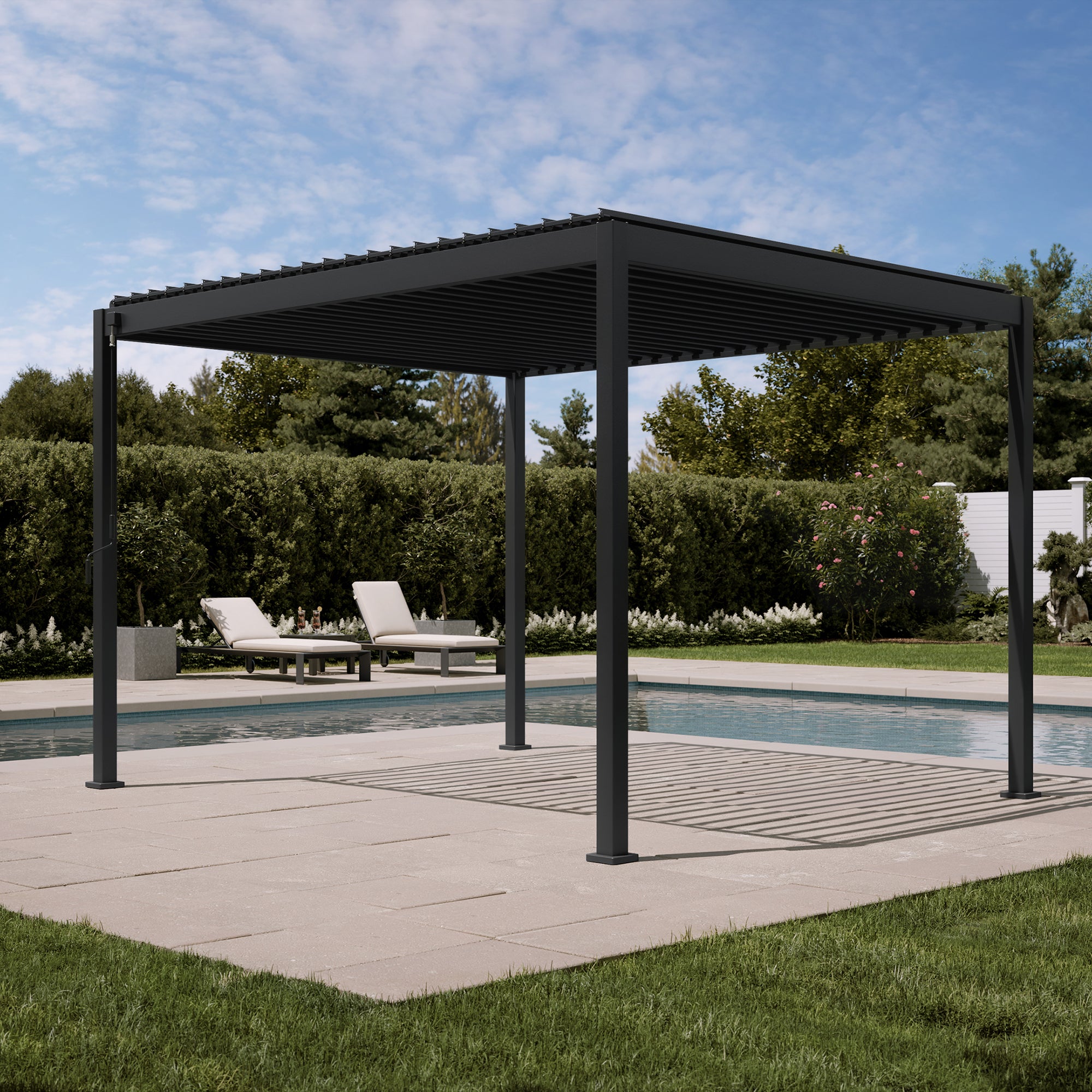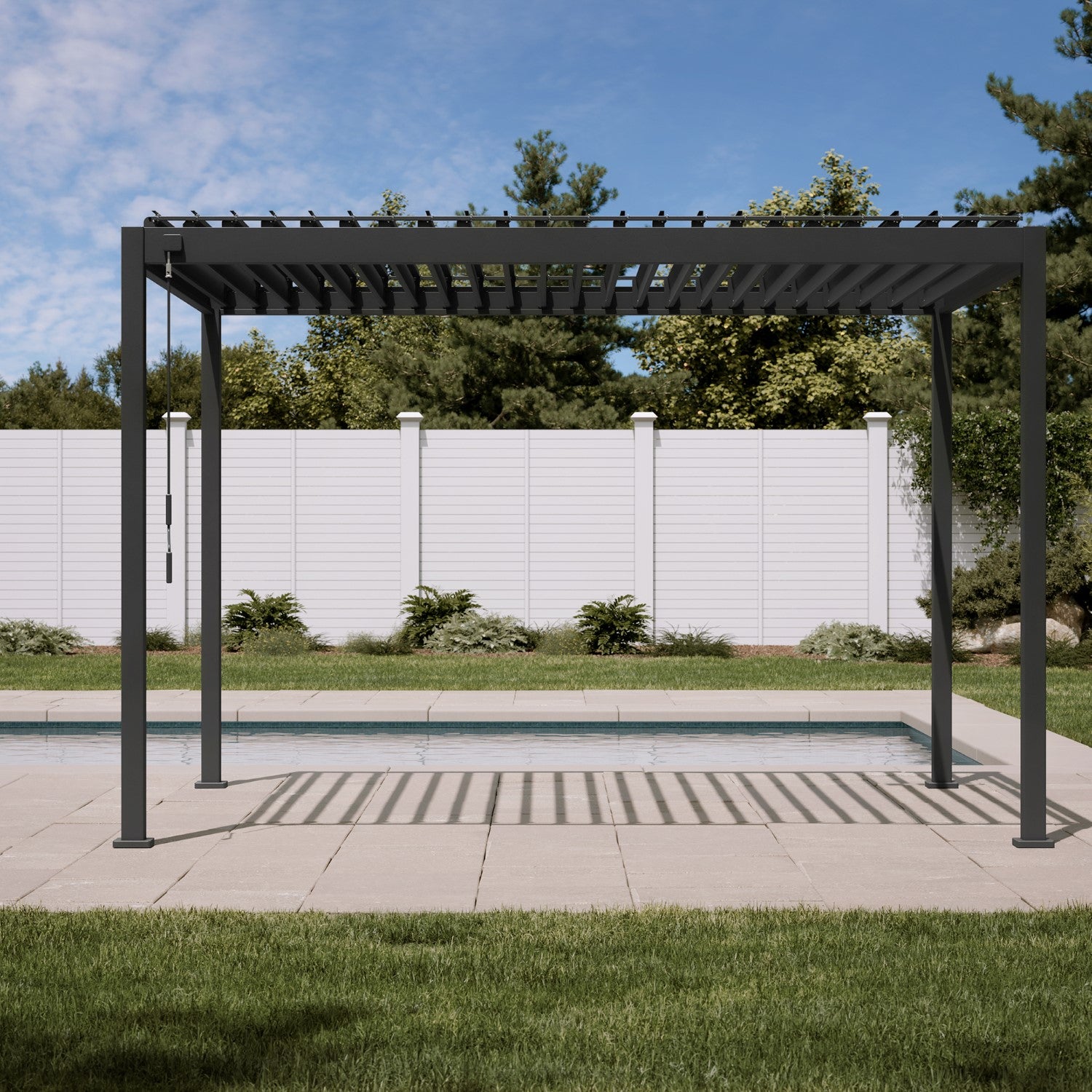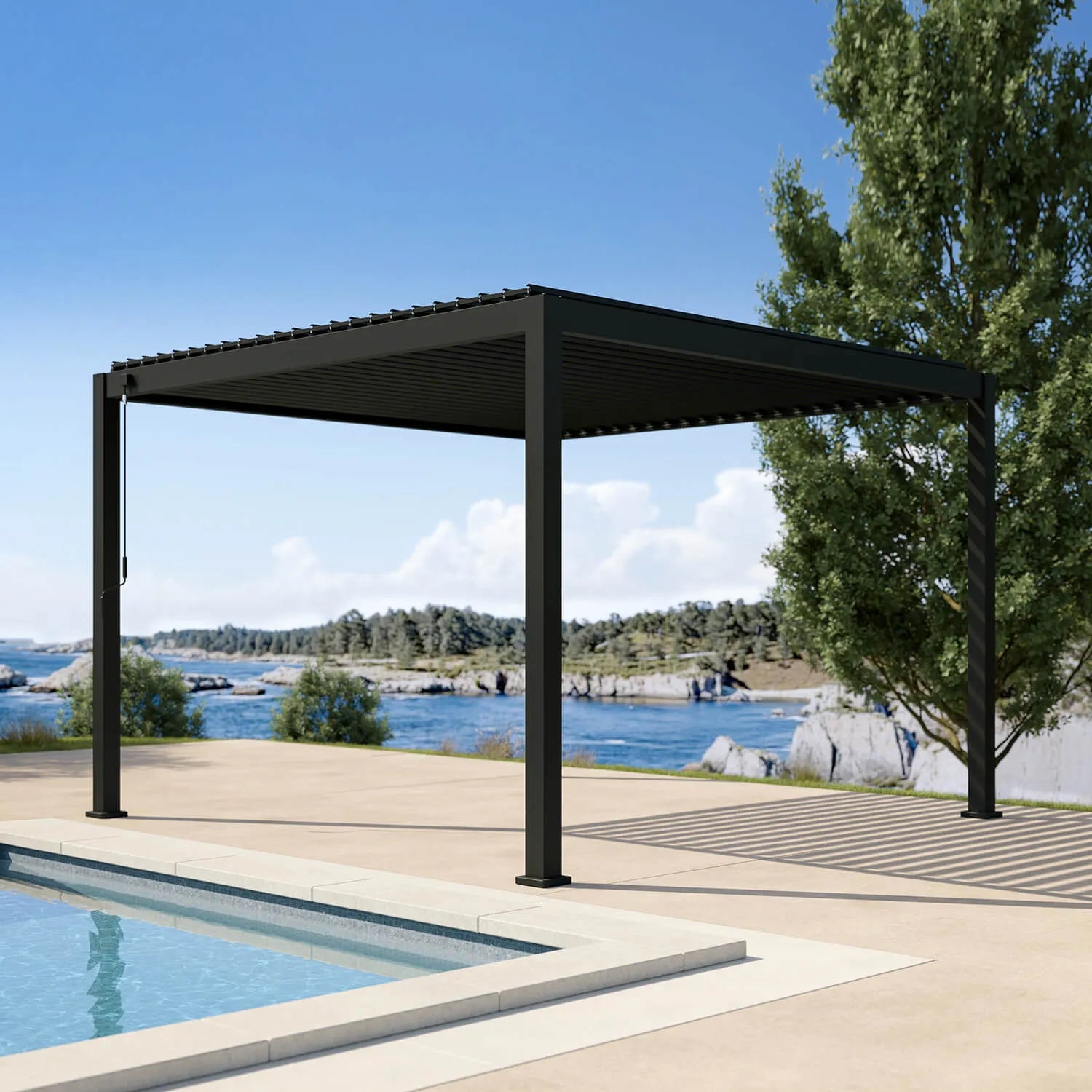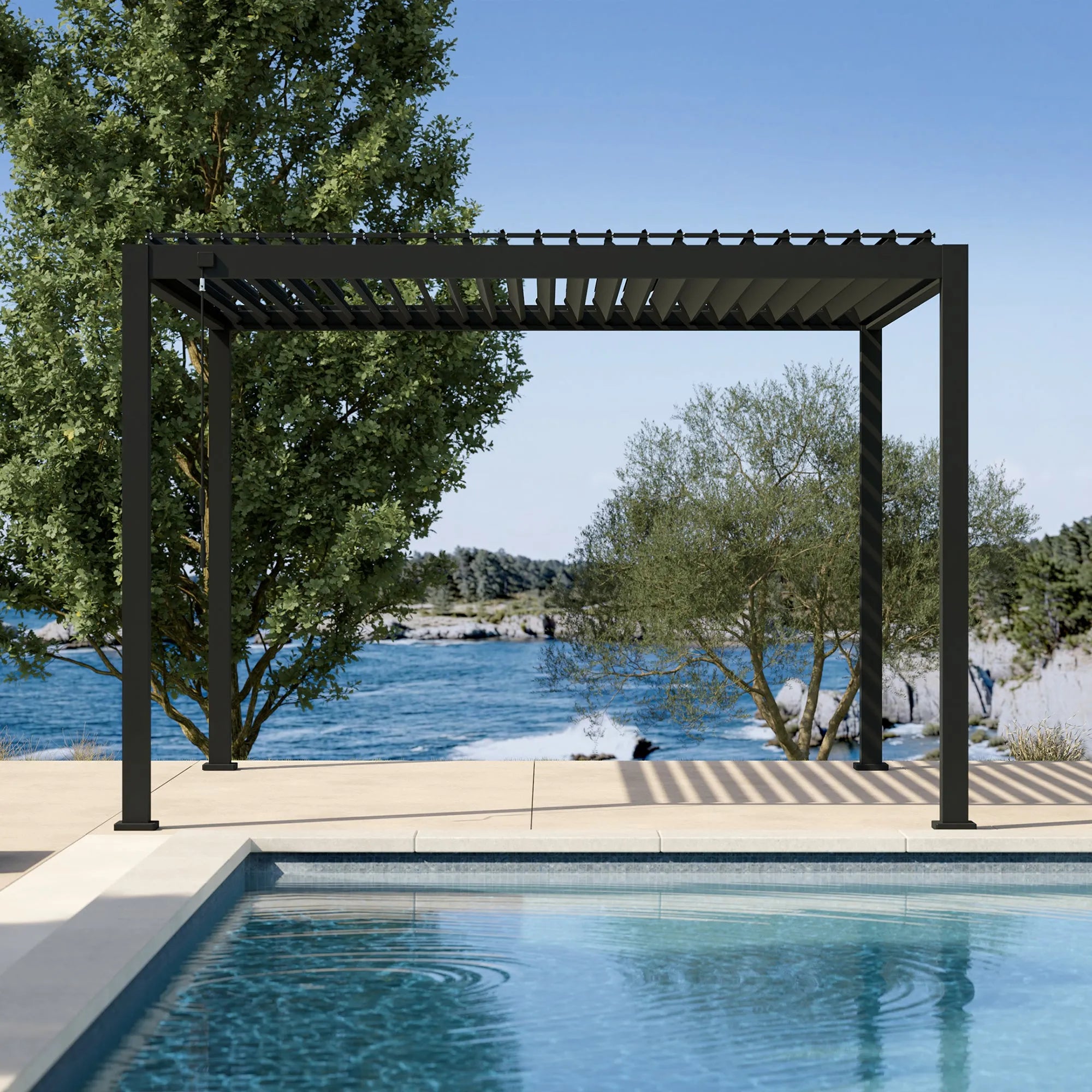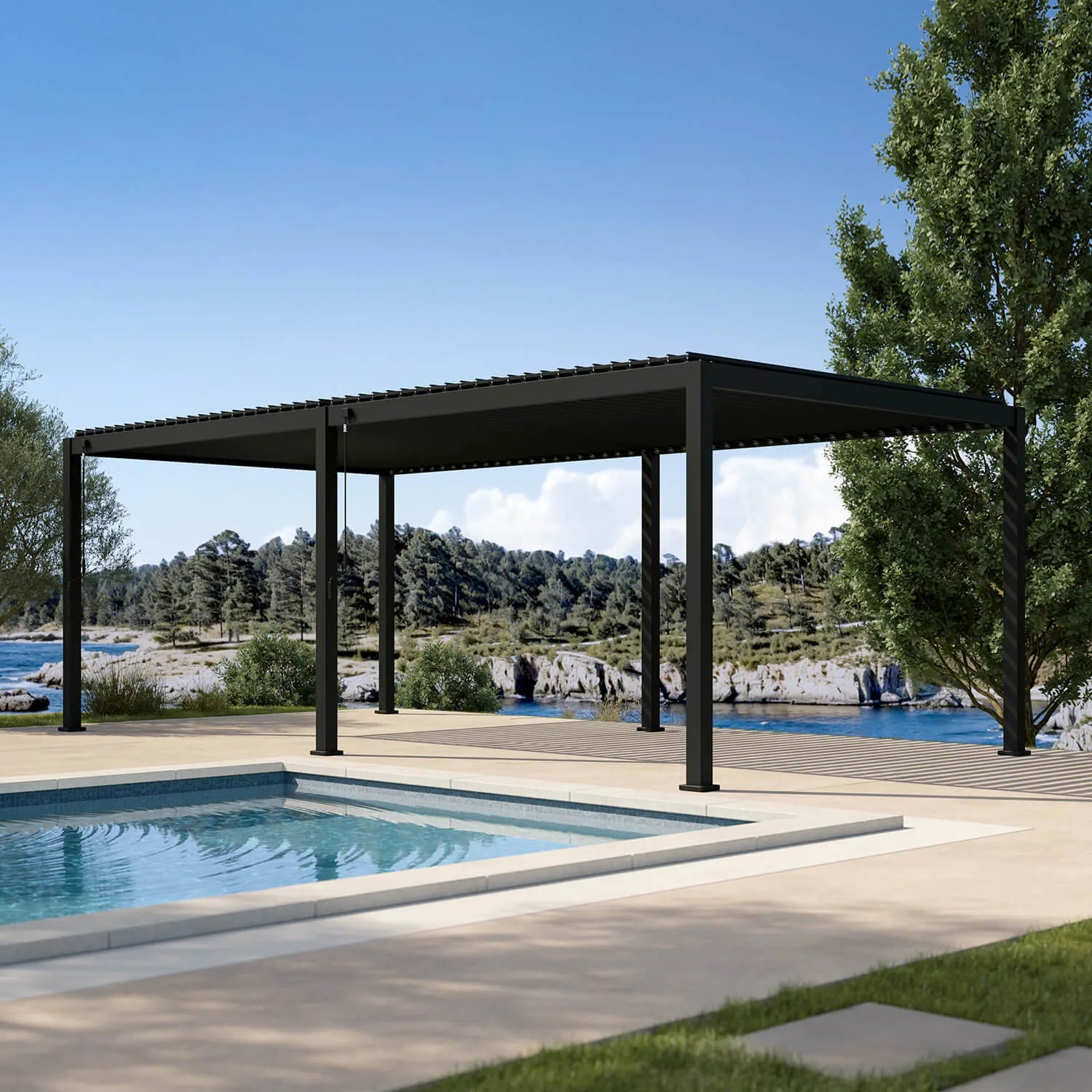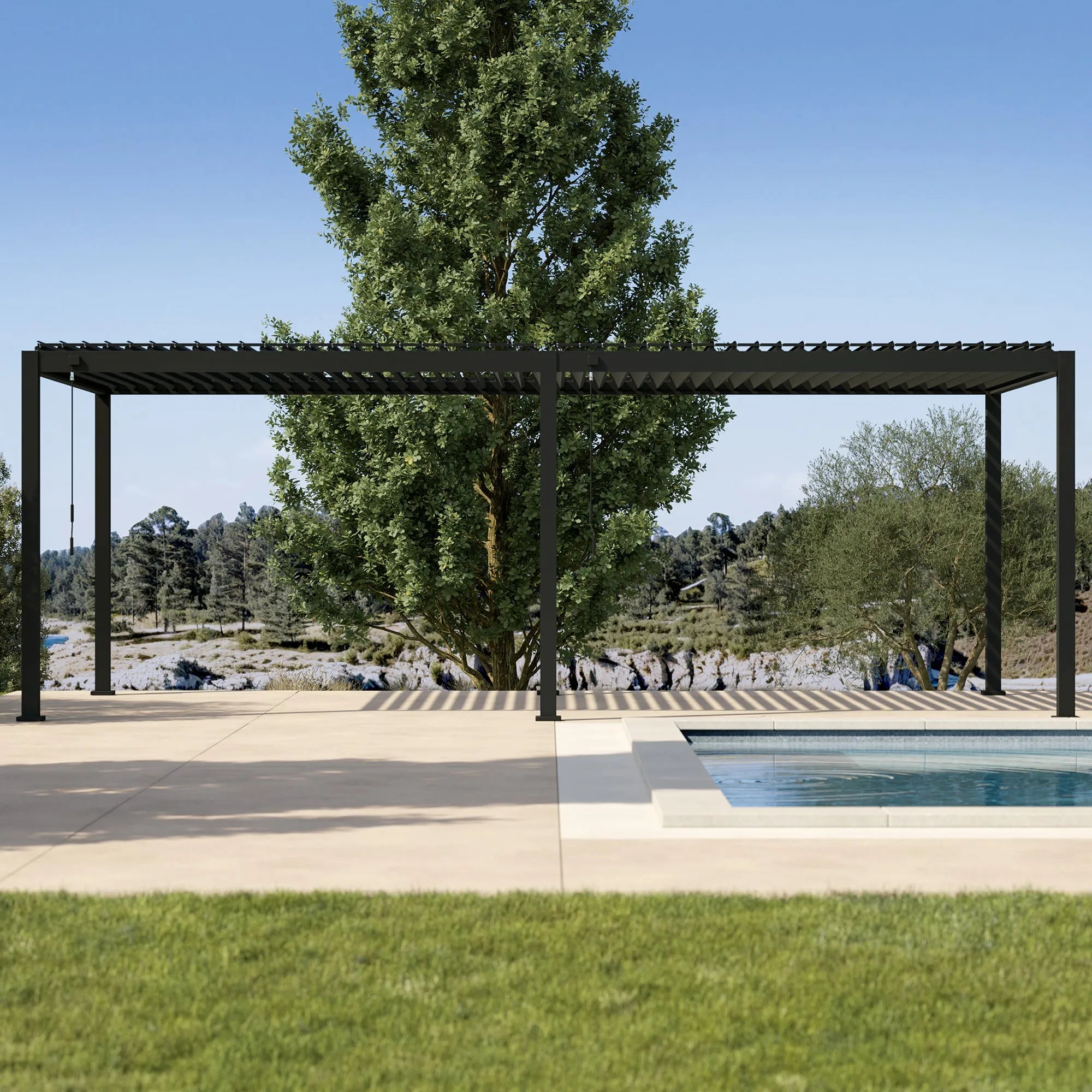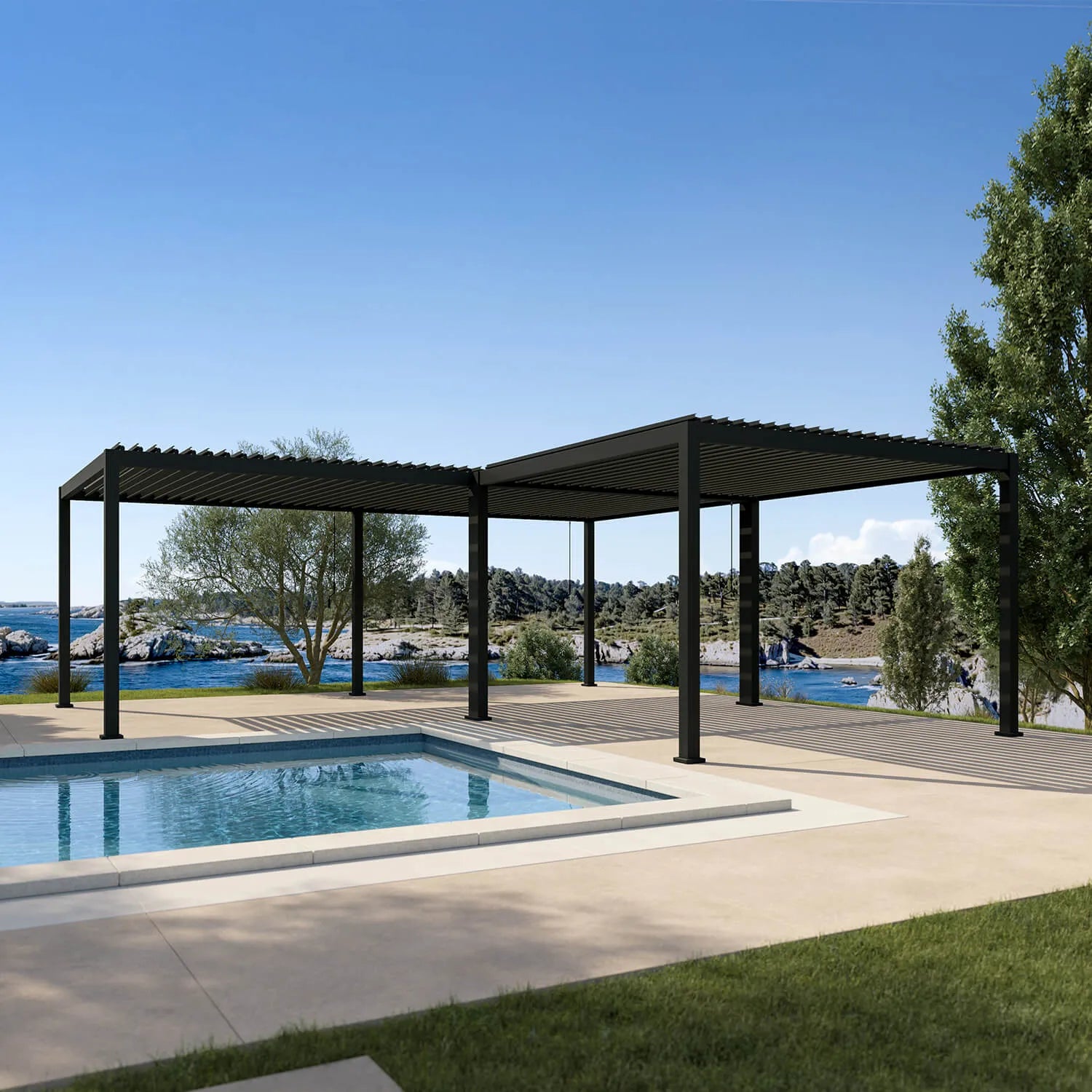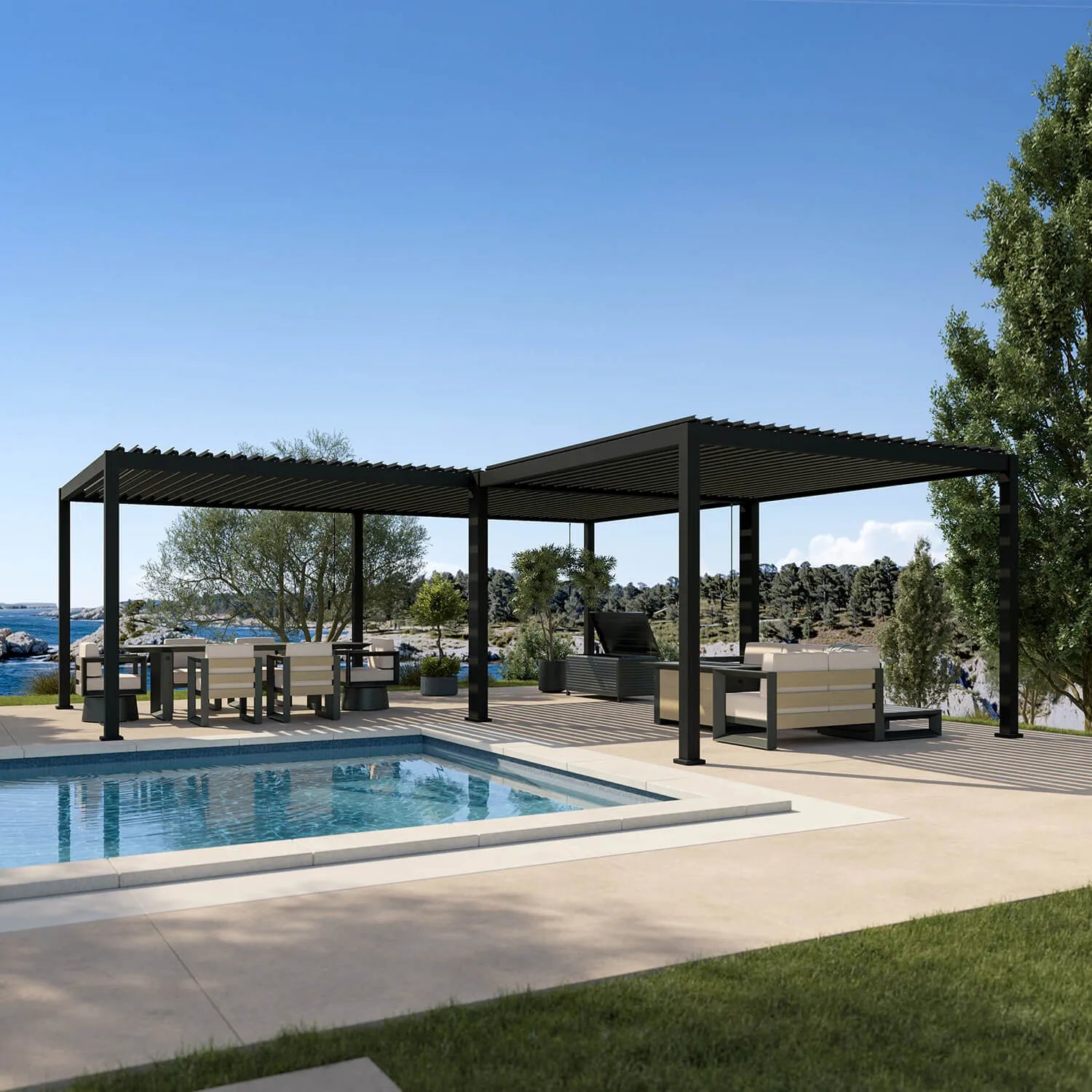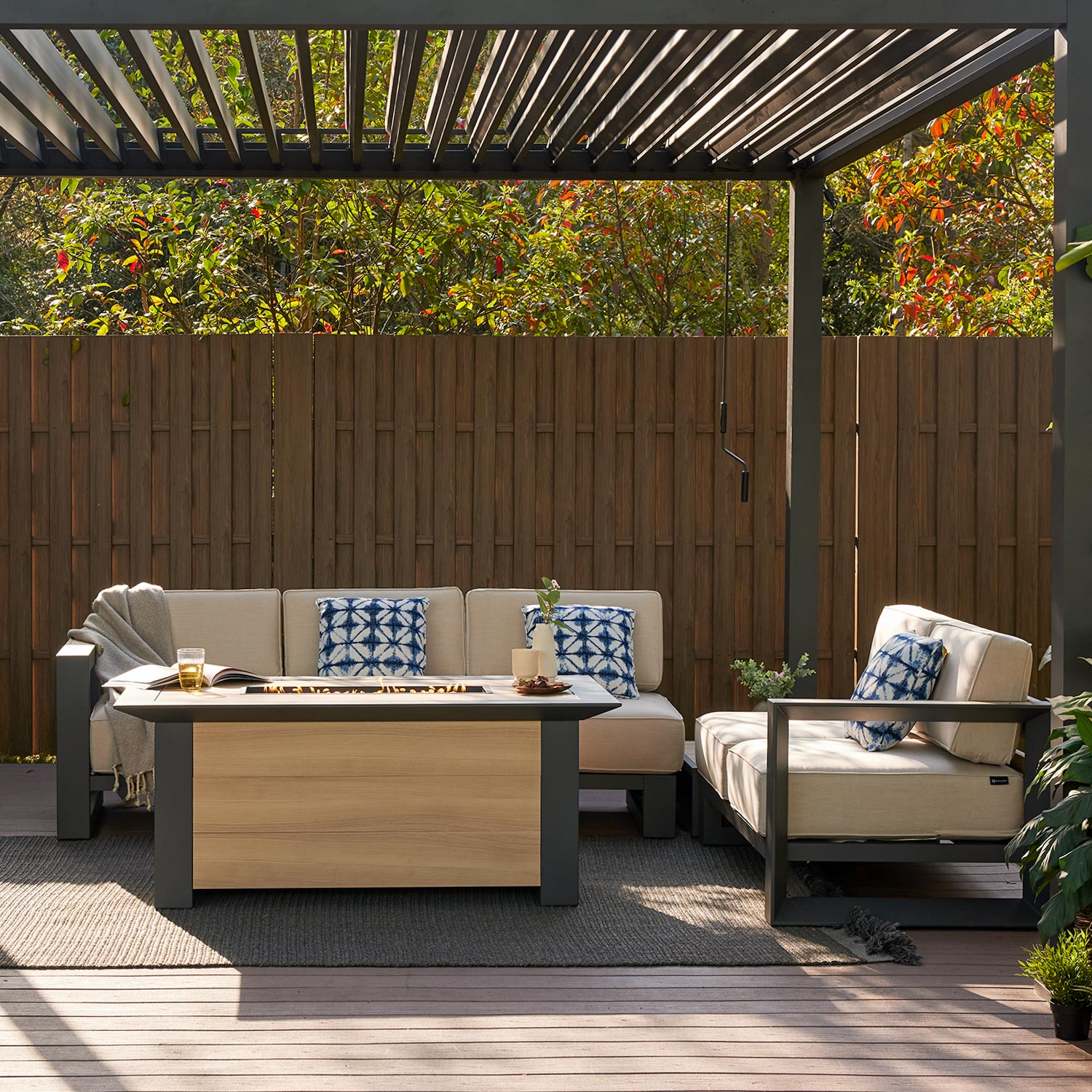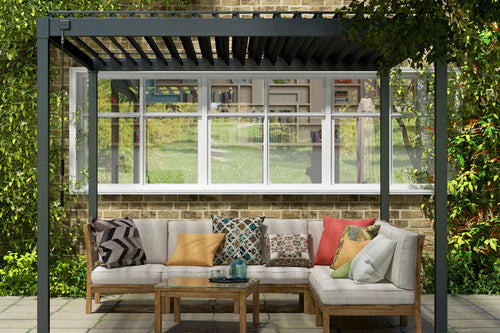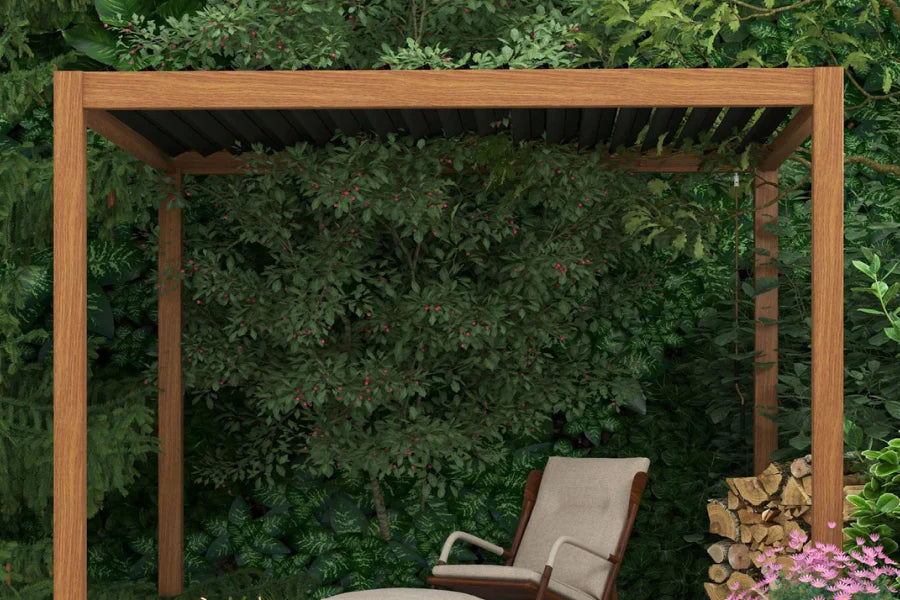

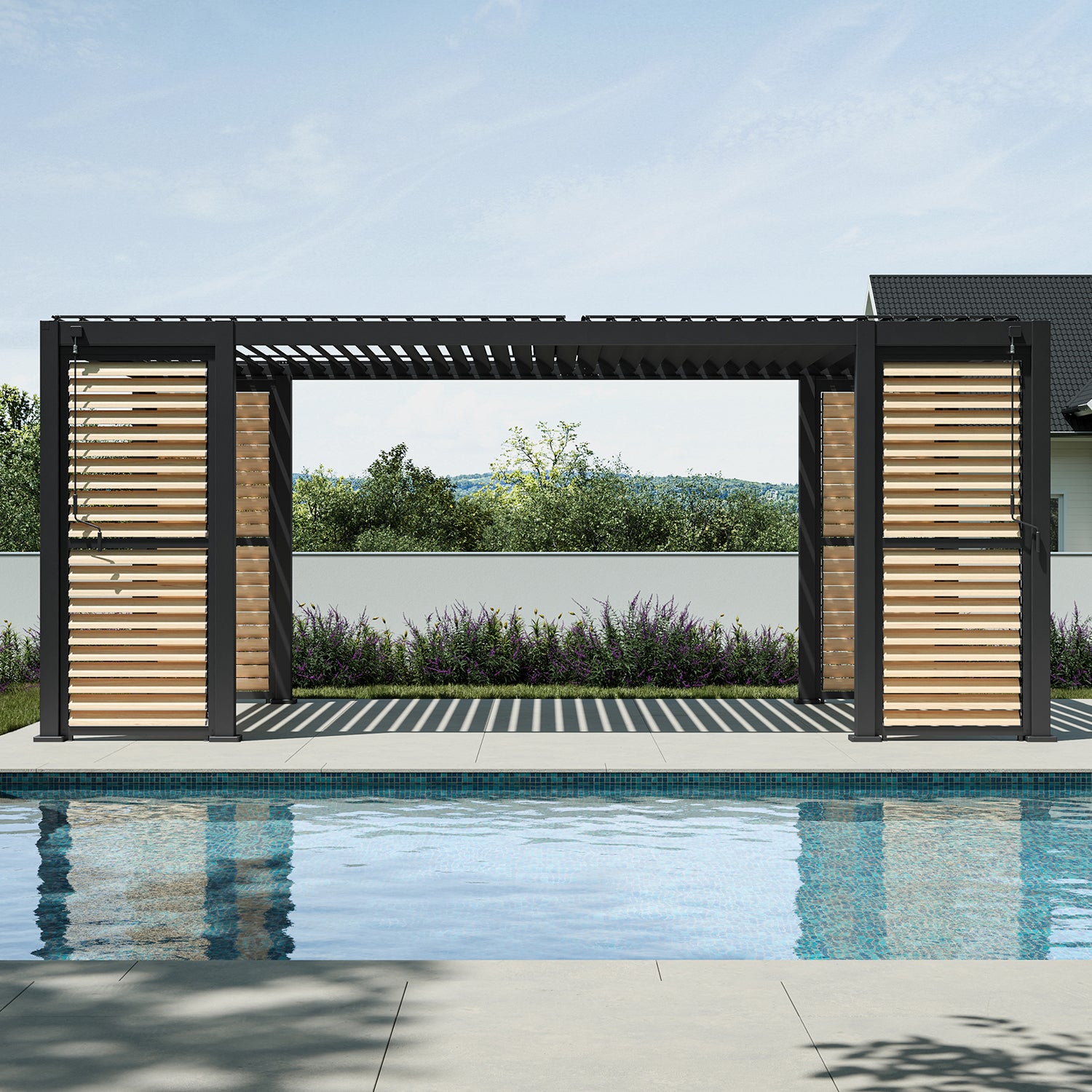
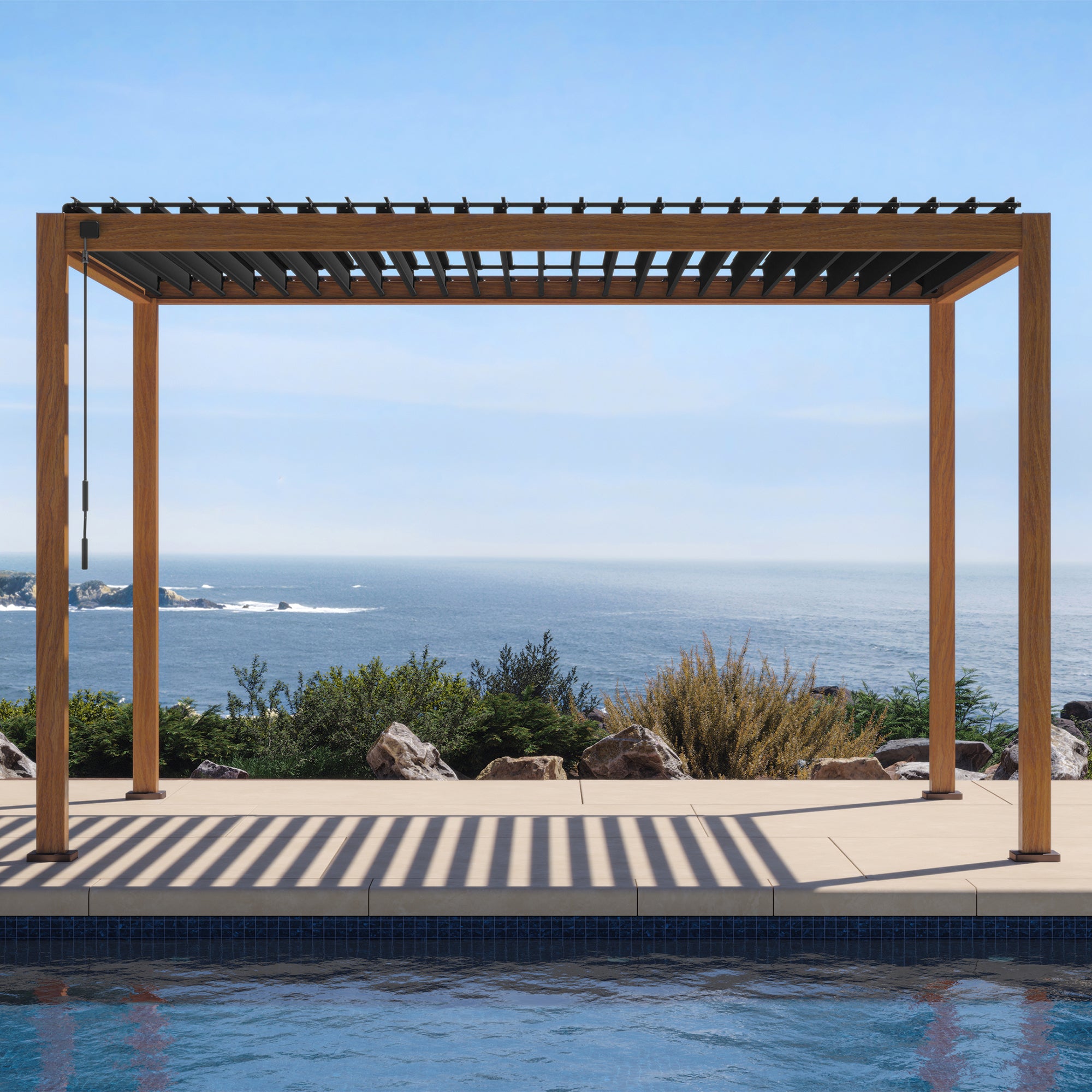
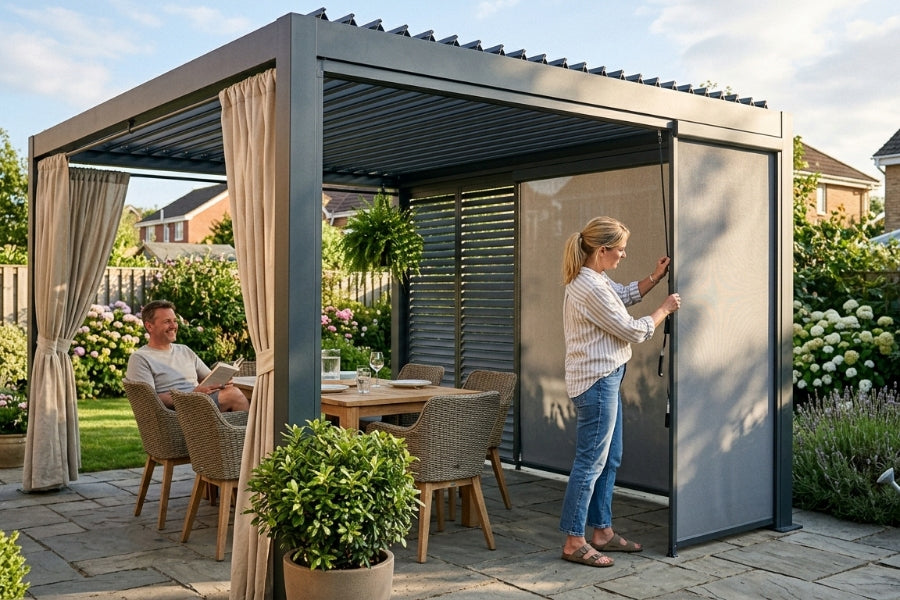
If you want Mirador pergola side shade, start with the official accessory that matches your exact Mirador series and side length. Pull-down screens work best for everyday shade and insects, shutter walls work better for privacy and airflow control, sliding doors create a more enclosed room feel, and third-party curtains or shade cloth should stay removable, light-duty, and warranty-aware.
Mirador Pergola Side Shade Options
1. Match your pergola series and side length.
2. Pick a Mirador screen for roll-down shade.
3. Pick shutter walls or sliding shutter doors for privacy and wind filtering.
4. Use curtains or shade cloth only as removable, light-duty shade.
5. Check anchoring, warranty, and local code before drilling.

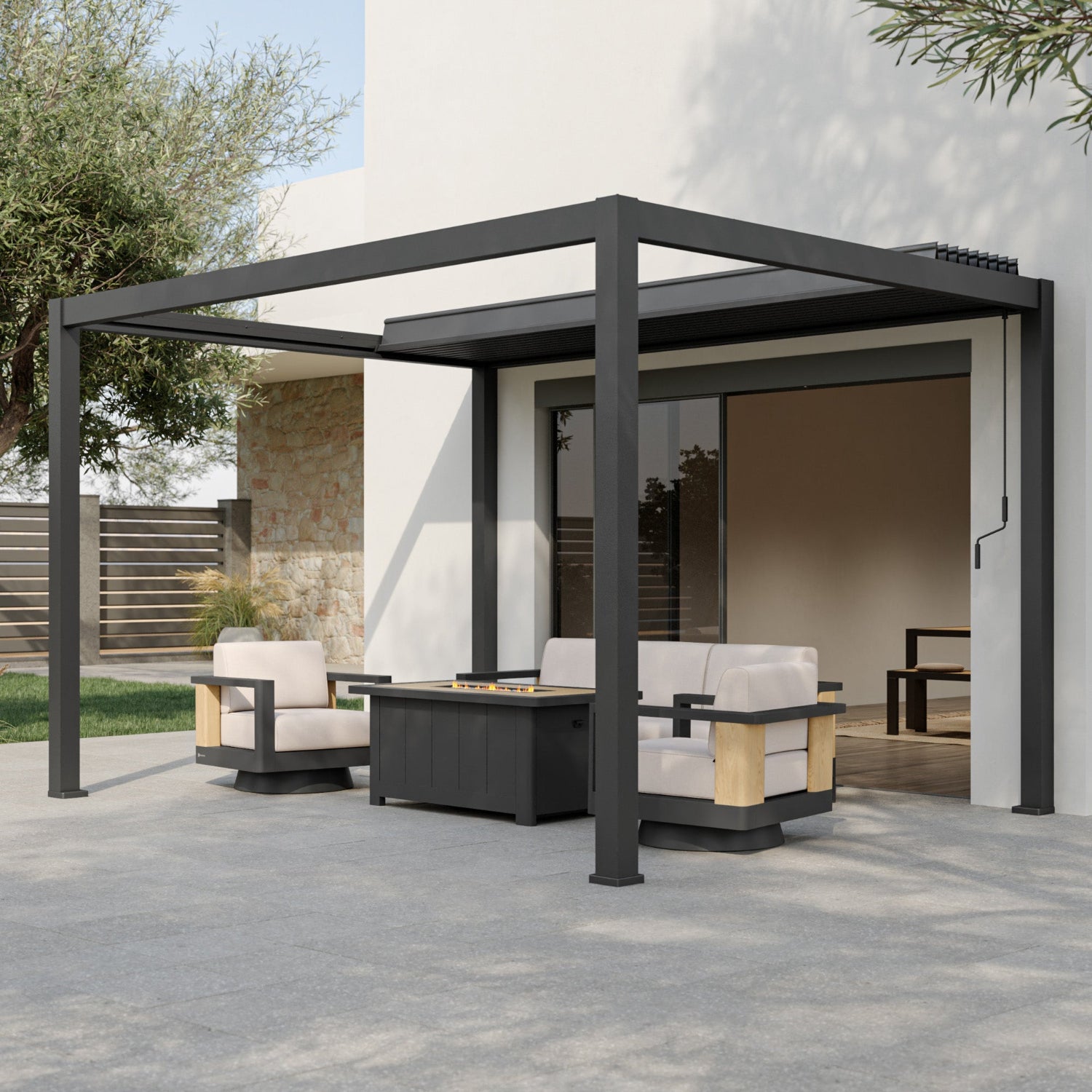
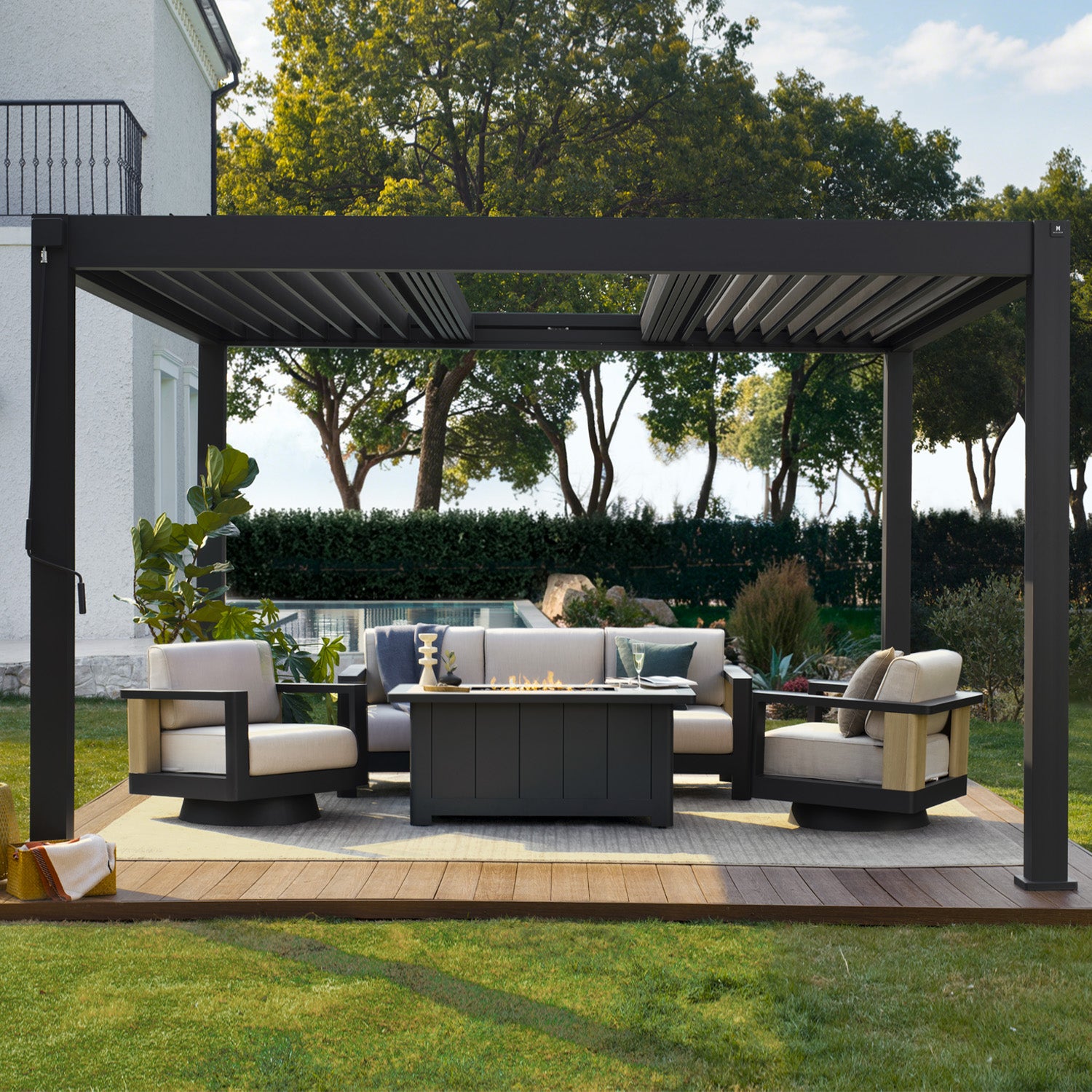
The cleanest answer is usually fixed or frame-mounted. A side shade that connects to the pergola’s own accessory system has known dimensions, known mounting points, and less guesswork than a curtain track bought on Amazon at 11 p.m. That matters once wind hits the side of the pergola.
|
Option |
Best Use |
Fit Notes |
Tradeoff |
|
Pull-down screen |
Sun, insects, light privacy |
111 Series screens are listed for 10' and 13' sides; Mirador notes one 10' model isn't compatible with the Sorara Mirador 8.9' x 14.4' sold at Costco |
Less rigid than shutters or doors |
|
80/88 side shade screen |
Adjustable shade on 80S/88S pergolas |
Mirador lists the 10' screen as suitable for 80S/88S pergolas |
Series-specific, so don't guess |
|
Fixed shutter wall |
Privacy, design, wind break |
Mirador’s 111S fixed shutter wall uses powder-finished aluminum and comes as individual panels |
Fixed panels reduce openness |
|
Sliding shutter door |
Adjustable privacy and airflow |
Current 111 Series product pages list aluminum louvers with 0-170° opening |
More expensive and heavier than screens |
|
Sliding polycarbonate door |
More enclosure, UV protection |
Current 111 Series page lists aluminum plus PC board |
Adds weight and wind surface |
|
Sliding glass door |
View protection with a room-like feel |
Current 111 Series page lists tempered glass and aluminum |
Heavy; plan for careful installation |
|
Third-party curtains |
Budget shade and softness |
No Mirador fit or warranty promise |
Can flap, rub finish, or overload weak attachment points |
For most homeowners, the official screen is the first thing to price. It gives side shade without making the pergola feel boxed in. If you’re comparing options, Mirador’s pergola accessories collection is the natural starting point because it separates Pull Down Screen, Sliding Door System, Deco Walls & Side Walls, and 80/88 Side Shade Screen products.
Accessory Compatibility First
A Mirador 111 accessory doesn't automatically fit an 80S or 88S pergola. The reverse is also true. The 80/88 side shade screen page names the 80S/88S pergola fit, while the 111 pull-down screen page lists suitability for 10' and 13' sides and warns that one model isn't compatible with the Sorara Mirador 8.9' x 14.4' Costco pergola.

That one warning is easy to miss. It’s also the whole job. Before buying, confirm four things: series, side length, color, and mounting clearance. For a louvered pergola, also check that the shade won’t interfere with the crank, louvers, gutters, wiring, or any LED components. If a curtain track needs drilling into the frame, stop and ask Mirador support or a qualified installer first.
Mirador’s 111 pergola manual is direct about modifications: non-Mirador branded accessories can void the product warranty and damage the operating mechanism, and changes to the design or configuration shouldn’t be made without consulting the manufacturer or authorized representative. That doesn’t mean every third-party curtain is a disaster. It means it’s your responsibility to keep it removable, non-invasive, and clear of moving parts.
Screens, Shutters, Doors, Curtains
Choose pull-down screens if you want shade most afternoons but still want the pergola to feel open. The current 111 pull-down screen page describes breathable Texteline fabric, an aluminum frame, an integrated handle, and 10' or 13' side use. For the 80S/88S line, the side shade screen page lists UV-resistant Texteline fabric, aluminum plus Textilene panel construction, and a crank-adjustable setup.

Choose fixed shutter walls when privacy matters more than flexibility. Dining table near the fence? Hot tub close to a neighbor’s second-story window? Fixed shutters make sense. Mirador’s 111S fixed shutter wall page lists aluminum construction, 37x94x1.5 in. or 49x94x1.5 in. product dimensions, and one panel per purchase, so you’ll need to plan the full side layout instead of assuming a single box fills the opening.
Sliding shutter doors sit in the middle. They block sightlines when closed, open for airflow, and let you adjust light through the louvers. Current Mirador product data for the 10' sliding shutter door lists aluminum construction, 253.5 lb item weight, and a 0-170° louver opening angle. That’s a real install, not a throw-a-curtain-up Saturday.
|
If Your Main Problem Is... |
Choose This |
Skip This |
|
Low evening sun |
Pull-down screen |
Fixed wall, unless you also need privacy |
|
Neighbor view |
Fixed shutter wall or sliding shutter door |
Thin decorative curtains |
|
Bugs during dinner |
Pull-down screen |
Shade cloth |
|
Wind exposure |
Official fixed accessory, after anchoring review |
Weighted curtain stands |
|
Room-like enclosure |
Sliding glass or polycarbonate door |
Loose fabric panels |
|
Lowest upfront cost |
Removable outdoor curtain |
Any drilled third-party track without approval |
Curtains can still have a place. Use exterior-rated fabric, stainless or coated hardware, and a mounting method that doesn’t pierce key structural or moving parts. Keep the curtain easy to remove before storms. Shade cloth is even more temporary: useful for a weekend party or a brutal west-facing month, but not the best long-term match for a premium aluminum pergola.
Patio Surface And Anchoring
Concrete is the easiest case. Mirador’s Help Center says the pergola comes with anchor bolts for securing it to a flat concrete surface, and the 111 manual calls for a level concrete surface for a proper installation. The same manual warns that an uneven surface can keep accessory components from working correctly and may void the warranty.

Pavers are trickier. A sand-set paver can shift, crack, or pull loose, so don’t treat the paver itself as the anchor. If the pavers sit over a proper concrete base, an installer may be able to anchor through to the concrete below. If they sit on sand or gravel, the cleaner path is usually removing selected pavers and adding proper footings. Local soil, frost depth, drainage, and slab thickness all matter here.
Decks deserve the most caution. A deck board isn't a structural answer. The load has to move into framing, posts, beams, footings, and ledger connections that can handle it. A small shade screen changes comfort; a closed side can change wind force. If your pergola is going on a raised deck, get a deck contractor or engineer involved before you attach screens, shutters, or doors.
Weighted planters look clever in photos. In a wind event, they’re a compromise. They may help hold a curtain in place on a calm patio, but they don’t replace anchoring for a pergola or a fixed side accessory.
Wind, Warranty, And Neighbors
Side shade catches wind. That’s the part people underestimate. An open pergola lets air pass through; a screen, curtain, shutter wall, or sliding door gives wind something to push against.

Mirador’s manual says to put louvers in the vertical position during snowfall or wind, avoid assembly in windy or wet conditions, and check fittings after prolonged use. The National Weather Service also advises homeowners to tie down or put away outdoor items before high-wind or severe thunderstorm watches because loose items can cause damage or injury.
That advice applies even more when your pergola sits near a fence line, neighbor’s windows, a parked car, or a pool enclosure. A loose curtain rod is annoying. A detached panel is a liability conversation.
For windy sites, favor official fixed accessories over improvised fabric. If you want curtains for the look, make them removable and set a rule: curtains come down before travel, storms, or high-wind forecasts. No one regrets taking fabric down early. Plenty of people regret waiting until the gusts start.
Installation Checklist
Do this before buying, not after the boxes arrive.

- Confirm the exact Mirador pergola series: 111, 80S, 88S, 111S, or another model.
- Measure the side length and clear opening, then compare it to the accessory page.
- Check whether your pergola is on flat concrete, pavers, a deck, or a new footing plan.
- Read the matching Mirador manual for the accessory and pergola.
- Check local permit rules, HOA rules, and setback rules.
- Call 811 before any digging in the United States.
- Decide how you’ll handle wind: retract, remove, open louvers, or store fabric.
- Ask Mirador support before drilling third-party hardware into the frame.
- Use a professional installer for decks, glass doors, paver bases, coastal sites, or exposed yards.
Permits vary by city and county. Mirador’s FAQ says a permit usually isn't required in most cases, but it also recommends checking with local government. Treat that as the working rule. Your local office gets the final say, especially when the pergola is attached to a house, close to a property line, wired for power, or placed on a raised deck.
FAQ
Do I need to anchor it?
Yes, you should normally anchor a Mirador pergola before adding side shade, especially screens, shutters, or doors. Mirador says its pergolas include anchor bolts for flat concrete, but you still need to confirm the right base and local code.
Can I anchor on pavers?
Maybe, but don't anchor only into loose pavers. If pavers sit over concrete, an installer may anchor through to the concrete; if they sit on sand or gravel, plan proper footings or ask a contractor.
Can I use weighted planters?
Use weighted planters only for light, removable curtains in calm conditions. They aren't a substitute for proper pergola anchoring, and they shouldn't carry fixed screens, shutter walls, or door systems.
Do I need a permit?
Sometimes. Mirador says permits aren't required in most cases, but you should check with your city, county, HOA, or local building department before installation.
If you’re choosing today, start with the model number on your pergola, then match the accessory by series and side length. Mirador Outdoor can help you compare official screens, shutter walls, and sliding doors before you risk a third-party curtain setup that doesn’t fit, doesn’t stay put, or creates warranty trouble.