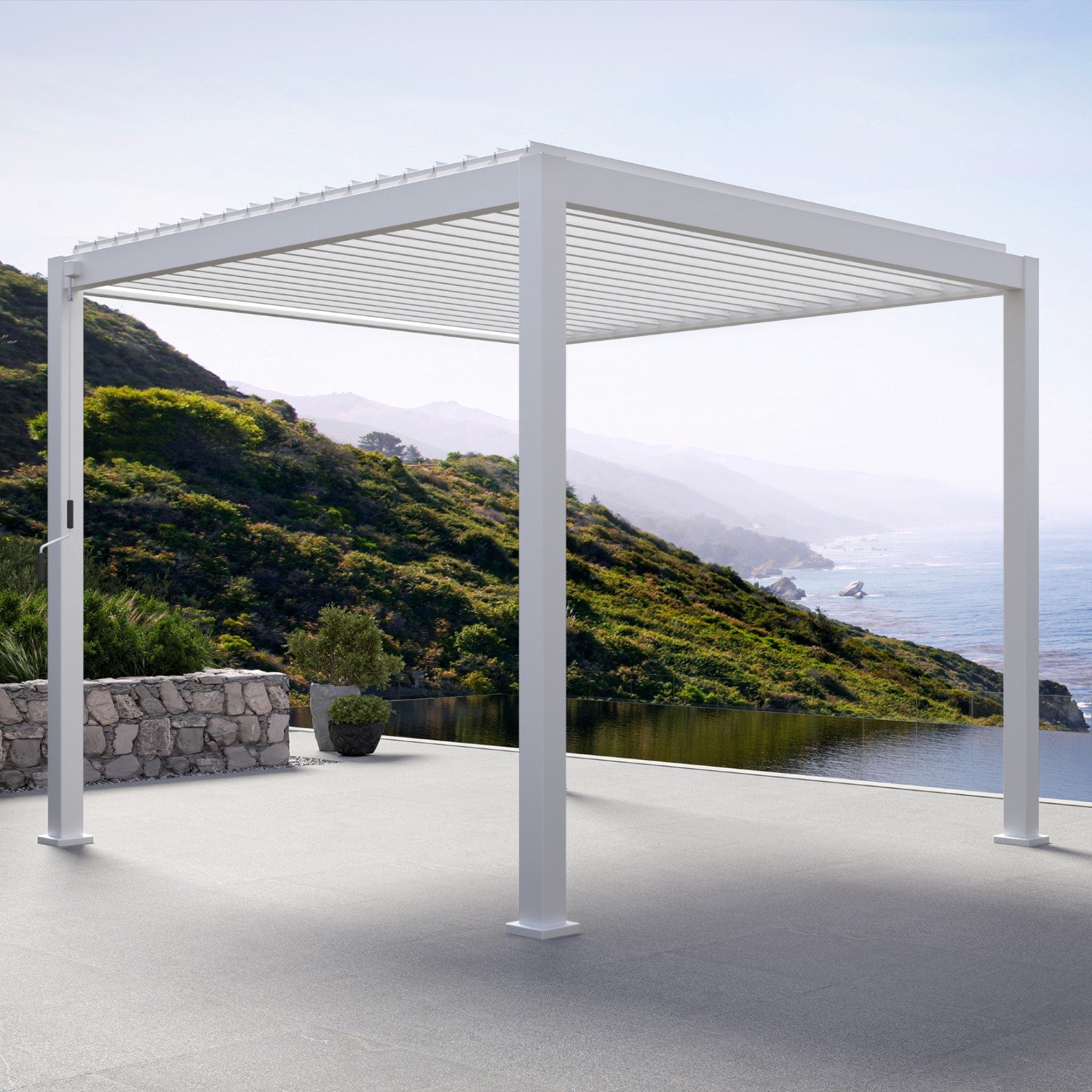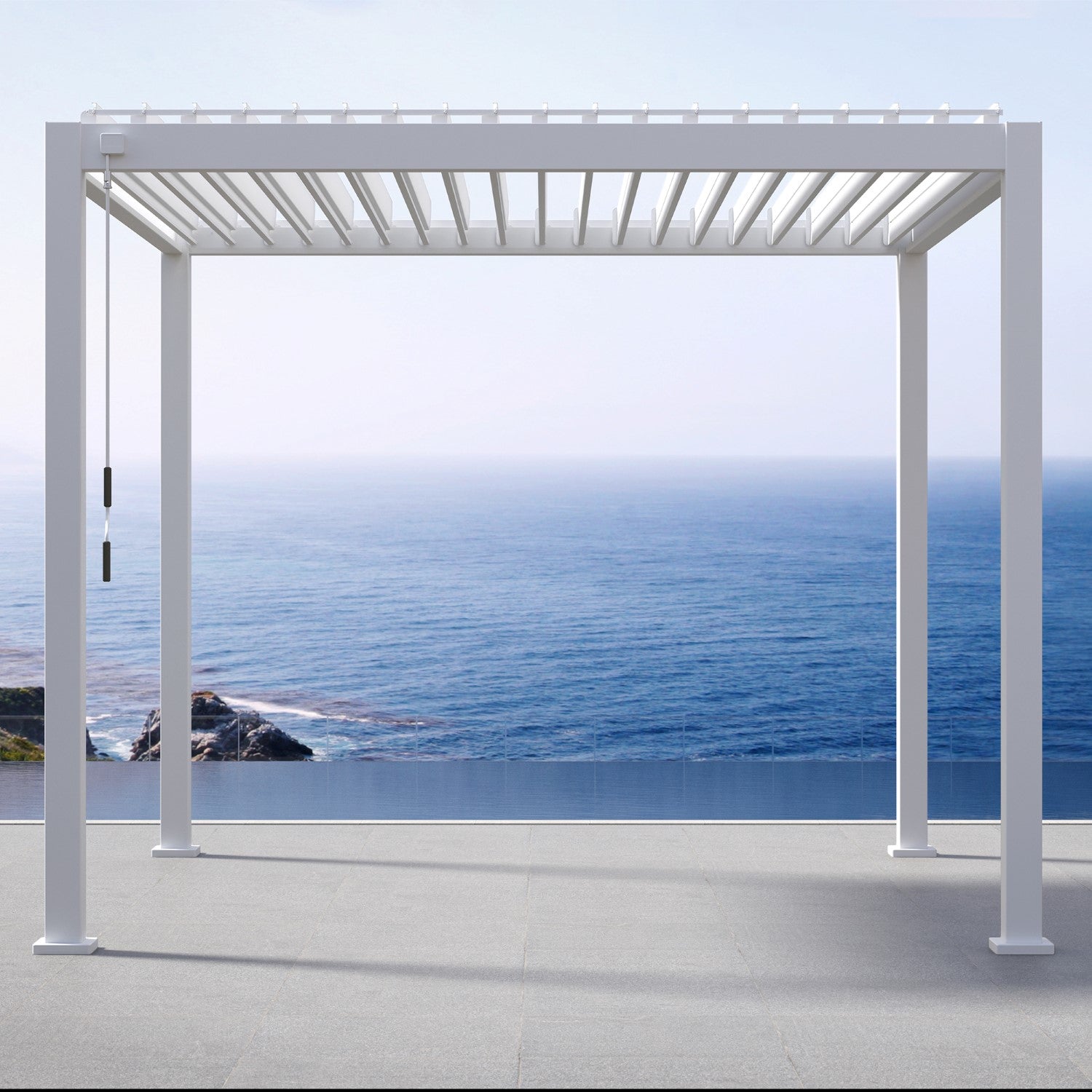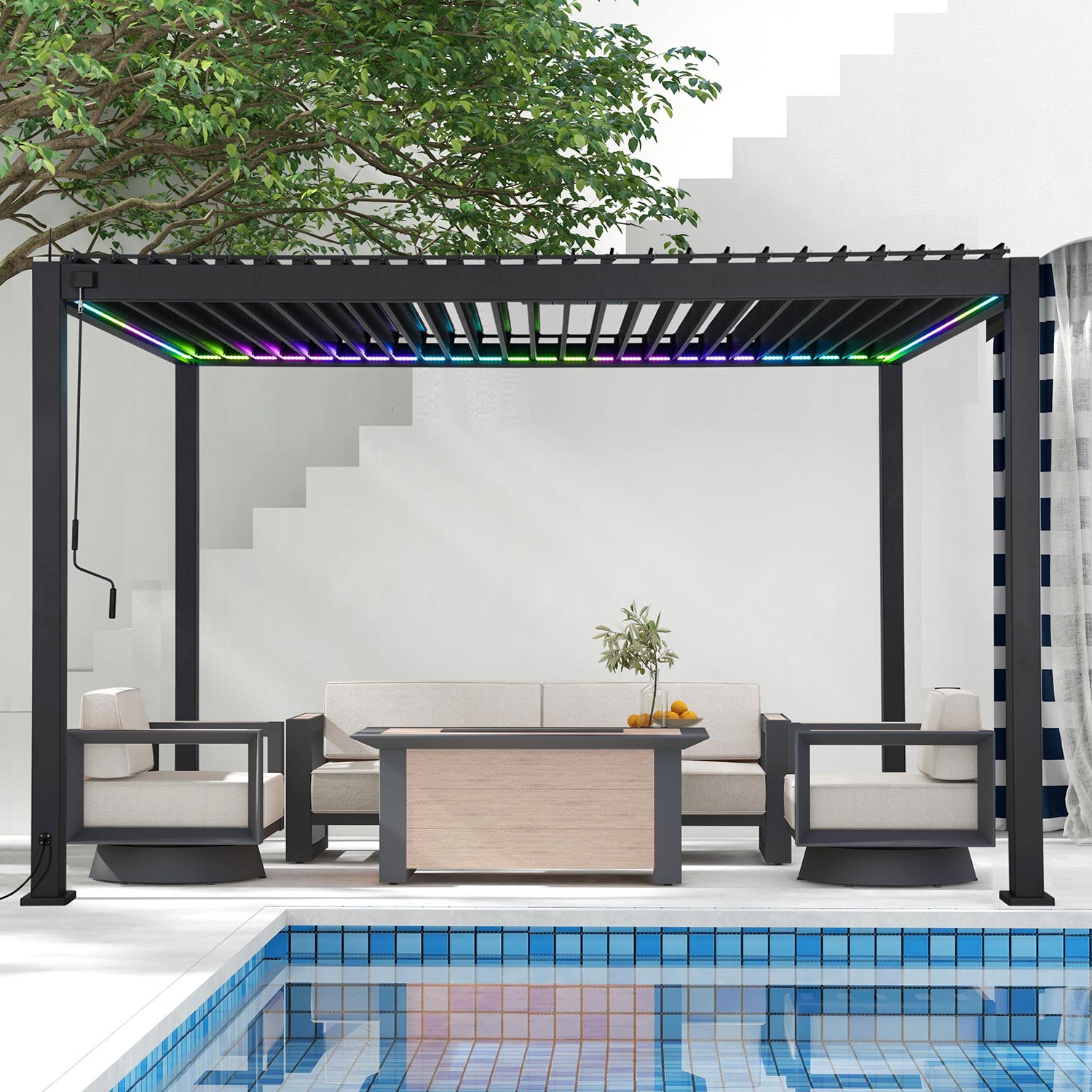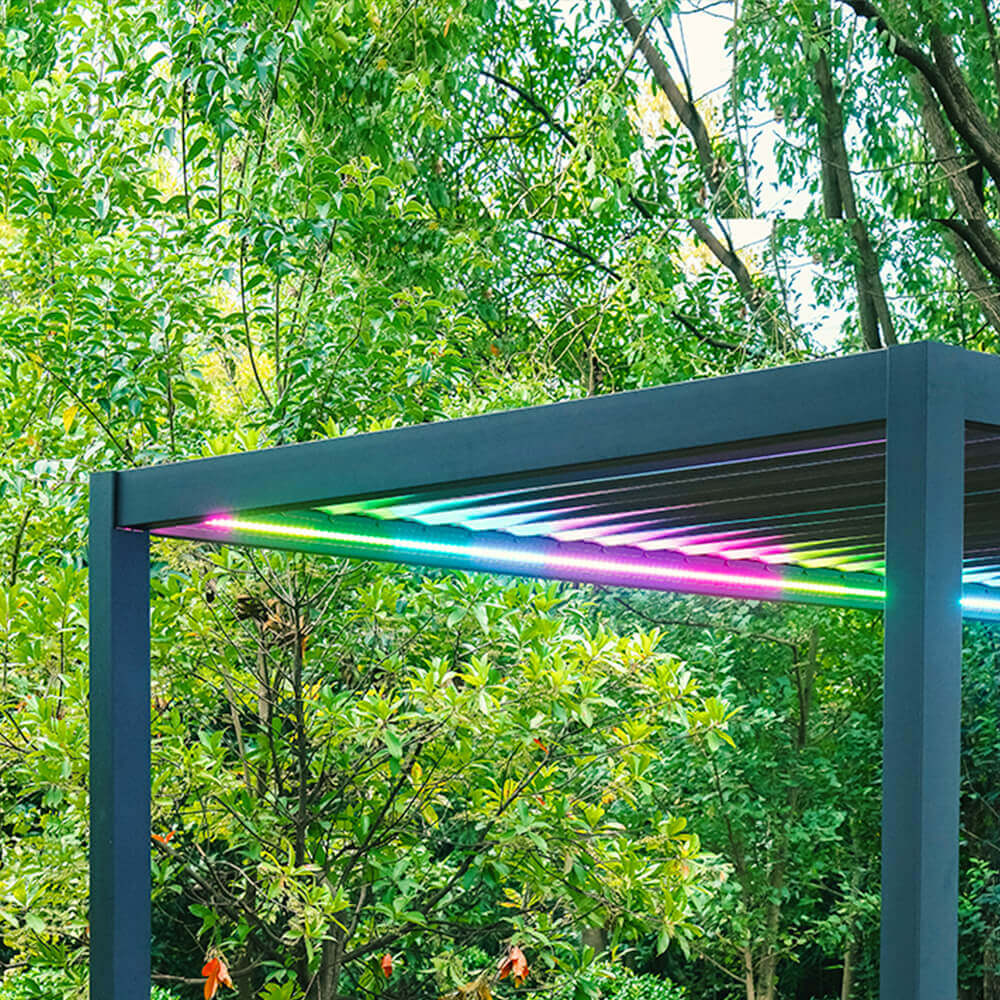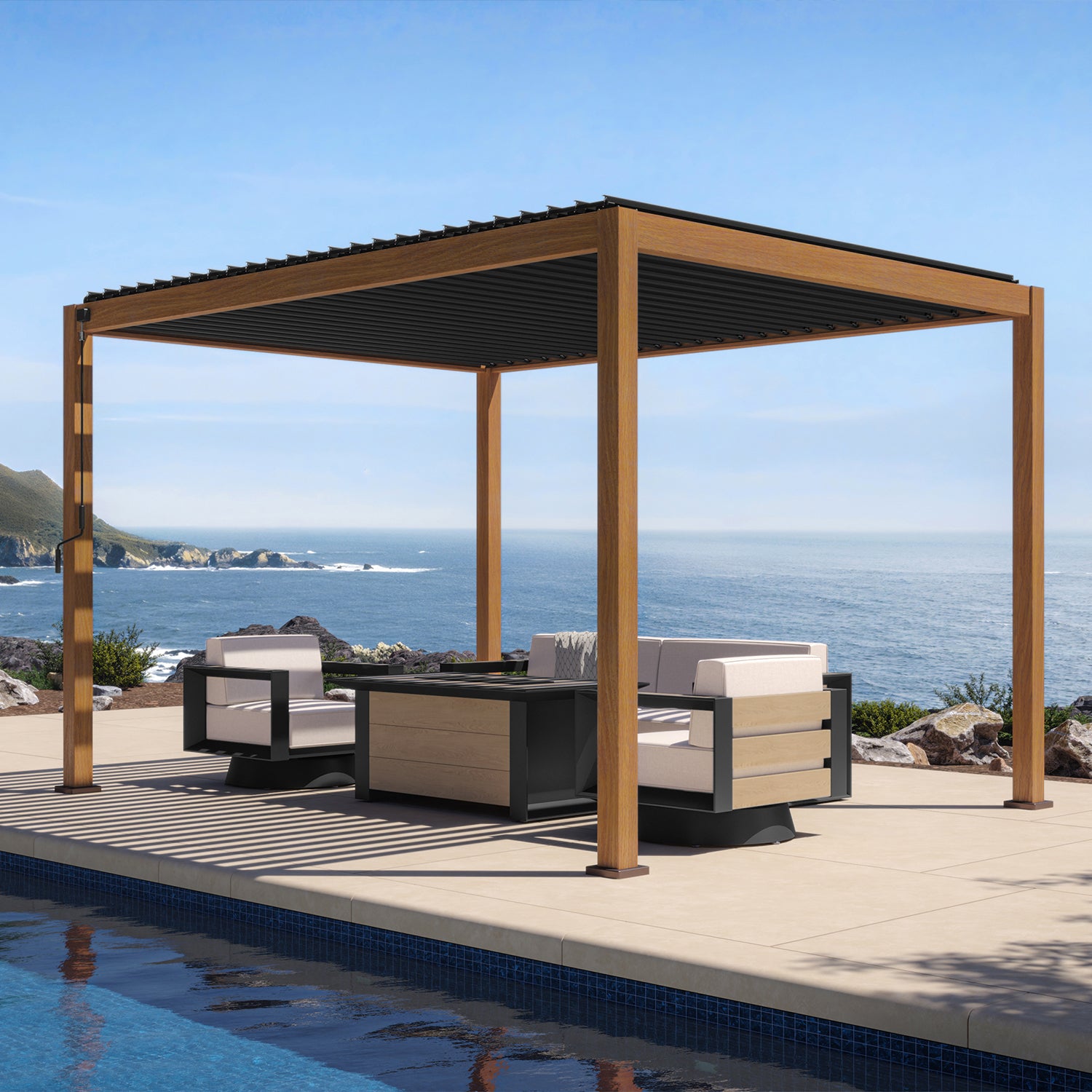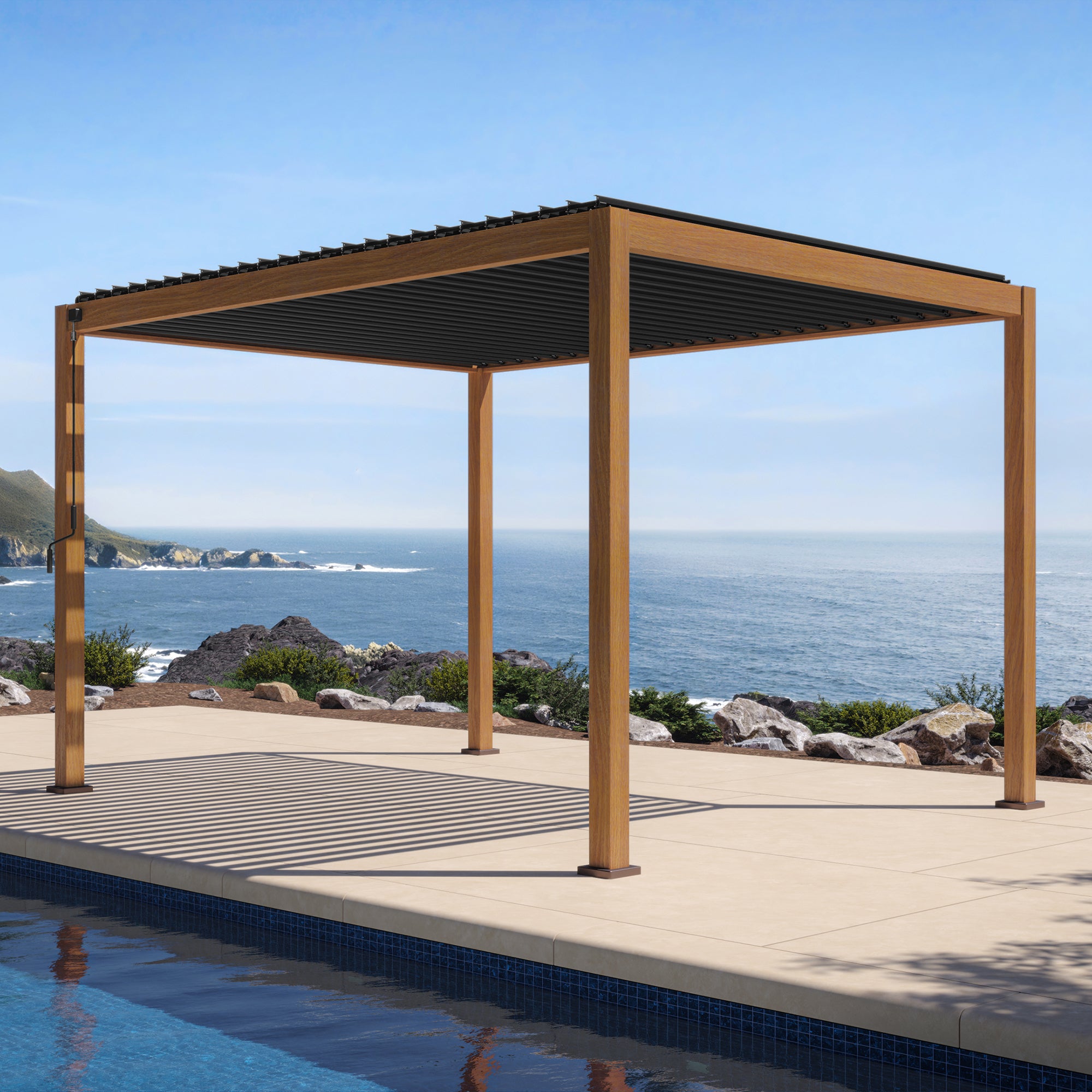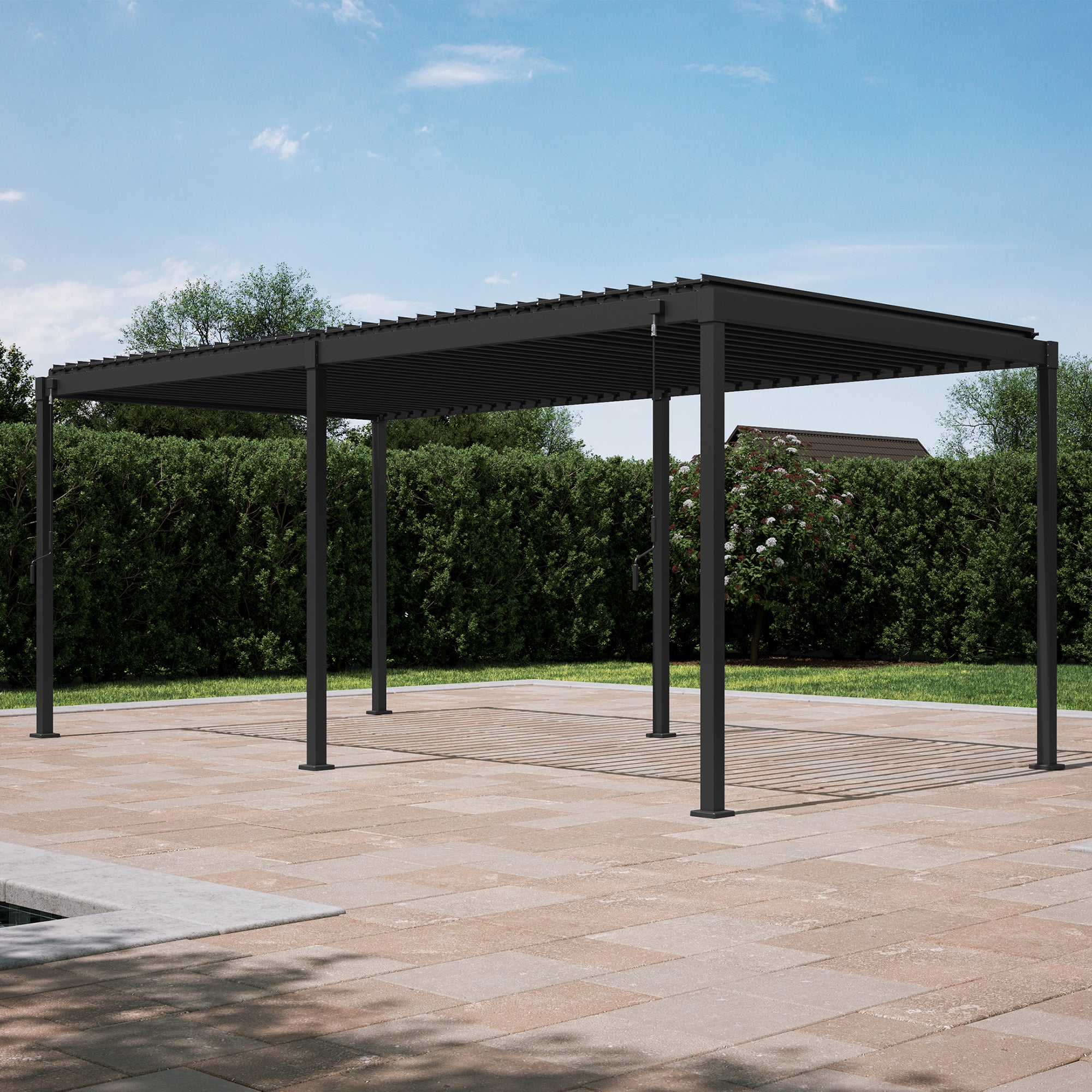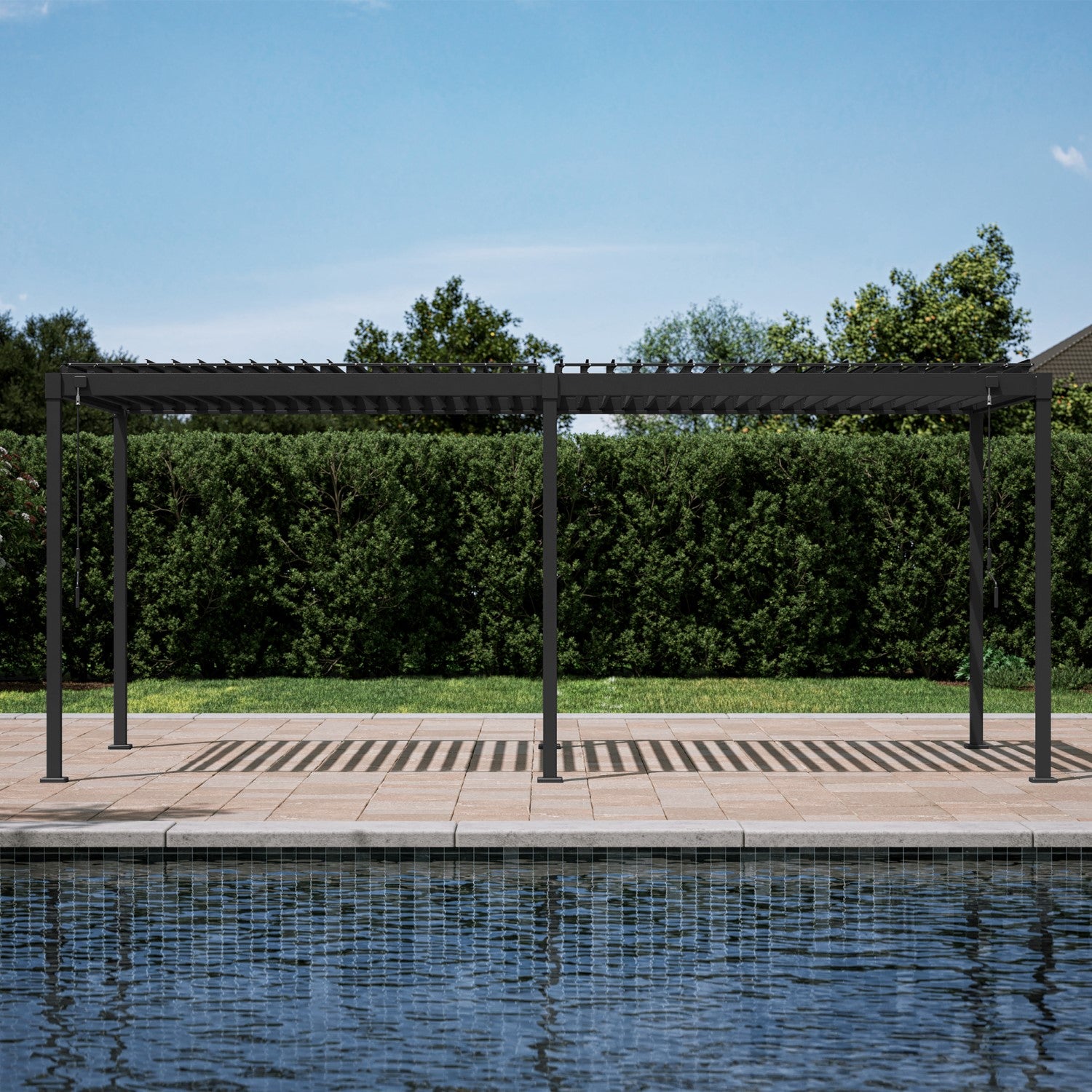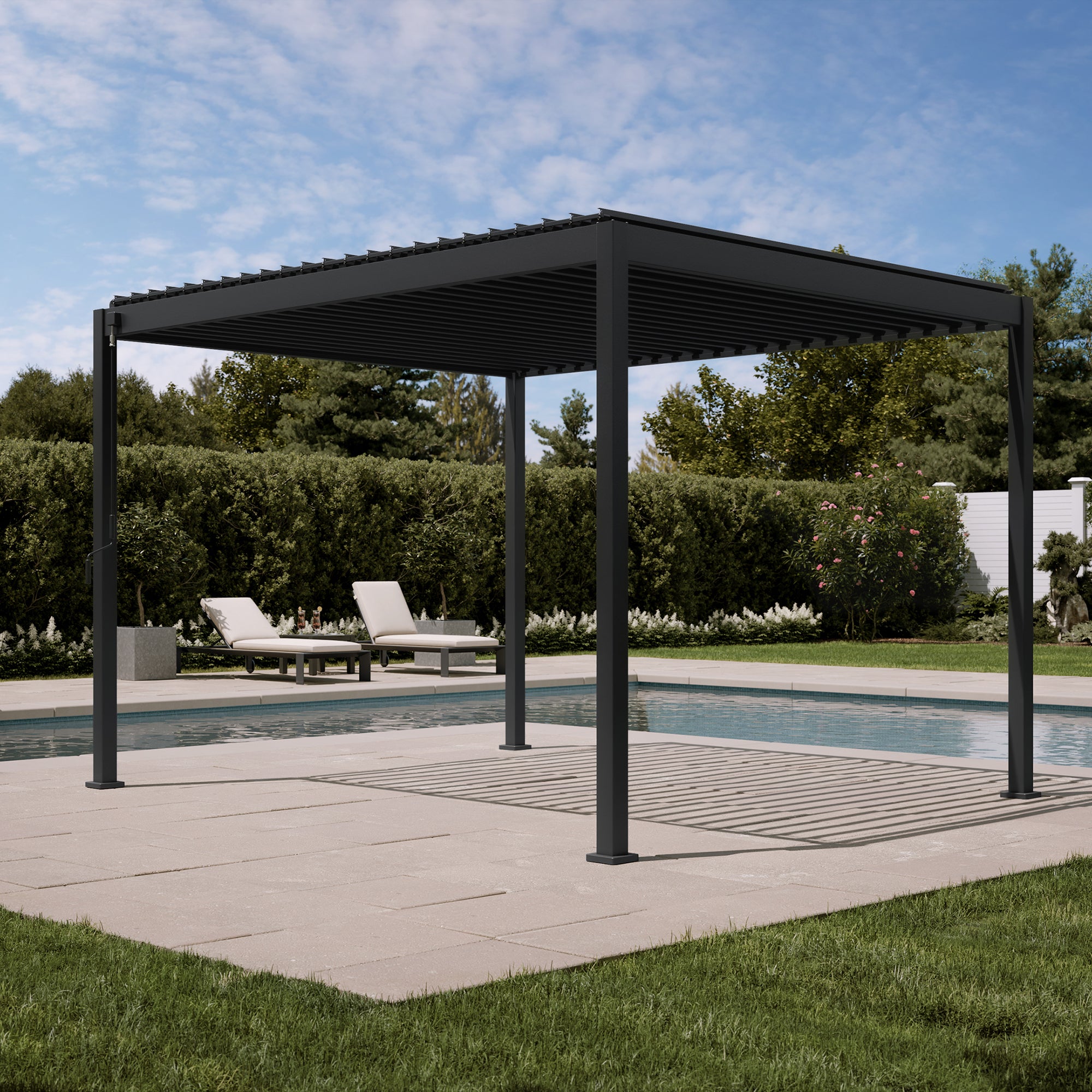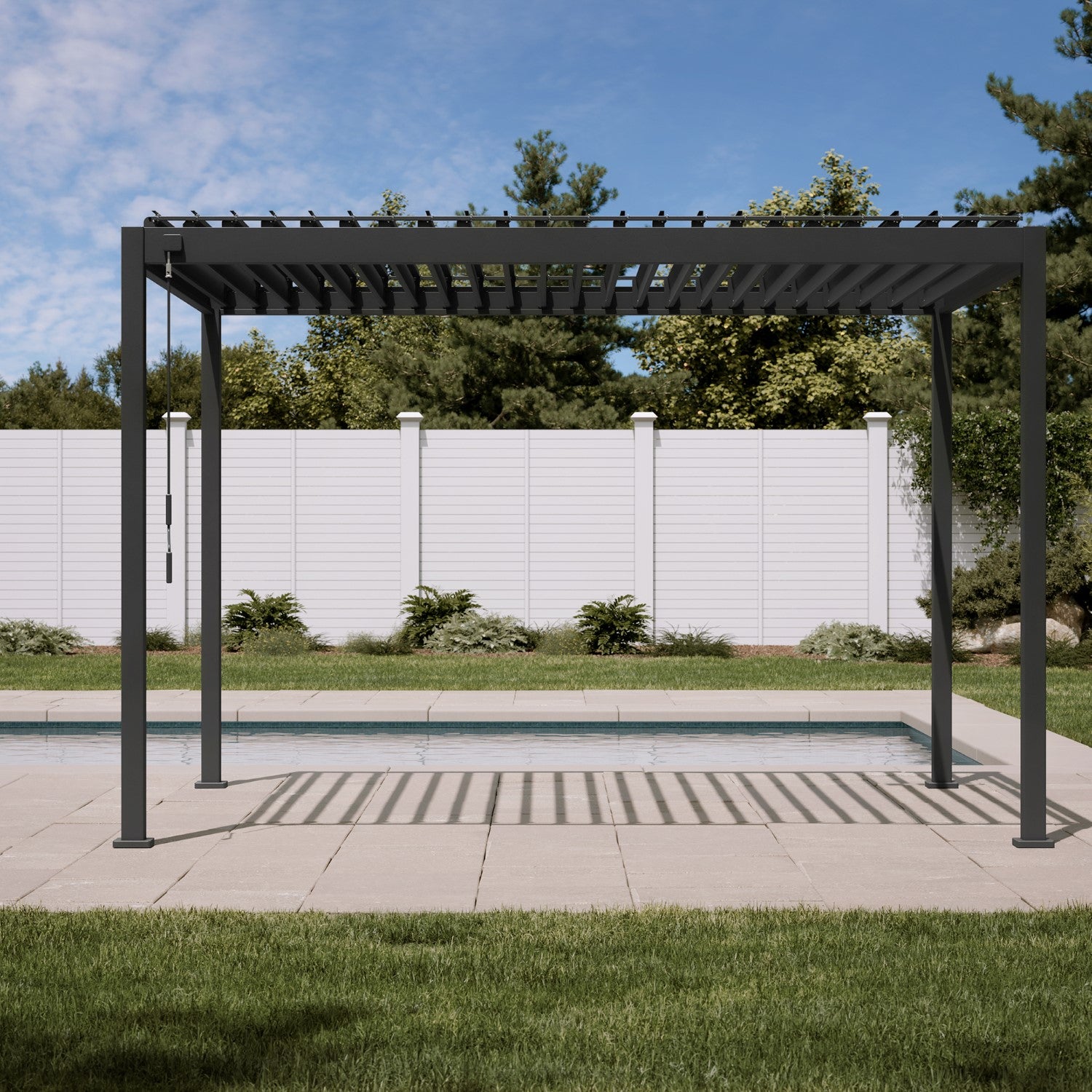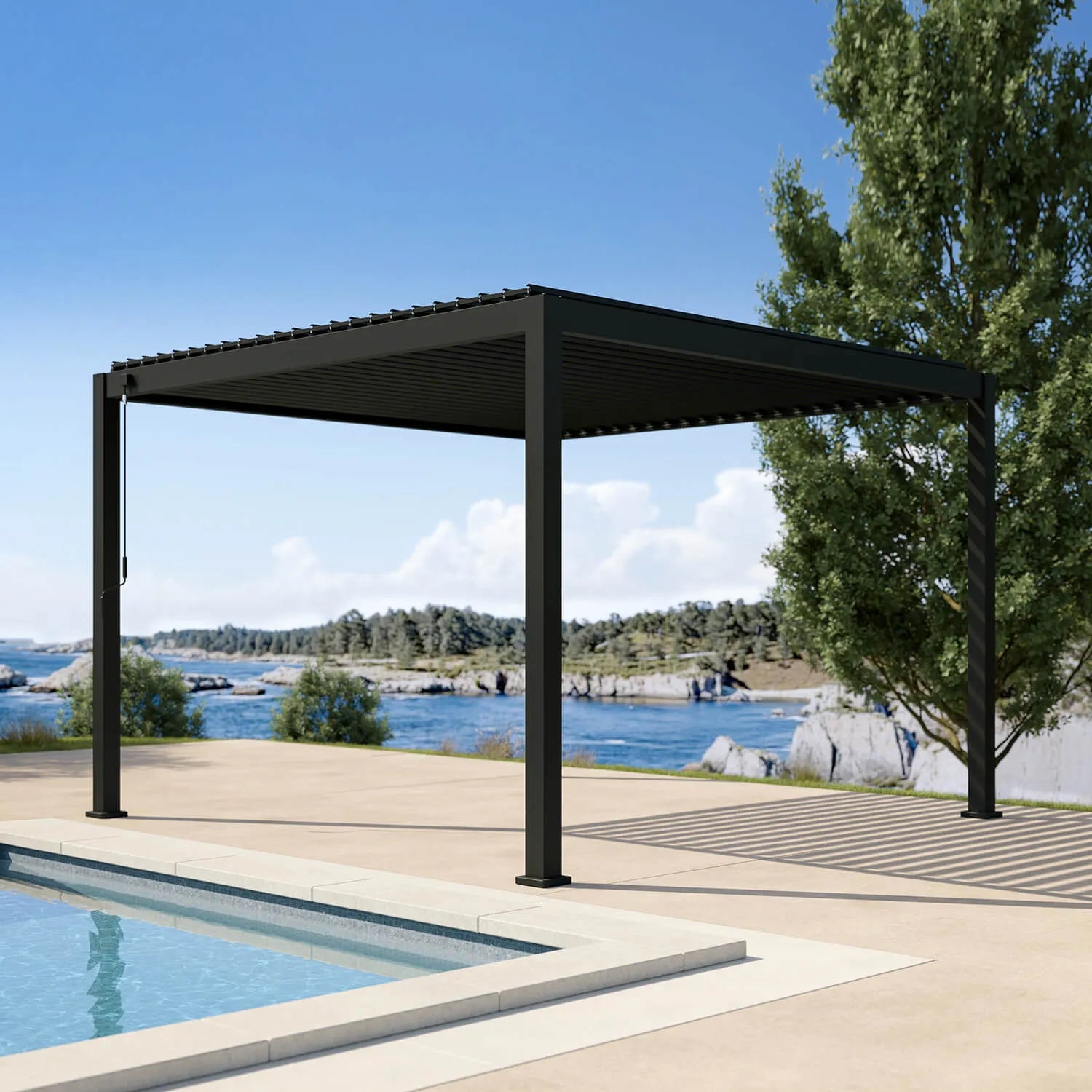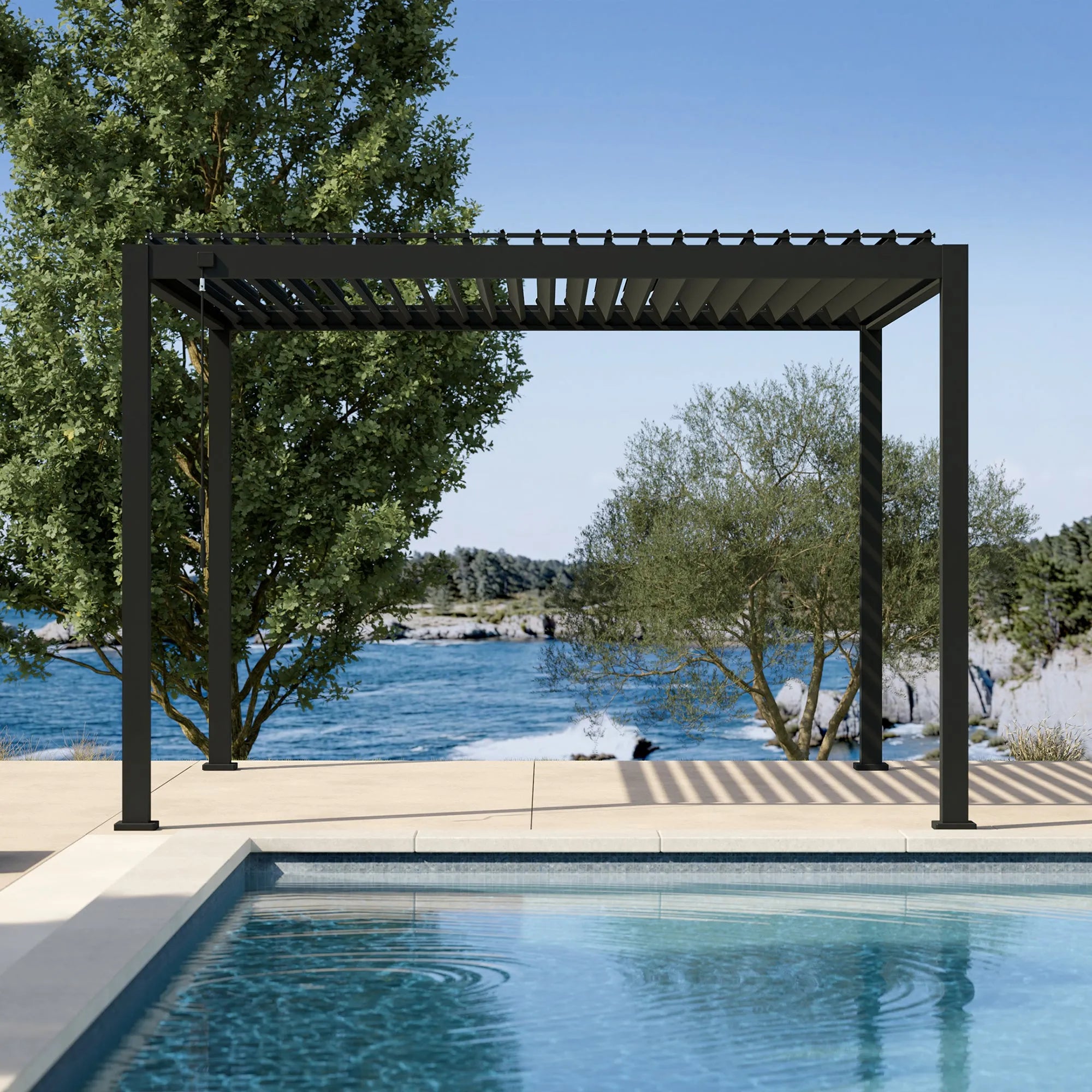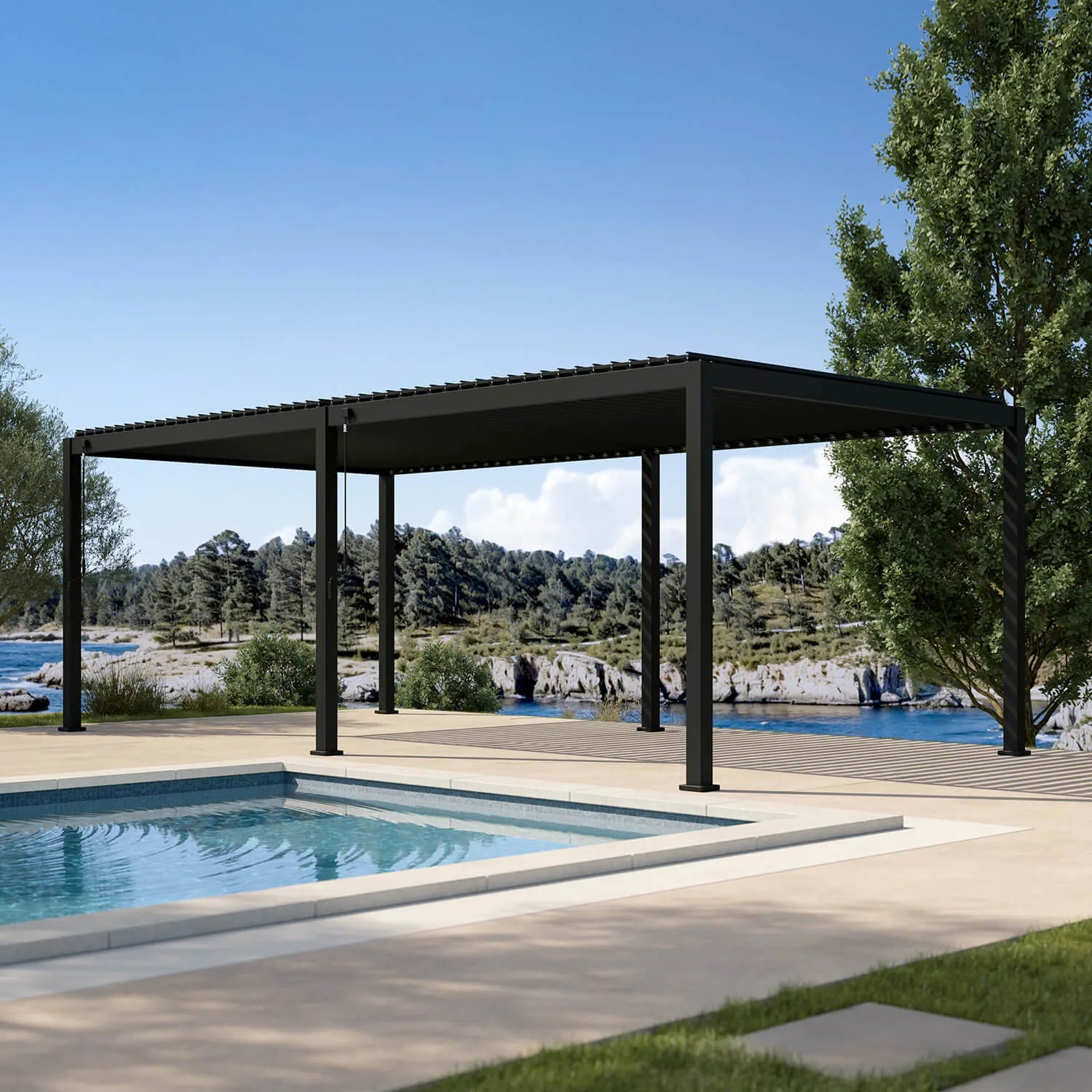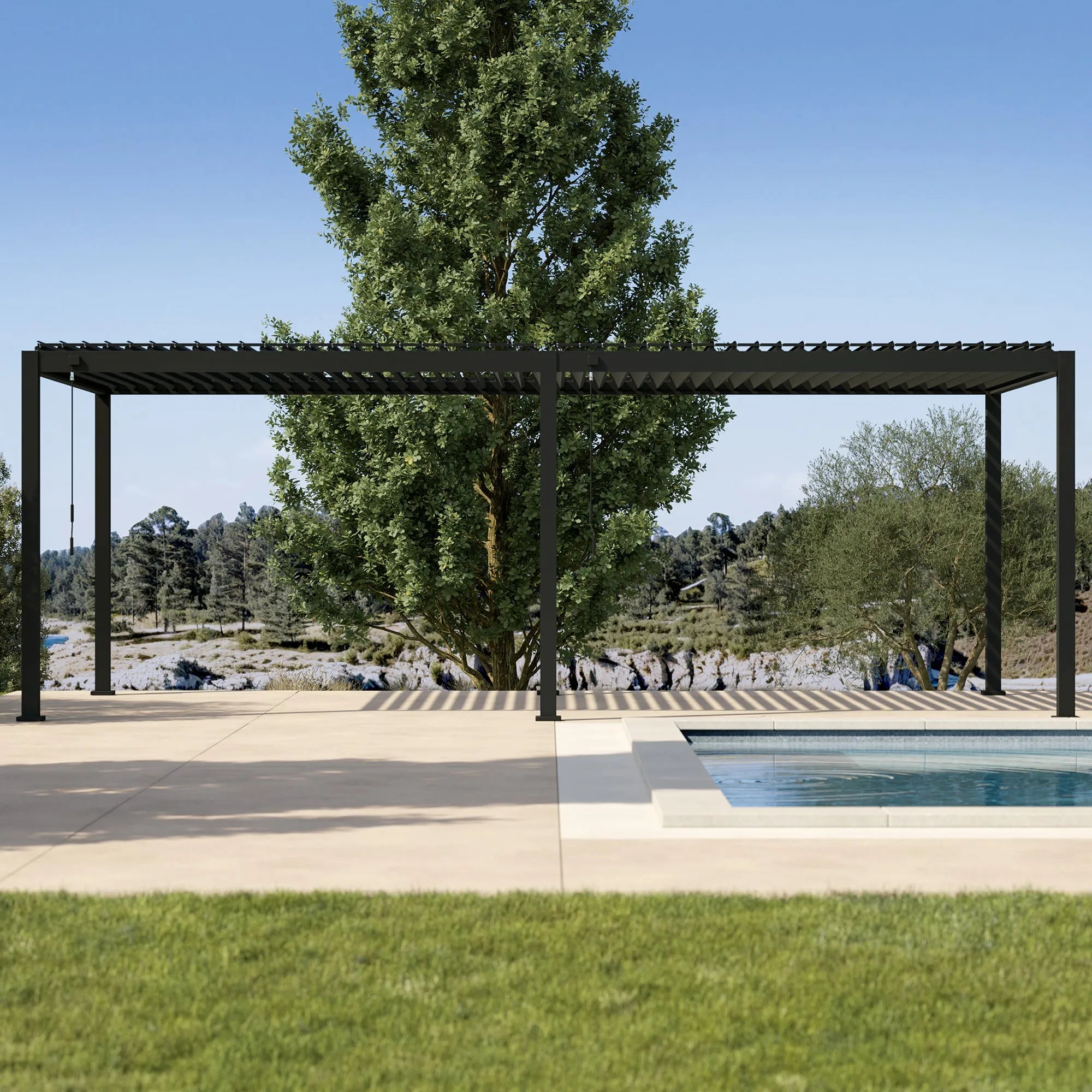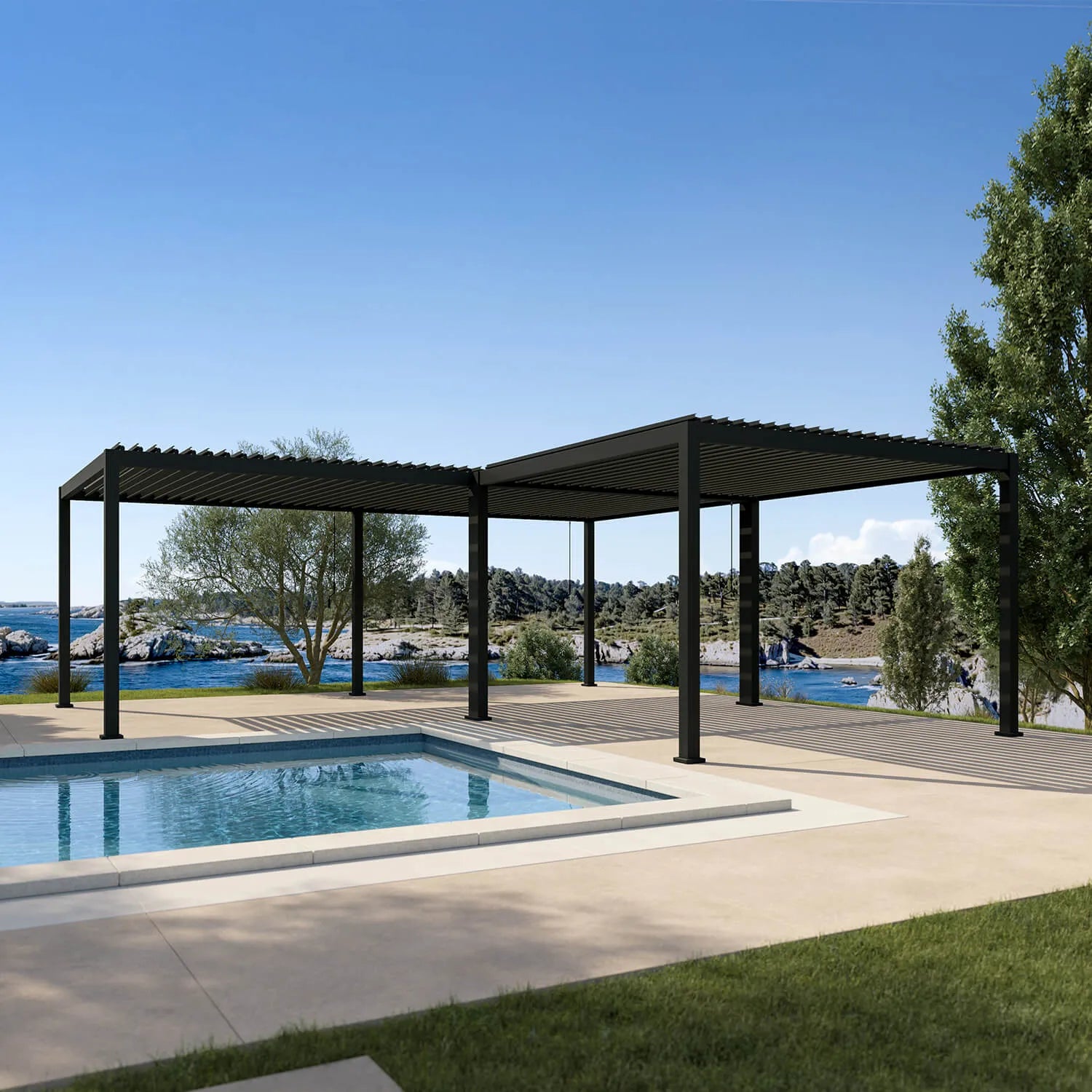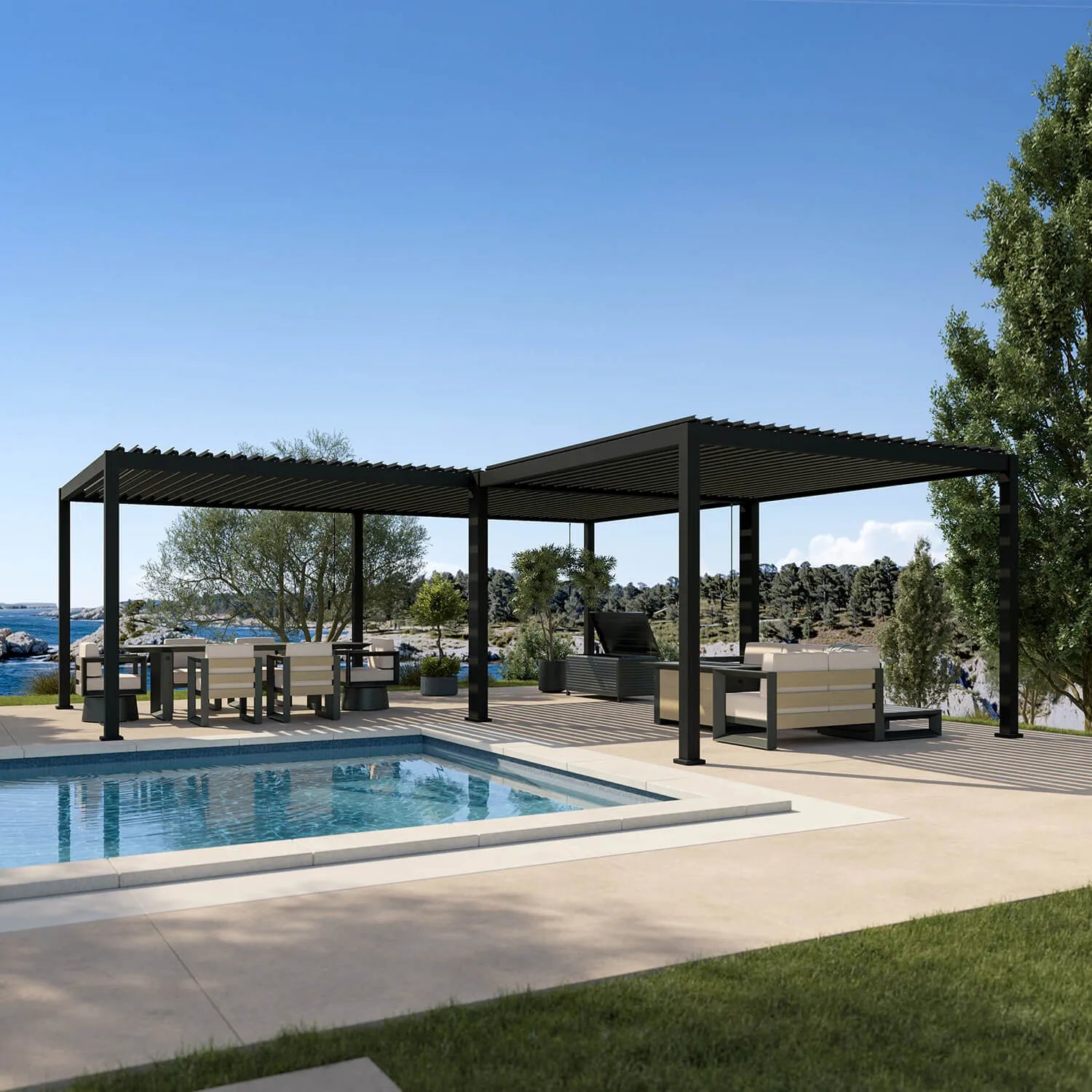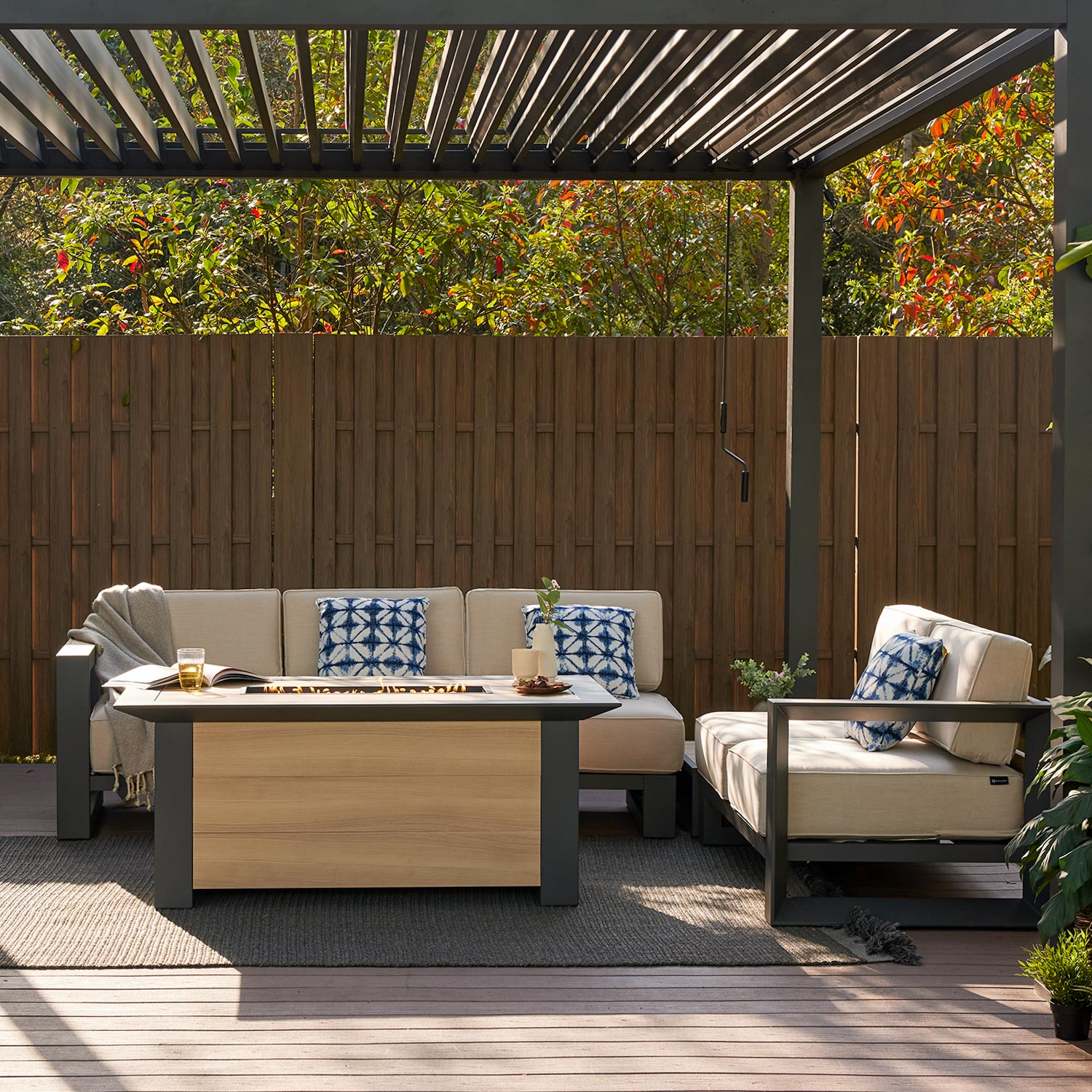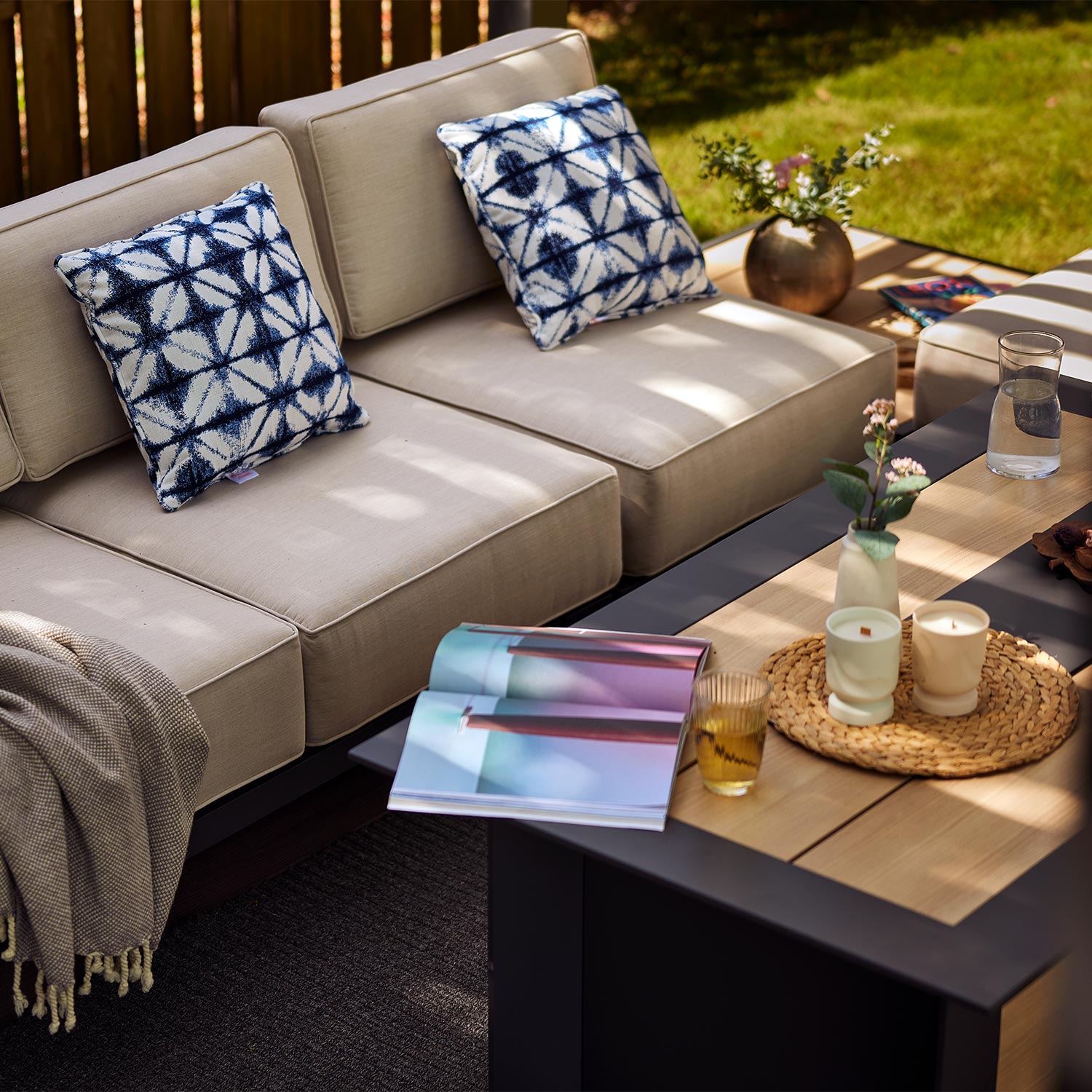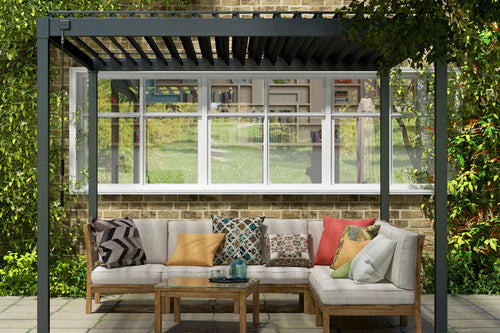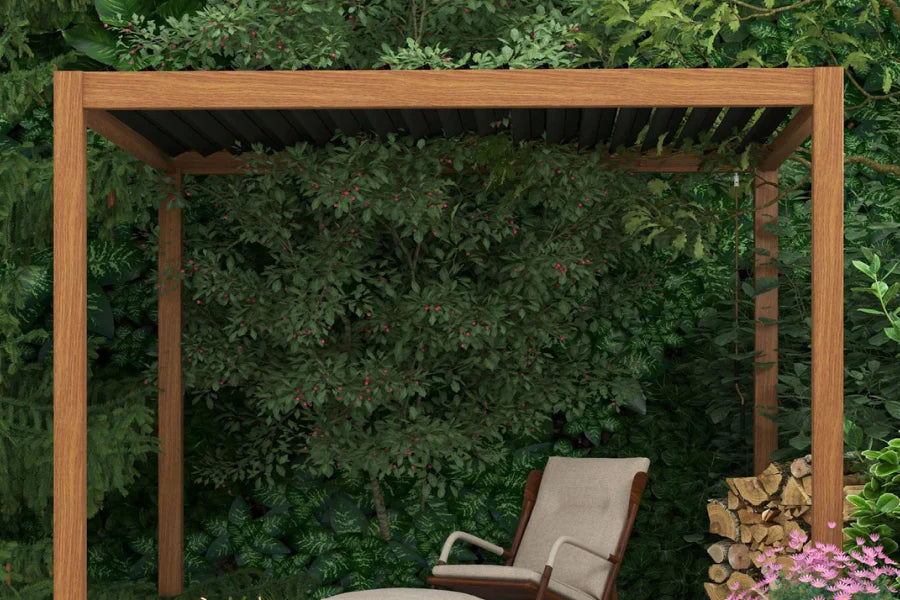

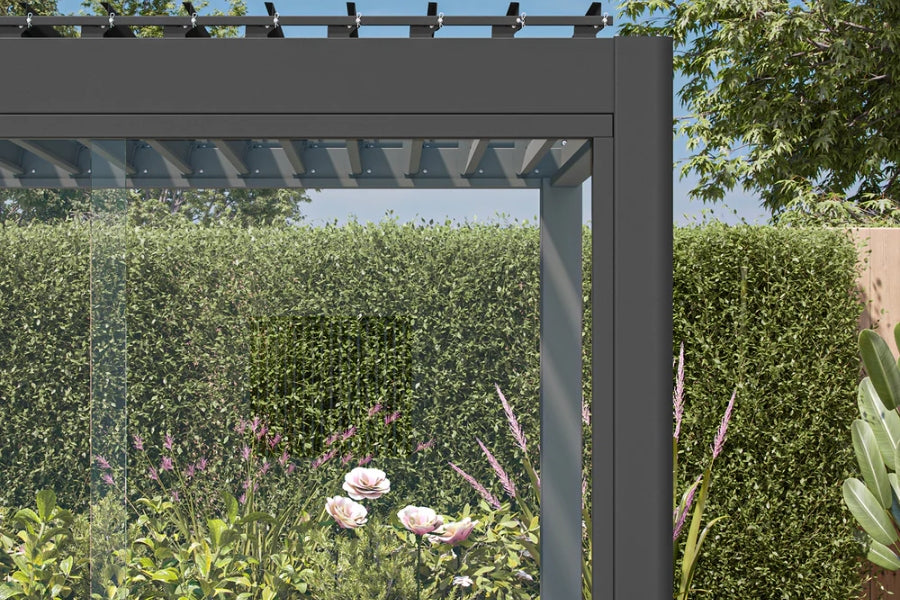
Thinking about glass enclosed pergola ideas for your patio? It is easy to see the appeal. Glass doors, privacy screens, or side panels can make a pergola feel more comfortable and more private, while still keeping that open outdoor feel. The main thing is to set the right expectation. In most cases, this is a semi-enclosed outdoor room, not a fully sealed indoor sunroom.
That difference matters. A semi-enclosed pergola can block wind from certain sides, keep your view open, soften low-angle sun, and make outdoor dining feel more comfortable. But it still needs airflow, drainage, easy access, shade control, and realistic expectations when the weather changes.
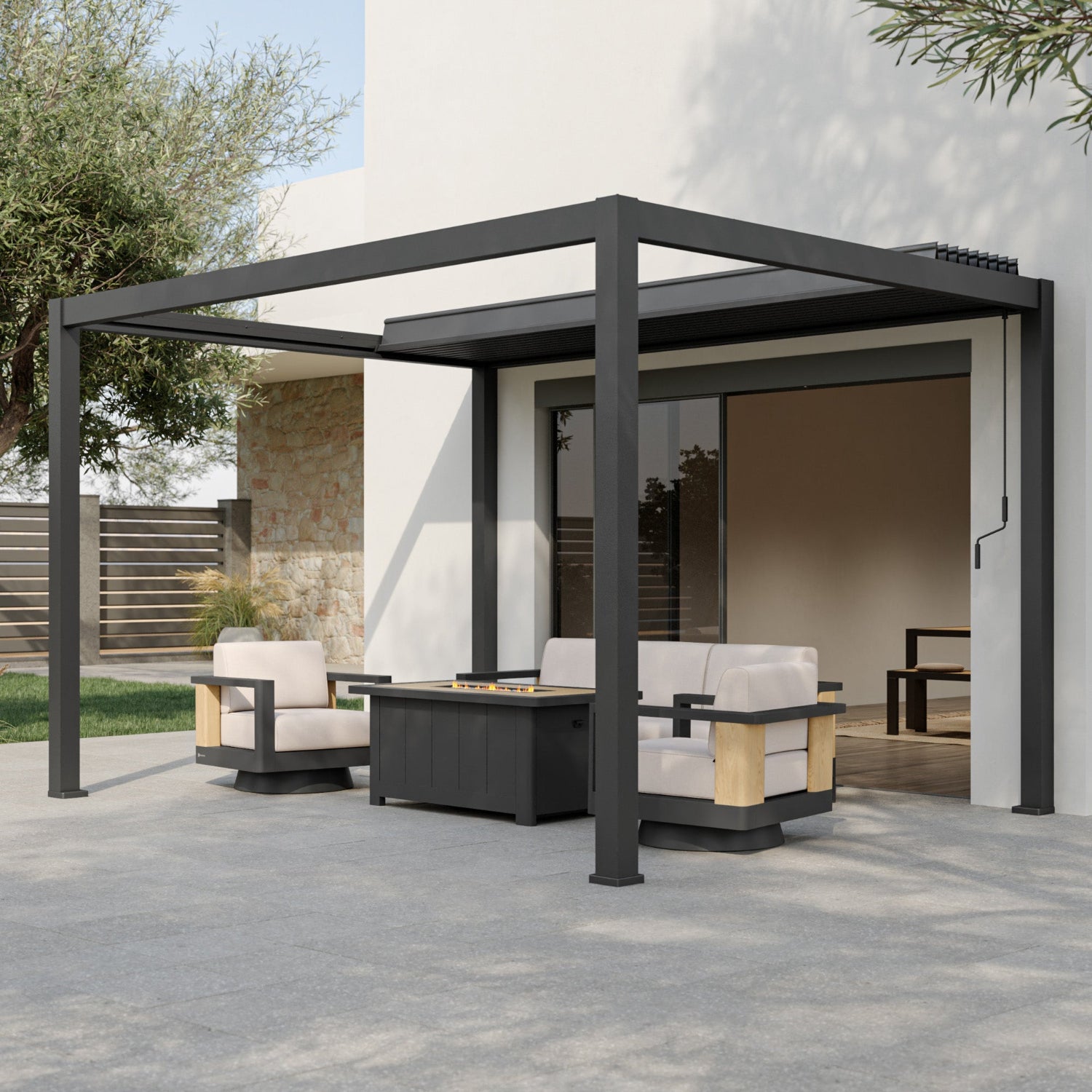
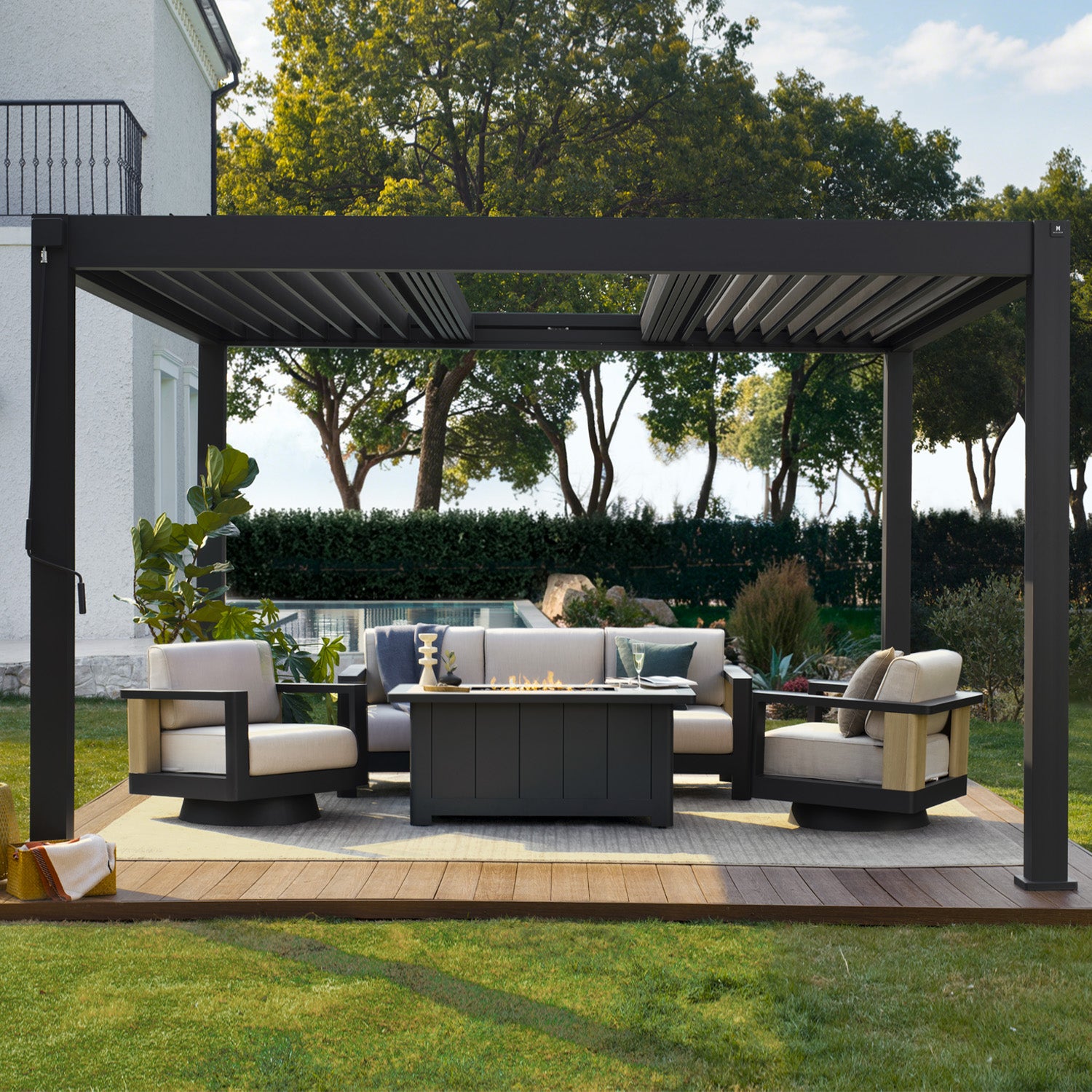
For Mirador owners, the most useful approach is to combine a louvered pergola with compatible pergola accessories, such as sliding glass doors, pull-down screens, sliding doors, or shutter-style side panels. The goal is not to close every side. The goal is to make each side solve a specific comfort problem.
Quick Answer
The best glass enclosed pergola design usually uses glass on one or two sides, not all four. Use sliding glass doors where you want clear views and stronger side protection. Use pull-down screens where you need privacy, insect control, airflow, or low-angle sun protection. Use shutter-style doors or side panels where you want privacy and structure without turning the space into a sealed room.
For most patios, the strongest layout is:
- A louvered roof for shade, airflow, and overhead coverage
- Sliding glass doors on the wind-facing or view-facing side
- Pull-down screens on the sun-facing or neighbor-facing side
- At least one open side or large opening for ventilation
- Lighting, power, furniture, and circulation planned around how people actually use the patio
What Is a Glass Enclosed Pergola?
A glass enclosed pergola is a pergola that uses glass doors, glass walls, or transparent side panels to make the outdoor space feel more protected and room-like. In practice, most residential pergolas work best as partial glass enclosures.
That means the pergola may have:
- Sliding glass doors on one side
- Glass doors on the side facing a view
- Screens on one or two sides
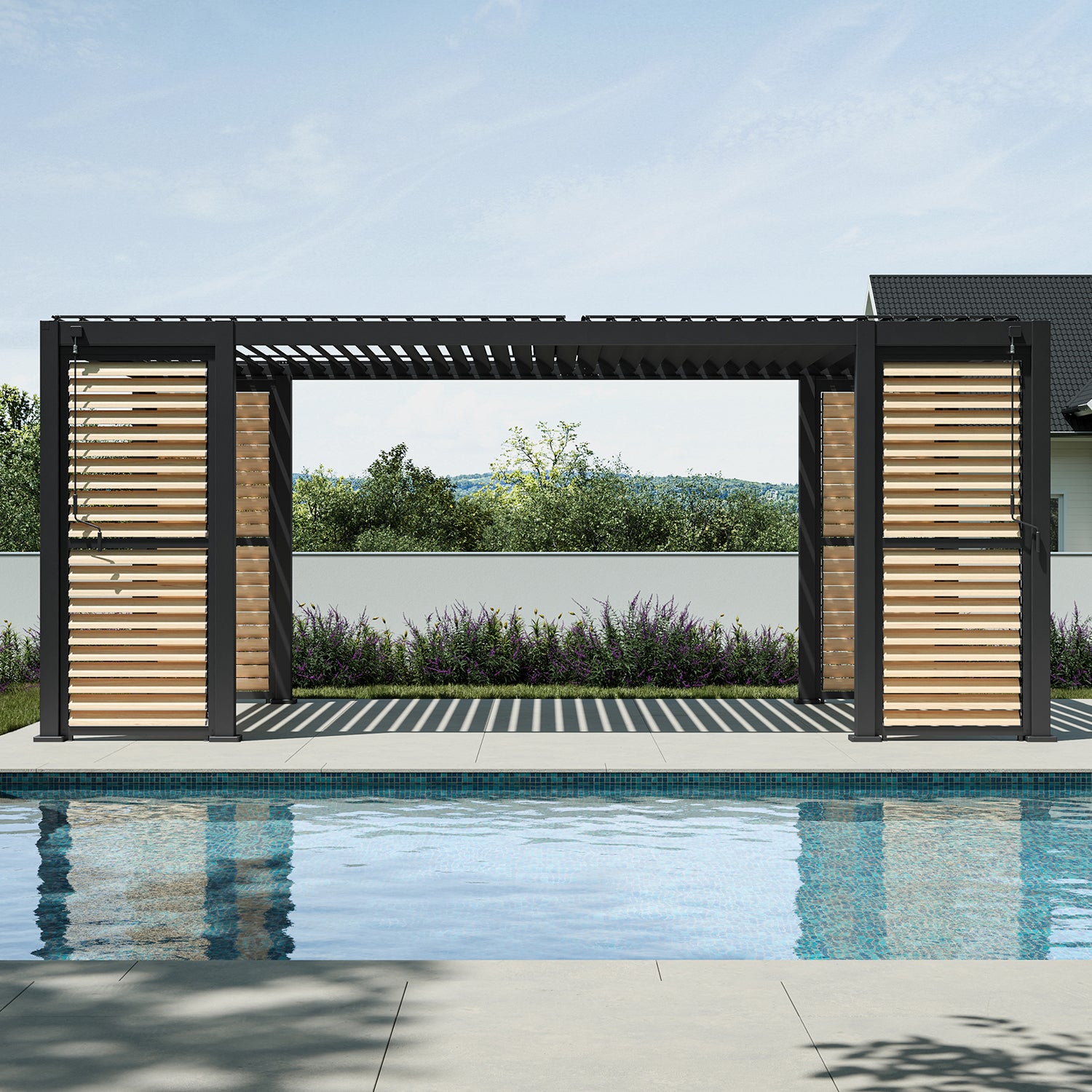
- Shutter-style doors or privacy panels on an exposed side
- A louvered roof that opens and closes
- A dining, lounge, or conversation layout under the structure
The result is a semi-enclosed outdoor room. It feels more finished than an open patio, but it still needs outdoor-rated furniture, ventilation, drainage, and weather-aware use.

First Rule: Do Not Design It Like an Indoor Room
The biggest mistake is treating a pergola enclosure like a normal indoor room. A pergola is still outside. Even with glass doors, it is exposed to temperature changes, wind-driven rain, insects, dust, pollen, and outdoor humidity.
Before adding glass, ask:
- Where does rain go when the louvers are closed?
- Which side gets the strongest wind?
- Which side needs the best view?
- Which side gets the lowest afternoon sun?
- Where will people enter and exit?
- Will heat build up if too many sides are closed?
- Do you need screens, glass, or both?
- Are local codes, HOA rules, or permits involved?
This is why semi-enclosed is usually better than fully enclosed. You get more comfort without losing the outdoor character of the pergola.
Idea 1: Put Glass on the View Side
If your pergola faces a garden, pool, fire feature, or open backyard, use sliding glass doors on the view side. This gives the space a more finished outdoor-room feeling without blocking the sightline.
This layout works well for:
- Outdoor dining rooms
- Poolside lounges
- Patios facing a garden
- Backyards with a long view
- Homes where the pergola is visible from interior living spaces
Mirador’s 111 Accessory sliding glass doors come in 10' and 13' options, with aluminum frames and tempered glass for 111 Series pergolas. Choose the correct side length for your setup, and always confirm current compatibility before ordering.
Glass on the view side is especially effective when the opposite side stays open or uses a screen. The room feels protected, but not boxed in.
Idea 2: Use Glass on the Wind Side
If wind is the reason your patio feels uncomfortable, glass should go on the side that gets the strongest breeze. A glass side can help make dining, reading, and conversation more comfortable while preserving a clear view.
This is better than closing every side. A single wind-facing glass wall can solve the main problem while the other sides remain open enough for airflow.
Good uses include:
- Windy suburban backyards
- Patios near open lawns
- Decks that feel exposed
- Dining zones where napkins, table settings, or cushions blow around
- Lounge areas that need a calmer edge
For stronger comfort, combine the wind-side glass with a louvered roof. The roof controls overhead exposure, while the side glass reduces crosswind from the problem direction.
Idea 3: Pair Glass With Pull-Down Screens
Glass is not always the best answer for every side. On the side facing neighbors, afternoon sun, insects, or glare, a pull-down screen may work better.
Use this combination:
- Glass doors on the view side
- Pull-down screens on the privacy side
- Pull-down screens on the west-facing side
- An open side for circulation and airflow
This gives you different levels of enclosure on different sides. You get clear views where they matter and softer privacy where glass would feel too exposed.
Mirador’s pull-down screen works as a retractable pergola sunshade and privacy screen. The advantage is flexibility. You can lower it for shade or privacy, then raise it when you want the pergola to feel more open.
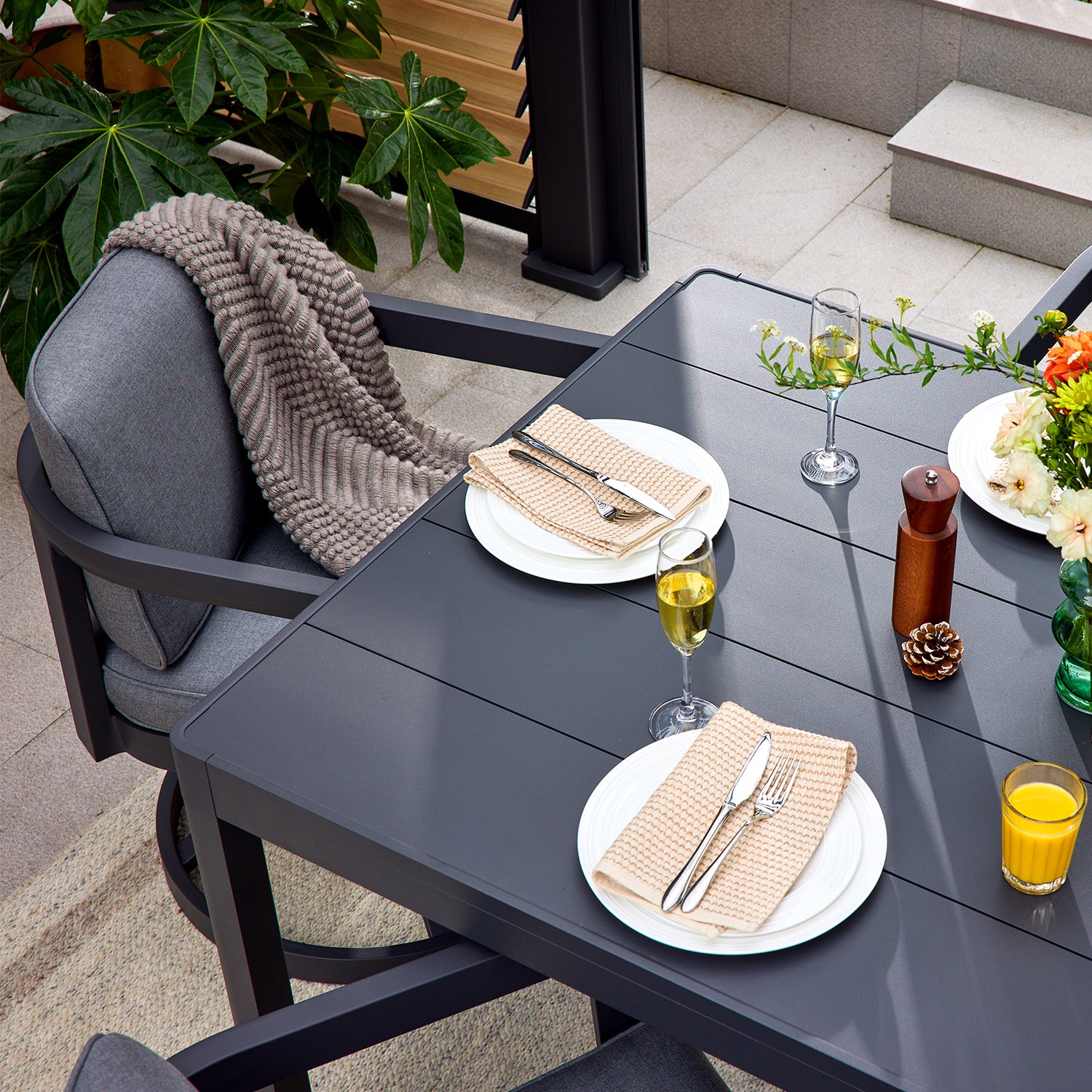
Idea 4: Create a Semi-Enclosed Outdoor Dining Room
A dining pergola needs comfort at table height. That means low-angle sun, side wind, insects, lighting, and traffic flow matter as much as the roof.
For an outdoor dining room, consider:
- Glass on the wind-facing side
- Pull-down screen on the sun-facing side
- A clear path from the house or grill area
- Pendant-style or integrated lighting where appropriate
- A power plan for serving, speakers, or small appliances
- Furniture that still allows doors and screens to operate
Do not crowd the enclosure with oversized furniture. Sliding doors, screens, and walkways need clearance. A semi-enclosed dining pergola should feel easy to enter and move through, not like an overfilled patio box.
Idea 5: Build a Lounge Room With Privacy, Not Full Closure
For a lounge layout, privacy often matters more than clear glass on every side. A sofa, chairs, coffee table, and outdoor rug can make the pergola feel like a living room, but the enclosure should still breathe.
Try this layout:
- Glass on one view-facing side
- Pull-down screens on one or two neighbor-facing sides
- One side left mostly open
- Low furniture that does not block sliding panels
- Warm outdoor lighting
- Side tables instead of bulky storage pieces
If a fabric screen feels too light, compare shutter-style doors or side panels. Mirador's accessory lineup includes sliding door and shutter door options for 111 Series pergolas, giving homeowners more ways to create privacy without relying only on glass.
Idea 6: Use Sliding Doors for Access and Flexibility
Glass doors are not the only door-style option. Depending on the project, a sliding door, polycarbonate-style sliding panel, or sliding louver door may make more sense than clear tempered glass.
Consider non-glass sliding doors when you want:
- More privacy than clear glass
- A lighter visual boundary
- Flexible access
- A semi-enclosed feel without full transparency
- A side treatment that matches a more functional patio layout
This can be useful around service areas, side yards, hot tub zones, or patios where privacy matters more than views. Use glass where the view is valuable. Use screens, shutters, or sliding panels where comfort and privacy are more important.
Idea 7: Keep One Side Open
One of the simplest glass enclosed pergola ideas is also one of the most important: keep one side open.
An open side helps with:
- Airflow
- Heat release
- Easy entry
- Furniture flexibility
- Outdoor feel
- Safer use around grills, heaters, or fire features
- Avoiding a cramped enclosed-room effect
For many patios, a three-sided semi-enclosed pergola is already more enclosure than needed. A one- or two-sided enclosure often feels better day to day.
Why the Roof Matters as Much as the Glass
Side glass only solves side exposure. The roof controls sun, shade, airflow, and overhead rain protection.
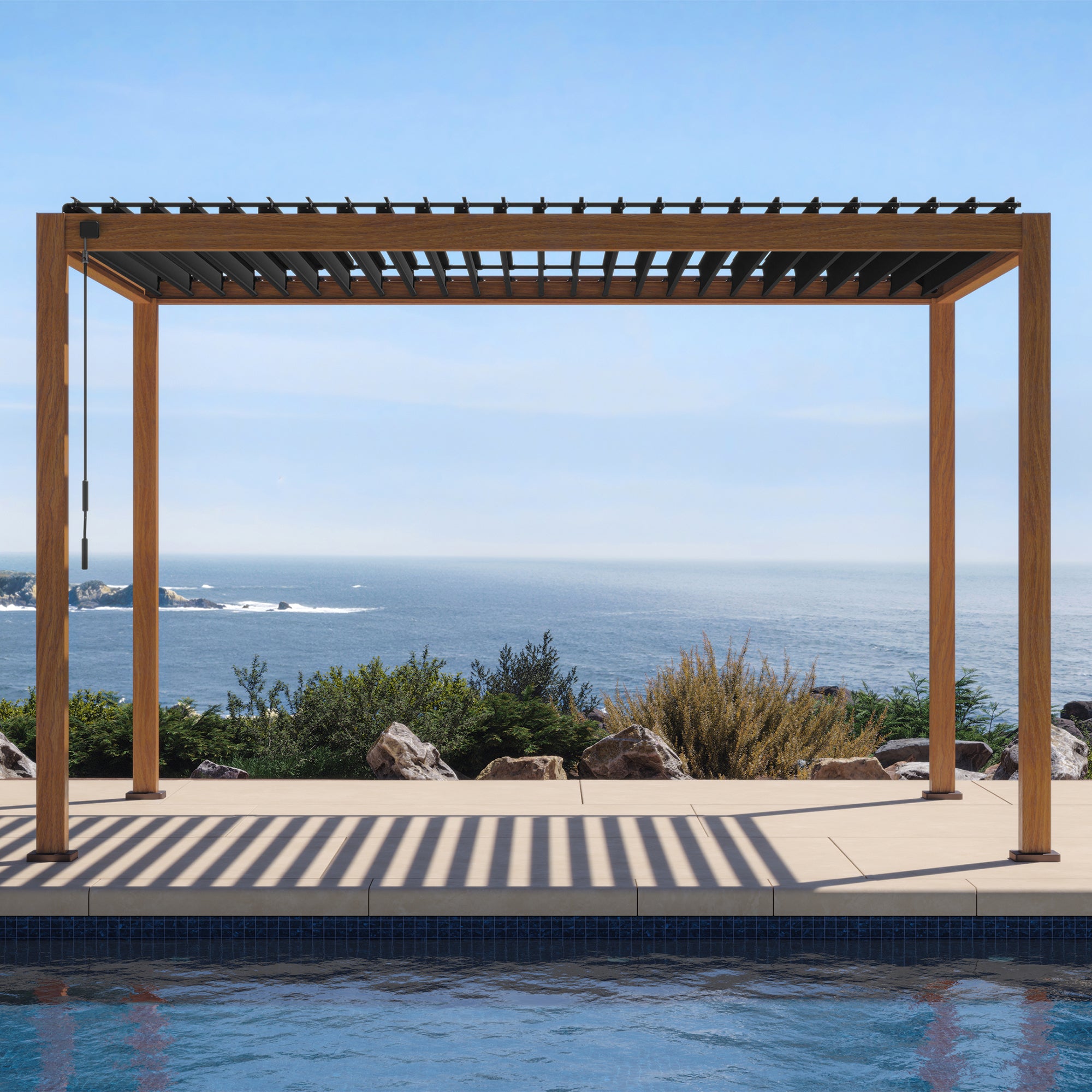
That is why a louvered roof is a strong partner for glass enclosure ideas. With adjustable louvers, you can open the roof for more light and ventilation, angle it for shade, or close it for more overhead coverage. Mirador's louvered pergola collection positions adjustable aluminum slats as a way to control sunlight, block rain, and transform a patio.
If you add glass but keep the roof fixed or poorly ventilated, the space may feel hot or stagnant. If you combine glass with adjustable louvers, the room can respond better to weather and time of day.

Best Semi-Enclosed Pergola Layouts
|
Goal |
Best Layout |
|
Clear garden view |
Glass on the view side, open side for airflow, screen on the sun side |
|
Outdoor dining comfort |
Glass on wind side, pull-down screen on low-sun side, lighting over table |
|
Neighbor privacy |
Pull-down screen or shutter-style panel on neighbor side, glass only where views matter |
|
Poolside lounge |
Minimal glass, more screens or adjustable side privacy, strong airflow |
|
Four-season shoulder comfort |
Glass on exposed side, louvered roof, screens for flexible side control |
|
Modern outdoor living room |
Glass on one side, screens on one side, open access side, power and lighting planned early |
What Not to Do
Avoid these common mistakes:
- Closing all four sides without a ventilation plan
- Using clear glass where privacy is the real need
- Blocking door tracks with furniture
- Forgetting that glass can increase heat gain
- Treating screens as storm walls
- Putting grills or heaters into an enclosure without clearance and code checks
- Assuming every accessory fits every pergola model
- Designing the enclosure before deciding how the patio will be used
A glass enclosed pergola should feel calm, flexible, and outdoor-connected. If it feels like a sealed box, the design has probably gone too far.
Bottom Line
The best glass enclosed pergola ideas do not try to turn a pergola into a fully sealed indoor room. They create a flexible semi-enclosed outdoor room that can adapt to sun, wind, privacy, views, and daily use.
Use glass where you want views and side protection. Use screens where you want shade, insects control, airflow, and flexible privacy. Use shutter-style panels where one side always feels exposed. Keep at least one side open when possible, and pair the enclosure with a louvered roof so the room can breathe.
FAQ
Can you enclose a pergola with glass?
Yes, a pergola can be semi-enclosed with compatible glass doors or glass side panels. The result should still be treated as an outdoor room, not a fully sealed indoor room.
How many sides of a pergola should be enclosed?
Most patios work best with one or two enclosed sides. Three sides can work in some layouts, but closing all four sides can reduce airflow and make the space feel too sealed.
Should I use glass doors or privacy screens on a pergola?
Use glass doors where you want clear views and stronger side protection. Use privacy screens where you need sun control, airflow, insect protection, or flexible privacy.
Can I mix glass doors and screens on the same pergola?
Yes. A mixed setup is often the best design. Use glass on the view-facing or wind-facing side, then use screens on sun-facing or neighbor-facing sides.
Is a louvered roof better for a semi-enclosed pergola?
Usually, yes. Adjustable louvers make the space more flexible because you can control sunlight, shade, airflow, and overhead coverage as conditions change.