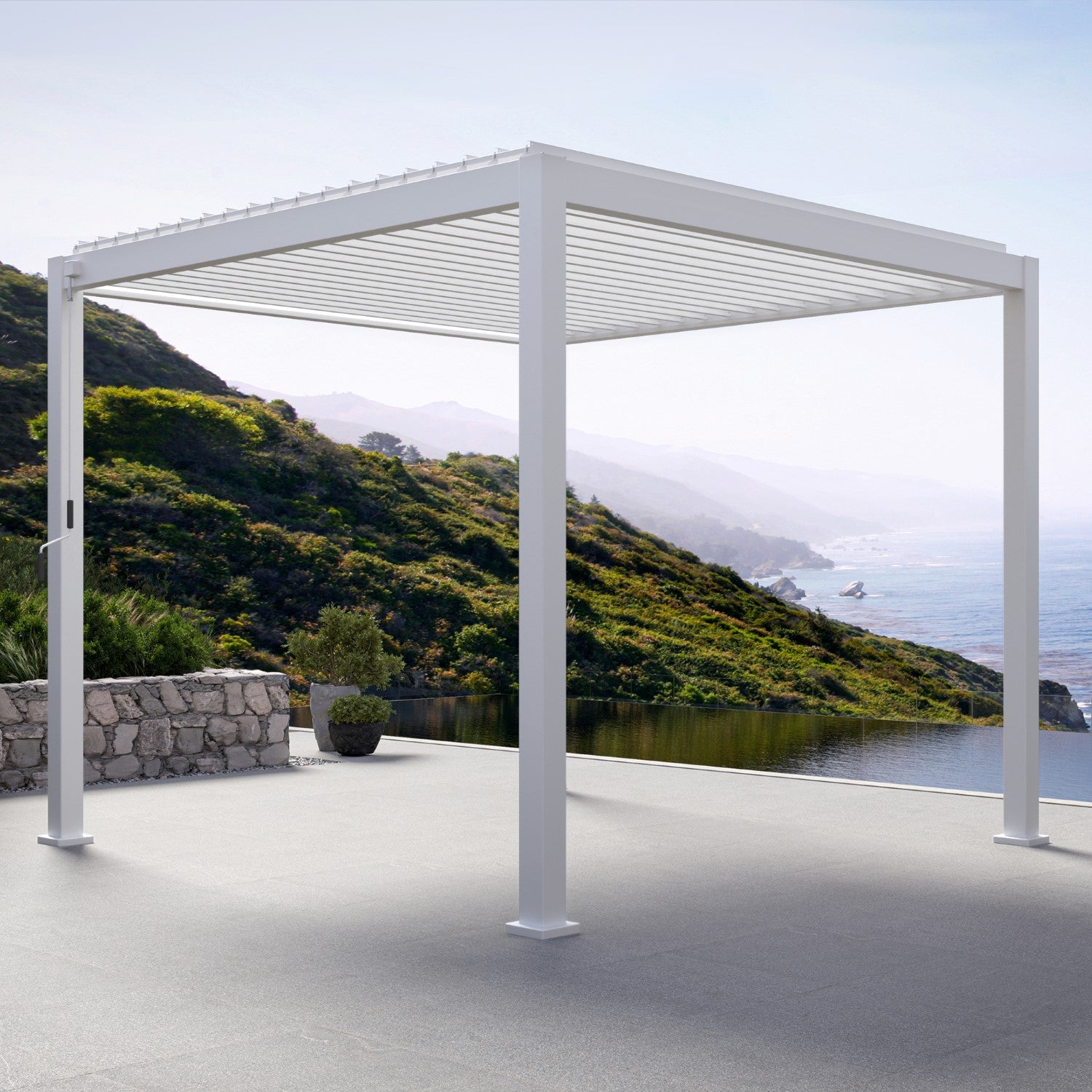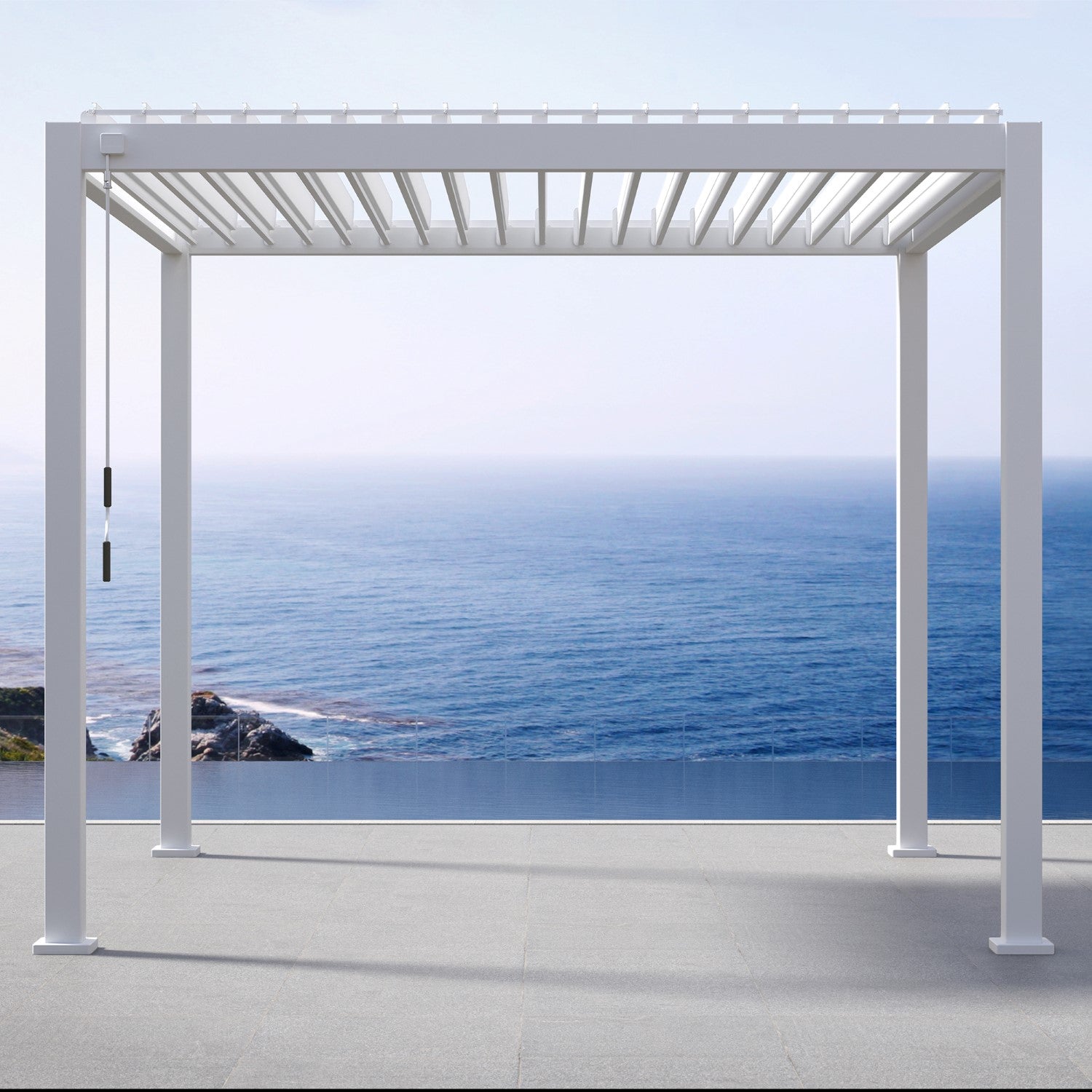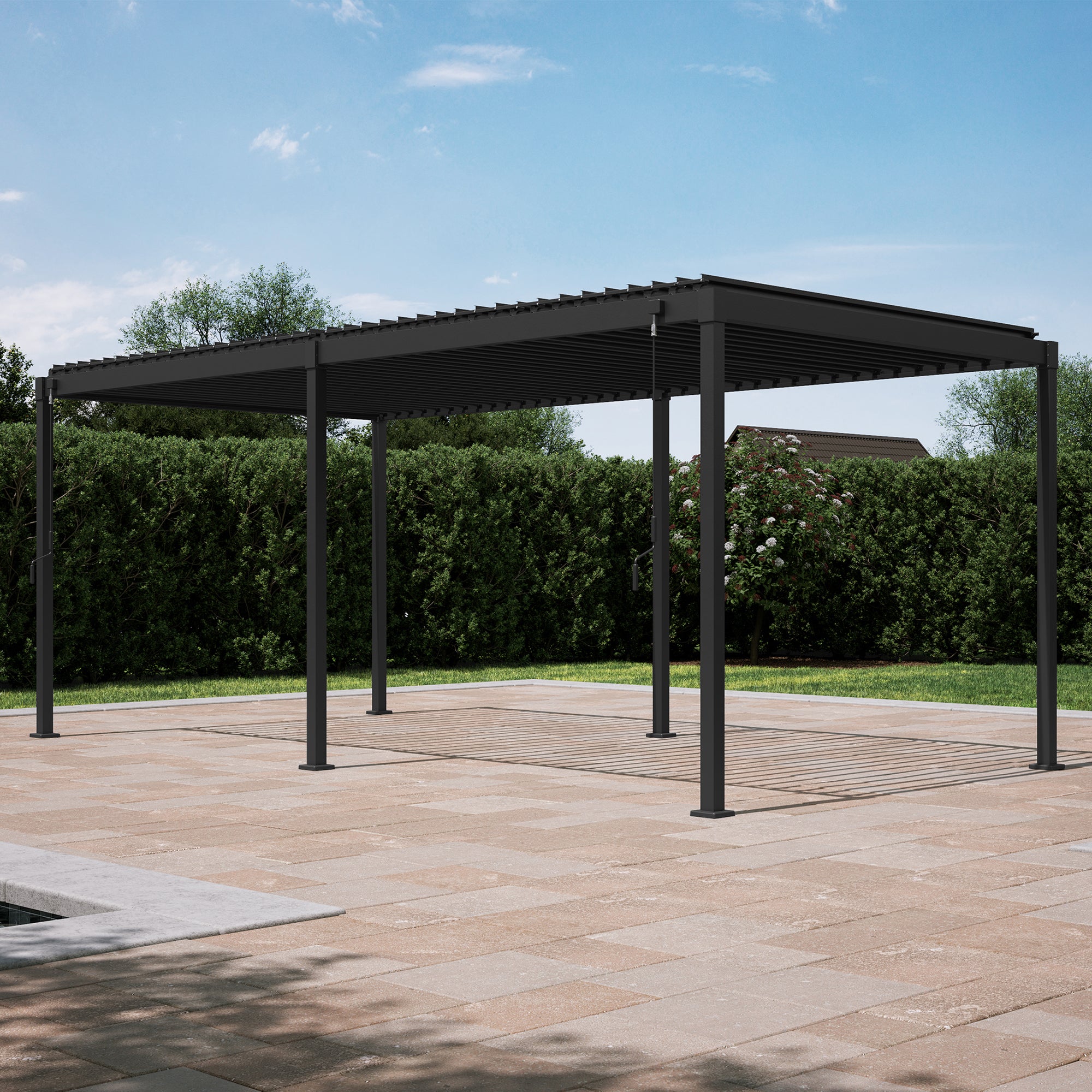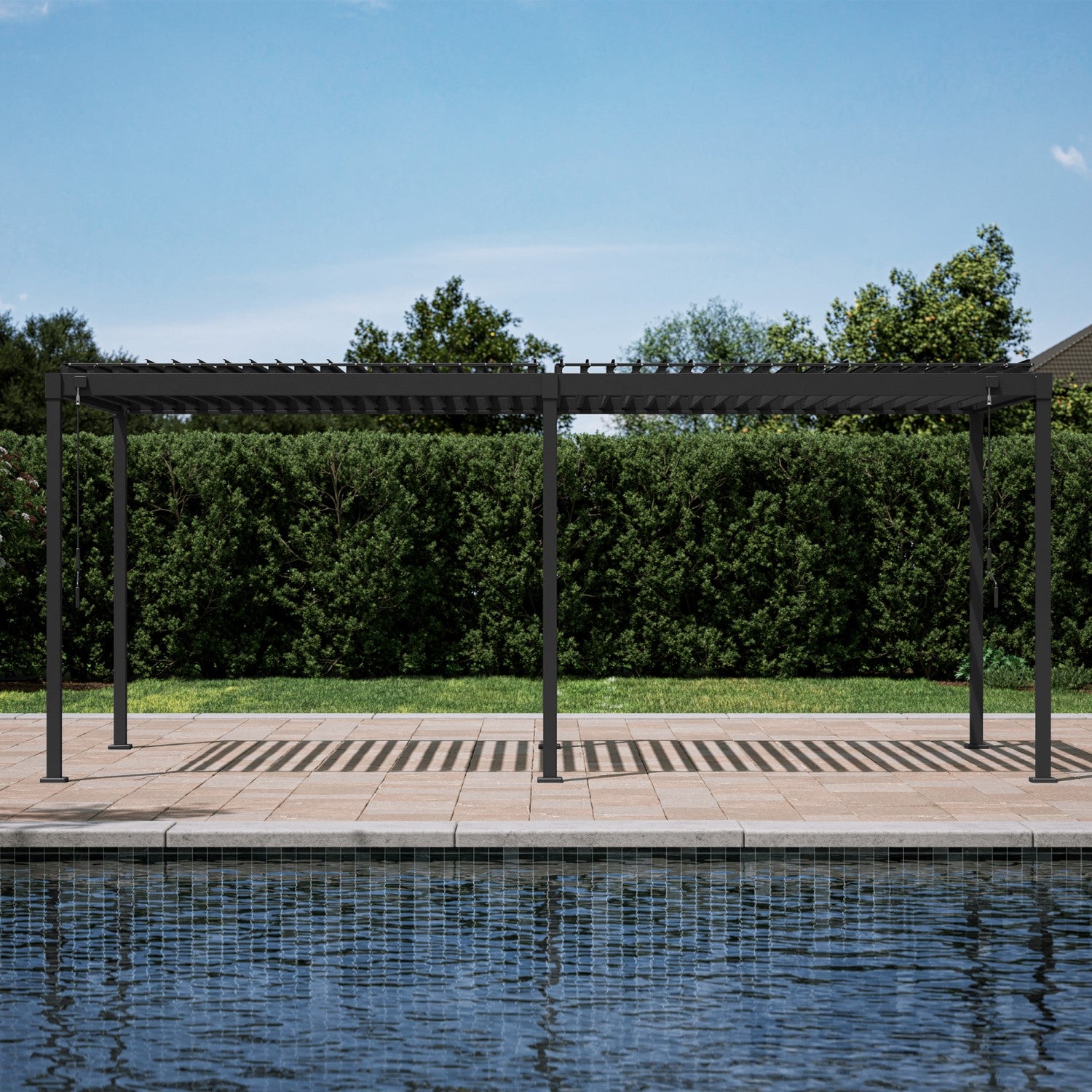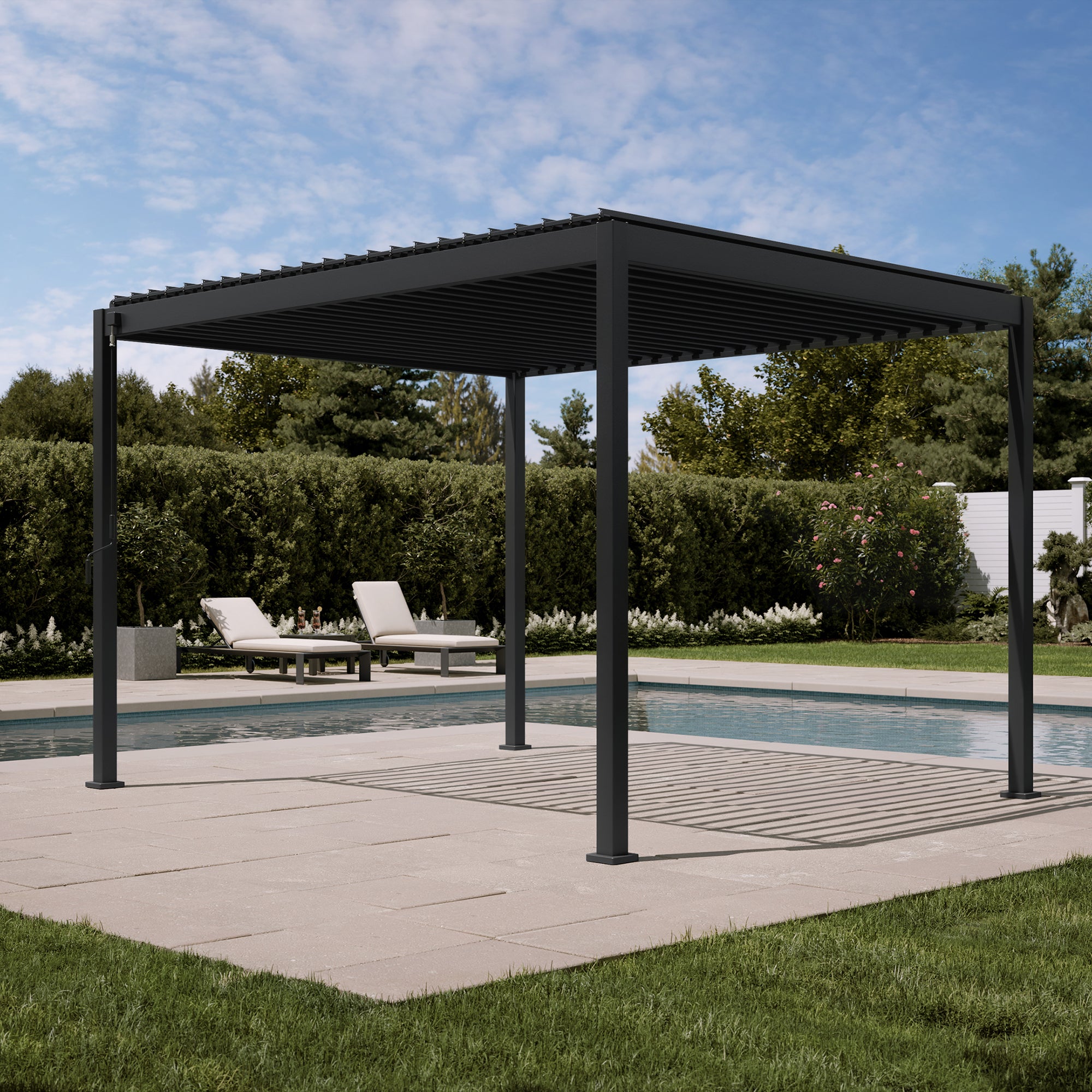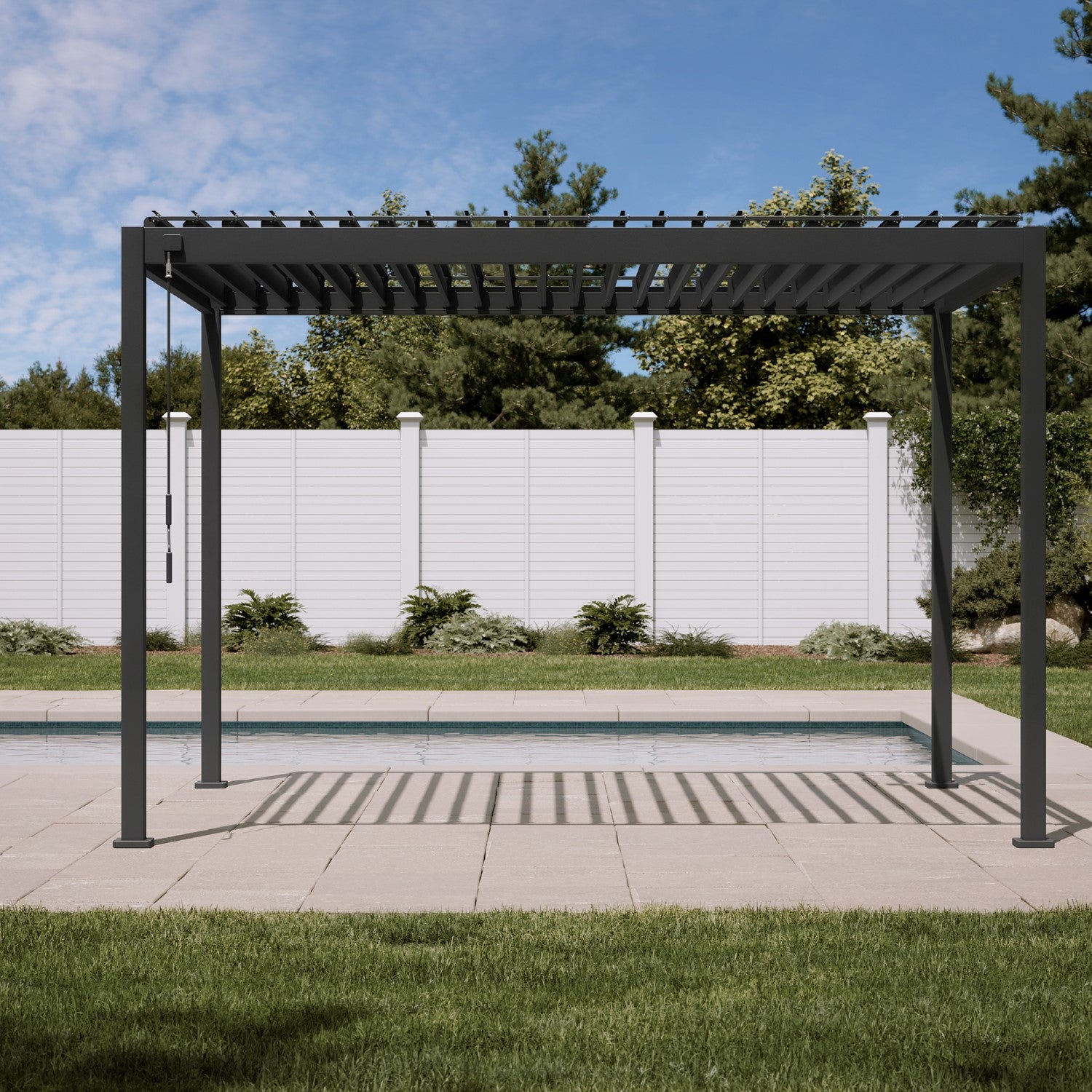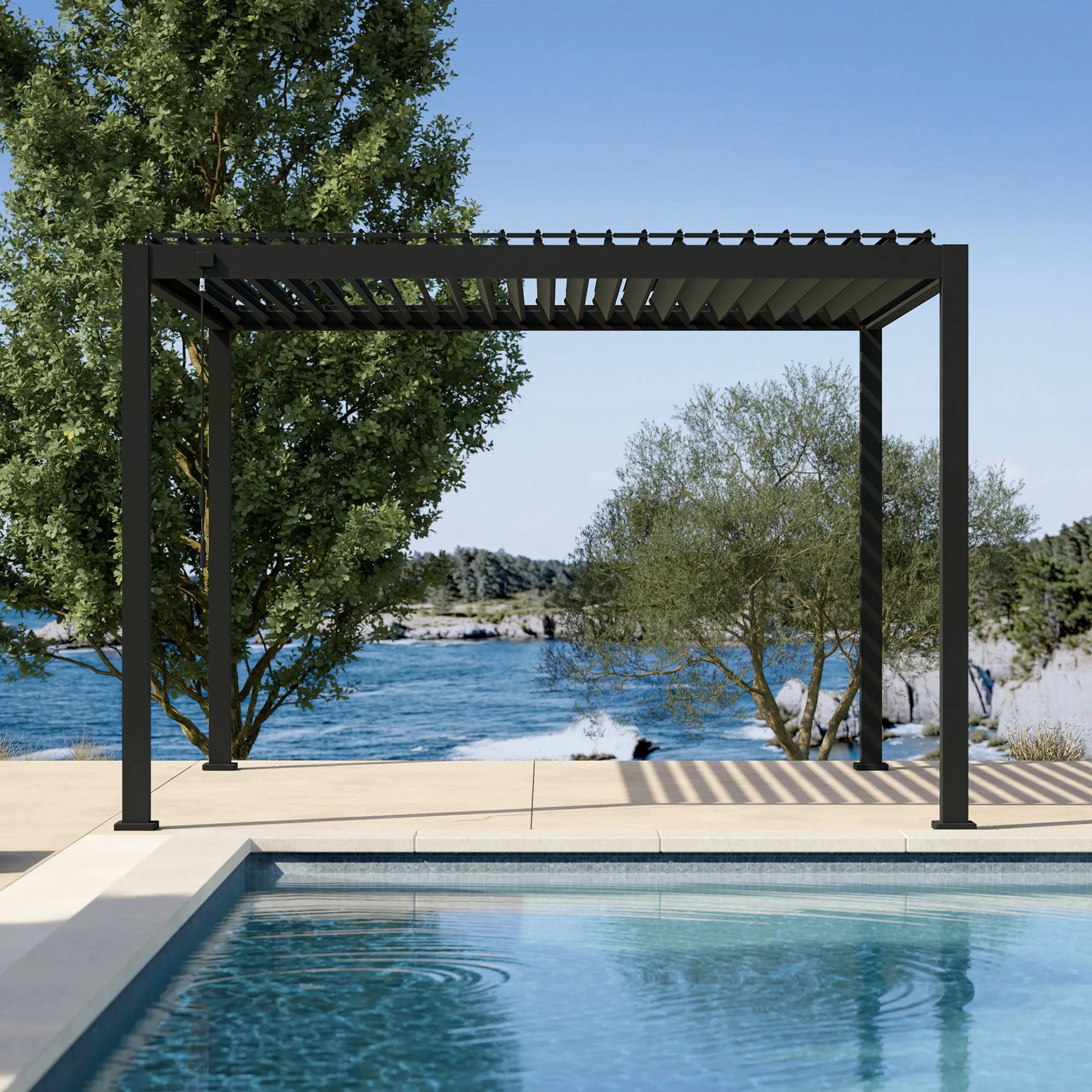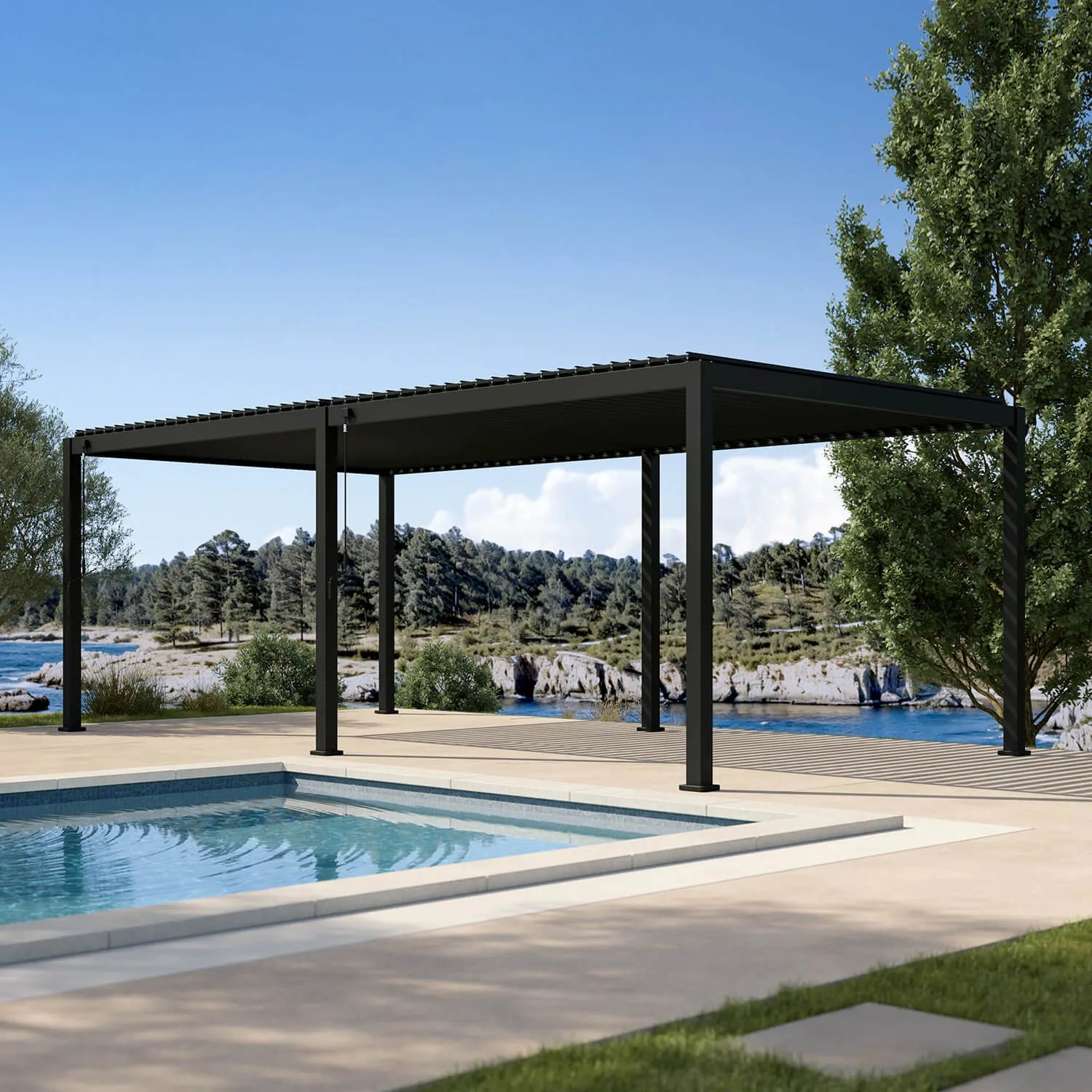

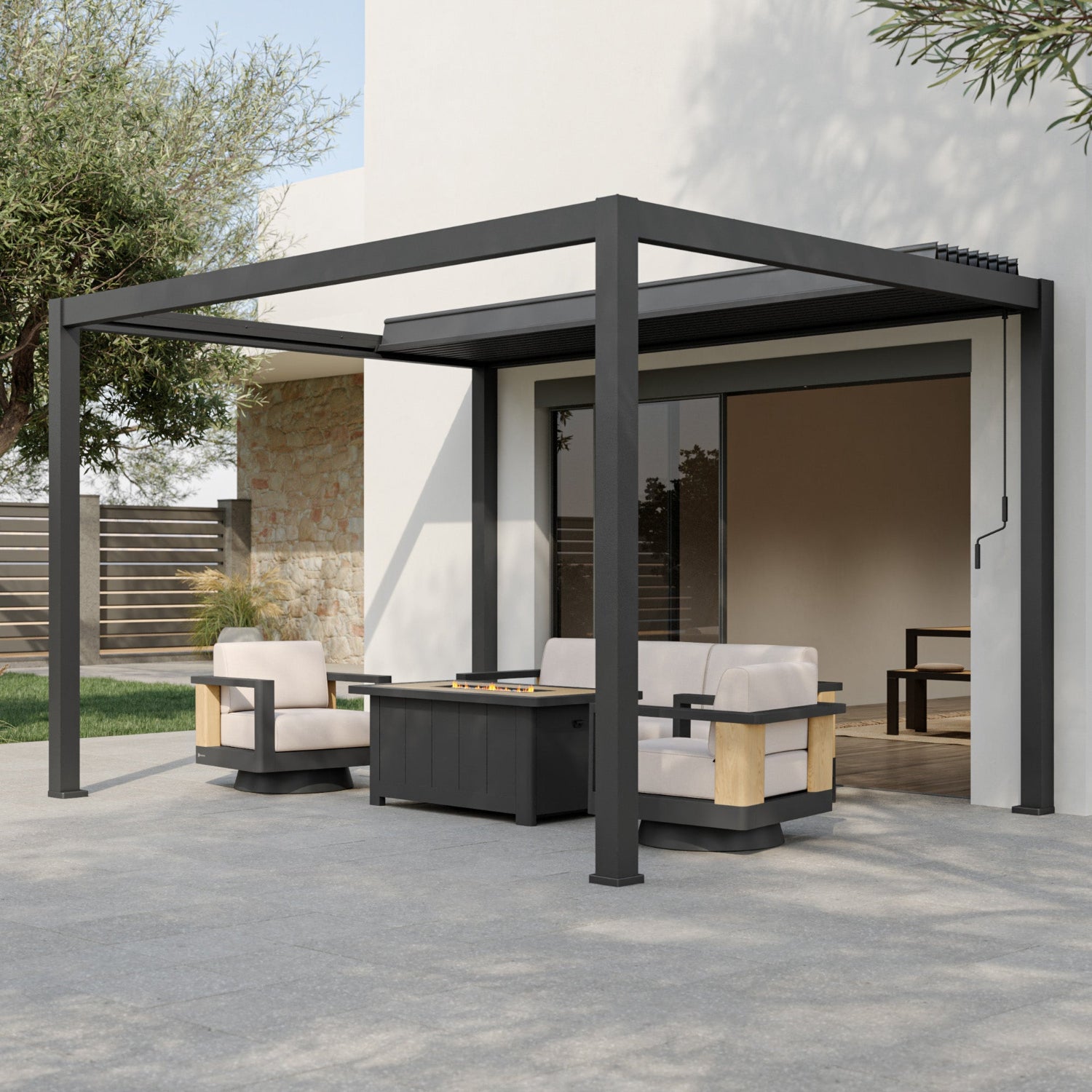
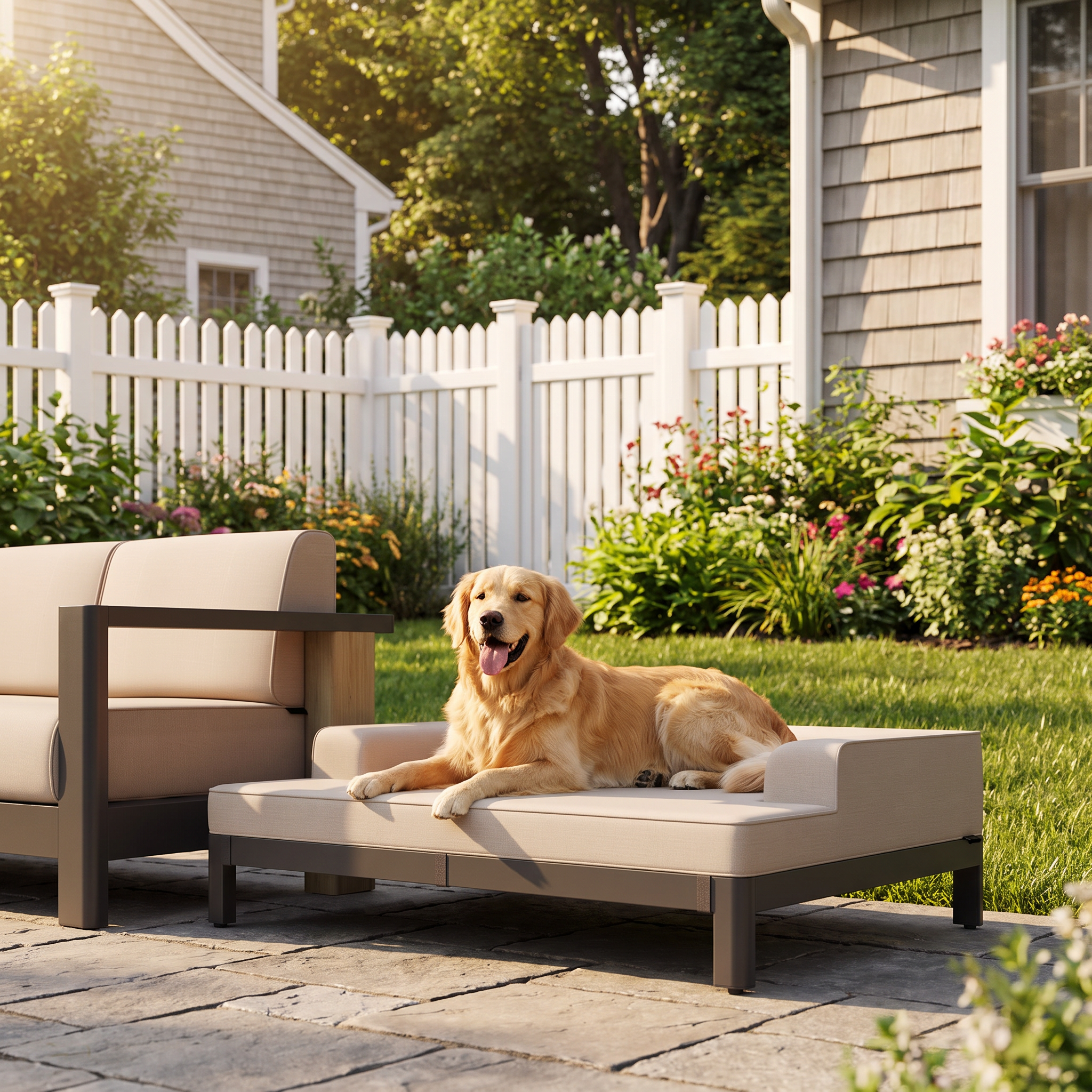
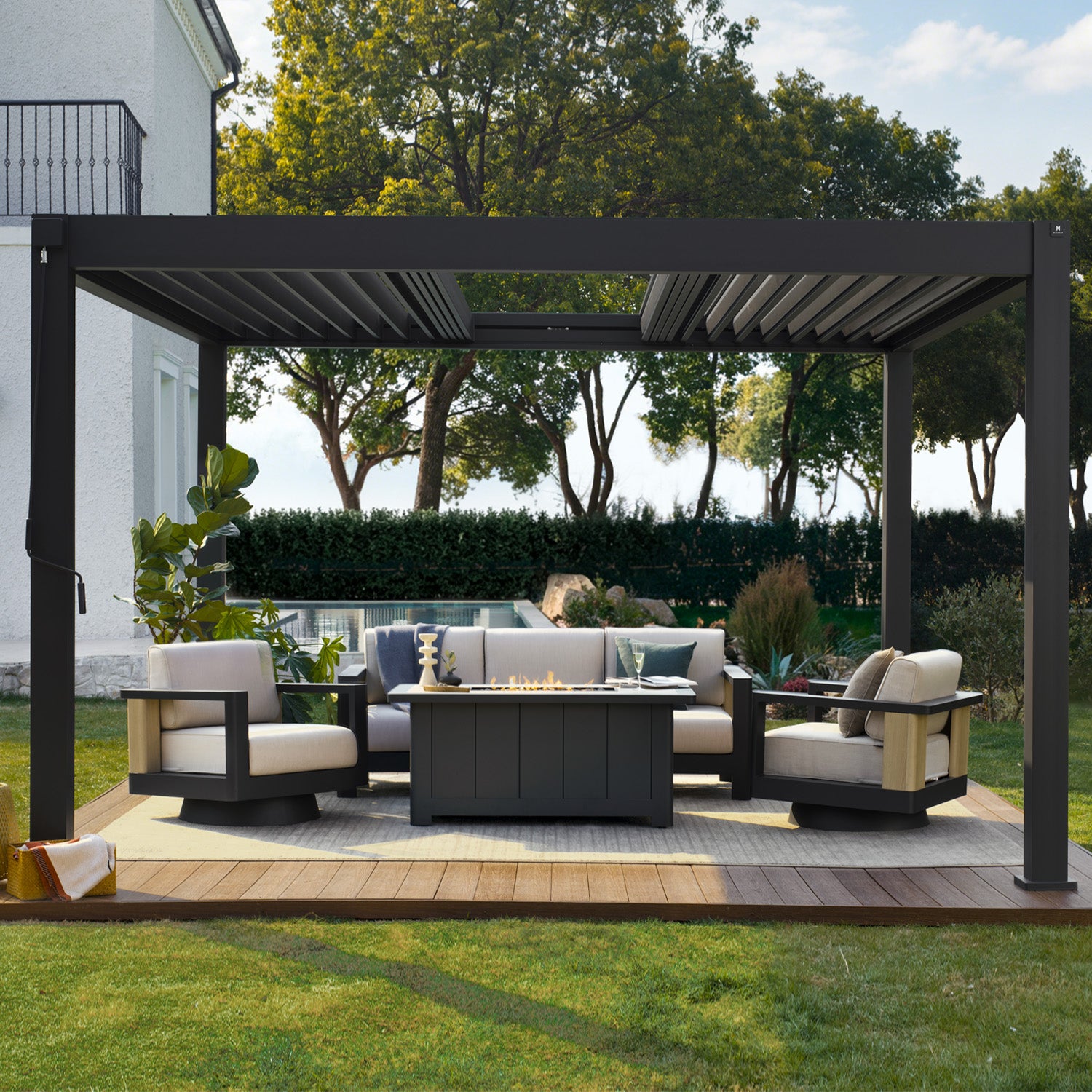
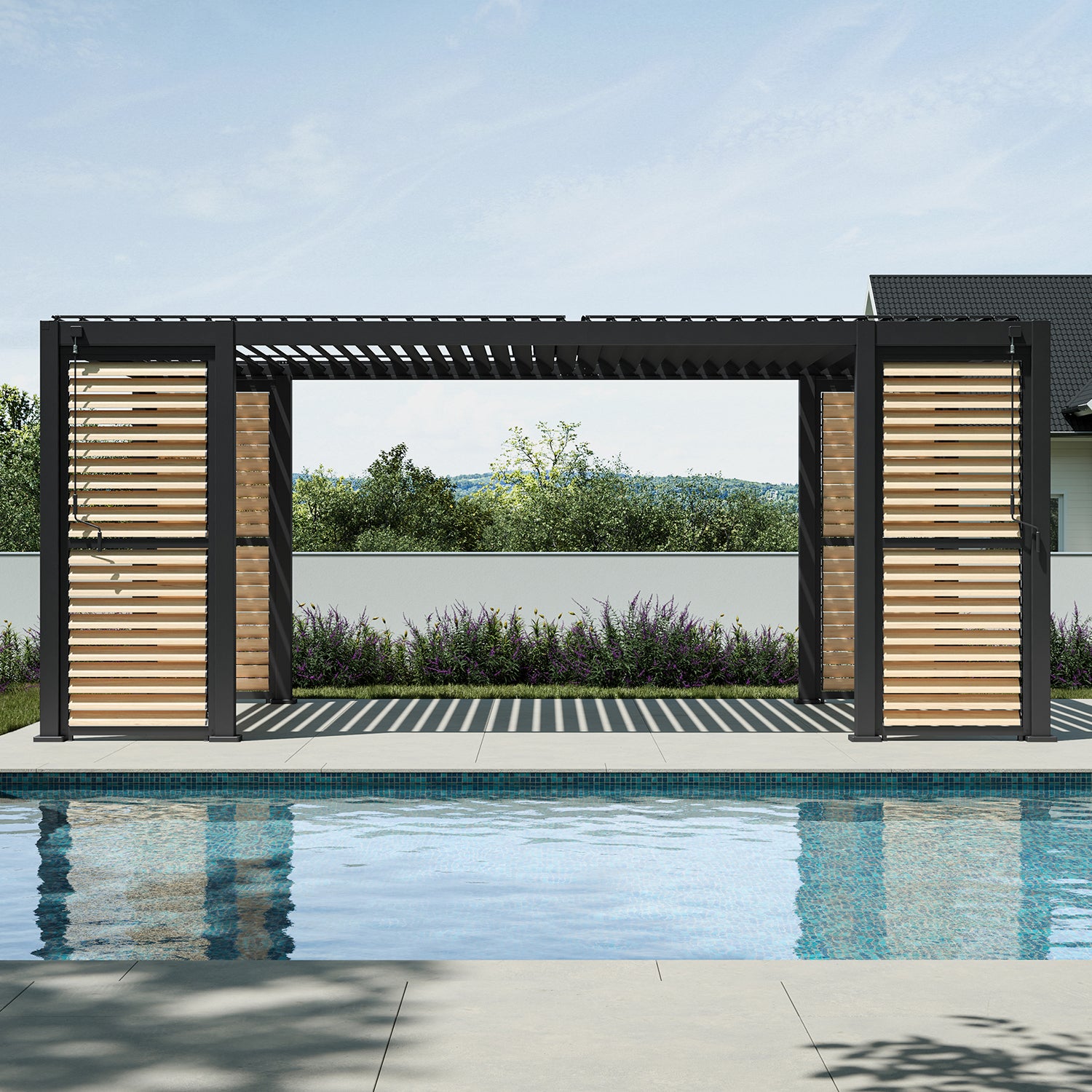

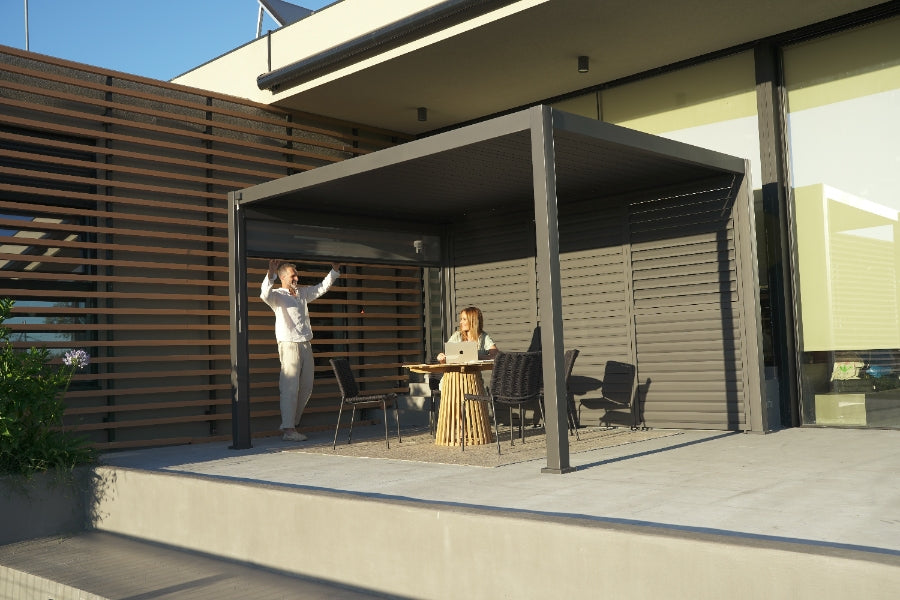
Short answer: yes, you can absolutely put a pergola in front of your house. And honestly, more homeowners are doing it than you'd think. A front yard pergola isn't just a backyard trend that wandered to the wrong side of the property. It's a real design move that adds curb appeal, frames your entrance, and gives you usable outdoor space where most people just have a bare porch and a doormat.
But there are a few things you need to sort out before you start shopping. Permits, HOA rules, sizing... all of that matters more when the structure faces the street.
Let's break it all down.

Why a Front Yard Pergola Actually Works
Most people associate pergolas with backyards. Patios, poolside lounges, outdoor dining. But a pergola in front of your house does something different: it makes an impression before anyone walks through the door.
Here's what it gets you:
- Curb appeal. A pergola adds depth and dimension to a flat facade. Front-facing pergola additions show up again and again in curb appeal content and real estate listings, because they change how a house reads from the street. Outdoor structures also rank highly for buyer appeal, especially when they look intentional rather than tacked on.
- A usable entry zone. That front porch you never sit on? A pergola with a louvered roof turns it into a shaded spot you'll actually use, whether that's morning coffee or an evening wind-down.
- Architectural interest. Clean lines, modern materials, and a defined structure make even a simple entryway look polished. Think of it like a picture frame for your home's face.
And the trend isn't only American. Across Europe, pergolas near front entrances show up in both Mediterranean and modern home design, where they add shade and a sense of arrival.
Permits, HOA Rules, and What to Check First
A front yard pergola has more red tape than a backyard one. Not always, but often enough that you shouldn't skip this step.
Permit requirements vary by location and structure type. In the U.S., some jurisdictions exempt certain small, detached accessory structures from building permits, with thresholds such as 120 or 200 square feet. These exemptions do not automatically apply to every pergola, and zoning requirements still apply. In England, freestanding pergolas may qualify as permitted development if all relevant conditions are met. Under the applicable outbuilding rules, structures within 2 metres of a property boundary generally must not exceed 2.5 metres in overall height. Structures forward of the house’s principal elevation generally require planning permission. Rules differ elsewhere in the UK.
HOA rules are a separate hurdle. Front-facing structures get more scrutiny because they're visible from the street. Many HOAs regulate color, height, materials, and placement. A backyard pergola might sail through review while the same structure out front gets flagged.
Quick checklist before you buy:
|
Step |
What to Do |
|
1 |
Call your local building department and ask about freestanding outdoor structures |
|
2 |
Check your HOA's CC&Rs for "accessory structures" and "front yard" rules |
|
3 |
Measure your available space and note setbacks from property lines |
|
4 |
Confirm if your area has height restrictions, which usually cap at 8–12 ft |
If you want to understand how specific pergola models hold up in different conditions, like wind ratings, snow loads, and warranty coverage, our pergola comparison breaks that down model by model.
4 Popular Ways to Add a Pergola to the Front of Your House
Not every front yard pergola looks the same. The style depends on your home, your space, and what you're trying to do with it.
-
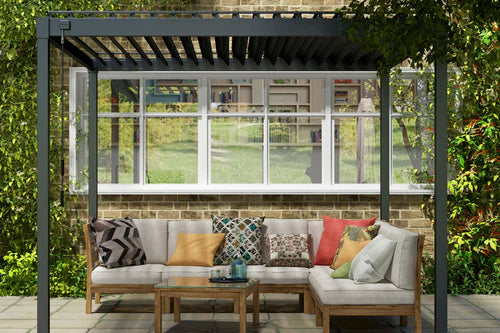
Entryway pergola over the front door. This is the most common setup. A smaller structure, roughly 5' × 10', creates a covered walkway to your entrance. It works well attached to the house or freestanding just in front of the porch. Our grill-sized pergola fits this purpose without overwhelming the front facade.
-
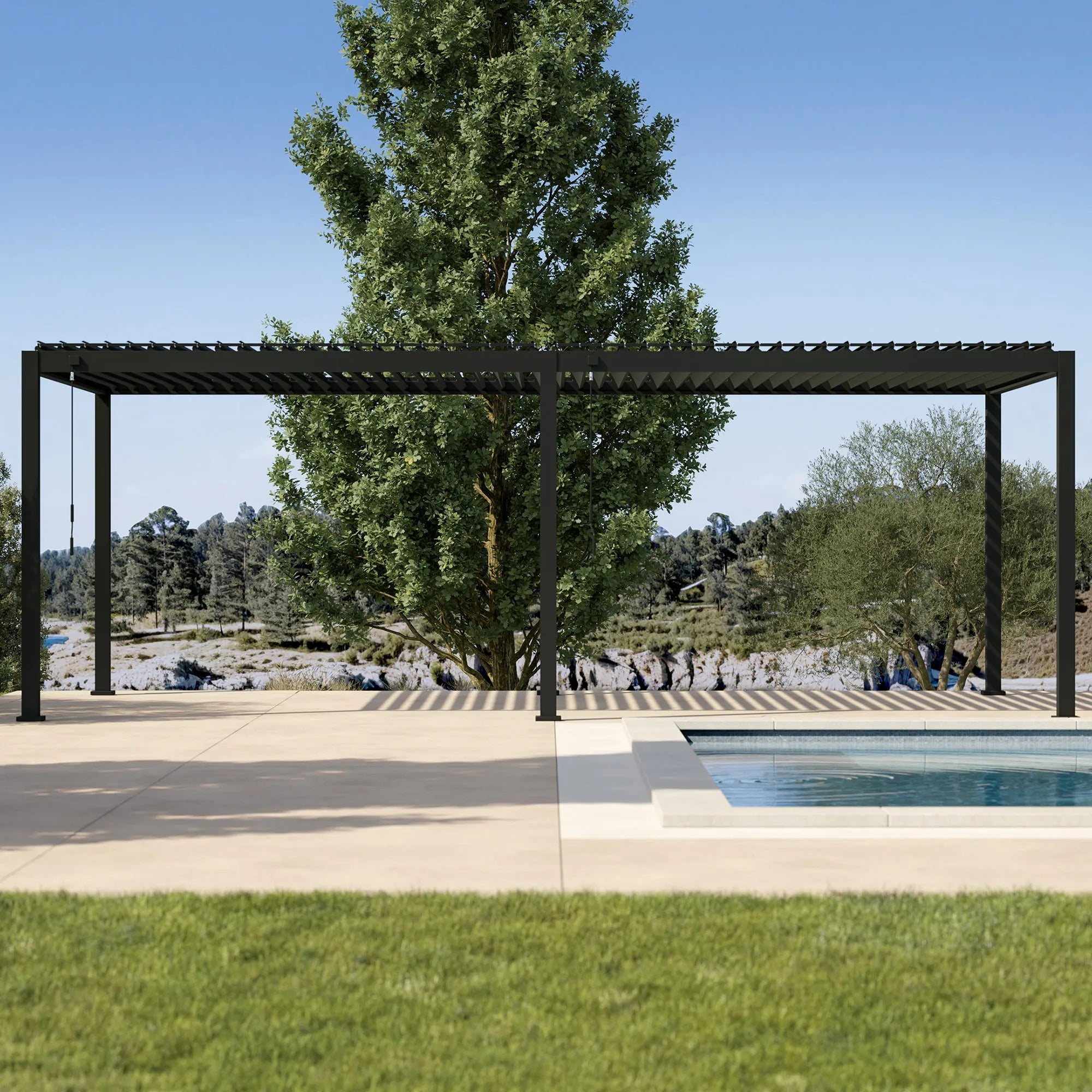
Freestanding front porch pergola. A 10' × 10' or 10' × 13' freestanding unit set slightly forward from the porch. It defines a sitting area without touching the house at all. No ledger board, no flashing, no wall penetrations. Just four posts anchored to concrete.
- Front walkway pergola. A longer, narrower structure that covers the path from your driveway or sidewalk to the front door. It creates a sense of arrival. A 10' × 20' louvered pergola can cover a full walkway while letting you control sun and rain.
- "Eyebrow" accent pergola. This is a design-forward option where a small pergola is mounted over the garage door or a set of front windows, purely for architectural interest. It doesn't add shade for sitting, but it adds a lot of visual texture.

Choosing the Right Pergola for Your Front Yard
Front yard placement means your pergola is on full display. Every detail matters, from material to color to weather resistance.
Here's what we'd recommend thinking about:
- Material matters. Aluminum and powder-coated steel resist rust, UV fading, and corrosion without painting or staining. Wood looks great at first, but it fades and cracks over time, especially in a front yard with no canopy overhead for protection.
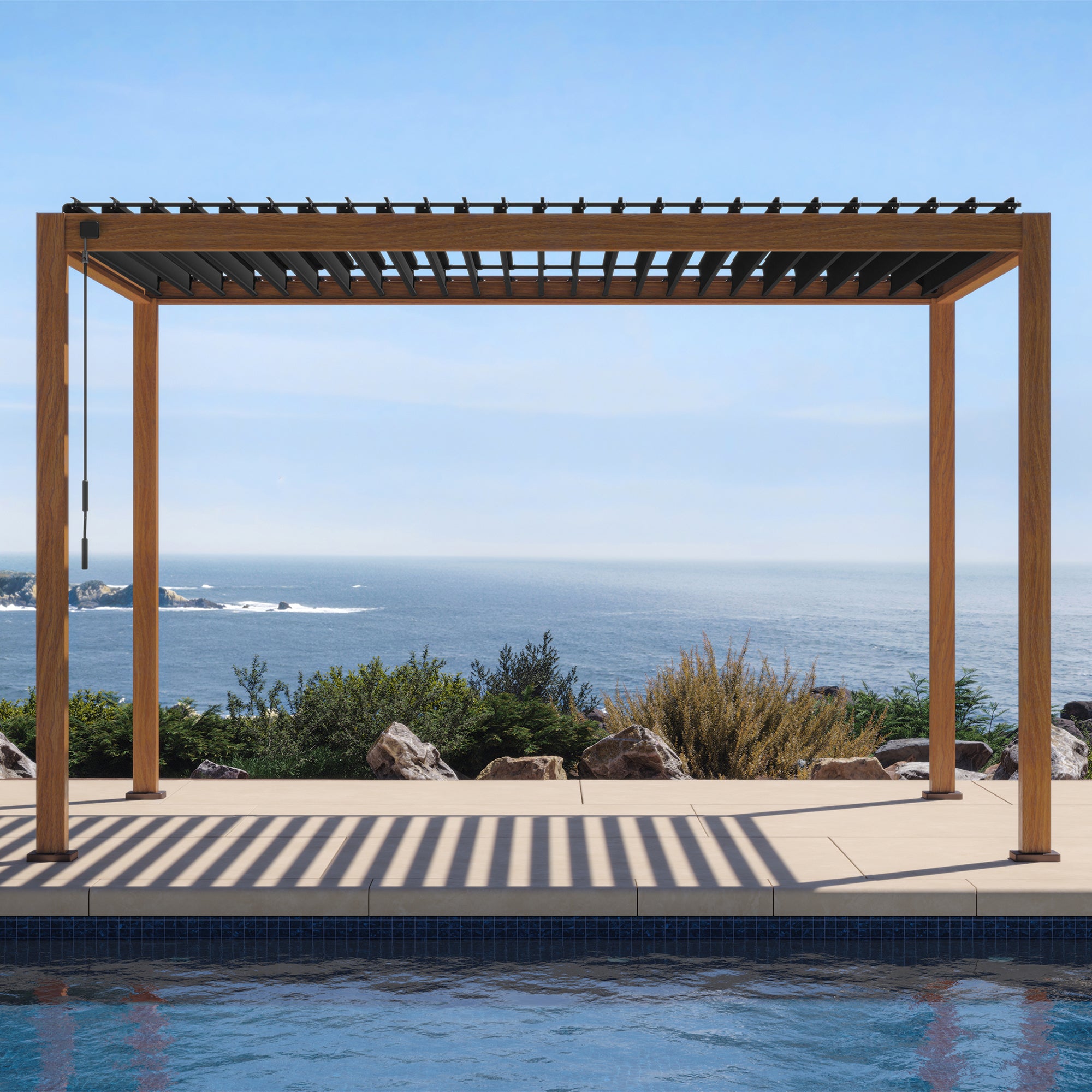
- Color coordination. Match or complement your home's exterior. Charcoal works with modern facades, white pairs well with traditional trim, and a wood grain finish gives warmth without actual wood maintenance. Mirador's Takasho line, for example, has a realistic cherry oak texture on an aluminum frame.
- Adjustable louvers. A louvered roof is particularly smart out front because you can close the slats during rain and open them up for sun. Fixed-roof pergolas give you shade or light, but not both.
- Wind and snow ratings. If your pergola sits exposed in the front yard, it'll face weather that a house-shielded backyard structure won't. Models rated for 90+ mph winds and 20+ psf snow loads are worth the extra spend.
Not sure where to start? Browse our pergola collection to see if there is a model you like. If you still have questions, our help center has PDF manuals and setup videos for every model we make, so you can check exactly what is involved before you commit.
FAQs
Does a front yard pergola increase home value?
A well-designed front yard pergola may enhance curb appeal, but its effect on resale value is uncertain. NAR research highlights the importance of curb appeal and estimates cost recovery for several outdoor improvements, but it does not provide a specific ROI for front yard or aluminum pergolas.
Do I need a permit for a front yard pergola in the UK?
Often, yes. In England, a freestanding pergola positioned forward of the original house’s principal elevation will generally require planning permission. Pergolas elsewhere in the garden may qualify as permitted development if all relevant conditions are met. Rules differ across the UK, so check with your local planning authority before installation.
Can I install a freestanding pergola without attaching it to my house?
Yes. A freestanding pergola stands on its own posts and gets anchored directly to a concrete slab or footings. There's no wall attachment, no ledger board, and no damage to your home's siding. Mirador pergolas, for instance, ship with anchor bolts and can be installed by two people in about 4–6 hours.
What size pergola works best for a front porch?
For most front porches, a 10' × 10' or 10' × 13' pergola is a good fit. It's large enough to shade a seating area but not so big that it overwhelms the facade. Measure your porch and leave at least 5 feet of setback from property lines.
What's the best pergola material for front yard use?
Aluminum or an aluminum-steel hybrid is your best bet. It won't rot, rust, or fade the way wood does, and it needs zero seasonal maintenance. Powder-coated finishes in charcoal, white, or wood grain give you color options that match most home exteriors.