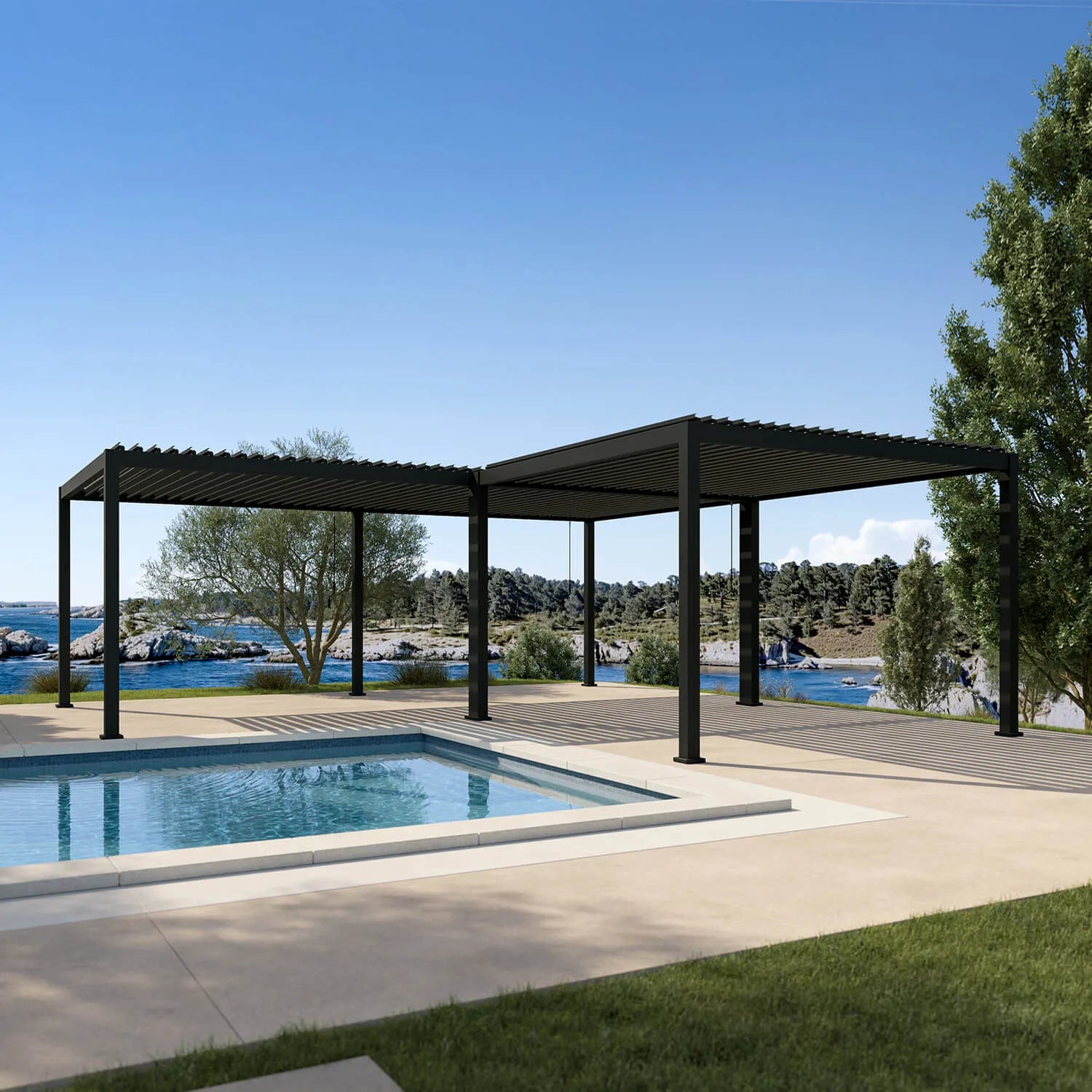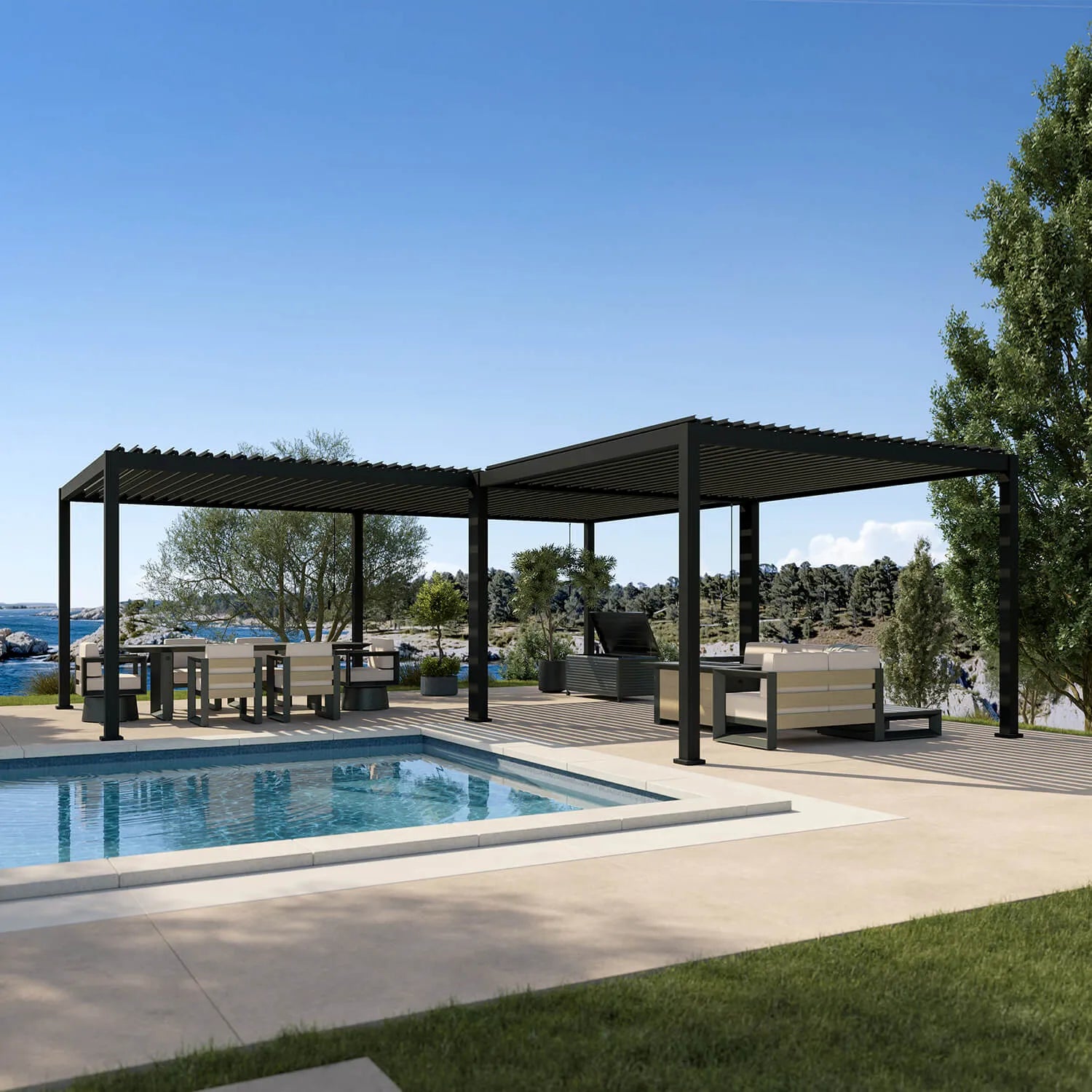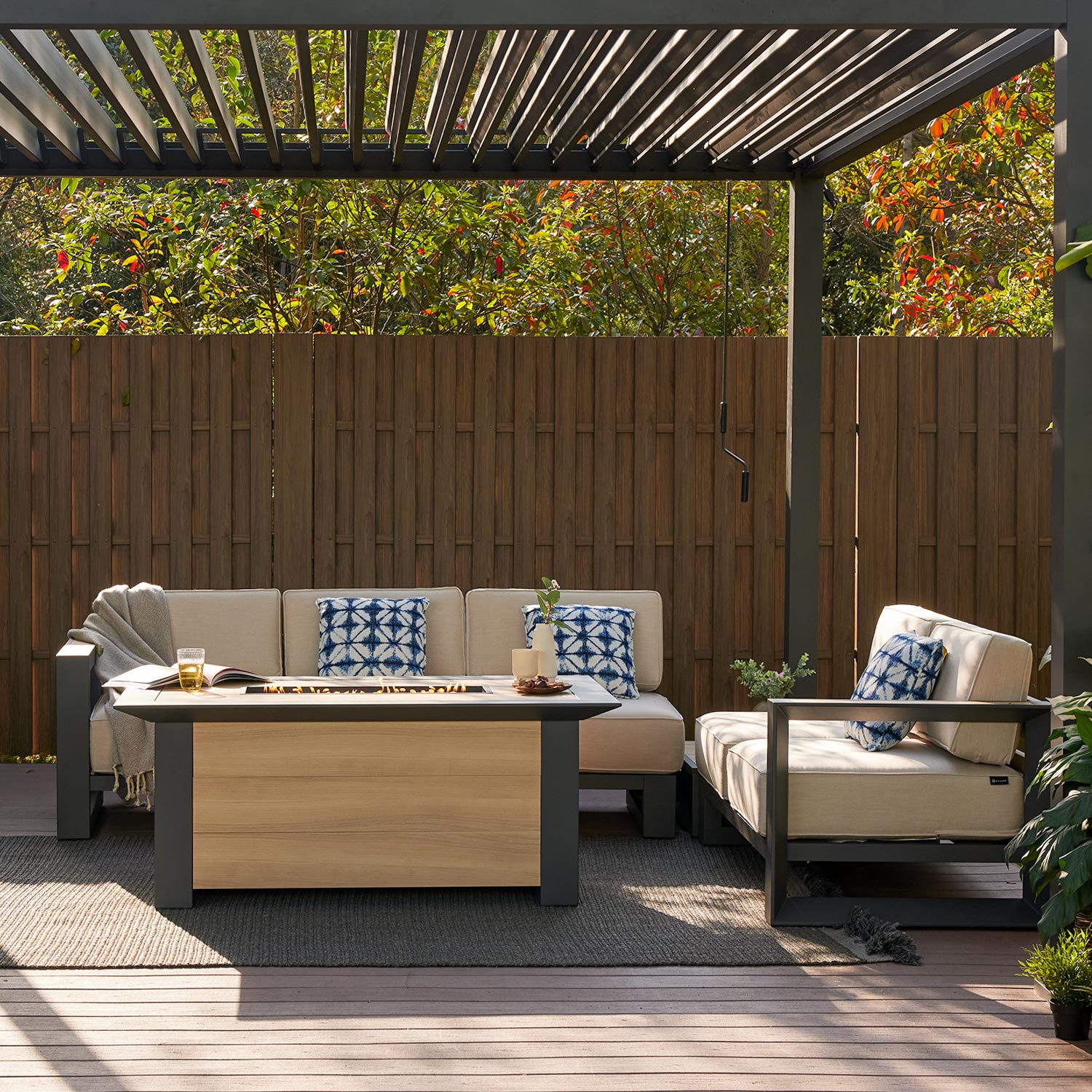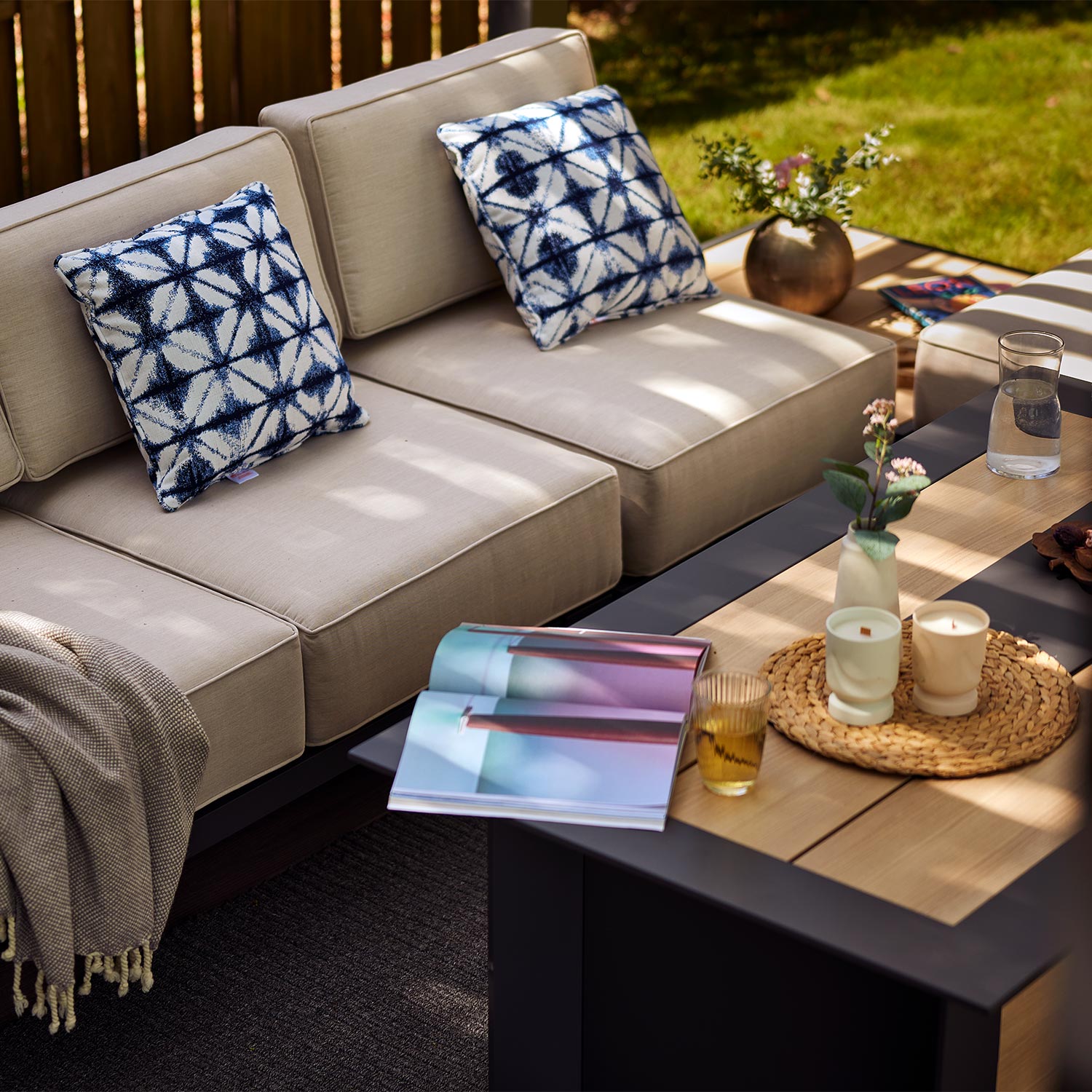

Choose an aluminum pergola if lower maintenance is your priority. Choose a wood pergola if you prefer genuine timber, natural grain, and the ability to stain or paint the structure—and are prepared for regular upkeep.
Both materials can create an attractive outdoor living area. The right choice depends on your budget, preferred appearance, local conditions, and how much maintenance you want to take on.
It is also important to compare similar designs. An open-beam wood pergola and an aluminum pergola with adjustable louvers offer different roof functions, so their differences go beyond the frame material.
Aluminum vs. Wood Pergola: Quick Comparison
|
Feature |
Aluminum Pergola |
Wood Pergola |
|---|---|---|
|
Appearance |
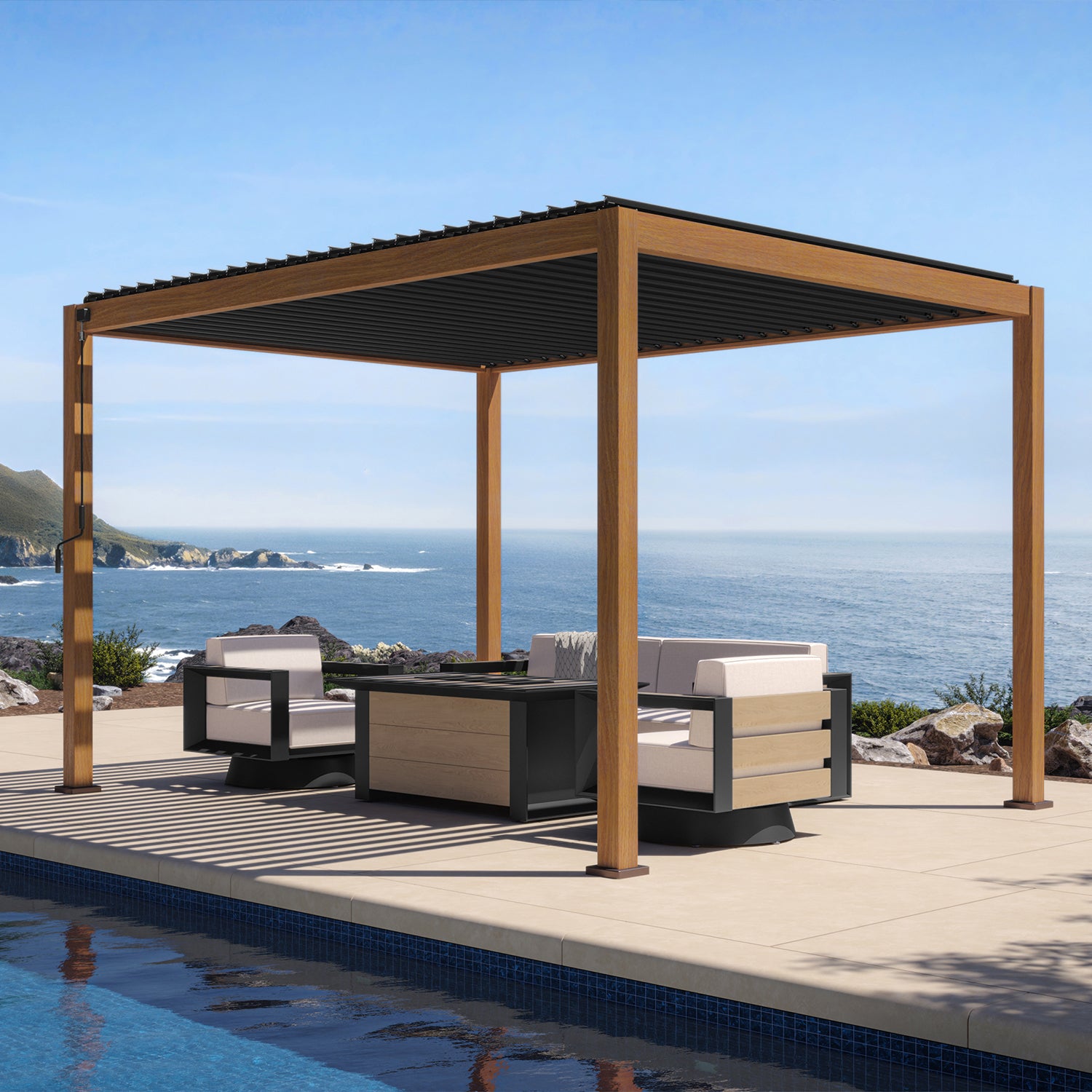
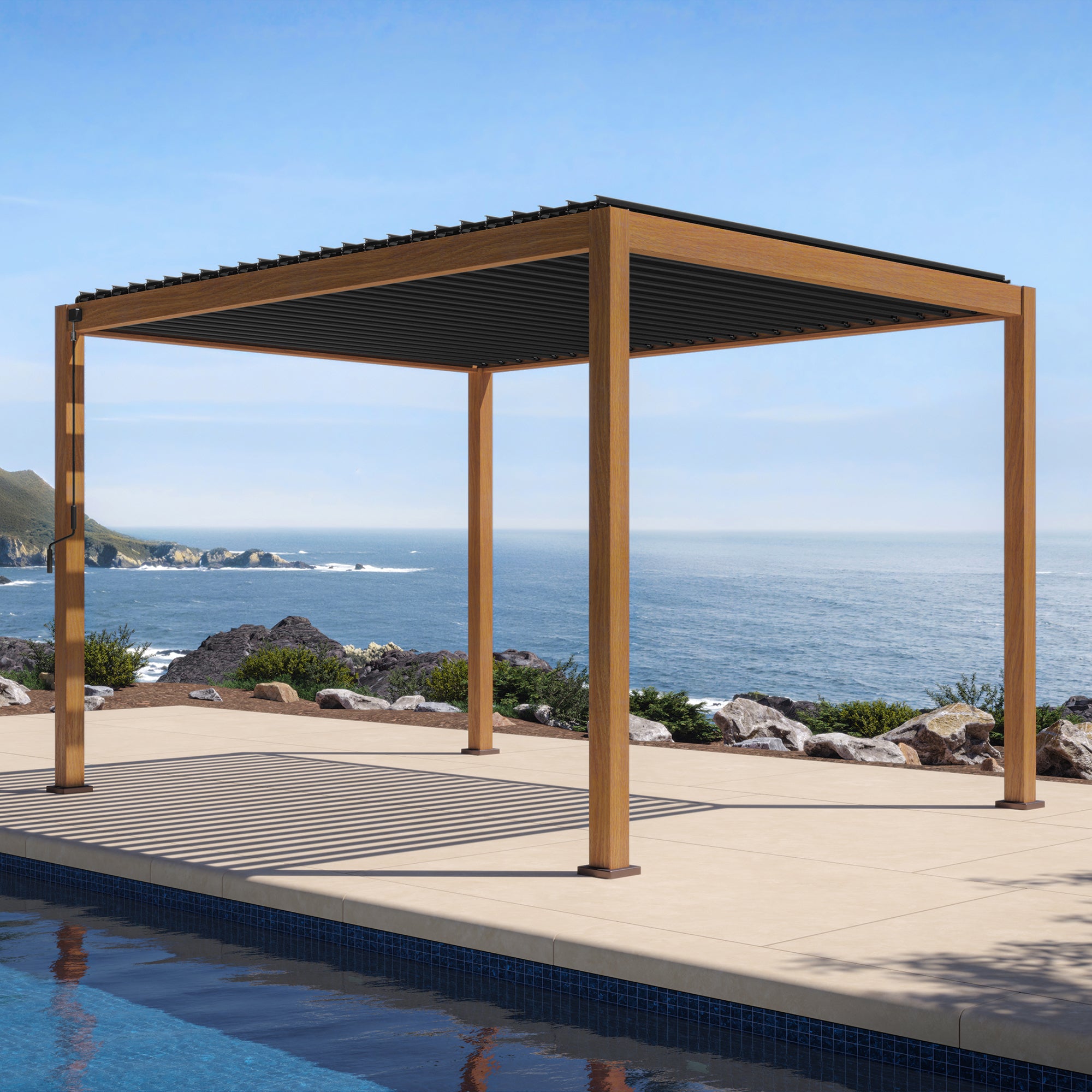
Clean profiles; finishes may include a wood-grain effect |
Genuine timber with natural grain and variation |
|
Lifespan |
Long-lasting; depends on construction, coating, exposure, and care |
Depends on wood species, treatment, exposure, and care |
|
Maintenance |
Cleaning and periodic checks of components and drainage where fitted |
Regular inspection and protective treatment according to the wood and finish |
|
Rot and insects |
Aluminum does not rot or provide food for termites |
Susceptibility varies by wood species and treatment |
|
Weather exposure |
Corrosion-resistant; coating and care still matter |
Moisture and weathering can cause cracking, warping, or decay |
|
Upfront cost |
Often higher, especially with adjustable roof systems |
Basic designs can have a lower starting cost |
|
Long-term cost |
Generally less recurring refinishing work |
Includes ongoing treatment and possible repairs |
|
Roof options |
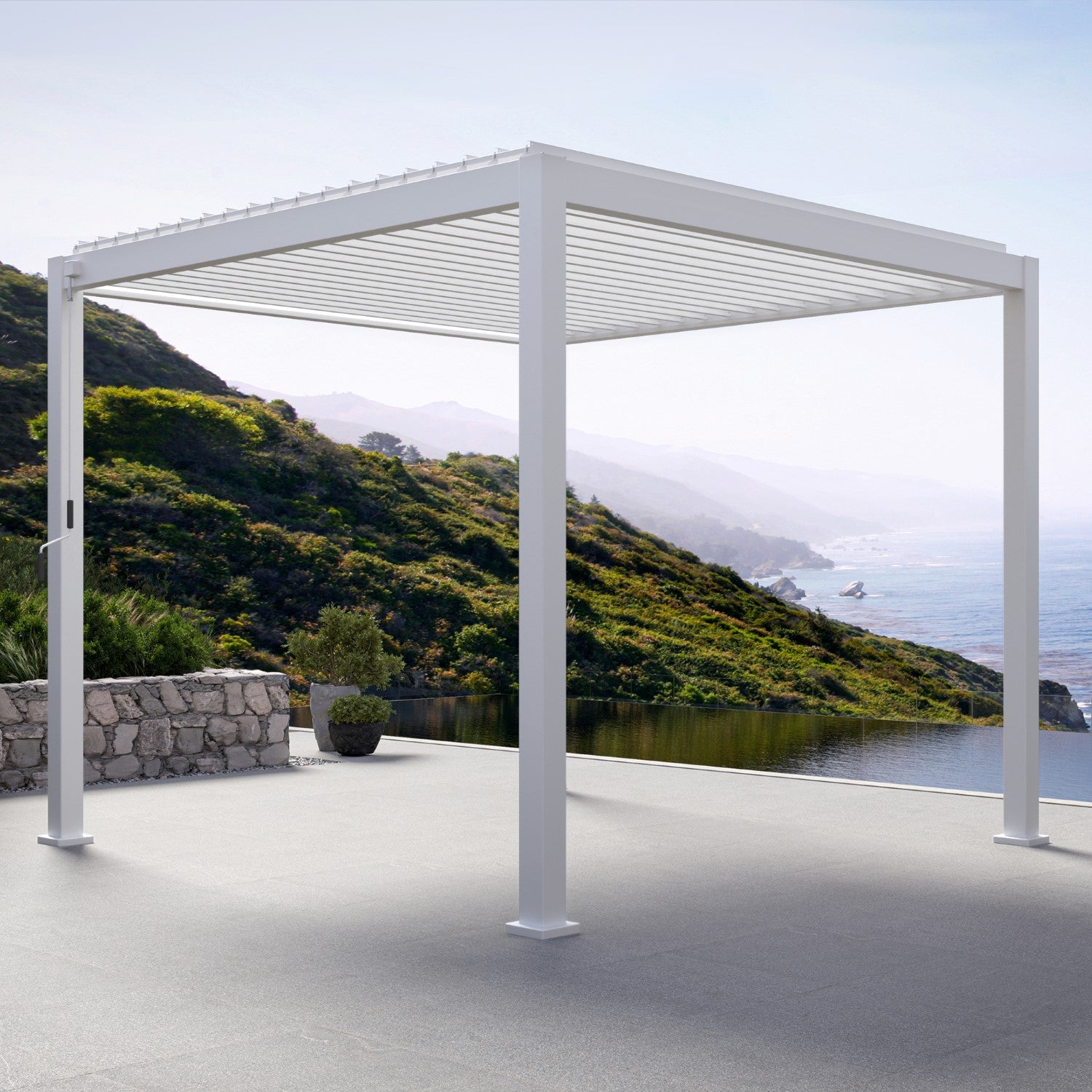
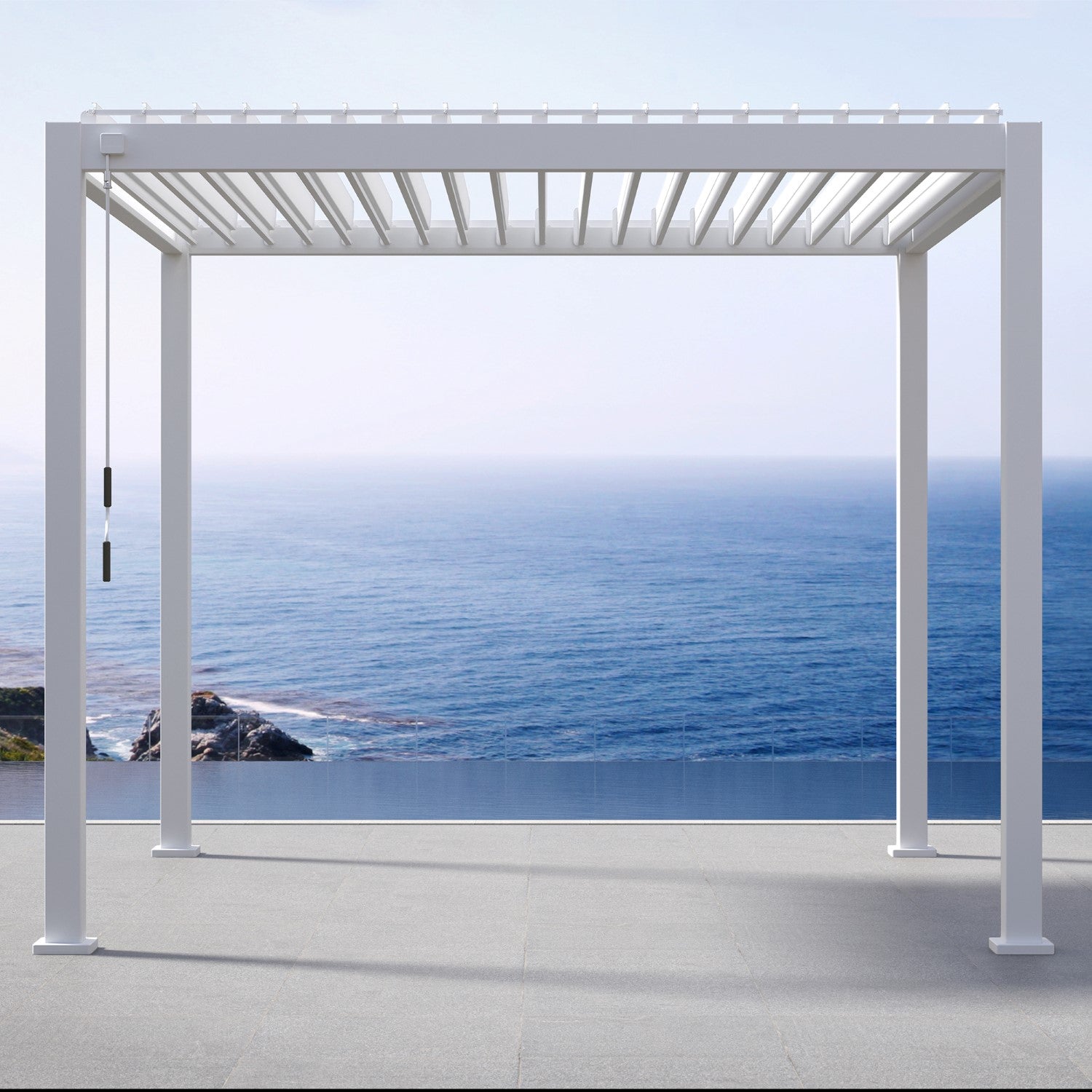
Open beams, fixed coverage, or adjustable louvers, depending on model |
Commonly open beams; added coverage depends on design |
|
DIY installation |
Kit assembly varies by model; most Mirador kits take about four hours |
Depends on whether the structure is a kit or custom build |
|
Best suited to |
Homeowners prioritizing low maintenance and consistent finishes |
Homeowners prioritizing real wood and accepting regular care |
Durability: How Long Will It Last?
Wood Pergolas
Wood pergola longevity depends on the species, treatment, installation, climate, and maintenance.
Pressure-treated pine can last 10–15 years, while cedar or redwood can last 15–20+ years with regular sealing. These ranges are planning estimates rather than guarantees for every installation.
Moisture exposure, inadequate drainage, insects, and neglected protective finishes can shorten the structure’s service life. Regular inspection helps identify problems before they require larger repairs.
Aluminum Pergolas
A well-built aluminum pergola with a quality powder-coated finish can offer 30+ years of longevity, although the actual service life depends on the product and its conditions of use.
Aluminum does not rot, warp like timber, or attract termites as a food source. This reduces several maintenance concerns associated with wood, but does not eliminate the need to care for the complete structure.
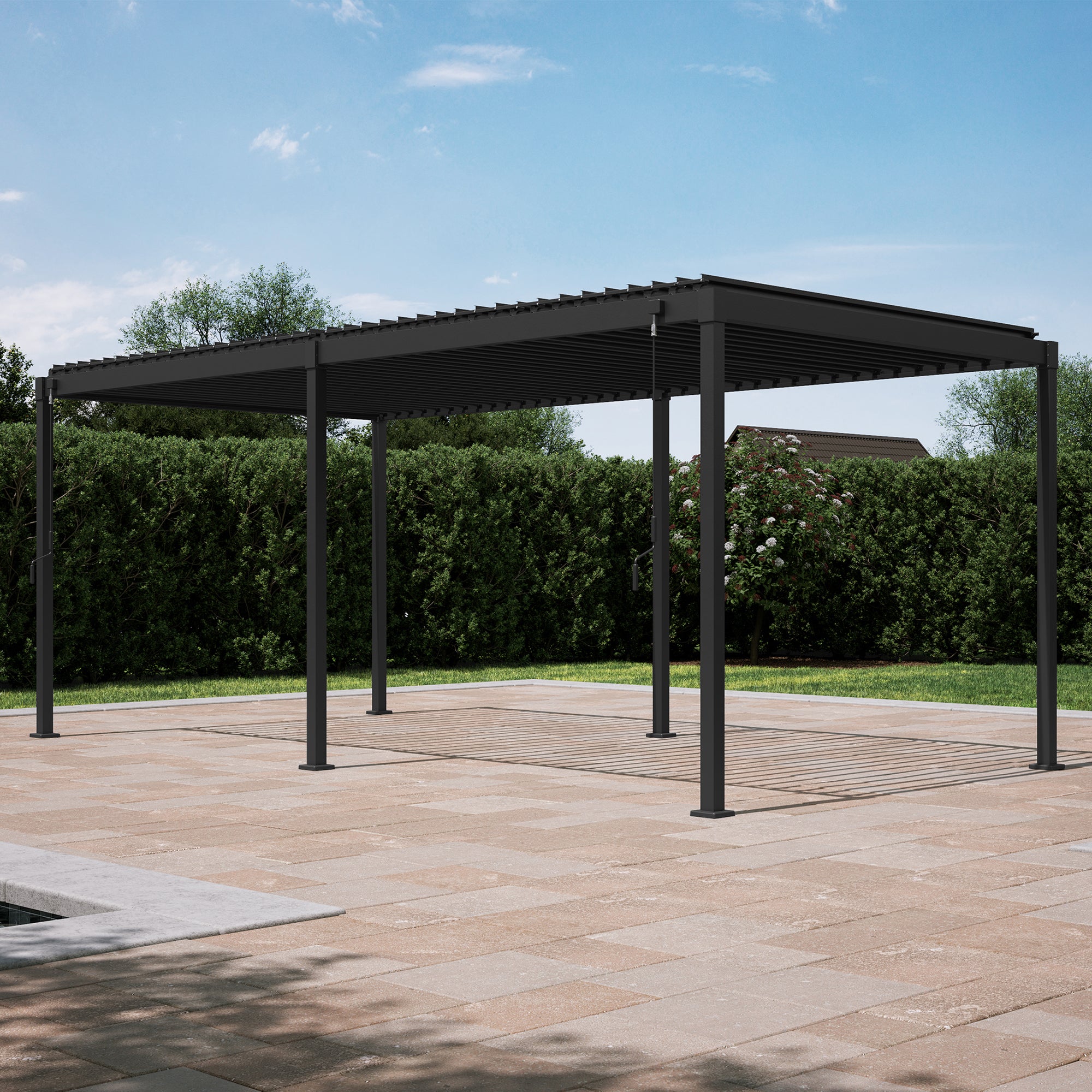
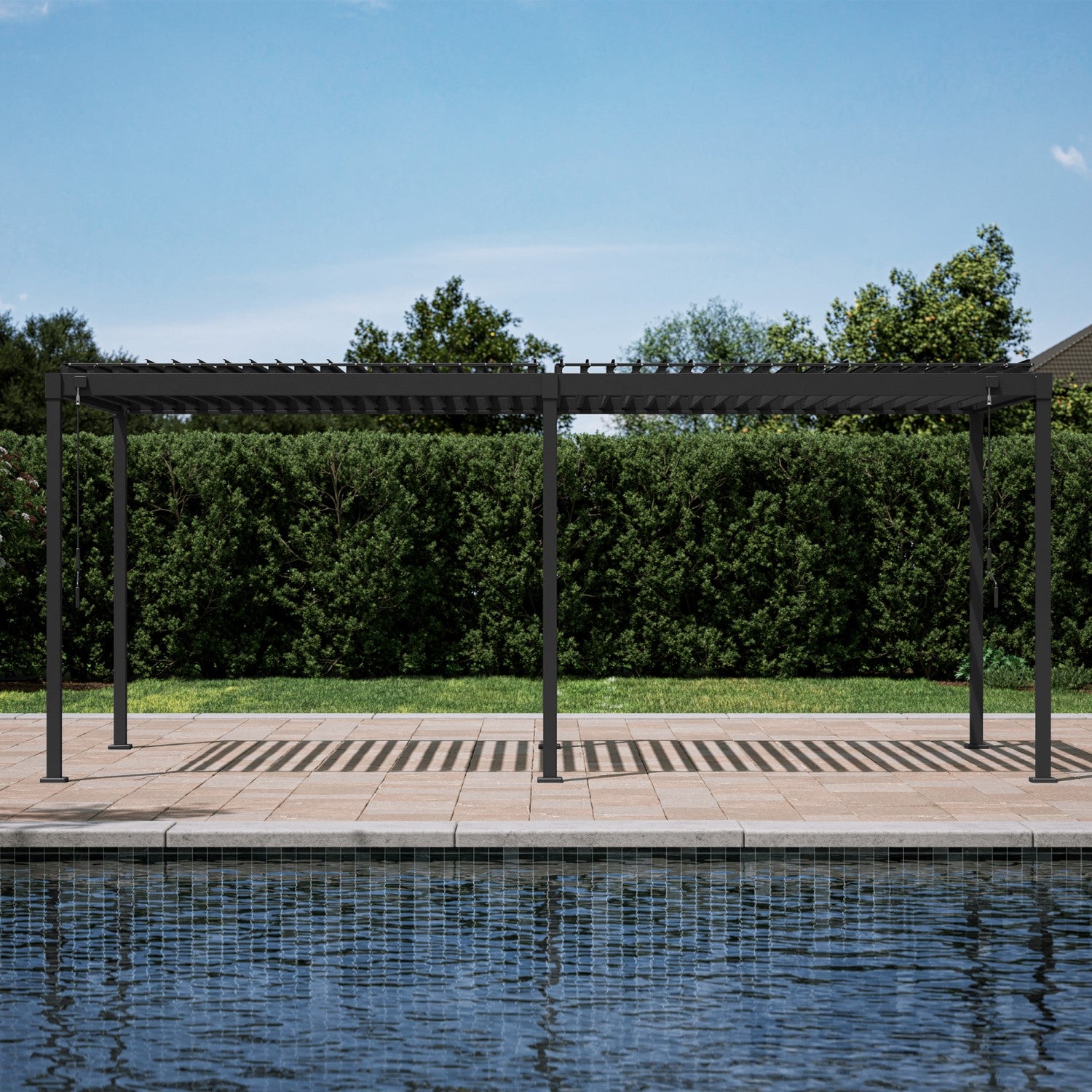
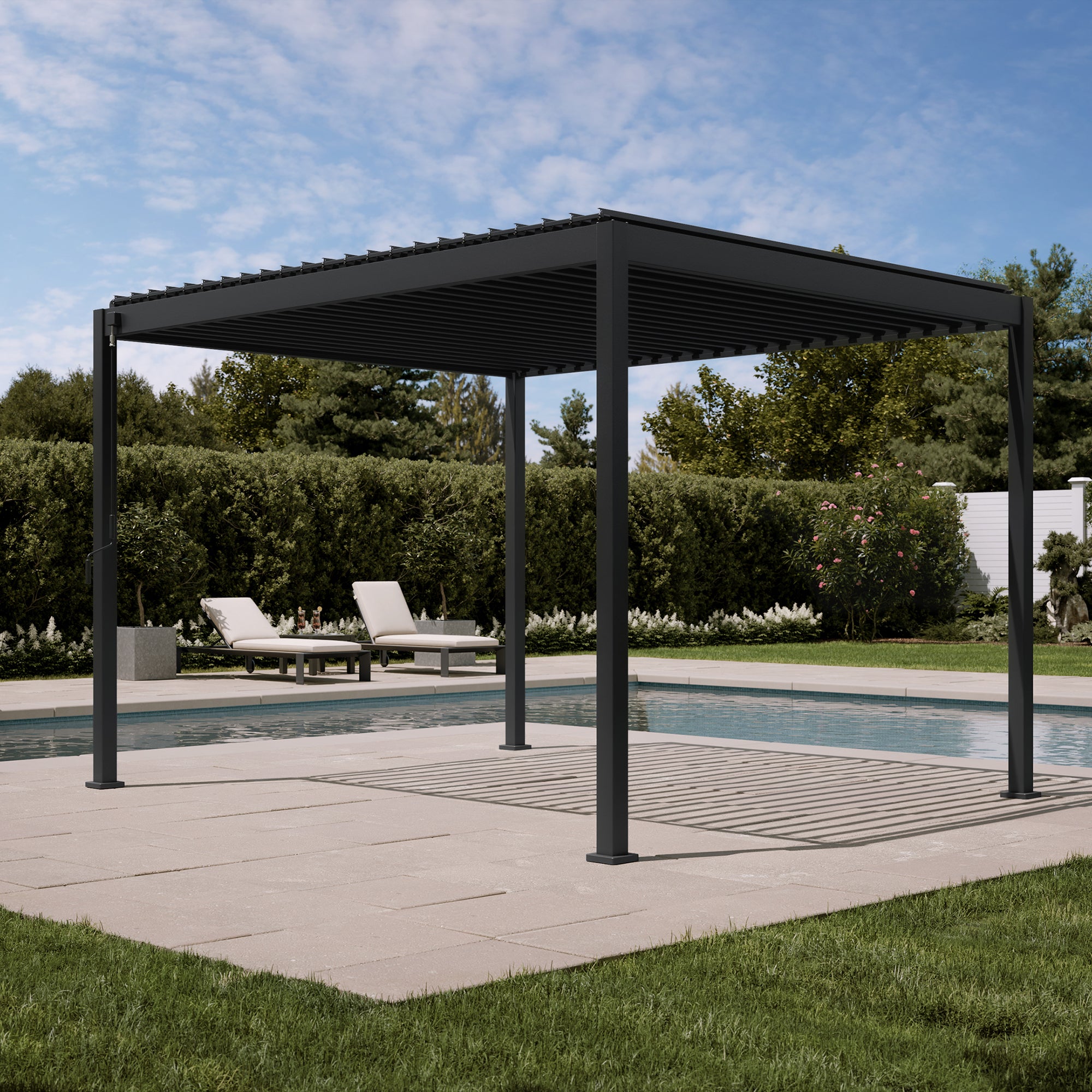
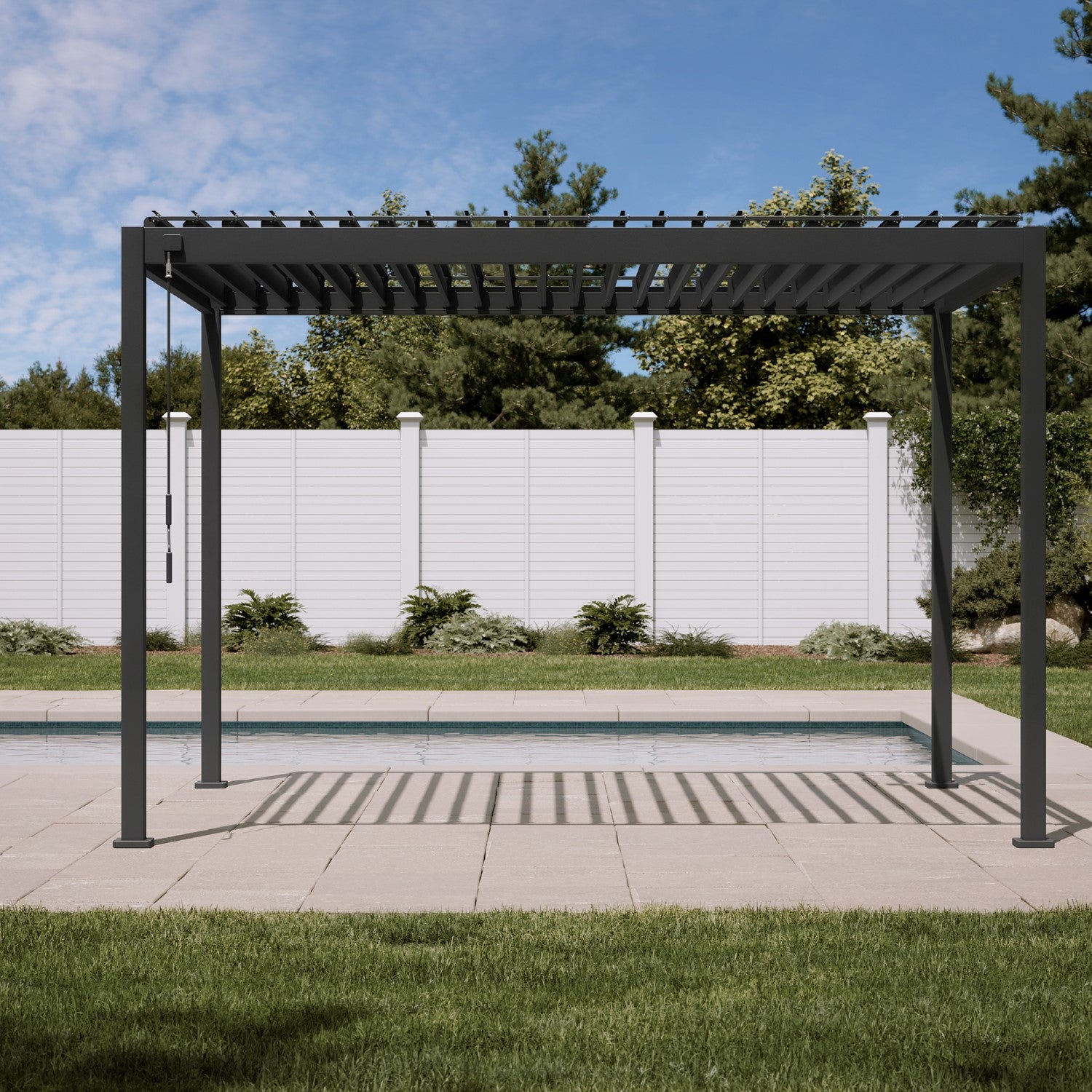
For example, Mirador’s 111DA series uses double-layer aluminum construction to improve structural strength and weather resistance.
When comparing products, review the construction, finish, warranty, and care instructions alongside the material itself.

Maintenance: What Is the Real Time Commitment?
Maintaining a Wood Pergola
Wood pergolas require regular attention to preserve their appearance and condition. Typical tasks include:
- Re-staining or sealing every 1–3 years, depending on the finish and exposure.
- Inspecting for termites, carpenter ants, or other signs of insect damage.
- Checking for cracked beams, loose connections, and weathering.
- Repairing damaged finishes and components where needed.
Some homeowners enjoy this work because it lets them refresh the color and appearance of their pergola. Others prefer a material with less recurring refinishing.
Maintaining an Aluminum Pergola
Powder-coated aluminum does not require the same regular staining or sealing as timber. Its finish resists fading, chipping, and peeling.
Routine care still matters. Follow the product instructions for cleaning, inspect connections periodically, and keep drainage paths clear where fitted. Louvered models also require attention to moving components according to their care instructions.
An aluminum pergola generally means less maintenance—not a structure that can be left untouched indefinitely.
Cost: Upfront Price vs. Long-Term Ownership
A basic wood pergola often has a lower initial cost than a more fully equipped aluminum system. However, premium wood, custom construction, and added roofing can change that comparison.
Typical wood pricing includes:
- Pressure-treated lumber: $20–$35 per square foot
- Cedar and redwood: $25–$45 per square foot
High-quality aluminum pergolas typically start at around $2,000–$2,500, depending on size, design, and additional features.
These figures use different pricing units. The wood figures are per square foot, while the aluminum figure is a starting price for a structure. They should not be compared directly without confirming dimensions and what each quote includes.
Compare Like-for-Like Projects
For a useful comparison, request prices for the same footprint and similar roof functions. Check whether each quote includes:
- The complete structure and roof.
- Delivery and assembly.
- Site preparation, foundations, and anchoring.
- Screens, lighting, or other accessories.
- Any required electrical work.
Then consider the recurring cost of cleaning, refinishing, inspections, and repairs.
Aluminum can reduce ongoing refinishing expenses, but there is no single payback period that applies to every backyard. The total cost depends on the products, installation, and care involved.
Style and Design: Natural Timber or a Wood-Grain Finish?
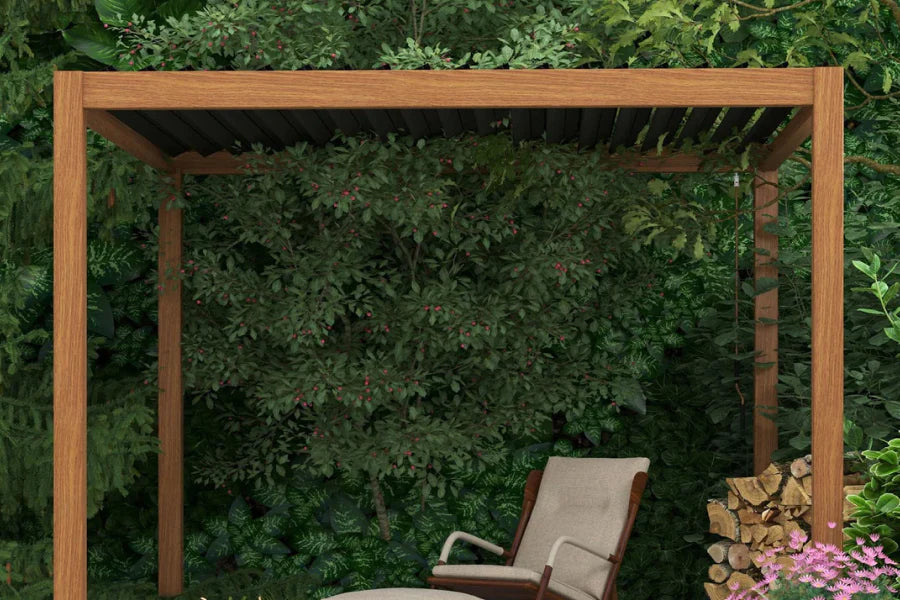
Wood offers genuine grain, texture, and natural variation. It can be stained or painted to complement a home, and custom timber designs can incorporate decorative details.
Aluminum suits homeowners who prefer clean profiles and a consistent finish. A wood-grain finish provides another option for those who like a timber appearance but want less recurring maintenance.
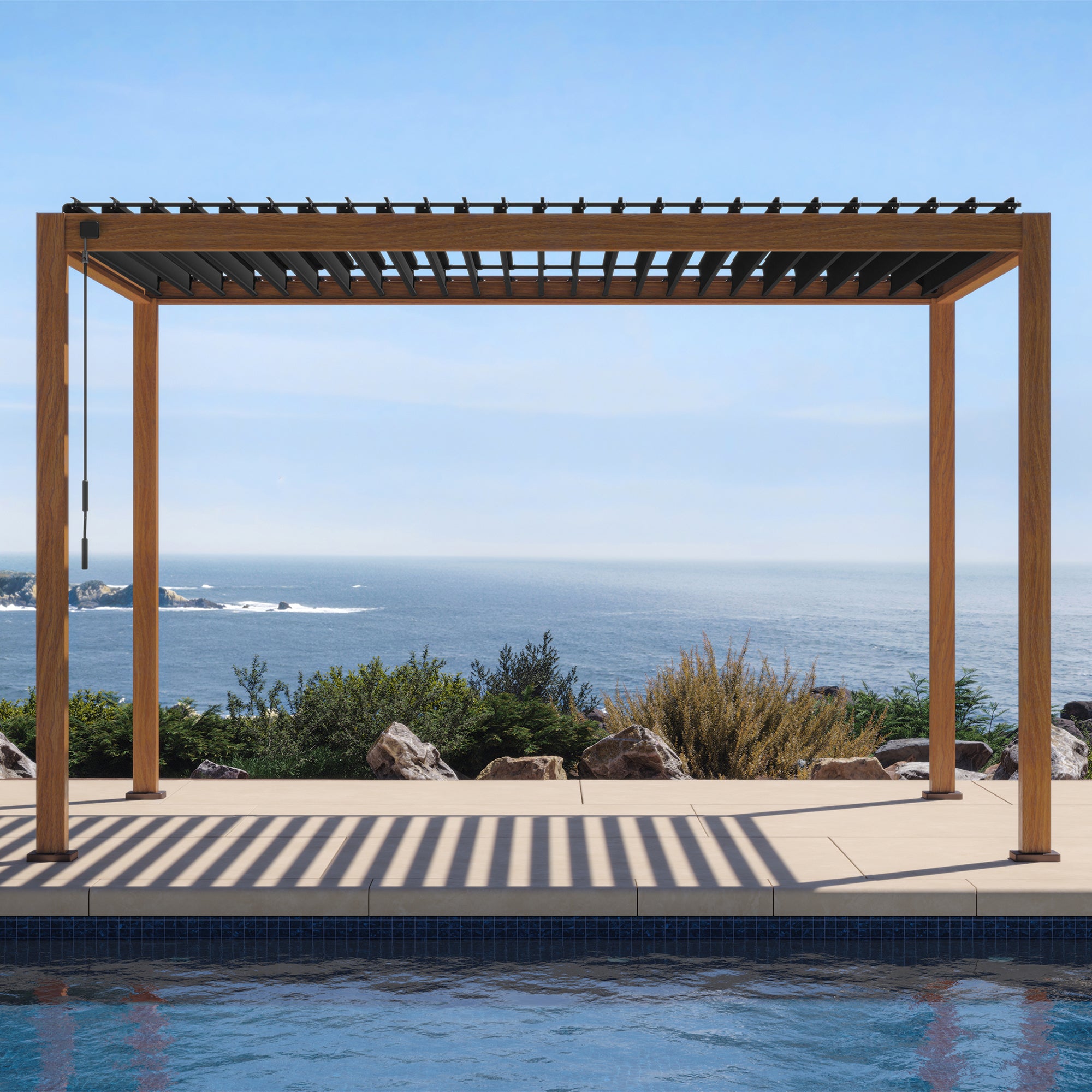
The Mirador 111S Takasho series features a realistic wood-grain texture on an aluminum and steel frame. It offers a warm visual finish without requiring a real timber frame.
A wood-grain finish is an appearance choice, however, and should not be confused with solid wood. Choose based on the look and material characteristics you value most.

Roof Design: Shade and Rain Protection Are Separate Choices
The frame material alone does not determine how much shade or rain protection a pergola provides.
An open-beam pergola allows sunlight and rain to pass through the gaps, whether its frame is wood or aluminum. A pergola with a suitable roof system provides different coverage.
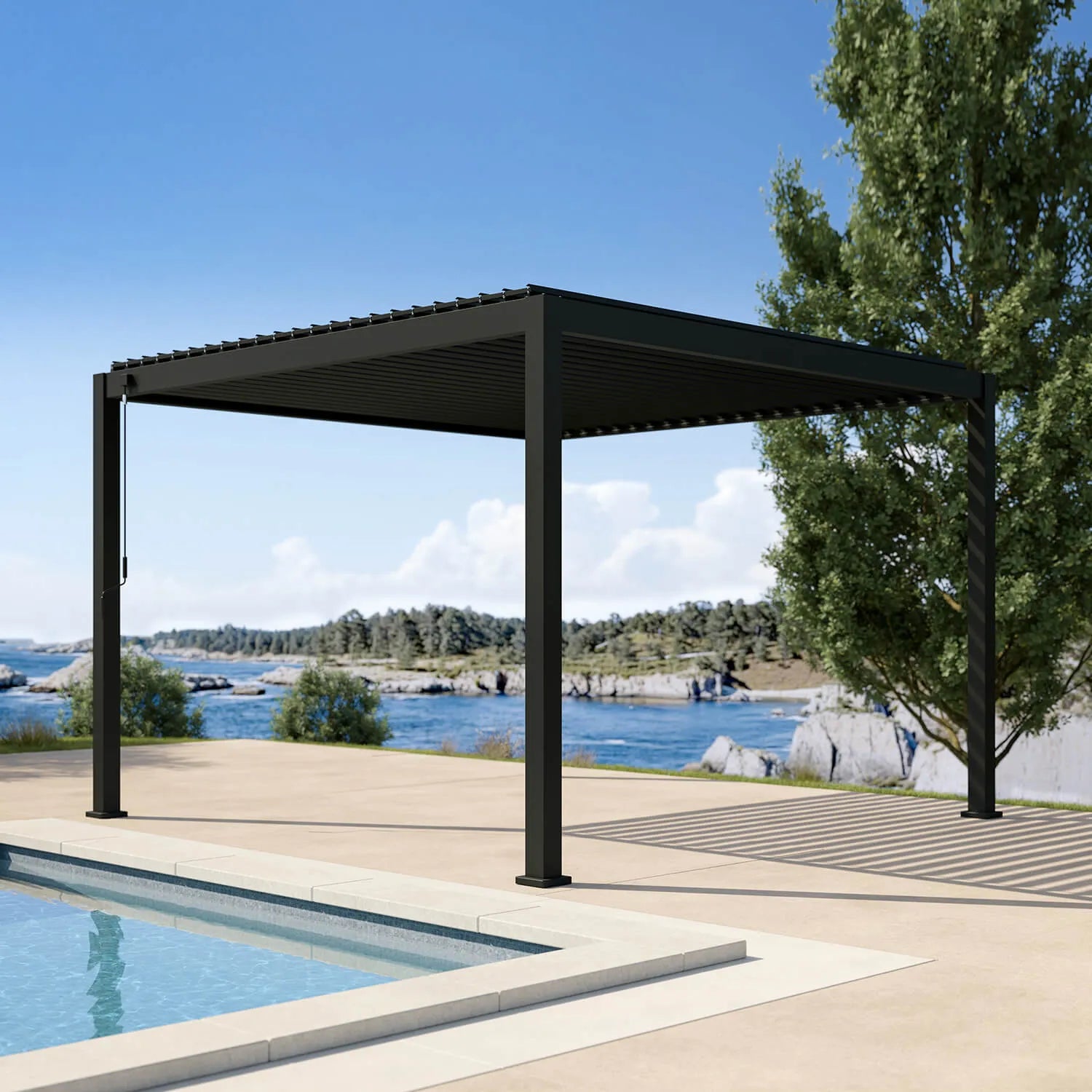
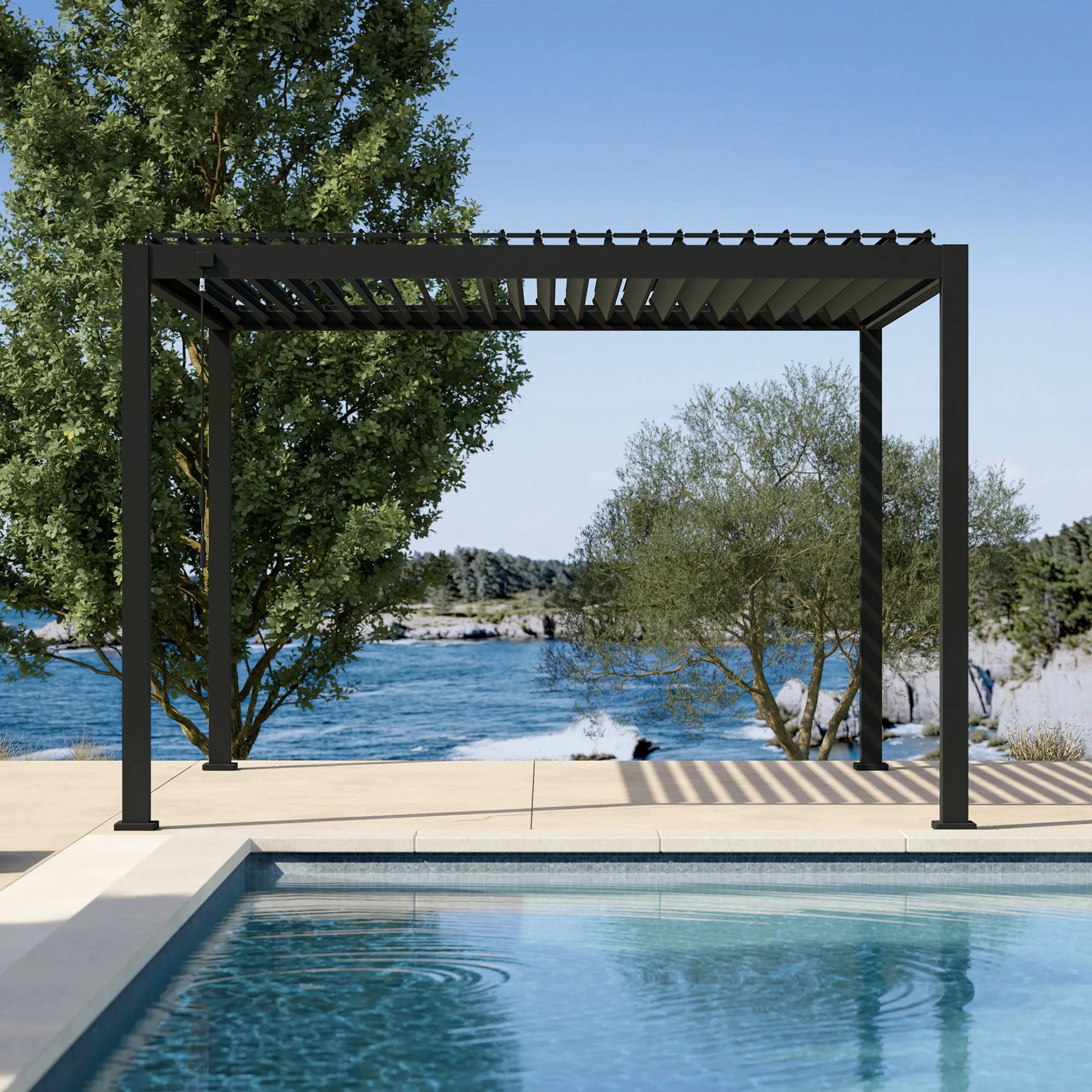
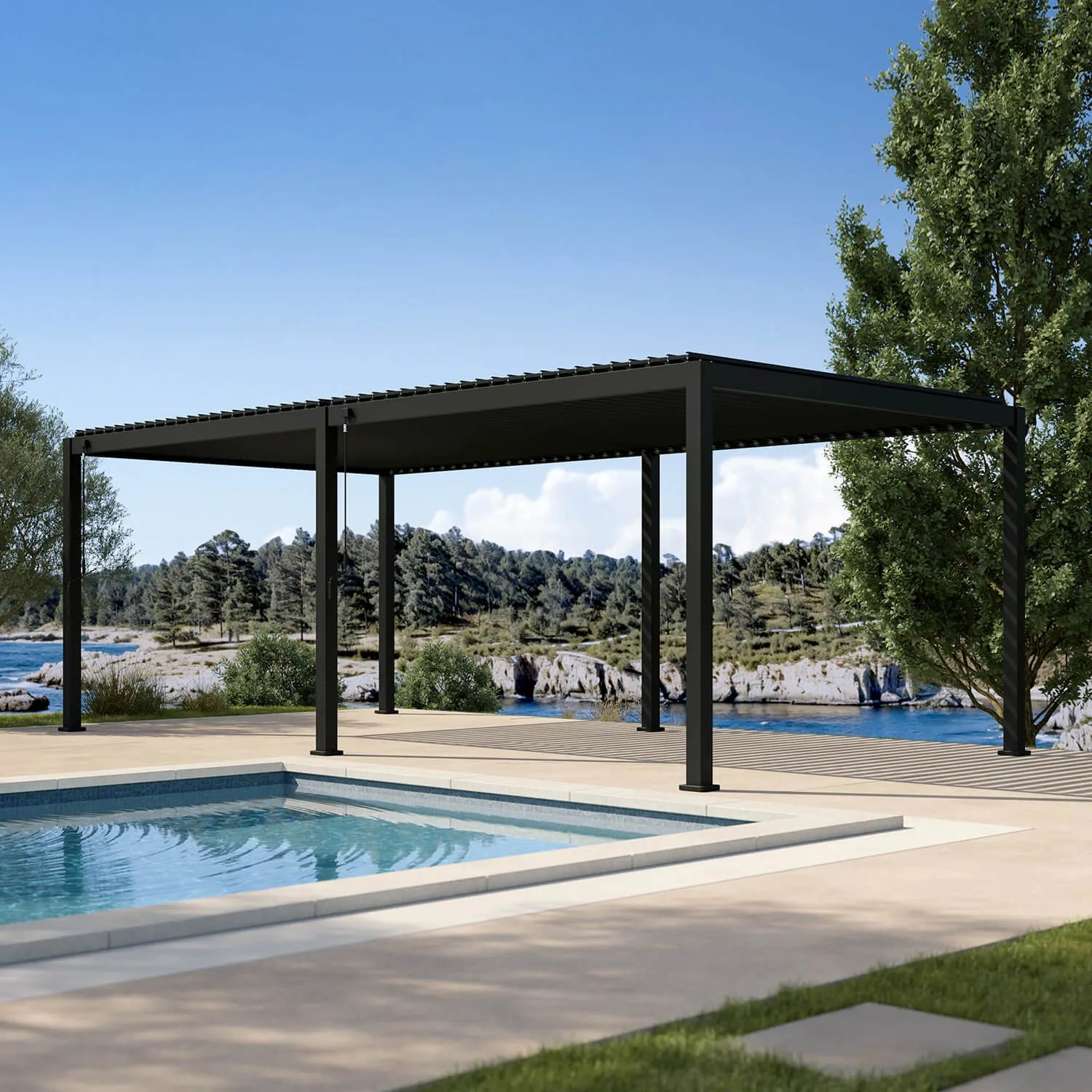
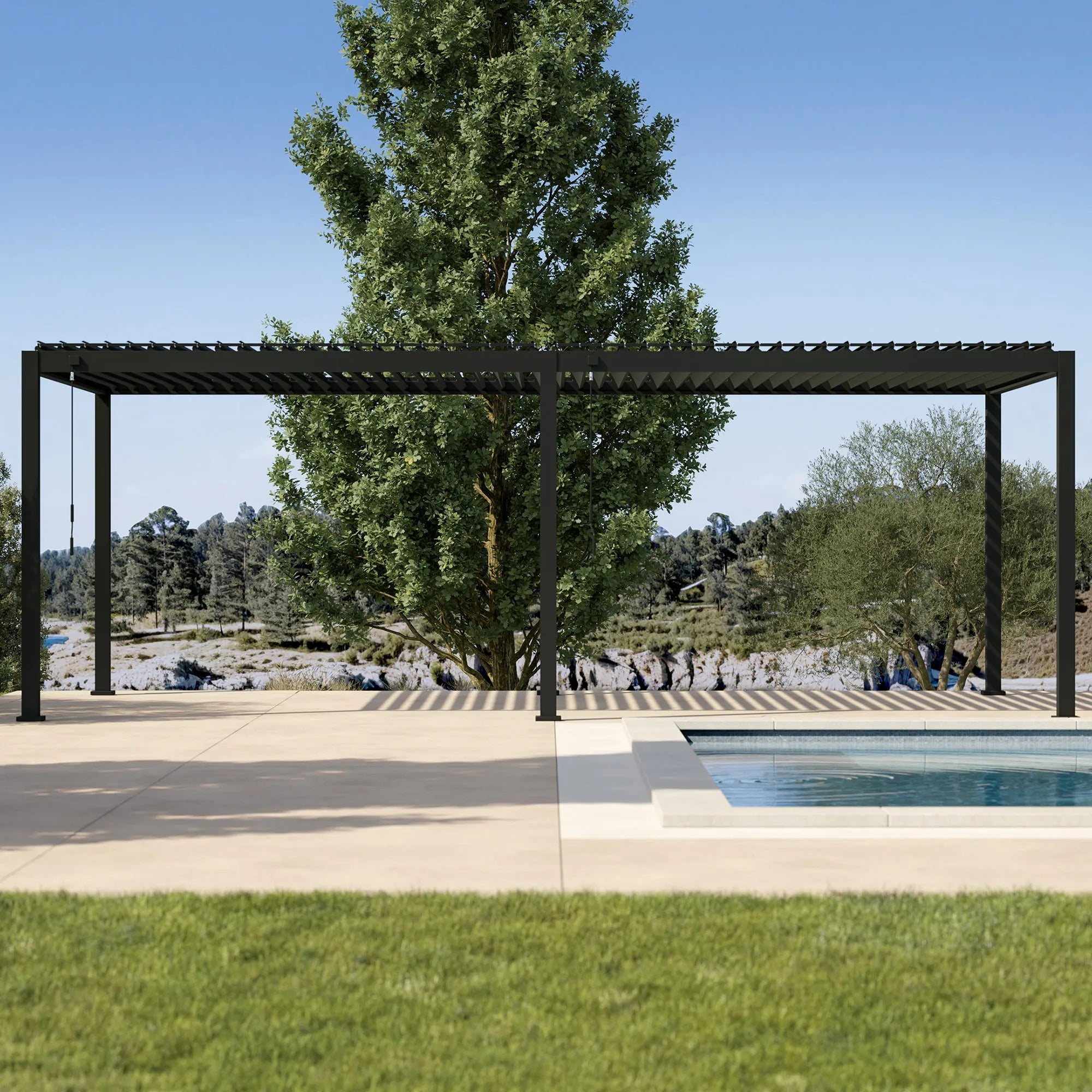
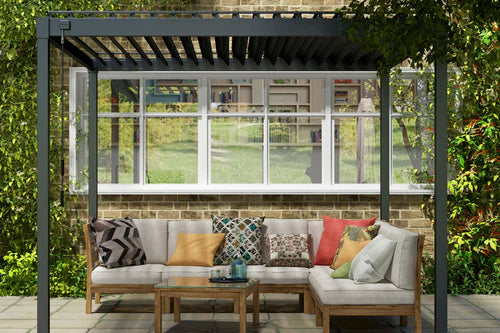
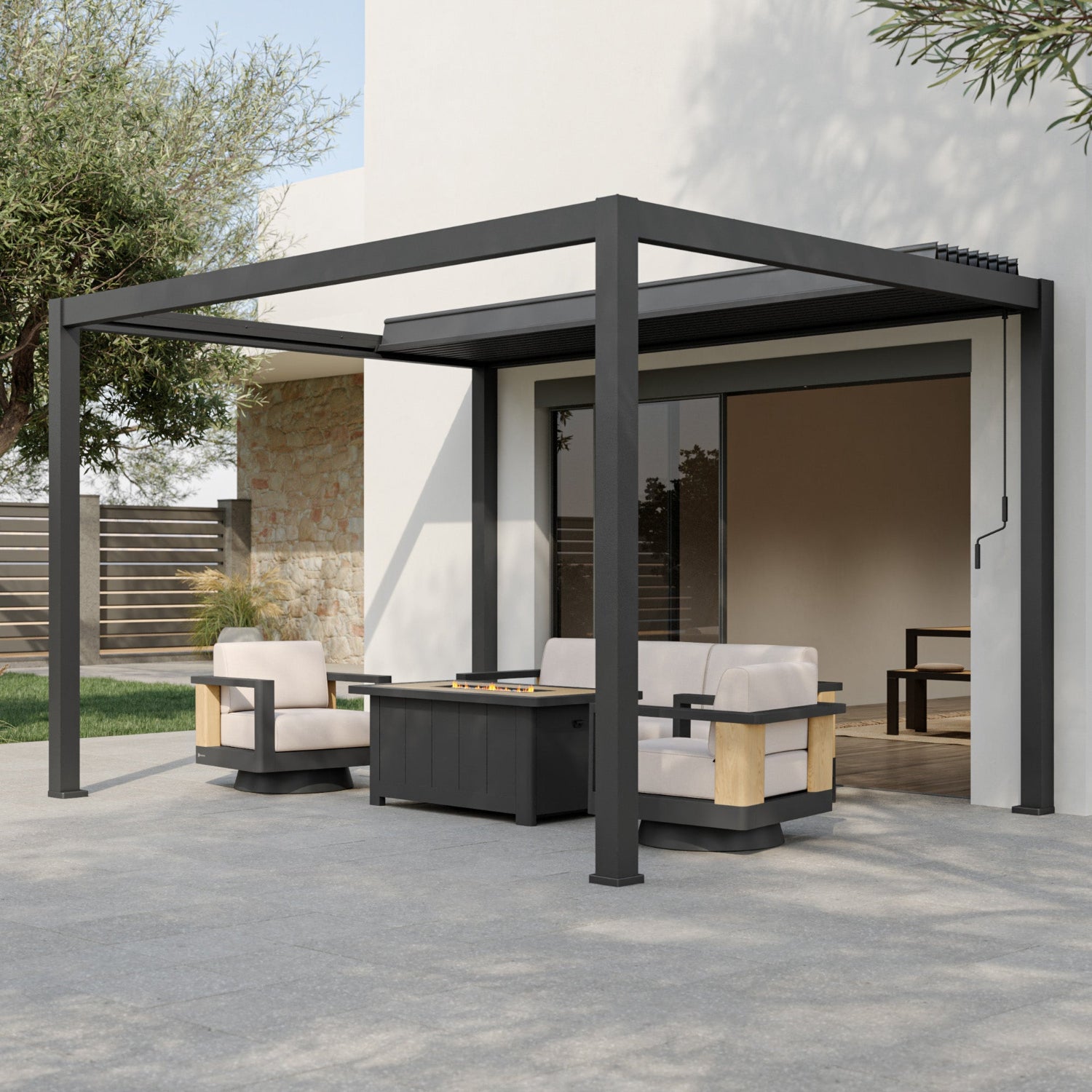
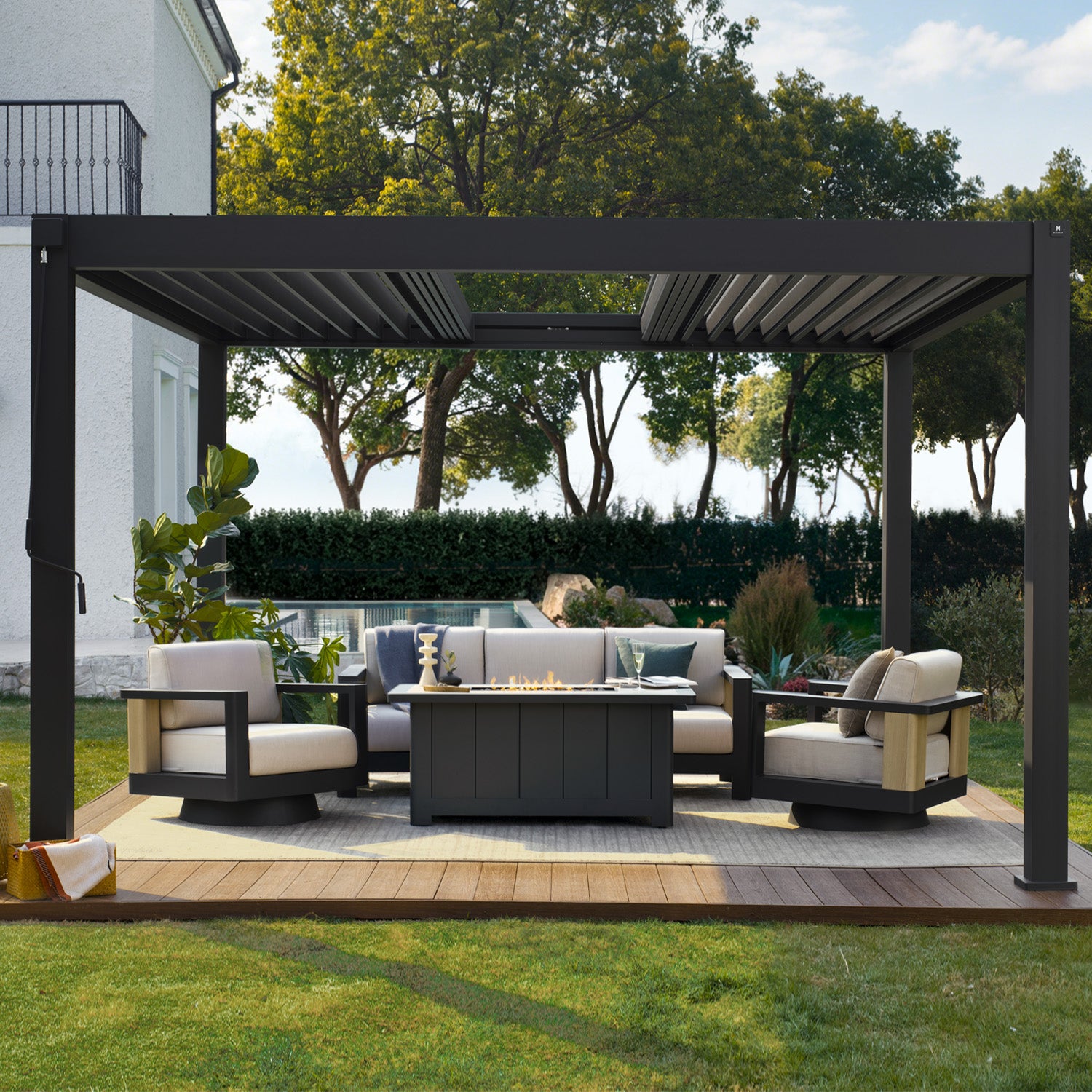
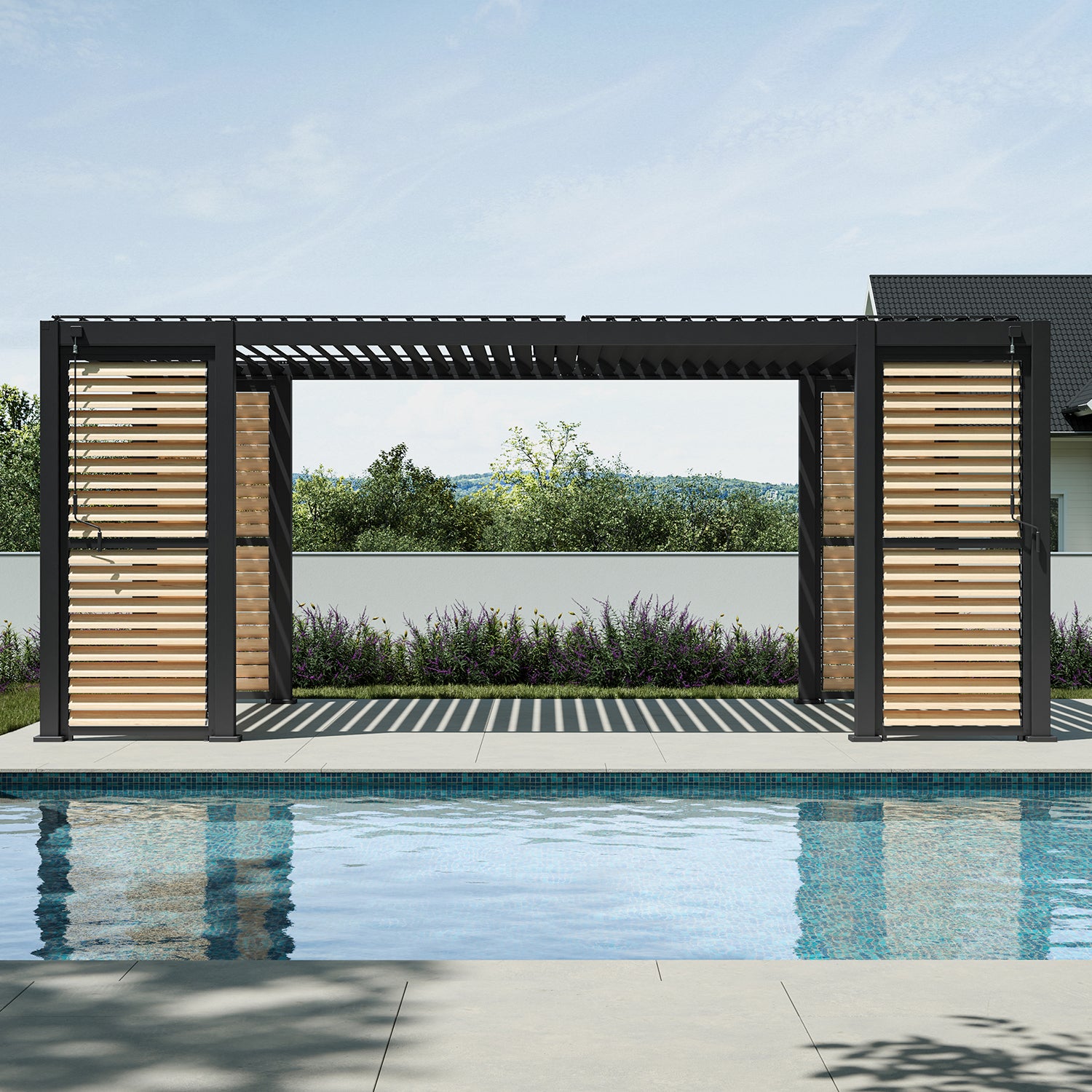
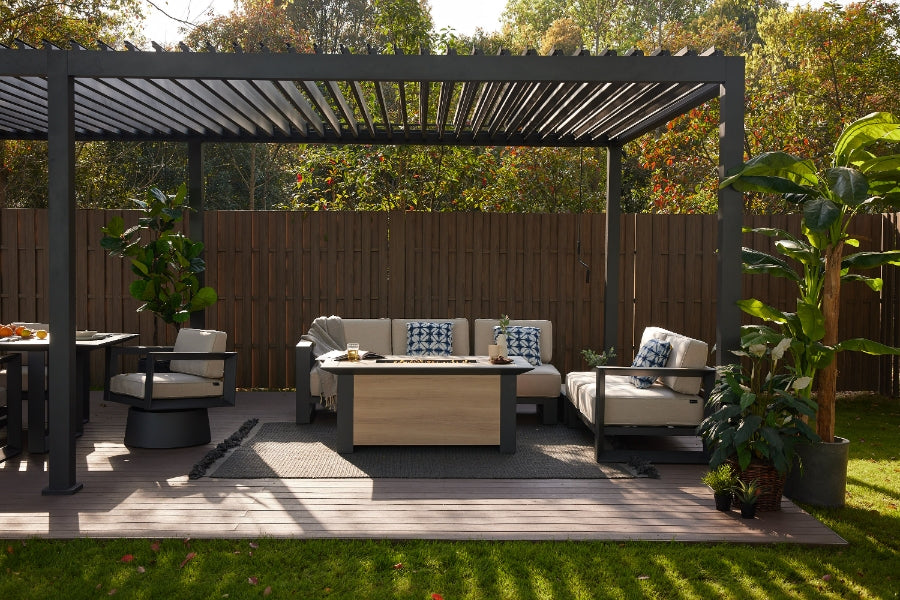
Modern aluminum louvered pergolas offer adjustable roof panels that let you control sunlight and airflow. Models with integrated gutters also direct rainwater away from the covered area.
When choosing, decide whether you want filtered sunlight, fixed overhead coverage, or adjustable louvers. Then compare materials within the roof style that meets your needs.
Climate and Weather: What Should You Consider?
In humid or rainy conditions, wood requires attention to moisture exposure and protective finishes. Aluminum avoids timber rot, making it an appealing choice when lower maintenance is a priority.
For coastal locations, review the coating and care instructions of the specific product. Corrosion resistance does not mean that salt exposure can be ignored.
In sunny conditions, consider both the durability of the finish and the roof’s shade performance. A frame material’s ability to withstand heat does not, by itself, determine how comfortable the seating area will be.
Wind and snow performance depend on the complete structure, its engineering, and its installation.
Mirador’s 111DA series is rated for snow loads of 26.6 psf and wind speeds up to 102 mph. These are product-specific ratings, rather than ratings for every aluminum pergola.
For the 111DA series, Mirador recommends keeping the louvers open during high winds to reduce stress on the roof structure. Follow the operating instructions for your specific model.
Installation: Kit Assembly or Custom Construction?
Installation depends on the design and site rather than the frame material alone.
A pre-cut wood kit can simplify assembly, while a custom wood pergola may involve cutting, fitting, and finishing onsite. Aluminum kits also vary in assembly requirements and available features.
Two people can assemble most Mirador pergola kits in about four hours with basic tools. No welding, rivets, or specialty equipment are needed.
Allow separately for site preparation and any work required for foundations, anchoring, or accessories. Confirm these requirements before choosing a product.

Which Pergola Should You Pick?
Choose Aluminum If:
- You want less recurring staining and sealing.
- You prefer a clean, consistent finish.
- You want to avoid timber rot and termite concerns.
- You are considering a model with adjustable louvers and integrated drainage.
Choose Wood If:
- Genuine timber and natural grain are your priorities.
- You want to stain or paint the structure over time.
- You prefer a custom timber design.
- You are comfortable with regular inspection and protective treatment.
For homeowners whose main priority is lower maintenance, aluminum is the stronger choice. For those who value real timber enough to take on its care requirements, wood remains a practical option.
Explore Mirador’s aluminum pergolas and Takasho wood-grain options to compare the materials, finishes, and roof functions that suit your backyard.

FAQs
Is an Aluminum Pergola Worth the Higher Upfront Cost?
It can be, particularly if avoiding recurring staining and sealing is important to you.
Compare complete projects of similar size and roof design. Aluminum can reduce ongoing refinishing costs, but the time needed to offset a higher purchase price depends on the specific products and maintenance expenses.
Can Aluminum Pergolas Handle Heavy Snow and Strong Winds?
Check the ratings of the specific model rather than relying on the material alone.
Mirador’s 111DA series is rated for 26.6 psf snow loads and wind speeds up to 102 mph. Mirador recommends keeping the louvers open during high winds to reduce stress on the roof structure.
Do Wood Pergolas Look Better Than Aluminum?
That depends on your preference. Wood offers genuine grain and natural variation, while aluminum provides consistent finishes and clean profiles.
Mirador’s Takasho line adds a wood-grain appearance for homeowners who want a timber look with a metal frame.
How Long Does It Take to Install an Aluminum Pergola?
Two people can assemble most Mirador pergola kits in about four hours with basic tools. No welding, rivets, or specialty equipment are needed.
Site preparation and additional installation work should be planned separately.
Do I Need a Building Permit for a Backyard Pergola?
Requirements depend on your location, the structure’s dimensions, its roof design, and whether it is attached to a building.
Check with your municipality and any applicable homeowners’ association before purchasing. Choosing a DIY kit does not automatically remove permit requirements.