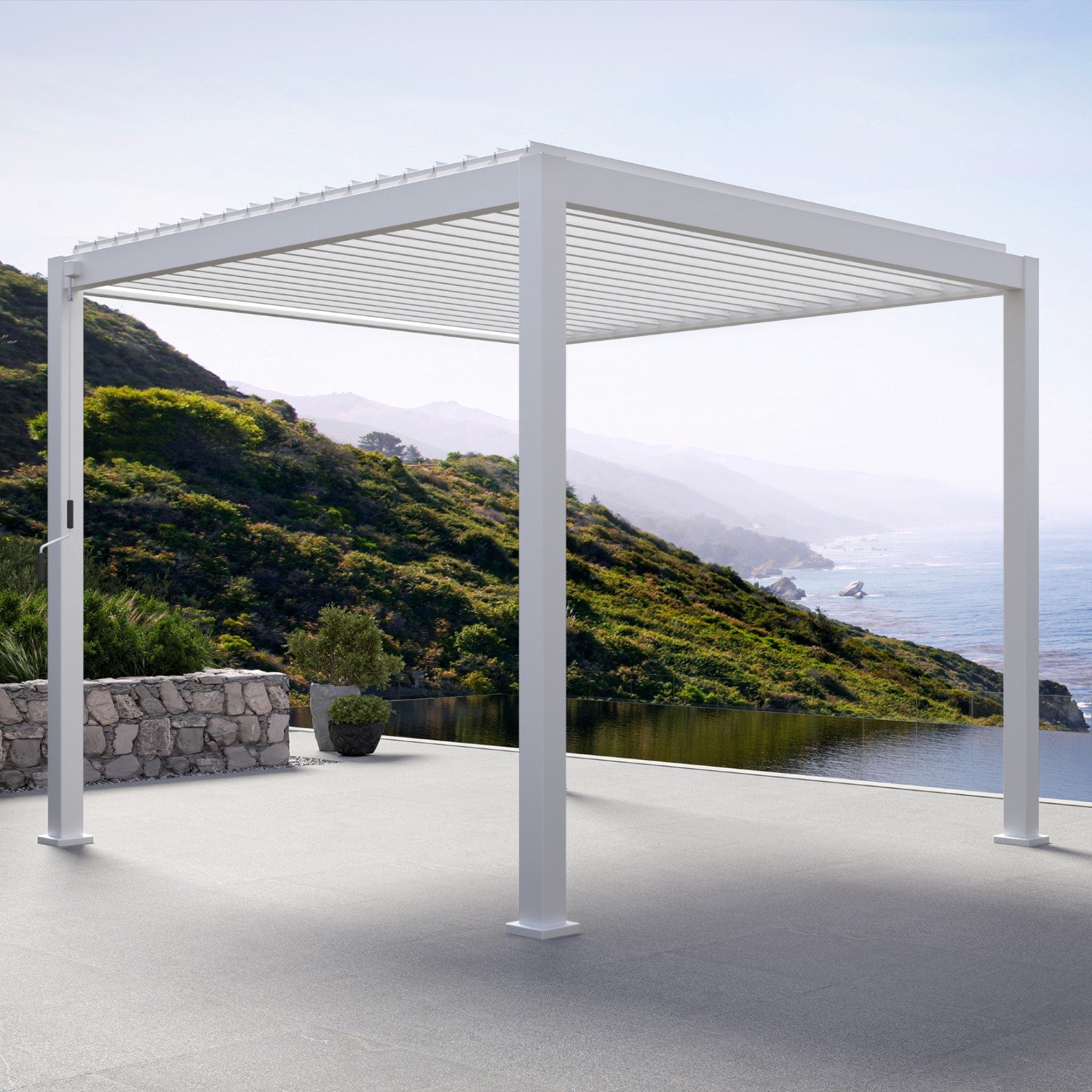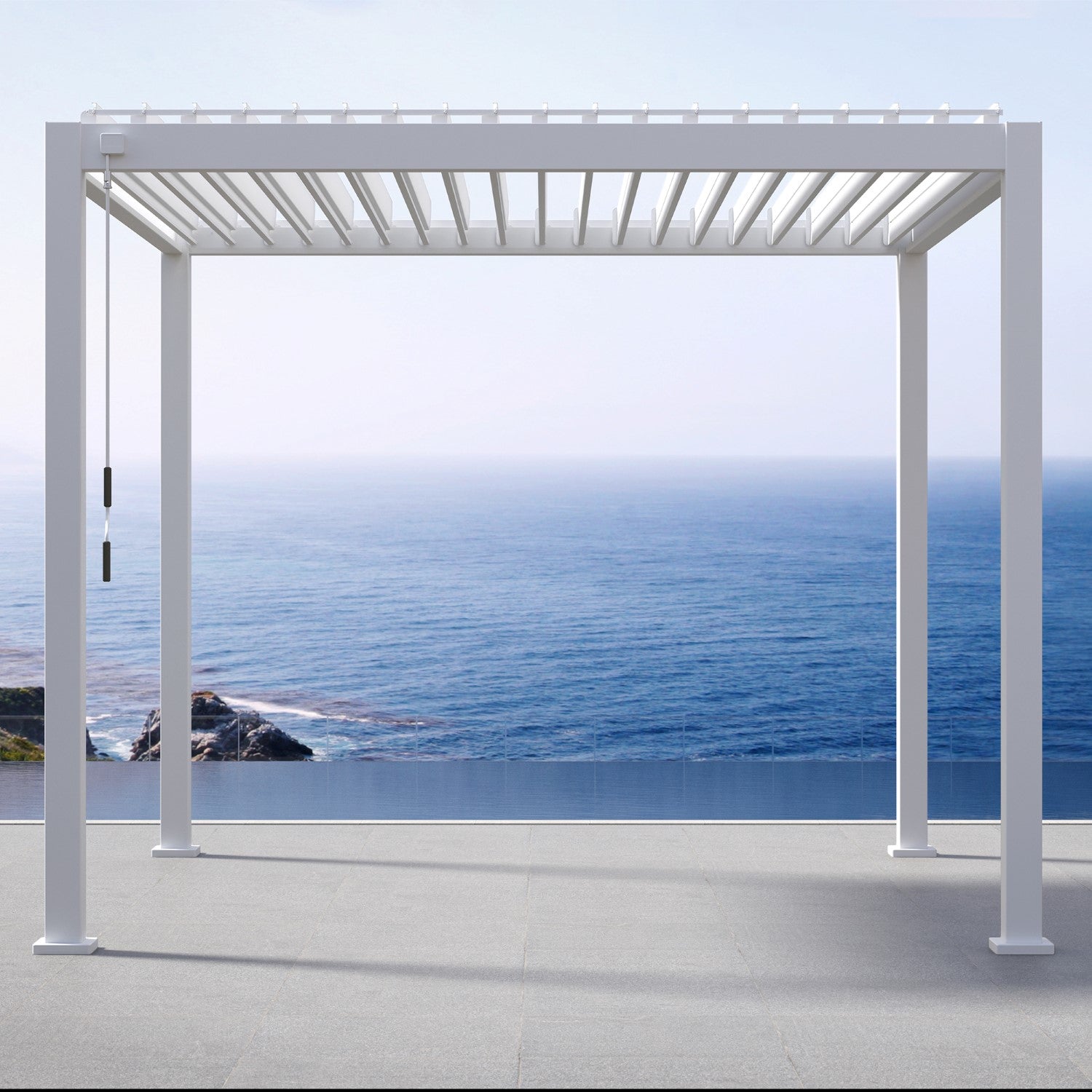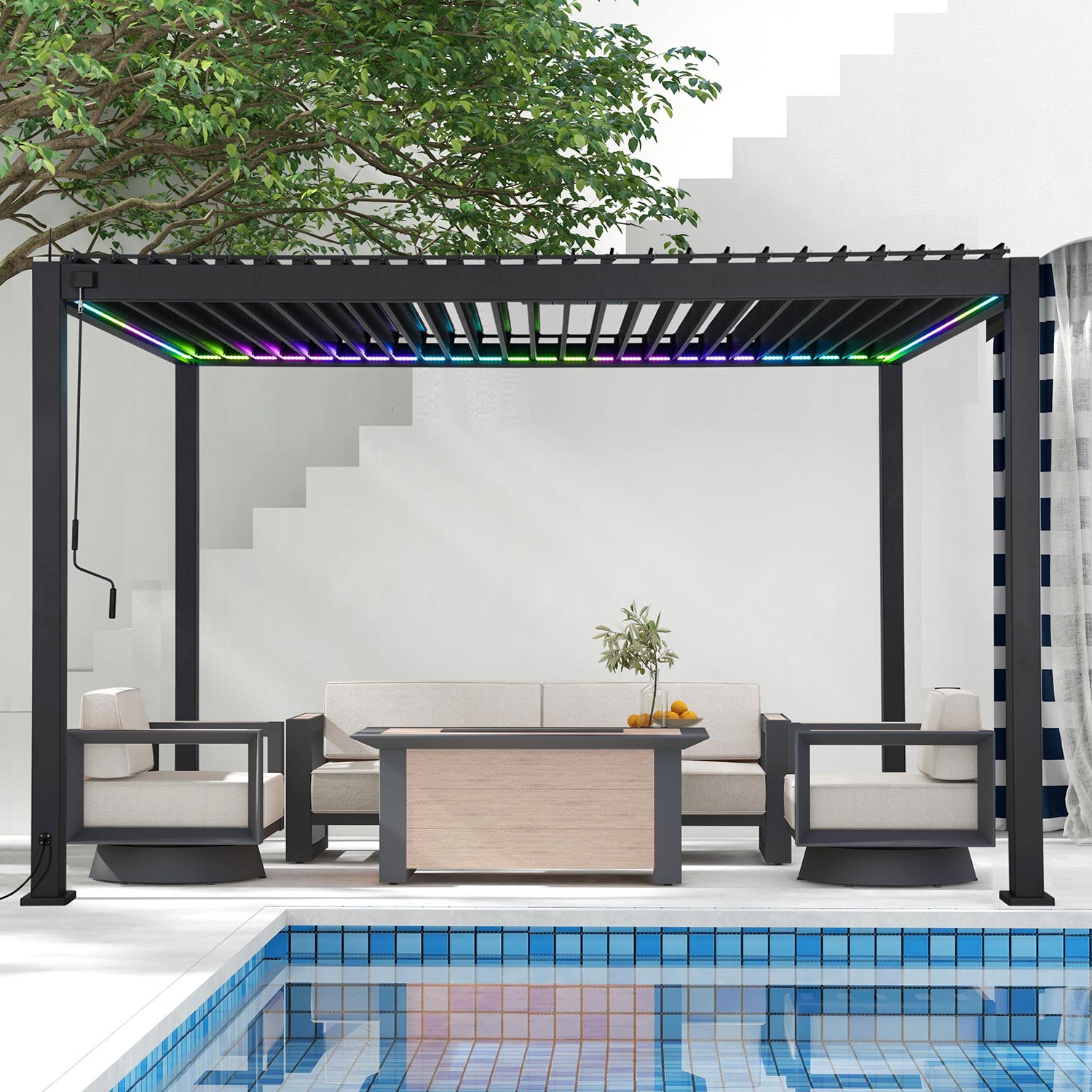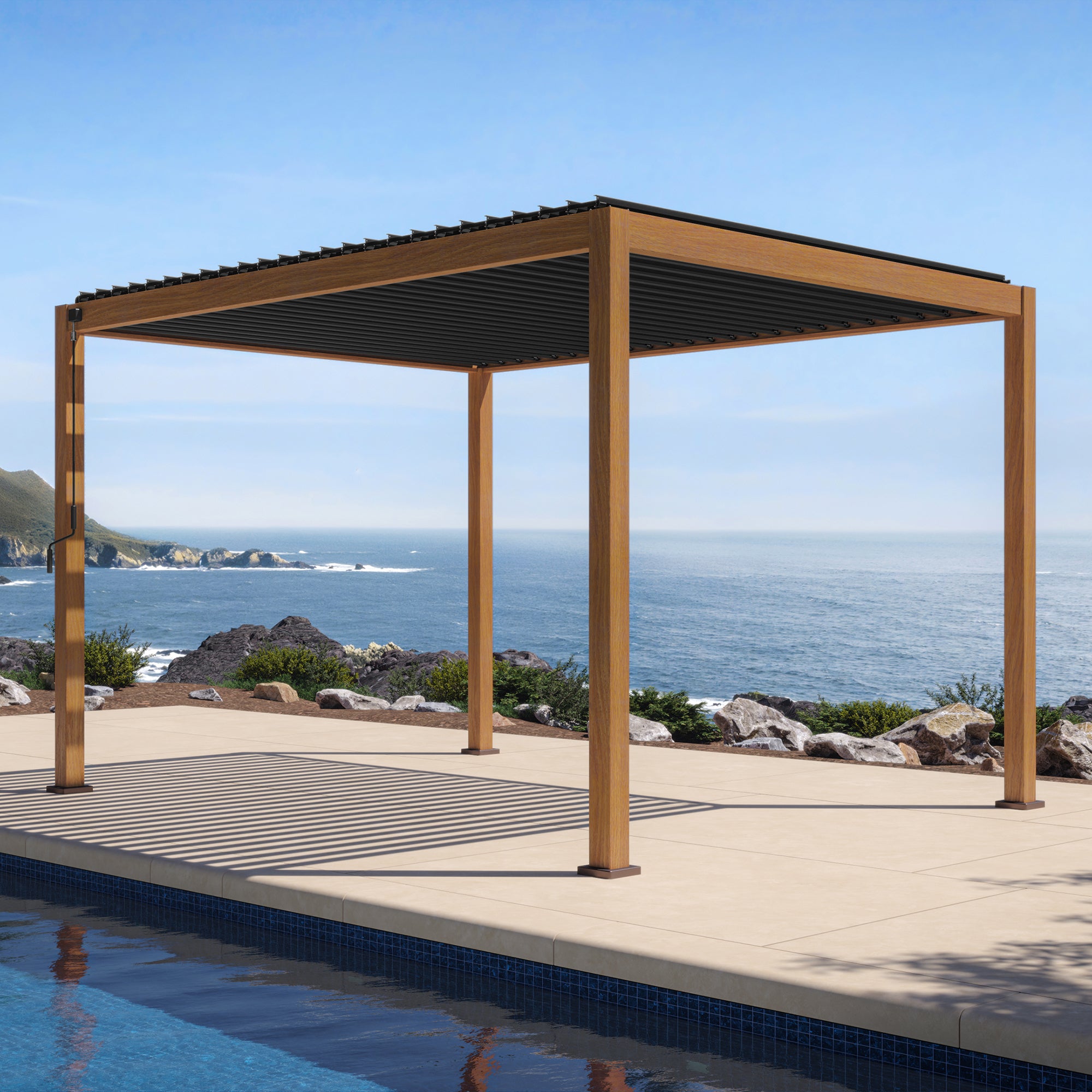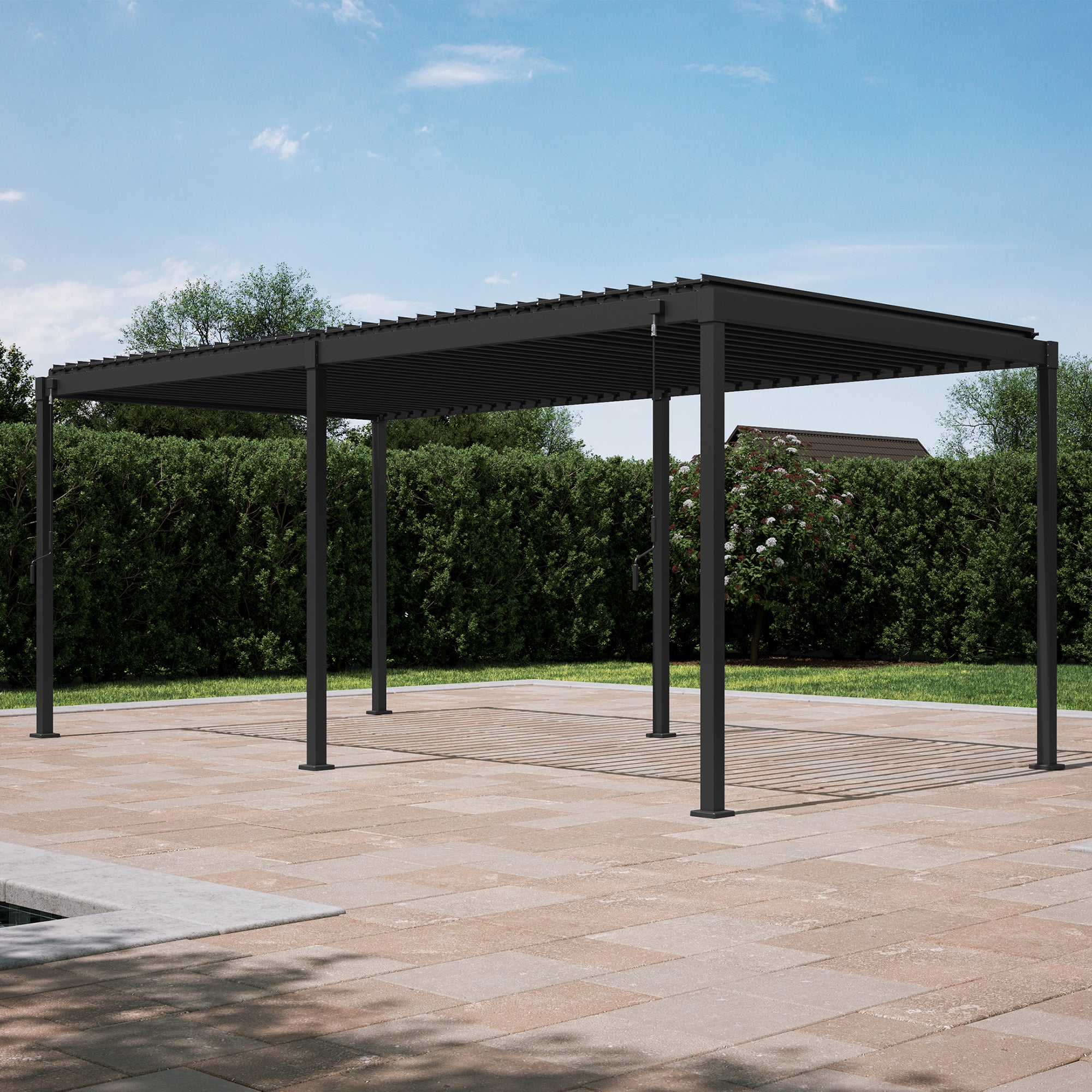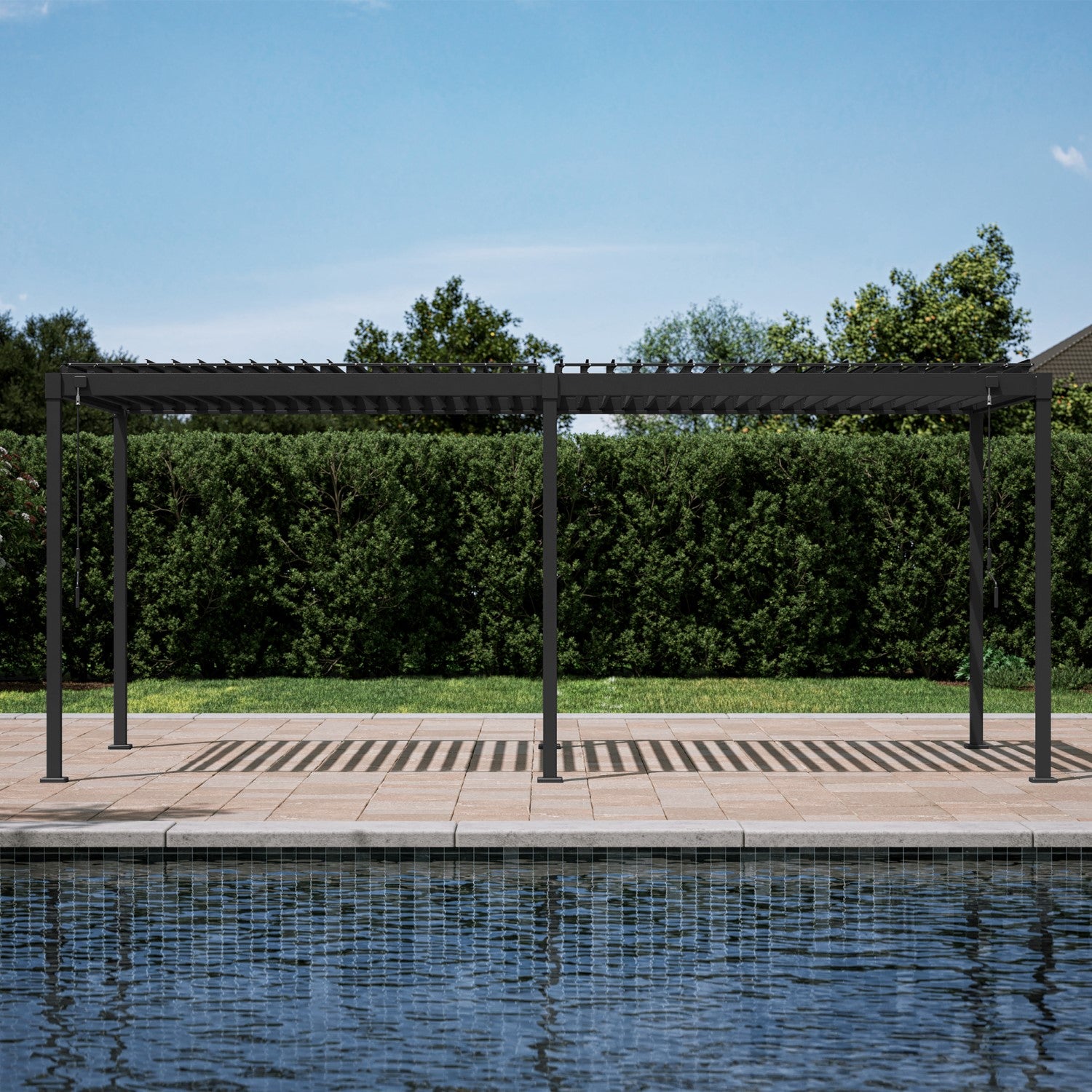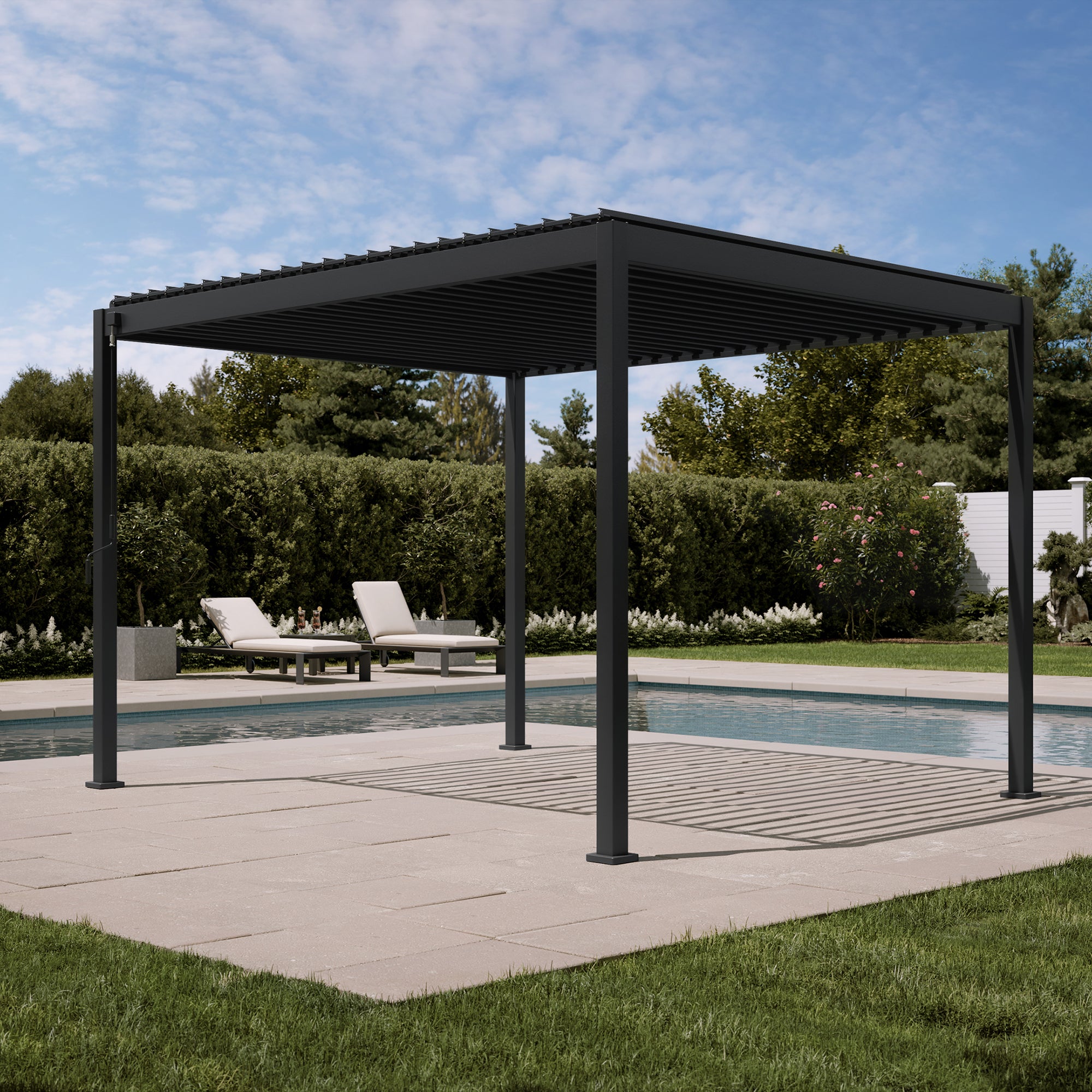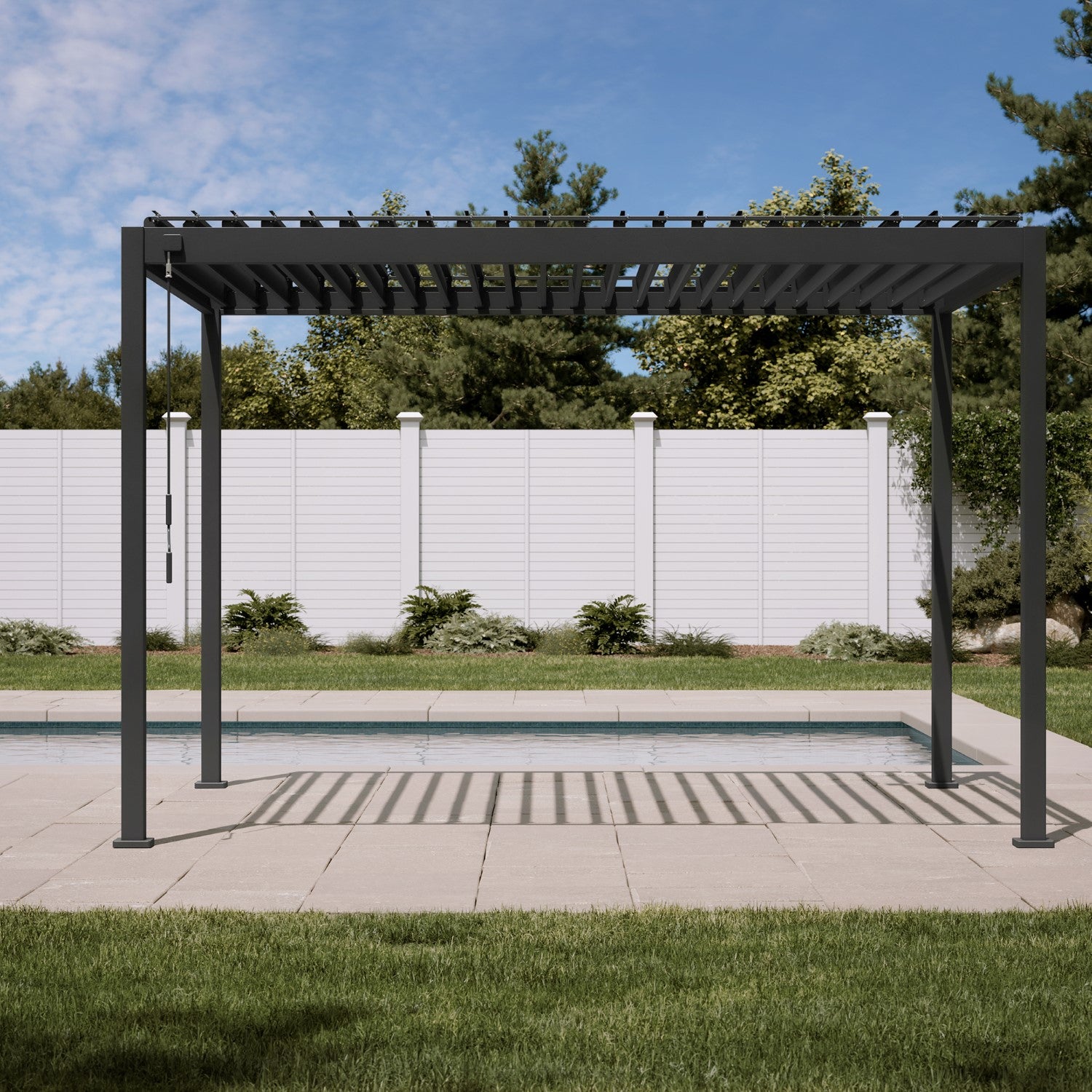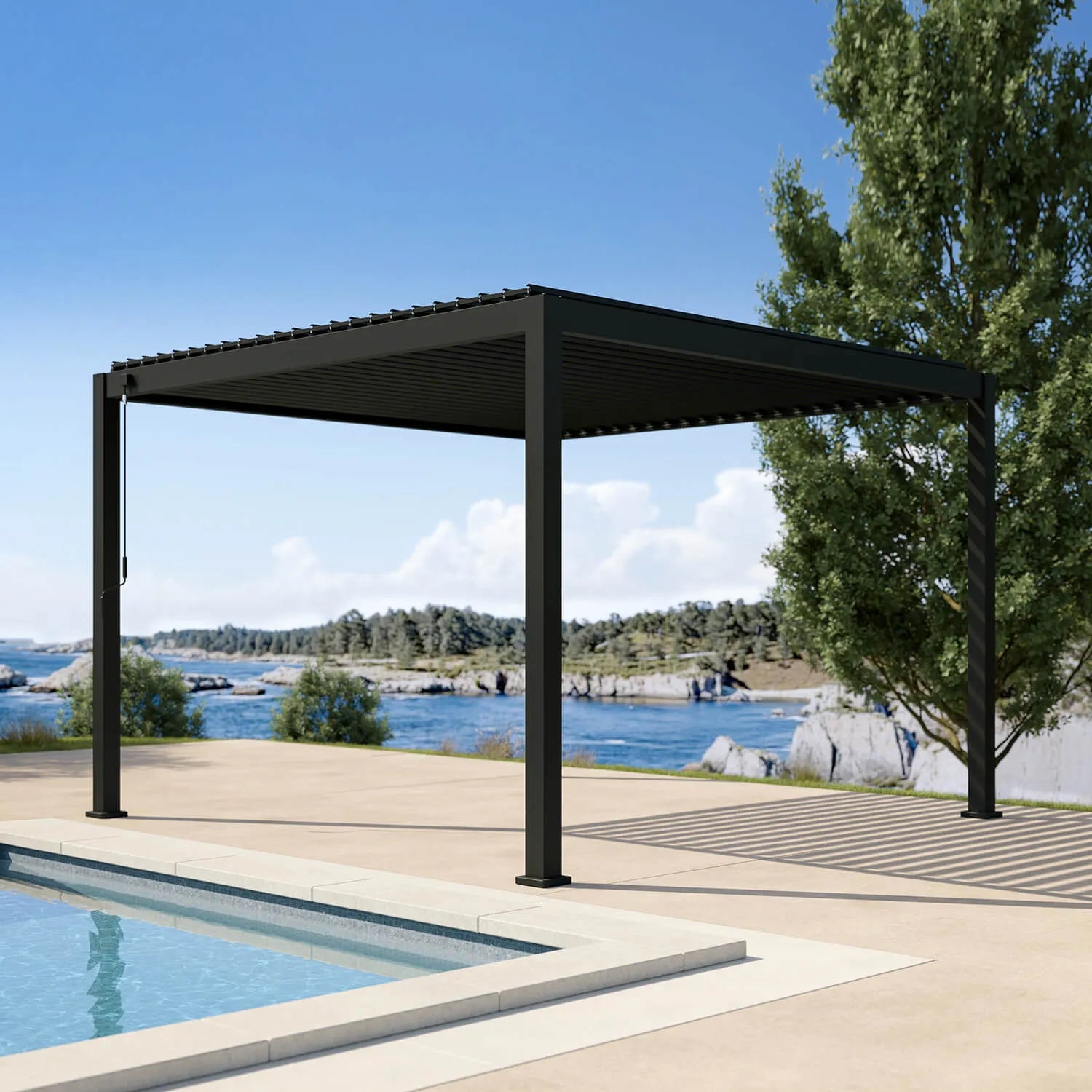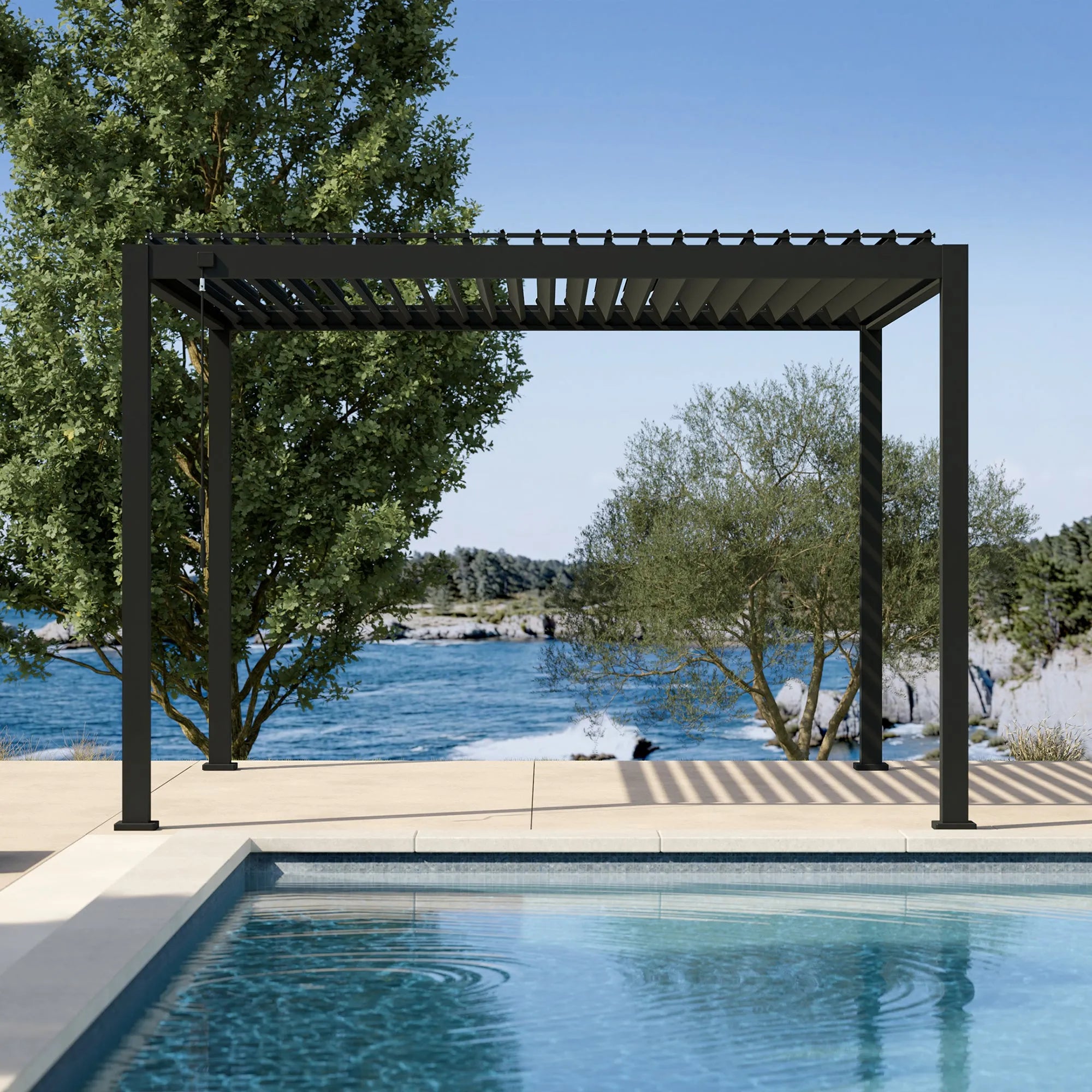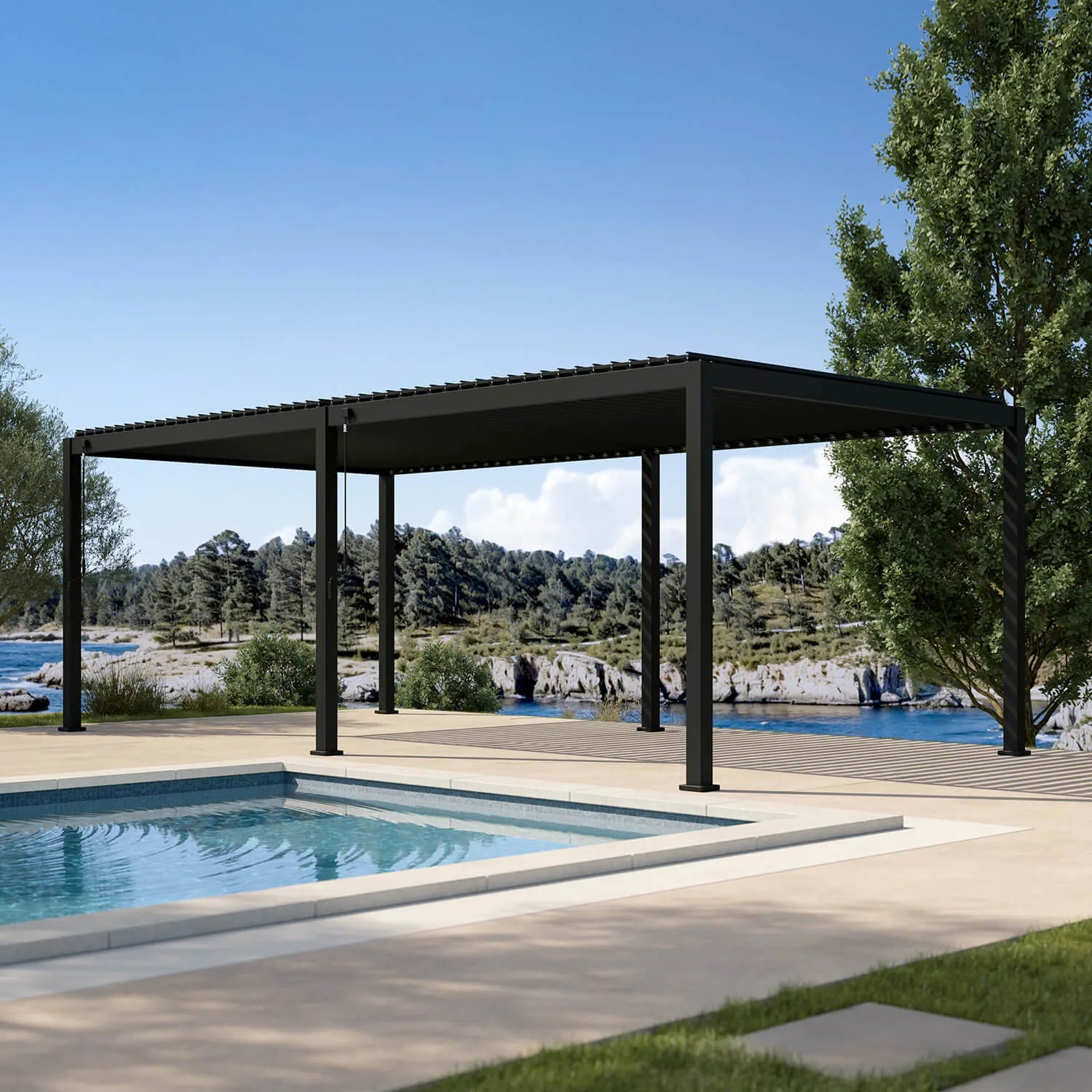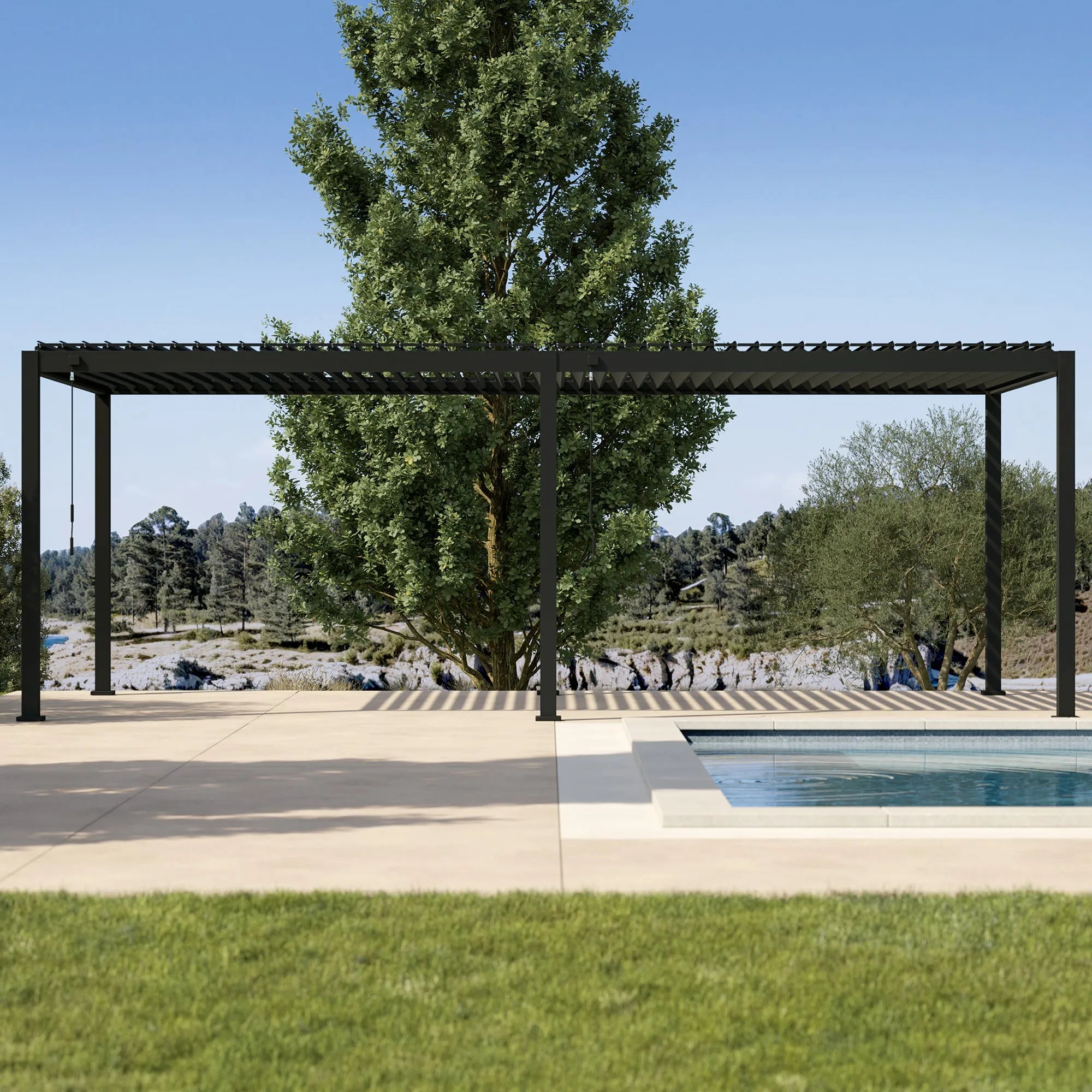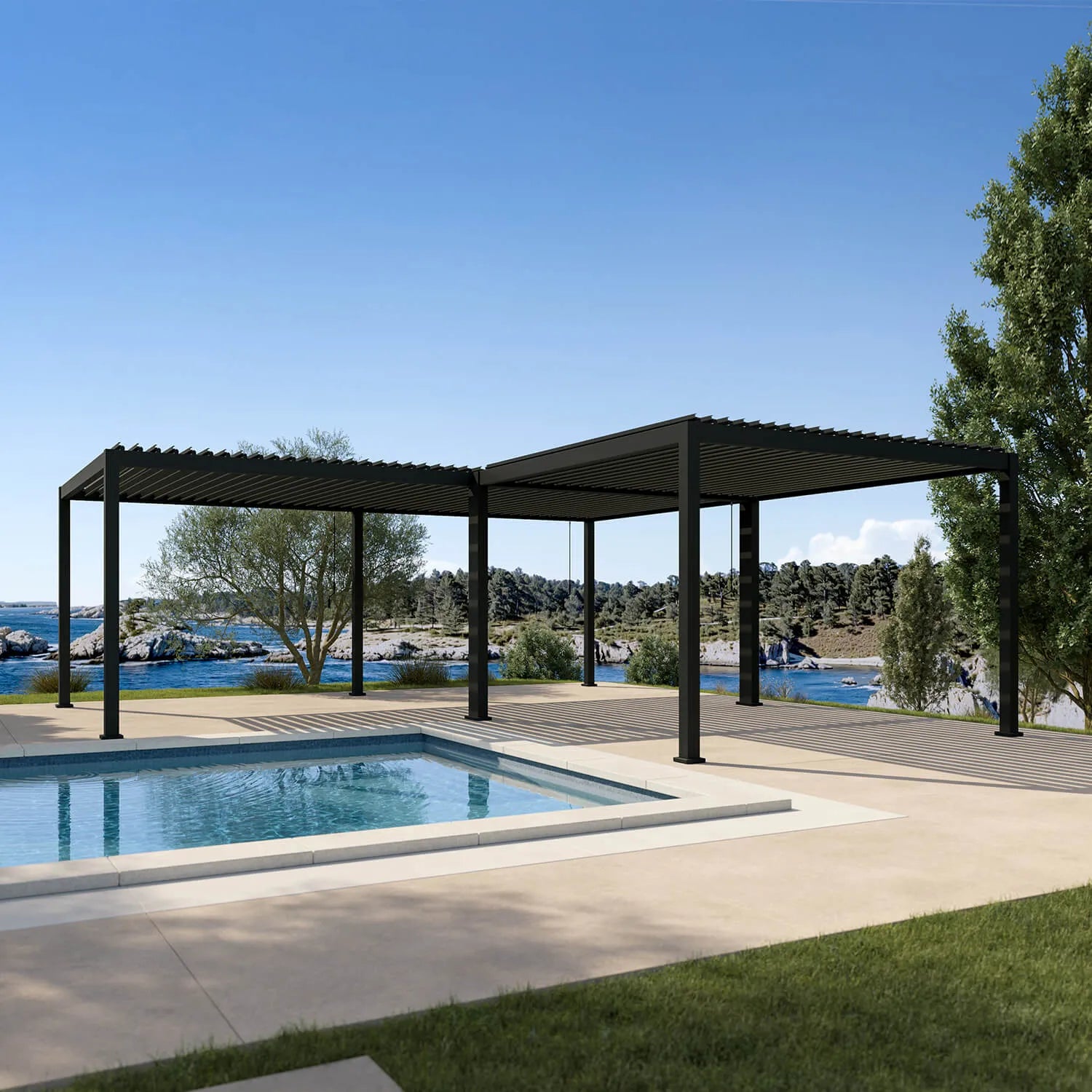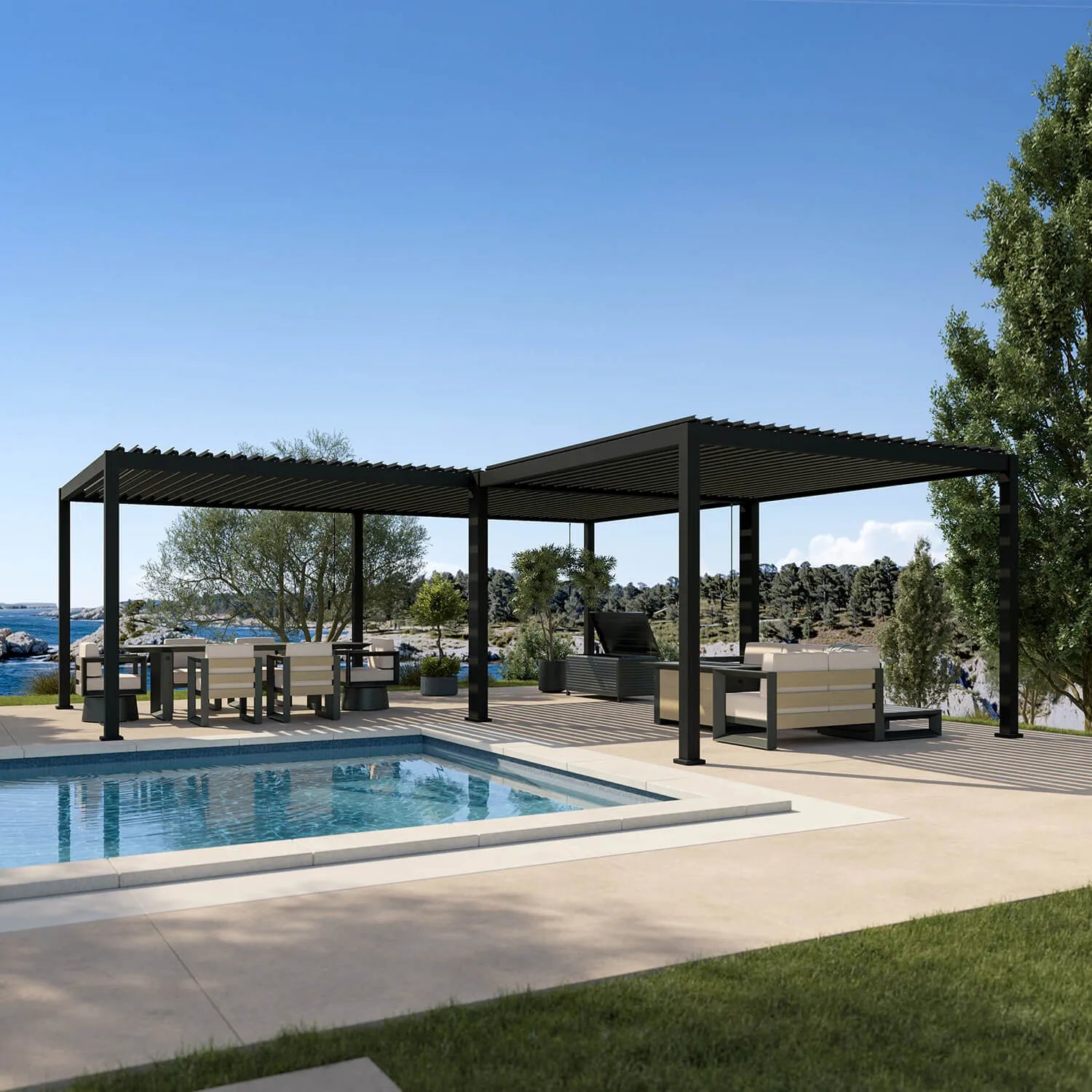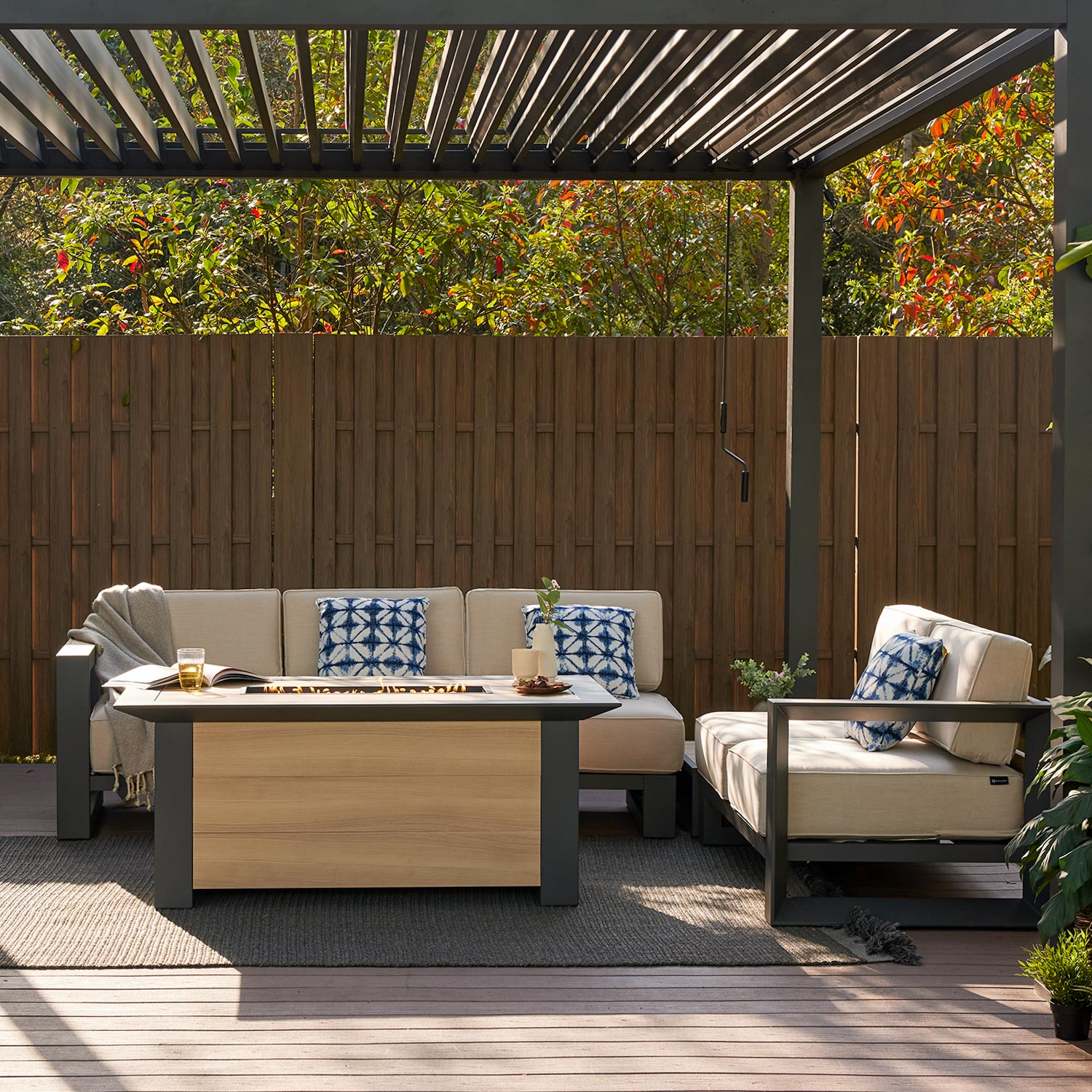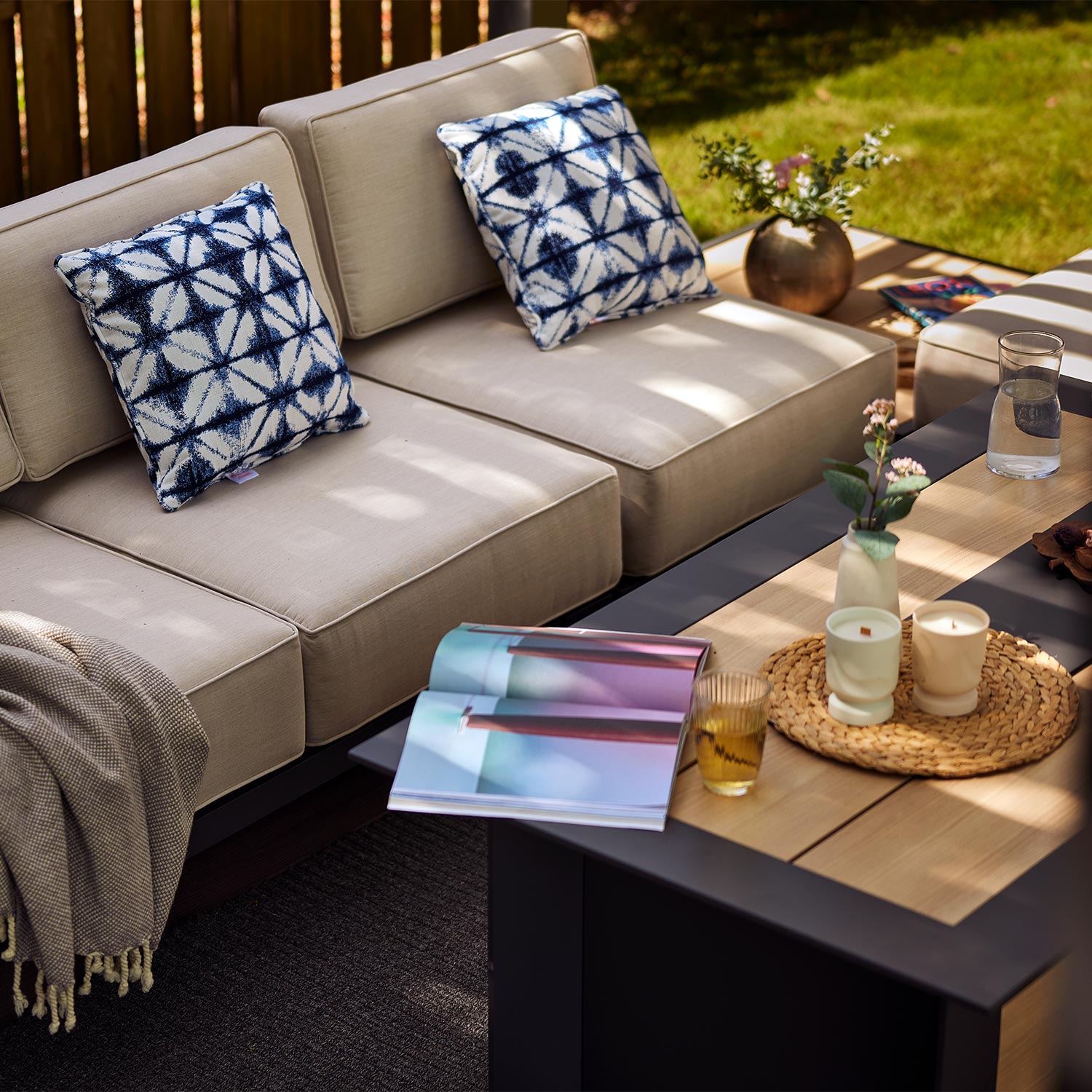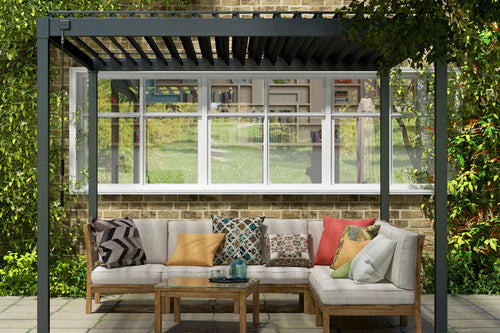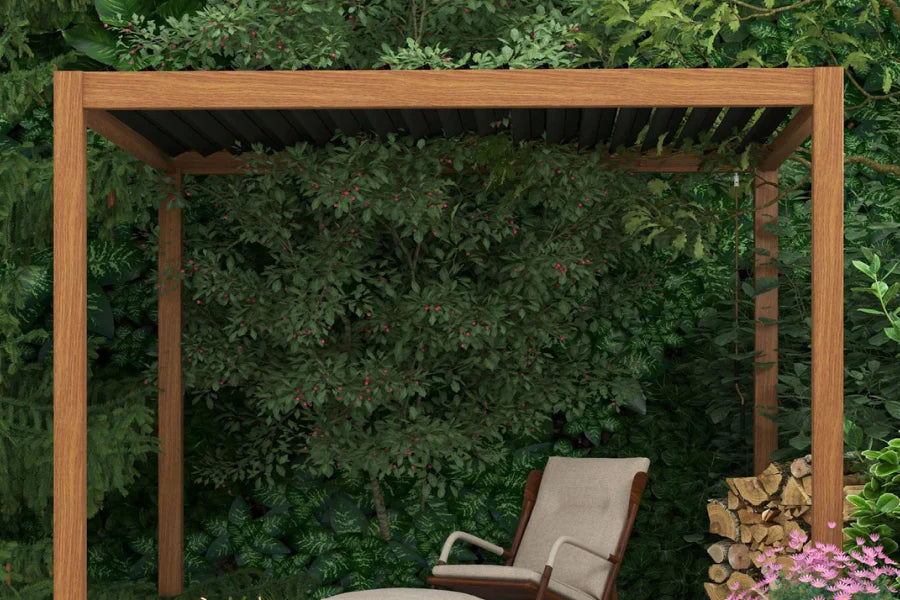

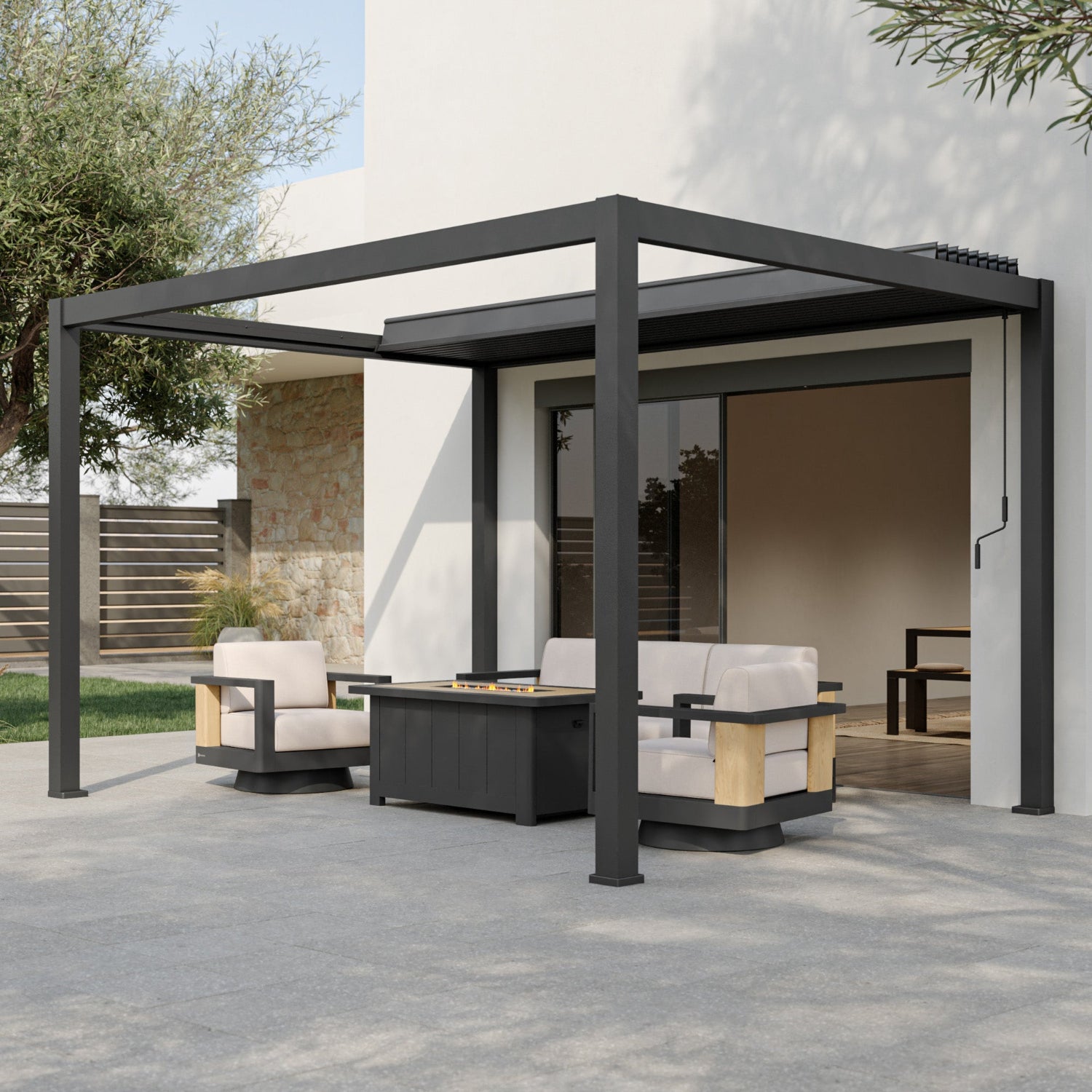
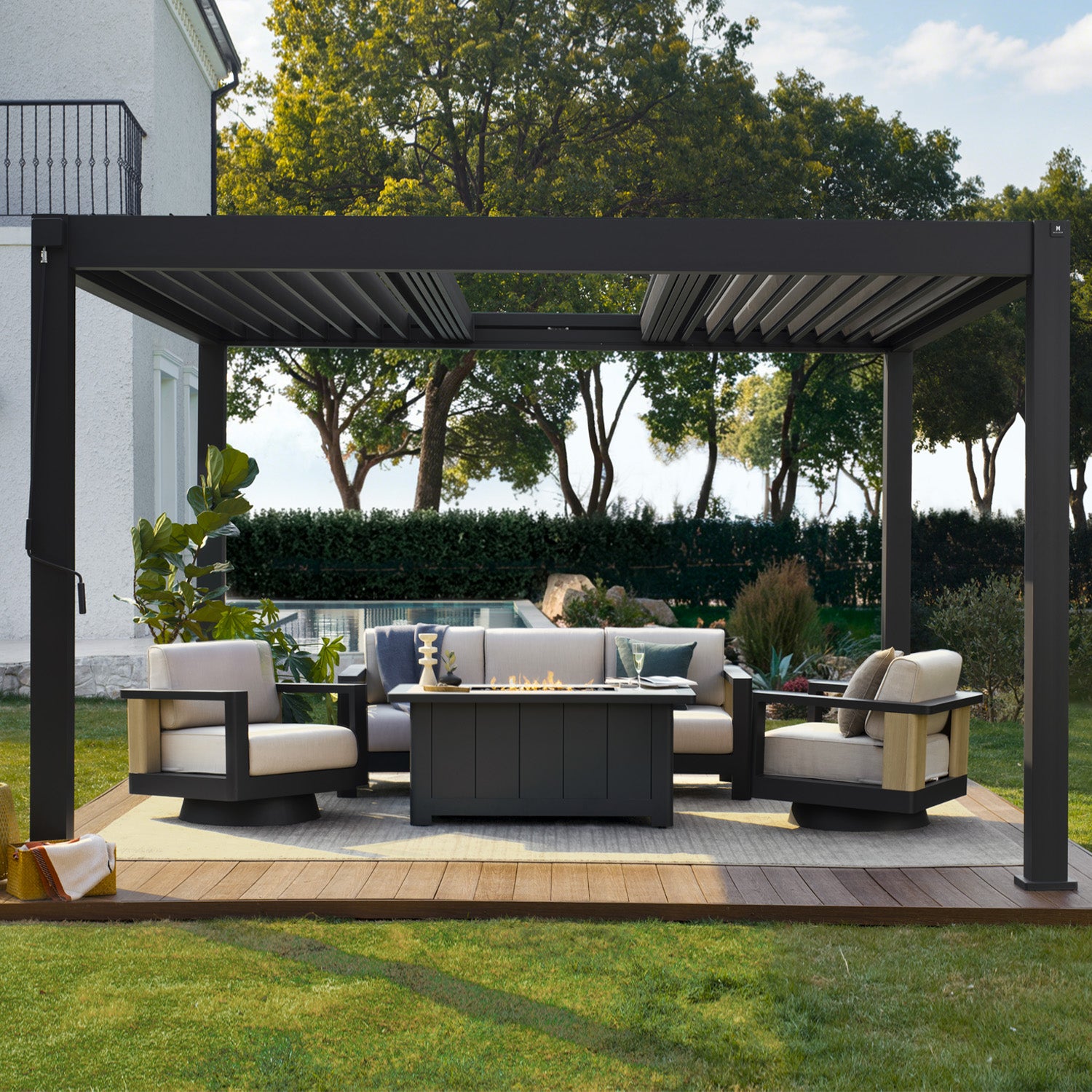
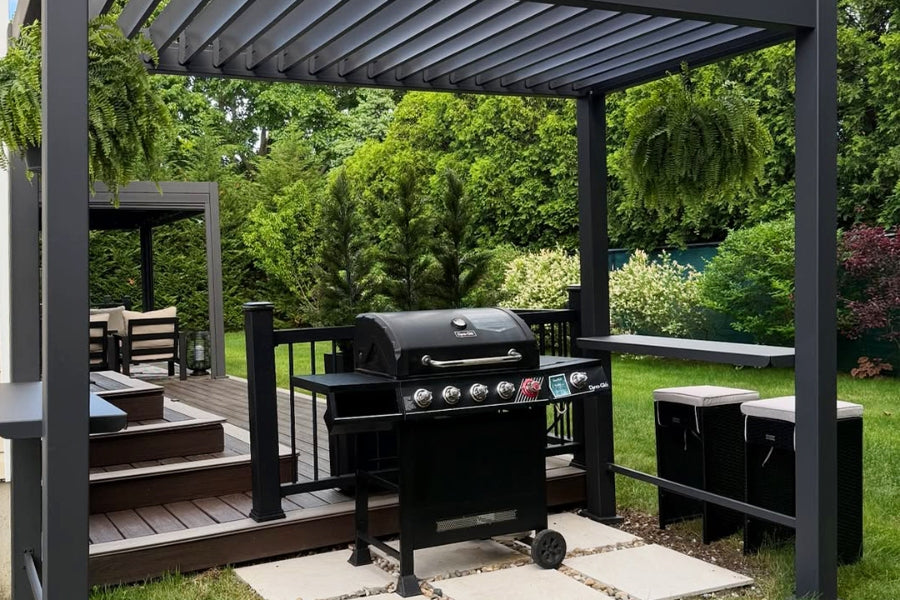
An outdoor kitchen pergola can make your cooking area feel a lot more comfortable. More shade. Better rain control. A patio that feels more finished.
But before you picture dinner under the louvers, start with the safety questions. A grill is not just another piece of patio furniture. Heat, smoke, grease, gas lines, electric lines, and airflow all matter.
Some owners mention concrete footers, pavers, closed louvers, dry space, and strong wind exposure. Those stories are helpful. But they do not mean every grill setup is approved. Always check clearance, ventilation, anchoring, utilities, and local code before you build around an outdoor kitchen.
Story note: Claire is a fictional composite based mainly on one outdoor-kitchen owner comment plus broader weather comments. The story uses fictional dialogue. Safety details are written as questions, not approvals.
Claire Wanted the Outdoor Kitchen to Feel Finished
The grill was already there.
The counter was there. The pavers were there. The problem was the sky.
Too much sun on some days. Rain at the wrong time on others. The outdoor kitchen worked, but only when the weather felt cooperative.
Claire liked the idea of louvers because the roof could change. Open when the evening was nice. Closed when normal rain moved through. More flexible than a fixed cover.
Then her brother asked the right question.
"Can you put that over a grill?"
The conversation stopped.
"I want the kitchen," Claire said, "but we can't skip the safety part."
Pretty pictures could wait.
Safety First, Then Story
Grill clearance is not a style choice. Ventilation is not optional. Grease does not care how good the patio looks.
Before an outdoor kitchen pergola makes sense, buyers need answers from the grill manual, the pergola guidance, local code, and qualified installers when needed. Fuel type matters. Heat output matters. Smoke path matters. Utilities matter. Cleaning access matters.
The owner comments can inspire a layout.
They cannot give permission.
Claire wrote the safety questions first:
- What clearance does the grill manufacturer require?
- Where does smoke go if louvers are closed?
- Can grease reach louvers, gutters, or drainage paths?
- Are gas, electric, lights, heaters, or fans involved?
- What base will the posts actually anchor to?
Only after that did she go back to the fun part.
The Footer Detail That Matters
One owner looking to cover an outdoor kitchen said the posts were attached to concrete footers, then pavers were placed around the posts. That sequence matters.
Structure first. Finish surface second.
A paver field may look solid, but it is not always the structural answer. A qualified installer should decide what the base needs for the site. Wind exposure, appliance layout, and foot traffic make the base decision even more important around an outdoor kitchen.
Claire's brother pointed at the patio.
"So the pavers aren't the plan?"
"The pavers are the look," she said. "The base is the plan."
Good distinction.
Rain Helped, But Did Not Erase the Limits
The same owner reported that the area stayed very dry underneath when the louvers were closed and that the pergola felt sturdy after 60+ mph winds. Those are useful owner-reported details.
They still have limits.
Dry under one setup does not mean dry under every storm. A 60+ mph owner report is not a wind rating. A safe outdoor kitchen depends on the exact grill, roof position, airflow, anchoring, local code, and maintenance.
Claire treated the review like a helpful neighbor, not an engineer.
It gave her better questions.
The Real Outdoor Kitchen Decision
The final plan felt less dramatic than the mood board.
That was a good sign.
The grill zone was checked first. Smoke had a path. The base question was handled before the pretty surface. Rain control was treated as comfort, not a promise. The louvers were part of the living space, not an excuse to ignore the manuals.
"So the pergola is the last thing?" her brother asked.
"No," Claire said. "It's the thing that only works if the first things are right."
That is the outdoor kitchen pergola story buyers should hear.
A louvered pergola can help frame a cooking and dining space. It can make normal rain and shade easier to manage. It can make the patio feel more finished.
But the pretty part starts after the safety questions.