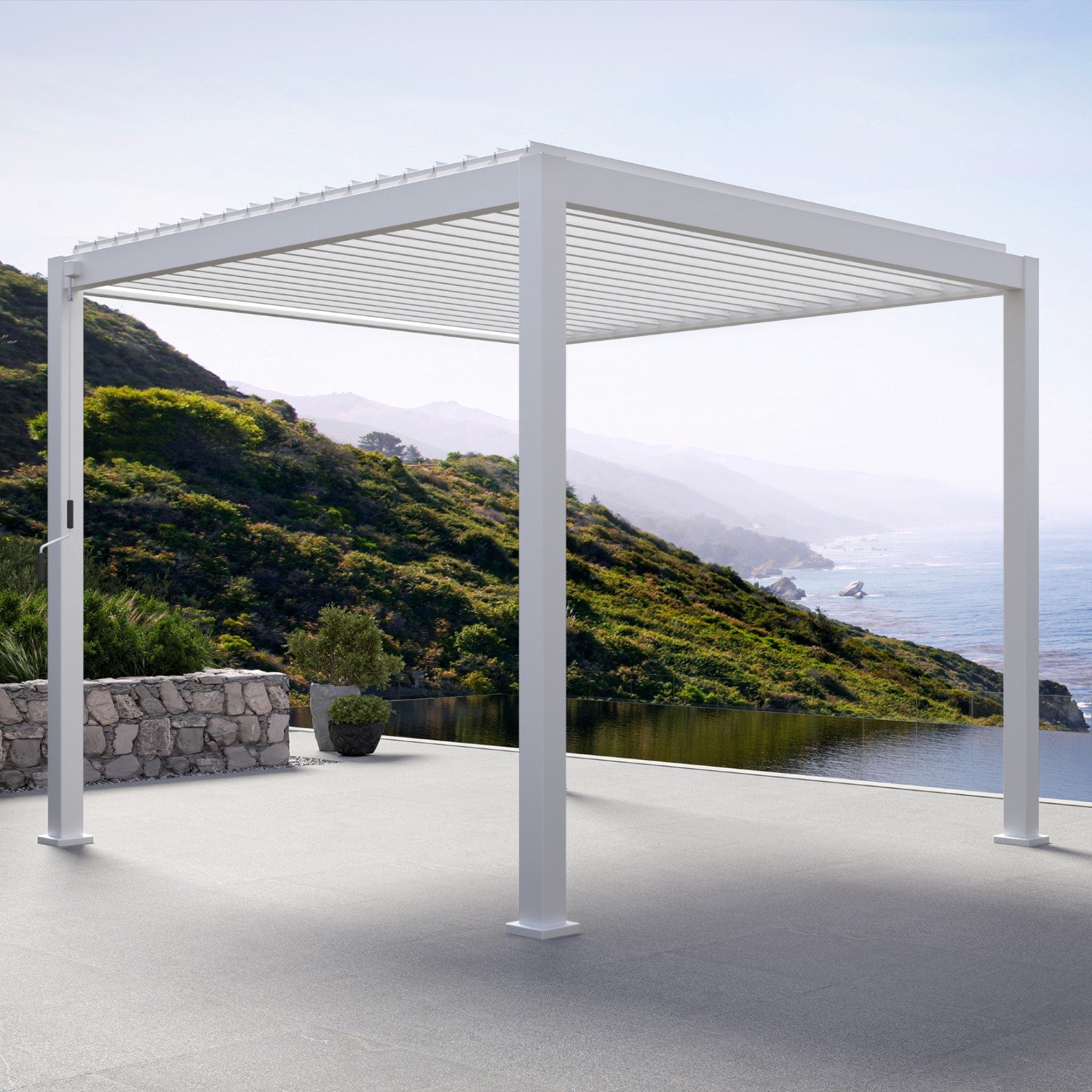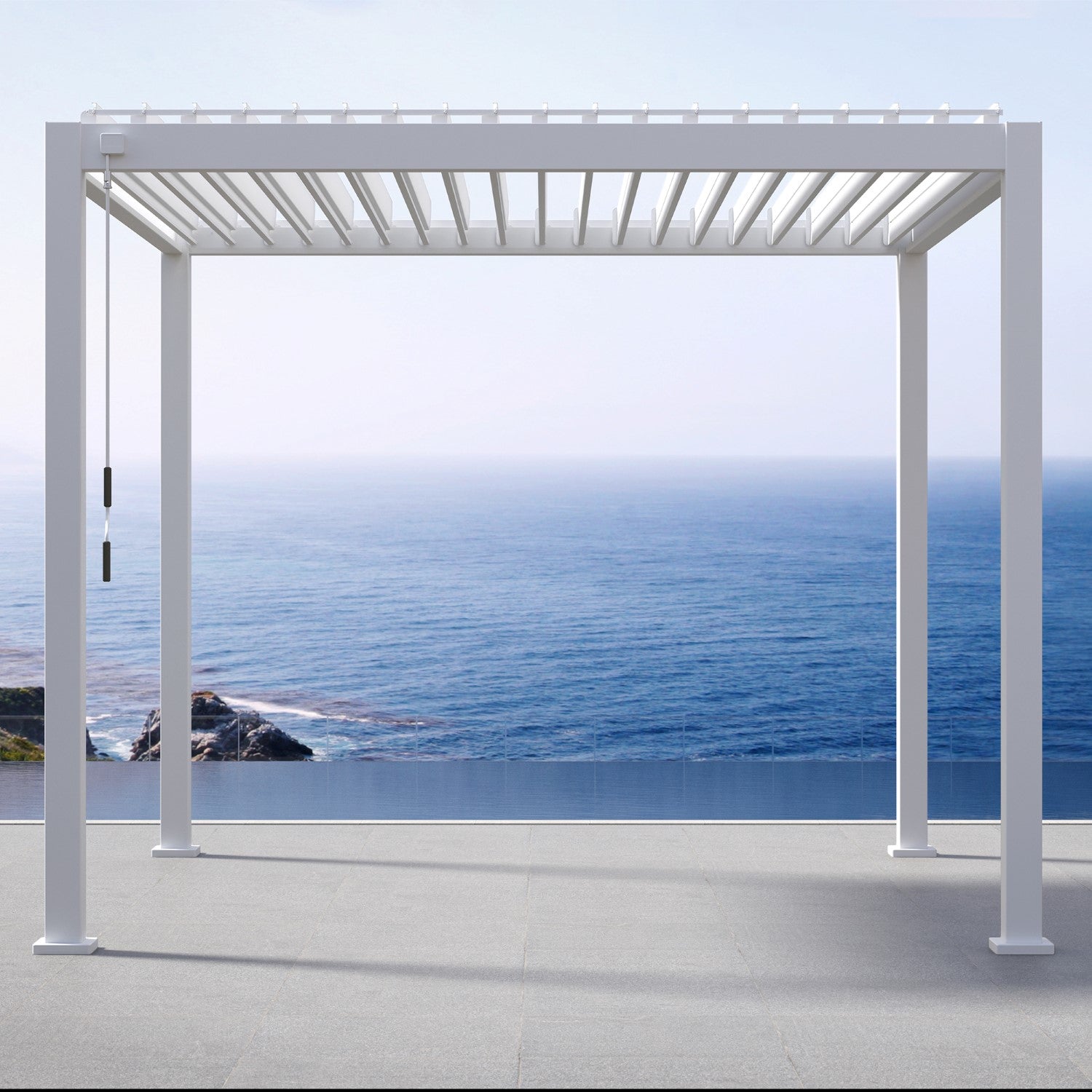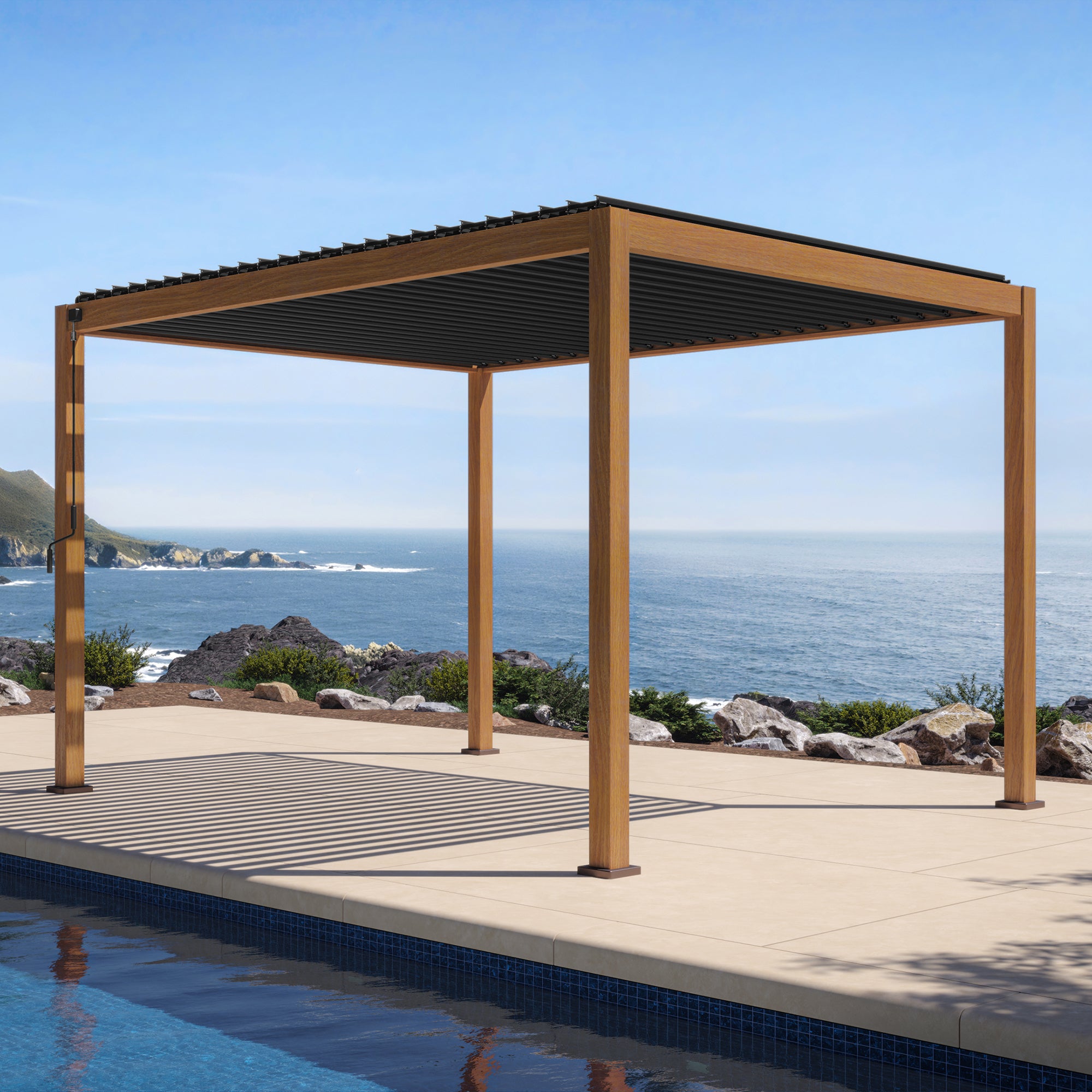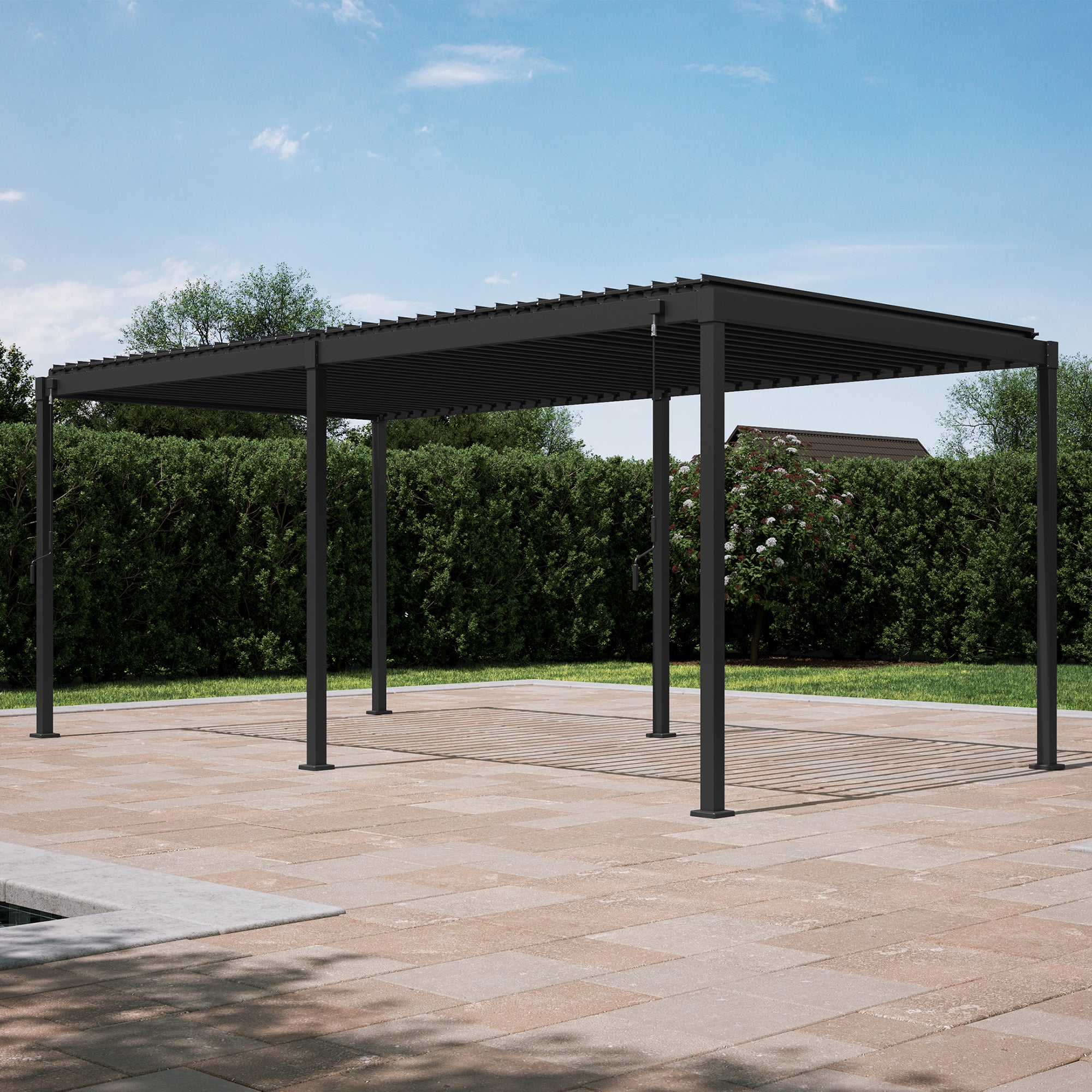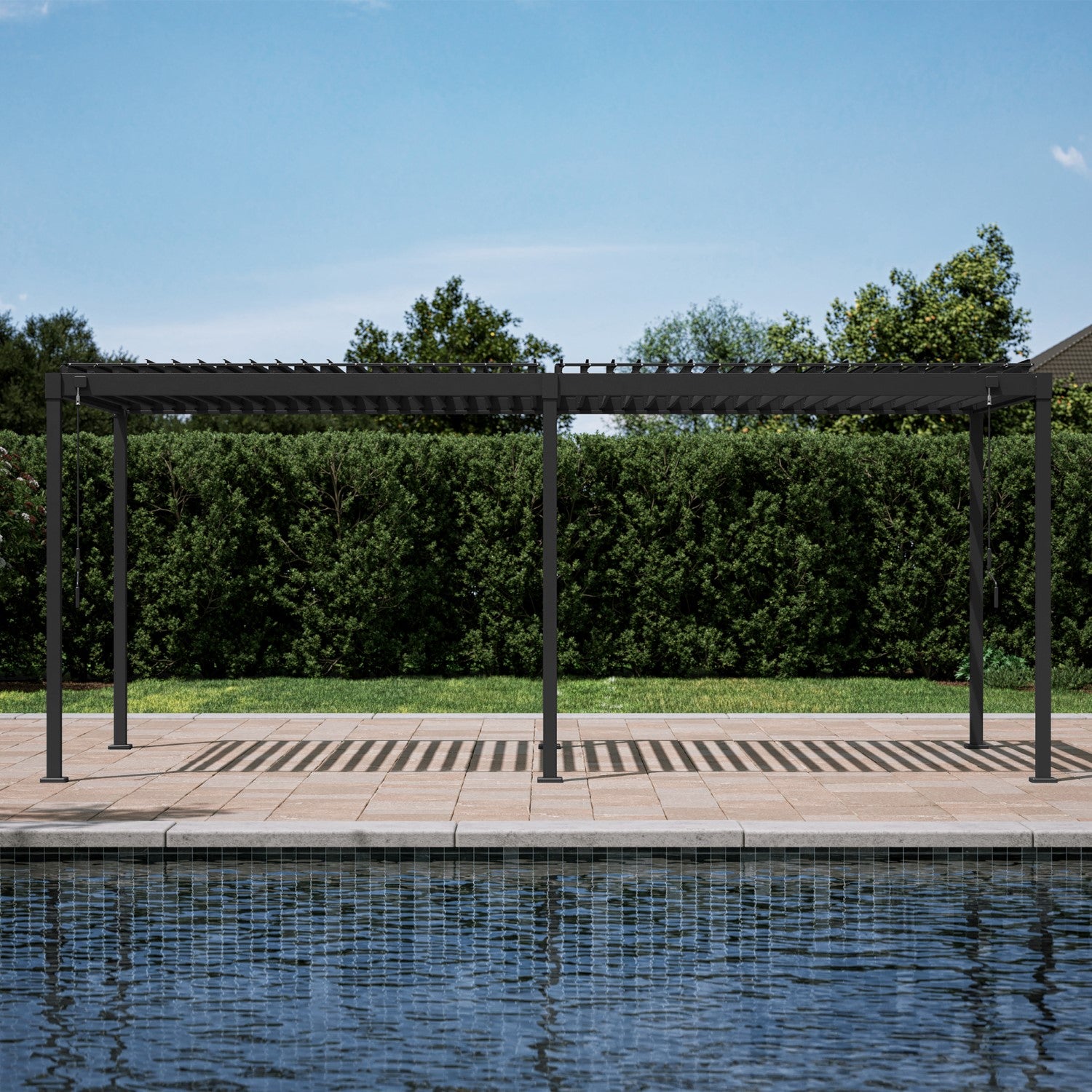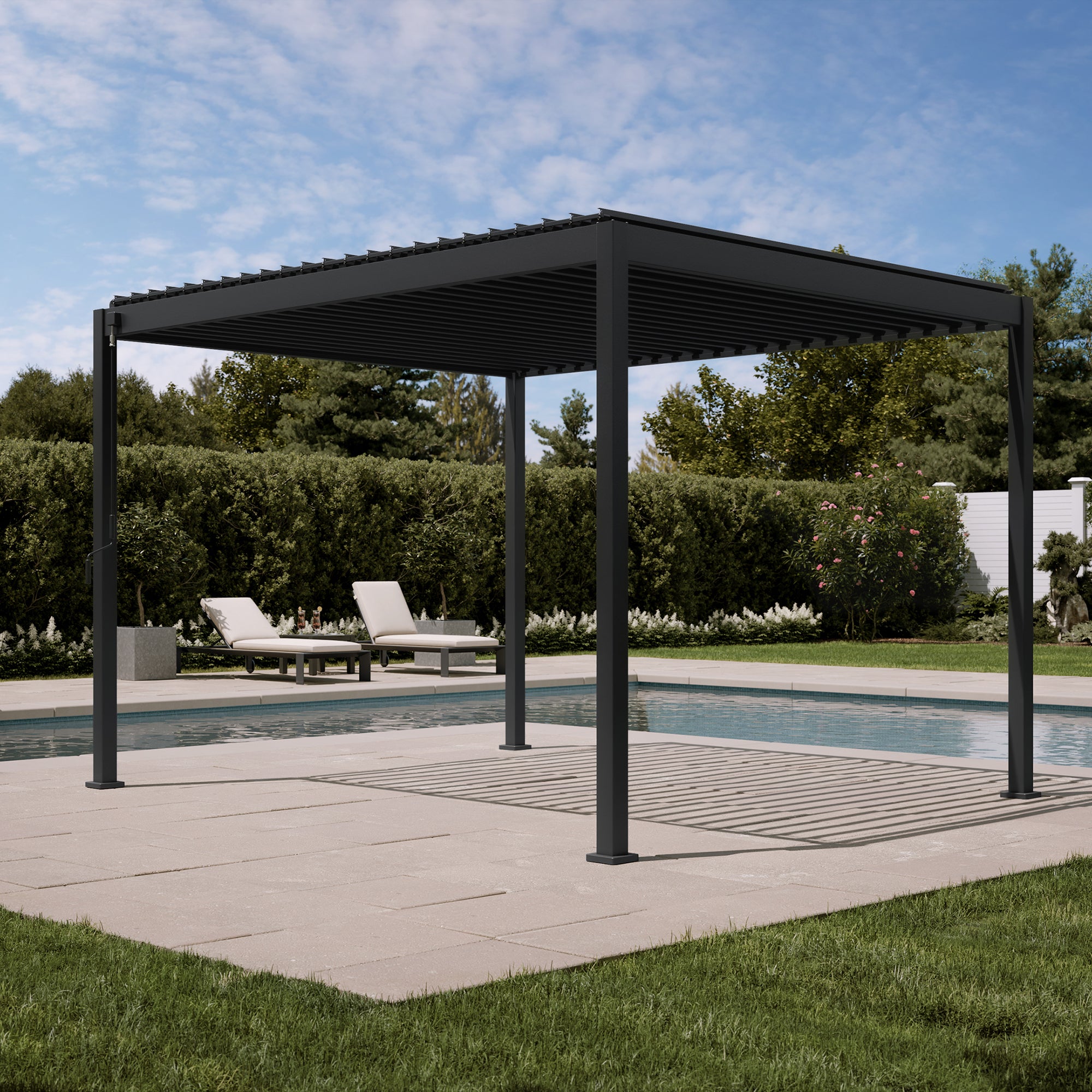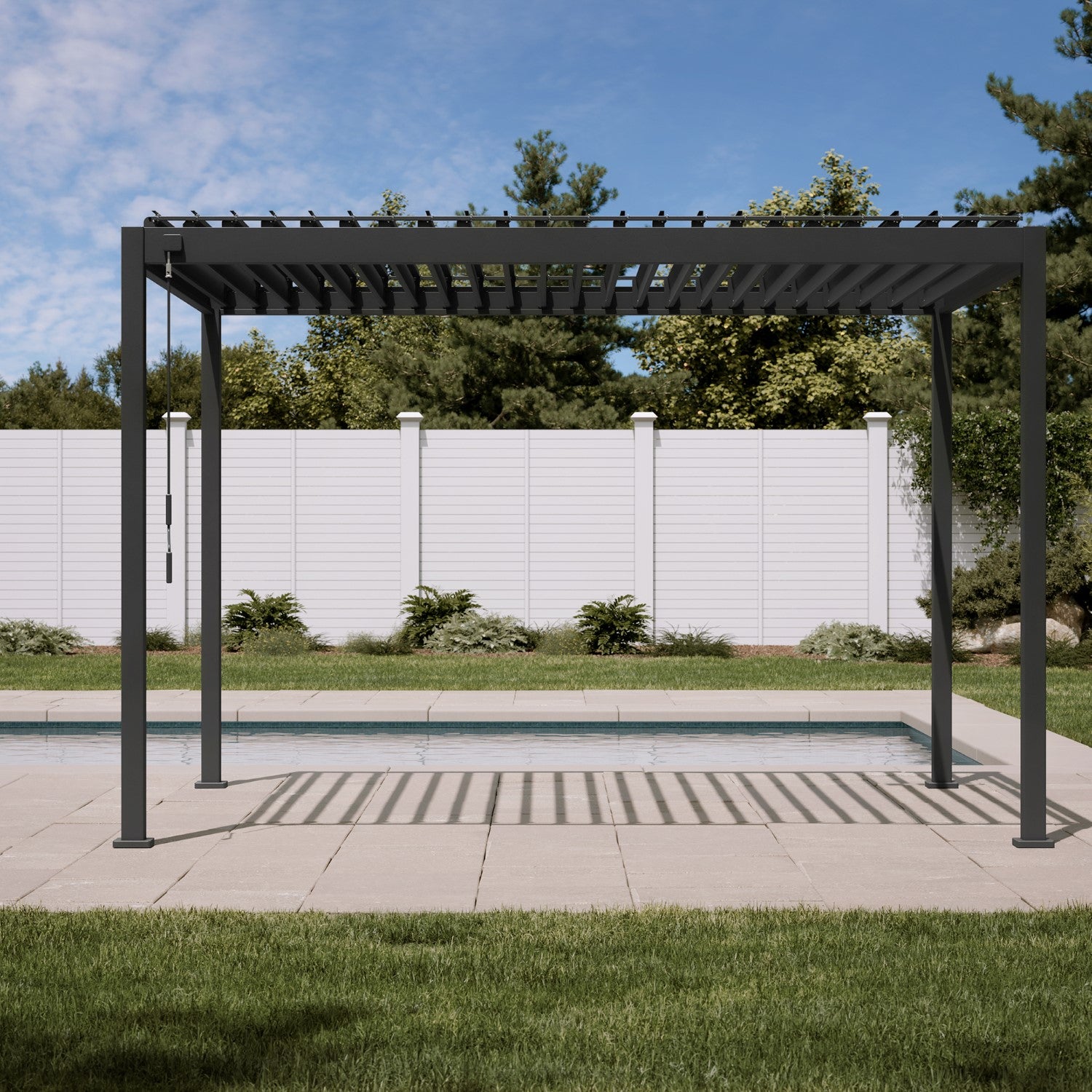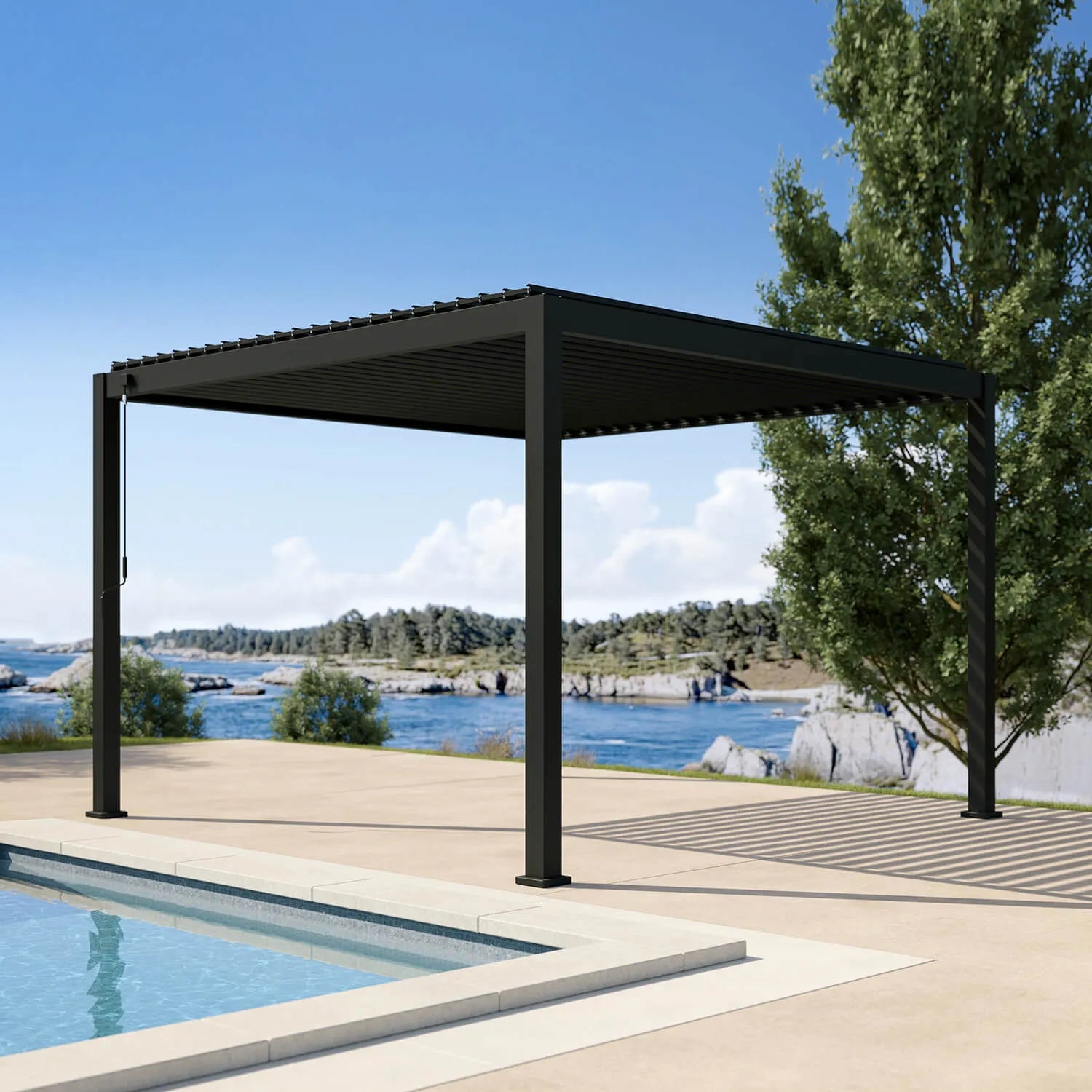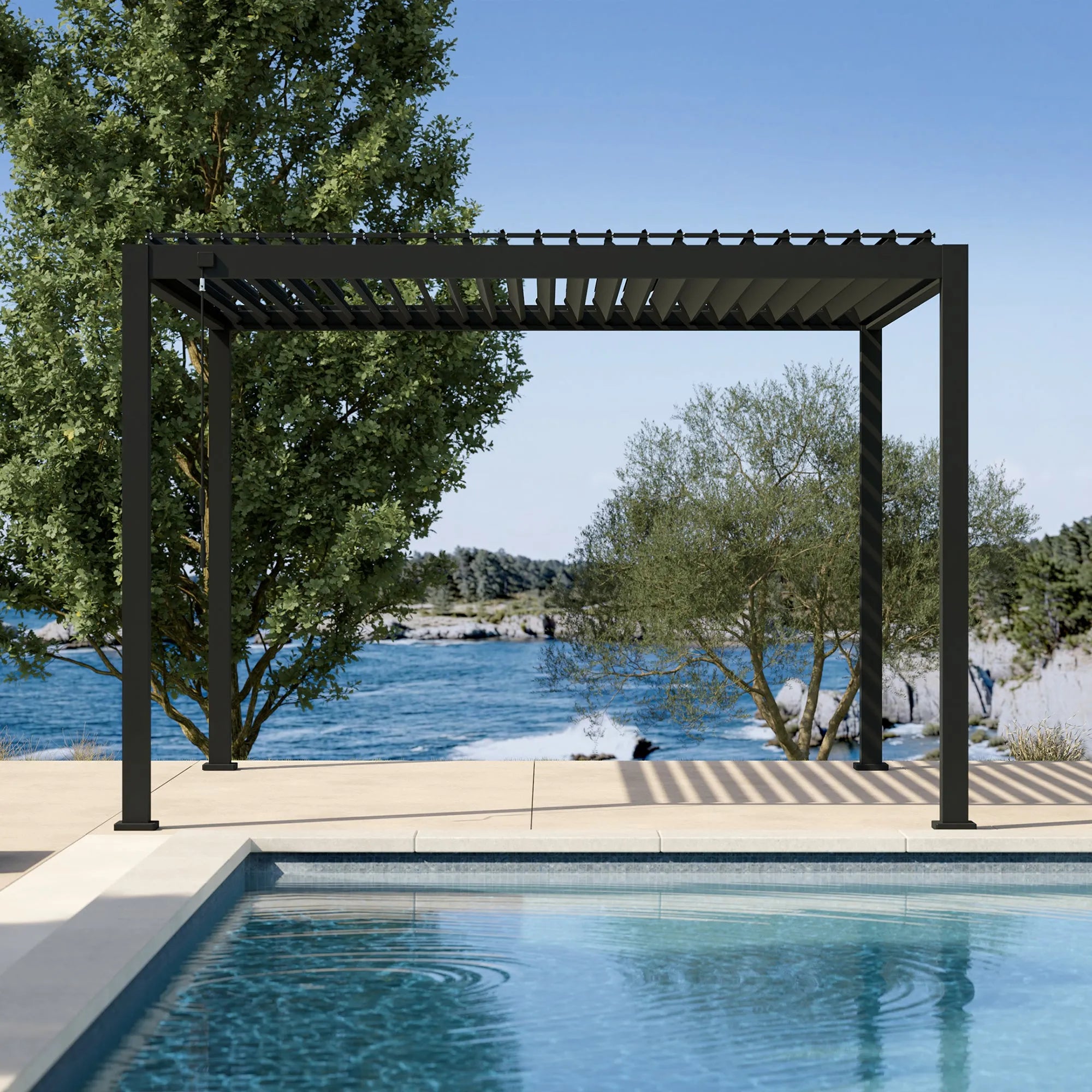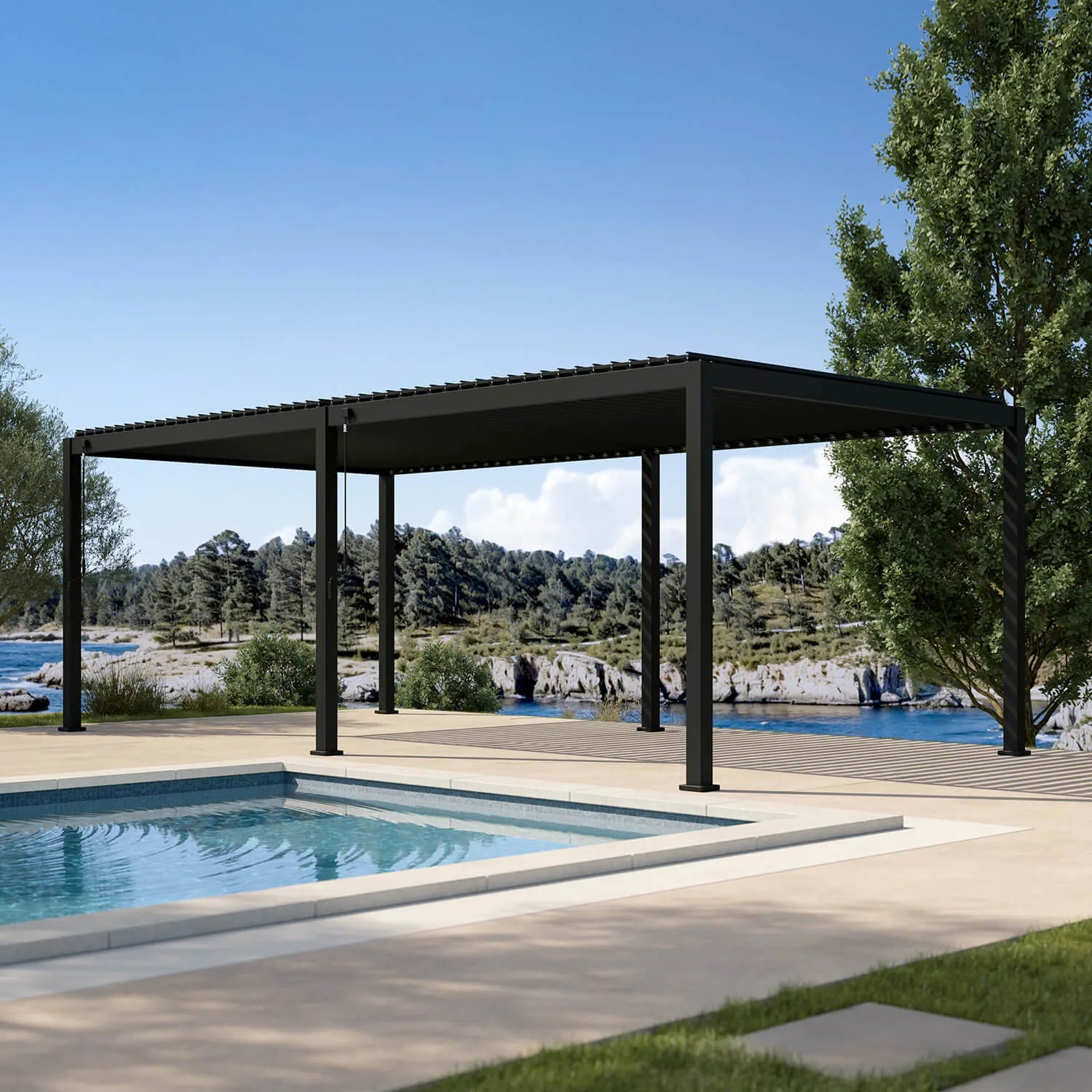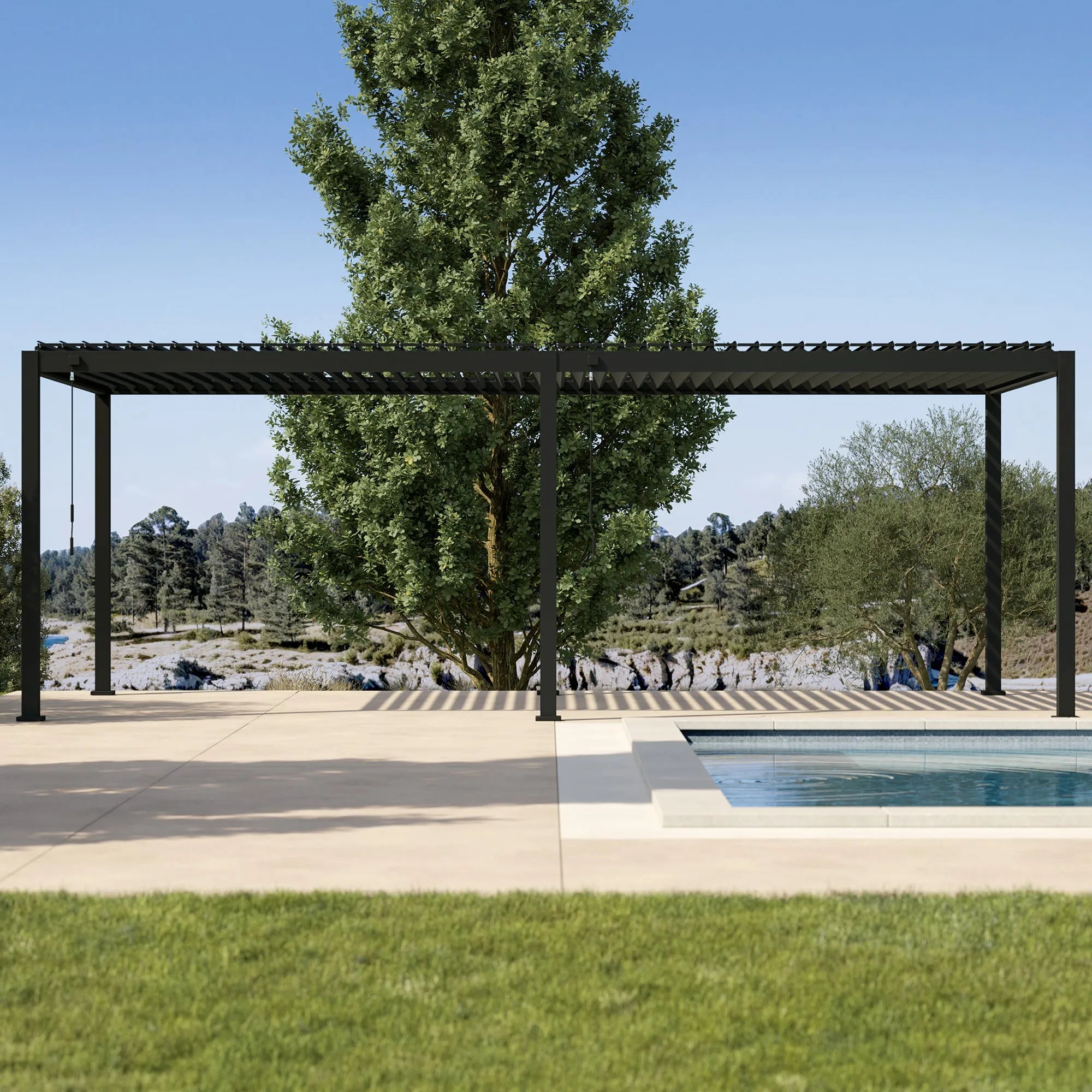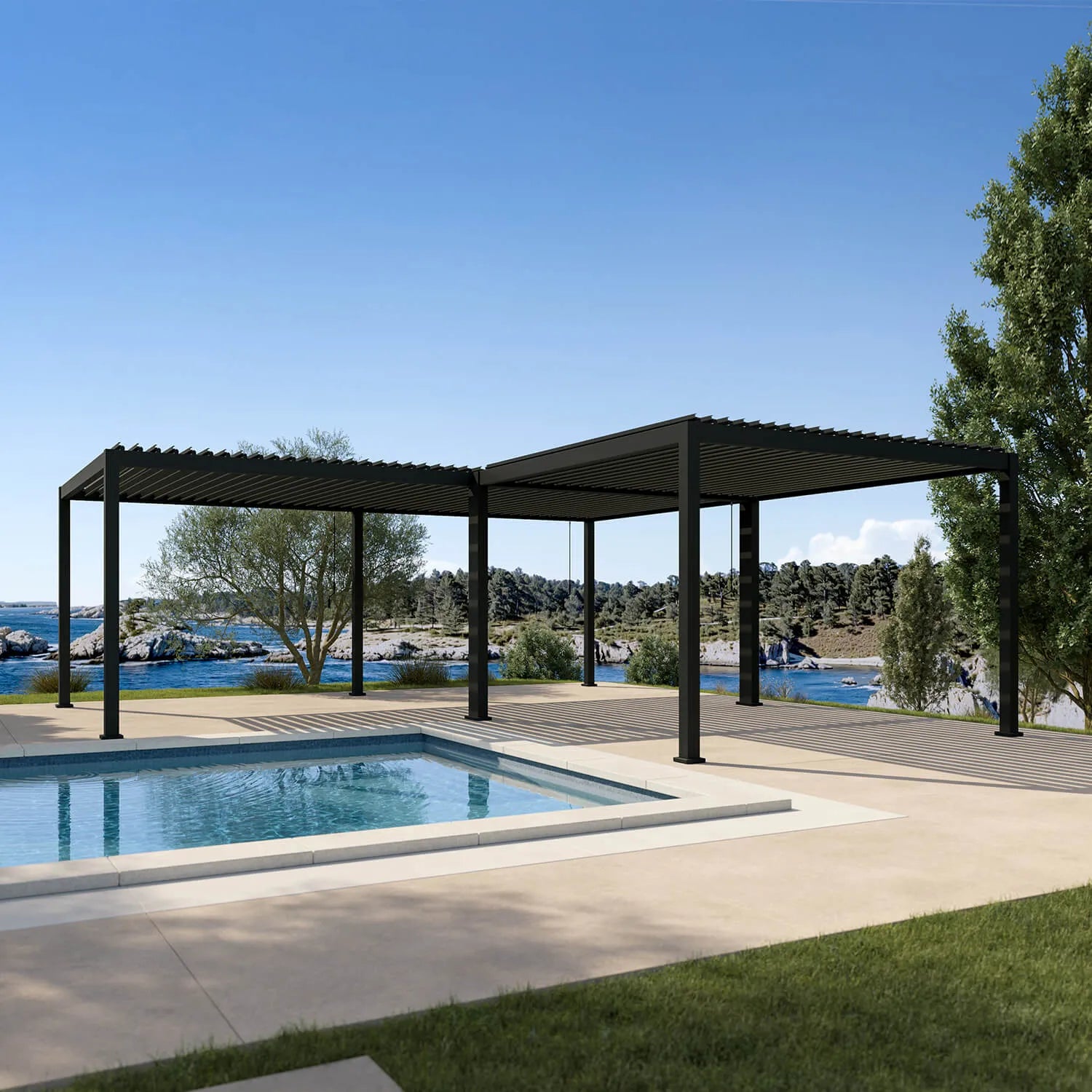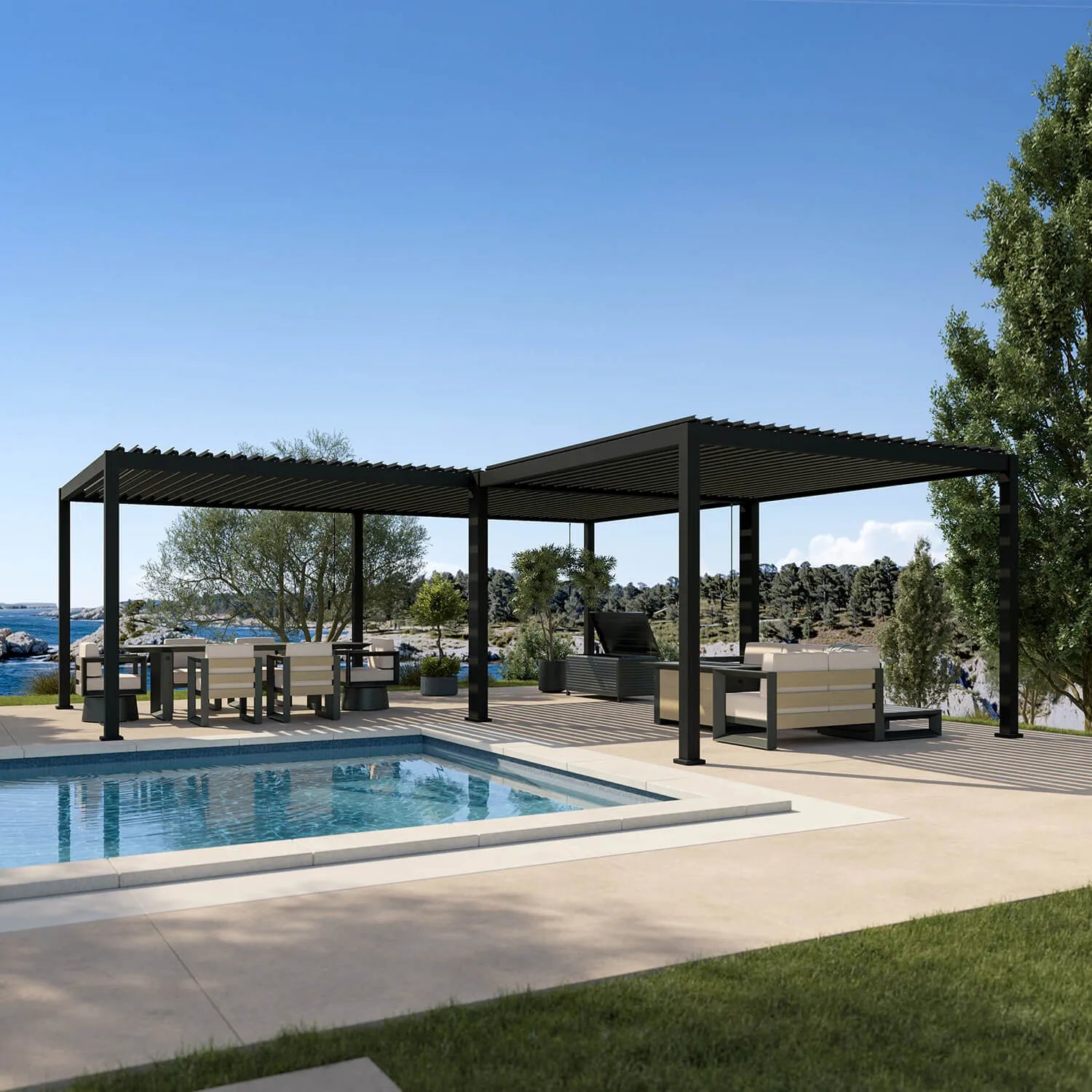

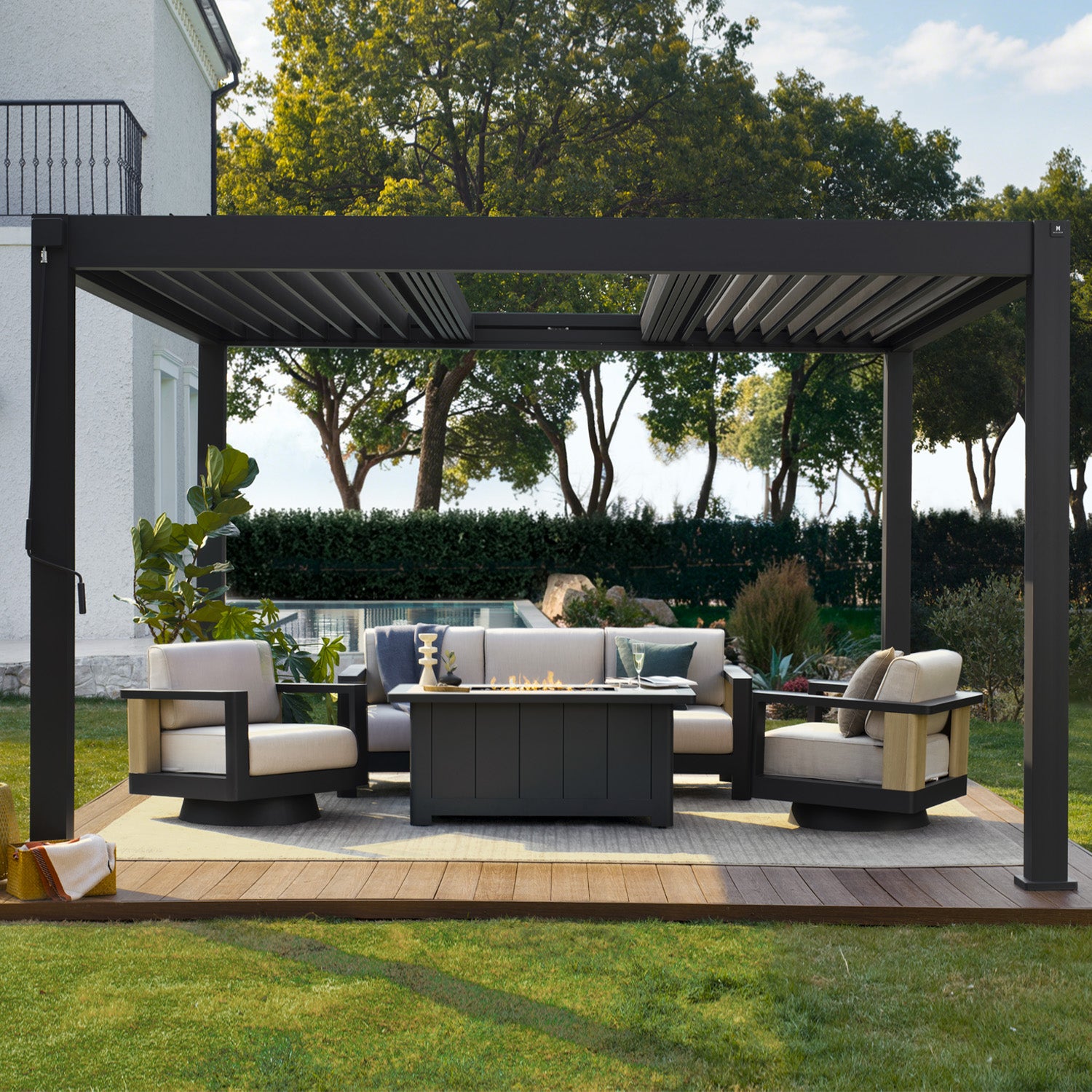
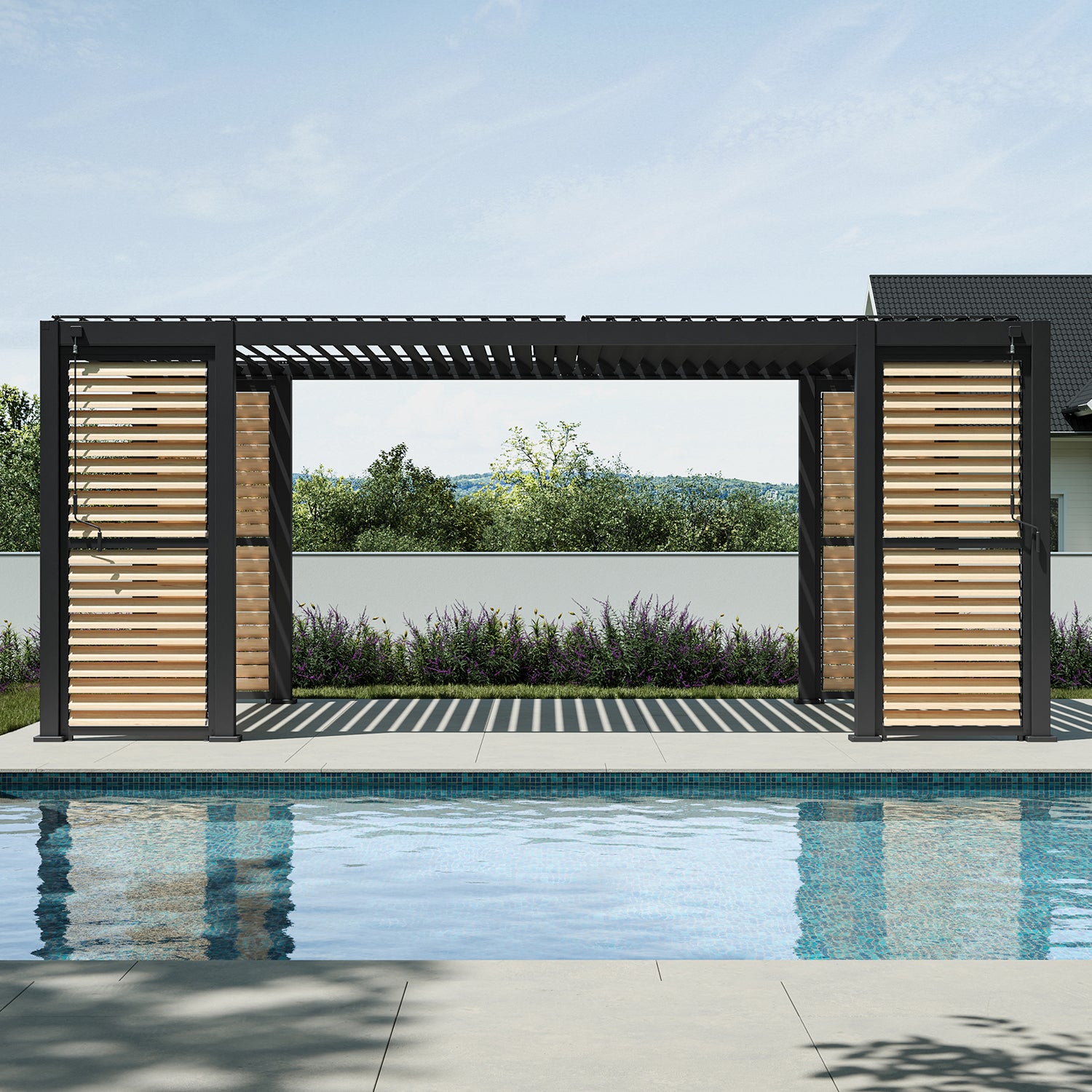
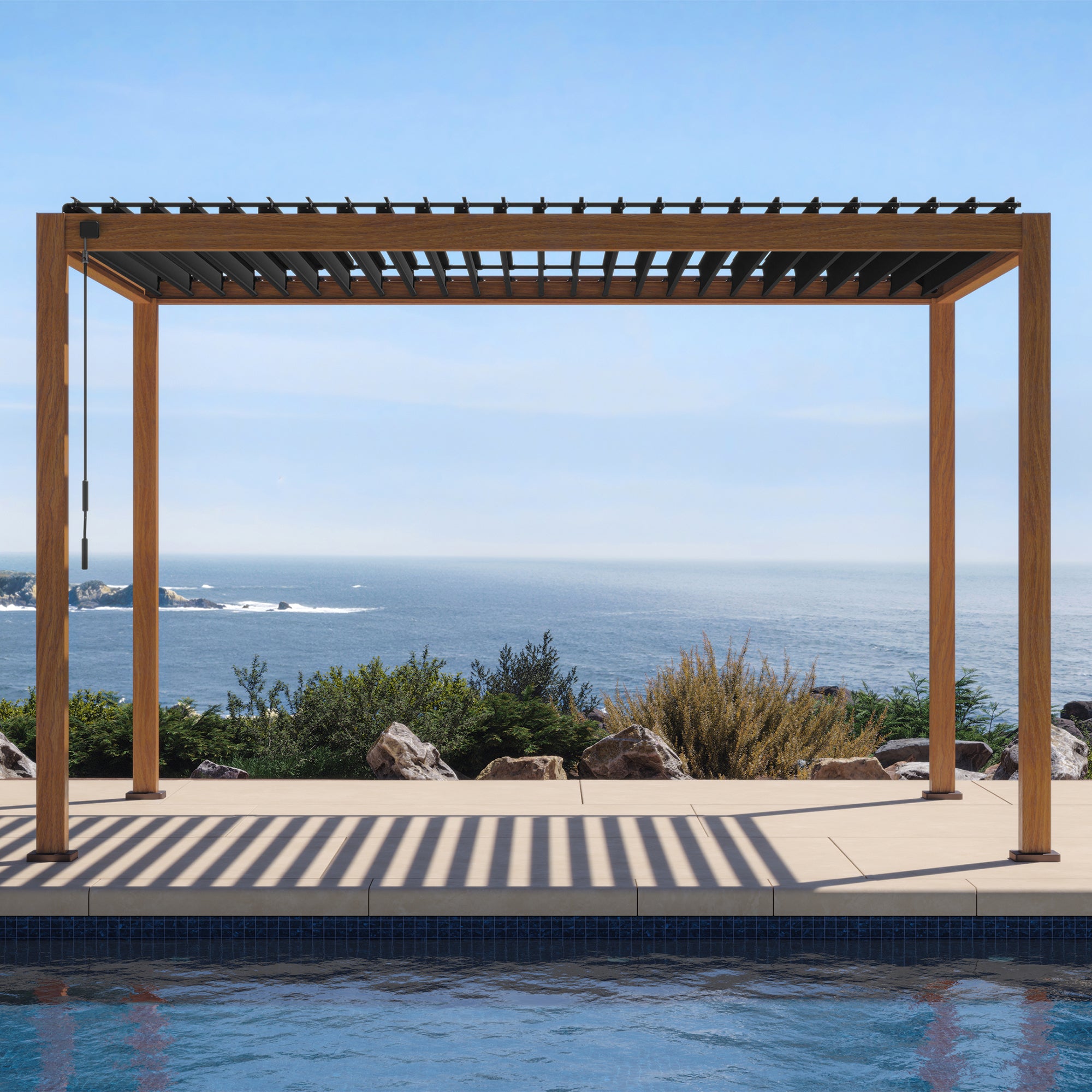



Yes, in most backyard installations, you should anchor a Mirador pergola before you use it as a permanent outdoor shade structure. Mirador pergola anchoring isn't a small install detail; it's the part that connects the aluminum frame, louvered roof, base surface, local code, and wind exposure into one system.
Mirador Pergola Anchoring Answer
Mirador pergola anchoring is usually recommended because Mirador pergolas include anchor bolts for fastening to a flat concrete surface, and wind resistance depends on the pergola, anchors, base, and local site conditions working together. Before buying, confirm the base type, local permit rules, insurance expectations, and exact model manual.
The Mirador Outdoor Help Center says Mirador pergolas come with anchor bolts for a flat concrete surface. That tells you the cleanest default path: a level, sound concrete pad, proper drilling, and hardware installed according to the manual. It doesn't mean every patio, paver field, wood deck, or soil area is ready on delivery day.
A closed louvered roof can catch wind. So can side screens, curtains, privacy walls, and nearby fencing that changes airflow around the patio. If you're comparing sizes on the louvered pergola collection page, look at the footprint and ask one question before color or accessories: where will every post transfer force into the ground?
|
Buyer question |
Practical answer |
|
Can it stand unanchored for assembly? |
It may sit in place while you're building it, but don't treat that as the final condition. |
|
Is concrete the easiest base? |
Yes, when the slab is flat, level, thick enough, and in good condition. |
|
Are pavers enough by themselves? |
Usually no. Sand-set pavers are a finish layer, not a structural anchor base. |
|
Can a deck work? |
Maybe, if the deck framing, blocking, and footings are checked first. |
|
What about grass or soil? |
Plan for footings or piers, then anchor to those, rather than staking the pergola like a tent. |
A recent Reddit thread about Mirador pergola anchoring shows the real buyer worry: people aren't only asking whether the pergola will move. They're asking who pays if it damages a fence, car, window, or neighbor's property. That's the right mindset before you buy.
Concrete, Pavers, Decks, Soil
Concrete is the simplest case, but simple doesn't mean automatic. A good slab is flat, level, uncracked near the post locations, and thick enough for the anchor type called for in the manual. A patio with a heavy drainage slope can make the pergola frame twist before the first storm even arrives. You don't want one post sitting proud while another is shimmed with a stack of washers.
Can pavers hold anchor bolts?
Pavers can work only when the anchor reaches a structural base, such as concrete below the pavers or properly designed footings at each post. A 2-inch paver set over sand can shift, crack, or loosen under lateral force. Treat pavers as a finish surface until a contractor proves otherwise.
The worst paver install looks fine in photos. Four base plates are screwed down, the patio furniture goes back, and the grill is fired up. Then a windy night hits. The paver doesn't have to fly away to create a problem; a small amount of movement at one post can rack the frame, stress the louvers, and loosen other fasteners.
Soil is a different conversation. A Mirador pergola is not a camping canopy. If the final location is lawn, compacted gravel, or a garden bed, plan for concrete footings, piers, or another engineered base before ordering. The extra work is annoying. Repairing a tilted pergola after irrigation, frost movement, or a summer storm is worse.
|
Surface |
What to verify before buying |
Usual safe path |
|
Concrete patio |
Flatness, cracks, thickness, drainage slope, buried utilities |
Anchor into sound concrete per the Mirador manual |
|
Paver patio |
Whether pavers sit over concrete, sand, gravel, or old slab |
Anchor through to concrete or install footings below post locations |
|
Wood deck |
Joist direction, blocking, beam location, post footings, railing conflicts |
Have a pro add blocking and confirm the load path |
|
Soil or lawn |
Drainage, frost depth, irrigation lines, exact post layout |
Pour point footings or piers, then anchor the post bases |
|
Rooftop deck |
Waterproofing membrane, sleepers, access below, building rules |
Use a licensed contractor; don't pierce membranes casually |
If you already have a finished patio, ask the installer to mark post locations before the pergola ships. Four chalk marks can expose a lot: one base plate lands on a control joint, another lands at a paver edge, and a third sits where the patio slopes toward a drain. That's a cheap discovery before delivery day.
Deck Attachment Decisions
A deck can feel rock solid under people and still be a poor place to bolt a pergola without extra work. People load a deck mostly downward. Wind can pull a pergola upward and sideways. Those forces need to move from the post base into deck framing, from framing into beams and posts, and from there into footings or the house connection where allowed.
Is a deck strong enough?
A deck may be strong enough for a Mirador pergola only after the framing is checked. Deck boards alone aren't a structural anchor point. The safer plan is to locate joists, add blocking where needed, use through-bolts or approved connectors, and confirm that deck posts and footings can handle added uplift and lateral loads.
The American Wood Council DCA 6 deck guide is based on the International Residential Code and is written for single-level residential wood decks. It also makes a key point for homeowners: the local building official has the final say on approved methods and materials. That matters because a pergola isn't just patio furniture once you fasten it to a deck.
Before mounting to a deck, get answers to these questions:
1. Are the pergola posts landing over structural framing, not only deck boards?
2. Is there solid blocking under each base plate?
3. Can the installer access the underside for washers, nuts, or connector hardware?
4. Do the deck posts and footings line up with the added load path?
5. Will drilling create water-entry points that need flashing or sealing?
6. Does the deck ledger, if attached to the house, comply with local code?
Homeowners ask the same thing in HomeImprovement deck discussions: are lag screws into decking enough, or do you need washers, nuts, and framing below? For a premium outdoor living project, don't leave that answer to the person holding the drill after lunch.
Second-story and rooftop decks deserve extra caution. Waterproof membranes, sleepers, parapet walls, condo rules, and shared party walls can all change the anchoring plan. If you can't see the structure below the deck surface, assume you need a contractor before you assume you need longer screws.
Wind And Property Risk
Wind is the risk people underestimate because the pergola looks heavy. A 10'x10' aluminum pergola doesn't feel like something the weather can push around. Then you close the louvers, add a side screen, and place it near a fence line where wind swirls. The forces don't politely stay vertical.
Mirador's Help Center lists model-specific snow load and wind speed figures, including 13.8 or 17.7 lbs/ft2 for snow load and 73 or 82 mph for wind speed depending on the model. Those numbers are useful, but they're not a free pass to skip anchors. Verify the exact model page, current manual, and Mirador support guidance before relying on any rating, especially in coastal, mountain, desert, or high-wind zones.
Are weighted planters enough?
Weighted planters are not a dependable primary anchoring method for a Mirador pergola. They may help stabilize light accessories or temporary shade items, but they don't create the same connection as anchors into concrete, footings, or verified deck framing. Soil dries, planters crack, and weight can shift.
The FEMA 2025 Wind Retrofit Guide for Residential Buildings explains the idea behind a continuous load path: wind forces need a connected route through the structure, into the foundation, and into the ground. A pergola is smaller than a house, but the principle still fits. The load has to go somewhere.
Insurance adds another layer. If a pergola tips into a neighbor's fence or scrapes a parked vehicle, the claims conversation may turn to installation instructions, permits, code rules, and whether a reasonable homeowner should have anchored it. We can't speak for your insurance carrier. Call your agent before installation if the pergola will sit close to a property line, pool enclosure, glass door, outdoor kitchen, or parked cars.
> Pre-purchase risk test: if you wouldn't feel comfortable telling an insurer, "We left the pergola unanchored because it seemed heavy," don't buy until the anchoring plan is settled.
Strong-weather habits matter after installation too. Mirador recommends keeping louvers open in extreme weather. That reduces wind pressure on the roof area, but it doesn't replace anchoring. Think of it like closing patio umbrellas before a storm: smart behavior helps, but it doesn't fix a weak base.
Permit And Code Checks
Permit rules are local. Mirador's Help Center says a permit is not required in most cases, while also recommending that homeowners check with local government. That's the exact tone to follow: don't panic, but don't guess.
Do permits depend on size?
Yes, permits often depend on size, attachment, location, and local amendments. The 2024 International Residential Code includes a permit exemption for one-story detached accessory structures up to 200 square feet where that code language is adopted. Local building departments can change thresholds, add setback rules, or treat pergolas differently.
The 2024 International Residential Code permit section is a model code, not your city counter. A 10'x10' pergola is 100 square feet. A 10'x20' pergola is 200 square feet. A 12'x24' layout is 288 square feet. Those numbers can change the conversation fast, especially when the structure is attached to a house or placed near a property line.
Also ask about HOA approval. Upscale neighborhoods often care about height, color, roof visibility, setbacks, drainage, and whether the pergola can be seen above a fence. Approval may be needed even when the city doesn't require a building permit. Painful? Yes. Cheaper than removing a finished pergola? Also yes.
Electrical accessories can change the permit question. Integrated lighting, outlets, ceiling fans, heaters, motorized screens, and low-voltage runs may bring in electrical code. If your plan includes a grill station, hot tub, outdoor kitchen, or pool deck, ask the building department and installer before you choose the pergola location.
Installation Checklist
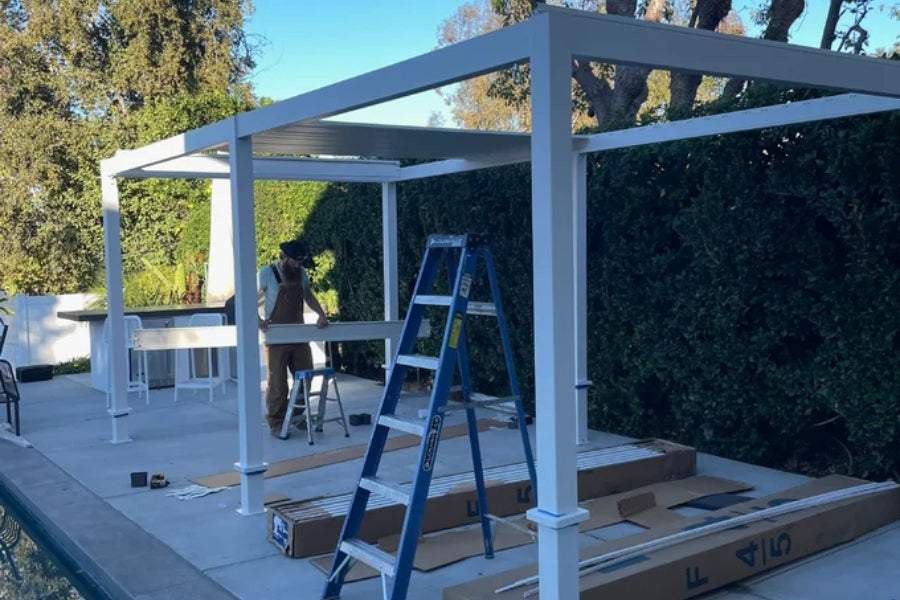
The best time to solve Mirador pergola anchoring is before checkout, not when the freight truck is blocking the driveway. Take 20 minutes to document the install site. Photos, measurements, and one short call to the building department can save a weekend of drilling into the wrong surface.
Use this checklist before buying:
1. Pick the exact Mirador model and size, then read the current installation guide.
2. Confirm the post footprint with tape on the patio, not just a product diagram.
3. Identify the base: concrete slab, pavers over sand, pavers over concrete, wood deck, soil, or rooftop deck.
4. Check slope at all post locations with a long level or laser level.
5. Look for slab cracks, paver edges, drains, irrigation lines, utility covers, and deck board seams.
6. Ask Mirador Outdoor support if your model, accessories, or location raises any install questions.
7. Call the local building department about permits, setbacks, wind rules, and inspection needs.
8. Check HOA or architectural review rules before the pergola arrives.
9. Ask your insurance agent whether permanent outdoor structures need any documentation.
10. Book a professional installer if the base is pavers, deck, soil, rooftop, coastal, or high-wind exposed.
A simple rule helps: concrete can be DIY-friendly when the slab is right; pavers, decks, soil, and rooftops deserve a higher bar. That doesn't mean you can't install there. It means the hidden base matters more than the pretty surface you can see.
If an installer says, "We anchor these into pavers all the time," ask what is under the pavers. If the answer is compacted sand, keep asking. If the answer is a reinforced slab or new footings at each post, now you're having the right conversation.
For homeowners buying a premium patio upgrade, the anchoring plan should feel boring by install day. Exact post locations. Exact base condition. Exact local code answer. Exact person responsible for drilling, sealing, and cleanup. Boring is good here.
FAQ
Do I need to anchor it?
Yes, you should usually anchor a Mirador pergola, especially for a permanent patio installation. Mirador provides anchors for flat concrete, but final requirements depend on your base, model, local code, and wind exposure.
Can I anchor on pavers?
Only if the anchor reaches a structural base under or through the pavers. Sand-set pavers alone can move, crack, or loosen under wind and frame movement.
Can I use weighted planters?
No, don't use weighted planters as the primary anchor for a Mirador pergola. Planters can shift, drain, crack, or tip, and they don't replace anchors into concrete, footings, or verified framing.
Do I need a permit?
Maybe. Mirador says permits aren't required in most cases, but you should check your city, county, HOA, and any local wind or setback rules before buying.
Who should check my deck?
Use a licensed contractor, qualified deck builder, or structural engineer. They should verify joists, blocking, beams, posts, footings, and water protection before any pergola base plates are fastened.
Before you order, choose the exact Mirador Outdoor model, read its current installation guide, photograph the base, and get the code and anchoring answers in writing where possible. The right pergola purchase starts with the ground under it.