
Trying to choose between a louvered pergola and a retractable canopy? Start with how permanent you want the setup to feel. A louvered pergola is better if you want a stronger patio structure with adjustable shade, airflow, rain management, and more of an outdoor-room feel. A retractable canopy is better if you want something lighter, simpler, and easier to commit to.
The biggest difference is the roof. A louvered pergola uses rigid slats, usually made from aluminum or metal, that rotate open and closed. A retractable canopy uses fabric instead. You extend it when you need shade and pull it back when you want more sun or when the weather is not suitable.
What Is a Louvered Pergola?
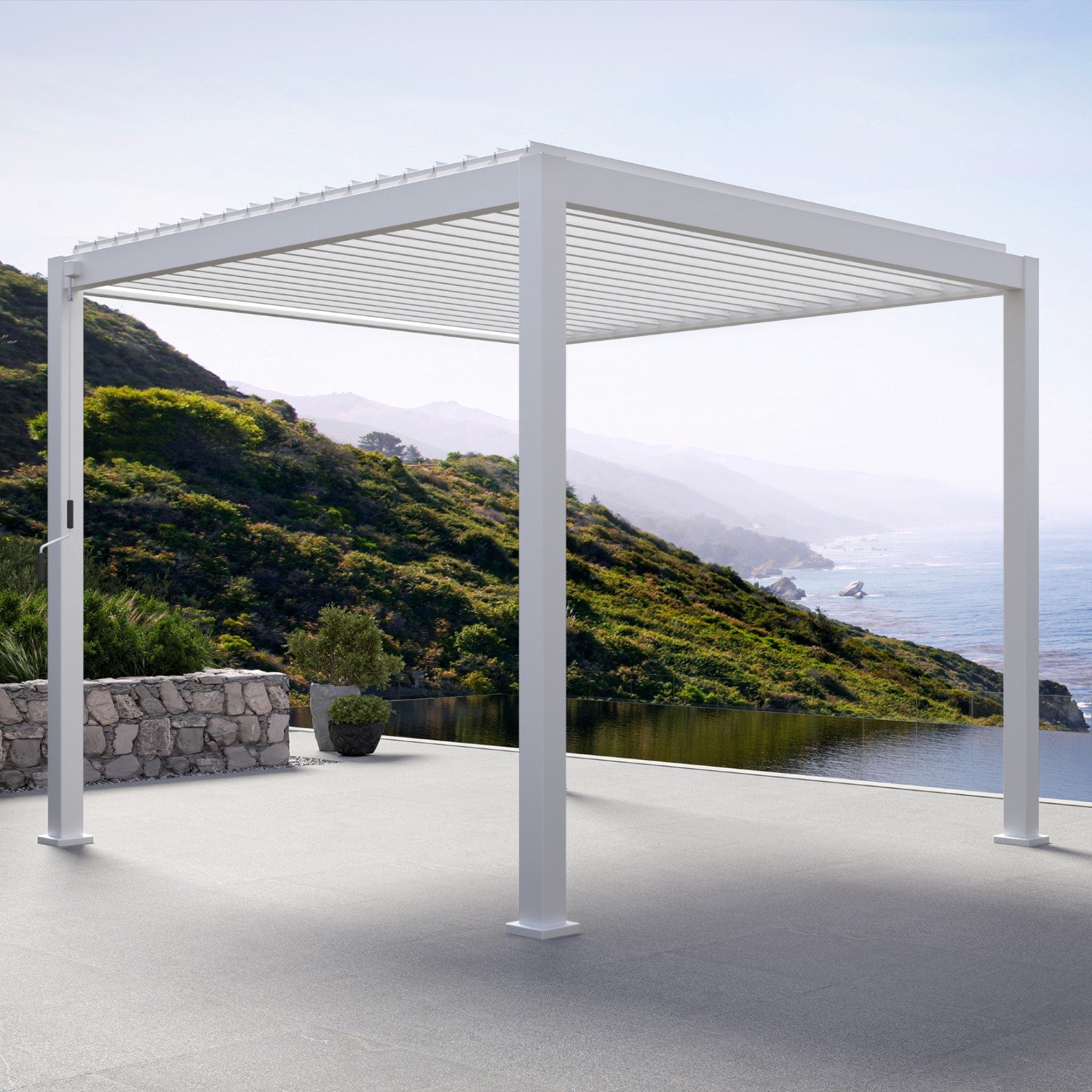
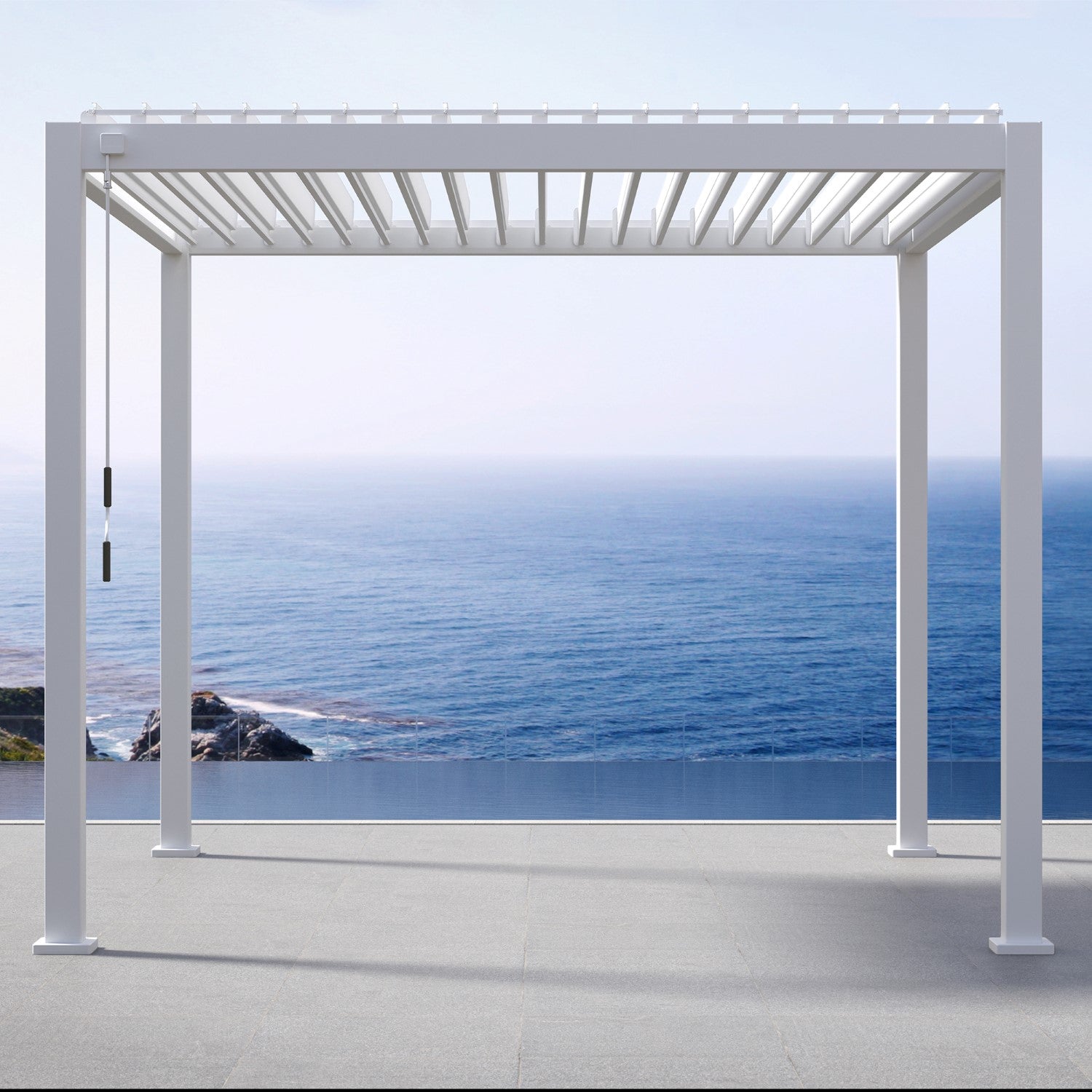
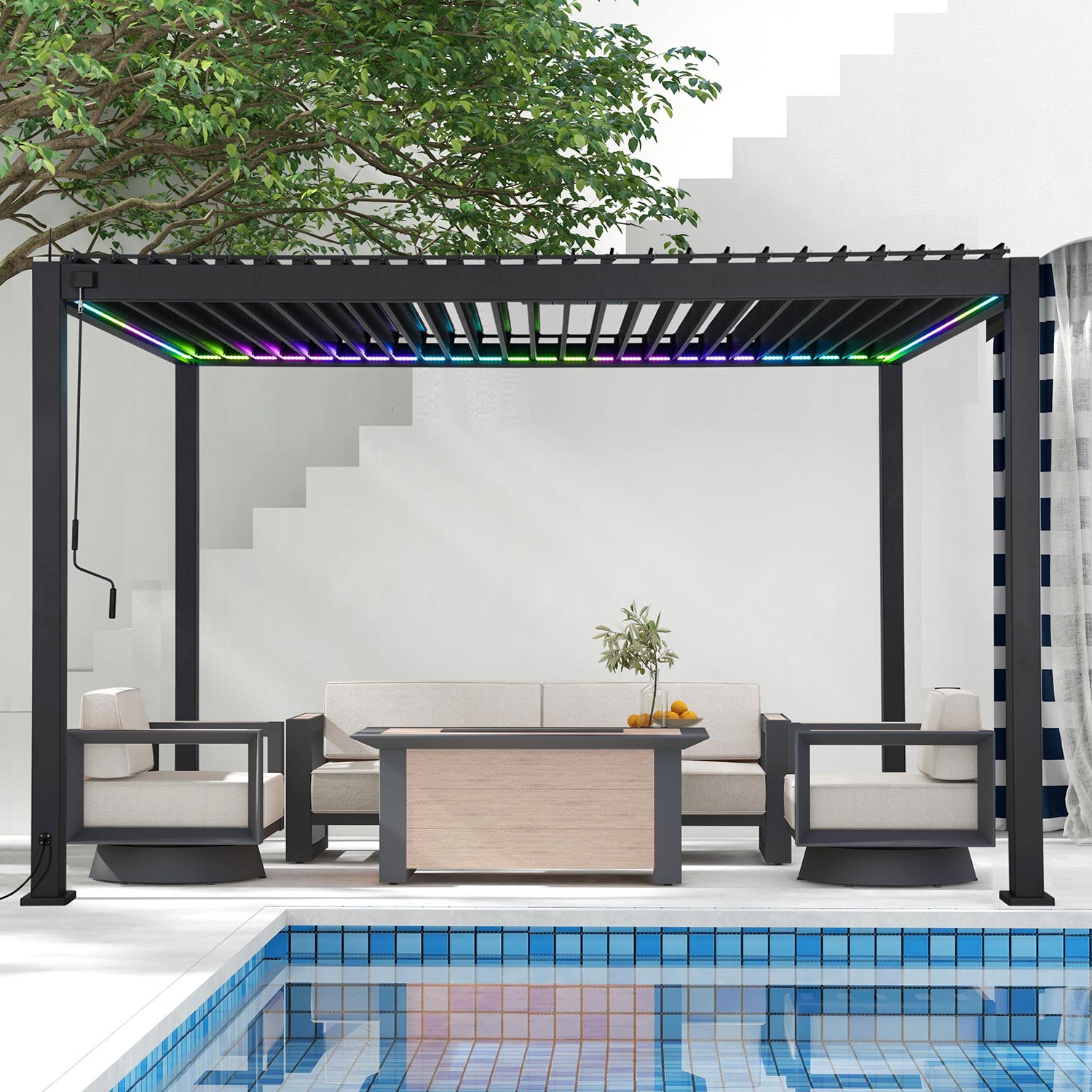
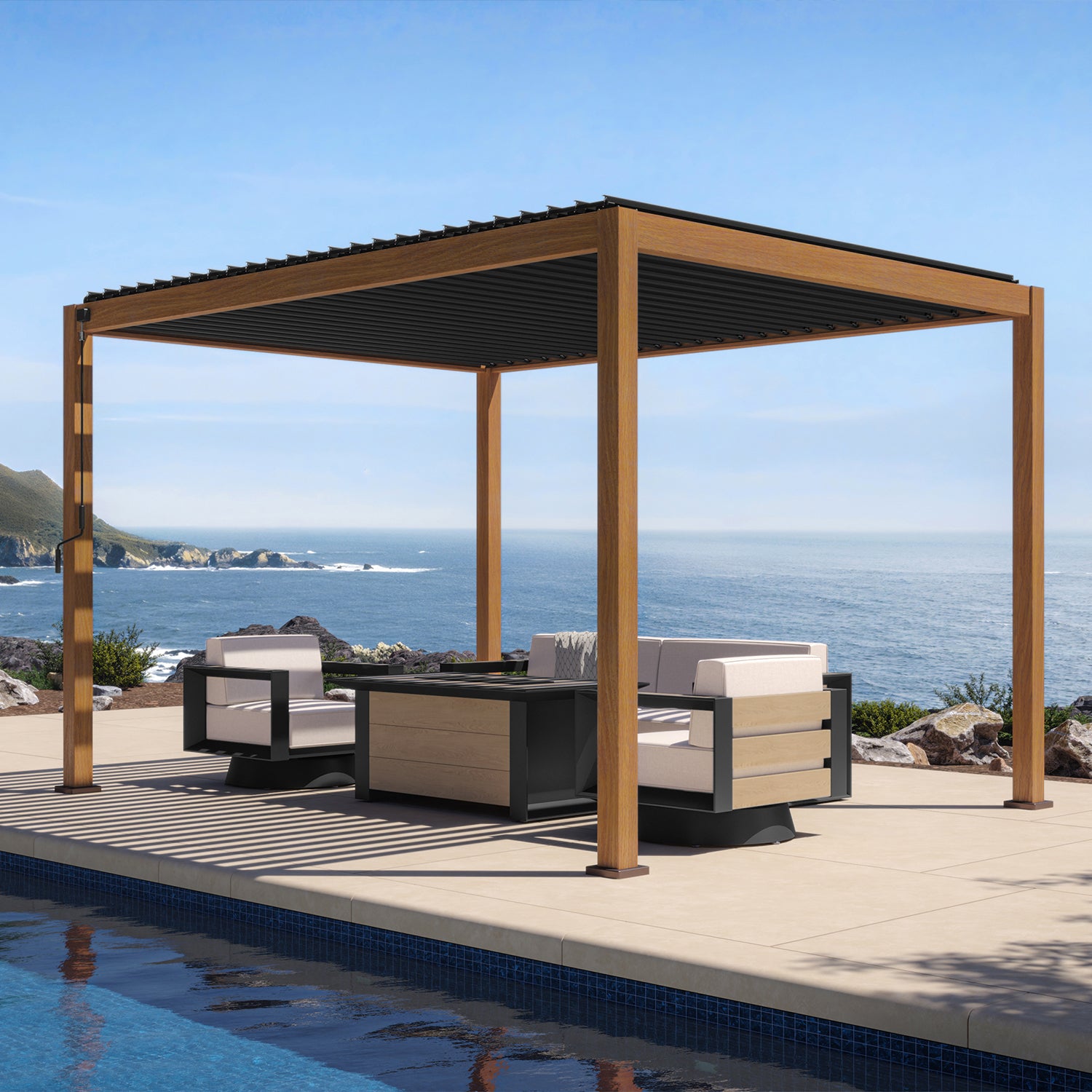
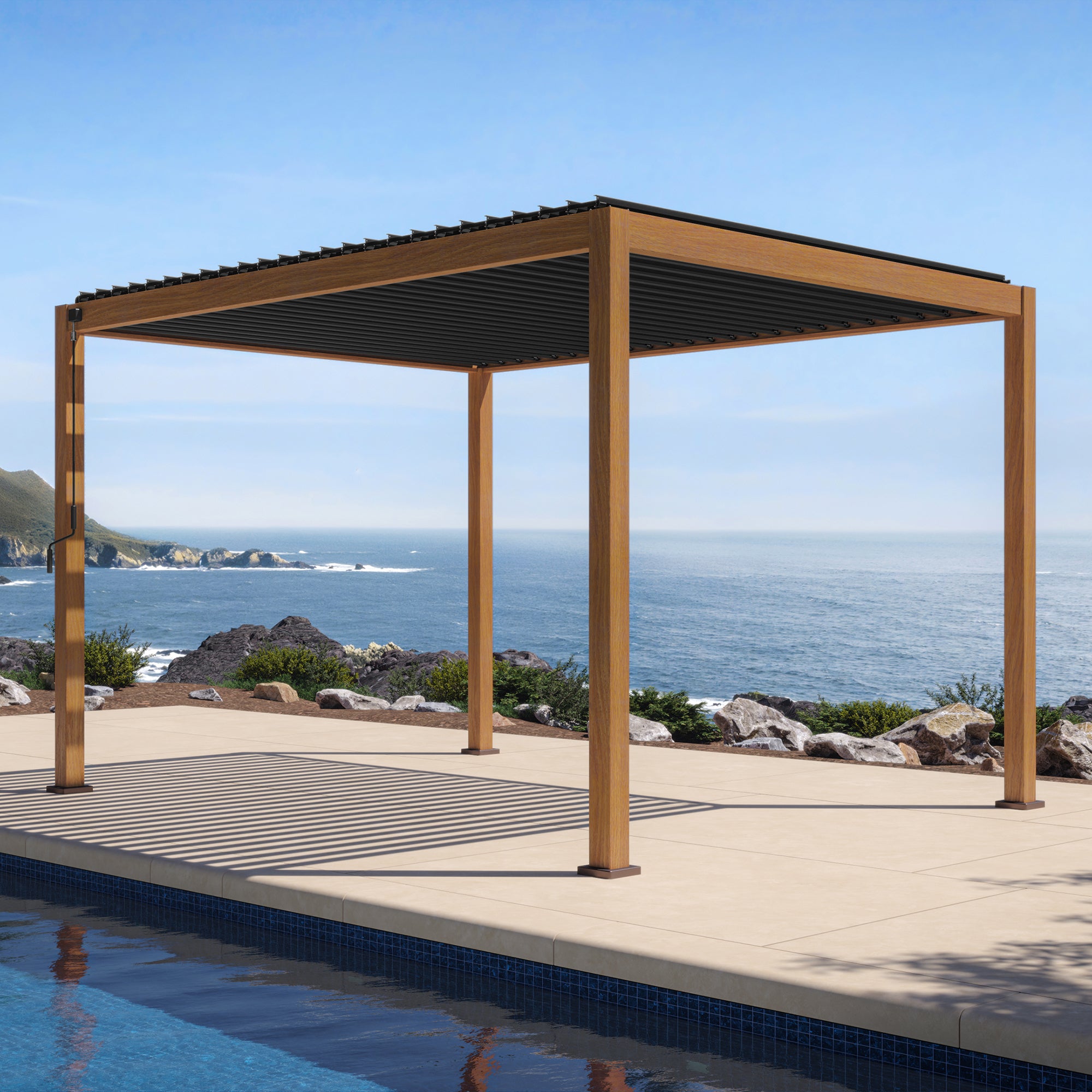
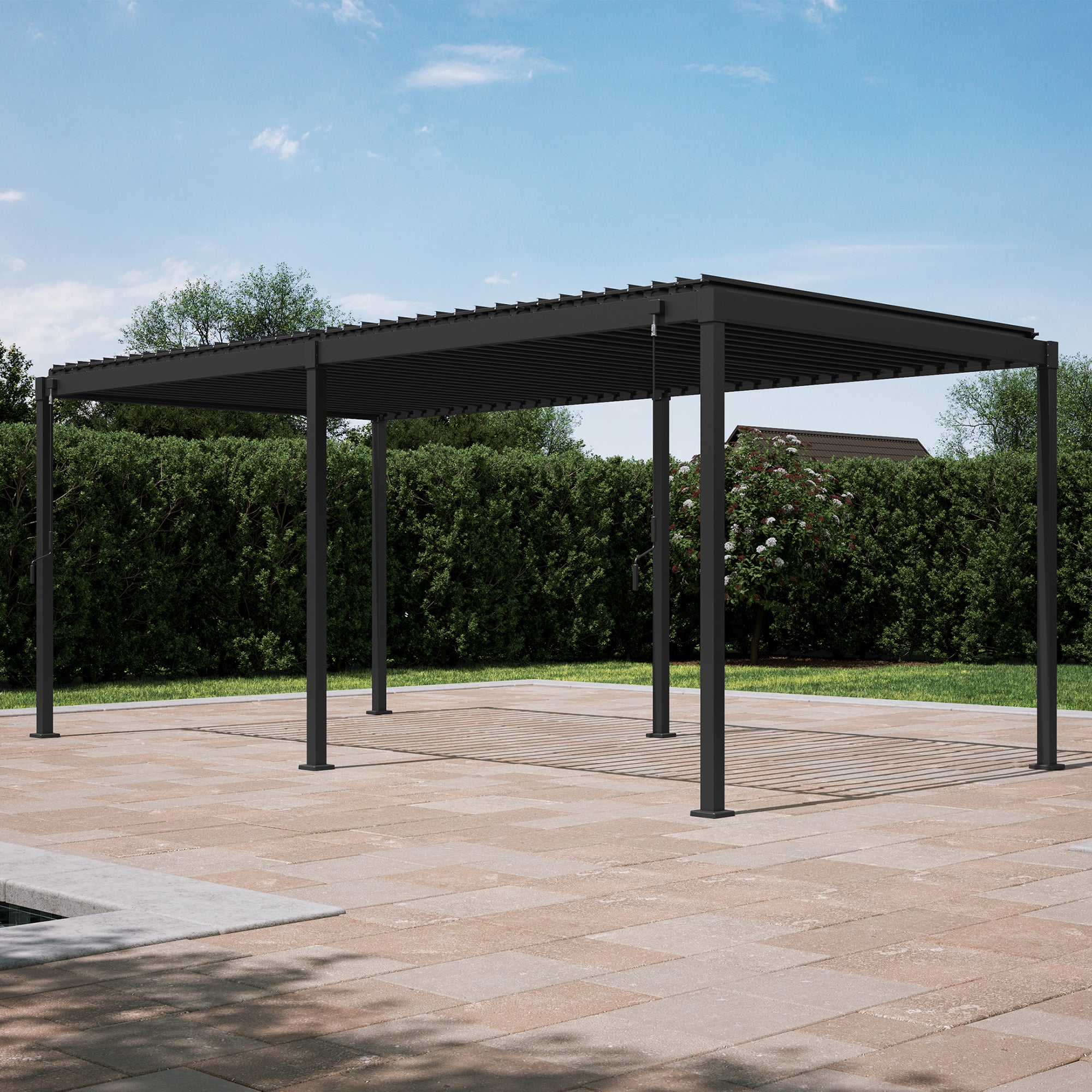
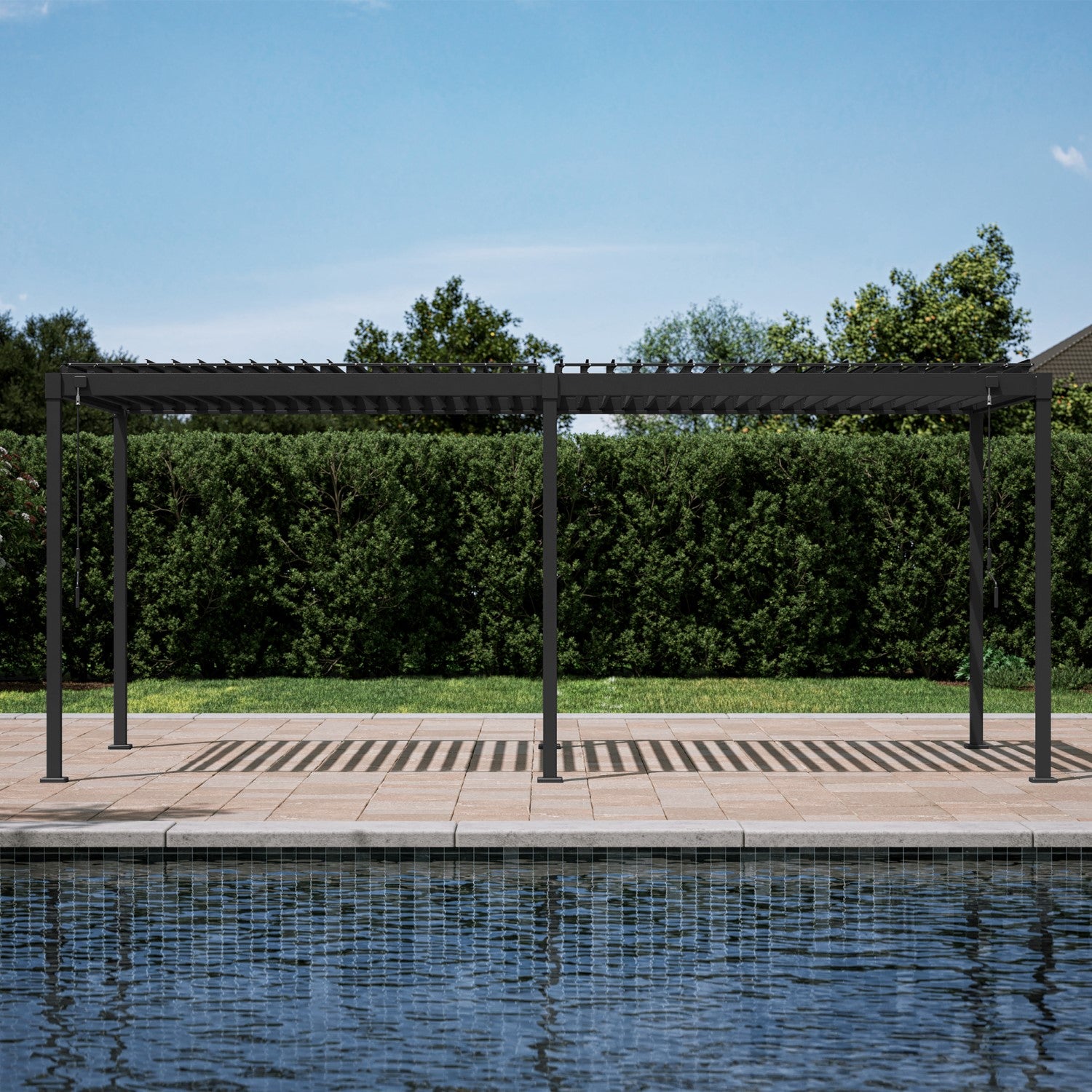
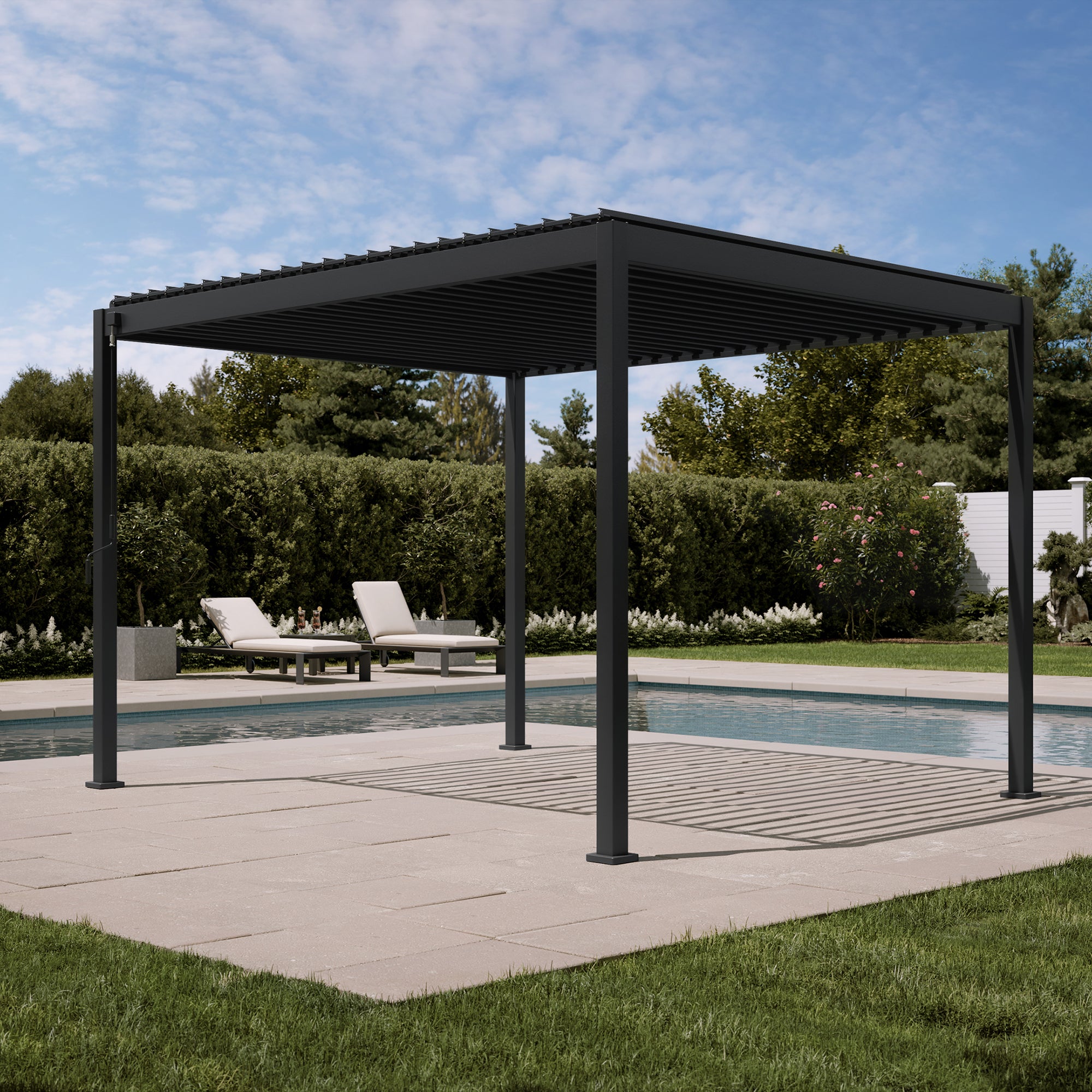
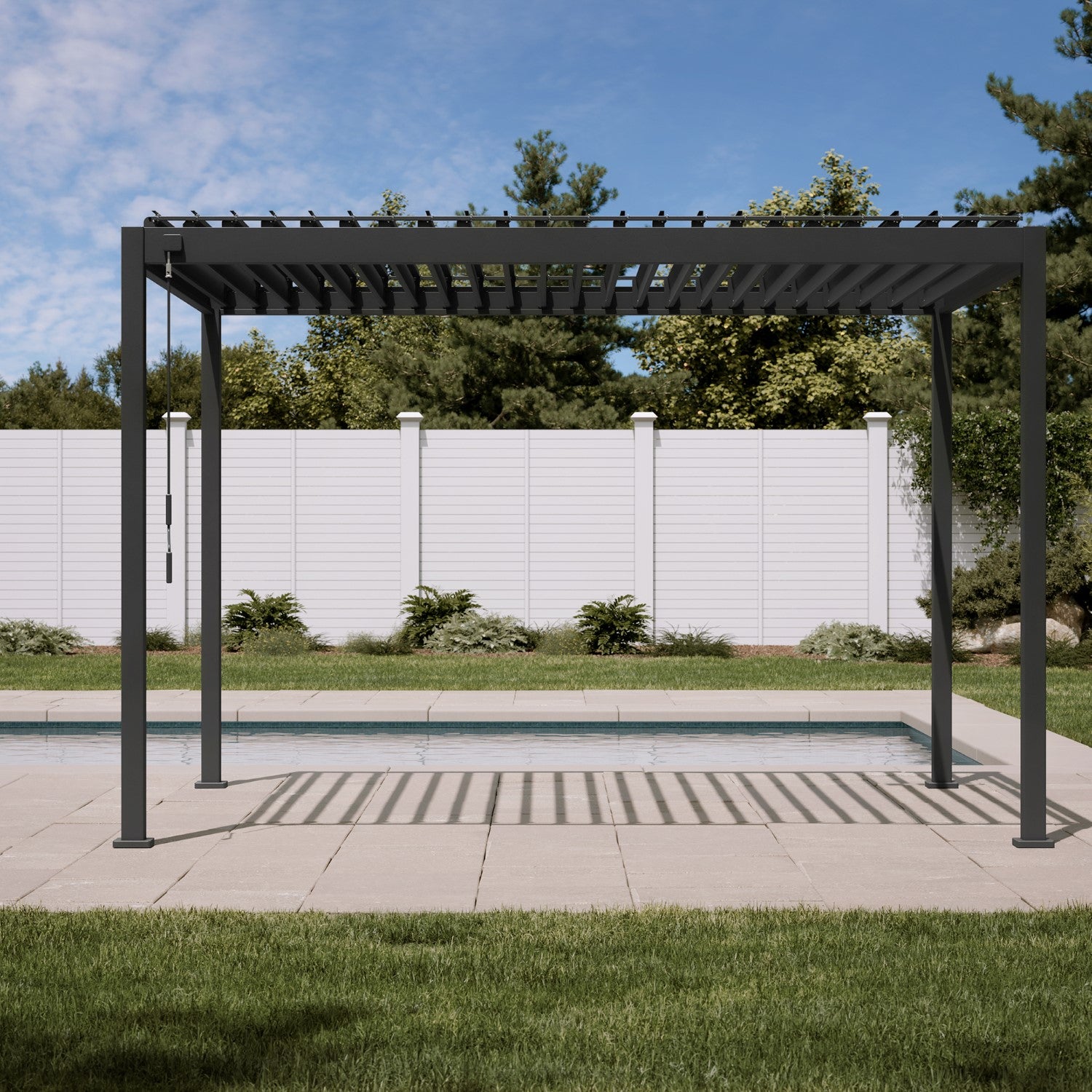
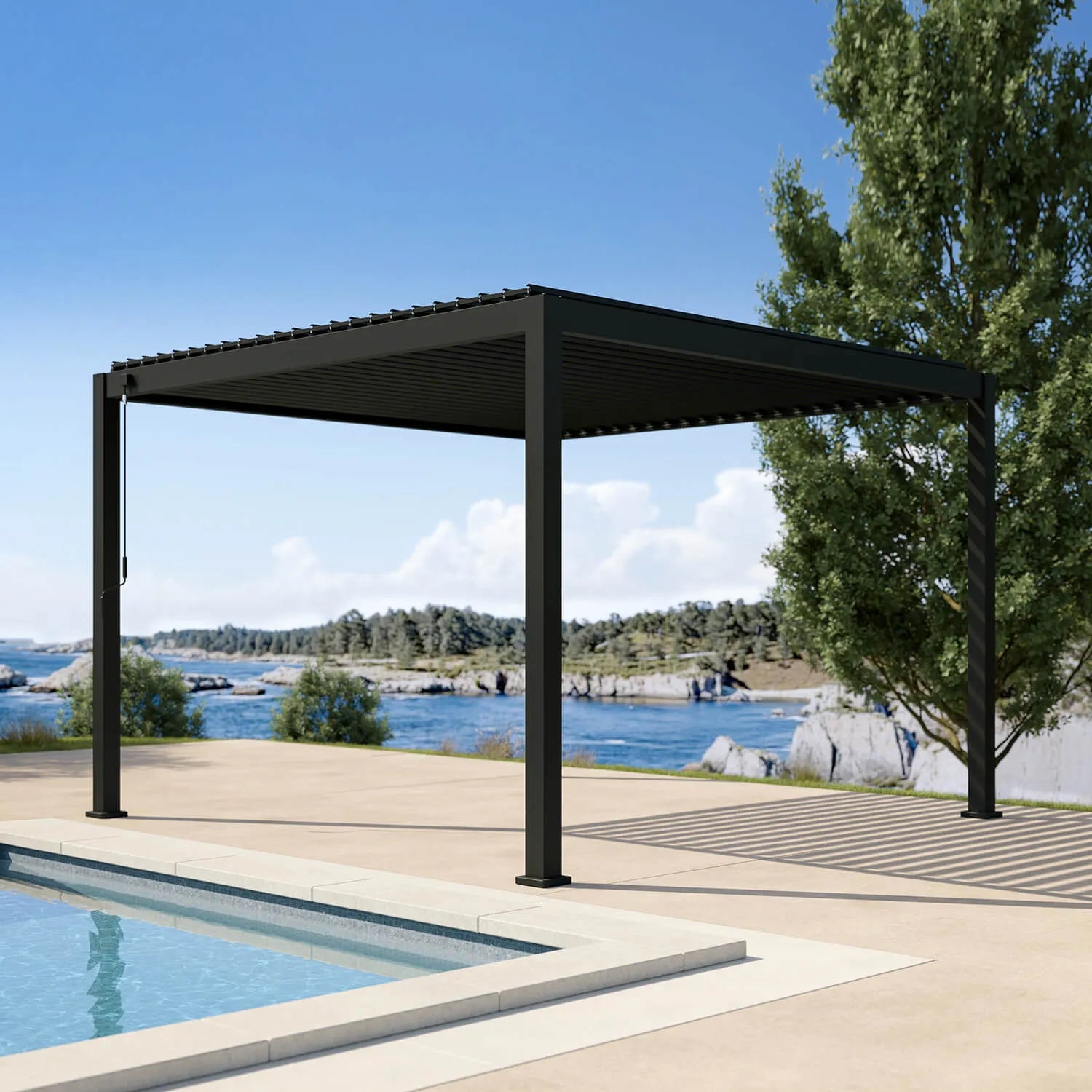
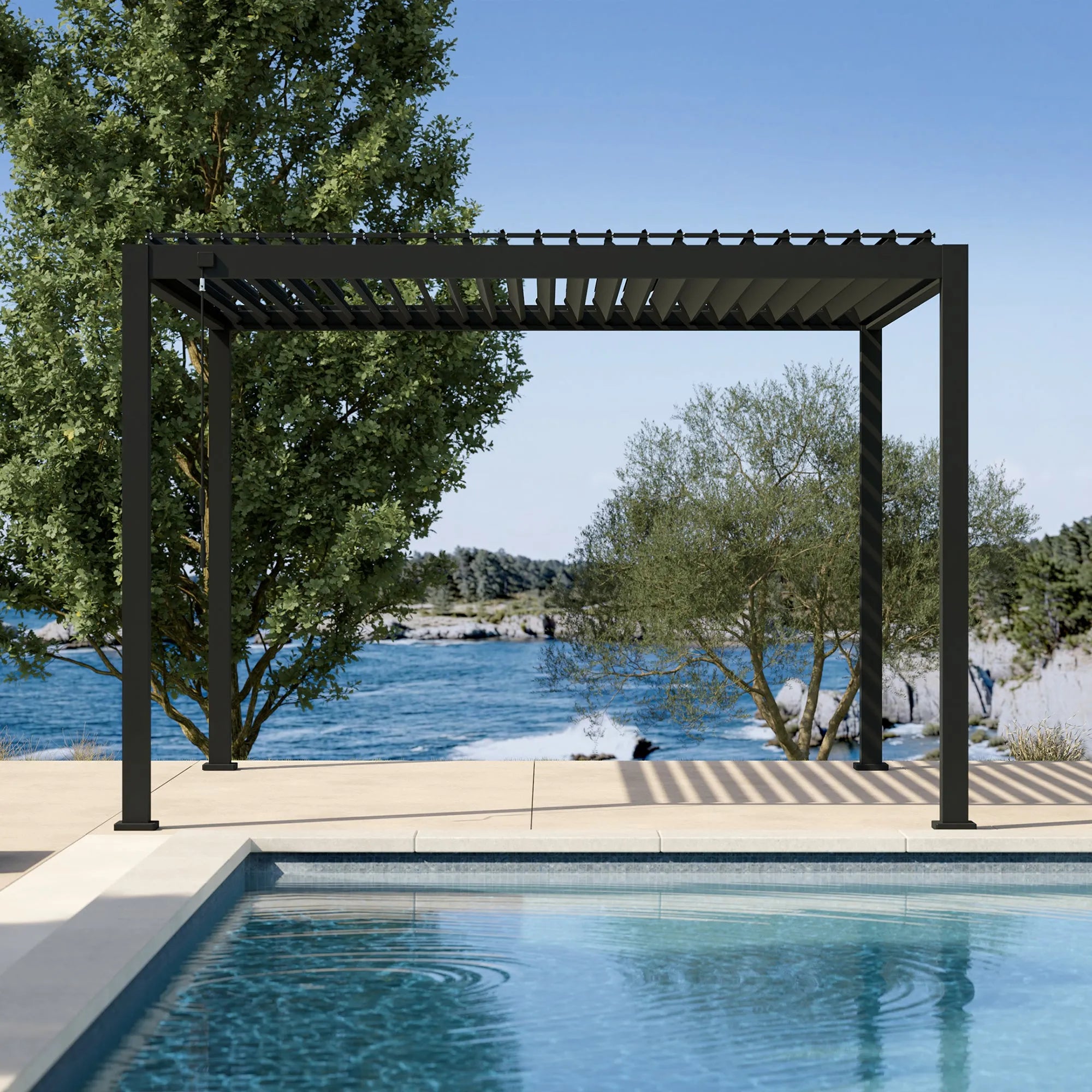
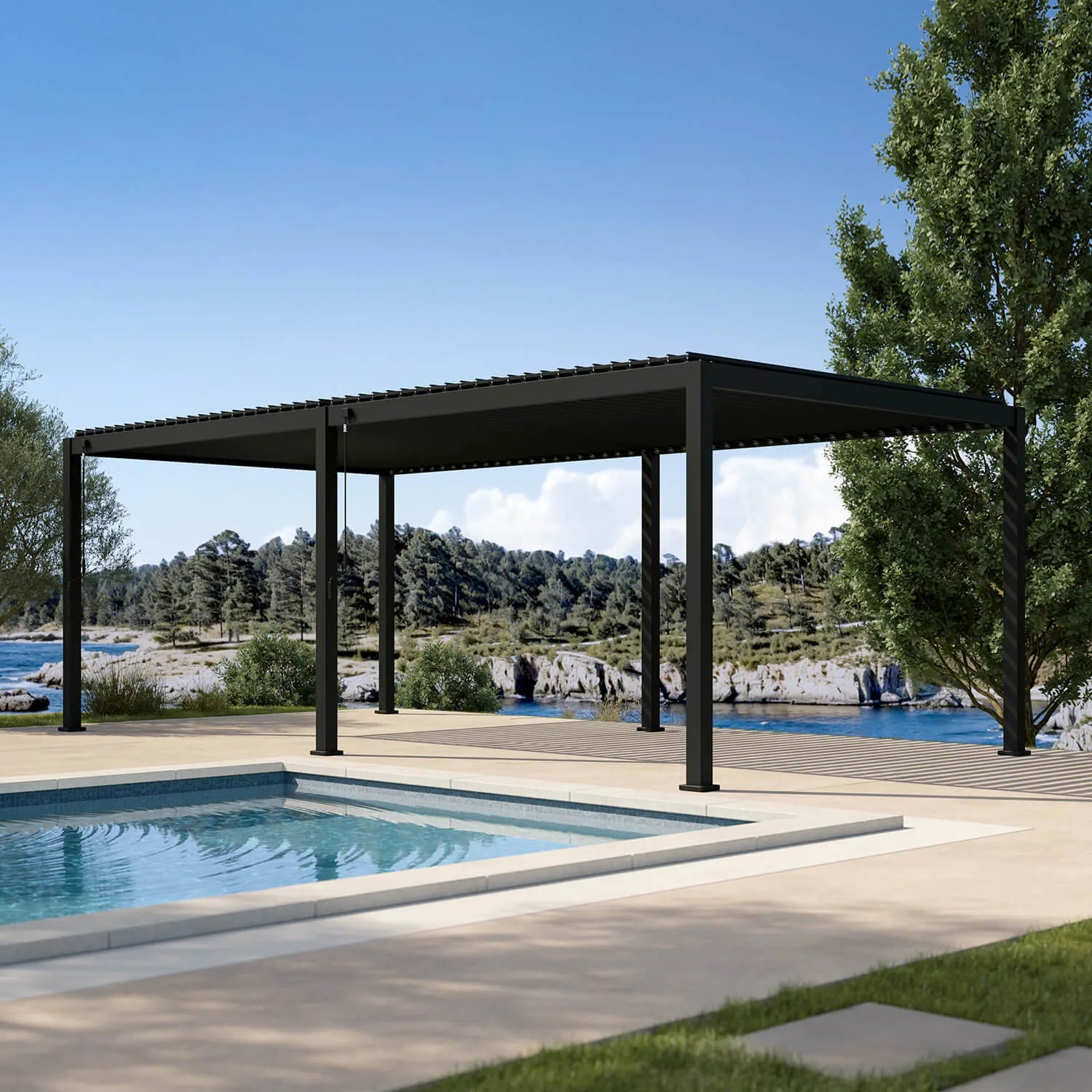
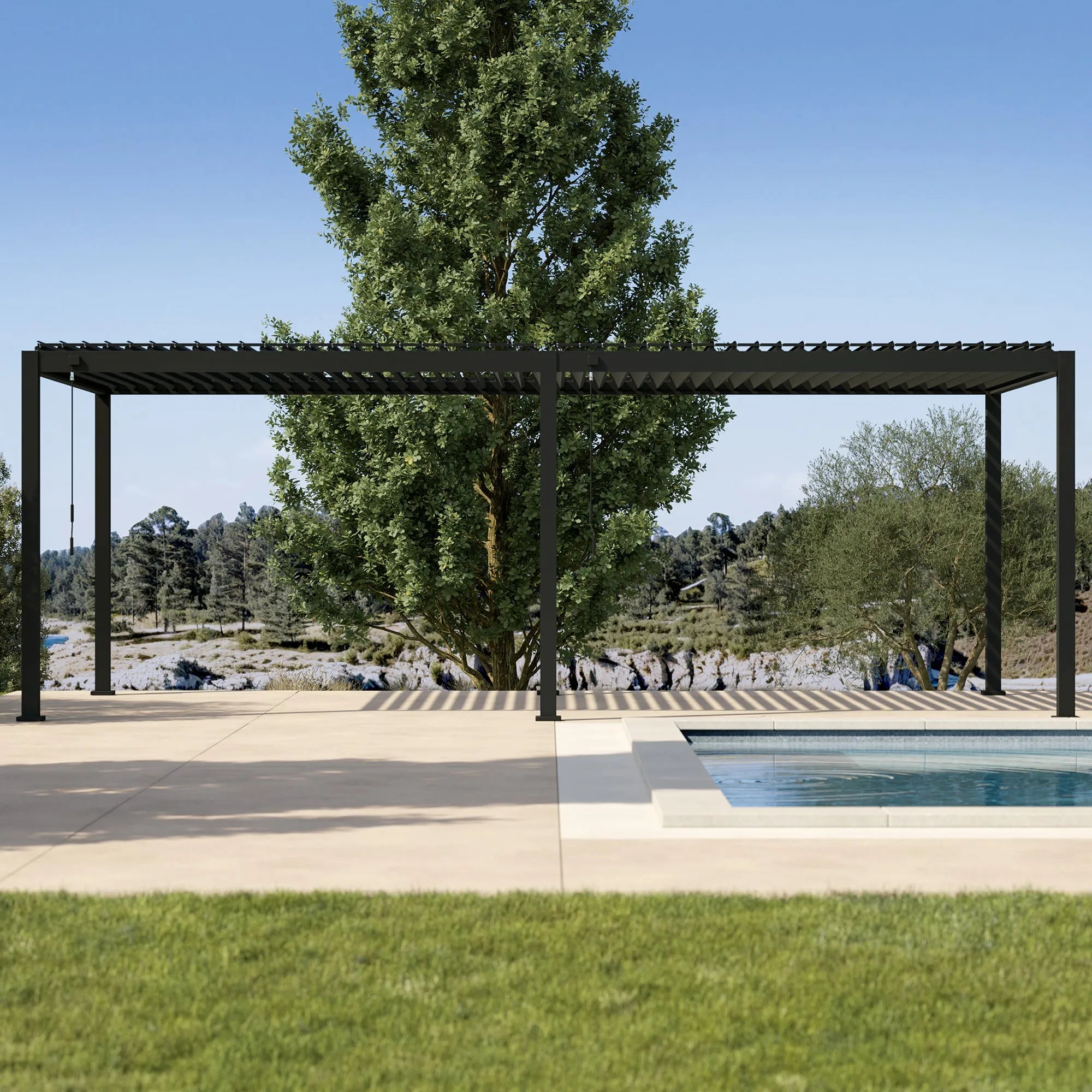
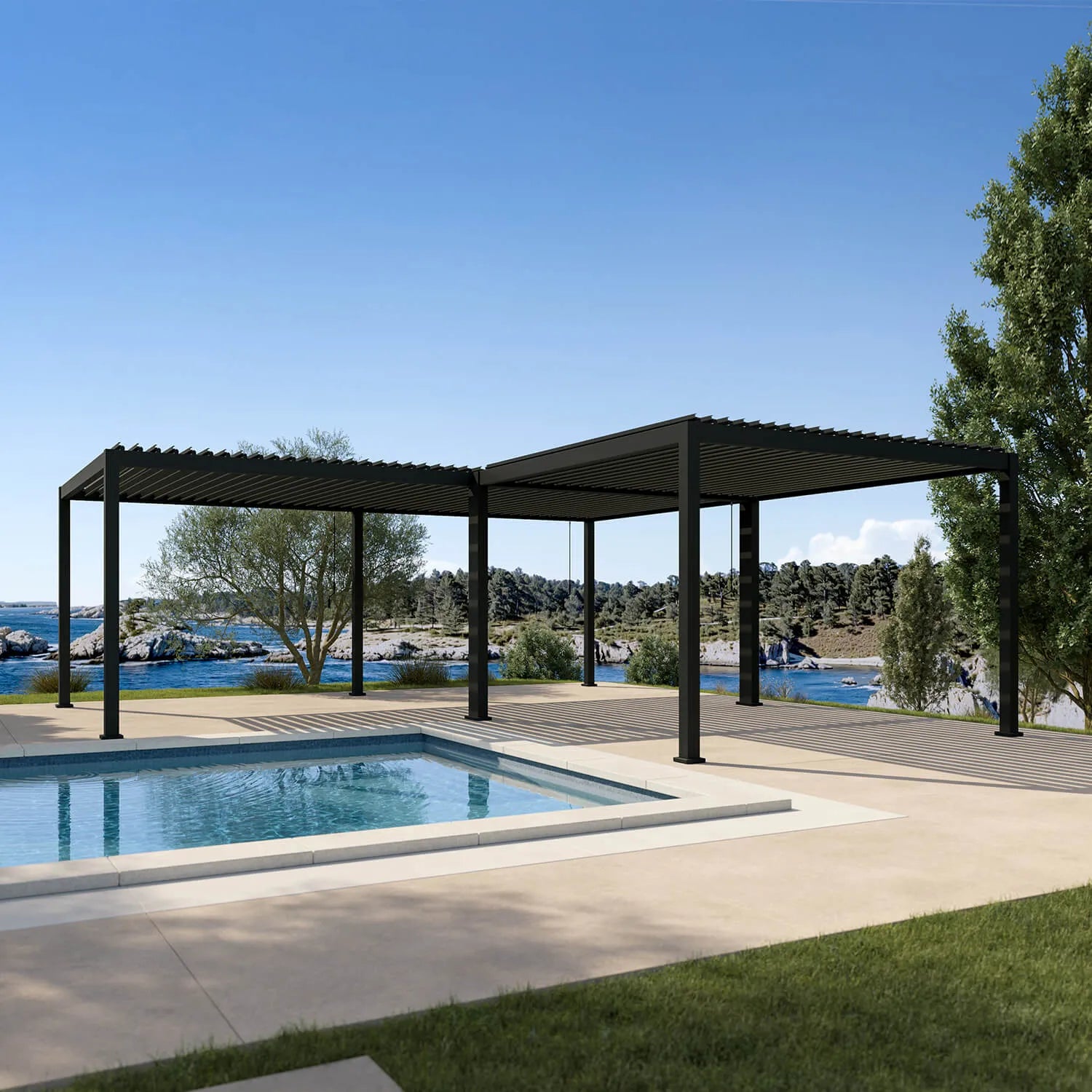
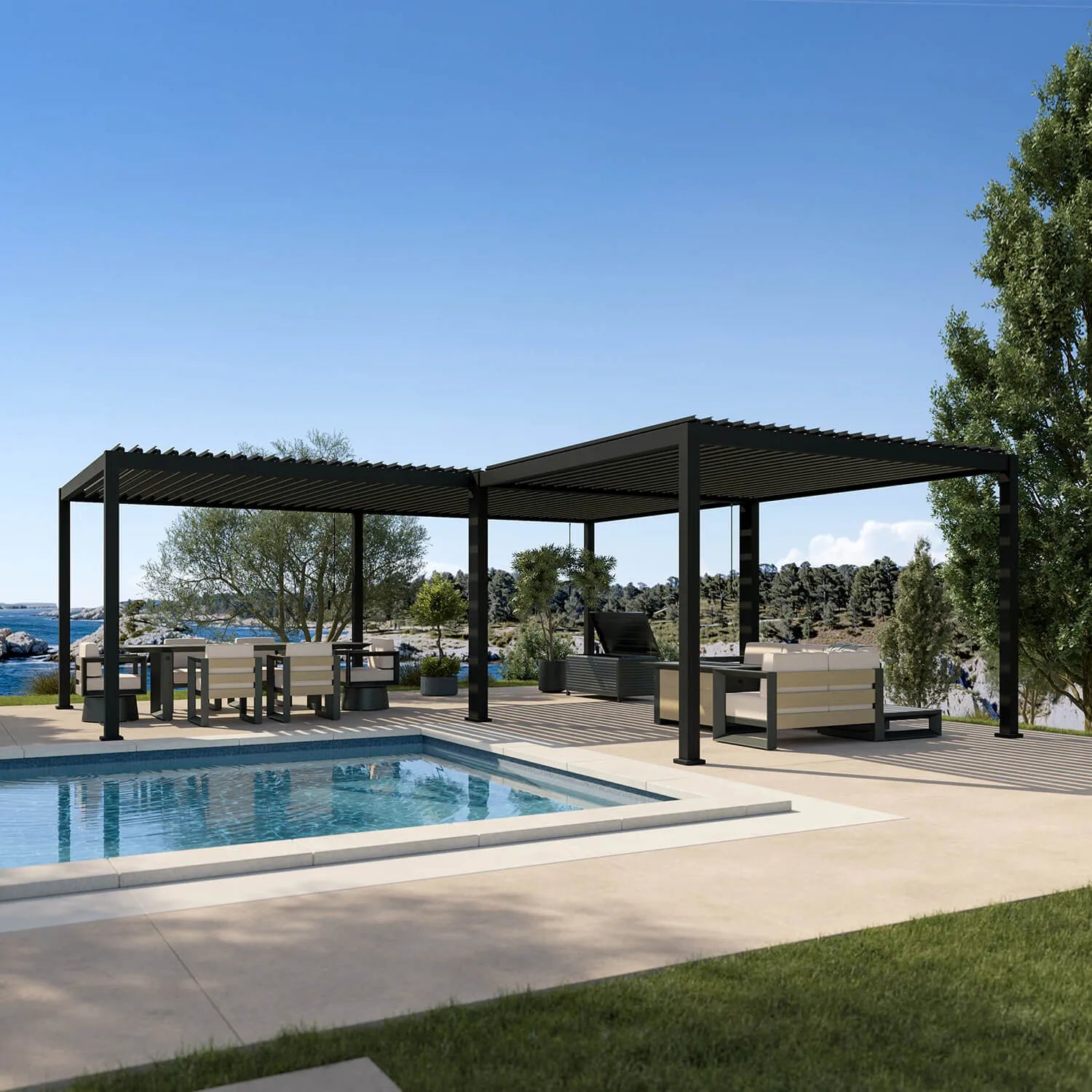
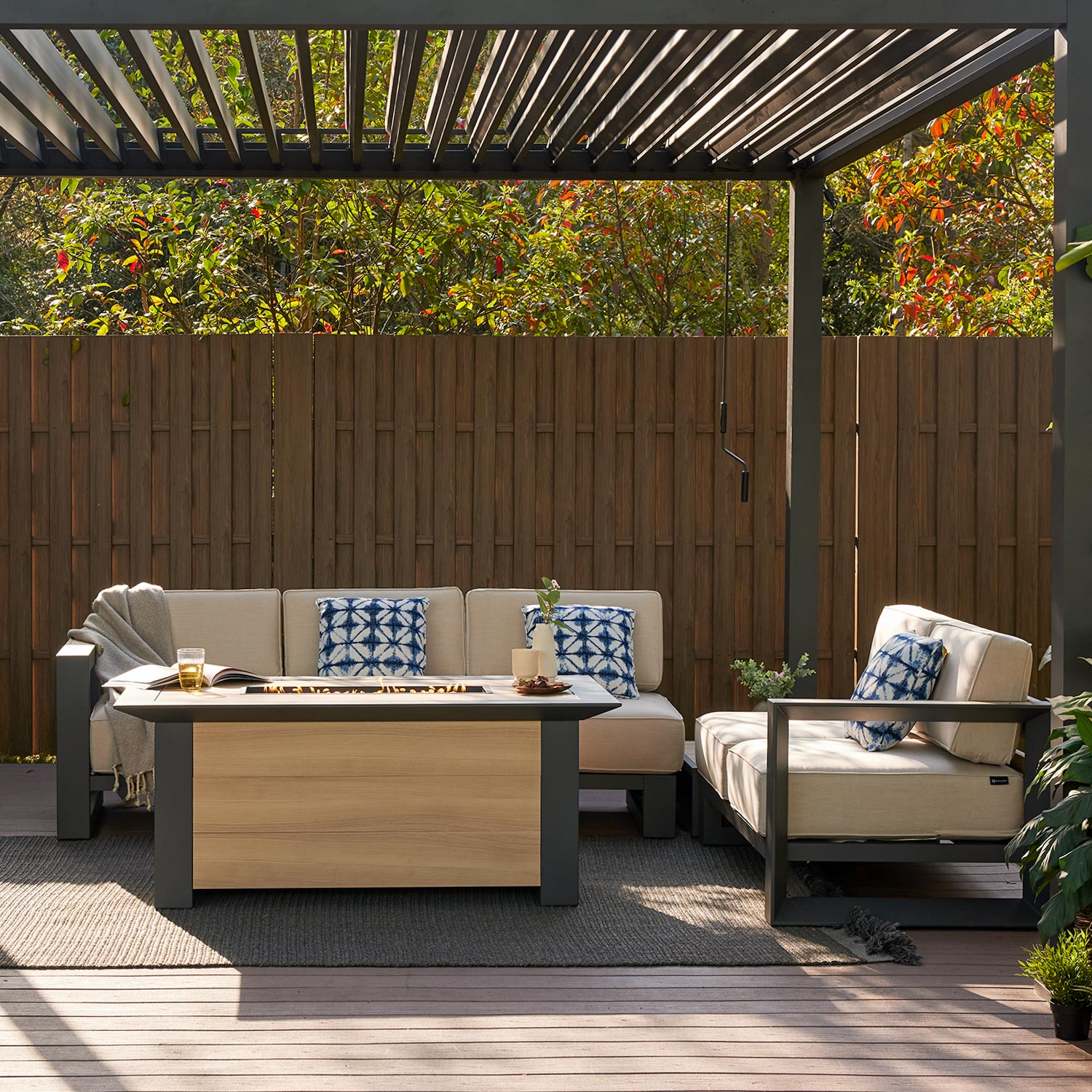
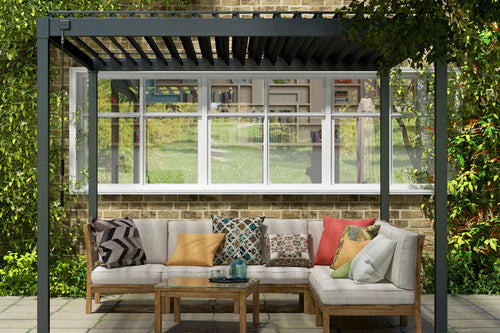
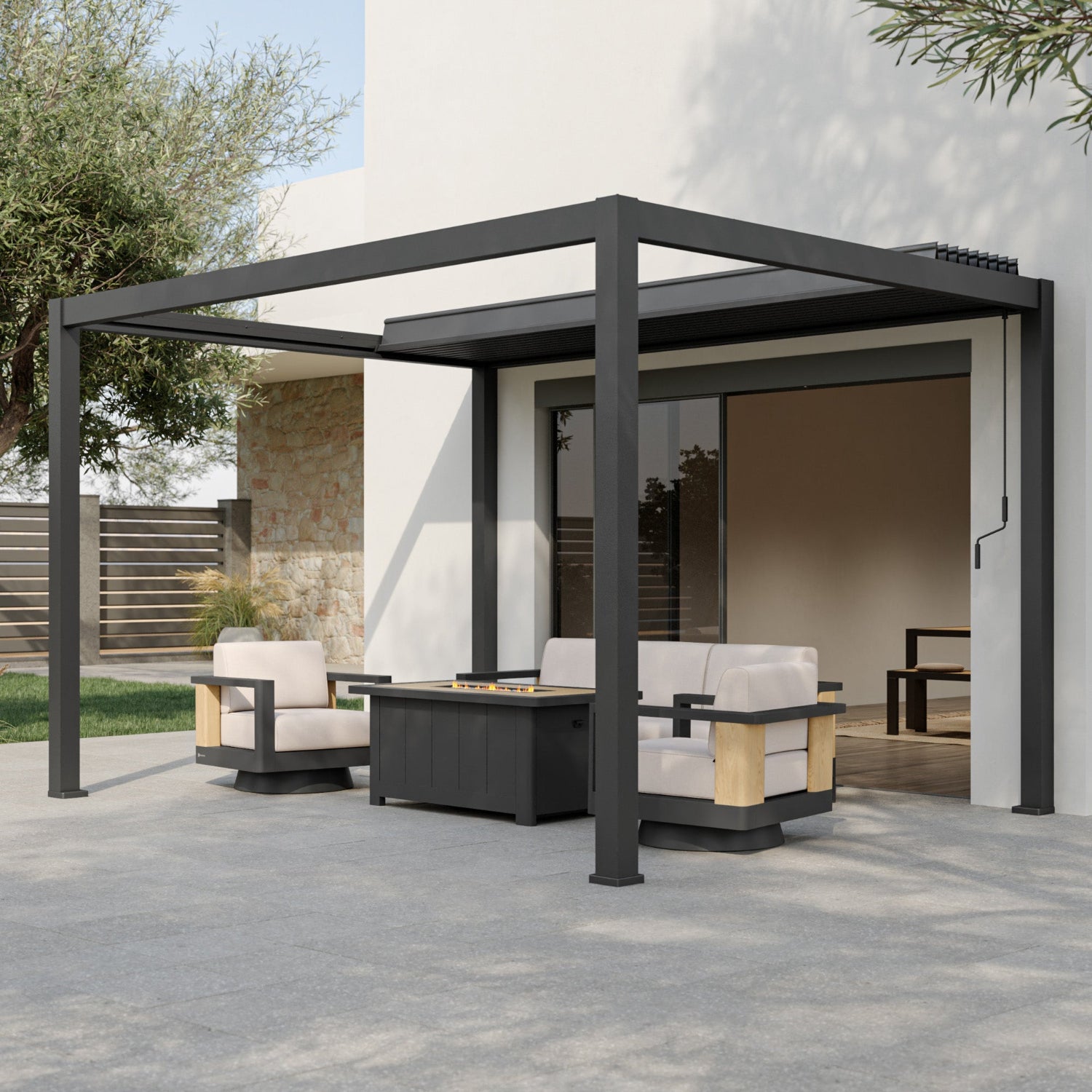
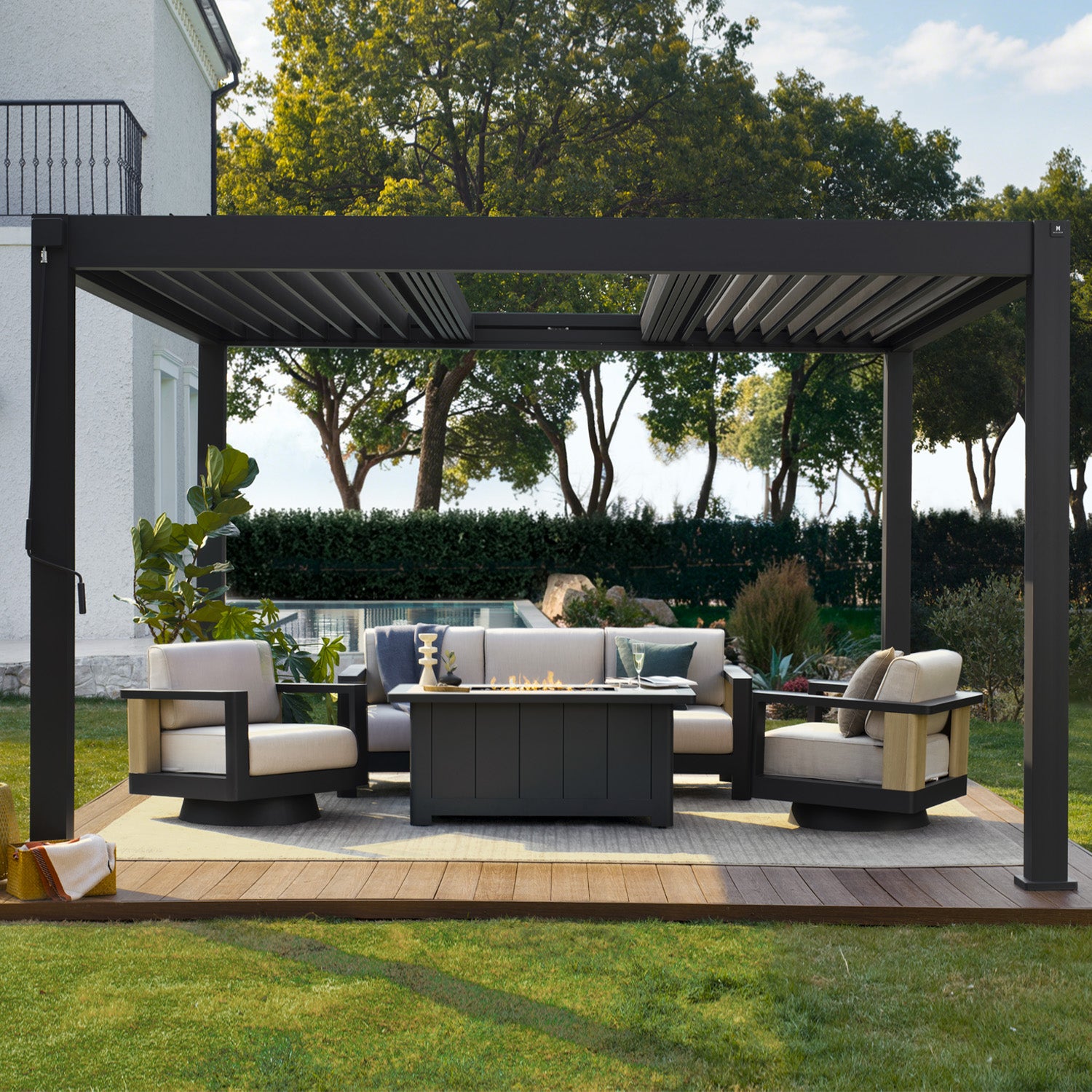
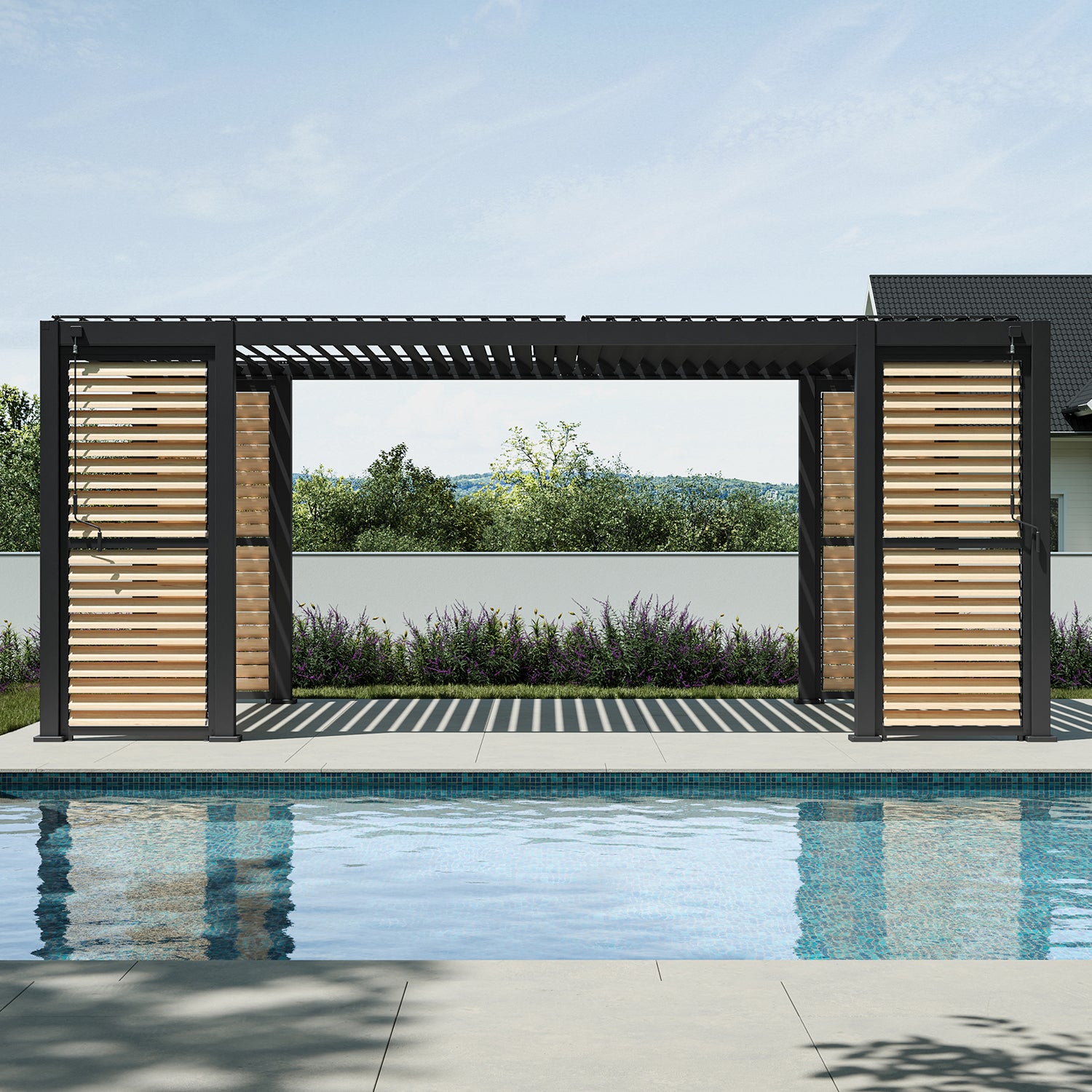
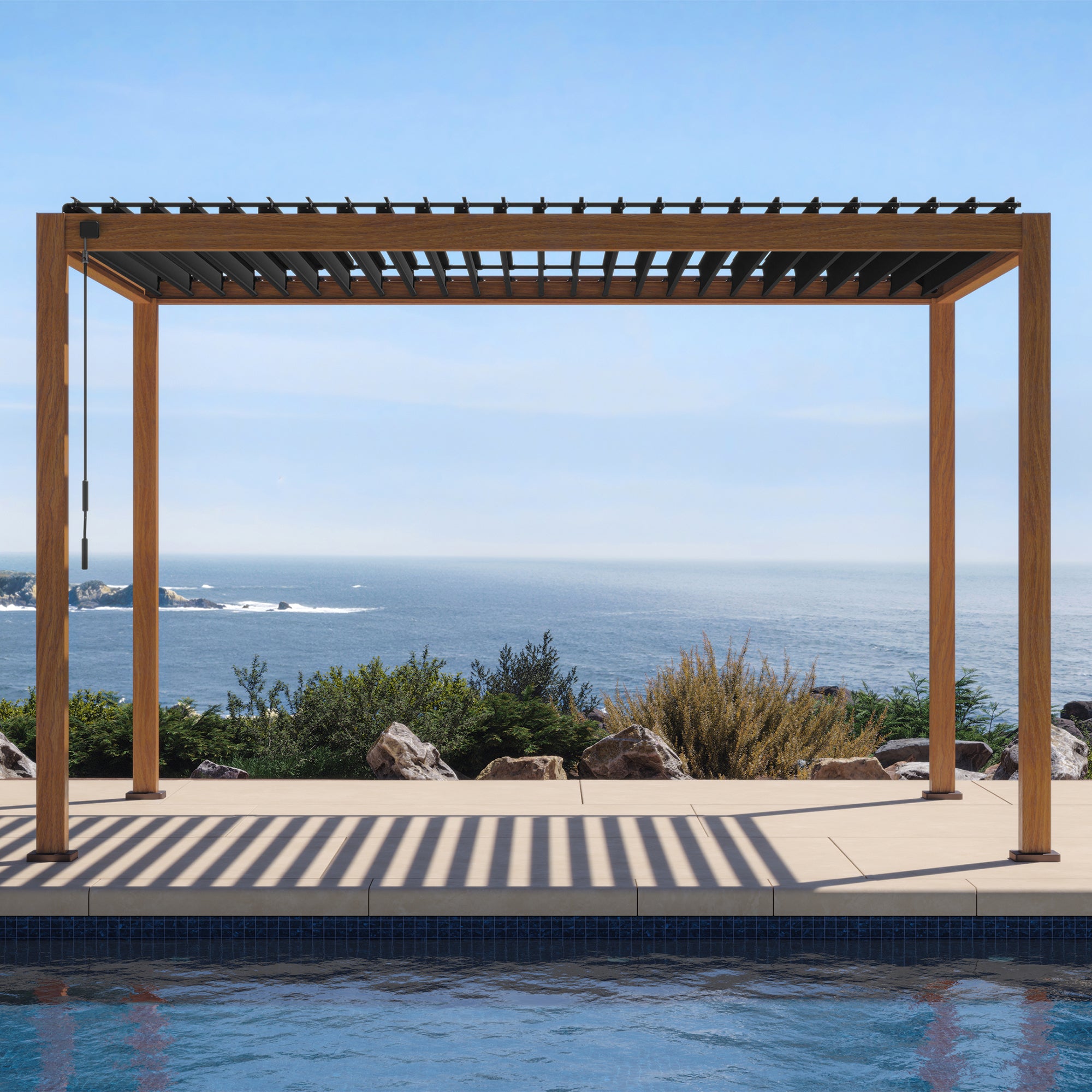
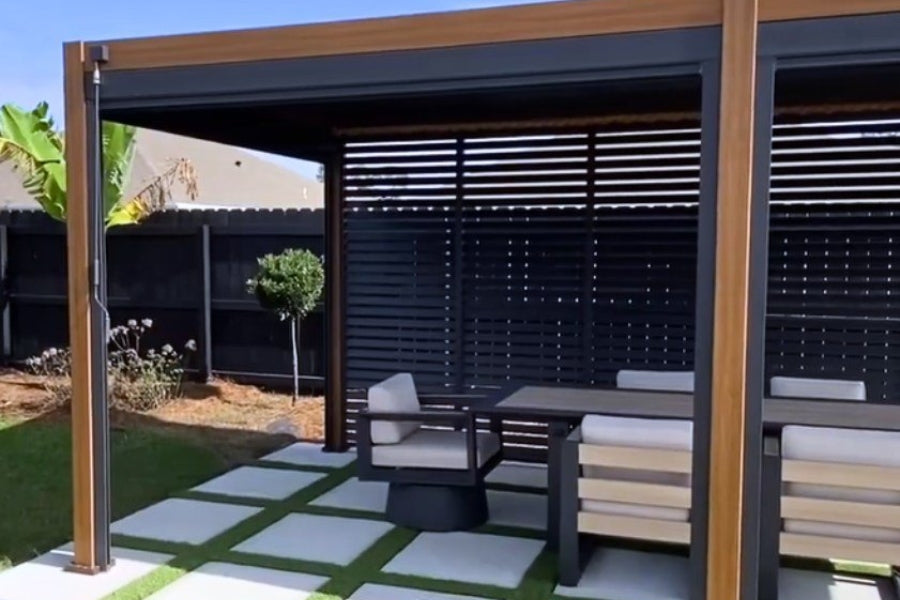
A louvered pergola is a patio structure with adjustable roof slats. When the louvers are open, sunlight and air can pass through. When they are angled, they create shade while allowing ventilation. When they are closed, they create overhead coverage and can help direct water away through the pergola’s drainage design.
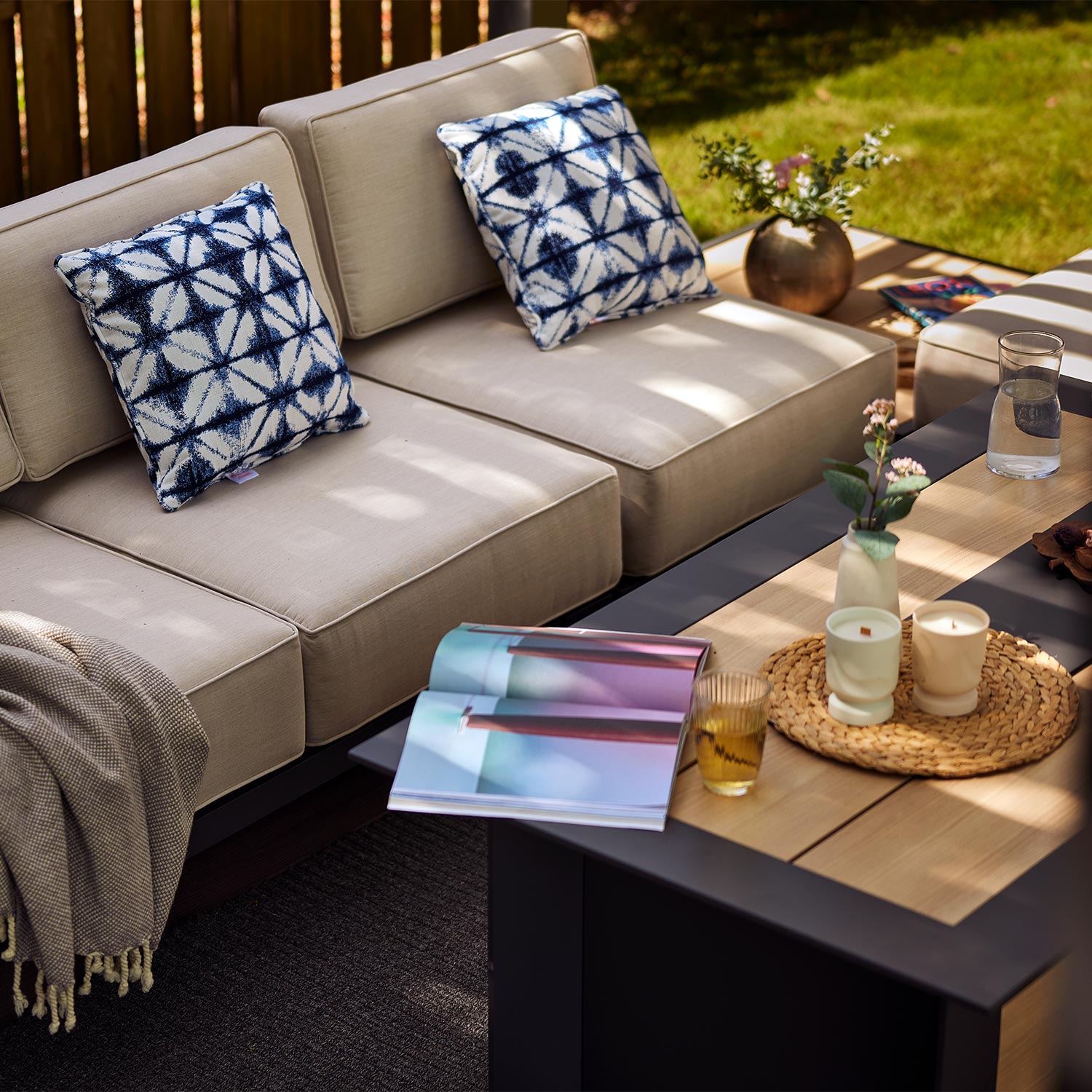
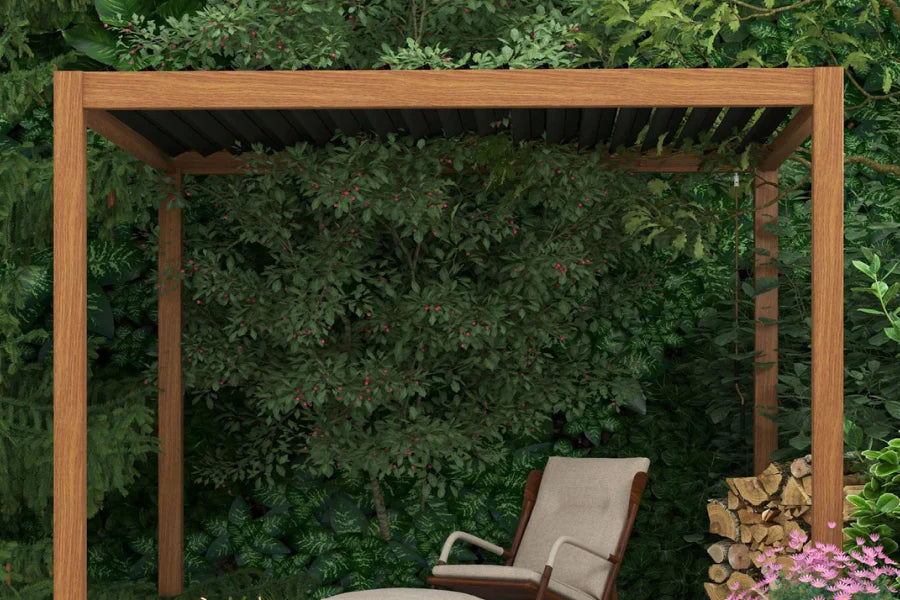
Mirador’s pergola with roof options show why this style is popular. The louvers can close for rain protection or open when you want sunshine. They also bring the practical benefits many homeowners care about, like adjustable shade, built-in drainage, and durable aluminum that is easy to maintain.
Choose a louvered pergola if you want:
- A more permanent patio structure
- Adjustable sun, shade, and airflow
- Better light-rain management
- A clean architectural look
- A defined outdoor dining or lounge zone
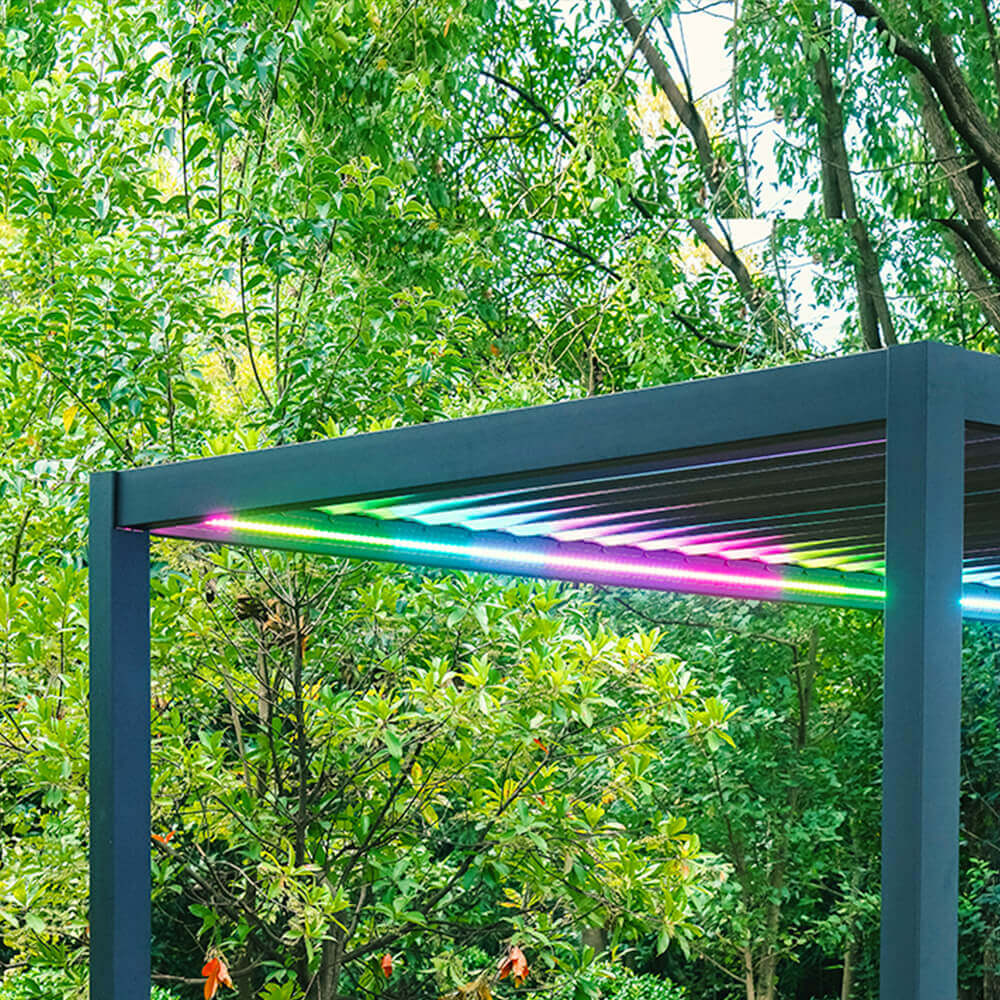
- Options for screens, side shade, lighting, or power
- A shade solution that feels like part of the home

What Is a Retractable Canopy?
A retractable canopy is a fabric-based shade solution that can extend when you need sun protection and retract when you want more open sky. It may be a retractable awning, fabric patio canopy, shade sail system, adjustable umbrella, or fabric roof insert.
Fabric shade solutions are popular because they are lighter, often more affordable, and visually softer than a permanent roof structure. They can work well over small patios, lounge chairs, balconies, and seasonal seating areas.
But a retractable canopy is mainly a shade solution, not a structural roof. It may not be suitable for heavy rain, snow, strong wind, or year-round use unless the specific product is designed and rated for those conditions. Fabric also needs more attention over time: cleaning, drying, tensioning, fading, mildew prevention, and eventual replacement.
Mirador’s Novara cantilever umbrella is not a retractable roof canopy, but it is a useful example of a lighter fabric shade alternative.

Quick Comparison
|
Feature |
Louvered Pergola |
Retractable Canopy |
|
Shade control |
Adjustable louvers create precise sun and airflow control |
Fabric extends or retracts for simple shade |
|
Rain control |
Better, especially with closed louvers and drainage |
Limited; fabric shade is not the same as a roof |
|
Wind performance |
Usually stronger if properly anchored and rated |
Often needs to be retracted in stronger wind |
|
Appearance |
Architectural, permanent outdoor-room look |
Lighter, softer, more casual look |
|
Maintenance |
Low if powder-coated metal/aluminum |
Fabric cleaning, tension, wear, fading, and replacement matter |
|
Installation |
More involved; may need anchoring and code review |
Usually simpler, depending on mounting |
|
Cost |
Higher upfront |
Lower upfront in many cases |
|
Best for |
Long-term patios, dining areas, outdoor rooms |
Seasonal shade, small patios, flexible sun control |
Which Is Better for Sun Control?
- For simple shade, a retractable canopy works well. Extend the fabric when the sun is harsh, then retract it when you want more light. This can be enough for a small seating area or seasonal patio.
- For more precise control, a louvered pergola is better. Louvers let you tune the roof angle instead of choosing only “open” or “covered.” That matters when the sun shifts across the day. You can block direct overhead sun at lunch, keep airflow moving in the afternoon, and open the roof again in the evening.
Winner: Louvered pergola for precision; retractable canopy for simple shade.
Which Is Better for Rain?
- A louvered pergola is usually better for rain because closed louvers can create overhead coverage and direct water through a drainage design. It is still an outdoor structure, so wind-driven rain can enter from the sides, but it performs more like a patio roof than fabric shade does.
- A retractable canopy may shed light moisture depending on the fabric and slope, but it should not be treated like a permanent roof unless the manufacturer specifically rates it for that use. Fabric can sag, pool water, stain, or need to be retracted before storms.
Winner: Louvered pergola.
Which Is Better for Wind?
- A properly anchored louvered pergola generally has the advantage in wind because it is a rigid structure with published wind ratings.
- A retractable canopy is more exposed to movement, lift, and fabric stress. Many fabric shade products need to be retracted in stronger wind. If your patio is on a rooftop, open lot, coastal site, or windy corner, wind should be one of the first buying questions.
Winner: Louvered pergola for exposed sites; retractable canopy for calmer, lower-risk shade zones.
Which Costs Less?
- A retractable canopy usually costs less upfront. It uses less structure, can be simpler to install, and may not require the same anchoring or site planning.
- A louvered pergola usually costs more upfront, but it can create a more valuable long-term patio. It adds structure, roof control, a more finished look, and the potential for accessories such as side screens, privacy walls, lighting, and power.
Winner: Retractable canopy for lower upfront cost; louvered pergola for long-term outdoor-room value.
What About Open-Roof Pergolas?
Some louvered pergolas now offer a more open-roof experience without relying on fabric. The Mirador 140DA Sky is a good example because it combines tilting louvers with a split-opening retractable design. Its product page lists a 90-degree louver opening plus retractable operation, aluminum materials, integrated water drainage, and 169 square feet of coverage.
This type of pergola sits between a traditional louvered roof and the open-air feeling people often like about canopies. You still get a rigid roof system, but with a more dramatic open-sky option.

Which Shade Solution Should You Choose?
Choose a louvered pergola if:
- You want a long-term patio structure
- You want adjustable roof control
- You want better rain and wind performance
- You care about architectural appearance
- You want a defined outdoor room
- You plan to add screens, lighting, furniture, or power
- You want shade that feels integrated with the home
Choose a retractable canopy if:
- You mainly need seasonal shade
- You want lower upfront cost
- You prefer a lighter visual look
- You need flexibility more than structure
- You are shading a small seating area
- You can retract it in wind or storms
- You are willing to maintain or replace fabric over time
Bottom Line
For most homeowners building a long-term patio or outdoor room, a louvered pergola works better than a retractable canopy. It offers stronger structure, better shade control, better rain management, a more architectural appearance, and more room for accessories.
A retractable canopy still makes sense when the goal is simple, flexible, lower-cost shade. It is especially useful for small patios, seasonal seating, or spaces where a permanent structure is not practical.
If you want the best of both, start with a Mirador louvered pergola for overhead control, then add pergola accessories such as screens or side shade where needed. You can also compare roof types on the Mirador pergola comparison page.
FAQ
Is a louvered pergola better than a retractable canopy?
Yes, if you want a long-term patio structure with adjustable roof control, better rain management, stronger wind performance, and a more architectural outdoor-room feel.
Is a retractable canopy cheaper than a louvered pergola?
Usually, yes. A retractable canopy often has a lower upfront cost because it uses fabric and a lighter structure. A louvered pergola costs more but offers more long-term function and durability.
Which is better for rain, a pergola or a canopy?
A louvered pergola is usually better for rain because closed louvers and integrated drainage can help direct water away. A fabric canopy should not be treated like a permanent roof unless it is specifically rated for that use.
Can I add retractable screens to a louvered pergola?
Yes, if compatible accessories are available for the pergola model and size. Retractable screens can add side shade, privacy, insect control, and better comfort when the sun is low.
Which shade solution is best for outdoor dining?
A louvered pergola is usually better for outdoor dining because it creates a more stable, finished seating zone with adjustable roof control. A retractable canopy works for simpler seasonal dining setups.